
GAIM Virtual Shooting Simulator [REVIEW]

GAIM is a virtual shooting simulator that aims to improve your shooting skills through fun and engaging dry fire. But is this pricey setup worth it?

USMC Veteran. Concealed Carry & NRA Pistol Instructor. 3-Gun Competitor. Career firearms writer
We review products independently. When you buy through links on our site, we may earn a commission to help support our testing. Learn more.
GAIM Virtual Shooting Simulator Pros & Cons
Pros
- Effective Digital Training System
- A Ton of Fun to Play
- Easy to Learn
- Variety of Peripherals
Cons
- Substantial Initial Investment
The Bottom Line
If you want to take your dry fire from a chore to a hobby, the GAIM system can make it happen. The system requires a VR headset, game purchase, and to get the most out of it, some peripherals are required. Without a doubt, it works to build and develop skills in a fun and interesting way that will keep you coming back for more.
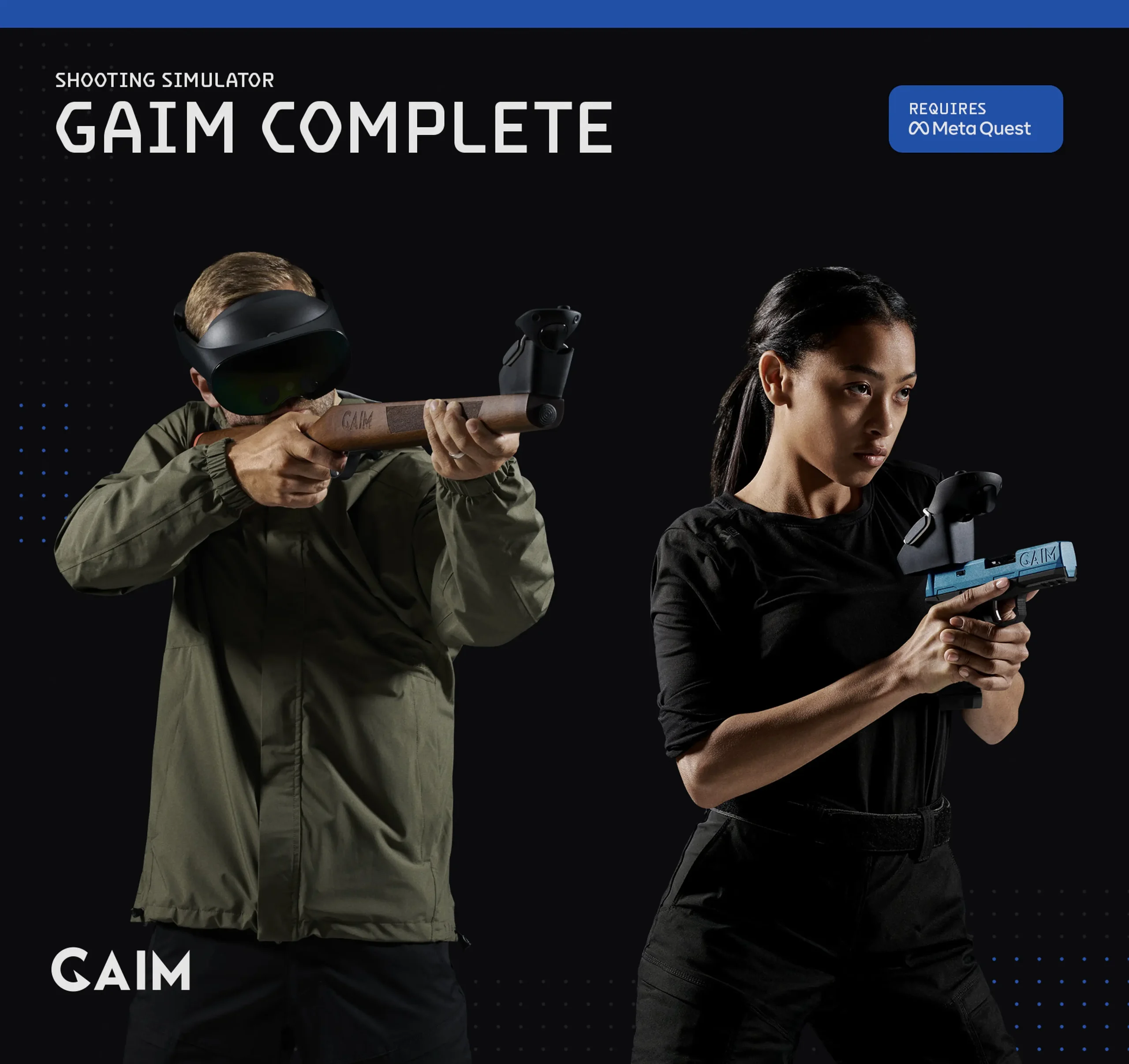
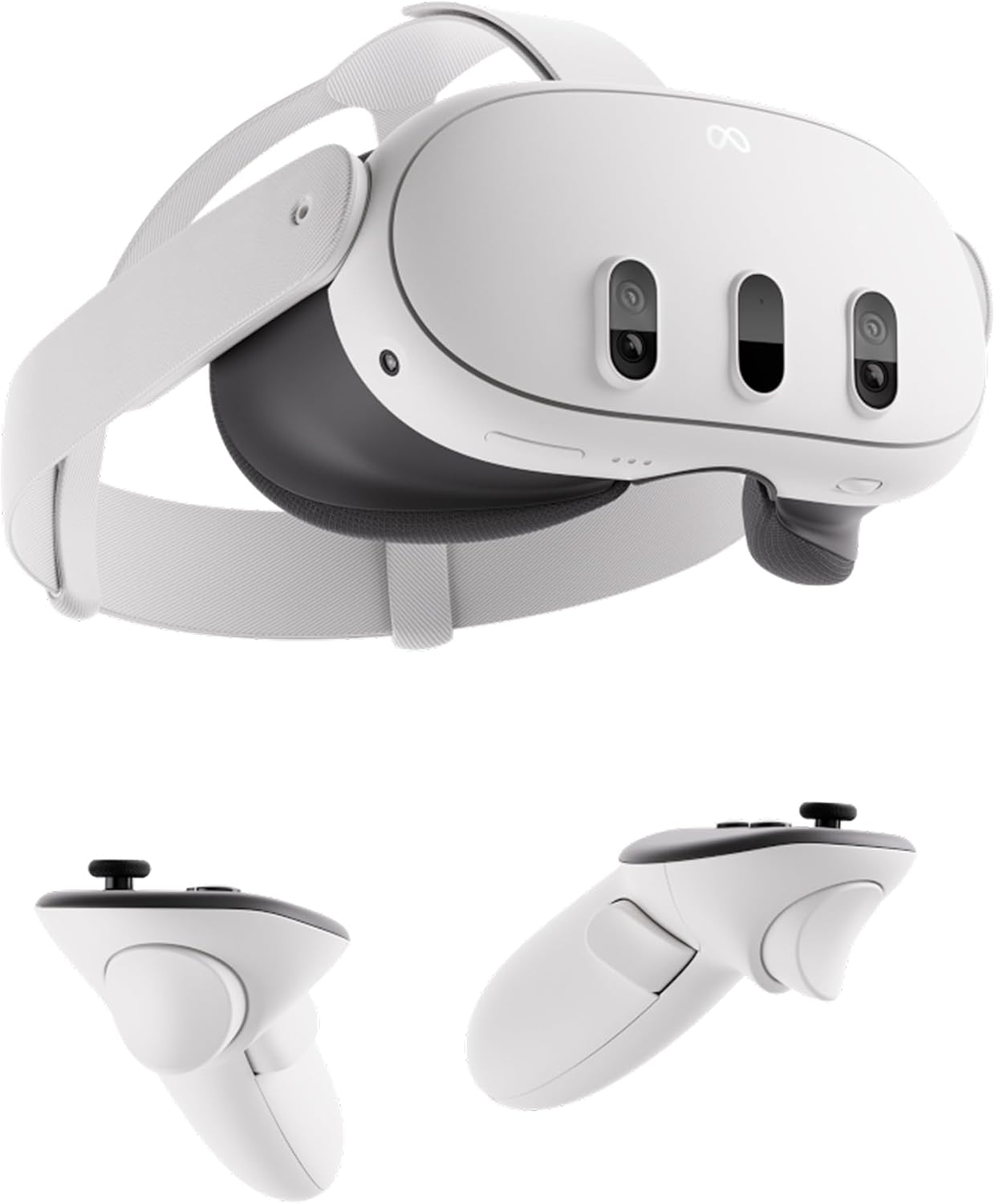
GAIM is a virtual reality dry fire training system designed to work with the Meta Quest 2, Meta Quest Pro, and Meta Quest 3 headsets.
I’ve advocated for using virtual reality for firearms training for a few years now. Back then, I was training with first-person shooters, which were games but offered realistic movements and operating procedures.
GAIM delivers a gaming aspect that incorporates training, but with a fun approach that motivates you to continue training.
Dry fire training can sometimes feel like a slog. What used to be a forced 15 minutes to keep my skills up has expanded into +30 minutes. Not to mention, I’ve fired thousands of rounds through the GAIM, and after just five days of focused training, I shaved almost two whole seconds off my time shooting Smoke and Hope.
So, let’s talk more about GAIM and what sets it apart from other gaming-style dry fire trainers. I’ll cover specs and features, and how to actually use it to dry fire.
Keep reading!
Table of Contents
What is GAIM?
GAIM is both a game and a clever way of naming a virtual reality shooting system.
It’s hardware and software that require an Meta Quest headset. On top of that, you have to purchase one of the GAIM packages.
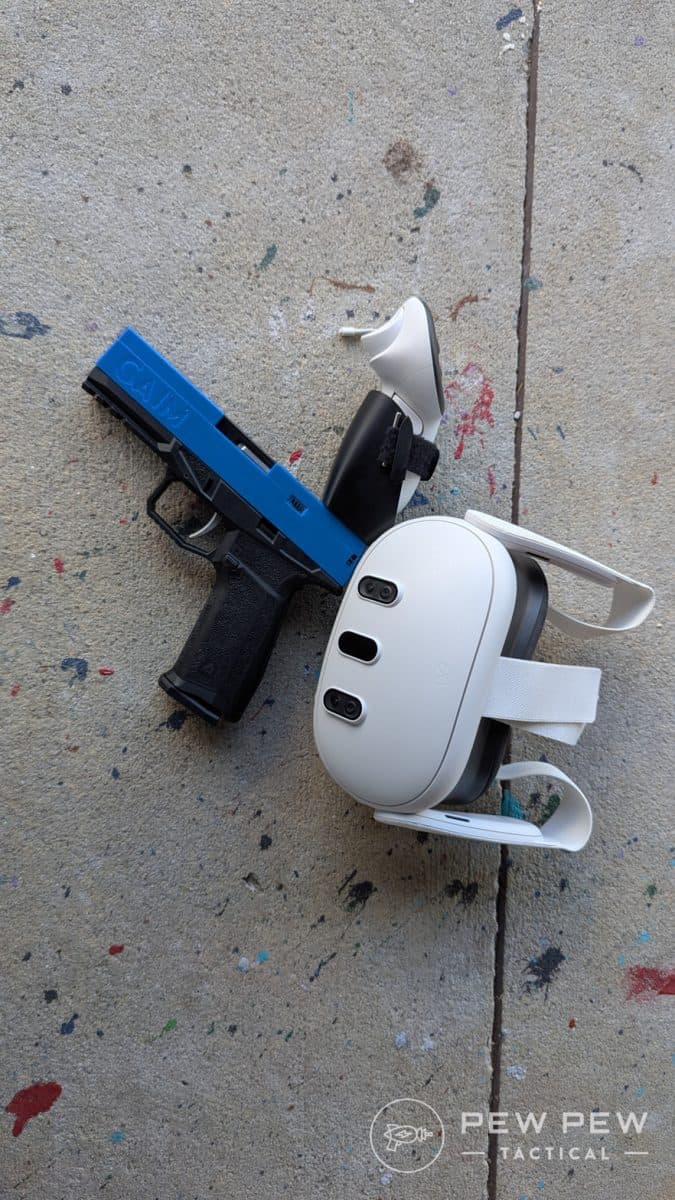
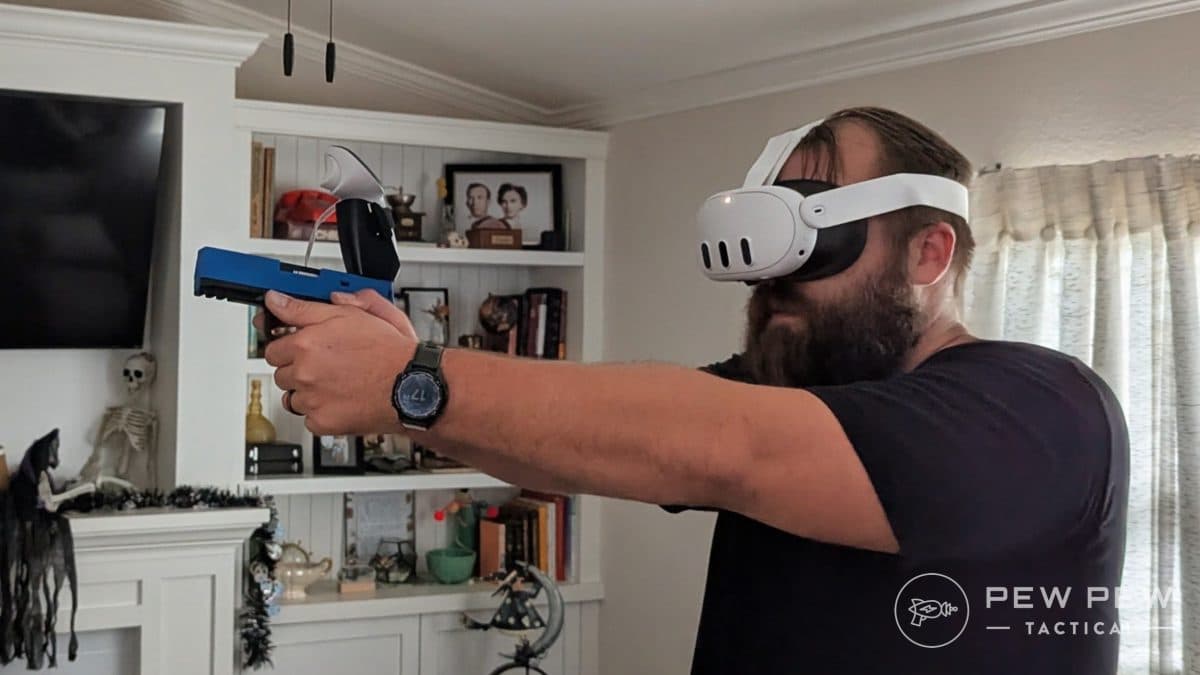
You can use the standard Meta Quest controllers, but you’ll get the most out of using one of their training guns, or in some cases, your own gun. The GAIM controller uses a Bluetooth-enabled, battery-powered drop-in trigger system that moves between the various systems. The Gen 2 trigger allows you to change the travel of the trigger to better match your firearm.
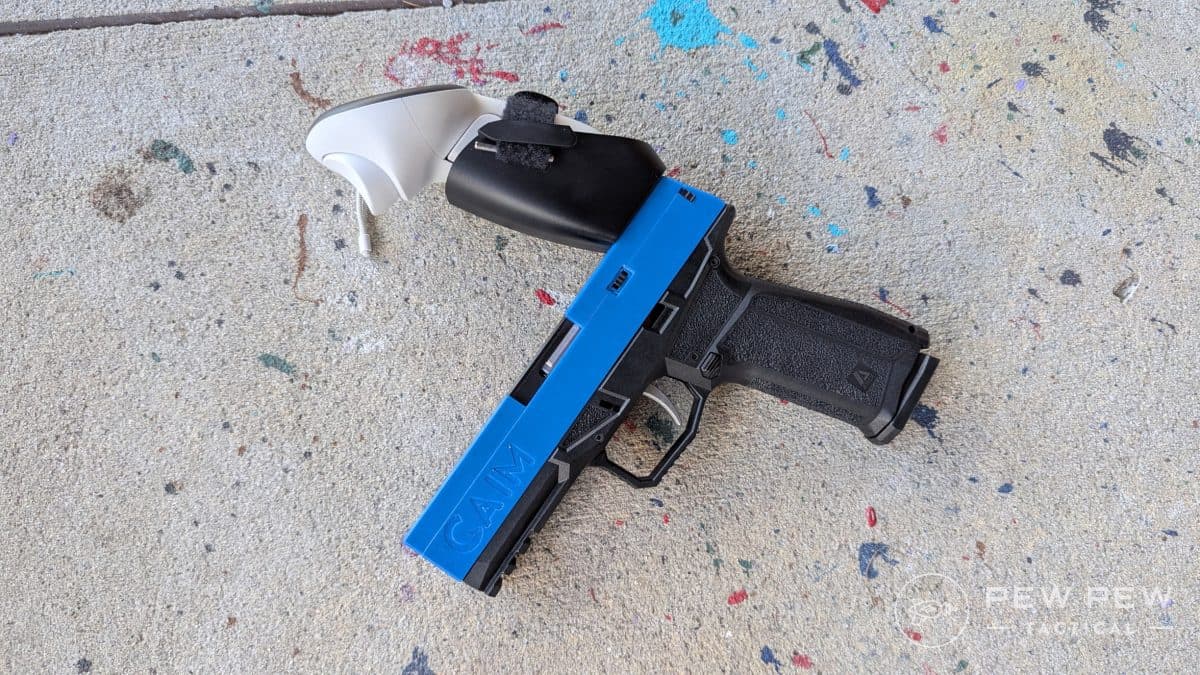
I have the GAIM Training Handgun, which is essentially an Arex Delta polymer frame grip module with a removable magazine. The slide is fixed, and your Meta Quest controller attaches to the top of the system, but the gun is the controller.
Additionally, they’ve teamed up with DryFire Mag to create a Bluetooth-enabled design that fits your favorite double-stack Glock. A mount allows you to connect the controller to your real gun and use your real Glock when training.
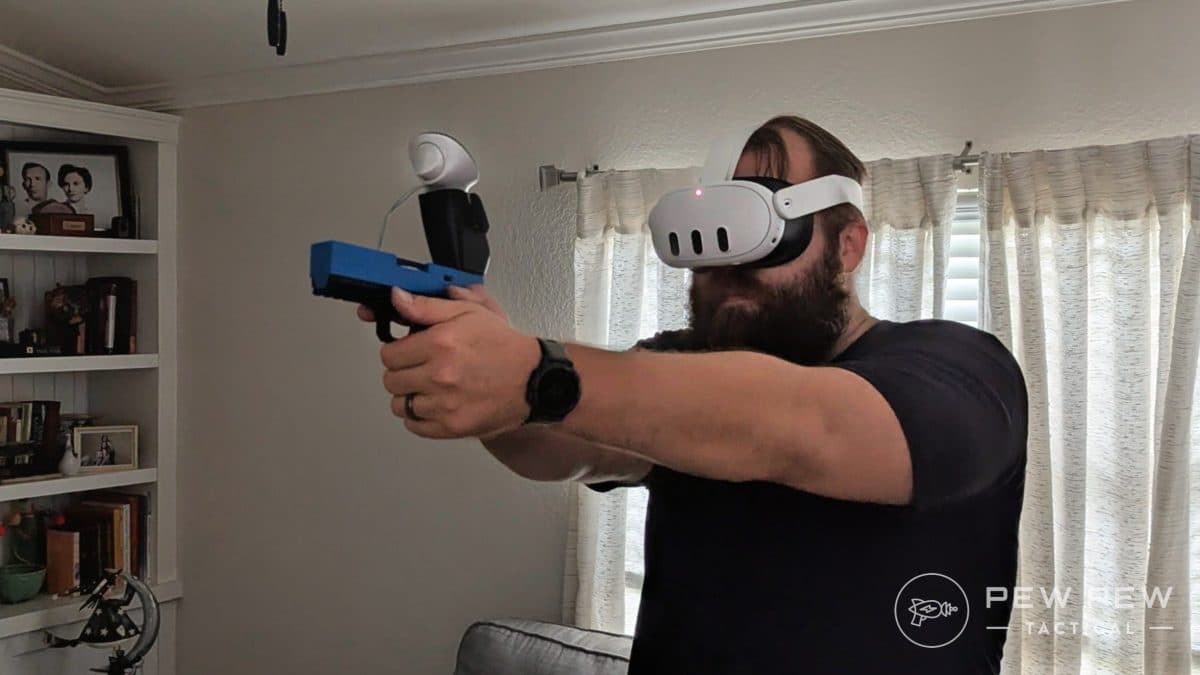
For rifles and shotguns, the system uses a wooden rifle stock that the trigger drops into. This covers your shotgun and rifle training.
Finally, GAIM recently introduced the GAIM AR, modeled after an AR-15. It uses a drop-in trigger that sits in the controller, which features an adjustable stock, a removable magazine, etc.
You get the whole experience in what’s essentially another blue gun. That said, take all normal dry fire precautions when using GAIM with a real gun.
How GAIM Trains You
The system gamifies training through various scenarios and shooting sports.
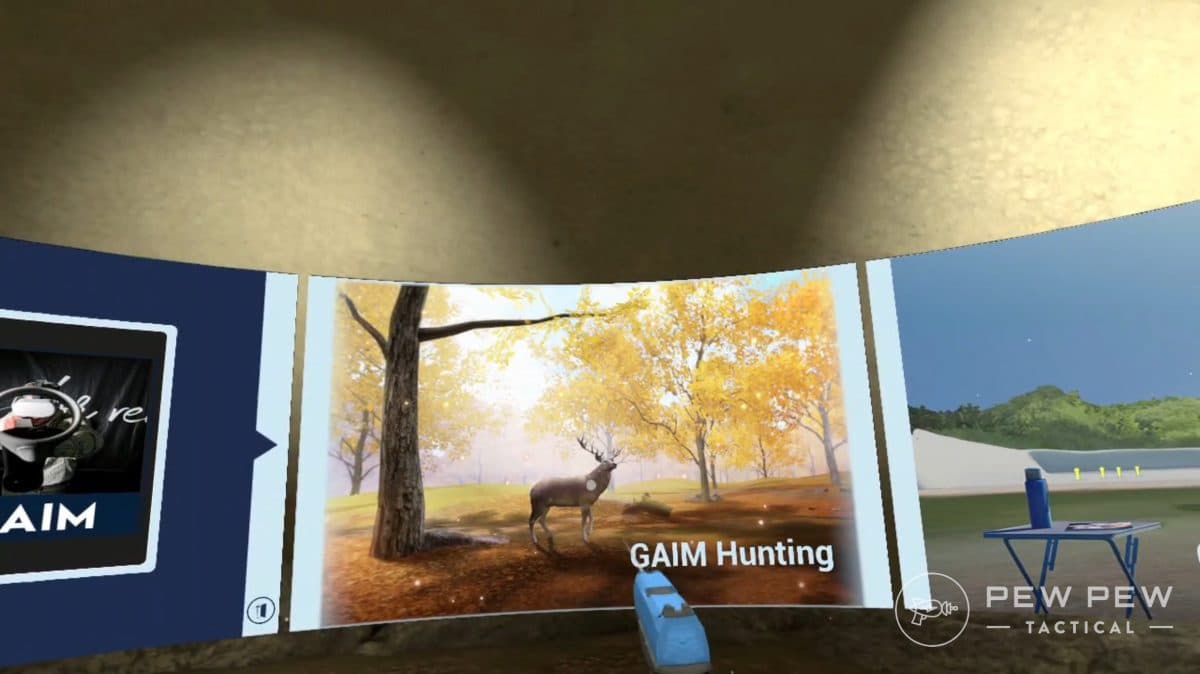
There are hunting scenarios where you shoot wild boar, deer, birds, and bear. These modes encourage you to practice your lead and value follow-through as well as proper shot placement.
The sport shooting scenarios include Steel Challenge, IPSC, skeet, and trap. The Steel Challenge mode allows you to pick between an AR or a handgun, matching the actual sport that allows for .22 LRs and PCCs.
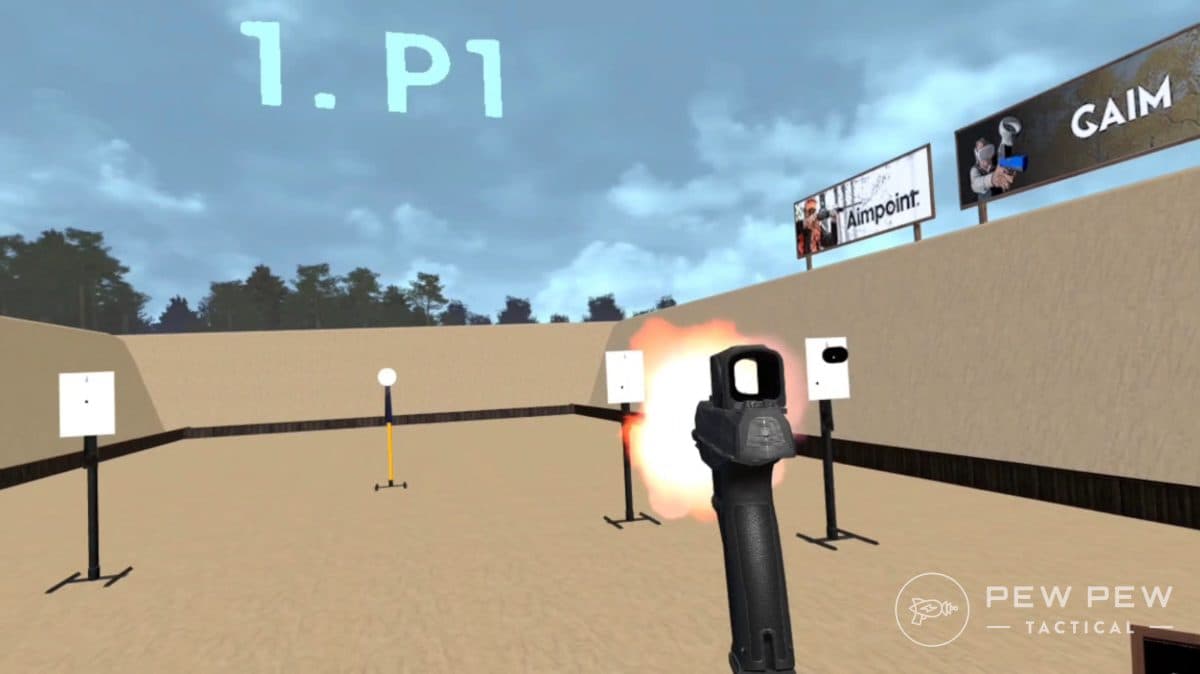
Finally, one of my favorite features is the range builder. It’s exactly what it sounds like – the user builds the range. Steel, paper, cardboard, and moving targets are all options, and you can integrate walls and obstacles to create an additional challenge.
The first thing people are going to comment on is the lack of recoil. Yep, you’re right, there is no recoil, but recoil management isn’t all there is to shooting.
Much like dry fire, GAIM aims to build your skills on everything but recoil control.

I worked on follow-through, precision aiming, target transitions, reloads, sight alignment, red dot usage, drawing, and more when testing the system. The value comes from real-time feedback in the game. GAIM showed when I hit and when I missed, plus I didn’t have to constantly re-rack a slide or bolt to keep dry firing with the trigger module.
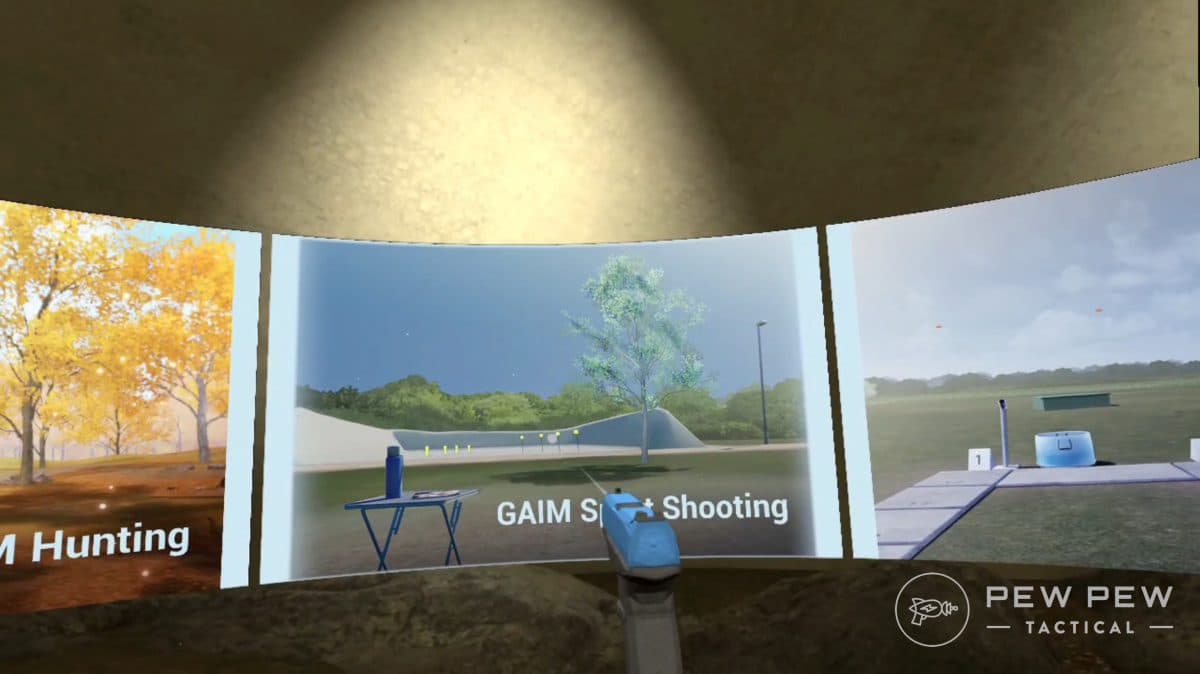
For sports like trap and skeet, dry fire just isn’t enough. The game allowed me to practice swinging skills and follow-through with live feedback from clays when I hit or miss. I was able to practice dynamic shooting skills that go way beyond just dry fire, too.
I think it’s the closest you can get to shooting real steel without going to the range. Think of it like a skill-building monster that can take your current shooting skills to the next level.
GAIM won’t replace live fire training, but it complements it.
Testing & Dry-Firing the GAIM System
Since my focus is primarily on defensive and competition shooting, my GAIM setup came with the DryFire Mag and the GAIM handgun controller.
I played around with all of the modes, but without the rifle peripheral, I didn’t get much from those modes.
My goal was to figure out how GAIM could improve my real-world shooting. The only real way to test that was to dry-fire with GAIM and then head to my home range and live fire to see if GAIM helped me improve.

As I shot through the GAIM Of Steel stages, Smoke & Hope, it dawned on me that it mimicked Steel Challenge.
That would be easy to replicate at my actual range. I replicated the game mode at home using cardboard cut to the dimensions of the steel targets. I then set up the targets at my home range.
On training day one, I shot the stage at my range -- five strings of fire -- then I cut out my longest string and averaged my time. I did not practice before, so this was a cold run. My average time was 4.75 seconds. (Not great; the current record holder, Max Michel, has an average time of 1.7 seconds.)
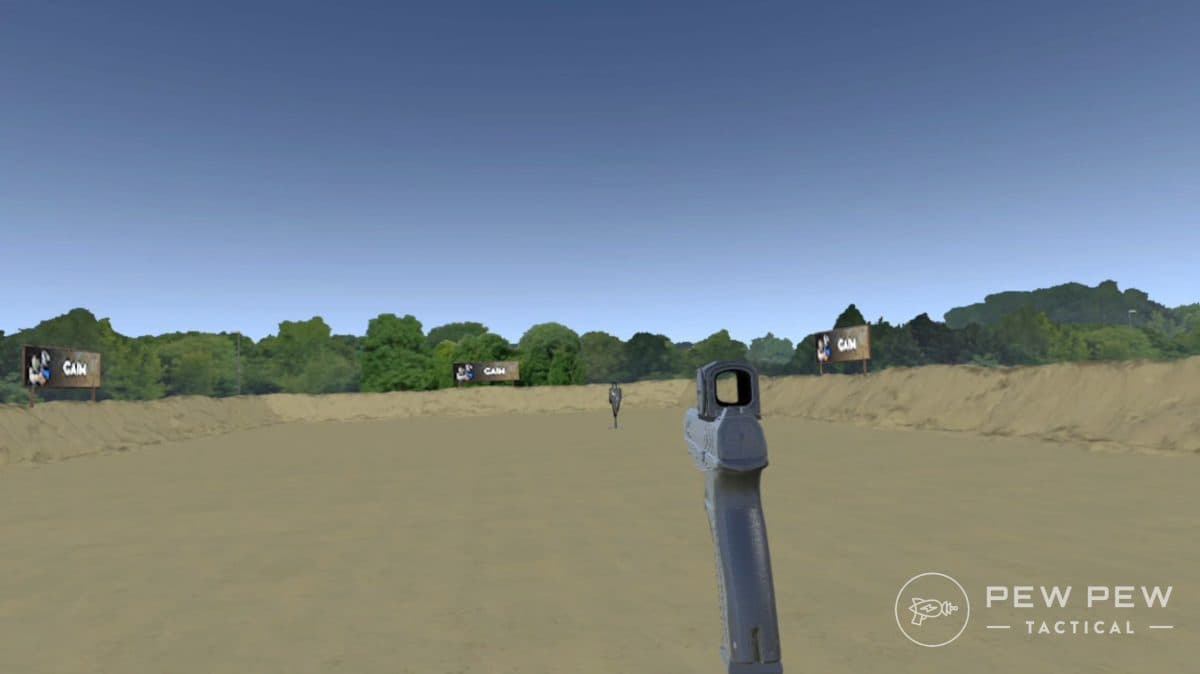
I had the option to pick from a Walther PDP, Glock, or Arex Delta with an ACRO red dot or iron sights. I chose the Arex Delta with a Steiner MPS. (Later on, after my last firing round, I had shots left over, so I shot them at the 12-inch target just for fun. The Steiner’s bolt sheared off, and the optic hit me in the head. Dangers of review work.)
For the next week, I shot Smoke and Hope a minimum of 20 times a day inside with GAIM. Most days, I shot well above 20, shooting until I couldn’t grip the controller anymore because my hands were so tired. Every time I popped the headset off, the head straps would be covered in sweat.
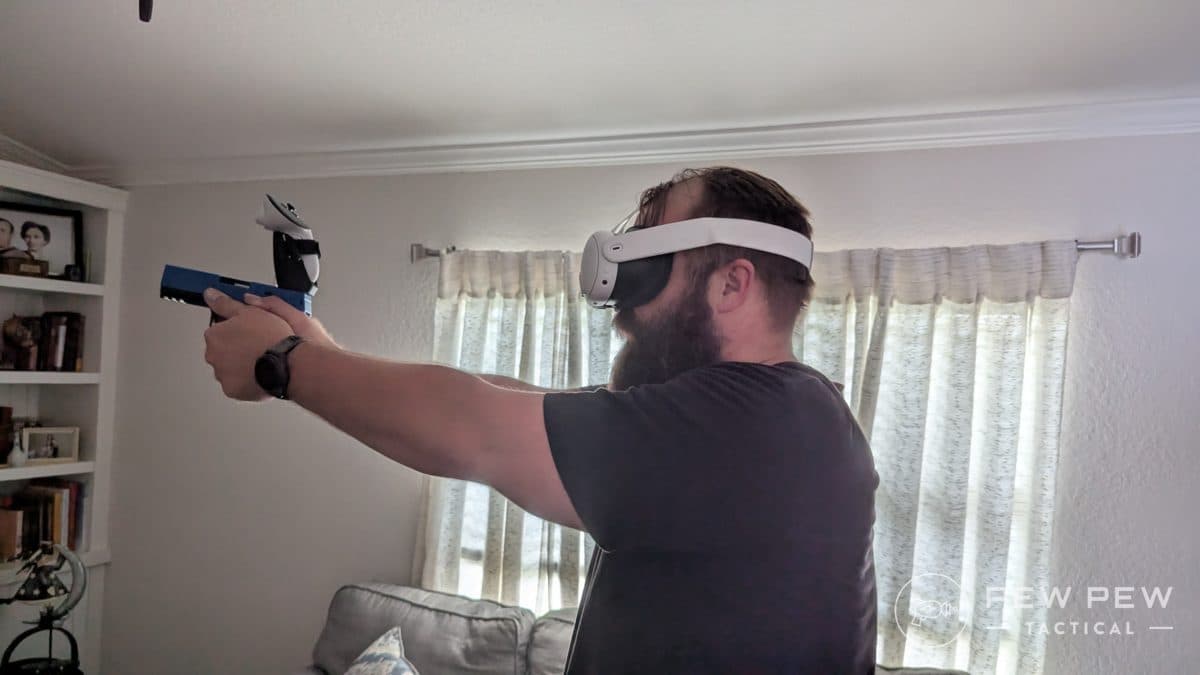
Dry fire training was fun, but frustrating. The system itself wasn’t frustrating, but missed shots on my part made me mad at myself. But then I would score a new best time, and that dopamine rush of success would hit me.
I quickly learned to engage my targets in a specific pattern. Smoke & Hope put the stop plate in the center, and it’s flanked by two large rectangular targets on each side. I’d shoot the closer left target, the far-left target, and then rapidly transition past the stop plate and to the close right target.
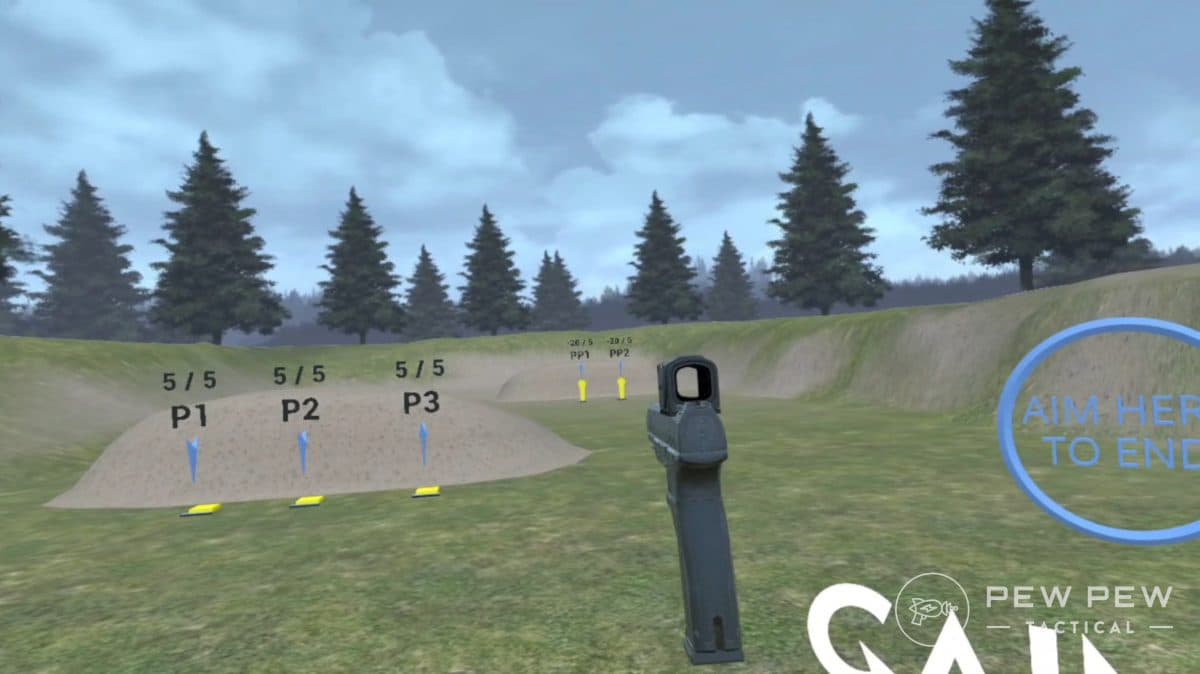
I finished up on the far-right target, then the stop plate to end the round. I found the smaller transition from the right far target to the smaller stop plate easier than the longer transition from the right close target.
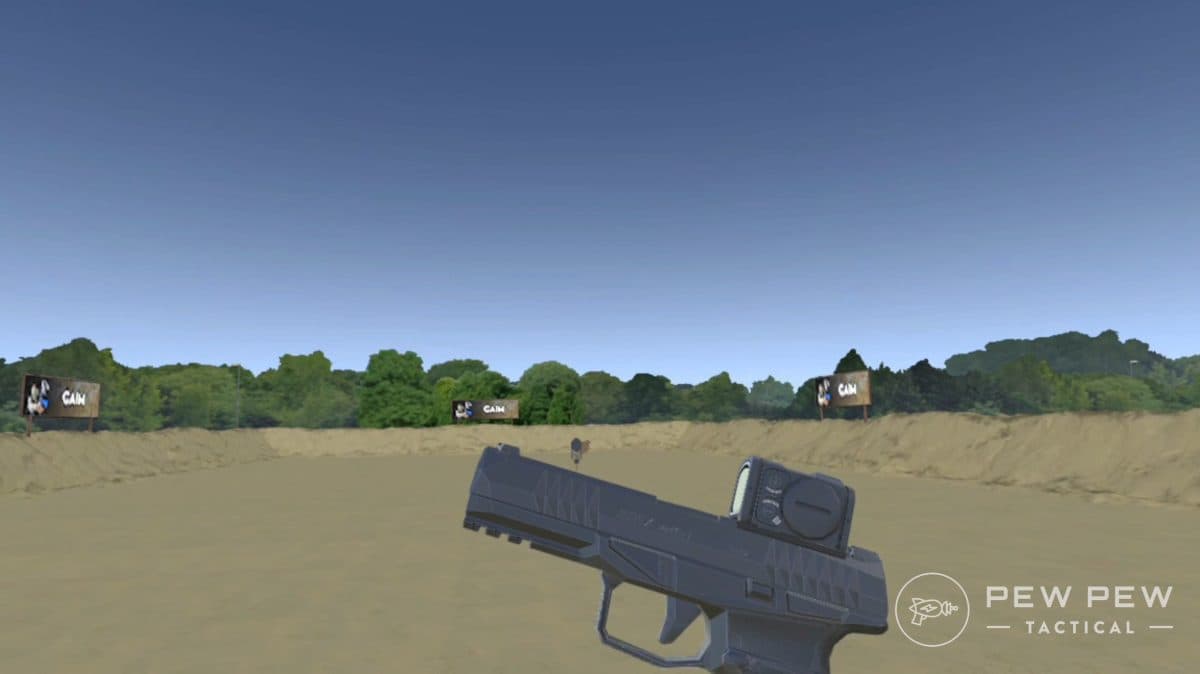
I also got radically faster at finding the dot and hitting the targets. If I saw the red dot dancing on the big white target, I pulled the trigger. Going fast makes it easy to miss, so being able to quickly recognize when the dot is on target is invaluable.
I learned how to follow the dot from target to target, and I got so much faster at target transitions. While learning this, I practiced a consistent grip. My hands were sore by the end!
After a week of dry fire training with GAIM, I went back to my home range to see if my live fire improved.
I was legitimately nervous. What would my live-fire performance look like? It was the same feeling I get before a real match, and like a real match, my fear ended as soon as the timer went beep.
I flew through the first string and pumped my fist when I saw the time. I trimmed my time radically! By the end, my slowest string was 3.12, and my average time was 2.88.

That’s almost two whole seconds off my time in just five days of training. Everything I did in GAIM translated to the range. I could easily find the dancing dot on each target and send it. Transitions were smooth and quick, and even my footwork improved.
What blew my mind was the performance tracking. After each round in GAIM, I can look back and see my muzzle movement versus when I pulled the trigger. I used this data to limit how far I was overshooting targets, especially the stop plate.
Without a doubt, GAIM improved my skills.
IPSC Training & Range Builder Modes
Beyond Steel Challenge, I shot the IPSC portion. While the three stages I tested were fun, I was left wanting more.
For that reason, I spent a lot of time in the range builder mode building a mix of practical and engaging ranges.
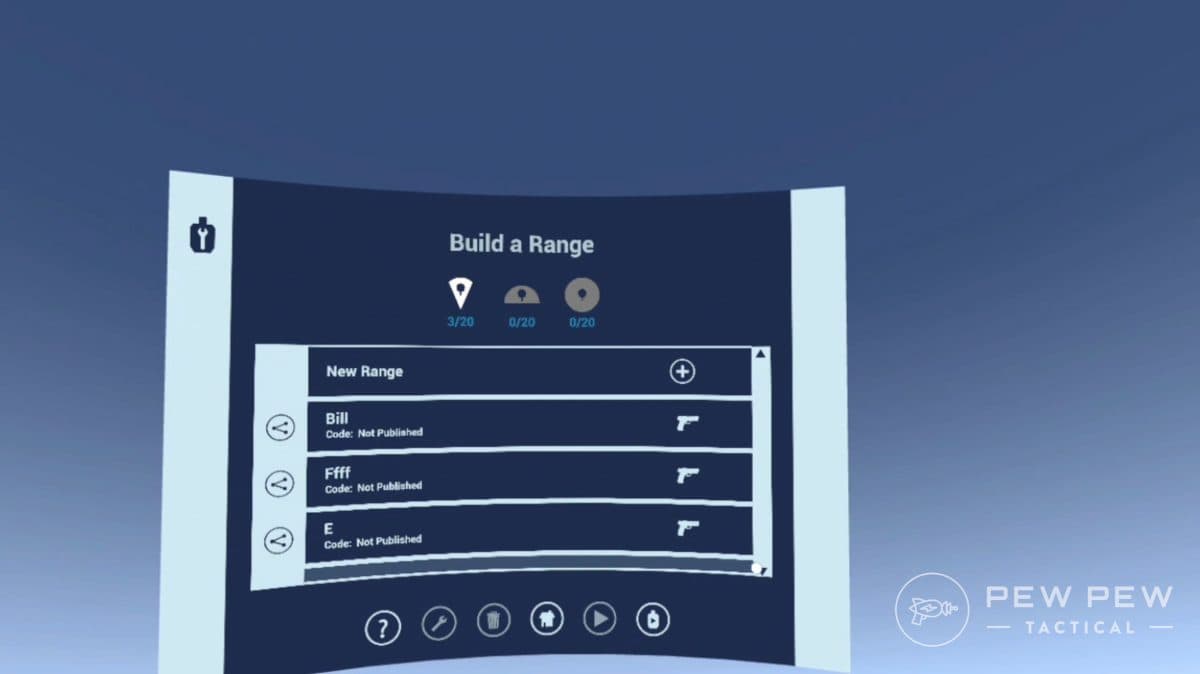
My overall plan was to use the system to work on more defensive-focused drills with draws, double taps, failure-to-stops, Bill Drills, and more.
Sometimes I set up specific drills, like an El Presidente drill with three USPSA targets. Other times, I threw five Texas Stars on the range and tried my hand at moving targets. As a shooter, I worked on my weak points with specific targets at different ranges. It’s easy to spend a lot of time both goofing around and creating interesting and dynamic ranges.
The range builder is super easy to use and allows me to be as creative or as practical as I want. I was also able to save and share ranges I built. If I were a match director, this would be my go-to tool to design stages and get a feel for how they work before doing it in real life.
A lot of holsters are incompatible with the weird slide design of the GAIM handgun, so practicing draws can be iffy. GAIM does make a holster for the system, but I feel like you can also just experiment with existing holsters to see if they work. I’m not carrying the GAIM controller for real-life concealed carry, so it’s fine.
Improvements I’d Like to See
First, I would love to see more IPSC stages. With only three stages, I wanted more. I had tons of fun shooting the IPSC stages and would love to see it expand. It would also be great to allow user-created maps with IPSC rule sets.
Additionally, I’d like to see the ability to add more parameters to the custom-made ranges. If I want to work on reloads, I'd like to limit the ammo in the gun and create a reload situation.
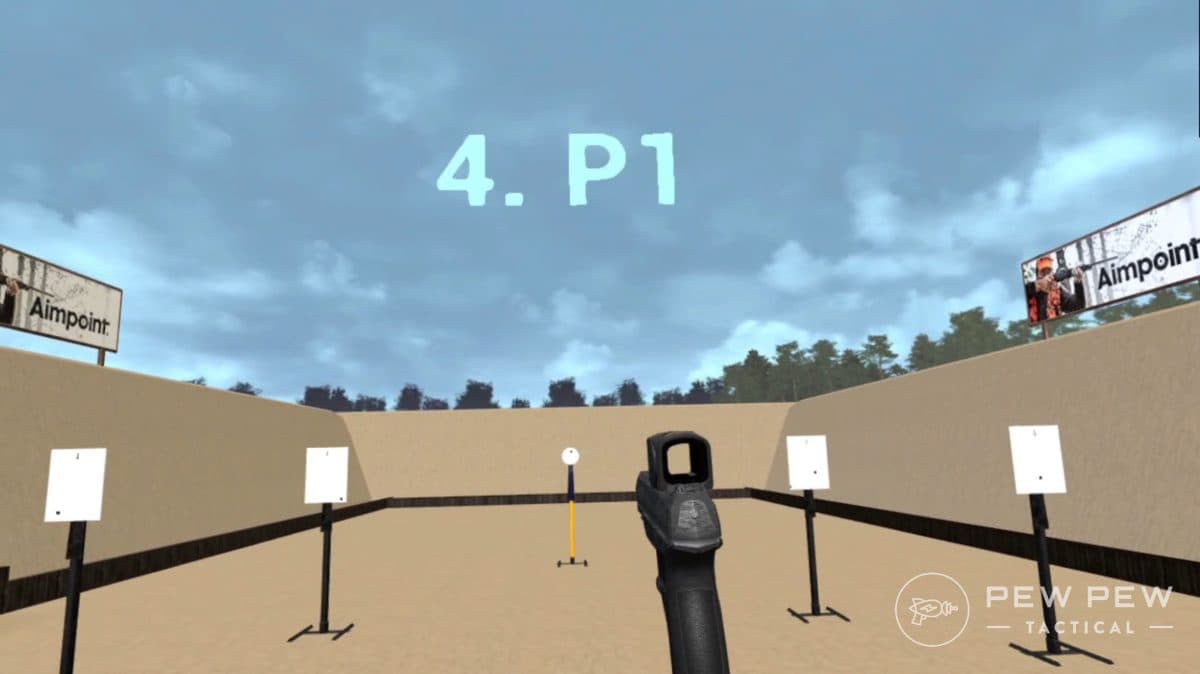
I would also love to see where my rounds hit on targets beyond just hitting the A zone, the C Zone, etc.
Next, the price…the setup is not cheap and will limit some shooters' ability to participate.
In addition to needing an Meta Quest headset (around $500), you will need the GAIM controllers, which aren’t cheap (starting at $350). GAIM’s modes are subscription-based, meaning you have to pay yearly to access different aspects of the software.
On one hand, that’s great because you can pick and choose the different modes. You don’t have to pay for the hunting modes if you just want to shoot pistols, and vice versa. But it’s still pricey.
The complete bundle with a handgun, rifle, two triggers, and all the scenarios costs $1,195.
That’s not cheap. It equates to roughly 5,000 rounds of 9mm, and that’s a lot of 9mm. But you can get that many trigger presses on GAIM in about a week of training.
What do you think of the GAIM system? Rate it below!
Readers’ Ratings
5.00/5 (209 Votes)Your Rating
Who is It For?
GAIM is perfect for virtual reality enthusiasts looking to improve their firearm handling skills. It’s a fantastic system that allows you to build real skill without firing a round. It dropped nearly two seconds from my time on Smoke and Hope, and I plan to start running each stage and eventually head to a Steel Challenge match and see if I can clean up.
I could see a real benefit to this system for teaching new shooters.
It’s 100% safe and would be an amazing educational tool. If you aren’t wearing the goggles, you can still broadcast what the shooter sees to a screen and observe how they shoot. The GAIM provides a very safe, nonintimidating system for firearms training.
How Pew Pew Tactical Tested the GAIM Virtual Reality Training System
Pew Pew Tactical author Travis Pike tested the GAIM system and wrote this review based on his testing.
To adequately test the system and evaluate if it improved his real-life shooting skills, Travis set up a matching design at his home range. He shot the stage first, cold with no practice, and measured his time via a shot timer.
He used the GAIM to dry-fire for a minimum of 20 minutes every day for a week. He then went back to the range and shot the same stage live fire. He used a shot timer to note the time and then measured the difference between the original live fire and the post-GAIM effect.
Travis has spent a lifetime shooting as a kid and later joined the United States Marine Corps, where he spent five years as an infantryman and machine gunner. He now teaches concealed carry in Florida and competes in competition shooting matches, where he regularly dry fires at home to work on his skills outside of matches.
Final Verdict
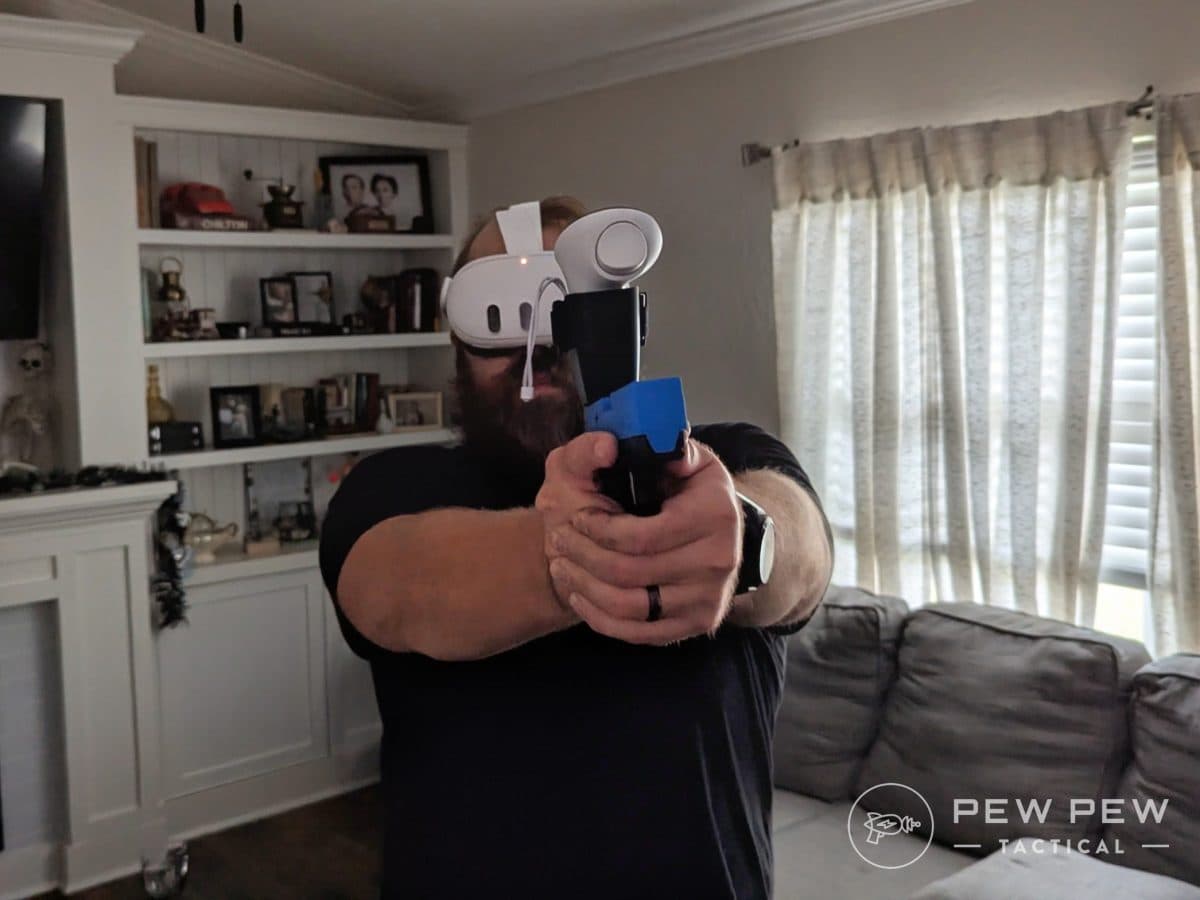
Ultimately, the GAIM Virtual Reality Trainer will build your skills in a few disciplines.
It’s fun, it’s easy to use, it never crashed on me, and I greatly enjoyed my time with GAIM. It has me looking forward to dry fire these days.
Do you think the juice is worth the squeeze? Let us know your thoughts below. For more on dry fire training, check out our complete guide to training at home!