
ATF Forms Explained: A Guide to Common Form Types
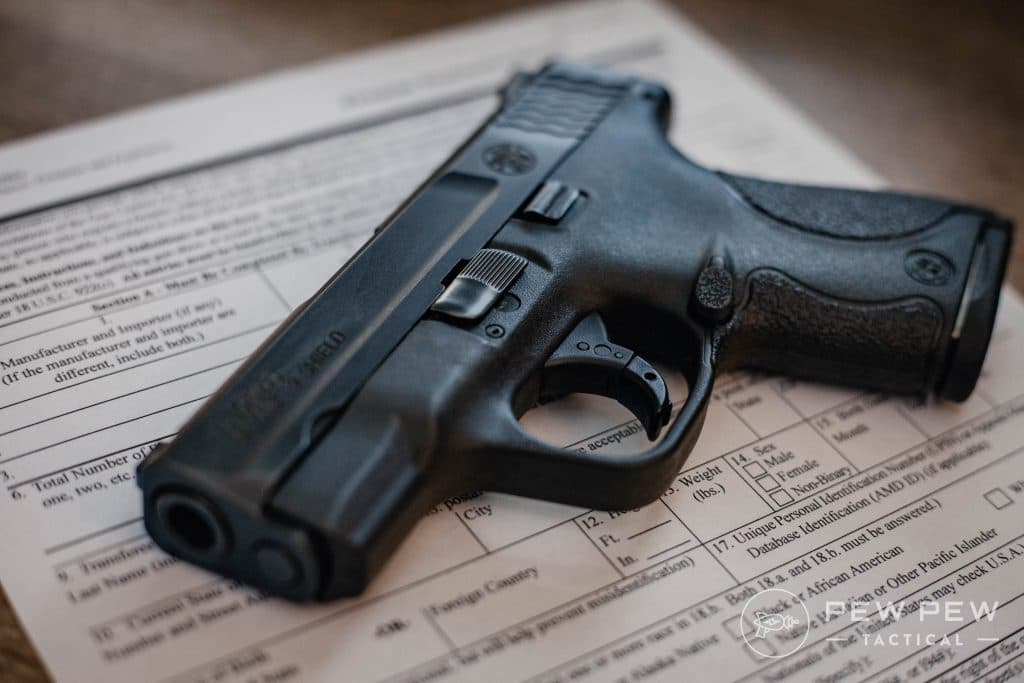
We break down some of the most common ATF forms you'll encounter while buying guns and even some accessories/parts.

SOLGW/Glock/Remington 870 Armorer. SDI Associates in Advanced Gunsmith. NRA Instructor & RSO
We review products independently. When you buy through links on our site, we may earn a commission to help support our testing. Learn more.
For many gun owners, ATF forms present a source of confusion and misinformation.
It’s not always super clear what’s what and which one you should be using.
So, today, I hope to help you out a bit by walking through the various forms. I'll help simplify these forms and debunk some of the myths and rumors surrounding them.
As of the time of this writing, these forms are part of the process of legally owning some firearms regulated by the National Firearms Act and Gun Control Act.
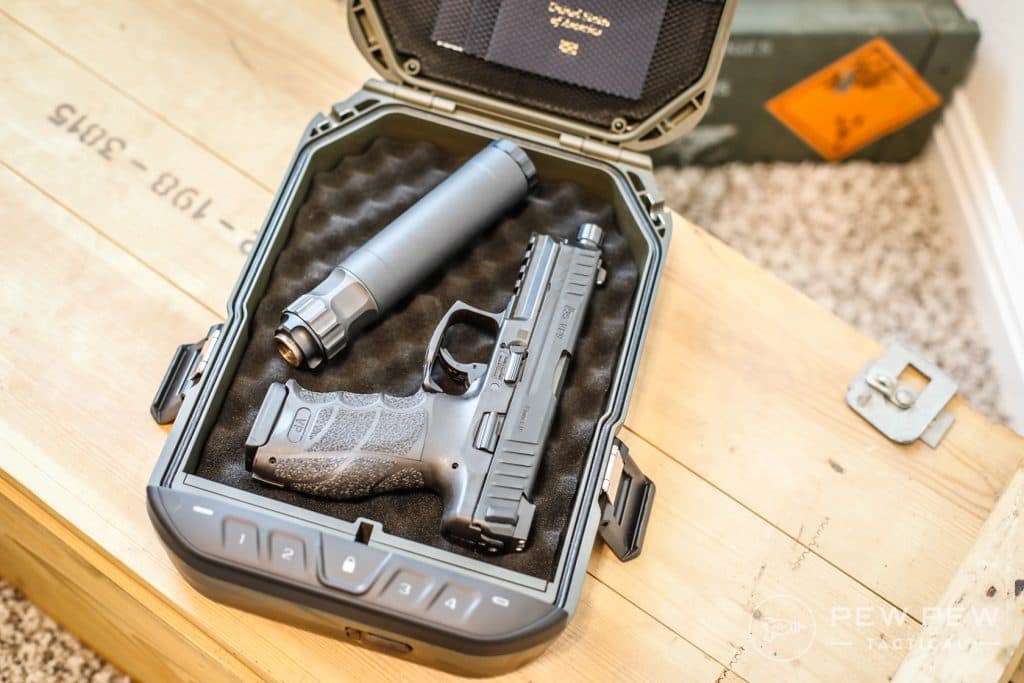
It is by no means a comprehensive list (because there are a lot of forms), but it should highlight ones that a gun owner might see in the wild.
So the next time you go to buy a gun or regulated part, you know what you're doing.
Form 4473
Anyone who's purchased a firearm from a licensed dealer has filled out a 4473 at some point.
Form 4473 is the one a purchaser fills out to buy a gun. The dealer completes it and then submits it for the NICS background check.
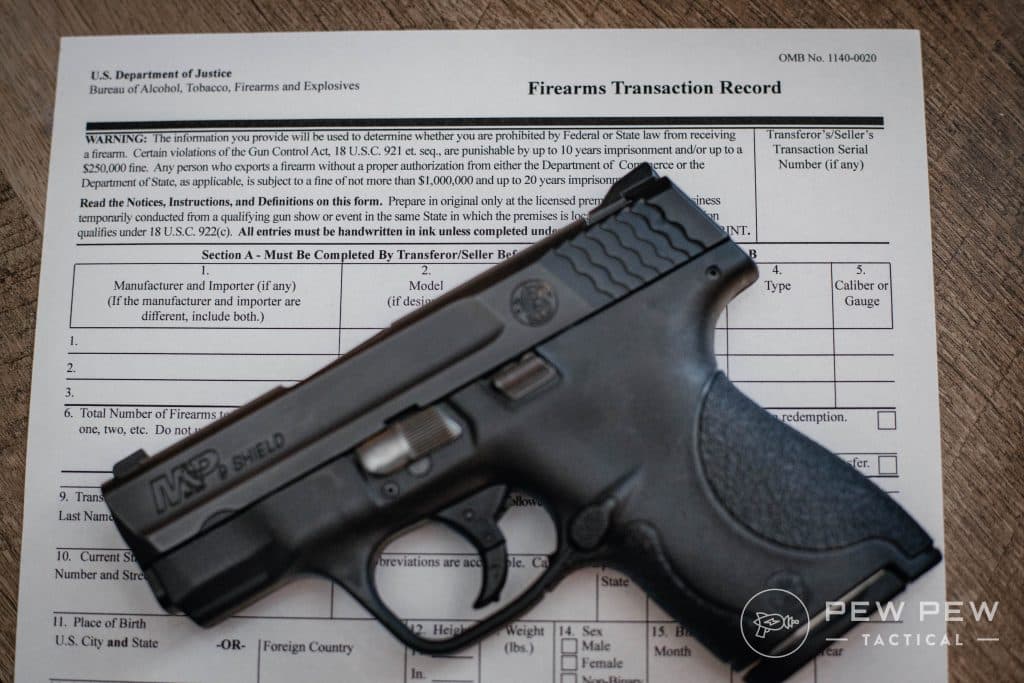
It covers basic information about the purchaser like name, address, race, and ethnicity. But also covers key questions to determine if a person can legally possess a firearm.
When filling this one out, read through the questions carefully to avoid a wrong answer. A wrong answer can result in a denial.

Questions include things like:
- Have you ever been dishonorably discharged from the military?
- Have you ever been ruled mentally deficient?
- Do you have any felony convictions or misdemeanor domestic violence convictions?
Worth noting, per federal law, marijuana is still a controlled substance.

Even if your state has legalized marijuana for recreational or medical use (as in medical marijuana cardholder status), it is illegal at the federal level.
This means it can/will disqualify you from owning a firearm.
Once you fill out and sign the 4473, the FFL calls or submits an electronic application to a centralized office for their state to initiate a background check.
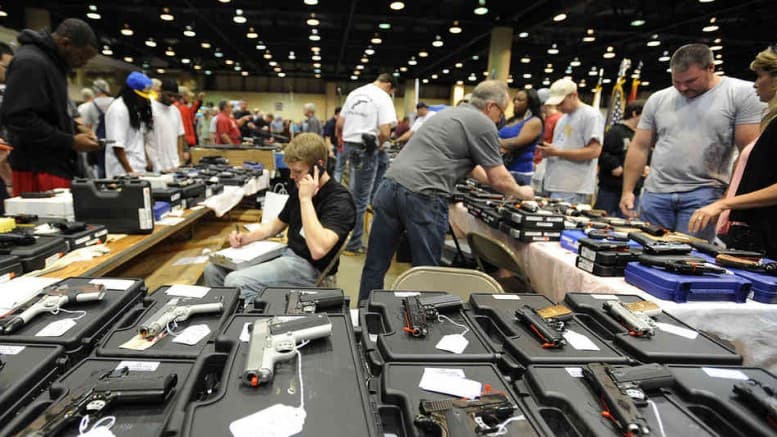
This can result in one of three results: proceed, denied, or delayed.
Proceed means that the person has been approved to purchase the firearm and may pick up their purchase whenever state laws allow it.
Denied means the person has not passed the background check and will receive a letter explaining why they failed and how to appeal it.
Delayed means that the person’s background needs to be looked at a bit more, and the FFL will be notified within 72 hours of the results.
After 72 hours, if no proceed or denied status has been communicated to the FFL, legally, they are allowed to proceed with the sale of the firearm. (Though most tend to err on the side of caution and not release the gun.)
Form 1
ATF Form 1 is the first of the forms we will discuss that are part of getting a tax stamp for an NFA item.
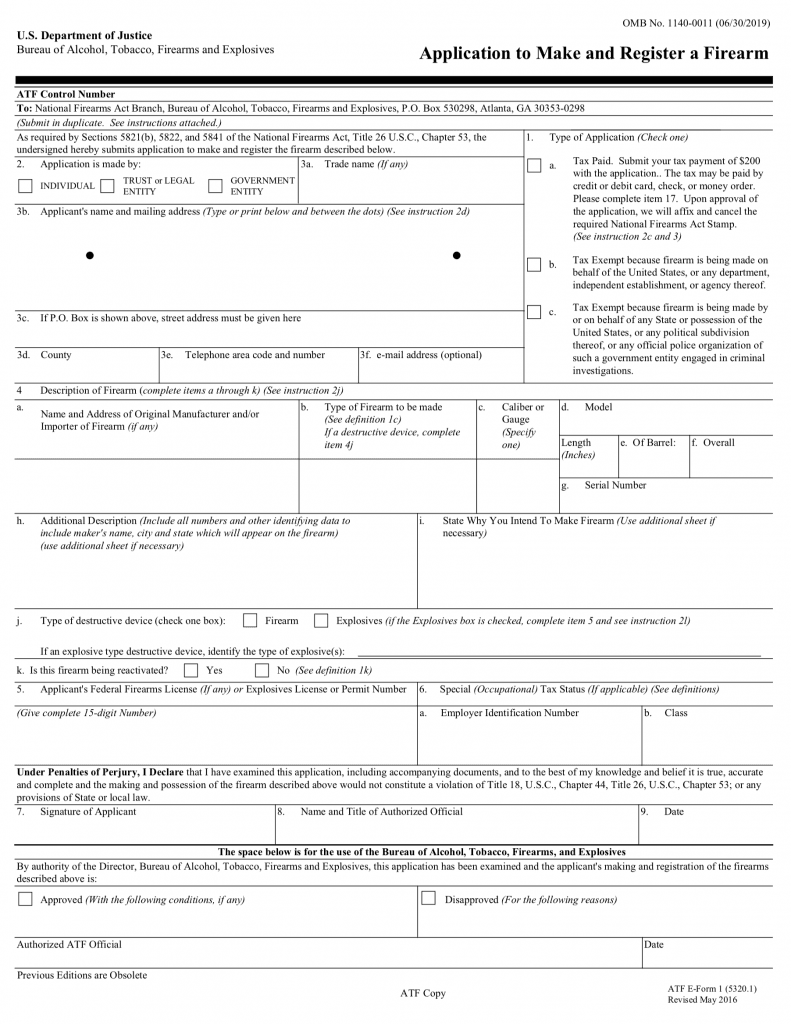
Form 1 applications apply to making a short-barreled rifle, a short-barreled shotgun, “any other weapon,” or destructive device.
Update: This also now includes some AR-style pistols. You can get more info on that in our article dedicated to AR Pistol Braces and the ATF.
For this article, we’ll only be dealing with the normal method of filing.
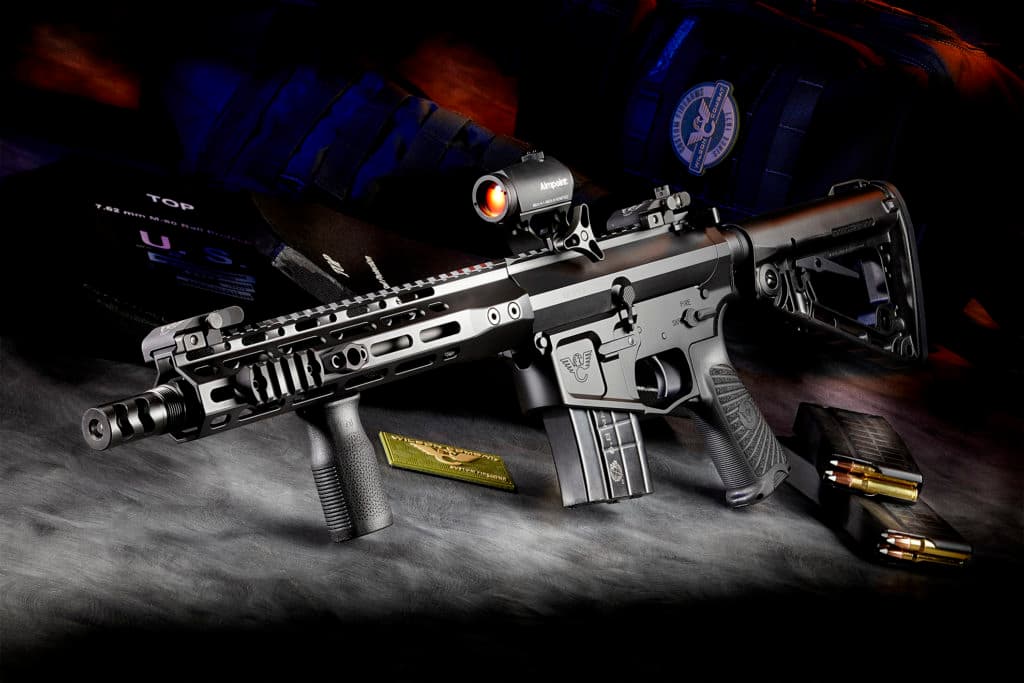
First, you must decide if you are filing as an individual or a trust.
An individual application means only the person submitting the paperwork is authorized to be in possession of the specified item. But they may let others use the item as long as they remain present.
Trusts allow multiple people to file as a collective entity.

Anyone listed as part of the trust is free to possess the NFA items listed as owned by the trust at any time. However, trusts require paperwork to set up.
For individuals, you need to know the serial number of the firearm you are making into an NFA item, caliber, barrel length, and overall length so you can fill in the appropriate boxes on the form.
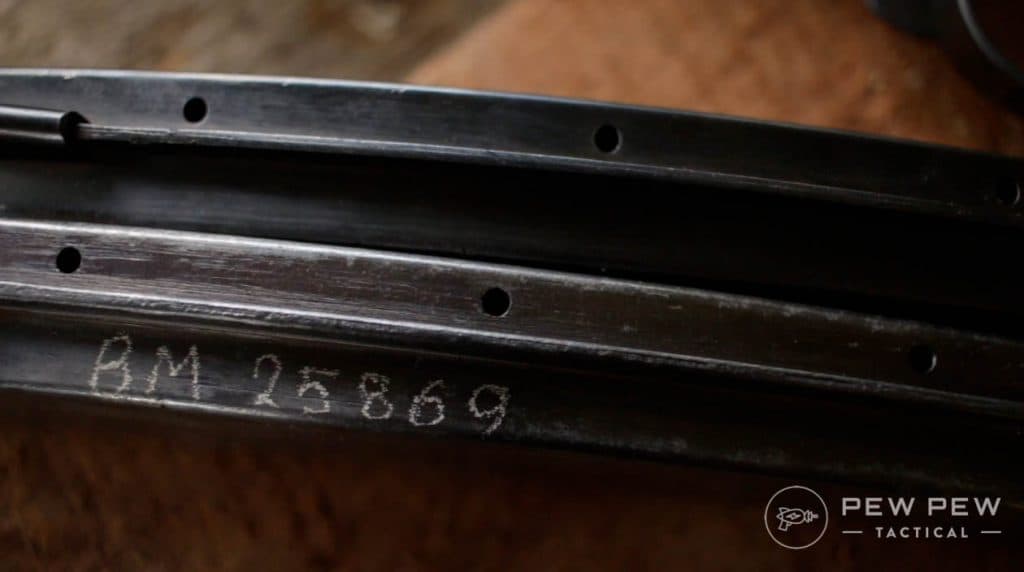
You also fill in your information, check the boxes to answer the questions, and sign and date the forms before getting ready to send it off.
Two copies go to the ATF alongside two fingerprint cards and one passport-sized photo via mail.
And then...wait.

At the time of this writing, the average wait time for a Form 1 filed traditionally is approximately eight months for individuals and nine months for trusts.
Form 2
Most average citizens will never have to file a Form 2 to the ATF. But I included it mostly to help people understand what it is and the process.
Federal Firearms Licensees can have several different types of licensing -- everything from the general sale of guns to the manufacture of explosives and destructive devices.
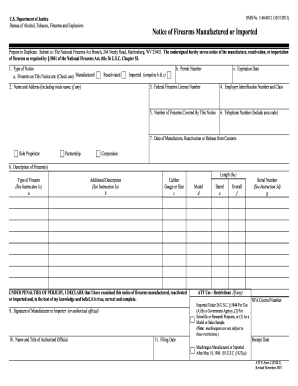
ATF Form 2 is something that manufacturers send in to notify the ATF of the manufacture or importation of an NFA item fitting their license.
For example, a Type 7 FFL -- a manufacturer of firearms and ammunition, a license that allows them to manufacture guns or ammo with the intent to sell them -- that also holds Special Occupational Tax Type 2 (the manufacture of NFA items) can make a suppressor, a short-barreled rifle, a short barrel shotgun, or even a full-auto version of a firearm.

They can then submit a Form 2 to the ATF to notify them that it was made.
A type 7 FFL with SOT 2 cannot manufacture something like a destructive device, as it is outside the scope of their licensing.
A Form 2 is one of the few instances where paperwork heads to the ATF after the item is created….for a Form 1, you legally must wait for approval to make the item.
Form 3
ATF Form 3 is another one that the average citizen will likely never file.
A Form 3 is a request to transfer an NFA item from one qualified FFL holder to another qualified FFL holder, with the appropriate SOT type.
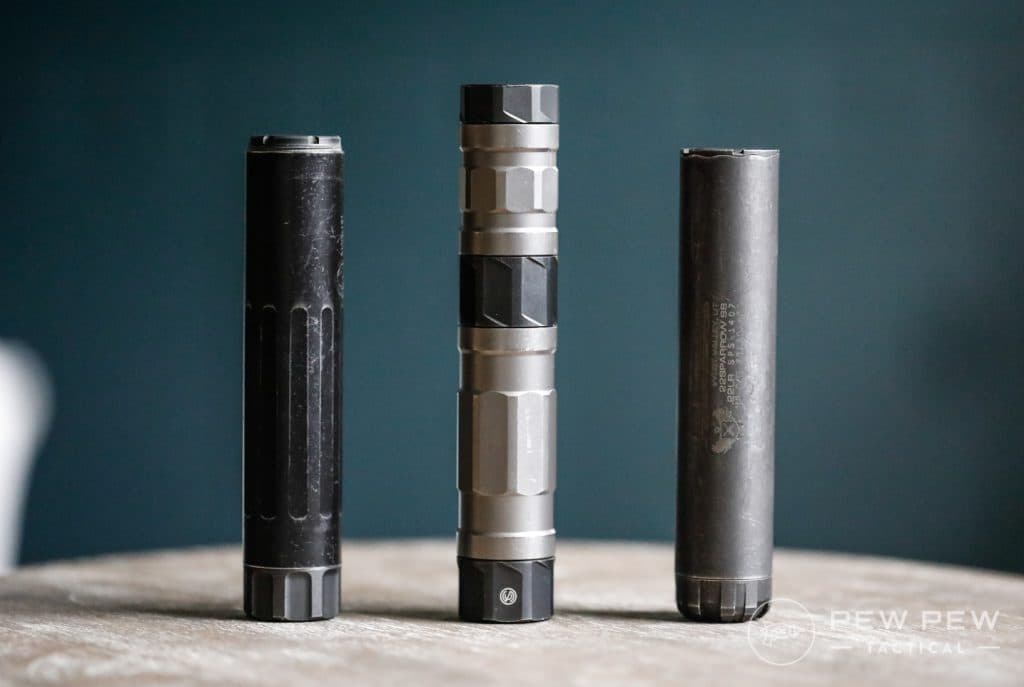
This most often comes into play when you buy a suppressor, SBR, or other NFA item online from a dealer. It then ships to the buyer’s local shop or FFL.
The shop it was purchased from must submit the ATF Form 3 showing that they will be sending the NFA from their shop (removing it from their inventory and books) and transferring possession to another NFA dealer’s possession for customer pick-up.
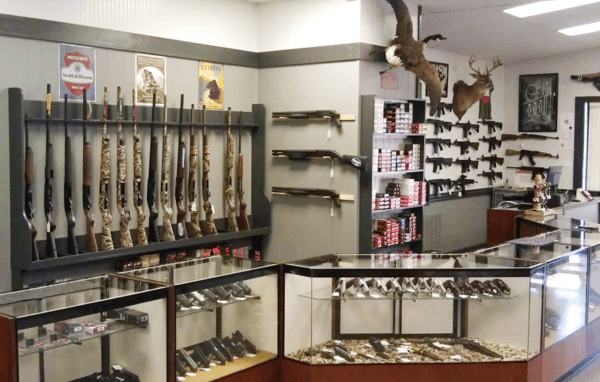
Once the item arrives at the local shop, the customer then fills out their appropriate paperwork...most likely a Form 4.
The process continues as normal from there.
Average wait time for approval on a Form 3 is less than one month, with some happening as quickly as one week.

Though not as frequent, a Form 3 can also be used by a qualified NFA dealer to import an NFA item.
I haven’t seen this, but the ATF has provisions for it. You can learn more at the ATF’s website.
Form 4
Form 4s are almost identical to Form 1s; however, they have a different purpose.
Form 1s are when you make the NFA items yourself.
On the other hand, Form 4s come into play when you purchase an NFA item. The item must be transferred into your name or the name of your gun trust.
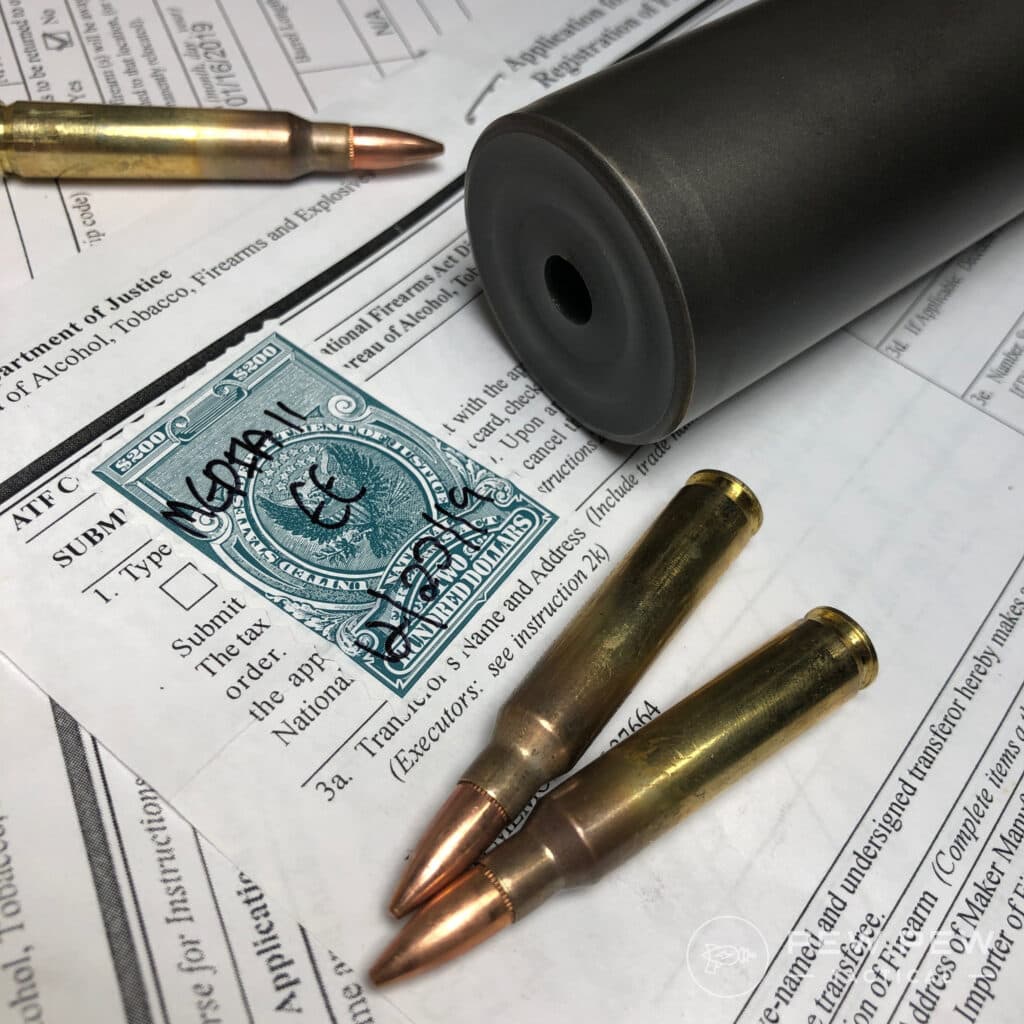
If you are purchasing a suppressor from a manufacturer, you must fill out and submit a Form 4.
(Want to buy a suppressor but don't know where to start? Check out our guides on How To Buy a Suppressor Online and Best Places to Buy a Suppressor.)
Buying a short-barreled rifle, a destructive device, or pre-1986 full auto? Form 4s cover those as well.
Most of the time, you use these to purchase NFA items from manufacturers. However, buying an NFA item from a private party also requires a Form 4.
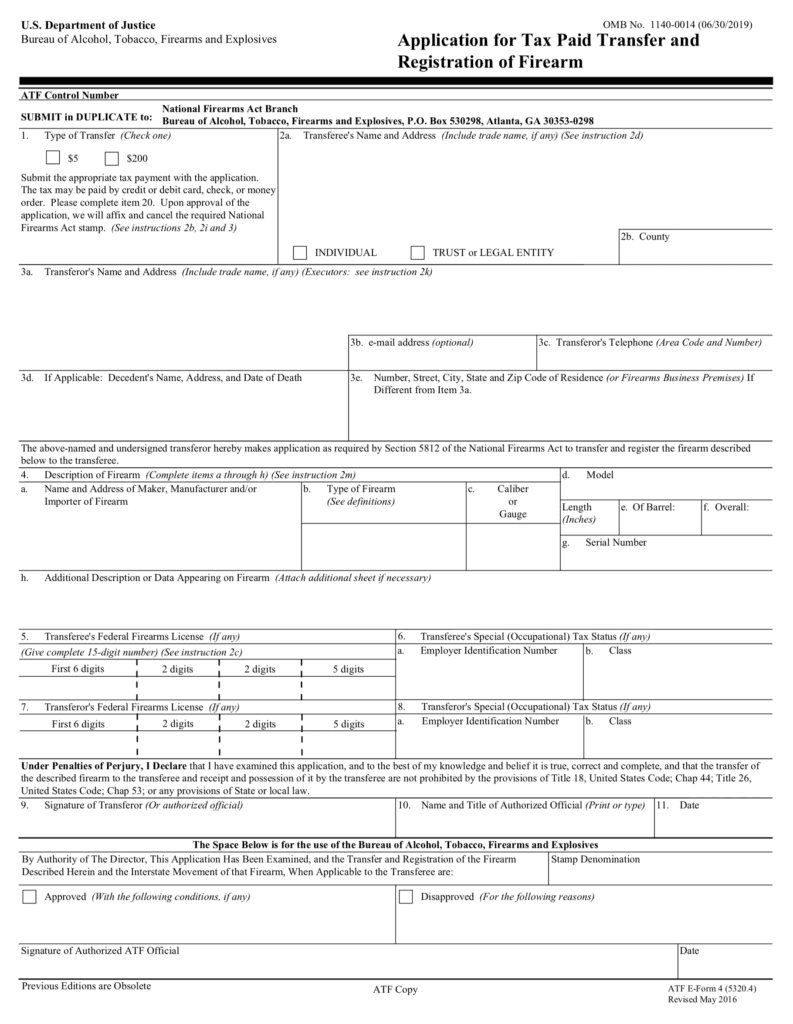
Some people are hesitant to conduct private party NFA sales.
It requires a significant amount of trust since the current owner must retain possession until the new Form 4 gains ATF approval. After that, the item can be transferred to the new owner.
One of the biggest differences between Form 1s and Form 4s is the inclusion of pre-86 full-auto firearms.

The Firearms Owners’ Protection Act (which we cover in an article here) featured an amendment by New Jersey representative William Hughes.
Commonly called the Hughes Amendment, it forbids the sale of machine guns made after the 1986 bill to civilians.
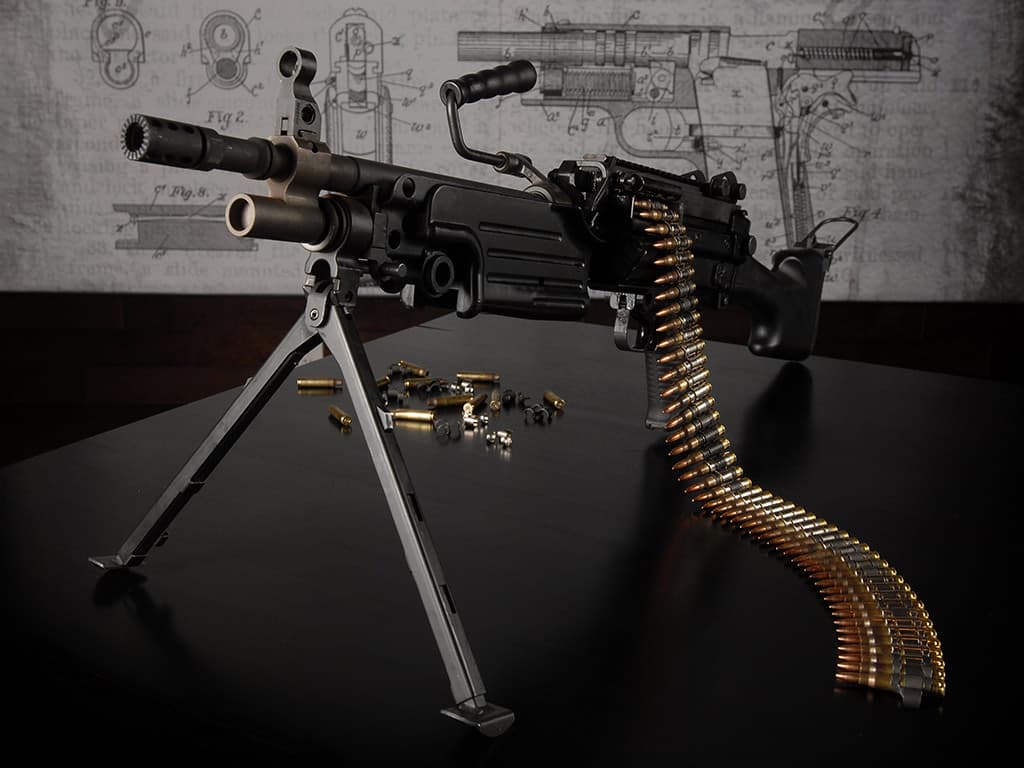
This has significantly limited the number of full-auto firearms that private citizens can own. It’s also why there is no spot on a Form 1 to apply to make a machine gun.
However, Form 4s allow the transfer of a pre-86 manufactured full auto. Keep in mind, some of these cost more than some cars.
The process for filling out and submitting a Form 4 is identical to a Form 1.

Once the information gets entered, copies are sent to the chief law enforcement officer and the ATF with a passport photo and fingerprint card, and payment.
Average wait times for individuals and trusts are identical to those of hard copy Form 1s.
In 2021, the ATF brought back eForm filing for Form 4s, meaning that instead of filling out a paper application, you can do all that online. You can read more about it in our article dedicated to everything eForms.
Form 20
ATF Form 20 applies to the transport or export of certain NFA items.

If you move within your state, (for example, you buy a new house and your address changes), you must submit a Form 20 for each short-barreled rifle, short-barreled shotgun, machine gun, and destructive device before you move.
We’ll get to suppressors in a second...
For this type of Form 20, list the dates the NFA items will be in transit from one location to the next as they are permanently moved to a new location.
Instead, if you need to take NFA items out of your state (on vacation or an out-of-state shooting competition), a Form 20 allows you to temporarily export those items.
Once again, prior approval is necessary for each short-barreled rifle, short-barreled shotgun, machine gun, and destructive device before they are moved.

In this instance, your dates are when the items leave their original location and will be returned to it upon your arrival home.
In this use of the Form 20, I highly recommend you list your reason for transportation of the NFA items as “Multiple trips to participate in formal and informal shooting in <state> during the year.”
The ATF will approve Form 20s with durations of travel for up to one year.
If you know you will be visiting family in another state multiple times or traveling to a destination to shoot several times, submit your Form 20s ahead of time. This covers you for the entire year.
Keep in mind that local laws still apply. Any NFA item you are transporting must still be legal in the state you are transporting it to.
You can’t simply fill out a Form 20 and bring a machine gun to California.

You can, however, pass through states so long as you are not stopping in them or intending to stay for longer than 24 hours.
So, if you drive from Las Vegas to Washington state to shoot in a match, you can transport your short-barreled rifle through California.
(You still have to keep it locked in a case in the trunk per California law).

Why were suppressors not on the list?
Before 2019, the ATF did not require an approved Form 20 to transport a suppressor to a new location inside your state.
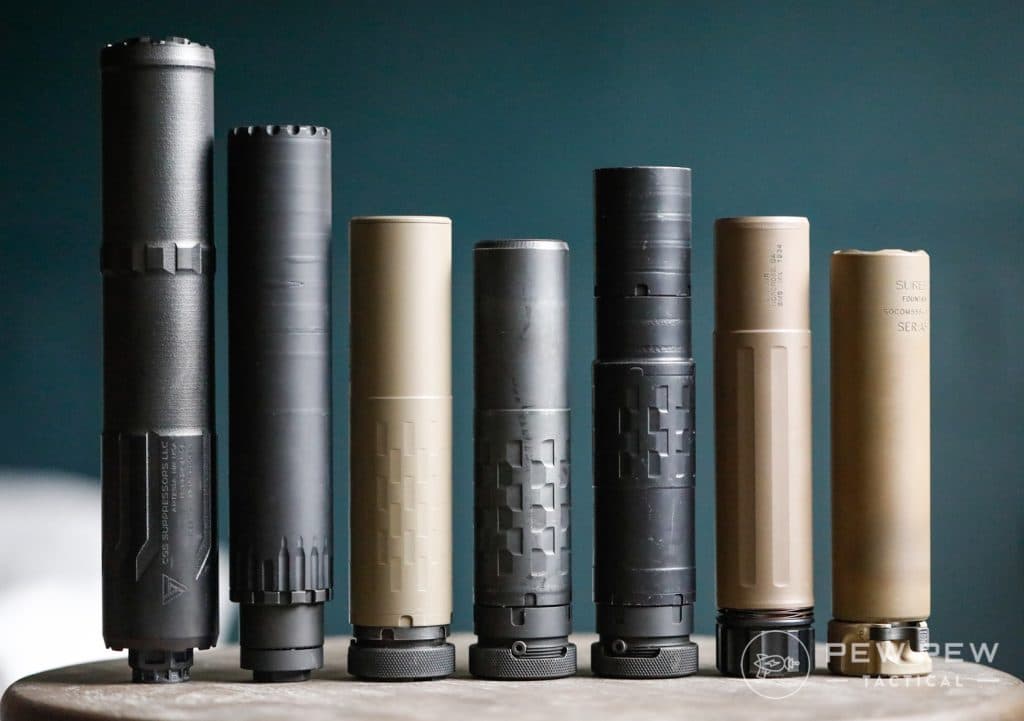
But in 2019, the Form 4 paperwork changed. It now states you must notify the ATF of an address change.
What about out-of-state?
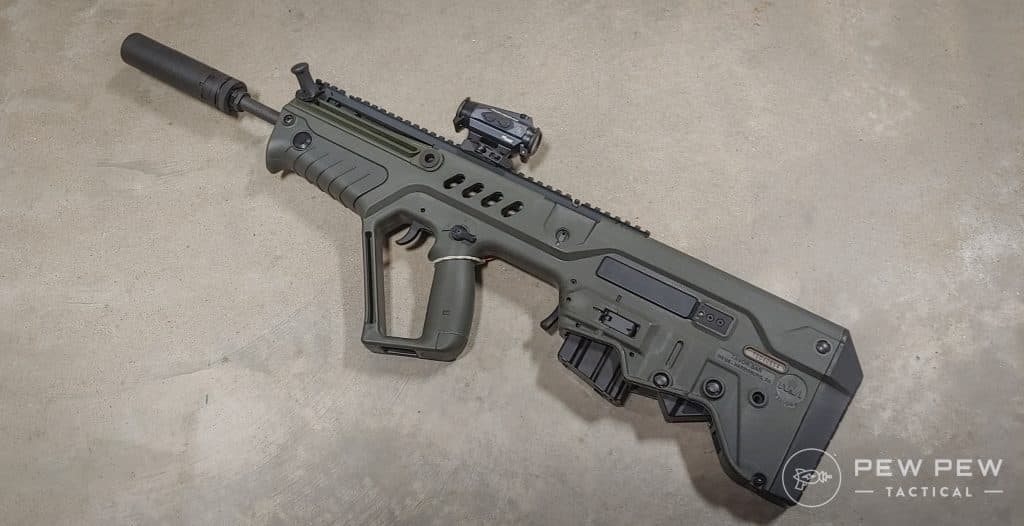
Oddly enough, no prior approval is needed from the ATF to take a suppressor from one state to another temporarily...though it isn’t a bad idea to still submit a Form 20 to be sure.
Approval of a Form 20 can take anywhere from two to six weeks, though some have taken months. So, plan accordingly.
Final Thoughts
Hopefully, this helps clear some confusion regarding ATF forms, their uses, and how to submit them.
Please understand that things change all the time, so if you have any specific questions, your best bet is to contact an attorney in your area that specializes in firearms or NFA items.
Make sure you cover yourself so that you don’t unintentionally violate the law and get yourself into trouble.
What forms have you submitted to the ATF? Let us know in the comments below. To learn more about laws impacting firearms ownership, check out our articles on FOPA and GCA.