
Best Emergency Solar Power Setups for Survival & Prepping
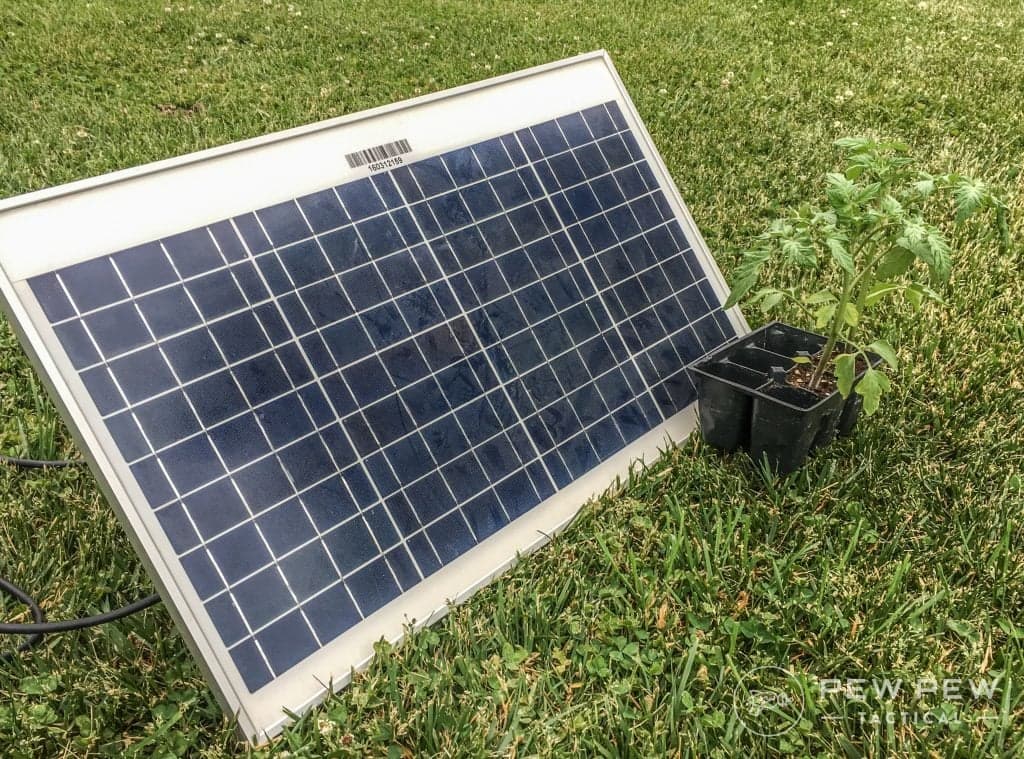
We rounded up the best emergency solar power setups to help you keep the lights on when the power grid goes down. Come see what we recommend.

Locksmith. Outdoorsman. Author of 3 books on survival & prepping
We review products independently. When you buy through links on our site, we may earn a commission to help support our testing. Learn more.
There’s an increasing awareness that full reliability on America’s electrical grid isn’t the wisest course of action.
And if there’s one thing that the power outage in Texas and the cyber-attack on the East Coast pipeline taught us, it pays to have a backup plan.
One way you can have a backup plan as an American citizen is to invest in an emergency solar power setup. This provides a means for you to harvest the sun's power to generate at least some of your own electricity, giving energy in potentially perilous times.
But there are lots of options on the market, so how do you know what’s worth getting? Lucky for you, we at Pew Pew Tactical fully analyzed the marketplace to bring you the best emergency solar power setups.
If the ability to still make coffee, keep your fridge cold, and have some lighting in your house sounds interesting...then read on.
The Quick List
- Best Pocket-Sized Solar Model: Patriot Power CellJump to details ↓
- Budget Solar Panel Pick: Renogy 10W Solar Trickle ChargerJump to details ↓
- Best for Bugout Bags: BigBlue Foldable 28-Watt Solar PanelJump to details ↓
- Best Medium Sized : Patriot Power SidekickJump to details ↓
- Best Power Station: Jackery Portable Power Station Explorer 500Jump to details ↓
- Best Large Appliance Setup: Patriot Power Generator 1800Jump to details ↓
- Heavy Duty Solar Generator: Goal Zero Yeti 3000xJump to details ↓
Table of Contents
How We Chose the Best Emergency Solar Power Setups
For this article, we focused on emergency power setups that offered great features and good value. Our staff has a range of experience in survivalism and prepping — from hobby preppers to previous law enforcement with experience in search and rescue.
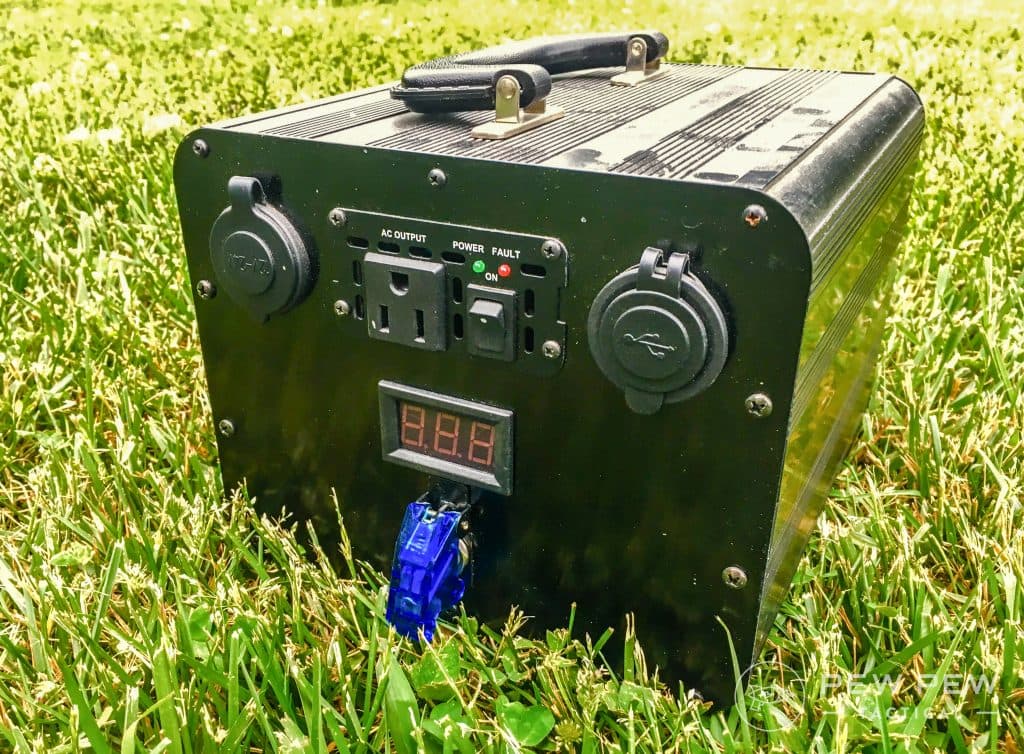
All the recommended power setups have either been tested in hand by someone on our staff or has undergone extensive research.
Best Emergency Solar Power Setups
Note that we're looking at the best emergency solar setups.
While having solar panels installed on the roof of your house or keeping a dedicated solar panel setup in your backyard is beneficial, that’s not what we’re interested in today.
Instead, we want to focus on what kind of solar panel setups we can implement quickly and efficiently in an emergency.
As such, we’re primarily emphasizing portability.
These are all setups that you can keep stored in a basement or garage until you need them; pull them out and set them up to provide quick access to electrical power.
1. The Patriot Power Cell - Best Pocket-Sized Solar Model
Pros
- Extremely portable
- Affordable
Cons
- Long charging time for small electronics
- No battery - charge only
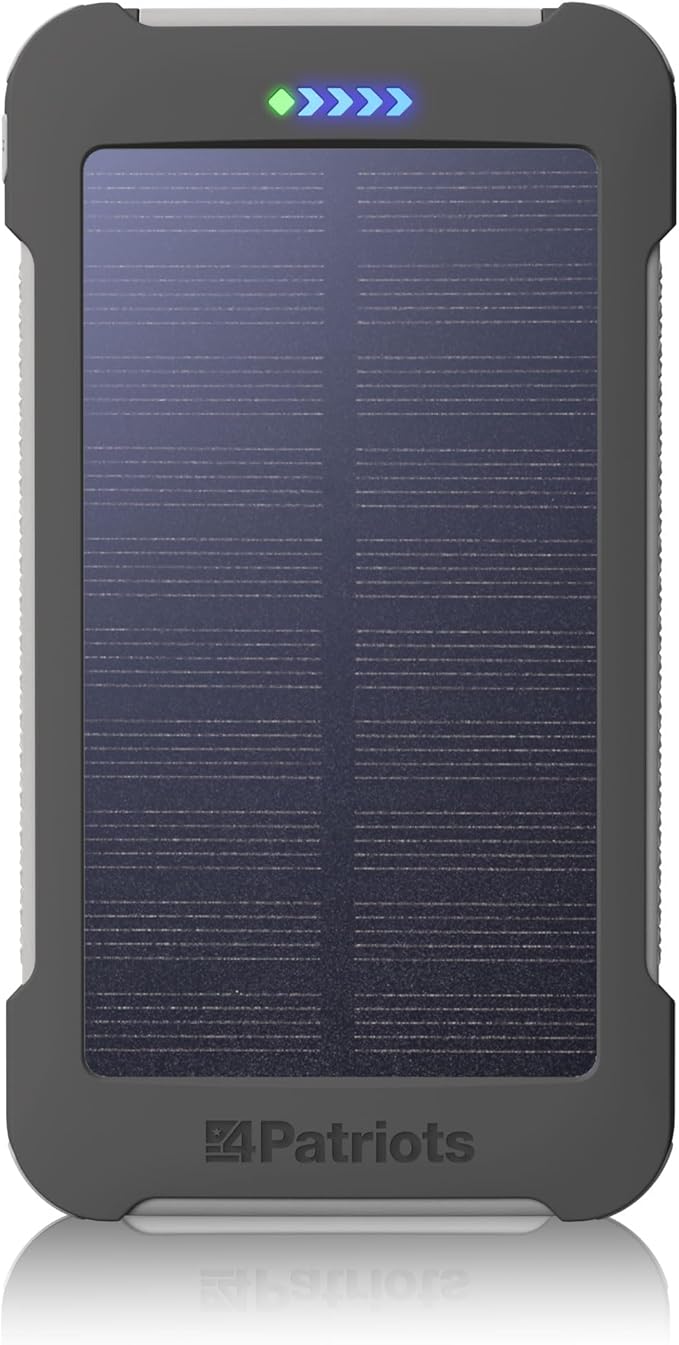
This is probably the best pocket-sized solar panel on the market.
Crafted by 4 Patriots – a Utah-based survival company – the Patriot Power Cell is one of their most popular products.
They’ve already sold roughly 1.5 million of these!
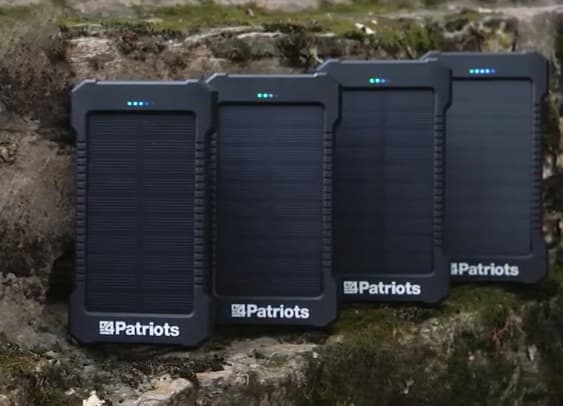
This charger easily fits into your pocket, doubling as a battery bank as well.
This means you can harvest solar energy on the spot, but you also store it for extended periods. Within a disaster situation, that’s a big deal.
The Patriot Power Cell can be completely drained approximately 500 times before dying, meaning that you should be able to get over five years of use from it.

As far as charging goes, like most emergency solar setups out there, you can either harvest sunlight or plug this directly into a wall outlet to recharge the battery bank.
Recharging via solar does take a long time for this little guy, though.
Depending on the weather, it can take up to 40 hours to completely recharge solely from solar. If you use a wall outlet, that time reduces to 6 hours for a full charge.
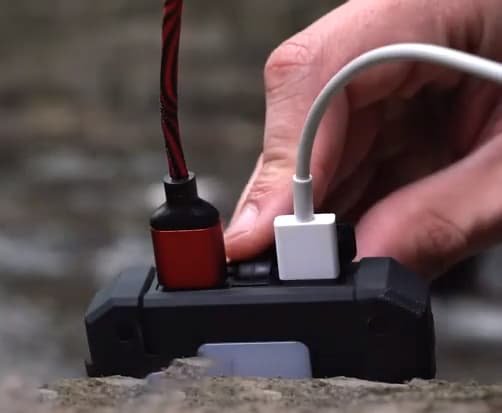
This device charges two devices at once via its two USB ports and features an 8,000-milliamp-hour capacity. It also sports a rain-resistant design, a 2-year warranty, and a 100% satisfaction guarantee.
Coming in at just around $30, this isn’t a bad deal for an emergency solar kit.
You’ll also be satisfied to know that a portion of your purchase supports American veterans via Operation Homefront, A Soldier’s Child Foundation, or other charities.
2. Renogy Portable 10-Watt Solar Panel - Budget Solar Panel Pick
Pros
- Lightweight
- Affordable
- Easy to attach to a backpack or car
Cons
- Long charging time
- No battery - charge only
Let’s say you’re not necessarily as interested in a power bank as you are in some form of portable solar panel.
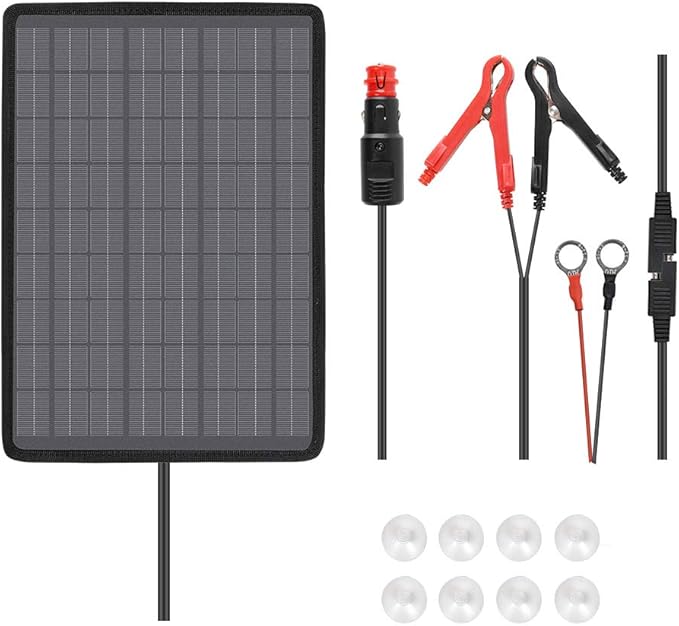
If that’s more your speed, then you may want to check out the Renogy Portable E.Flex.
This teeny, little solar panel comes in at 14.2 ounces, easily attaching to a backpack or car window with the included carabiners or suction cups.
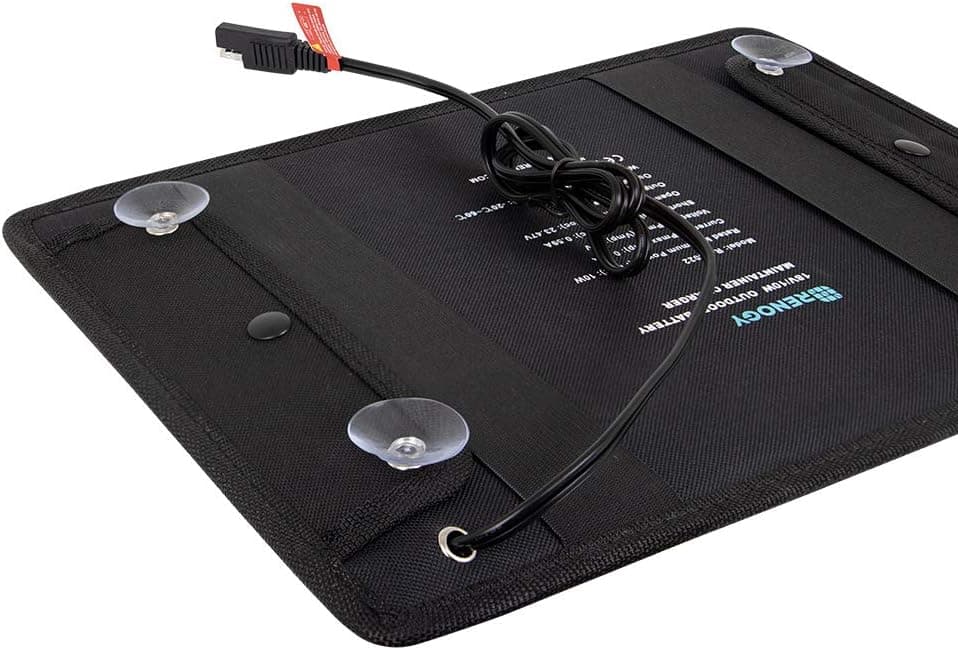
The Renogy excels at keeping your phone, Baofeng UV-5R, or some other type of small device charged without breaking the bank.
For all of $25, it’s hard to beat a solar panel like this.
Just keep in mind that it will take several hours to charge anything when you’re talking about panels this small.
3. BigBlue Foldable 28-Watt Solar Panel - Best for Bugout Bags
Pros
- Foldable for easy storage
- Lightweight
- Overcharge protection
Cons
- No battery - charge only
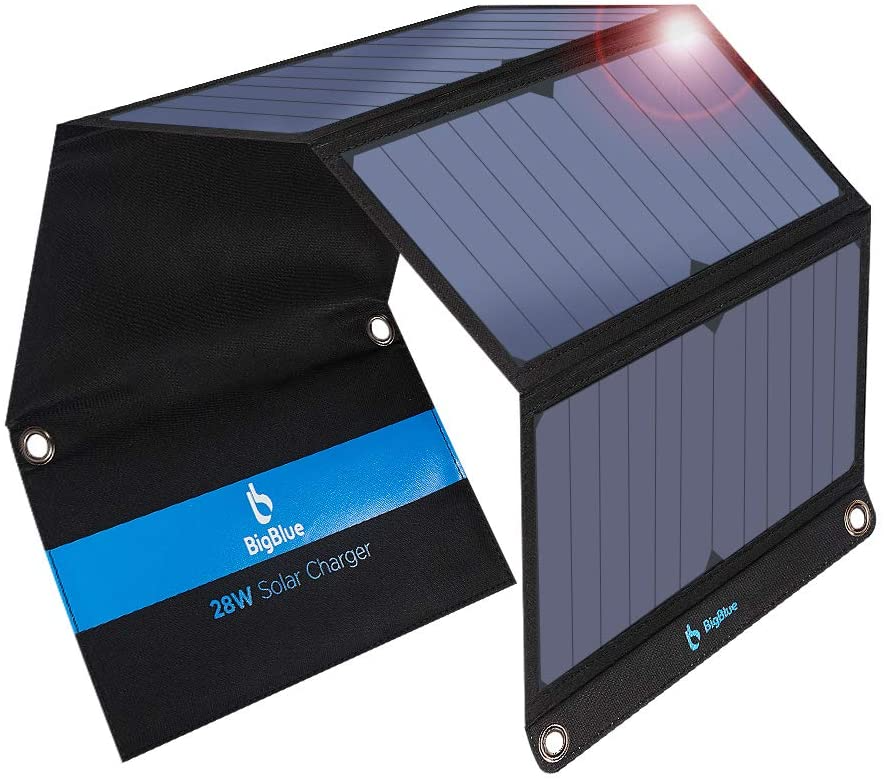
Perhaps one of the most convenient ways to have constant electricity on the go is to use a foldable solar panel that slips into a backpack.
For that, consider the BigBlue panel.
I really like this setup for several reasons.
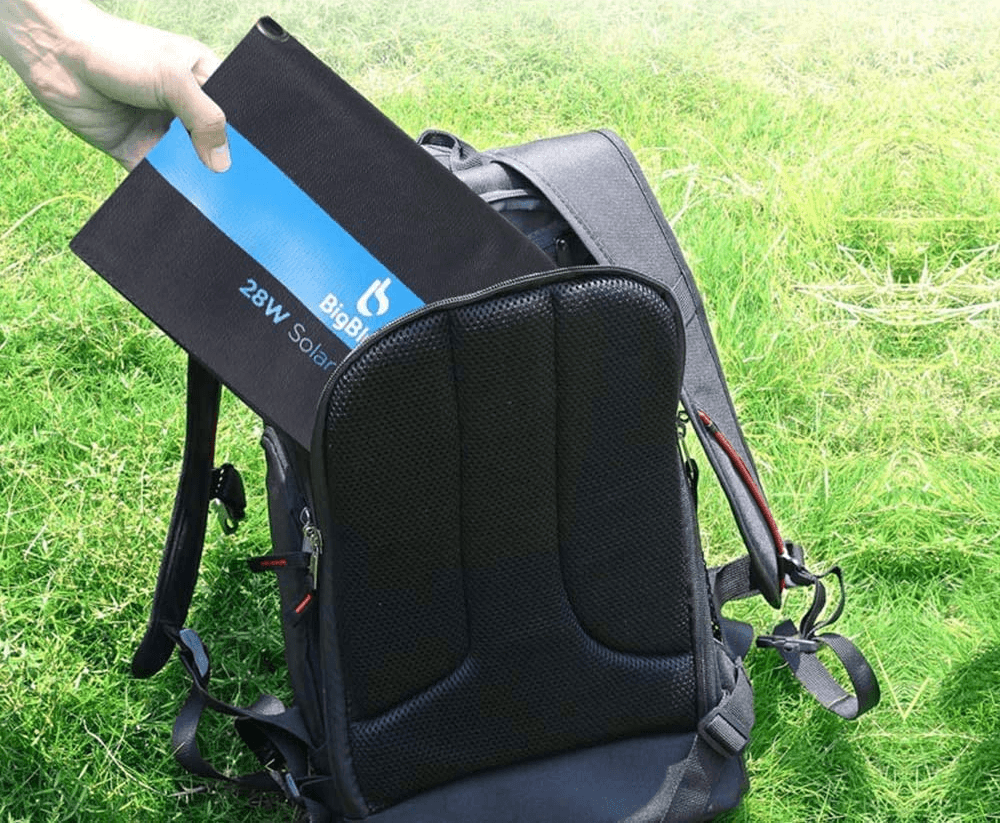
For starters, if you’re looking at packing a bug-out bag for your family, this is a great means of ensuring you keep radios, phones, laptops, or whatever else you might need to be charged while on the road.
It all weighs just a little over a pound and folds up to the size of a magazine, meaning you can easily carry this with you without sacrificing a lot of “weight space” for other necessities.
Just find a sunny location, unroll the BigBlue, and plug in your devices to the included USB ports. The BigBlue also adopts safeguards to keep it from overcharging your equipment.
When you combine all these factors, you end up with an excellent means of emergency power.
However, just be wary that this one doesn’t include a battery -- all it does is charge.
So, if you’re looking for a system that can also store energy, you need to either invest in something else or purchase a battery pack.
4. Patriot Power Sidekick - Best Medium Sized Solar Power Setup
Pros
- 8 various outlets for flexibility
- Solar panel included
- Can power medium-sized electronics
Cons
- Lower wattage can lead to overheating if too many devices are plugged in at once
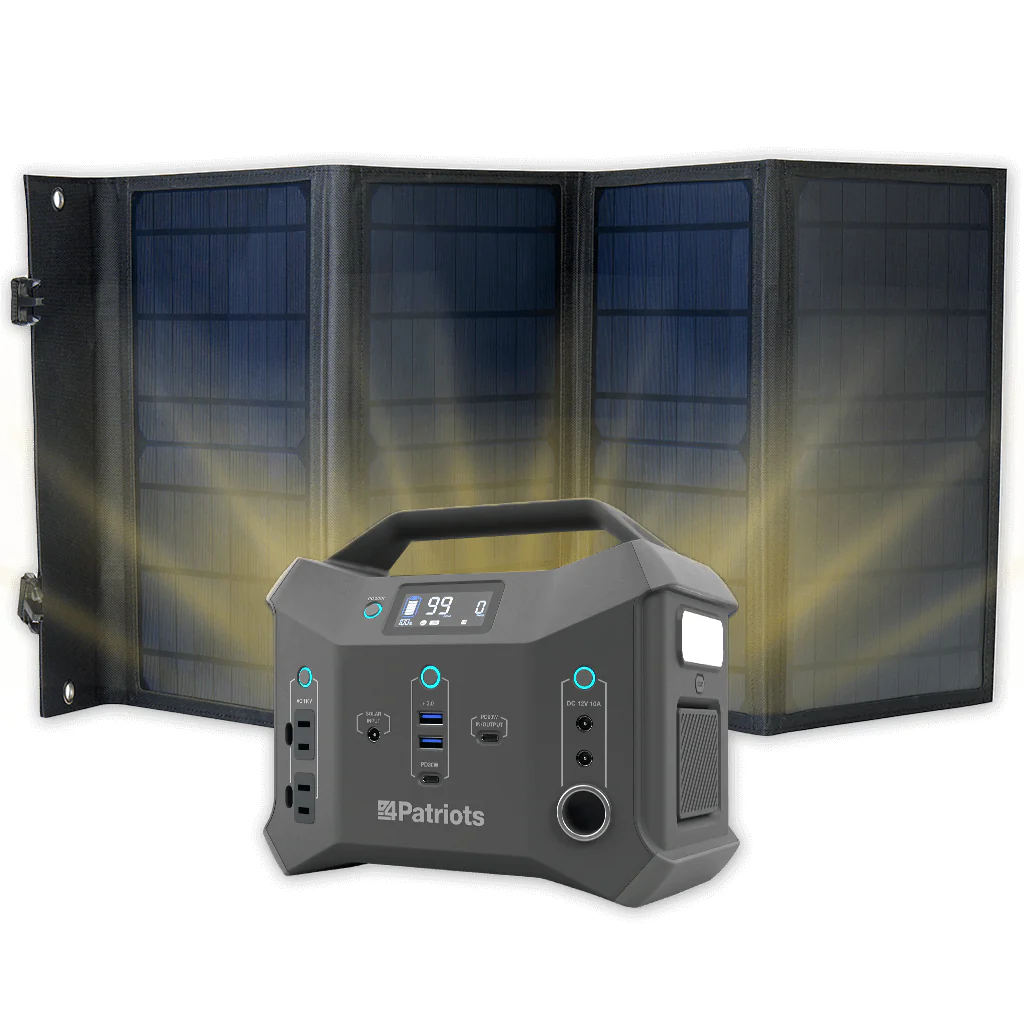
Another cool product from 4 Patriots, the Patriot Power Sidekick, weighs in at 8 pounds and comes with a 40-watt solar panel.
It offers a 300-watt capacity, making it perfect for charging your phones, laptops, radios, medical devices (think a CPAP), and the like.
A compact device, it easily stows away in the trunk of your car for when you need it or tucks into storage in your RV.
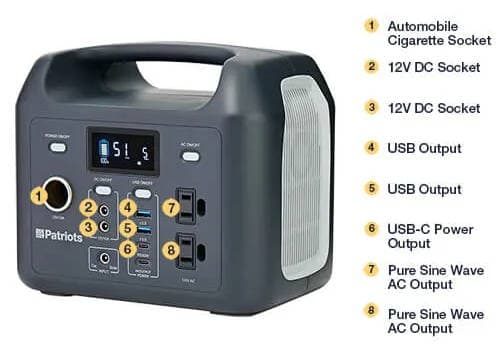
The battery is safe to use inside, and the eight outlets allow you to charge several devices at once.
It can be completely drained 2,000 times -- meaning you’ll get years out of this setup. At $500-550, that’s not a bad deal at all.
5. Jackery Portable Power Station Explorer 500 - Best Power Station
Pros
- Solid wattage for its size
- Multiple outlet types for flexibility
Cons
- Solar panel not included
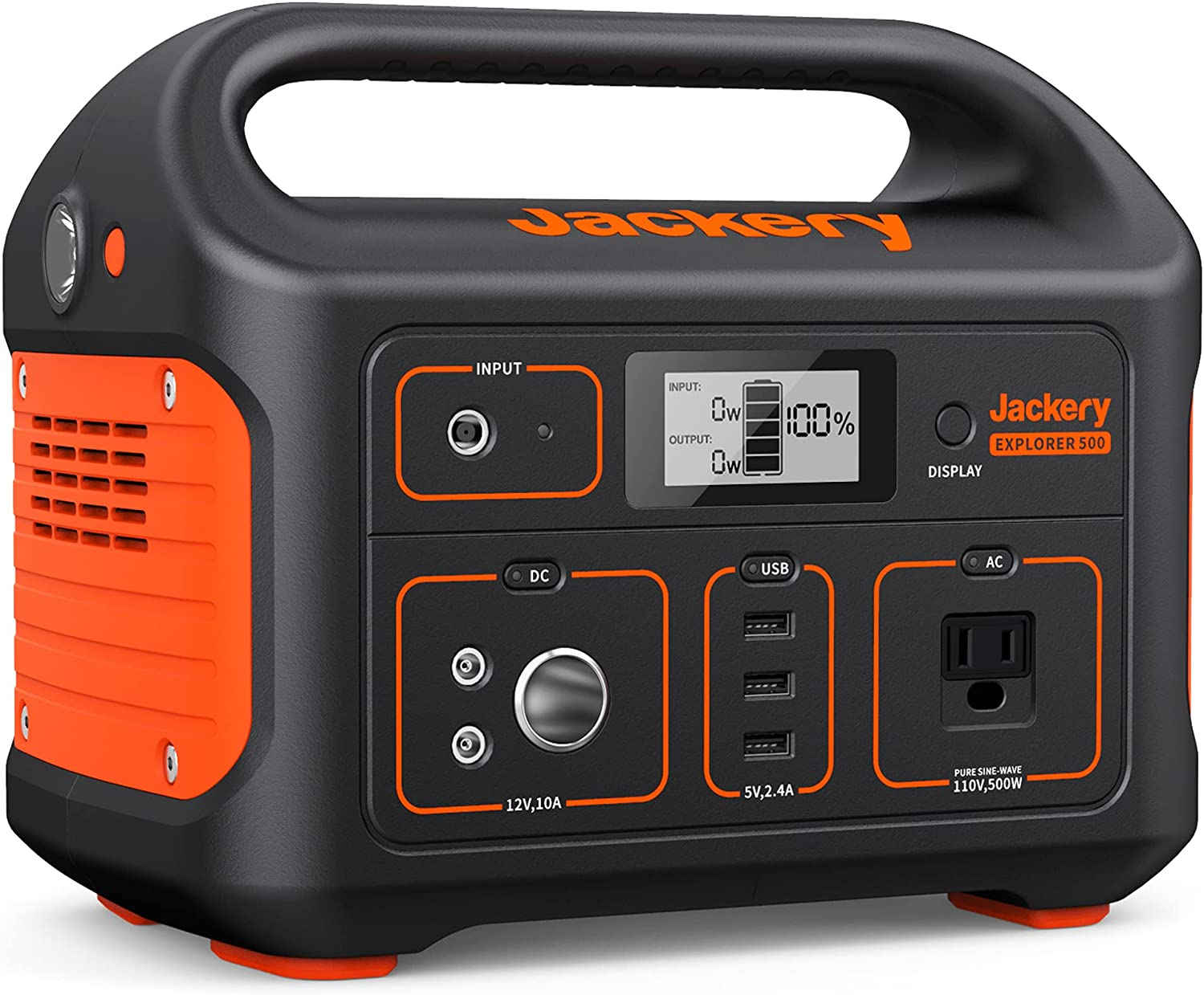
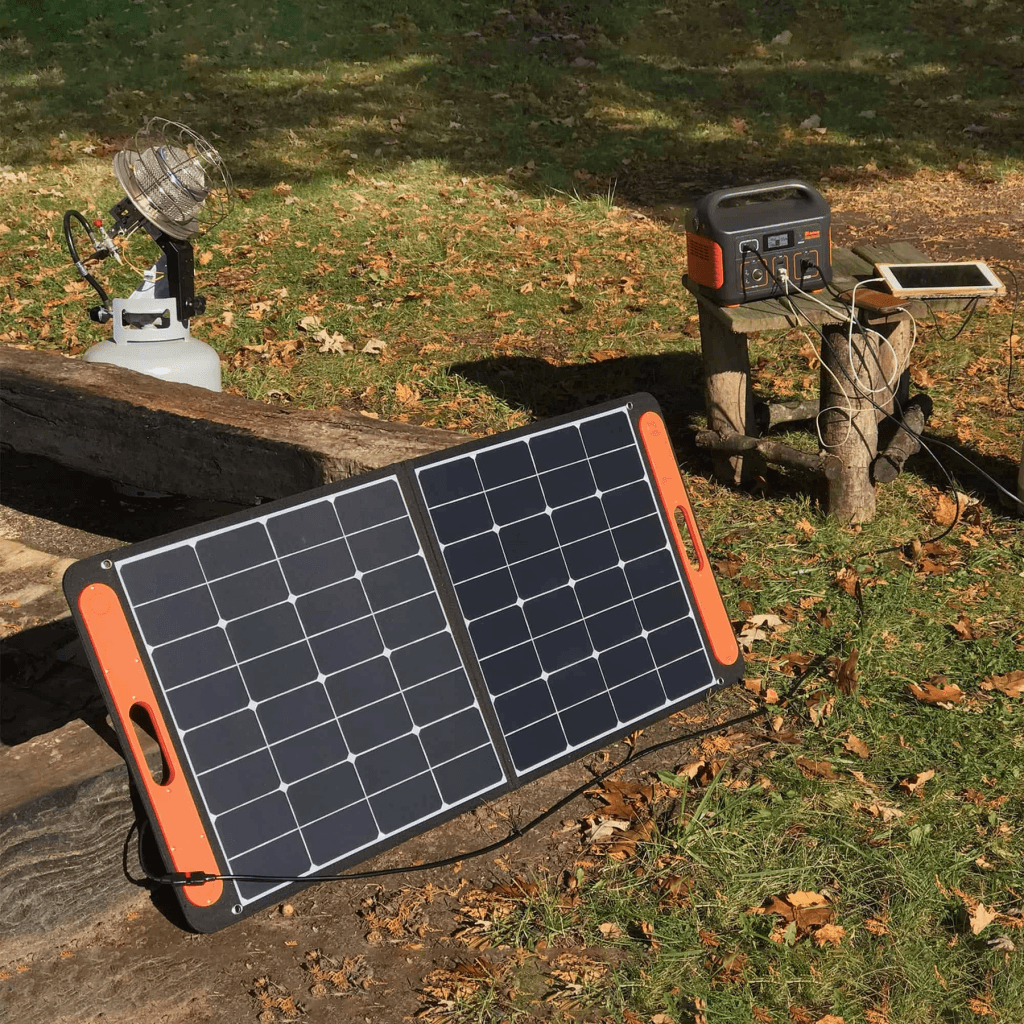
Jackery is another company well-known for creating quality emergency power stations. The Explorer 500 is no exception to that.
However, if you purchase the Explorer 500, you’ll need a solar panel to accompany it.
I recommend adding one of THESE to the setup. The panel is $300, so you’re talking about an $800 investment to get up and running here.
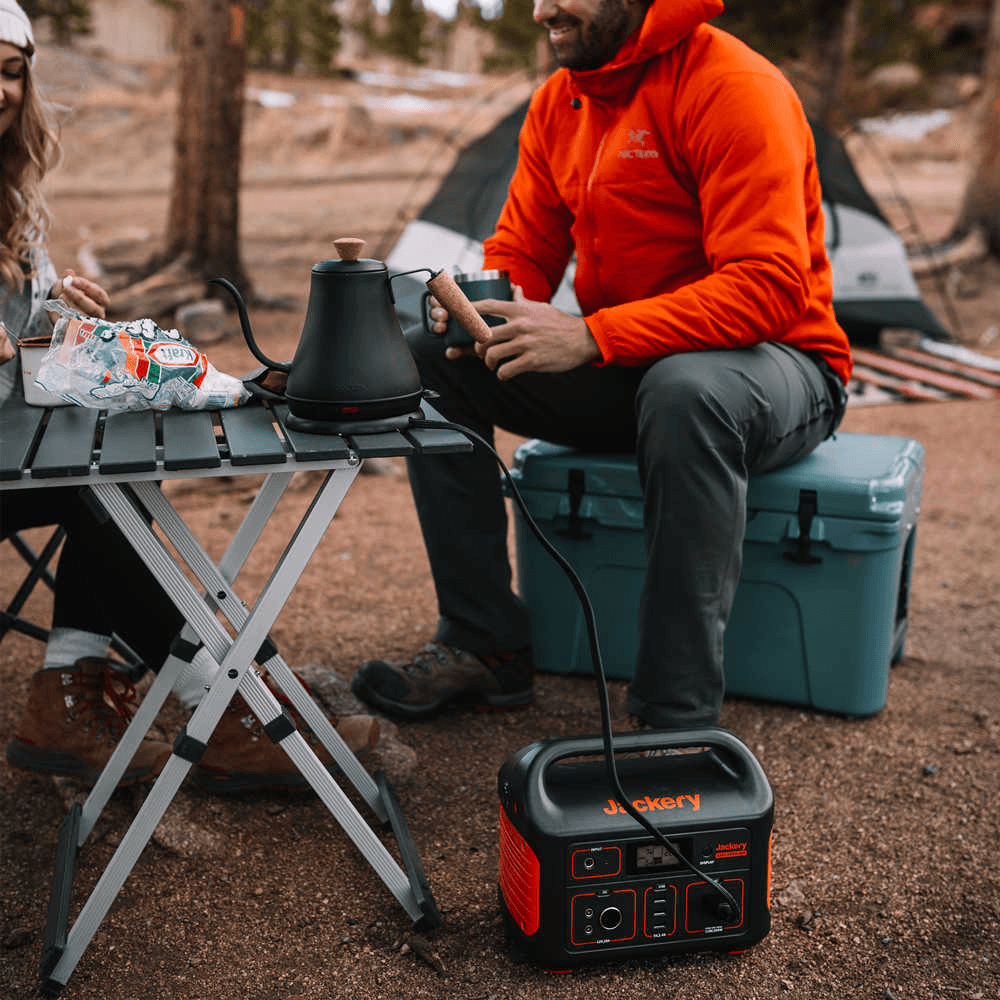
With this setup, you’ll have a relatively lightweight (13.3 pounds for the generator) emergency solar power station to keep all your devices under 500 watts in use.
If there is no sunshine, the Explorer 500 can be charged with either a wall outlet or a car charger in 5.5 hours.
So, you have various ways to keep this generator up and running should you find yourself in a grid-down environment.
Anytime you’re in a disaster situation, the more layers of security you can add, the better.
The Jackery Explorer 500 helps you to do just that.
Have you tried the Jackery? If so, rate it below.
Readers’ Ratings
5.00/5 (1774 Votes)Your Rating
6. Goal Zero Yeti 3000x - Best Heavy Duty Solar Generator
Pros
- Can run up to seven devices at once
- 2000 watt-hours
- Can handle large electronics for extended periods
Cons
- Solar panel sold separately
- Heavy
Goal Zero is easily one of the most famous emergency solar companies out there.
Within various ham radio forums I’ve frequented in the past, this company gets mentioned again and again.
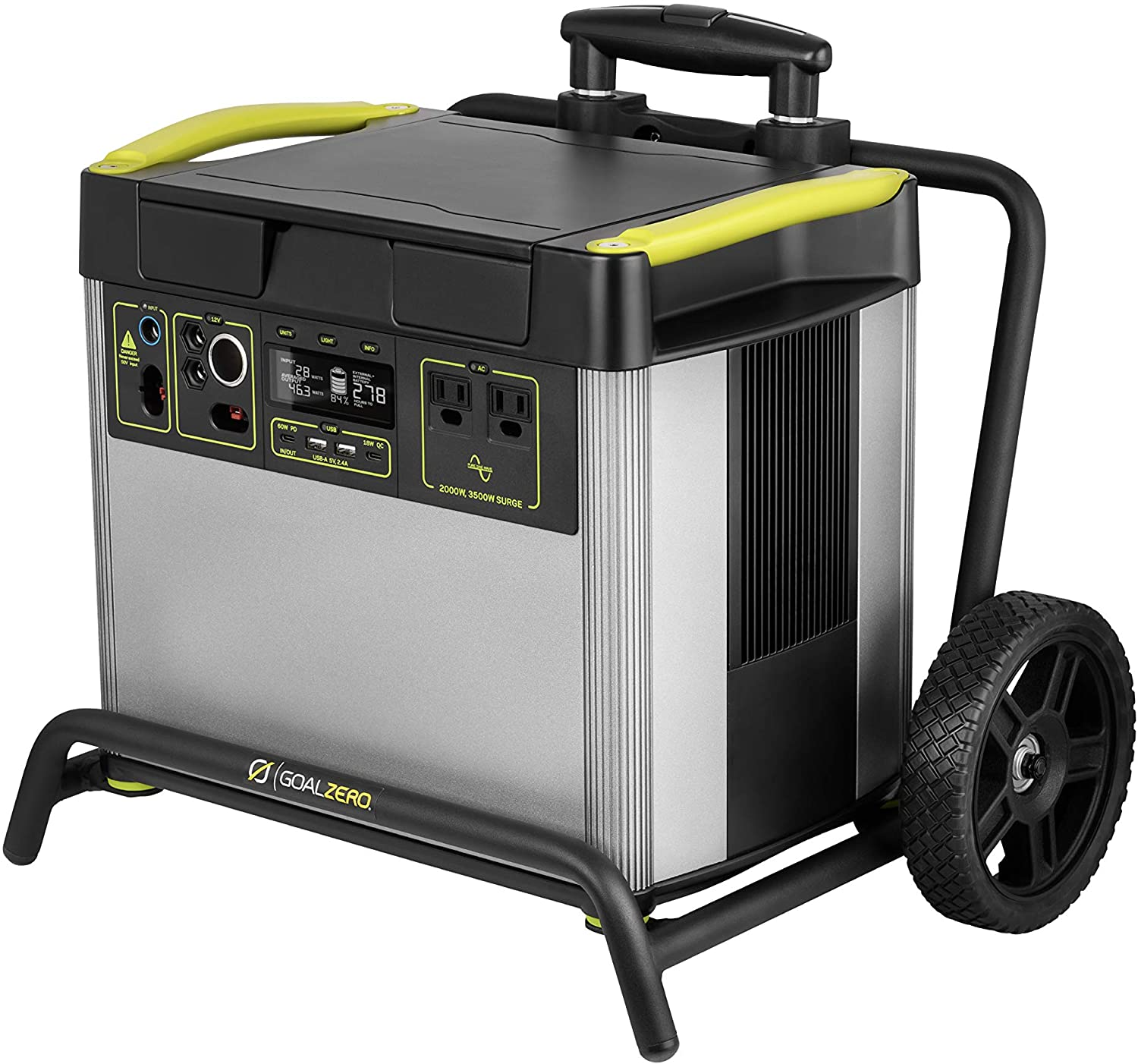
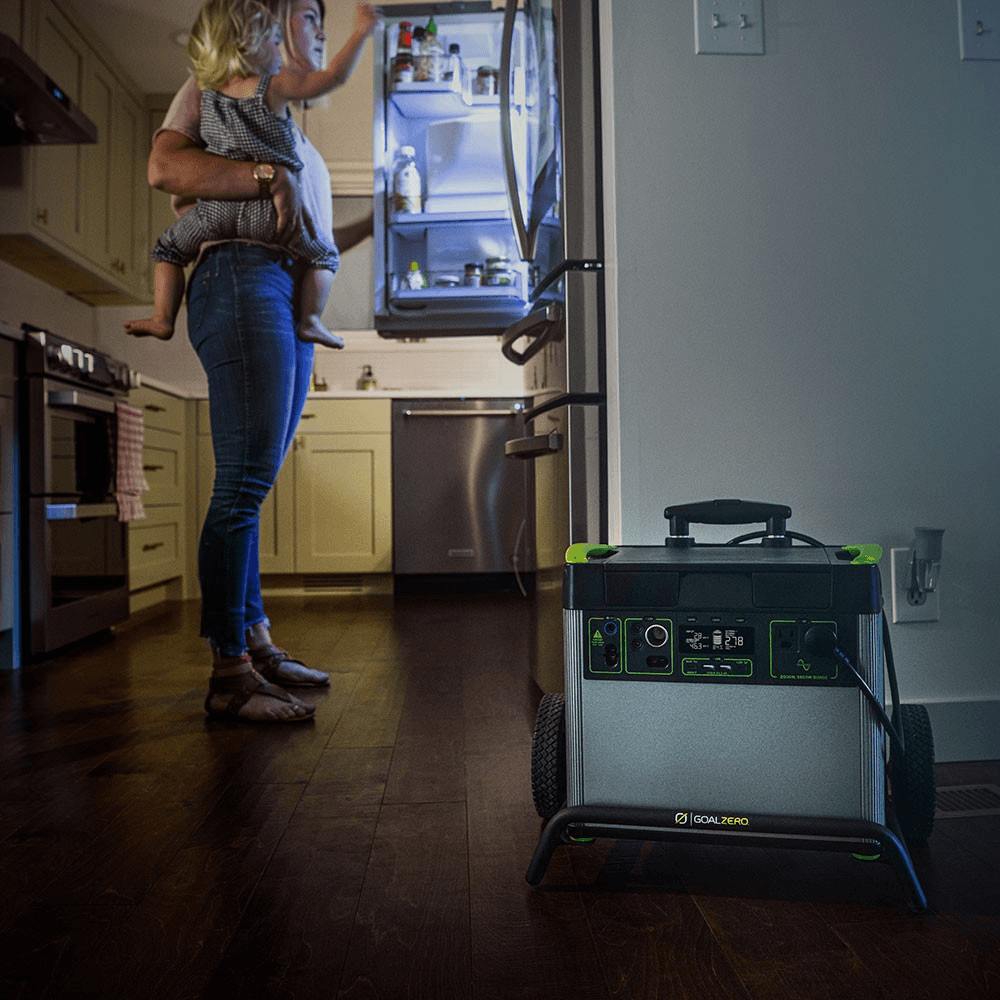
The Yeti 3000x is a big generator with 2,000 watt-hours. It can run seven devices at once and tackle the big stuff, like fridges, freezers, sump pumps, you get the idea.
You keep the whole rig charged up by plugging it into a wall outlet. But this generator does not include a panel. So, if you want to add a solar panel to the mix, you’ll need the Goal Zero Boulder Briefcase (an additional $300).
All in all, it’s a big setup—the panel alone weighs 24 pounds, and the generator weighs a whopping 78 pounds—but it fills the void of something heavy-duty.
Plus, it will help you avoid a lot of headaches after the power goes out.
Do I Really Need Solar Power?
As we mentioned earlier, the electrical grid is fragile. As of 2018, the average American lost power for a total of 5 hours per year.
Where I live, that’s a low number. Really low.
After the last bad derecho, where I lived was without power for three weeks or more.
And yeah, I get that the above number is an average for the entire U.S.
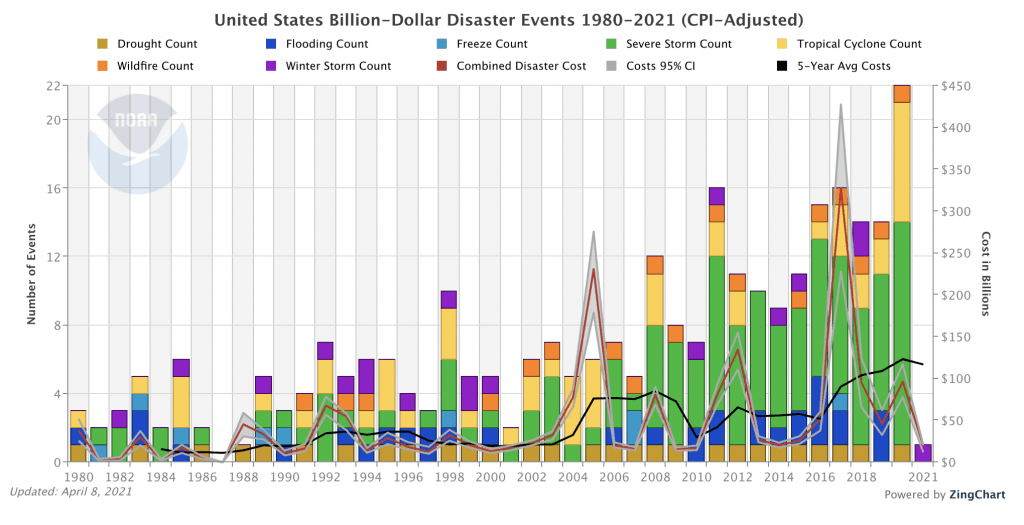
Most people don’t see a derecho every year, but it’s worth mentioning that the number of natural disasters in the U.S. is increasing.
It’s also worth mentioning that access to nuclear weapons means some countries have EMP capability.
If you’ve read the 2008 EMP Commission Report, then you know its findings concluded that within the span of one-year post-EMP, 90% of Americans would be dead.
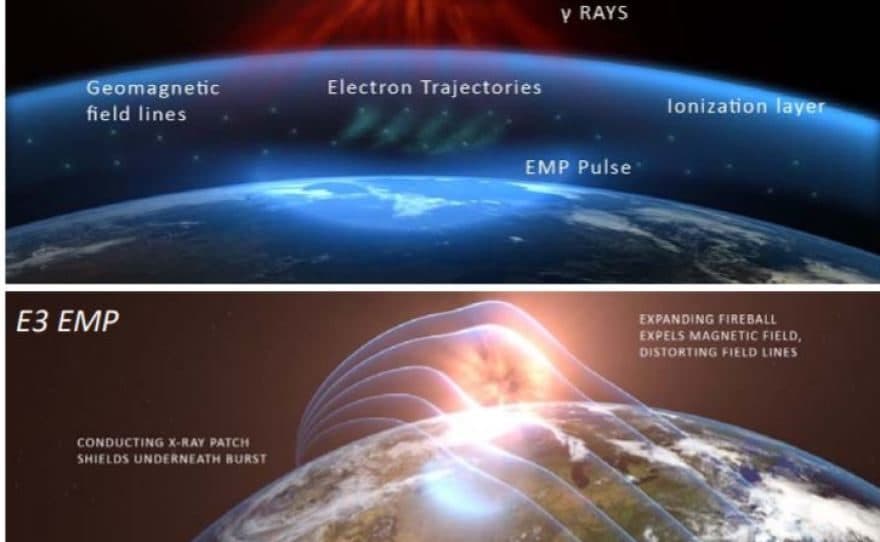
Violence, starvation, temperature extremes, lack of medical care, and disease would lead many Americans to the grave.
However, harvesting your own electricity from the sun is one very easy step that can give you a thicker layer of resiliency against disaster.
How Solar Power Works
The sun is the key to all of this. The sun gives off light, right? Well, that light is electromagnetic radiation.
And before you get your underwear in a knot after hearing the word “radiation,” solar radiation isn’t necessarily a bad thing.

In just over one hour, the sun will give off enough electromagnetic radiation to power the entire world’s power consumption for one year.
That’s a lot of energy. And if we can capture it, we can utilize it.
Thankfully, we do have a way to capture that energy, and it comes from this -- photovoltaic cells (PV, for short).
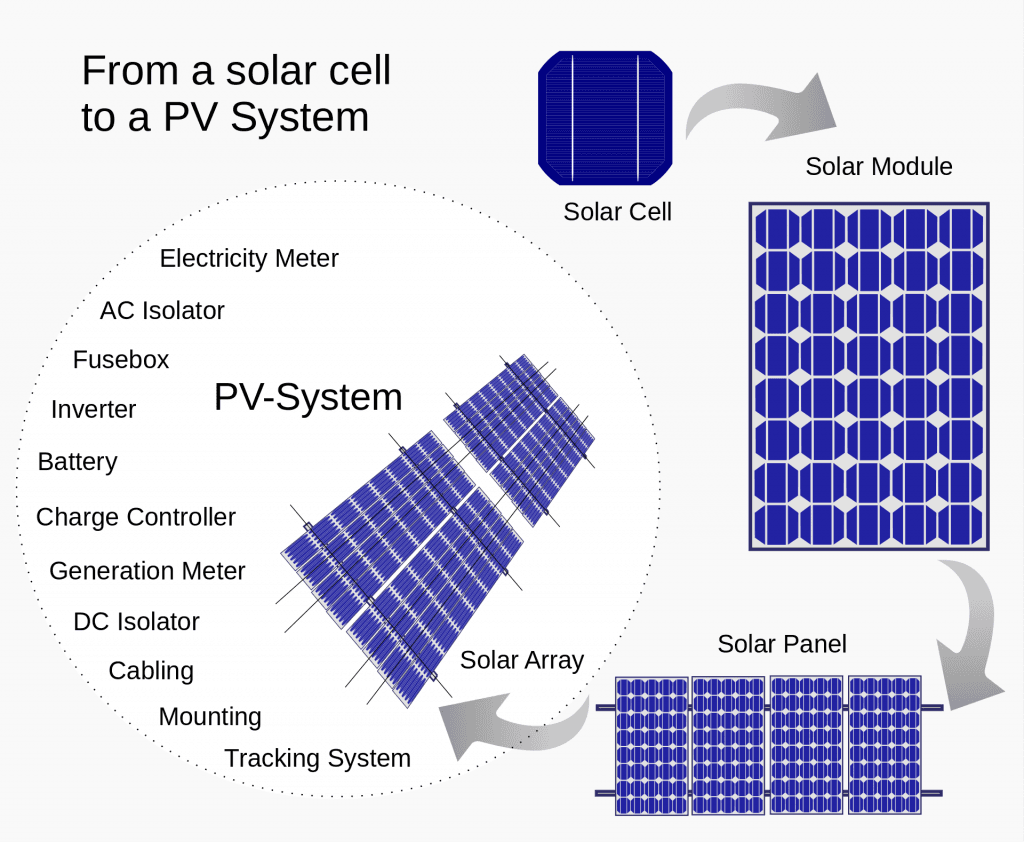
When exposed to sunlight, PV cells absorb its energy, causing electricity to flow.
Technically, PV cells absorb sunlight, which creates electrical charges within the solar panel. An internal electrical field within the PV cell pushes the electrical charge along, and thus, you end up with an electrical flow.
But that’s all engineer gibberish.
All you need to know -- PV cells capture sunlight and turn it into electricity. If you have that down, you’re good to go.
Final Thoughts
Power outages will and do happen – they’re a usual occurrence throughout the U.S. So, an emergency solar panel system can easily help you eliminate several problems you’d face when the power goes out near you.
By investing in any of the above devices, you mitigate your risk of disaster post-power -- whether that be for a few hours or a few weeks.
Are there other aspects of solar energy capture that you think we should have considered? Let us know in the comments below! Now that you have electricity figured out take a look at how to stay fed with our tips on the Best Way to Store Food Long-Term.
Latest Updates
September 2024: Removed Rockpals SP003 (discontinued) and Patriot Power Generator 1800. Updated information on the Patriot Power Cell and Renogy 10W panel to reflect newer models.