
Best Glock Triggers [Hands-On Tested]
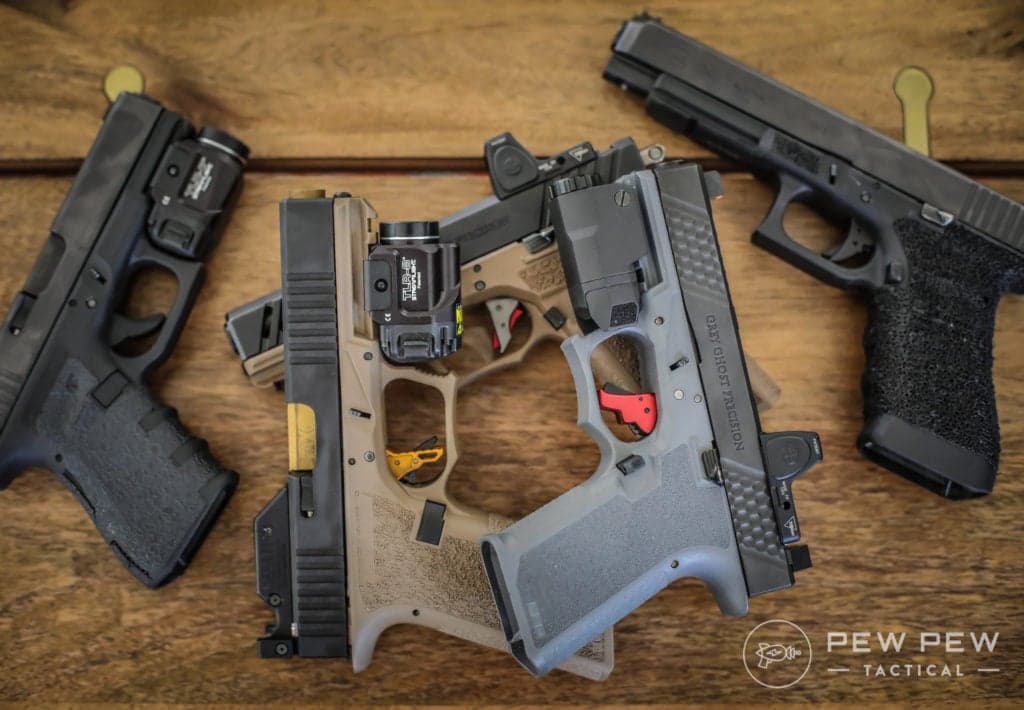
We took over a dozen aftermarket Glock triggers and tested them using a specialized machine to see which Glock triggers reign supreme.

PPT Editor. NRA & USCCA instructor. Hunter, former competitive shooter, collector (200+ firearms)
We review products independently. When you buy through links on our site, we may earn a commission to help support our testing. Learn more.
It is no secret that Glocks enjoy one of the largest aftermarkets of any gun on the planet. But it is also no secret that many people find that stock Glock triggers leave something to be desired.
But with so many options to choose from, which trigger upgrades are really worth it?
Sure, you can look at trigger pull weights and watch some videos. You can also listen to someone try and explain how it feels. All of that is great info, but I always felt like there was still missing information — something tangible.
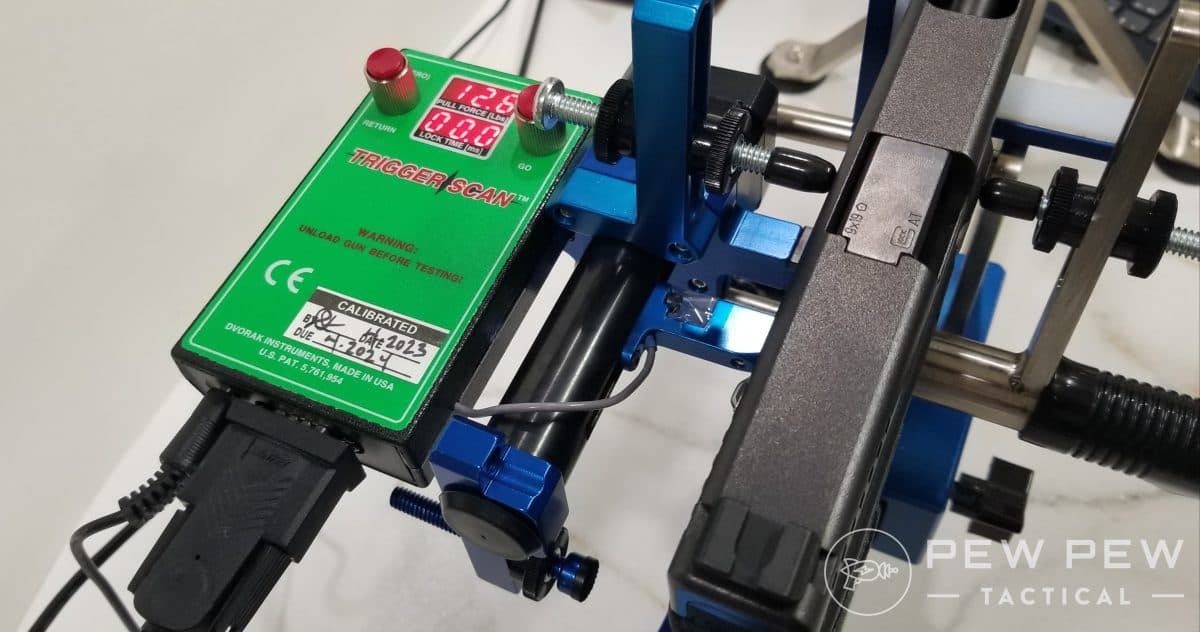
But my search for that missing piece has come to an end. With the help of the Dvorak TriggerScan, we can now see physical graphs and real readouts of what is actually going on during the trigger pull. And the best part? You can compare two graphs to see who the real winner is.
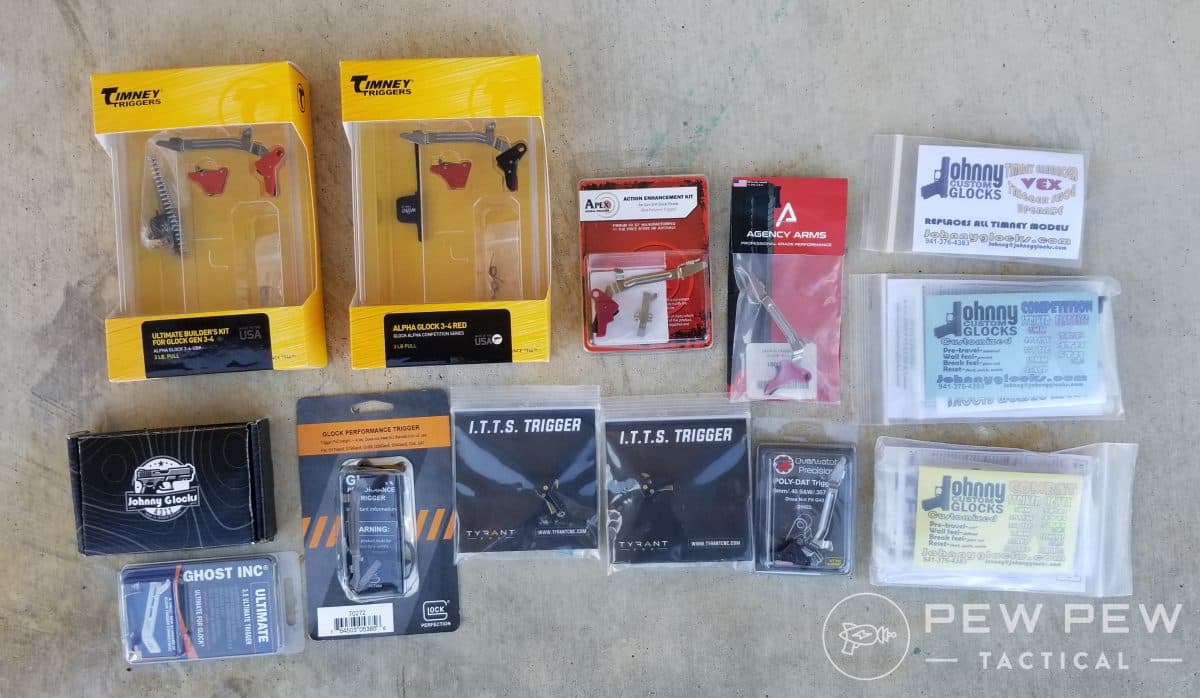
We used this to test over a dozen Glock triggers so that we could bring that data to you. Be warned, this is a very long and technical article by nature, but we hope our findings are just as interesting to you as they were to us!
Want to skip the technical mumbo jumbo? Check out our fast-and-easy cheat sheets just below!
The Quick List
- Best Value Trigger: Overwatch Precision PolyDAT Trigger - Glock Gen 2-4Jump to details ↓
- Lightest, Fastest Trigger: Timney Ultimate Builder's Kit, Glock Gen 3-4Jump to details ↓
- Cheapest Upgrade: Ghost 3.5lb Ultimate Trigger ConnectorJump to details ↓
- Best Factory Option: Glock Performance TriggerJump to details ↓
Table of Contents
Our Favorite Glock Triggers in Under a Minute
Want to know which triggers I liked the best without reading a book? I got you covered there, too!
Best Glock Gen 3 Triggers
- Timney Ultimate Builder's Kit: If I was building a range toy or a race gun, this is the trigger I would pick. It was ultra-fast and ultra-light with a clean feeling. A real standout.
- Johnny Glock Evolution-X Competiton: This is a great trigger that would be well-suited to a dual-purpose role as both a great range trigger and a safe carry option.
- Ghost 3.5 lb Connector: While it doesn't completely change the trigger, it does improve it. Its super cheap price makes it an appealing upgrade.
- Overwatch Precision PolyDAT: Ah, the dark horse. The PolyDAT has a shorter overall travel, and my split times with it were very consistent. These are priced very aggressively, making them great bargains.
Best Glock Gen 5 Triggers
- Glock Performance Trigger: I got a lighter-than-advertised pull that felt notably better than the stock trigger. It is still made by Glock, and it isn't terribly expensive, so it gets the nod here.
- Johnny Glock Evolution-X Combat: This may be the best true "duty-style" trigger I tested. It trades in the hallmark Glock feel for a much more crisp and predictable trigger pull.
Best Slimline Glock Trigger
- Stock Glock Trigger: I was only able to test one aftermarket slimline trigger, and it didn't test well for me. Although I wouldn't really call the stock Glock trigger a favorite, it wins by default here.
Glock Trigger Comparison Chart
For those of you who don't want to get into the nitty-gritty of the data, here are a few quick cheat sheets with the basic data, price, and whether I would recommend the trigger or not.
Gen 3 Trigger Cheat Sheet (Glock 34)
| Pull Weight | Average Split Time | Travel Distance | Price | Recommend? | |
|---|---|---|---|---|---|
| Stock Glock Gen 3 | 5 lbs | 0.25 sec | 0.34" | N/A | N/A |
| Apex Action Enhancement KitGen 3 | 3.8 lbs | 0.22 sec | 0.35" | $85 | Yes |
| Overwatch Precision PolyDATGen 3 | 4.7 lbs | 0.20 sec | 0.30" | $61 | Yes |
| Johnny Glock Evolution-X Competition Gen 3 | 3.6 lbs (orange) 3 lbs (green) | 0.20 sec (orange) 0.20 sec (green) | 0.30" (orange) 0.26" (green) | $370 | Yes |
| Timney Ultimate Builder's KitGen 3 | 2.8 lbs (red) 2.6 lbs (black) | 0.23 sec (red) 0.20 sec (black) | .34" (red) 0.34" (black) | $200 | Yes |
| Timney Alpha Competition Gen 3 | 3.4 lbs (red) 3.1 lbs (black) | 0.22 sec (red) 0.20 sec (black) | 0.29" (red) 0.29" (black) | $108 | Yes |
| Agency Arms Drop-In Gen 3 | 4.3 lbs | 0.27 sec | 0.30" | $135 | No |
| Tyrant CNC I.T.T.S Trigger Shoe Gen 3 | 5.2 lbs | 0.24 sec | 0.36" | $67 | Yes |
| Ghost Inc. 3.5 lb Trigger Bar Gen 3 | 4.2 lbs | 0.24 sec | 0.26" | $14 | Yes |
Gen 5 Trigger Cheat Sheet (Glock 26)
| Pull Weight | Average Split Time | Travel Distance | Price | Recommend? | |
|---|---|---|---|---|---|
| Stock Glock Gen 5 | 5 lbs | 0.28 sec | 0.38" | N/A | N/A |
| Glock Performance Trigger Gen 5 | 3.5 lbs | 0.25 sec | 0.35" | $75 | Yes |
| Johnny Glock Evolution-X Combat Gen 5 | 4.4 lbs | 0.25 sec | 0.29" | $370 | Yes |
| Tyrant CNC I.T.T.S Trigger Shoe Gen 5 | 4.7 lbs | 0.24 sec | 0.36" | $67 | Yes |
Slimline Trigger Cheat Sheet (Glock 48)
| Pull Weight | Average Split Time | Travel Distance | Price | Recommend? | |
|---|---|---|---|---|---|
| Stock Glock Slimline | 5.3 lbs | 0.27 sec | 0.39" | N/A | N/A |
| Johnny Glock 4311 | 3.4 lbs | 0.29 sec | 0.39" | $280 | No |
How We Tested the Best Glock Gen 3, Gen 5, and Slimline Triggers
To properly test the Glock triggers head-to-head, we used the TriggerScan device developed by Dvorak.
In the words of the company themselves, “TriggerScan is a computer-controlled, motorized instrument specifically designed to test trigger mechanisms of firearms. This patented technology sets the standard in trigger quality evaluation. The system provides precise and repeatable graphical evidence of trigger quality.”
In layman's terms, the TriggerScan is a machine where you lock the gun in place, a machine pulls the trigger, and sensors help generate a graph that shows you precisely what is happening during the trigger pull.
We bought the TriggerScan at full retail price and used the Gen 3 Glock 34, Gen 5 Glock 26, and Glock 48 as the host firearms to test the triggers.
Testing Procedure - Dry Fire
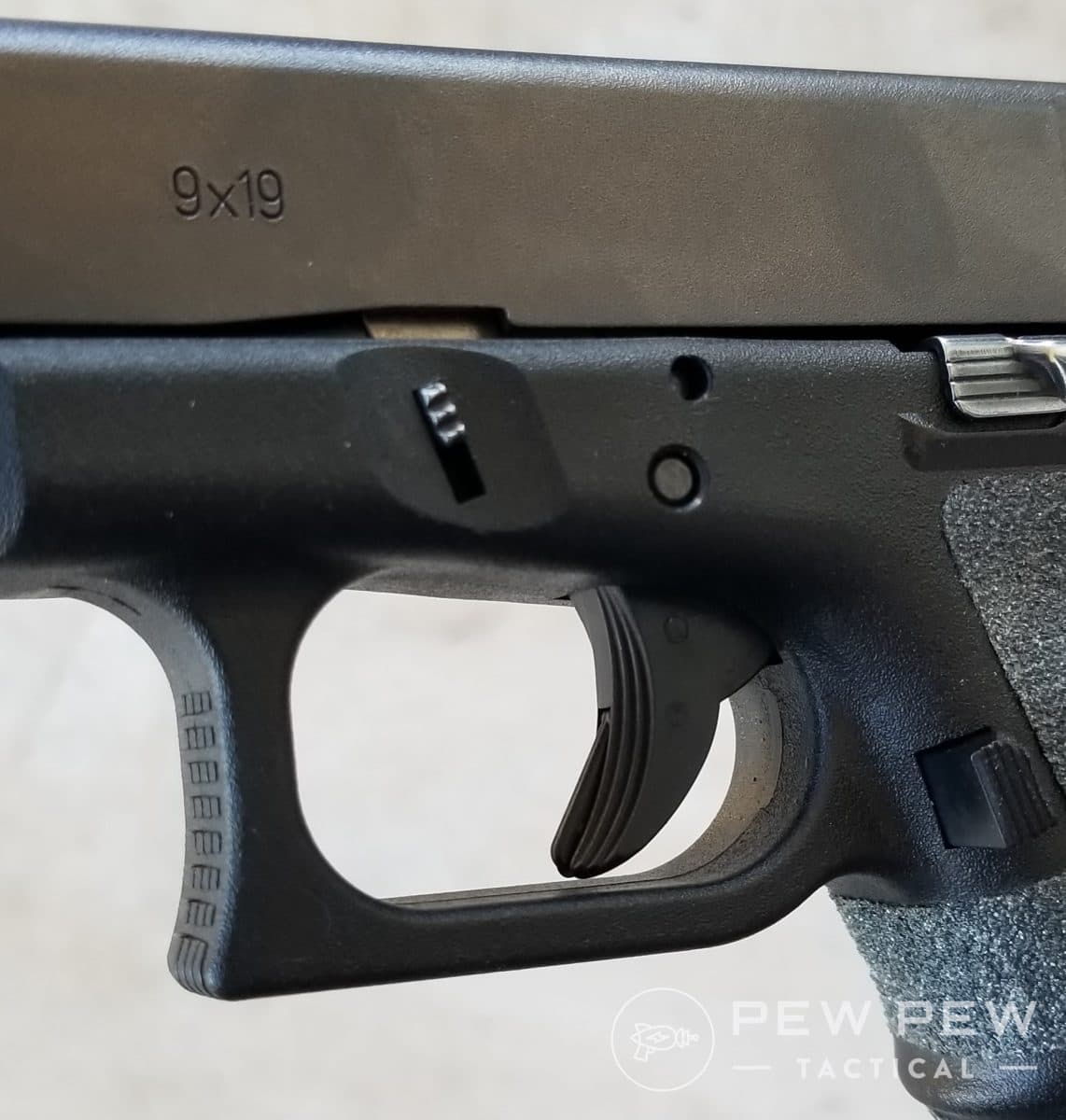
I used the TriggerScan readout from three separate trigger pulls to calculate an average weight, then rounded it up to the nearest tenth.
To get an accurate baseline test for the rest of the Gen 3 triggers, I first installed a brand new OEM Gen 3 Glock 19 trigger assembly and scanned it.
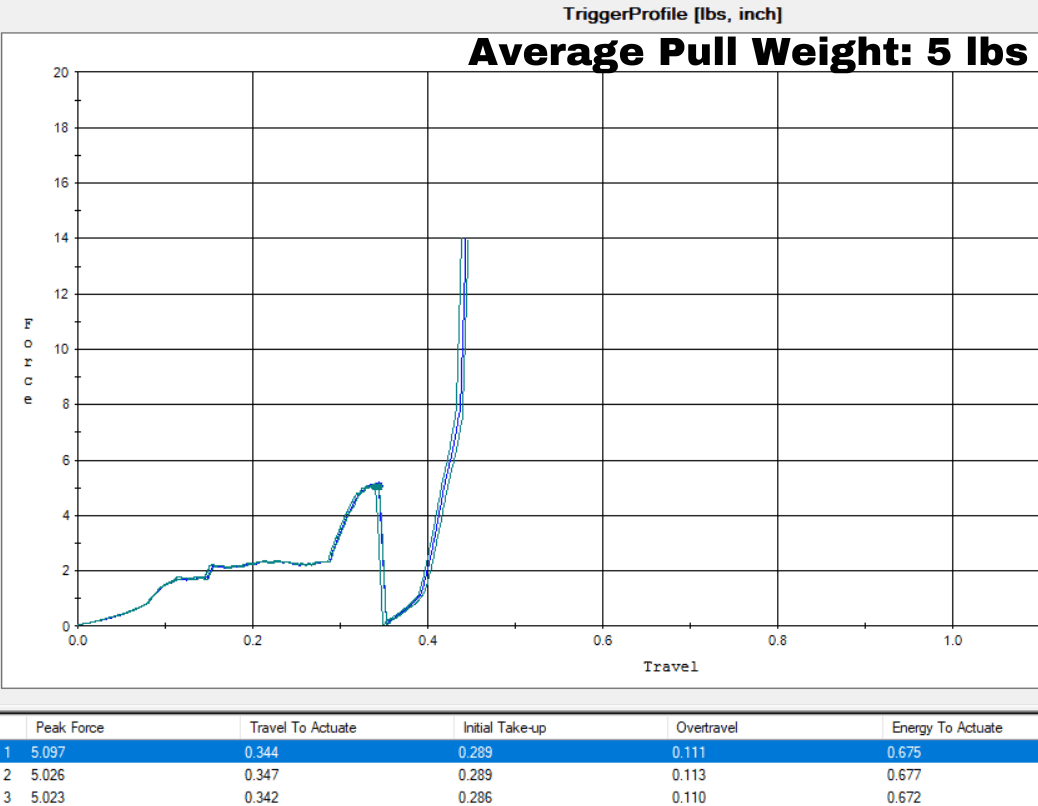
This is your standard Glock trigger that we all know and love (or hate). It is characterized by a light pull, followed by a little hitch, then some more clean pull before running into a tiny bit of grit. You hit a fairly defined wall that requires a fair amount of pressure, and then there is a little bit of spongy creep just before the break. The break itself is actually okay, and the reset is both tactile and audible.
- Average Pull Weight: 5 lbs
- Average Split Time: 0.25 sec
- Average Travel Distance: 0.34"
Here is a close-up video of the trigger pull and reset.
To get an accurate baseline test for the rest of the Gen 5 triggers, I used an extremely low round count Glock 26 with an OEM trigger assembly. Since the Glock 26 is a sub-compact pistol, the split times were slower than the Gen 3 G34.
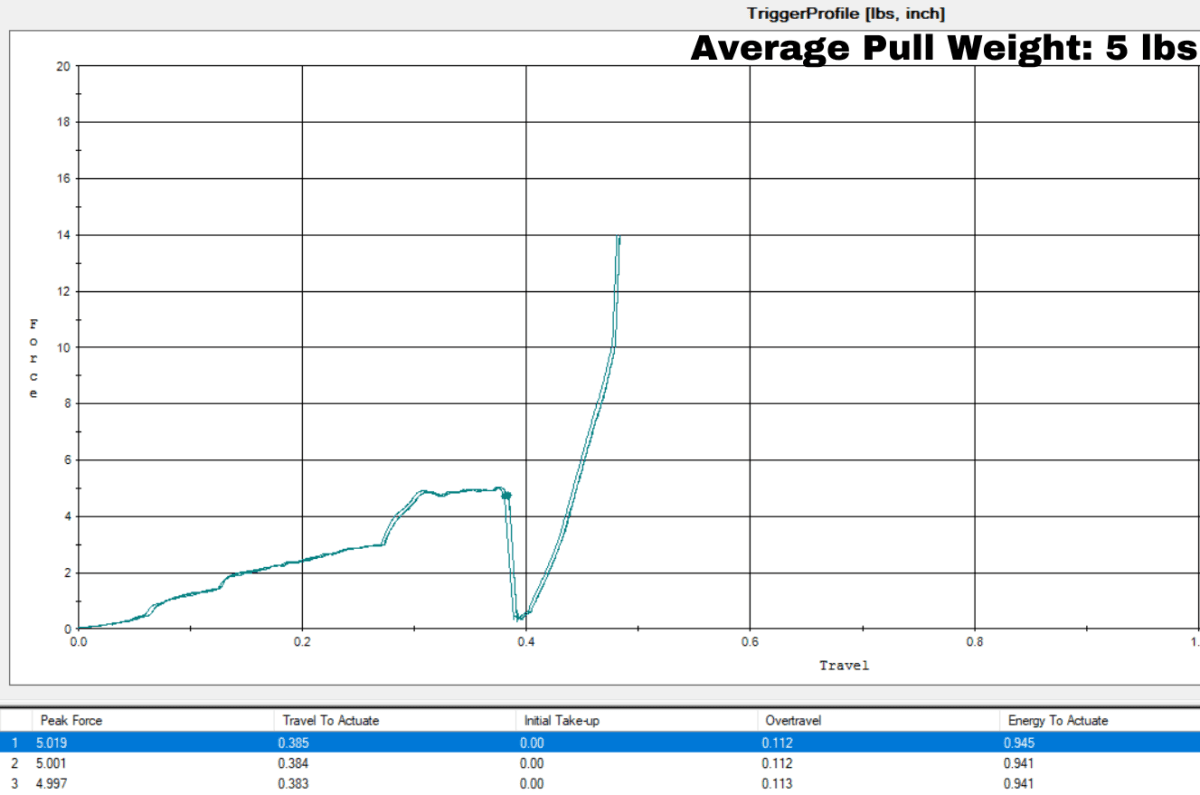
- Average Pull Weight: 5 lbs
- Average Split Time: 0.28 sec
- Average Travel Distance: 0.38"
Glock improved their triggers with their 5th generation pistols. Instead of a significant spike in pressure before the break, the Gen 5 has a smoother and more gradual increase in pressure before you hit the fairly defined wall.
Compared to the Gen 3, you do spend a bit more time at the peak force required to actuate the trigger here. There is a bit of sponge after wall, as you'd expect. I find that the Gen 5 has a slightly more rolling break compared to the Gen 3. Reset is both tactile and audible.
Most people prefer the Gen 5 triggers over Gen 3. I tend to agree. Here is a close-up video of the trigger pull and reset.
Finally, to get an accurate baseline for the Slimline Glocks, I used a brand new Glock 48 with an OEM trigger assembly.
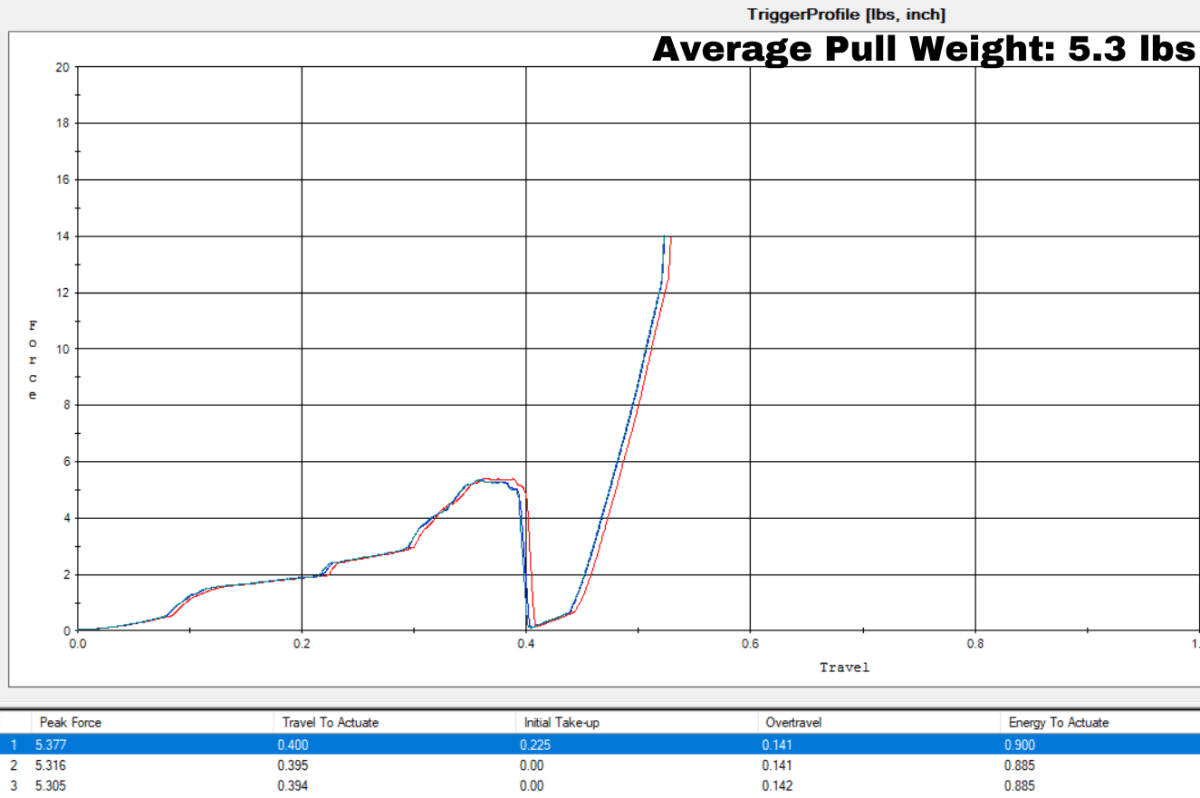
- Average Pull Weight: 5.3 lbs
- Average Split Time: 0.27 sec
- Average Travel Distance: 0.39"
In a nutshell, the stock Slimline Glock trigger is very similar to the stock Gen 5 trigger, just slightly heavier.
Here is a close-up video of the trigger pull and reset.
Testing Procedure - Live Fire
But the testing didn't stop there. I took each trigger out to the range for live fire testing to evaluate accuracy, ergonomics, and overall performance. I'm a bullseye shooter, so I used that experience to develop a course of fire.
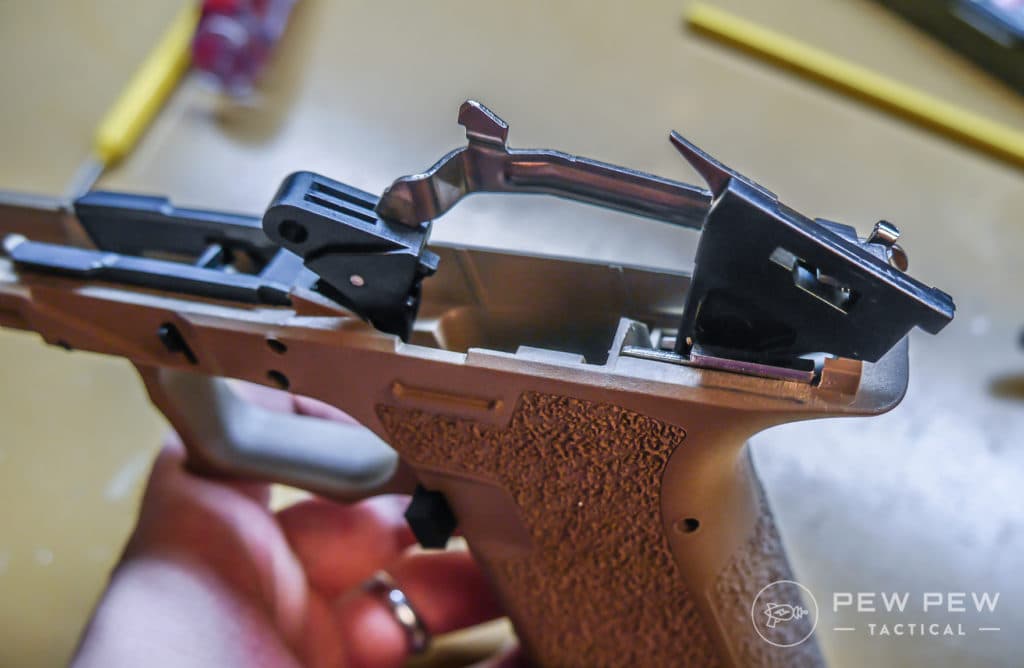
I fired five rounds at 7 yards on a standard IPSC cardboard target. Strings of fire were only counted if all five shots were clean A-zone hits. Three strings were fired for each trigger, from which I took the average of the best string. I gathered split times using a Kestrel KST1000 shot timer.
A close-up trigger pull and reset video was recorded for each trigger. I also recorded my initial thoughts on each trigger that I had before taking any readings.
DISCLAIMER: There are many hotly contested debates about reliability and drop safety when switching from a stock Glock trigger to an aftermarket one. We want to be clear that this article is purely meant to test the basic trigger functionality and compare the raw data. This isn't a long-term durability test, and we did not drop test any of these triggers.
Meet the Experts
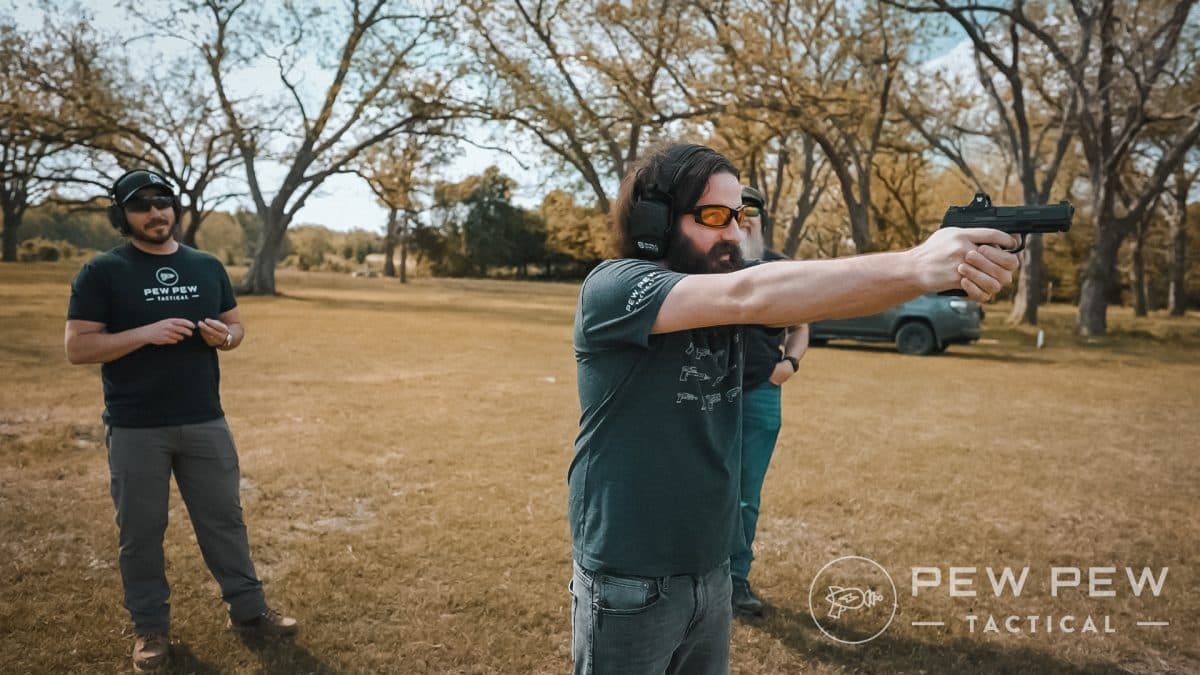
Leading the research, testing, and evaluations is Pew Pew Tactical Editor and Senior Review Analyst, Wyatt Sloan. Wyatt is an NRA and USCCA instructor with thousands of hours behind pistols and their triggers. In addition to being certified to teach, Wyatt has also previously competed in USPSA and Bullseye matches. USPSA is a style of competition shooting organization that focuses on speed shooting using a handgun, while Bullseye prioritizes precision handgun shooting. Both require extensive use and understanding of pistol fundamentals, as well as knowledge of pistol components and their operation.
Wyatt developed this testing protocol specifically to compare Glock triggers head-to-head using objective data through the TriggerScan plus live-fire performance.
Best Glock Gen 3 Triggers
Almost all direct Glock clones are based on Gen 3 Glocks due to many of the component patents having expired. This means that the aftermarket for Gen 3 triggers is the largest of all Glock generations.
1. Johnny Glocks Evolution-X Competition Trigger Gen 3 - Editor's Pick Gen 3 Trigger
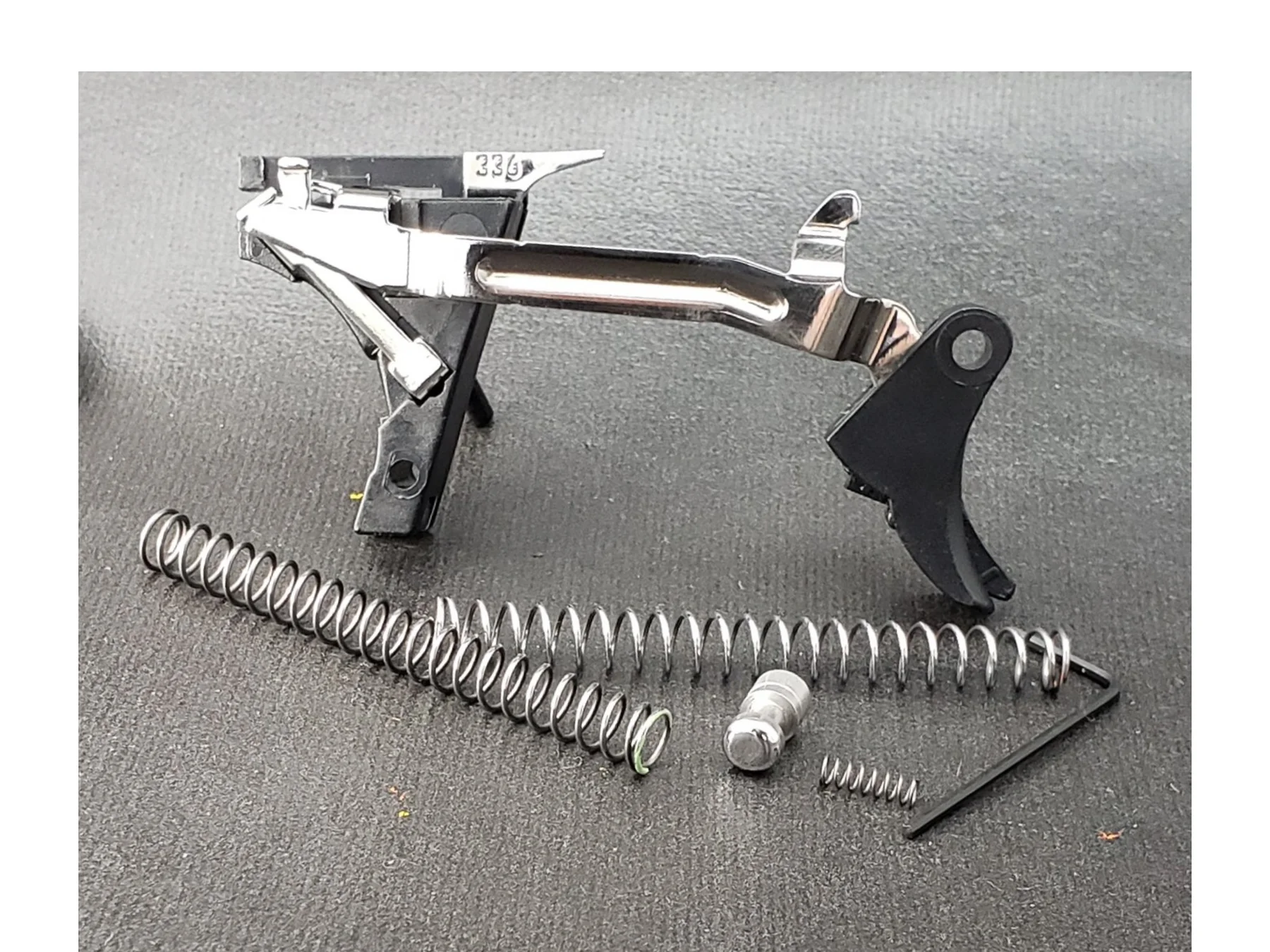
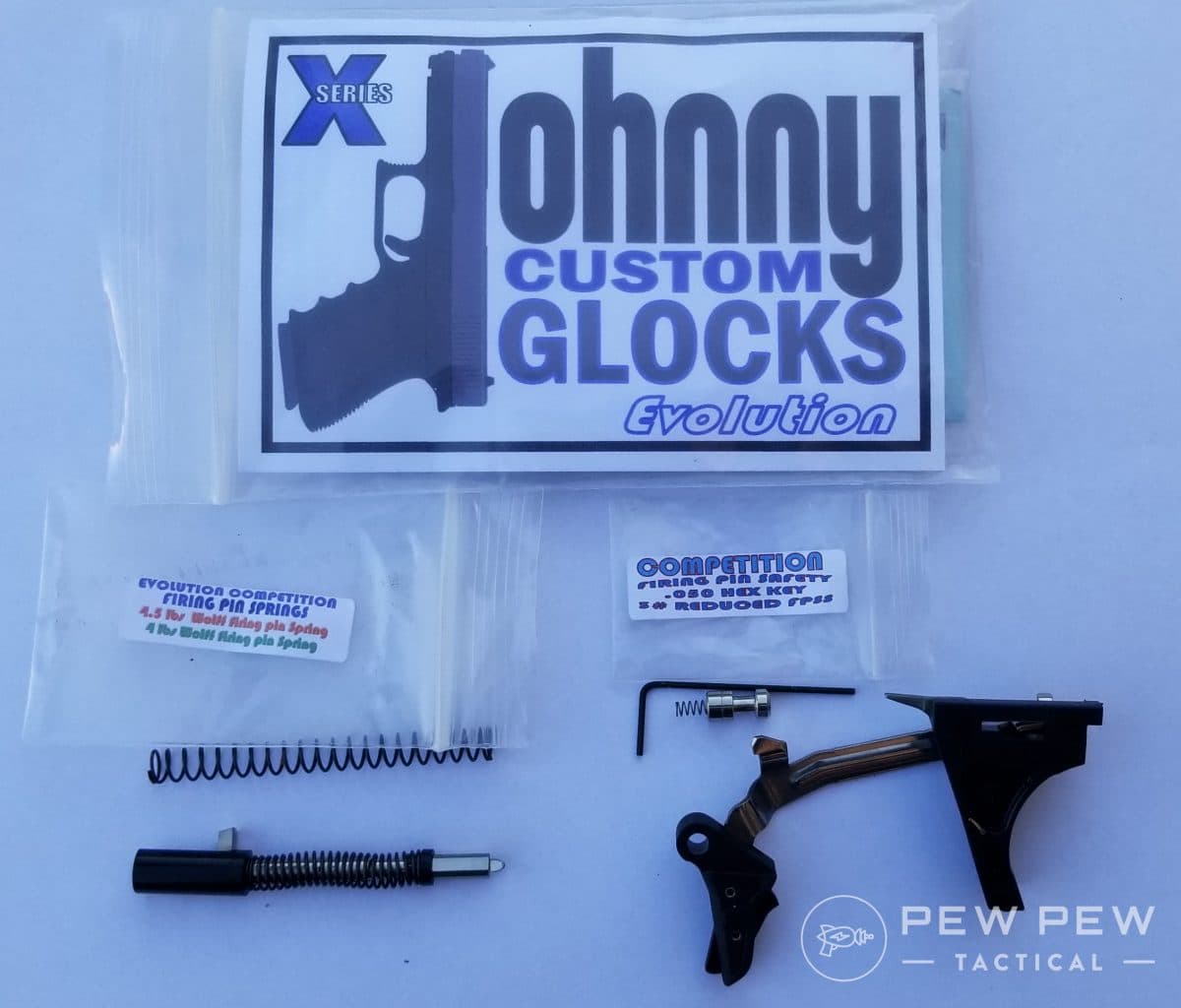
What's included:
- Aluminum flat-face trigger shoe
- Polished and modified OEM trigger bar
- Polished and modified OEM trigger housing
- Polished and modified OEM connector
- Polish and honed OEM striker with 4 lb & 4.5 lb striker springs
- Safety plunger w/reduced power 3 lb spring
Below is the graph using the orange 4.5 lb striker spring.
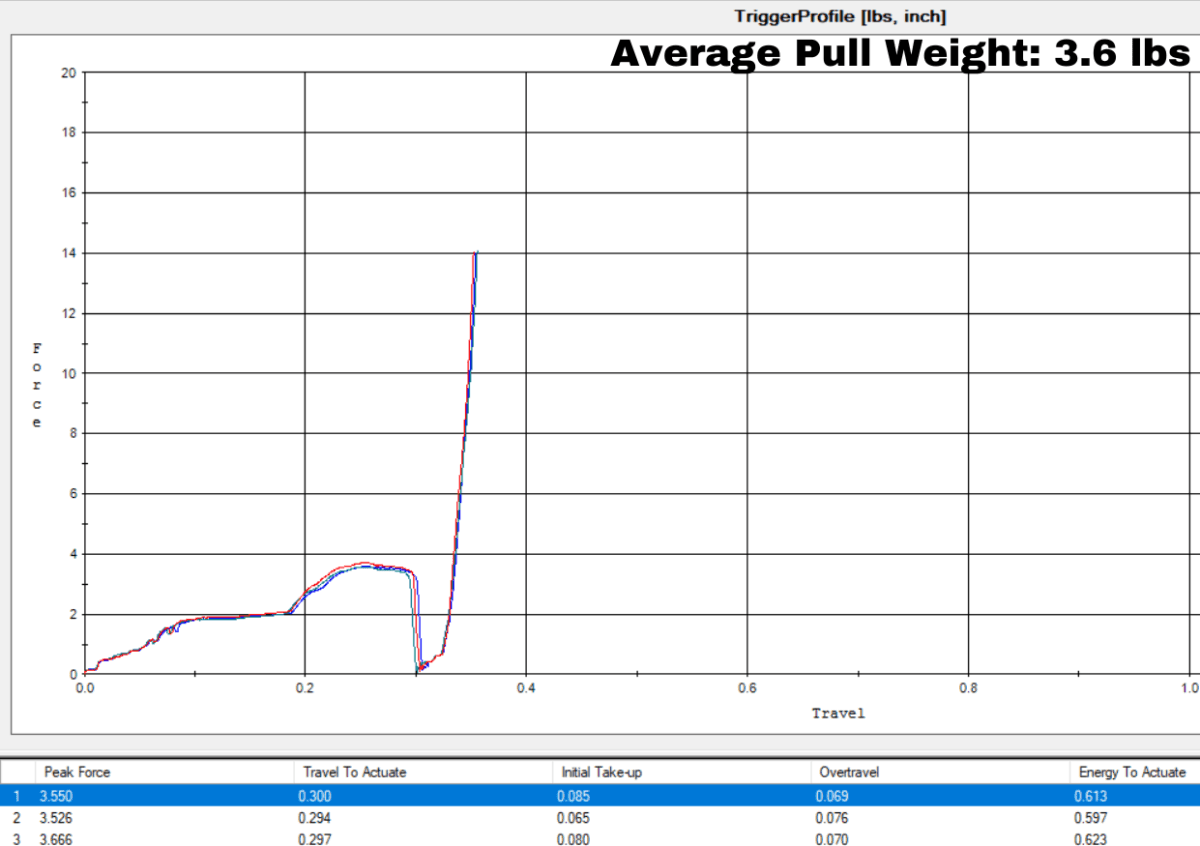
My initial pull revealed a pretty clean travel to a defined wall. There is a little bit of creep after the wall that is firm but very even, and then the trigger moves into a slight rolling break. This feels like a stock Glock trigger in the way it functions, just much lighter and much smoother.
I also ran a test using the green 4 lb striker spring. With the green spring, you get the same pull but lighter and with less travel and creep distance. I prefer the 4 lb spring.
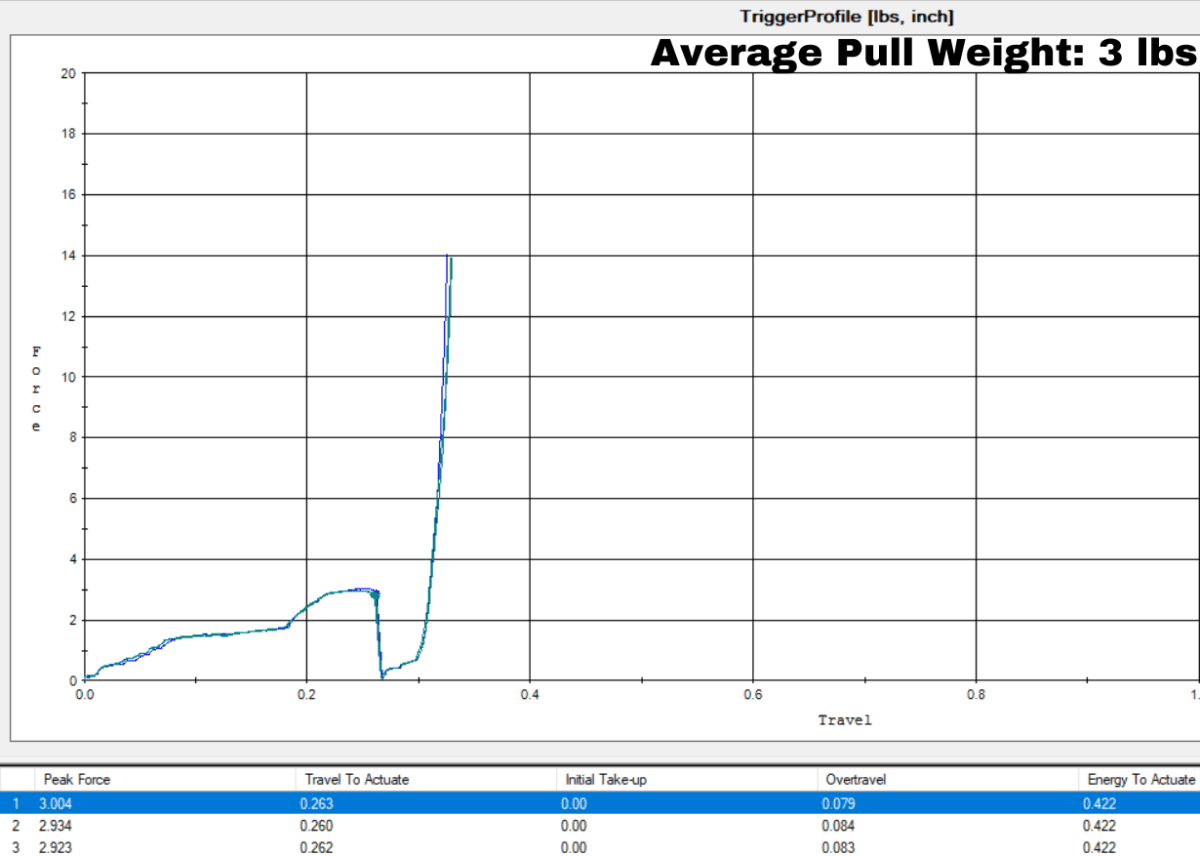
- Average Pull Weight: 3.6 lbs (orange), 3 lbs (green)
- Average Split Time: 0.20 sec
- Average Travel Distance: 0.30" (orange), 0.26" (green)
- Price: $370
The Johnny Glocks trigger shoes feel a bit thinner with more beveled edges, which some people may prefer over the fatter trigger shoes. The reset is both tactile and audible.
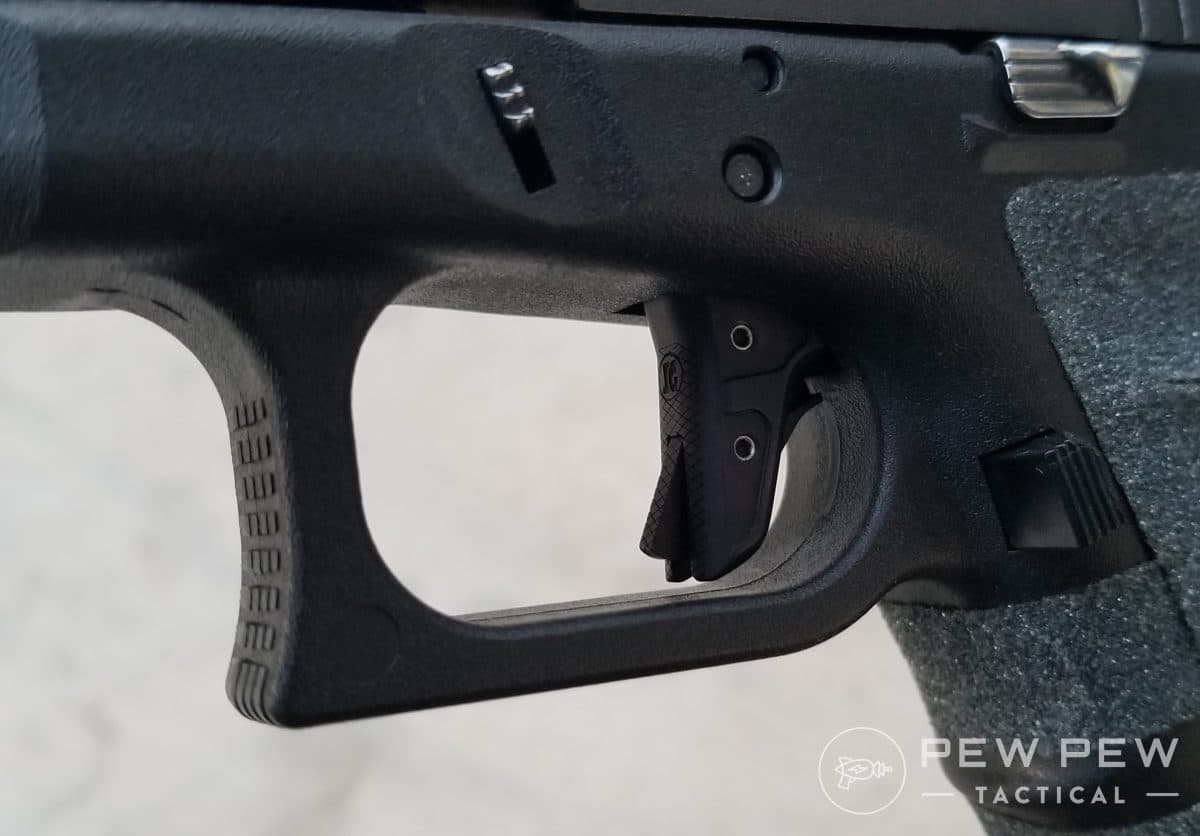
If you want a trigger that doesn't inherently change the mechanics of the stock Glock trigger feel, but you want it to be cleaner and lighter, this is your guy. The only downside is the eye-watering $370 price tag.
Here is a close-up video of the trigger pull and reset.
2. Overwatch Precision PolyDAT Trigger - Best Value Glock Trigger
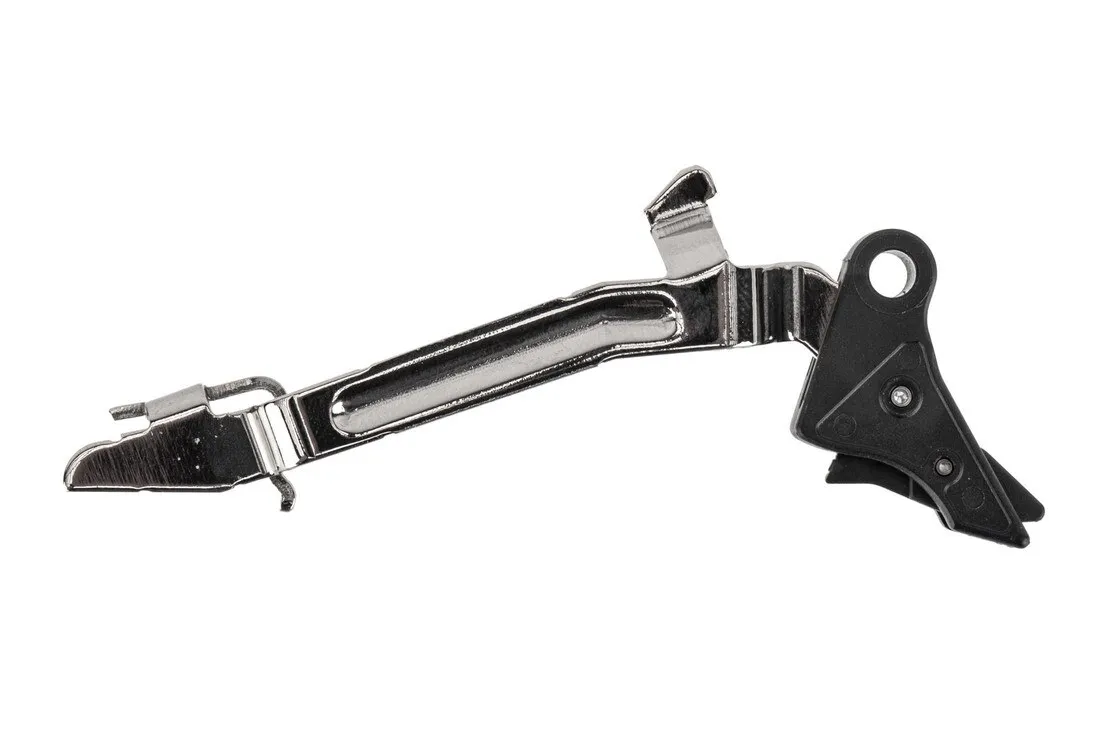
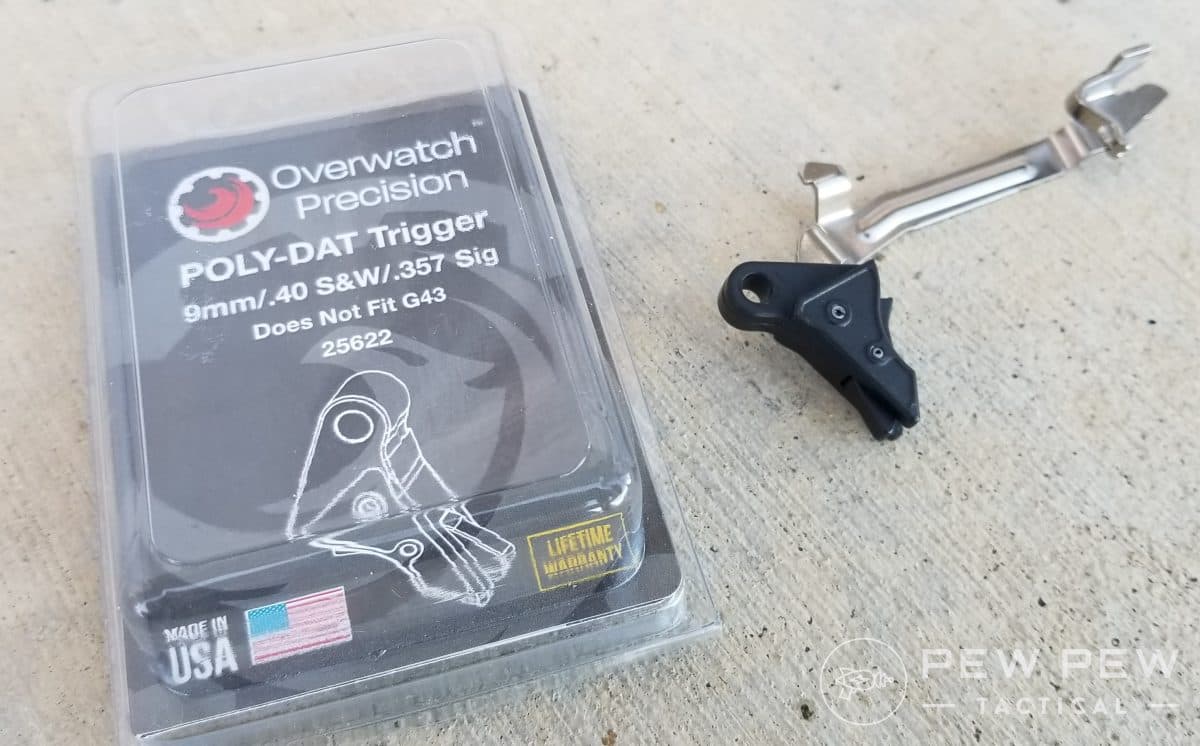
What's included:
- Progressive Die trigger bar
- Polymer flat-face trigger shoe
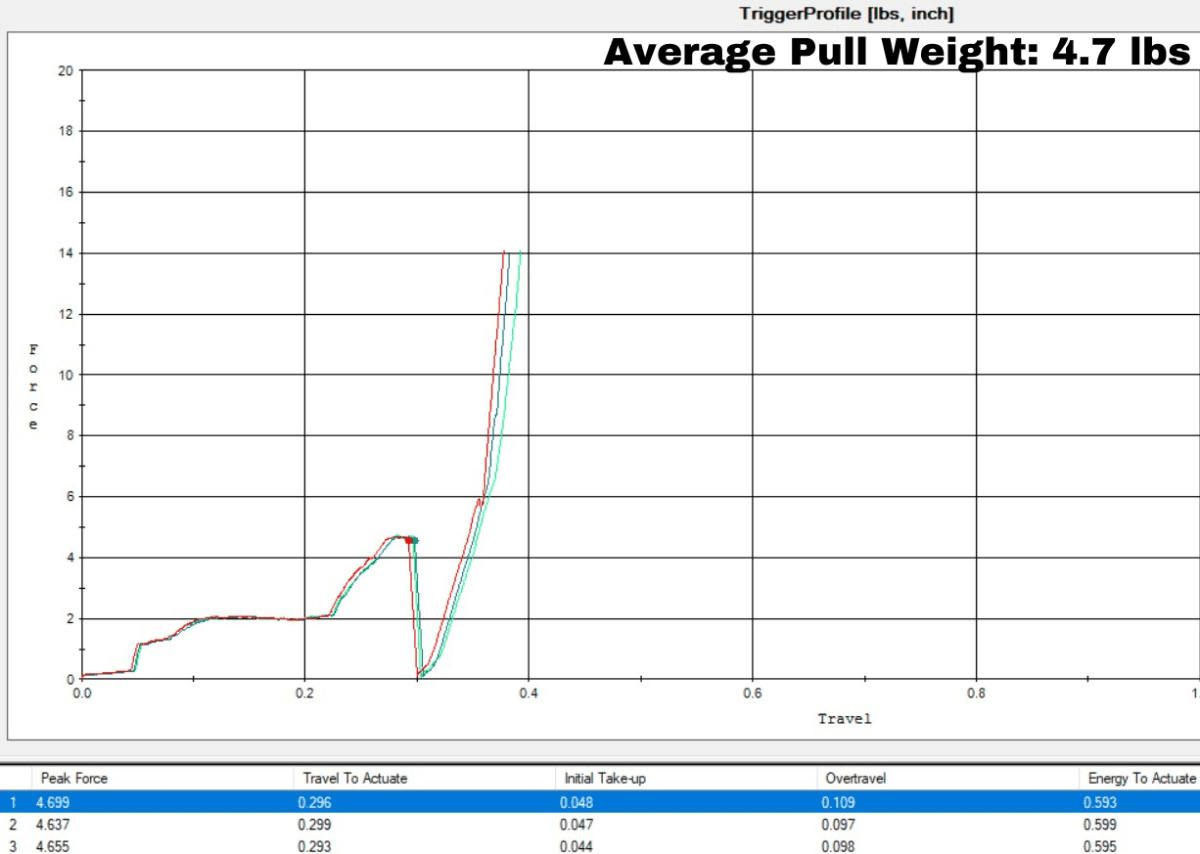
- Average Pull Weight: 4.7 lbs
- Average Split Time: 0.20 sec
- Average Travel Distance: 0.30"
- Price: $61
There is a bit of take-up that is tactile. The trigger then hits a definitive wall, after which there is a tiny bit of creep. The very end of the pull feels a tad bit heavy, and the break has a distinct "thonk." The reset feels short and is both tactile and audible, albeit slightly soft.
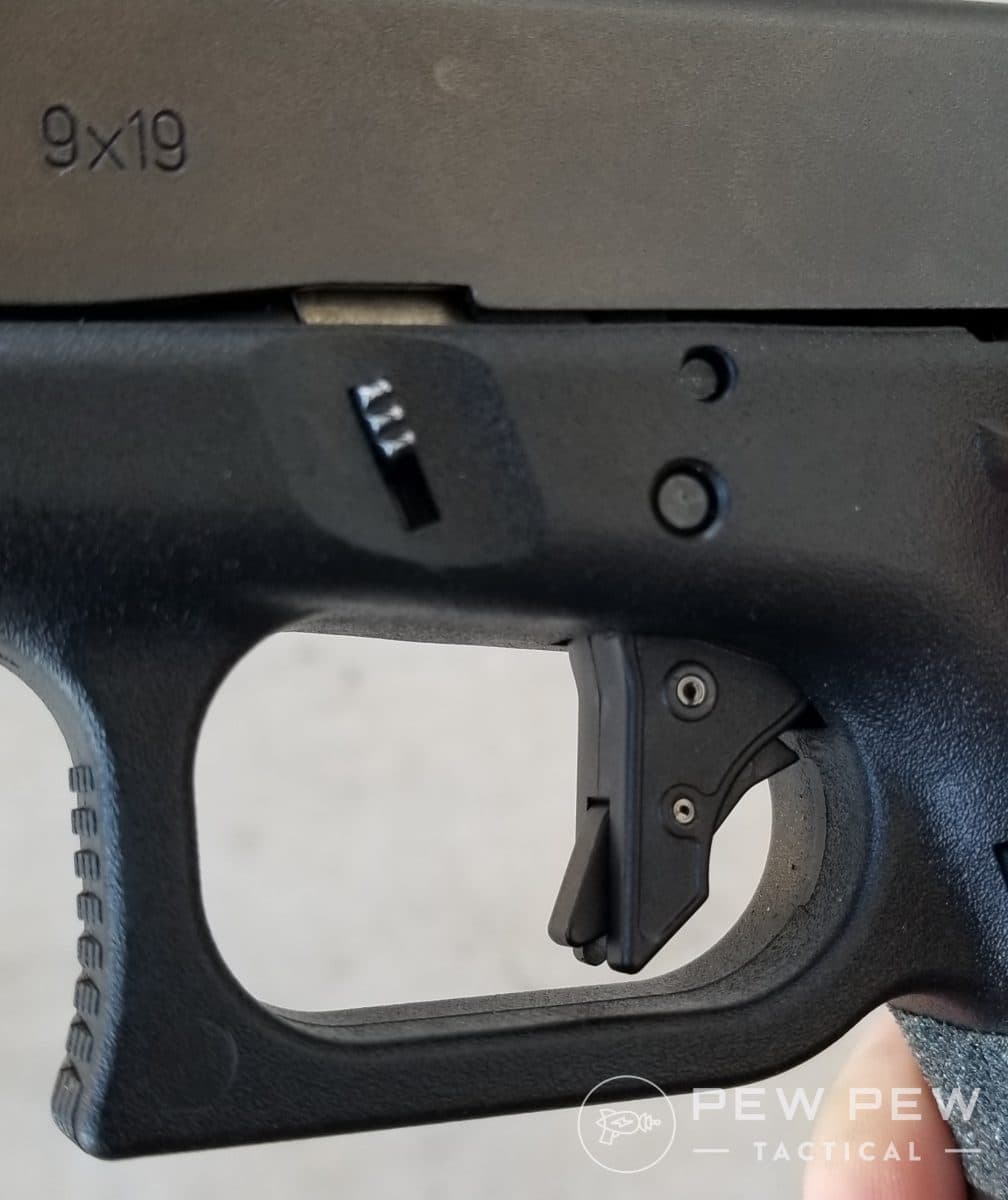
While the dry fire just felt okay to me, my split times were great on this one. The fact that this was tied for the fastest split time of any tested trigger while coming in at a very affordable price makes this one of the best value buys on this list.
Here is a close-up video of the trigger pull and reset.
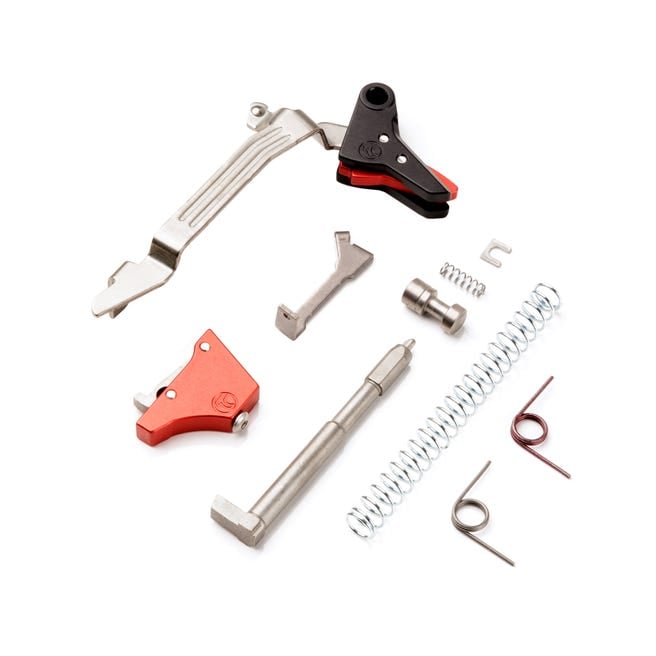
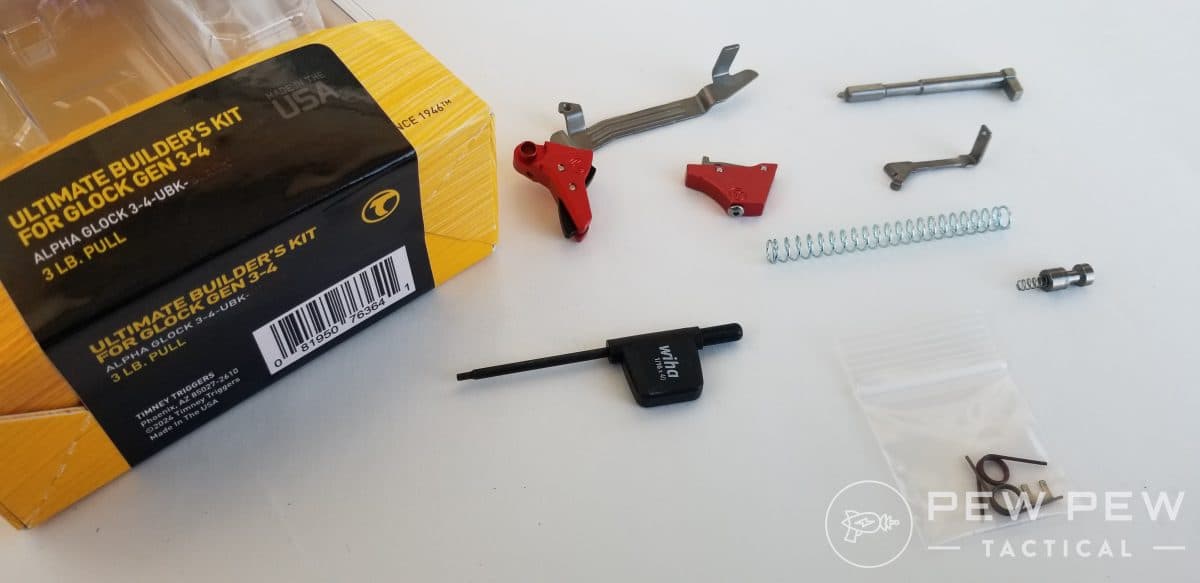
3. Timney Ultimate Builder's Kit - Fastest Glock Trigger
What's included:
- Aluminum flat-face trigger shoe
- NP3-coated trigger bar and sear
- NP3-coated striker and striker spring
- NP3-coated connector
- NP3-coated safety plunger and spring
- 1 red trigger return spring
- 1 black reduced power trigger return spring
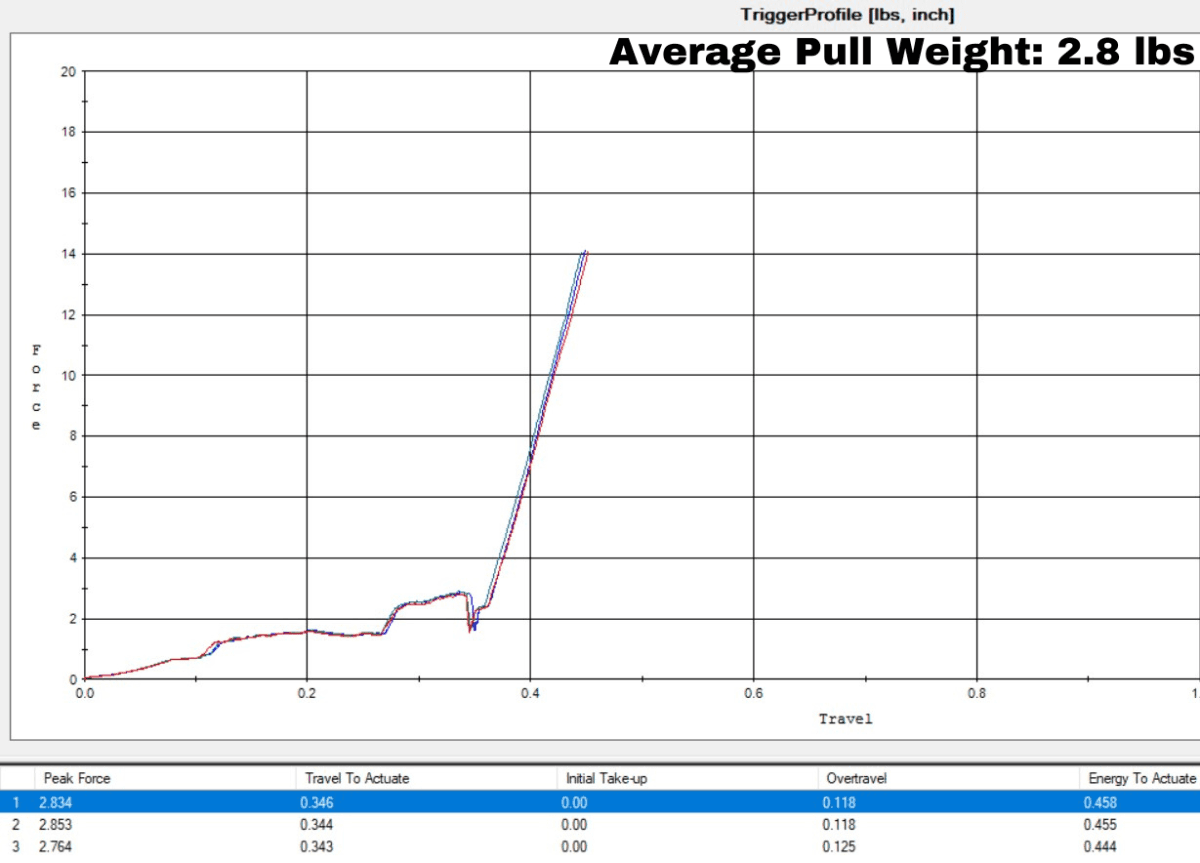
There is some clean travel to a wall, followed by a little bit of sponge before the trigger breaks slightly in space. This is a very light trigger pull --- the lightest of all tested triggers.
I also ran a test using the reduced-power black trigger return spring. The black spring feels mostly the same but with less sponge after the wall and a cleaner break. I also prefer the feel of the reset with the black spring.
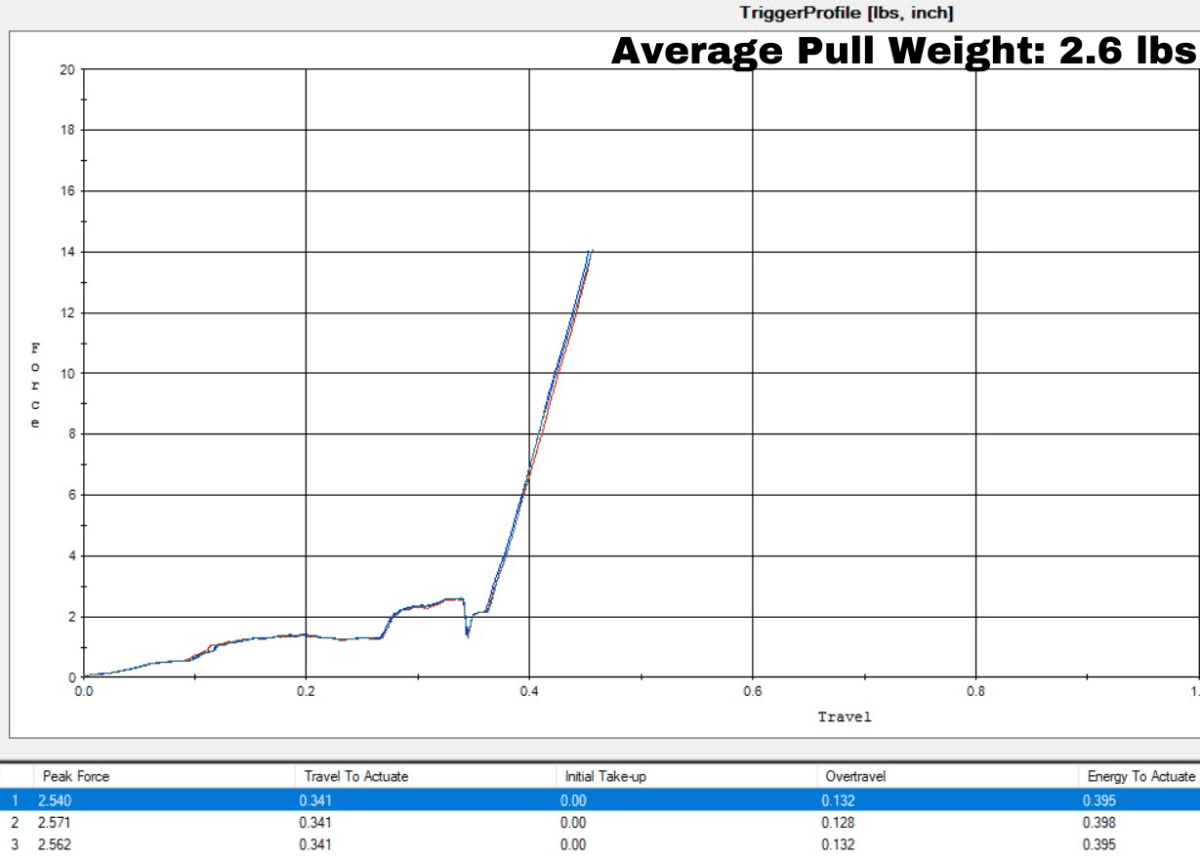
- Average Pull Weight: 2.8 lbs (red), 2.6 lbs (black)
- Average Split Time: 0.23 sec (red), 0.20 sec (black)
- Average Travel Distance: 0.34" (red) 0.34" (black)
- Price: $269
The Timney Ultimate Builder's Kit completely replaces the sear, which no other trigger on this list does other than the Timney Alpha Competition Kit (a stripped-down Ultimate kit). Due to this, it has the most complicated install of any trigger on the list, although it is still fairly straightforward.
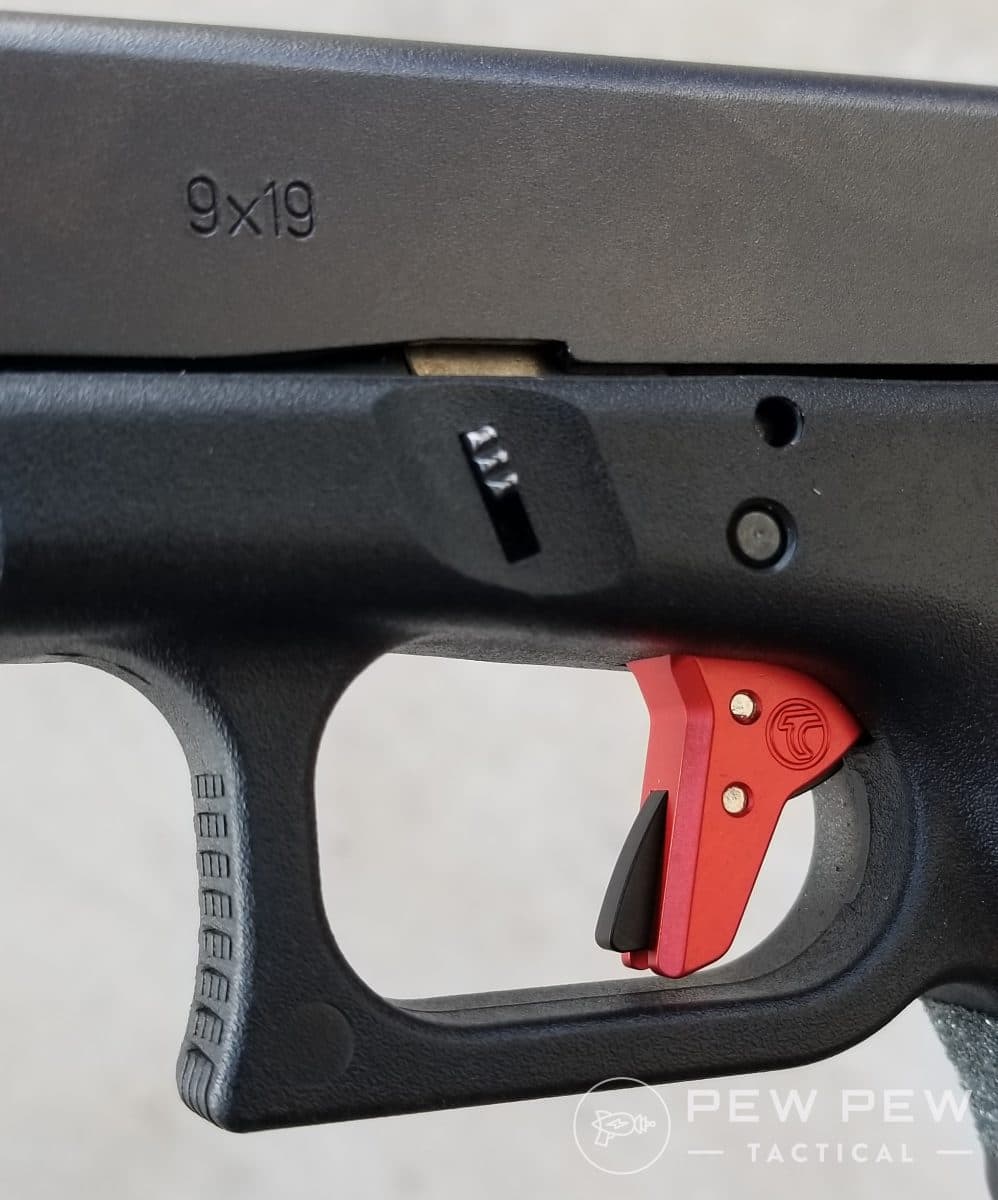
With the black spring, I was getting occasional splits of 0.18 and 0.19 seconds. It is fast and smooth, with an audible and tactile reset. If I were building a range toy, this would be my trigger of choice.
Here is a close-up video of the trigger pull and reset.
4. Apex Tactical Action Enhancement Kit - Best Trigger Shoe
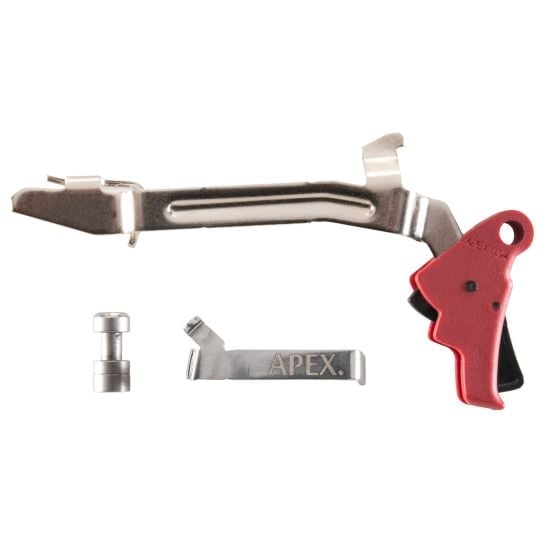
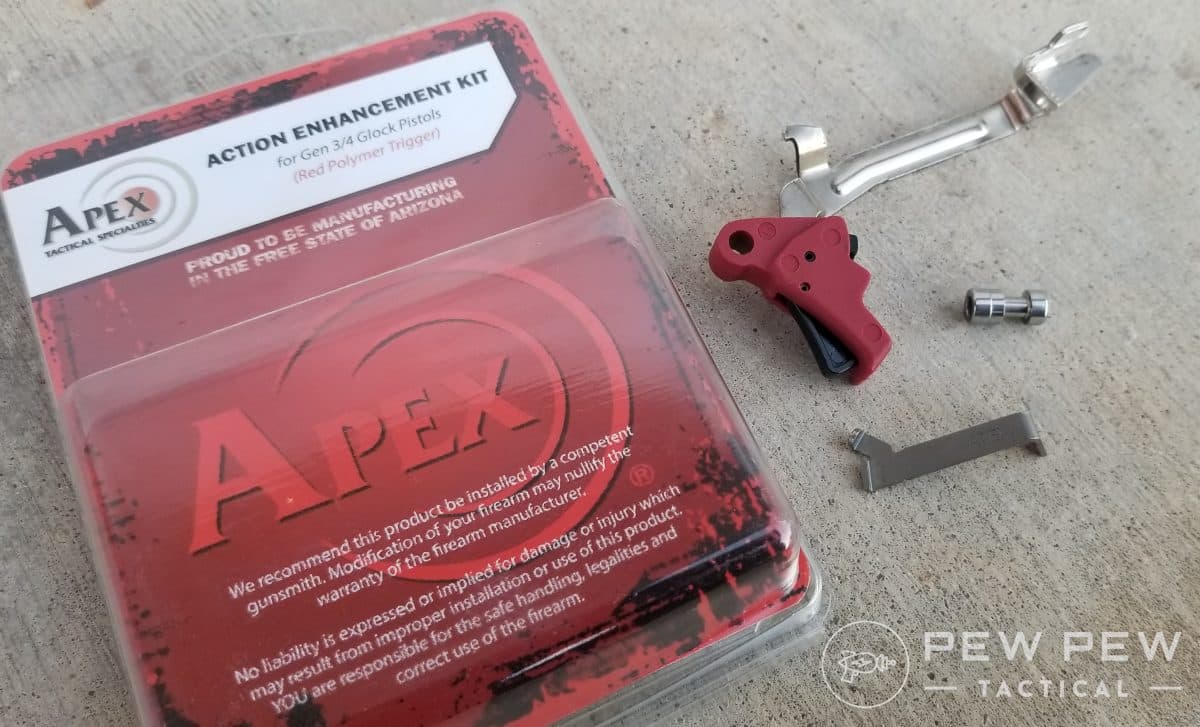
What's included:
- Trigger bar
- Polymer trigger shoe
- Ultimate Safety Plunger
- Performance Connector
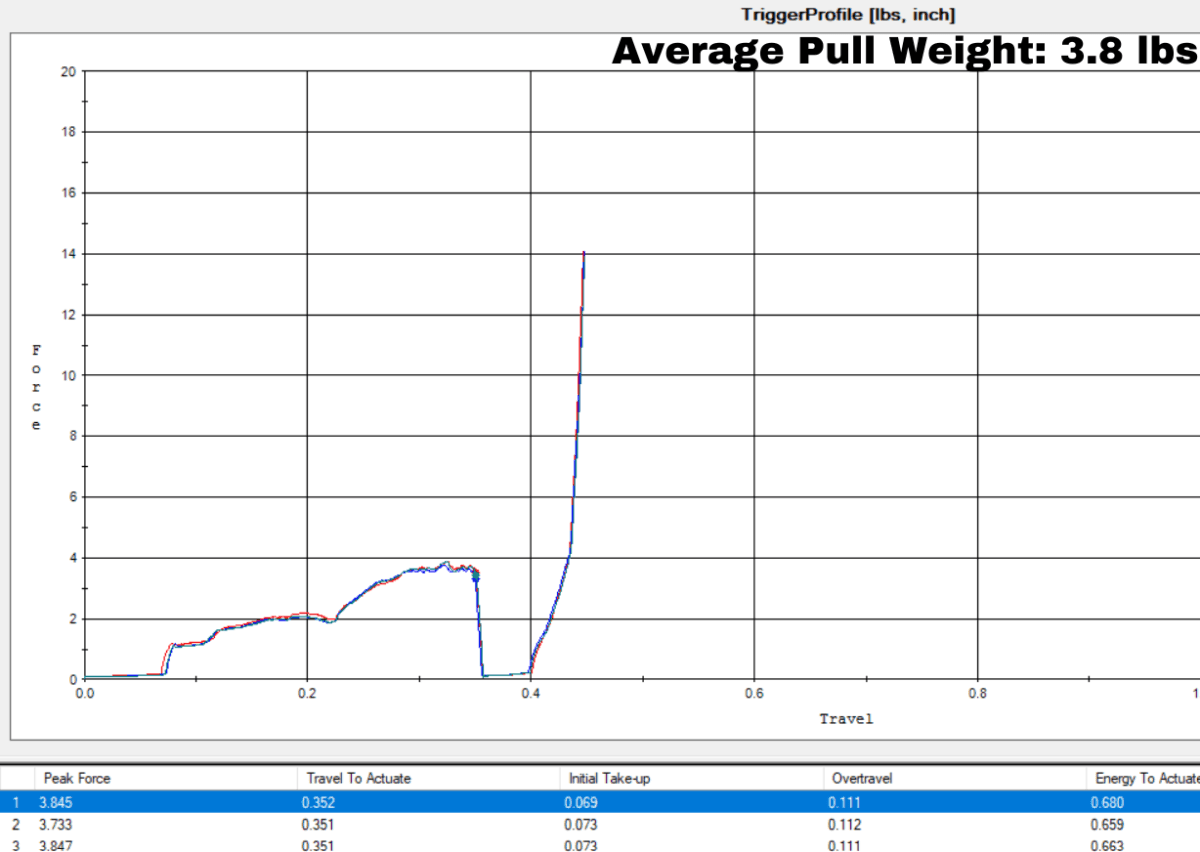
- Average Pull Weight: 3.8 lbs
- Average Split Time: 0.22 sec
- Average Travel Distance: 0.35"
- Price: $133
This kit utilizes a polymer trigger shoe that is wider and more square than the stock trigger. I really like the way this shoe feels. There is a bit of take-up and travel to a false wall, then a bit of creep before the trigger breaks in space somewhat. The reset is both tactile and audible.
My initial thoughts were that the trigger felt "cheap." However, I had very consistent split times (0.22, 0.22, 0.20, 0.22) with this trigger, and it definitely shoots better than it feels. This is likely due to the lower pull weight and comfortable trigger shape.
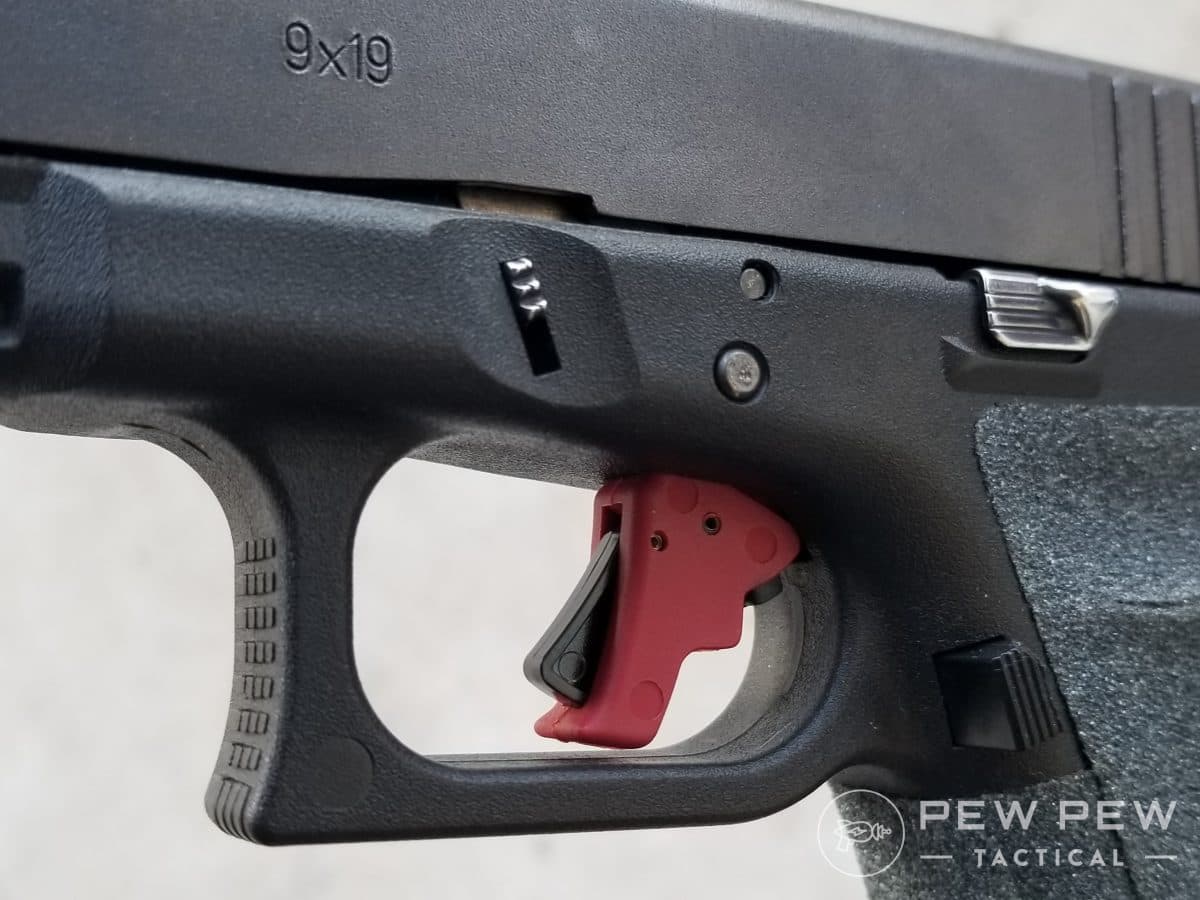
I also want to note that the trigger safety blade has the most clearance from the frame of the gun of any trigger on the list (you will see why this is important later).
Here is a close-up video of the trigger pull and reset.
5. Timney Alpha Competition Trigger - Best Competition Trigger
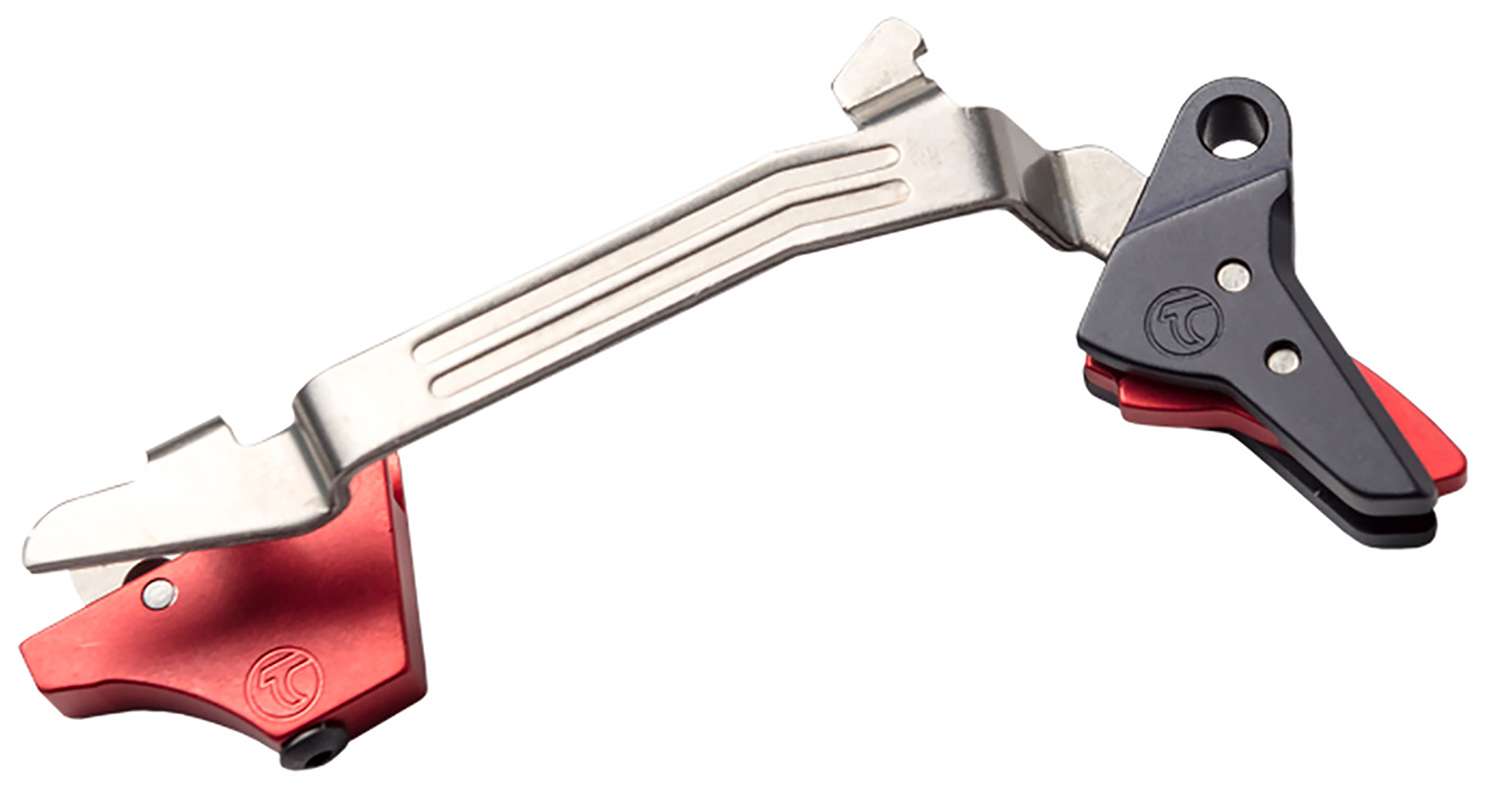
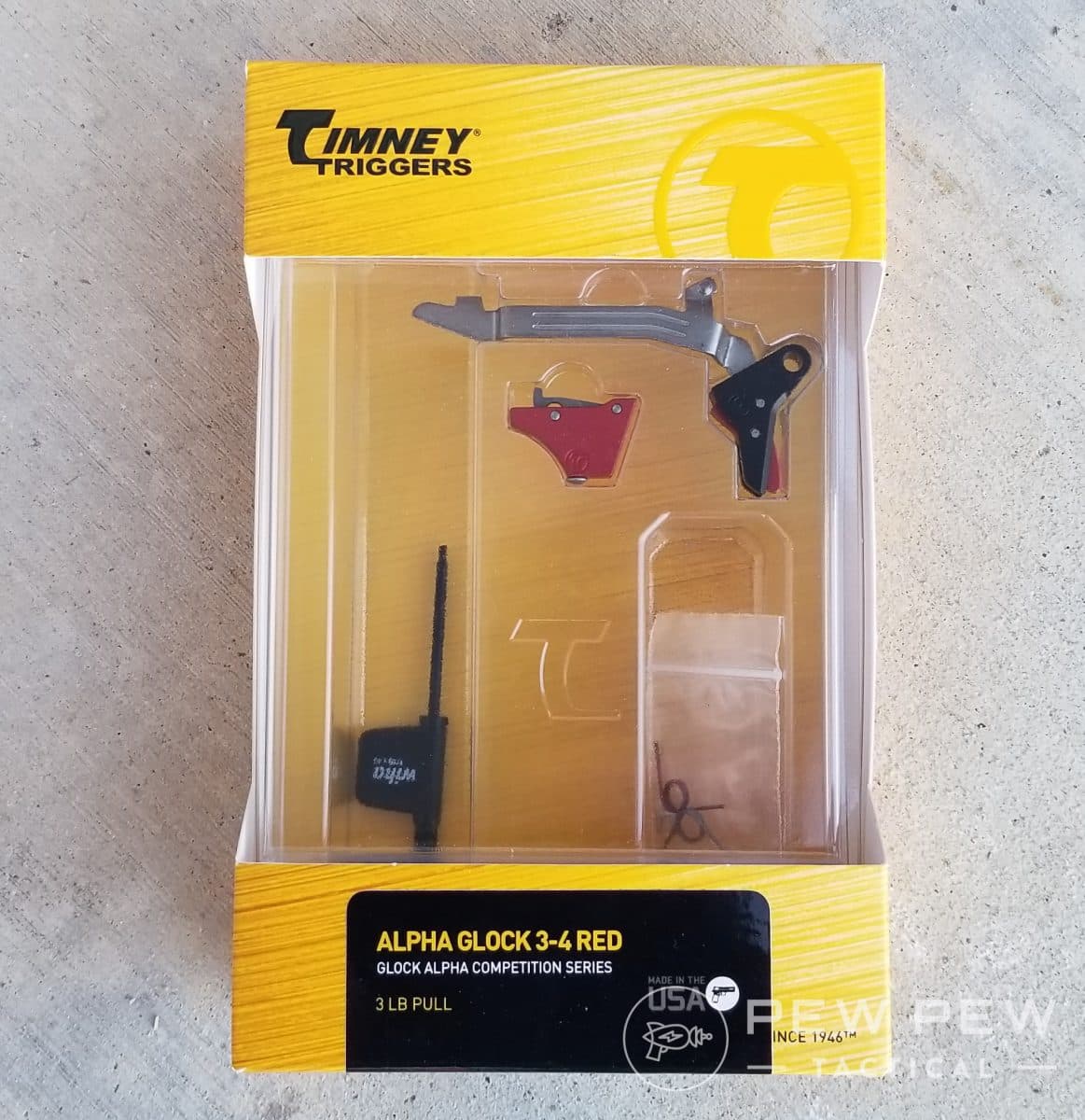
What's included:
- Aluminum flat-face trigger shoe
- NP3-coated trigger bar and sear
- 1 red trigger return spring
- 1 black reduced power trigger return spring
You may notice this looks similar to the Timney Ultimate Builder Kit above, and that is because it is. The Alpha Competition trigger uses the same trigger shoe, trigger bar, and sear but lacks the striker, plunger, and connector of the Ultimate Kit.
With the black trigger return spring installed, I found this trigger to have a very definite wall, followed by a fairly crisp break. There is very little felt creep or sponge here.
The reset is slightly longer than the Ultimate Kit and not as forced, but it is still very good. I have to say that both Timney triggers absolutely take the Glock feeling out of the trigger.
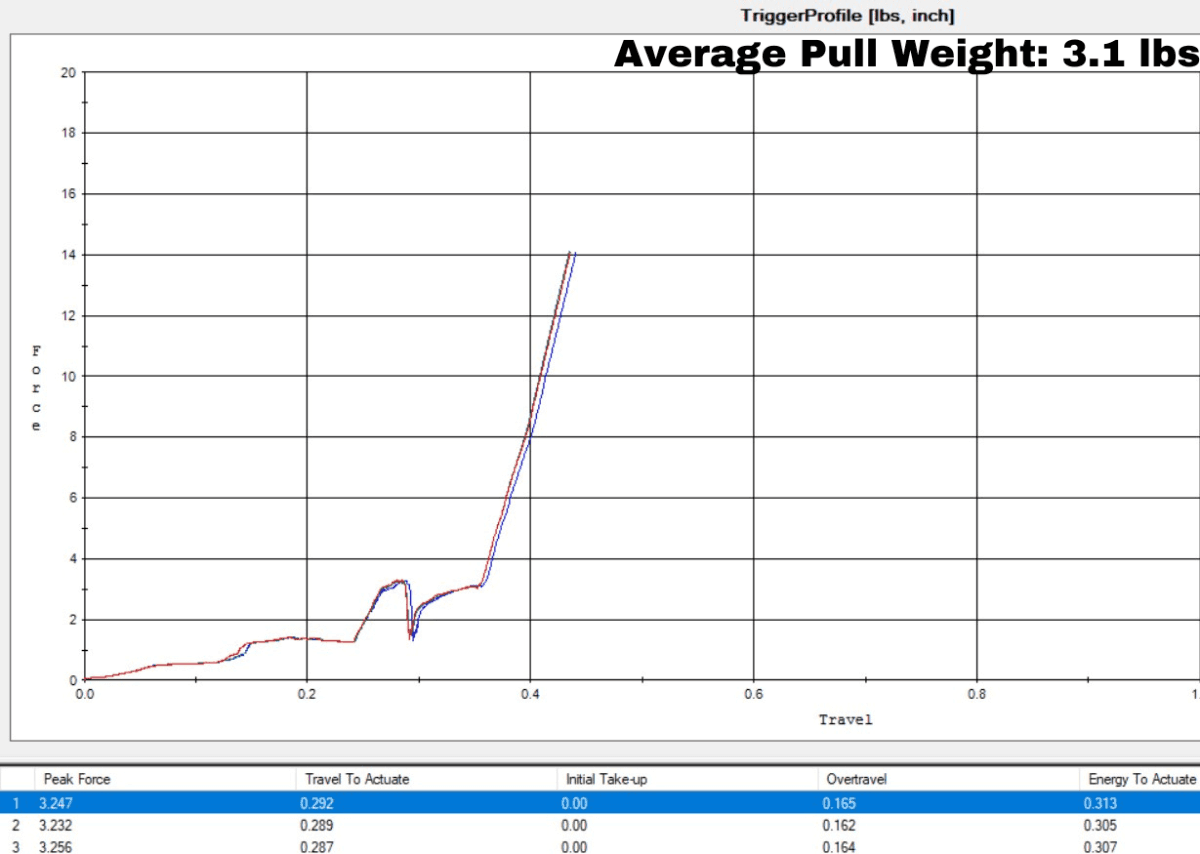
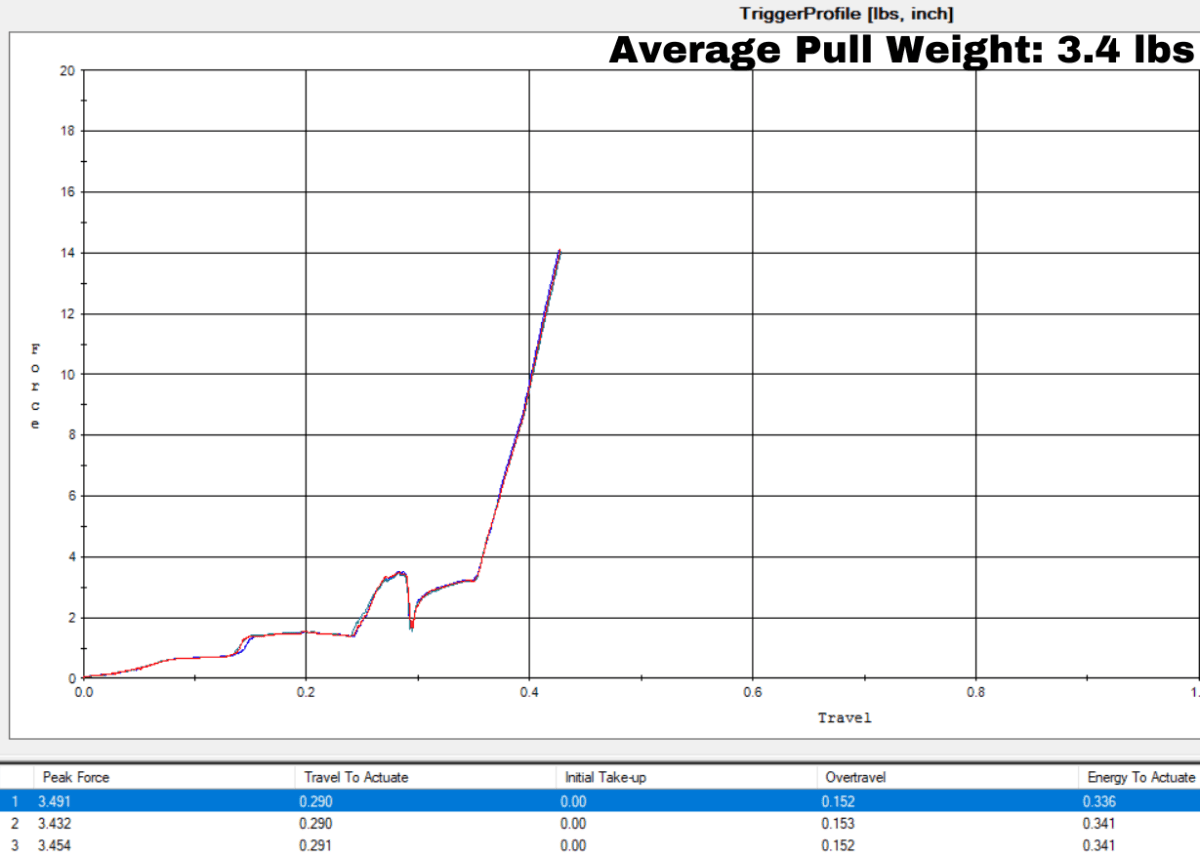
- Average Pull Weight: 3.4 lbs (red), 3.1 lbs (black)
- Average Split Time: 0.22 sec (red), 0.20 sec (black)
- Average Travel Distance: 0.29" (red) 0.29" (black)
- Price: $149
With the red spring installed, you end up getting the tiniest amount of creep after the wall. However, the trigger still feels mostly the same. For some unknown reason, I was having a difficult time getting clean strings with the red spring. This was likely due to my lackluster shooting ability, but I thought I'd mention it.
For those who are looking for a trigger that breaks at the 3 lb mark or just north of it while completely eliminating the standard Glock trigger feel, this could be a serious contender.
Here is a close-up video of the trigger pull and reset.
6. Tyrant CNC I.T.T.S Trigger Shoe Gen 3 - Best Metal Trigger Shoe
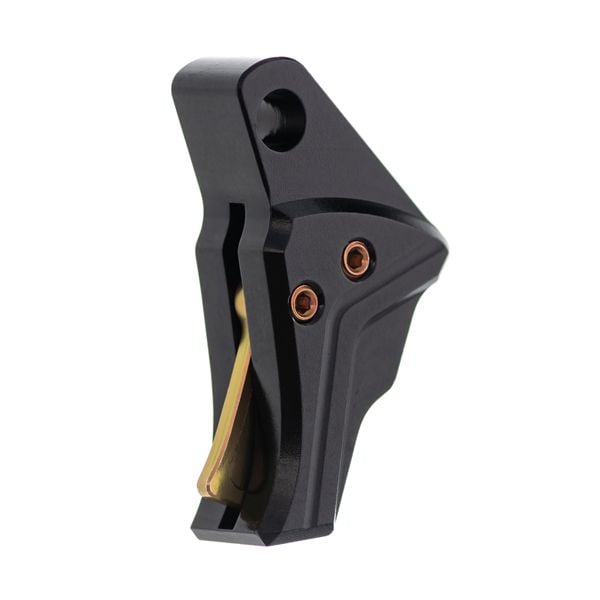
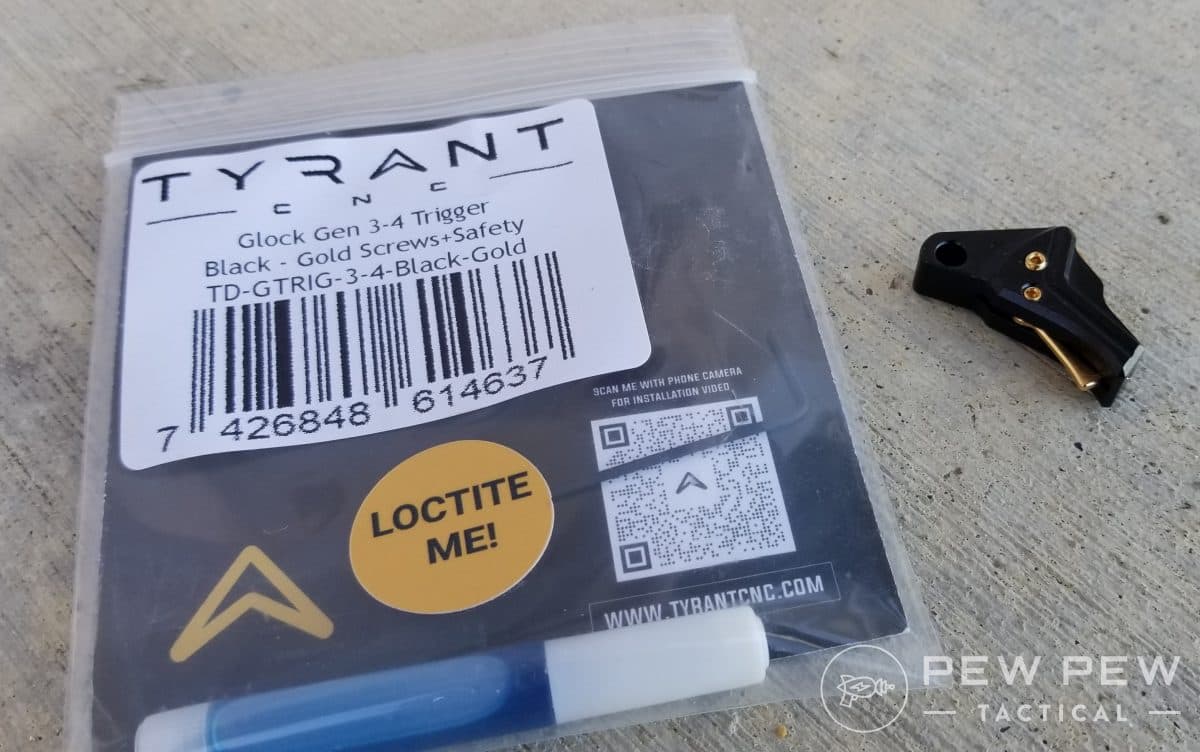
What's included:
- Aluminum adjustable trigger shoe
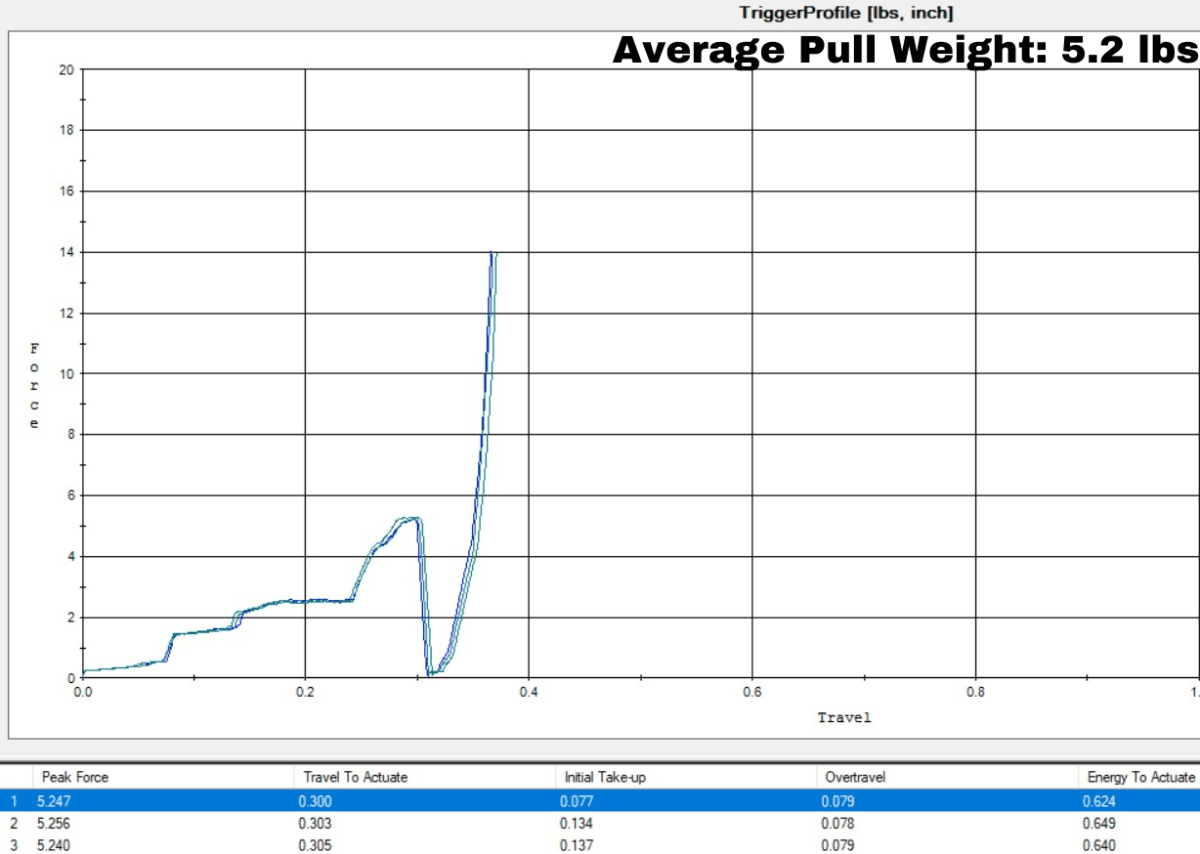
- Average Pull Weight: 5.2 lbs
- Average Split Time: 0.24 sec
- Average Travel Distance: 0.30"
- Price: $67
There are a few small hitches in the early trigger pull before quickly smoothing out. This leads to an extremely well-defined wall. My initial thought before reading the graph was that the weight was nearly the same as the stock trigger, which proved to be correct.
Tyrant CNC claims that the I.T.T.S offers 15% reduced take-up and a 10% reduced reset travel distance. A quick look at the travel-to-actuate distance on the TriggerScan shows that the overall travel distance was reduced by 12% over the OEM trigger we tested. The reset is tactile and audible while feeling a bit shorter.
Tyrant seems to make good on their claims here.
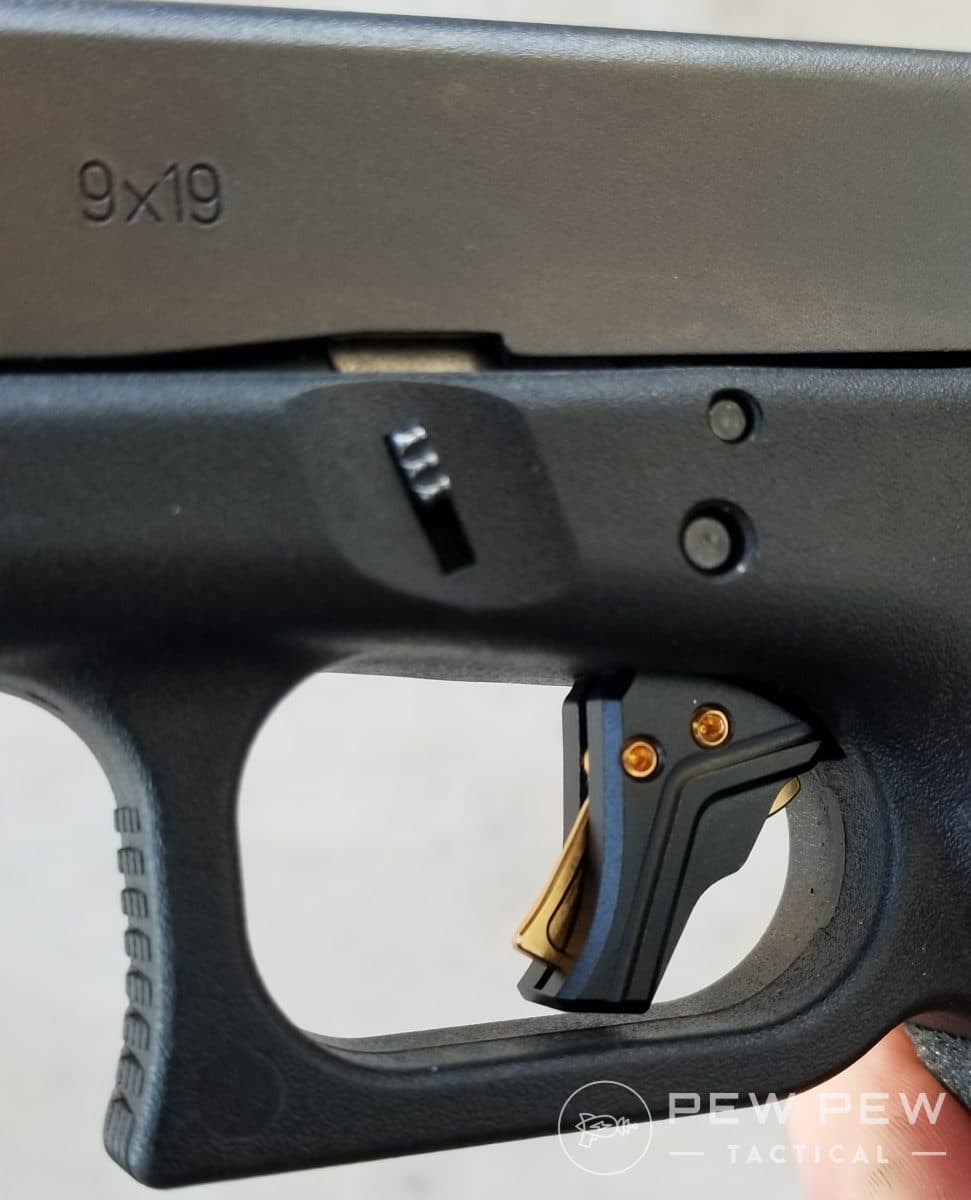
It should be noted that in order to take your stock Glock trigger shoe off the trigger bar, you must either permanently modify it or destroy it.
This is because Glock's trigger pins are only accessible from one side of the trigger shoe. To remove the pin, you either need to create a hole on the other side of the trigger shoe (this is what I did) or forcefully drive the pin through the wall of the shoe.
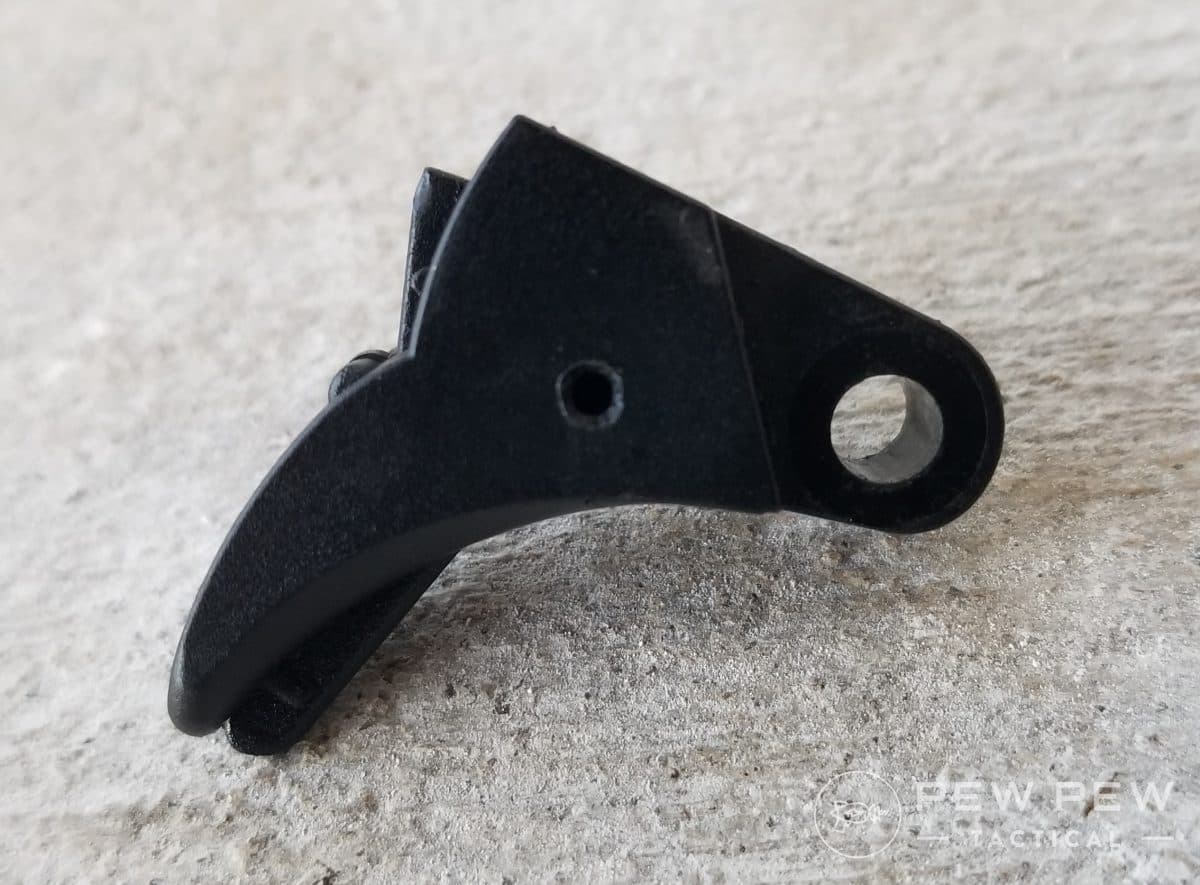
I used witness marks to try and roughly figure out where the pin would exit on the closed side of the trigger. I then used the tip of a pocket knife as a makeshift drill to remove some of the polymer material in that spot. Once enough material was removed, I punched the pin out from the other side.
While the I.T.T.S shoe doesn't reduce the weight, I found the shape of the trigger particularly pleasant, and the reduced take-up and reset were noticeable.
If you wanted to keep the stock Glock feel and weight while cleaning things up just a bit and moving to a metal trigger shoe, this would be a solid choice. I also tested the Gen 5 version of this, and I liked it well enough to keep the shoe on my gun since the original shoe was modified beyond my liking.
Here is a close-up video of the trigger pull and reset.
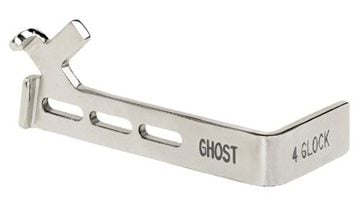
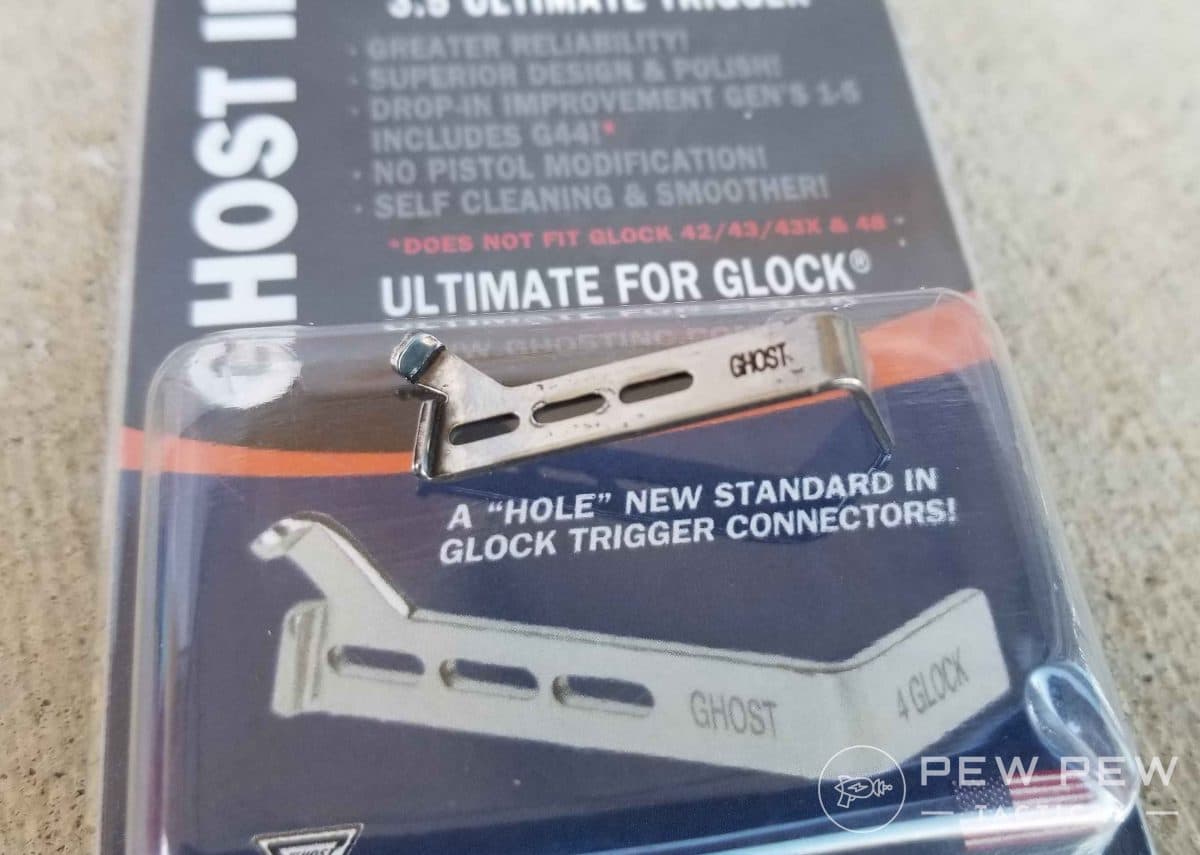
7. Ghost Inc. 3.5 lb Ultimate Connector - Cheapest Glock Trigger Upgrade
What's included:
- 3.5 lb optimized trigger connector bar
For this test, we paired the Ghost Inc. Ultimate trigger connector bar with the stock Gen 3 assembly to give an accurate reading of what you can expect if you only upgrade that one part.
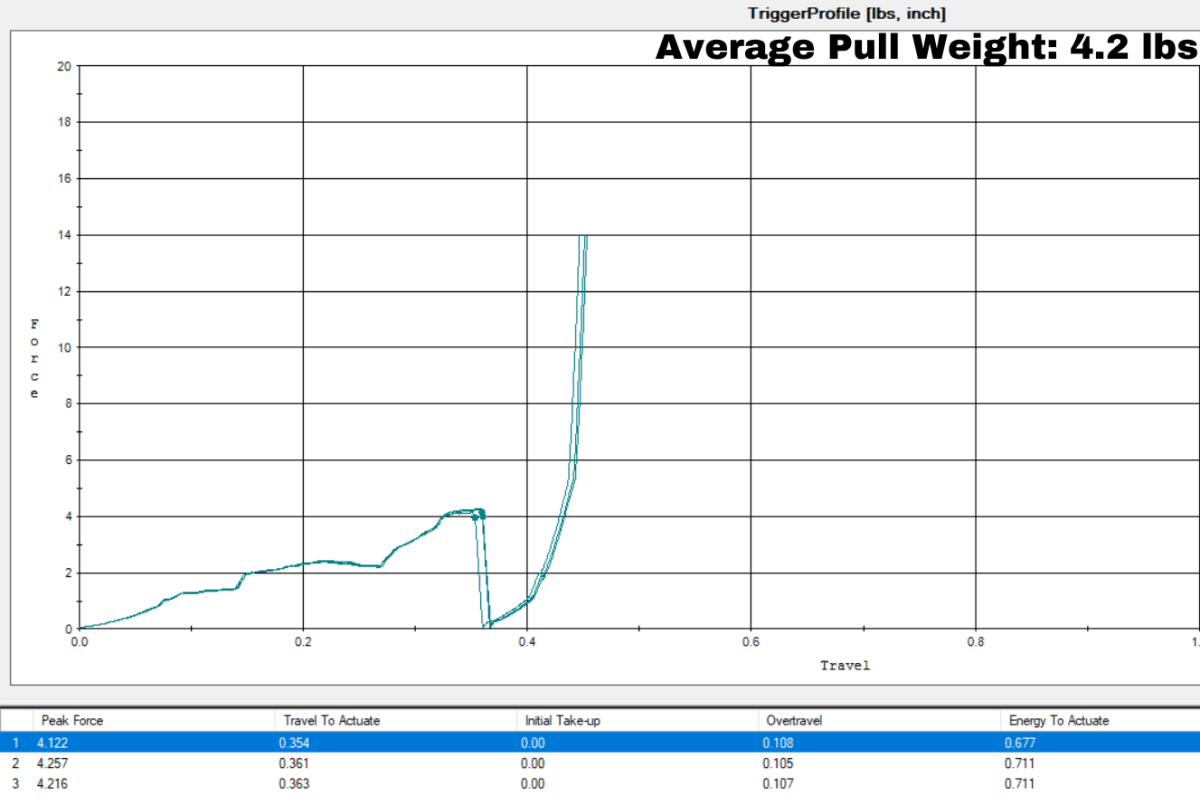
- Average Pull Weight: 4.2 lbs
- Average Split Time: 0.24 sec
- Average Travel Distance: 0.36"
- Price: $15
Predictably, the take-up and trigger pull feel very similar to the stock trigger. There is still a bit of mush during the break, but the entire process feels lighter overall.
These connector bars are dirt cheap and easy to install. They can also be used in conjunction with some other triggers that don't include aftermarket connectors. My fiancee's Gen 4 Glock 19 has been sporting a Ghost connector for many years without issue.
For the money, this is a no-brainer, 100% buy-now recommendation from me.
The reset video is nearly indistinguishable from the stock trigger pull video, and the trigger bar isn't visible when installed, hence the lack of photos and video here.
8. Agency Arms Drop-In Trigger
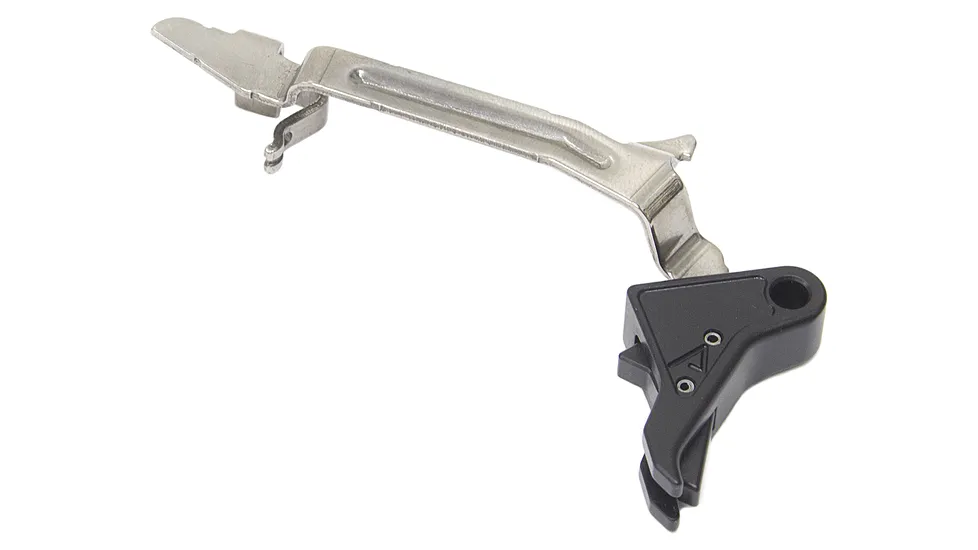
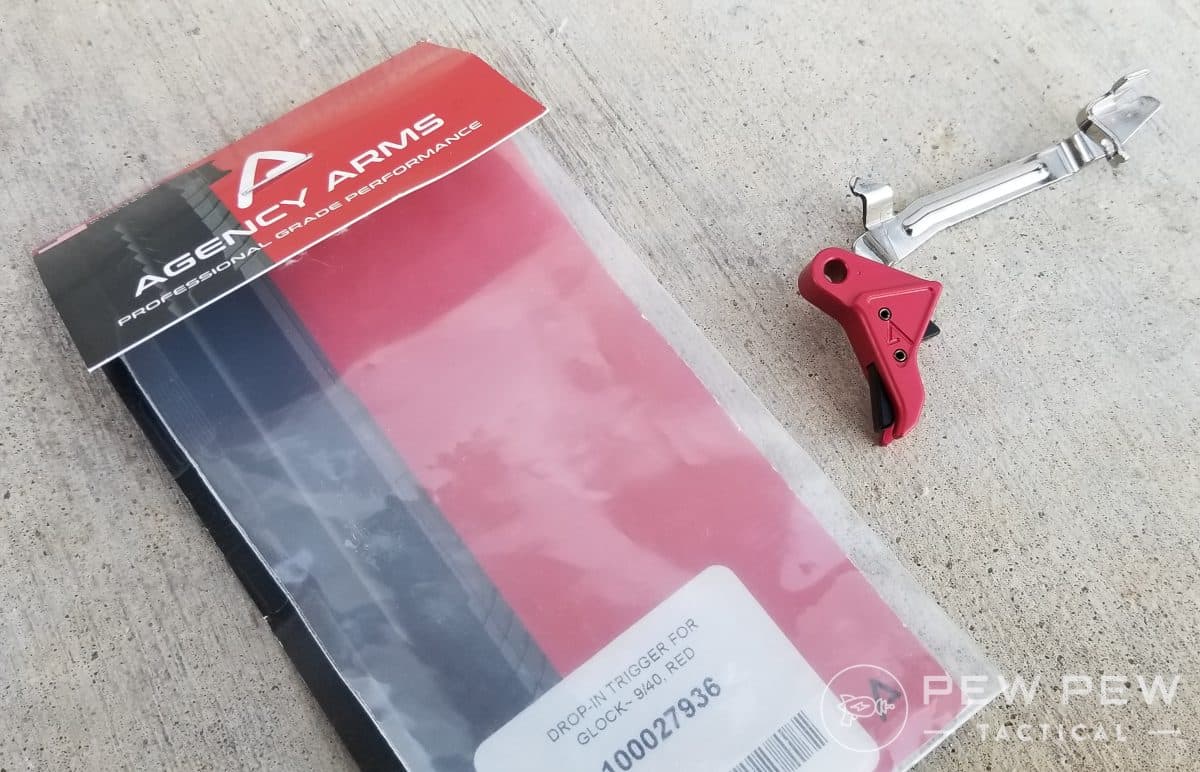
What's included:
- Aluminum flat-face trigger shoe
- Trigger bar
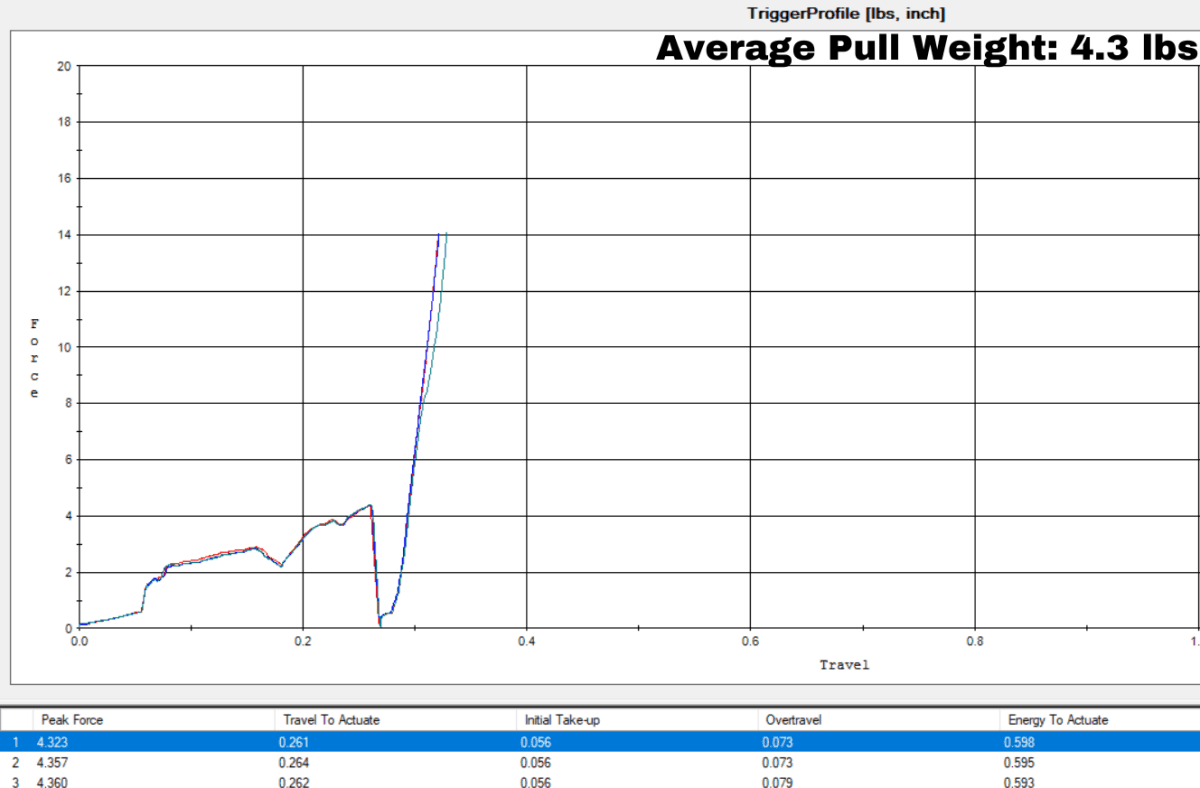
- Average Pull Weight: 4.3 lbs
- Average Split Time: 0.27 sec
- Average Travel Distance: 0.26"
- Price: $127
Where do I start with this little fellow? Firstly, the initial install resulted in the trigger safety blade rubbing against the frame even when the trigger itself was not being pulled rearward. You can see this in the video below.
I popped everything out, re-seated it all, and re-installed it. This time the safety bar cleared the frame...kind of.
While I got it to function, there was still a bit of contact as the safety blade was sliding past the frame. This is plainly visible on the graph. A quick search on the internet revealed that I wasn't the only one experiencing this issue with this trigger.
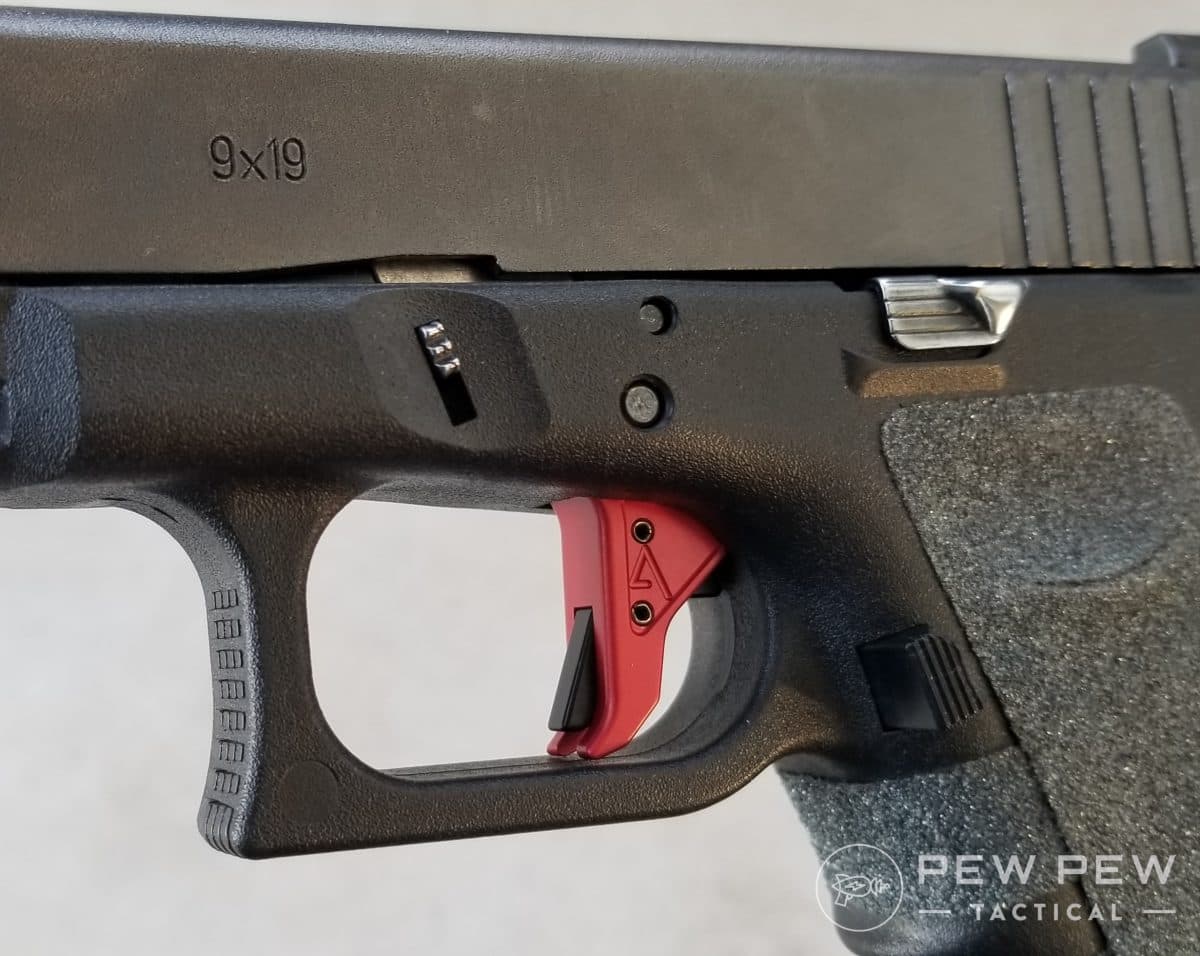
The rest of the pull leads to a very definitive wall, after which there is some heavy, albeit brief, Glockish creep before the trigger breaks. The reset is both tactile and audible.
I posted the slowest split times of all Gen 3 triggers with the Agency Drop-In. That trigger safety hitch was killing me at the beginning of my runs. Once you fire the first shot and ride the reset, it is less of an issue.
Honestly, the lack of clearance between the frame and trigger safety makes this borderline dangerous because of how easy it is to have the trigger safety prevent the trigger from being pulled. Combined with the lackluster split times and the uninspired overall feel, the Agency is a hard pass for me.
Here is a close-up video of the trigger pull and reset.
Best Glock Gen 5 Triggers
The most current iteration of Glocks on the market is the Gen 5 pistols. While the aftermarket isn't quite as big compared to Gen 3, there is still a wide array of triggers to select from when looking to upgrade your Gen 5 Glock.
9. Johnny Glocks Evolution-X Combat Gen 5 - Editor's Pick Gen 5 Glock Trigger
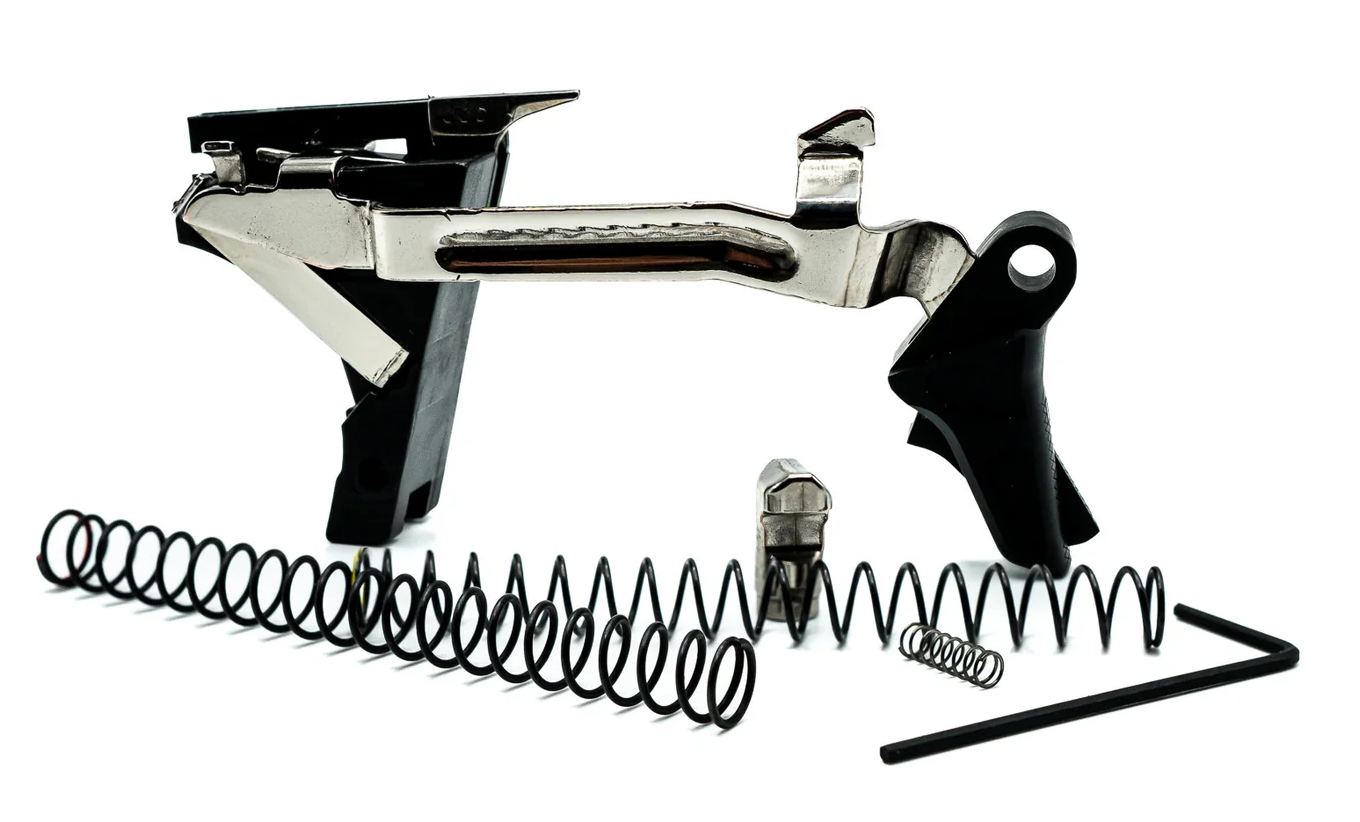
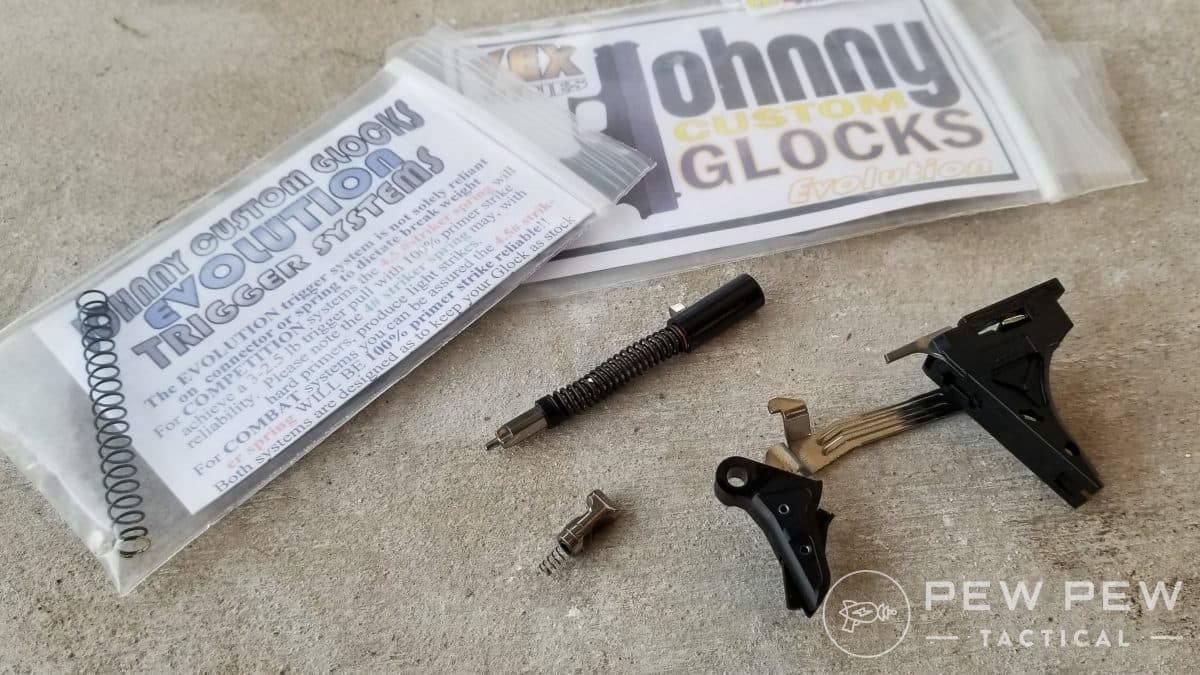
What's included:
- Aluminum flat-face trigger shoe
- Polished and modified OEM trigger bar
- Polished and modified OEM trigger housing
- Polished and modified OEM connector
- Polish and honed OEM striker with 4.5 lb & 5 lb striker springs
- Safety plunger w/reduced power 3 lb spring
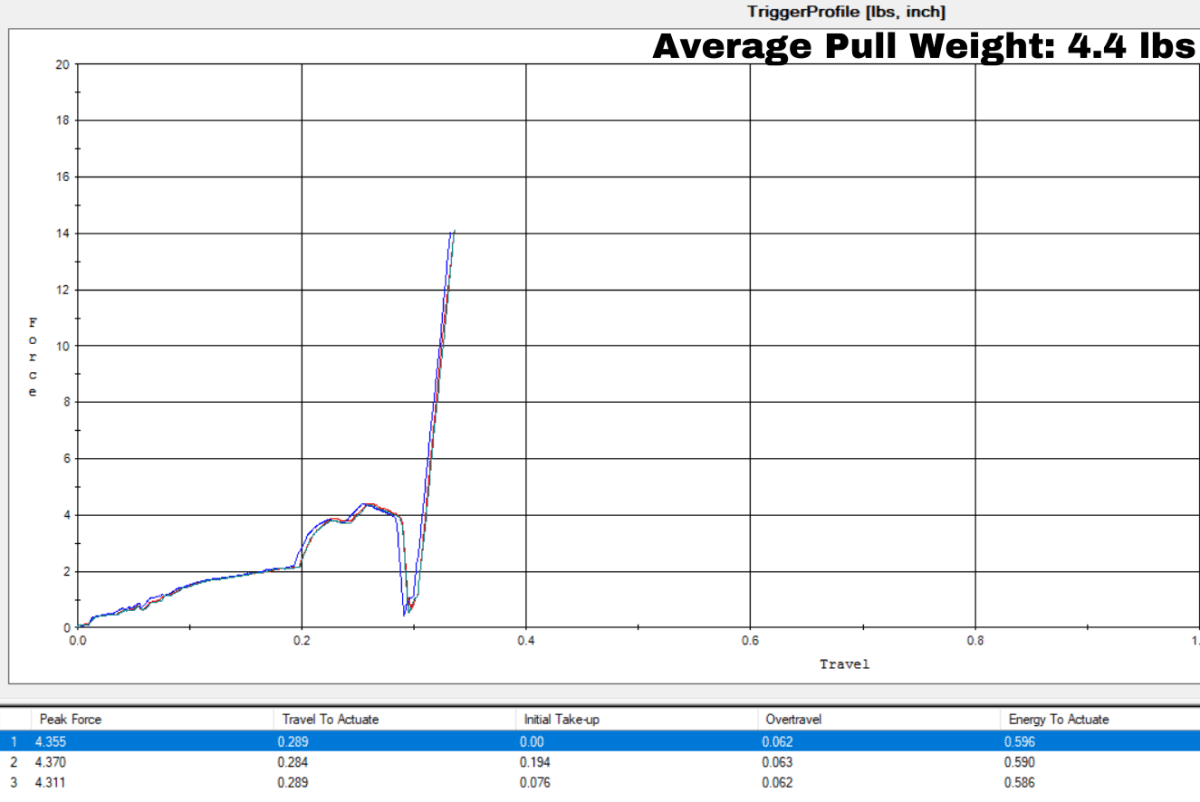
- Average Pull Weight: 4.4 lbs
- Average Split Time: 0.25 sec
- Average Travel Distance: 0.29"
- Price: $370
This trigger was a pleasant surprise. There is a nice, clean travel up to a shockingly well-defined wall, followed by what feels like an extremely clean break. The overall travel feels short, and the reset is audible, tactile, and short as well.
This felt like it took almost all of that signature Glock feel out and replaced it with a pretty crisp all-around combat trigger.
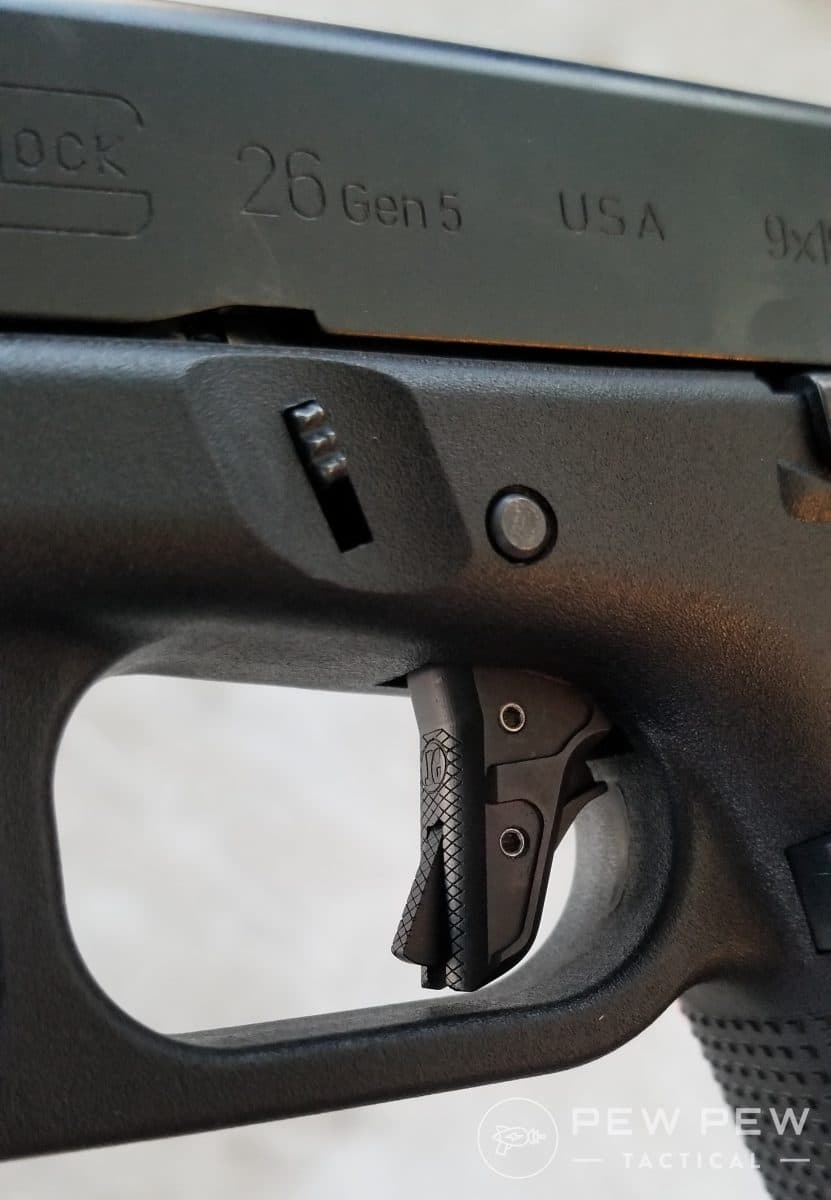
Sorry guys, I have to come clean here. This was one of the last triggers I tested, and I was getting scatterbrained. I forgot to test it with the lighter 4.5 lb striker spring in it. I have dishonored my readers and will commit seppuku. Jokes aside, I expect the trigger would be even lighter and crisper with the 4.5 spring installed.
Once again, this trigger sports the thinner and more rounded Vex shoe from Johnny Glocks. I prefer a wider shoe myself, but this one still feels good, and I like the texturing. I'd consider this to be the best combat-oriented trigger on the list, but it comes at steep price of $370.
Here is a close-up video of the trigger pull and reset.
10. Glock Performance Trigger - Best Factory Glock Trigger Option
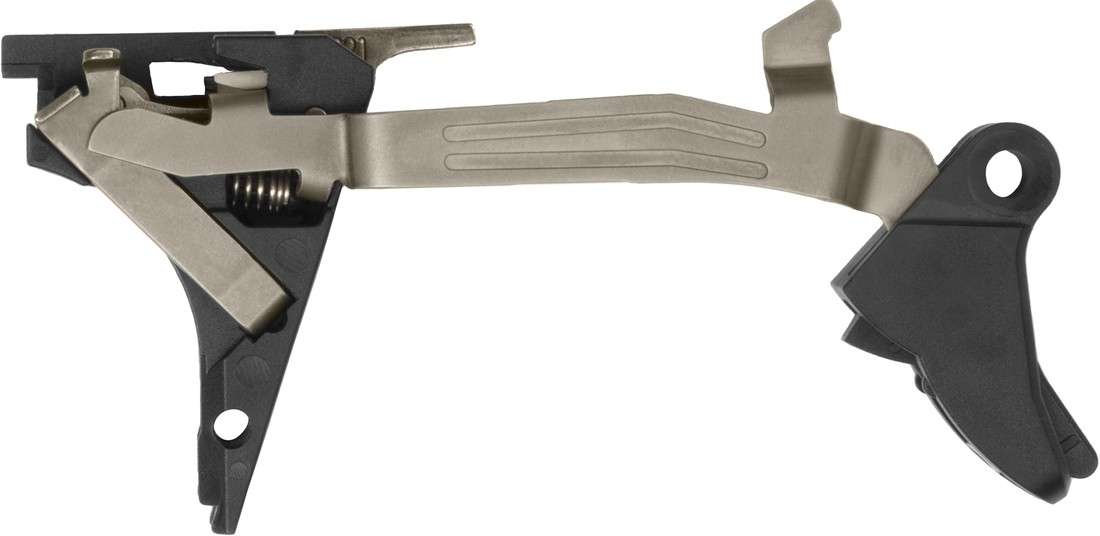
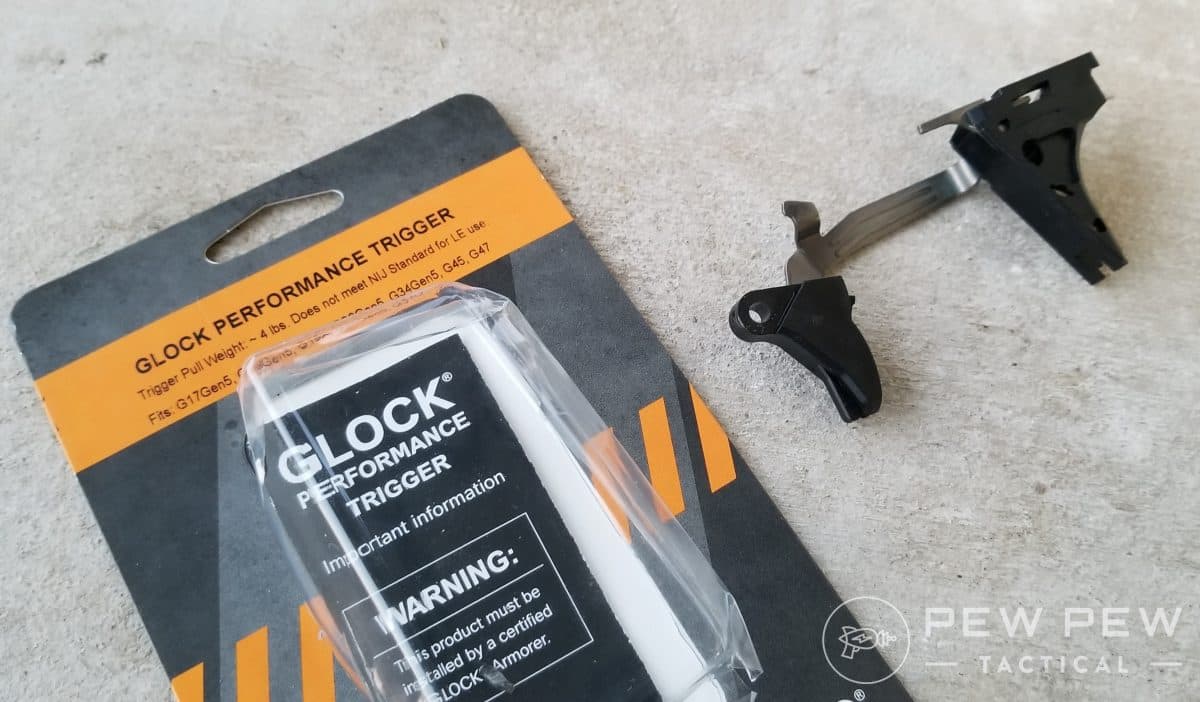
What's included:
- Polymer flat-face trigger shoe
- Trigger bar
- Complete trigger housing assembly
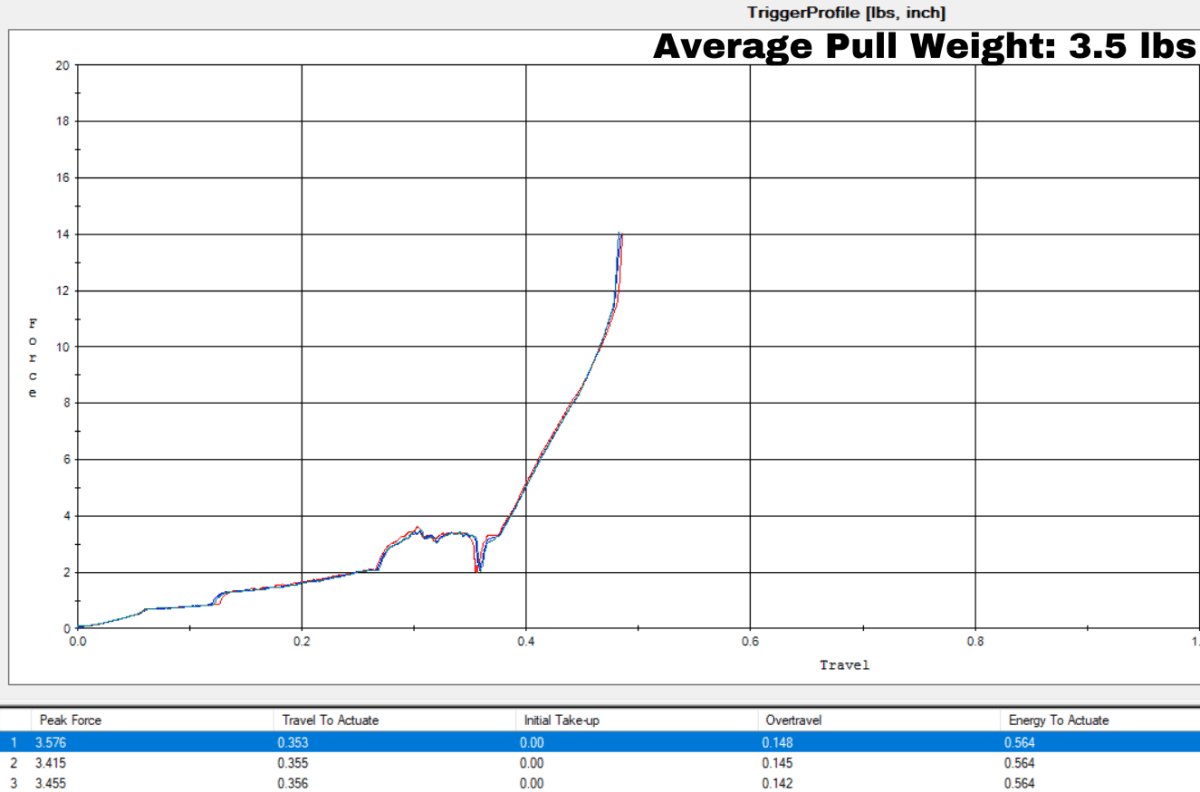
- Average Pull Weight: 3.5 lbs
- Average Split Time: 0.25 sec
- Average Travel Distance: 0.35"
- Price: $75
Glock advertises this as a 4 lb trigger, but in my testing, I found it to be right at 3.5 lbs.
The overall pull is very light all the way up to a reasonably-defined wall. The trigger breaks fairly clean as far as Glock triggers go, with only a minor amount of grit. The reset is very strong, almost forced (in a good way). Everything here feels pretty positive and solid.
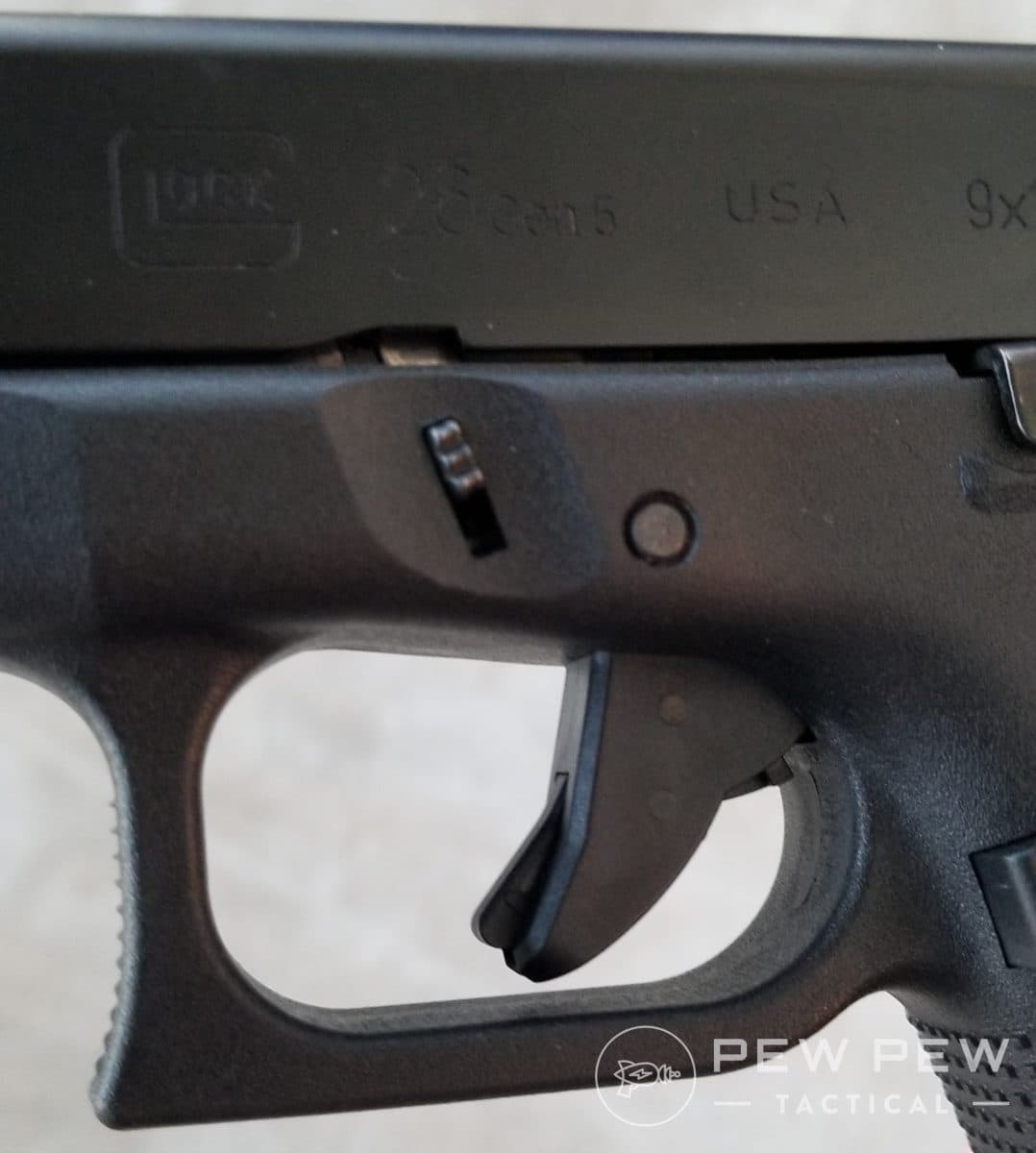
I nearly had a shooting string where my average split time was 0.22, but my last shot just missed the A-zone by a hair. Considering that these only run about $75-100 for a complete assembly, I'd say it is a pretty killer deal.
Here is a close-up video of the trigger pull and reset.
11. Tyrant CNC I.T.T.S Trigger Shoe Gen 5
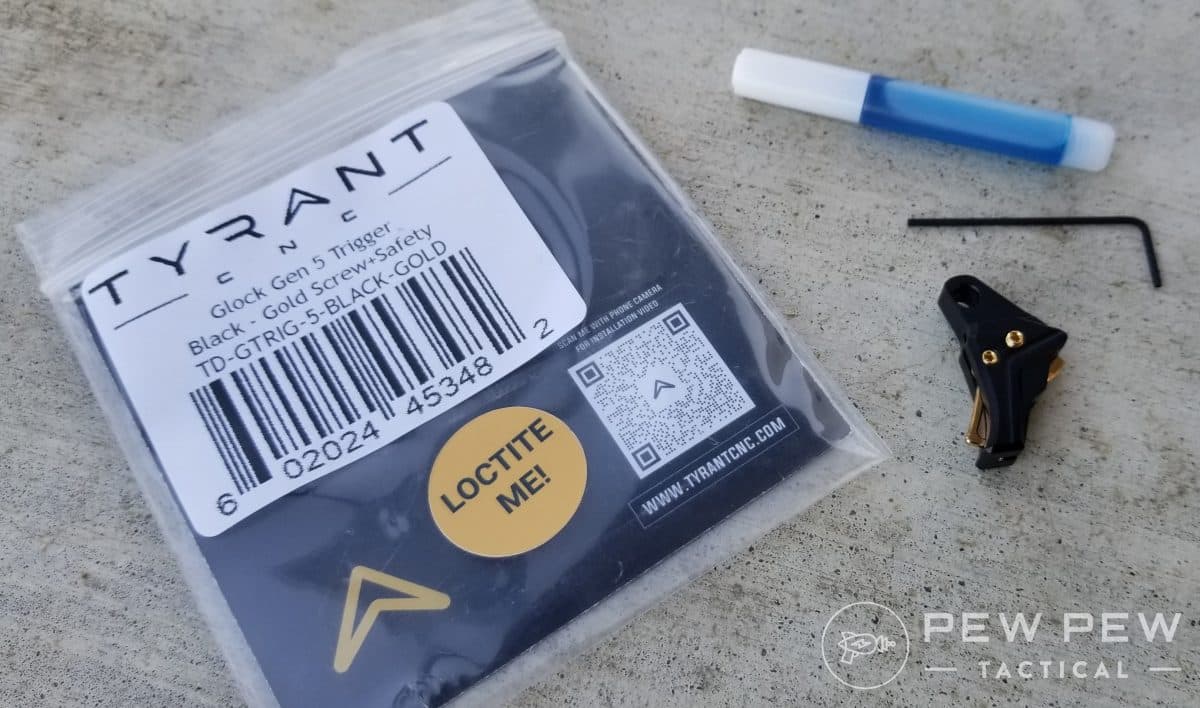
What's included:
- Aluminum adjustable trigger shoe
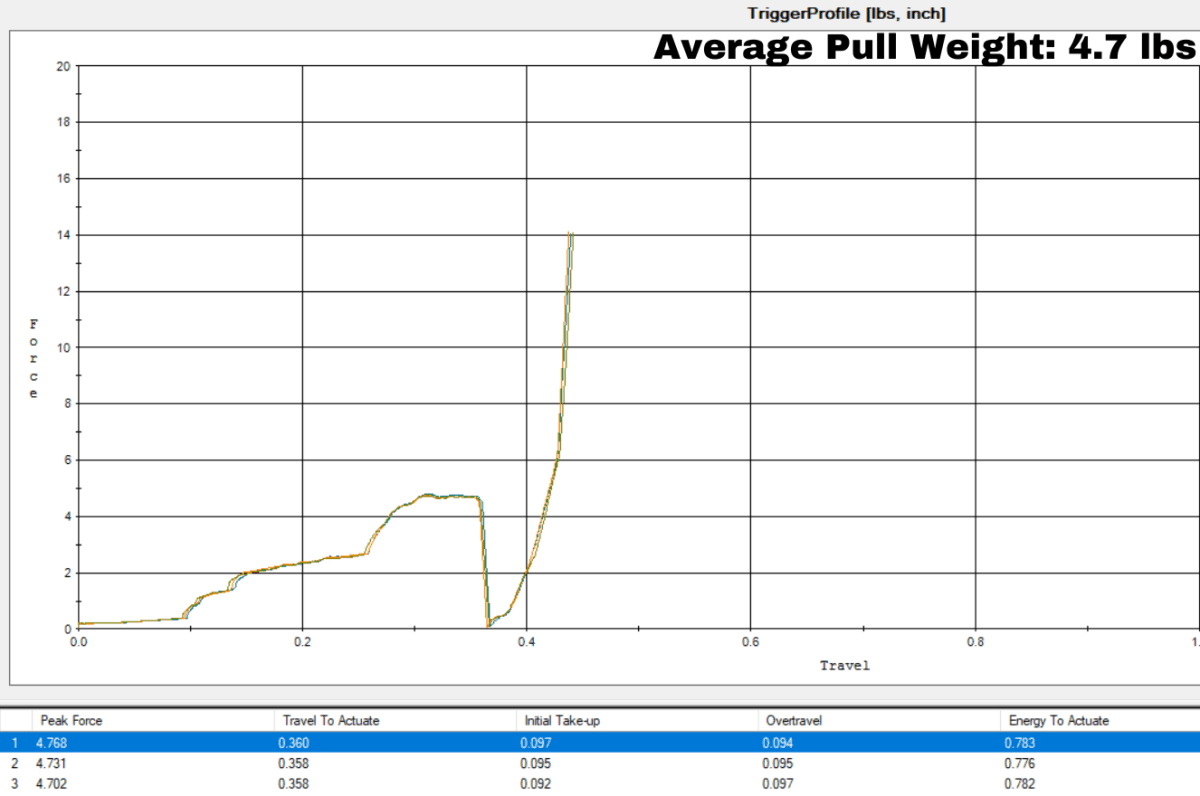
- Average Pull Weight: 4.7 lbs
- Average Split Time: 0.24 sec
- Average Travel Distance: 0.36"
- Price: $75
This is the same shoe we used on the Gen 3 Glock, so much of what was explained in the Gen 3 section applies here.
Again, there are a few tiny bumps in the early trigger pull before smoothing out. This leads to a well-defined wall yet again, but the Gen 5 trigger provides a slightly lighter break than the Gen 3 did.
Tyrant's claims that the I.T.T.S reduces take-up by 15% and reset travel distance by 10% may not be quite as strong compared to the Gen 3. The TriggerScan shows that the overall travel distance was only reduced by 7% (compared to 12% on the Gen 3). That being said, the reset is tactile and audible while feeling a bit shorter once again.
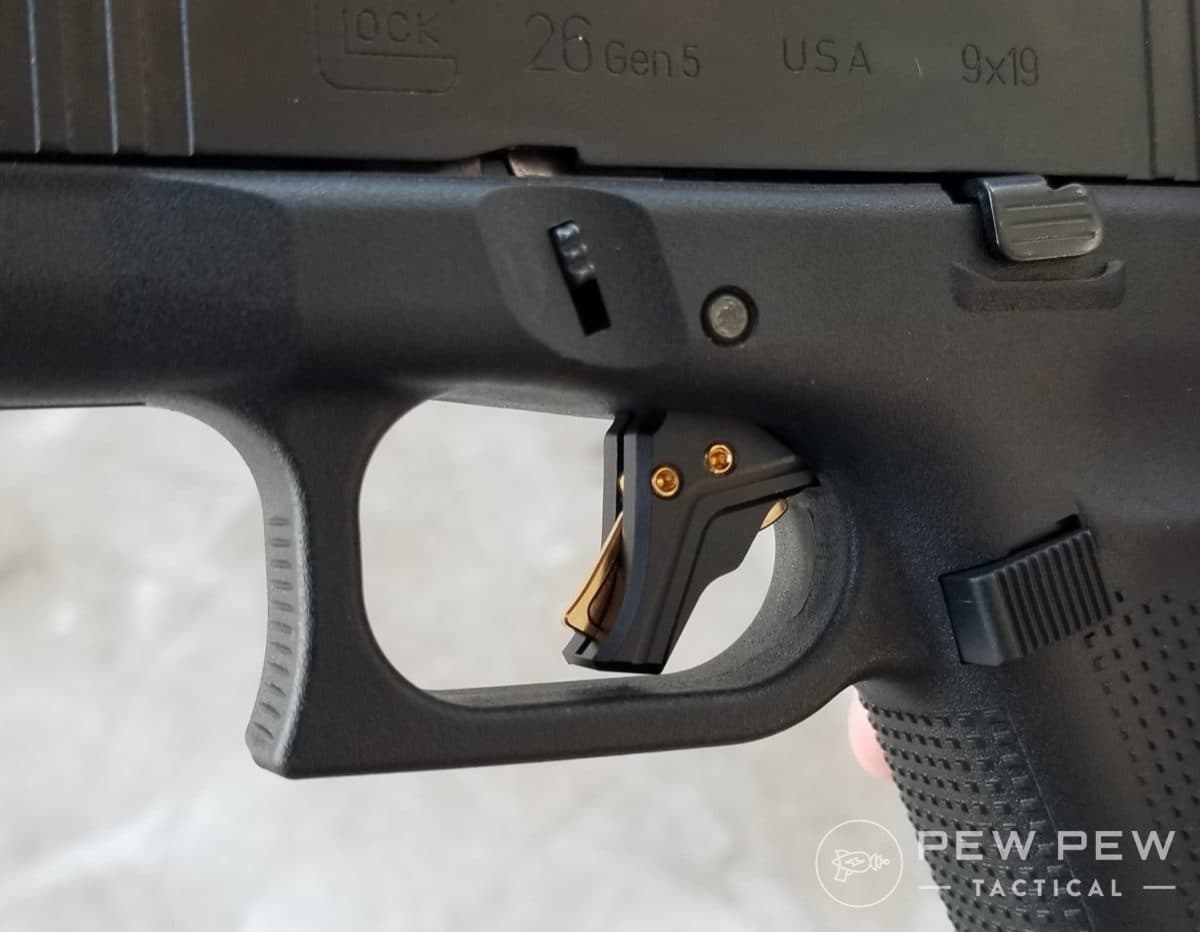
I must also reiterate how much I like the shape and feel of this trigger shoe on my finger. It is nearly perfect for my medium hands and slightly bonier fingers.
Since I had to permanently alter my stock trigger to install this one, I elected to leave it on my Glock 26. I like it well enough. (Please refer to the Tyrant I.T.T.S section in the Gen 3 portion of this article as to why permanent modification is required)
Here is a close-up video of the trigger pull and reset.
Best Glock Slimline Triggers
Slimline simply refers to single-stack Glock models, such as the Glock 43, 43X, and 48. These typically use different trigger components than standard frame double-stack Glocks.
12. Johnny Glocks 4311
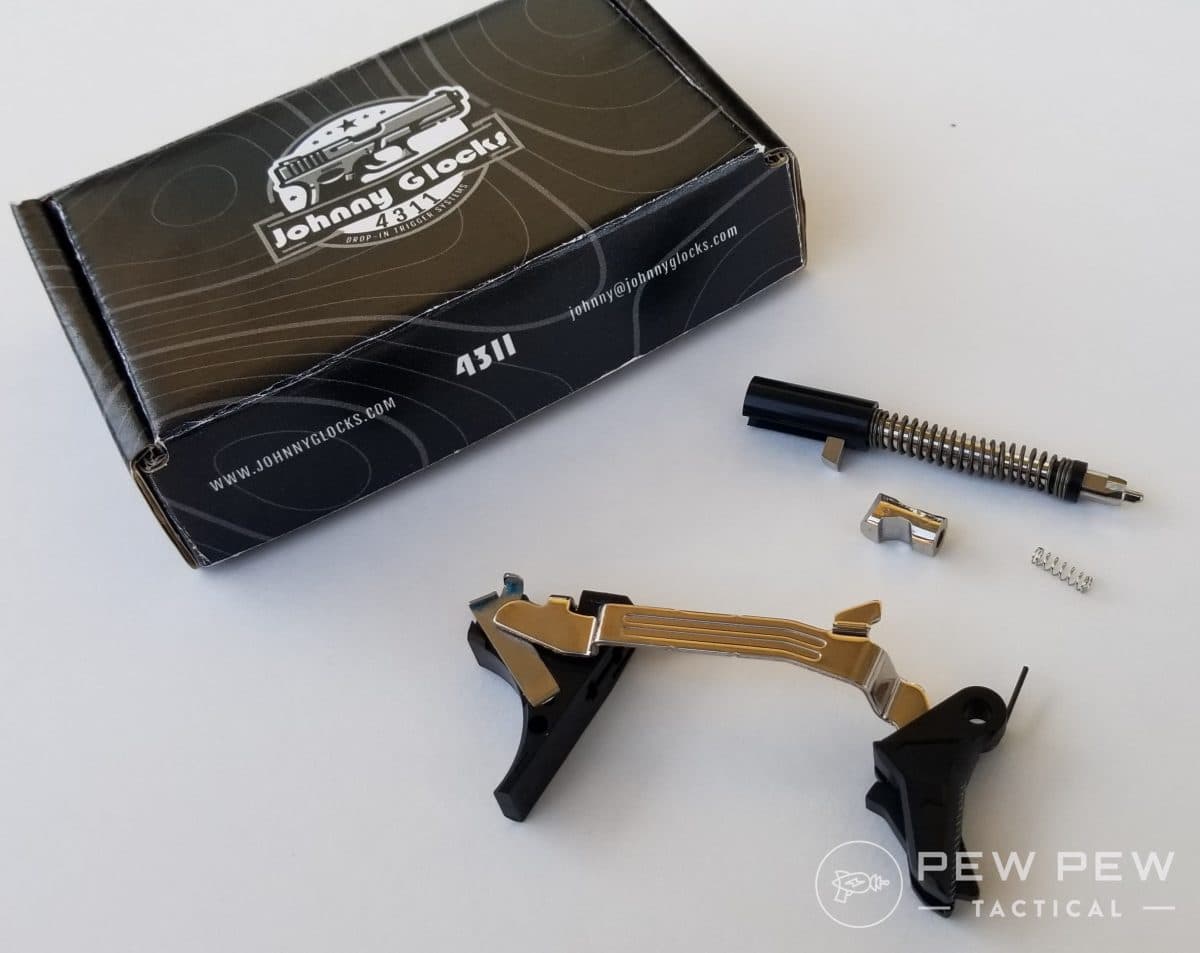
What's included:
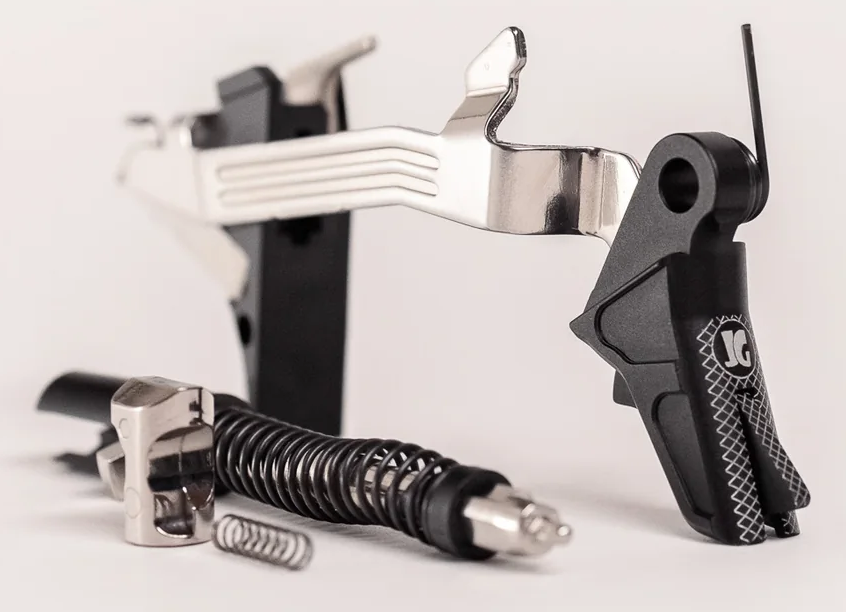
- Aluminum adjustable trigger shoe
- Trigger bar
- Complete firing pin assembly
- Firing pin safety w/spring
- Complete trigger housing assembly
- Connector Bar
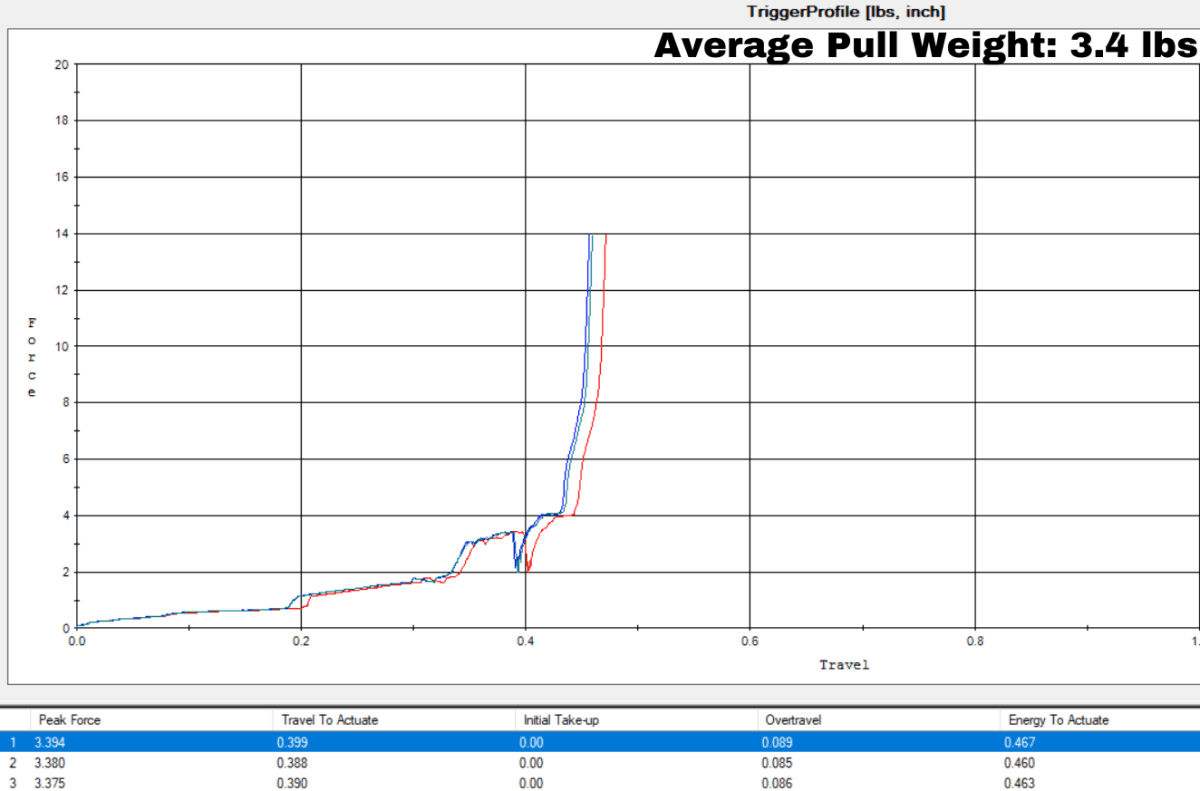
- Average Pull Weight: 3.4 lbs
- Average Split Time: 0.29 sec
- Average Travel Distance: 0.39"
- Price: $280
Per Johnny Glocks - "A completely different feel. 4311 is Ultra smooth, more take up (for safety), less defined wall with a semi rolling break, and incredible short quick reset. Evolution X has very little pre-travel to a defined wall with crisp break and short reset. The 4311 breaks further back whereas the Evolution X breaks out front."
I found that the trigger has a pretty defined wall and breaks extremely clean for a Glock. The overall pull weight is nice and light as well. But the problems for me started well before that point.
Even after two separate installs, I was getting an unexplainable hitch in the trigger when it was pulled for the first time. If I pulled the trigger and let it reset, the hitch would go away. I even had to pull the trigger, then rack it and slowly let it reset to get a clean readout from the TriggerScan.
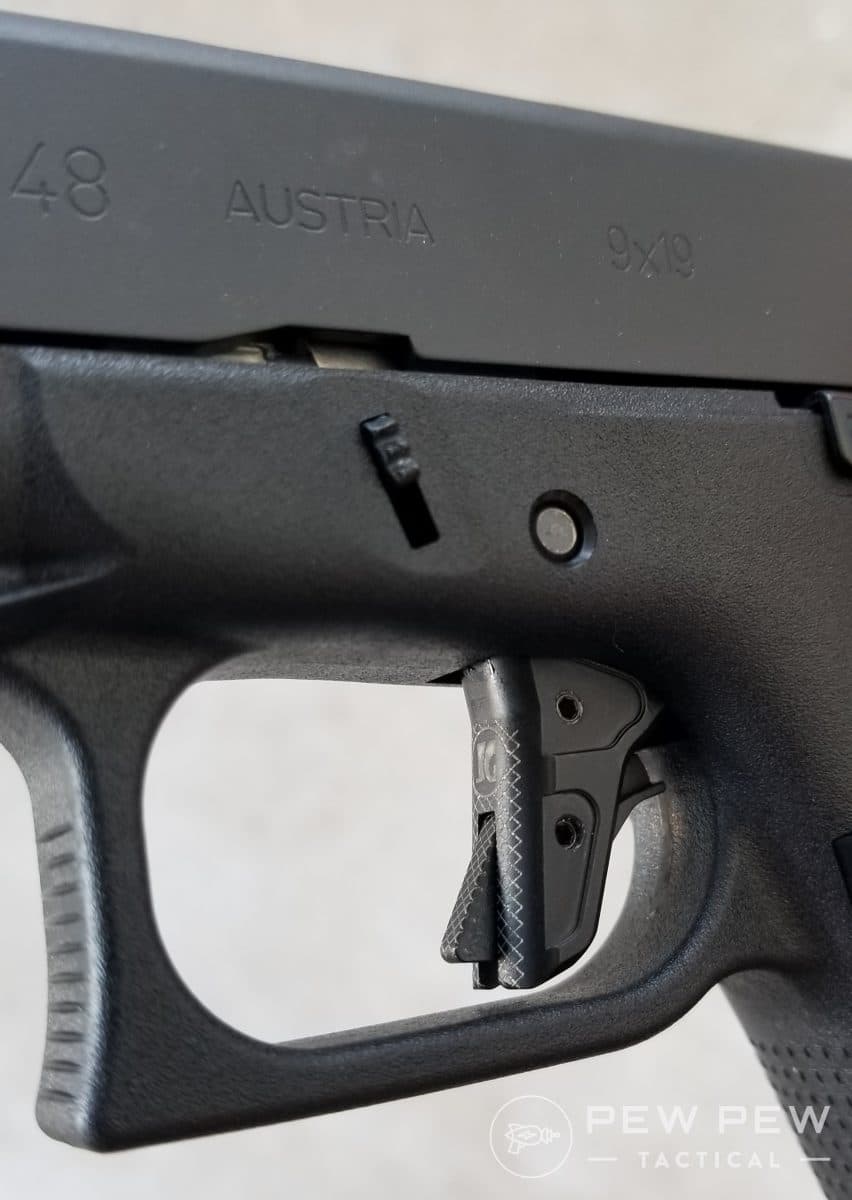
I also noticed that unless my finger was all the way on the bottom of the shoe, I ran the very real risk of the trigger safety blade catching on the frame and preventing me from pulling the trigger any further.
This trigger is meant to replicate a 1911-style break, but I just don't see it or feel it. Between the trigger safety issues and the weird hitching, I would firmly say I am out on this guy.
Here is a close-up video of the trigger pull and reset.
Understanding the TriggerScan Graphs & Key Terms
Below is a sample readout from the TriggerScan with some key terms to help you interpret the graph. I have also included definitions for those terms below.
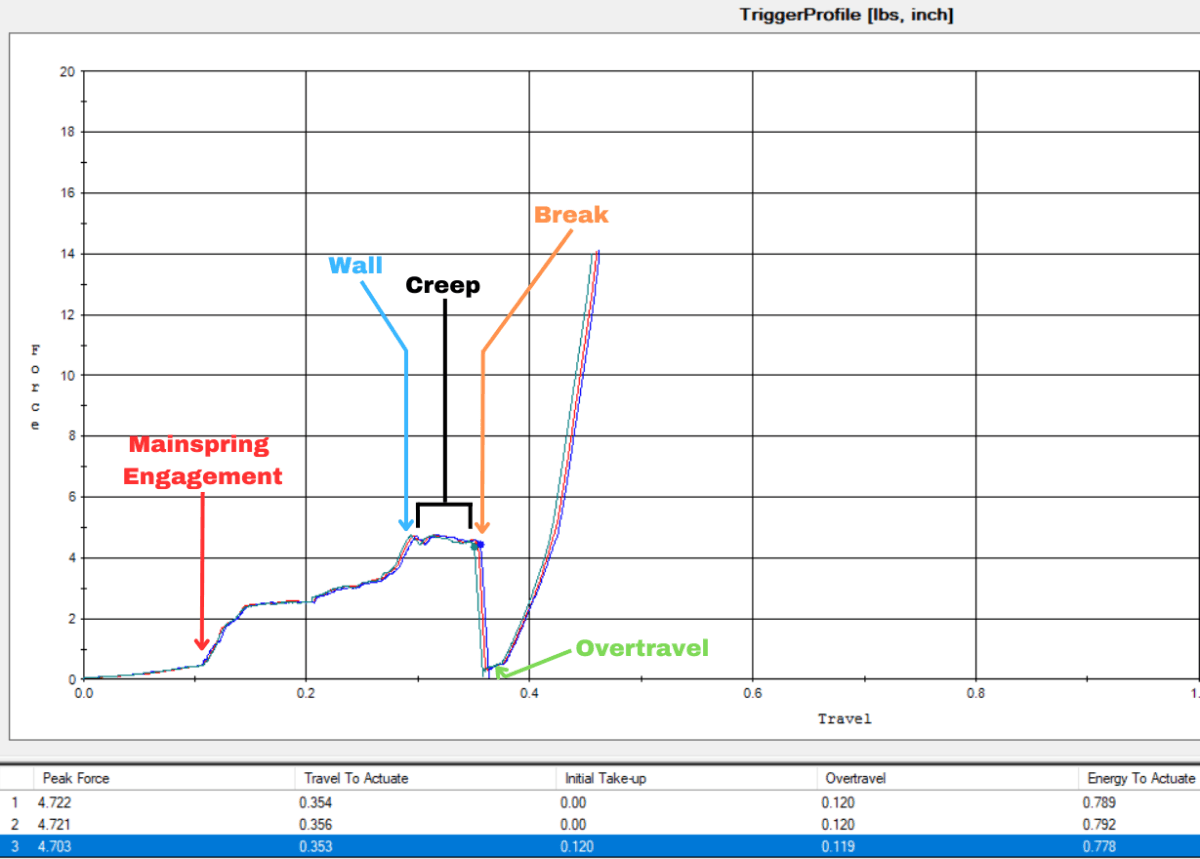
The vertical axis of the chart measures the peak force, in pounds, that is required for the trigger to actuate. The horizontal axis measures the distance, in inches, that it takes for the trigger to reach its full travel.
Each trigger was tested 3 times in a row, resulting in 3 separate lines on each graph. The more these lines overlap, the more that indicates repeatable movement during the trigger pull.
The large spike at the very end of the graph is the result of the TriggerScan pinning the trigger to the rear of its travel and continuing to pull to infinity. You can ignore this final spike.
Key Trigger Definitions
Keep in mind that definitions do vary from person to person. However, I find these to be the most intuitive way of describing trigger mechanics in a real-world sense.
- Sear: This is the part of the trigger mechanism that holds the striker, hammer, or bolt back until the correct amount of pressure is applied to the trigger. Once the required pressure is applied, the striker, hammer, or bolt is released, at which point the weapon will fire.
- Take-up: Take-up is the amount of initial travel the trigger has where there is no resistance. This is the little bit where the trigger moves back and forth before you start feeling resistance. Take-up is sometimes used interchangeably with the terms slack and pre-travel.
- Mainspring Engagement: This is the point after the take-up when you start feeling resistance in the trigger. This is the trigger engaging the mainspring, which stores the energy required to ignite the round. Mainsprings may be referred to as striker springs on striker-fired handguns or hammer springs on hammer-fired guns.
- Travel: This is the distance that the trigger has to travel from its initial resting point all the way until the trigger “breaks” and the sear is released.
- Wall: The “wall” is the sharp increase in resistance toward the end of the trigger travel that signifies that the trigger is at or near the peak force required to actuate the sear. Depending on the trigger and how slowly or quickly resistance builds to peak force, there may or may not be a well-defined wall.
- Creep: Creep is any movement that happens right before or just after the peak force of the trigger is reached but before the sear is completely actuated. This typically has a negative connotation, meaning there is unclean movement right before the trigger breaks. Terms like “sponge” and “mush” are used to describe specific types of creep.
- Grit: Some triggers have a very “rough” feeling during parts of the pull, which is called grit. It can almost feel like there is sand or dirt in the trigger. This can happen when contact surfaces are uneven or due to poor trigger design. Grit would be characterized by small spikes on the graph showing that the pressure needed is rising and falling quickly due to unevenness.
- Break: The trigger break is the point at which the sear releases the striker, hammer, or bolt. This is when the trigger “goes off.”
- Overtravel: Once the trigger breaks and the sear is completely actuated, the trigger may still continue to travel rearward until it is stopped. This distance after the trigger breaks to when it can no longer move rearward is called overtravel.
Final Thoughts
If you made it through this entire article, you are an absolute legend, and I salute you. Even if you skipped around, I still hope you found some useful information in your quest for the right Glock trigger.
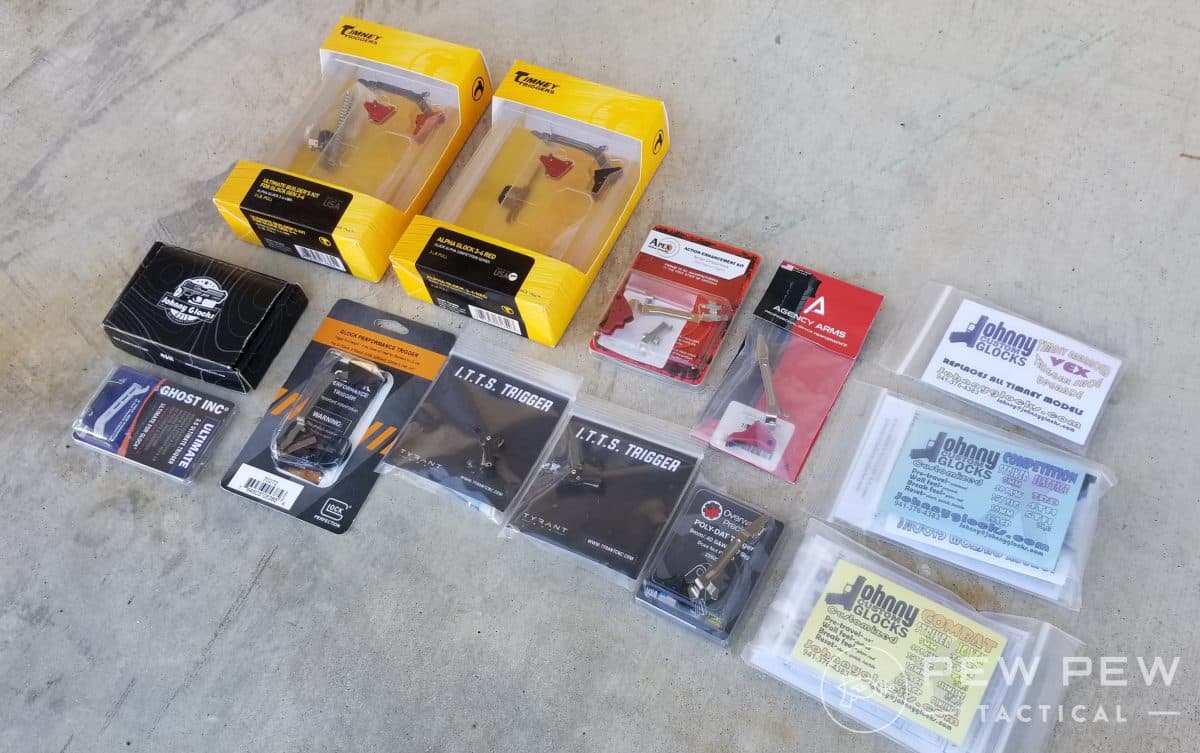
This is the first article of its kind, so please let us know what you liked and what you didn't, as well as anything you'd have liked to see included that we missed.
If you want to see more articles like this for different guns, let us know in the comments below! Don't have a Glock yet? Be sure to check out our article on the Best Glocks of 2024!
Latest Updates
- November 2025: New testing information and categories added
- February 2025: Total rewrite based on new triggers tested and data from Dvorak TriggerScan