Best Spotting Scopes: Range & Hunting
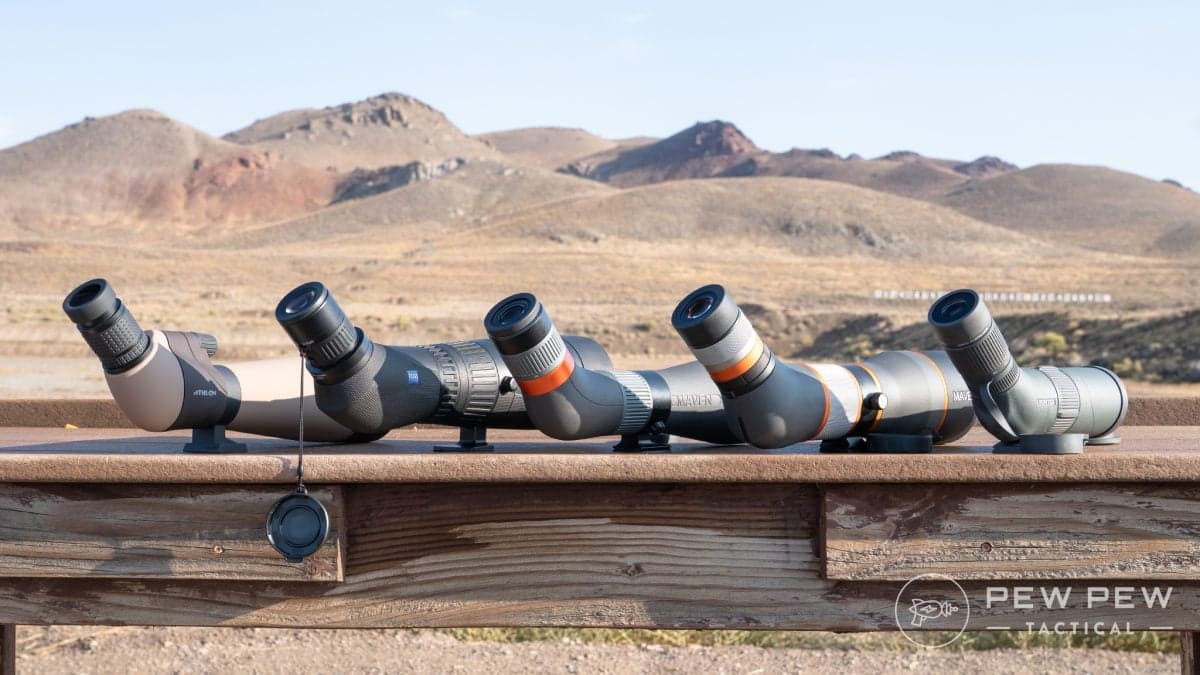
Looking for a spotting scope? Not even sure you need one? We hands-on review some of the most popular with tons of view-through pictures.

PPT Editor. Marine vet, hunter, and long-range shooter. Articles in 10+ major publications
We review products independently. When you buy through links on our site, we may earn a commission to help support our testing. Learn more.
If you like walking downrange to see where your shots landed while trying to remember which was which, you can skip this article.
If you have no interest in knowing how many points that deer has before hauling your gear miles around a canyon to get within shooting distance, disregard.
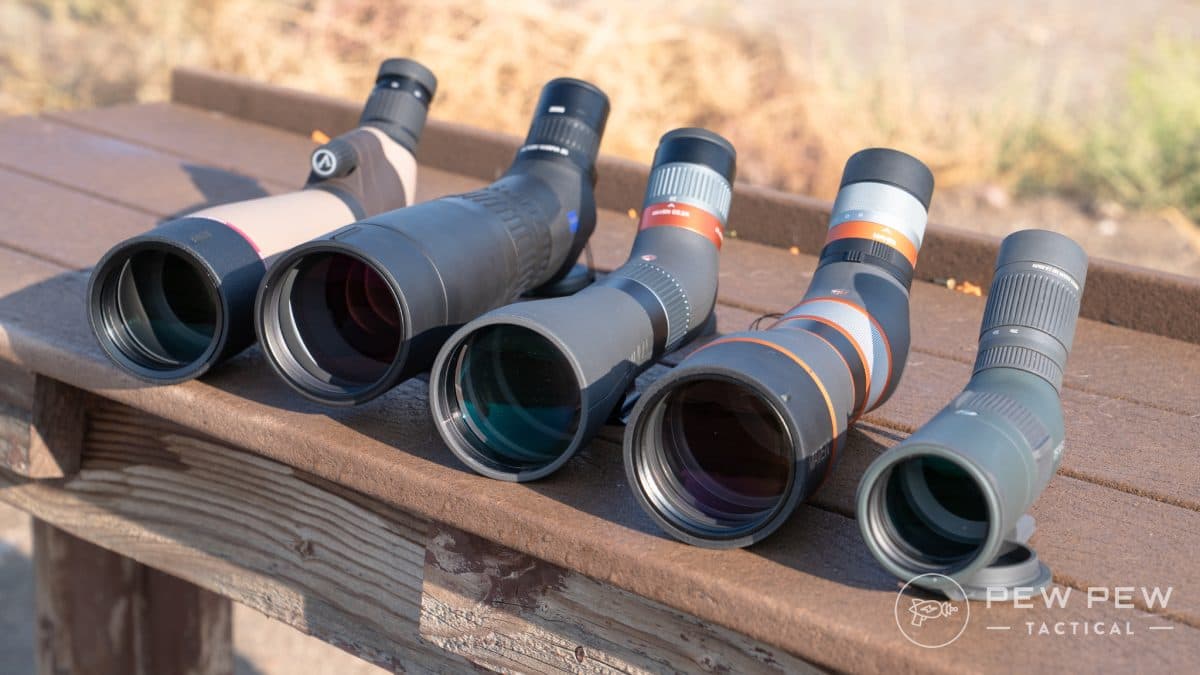
This guide is for everyone who wants a crystal clear picture of their target and every single impact. These are the five best spotting scopes in the Pew Pew Tactical gear locker right now.
Let’s begin!
The Quick List
- Best Overall: Maven S1.2Jump to details ↓
- Best Premium: Zeiss Victory Harpia 85Jump to details ↓
- Best Value: Maven CS.2Jump to details ↓
- Best for Hunting: Vortex Razor HD 13-39x56Jump to details ↓
- Best Budget: Athlon Talos 20-60x80Jump to details ↓
Table of Contents
Spotting Scope Comparison Chart
| Magnification | Objective Lens | Field of View at 1,000 Yds | Length | Weight | Base | Available Eyepieces | PriceAs Tested | |
|---|---|---|---|---|---|---|---|---|
| Athlon Talos | 20-60x | 80 mm | 83 - 48' | 16.5" | 39 oz | 1/4-20 | Zoom | $144 |
| Maven CS.2 | 26-66x | 85 mm | 113 - 56' | 14.9" | 60 oz | ARCA / 1/4-20 | Zoom | $1,300 |
| Maven S1.2 | 25-50x | 80 mm | 115 - 84' | 14.9" | 65 oz | ARCA / 1/4-20 | Zoom, 30x MRAD, 30x MOA | $2,400 |
| Zeiss Victory Harpia 85 | 22-65x | 85 mm | 190 - 63' | 15.1" | 68 oz | 1/4-20 | Zoom | $4,799 |
| Vortex Razor HD | 13-39x | 56 mm | 168 - 89' | 10.4" | 29 oz | ARCA / 1/4-20 | Zoom | $870 |
How We Tested the Best Spotting Scopes
Once I got my workbench completely covered in spotting scopes, it was time to spend a few hours behind each one.
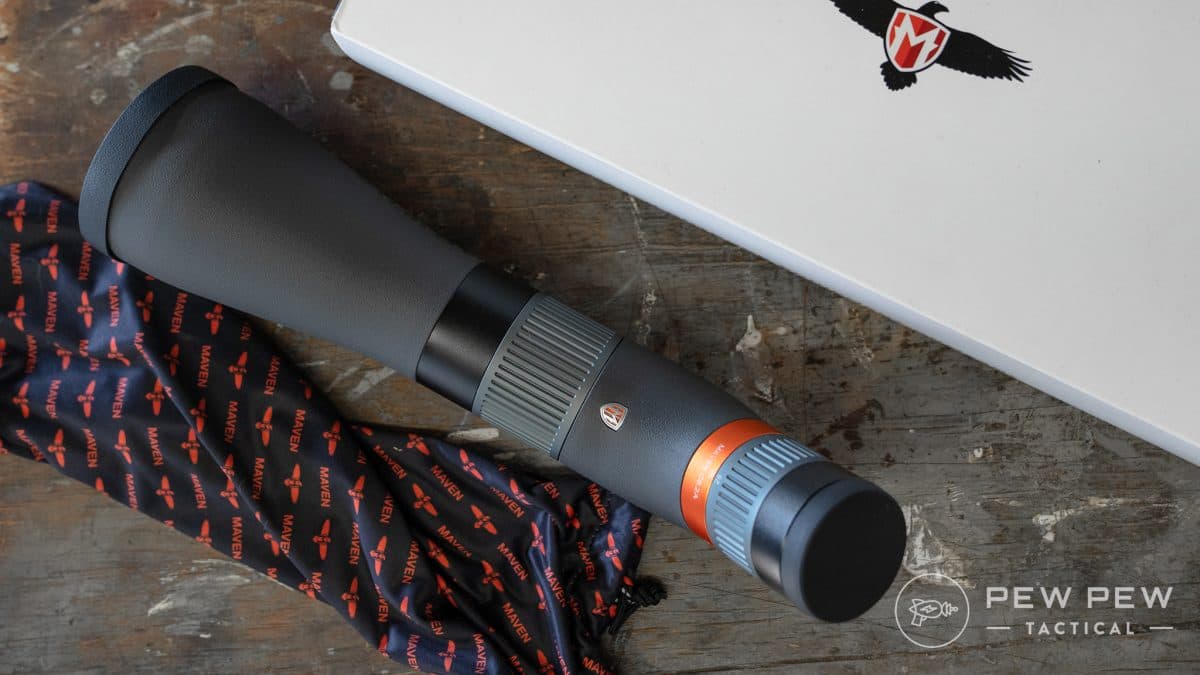
I loaded each spotting scope into my pack one at a time for a hike into the mountains. They all got an opportunity to impress me with their ability to observe game animals and, in some cases, leave my back feeling fresh at the end of the day.

At the range, I pushed these optics by spotting impacts from 5.56 NATO all the way out to 600 yards instead of using a more powerful precision setup. That’s not a big round, so picking up 55- and 62-grain impacts on steel and splash in dirt is a real challenge, especially with any moisture in the ground.
If an optic can handle that, spotting larger 6-millimeter, 6.5-millimeter, and 30-caliber rounds will be easy.
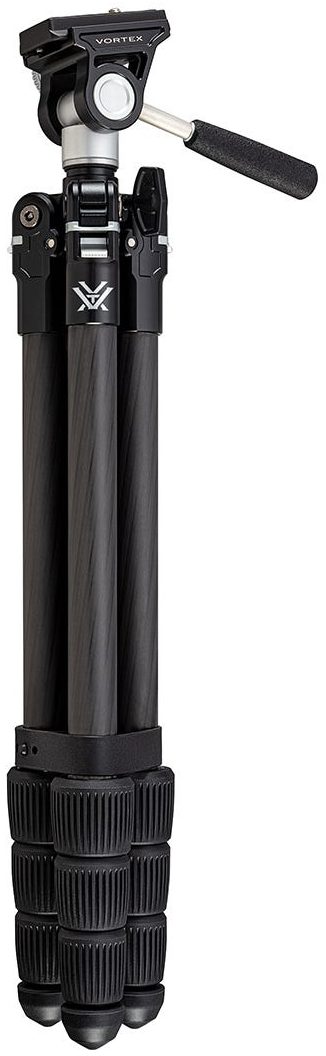
I used the same tripod for each spotting scope: a Vortex Summit Carbon II. It’s extremely lightweight, but still stable enough for glassing distant terrain.
The view-through photos are unedited except cropping for size. Field of view and magnification are representative of what you’d see with your eye. I didn’t adjust color or brightness, but these are from an iPhone and the camera does its own calibration automatically.
I included notes on how the view looked in person. The photos, while imperfect, give you some idea of what I saw.
Best Spotting Scopes
1. Maven S1.2 - Best Overall
Pros
- Excellent optical clarity
- Plenty of magnification for precision shooting
- Zoom, MRAD, and MOA eyepiece options
Cons
- A little heavy for long days on foot
- Takes up a lot of space in a pack
Specs
- Magnification: 25-50x
- Objective Lens Diameter: 80 mm
- Field of View: 115’ - 84’ at 1,000 yds
- Length: 14.9”
- Weight: 65 oz
- Base: ARCA, 1/4-20
- Available Eyepieces: Zoom, 30x MRAD, 30x MOA
- Country of Origin: U.S. assembly with Japanese components
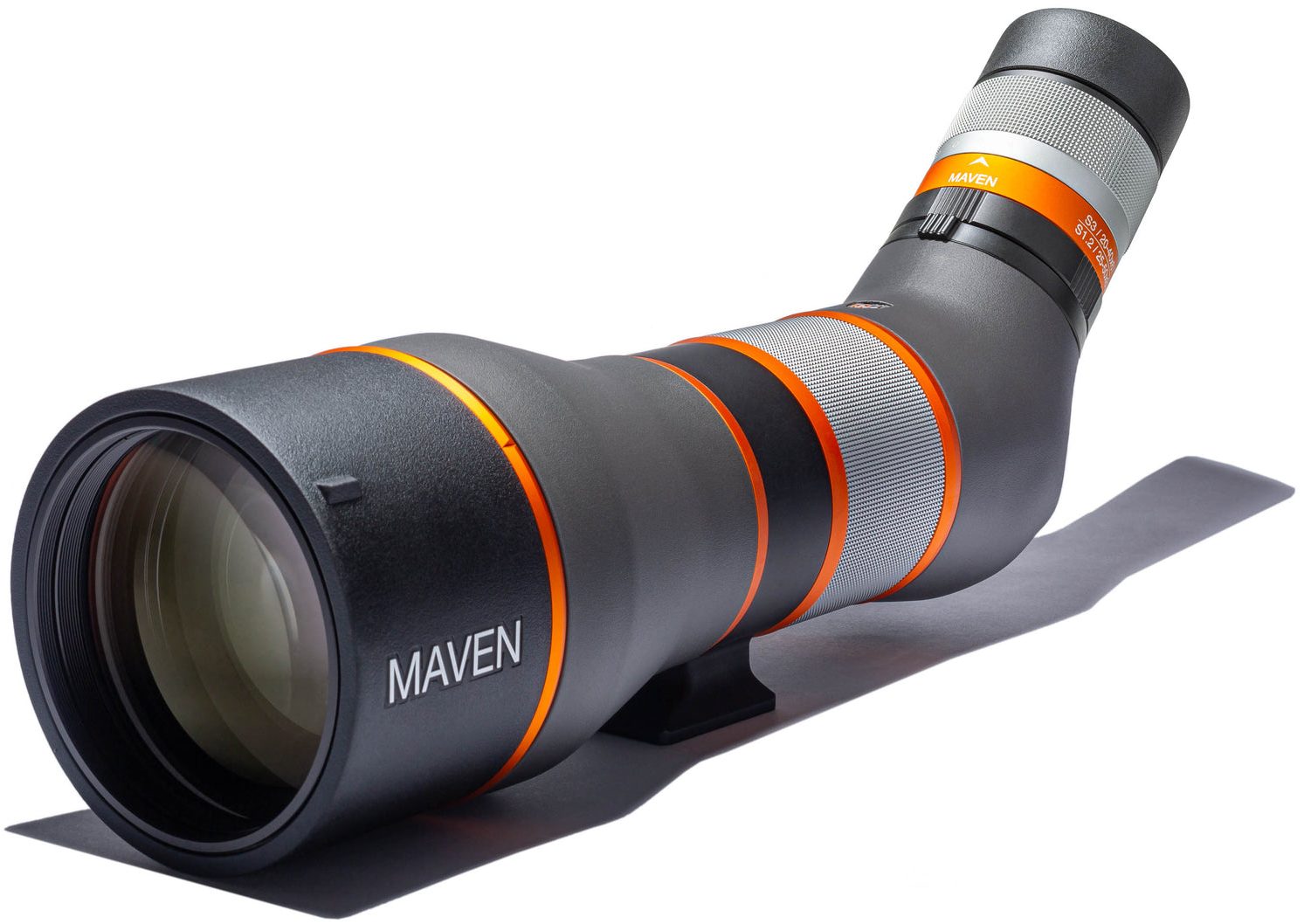
We all have different priorities for spotting scopes, so recommending just one is tough. The well-rounded Maven S1.2 makes the job a little easier, though.
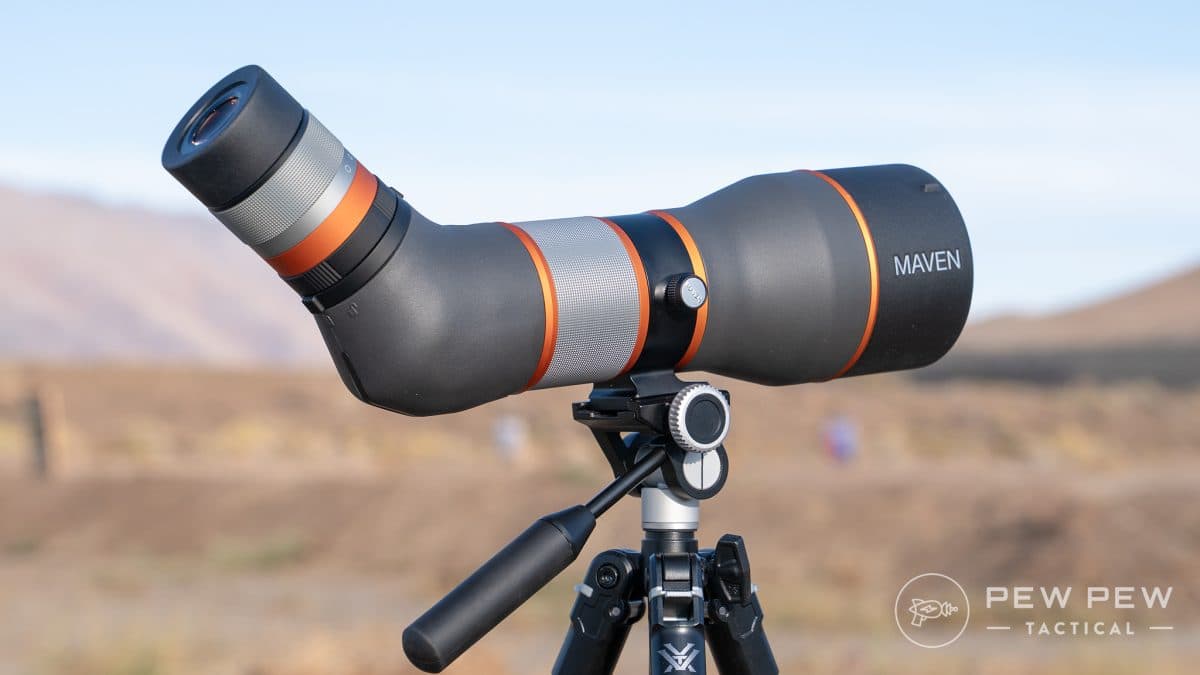
An early start at the range gave me an opportunity to see how each spotting scope handled inconsistent lighting. Whether I looked at brightly lit ridgelines or shaded draws, the S1.2 delivered a clear image with just-right brightness.
All the controls moved smoothly and with just enough resistance to be satisfying. That’s an important balance – too loose, and you’re likely to make an adjustment by accident; too tight, and you might need to exert so much force that you move the scope and lose your subject.
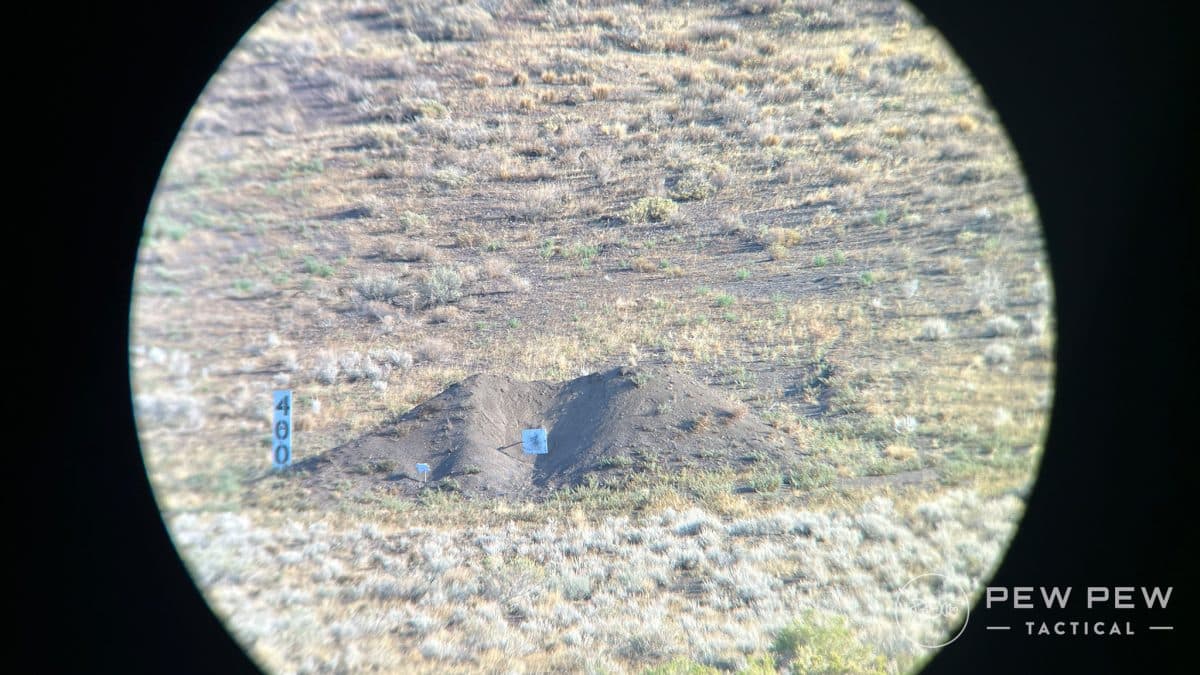
Dialing back to 25-power magnification yielded a usable field of view at 400 yards. Detail and color were commendable, although I noticed some blur around the edge of the image.
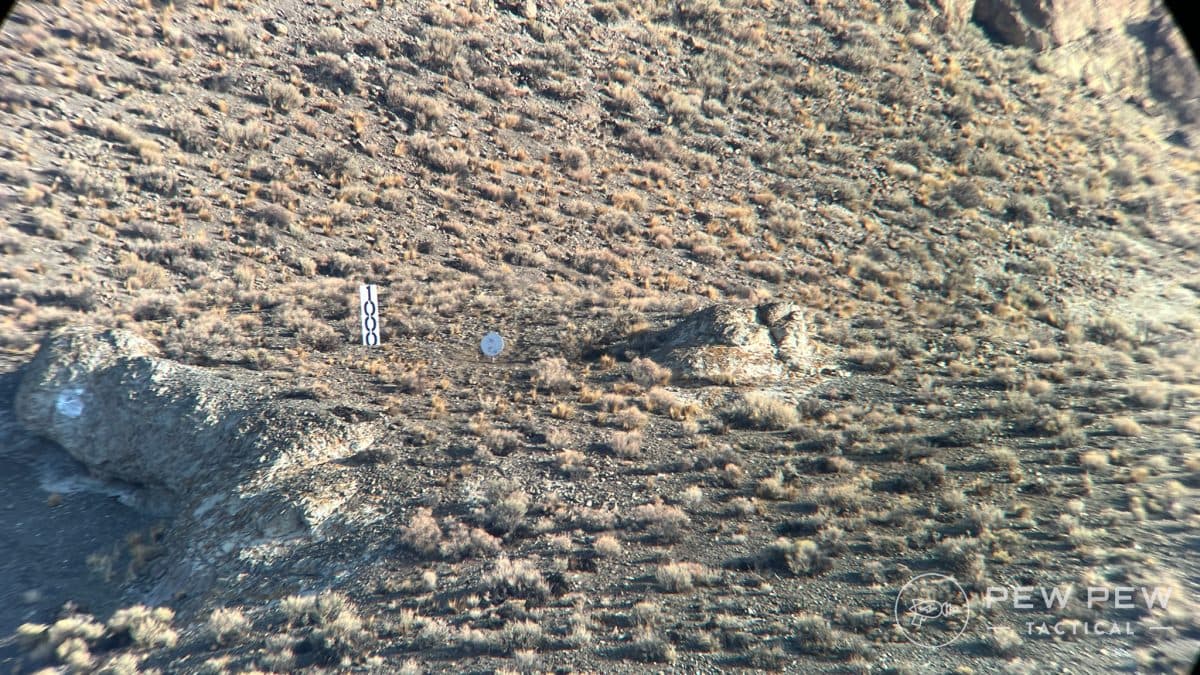
As magnification increased to full power, that blur almost disappeared. Contrast (the visual difference between bright spots and shadows) was impressive. At 1,000 yards I could even see one edge of a steel gong lit up in the morning sun rising off to the side.
If you ever plan to shoot alongside a spotter, reticle eyepieces are essential. Talking your partner onto target and making corrections are a lot easier when you have measurements to work with.
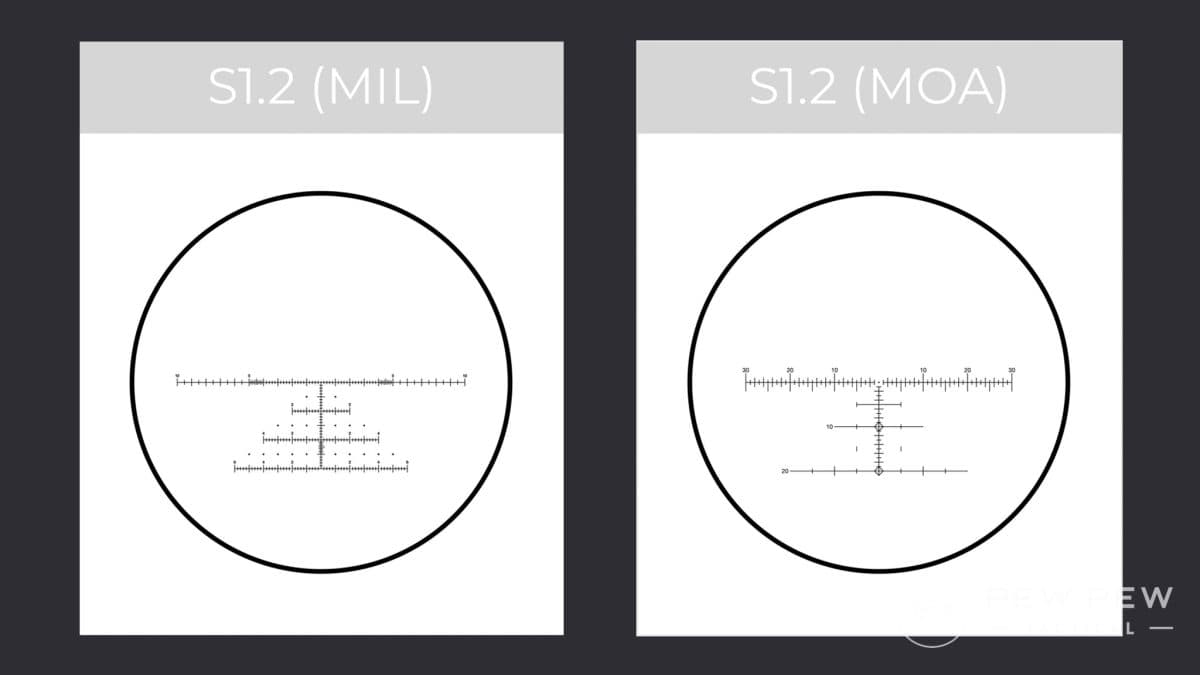
Maven offers fixed 30-power milliradian and minute-of-angle eyepieces in addition to the 25-50 zoom eyepiece I tested. If your primary goal is competitive precision shooting, this is what you want. Match your eyepiece to your rifle scope, of course, so you’re using all MRAD or all MOA.
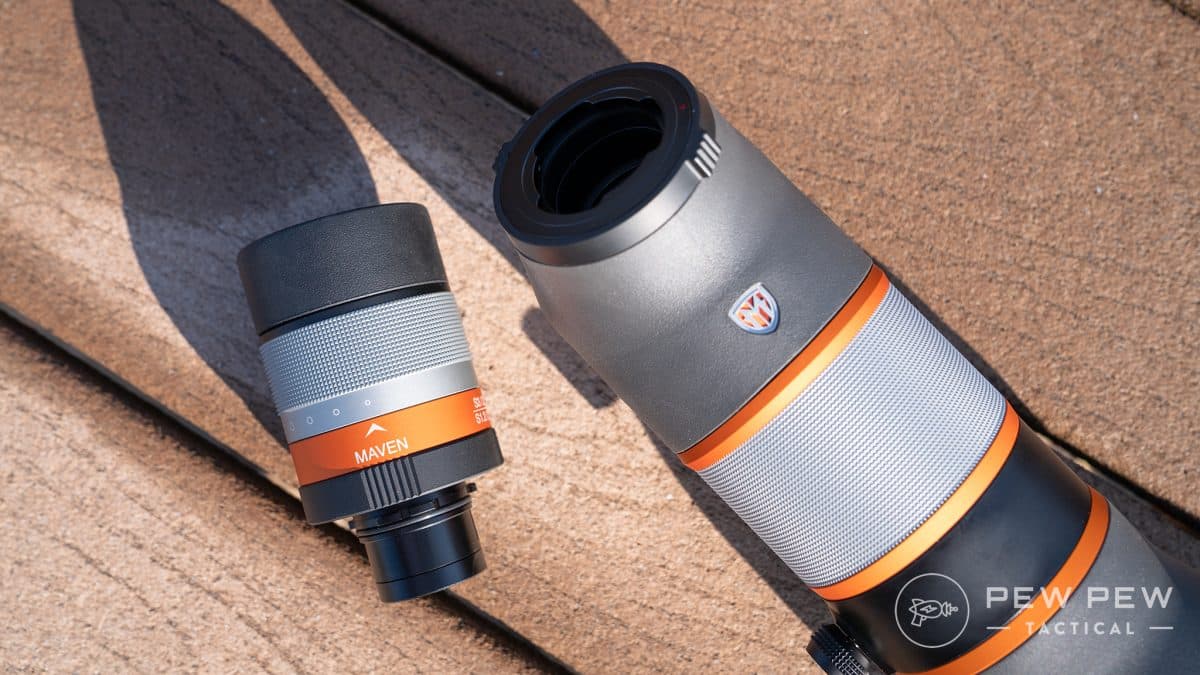
The S1.2 excelled in field testing; low light, midday, lousy weather, heat – the conditions didn’t matter. At one point I spotted a skylined ground squirrel sitting on a rock at 1,830 yards. When I switched to the other spotting scopes, only the Zeiss could pick out the little guy.
During mild water testing, this spotting scope did the best job of shedding moisture from the lens. If you shoot in the rain, this one will require the least attention to keep the view clear.
This is my pick for shooters who have a spending limit, but still want outstanding gear. The S1.2 does everything well. It’s not quite on par with the Zeiss in some aspects, but the multiple eyepieces are a huge selling point and it’s closer in performance than the price would suggest.
2. Zeiss Victory Harpia 85 - Best Premium
Pros
- Unparallelled light transmission, color, and detail
- Superb materials and build quality
- Will spoil other glass for you
Cons
- Only one eyepiece option (zoom)
- Significant jump in price over the next tier down
Specs
- Magnification: 22-65x
- Objective Lens Diameter: 85 mm
- Field of View: 190’ - 63’ at 1,000 yds
- Length: 15.1”
- Weight: 68 oz
- Base: 1/4-20
- Available Eyepieces: Zoom
- Country of Origin: Germany
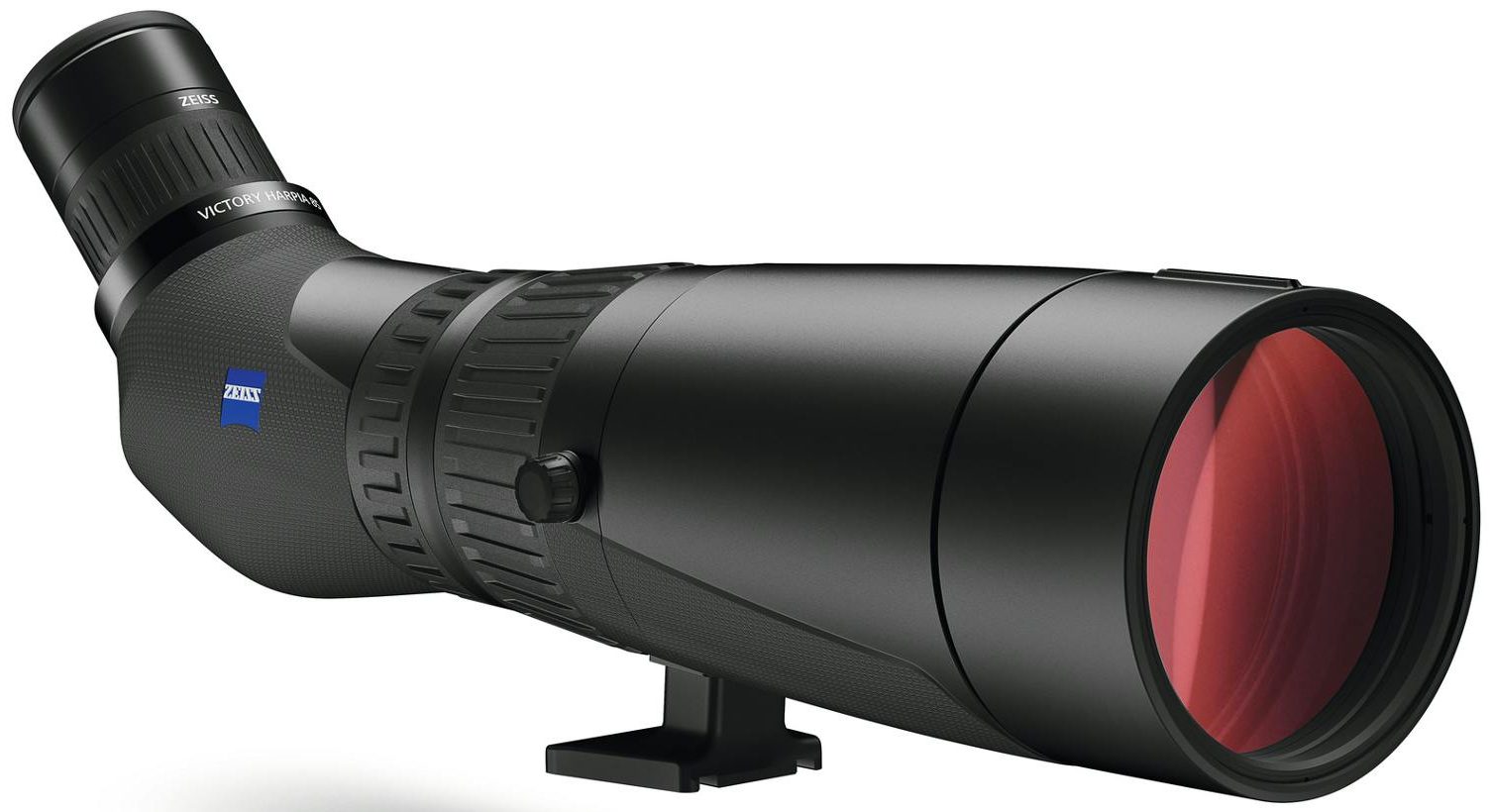
How does the world look through a nearly $5,000 spotting scope (the $800 eyepiece is sold separately)? In a word, excellent. The Zeiss Victory Harpia 85 lived up to my expectations and then some.
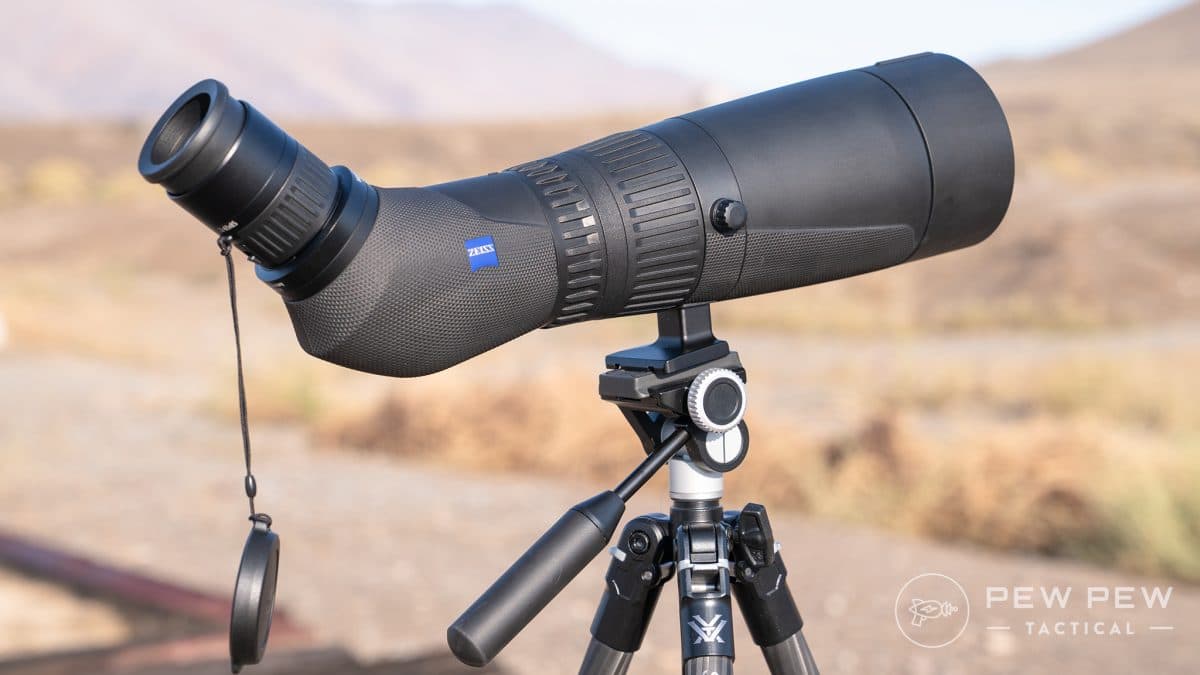
If terms like nitrogen purging, LotuTec, and Zeiss T* Coating have you scratching your head, all you need to know is that they add up to an incredibly bright, clear viewing experience.
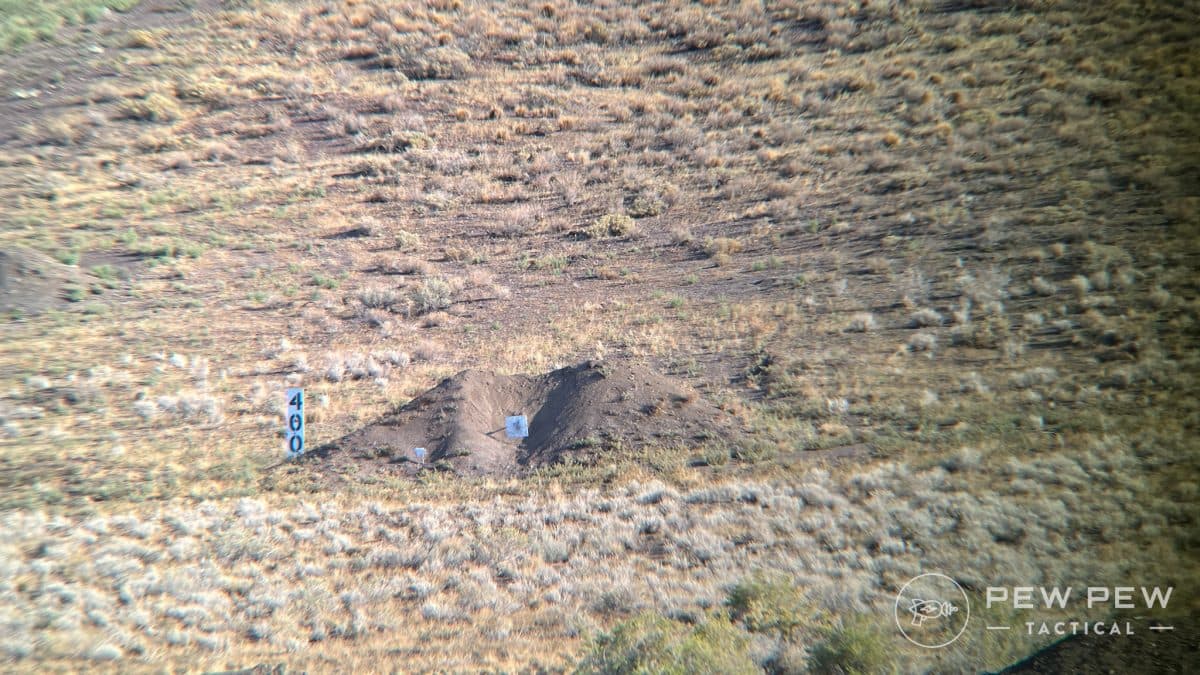
Light transmission is so efficient that it feels like looking at an illuminated display. Even at 1,000 yards, impacts on steel appeared as individual splatters, not gray smudges.
In the 1,000-yard photo, it almost looks like there’s some distortion creeping in from the edges. Upon closer inspection, I think that’s actually depth of field because I detect a correlation to the distance from the spotting scope, not the position in the frame.
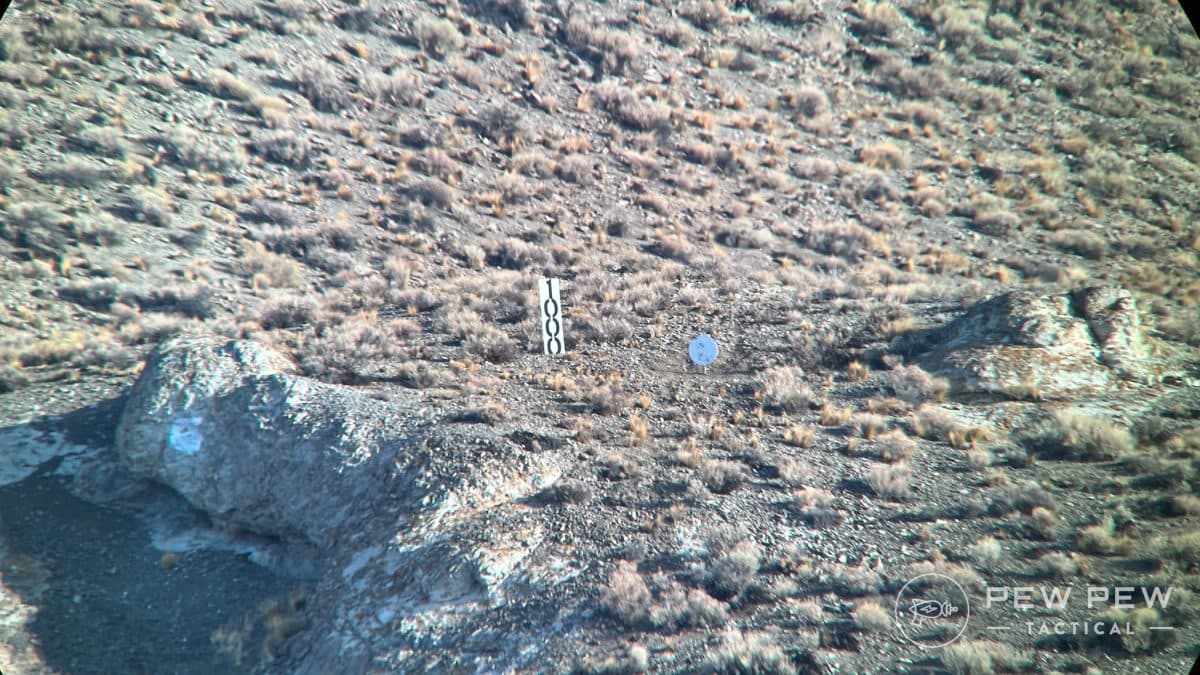
If that’s the case, it may be a subtle tradeoff for this scope’s awesome light transmission. Photographers will recall that depth of field (the area in focus) becomes more shallow as aperture (the hole that lets light through the lens) opens wider.
Fortunately, this spotting scope has a very refined focus ring. The crisp view gave me ample information in the field, and it actually reduced eye strain. During extended glassing sessions in the field, I found that fatigue was less of an issue because my eyes weren’t working as hard.
Water beads up very nicely on the lens, and it wipes clean with no spotting or smudges.
The highlight of my time with the Harpia came when I looked at my local ski area in the distance and was able to read the sign on the side of the summit chairlift station. I checked the distance on the map when I got home: 8 miles.

My only complaint – and I’m being very picky – is that the eyecup, magnification ring, and focus ring all require different amounts of force to turn. The eyecup is so tight I wasn’t sure it twisted out at first, and the focus ring is light enough that you could bump it out of focus. If they all felt like the magnification ring, I wouldn’t have anything to whine about.
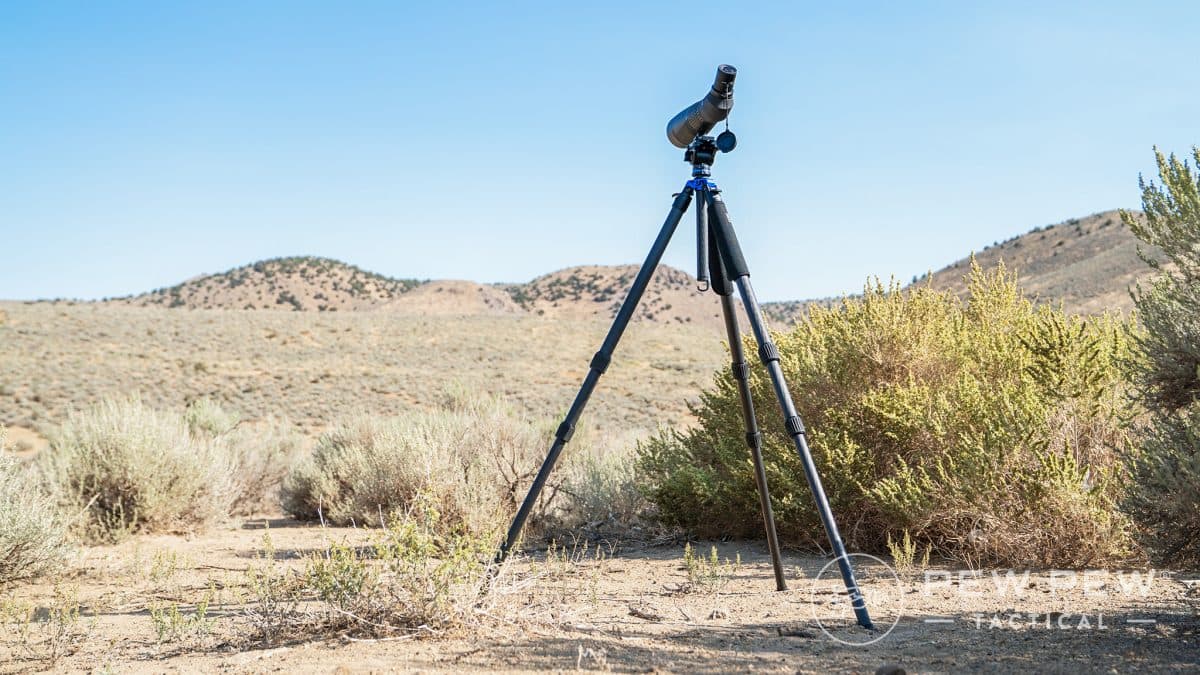
So, the Victory Harpia is the most expensive spotting scope here by a wide margin. Is it the best?
I think so; but this is the real world and we have to consider price, which is why it lands in the premium spot instead of best overall. The jump in price to this spotting scope is substantial, but I can’t deny what I see when I look through it.
If you have the money, go big.
3. Maven CS.2 - Best Value
Pros
- Great performance for the money
- Rugged polymer exterior
- Slim profile packs away nicely
Cons
- Optical quality is a noticeable step down from the S1.2
- Can’t keep up with more expensive options in low light
Specs
- Magnification: 26-66x
- Objective Lens Diameter: 85 mm
- Field of View: 113’ - 56’ at 1,000 yds
- Length: 14.9”
- Weight: 60 oz
- Base: ARCA, 1/4-20
- Available Eyepieces: Zoom
- Country of Origin: China
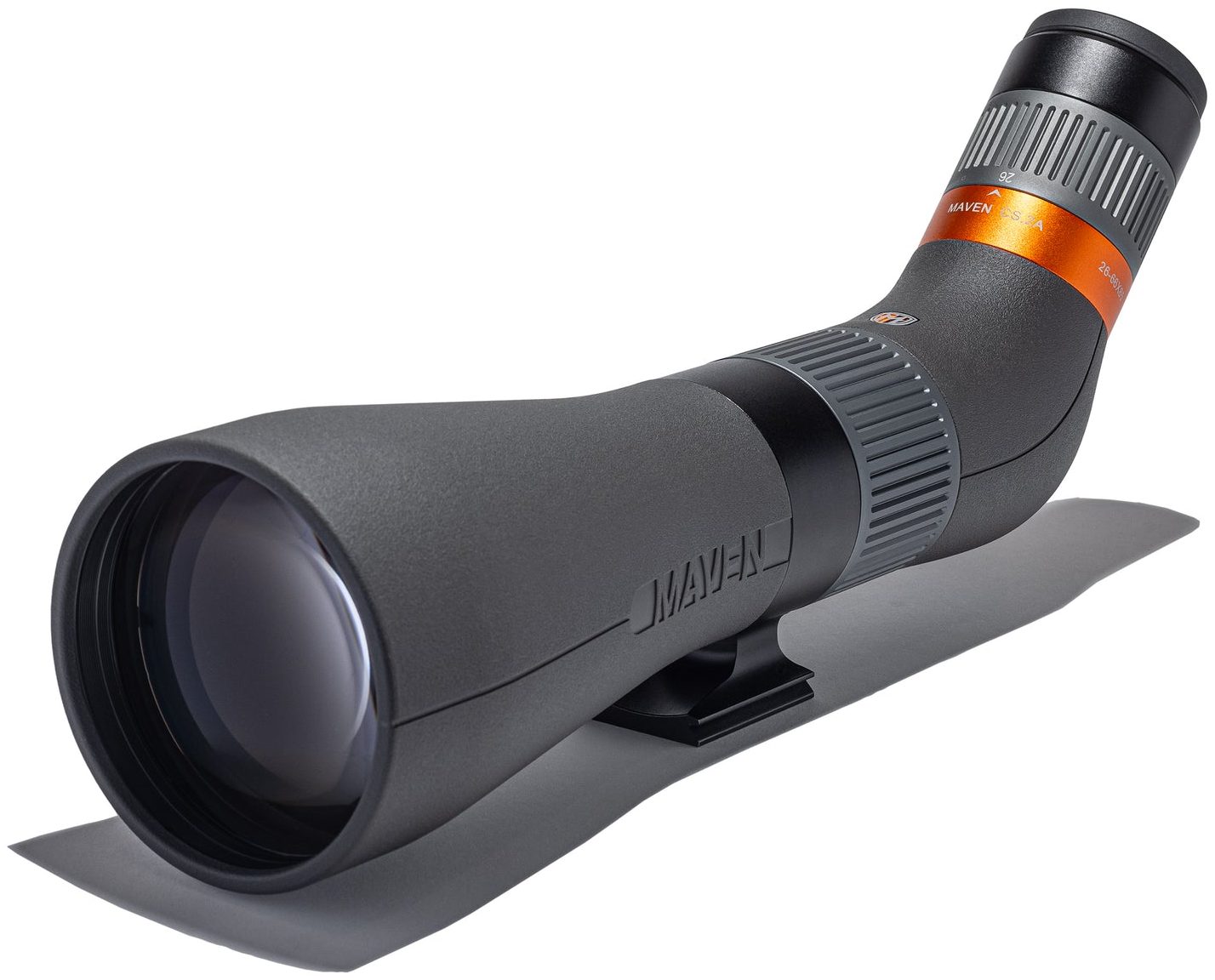
Value is all about getting more than you pay for. In the case of spotting scopes, I’ve been impressed by the Maven CS.2.
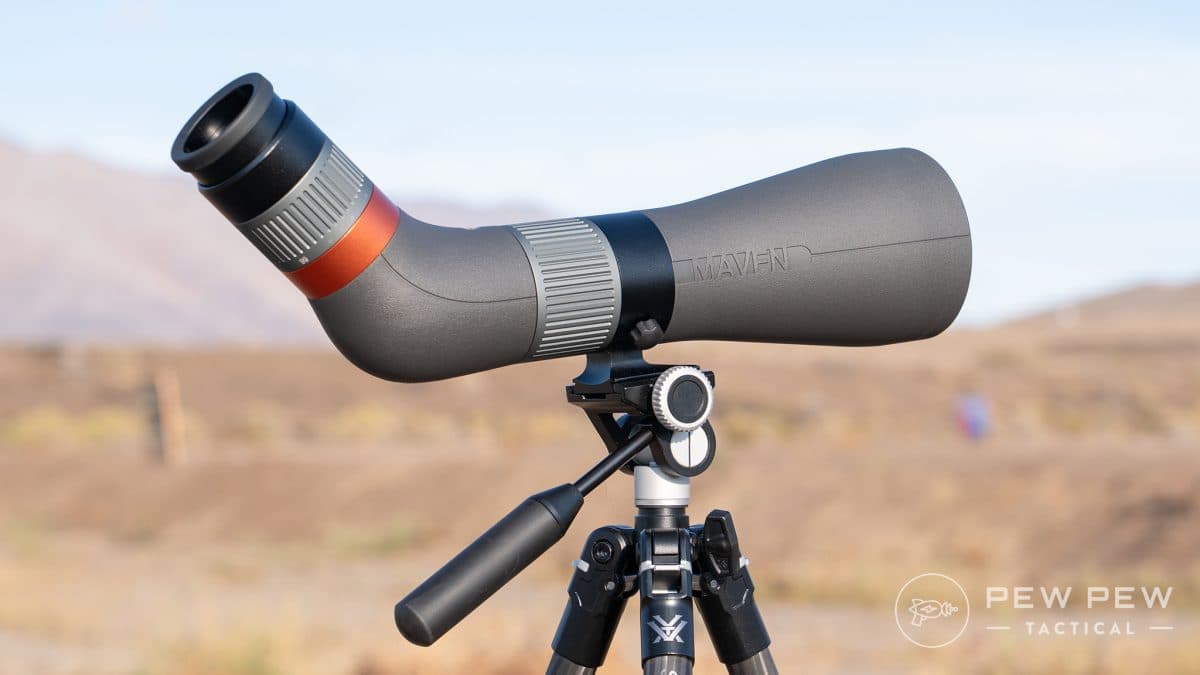
By the numbers, it punches well above its weight with up to 66-power magnification – the highest on this list. At the low end (26-power) it picks up right where many precision rifle scopes top out.
There’s noticeable blur at the edge of the image, but it’s not bad. With enough light, this spotting scope can keep up with options that cost double or more, even if the view is less polished. In low light, that’s where I really noticed a performance gap. More on that in a minute.
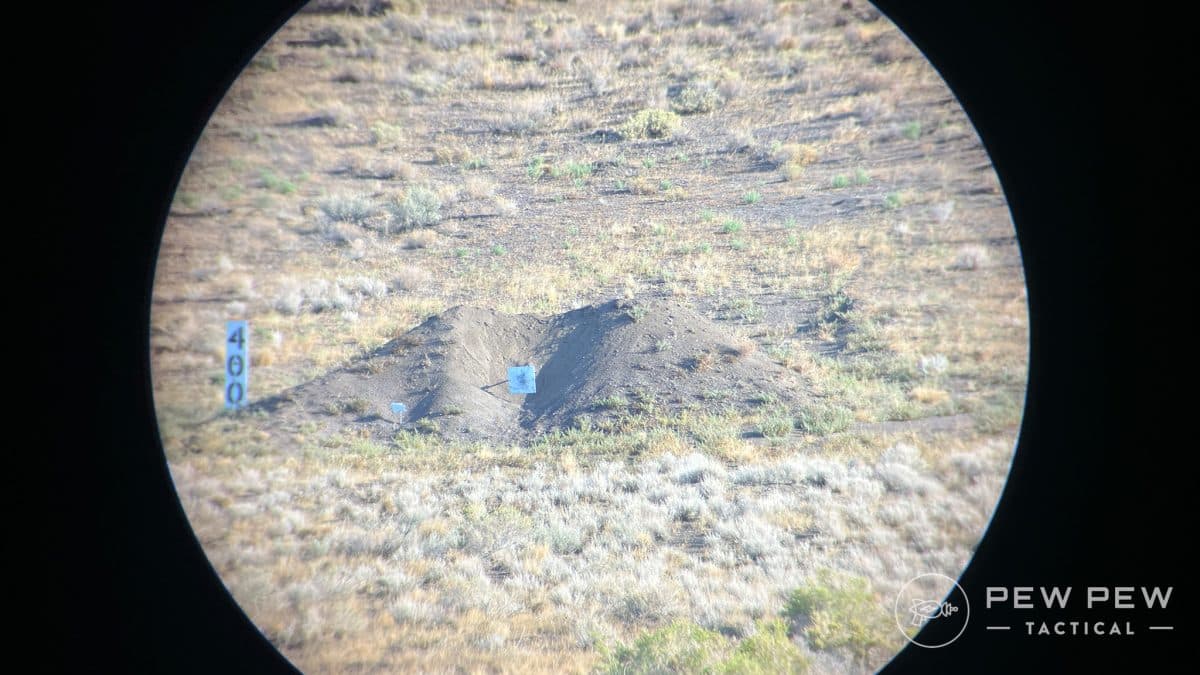
Optically, it does an admirable job without reaching the level of the S1.2, Vortex, and Zeiss.
Black-on-white numbers at the 1,000-yard sign took on a slightly purple hue and there was some fuzziness around the edge of the image. Impacts on stationary steel were hard to see at long distances, but splash and swinging gongs were no issue.
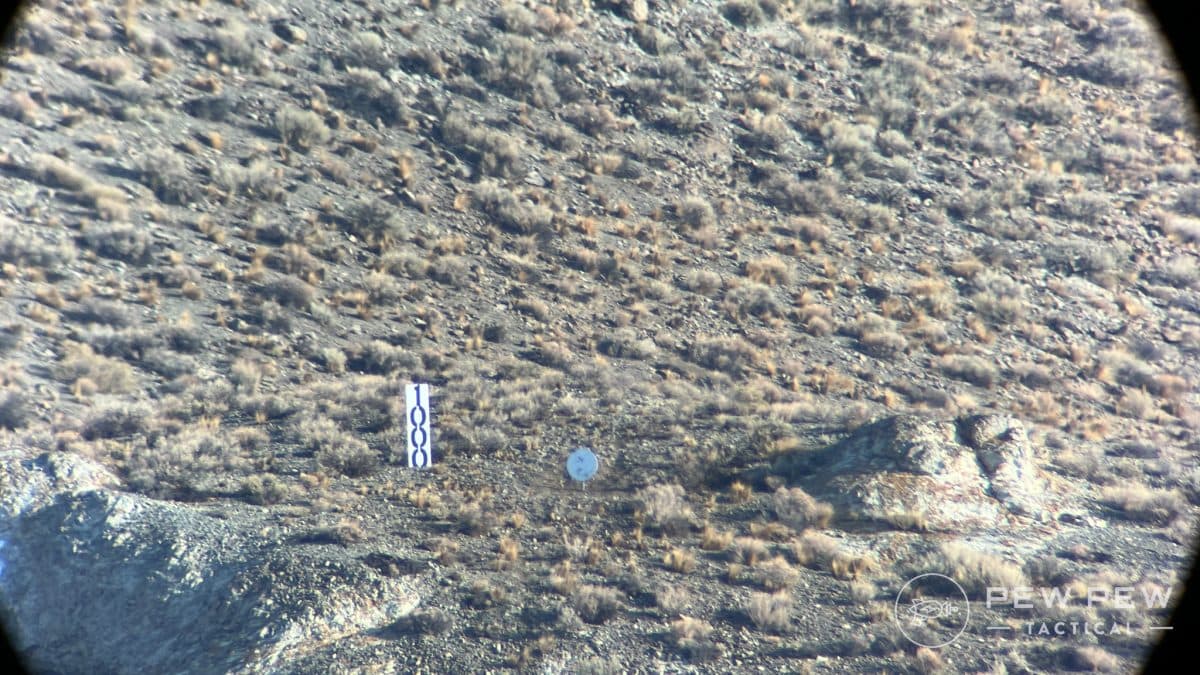
In the field, I appreciated the CS.2’s thin profile and rugged polymer frame. Switching from metal to polymer trims a few ounces and I suspect the more forgiving material absorbs bumps and scrapes a little better, even if it doesn’t feel as high-end.
Like the S1.2, the CS.2 performed well in my simulated rain test (sorry, we don't have the real thing in Nevada very often). It repelled water and wiped dry almost as easily as the much more expensive S1.2, and better than many of the other spotting scopes.
Who’s this spotting scope for? I’m imagining someone who spends more time shooting long-range courses during the day than scouting for animals at twilight. If you’re new to precision shooting and need an affordable spotting scope that you can lug around all day, push past 1,000 yards, and not treat it like it’s fragile, you’re a prime candidate for the Maven CS.2.
4. Vortex Razor HD 13-39x56 - Best for Hunting
Pros
- Excellent optical system
- Easy to pack and maneuver
- Versatile magnification range
Cons
- Reduced power
- Fairly expensive
Specs
- Magnification: 13-39x
- Objective Lens Diameter: 56 mm
- Field of View: 168’ - 89’ at 1,000 yds
- Length: 10.4”
- Weight: 29 oz
- Base: ARCA, 1/4-20
- Available Eyepieces: Zoom
- Country of Origin: Global components assembled in the USA
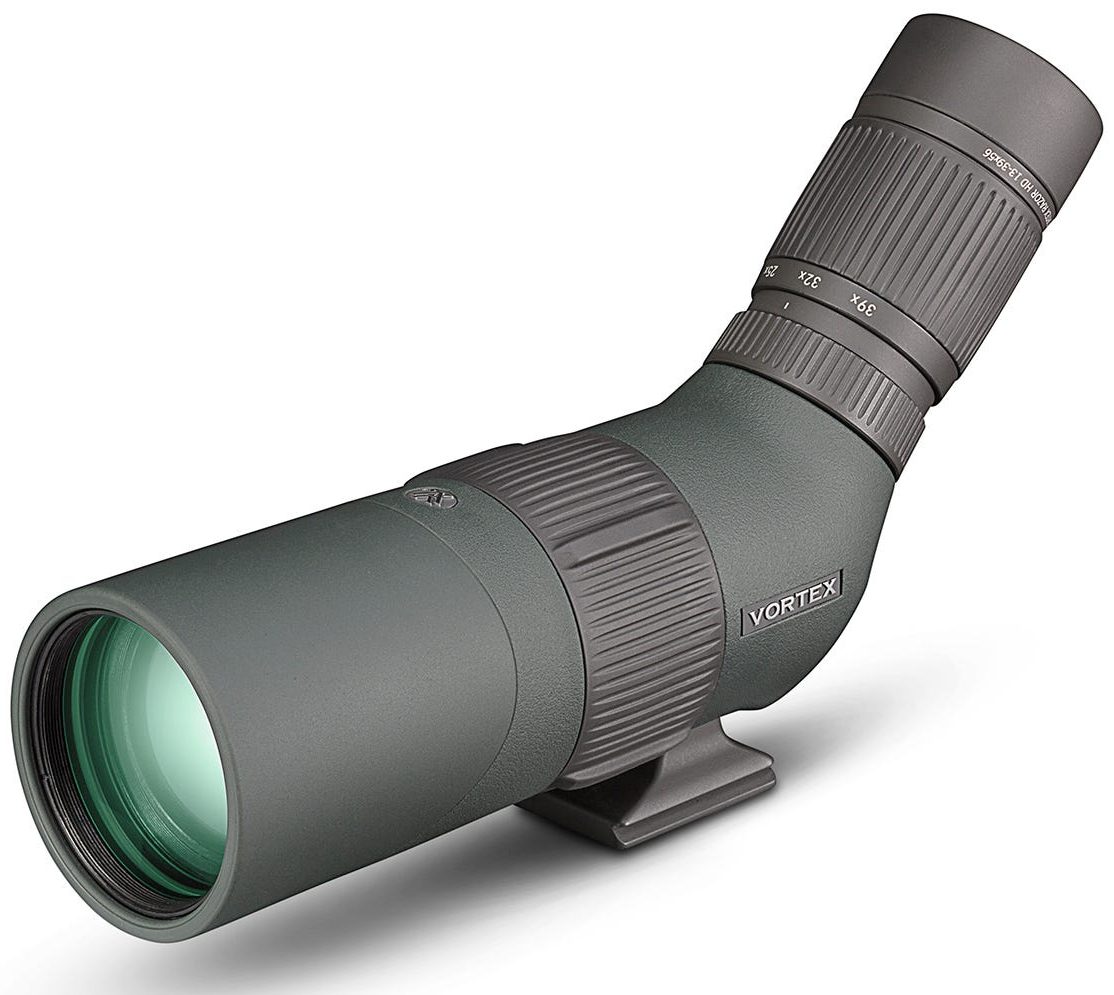
If you’re an ounce-counter in need of a high-quality backcountry spotting scope, the Vortex Razor HD 13-39x56 – affectionately known as the baby Razor – was made for you.
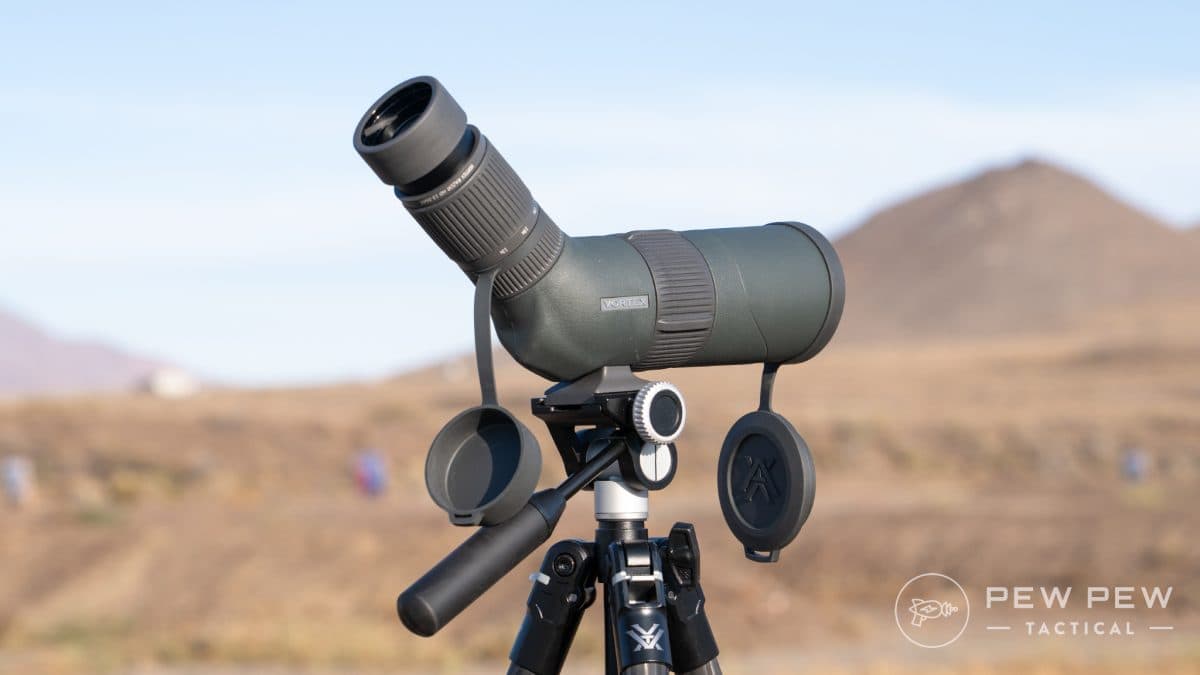
This hunting-focused spotting scope is somewhat out of its element at the range. Nevertheless, I had no trouble spotting impacts on 1,000-yard targets. You can see a touch of distortion around the edge in these pictures, and maybe the color could use a little more saturation, but I have no gripes.
Keep in mind that many precision shooters often use reticle eyepieces with fixed magnification in the 25-power ballpark, so 39-power is nothing to sneeze at.
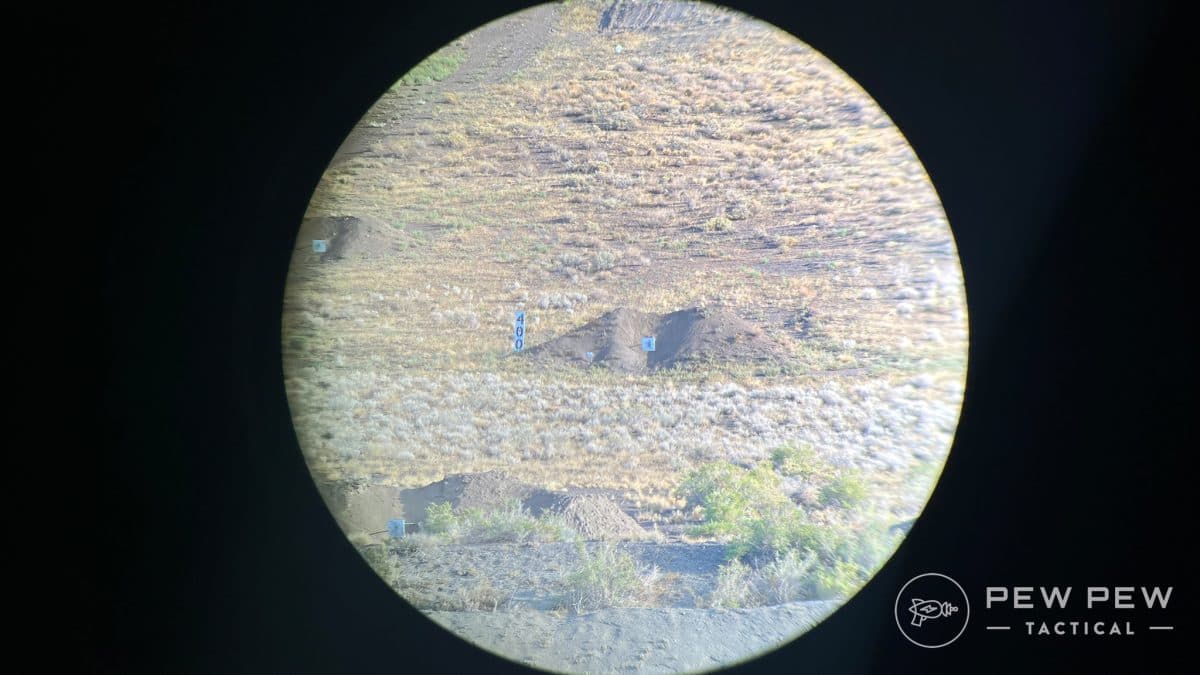
Fit and finish are great. All the controls move smoothly. I’m sure this spotter can take a beating, but I always have to mention that the unbeatable Vortex warranty has your back no matter what.
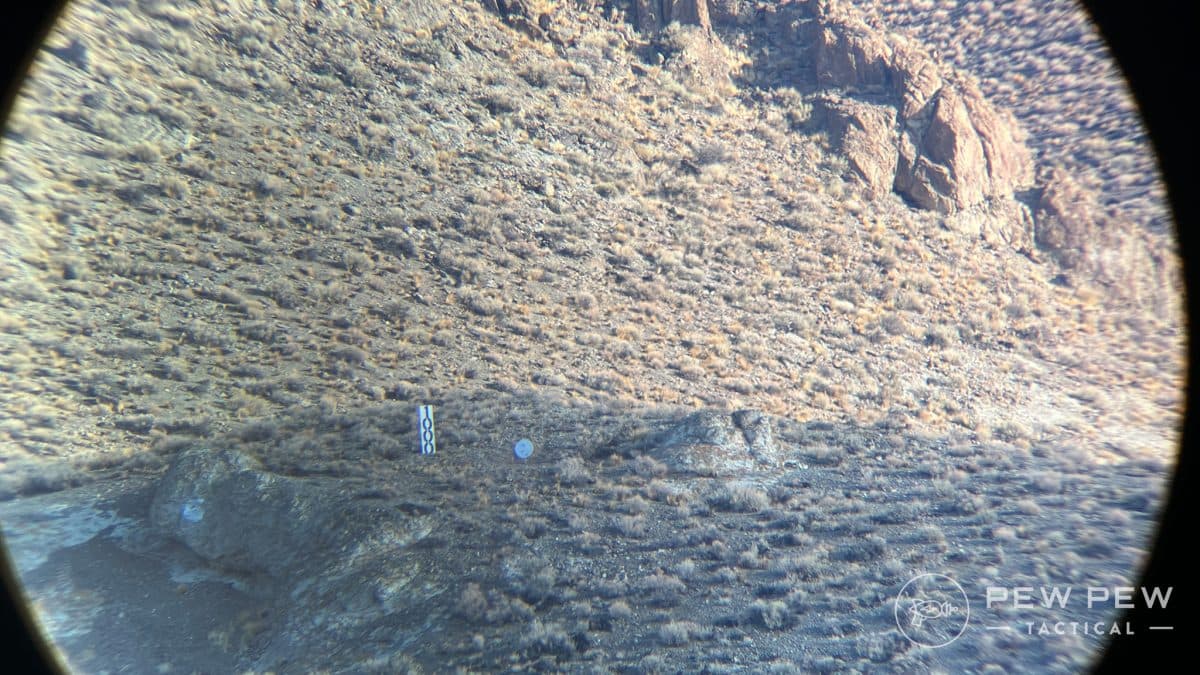
In the field is where the littlest Razor made the biggest impression. I had concerns about its ability to glass wide-open Nevada landscapes at first, but it did well enough to hunt thanks to excellent glass. In many environments, it’ll be more than you need.
Some more powerful spotting scopes (like the Talos) have numerically superior top-end power, but optical quality drops off enough that the compact Razor actually delivers more visual information in certain situations. That was surprisingly true in the mornings and evenings, despite the relatively tiny objective lens.
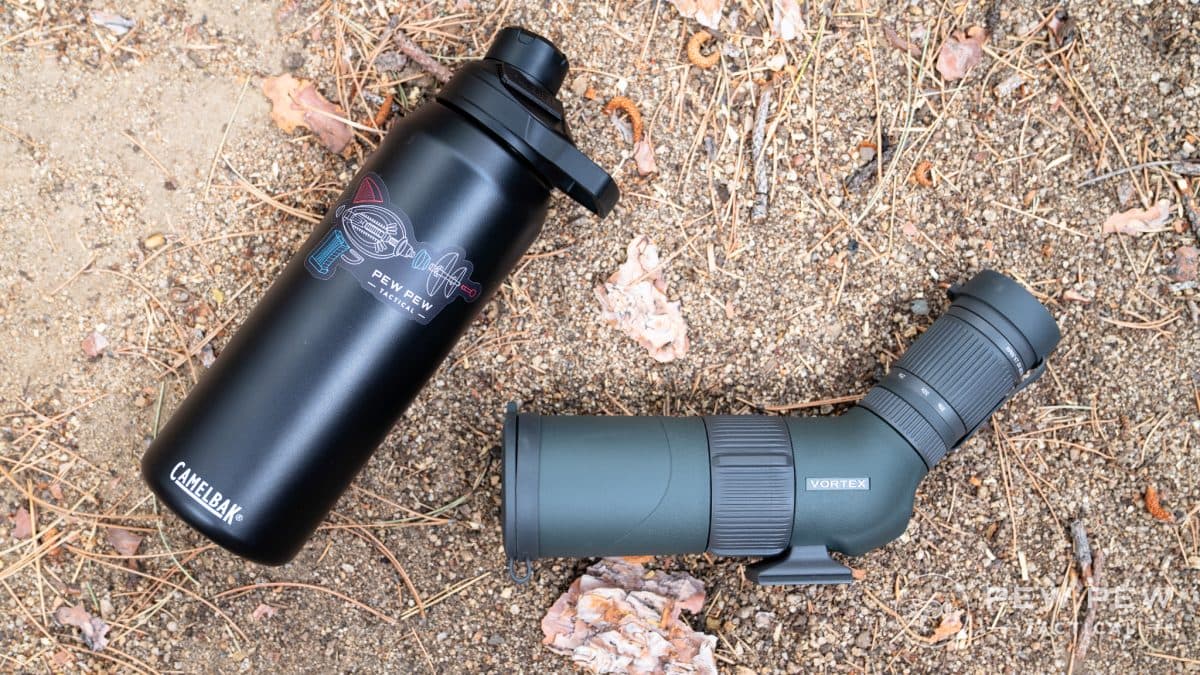
Size is the main selling point for the baby Razor. I’m very satisfied with the optical quality (gotta love the Razor family of optics), but being able to toss a spotter that’s smaller than a water bottle in my pack is a huge advantage when I’m spending all day on foot.
Water didn't bead up quite as nicely as I hoped, but I was able to wipe it dry with one swipe of a lens cloth without leaving any smudges or water spots.
If your primary goal is glassing for game animals, this is my pick without hesitation. This high-quality spotter is proof that bigger isn’t always better.
Your preferences may differ, but I’ll gladly take a more portable option – especially when the view is this good.
5. Athlon Talos 20-60x80 - Best Budget
Pros
- Super affordable
- Very lightweight
- Suitable for most range days
Cons
- Narrow field of view
- Utilitarian optical quality
Specs
- Magnification: 20-60x
- Objective Lens Diameter: 80 mm
- Field of View: 83’ - 48’
- Length: 16.5”
- Weight: 39 oz
- Base: 1/4-20
- Available Eyepieces: Zoom
- Country of Origin: China
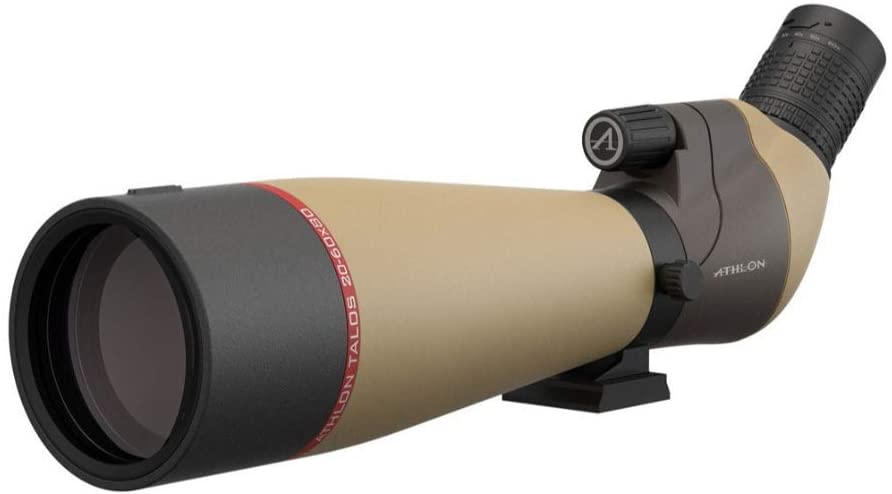
Does a sub-$150 spotting scope have any business being on this list? You bet it does. The Athlon Talos 20-60x80 is just what a huge number of shooters are asking for.
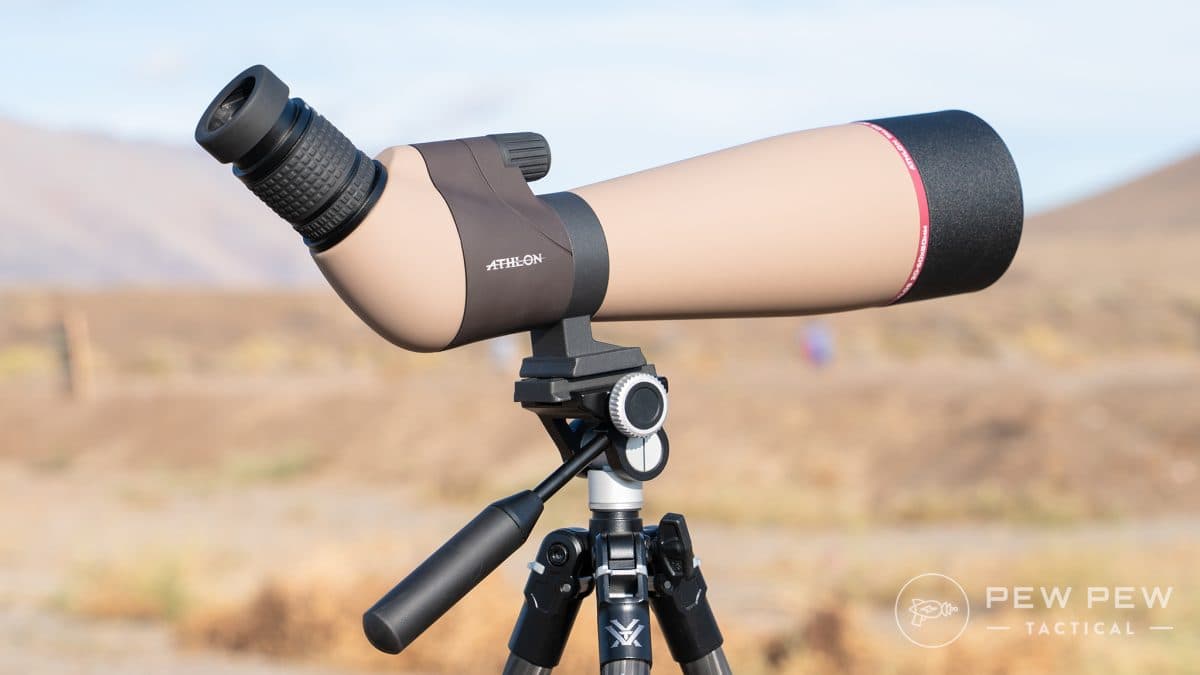
For this price, you shouldn’t expect it to hang with spotting scopes that have an extra digit on the price tag. Right off the bat, the field of view is so narrow that it feels like looking through a straw.
One thing I appreciate is the placement of the controls. It’s possible to turn the magnification ring with my thumb and index finger while managing the focus knob with my pinky. They feel a bit cheap, but what do you expect?
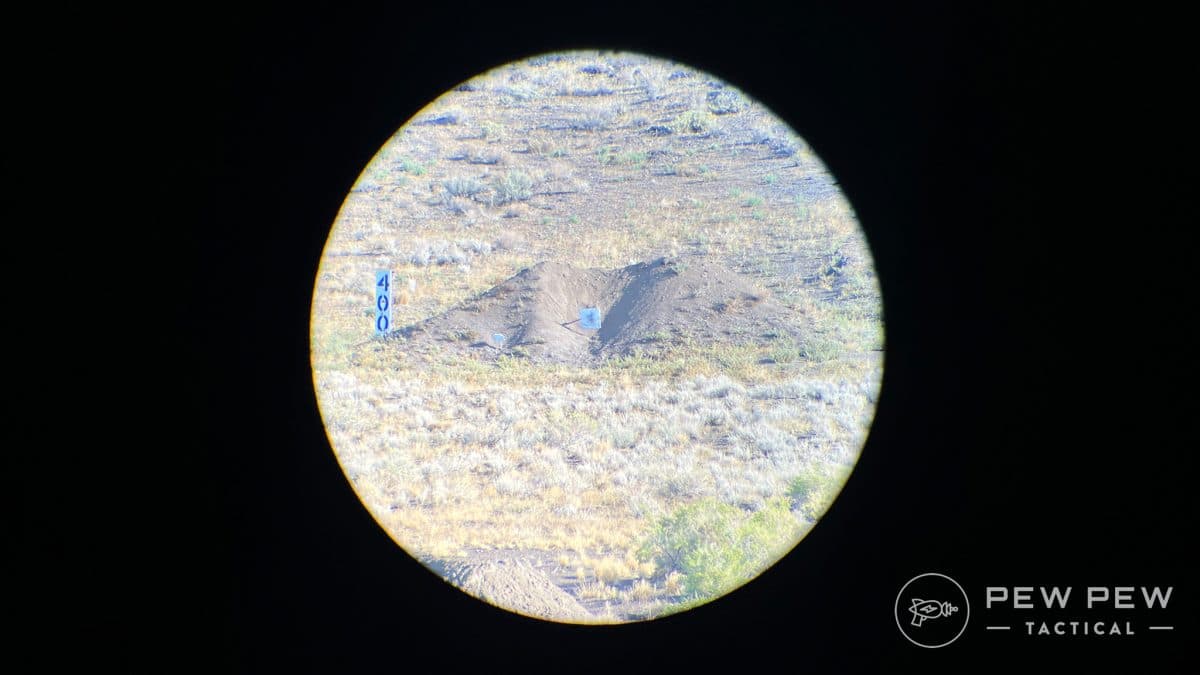
Clarity washes out as distance increases, and it’s overcome by fuzziness by 1,000 yards. Remember how much the Talos costs and manage your expectations. You can see a gong swing at that distance, but picking out individual impacts on a stationary steel target isn’t going to happen.
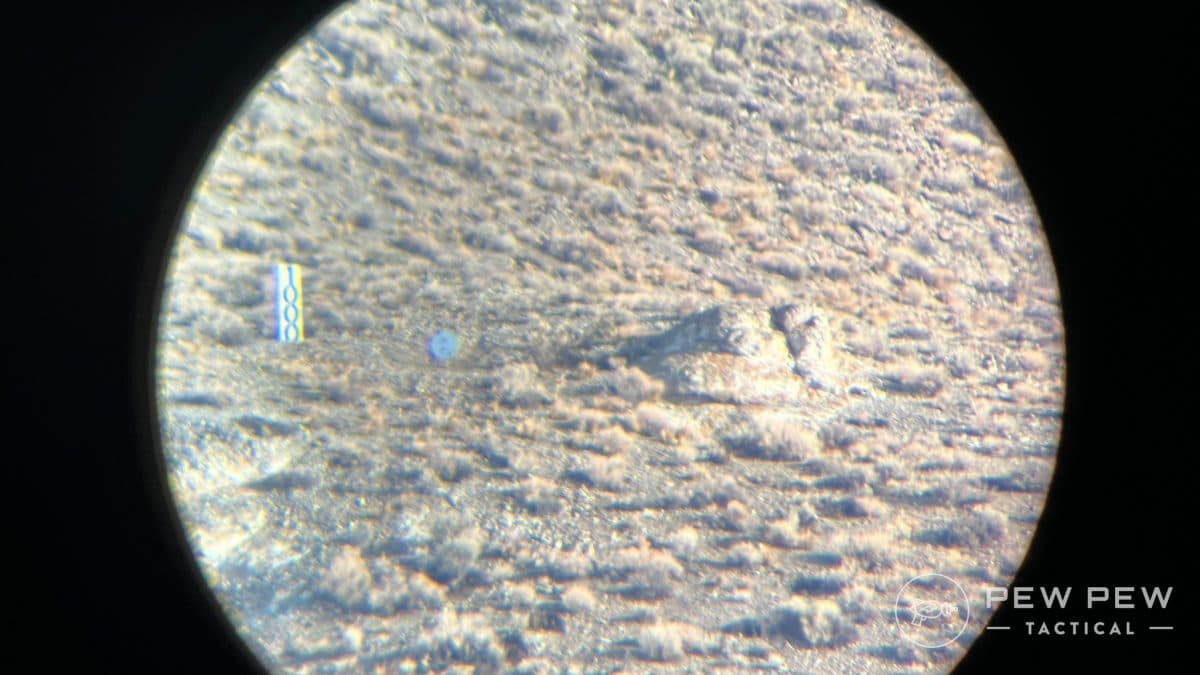
Color is actually fairly realistic and well-saturated, but only in bright sunlight. This glass really struggles in low-light environments.
That’s important to remember in the field. Observing deer in the open is doable in morning and evening hours, but counting tines in the treeline will be a tall order.
On the other hand, this spotting scope is so lightweight that you might overlook its shortcomings. It’s lighter than everything but the Vortex Razor HD 13-39x56, while offering up to 60-power magnification.
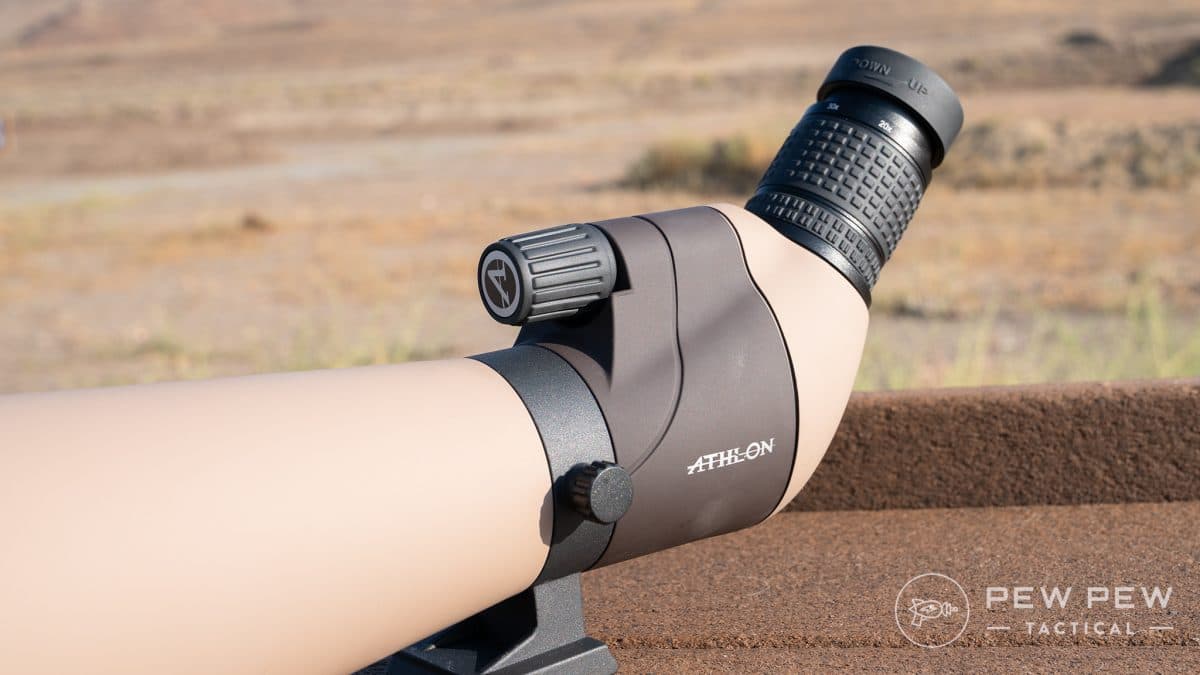
You’ll need a different tripod for hunting than the one that’s included, so make sure whatever you pick has a 1/4-20 adapter. This foot is not ARCA-compatible.
Water beaded up surprisingly well on the objective lens, but it left annoying water spots when I wiped it dry. For the price, I'm not mad about it.
This is consistently one of the most affordable spotting scopes that comes from a reputable brand on Amazon. For the average shooter who wants to check their targets at the local 50- or 100-yard range, it’s all you really need.
How to Pick the Best Spotting Scope
These are all solid options, but some will work better for you than others depending on your needs. Here are some things to keep in mind.
Price
Spotting scope prices are all over the place.
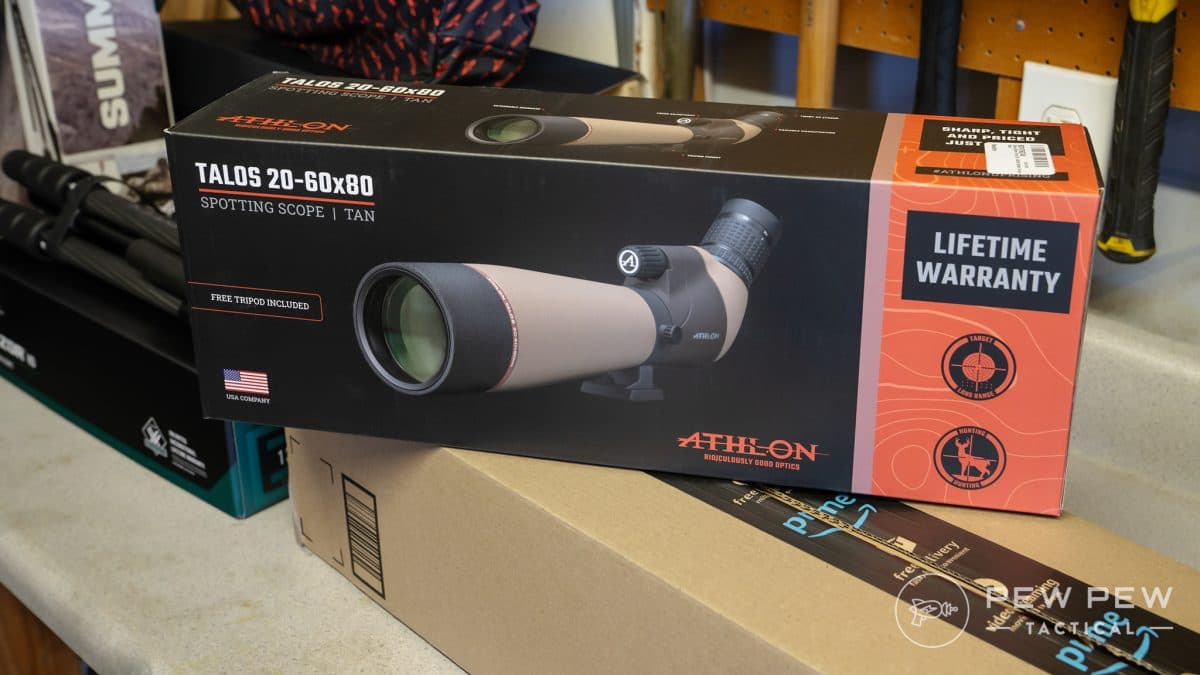
You can hop on Amazon and have one shipped to your door – with a tripod – for less than $100. You can also drop several thousands of dollars on a premium optical system and rugged housing worthy of once-in-a-lifetimes hunting expeditions.
Sometimes it’s helpful to start with your budget. If you have the funds for top-shelf European glass, be my guest. If you just want to check targets without running downrange after every string of fire, you’ll do just fine with a budget spotting scope.
Magnification & Optical Quality
Let’s talk power for a second. In spotting scope terms, that means magnification. Your spotting scope will be the most powerful optic at your disposal, with variable magnification ranges far exceeding that of your rifle scope.
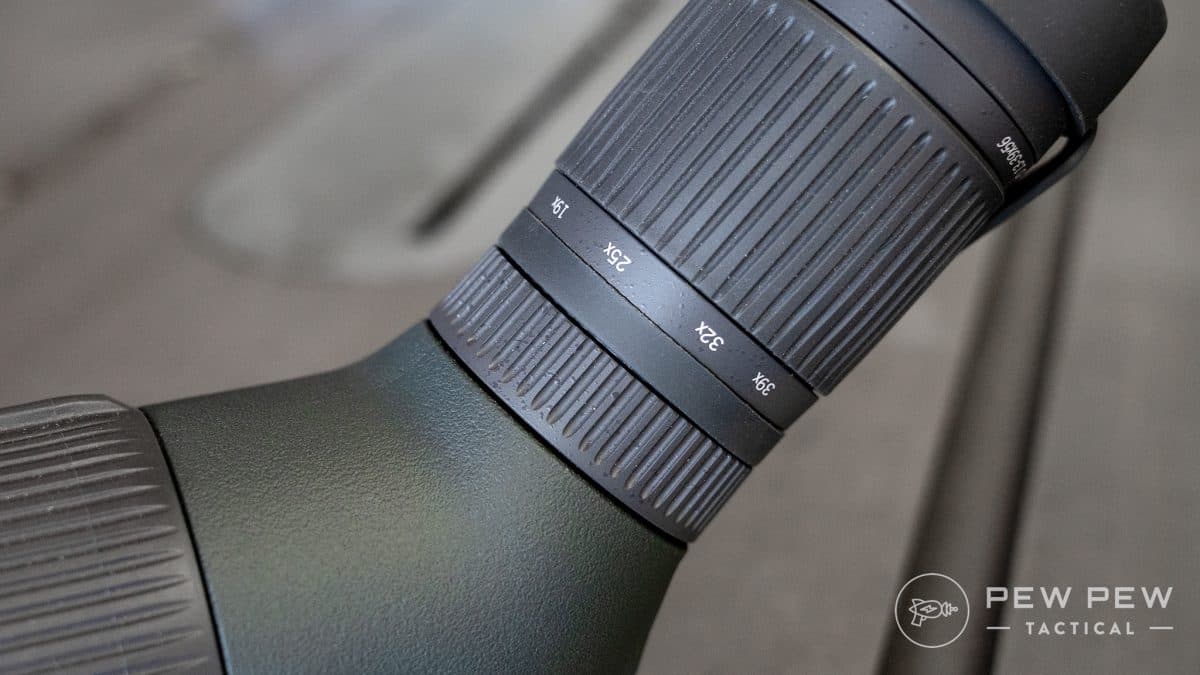
If you want to evaluate a deer across a cornfield, something compact like the Vortex Razor HD 13-39x56 will do the trick wonderfully.
If you’re trying to spot impacts at extreme distances, you’re going to appreciate a heavy hitter with more magnification.
Numbers only tell part of the story, though. A high-end optical system will deliver a brighter, sharper, and more realistic image to your eye than a bargain-basement spotting scope. You could spend weeks reading up on all the engineering and coatings that go into this, or you can just chalk it up to optical quality.
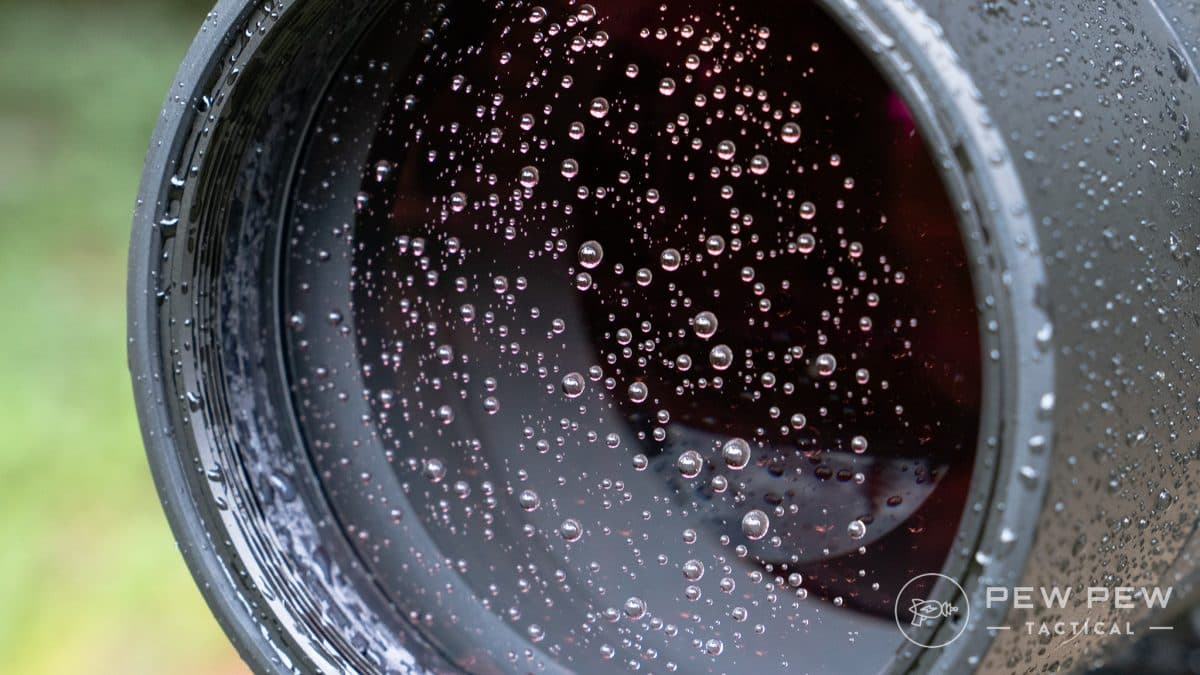
Optical quality is heavily influenced by the coatings a manufacturer applies to an optical system. Coatings can increase light transmission, reduce glare, and even offer a layer of protection against oils and scratches.
You’re likely to see terms like “fully coated” (meaning all air-to-glass surfaces are coated) or “multi-coated” (meaning a given surface has multiple coatings that do different jobs). Some optics are fully multi-coated.

A good way to rationalize power and optical quality is to think about watching a video. Magnification is similar to the size of the screen, while optical quality is more like the resolution of the video it’s showing. Finding the right balance is a matter of personal preference and budget.
Coatings present a real rabbit hole of information, and it’s often a case of comparing apples and oranges since manufacturers have their own special blends.
Size & Weight
Most spotting scopes are pretty hefty items. Get used to the idea of strapping a few pounds worth of spotting scope, tripod, and tripod head onto your pack or range bag.
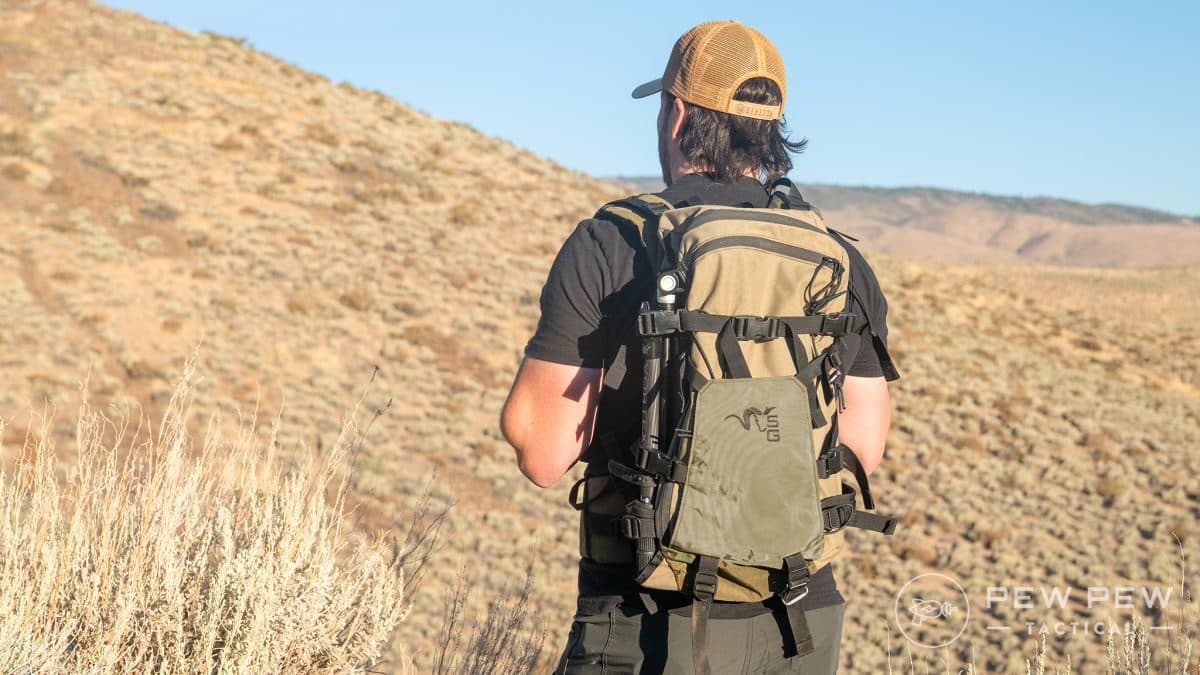
Most spotting scopes are close enough in size and weight that I wouldn’t worry too much about splitting hairs.
Super compact spotting scopes like the Razor HD 13-39x56 are the exception – that’s definitely what I’d reach for if I had to spend a week on foot in the mountains.
Straight & Angled Eyepieces
One of the things you’ll have to decide is whether you prefer a straight or angled spotting scope. That’s another personal decision, so pick whichever works for you.
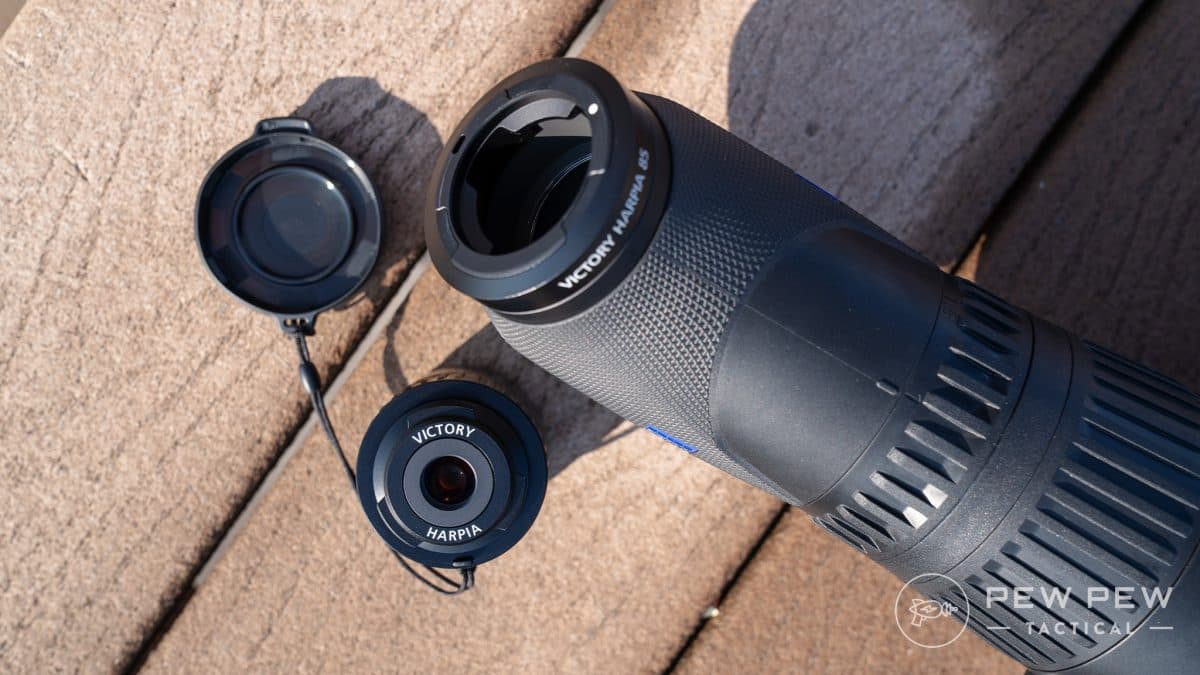
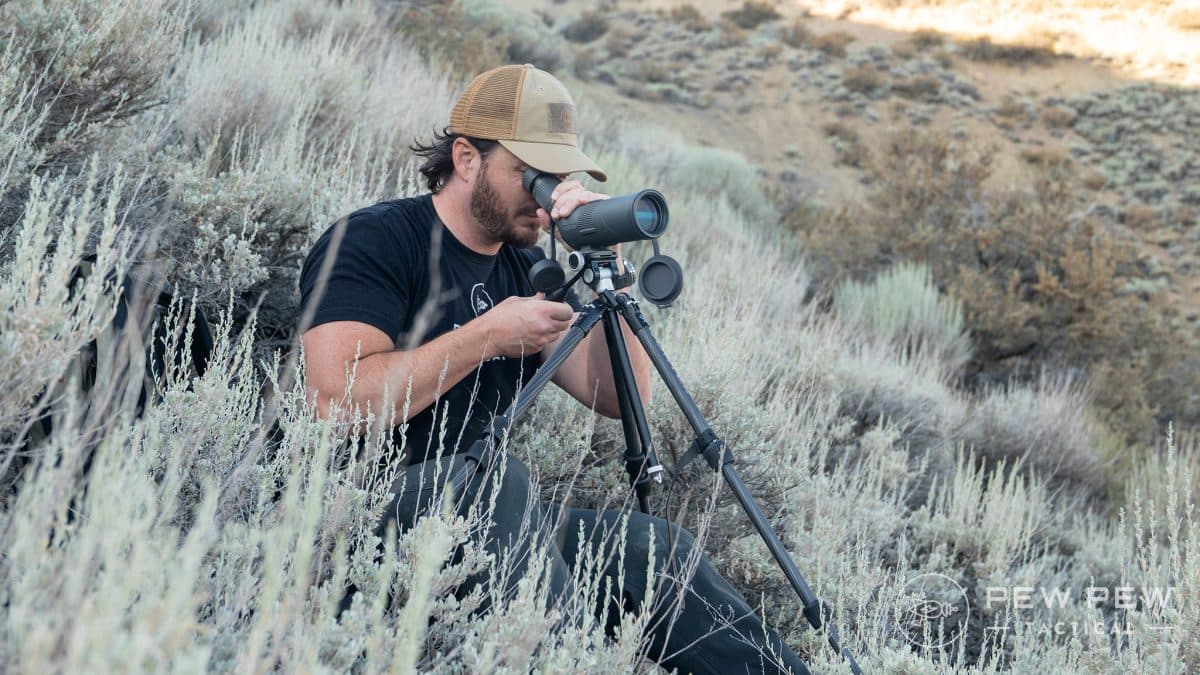
Angled spotting scopes are generally more comfortable to use, so most people prefer them. Since you’re looking down, you can get away with a shorter tripod than you’d need to bring a straight spotting scope to eye level. They also make glassing uphill super convenient.
On the flip side, straight spotting scopes are much easier to glass downhill with. They also tend to get on target a little bit more intuitively because they’re easier to visually line up before you get behind the glass, although that’s a matter of practice.
Tripods & Mounts
Hunters occasionally mount tripods to their vehicle’s window during scouting trips, but these optics spend most of their time on a tripod. Which one you pick will depend on how you intend to use it.
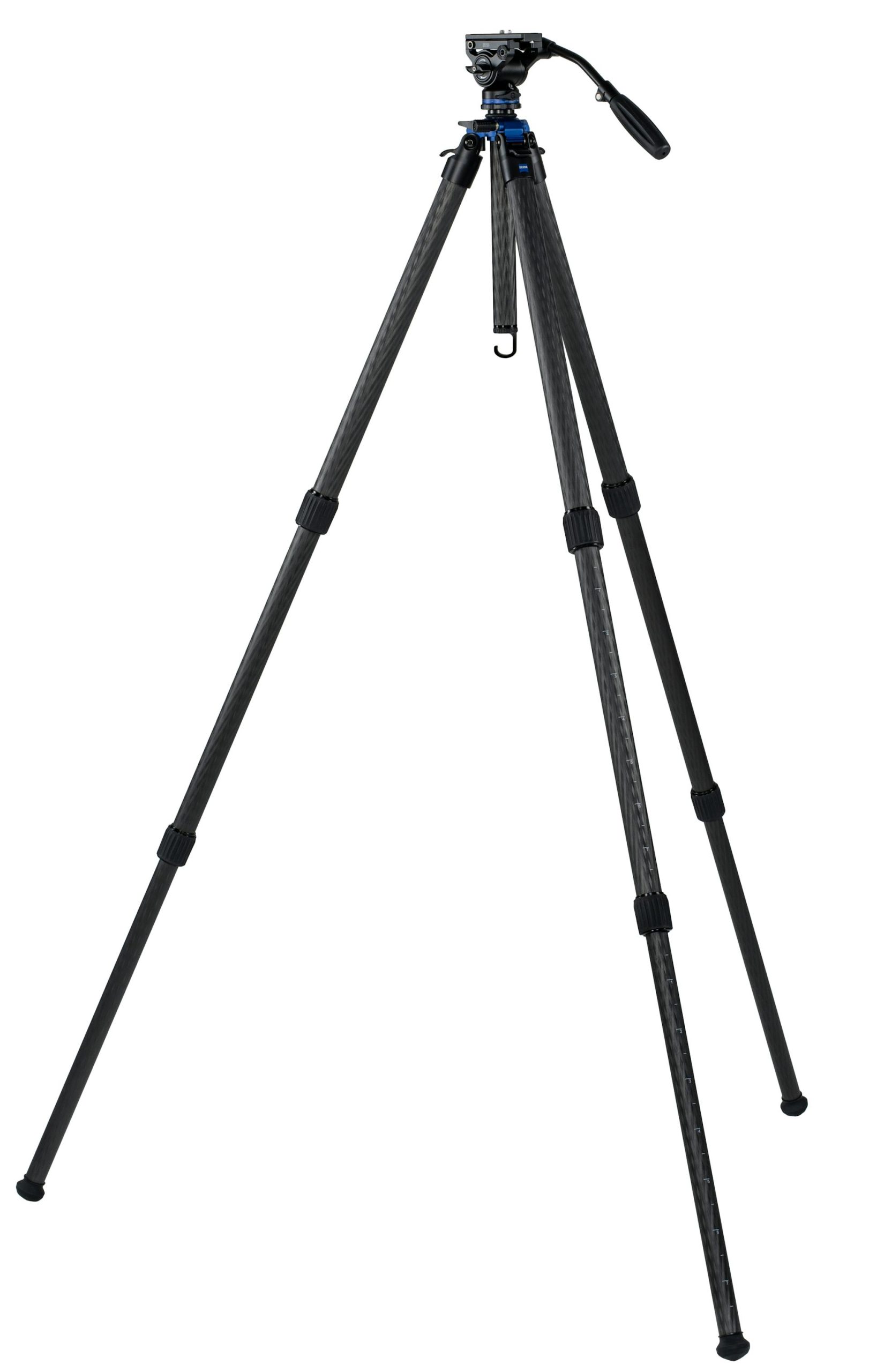
At one end of the spectrum are beefy tripods like the Zeiss Pro-Series Universal I use for long-range shooting. Carbon fiber keeps weight manageable, but it’s stable enough to support a precision rifle for shots out to 1,000 yards and beyond.
Want to keep things light? The Vortex Summit Carbon II from this article is an excellent choice for hunting or precision shooting that involves a lot of movement. It weighs 2.5 pounds and folds up to about the size of a Nalgene, thanks to four-piece legs.
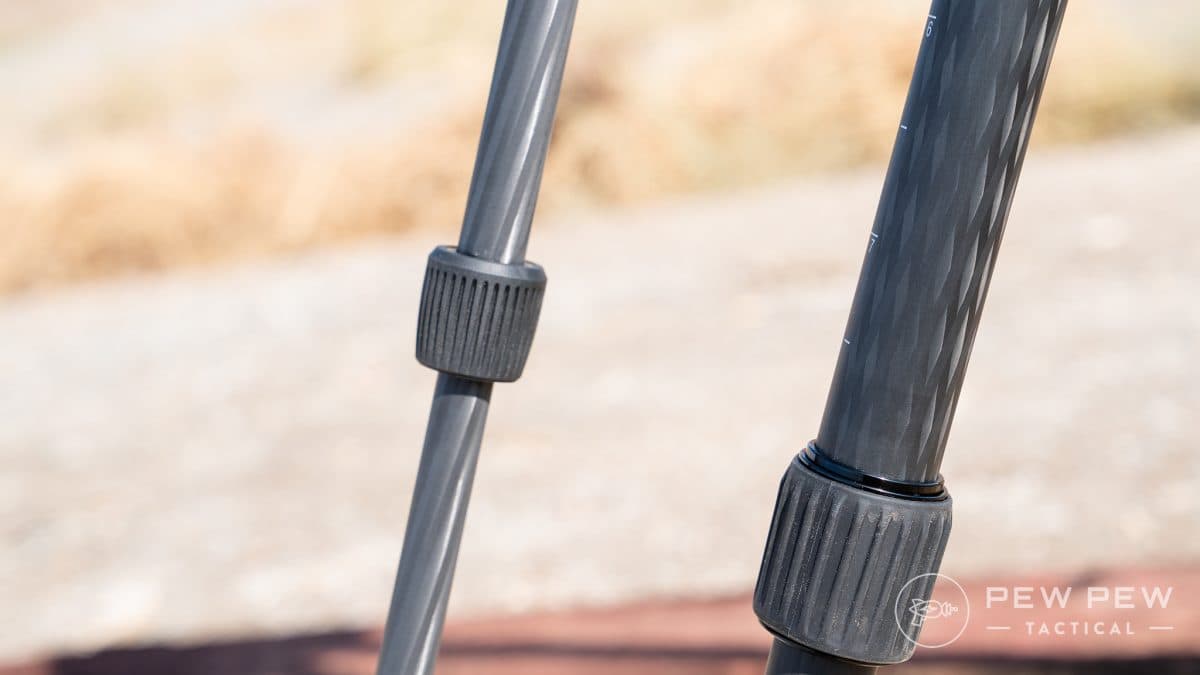
I own both and reach for them often. Your main job is to decide if you’ll primarily use your tripod for optics or rifles, then find your ideal balance of portability and stability.
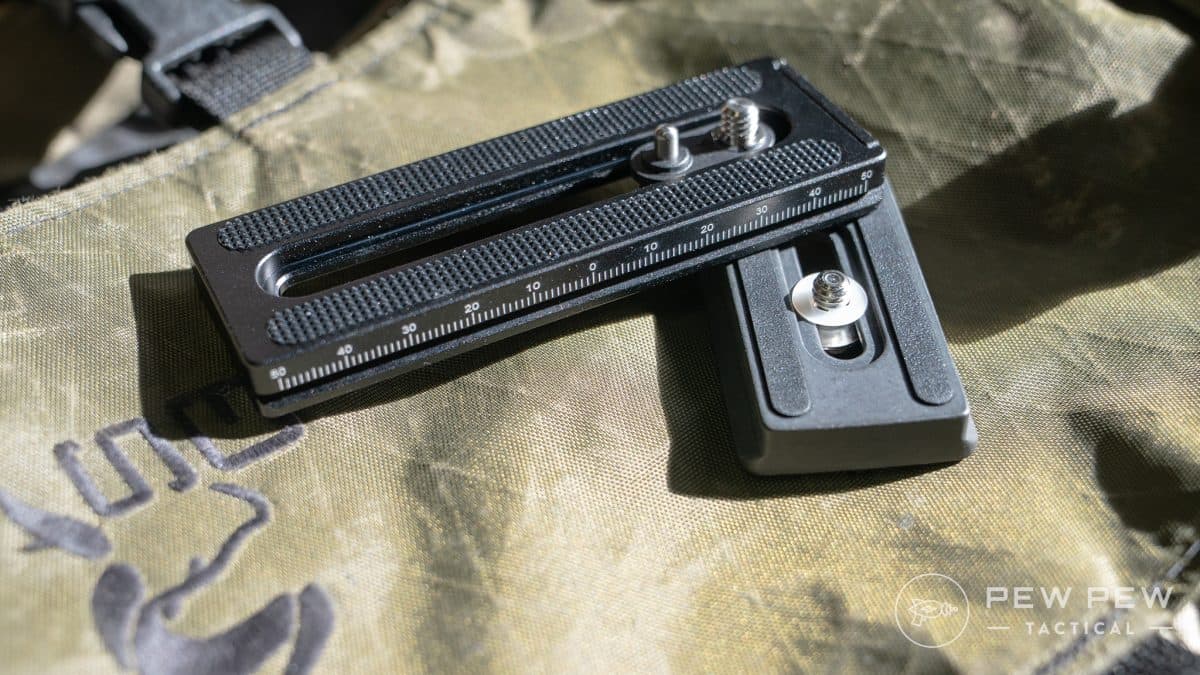
All of these spotting scopes have the ability to mount to a tripod with 1/4-20 threads. That’s a universal approach, but you will need to use an adapter with your tripod. Many are compatible with ARCA mounts. That’s great if you want to use one tripod head with your spotting scope and a compatible rifle.
Meet the Experts
Editing this article is Scott Murdock. Scott is a Marine Corps veteran who competed and qualified as a rifle and pistol expert while in service. In addition to shooting, Scott has written for a variety of publications, testing, researching, and evaluating guns and gear. He brings that knowledge and skillset to this article, editing and fact-checking for accuracy.
Editor-in-Chief Jacki Billings runs our experienced team of reviewers. She is a National Rifle Association Basic Pistol Instructor as well as a member of the Society of Professional Journalists, ACES: Society for Editing, and the Professional Outdoor Media Association. Jacki has a bachelor’s degree in journalism and has worked as a media professional for close to 20 years, specializing in gun media for almost 10 years. With 2,000+ articles to her name, she uses her professional journalism and editing experience to set testing protocols and editorial standards for Pew Pew Tactical.
Final Thoughts
Putting all these spotting scopes to use side by side was very informative. Seeing is believing, especially when it comes to aspects that are difficult to quantify.
Is premium glass worth the price? Do you need as much magnification as you thought? Only you can answer that, but now you’re off to a great start.
There’s enough variety on this list that you should be able to find something that works for you, no matter what your goals or budget look like.
What’s your favorite spotting scope for hunting or long-range shooting? Let us know in the comments. Need more help getting ready for opening day or your first match? Check out our guide to the Best Rangefinders!
Latest Updates
August 2025: Complete overhaul with new products and supporting content.