
Canik Rival S vs Walther PDP Match SF: Can $900 Beat $1,800 at the Range?
Does the budget-friendly Canik SFX Rival S stack up against the pricier Walther PDP Match SF? We took both to the range to find out.

Retired LEO. SWAT Commander. POST/NLEFIA/USCCA Instructor. Former FFL. Gun Writer 10+ years
We review products independently. When you buy through links on our site, we may earn a commission to help support our testing. Learn more.
Competitive shooting can seem daunting to start, particularly when you consider the expense involved. Is it possible to save a lot of money without losing that competitive edge?
In this legendary showdown, we’re comparing the outstanding Walther PDP Match SF with a relatively new challenger, the Canik SFX Rival S.
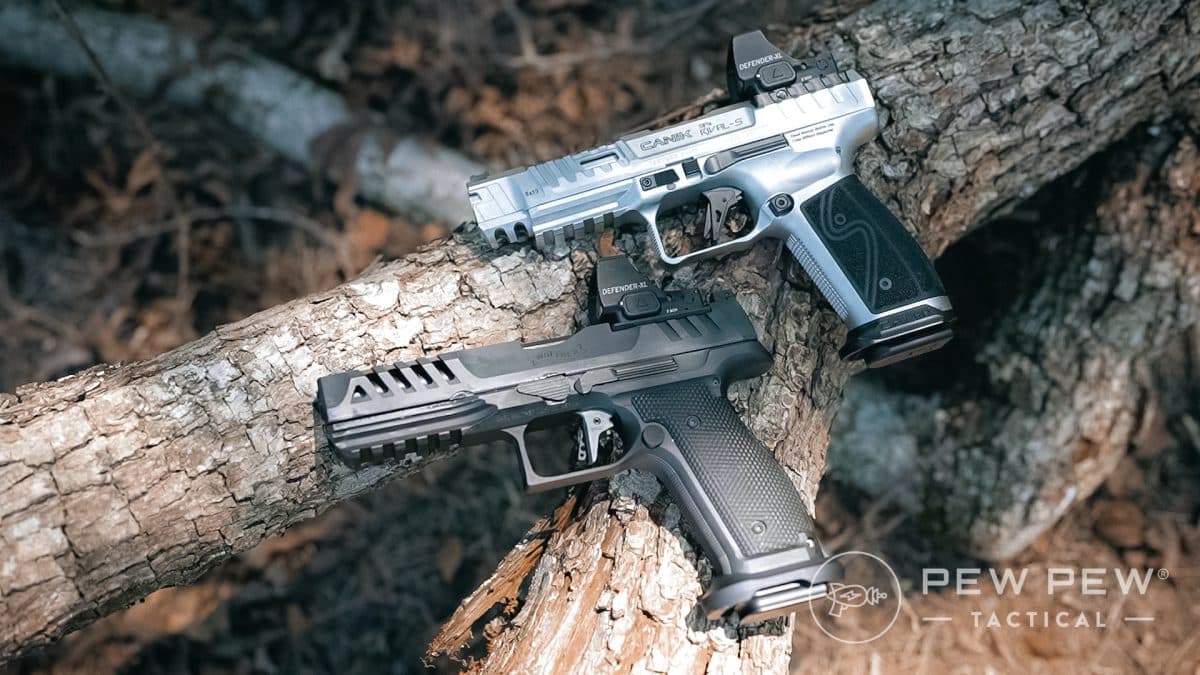
The goal here is not to see which is the better gun, but to learn if the Canik can be competitive with a pistol that costs $1,000 more.
Table of Contents
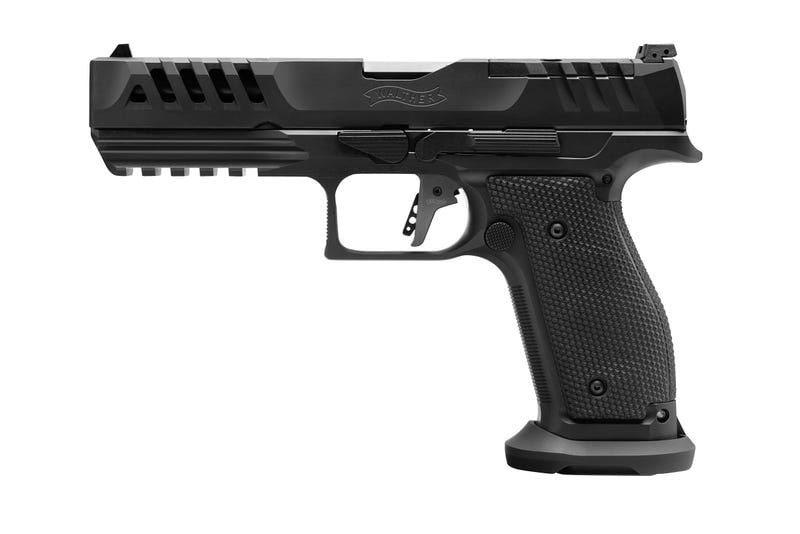
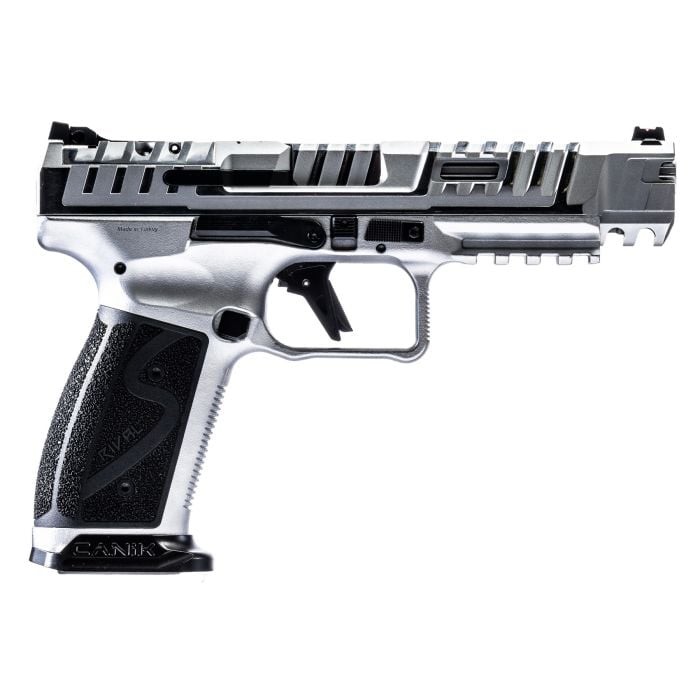
Walther PDP Match SF & Canik SFX Rival S Comparison Table
| Walther PDP Match SF | Canik SFX Rival S | |
|---|---|---|
| Caliber | 9mm | 9mm |
| Action | Semi-auto | Semi-auto |
| Capacity | 20+1 | 18+1 |
| Overall Length | 8.37" | 8.09" |
| BarrelLength | 5" | 5" |
| Height | 5.75" | 5.75" |
| Width | 1.4" | 1.41" |
| Weight | 41 oz. | 42.72 |
| Country of Origin | Germany/USA | Turkey |
| Comes with | Plastic case, three magazines, gun lock, owner’s manual | Water Resistant Tier 2 Travel Case, (2) 18 Round Magazines, (2) Aluminum Magazine Base Plates, Magazine Loader, External Mag-Well, Custom Holster, Canik Punch & Tool Kit, Cleaning Kit, (5) Optic Plates with the Dark Side (4) with the Chrome version, Additional Fiber Optic, (3) Grip Back Straps, (3) Magazine Release Extensions, Gun Lock & Manual |
Shooting the Walther PDP Match SF & Canik SFX Rival S
Relying heavily on Preston’s competitive shooting experience, we set up courses of fire to be shot with each gun. We used a Shooter’s Global timer to keep track of the seconds and divided this by hits to establish hit factors.
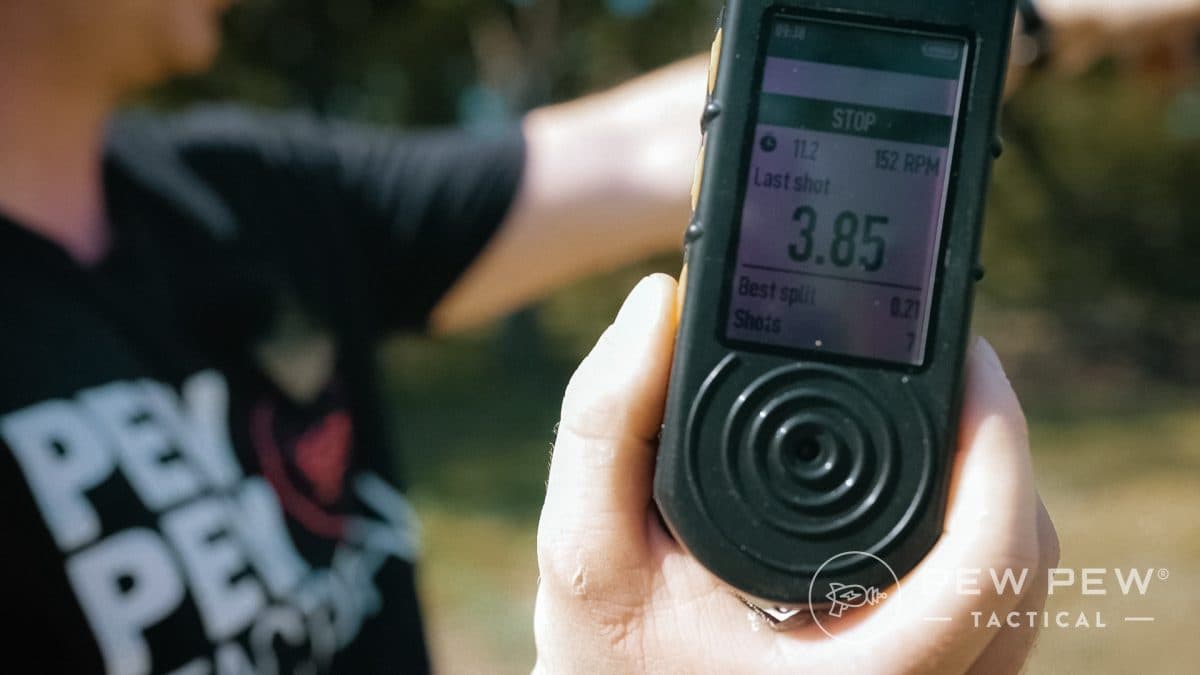
Both shooters shot both guns on all three courses of fire. In addition, we alternated which guns we started with so there wasn’t a “warmed up” bonus.
The first course of fire was an Accelerator Drill designed to present a close target at 5 yards, a slightly further target at 10 yards, and end with a far target at 15. The first two were IDPA-style cardboard silhouettes, and the last target was a small steel plate.
The idea is to see how quickly a shooter can progress through increasingly difficult targets due to distance alone or distance and size. The first target is pretty easy, but if you keep the same speed, you’re liable to miss.
My score on the Accelerator Drill with the PDP was a hit factor of 4.9, but I shot the same course with the Rival at 4.8. Notably, this was my first drill with the gu,n and I put one in the dirt on my first shot because the trigger is so light.
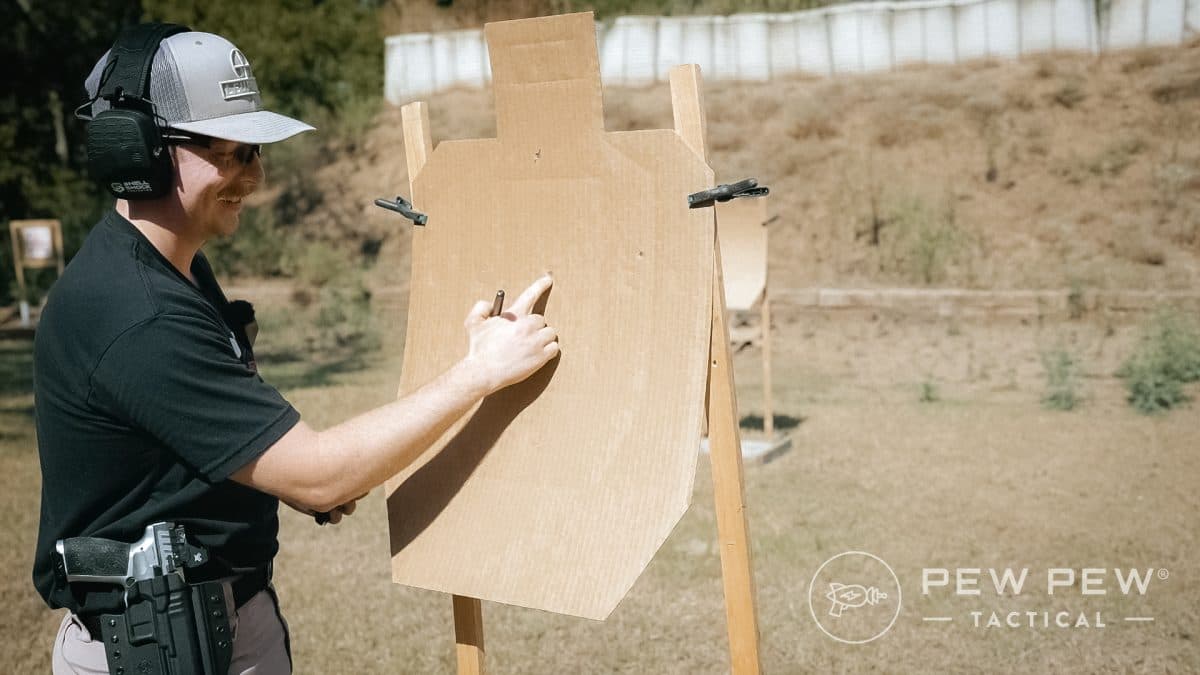
Preston shot a 7.27 hit factor with the PDP, and an 8.7 with the Rival. We then set up the Hostage Drill.
This was a series of four IDPA targets in a row at the same distance, though the two in the middle had hostages, or “no hit” targets stapled in front. Each target got two hits, and then the shooter conducted a mag exchange in the middle, before shooting all four targets again.
The drill is designed to test speed and accuracy, as well as some manipulation via the mag exchange. The first and last targets are pretty easy at a distance of 10 yards, but you need to be more careful with the hostage targets.
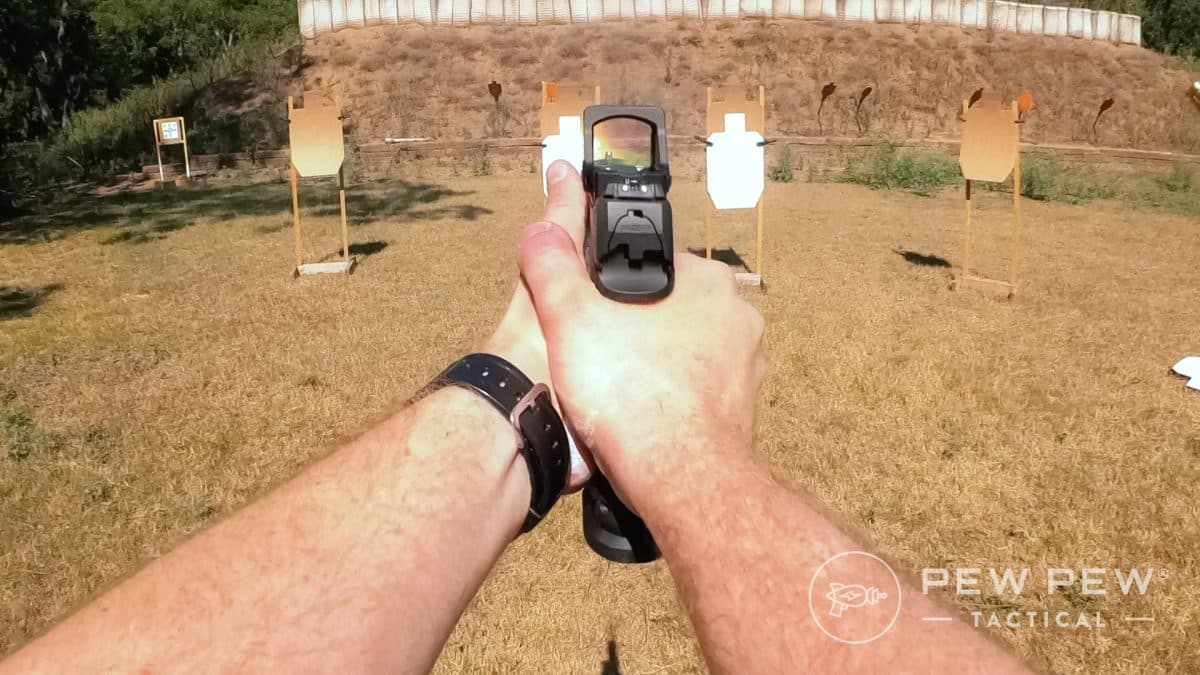
I shot a 3.41 hit factor with the PDP and a 3.79 with the Rival. Preston shot a 5.32 hit factor with the PDP and a 5.71 with the Rival.
In my first run, I grazed a hostage target, so I intentionally repeated the error in the second run to keep the comparison fair. Notably, Preston and I both performed better with the Rival.
The last drill was somewhat a form of torture because it was shot left-handed. We fired at a single target from 10 yards with three different grips, firing three shots with each grip.
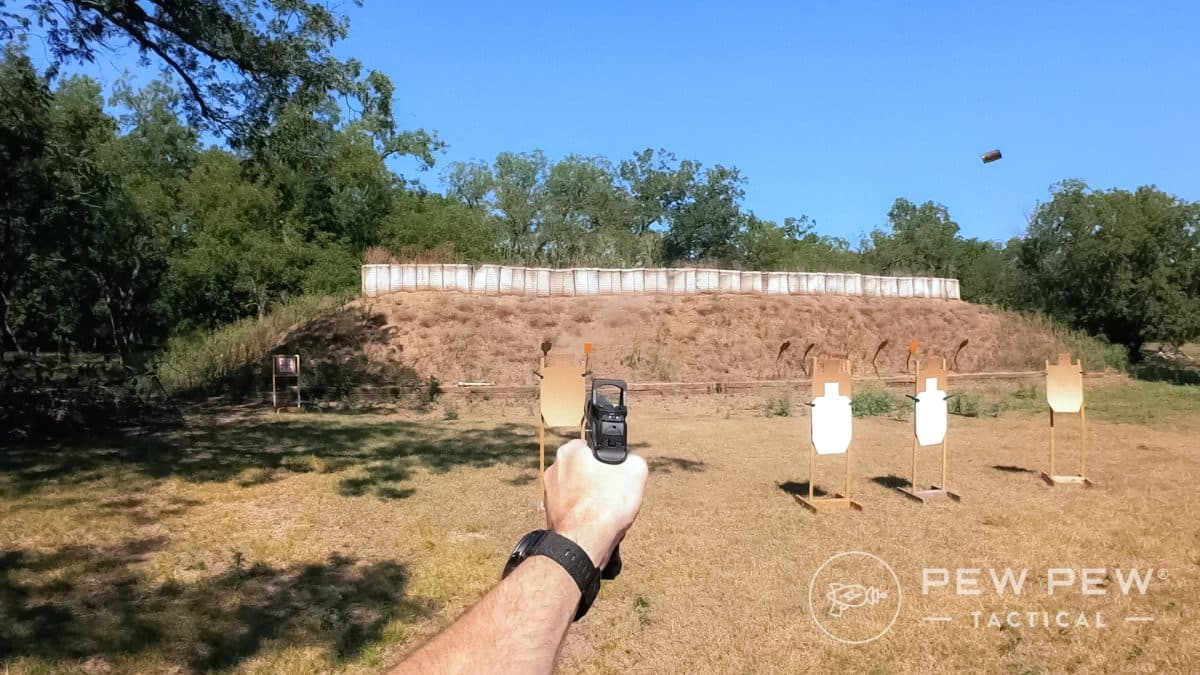
First, we began with both hands before transitioning to strong hand only. We finished the drill by switching to support hand only.
With the PDP, I scored a 3.36 hit factor and a 3.97 with the Rival. Preston scored a 3.96 hit factor with the PDP and a 3.24 with the Rival.
Preston averaged the total scores to provide more data on performance. I had a 3.89 hit factor with the PDP and a 4.2 with the Rival — roughly 8% better.
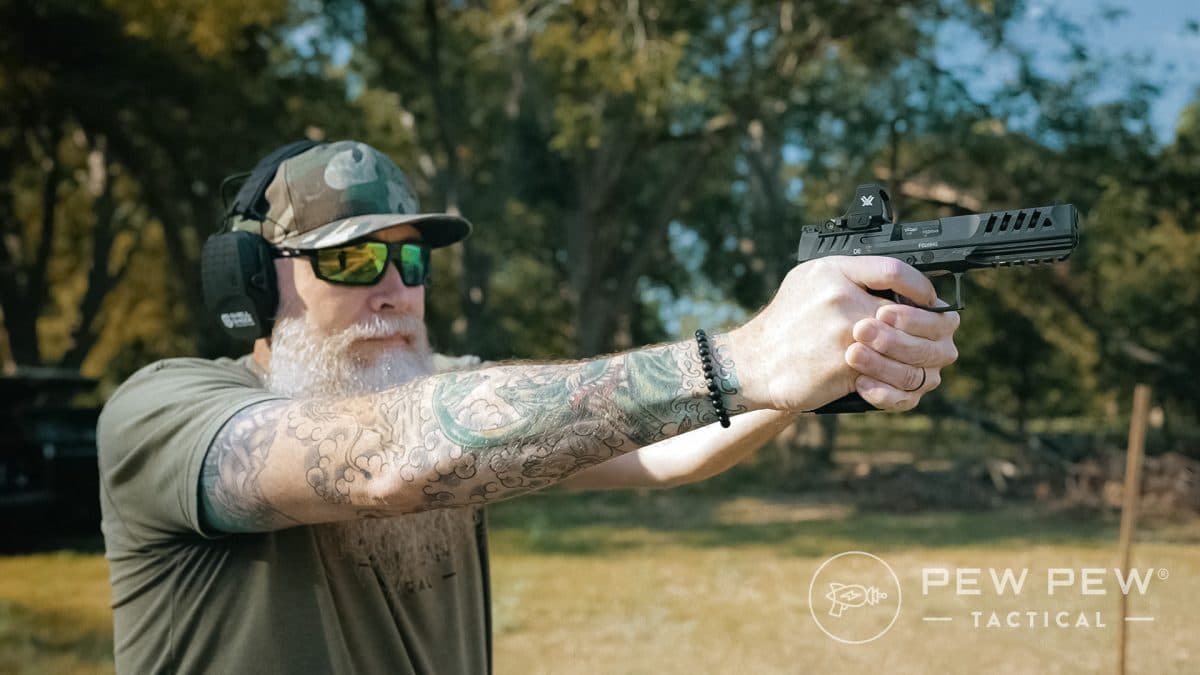
Meanwhile, Preston shot a 5.51 hit factor with the PDP and a 5.88 with the Rival — 7% better.
In the end, we both performed better with the Canik Rival SFX S.
What do you think of the Canik Rival SFX S? Rate it below!
Readers’ Ratings
5.00/5 (253 Votes)Your Rating
Accuracy
Using a Ransom Rest, Preston shot two 10-shot groups from each gun, from a distance of 7 yards.

One group was shot with AAC 115gr FMJ and the other with Nosler 124gr ASP JHP. All four groups were impressive, hovering around 1 inch.
In fact, the groups were so close that they were indistinguishable when selecting the winner. As a result, this category ended in a draw.
Reliability
From the outset, we had reasonable indications that the PDP and Rival would be reliable. So imagine our surprise when both malfunctioned...
While running drills, I experienced a double feed with the Walther PDP.
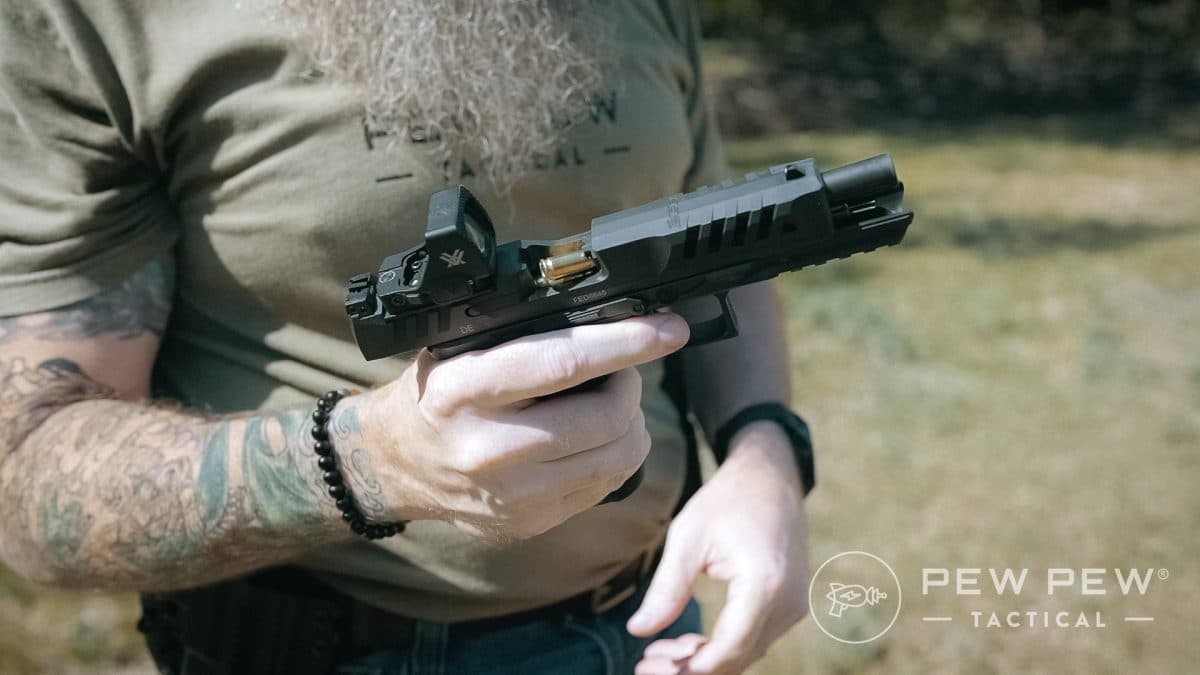
As I manipulated the firearm to solve the issue, I noted it was dry. After inspecting, I confirmed it was dry and applied some lubrication. We had zero issues with the firearm afterward, so the malfunction falls into the operator-induced category.
Preston had one failure to feed with the Canik Rival but realized he hadn’t fully seated the magazine during a drill, classifying this malfunction as operator-induced.
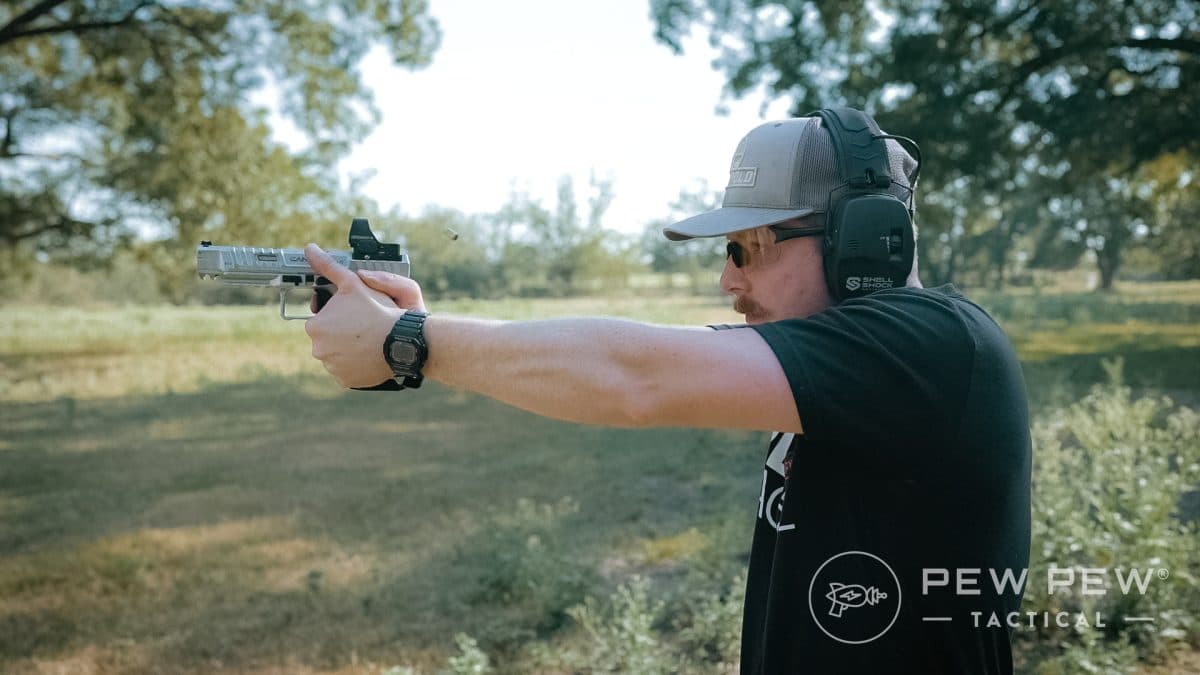
Preston has previously reviewed the polymer Canik SFX Rival and rated it a perfect 5/5 for reliability.
Meanwhile, I reviewed the Walther PDP Match previously and found it reliable during my initial testing. Fellow PPT editor Scott Murdock tested the steel and polymer versions of the PDP Match and scored their reliability a perfect 5/5.
Between our collective experiences reviewing and testing both guns, and through honest assessment of our issues, we believe both guns to be very reliable.
As a result, this category is a tie between the Canik Raval SFX S and Walther PDP Match SF.
Ergonomics: Fit & Feel
When Walther released the PDP in 2021, the company set out to highlight ergonomics. You can feel the PDP fill your hand when you pick one up.
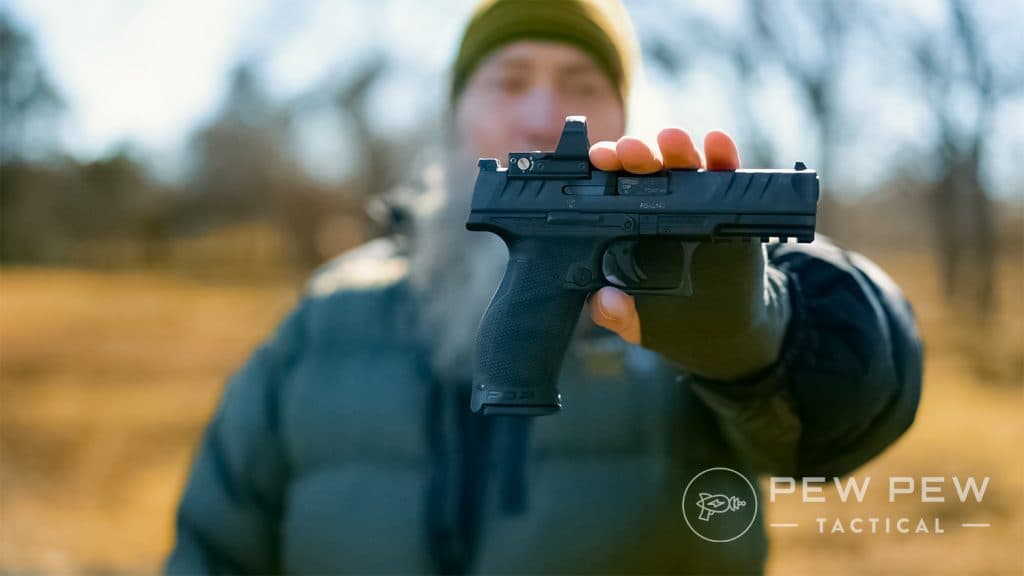
The PDP Match SF continues this fine tradition while adding more weight due to the all-steel construction. Curves abound, and the only truly flat surface is the front strap.
In addition, the controls are large and easy to reach. An extended beavertail covers the web of the hand while providing additional stability for recoil.
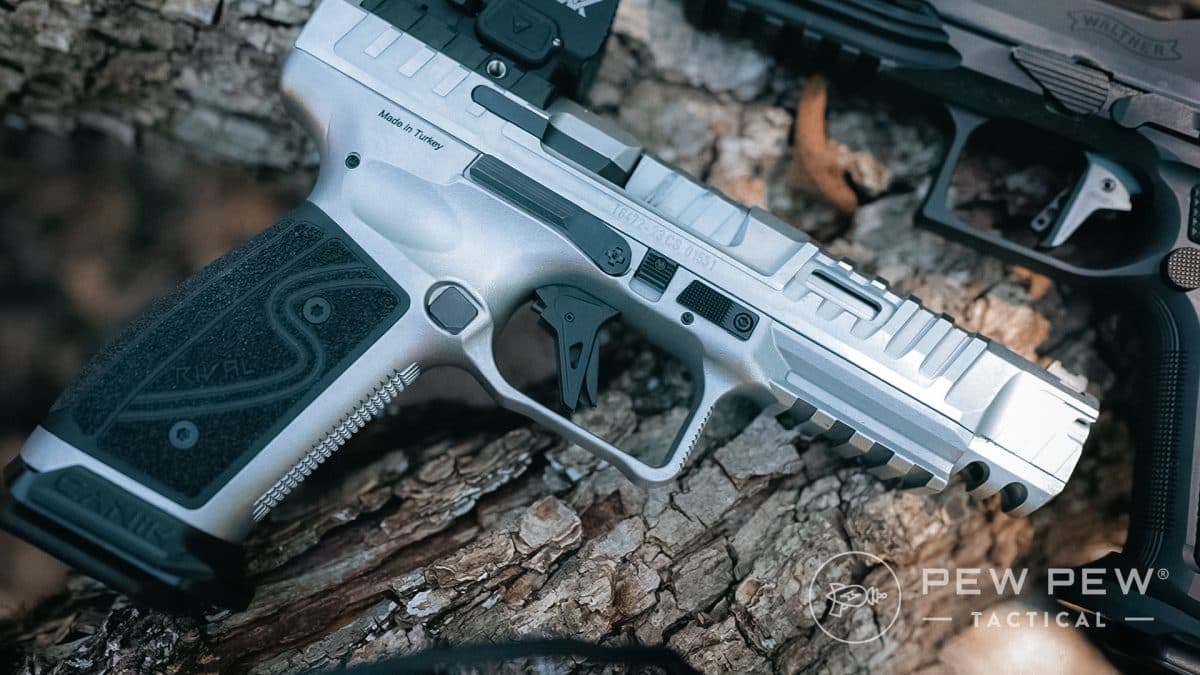
The Rival's ergonomics are very good. Its wrap-around grip texture feels akin to sandpaper. The grip itself has a nice curve on the backstrap but is largely flat on the sides.
Controls are also well placed and easy to reach. The magazine release sticks out further and is easier to activate than the PDP, but the beavertail is somewhat smaller.
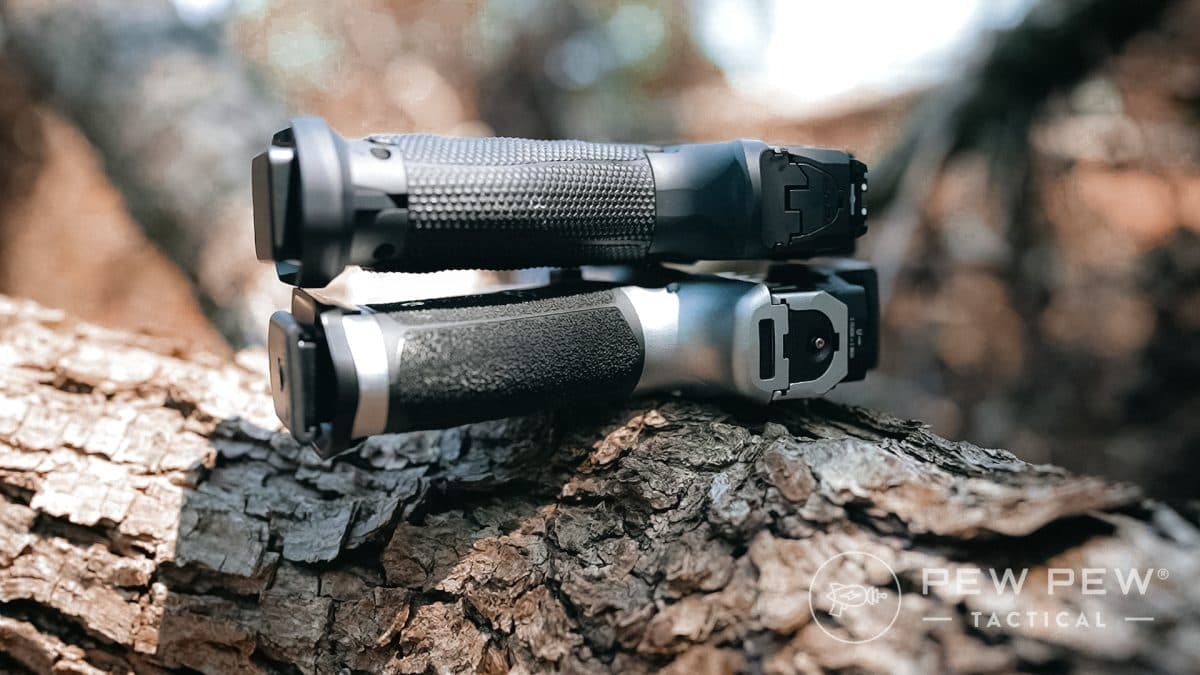
Ergonomics on both guns are excellent, but the PDP is better and takes this category.
Trigger
We dedicated a category to triggers because, in many respects, they are one of the most critical components of a competitive handgun.
Anyone who has been shooting for a while tends to develop personal preferences in how a trigger performs.
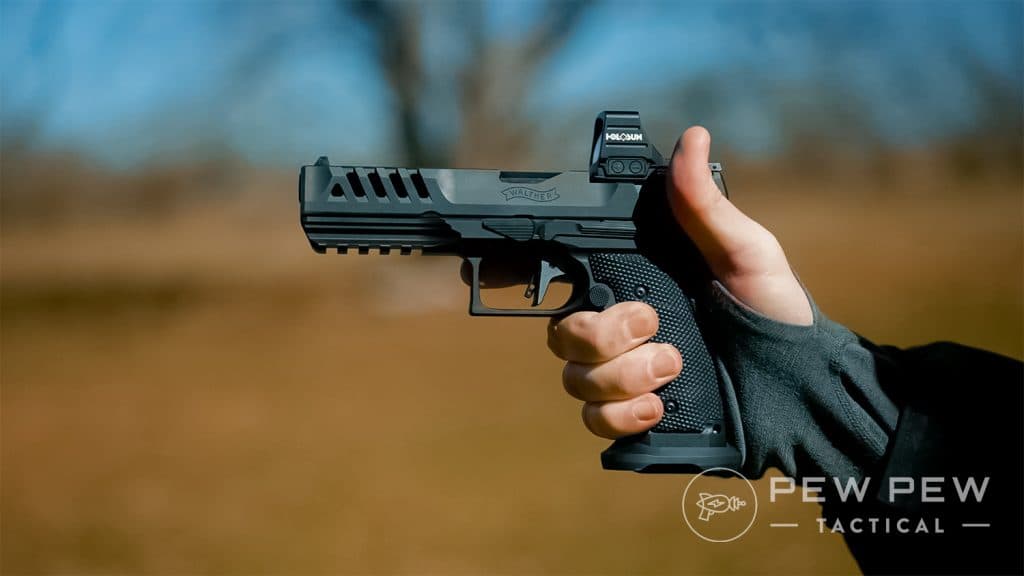
The PDP and the Rival have outstanding aluminum trigger shoes with flat surfaces. The PDP sports a narrow safety device similar to a Glock, while the Rival has a much wider one.
The PDP has a short take-up before hitting a defined wall, while the Rival’s is slightly longer. Both triggers break cleanly and have comparable, short trigger resets. For my tastes, the Rival’s trigger is on the light side, though they were pretty close.
Using a Lyman Digital gauge, I found the Rival averaged 2 lbs. 12.7 oz., while the PDP averaged 3 lbs. 1.2 oz.
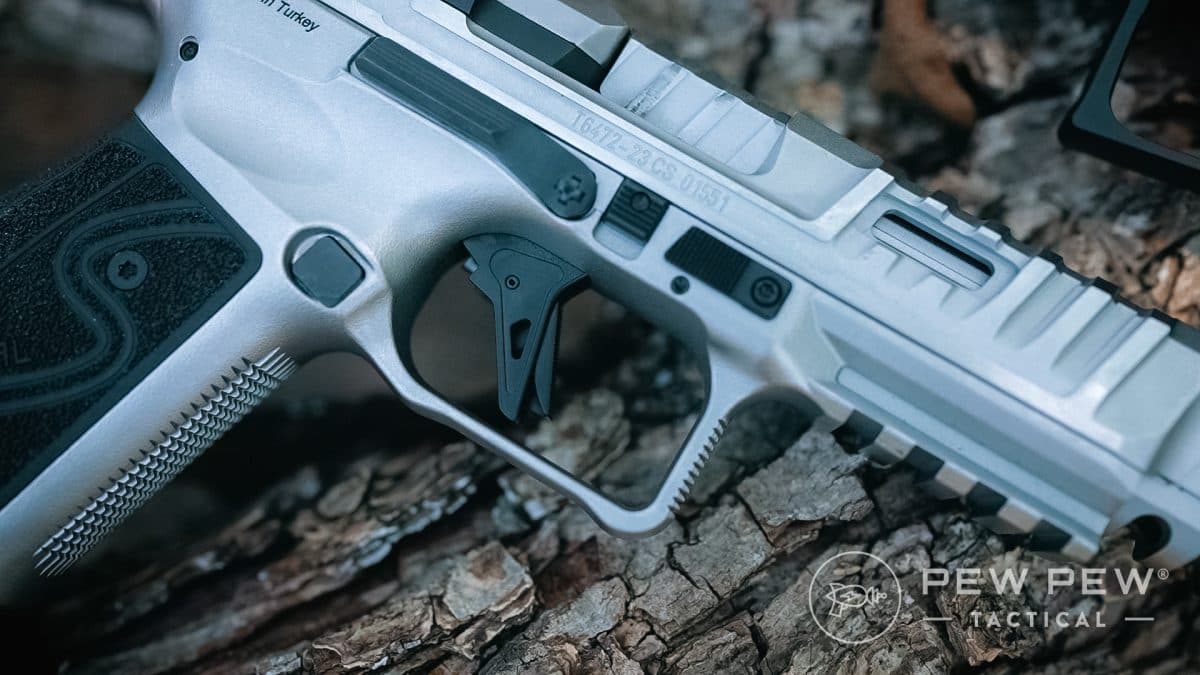
The difference is minimal, but when I first started shooting the Rival in a drill, I was prepping the trigger during presentation and actually fired a shot. With practice, you get used to it, so it comes down to preference.
The triggers were similar in characteristics and performance, so we called this category a draw.
What Sets the Canik & Walther Apart: Value
One of the things I’ve appreciated about Canik is the sheer value you get when you purchase a firearm.
I’m not aware of any other company that provides as much support in the way of accessories right out of the box.
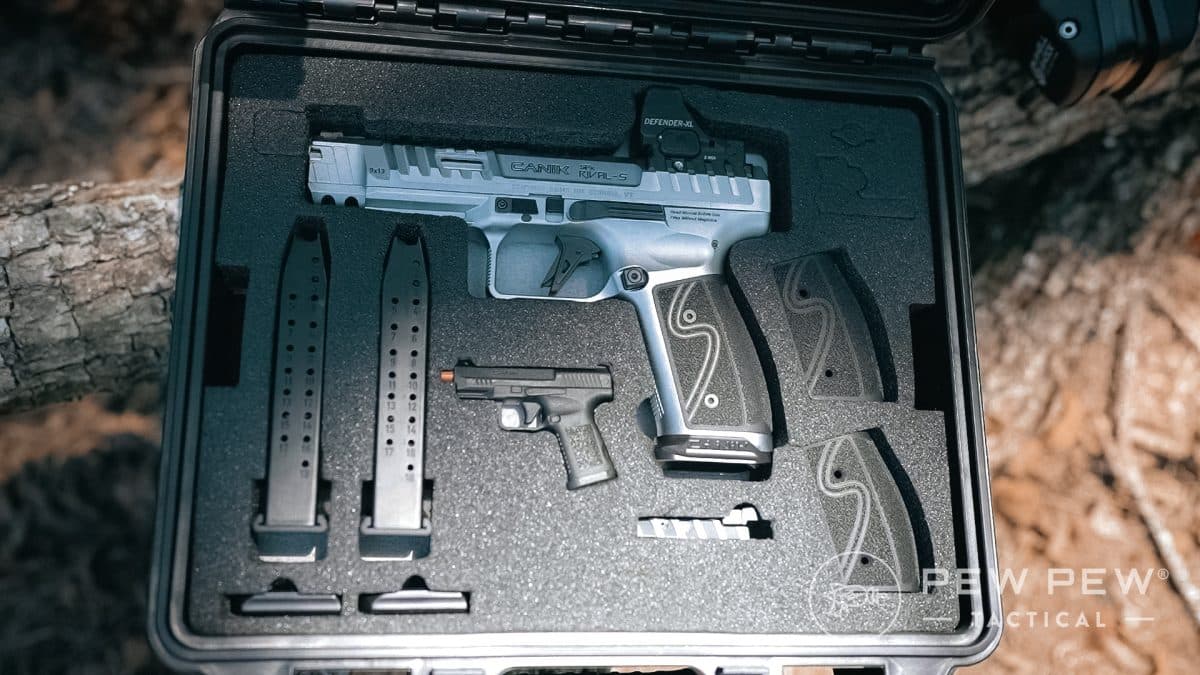
While the PDP Match SF is an impressive firearm, your rather expensive purchase entitles you to the gun and three magazines — that’s about it. You get one optic plate from Walther, but you have to send off for that.
Crack the box on the SFX Rival S, and you can be shooting in no time. Canik includes optic plates, magazines, a loader, a magwell, a cleaning kit, tools, and a holster.
That’s not everything, but it’s enough to get most people range-ready.
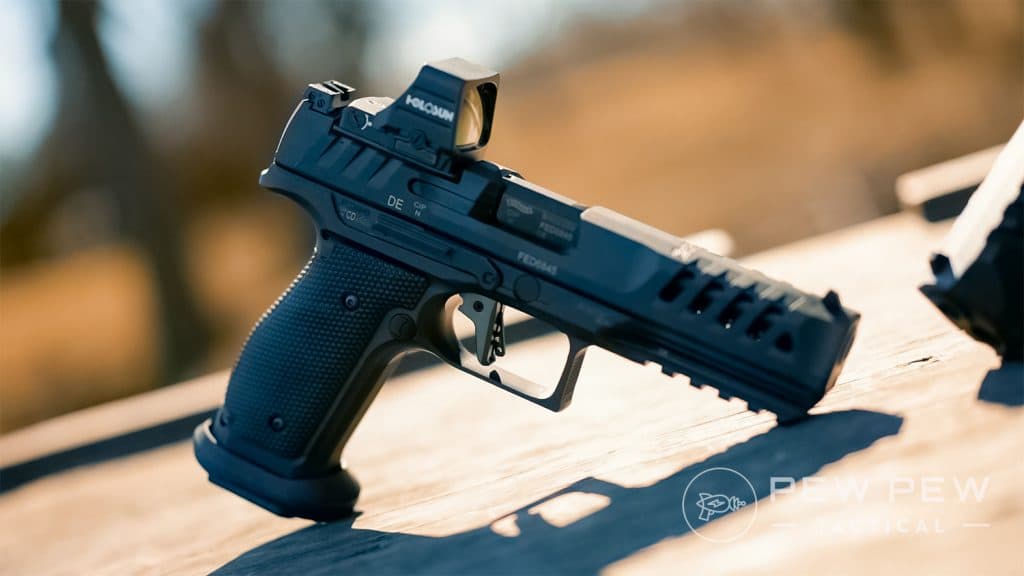
Finally, we come to the crux of the matter...price.
The PDP Match SF is priced around $1,800, while the SFX Rival S costs around $900.
It's easy to see why the SFX Rival S takes this category when you weigh the performance, value with all the accessories, and price.
Meet the Experts
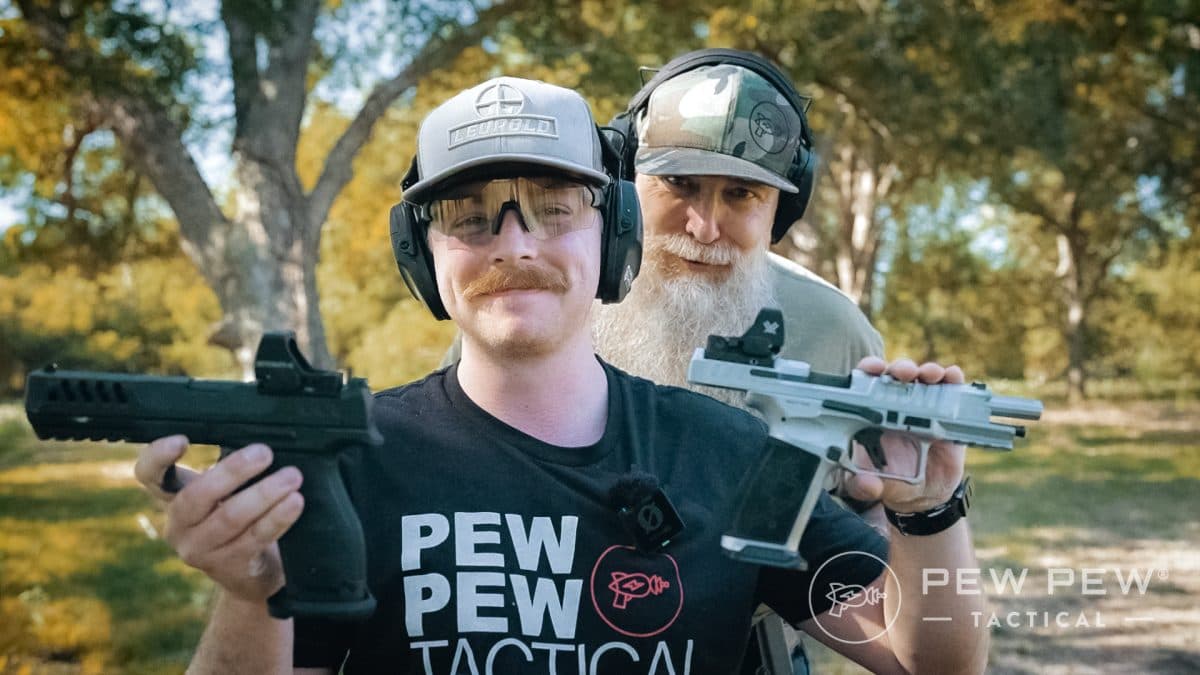
For this comparison, we used the expertise of our resident competitive shooter Preston.
Preston began to take shooting and training seriously after a near-deadly force encounter in 2016, where having his handgun saved his and another person’s life. Since then, Preston has jumped headfirst into the training and competition shooting world. He is passionate about bridging the gap between competitive and defensive firearms training with the goal of improving the skills of the average gun owner and concealed carrier.
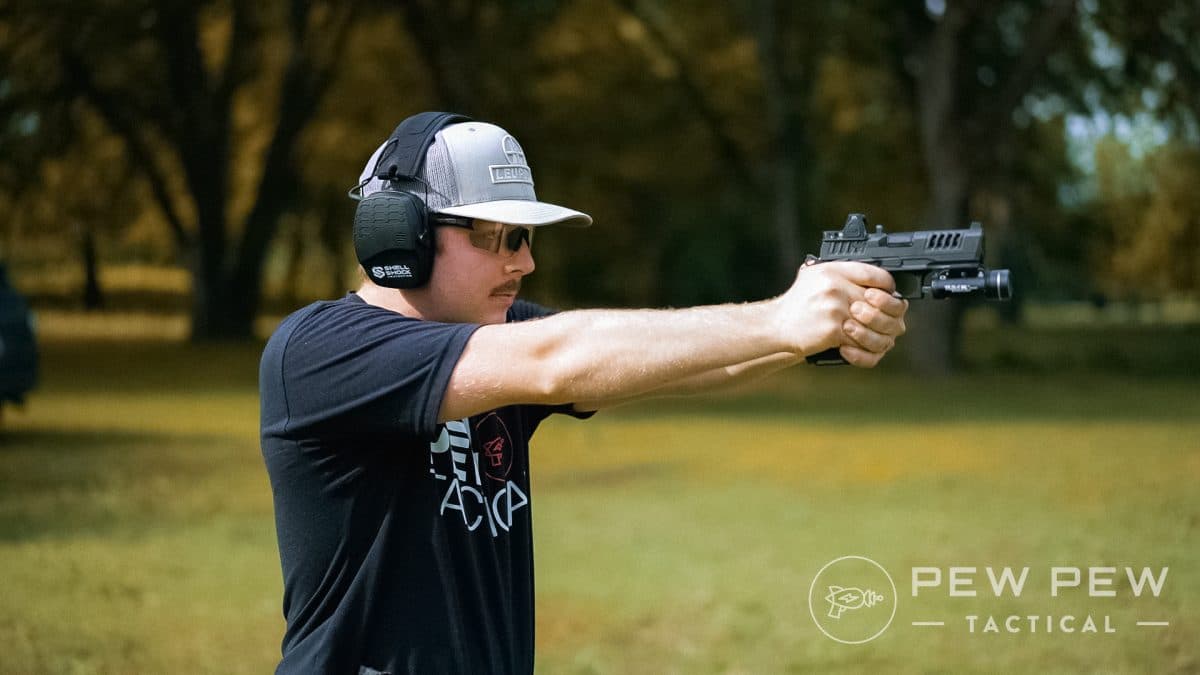
Preston was joined by Pew Pew Tactical Content Producer and resident video reviewer Sean Curtis. Sean doesn’t shoot competitively but has experience in tactical and instruction. He spent over two decades in law enforcement, becoming a POST-certified handgun instructor and NLEFIA Red Dot Instructor and receiving CLEFIA Advanced Firearms Instructor Training and AR-15 armorer training. He has since attended a variety of training, including Tactical Performance Center Handgun Mastery & Carbine Mastery, and earned USCCA rifle instructor certification.
Final Verdict
We gave both these guns a fair and balanced run to see if we could answer a simple question. Can the Canik SFX Rival S hold its own against the Walther PDP Match SF?
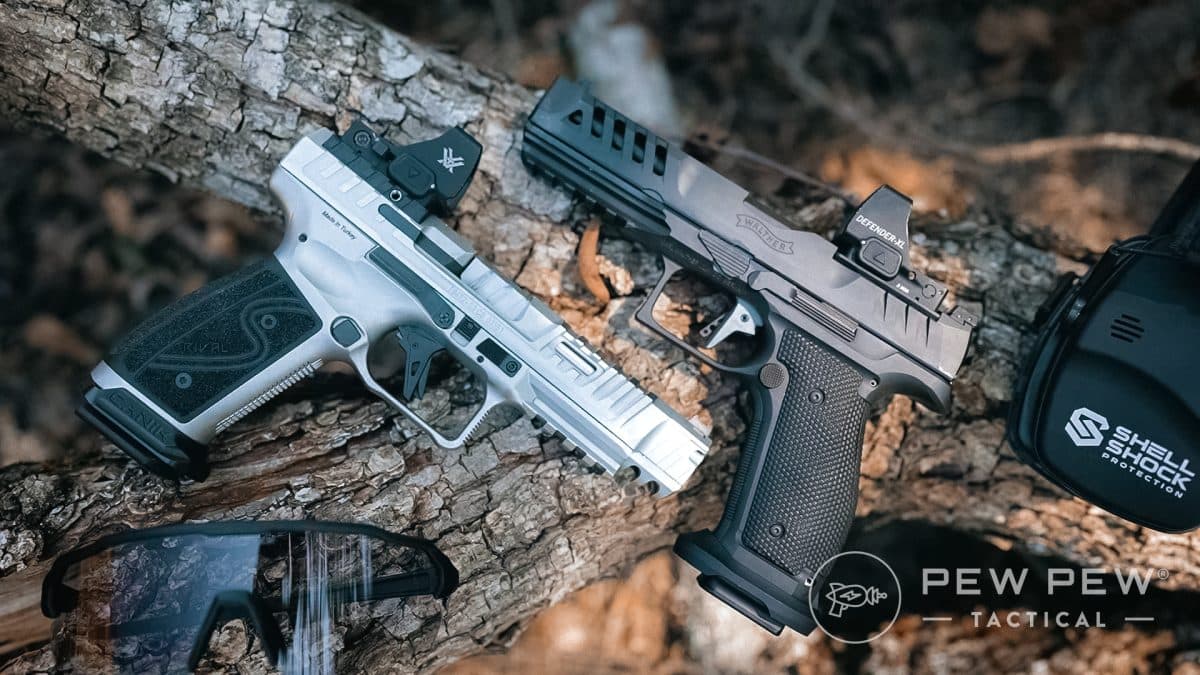
The PDP won the ergonomics category, but accuracy, reliability, and trigger were a draw. The Rival took performance and value, which answers our question plainly.
Even though the Rival is nearly $1,000 less, it is very competitive with the PDP. It would make a great starter gun for anyone considering competitive shooting.
Do you think the Canik is the best bang for the buck, or does the Walther PDP Match take the cake? Let us know which you would buy in the comments below. Interested in other steel-frame pistols? We have a full list of recommendations in the Best Metal Framed Semi-Auto Pistols.