
Getting Started with IDPA Competition
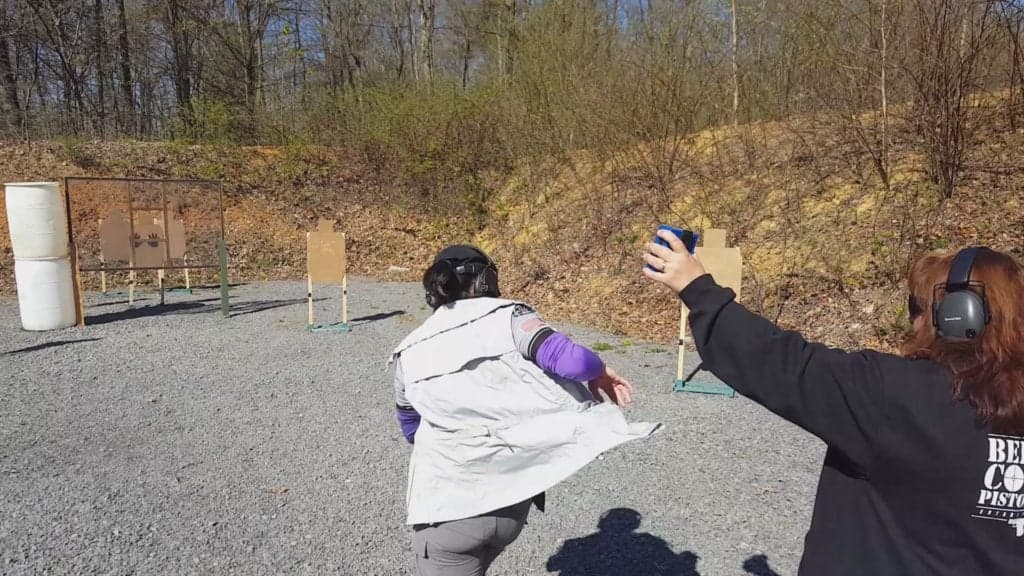
IDPA offers a fun, practical way to practice shooting in defensive situations, win prizes, and make new friends. Read on to find out how to get started.
Attorney. Firearms instructor. IDPA/USPSA/3-Gun Competitor. Author of "Dry Fire Primer"
We review products independently. When you buy through links on our site, we may earn a commission to help support our testing. Learn more.
IDPA, the International Defensive Pistol Association, is a popular action pistol sport that features run-and-gun scenarios with a greater focus on self-defense skills.
While USPSA has become the most popular organization for competitive shooting, IDPA is still a great place for new competitive shooters to start because it doesn't require complicated or expensive equipment.
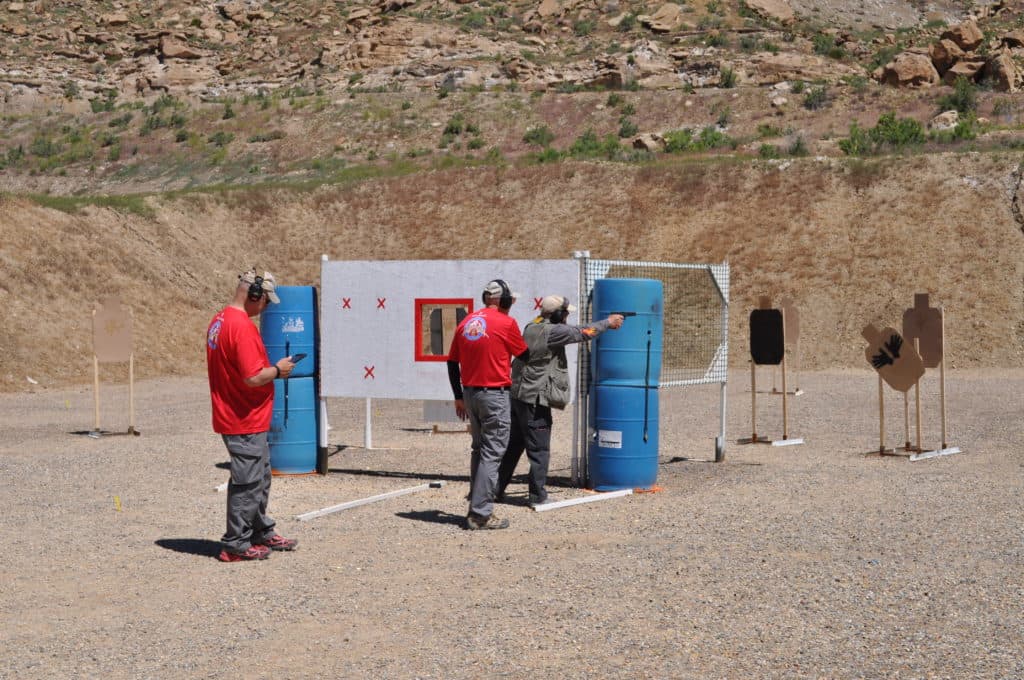
In this guide, I'll walk you through everything you need to know to start competing in IDPA, including the required gear, how matches work, and how to find local competitions.
Are you ready to start shooting competitively? Yes? Let's get you started!
Table of Contents
Finding A Match
The first thing you'll need to do is to find an IDPA match to shoot. Fortunately, with over 300 clubs across the United States and over 100 more around the world, you can likely find one within travel distance.
The IDPA website includes a search tool for clubs, as well as a way to search for individual matches posted by the clubs.
All officially affiliated IDPA clubs are on the IDPA website, but not all of their matches.
You might instead need to email the individual club contacts or ask around locally at your local gun shop, in regional forums, or on Facebook groups. Googling IDPA and the name of your nearest big city can help too.
When getting information about an upcoming match to try, make sure you also find out details like:
- Do you need to sign up in advance, or can you just show up?
- What time does the setup start, and when does the match begin?
- What is the match fee?
- Is there a new shooter orientation, and when is it?
- Is there anything special you need to know before you show up? For example, how does the club deal with people who have loaded carry guns with them?
Should I become A Member First?
Membership in IDPA is not required to shoot your first few matches, but the rules ask that you join if you want to stay in the sport after your third match.
However, there are many benefits you can get for the $60 cost of an annual membership, so you might want to join sooner rather than later.
One of the primary advantages of IDPA membership is the ability to be officially classified.
These classifications help you track your progress over time and allow you to compare your performance against other people who are at roughly the same level as you are.
You also need a membership and a classification in order to compete in sanctioned matches. These are larger matches than the regular matches held by most local clubs, and can include people from all over the world who come just to compete.
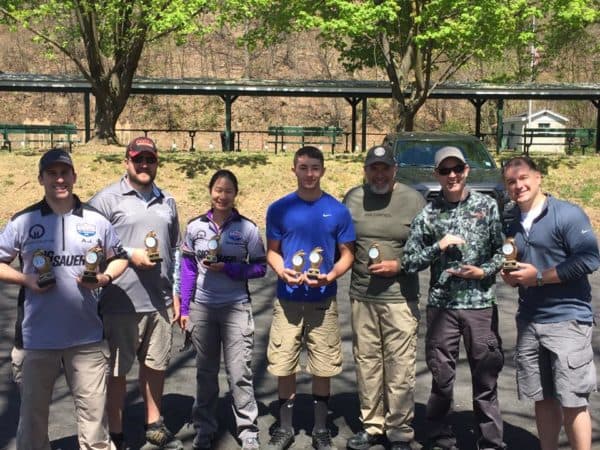
The great way to get to know more shooters and see how your shooting stacks up against more than just your friends.
Finally, IDPA membership means that your scores are collected in one place for you to keep track of – in your member profile on the IDPA website.
What Gear Do I Need?
First is safety...and you'll want quality eye and ear protection.
Every IDPA match mandates both, and electronic earmuffs are strongly preferred since you need to hear commands and the buzzer clearly. Our ShellShock EXO PRO was built with exactly this in mind...it amplifies ambient sound while cutting shot noise in 0.005 seconds, so you'll hear the start signal and your RO without issue.
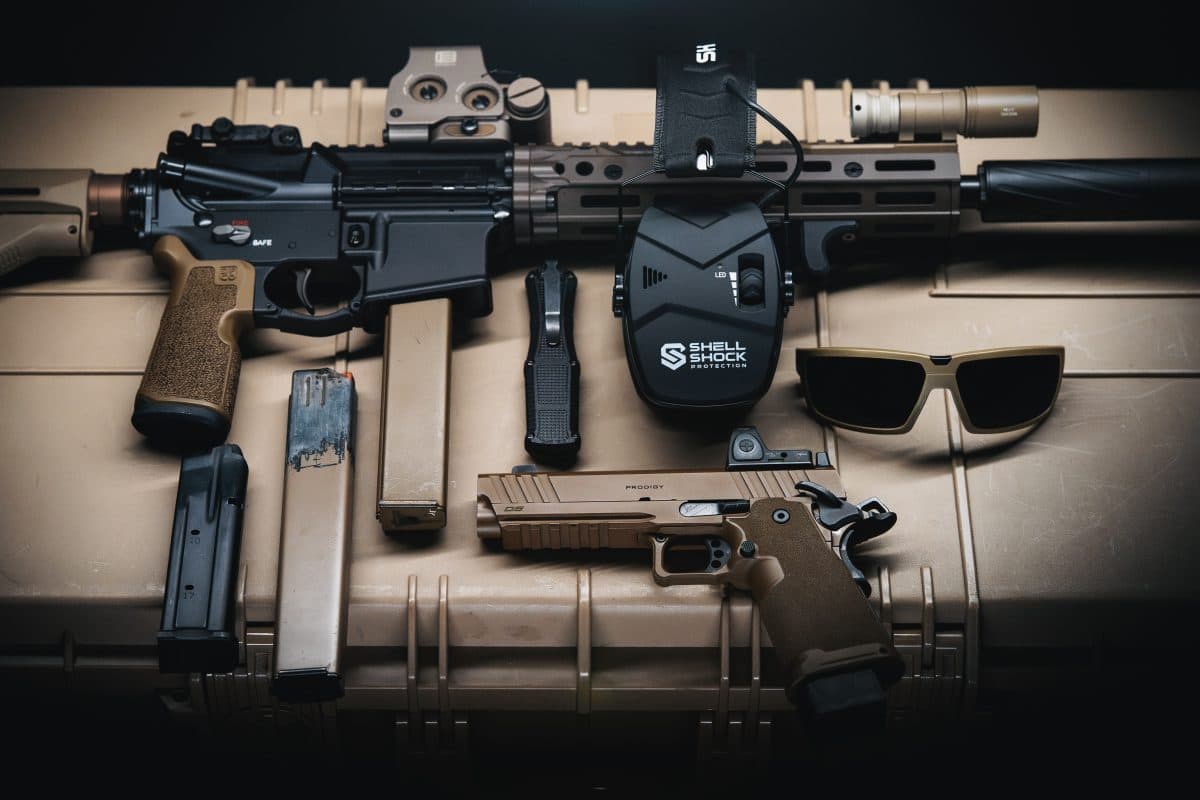
Pair it with the Eclipse ballistic glasses for full ANSI Z87.1+ compliant eye protection that changes from clear to smoke in UV light...so you're ready for any situation.
The next most obvious requirement here is the need for a gun.
Different shooting divisions require different guns. But the good news is may already own one that is suitable for shooting a match.
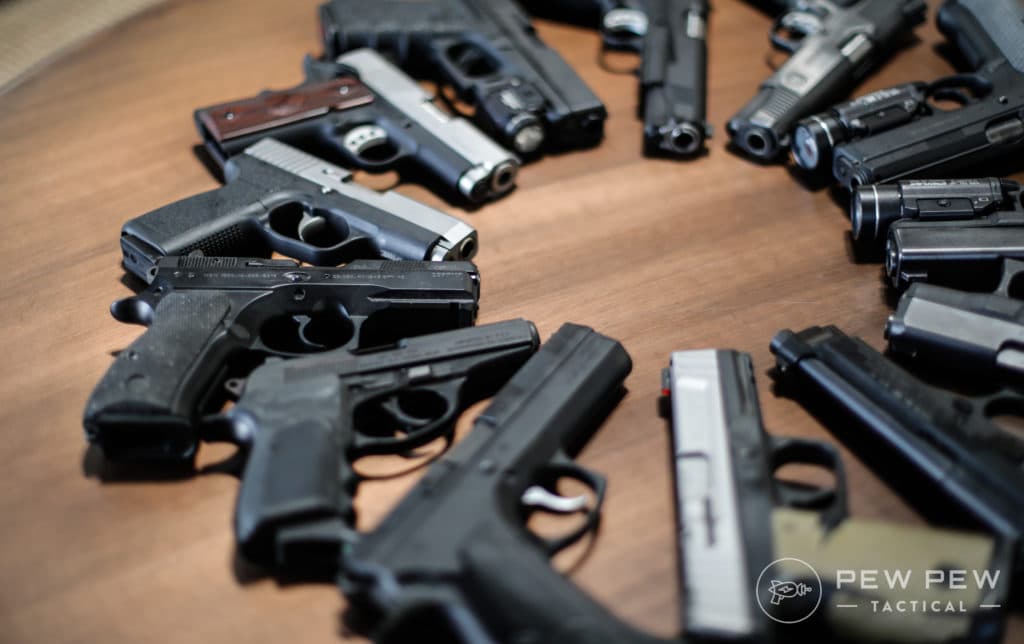
Don’t you think your gun might not be “competitive” – there are divisions for all sorts of equipment, and you only compete against those who have guns that are roughly similar to yours.
Your gun will need to be carried in a holster attached to a belt, at or just behind the shooter’s strong (dominant) side, or in the appendix carry position. Holsters can be inside or outside the waistband.
You will also need three to five magazines for semi-auto pistols, or three to five speedloaders or moonclips for revolvers.
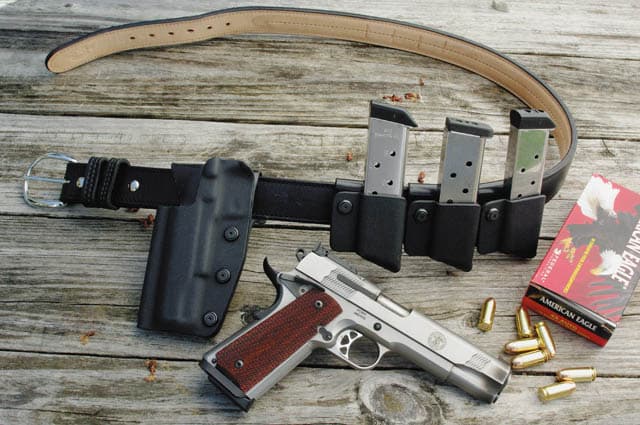
The last necessary piece of IDPA equipment is a concealment garment to cover your gun while you carry it. A concealment garment can be as simple as your shirt pulled down over an inside-the-waistband holster, or a light jacket or vest tossed over an outside-the-waistband holster.
At some clubs, first-time shooters are not required to use a concealment garment at all, but you should bring one just in case.
As you might imagine, the equipment rules get much more detailed, and you should read the rulebook and ask questions as you get more involved in IDPA.
Shooting Divisions
Whether you have a small carry pistol, a revolver, a service handgun, or something else, you’ll certainly fit into one of the following divisions:
Stock Service Pistol (SSP)
Stock Service Pistol (SSP) guns are production semi-automatic pistols that are either double/single action, double action only, or striker-fired and shoot 9mm or larger calibers.
SSP is the home of most of the common full-size handguns you can buy today, such as the Glock 17, Smith & Wesson M&P 2.0, the Walther PDP, and similar pistols.
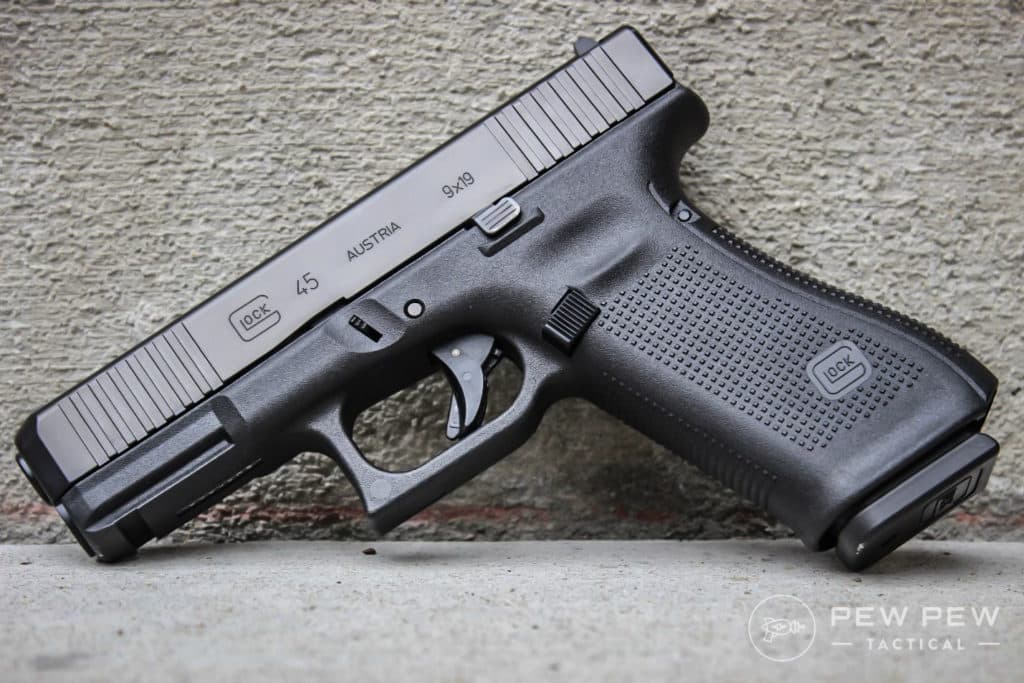
They're to meet certain weight and size requirements, and have only very limited modifications.
If you shoot SSP, you start with 10 rounds in each magazine and one in the chamber of the gun unless directed otherwise.
Enhanced Service Pistol (ESP)
Enhanced Service Pistol (ESP) is similar to SSP, but it also allows single-action-only semi-automatic pistols and more modifications.
Because of the modifications permitted, you’ll see you'llf the same guns as in SSP but with additions like aftermarket triggers or magazine wells. Like SSP, magazines start loaded with ten rounds.
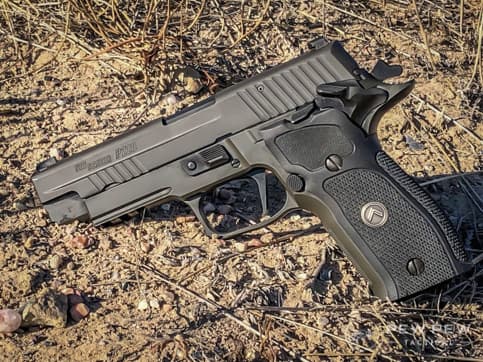
ESP is where guns like 9mm 1911s or single-action-only CZ-75s come to play.
Carry Optics
The popularity of pistol red dots led IDPA to add a Carry Optics (CO) division a few years back. CO division guns follow the same basic requirements as ESP division guns, but allow for the use of slide-mounted red dots.
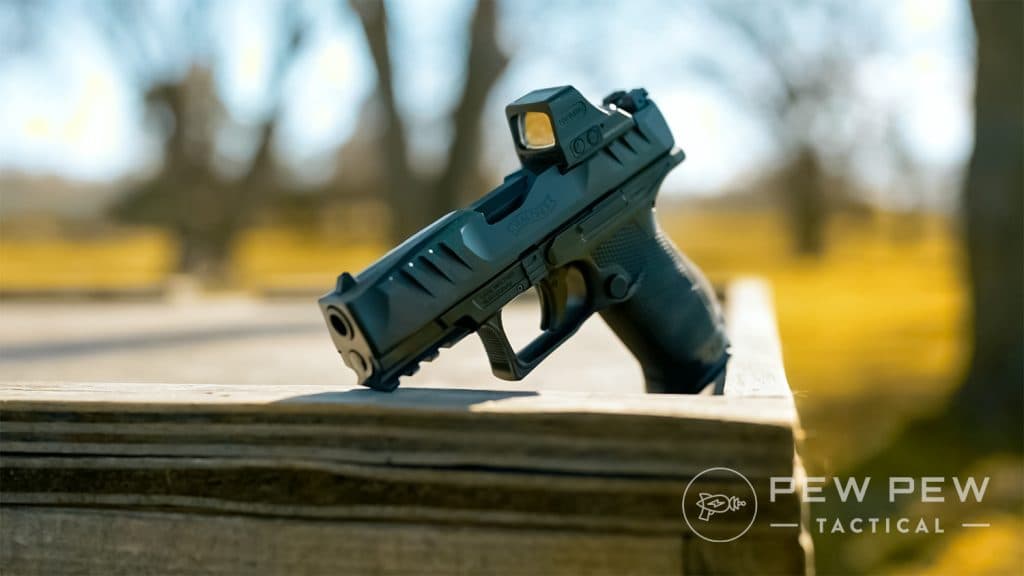
This has become one of the, if not the, most popular divisions in IDPA.
Custom Defensive Pistol (CDP)
Custom Defensive Pistol (CDP) guns are all .45 ACP semi-automatic pistols. The relevant rules are otherwise similar to ESP, except that magazines start loaded with eight rounds. It’s the perfect place for your 1911 to come out and play.

Compact Carry Pistol (CCP)
Compact Carry Pistol (CCP) focuses on guns that fall within the common concealed carry size.
The rules are similar to SSP, except the gun must be smaller, with a shorter barrel, and each magazine can hold only eight rounds. Common carry guns like the Glock 19 are popular in the CCP division.

Revolver (REV)
When it comes to revolvers, IDPA separates them into two divisions --- Stock REV and Enhanced REV.
The Stock REV division focuses on smaller revolvers that shoot .38 Special or larger rounds, while the Enhanced REV division is for bigger revolvers that shoot .357 Magnum or larger rounds.
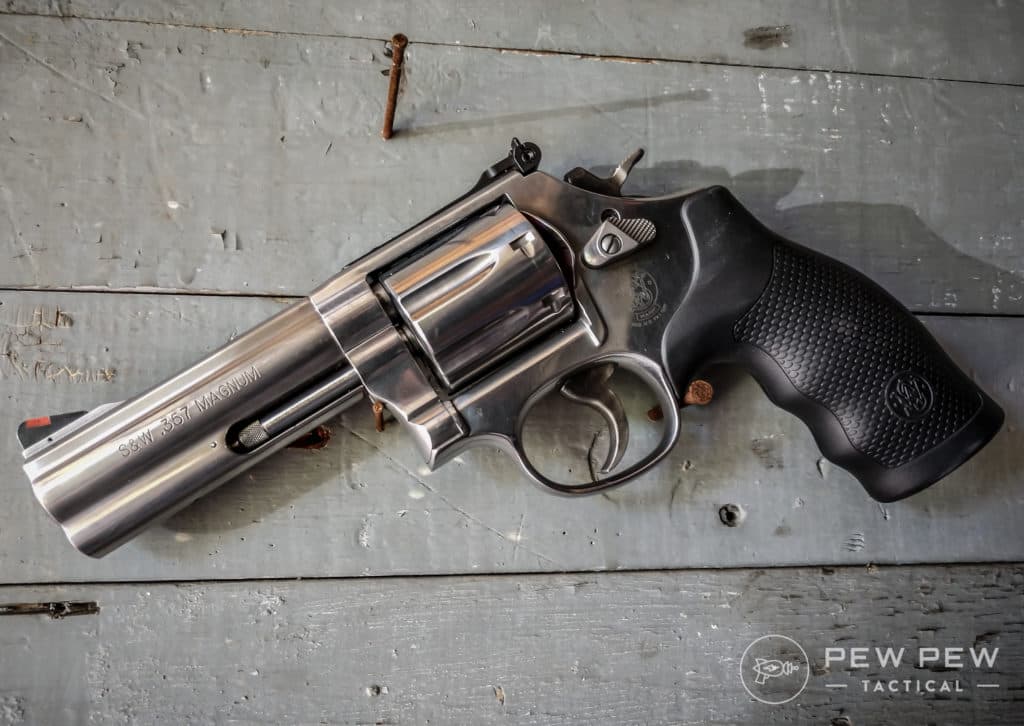
Enhanced REV also allows the use of moonclips to reload and can have more modifications than Stock REV. In either case, REV can be loaded or reloaded a maximum of six rounds.
Back Up Gun (BUG)
Back Up Gun, or BUG, is almost exactly what it sounds like --- little guns.
BUG guns are chambered in .380 ACP/.38 special or larger caliber, and follow strict size rules; typically requiring a barrel size of 3.5 inches or less.
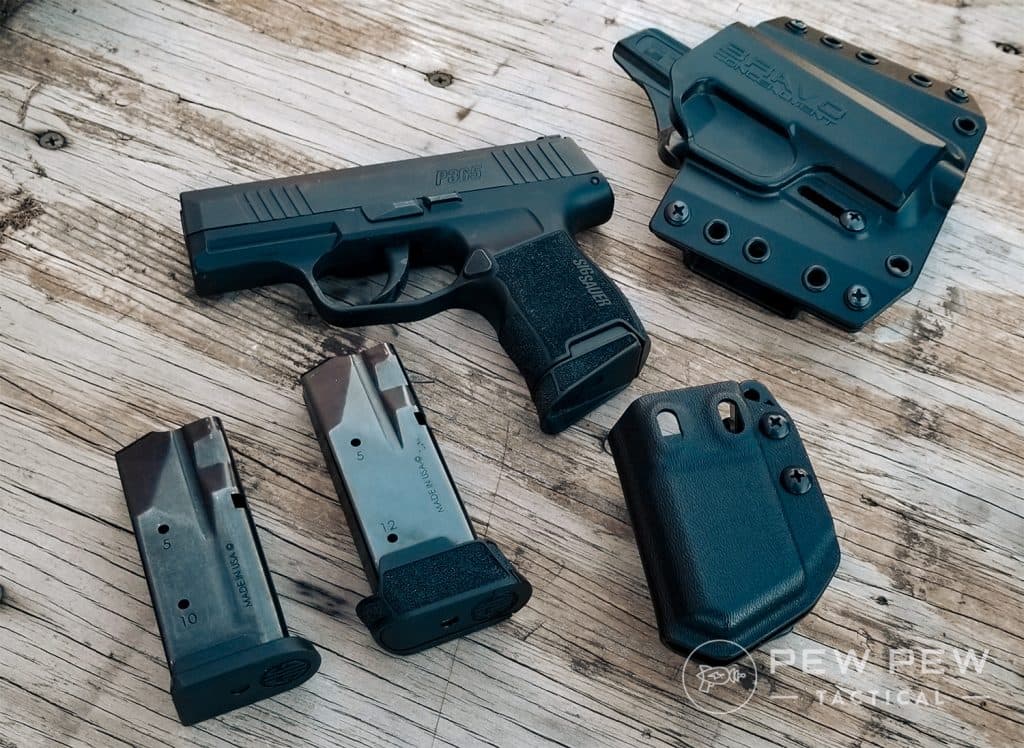
Semi-auto BUG guns are loaded with up to six rounds in their magazines, and BUG revolvers are loaded with no more than five rounds at a time.
Popular guns for this division include S&W J-frame revolvers, the Sig P365, Glock 43, and the like.
Shooting and Safety Rules
One of the things IDPA is famous (or infamous) for is the very procedural nature of how you must engage targets and execute reloads.
We highly recommend checking out the excellent video below from the Humble Marksman, which not only covers the standard shooting and safety rules but also the basics of getting into IDPA as a whole.
Range Commands
There are a few range commands that the range safety officer will issue during the match. These are universal and important to know before attending a match to avoid any confusion. A list of the current range commands can be found in the short New Shooter Briefing straight from IDPA.
How Do You Win?
IDPA is a “time plus” sport. Each shooter’s score is the amount of time it takes them to shoot each stage, or course of fire, plus any penalties that they might have picked up.
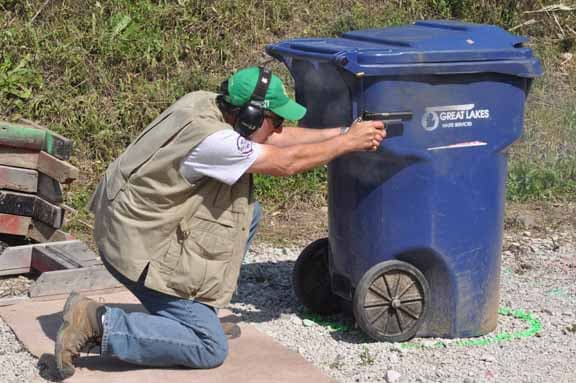
For example, a competitor may have time added to their score if a specified stage procedure was not followed, or if a target was not properly shot.
Scoring
There are two main kinds of targets in IDPA: cardboard and steel.
Cardboard targets look like this, with a stylized “body” at the bottom and “head” at the top
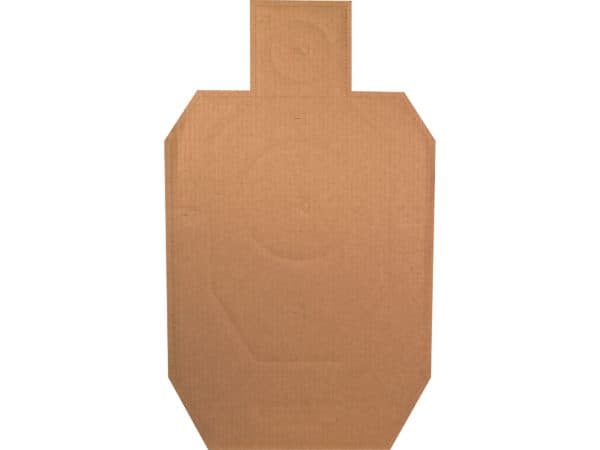
If you look closely, you can see perforations mark different sections of the target. See, just hitting the target with the required number of shots isn’t enough.
If the holes aren’t in or touching the circular parts, then the shooter is awarded “points down.” Each point down is an additional second added to your time, so accuracy is required rather than just speed.
Shooting the square of the head outside of the circle is one point down, as is the octagon around the circle in the middle of the body. The rest of the target is three points down. If a target is painted black anywhere, hits on those areas are typically counted as misses.
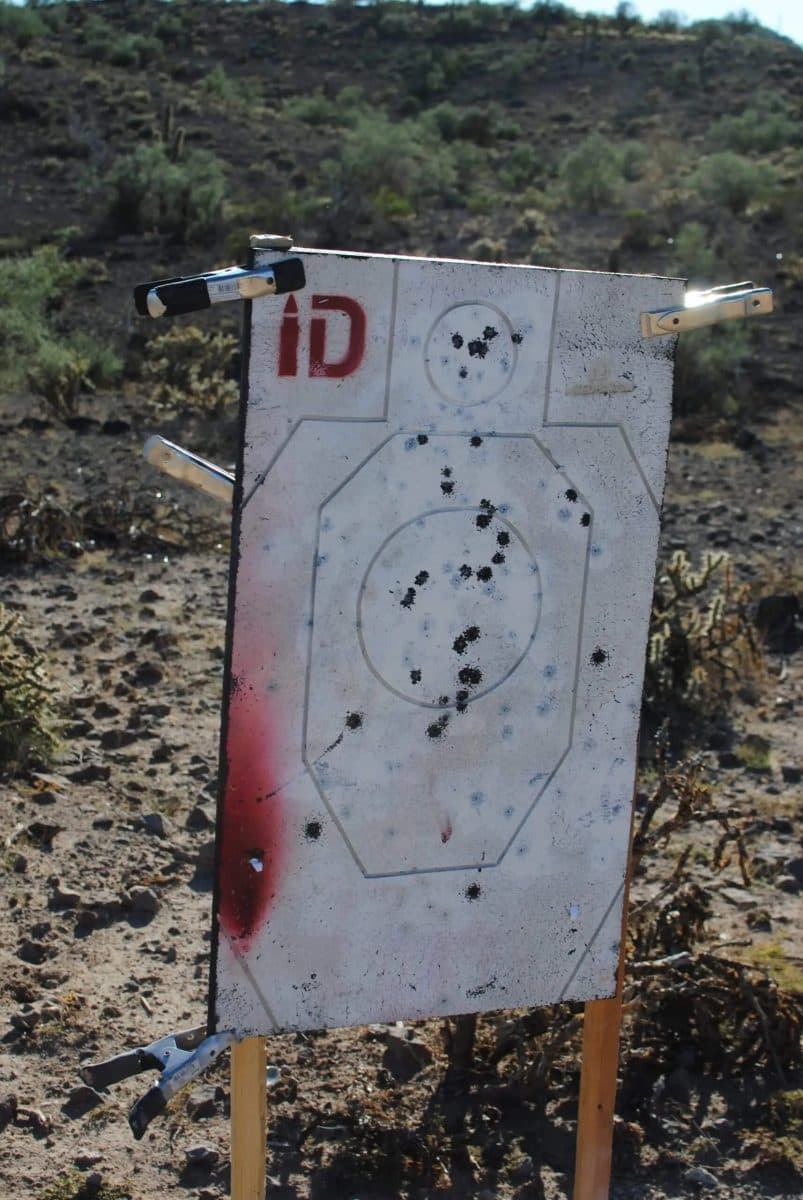
Missing the target entirely is five points down. Fortunately, most stages allow you to shoot as many rounds as you like at each target. The two best hits are normally the ones that are counted for your score.
However, some matches might limit you on how many extra rounds you can shoot or specify where you need to hit. Check with the match director or safety officer to verify the stage procedure.
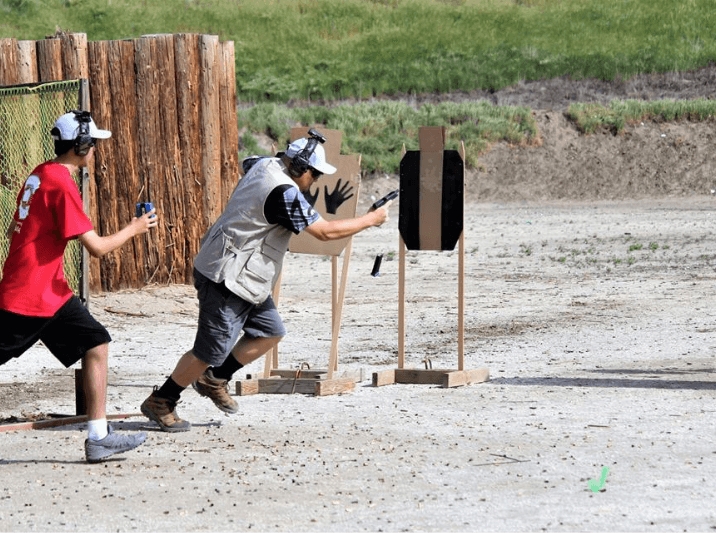
Lastly, make sure you don’t shoot targets that have open hands painted on them! Those are called non-threat targets and incur a penalty no matter where they are hit.

Final Thoughts
IDPA is largely a community-driven, volunteer sport. There are always opportunities to help set up, clean up, design stages and scenarios, assist with administration, and even give back by guiding other new shooters in the game.
Shooting a match requires some dedication, but it can be enjoyable if you remember it’s a game. Matches are a place to make new friends, test out your gear, improve your shooting skills, and see how you stack up against your shooters of a similar skill level.

Have you considered shooting IDPA? Is there another aspect of competition you want to hear about? Let us know in the comments below! Interested in other types of competitions? Be sure to check out our general Competition Shooting Guide!
Latest Updates
April 2026: Restructured entire article. Updated division information and membership pricing.