
From the Bench: Gun Court Rulings [Updated Q2 2025]
Federal courts issued major gun law rulings this year, from handgun bans to marijuana-related cases. See what changed and where your rights stand now.

Recreational shooter and firearms enthusiast. American Red Cross First Aid & BLS instructor
We review products independently. When you buy through links on our site, we may earn a commission to help support our testing. Learn more.
Keeping up with lawmakers can be quite a challenge, but courts? They’re a whole different animal. Even if you’re a lawyer, knowing which court ruled what and when about your gun rights can make you dizzy.

Whether you’re a concealed carry practitioner, gun collector, competitive shooter, or all-American gun enthusiast, you have a right to know what's new, so we did the work for you.
Here’s what you need to know about the latest federal court rulings as they apply to guns.
Disclaimer: While the information provided here is legal in nature, it is not to be construed as legal advice and is for educational and entertainment purposes only.
Editor's Note: This article was updated August 19, 2025. After publication, a reader pointed out several errors and areas needing clarification. We’ve reviewed the information and confirmed that the article needed to be updated with corrections and clarifications. We regret these errors and have updated this article to reflect the accurate information. Thank you to the reader who highlighted these issues with input — your feedback helps us maintain accuracy and credibility.
Table of Contents
Major Takeaways & Trends
Second Quarter Trends
In June, the Supreme Court declined to hear two key cases from different circuits challenging “assault weapon” and “high capacity” magazine bans: Snope v. Brown (originally Bianchi v. Brown) and Ocean State Tactical v. Rhode Island. Those bans remain in effect in their circuit.
While Justices Gorsuch, Alito, and Thomas agreed that the Court should further review those cases, they needed a fourth vote to accept the case. Justice Kavanaugh agreed that the cases should probably be heard but declined to consider challenges to the bans at the moment.
A new First Circuit opinion, Capen v. Campbell, along with Barnett v. Raoul in the Seventh Circuit, could convince the Supreme Court to hear one or more of these cases next year instead. (You can find more details about Capen v. Campbell in the Second Quarter Rulings section.)
Both the Fifth and Eighth Circuits issued rulings indicating that marijuana users who are sober and do not have marijuana in their possession upon their arrest cannot be convicted of possessing a firearm in violation of 18 U.S.C. § 922(g)(3), which prevents all drug users from possessing firearms. These cases are:
- U.S. v. Daniels (Fifth Circuit);
- U.S. v. Cooper (Eighth Circuit); and
- U.S. v. Baxter (Eighth Circuit).
You can find more details about these cases in the New Rulings section.
Other Noteworthy Trends
Following the Supreme Court’s 2024 ruling in U.S. v. Rahimi, many new cases have come forward on the issue of whether or not felons have the right to own a gun.
According to the Rahimi decision, felons who clearly pose a violent threat to others can be temporarily disarmed. The Court said that this does not violate the Second Amendment even after its landmark Bruen decision in 2022, which requires all gun laws to have a direct legal parallel or relevant parallel from the founding era to be considered constitutional.
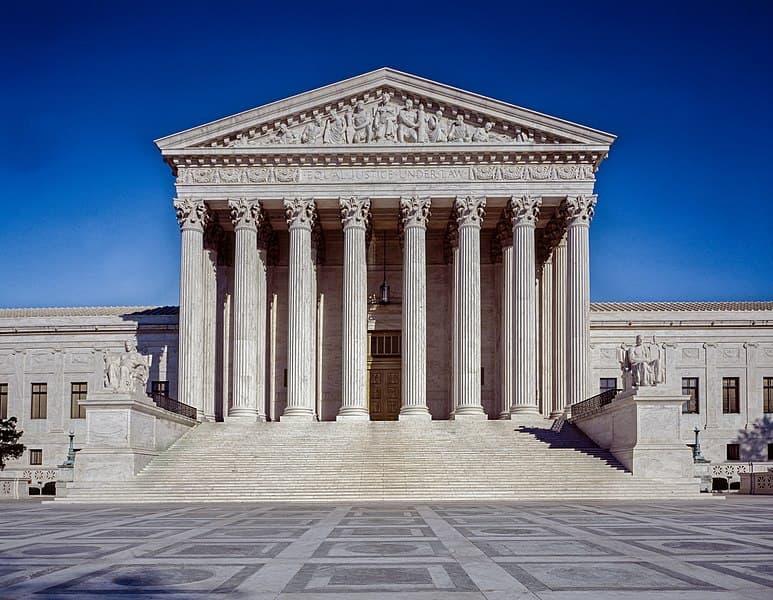
Multiple circuits have issued rulings regarding a felon’s right to own a firearm. These cases include:
- Pitsilides v. U.S. (Third Circuit)
- U.S. v. Redfoot (Tenth Circuit)
- U.S. v. Thompson (Tenth Circuit)
- U.S. v. Morton (Sixth Circuit)
- U.S. v. Williams (Sixth Circuit)
- U.S. v. Duarte (Ninth Circuit)
There have also been cases challenging federal laws banning the possession of firearms by domestic violence offenders and those subject to domestic violence restraining orders. These cases include:
- U.S. v. Nutter (Fourth Circuit)
- U.S. v. Gordon (Tenth Circuit)
- U.S. v. Perez-Gallan (Fifth Circuit)
Understanding the U.S. Court System: A Quick Guide
The federal court system isn’t so simple. Need a short civics review to fully understand court rulings and how they affect you? We got you!
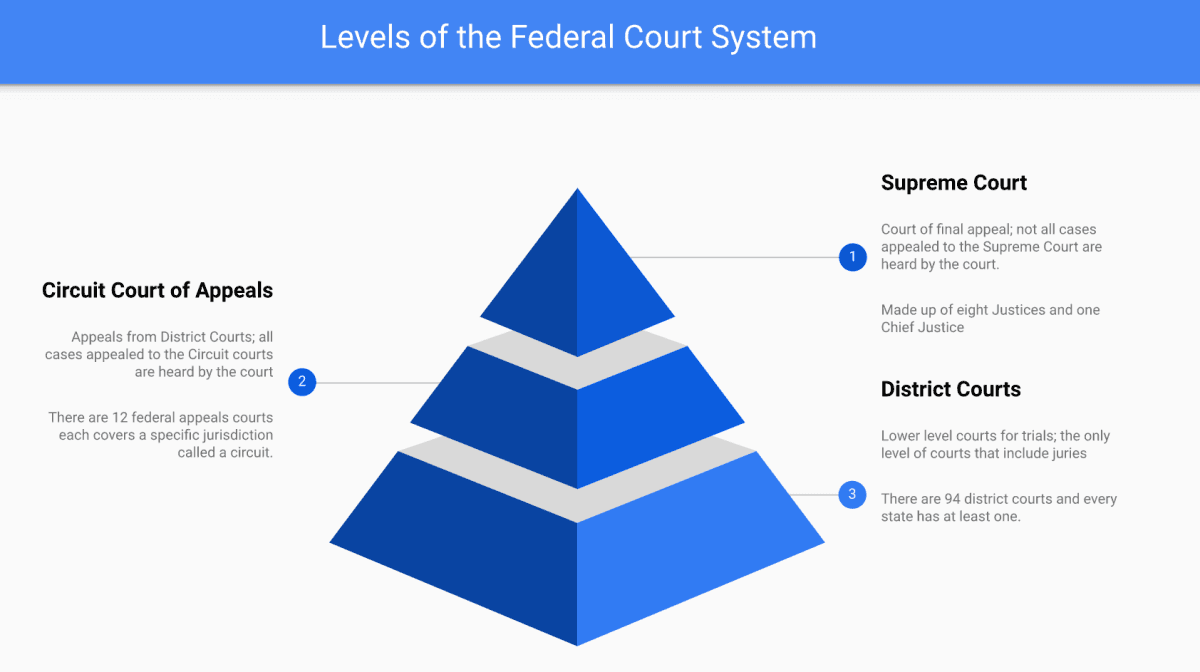
Federal courts fall into one of three categories:
- U.S. District Courts (94 judicial districts)
- U.S. Appeals Court (13 circuits -- 11 regional circuits, D.C. Circuit, and the Federal Circuit)
- U.S. Supreme Court
District Courts
District courts are federal trial courts, each covering a specific state, portion of the state, or region. They don't fall under the appellate jurisdiction of one of the Circuit Courts. Disctrict courts determine all disputed issues of fact. Then they apply the law to those facts.
Unsatisfied with the district court? Litigants can appeal the ruling to the Circuit Courts.
Appeals Court and Supreme Court
The Circuits of the U.S. Court of Appeals take appeals from the federal District Courts. Note, they do not have discretion to turn down appeals without first deciding their merits. Each appeal is heard by a panel of at least three judges; though some cases can be heard "en banc" by 11 (or more, depending on the Circuit).
12 regional circuits oversee their assigned region. While circuit judges often agree on rulings, the judges might disagree on what exactly the law says or how it is applied.
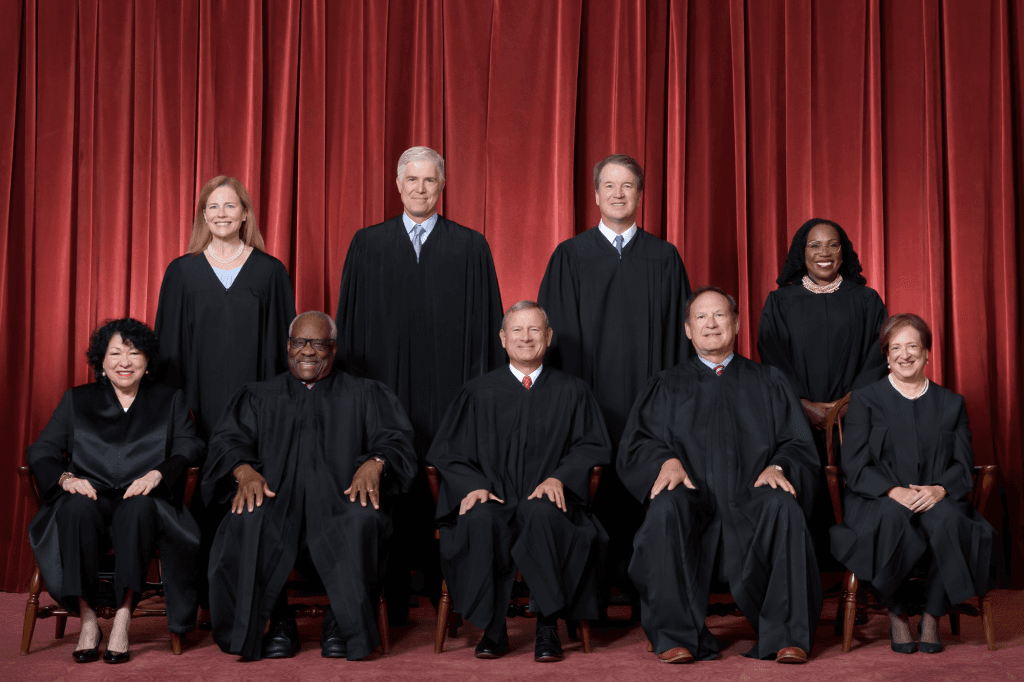
When two (or more) circuits come to different conclusions about the law, the separate rulings only apply within each circuit’s region. This means you can have one interpretation of the law impacting the states within Ninth Circuit and a different one affecting Fifth Circuit states. The only way to fix this is when the Supreme Court accepts a case on which circuits have disagreed.
Courts are busy, so it can take a little while to get any kind of ruling. Wait times can range anywhere from a month to over a year. If, after all that time, you don’t like the Appeals Court’s ruling, you can then petition the Supreme Court, but get ready to wait longer. Unlike the Appellate Courts, where litigants can appeal as of right, the Supreme Court has discretion over most of the cases on its docket.
The chance of the Supreme Court accepting your case is less than 1.5%, with wait times sometimes stretching beyond a decade.
Second Quarter Rulings (April 1 - June 30, 2025)
Federal: Regulation of Unfinished Receivers/Frames and Firearms Parts Kits
- Case: Bondi v. VanDerStok
- Court: Supreme Court
- Date: March 26, 2025
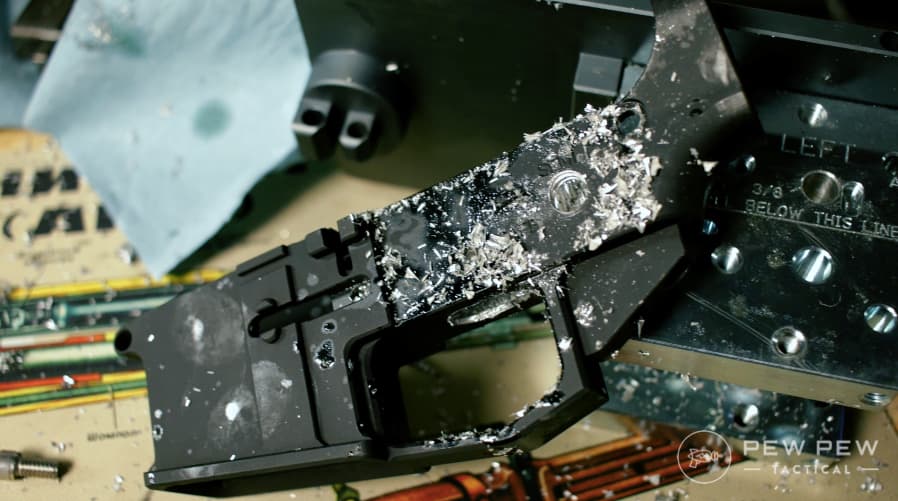
- Impact: This ruling defines certain unfinished frames, unfinished receivers, and gun build kits as “weapons” under the Gun Control Act of 1968, allowing the ATF to regulate them.
Summary: In 2022, the ATF issued a new rule expanding the definition of “frame or receiver” to include “partially complete or unassembled frames or receivers,” putting a halt to over-the-counter sales of most 80% receivers and build kits. Jennifer VanDerStok partnered with a group of private citizens, Second Amendment advocacy groups, and gun parts manufacturers to sue the ATF, saying the bureau had overstepped its authority.
Both the district court and the Fifth Circuit ruled in VanDerStok’s favor, with the Fifth Circuit striking down the ATF’s rule. The Biden administration then appealed to the Supreme Court. In a surprising twist, the Supreme Court issued a 7-2 ruling overturning the Fifth Circuit’s ruling and reinstating the ATF’s authority to require 80% receivers to be serialized and sold only through FFLs.
This case was mainly issued with polymer receivers and build kits in mind, but since the Court did not clearly define the phrase “readily be converted,” the full scope of the ruling is still a little hazy. Based on the Court’s ruling and the ATF’s rule, 80% receivers made from aluminum may still be included in the new definition. Unfortunately, another court case likely will be necessary to settle this issue completely. Keep an eye on this issue.
We covered this ruling in more detail in March.
Massachusetts: Assault Weapons & Magazine Ban
- Case: Capen v. Campbell
- Court: First Circuit
- Date: April 17, 2025
- Impact: The Supreme Court’s rejection of this case allows Massachusetts’ “assault weapons” ban to remain in place. It also leaves similar laws in the Northeast in place.
Summary: In 1998, Massachusetts turned the federal ban on “assault weapons” and “high-capacity” magazines into permanent state law and further strengthened the ban in 2016. In January 2024, the National Association for Gun Rights (NAGR) partnered with Joseph Capen, a Massachusetts resident, to challenge the state’s “assault weapons” ban, claiming it that it violates the Second Amendment both in Capen’s case and in a general sense. The district court rejected Capen and NAGR’s requests for an injunction and then ruled against them. Capen and NAGR appealed to the First Circuit, which upheld the district court’s ruling, saying that Massachusetts’ ban is constitutional.
This case likely will be appealed to the Supreme Court, hopefully joining similar cases like Snope v. Brown (originally Bianchi v. Brown) and Ocean State Tactical v. Rhode Island.
We covered this ruling in more detail in April.
New York: “Good Moral Character” Definition for Concealed Carry Permits

- Case: Antonyuk v. James
- Court: Second Circuit
- Date: April 7, 2025
- Impact: This ruling keeps most of New York’s CCIA in effect, minus the carry location restrictions and the requirement for CCW permit applicants to list their social media accounts on their permit applications.
Summary: New York passed the Concealed Carry Improvement Act (CCIA) in July 2022, creating a long list of locations where concealed carry is banned and limiting issue of New York concealed carry permits to individuals “of good moral character.” A collection of New York residents challenged the new law, arguing that the location restrictions were too broad and that the term “good moral character” was defined too broadly. The district court issued injunctions against the law, but the Second Circuit overturned most of those injunctions, leaving most of the law in place except the location restrictions and the requirement for CCW permit applicants to submit their social media accounts on their applications. The case was appealed to the Supreme Court, which accepted the case, vacated the circuit court’s ruling, and sent it back to the Second Circuit for a new ruling in light of the Supreme Court’s brand-new Rahimi ruling. The Second Circuit issued an opinion with the same ruling. In April 2025, the Supreme Court rejected a request to hear the case.
Minnesota: Concealed Carry Ban for 18 to 20-Year-Olds
- Case: Worth v. Jacobson
- Court: Eighth Circuit
- Date: April 21, 2025
- Impact: The Supreme Court’s rejection of this case leaves the Eighth Circuit's rejection of Minnesota’s prohibition on 18 to 20-year-olds from applying for a Permit to Carry to stand, thus allowing 18-to 20-year-olds to apply for carry permits in Minnesota.
Summary: In 2023, a collection of gun rights organizations challenged a Minnesota law preventing 18 to 20-year-olds from obtaining a Permit to Carry. The district court agreed with the plaintiffs and ruled that the law could no longer be enforced. The decision was appealed and affirmed. Minnesota took it to the Supreme Court but the Court declined to hear the case, killing the ban.
We covered this rejection in more detail in April.
California: Firearm Sales on State Property

- Case: B&L Productions v. Newsom
- Court: Ninth Circuit
- Date: April 28, 2025
- Impact: The Supreme Court’s rejection of this case keeps California’s ban on gun sales on state property in place.
Summary: In 2021, B&L Productions, a company that runs gun shows, partnered with the Second Amendment Foundation to challenge California’s ban on gun sales at venues located on state land (Assembly Bill 893). The company originally filed a lawsuit against the law, arguing that it violated B&L’s First and Fourteenth Amendment rights. After the 2022 Bruen decision, B&L filed another lawsuit, saying California’s law also violated the Second Amendment. The district court dismissed the first case but granted a preliminary injunction for the second one. California appealed the injunction, and the Ninth Circuit ruled against B&L. The company appealed to the Supreme Court, which rejected the appeal and left California’s law intact.
Federal: Ban on Sale of Handguns to 18 to 20-Year-Olds

- Case: McCoy v. ATF
- Court: Fourth Circuit
- Date: June 18, 2025
- Impact: This ruling upholds the federal government’s ban on the sale of handguns to 18 to 20-year-olds, creating a circuit split with the Fifth Circuit.
Summary: Four young men (later joined by two others), ranging from 18 to 20 years old, attempted to buy handguns but were denied based on federal law. They sued the ATF, saying that the law violated their Second Amendment rights. Initially, they won with the district court saying that federal law did indeed violate their rights. However, the government appealed the decision, and the Fourth Circuit overturned the lower court’s ruling, upholding the federal ban. This results in a circuit split with the Fifth Circuit, which could lead to the Supreme Court accepting the case sometime in the future.
First Quarter Rulings (January 1-March 31, 2025)
Standards for Constructive Possession Convictions
- Case: U.S. v. Ashe
- Court: Third Circuit
- Date: February 27, 2025
- Impact: This ruling makes it tougher to convict someone for constructive possession.
Summary: Rodney Ashe of New Jersey was convicted of felony possession of a firearm following a traffic stop in 2022. His car was impounded, and he went to trial. Over six months later, while Ashe was in prison, an AK pistol and ammunition were found in the trunk of his car by the towing company. The District Court then convicted him of constructive possession of the AK pistol (i.e., the intent to build something illegal with components in your possession), significantly increasing the severity of his sentencing. The Third Circuit overturned his conviction for constructive possession (but not felony possession) and vacated his sentence. The court said that mere ownership or control of a vehicle combined with the time-lapse and lack of direct evidence linking the gun to Ashe did not establish possession of the items inside.
Handgun Ban for 18 to 20-year-olds
- Case: Reese v. ATF
- Court: Fifth Circuit
- Date: January 30, 2025
- Impact: This ruling allows individuals between the ages of 18 and 21 to purchase firearms.
Summary: The Firearms Policy Coalition (FPC) challenged the constitutionality of 18 U.S.C. §§ 922(b)(1) and (c)(1). This law makes it illegal for Federal Firearms Licensees (FFLs) to sell handguns to 18, 19, and 20-year-olds. Keeping in line with the Bruen decision, the Fifth Circuit ruled the law unconstitutional and remanded the case back to the district court to make corrections in accordance with its ruling.
Gun Possession for Marijuana Users
- Case: U.S. v. Daniels
- Court: Fifth Circuit
- Date: January 6, 2025
- Impact: This ruling prevents drug users from being convicted for firearm possession while sober.
Summary: Patrick Daniels of Mississippi was arrested during a traffic stop for possession of two loaded firearms when officers discovered marijuana cigarette butts in his car. He admitted to being a regular marijuana user, but officers did not conduct a drug test during the stop. Daniels was convicted of possession of a firearm by a federally prohibited person and sentenced to prison. He appealed his conviction. The Fifth Circuit overturned his conviction because there was no evidence that Daniels was actively using or had recently been using marijuana at the time of his arrest. Following the Supreme Court’s Rahimi decision, the case was sent back to the Fifth Circuit, which reached the same results as the original decision. (This case is similar to U.S. v. Cooper but is more clearly defined.)
Gun Purchases for Individuals Under a Felony Indictment
- Case: U.S. v. Quiroz
- Court: Fifth Circuit
- Date: January 13, 2025
- Impact: This ruling upholds the federal ban on individuals under felony indictment purchasing a gun.
Summary: Jose Gomez Quiroz of Texas was convicted of lying on an ATF Form 4473 during a gun purchase, saying he was not under indictment for a felony, and for receiving a firearm while under indictment. The same day as his conviction, the Supreme Court issued the Bruen decision, and Quiroz appealed his conviction. The appeal was first rejected but later accepted and overturned his conviction based on the Bruen decision. The Fifth Circuit reviewed the case and reversed the district court's decision, reinstating Quiroz’s conviction.
SBR and NFA Constitutionality Upheld
- Case: U.S. v. Rush
- Court: Seventh Circuit
- Date: March 10, 2025
- Impact: This ruling upholds the NFA’s requirement to register SBRs.
Summary: Jamond Rush of Illinois was arrested for possessing a 7.5-inch AR-15, a short-barreled rifle (SBR), and convicted of possession of an unregistered firearm according to the National Firearms Act (NFA). Rush requested that his case be dismissed because the federal requirement to register an SBR is unconstitutional. The district court rejected his request, and he appealed his conviction. The Seventh Circuit also rejected his argument and held that the federal government’s requirement to register SBRs is constitutional, since SBRs are not in common use for lawful purposes, like self-defense.
Gun Possession for Marijuana Users
- Case: U.S. v. Cooper
- Court: Eighth Circuit
- Date: February 5, 2025
- Impact: This ruling raises the bar for convicting marijuana users of possession of a firearm by a federally prohibited person.
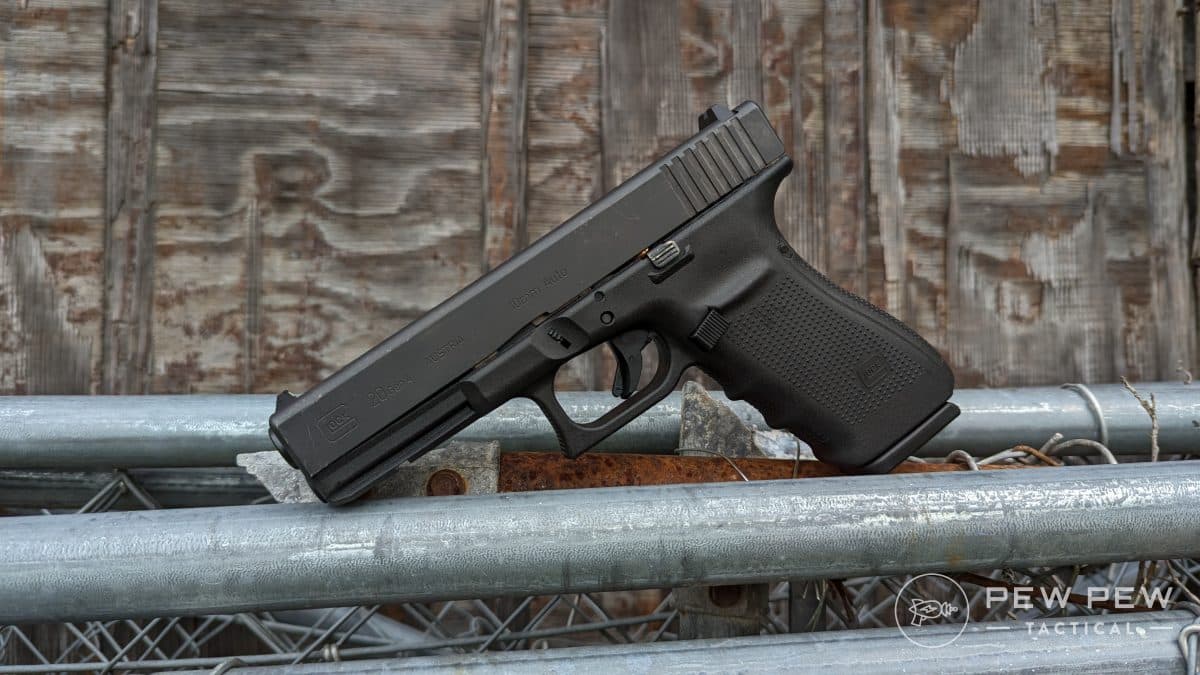
Summary: LaVance LeMarr Cooper of Iowa was arrested during a traffic stop for possession of a Glock 20 after admitting to smoking marijuana cigarettes multiple times a week. He also admitted to smoking marijuana two days prior to his arrest. Cooper was convicted of possession of a firearm by a federally prohibited person and sentenced to prison, despite arguments that this federal law violated the Second Amendment. He appealed his conviction. The Eighth Circuit vacated the lower court’s decision and remanded the case back to the district court for reexamination, stating that disarming drug users in certain circumstances does violate the Second Amendment, such as when a drug user clearly is not a threat to others. (This case is similar to U.S. v. Daniels but is less clearly defined.)
- Case: U.S. v. Baxter
- Court: Eighth Circuit
- Date: February 5, 2025
- Impact: This ruling confirms that active possession of both a gun and marijuana qualifies an individual for conviction of possession of a firearm by a federally prohibited person.
Summary: Keshon Baxter of Iowa was convicted of possession of a firearm by a federally prohibited person and being arrested while in possession of both a loaded handgun and a bag of marijuana. He appealed his conviction by the district court, stating that the phrase “unlawful user” in the federal statute was too vague. The Eighth Circuit upheld his conviction.
California: Large-Capacity Magazine Ban

- Case: Duncan v. Bonta
- Court: Ninth Circuit
- Date: March 20, 2025
- Impact: This ruling upholds California’s large-capacity magazine ban.
Summary: The California Rifle & Pistol Association (CRPA) challenged the constitutionality of California’s 2016 ban on magazines with a capacity higher than 10 rounds. The district court agreed with the CRPA, but the Ninth Circuit overturned the district court’s decision and upheld California’s magazine ban, arguing that: 1) magazines are “neither ‘arms’ nor protected accessories,” and 2) even if they were, the state’s ban “falls within the Nation’s tradition of protecting innocent persons by prohibiting especially dangerous uses of weapons” and certain firearms components.
Gun Possession for Nonviolent Felons
- Case: Vincent v. Bondi, originally Vincent v. Garland
- Court: Tenth Circuit
- Date: February 11, 2025
- Impact: This ruling upholds federal law banning all felons, including nonviolent felons, from possessing a firearm.
Summary: Melynda Vincent of Utah was convicted of bank fraud and, under federal law, was banned from possessing a firearm. Based on the Bruen decision, Vincent challenged the law, saying it deprived her, a nonviolent felon, of her Second Amendment rights. The district court dismissed her case, and she appealed the dismissal. The Tenth Circuit held that the federal law was indeed constitutional and that Vincent was still ineligible to own a gun. Following the Rahimi decision, the Supreme Court required the Tenth Circuit to review Vincent’s case. Upon review, the Tenth Circuit upheld its original ruling.
Gun Purchase Ban for 18 to 20-year-olds

- Case: NRA v. Bondi, also known as NRA v. Commissioner, Florida Department of Law Enforcement
- Court: Eleventh Circuit
- Date: March 14, 2025
- Impact: This ruling upholds Florida’s ban on gun purchases by 18 to 20-year-olds.
Summary: The National Rifle Association (NRA), later joined by two other individuals, challenged the constitutionality of Florida’s 2018 ban on gun purchases by 18 to 20-year-olds. The district court ruled in favor of Florida’s law, and the NRA appealed the decision. The Eleventh Circuit heard the appeal but did not issue a decision until after the Rahimi decision. Upon final review, the Eleventh Circuit upheld the district court’s original decision.
Cases to Watch
Federal: Challenges to State-Level Gun and Magazine Bans (Multiple Cases)
In June 2025, the Supreme Court rejected three big cases, Snope v. Brown (originally Bianchi v. Brown), Ocean State Tactical v. Rhode Island, and Hanson v. District of Columbia, all of which challenge state or district bans on “assault weapons” (like AR-15s) and “high-capacity” magazines (10 rounds or more). With the First Circuit’s May unfavorable ruling in Capen v. Campbell and the up-and-coming Barnett v. Raoul case (Seventh Circuit; see “Illinois: Assault Weapons and Magazine Ban” for more details), the chances of the Supreme Court accepting a similar case next term (2026) continues to rise.
Connecticut: Challenges to State-Level Gun and Magazine Bans (National Association for Gun Rights v. Lamont)
In September 2022, the National Association for Gun Rights (NAGR) partnered with two Connecticut residents in challenging the state’s ban on “assault weapons” and “high capacity” magazines. The district court first rejected the request for an injunction, then ruled against NAGR, finding no conflict between Connecticut’s ban and the Second Amendment. NAGR then appealed to the Second Circuit, which finished hearing arguments in November 2024. No ruling has been issued yet.
Illinois: Status of Public Transit as Sensitive Spaces (Schoenthal v. Raoul)
In September 2022, a collection of four Illinois residents challenged the state’s ban on concealed carry in public transit vehicles and facilities. The district court ruled in their favor in August 2024, but the state of Illinois appealed the decision to the Seventh Circuit. Oral arguments began on May 28, 2025.
Federal: Legality of Automatic Weapons (U.S. v. Morgan)
In 2023, Tamori Morgan of Kansas was charged with illegal possession of an AR-15 converted to a machine gun and a Glock switch, two separate violations of the National Firearms Act (NFA). In a surprising twist, the district court sided with Morgan and threw out the charges against him, with Judge John W. Broomes writing, “The court finds that the Second Amendment applies to the weapons charged because they are ‘bearable arms’ within the original meaning of the amendment.” The federal government appealed the court’s ruling to the Tenth Circuit. Oral arguments
Federal: Unlawful Alien Gun Possession Right (U.S. v. Vizcaíno-Peguero)
Update: This case was argued in May before a First Circuit judicial panel.
In 2023, Moreno Vizcaíno-Peguero, a citizen of the Dominican Republic and unlawful alien living in Puerto Rico, was convicted of being a noncitizen in possession of a firearm and ammunition. He has appealed to the First Circuit, arguing that, according to the Supreme Court’s Bruen decision, the Second Amendment applies to him.
You can find the district court’s original ruling here.
Virginia: Fairfax County’s Ban on Guns in Public Parks (LaFave v. Fairfax County)

Update: This case was argued in May before a Fourth Circuit judicial panel.
In September 2020, Fairfax County, Virginia, passed a new ordinance that banned “the possession, carrying, or transportation of firearms, components, and ammunition in county buildings, parks, recreation and community centers, and at or adjacent to permitted events.” The ordinance does allow for a few narrow exceptions.
Stephen Halbrook, a gun rights advocate and attorney, challenged the county’s ordinance, saying that it is too broad. The district court for eastern Virginia ruled against Halbrook, citing the Bruen decision and saying that there are plenty of examples of founding-era laws prohibiting guns in public parks. The county’s lawyer, Janet Carter of Everytown Law, agreed with the court’s ruling, saying that village greens in the founding era were not public parks. Halbrook appealed to the Fourth Circuit, which docketed the case in September 2024.
You can find the district court’s original ruling here.
Maryland: Ban on Concealed Carry in Government Buildings and Other Sensitive Spaces (Kipke v. Moore)
Following the Supreme Court’s Bruen decision in 2022, Maryland passed the Gun Safety Act of 2023, which banned the right to carry a firearm in or around a long list of “sensitive places.” The Maryland State Rifle and Pistol Association (MSRPA) sued the state and asked the federal district court in Maryland to issue an injunction to prevent the law from going into effect.
The district court issued a partial injunction in September 2023, allowing the state to enforce most of the law. The MSRPA waited another year to receive the court’s ruling, which kept most of the law in place, banning carry in state parks, mass transit facilities, schools and school grounds, museums, stadiums, healthcare facilities, government buildings, amusement parks, racetracks, and casinos. The MSRPA appealed the decision to the Fourth Circuit, which docketed the case in August 2024.
You can read the court’s partial injunction and its original ruling. Judge George L. Russell III combined this case with a similar lawsuit, Novotny v. Moore. This case is very similar to the Ninth Circuit case Carralero v. Bonta.
Maryland: Handgun Qualification License (Maryland Shall Issue v. Moore)
Twelve years ago, Maryland passed the Firearm Safety Act of 2013, which created a permitting system that required Maryland residents to obtain a Handgun Qualification License (HQL) before purchasing a handgun. To qualify for an HQL, applicants must complete a mandatory training course. Maryland Shall Issue challenged the law in federal district court, lost, and appealed the decision. The Fourth Circuit also ruled in favor of keeping the training and permitting system, issuing its decision in August 2024. Maryland Shall Issue then appealed to the Supreme Court, but the Court declined to hear the case in January 2025, letting the law stand.
You can find the Fourth Circuit’s decision here.
Illinois: Assault Weapons and Magazine Ban (Barnett v. Raoul)
In January 2023, Governor J.B. Pritzker signed the Protect Illinois Communities Act (PICA) into law, creating an “assault weapons” and high-capacity magazine ban. A coalition of Illinois residents, gun store owners, and the National Rifle Association (NRA) sued in federal district court and received an injunction, putting PICA on hold. Following an appeal from the State of Illinois, the Seventh Circuit ended that injunction, removing all relief for Illinois gun owners until the issue has been resolved in court. Barnett and company have appealed to the Seventh Circuit, asking it to strike down PICA.
You can find the Seventh Circuit’s ruling for an injunction here.
California & Hawai’i: Sensitive Places Law (Carralero v. Bonta)

Following the Supreme Court’s Bruen decision in 2022, California passed Senate Bill 2 (2023), which banned the right to carry a firearm in or around a long list of “sensitive places.” A coalition of California gun owners joined with the Firearms Policy Coalition (FPC) to sue the state and ask a federal district court to issue an injunction to prevent the law from going into effect. The district court issued a temporary injunction, providing relief for Californians while the lawsuit was waiting to be heard by the Ninth Circuit. The state of California appealed this injunction, and the Ninth Circuit struck down part of the district court’s injunction, banning carry in bars and restaurants serving alcohol, playgrounds, youth centers, parks, casinos, stadiums and arenas, libraries, zoos, amusement parks, museums, and associated parking lots. The appeal is currently going through the hearing process with the Ninth Circuit.
You can find the Ninth Circuit’s decision here. The Ninth Circuit combined this case with a very similar lawsuit against Hawai’i, Wolford v. Lopez. This case is very similar to the Fourth Circuit case Kipke v. Moore.
Final Thoughts

We’ll update this regularly so you know what to expect -- keep checking back!
What court cases are you dreading? Let us know in the comments below. For more news on what’s going on in the industry, check out our News section.