
How To Reload Your AR-15
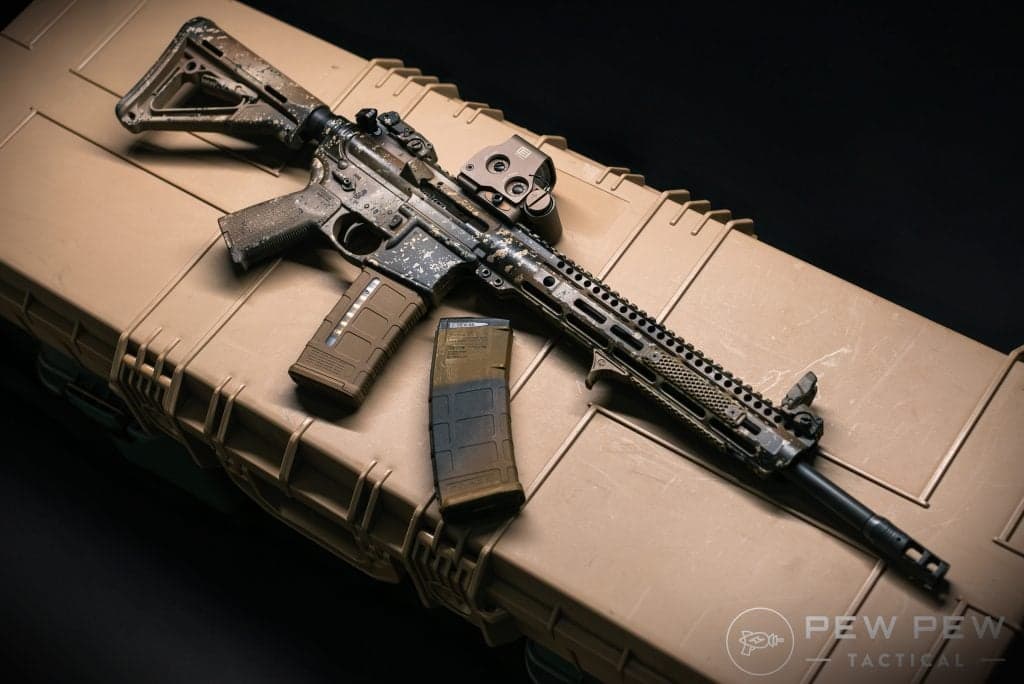
We cover how to reload your AR-15 -- from the basic to speed reloads and tactical reloads. Come get spun up!

USMC Veteran. Concealed Carry & NRA Pistol Instructor. 3-Gun Competitor. Career firearms writer
We review products independently. When you buy through links on our site, we may earn a commission to help support our testing. Learn more.
So, you bought an AR-15, and you might be wondering what exactly you should do now. Well, that's easy, you need to learn how to use the thing!
There are lots and lots to learn, and I sadly can't teach everything through one simple article. It's tough to teach marksmanship with a keyboard. However, there are several basic skills we can teach you to improve your AR-15 skills.
Let's dig in and arm you with the knowledge you need to utilize your AR-15.
Table of Contents
What Does It Mean to Reload?
Let's talk about how to reload your AR-15. Why reload? Well, mostly because it seems to be a pretty misunderstood technique.

This specifically refers to the “tactical” method of reloading. You can just drop the magazine, toss one in, and call it reloaded. There are two tactical methods to reload: speed reloading and tactical reloading.
For most everyday Joes, the speed reload is where it is at. For police officers and military personnel, the tactical reload makes sense in some situations, and the speed reload makes sense in others. I think it's valuable to learn both and excel at both.
5.56 and .223 Ammo in Stock
How To Reload
The first step is to set up your magazine properly inside your dedicated mag-carrying platform. The two most common are belt and chest rigs. The first thing you need to remember is that brass always goes down.
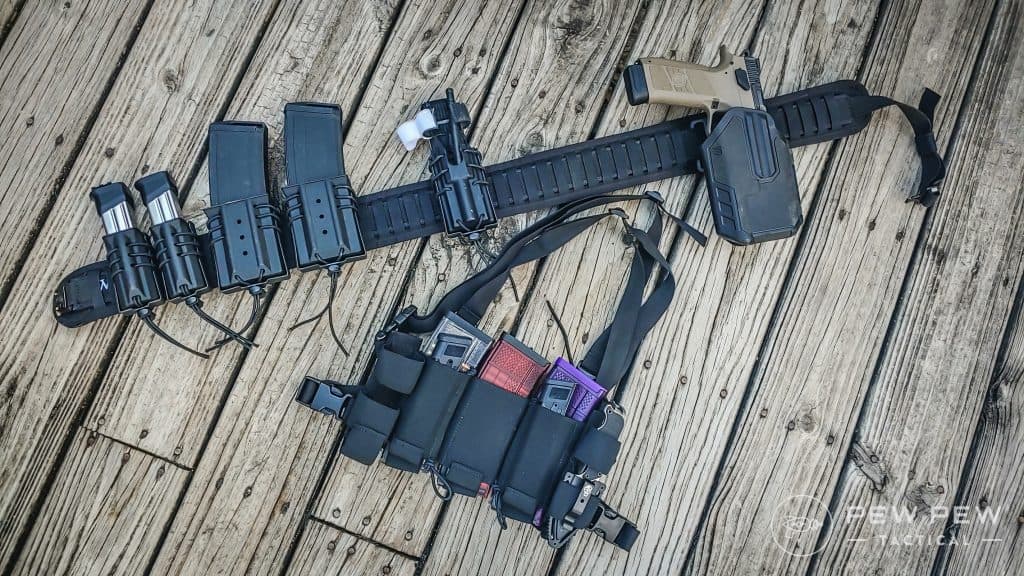
On a belt, the magazines can face in either direction depending on their position on the belt. Divide your body into a clock. If you are right-handed and position the magazine pouches at your 3 o'clock or more rearward position, you want the projectiles to face the rear. (For lefties, the position is south of the 9 o'clock position.)
With the ammo facing to the rear, you'll use a beer can grip. As you reach for the magazine, you'll rotate your hand downward and keep your thumb facing forward. You'll retrieve the magazine and then rotate the projectiles to the sky.

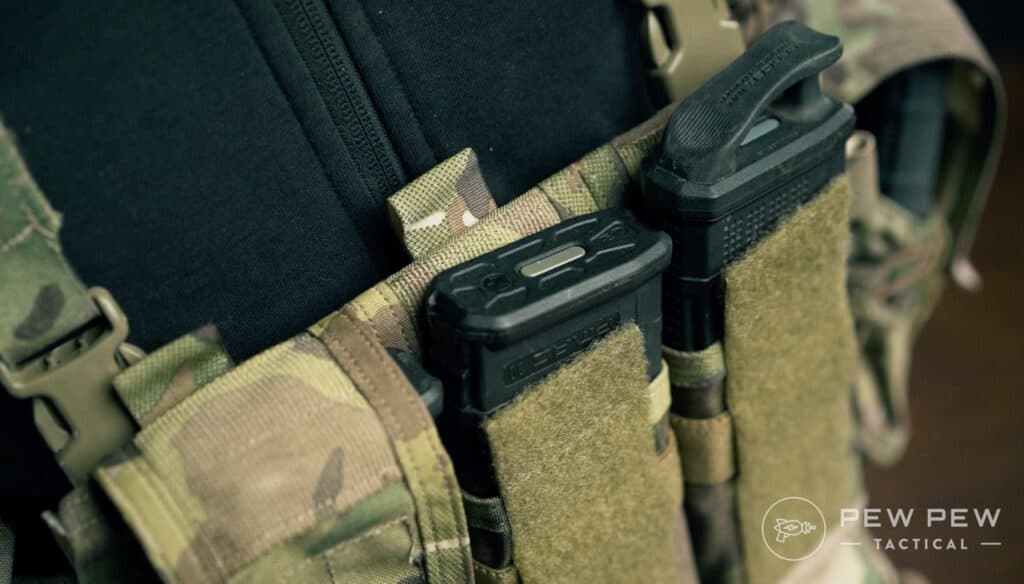
If your magazines are forward of the 3 o'clock position (9 o'clock for lefties), you want the projectiles to face forward. With a chest rig or plate carrier, the projectiles should be pointing to your strong side.
If your magazines are in either this belt position or chest position, we are getting a little fancy with it. You'll grip the magazine with the palm, embracing the bottom of the magazine. Your index finger will extend up and into the inward curve of the magazine.
As you pull the magazine upward and rotate your wrist and forearm to the sky, which will face your brass up and ready to insert into the magazine.
How To Speed Reload
The speed reload is done when fractions of a second matter or when your gun runs dry. When the gun runs dry, seconds most certainly matter.
The speed reload keeps things simple. From a firing position, you hit the magazine release. If you have a quality, in-spec lower receiver and a high-quality magazine, the magazine drops free.
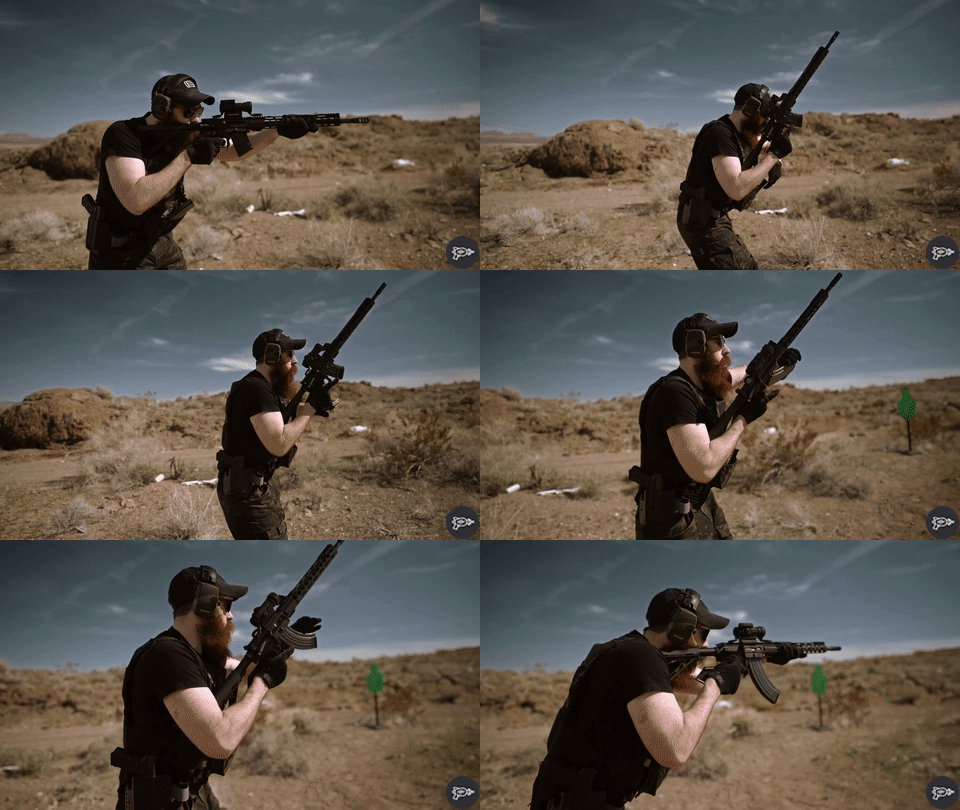
At the same time, you're dropping your support hand to your magazine and retrieving it. Grab the mag and slam it home.
Now, use that offhand to hit the bolt release and start shooting once again.
How To Tactical Reload
The tactical reload is slower but has you retaining your magazine. You'll conduct this reload during any kind of lull in the fight. This is why it's typically more appreciated by police officers and soldiers. It's more likely they'll be in an extended fight than the average civilian.
You retain a magazine to preserve your ammunition and to avoid losing your magazine. As a soldier or Marine, magazines are seemingly always in short supply, so if you lose one, you get in trouble. For police, it's not a good look for a random person to pick up a half-full magazine for a souvenir.
A tactical reload starts with you grabbing your spare magazine and then grabbing the magazine in the rifle. Position the fresh magazine above the partially depleted magazine and hit the magazine release. Pull the partially depleted magazine out and replace it with a fresh magazine.
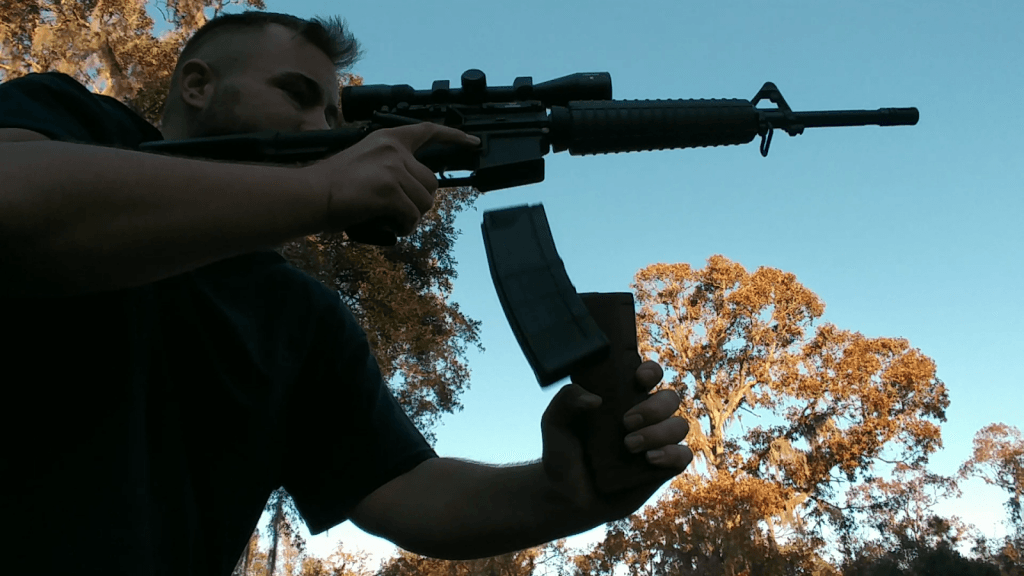
Maintain control over the partially depleted magazine and stick it somewhere you can store it. This is why a good dump pouch is invaluable.
Final Thoughts
Knowledge is half the battle, and the other half is the skill to use that knowledge. The AR-15 is America's rifle, and as such, it's wise to know how to use the basics of this universal carbine.
Let us know below what you think is a necessary skill for the average AR-15 shooter. Want to get caught up on our series? Check out our guide on finding the right length of pull.