1911 Series 70 vs Series 80: What’s the Best?
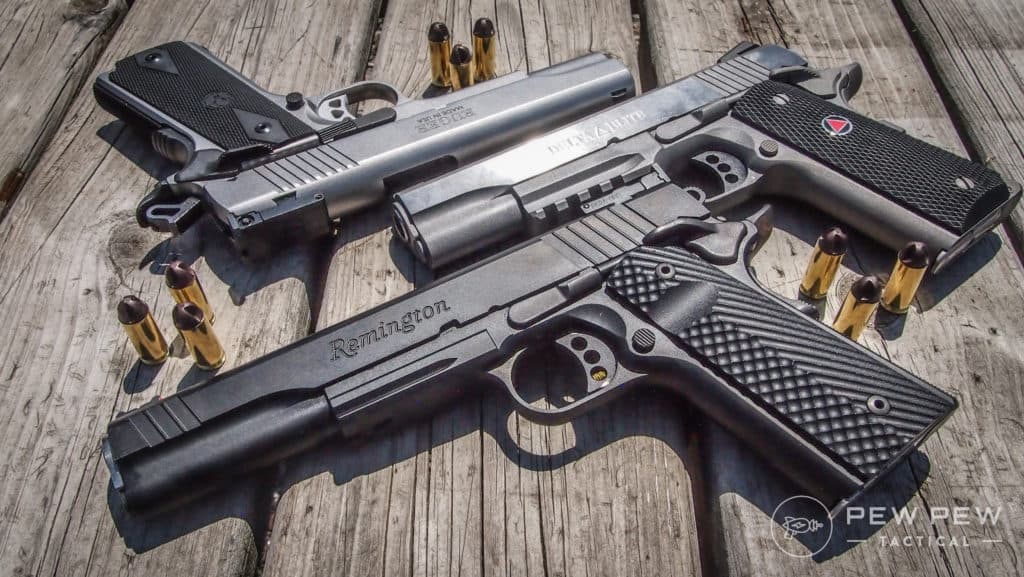
What's the difference? We go over everything from the safety, bushing, and hammer in the Series 70 and Series 90 1911s to see which is the best for you.

Career firearms writer & editor. K9 Search & Resscue. 20+ years CCWing. Hunter
We review products independently. When you buy through links on our site, we may earn a commission to help support our testing. Learn more.
1911s are awesome.
There, I said it. If you gush over the latest plastic fantastic and fail to recognize the usefulness of 1911s you’re missing out.
Not only are they useful, but they’re also not all the same (surprise!).

Over the years a number of changes have been made to the 1911 platform. Today we have 1911s and 2011s, and among those guns there are Series 70 and Series 80 designs.
Consider this your crash course in the differences between 70s and 80s and whether it really matters.
Table of Contents
But First… History!
This is the perfect opportunity to wax poetic about firearms history for a bit. The platform’s title is a dead giveaway to the year the gun went into production but did you know there’s a cool backstory, too? Here goes.
Back in the late 1800’s – and I mean really late, as in 1899 – the United States was involved in a battle with the Moros. The Moros were Muslims residing in the Southern Philippines and the conflict in question was the Philippine-American War, which came about as part of the Spanish-American War.
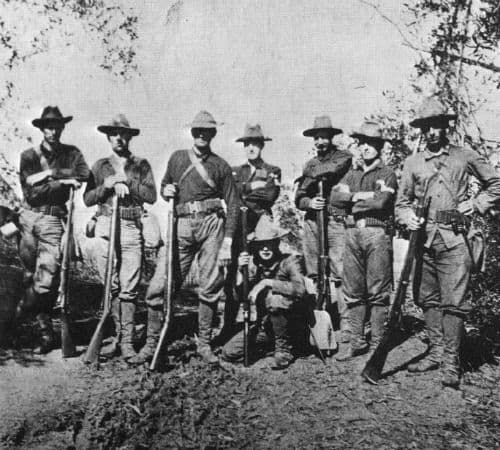
In fact, if you look back at the decade-plus spanning the Moro Rebellion you realize it was an early edition of insurgency.
Among the Moros were men known as Juramentados, a Spanish term that translates to “one who takes an oath.”
The Juramentados were wildly zealous and single-minded in their desire to murder every Christian they could find. A large part of how they managed that task was the way they bound their bodies tightly to slow potential bleeding and self-medicated with narcotics and hallucinogens.
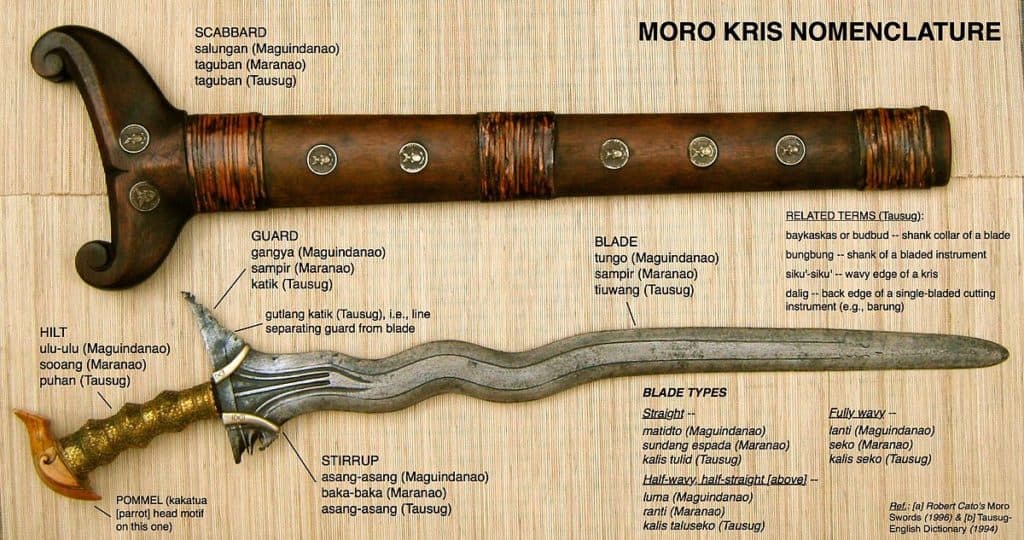
Hard to feel pain when you’re high as a kite, am I right?
The United States was trying to fight the Moro Rebellion using double-action revolvers, specifically guns chambered in .38 Long Colt. They learned the hard way it didn’t work very well; shooting the Juramentados with .38 Long Colt didn’t seem to do help at all.
The shots fired were so ineffective it became a normal thing for officers to empty their revolvers into charging Juramentados and for the wounded Juramentado to reach them and behead them. It wasn’t going well.
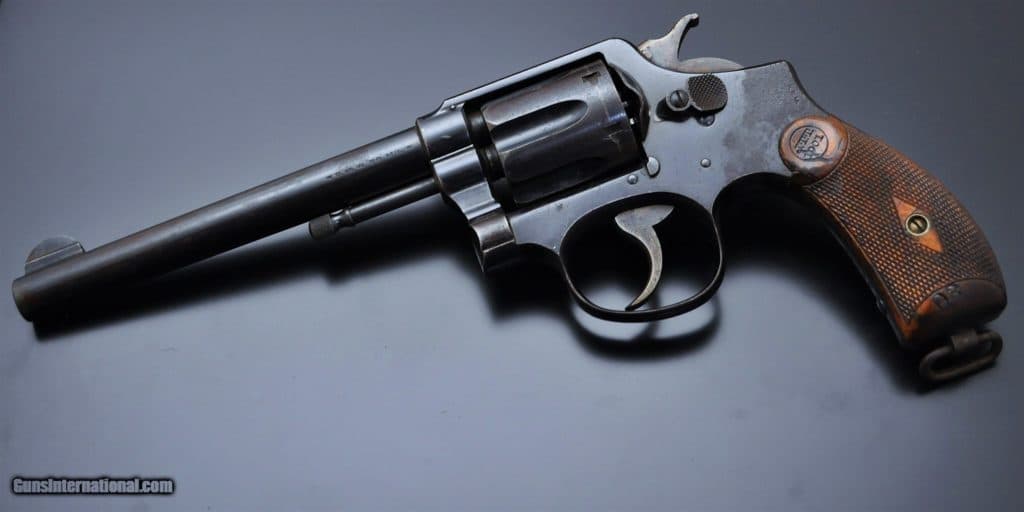
The Moro Rebellion lasted until 1913 and by 1906 the United States knew they required greater firepower. Enter the pistol trials which brought in names you know like Colt, DWM, Smith and Wesson, and Savage, among others.
Here’s where John Moses Browning earned his rep. Browning worked hard on his design and when it came time for the guns to be torture-tested, his passed with perfect performance.
That means it was fired 100 times, given five minutes to cool the barrel, and fired again.
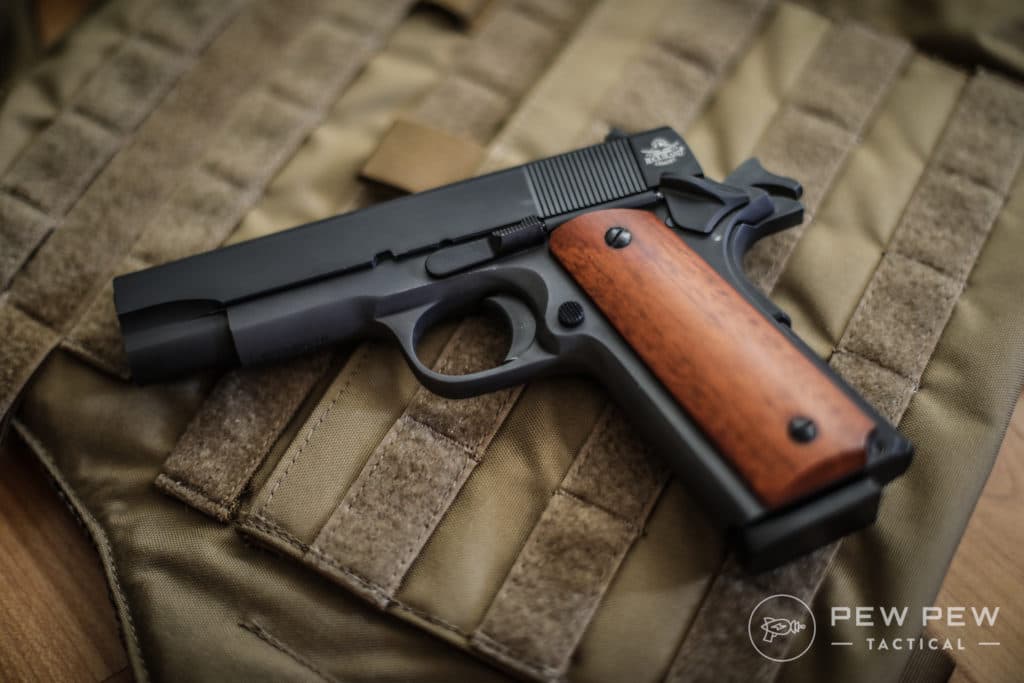
1,000 rounds in the testers cleaned the guns and did it again; 6,000 rounds later they moved on to testing with damaged cartridges.
Guns were also tossed in the water, buried in mud, and soaked in acid. The military wanted to get it right.
In the end that gave us John Moses Browning’s Colt Automatic Pistol, Caliber .45 M1911.
Safeties
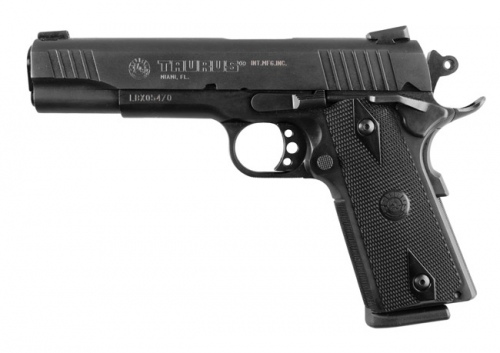
Part of the requirements of the military’s 1906 pistol trials had to do with the gun’s safeties. All guns submitted for the trials were required to have manual safeties and grip safeties which the M1911 has, as you know.
As the M1911 saw greater use changes were made. In 1924 the mainspring housing was redesigned with an arch and the grip safety tang was lengthened. After those changes, the military renamed it the M1911A1.
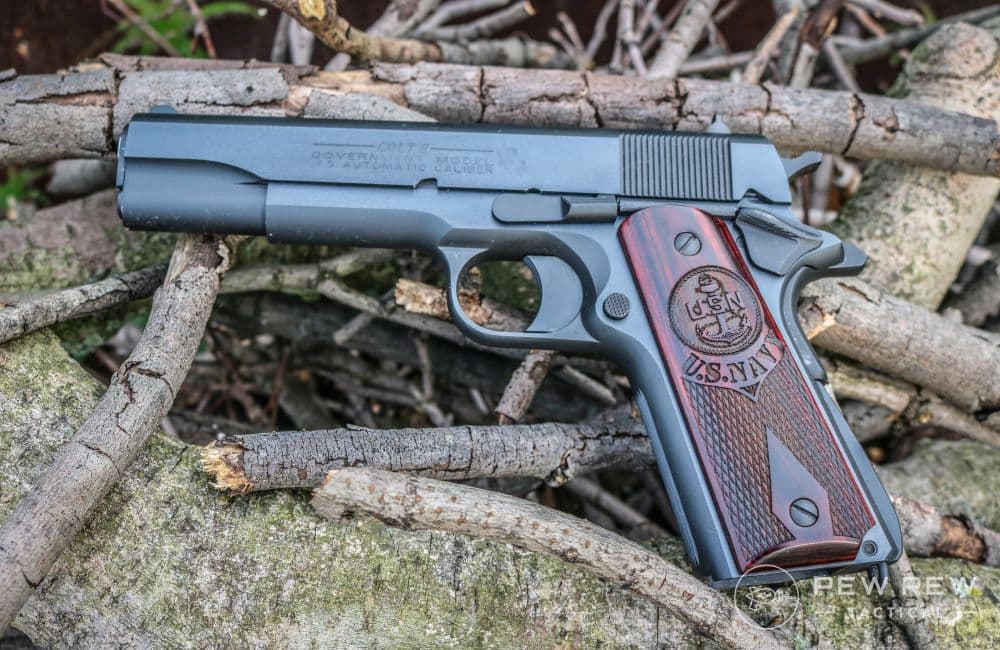
Then, in the 1970s, came the lawsuits. Firearms manufacturers were being sued at rather dramatic levels, so the manufacturers decided to change up the 1911 platform.
Series 70 Vs. Series 80
Most people think of the difference between a Series 70 and Series 80 1911 as being all about the safety. It’s true that seems to be the most noteworthy change made but there was more.
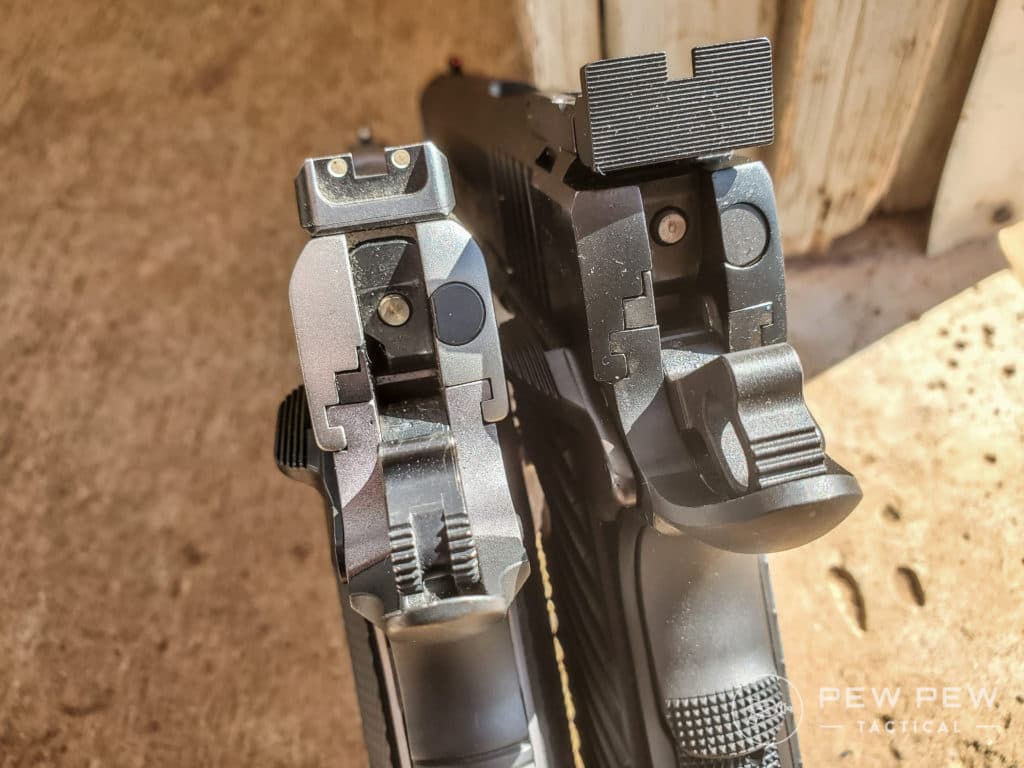
Oh, and the Series 70 was not the original M1911 platform or the M1911A1 it was the result of decades of changes and improvements. The safety is the most commonly discussed and noteworthy change, though.
The Series 80 was created by changing the Series 1970 firing pin safety (or lack thereof). Those changes meant the gun wouldn’t fire until the trigger was completely pressed back.
This was accomplished by adding a firing pin block that could only be moved out of the way by the aforementioned trigger press.
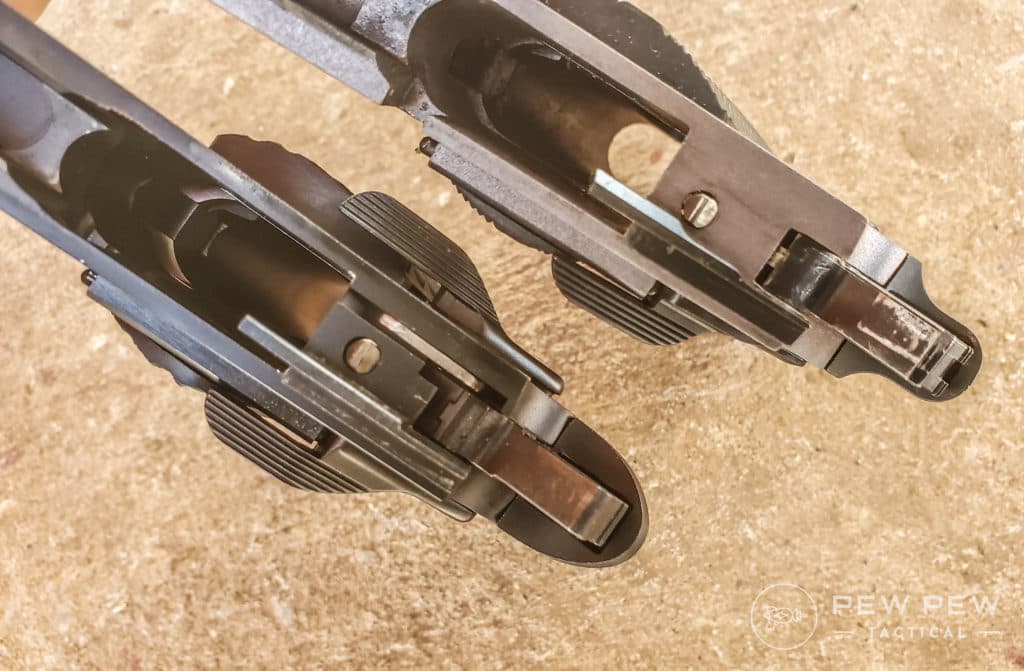
Basically, when the trigger is pressed a slim metal lift in the frame of the Series 80 1911 raises up and presses a safety plunger located in the slide, deactivating the firing pin block and allowing the gun to fire.
The change was a good way to make the guns drop safe. So yes, changes were made to one of the safety mechanisms.
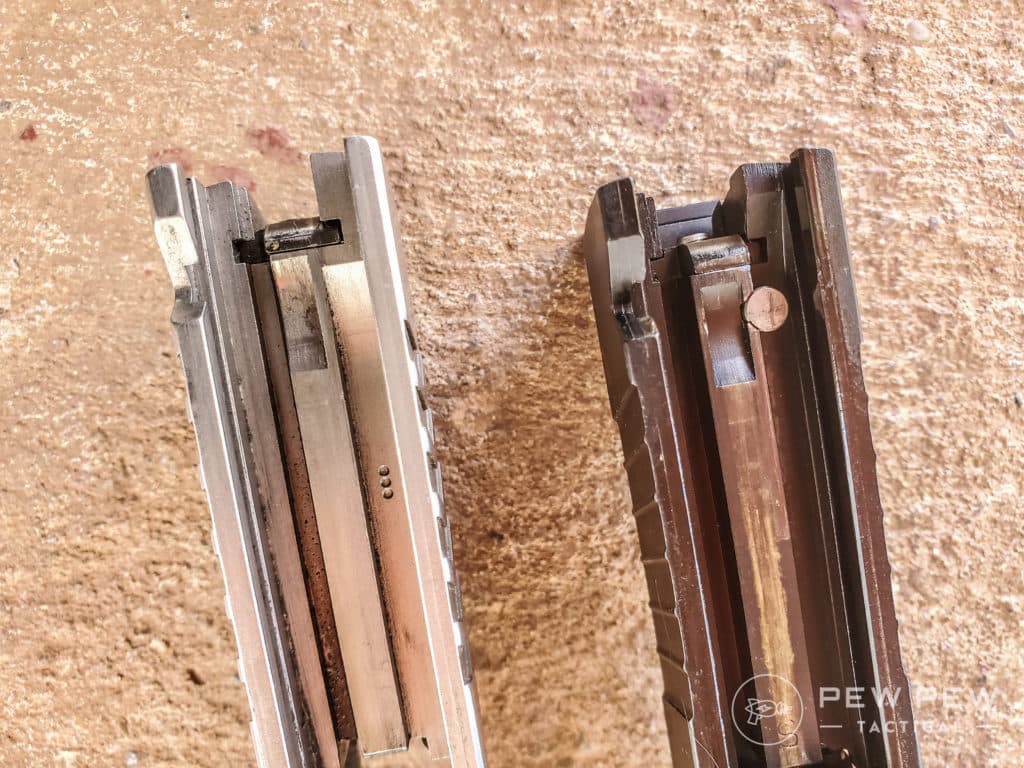
Side note: that does not mean a modern Series 70 is unsafe. There is a slim chance of a Series 70 1911 firing if it is dropped from a significant height, muzzle down, but that chance was/is more of an issue with steel firing pins.
To circumvent that you’ll find manufacturers making changes like using titanium firing pins in their Series 70 1911s.
But Wait, There’s More.
The Series 70 1911 had a collet bushing rather than a barrel bushing. A collet bushing has four separate sections extending behind it rather than the one-piece bushings found on today’s guns.
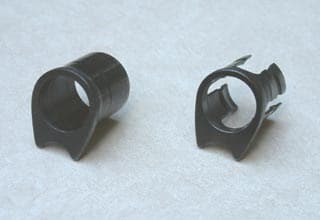
Did it help precision? Sure, but those separate pieces were prone to breakage. Not all the time, but it did happen. Today you won’t find collet bushings used unless you check out the Colt Series 70 line.
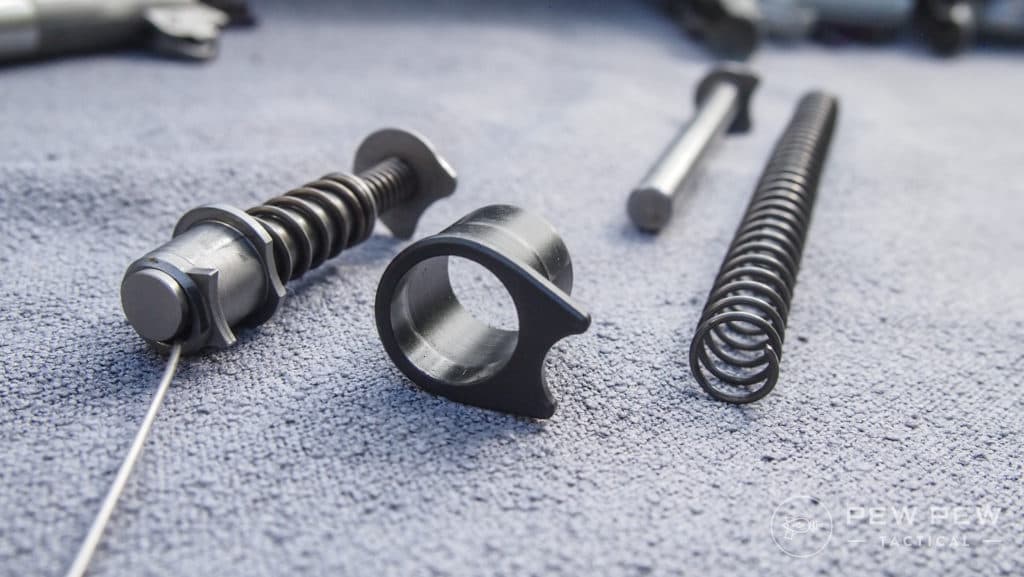
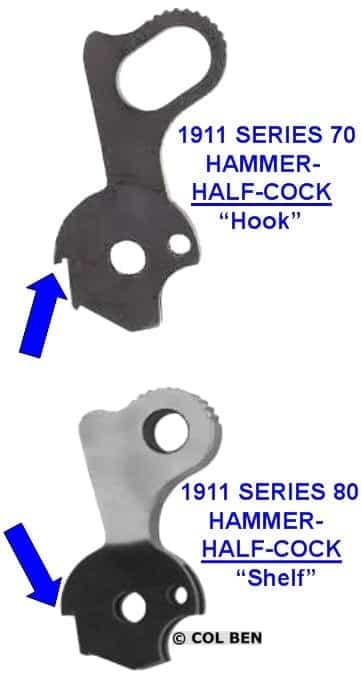
Another change made with the Series 80 design had to do with the hammer. The Series 70 guns had half-cock hooks that functioned by flat-out not going to half-cock if you didn’t manipulate it properly.
The hook was/is quite literally a tiny hook in the part of the hammer you can’t see because it’s inside the gun. The updated half-cock shelf changed that tiny metal hooked edge to, well, a flat shelf.
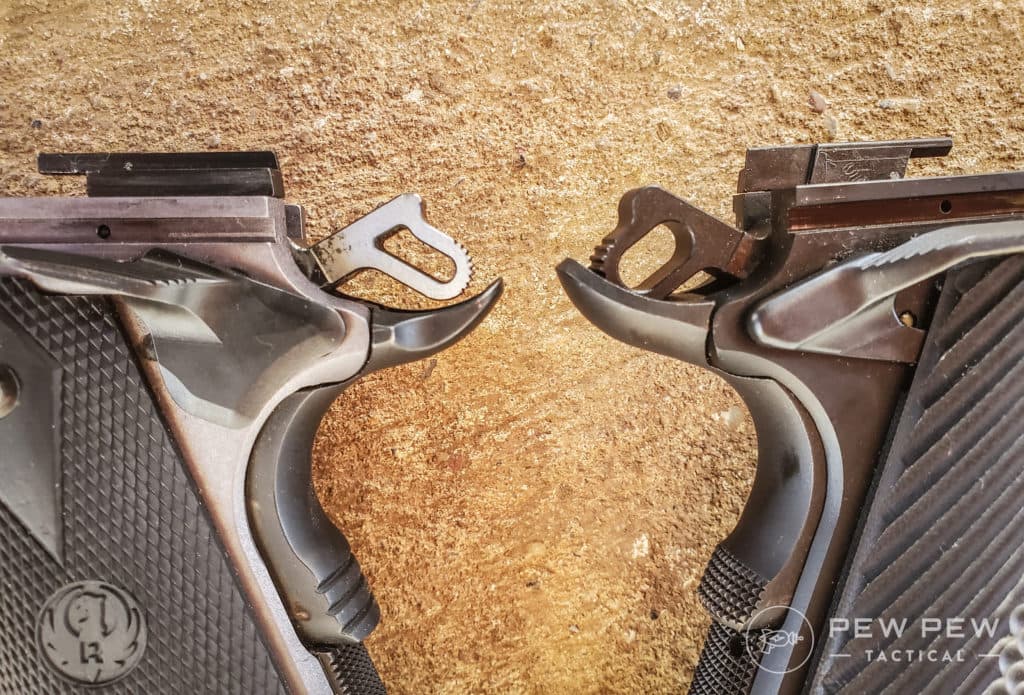
One more thing. Remember the M1911A1 and the way it changed the flat mainspring housing of the original M1911 to an arched mainspring housing? Well, the Series 80 went back to a flat mainspring housing.
There is a pervasive belief among 1911 fans that the Series 80 guns have lousy or somehow unsatisfactory trigger pulls compared to Series 70 guns.
They justify that statement by saying the firing pin block safety of the Series 80 guns makes the trigger pull stiffer and less crisp. Here’s the thing. Triggers vary regardless of the series designation of the pistol.
Triggers are affected by everything from fitment to springs to polishing – you name it, there are ways to change it. If you’re unhappy with your trigger, change it.
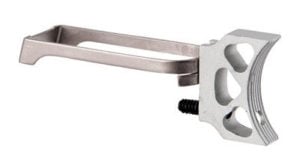
There are plenty of aftermarket 1911 triggers available. Is there a slight difference between the Series 70 and Series 80 triggers? Yes, but it isn’t nearly as enormous as some shooters might lead you to believe.
Guns, Guns, Guns
I’m an equal-opportunity gun lover. If it goes bang odds are I’ll find a use for it (well, unless it’s a tiny caliber, but I digress).
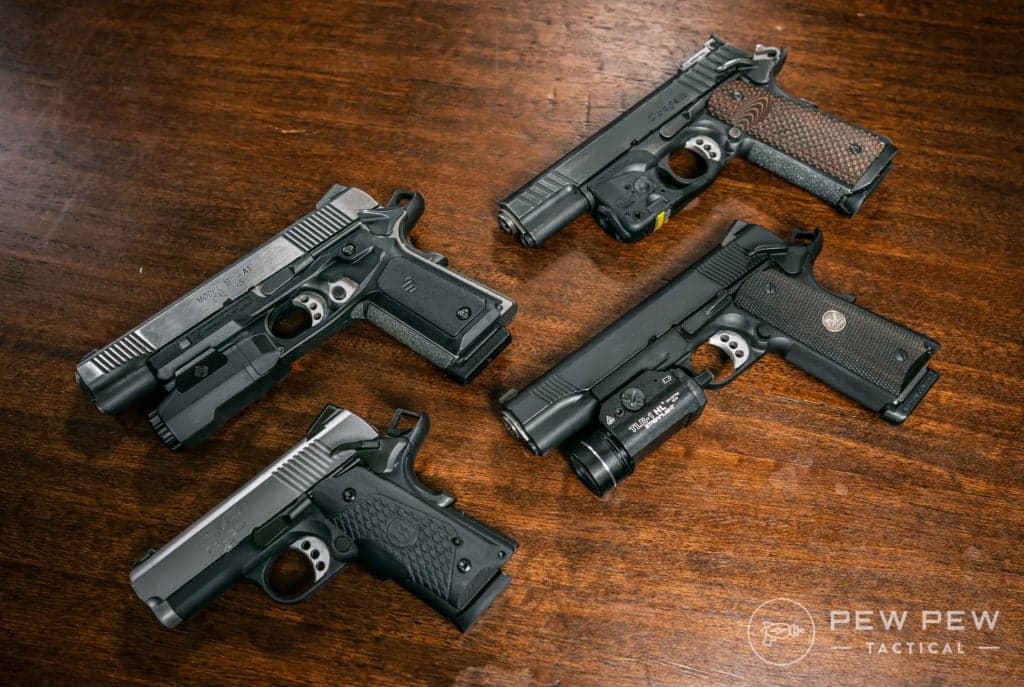
I have both Series 70 and Series 80 guns in my collection. Keep in mind the Series 70 guns you find today are more 70-ish than 70-true. As you can see in the pictures today’s Series 70 guns have the same barrel bushing as the Series 80s.

The big differences are in the firing pin safety block and the hammer shelf found on the 80s. (There are other, smaller nuances but those are the big differences.)
If you haven’t spent time running 1911s, get on it. Try 70s and 80s. Can you really tell which is which without totally disassembling it or being told? It depends on the gun.
There is going to be a slight difference in take-up on a Series 80 trigger over a Series 70 but that does not mean a Series 80 trigger isn’t great. Quality is the biggest factor in the performance of any gun and if your 1911 is well made you’re good to go.
Do you have a preferred style of 1911? Tell us in the comments! If you need a 1911 but with even MORE POWER, take a look at the Best 1911s in 10mm! Or stick with regular .45 ACP in our huge Best 1911s article.