Best 2-Way Radios [Hands-On]: FRS, GMRS, & MURS
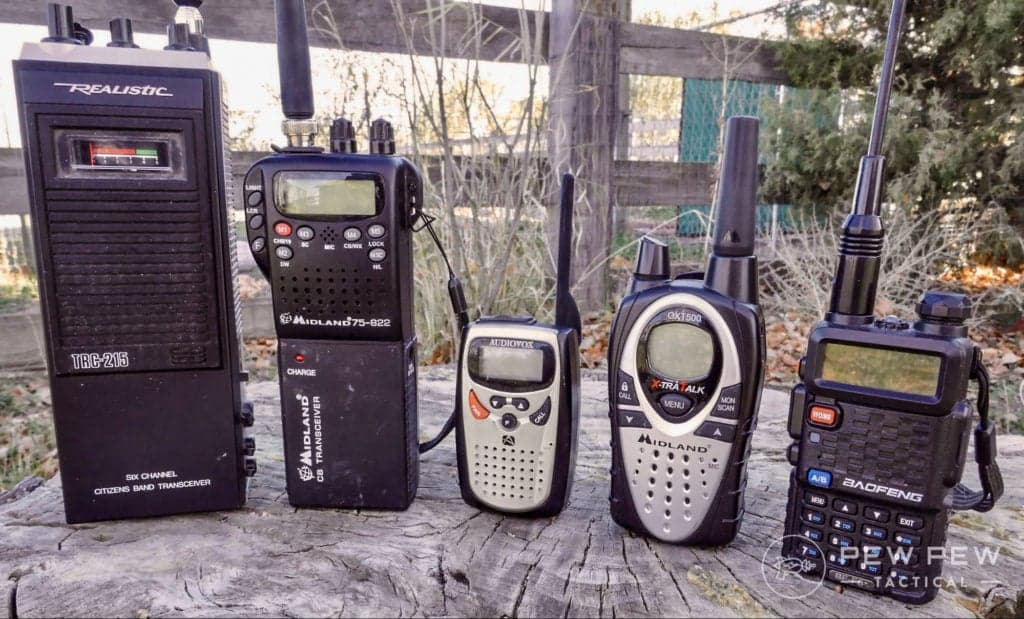
Get comms even when your phone says "No Service" with 2-way radios. We cover the various types of two-way radios and the best models. All in-hand tested.

Firearms writer. Backpack & big game hunter
We review products independently. When you buy through links on our site, we may earn a commission to help support our testing. Learn more.
In today’s world of cell phones and instant communications, sometimes we forget that when we step off the beaten path and the “NO SERVICE” icon is lit up we need a backup plan.
Enter the world of two-way radios.
Most hunters, hikers, and overlanders are likely aware and maybe even familiar with the compact radios available today, but do they really understand the capabilities and limitations of radio communications.
What Is Radio?
I grew up in a house where my dad worked in all manner of electronics, TV, military communications and instrumentation.
However, the miracle of radio and TV sounds and sights was really summed up very easily by me as “FM”; freakin’ magic.

Without getting into the real technical stuff radio can be broken down into three parts: transmitter, receiver, and antenna.
The transmitter generates a signal that carries our speech.
The antenna turns the signal into energy that travels through space as a radio wave.
The receiver converts the radio wave back to speech so the person we are talking to can understand it.
See, Freakin’ Magic!
Fortunately for us, all of the components are housed in handy gadgets called transceivers.
What Types of Radio Comms Can We Use?
Today there are really three types of radio we can access for our outdoor adventures.
CB Radio
Citizen Band radios are most commonly found in vehicles and are still popular with those in the trucking industry, farming, and logging. The CB radio frequencies have 40 channels and are generally reliable over a range of several miles. Vehicle and handheld units are widely available.
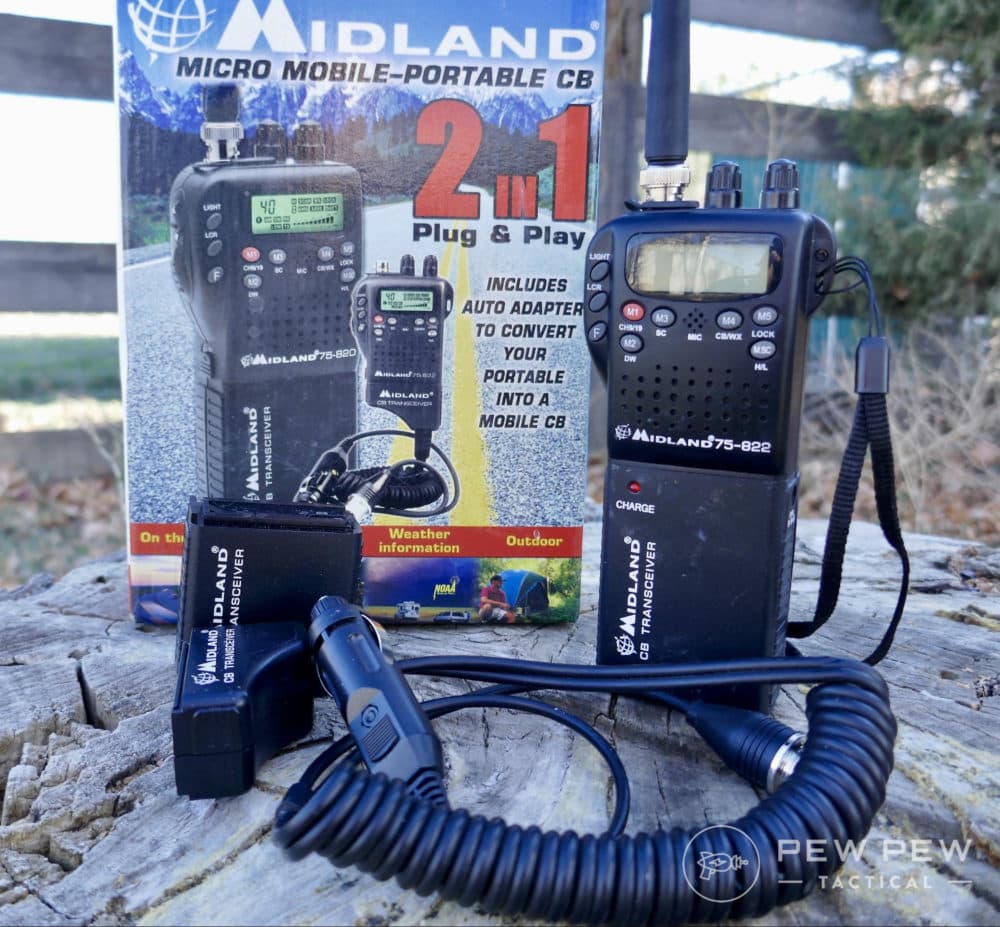
CB radios have been around for a long time. If you’re old enough to remember the ‘70’s you probably remember all the ‘10-4 good buddy’ chat and hearing that famous CW McCall song “Convoy” on the radio.

CB’s allowed and still allow instant, line of sight communication when traveling and may have some utility for hunters and shooters.
Most folks on the road monitor channel 19 to get updates from truckers on traffic, accidents, road conditions, etc.
Channel 9 is set aside for emergency communications only.
FRS/GMRS
Family Radio Service/General Mobile Radio Service is commonly found at big-box stores and outdoor suppliers like Cabela’s.
You’ll see a fancy camo two-pack with a big star on the package that says you can stay in contact with your hunting buddies 26-miles away.
Sounds good, but unless that 26-mile is flat or straight up, you very likely will not be talking to your buddy in the next county.
These radios are by far the most common devices available to hunters, shooters and all who venture outdoors.
By and large, the fancy bubble-pack radio set you find at Cabela’s or Walmart or on Amazon are dual-service radios.
That means they can operate on the 14 channels the FCC has assigned to the FRS as well as the other 9 channels set aside for GMRS.
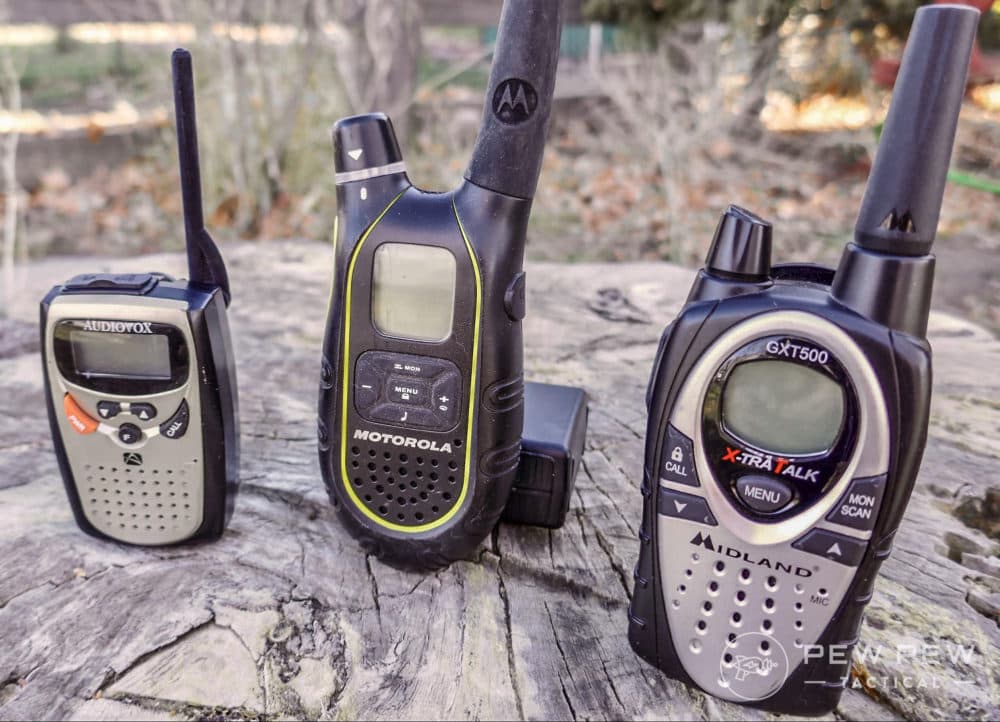
Now here’s where things get a bit confusing for most folks. All 14 channels on FRS are limited to a half a watt of transmitting power. There is no license required and everyone except for spies and foreign operatives can use them.

On the GMRS side of the radio, we share channels 1-7 with FRS and can transmit at up to 50 watts; 5 watts for handheld radios.
Additionally, if you read the fine print in your fancy package, assuming you were able to open it without destroying the contents, you are required by the FCC to have a license to transmit on any GMRS channel.
And it costs you $90 bucks.
Fortunately for those not inclined to read instructions, the FCC has been pretty lenient regarding enforcement of GMRS transmitting violations. However, some fines can run to $20,000 per occurrence.
Times are changing and if you really dig into the FCC rules, enforcement is going to get more strict.

My advice; read the instructions and be very careful which channels you use or spend the money and get the license.
With all that said, is there any point to getting the FRS/GMRS radios for your hunting camp?
Sure. You can still keep in touch with all your hunters if the terrain allows and they don’t stray too far.
The radios are still relatively cheap. Many have an NOAA Weather Alert feature to keep you apprised of any coming storms or bad weather.
Having the ability to keep track of everyone and coordinate help if needed is a nice security blanket to have in your tool kit when far away from civilization.
MURS
Multiple User Radio Service is available to use for personal or business use. The real advantage of MURS is the ability to transmit using 2 watts, giving you a bit more range.

A set of five frequencies that fall in the VHF (Very High Frequency) realm and can be transmitted at 2 watts.
That means four times the output of FRS radios. You can also use longer antennas on MURS to get additional transmitting and receiving range. A definite advantage over FRS/GMRS units.
You can also program privacy codes into the radios, just like FRS/GMRS to help prevent interference on crowded channels. There are no licensing requirements.
Best 2-Way Radios
FRS/GMRS
1. Midland GTX1000VP4
This radio is one of the most reviewed units on Amazon, good to know it's popular and people like it.
FRS/GMRS Dual Service. NOAA Weather Alerts. 142 programmable privacy codes. Comes with desk charger and car charger as well as headsets. It’s also splash resistant, but not waterproof.
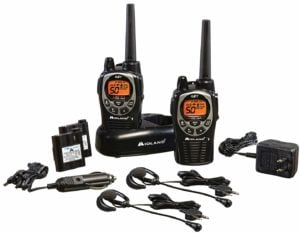
Downside? You need a license to take advantage of the GMRS capabilities and higher transmitting power.
The 36-mile range claim is good for marketing, probably not realistic and the 50 channels include pre-programmed Midland channels...there are not 50 channels available to FRS/GMRS.
2. Midland T10 X-Talker
This radio is simple and light-weight and it uses AAA batteries so you can carry spares in the backcountry on extended trips.
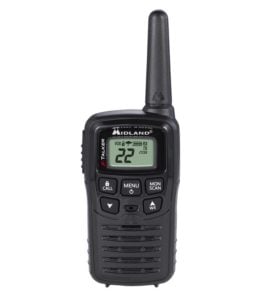
Comes with FRS/GMRS Dual Service, NOAA Weather Alerts, and a silent mode. Best of all? Water-resistant case.
Don't forget though - licensing is required for GMRS use and in our opinion that 20-mile range is optimistic.
MURS Radios
3. Dakota Alert MURS 2-Way Radio
MURS radios are a little harder to find and a bit more expensive than FRS/GMRS radios.
However, given the transmitting power, no licensing, simplicity and relatively unused frequencies this is the type of radio I would buy.
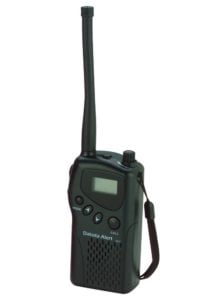
The Dakota radios have 38 programmable privacy codes and will run about 40 hours on a charge.
These radios are also compatible with Dakota driveway alert systems.
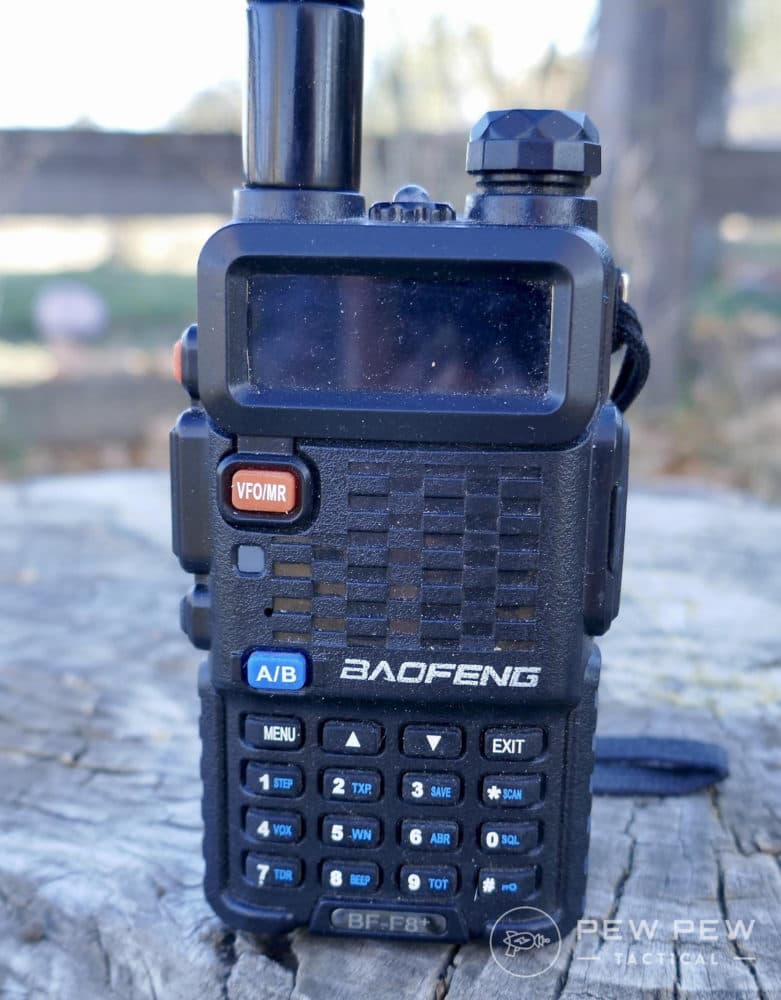
4. BaoFeng UV-5R Dual Band Radio
These radios kinda run the ragged edge of legality with the FCC. They are primarily designed as a dual band HAM radio...but, they are also programmable to receive and transmit on FRS, GMRS, and MURS frequencies.
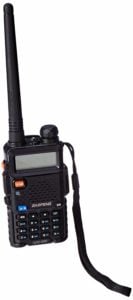
The legal issue arises in the output power, 5 watts, and the removable antenna.
You will also need to be a licensed Amateur Radio operator (HAM) to transmit on the 2-meter and 70-centimeter bands.
If you choose this option do your research and stay compliant!
It’s hard to beat the features for the money.
What's your take on the Baofeng?
{
  "blockName": "core/shortcode",
  "attrs": [],
  "innerBlocks": [],
  "innerHTML": "\n[ar]\n",
  "innerContent": [
    "\n[ar]\n"
  ]
}
Honorable Mention
5. Garmin inReach Mini
The Garmin inReach is not a radio, but it may be an option for those needing to keep in touch, but not communicate constantly.
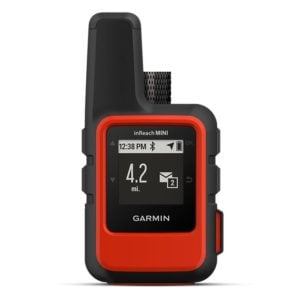
These units utilize the Iridium Satellite Network and allow you to track your position, text with a compatible device like your cell phone and send preset messages to those who need to know your whereabouts.
There is also a 24/7 Search & Rescue link feature should you hit the SOS button and need immediate help. With up to 90 hours of battery life, you can send a lot of messages out over a long trip in the backcountry.
Signing Off
There is really no reason to be out of touch, even if we are going to woods or range so our cell phones won’t work.
Calling shots at a competitive long range match or calling your buddy to help pack out an elk is well worth packing a radio in your gear.
The radio services and radios discussed above will all work for those who venture outdoors.
Just remember, there are limitations to the range.
There are rules to follow. There may be licensing required depending on the service you choose.
Maybe one day we’ll have a Star Trek transmitter and be able to “beam” that bull elk out of the woods and right to our freezers.
But then, what would be the fun in that? We go to the wilderness to find adventure and test ourselves.
How do you stay in touch when you're disconnected from your cell phone? Let us know in the comments! Before you run off into the woods, don't forget to bring a good knife with you - Best Survival Knives!