I may earn a small part of the sale from links to any products or services on this site. You do not pay anything extra and your purchase helps support my work in bringing you more awesome gun and gear articles.
If you’re interested in taking up long-range precision shooting, I can promise you it’s a thrill and a challenge worth pursuing.
It’s also so expensive that it prices most people out of the fun.
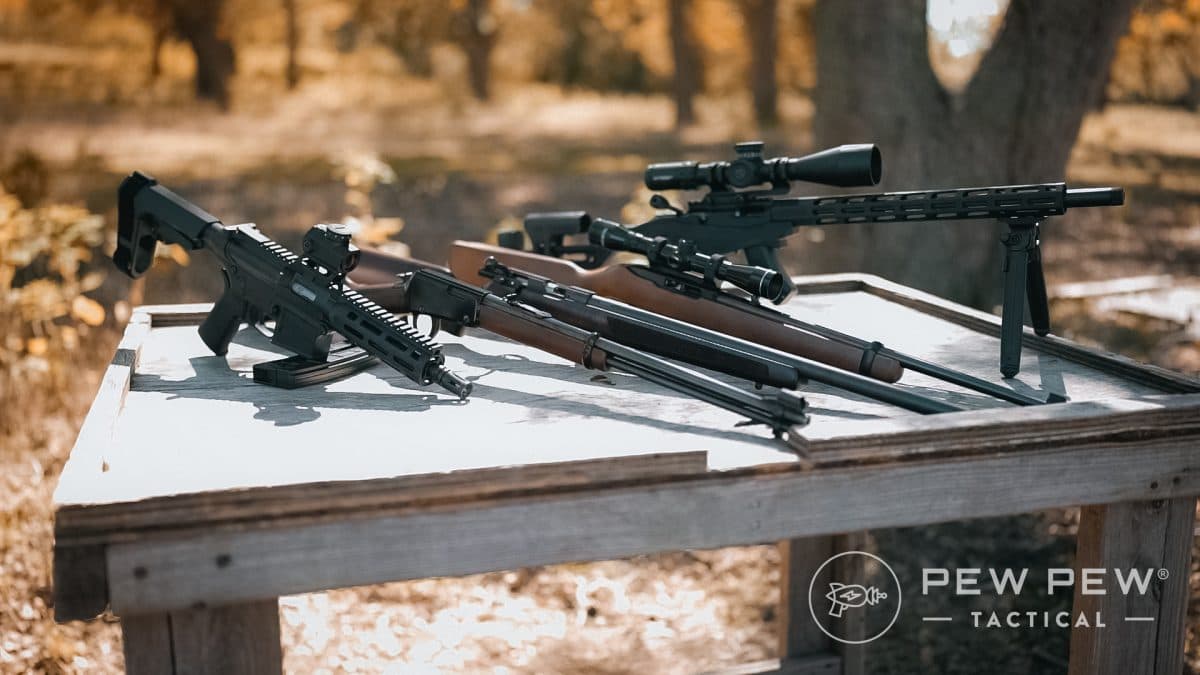
One way to make it more affordable is to scale things down with a rimfire rifle and distances that you can find at most outdoor ranges. You can find rifles, scopes, and ammunition that all keep costs attainable for us normies – if you know where to look.
Let’s jump right in with the best .22 LR Precision Rifles that don’t blow the budget!
My goal for this roundup was to find the best .22 LR precision rifles that are still attainable for recreational shooters.
If you’re reading this with a gun safe full of Anschutz and Vudoo rifles, just hold your horses. I know those guns rock. This article is for the average shooter who wants to get into precision shooting or varmint hunting without taking out a new line of credit.
Round Count & Reliability Testing
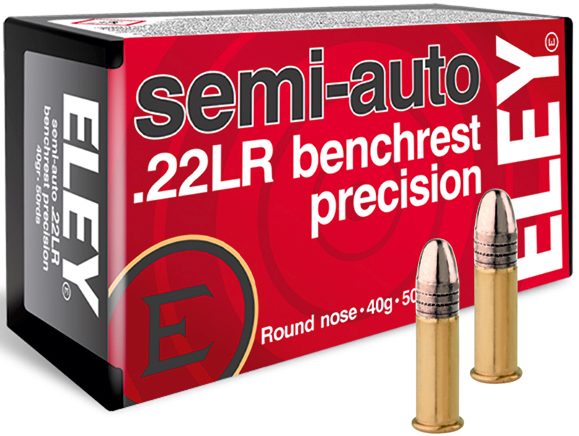
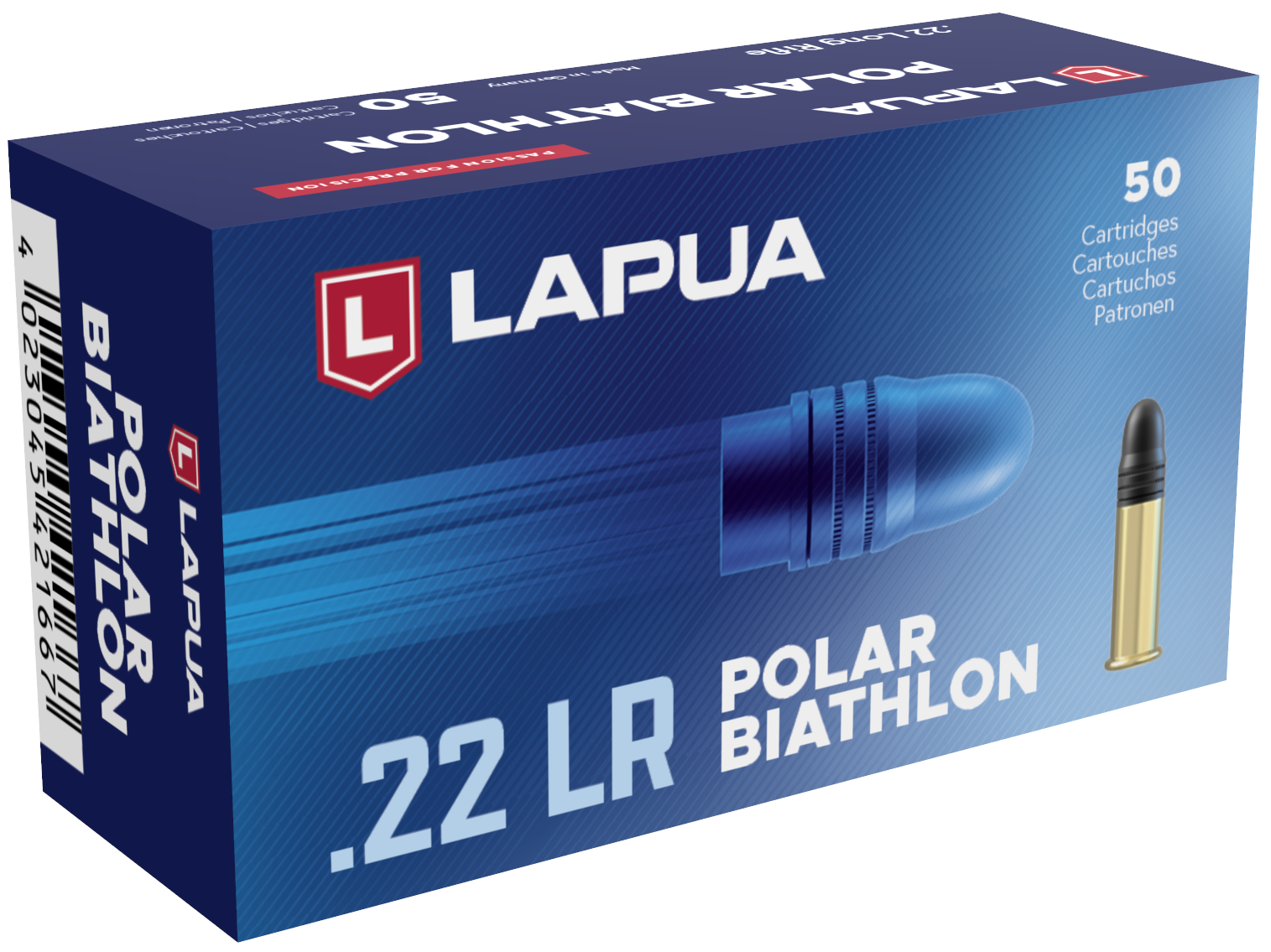
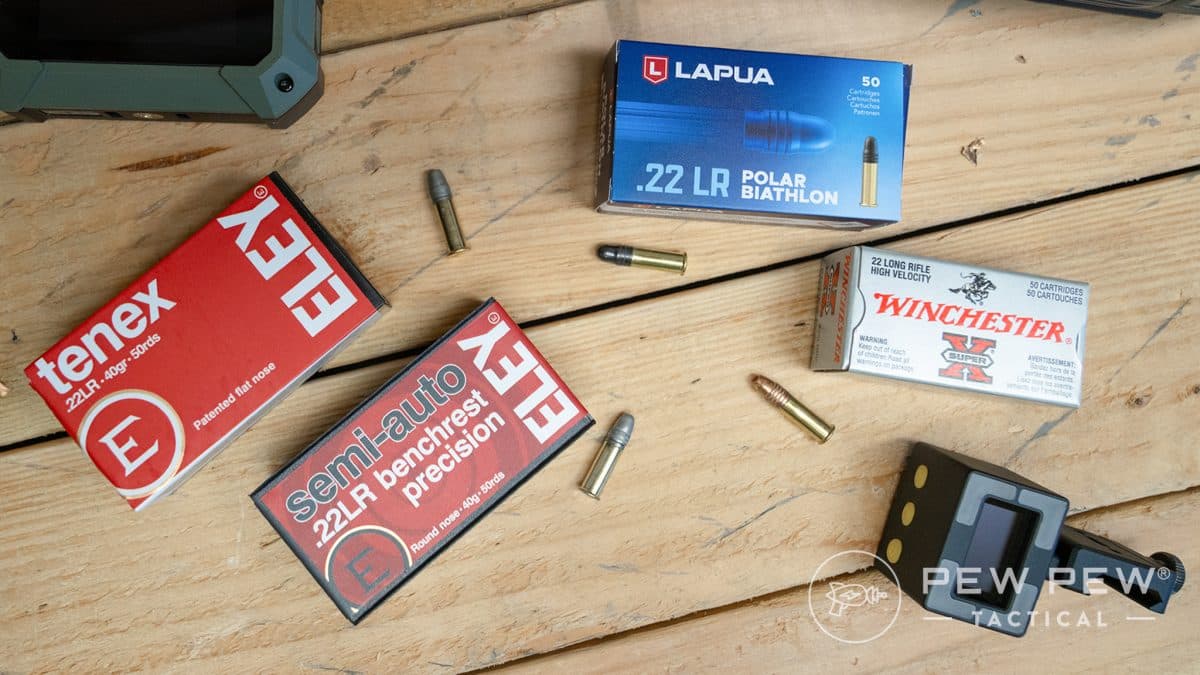
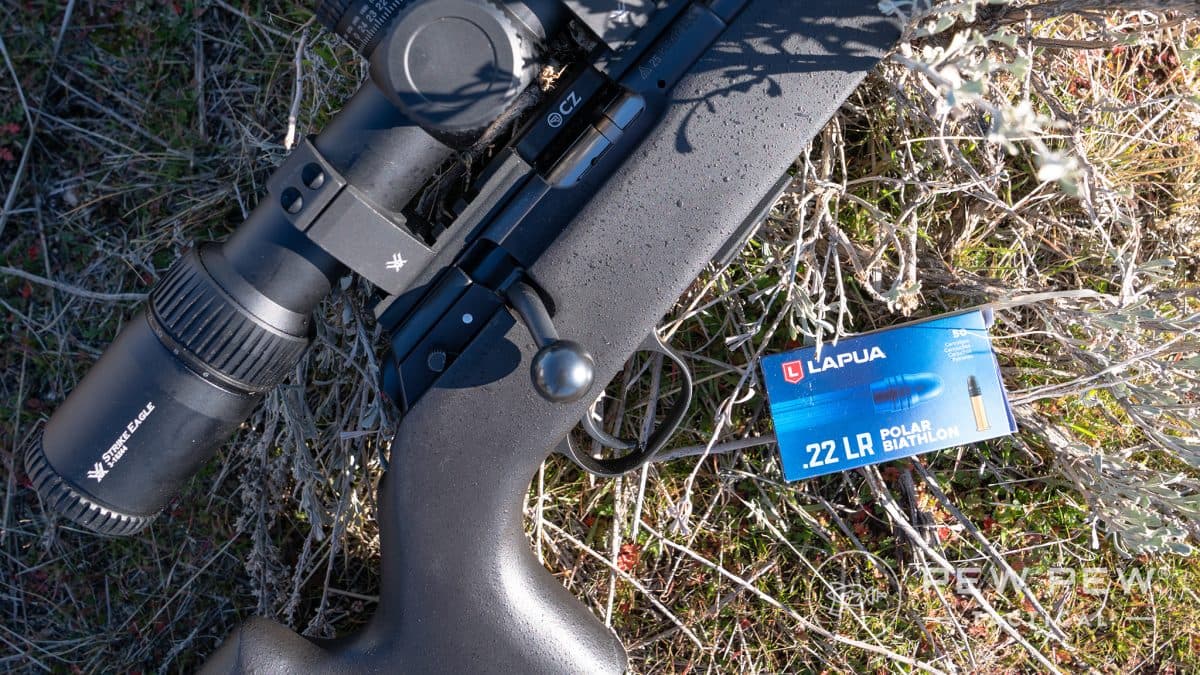
Precision rifles tend to have preferences for certain ammunition, so I fed my test rifles one box each of Eley Semi-Auto Benchrest Precision, Eley Tenex, and Lapua Polar Biathlon. (Word to the wise, finding match-grade .22 LR ammo isn’t always easy; buy in bulk when you find some you like).
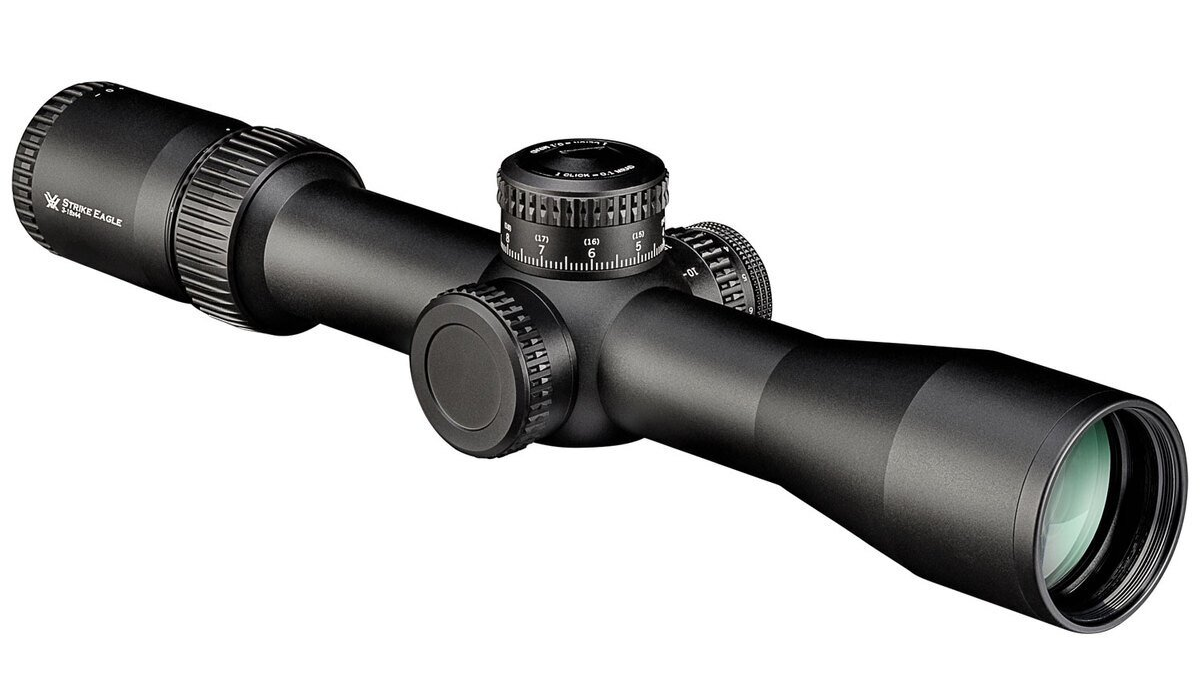
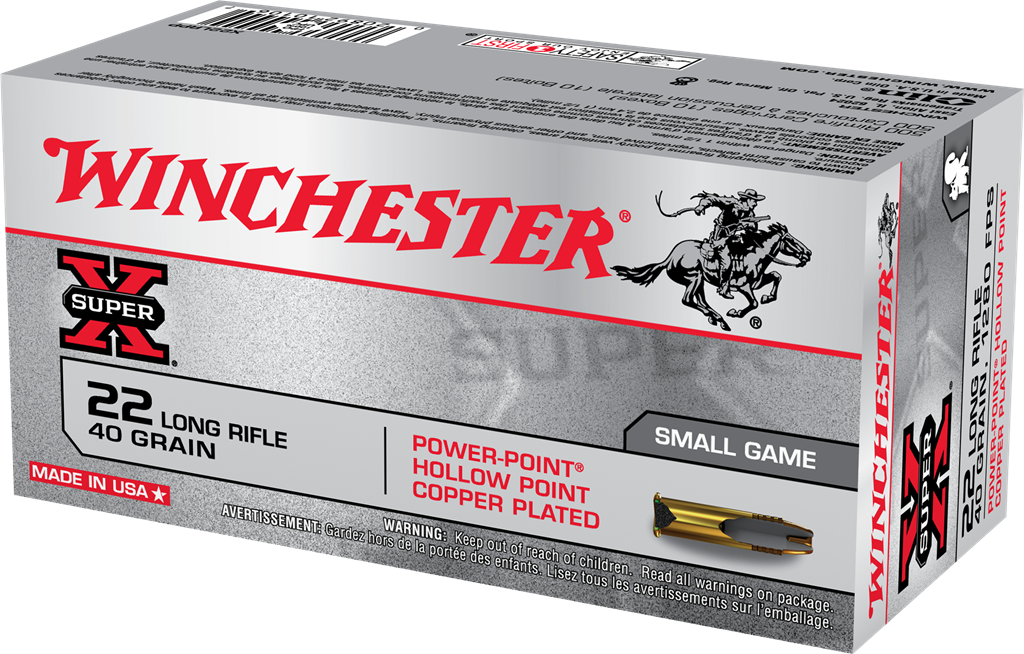
I also burned through at least two boxes of Winchester Super-X to see how they handled plinking ammo and to get on target when setting up the scope for this comparison, a Vortex Strike Eagle 3-18x44 FFP.
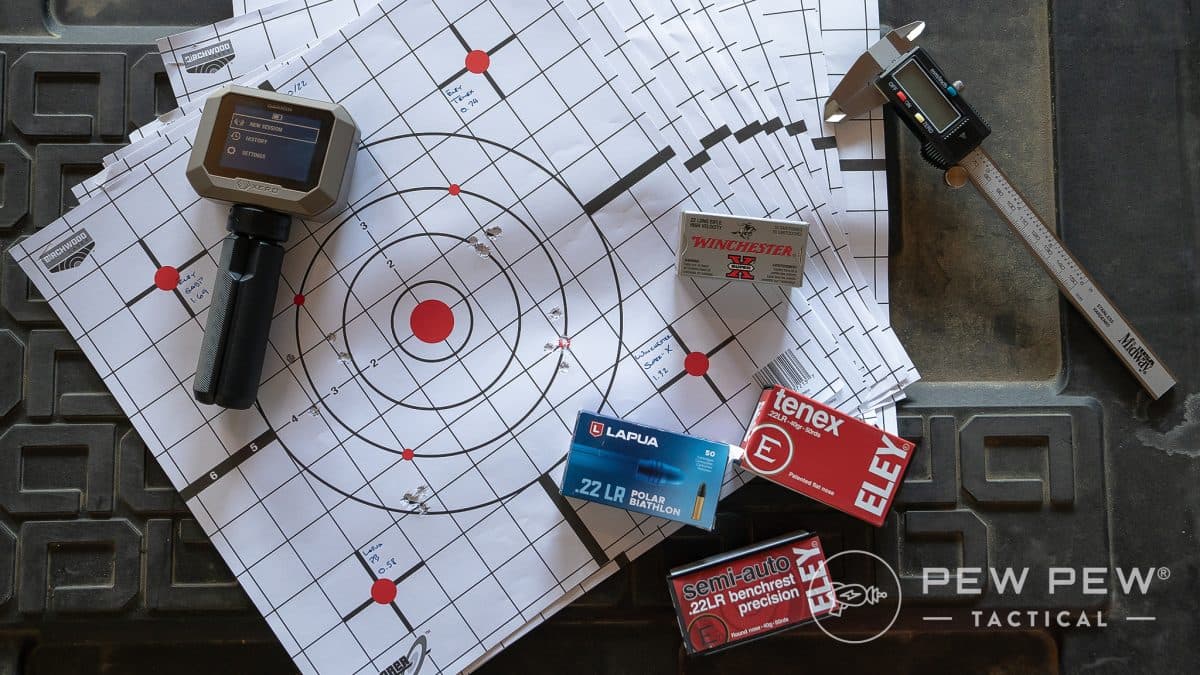
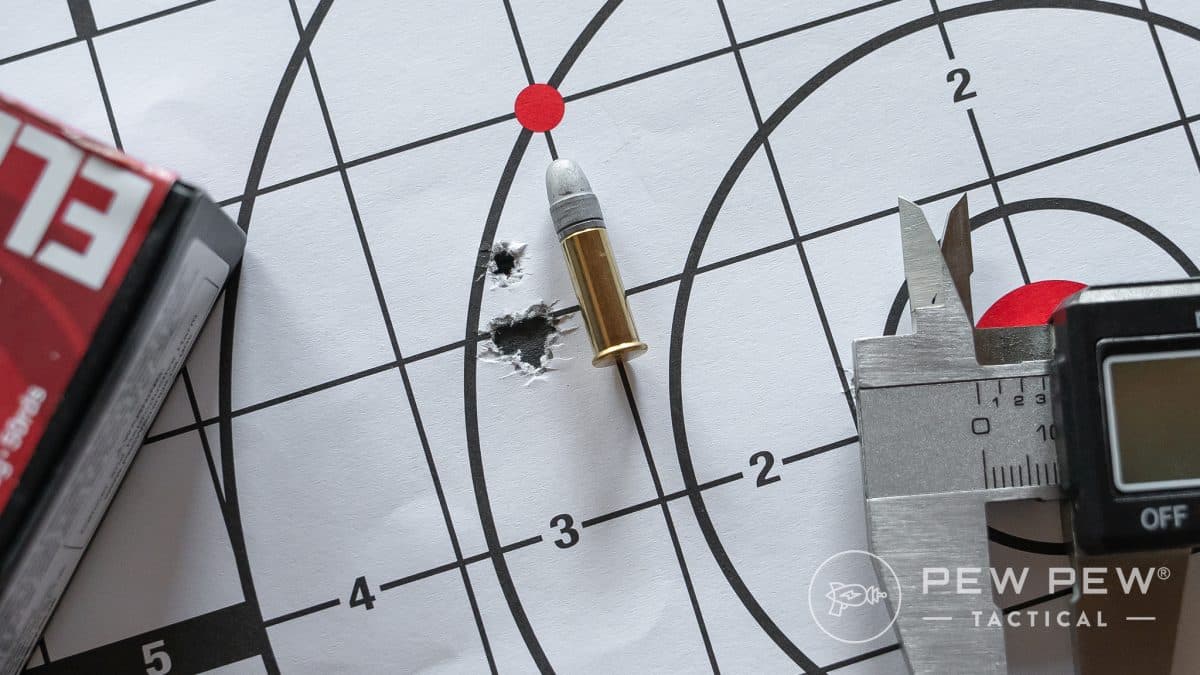
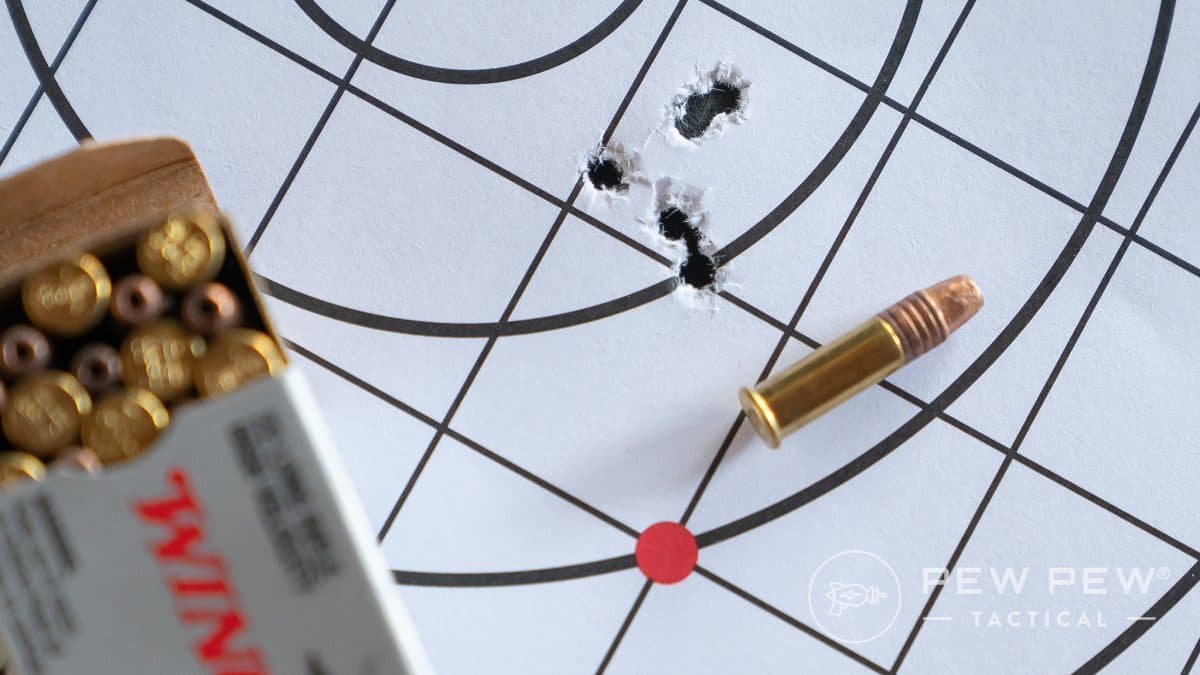
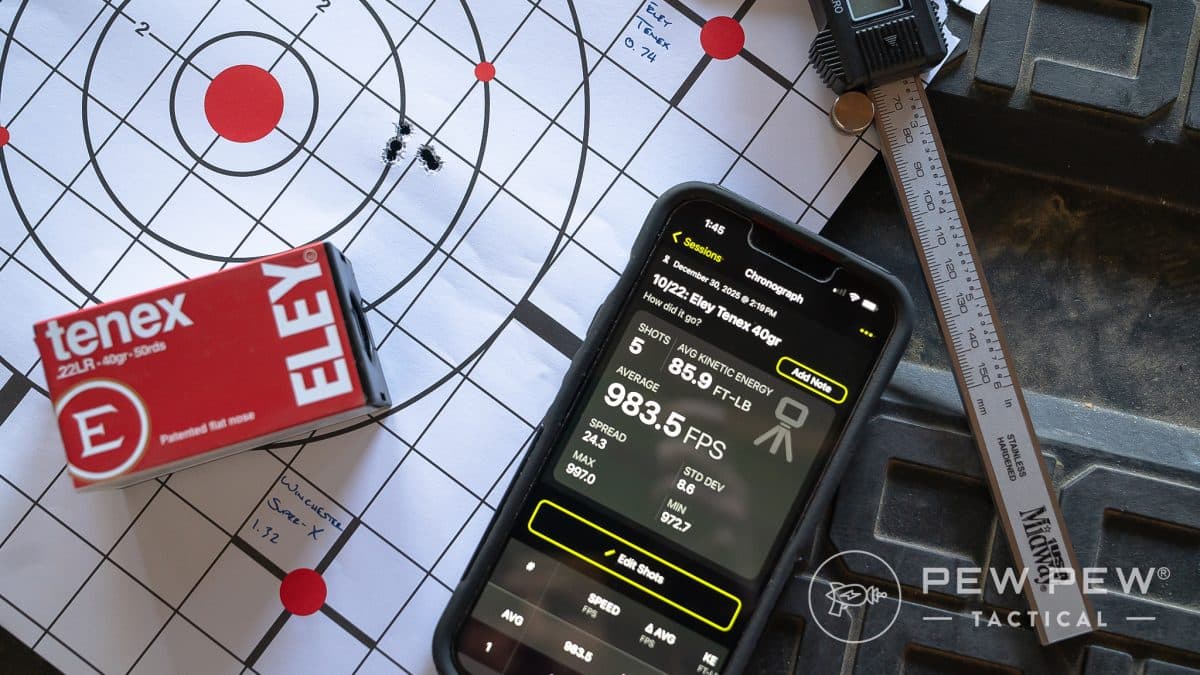
On the range, I shot a series of 5-shot groups at 50 yards with each type of ammunition to compare accuracy, and recorded the best result. My goal was to keep the center-to-center measurement of the outer impacts inside one MOA, which is 0.5235 inches at 50 yards – I’ll call it half an inch.
Why 50 yards? That’s a common zeroing distance for competitive .22 LR shooters. It also minimizes the effect of wind – remember that these are very aerodynamically inefficient bullets moving slower than the speed of sound.
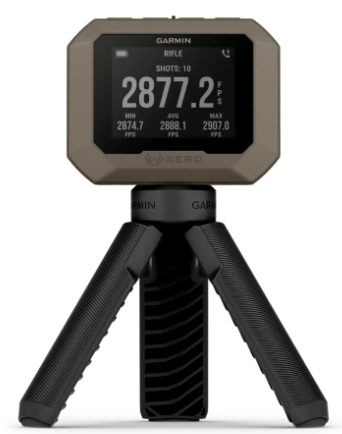
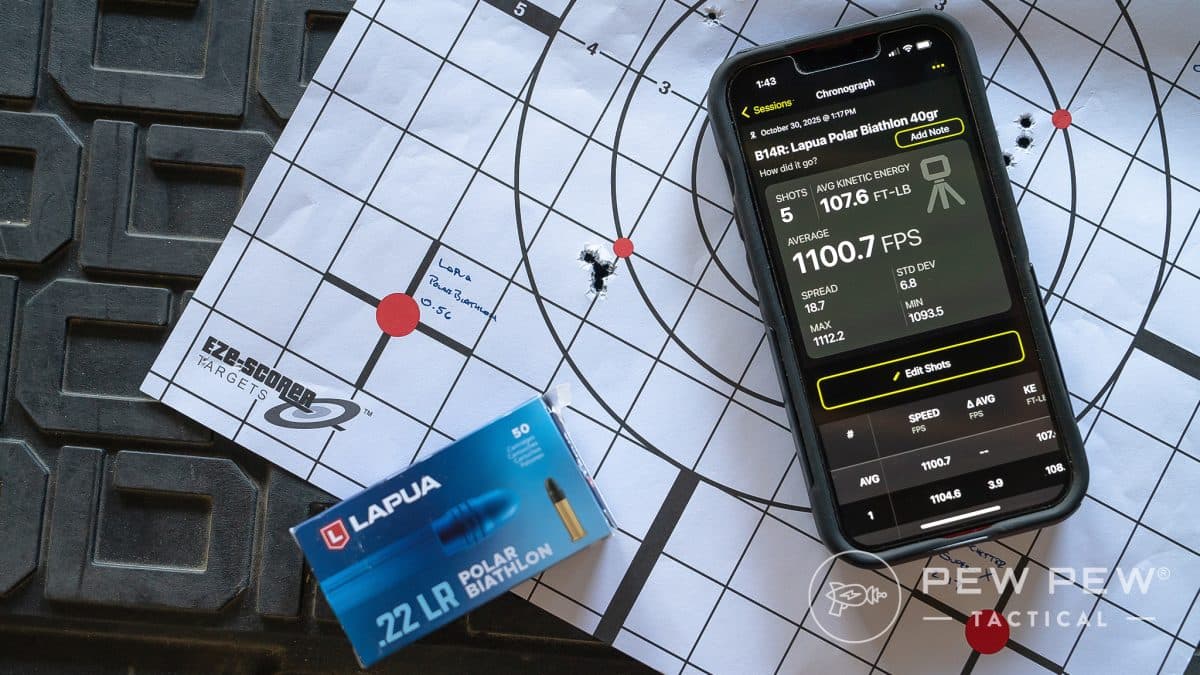
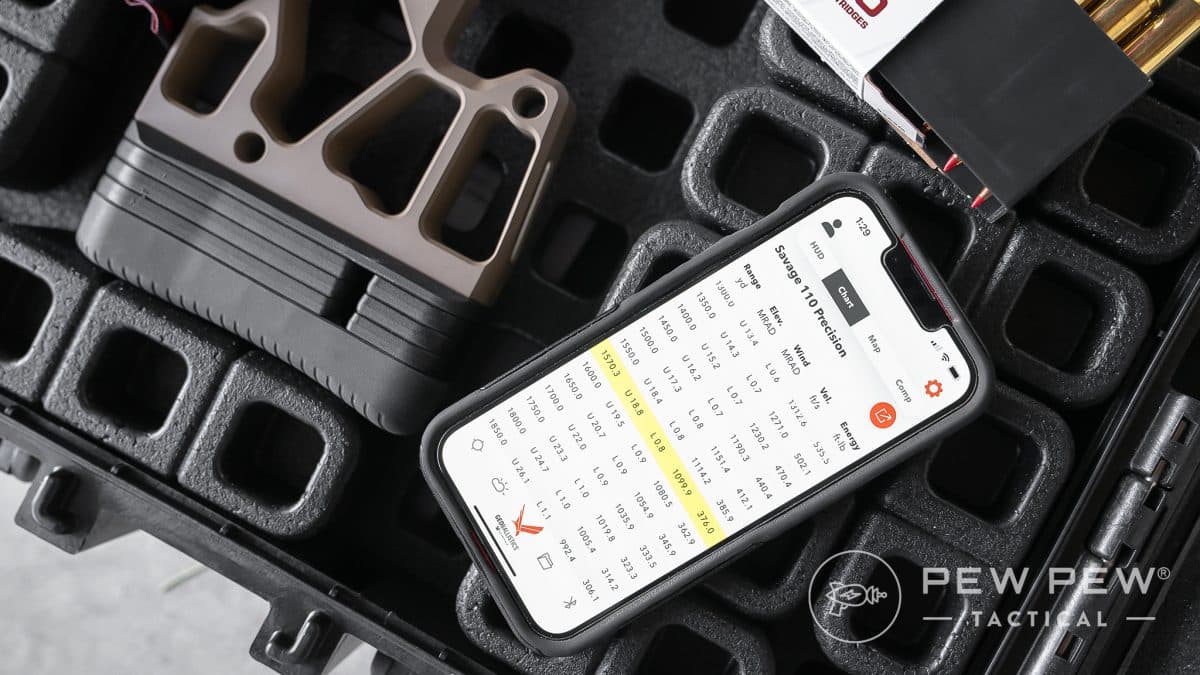
I also chronographed each type of ammunition with a Garmin Xero C1 Pro to collect data on velocity. This is interesting to compare, and it’s absolutely essential when building out your rifle profile in whichever ballistic calculator app you prefer.
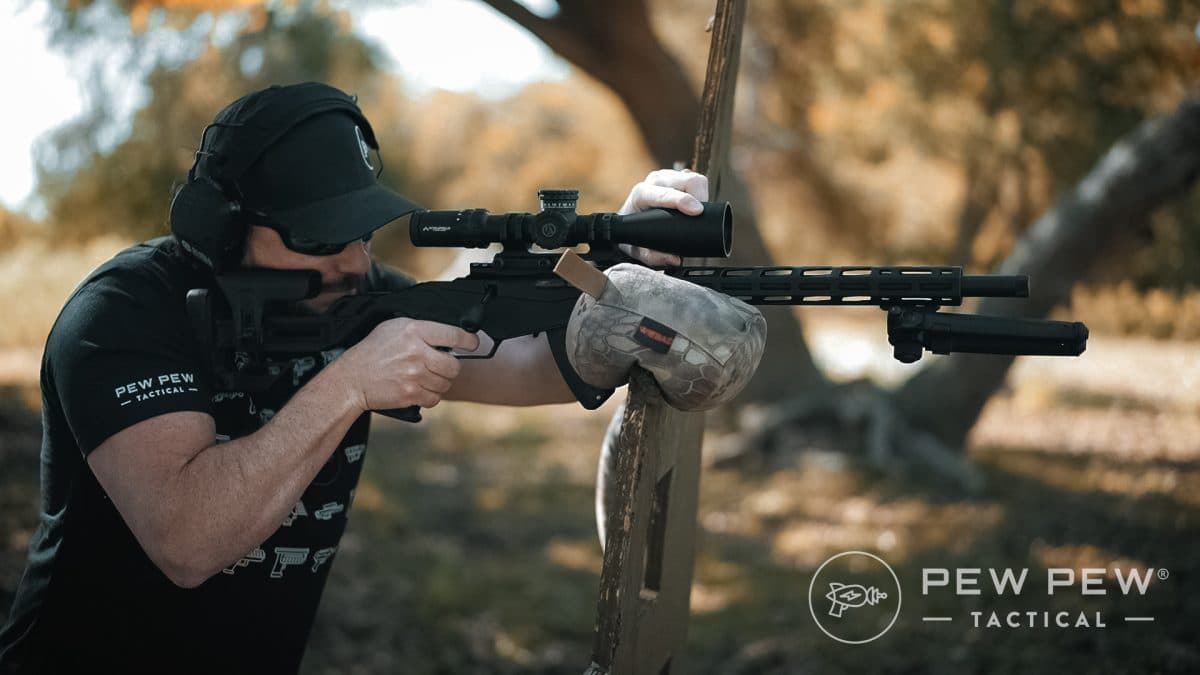
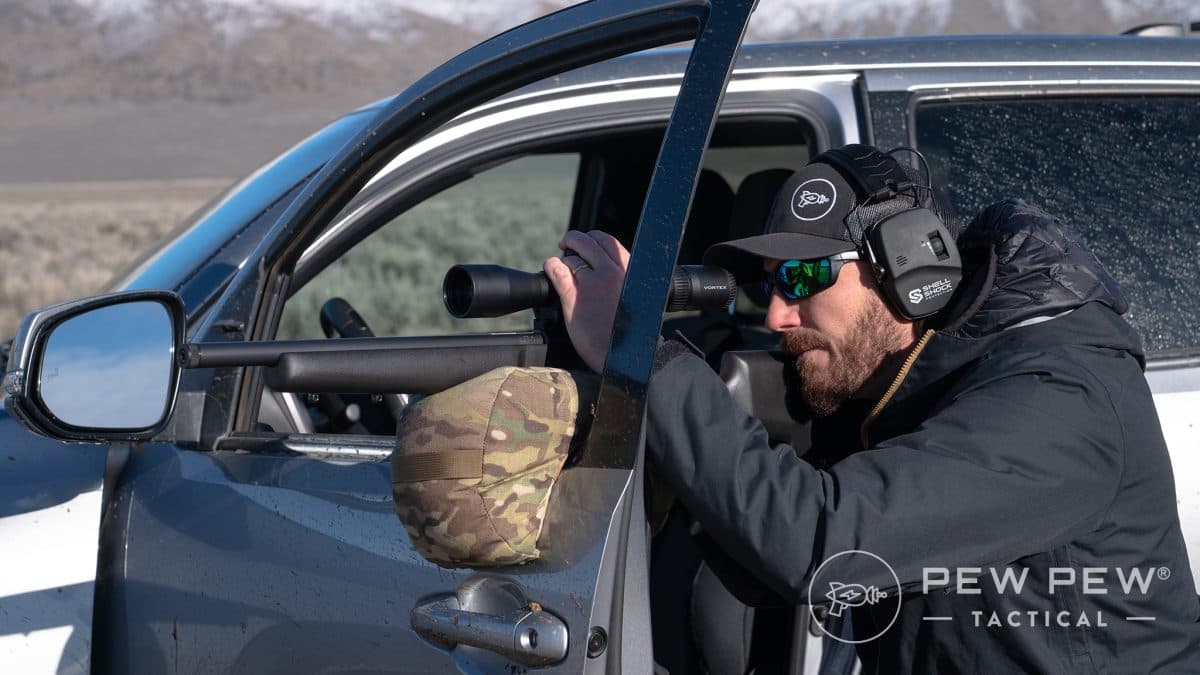
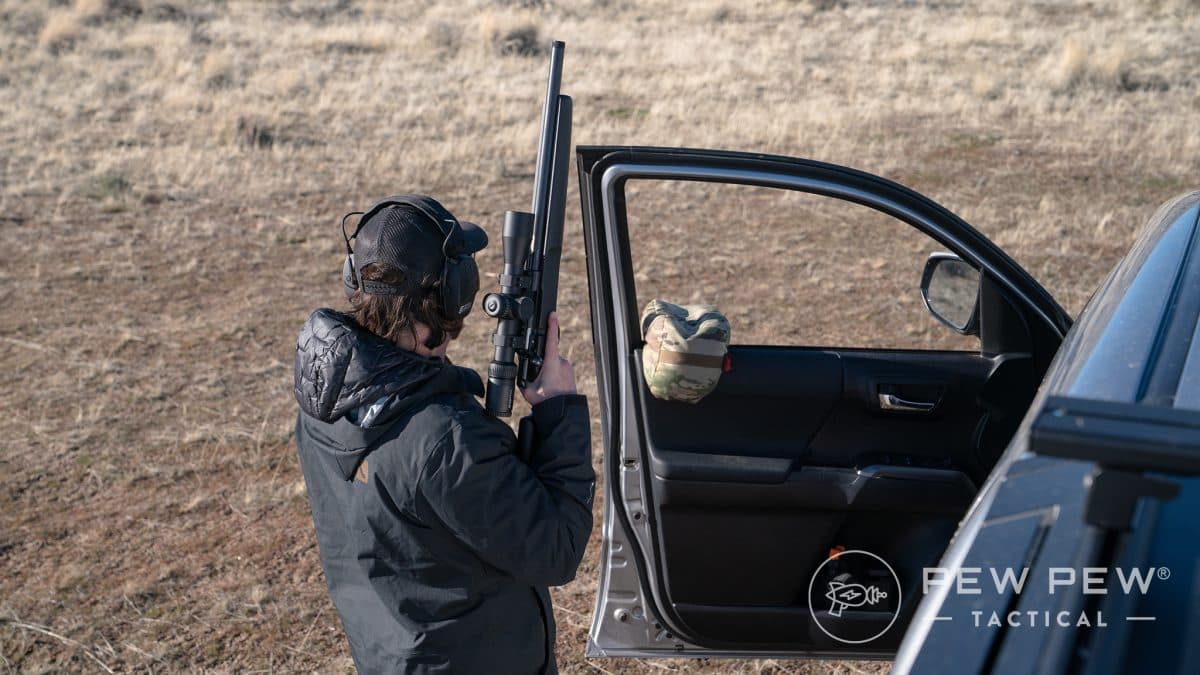
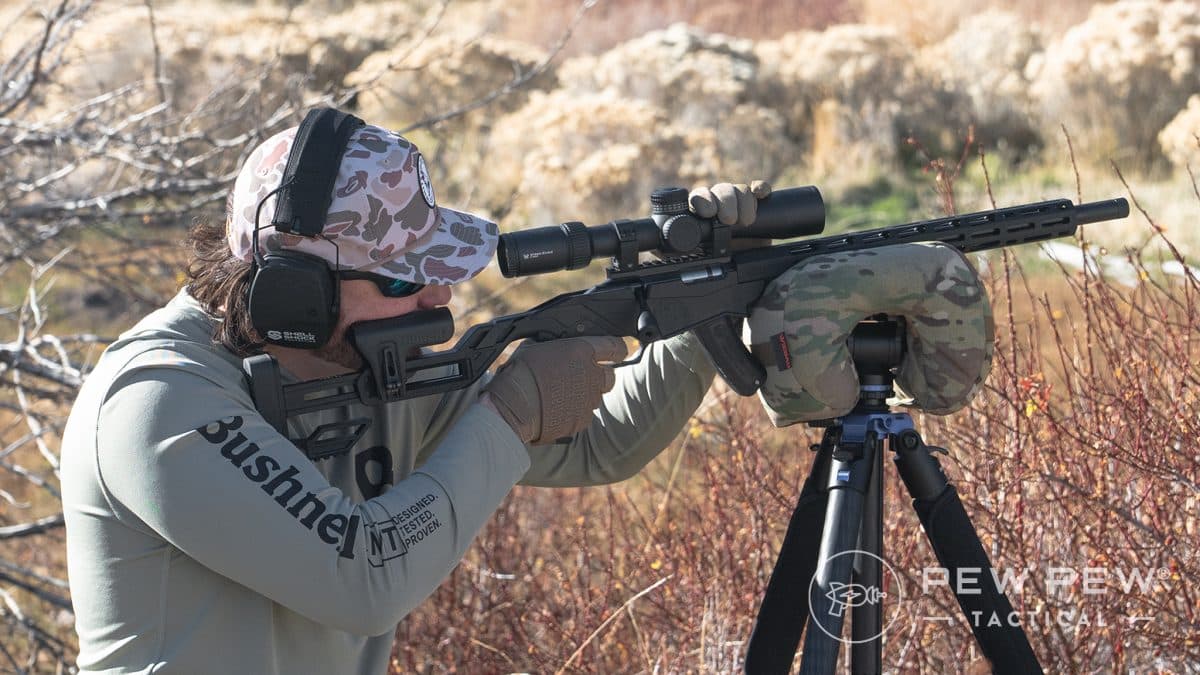
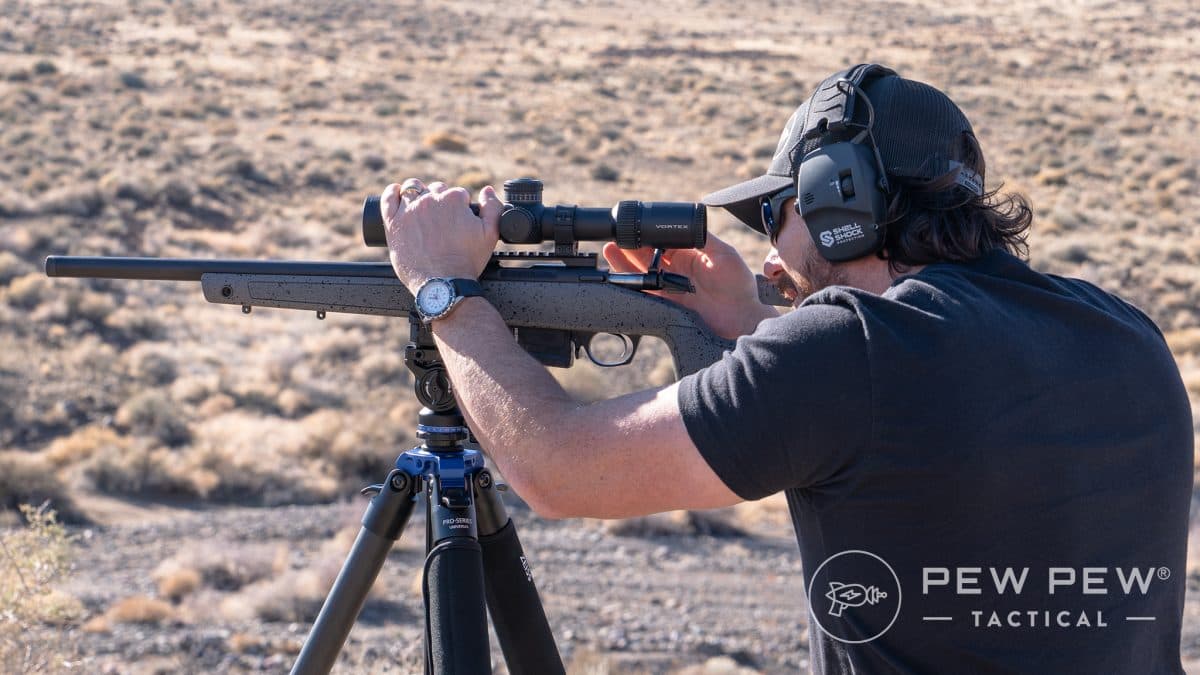
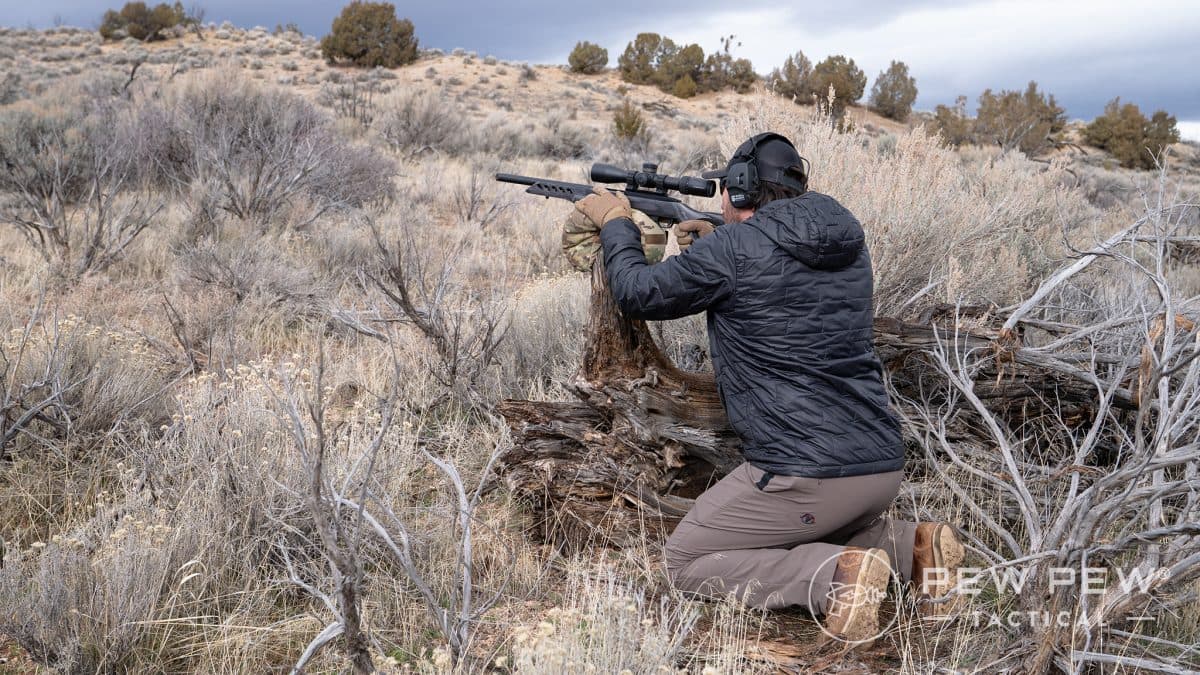
Finally, I closed out each test by pushing each rifle to its (read: my) limits with steel targets out to at least 200 yards to see how easy or difficult they made my job of hitting the target. This involved all kinds of positions and rests, ranging from a tripod to a fallen tree.
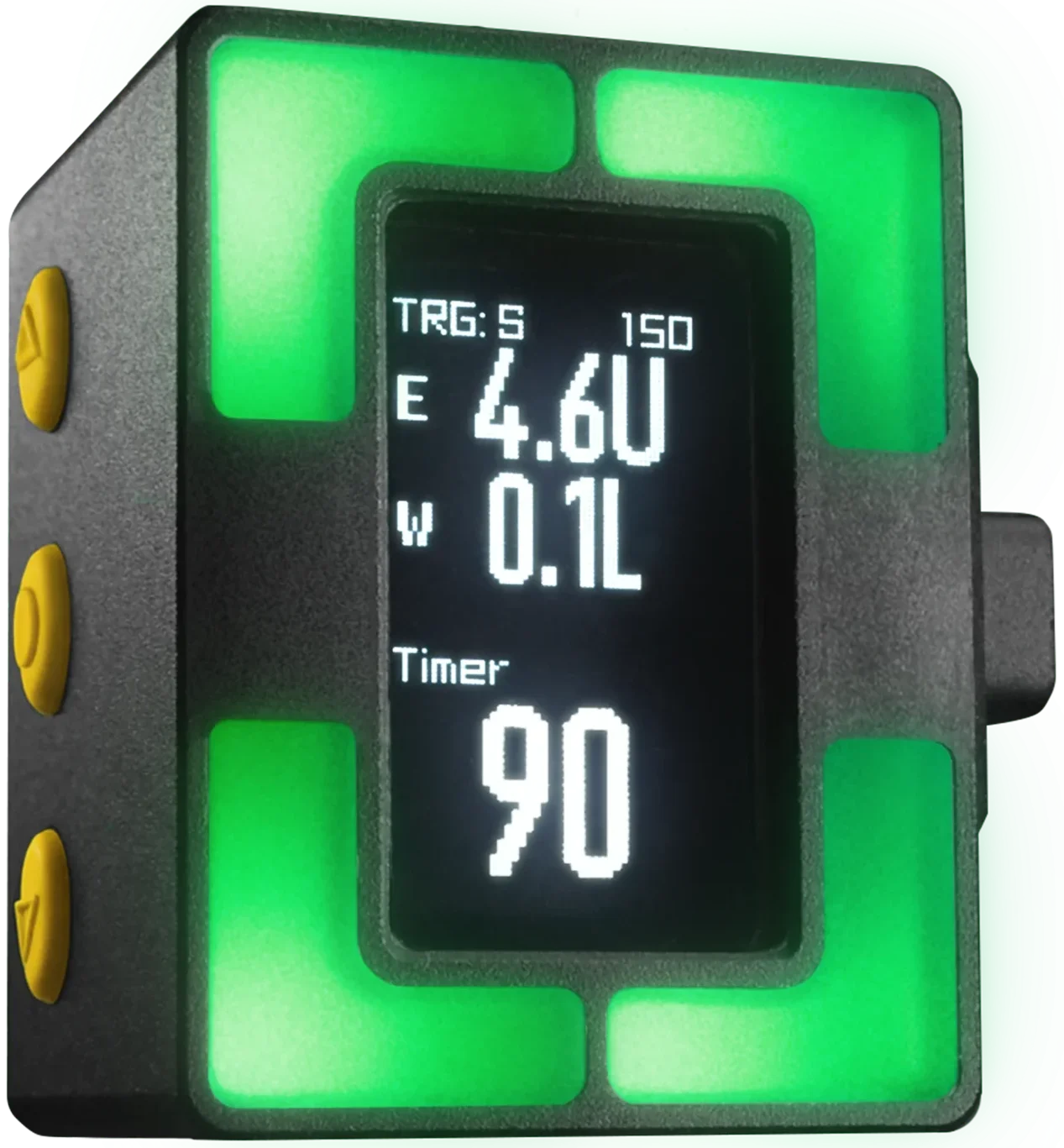
One cool piece of gear I tried during this test is the SG Pulse Pro. This tiny device mounts to a Picatinny rail and acts as a digital level, DOPE card, and drill card.
I do want to provide one disclaimer regarding barrel break-in. Some of these rifles were definitely fresh from the factory. Others may have been shot before, in which case they might benefit from being broken in, or suffer from lax maintenance by other gun reviewers.
In either case, the difference in performance is small enough that I’m comfortable presenting these results. Just be aware that whatever you buy may improve over the first few boxes of ammo if you follow the manufacturer's recommended break-in procedure.
Meet the Experts
This article comes to you from Pew Pew Tactical Editor & Senior Review Analyst Scott Murdock. During his time in the Marine Corps, Scott qualified and competed with the M16 and M4 out to 500 yards. As a civilian, he’s completed several long-range shooting courses and successfully engaged targets out to a mile. His work at Pew Pew Tactical includes ballistic analysis of everything from precision rifles to concealed carry pistols.
Ask a group of rimfire shooters what the most accurate .22 LR rifle is, and someone’s going to name the CZ 457. The CZ 457 Pro-Varmint SR is my favorite version, and it’s just as adept on the benchrest as it is in the back woods.
For what it’s worth, this was the smoothest and most satisfying action of the bunch. Tight tolerances and refined machining make the 457 cycle flawlessly without any break-in period. Just add a drop of oil and prepare to be impressed.
The bolt travel is no longer than it has to be, though, so pop those spent cases out with authority to avoid a traffic jam of brass.
The trigger on my test rifle showed up with an average pull weight of 1.45 pounds. That’s pretty good, considering the range of adjustment is listed as 1.8 to 3.4 pounds. It’s not so light that I suspect CZ juiced a press gun; I think this one just happens to be on the lighter side.
You can also adjust pretravel and overtravel. Pull weight and overtravel can only be adjusted with the action removed from the stock.
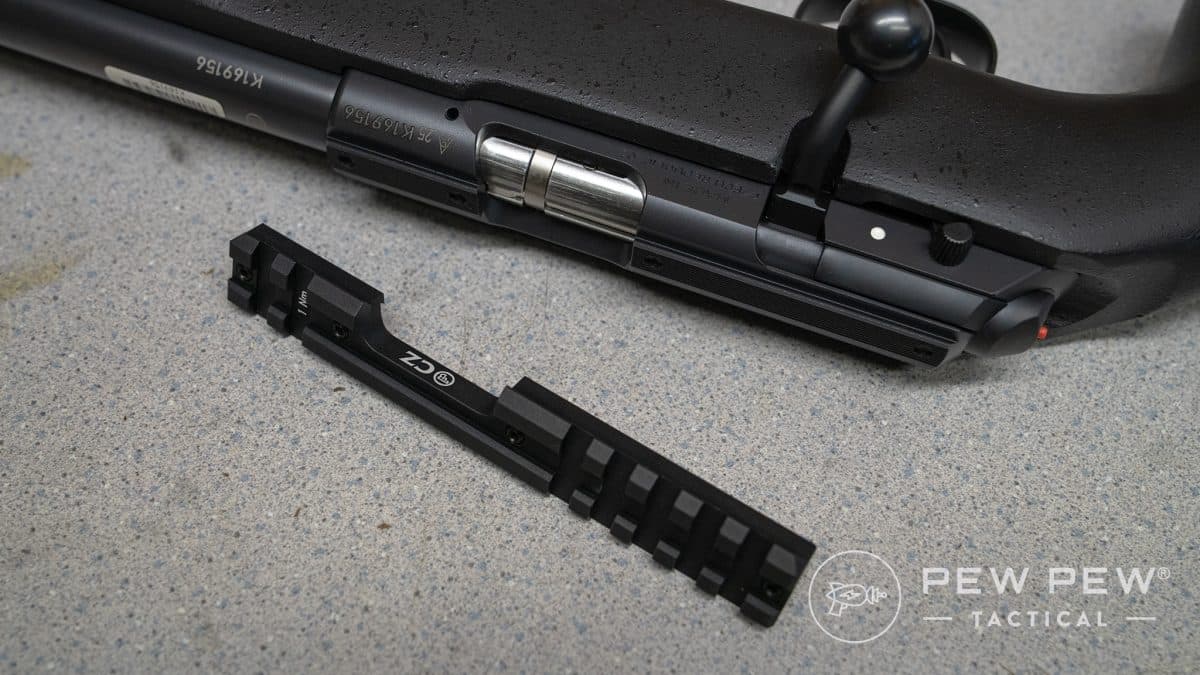
I only have one gripe with the 457 Pro-Varmint SR, and it’s the uncommon 11-millimeter scope rail. That may fly in Europe, but the only thing I want to see on a precision rifle in the U.S. is a Picatinny rail.
Fortunately, the people at CZ were kind enough to provide a factory bolt-on Pic rail so I could use the same scope rings across the board for this test.
The wood stock doesn’t offer any adjustability, but it’s far from basic.
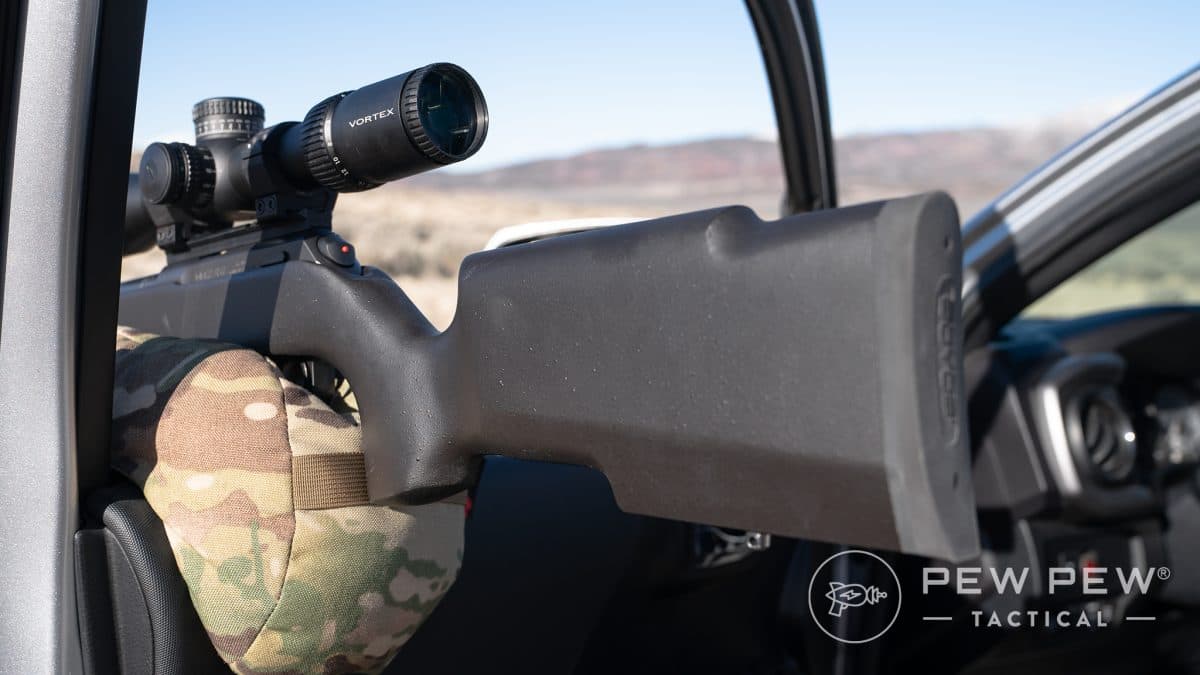
I got a great cheek weld with the Monte Carlo comb. The black Polyweb textured coating protects against the elements and offers plenty of grip. The notch in the underside of the buttstock was helpful when using my support hand or a rear bag, and the thick, flat-bottomed forend provided plenty of stability on a variety of improvised rests.
There are no M-LOK slots or Picatinny rails for accessories, but there are two forward sling studs so you can mount a sling and a bipod. I would like a larger magazine so I could apply a little bit of forward pressure into a shooting bag or barricade, but that’s nitpicking.
This variant of the 457 is built for suppressed shooting. The stubby overall length still felt maneuverable with a can, and I have no concerns about the heavy-contour barrel overheating.
According to the chronograph, the 16.5-inch barrel easily kept subsonic rounds in check.
I was surprised to see a double-digit standard deviation figure for Eley Semi-Auto Benchrest Precision because it reliably shot some of the best groups. Eley Tenex and Lapua Polar Biathlon both clocked single-digit standard deviation figures, indicating excellent consistency out of the CZ’s barrel.
Do those accuracy figures do anything for you? Turns out the CZ fanboys are right about the 457.
I was able to achieve half-inch or better groups with all four types of ammunition, and none of those were outliers. Eley Semi-Auto Benchrest Precision tied with Lapua Polar Biathlon for the best with a pair of 0.30-inch groups.
And yet, I’m kind of sore about it because I still feel like I held this rifle back. One Eley Semi-Auto Benchrest Precision group measured 0.65 inches…with a flyer. Scratch that shot, and the center points of the other four shots would have fit inside the frontal area of a .22 LR bullet.
The CZ 457 Pro-Varmint SR is an incredibly accurate rifle. Factor in affordable street prices, and it’s comically good.
As the name implies, this is a varmint hunting rifle. Set it up with a quality scope, ammo, and suppressor, and I’m sure it’ll be a prairie dog’s worst nightmare. As the numbers show, it’s also a totally viable precision platform in a surprisingly compact package. (Is it just me, or does this look like the old SWAT Remington 700 sniper rifles?)
At the time of writing, I’m seeing retail prices from $600 to $700. That might not sound like a budget rimfire rifle, but this 457 has the performance to hang with precision rifles that cost several times more. If you show up to a match and do your part, I wouldn’t be surprised if more than a few high-dollar shooters catch a case of buyer’s remorse.
Fit: Adjustable trigger, length of pull, comb height
Country of Origin: USA
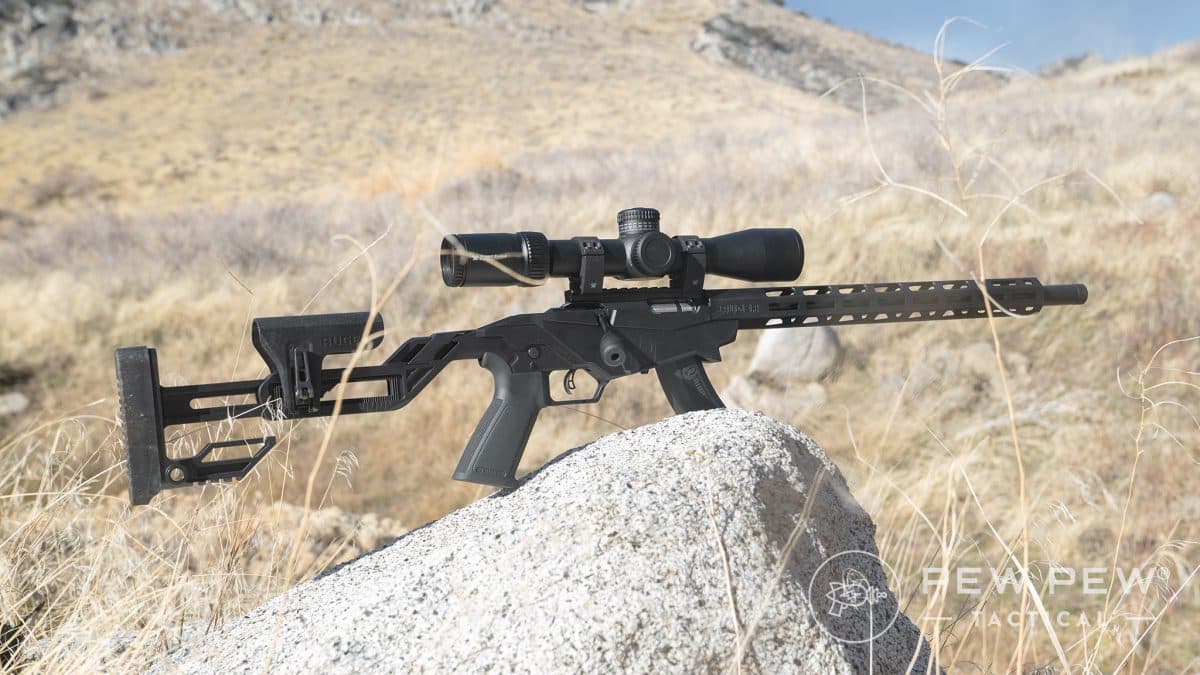
One of the best ways to dip a toe into the world of competitive shooting is with the Ruger Precision Rimfire. This highly adjustable platform will teach you the basics and give you room to grow for less than $500.
The action feels fairly basic, but there’s a trick up its sleeve. By moving a stamped steel clamp, you can extend the bolt throw to match that of a short-action centerfire rifle. This reduces the risk of inducing a malfunction by short-stroking the bolt, and it builds muscle memory for your centerfire bolt guns.
Ruger markets the Marksman Adjustable Trigger as adjustable from 2.25 to 5 pounds with a hex key stashed in the buttstock. In the case of my test rifle, the lowest pull weight I measured was 2.44 pounds. Out of the box, the five-pull average was 3.31 pounds.
The blade-style trigger safety moved freely, and I only detected a small amount of mush before the break.
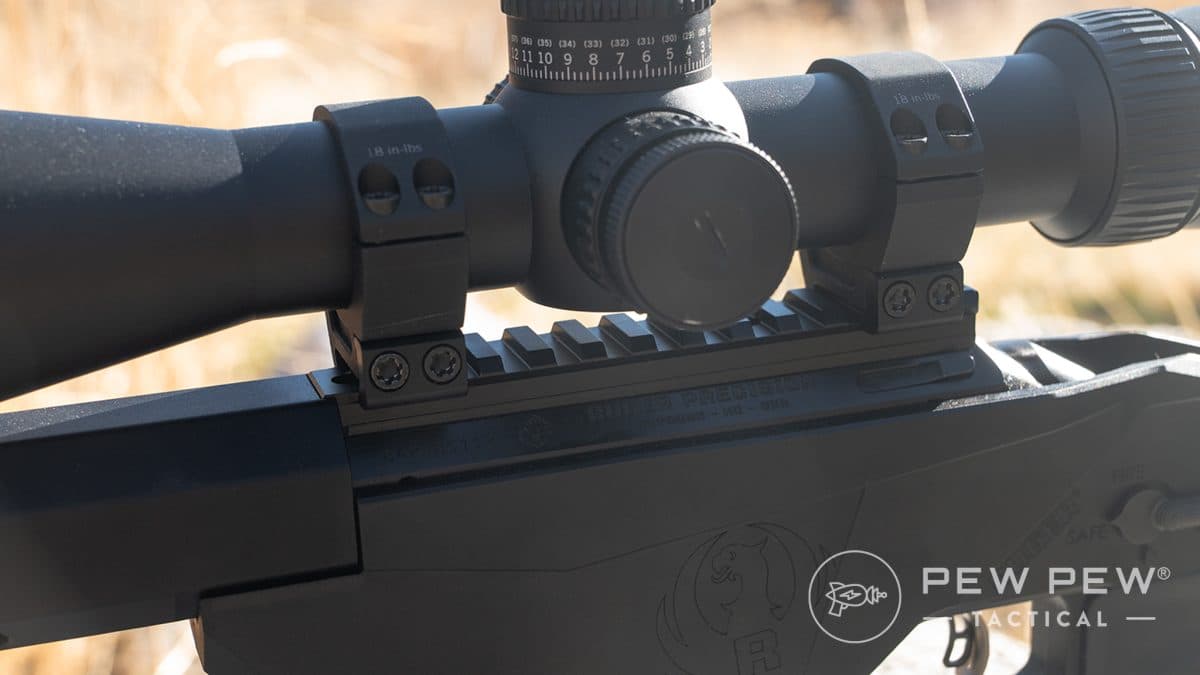
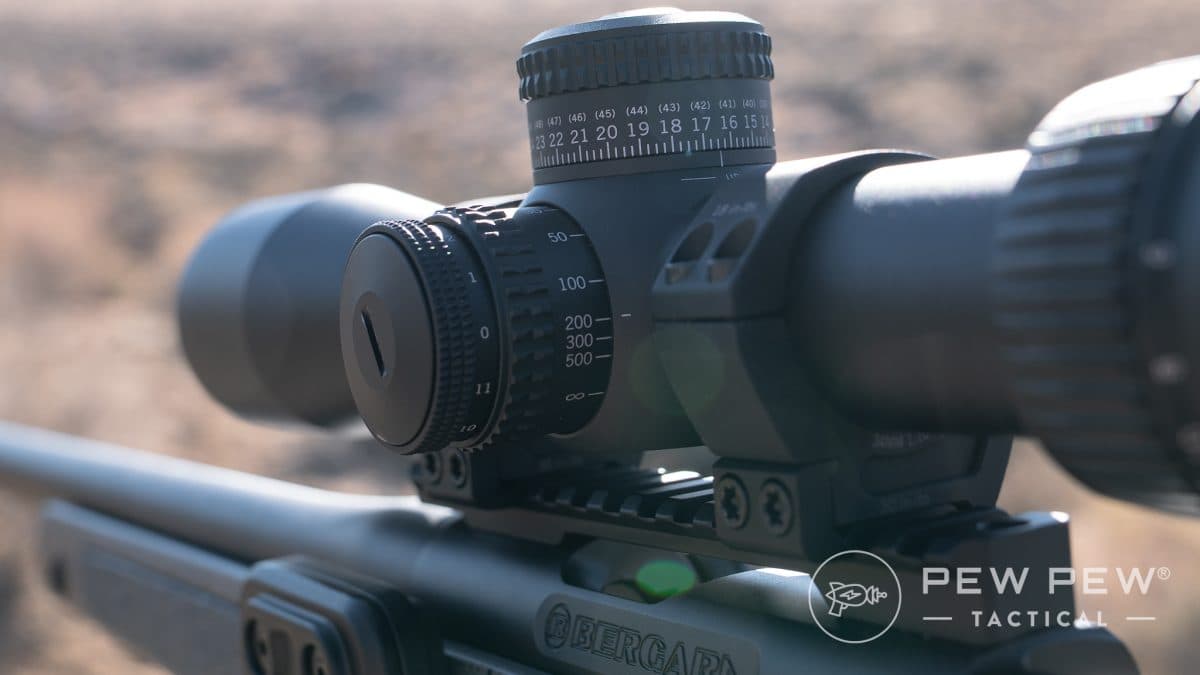
This rifle makes mounting a scope easier than anything else here. The 30-MOA Picatinny rail tilts the scope down to give you more room to dial after you establish your zero. If you want to push your distance limits and avoid maxing out your elevation turret, this is key.
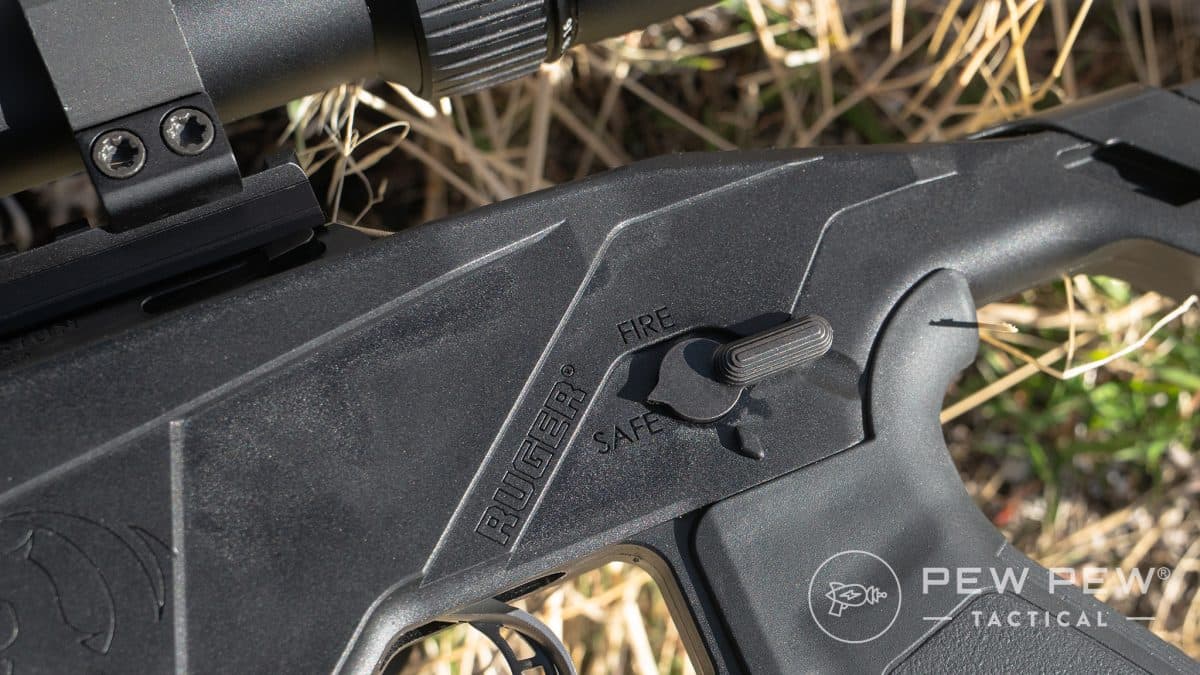
The Ruger Precision Rimfire takes a lot of cues from the AR-15 world, so it will feel familiar in that regard. The pistol grip and safety are compatible with aftermarket AR-15 components, and they’re easy to upgrade down the road if that’s something you want to do (a thick, vertical pistol grip would be nice).
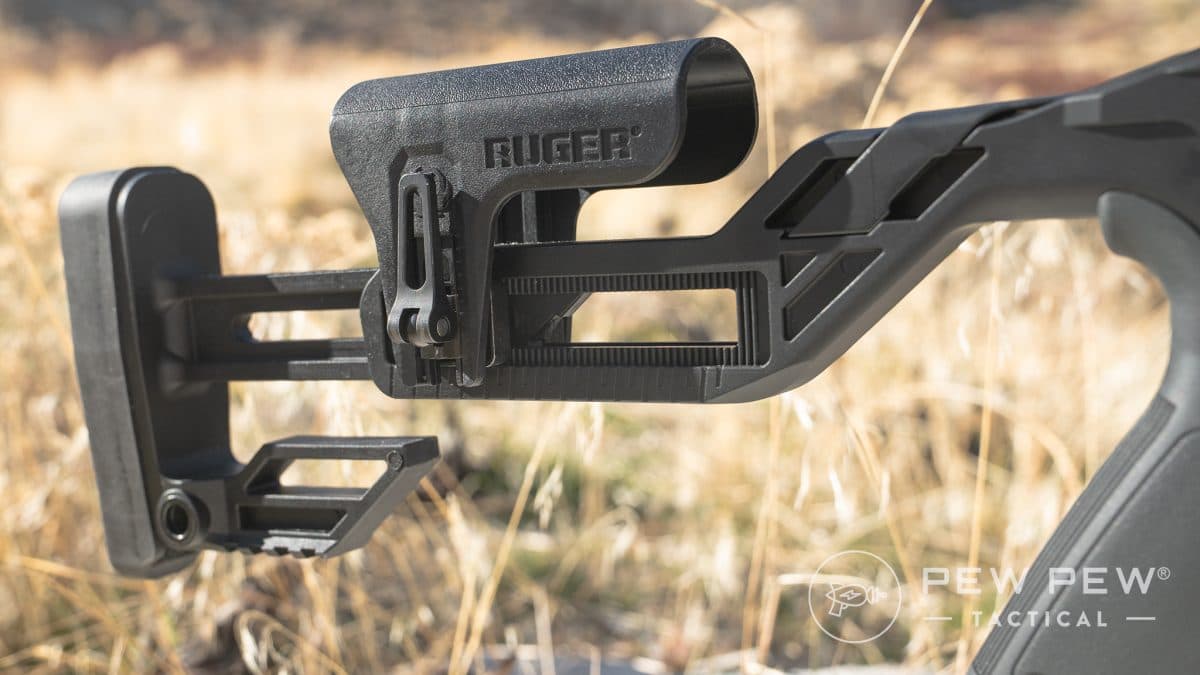
The buttstock is adjustable for comb height and length of pull, and you don’t need tools to do it. Being able to achieve a comfortable, natural fit with your rifle is important in precision shooting.
With everything collapsed, I was able to fit the Ruger Precision Rimfire in a basic AR-15 soft case.
The free-floating handguard wraps all the way around the barrel, which lets you rest your support hand on top if you want. I keep my hand off exposed barrels to avoid messing with harmonics and burning myself.
There’s M-LOK on all eight sides if you want to mount a bipod or other accessories, although it only runs the full length on the 12-, 3-, 6-, and 9-o’clock positions.
On the range, the Ruger Precision Rimfire didn’t quite keep up with rifles that cost several times more, but it certainly didn’t let me down.
The Garmin chronograph revealed velocity figures that were good but not always spectacular across the board. The Ruger Precision Rimfire did particularly well with Lapua Polar Biathlon, checking in with an impressive standard deviation of 5 feet per second.
Lapua Polar Biathlon also printed the best group at 0.39 inches. That’s impressive for any .22 LR rifle, let alone one that costs less than $500.
Interestingly, Winchester Super-X came in second with a 0.65-inch group. While that exceeds the half-inch benchmark I was hoping for, it means that you can save money and stick with budget ammo most of the time, then switch to Lapua match ammo when you need maximum performance.
Just don’t expect that kind of group every time. Super-X was not as consistent as Eley’s match loads day in and day out.
If you’re new to precision shooting or shooting in general, it’s hard for me to recommend anything but the Ruger Precision Rimfire.
It didn’t produce the smallest groups or excel with every type of ammunition, but it will absolutely outshoot most novice shooters and provide plenty of room to grow.
Fit: Adjustable trigger, length of pull, comb height
Country of Origin: Spain
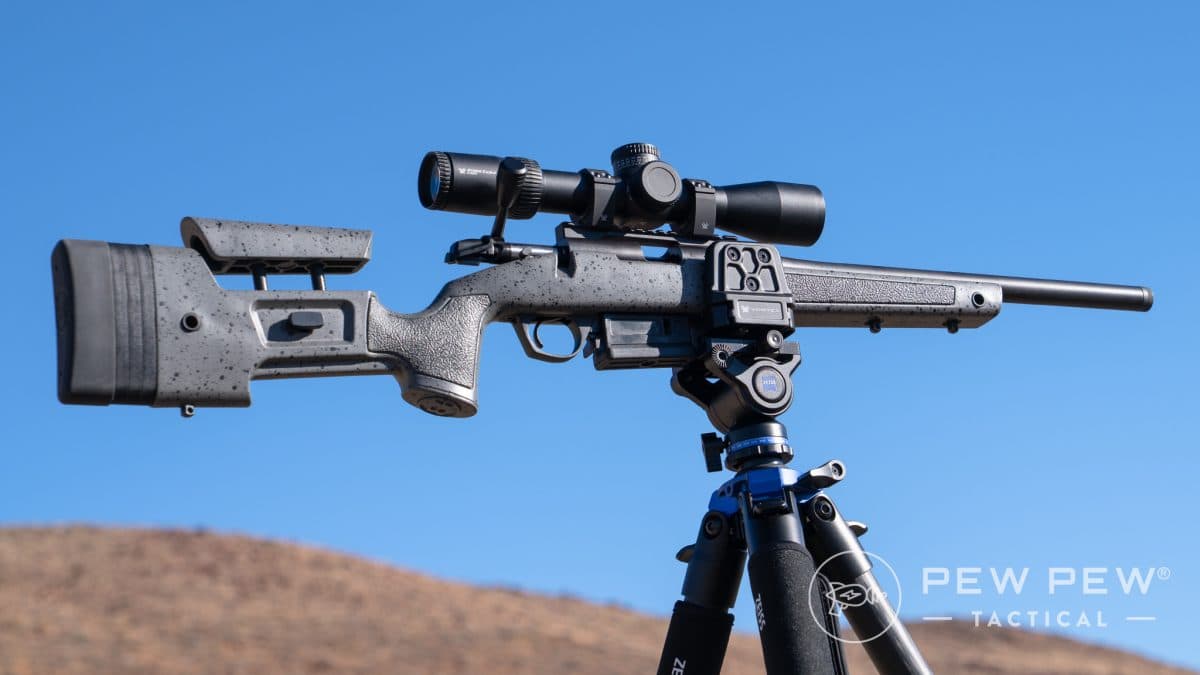
The Bergara B-14 R is a trainer, meaning that it’s built to look and feel like a centerfire rifle without the associated cost of ammo. It also happens to be an excellent precision .22 LR in its own right.
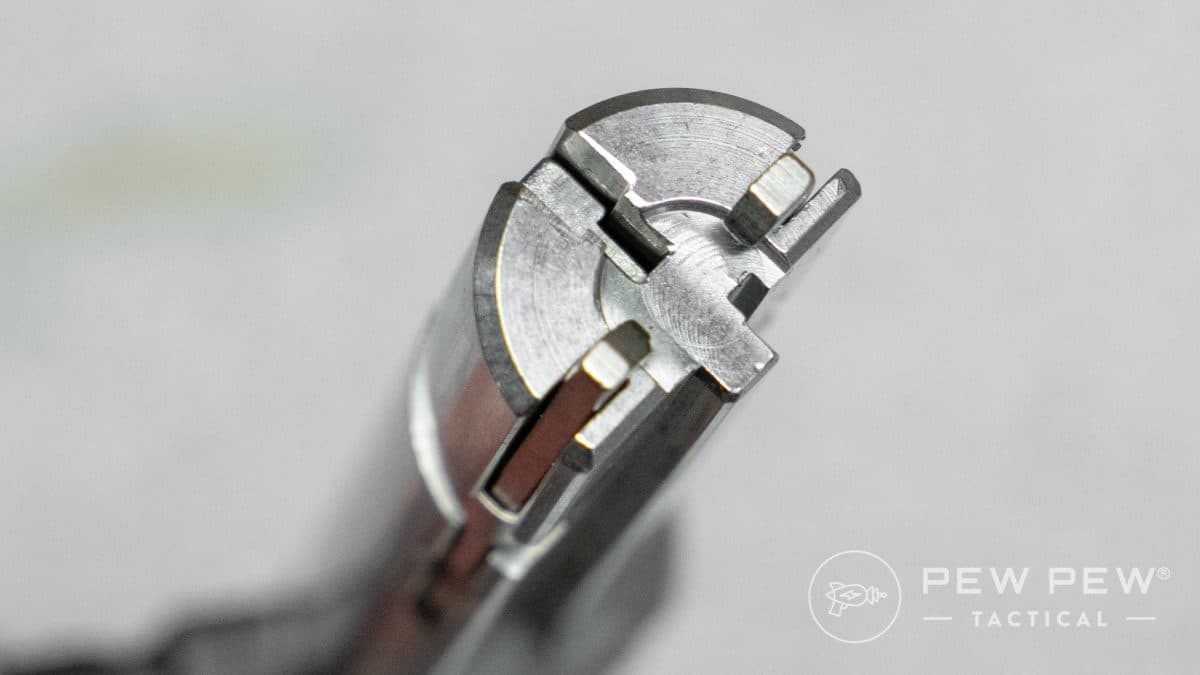
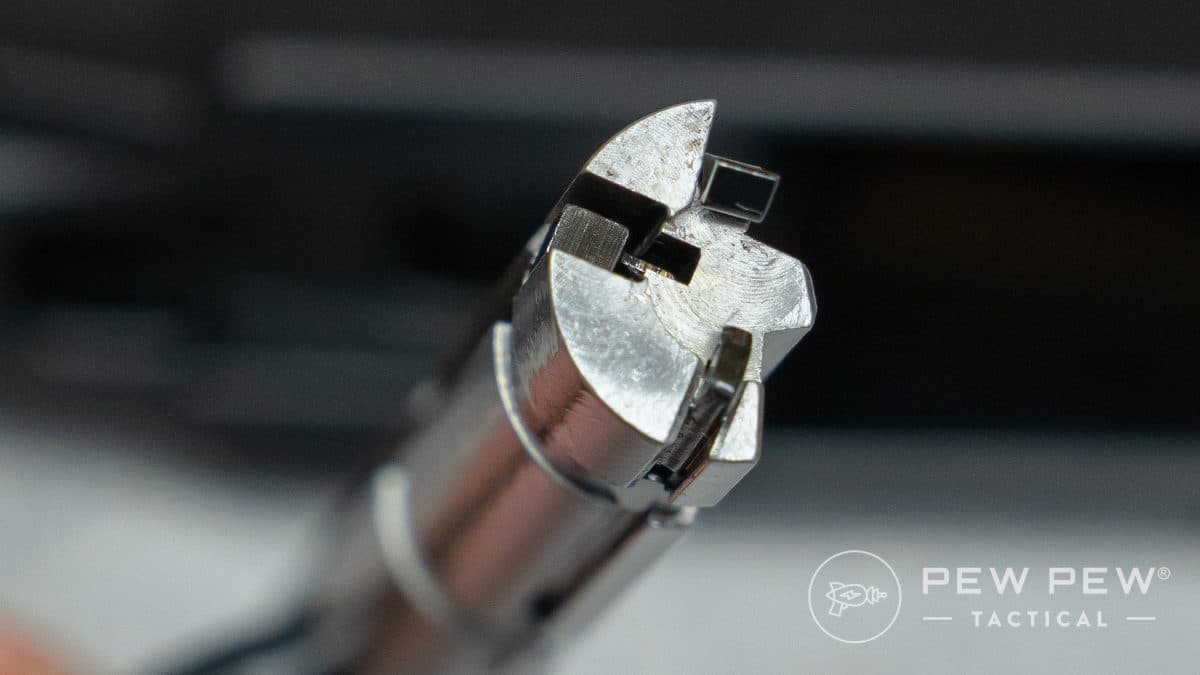
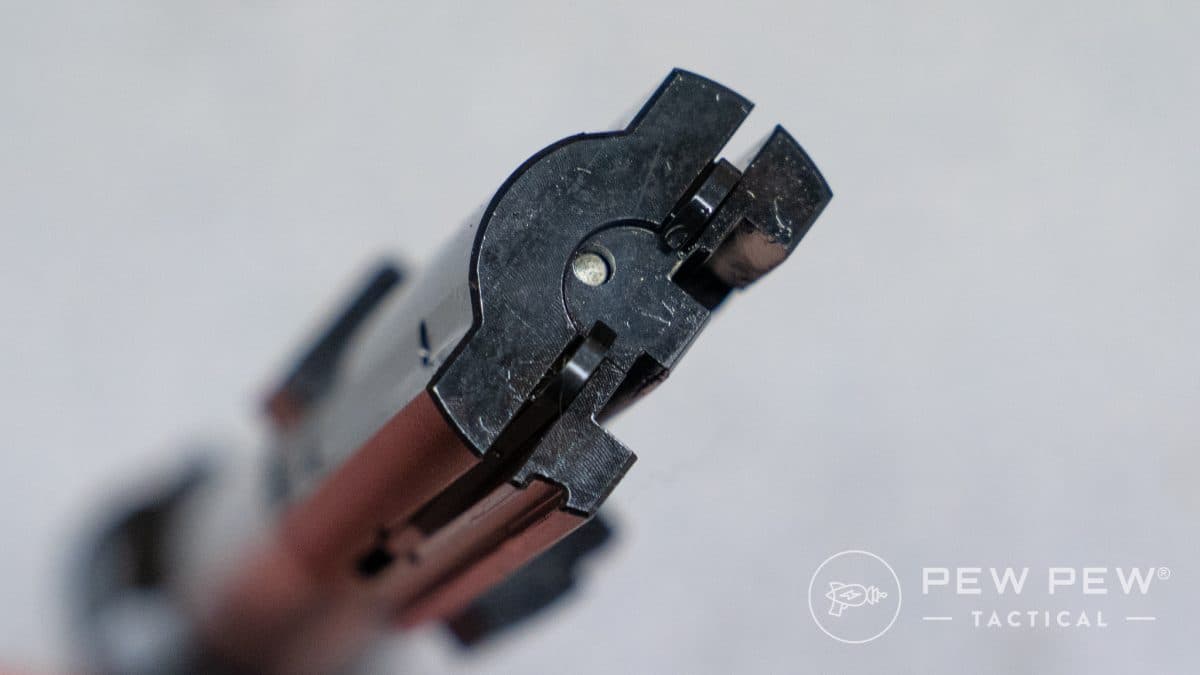
Bergara uses a very nifty bolt for this rifle. The firing pin looks like a centerfire pin that’s been moved to strike the case’s edge. If you’re concerned about dry firing with a rimfire rifle, this looks like a perfect solution. Dual extractors are a classy touch, too.
Five pulls with a Lyman Digital Trigger Pull Gauge yielded an average of 2.25 pounds out of the box. I felt exactly zero takeup, a firm wall, and a super clean break. This trigger will spoil you.
The trigger is adjustable from 2.8 to 4.4 pounds, but you have to remove the action from the stock to do it (mine was slightly lighter than usual once again). That’s not a big deal, but it would be nice if you could make adjustments externally.
The action is drilled and tapped for scope rings, but Bergara supplied this rifle with a Picatinny rail already installed at my request. You can get one from Bergara or a third-party manufacturer. I wish it came this way from the factory because it’s what most of us are used to these days.
The rail made mounting a scope a piece of cake. I used my usual Wheeler scope-leveling kitand had the installation knocked out in a few minutes.
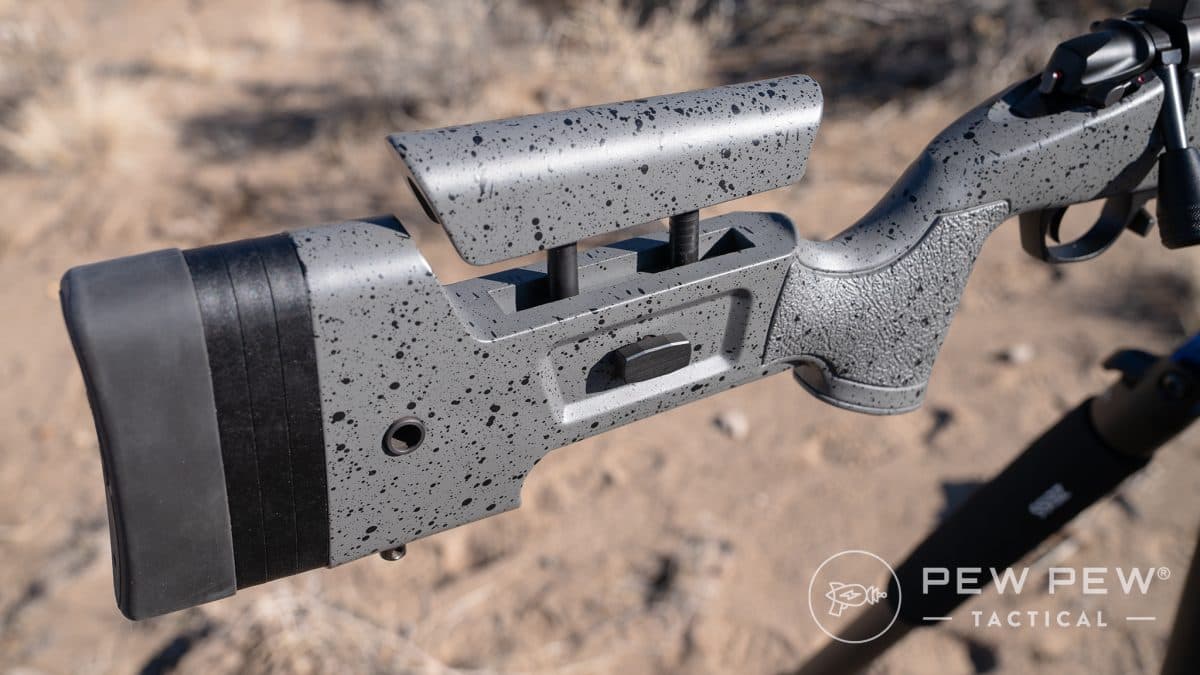
This is the same stock used for centerfire B-14 rifles, and it’s a hefty fellow (the rifle weighed in at 9.1 pounds). You can adjust the comb height on the fly without tools – a huge plus in my book. The length of pull is also adjustable, but that’s a more involved process.
Adding a sling is easy enough because the stock has sling swivel studs and ambidextrous QD points. In fact, the forend has two studs. That’s so you can use a sling on the rear stud and mount a bipod up front.
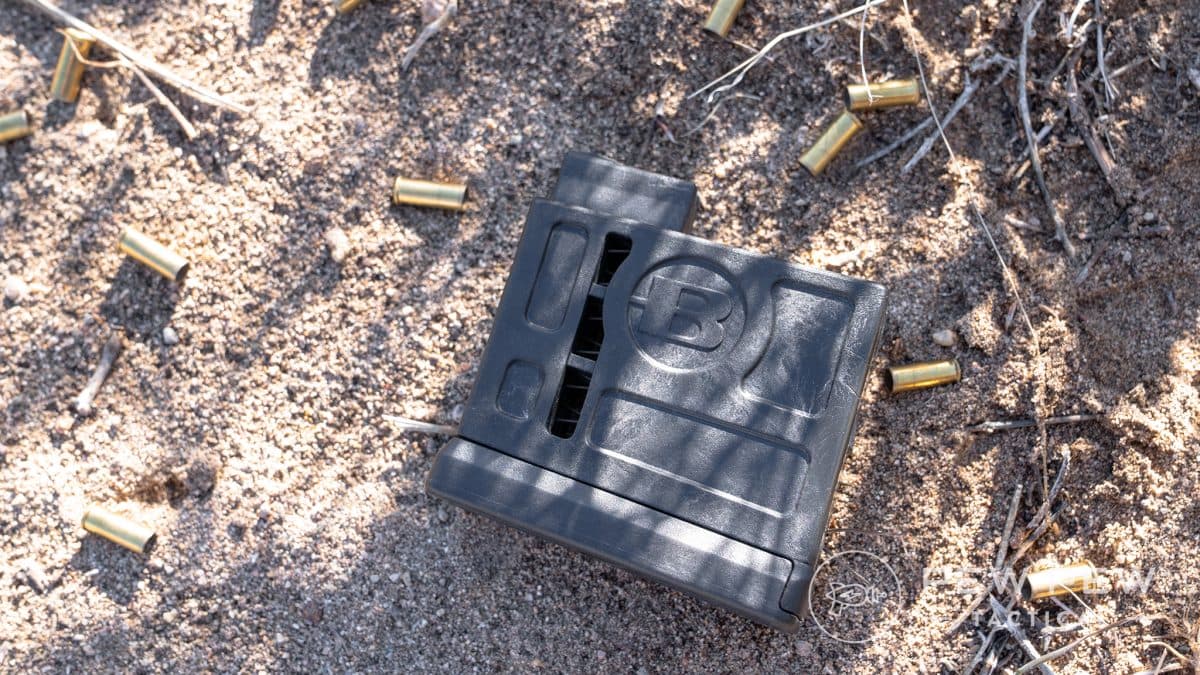
Trainer rifles are meant to feel like their centerfire counterparts, which is why the B14R comes with what looks and feels like a .308 Win magazine. I appreciated it when I was pressing forward into my trusty WieBad bag.
The B-14 R’s 18-inch barrel kept subsonic ammo below the sound barrier, with muzzle velocities right around 1,100 feet per second with all the match ammo. Winchester Super-X is supposed to be supersonic, and it made good on that with an average muzzle velocity of 1,288 feet per second.
The B-14 R performed admirably with every type of ammunition, although Lapua Polar Biathlon took the cake with a five-shot group of 0.34 inches at 50 yards.
The best group from Winchester Super-X tied with Eley Semi-Auto Benchrest Precision, but that’s a bit of fool’s gold.
Semi-Auto Benchrest Precision was reliably in the half-inch ballpark, whereas most of my Super-X groups were around an inch, and one egregious flier hit almost two inches left of the other four. I have no problem taking responsibility for a botched shot, but that one wasn’t me.
All in all, this rifle seemed very tolerant of various types of ammunition.
Forget about the centerfire B-14 for a second. This is an excellent precision rifle on its own. If you want to punch tight groups, push your long-range limits, or play whack-a-mole with your local rodent population, this is a fantastic tool for the job. Just lift a few weights to get in shape first.
Best Affordable .22 LR Precision Rifles [Tested] - Pew Pew Tactical
Pros
Endless aftermarket support
Excellent thumbhole stock
Makes training feel like a celebration
Specs
Caliber: .22 LR
Action: Semi-automatic
Capacity: 10+1
Scope Mount: Drilled and tapped
Barrel Length: 16.13”
Overall Length: 35.25”
Weight: 5 lbs
Fit: Length of pull
Country of Origin: USA
Most precision rifles are bolt-action, but that’s not your only option. The Ruger 10/22 Target Lite amps up the fun with rapid and nearly recoil-free follow-up shots. It’s a hoot!
The lightly sprung blowback action feels like any other 10/22. That’s familiar and comforting, but it’s not necessarily as precise as a bolt action locking down like a bank vault.
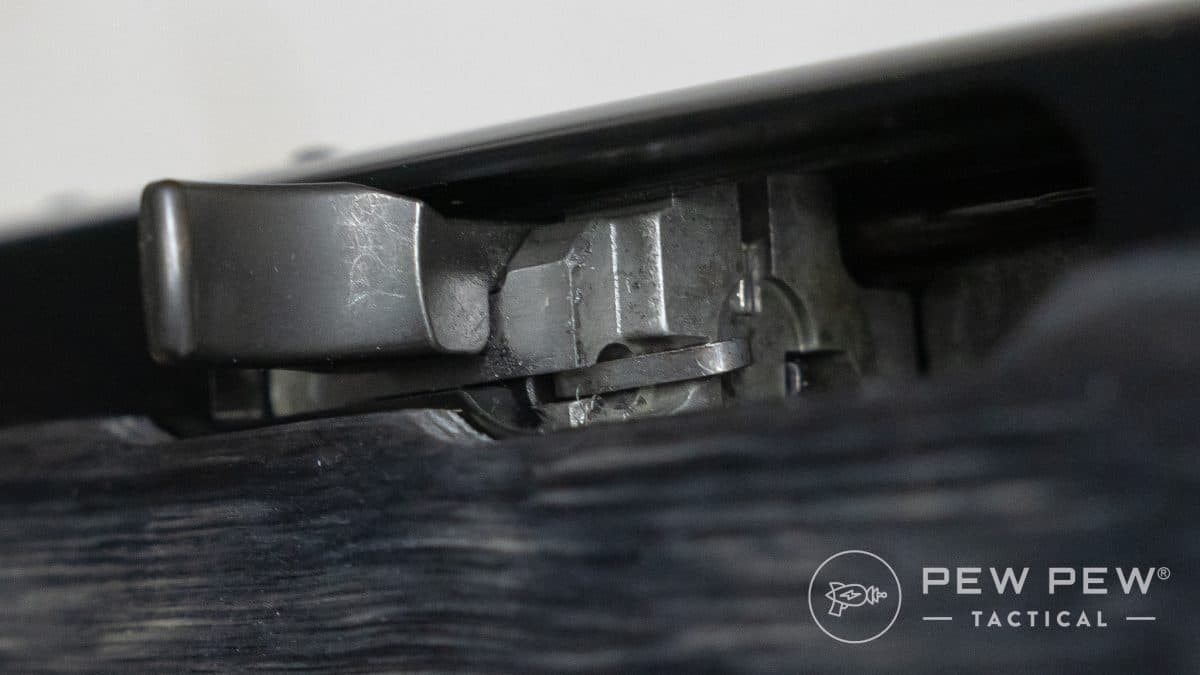
The upside? I couldn’t rack the charging handle without grinning from ear to ear. The short snap forward is fun every time.
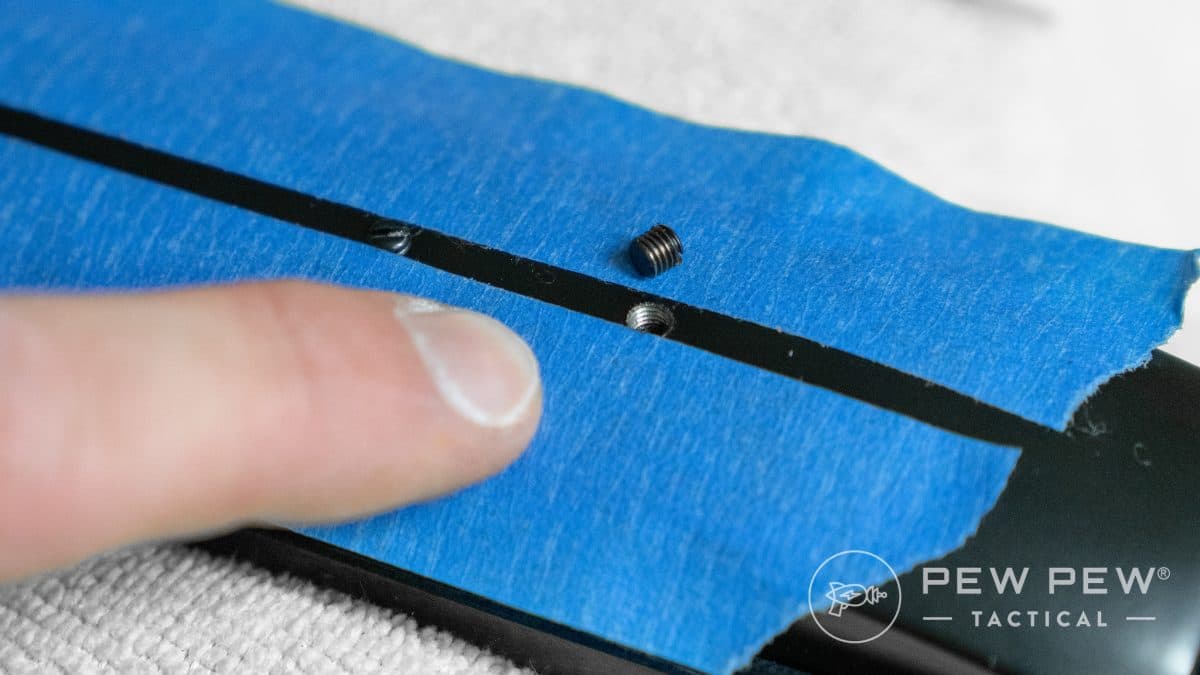
This rifle has the same receiver that you’ll find on other 10/22 models. It’s smooth up top with four drilled and tapped holes for mounting a rail.
Those holes are plugged with set screws that you have to remove, and they’re installed before Ruger paints the receiver. Getting them out isn’t difficult, but you need to be careful not to strip the heads or scratch up the rest of the paint (hence my masking tape).
Surely there has to be a better way, right? Once again, I wish this one had come with a Picatinny rail from the factory.
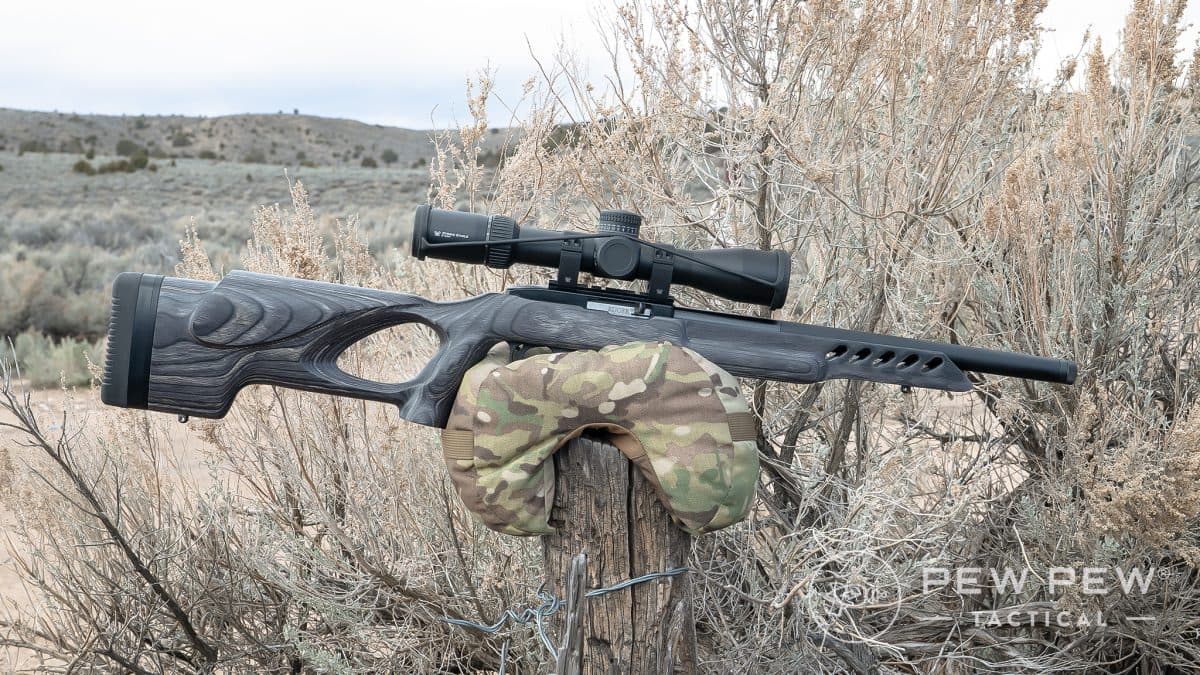
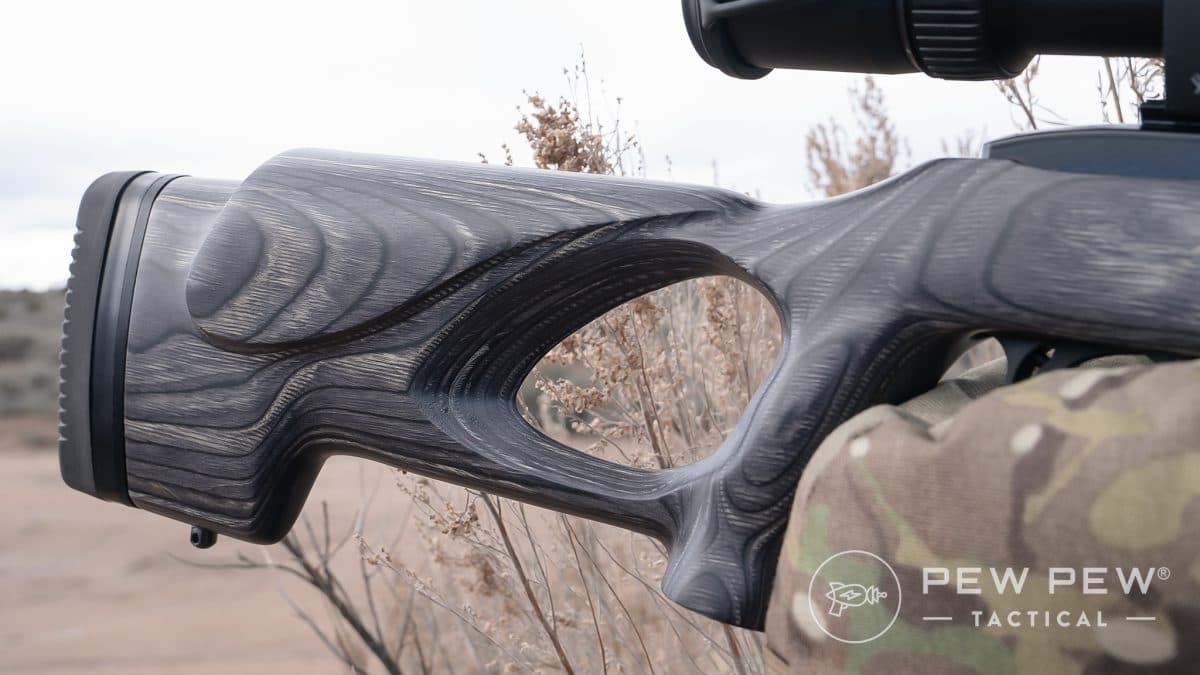
The laminate stock is the coolest part of the 10/22 Target Lite. It looks incredible – like something from an Olympic rifle team or a sci-fi movie.
I found the thumbhole stock extremely comfortable, and getting into a variety of conventional and unconventional shooting positions felt very natural. The only thing you can’t do is rest your shooting-hand thumb on the tang directly behind the receiver, if that’s how you like to shoot.
Comb height is not adjustable, and the manual does not include instructions for adding or removing the included spacers to change the length of pull. While I’m sure it’s not too difficult, I’d leave this rifle alone and enjoy it as-is.
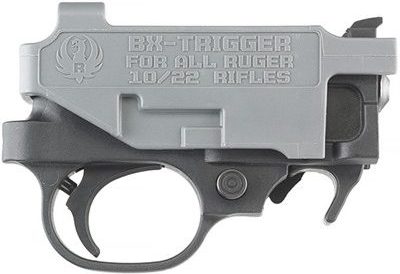
Ruger gave this rifle the company’s upgraded BX-Trigger, one of our favorite 10/22 triggers. It’s light and well-defined, but I did notice a little bit of wiggle. This one checked in with an average pull weight of 2.34 pounds.
At the range, the Garmin Xero C1 Pro revealed a significant difference between the semi-automatic 10/22 Target Lite and its bolt-action competition. This action uses some of a cartridge’s energy to blow the bolt back, eject the spent case, and load the next round – that leaves less energy to push the bullet down the barrel.
As a result, both Eley loads achieved an average muzzle velocity of less than 1,000 feet per second. They were consistent – as evidenced by low standard deviation figures – but quite slow.
With the Vortex Strike Eagle dialed up to 18-power magnification at 50 yards, I could actually see bullets in the air.
Accuracy
Average Muzzle Velocity
Extreme Spread
Standard Deviation
Eley SABP
0.75"
995 fps
35 fps
12 fps
Eley Tenex
0.52"
984 fps
24 fps
9 fps
Lapua Polar Biathlon
0.33"
1,036 fps
22 fps
8 fps
Winchester Super-X
While this was entertaining, it wreaked havoc on accuracy. Even a light breeze was enough to blow the round-nosed bullets around to the tune of 1-inch groups and larger. I managed to get a nearly half-inch group out of Eley Tenex, but that was the exception rather than the norm for that load.
Once again, Lapua Polar Biathlon was the best performer, with an impressive 0.33-inch group. If you’re not going to spring for Finnish match ammo, I’d probably stick to bulk ammo and take advantage of the extra velocity.
So, who’s the 10/22 Target Lite for? If you’re trying to shoot as precisely as possible, this isn’t it. The bolt-action competition (including Ruger’s own Ruger Precision Rimfire) has it beat in that department.
But shooting ragged holes in bullseye targets isn’t everything.
If you want a fun semi-auto .22 LR rifle that’s more accurate than most, this is the 10/22 to have. It runs reliably, it’s accurate for an autoloader, and that thumbhole stock looks like a million bucks. It drew compliments from onlookers every time I took it to the range.
I am very sad to report that Ruger pulled the 10/22 Target Lite from the website while I was conducting testing. Color me surprised. Maybe it’s getting a refresh; maybe it’s a goner. If you’re in love with it, you might want to snatch one up while they’re still easy to find.
How to Choose the Best .22 LR Precision Rifle for the Money
The world of precision shooting is full of complex math, incredible engineering, and die-hard personal preferences. Here are some of the more basic concepts you need to know before you start.
Bolt-Action Rifles Are (Still) King
As much as I love semi-automatic rimfire rifles, bolt-action rifles are by far the most popular choice when it comes to precision shooting.
Bolt-action guns aren’t inherently more precise, but it’s easier and less expensive for manufacturers to achieve a high degree of accuracy out of a bolt-action rifle than a more complicated semi-automatic design.
That doesn’t mean they’re your only option, though. The Ruger 10/22 is a true chameleon, and the Target Lite model will serve you well if you want something a little different.
Chassis vs. Stock
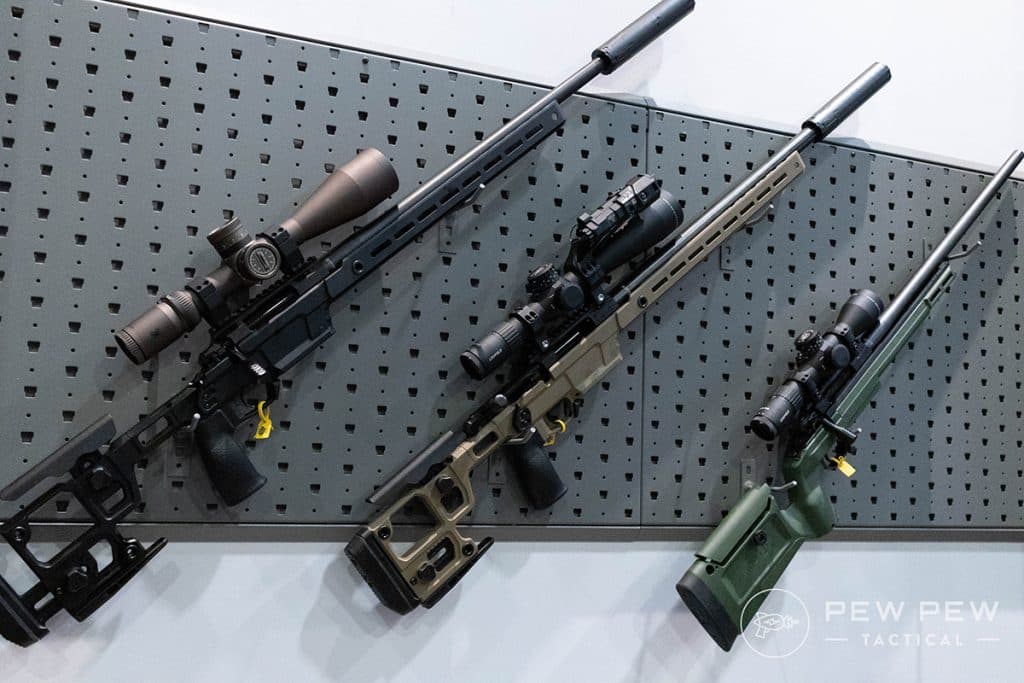
Have you noticed that some .22 LR precision rifles look pretty conventional, and others look like they have scaffolding around them? That’s because some use a stock and some use a chassis.
Stocks can be wood or synthetic material. A stock kind of acts like a canoe that holds the other components inside and gives you something to hold onto.
A chassis is more like an exoskeleton that holds the action and trigger on the inside, and provides mounting points for a buttstock, pistol grip, and accessories on the outside.
Chassis systems typically offer the most customization, but some stocks also have adjustable length of pull, adjustable comb height, and places to mount accessories. If your stock fits your body, there isn’t really a reason to change it.
Competition-Worthy Scopes
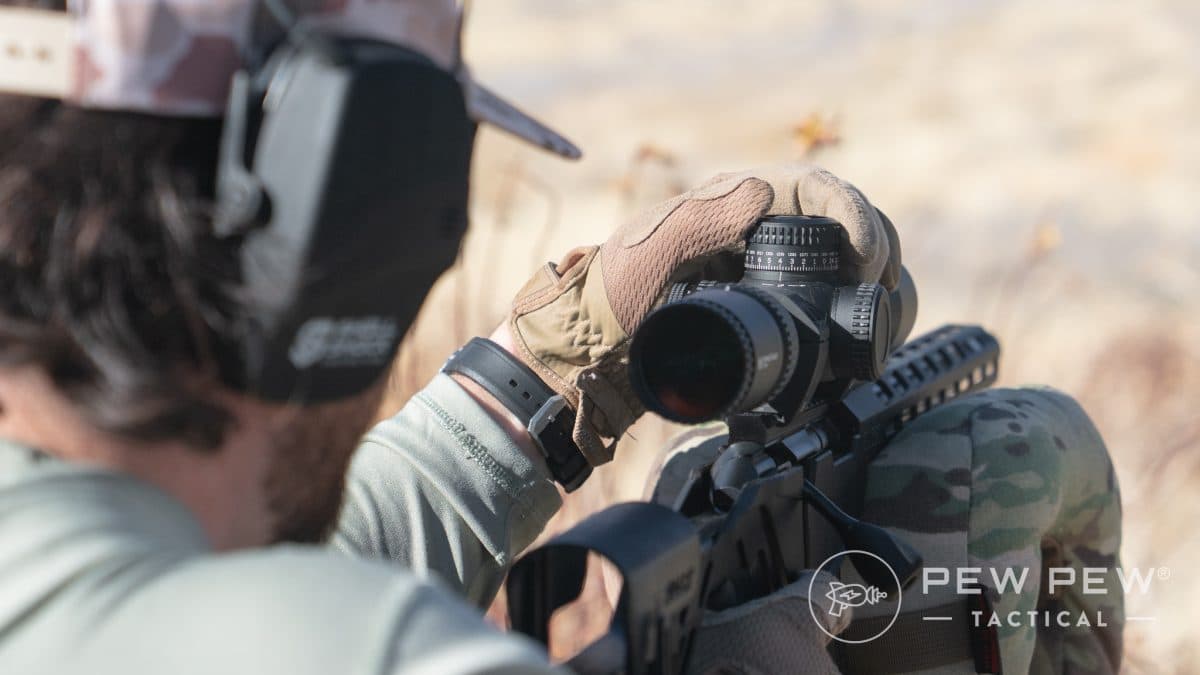
Most of the time, you can get away with a pretty basic optic on a .22 LR rifle. We even use red dots quite a bit. You’ll want more magnification and better glass on a precision rifle, though.
A long-range rifle scope will not only give you a clear view of your target, but the tiny .22-caliber impacts on it. If you miss, you’ll have a better chance of spotting your splash in the dirt. Movement in foliage can help you make an accurate wind call.
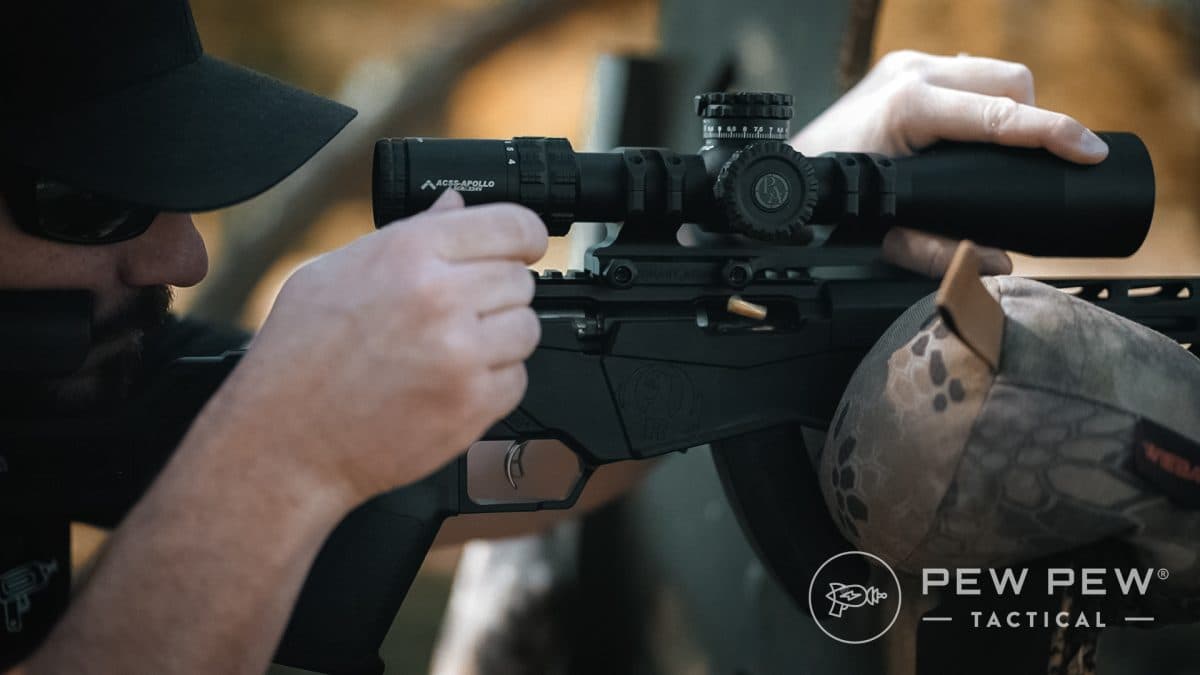
The reticle is equally important. A technical reticle, like the one in my test scope for this article, shows measurements in milliradian or minute of angle so you can make accurate holds for elevation and windage. There are even formulas you can use to range targets with a technical reticle if you know how big they are.
You’ll want a scope with an exposed elevation turret. This allows you to dial for distance. Precision shooters often hold for distance when engaging multiple targets at varying distances in a hurry, but dialing is preferable if there’s time. Dialing for wind is very uncommon, so I wouldn’t stress about a capped windage turret.
Subsonic Ammunition
This one might surprise you: competitive .22 LR precision shooters typically use subsonic ammunition, and suppressors have nothing to do with it.
Precision shooting is all about collecting data, observing patterns, and making decisions based on that information.
Bullets perform very predictably above and below the speed of sound. When a bullet slows down and passes through the sound barrier – we call that going transonic – things get temporarily unpredictable from shot to shot.
Why haven’t you heard of this before? Well, it usually doesn’t matter.
For example, 6.5 Creedmoor doesn’t go transonic until well beyond most engagement distances. For .22 LR, it happens almost immediately. That means it’s better to just start subsonic to begin with and dial in a little more elevation to account for the loss in velocity.
Precision Rimfire Accessories
There’s plenty to spend your money on beyond the essentials. Here’s an sample shopping list to get you started.
You can spend thousands of dollars on a .22 LR precision rifle – but you don’t have to. I was pleasantly surprised by how accurate these relatively affordable alternatives are. At times, each of them was able to achieve five-shot groups in about a third of an inch at 50 yards.
If you can stretch your budget a little bit, CZ and Bergara have excellent options for you. If you’re watching your bottom line, either Ruger will give you way more than you paid for.
Any of these rifles will be a great excuse to dip your toe into the precision game, and nudge you into entering a local rimfire match.
Get ready to have more fun than you ever expected!
What’s your favorite .22 LR tack-driver? Let us know in the comments. Need some pointers for your first attempt at precision shooting? Check out our guide to Long-Range Shooting Fundamentals!
Latest Updates
November 2025:Complete overhaul with new products, testing, and supporting content.
Conversation
28 comments
We review products independently. When you buy through links on our site, we may earn a commission to help support our testing. Learn more.
$455
.22 LR
Bolt action
15+1
Cons
Don't forget to order a Picatinny rail
Limited magazine capacity
The Bottom Line
The CZ 457 Pro-Varmint SR won me over quickly with performance figures that speak for themselves. It's a tack-driver. I also appreciate the conventional stock, tactical profile, and stubby barrel. Be warned: you will be buying a suppressor for this rifle. It's unavoidable.
0.50"
1,254 fps
38 fps
16 fps
Cons
A2-style grip feels basic
Accuracy is good but not outstanding
The Bottom Line
If you're nervous about getting into precision shooting, let the Ruger Precision Rimfire be your guide. This rifle is surprisingly capable, easy to shoot well with, and offers tons of room for customization. And the price? You can't beat it!
0.65"
1,201 fps
81 fps
32 fps
Cons
An expensive way to save money on ammo
Heavy
The Bottom Line
I know the Bergara B-14 R is meant to simulate a centerfire rifle, but's an excellent rifle in its own right. Accuracy figures and chronograph data show that it shoots all the ammunition I tested well. The stock is extremely user-friendly. It's the heaviest .22 LR rifle I've handled, but that just makes recoil nonexistent.
0.46"
1,288 fps
47 fps
15 fps
Cons
Not as accurate as the bolt-action competition
Scope mount isn't ideal
The Bottom Line
Anytime there's a list of the best .22 LR rifles, the Ruger 10/22 is on it. This time, it's the fun and flashy 10/22 Target Lite. This rifle offers increased performance and excellent ergonomics without sacrificing any of the legendary platform's fun factor.















Conversation