
Best Bushcraft Knives: An Analysis For Every Budget
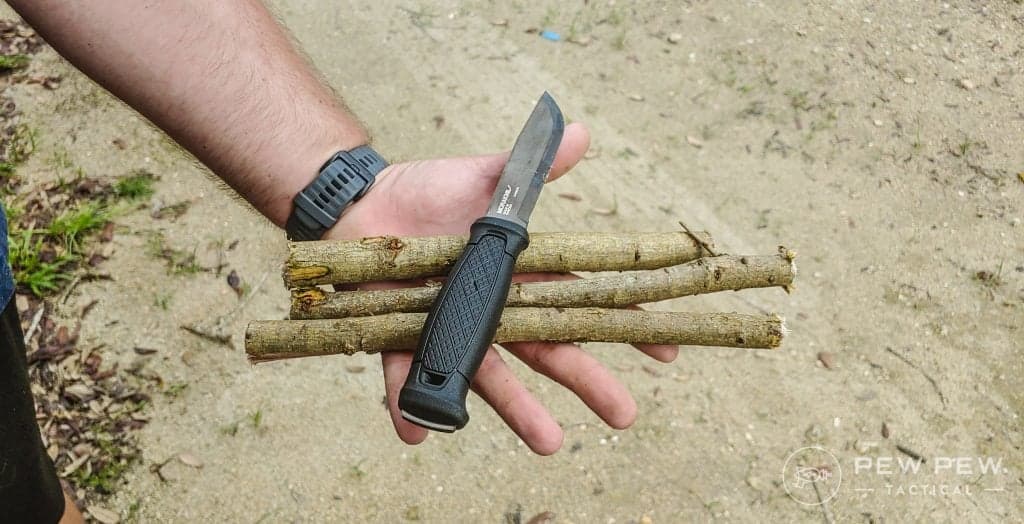
Ready to jump into bushcrafting but don't know which knife is the best for the task? Well read up on the best knives for bushcraft and long-term survival.

USMC Veteran. Concealed Carry & NRA Pistol Instructor. 3-Gun Competitor. Career firearms writer
We review products independently. When you buy through links on our site, we may earn a commission to help support our testing. Learn more.
Every survival-themed reality show and backcountry influencer's Instagram features a bushcraft knife. But what does that even mean, and how do you know which one to buy?
No worries, we've got you covered!
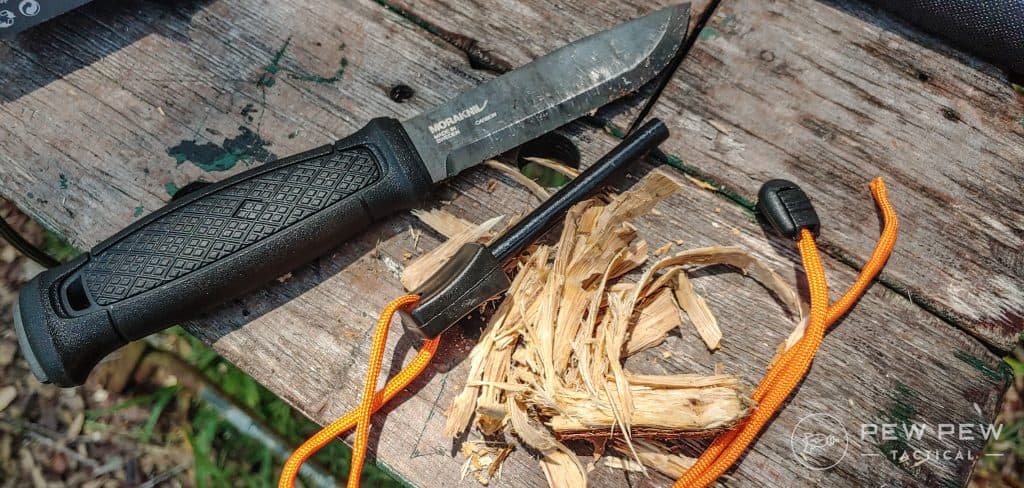
Read on to see the best bushcraft knives we've personally used (and still carry). By the end, you'll also learn a little bit about what goes into making a knife good for bushcraft in the first place.
The Quick List
- Best Overall: Morakniv GarbergJump to details ↓
- Best Premium: Helle NordJump to details ↓
- Best for Making Tools: L.T. Wright GNSJump to details ↓
- Best for Beginners: Condor Tool and Knife Bushlore Camp KnifeJump to details ↓
- Most Versatile: ESEE-4Jump to details ↓
- Best Traditional: KA-BAR Becker KephartJump to details ↓
Table of Contents
Bushcraft Knife Comparison Chart
| Overall Length | Blade Length | Blade Grind | BladeSteel | Handle Material | Sheath Material | Price | |
|---|---|---|---|---|---|---|---|
| Morakniv Garberg | 9" | 4.25" | Scandi | Stainless | Polymer | Polymer | $60 |
| Helle Nord | 11.13" | 5.8" | Scandi | 14C28N | Curly birch | Leather | $249 |
| L.T. Wright GNS | 9.5" | 4.25" | Scandi with a micro bevel | O1 | Micarta | Leather | $220 |
| Condor Tool & Knife Bushlore Camp | 9.25" | 4.25" | Scandi | 1075 | Hardwood | Leather | $62 |
| ESEE-4 | 9" | 4.5" | Flat | 1095 | Micarta | Polymer | $119 |
| Ka-Bar Becker Kephart | 9.68" | 5.13" | Flat | 1095 | Walnut | Leather | $159 |
How We Tested the Best Bushcraft Knives
For this article, we gathered a bunch of bushcraft knives we've personally owned and tested here at Pew Pew Tactical. The entire Pew Pew Tactical team, as well as freelance writers, contributed to this review to offer different opinions based on performance, durability, and value.
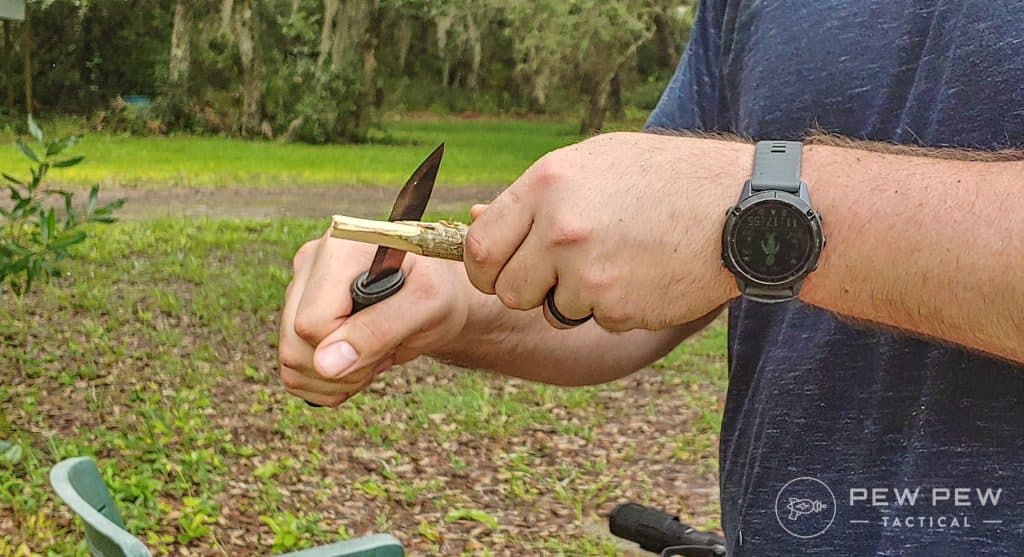
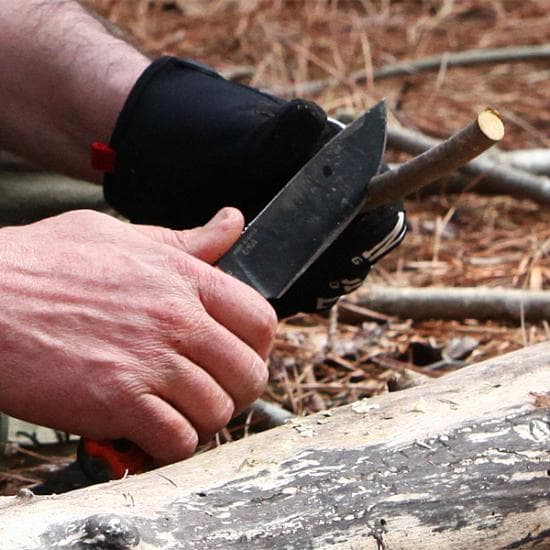
Testing included common bushcraft skills like cutting limbs, splitting logs, creating feather sticks, carving wood, and -- of course -- starting lots of campfires. These knives also proved their worth in the field because we've taken them on a bunch of camping and hiking trips, where they endured the elements and hard use.
Most of them have stuck around in our vehicles, camping packs, and go bags. They're all solid choices, but not necessarily for the same reasons. Let us help you decide.
Best Bushcraft Knives
1. Morakniv Garberg - Best Overall

Pros
- 90-degree spine
- Variety of blade and handle combinations
- Fantastic value
Cons
- Polymer handle feels like a cost-cutting measure
Specs
- Overall Length: 9"
- Blade Length: 4.25"
- Blade Grind: Scandi
- Blade Steel: Stainless
- Handle Material: Polymer
- Sheath Material: Polymer
The Swedish company Morakniv has produced knives for well over a century, and they've got a winning formula for success.
Morakniv designs started for lumber use and eventually evolved into a very successful line of bushcraft knives.
The Garberg combines a full tang, a 90-degree spine for striking Ferro Rods, and a polymer handle that doesn't require any special treatment.
There are a bunch of options when it comes to steel type, blade finish, sheath material, and handle color. Have fun with it!
With a 4.25-inch blade, the Garberg provides plenty of Scandi grind edge for scooping big chunks off a piece of wood. You can easily carve, whittle, and drill with the clip-point blade.
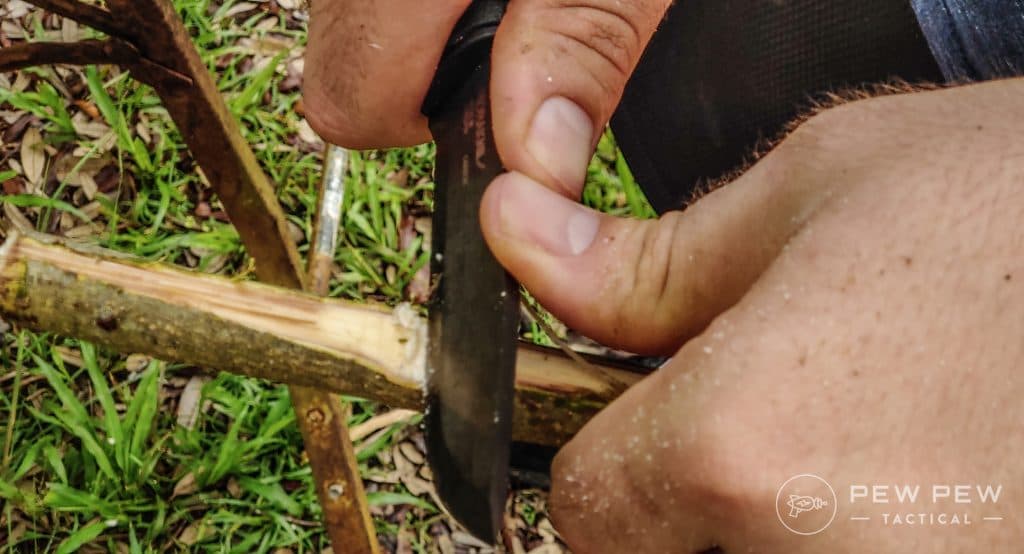
The polymer handle is super comfortable, and you don't have to worry about maintaining it or exposing it to the elements.
This is one of the most well-respected and widely used bushcraft knives out there. Best of all, it's super affordable! You don't have to break the bank to get an excellent bushcraft knife.
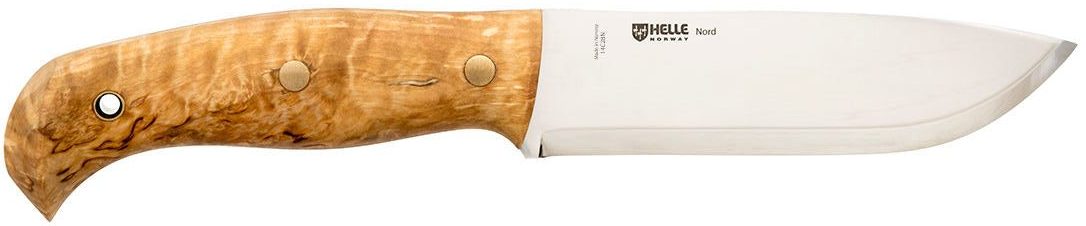
2. Helle Nord - Best Premium
Pros
- Premium materials and quality
- Large enough for big projects
- Rugged, oversized blade
Cons
- Expensive
Specs
- Overall Length: 11.13"
- Blade Length: 5.8"
- Blade Grind: Scandi
- Blade Steel: Sleipner
- Handle Material: Curly birch
- Sheath Material: Leather
Let's get something straight: there is no need to spend this much money on a bushcraft knife.
People buy Helle knives because they appreciate high-end Norwegian craftsmanship; not because they want the most practical tool for their money.
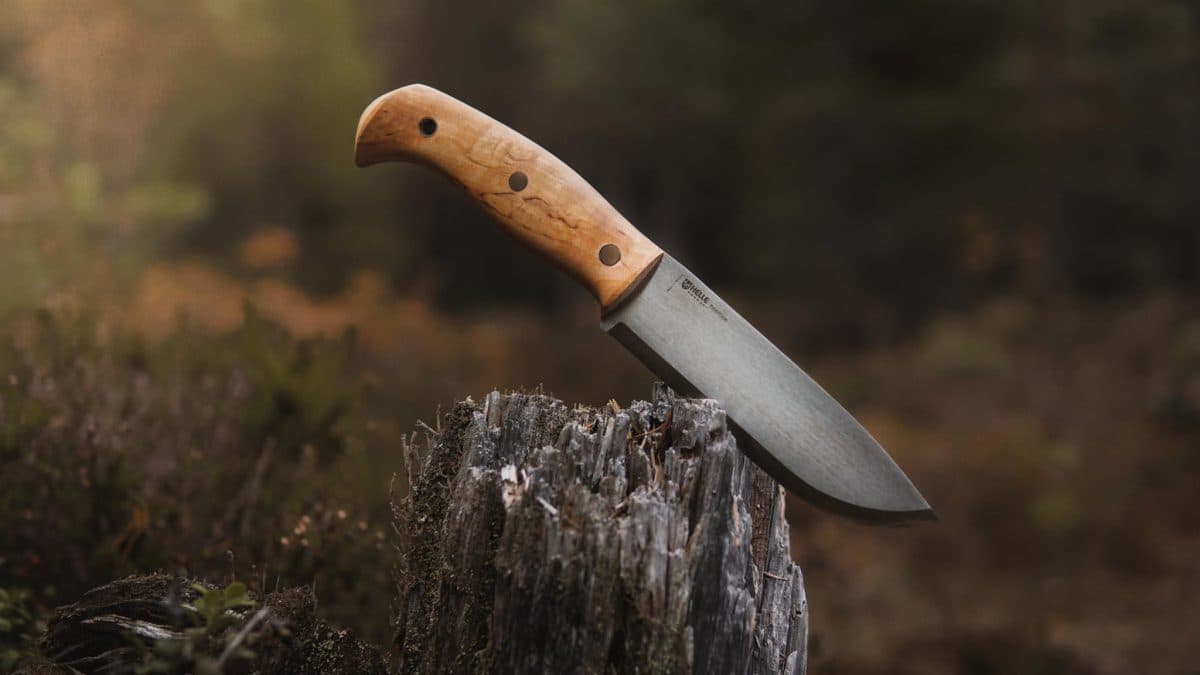
That said, the Helle Nord sure is a thing of beauty. The robust 14C28N steel blade is polished to a mirror shine, the curly birch is mesmerizing, and it'll feel like Thor's hammer in your hand.
But it's not all show and no go.

The hefty Nord blurs the line between a big knife and a small hatchet. If I can't carry both into the mountains, I'm taking my Nord. I've used it to hack branches, split multiple Wisconsin winters' supply of firewood, and even prepare dinner in a pinch (though it's not my first choice for that kind of task).
The blade is super thick and the Scandi grind is rock solid. There is no need to baby this thing. The 90-degree spine works wonders with a ferro rod, too.

As with all wood handles, this one will require some upkeep. Be prepared to give it regular coats of beeswax or linseed oil to prevent it from drying out, absorbing water, and deteriorating.
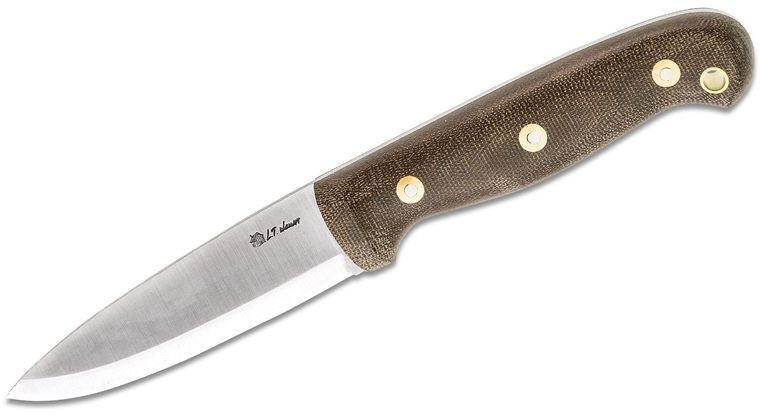
3. L.T. Wright GNS - Best for Making Tools
Pros
- Durable O1 steel blade
- Versatile drop point
- Comfortable grip
Cons
- Poor corrosion resistance
- Somewhat expensive
Specs
- Overall Length: 9.5"
- Blade Length: 4.25"
- Blade Grind: Scandi with a micro bevel
- Blade Steel: O1
- Handle Material: Micarta
- Sheath Material: Leather
L.T. Wright is a knife designer who focuses largely on bushcraft blades.
His designs are among some of the best, and the GNS is the company's flagship with all the features Wright prefers.
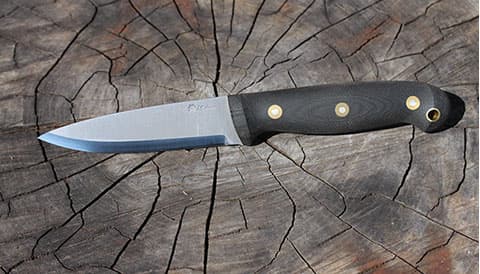
Want controversy? Ask a bushcraft forum if this is a Scandi grind. It sure looks like one -- and many people people will tell you it is -- but there's a micro convex bevel at the very edge that will send purists into a tailspin.
The good news is that tiny bevel makes the blade easier to sharpen because you don't have to remove nearly as much material as a true Scandi grind requires. The tradeoff is a relative decrease in durability, especially if you start splitting knotty firewood with it.
The blade's drop point is an excellent feature for drilling holes and making other tools, which is useful in bushcrafting.
O1 steel is easy to sharpen and holds a good edge. It's extremely strong and very capable.
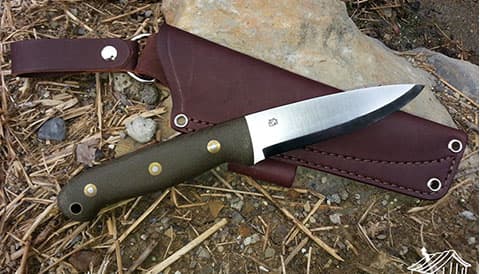
The GNS is a simple knife that makes it easy to make feather sticks, drill holes, whittle, and beyond.
The rounded Micarta grips give you a comfortable and well-textured design for hours and hours of work.
4. Condor Tool and Knife Bushlore Camp Knife - Best for Beginners
Pros
- Affordable
- Durable
- Scandi grind
Cons
- Lackluster edge retension
Specs
- Overall Length: 9.25"
- Blade Length: 4.25"
- Blade Grind: Flat
- Blade Steel: 1075
- Handle Material: Hardwood
- Sheath Material: Leather
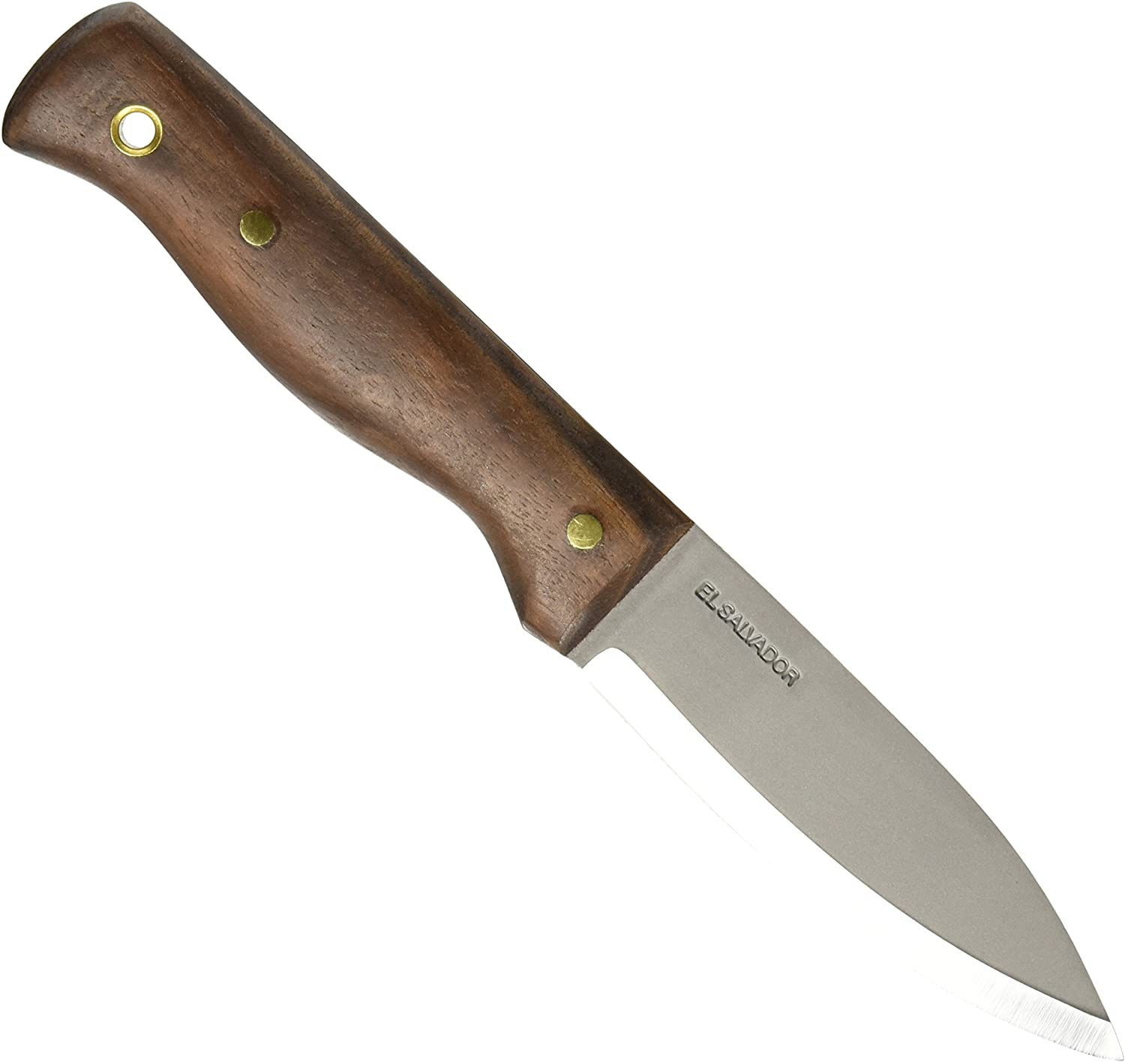
If you want something a little more affordable than most, the Condor Tool and Knife Bushlore is a great starter.
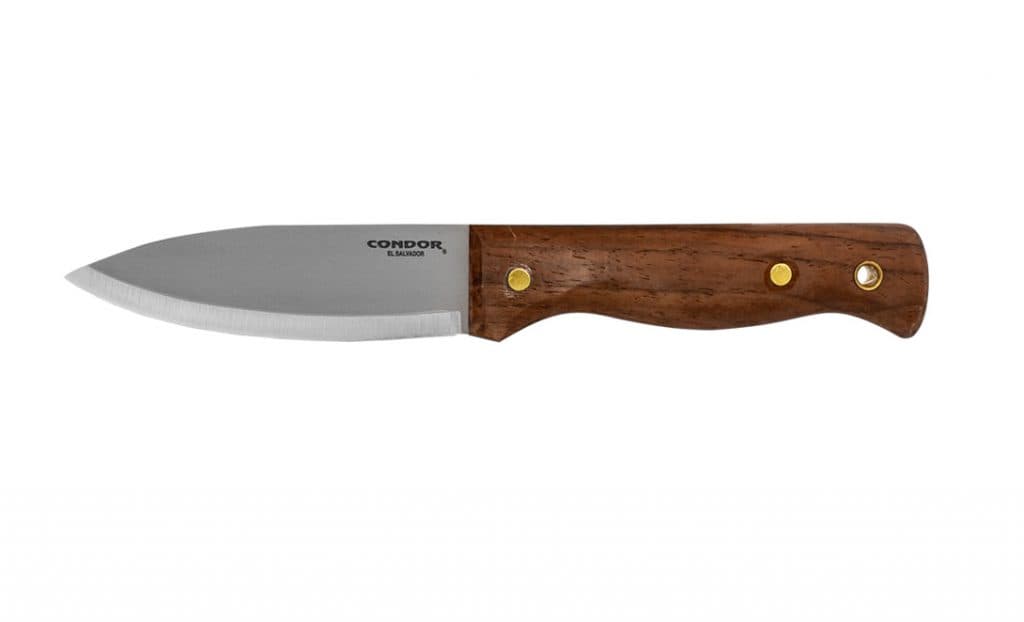
We get a 1075 high carbon steel blade that measures 4.25 inches long. Admittedly, 1075 isn't the best steel for any particular use. During testing, we wished edge retention was a little better but it's not a deal-breaker.
But it's tough, and tough is important.
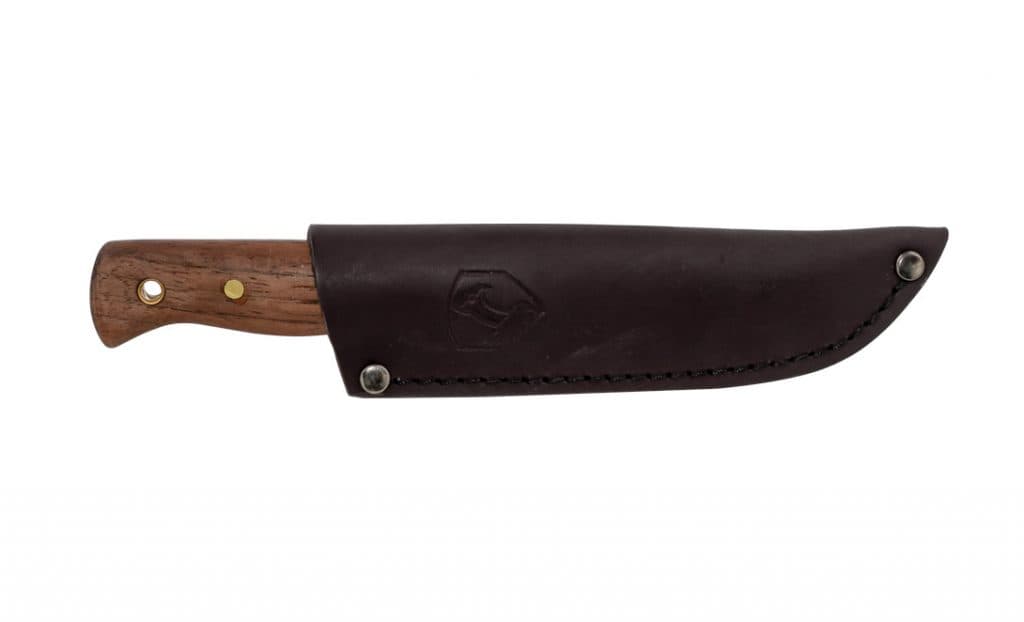
Beyond the blade, the Bushlore offers you a centerline point for easy drilling and digging-like tasks.
The comfortable wood handle looks nice and feels good in the hand, but it lacks a good grip texture for use with gloves.
5. ESEE-4 - Most Versatile
Pros
- Multiple blade and handle options
- Versatile enough for bushcraft and general use
- Rugged
Cons
- Somewhat expensive
- Not great for splitting wood
Specs
- Overall Length: 9"
- Blade Length: 4.5"
- Blade Grind: Flat
- Blade Steel: 1095
- Handle Material: Micarta
- Sheath Material: Polymer
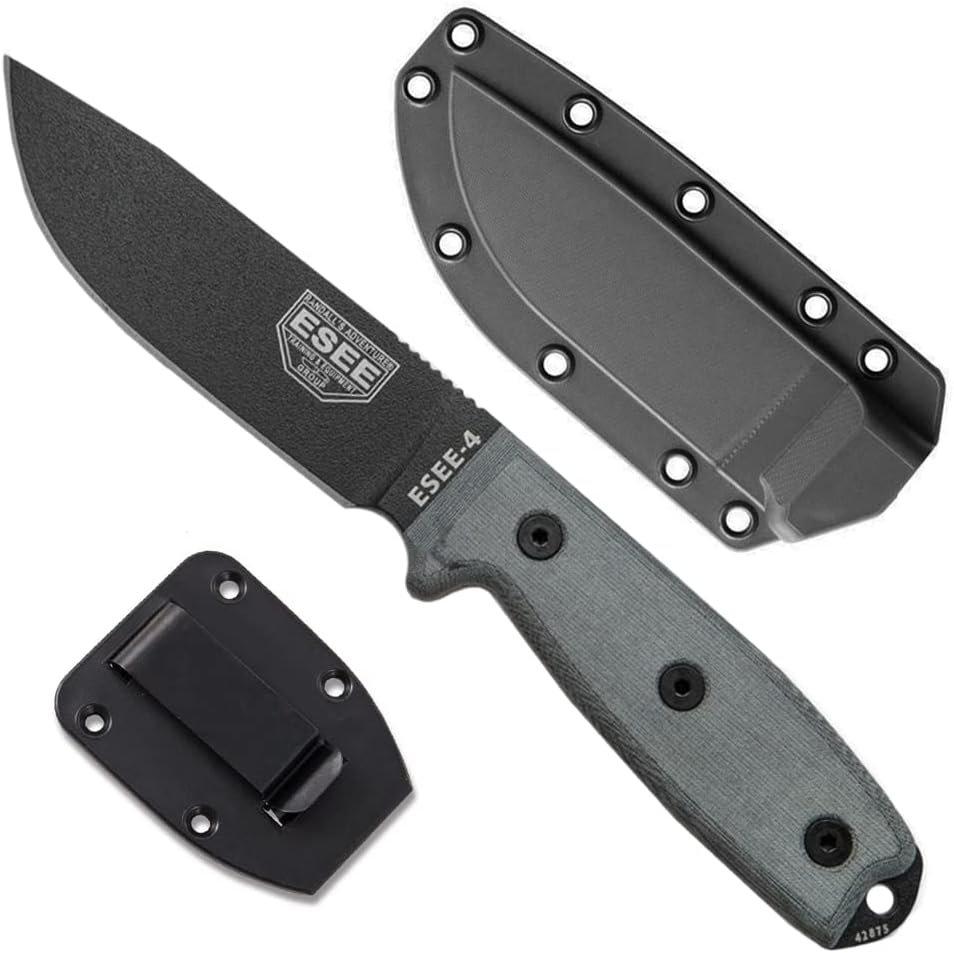
When it comes to favoritism and bias, the ESEE-4 gets mine -- full stop.
I love the ESEE-4, and it's my current go-to bushcraft knife for sharpening my skills (pun intended).
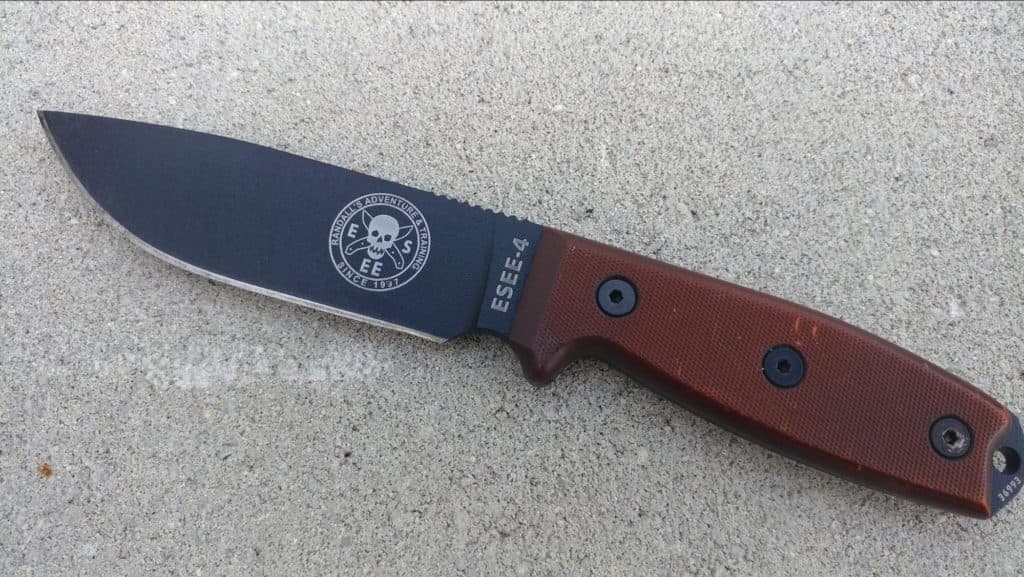
Randall's Adventure company designs the ESEE series knives. Those cats are experienced bushcrafters, survivalists, and adventurers. Their knives reflect their experience.
The ESEE-4 packs a 4.5-inch blade in either 440C stainless steel or 1095 carbon steel, so buyers have options. Both materials provide a very strong, capable blade. It's topped with a simple but versatile drop-point blade with a healthy belly for deep cuts.
It uses a flat grind that's less sturdy but more precise than a Scandi grind. It's certainly much better at slicing.
The ESEE-4 comes with a rounded G-10 handle that's textured for a sure grip, but not so aggressive that it causes discomfort.
It's one of my favorite knives and is a great all-around knife for survival, bushcrafting, fishing, hunting, and more.
What do you think of the ESEE-4? Give it a rating below.
Readers’ Ratings
5.00/5 (1703 Votes)Your Rating
6. KA-BAR Becker Kephart - Best Traditional

Pros
- It's a Buscrafting classic!
- Large, utilitarian blade
- Easy to sharpen
Cons
- Poor corrosion resistance
- Fairly expensive
Specs
- Overall Length: 9.68"
- Blade Length: 5.13"
- Blade Grind: Flat
- Blade Steel: 1095
- Handle Material: Walnut
- Sheath Material: Leather
Most bushcrafters consider Horace Kephart the father of modern bushcrafting and revere him as such. He designed the original Kephart knife -- the perfect woodcraft tool.
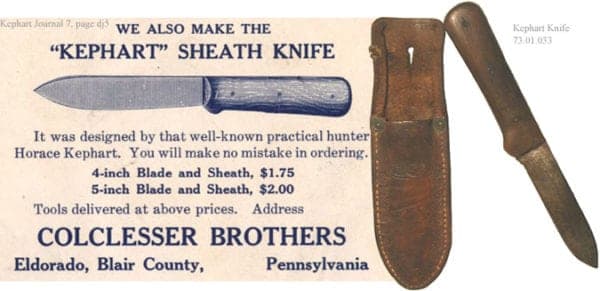
KA-BAR replicated the Kephart knife. This version wears a 5.13-inch blade with a centerline drop-point tip. This is a versatile tool for drilling holes and whittling with ease.
A healthy belly provides plenty of chopping and cutting room for bushcrafters.
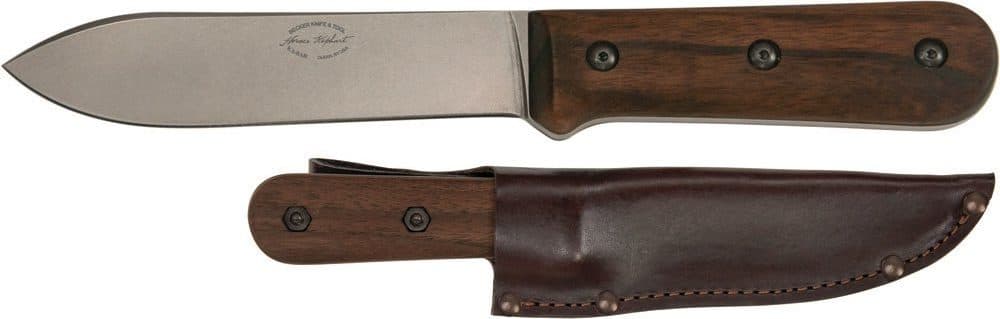
It's a practical knife for crafting tools, constructing shelters, and skinning game without much stress.
Heck, the spine is even square enough to strike ferro rods. It's tough enough to baton firewood, too.
KA-BAR uses 1095 Cro-Van steel for this blade.
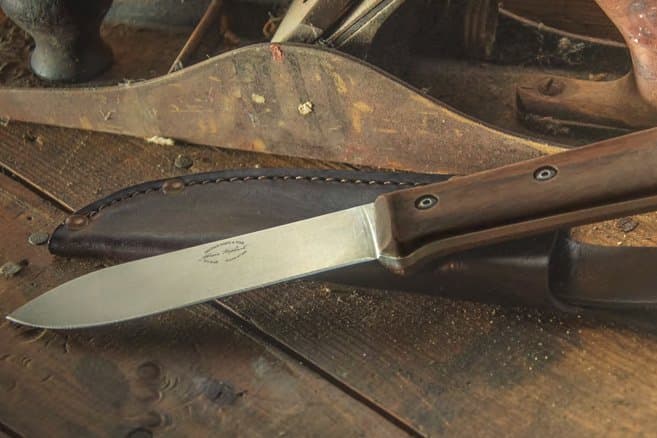
It's incredibly easy to get this steel razor sharp, yet it's surprisingly tough and very hard.
The biggest downside would be its corrosion resistance. It's prone to rust, so keep it oiled after every use.
How to Pick the Best Bushcraft Knife
A dedicated bushcraft knife needs a few key design features to ensure it's a rugged, investment-worthy knife that will survive years of abuse. Look for these while you're making up your mind.
Full Tang
Check out the top and bottom of a knife's handle; does it look like a steel sandwich? That's a full tang.
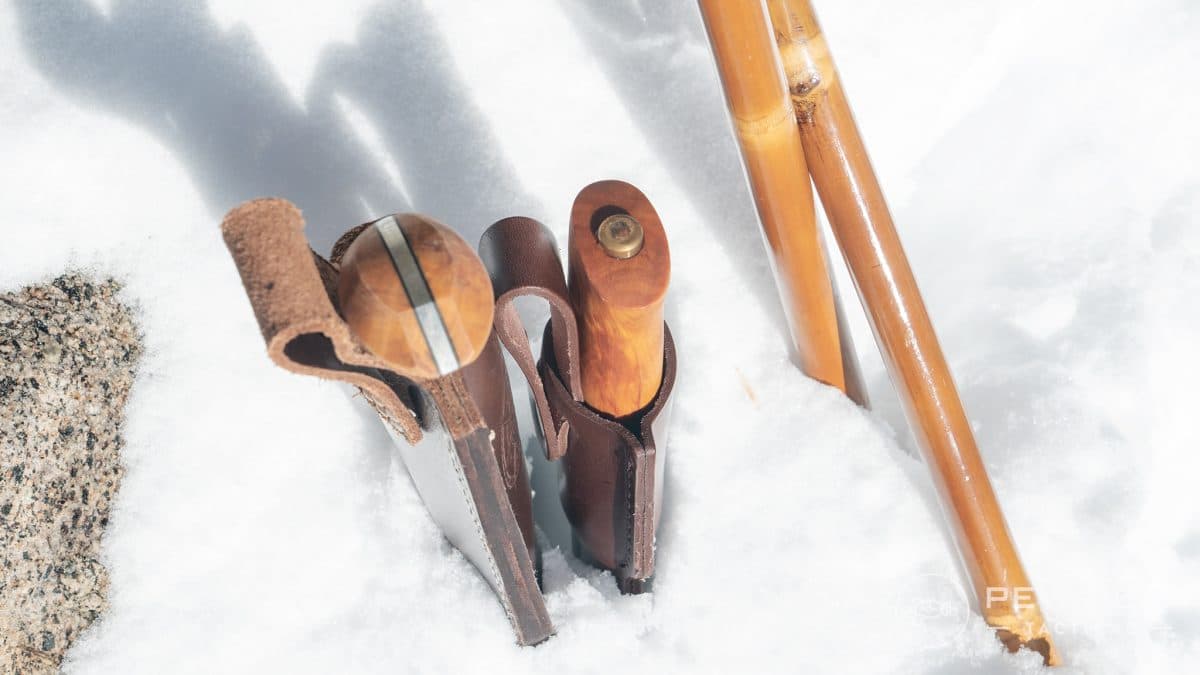
That's a telltale sign but some full-tang knives cover up the steel with a wraparound grip. This doesn't weaken the design and it adds a level of comfort, especially in the cold. The Morakniv Garberg is a great example.
Full tangs offer maximum durability, which is essential if you're going to hammer your knife with a baton to split wood.
Stick tangs, folding knives, and other configurations have their roles but they're not cut out for bushcraft.
Squared Spine
Squared spines are awesome for various tasks. It doesn't need to be exactly 90 degrees, but that helps. The primary goal is to strike a ferro rod and create enough sparks to light a fire, even in bad weather.
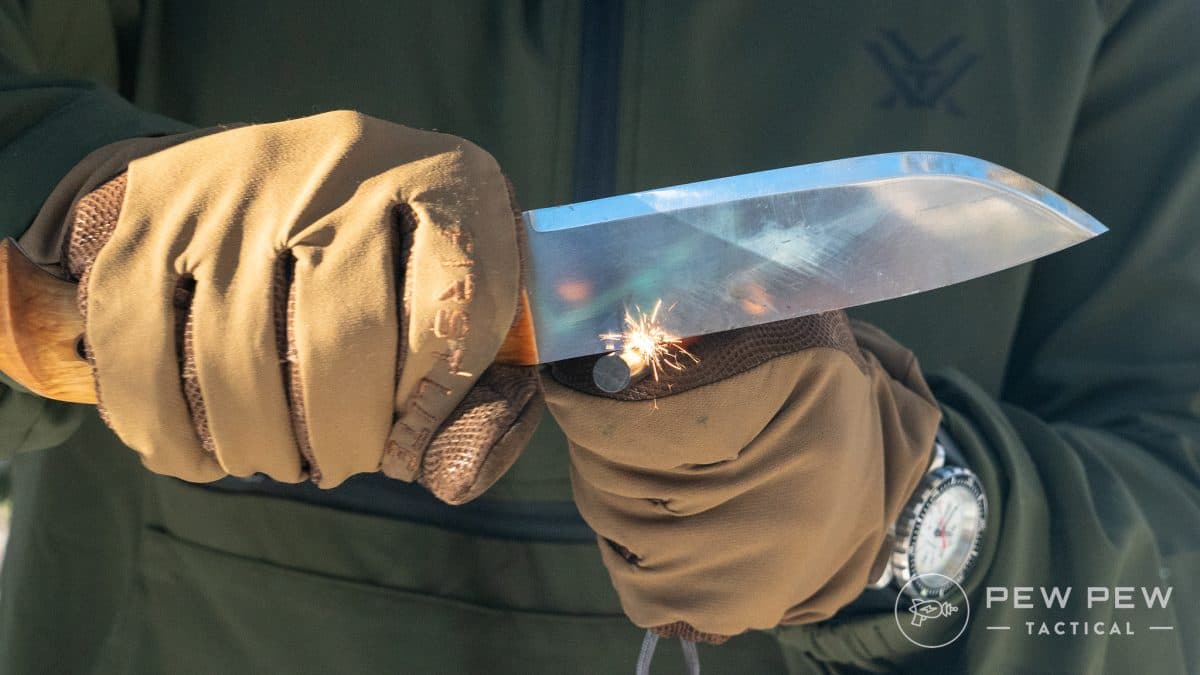
The square spine also makes it easier to shave extra-fine tinder off a piece of wood for fire-starting.
Stainless Steel vs. Carbon Steel
I don't want to dive too far into this argument because it's been raging for years (kind of like the 9mm vs. 45 ACP debate).
For bushcraft purposes, you can go either way. Carbon steel works better for striking ferro rods. Stainless steel doesn't rust nearly as fast as carbon steel and it requires less maintenance. Choose your own adventure.
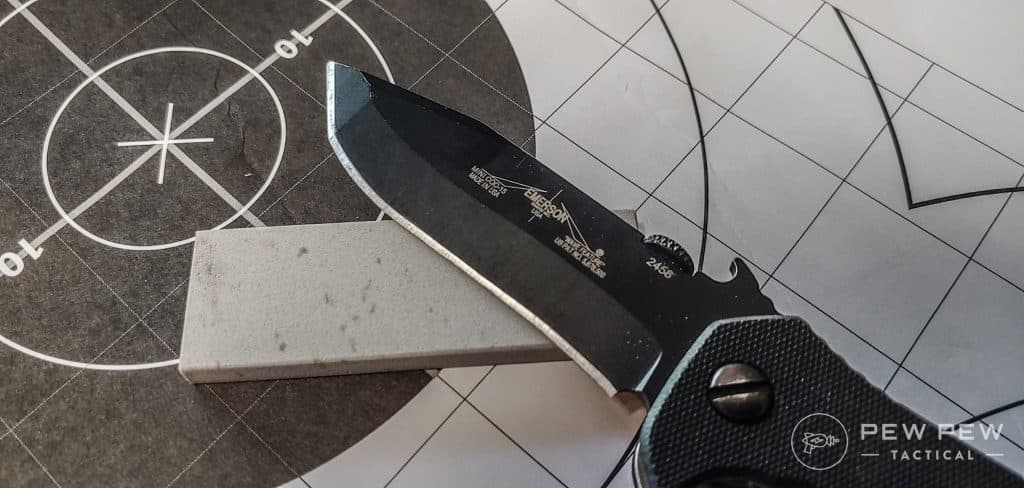
Honestly, it's just best to evaluate your needs, your ability to sharpen a knife, and how much time you want to spend maintaining your gear.
Why Trust Pew Pew Tactical
Travis Pike has spent his entire life shooting and exploring outdoors. That started in a family that hunted every season they legally could, and continued during his time as an infantryman in the Marine Corps. Travis also loves knives and honing his bushcrafting skills. He's a continual student, and he strives to educate himself to provide the best information possible to the readers of Pew Pew Tactical.

Editing this article is editor Scott Murdock. Scott is a Marine Corps veteran who competed and qualified as a rifle and pistol expert while in service. In addition to shooting, Scott has written for a variety of publications, testing, researching, and evaluating guns and gear. He brings that knowledge and skillset to this article, editing and fact-checking for accuracy.
Editor-in-Chief Jacki Billings runs our experienced team of reviewers. She is a National Rifle Association Basic Pistol Instructor as well as a member of the Society of Professional Journalists, ACES: Society for Editing, and the Professional Outdoor Media Association. Jacki has a bachelor’s degree in journalism and has worked as a media professional for close to 20 years, specializing in gun media for almost 10 years. With 2,000+ articles to her name, she uses her professional journalism and editing experience to set testing protocols and editorial standards for Pew Pew Tactical.
Final Thoughts
Bushcraft can be a challenging and rewarding hobby. Getting started is easy, mastery takes a lifetime, and it brings us closer to people who used the same skills centuries ago.
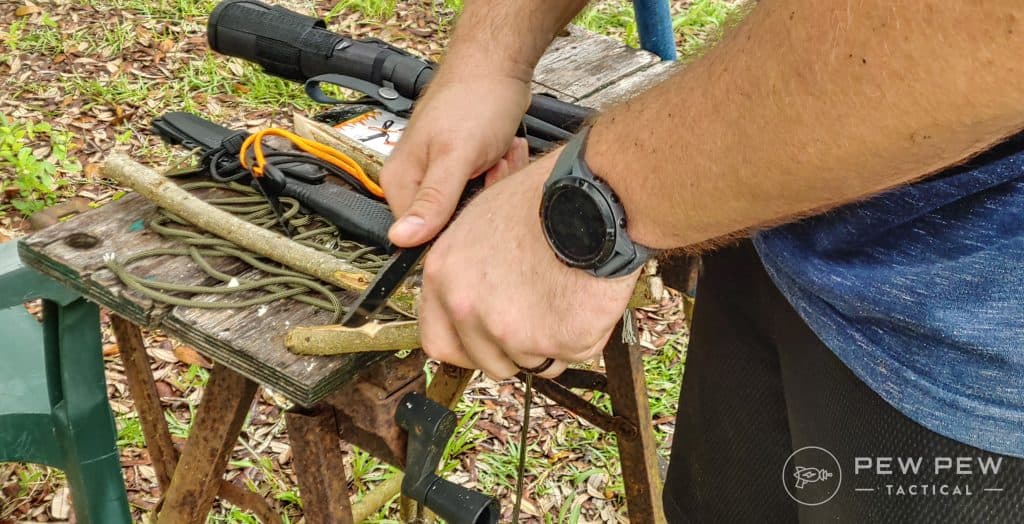
All you need to start is a bushcraft knife and a backyard -- any of these knives will do the job.
What's your preferred bushcraft knife? Let us know below! Ready to dive into more bushcrafting? Check out the five bushcraft skills you need to know.
Latest Updates
- January 2025: Removed the Ontario Bushcraft Field Knife. Added the Helle Nord.