
Best AR-15 Offset Iron Sights [View-Throughs]
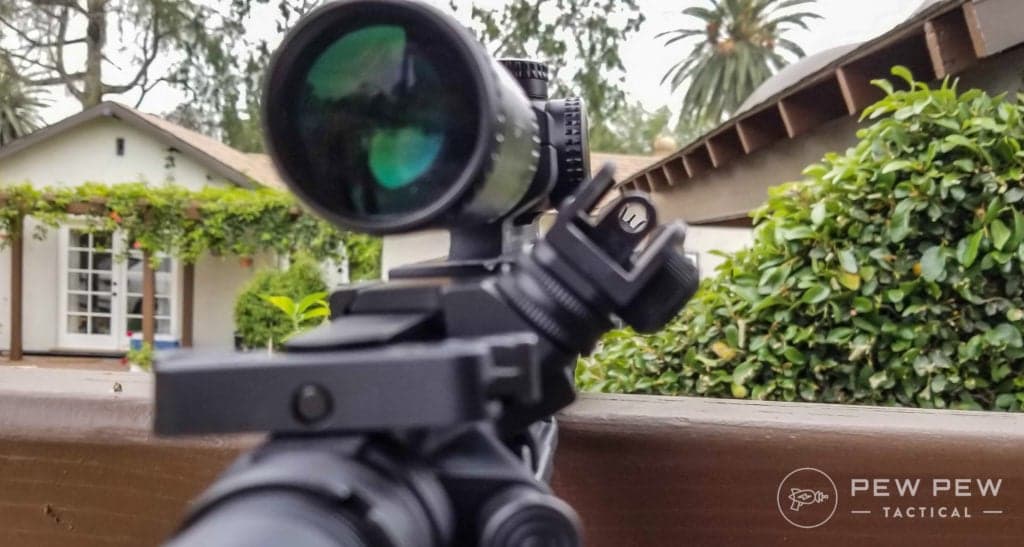
Need a quick transition from a magnified scope to close-up targets? Check out offset irons which give you a nice sight picture with a quick rotation.

Hunter & recreational shooter. Firearms collector of 10+ years. Skeet shooter
We review products independently. When you buy through links on our site, we may earn a commission to help support our testing. Learn more.
Have you ever watched videos of 3-gun competitions only to wonder why some people rotate their rifles before firing?
Well, if you look closely, you’ll probably notice that most of them have a scope or magnified optic mounted on their gun as well, and that’s not a coincidence.
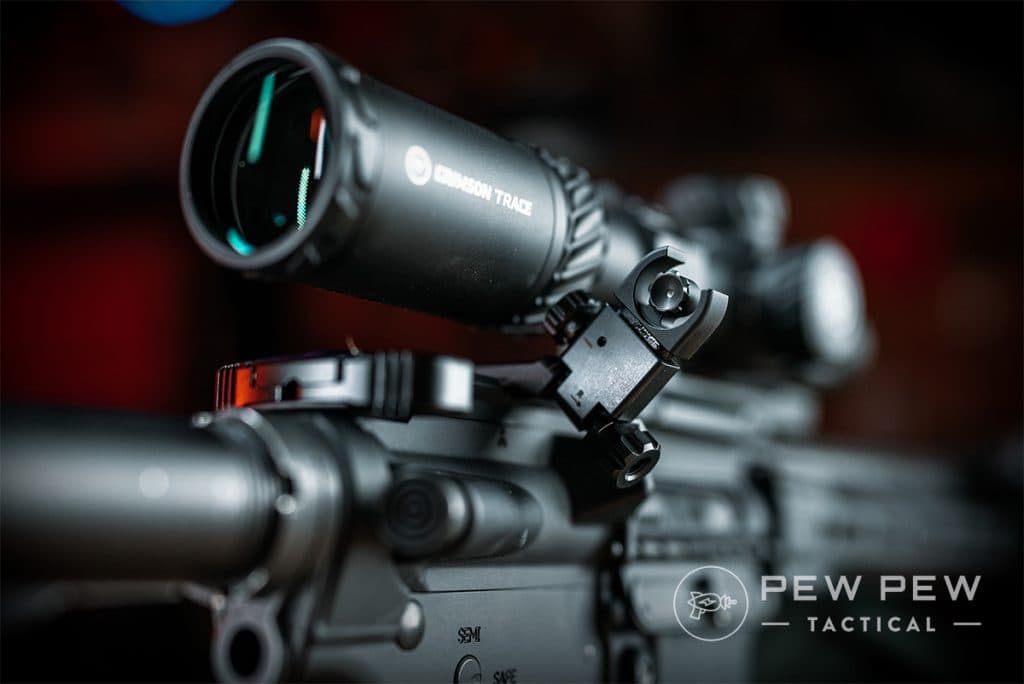
What you’re seeing are shooters aiming with offset iron sights, which are mounted to a flattop rifle and offset by 45 degrees.
We can agree accuracy is crucial. Offset irons give you a great shortcut option when you're dialed out with your main optic.
So let's dive into offset irons a little more. We'll walk you through why you might want this and also give you some models we recommend!
The Quick List
- Editor's Pick: Magpul MBUS Pro OffsetJump to details ↓
- Best Adjustable Budget Sights: Ade Advanced Offset SightsJump to details ↓
- Best High-End: Ultradyne C4 Offset BUISJump to details ↓
- Best Fixed Budget Sights: Ozark Armament 45 Degree Offset Iron SightsJump to details ↓
- Most Durable: Surefire Rapid Transition SightJump to details ↓
Table of Contents
How We Tested the Best AR-15 Offset Iron Sights
To select the best offset sights, we polled our editorial and freelance writing staff, who have a combined experience of over 30 years working with guns and have tested and used various offset sights for years.
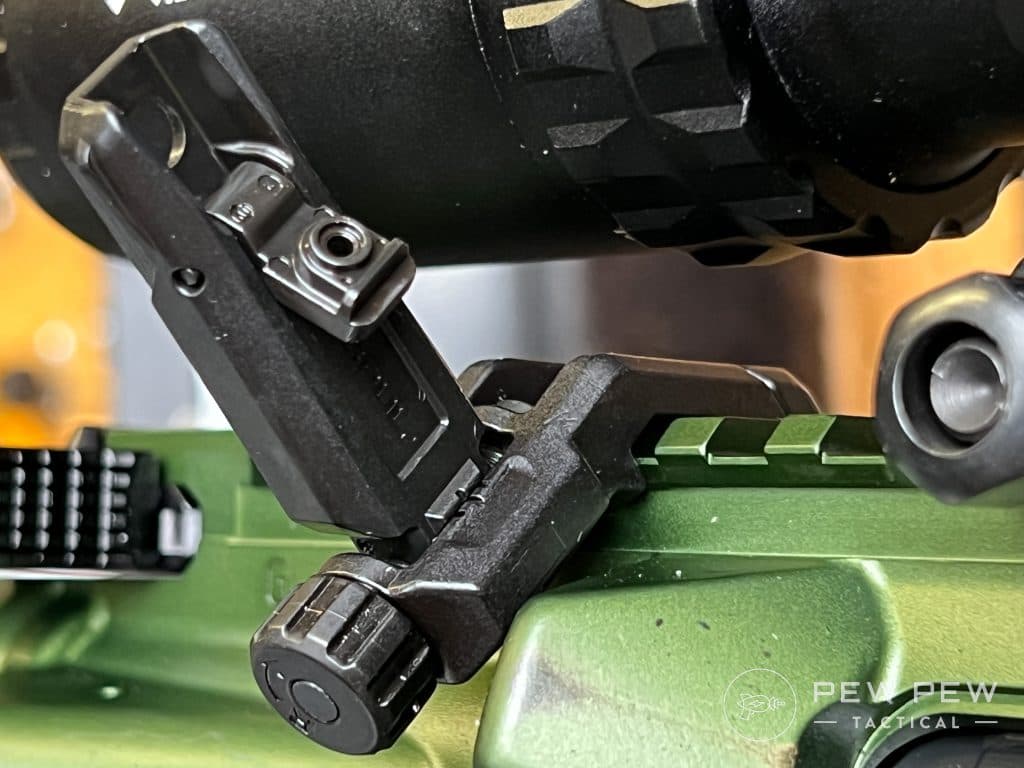
Every sight mentioned on our list has been spent hands-on time with someone on our team, who evaluated it for its features and price.
Best AR-15 Offset Iron Sights
1. MBUS Pro Offset Sights by Magpul - Editor's Pick
Pros
- Durable
- Deploy or stow
- Adjustable
Cons
- Expensive
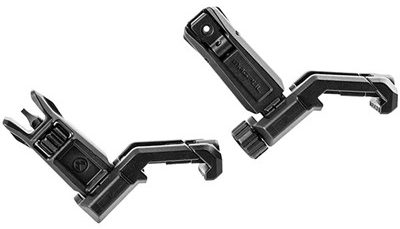
Magpul is another leader in aftermarket tactical gear, so it should go without saying that Magpul sights tend to sell themselves.
You may have already heard of the MBUS Pro inline sights. They’ve been a popular line of backup irons for some time now because of their durability and dependability.
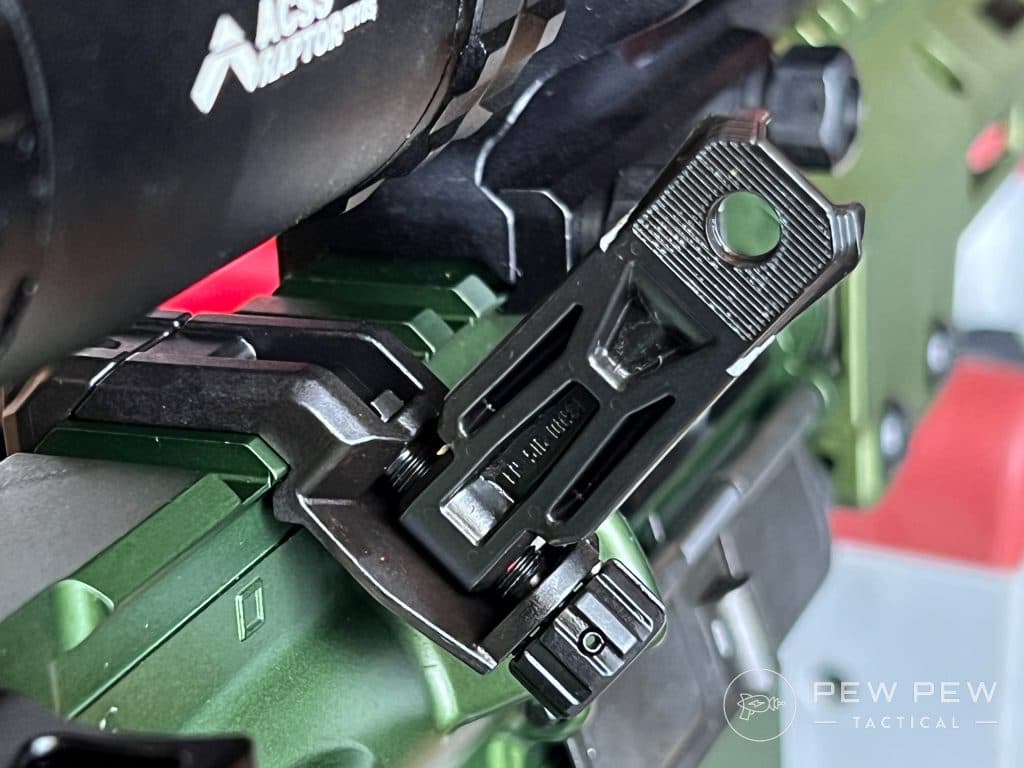
Well, these sights are exactly the same as their inline variants, except that they’re made for shooters who prefer to aim with offset sights rather than inline flip-ups.
Aside from that, you get the same quality and durability that comes standard with Magpul sights.
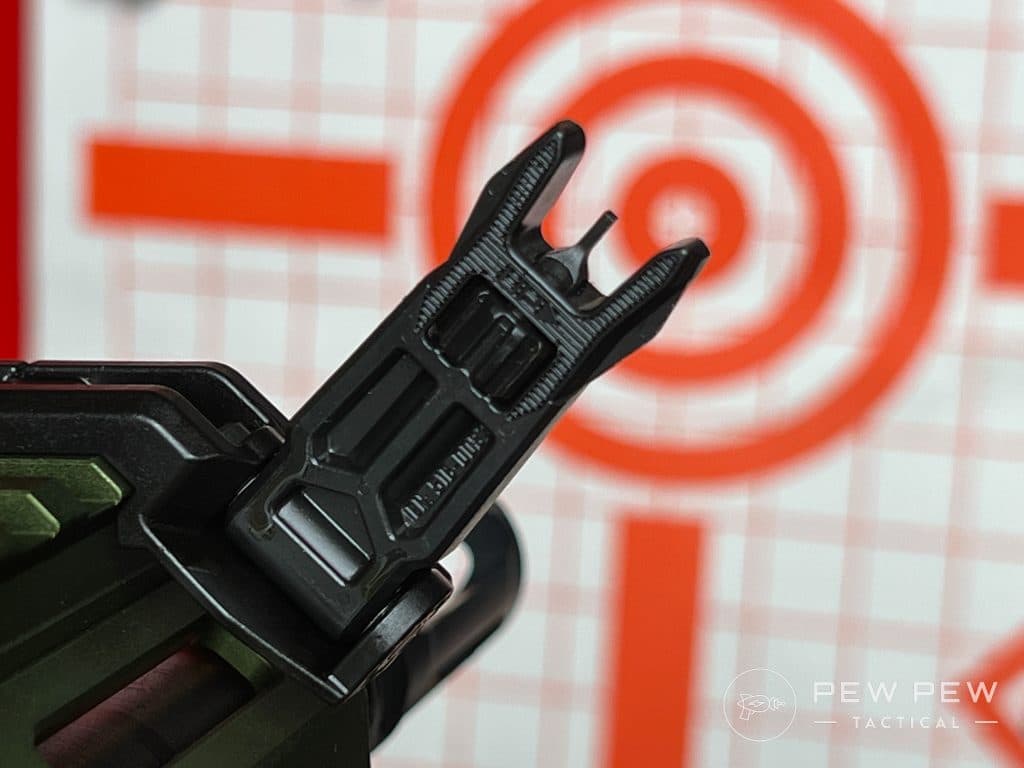
The MBUS Pro sights are more than capable of handling whatever you’re able to throw at them.
They’re made completely from steel and can take a bit of banging around. To further sweeten the deal; they’ve also been given a coat of Melonite QPQ to keep them protected against corrosion.
Like standard iron sights, the MBUS Pro offsets can be adjusted for elevation and windage without the need for tools. The front and rear sights come with a low-profile design that makes them compatible with virtually every rifle configuration.
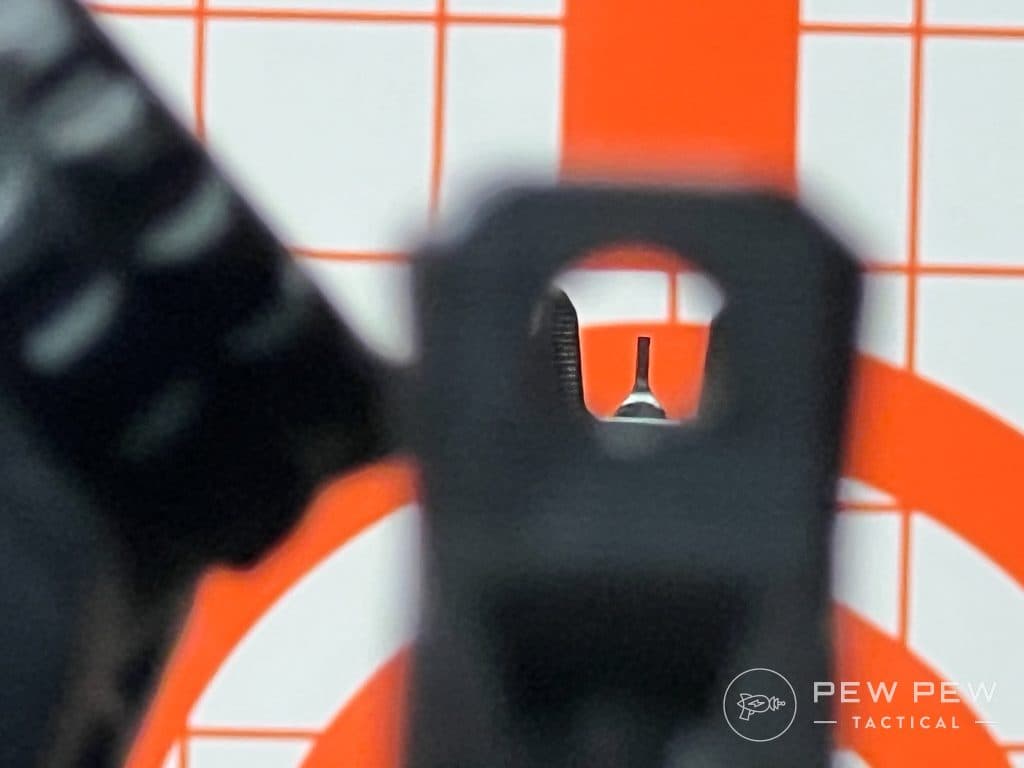
All you need is a Picatinny rail system, and you’re good to go.
What do you think of the MBUS system? Rate it below!
Readers’ Ratings
5.00/5 (2284 Votes)Your Rating
2. Ade Advanced Offset Sights - Best Adjustable Budget Sights

Pros
- Affordable
- Adjustable
- Durable
Cons
- Somewhat bulky
Now, those first two are what you want if you plan on depending on your offset irons when you need them, but maybe you just want to play around with the idea before committing a bag full of money.
Thankfully, there is a budget option in the Ade Advanced Offset Sights.
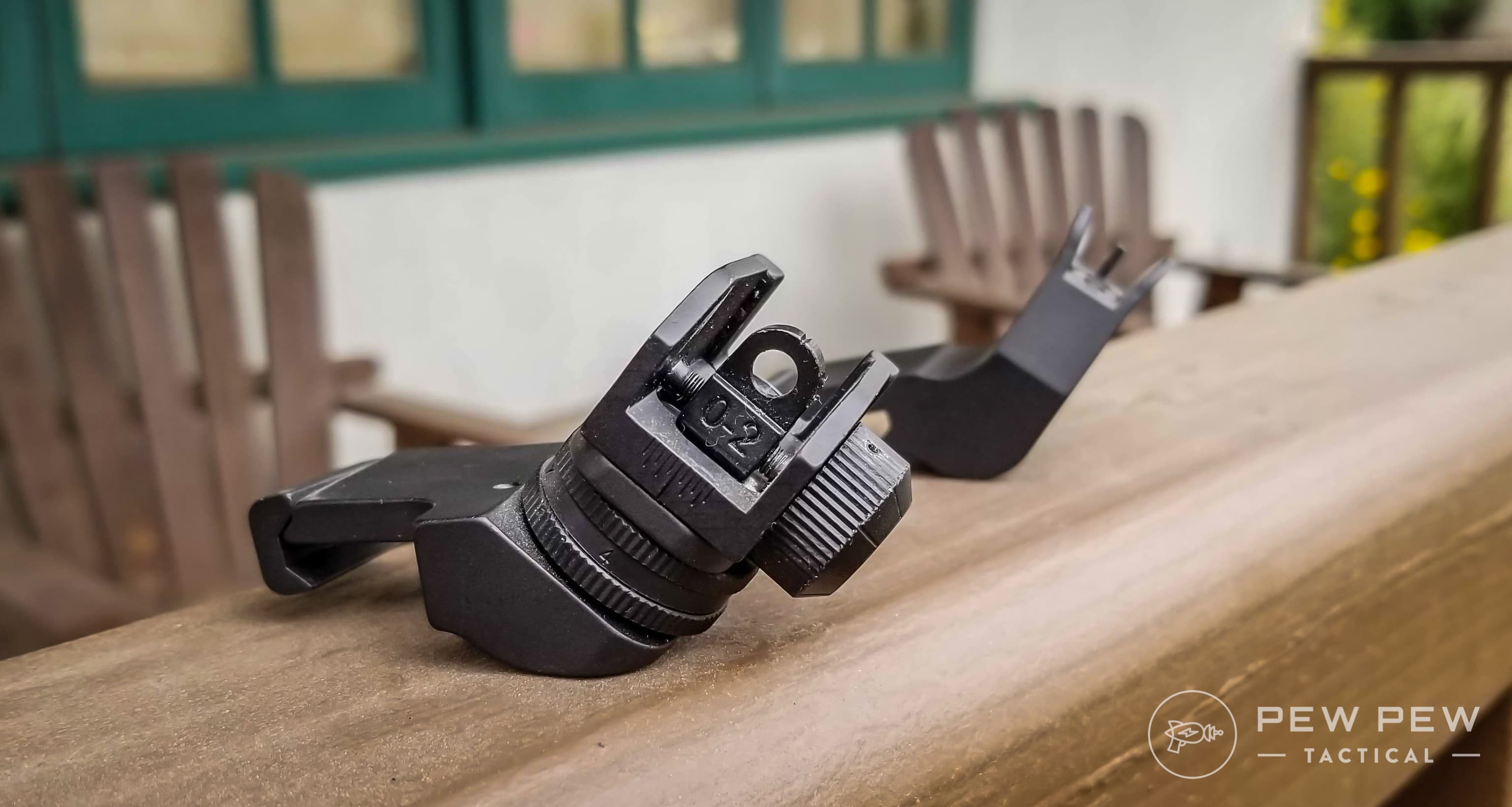
Made from 7075 aluminum with a hard anodized finish and sporting 1/2 MOA elevation and windage adjustments, these are surprisingly decent sights for the price.
And they look decent on any rifle.
But most importantly...they give you a decent enough target picture to score some easy hits against human-sized targets up close and personal.
No frills, no night sights or anything else, but good enough for range day trips and for testing out to see if the offset irons concept is right for you.
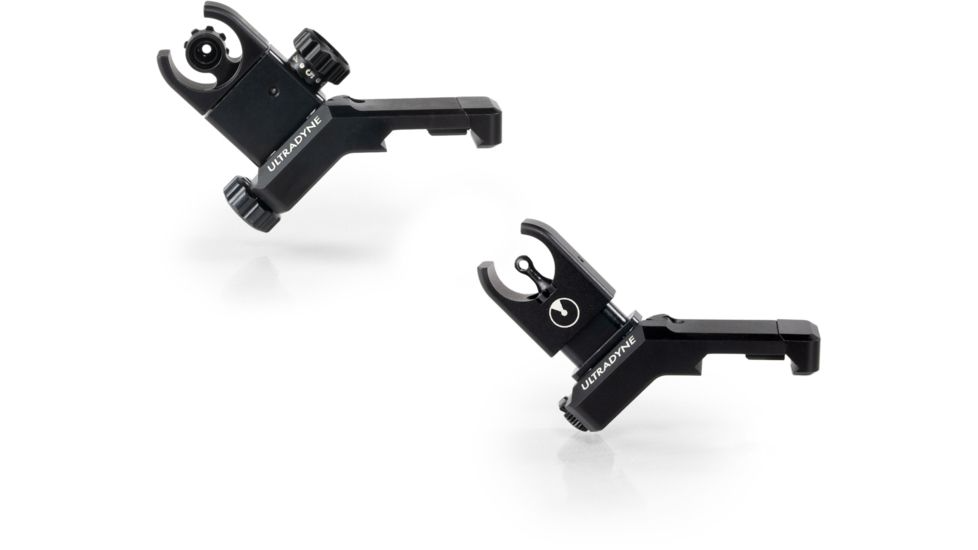
3. Ultradyne C4 Offset BUIS - Best High-End
Pros
- Dual aperture
- Deployable/stowable
- Adjustable
Cons
- Wow expensive
The C4 has a lot going for it, but one of the more unique features is a dual aperture setup. In essence, this means the front sight has a hole in it, too -- it's not just a post.
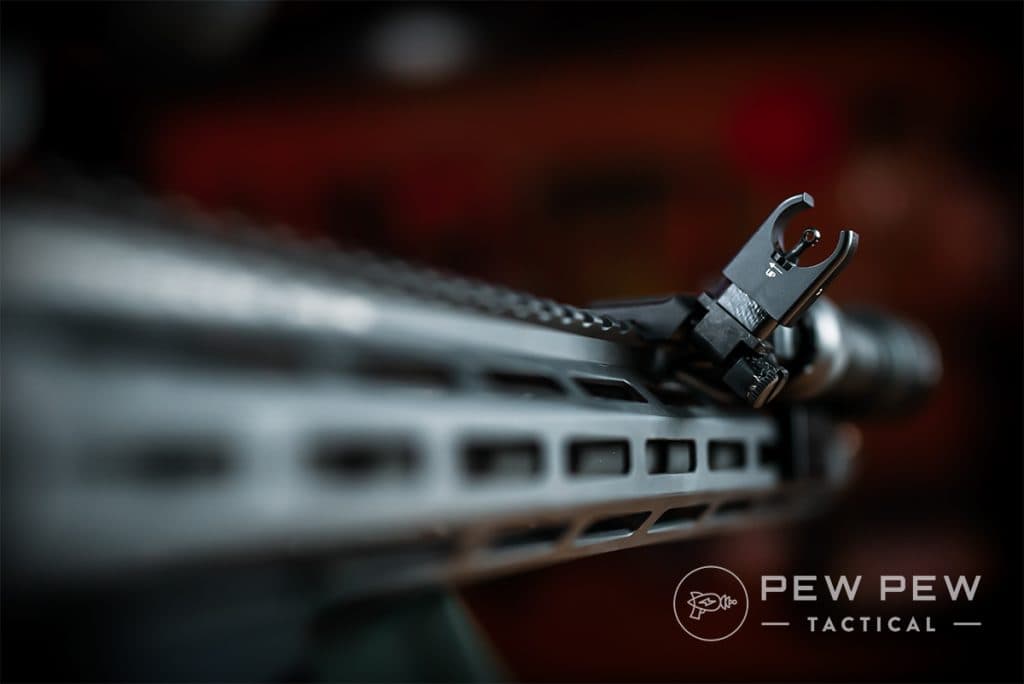
This allows the shooter to still see the target rather than superimposing the front post over it.
Made of 4140 CrMo Steel and 7075 aluminum, the C4 is built tough, and can be folded down when not being used. When deployed, the sights are adjustable for elevation from 200 to 600 yards.
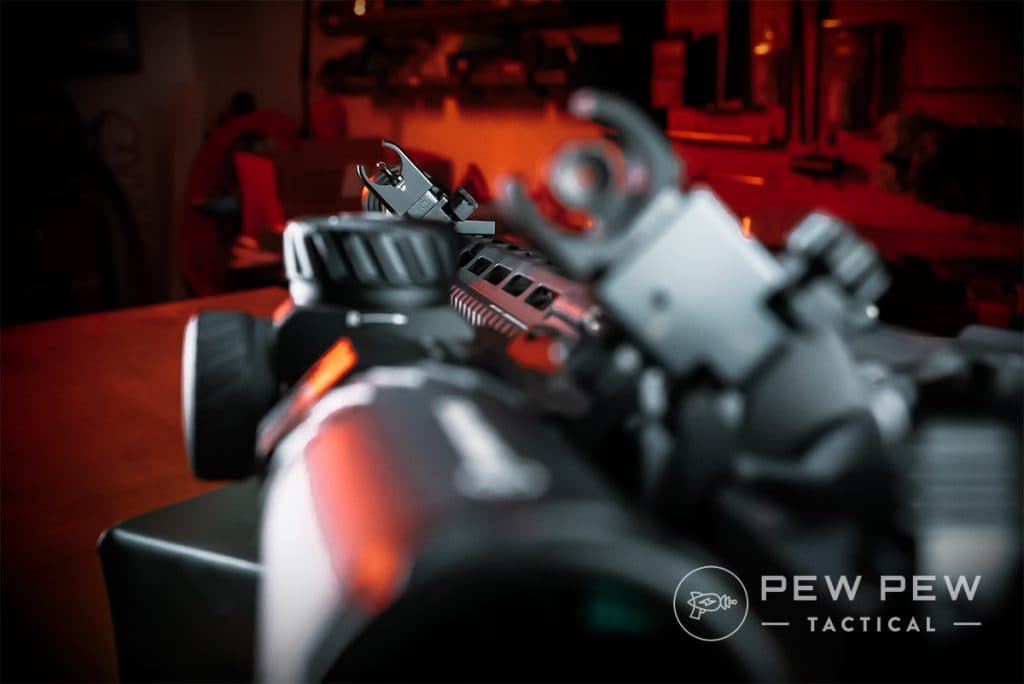
Windage is adjustable, too, and features an easy return to zero.
All this capability and finer materials mean the C4 Offsets start around $320.
4. Ozark Armament 45 Degree Offset Backup Sights - Best Fixed Budget Sights
Pros
- Affordable
- Durable
- Lifetime warranty
Cons
- Fixed
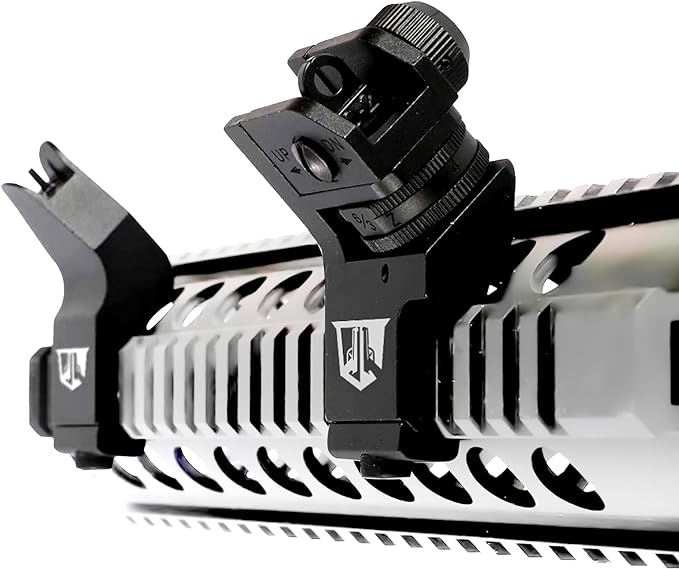
Another affordable option comes from Ozark Armament in their 45 Degree Offset Backup Sights. While these sights are rugged, made from aircraft aluminum that is hard-coated with an anodized finish.
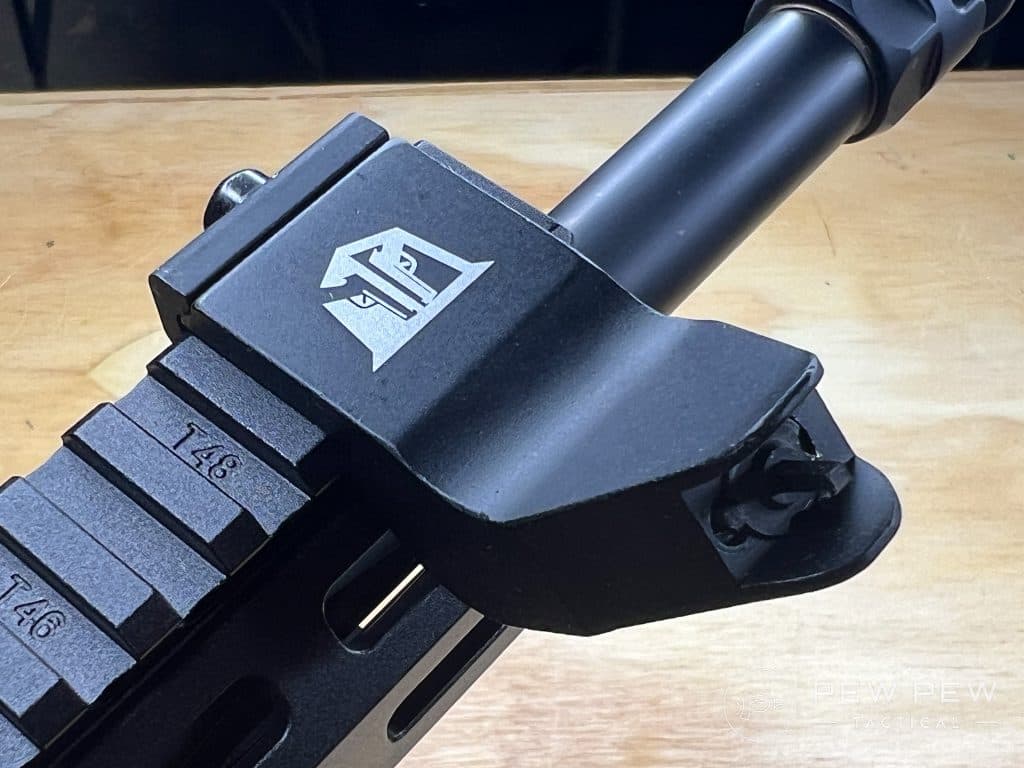
The sights are reminiscent of the A2 style and utilize an adjustable height front post. This is complimented by a dual aperture rear that is also adjustable for windage and elevation.
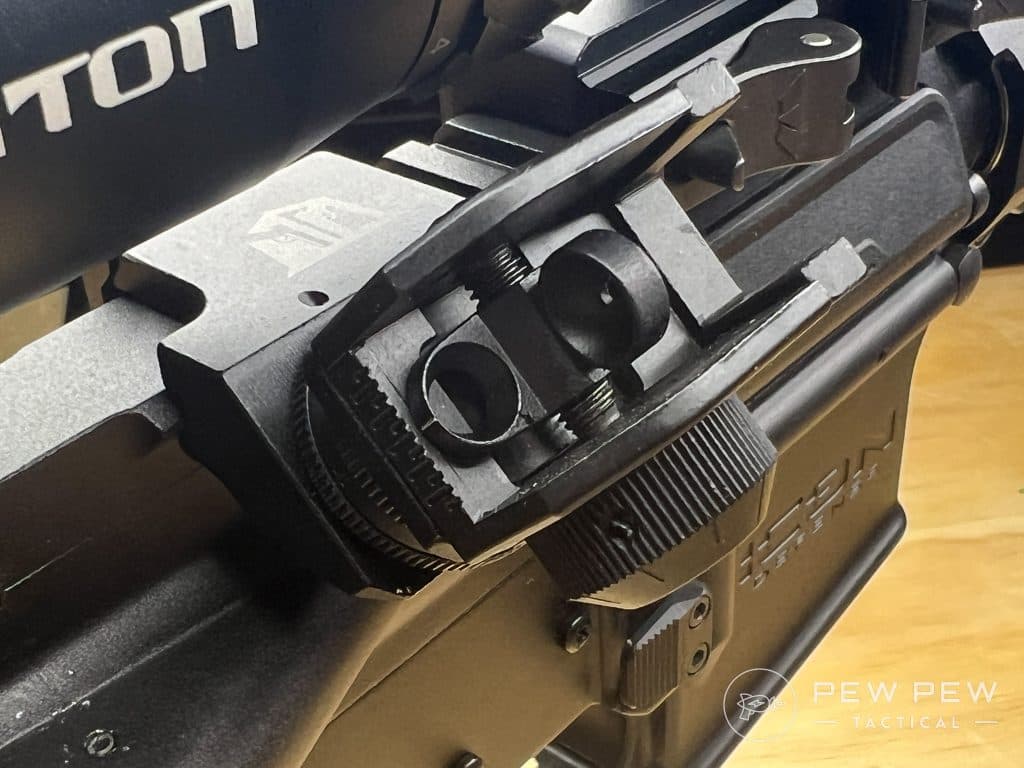
With the dual apertures, shooters can dial wide open for a large sight picture. Alternatively, they can narrow in with the smaller one for finer accuracy.
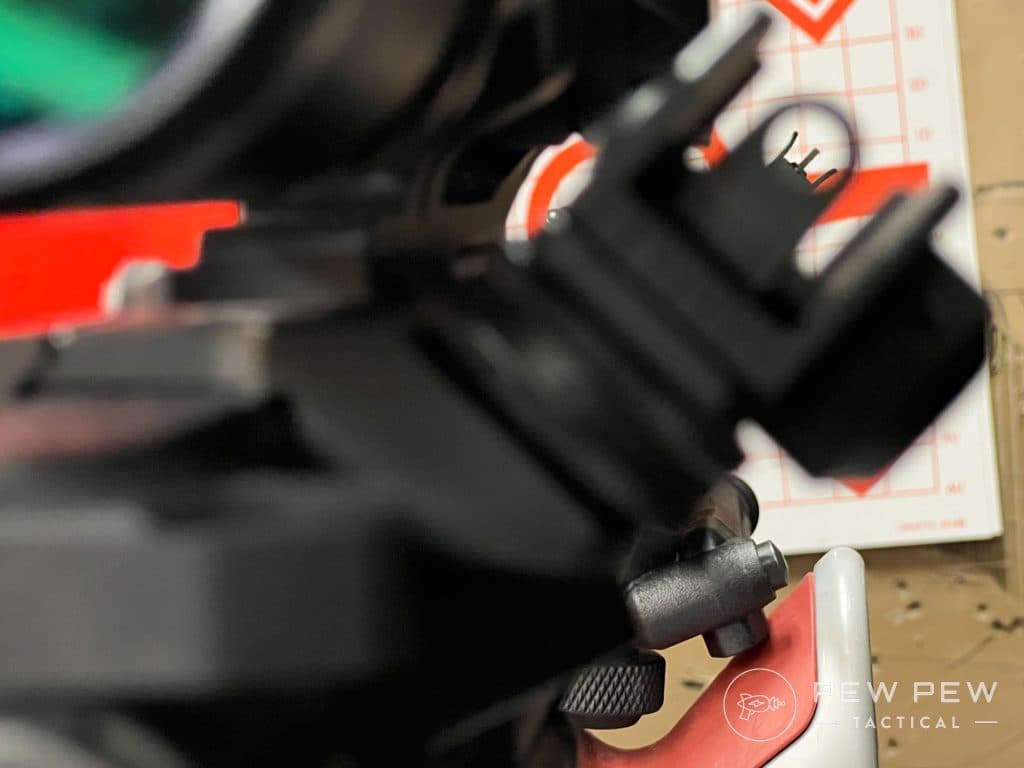
Although these sights are fixed and cannot flatten like others, they are durable, and mount up to a Picatinny rail. They're also backed by a lifetime warranty at one heck of a price.
5. Surefire Rapid Transition Sight - Most Durable
Pros
- Rugged
- Lightweight
- Left-handed available
Cons
- Expensive
When it comes to quality sights, 3-Gun legend Barry Dueck is a name you can trust.
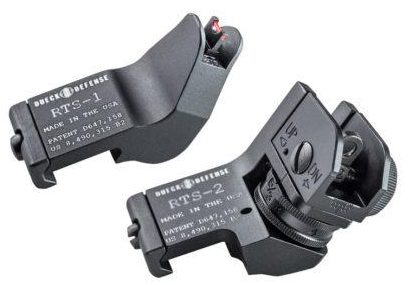
For this reason, offset irons made by Surefire have been some of the more popular BUIS for some time, and the Rapid Transition Sights are no exception.
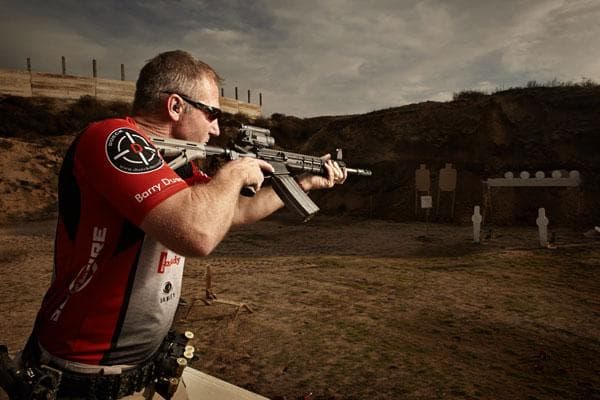
Dueck came up with the Rapid Transition Sight to maximize his proficiency in run-and-gun competitive shooting scenarios while also being able to use a powerful optical mount. And out of that need, the Rapid Transition Sight was born.
Aside from the rather expensive price tag, what sets these sights off from other offset irons out there is their heavy-duty design.
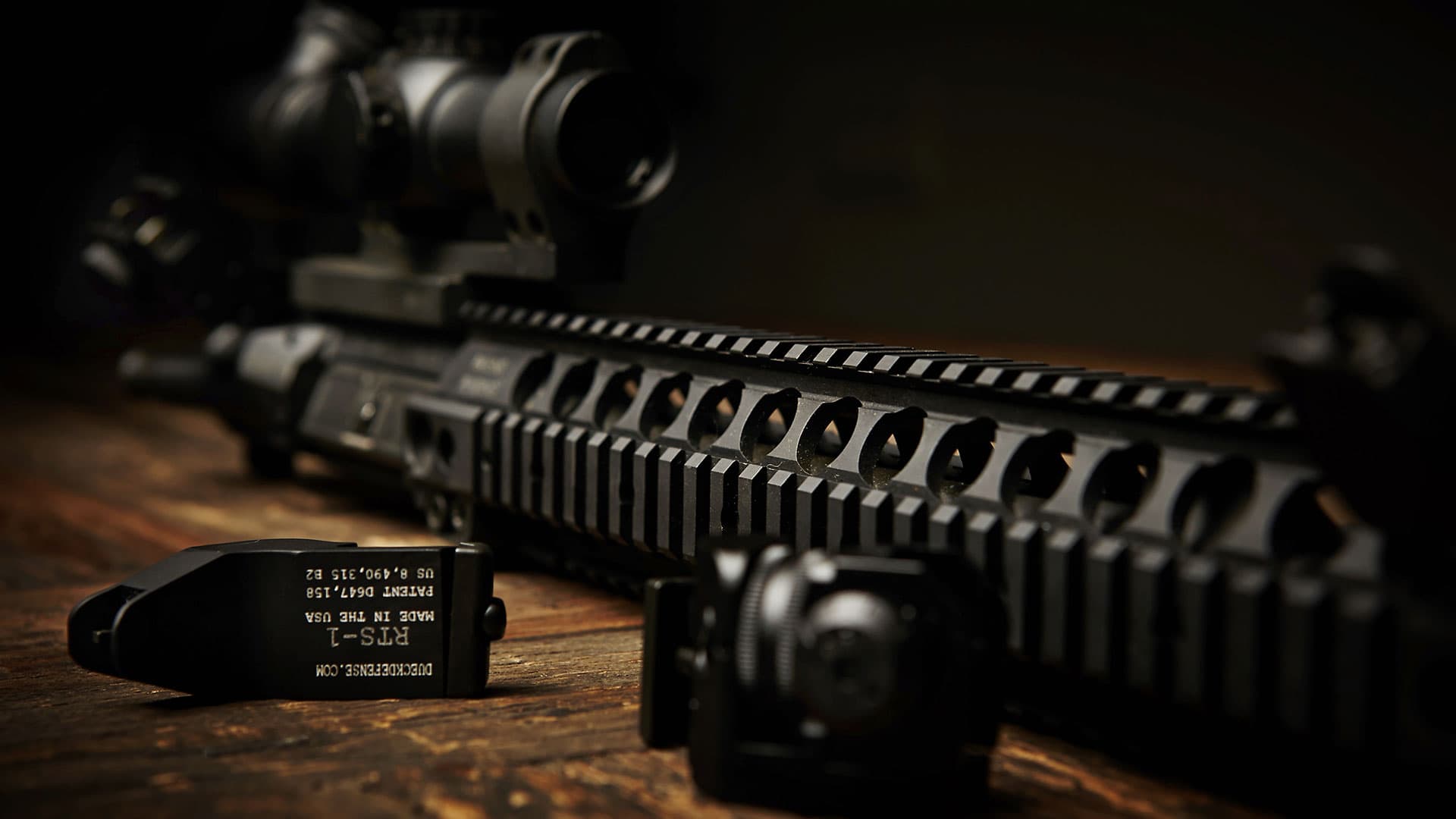
Made from the lightweight 7075 aluminum alloy, the Rapid Transition Sights aren’t only lighter than your average offset, but they’re stronger as well --- twice as strong as the standard 6061 T6 aluminum sights, to be exact!
If you’re wondering why anyone would pay so much for sights just for increased durability, remember that offset sights tend to catch a lot more wear and tear than inline sights because of their positioning.
The last thing you want during a 3-Gun competition or an emergency situation is to accidentally bang your site against an object and break it.
The mount only rises 2/10th of an inch higher than your Picatinny rail, so don’t worry about them blocking your primary optic.
Why Should You Consider Offset Sights?
Say you’re rocking a scope, but you need to quickly fire off a shot at a target just a few short yards away.
Instead of spending time trying to locate the target through your scope, all you need to do is rotate your gun slightly and line up the target with your offset iron sights.
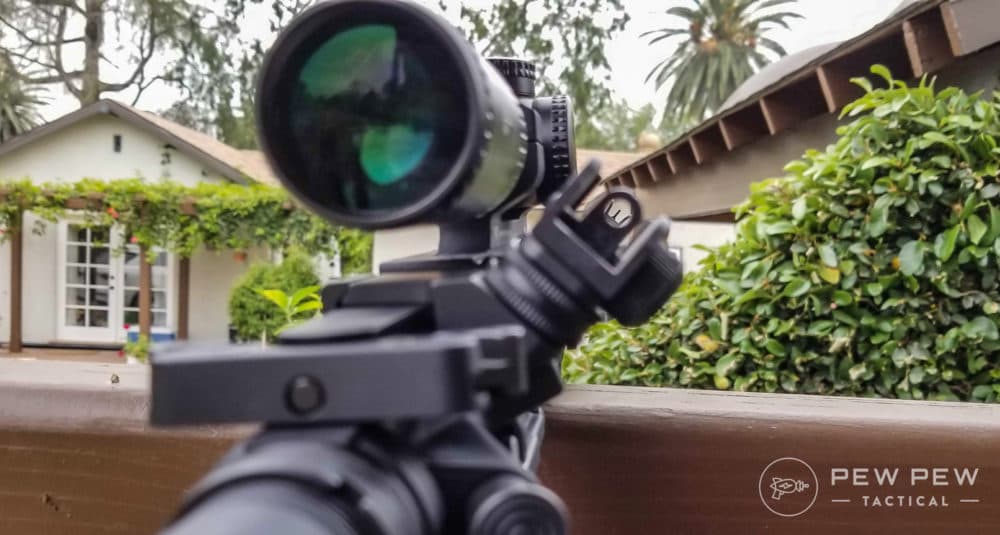
This will take half the time that it would take to use your scope at shorter distances, making it offset sights crucial for competitions and real-life tactical situations.
Are Offset Iron Sights Better Than Inline Sights?
Better is a relative term, but they can be useful in situations where you’ve got to engage a close target and time matters.

The benefit that offset iron sights has over inline sights is that you don’t have to take the time to flip them up in the moment.
While most offset sights are able to be flipped up and down, leaving the sights in an up position won’t inhibit your scope like inline sights would. This means that engaging a short-range target is as simple as rotating your rifle 45 degrees and firing.
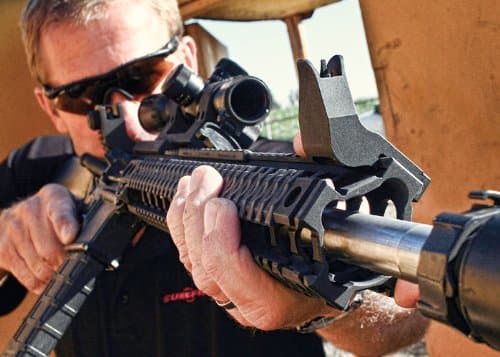
Offset irons can be especially advantageous if your optic device suddenly breaks, as that can seriously dampen your inline sights’ effectiveness.
More importantly, offset sights make it feasible to go between short and medium/long-range target without having to fiddle with your optic mount. Because in a real-life scenario, nobody has the time to take off their scope before engaging a target!

On the other hand, there is a learning curve that comes with offset sights. It might take some shooters some time to get used to rotating their rifle, especially when they need to take a shot in a short amount of time.
Why Should You Consider Offset Sights?
Say you’re rocking a scope, but you need to quickly fire off a shot at a target just a few short yards away.
Instead of spending time trying to locate the target through your scope, all you need to do is rotate your gun slightly and line up the target with your offset iron sights.
This will take half the time that it would take to use your scope at shorter distances, making it offset sights crucial for competitions and real-life tactical situations.
Are Offset Iron Sights Better Than Inline Sights?
Better is a relative term, but they can be useful in situations where you’ve got to engage a close target and time matters.
The benefit that offset iron sights has over inline sights is that you don’t have to take the time to flip them up in the moment.
While most offset sights are able to be flipped up and down, leaving the sights in an up position won’t inhibit your scope like inline sights would. This means that engaging a short-range target is as simple as rotating your rifle 45 degrees and firing.
Offset irons can be especially advantageous if your optic device suddenly breaks, as that can seriously dampen your inline sights’ effectiveness.
More importantly, offset sights make it feasible to go between short and medium/long-range target without having to fiddle with your optic mount. Because in a real-life scenario, nobody has the time to take off their scope before engaging a target!
On the other hand, there is a learning curve that comes with offset sights. It might take some shooters some time to get used to rotating their rifles, especially when they need to take a shot in a short amount of time.
Furthermore, offset sights can be a nuisance and get snagged on things if you’re not mindful of them.
Final Thoughts
Understand that offset iron sights aren’t for everyone. If you’re not someone who needs to switch between long and short distances on the fly, there’s not much of a reason for you to get used to learning how to shoot with offset irons.
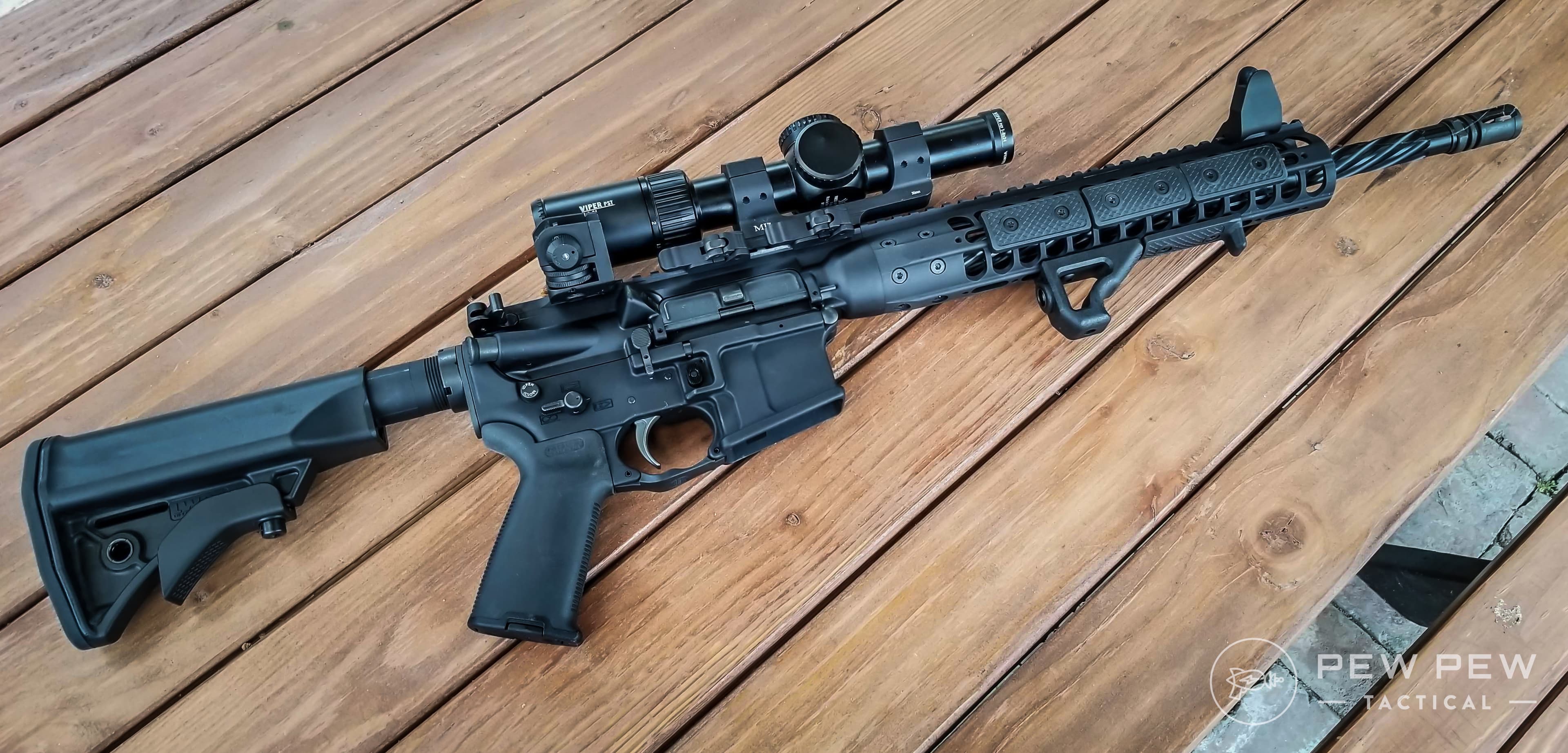
And believe me, if you’re like most people, it will take some time to remember to rotate your gun when you first start shooting with offsets.
If the offset + high-powered scope doesn’t appeal to you, but you still need something that does give your accuracy a little boost without compromising your short-range shooting, look into scout scopes as a viable alternative.
If you’re a competitive shooter or tactical junkie, make sure to let us know how you like shooting with offset iron sights. Want to go electronic or magnified? Check out our Best AR-15 Scopes & Optics.
Latest Updates
June 18, 2024: Added Ozark Armament 45 Degree Offset Backup Sights. Include more information on how we tested the best offset sights. Also, added more media and supplemental data to each product.