I may earn a small part of the sale from links to any products or services on this site. You do not pay anything extra and your purchase helps support my work in bringing you more awesome gun and gear articles.
Want a heated debate? Ask a room full of shooters how much money you should spend on an optic.
Some will argue that the firearm matters way more than whichever piece of glass you put on top of it; others will point out that you can’t shoot what you can’t see, and some crusty old-timer in the corner will start mumbling about iron sights.
I lean toward getting the best optic you can afford, but I certainly wouldn’t scold someone for buying an entry-level red dot if the alternative is iron sights.
There are some solid options out there for people trying to find a quality optic with a budget of $200, and today, we’re going to take a look at a few.
So keep reading as we lay out our favorite models and tell you why they make the list.
For this article, we gathered a bunch of red dots we've personally shot, reviewed, and owned here at Pew Pew Tactical. The entire Pew Pew Tactical team and freelance writers contributed to this review to offer different opinions based on ergonomics, size, and experience.
For optics, we have reviews on; we've linked those so you can read more. Those dots have undergone impact resistance testing and have seen at least 1,000 rounds through them. Some have even been tested with full-auto firearms and multiple calibers.
This article is a culmination of the best and most affordable red dots we think fit most people. We update articles regularly, so check back if your favorite isn’t listed (or drop us a comment below).
Best Red Dots Under $200
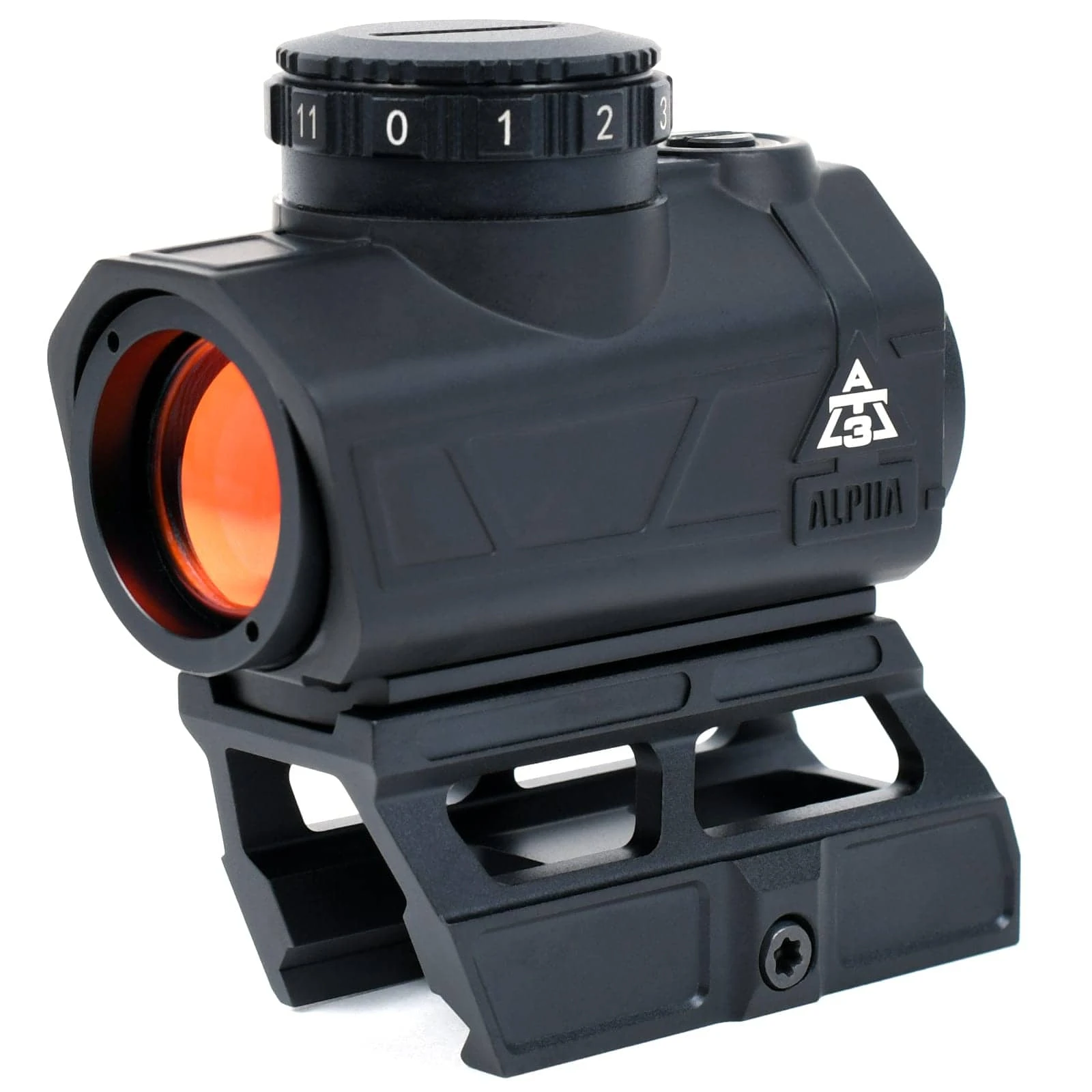
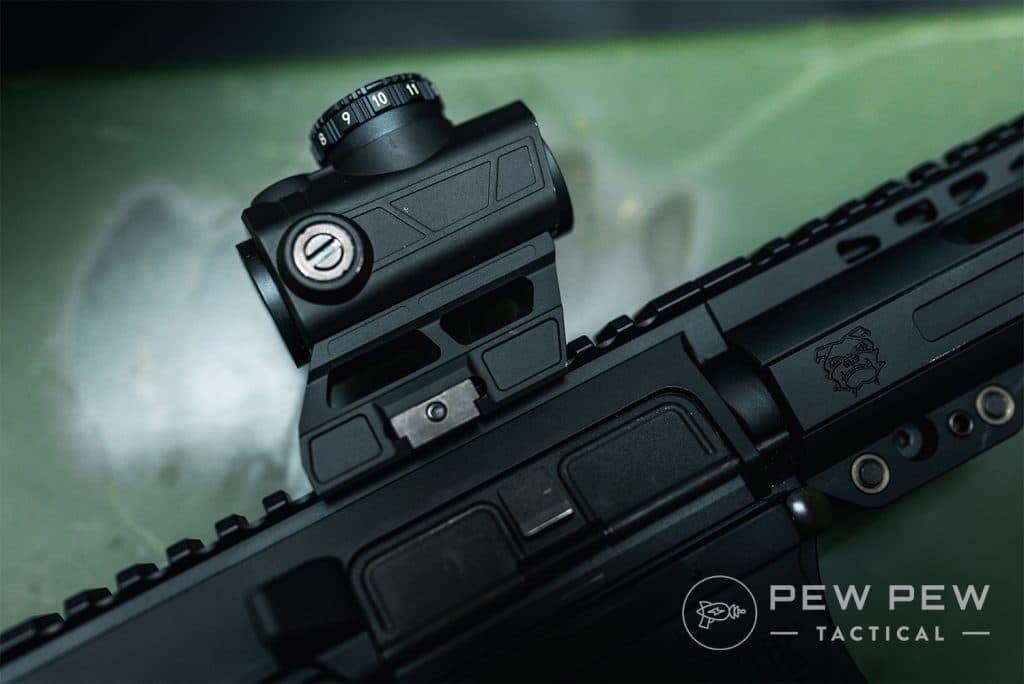
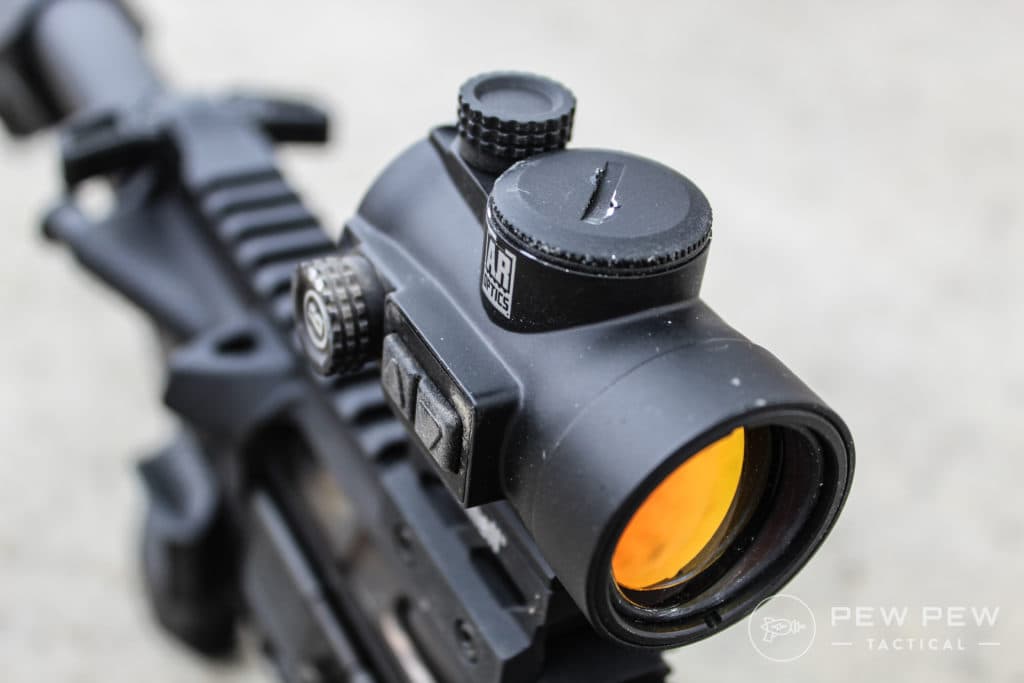
1. AT3 Tactical Alpha Red Dot - Best Budget Red Dot
Brightness Settings: 9 daytime, 2 night vision compatible
Battery: CR2032
Length: 2.9"
Weight: 6.5 oz
The AT3 Tactical Alpha red dot is an easy and affordable way to get into red dots. PPT founder and CEO Eric tested it over 1,000 rounds -- including on some of his full-auto guns -- and it performed well.
In fact, he's had zero failures during the course of owning this red dot -- even after his drop and water immersion testing.
Our only real complaint is that the battery cap got dinged up when using a large screwdriver, and the illumination knob is a bit stiff. Other than that, the Alpha is a solid, budget option for those wanting a solid red dot at a good price.
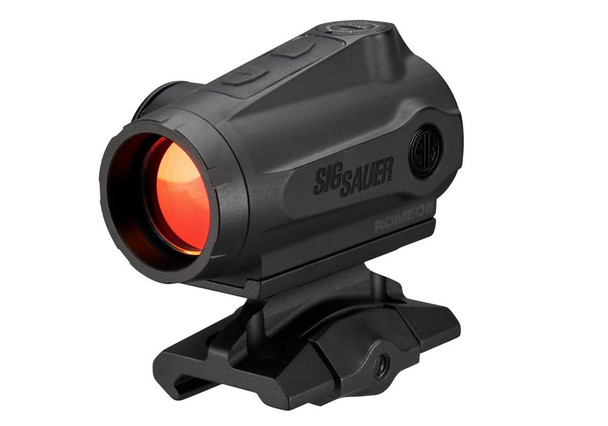
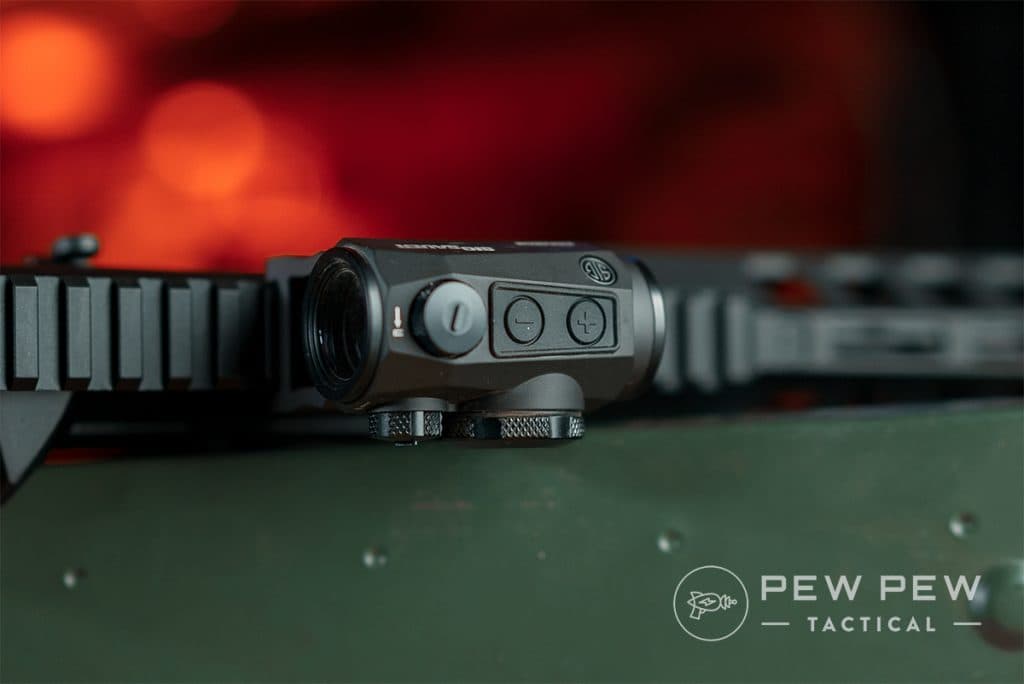
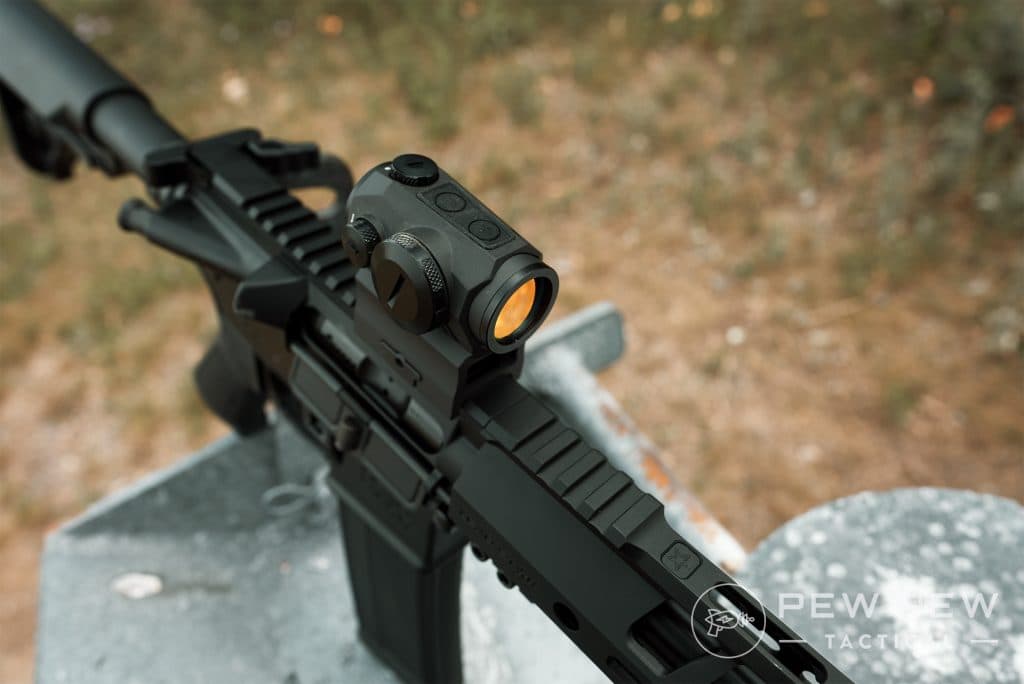
For less than $200, it’s hard to do better than the Sig Sauer ROMEO5. Sig’s entry-level red dot feels like a more expensive optic than it is, but it will give you some room to grow into.
It seems pretty clear that when Sig designed the ROMEO5, the goal was to offer limited features but to make sure they worked very well. It has a simple 2 MOA red dot reticle with 10 brightness settings, a compact housing, and enough protection to keep it operational through daily bumps and splashes.
One higher-end feature that Sig included on the ROMEO5 is shake-awake. The optic will shut down when you’re not using it to save battery life, then wake itself up using the last-used setting when it detects motion. It’s a clever way to extend battery life that many optics in this price range don’t offer.
People who own the ROMEO5 typically give it very high marks for durability. It’s not necessarily what I’d consider a combat or duty optic, but its IPX7 waterproof rating and sturdy construction can handle whatever most recreational shooters dish out.
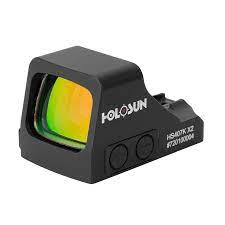
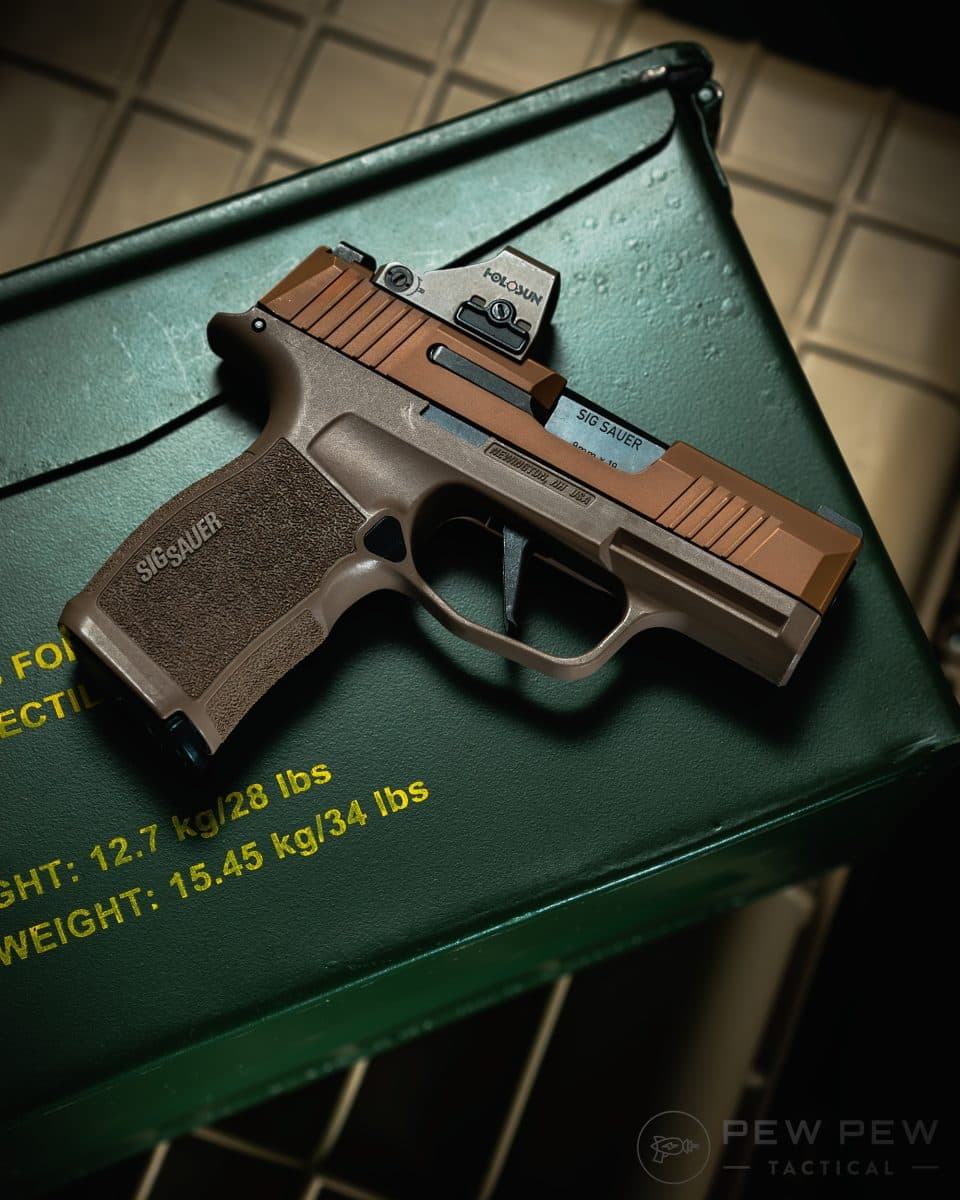
As usual, one of our favorite optic manufacturers found a way to make the Holosun 407K punch above its price and give shooters a great way to save money without sacrificing features.
Depending on the kind of sales, the Holosun can be a more affordable alternative to the Sig Sauer ROMEO5. You’ll still get a 2-MOA dot reticle, long battery life, and a shake-awake feature — you just won’t spend as much.
The 407K is slightly smaller than the ROMEO5, but it’s much lighter!
Some of Holosun’s optics come with a solar charging panel that extends battery life, but you’ll have to break the $200 budget for that kind of tech.
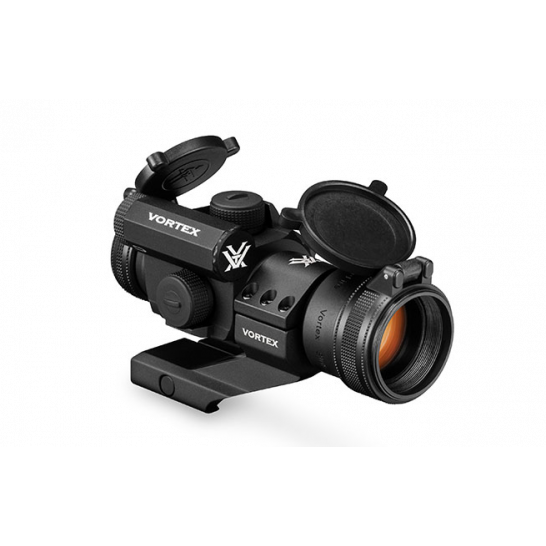
3. Vortex Strikefire II - Best Budget Rifle Red Dot
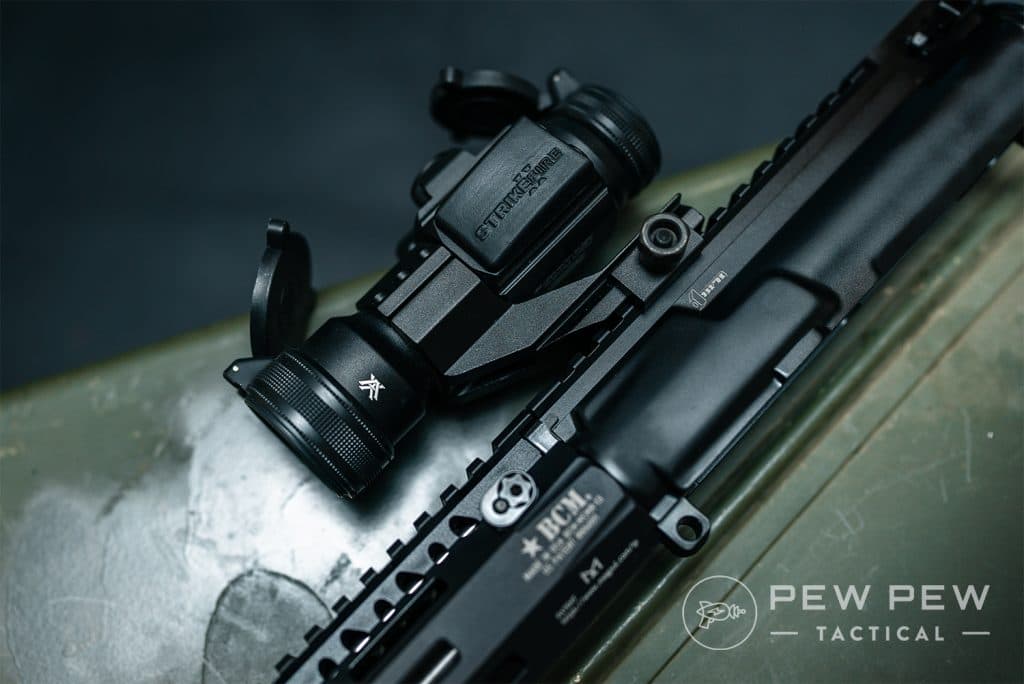
The Vortex Strikefire II is my pick for people who want a rugged optic that just works, no matter what you throw at it.
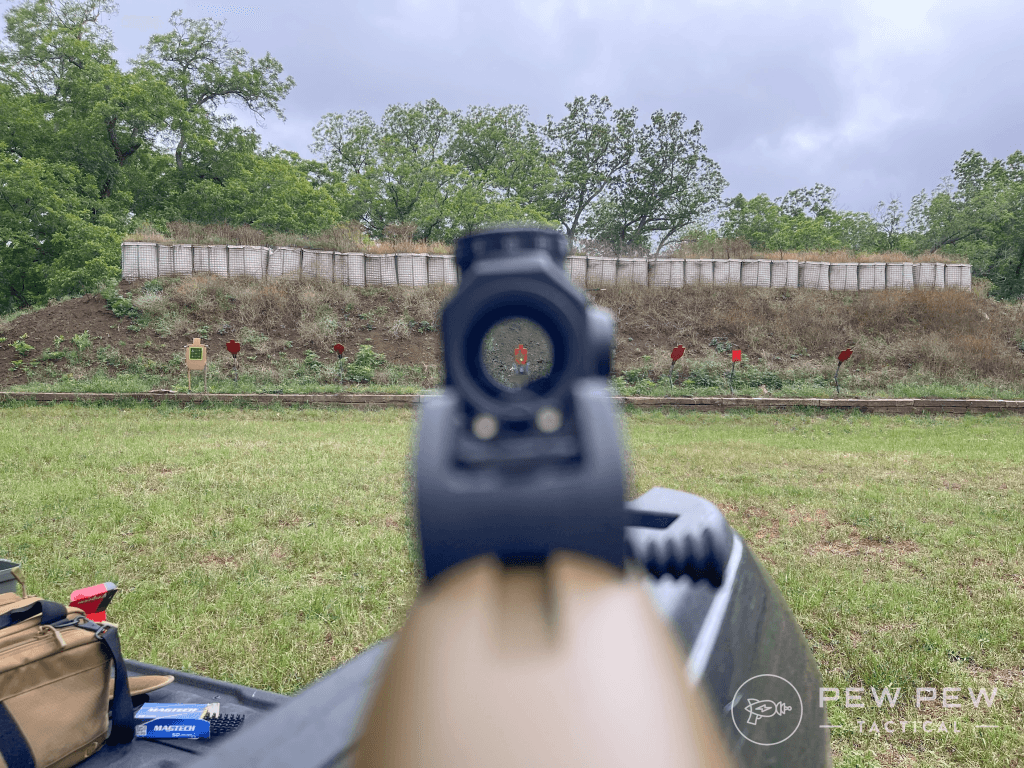
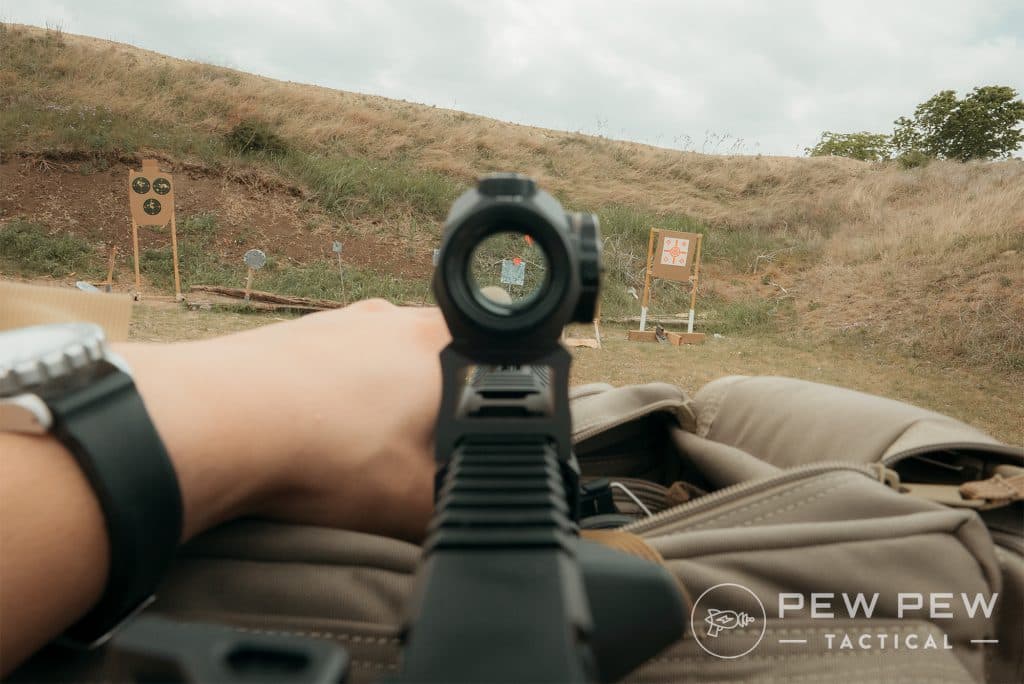
This optic is all about speed at close distances. Forgiving unlimited eye relief and a wide field of view will help you get on target in a hurry. The large dot is easy for your eye to pick up. You can also put this optic exactly where you want it on your rifle or carbine because the 30mm tube is compatible with a huge selection of rings.
The Strikefire II is a workhorse, but it has downsides, too. It’s larger (5.6 inches long) and heavier (7.2 ounces) than the other red dots here.
The 4-MOA dot is bright and easy to acquire, but it also means you’re looking at a point of aim more than 4 inches wide at 100 yards — not exactly a precision instrument.
If you want a red dot that’s affordable, tough, and backed by the unbeatable VIP Warranty, this is the one for you.
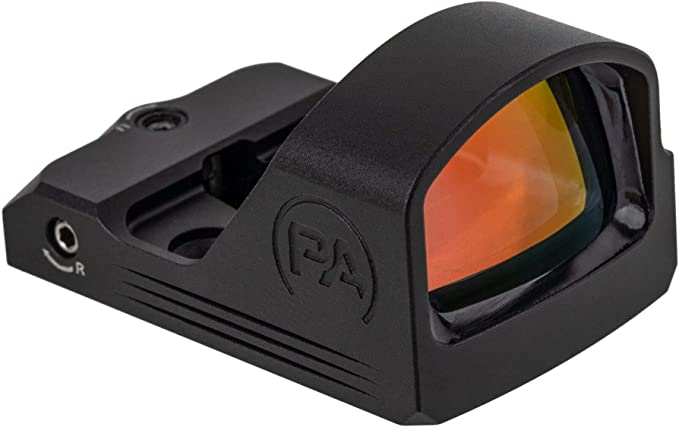
4. Primary Arms Classic Series Mini - Lightest Red Dot
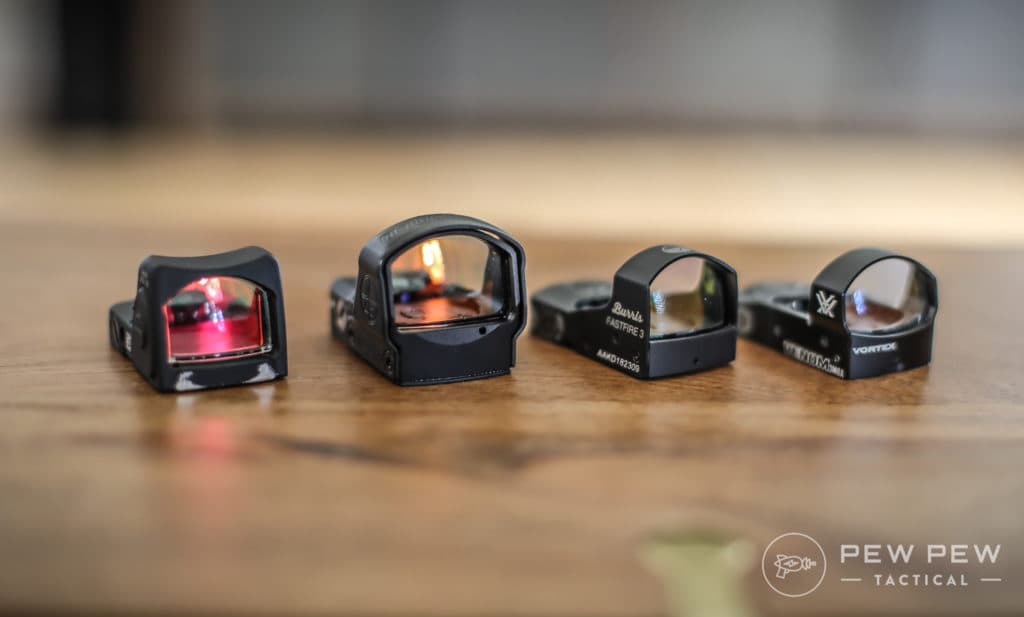
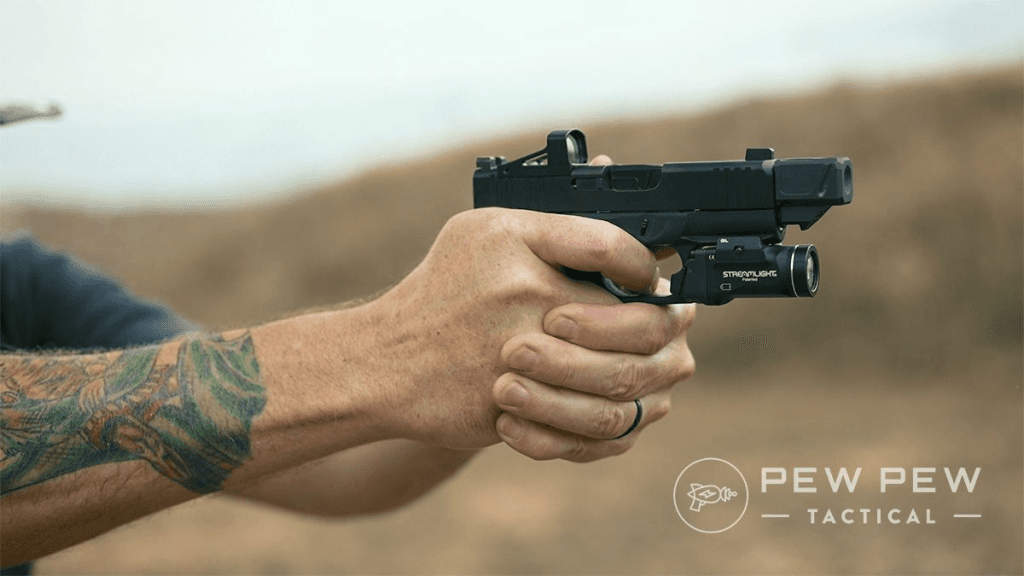
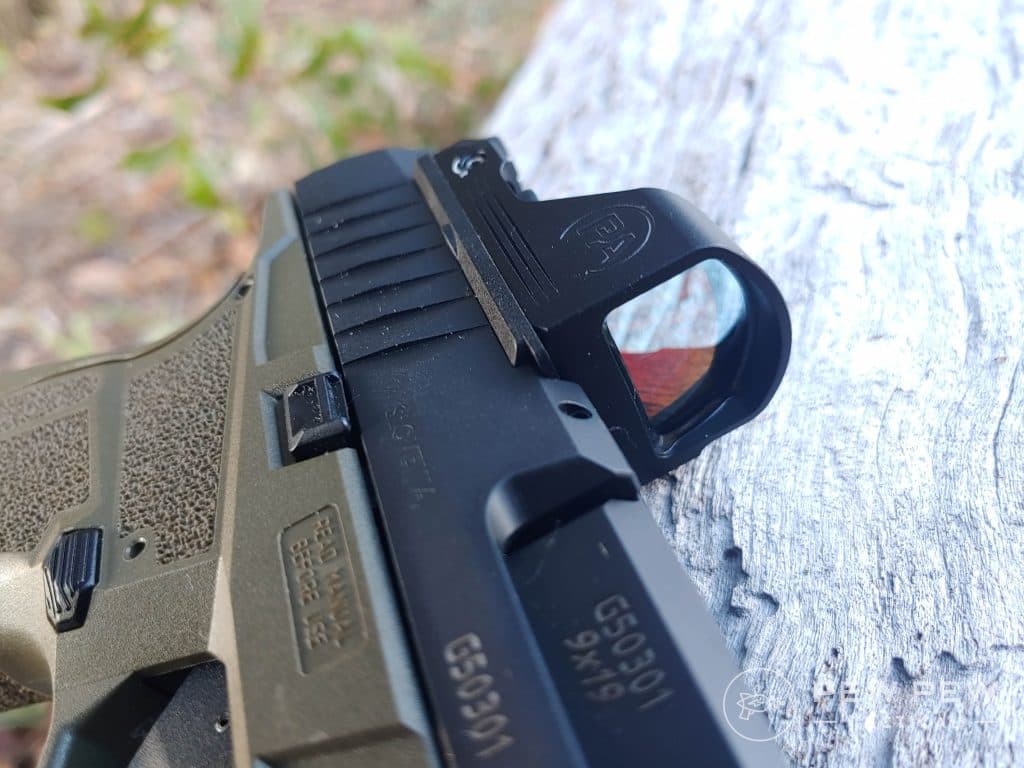
During our hands-on review, we found the Primary Arms Classic Series Mini to be a great introduction to the world of pistol optics for people who are tight on cash or hesitant to ditch their iron sights.
The Classic Series Mini uses the popular Trijicon RMR mounting footprint, so it’s compatible with a huge variety of modern pistols. There are also adapters available if you want to mount this as an offset optic on a Picatinny rail or as a primary sighting system on a shotgun rib.
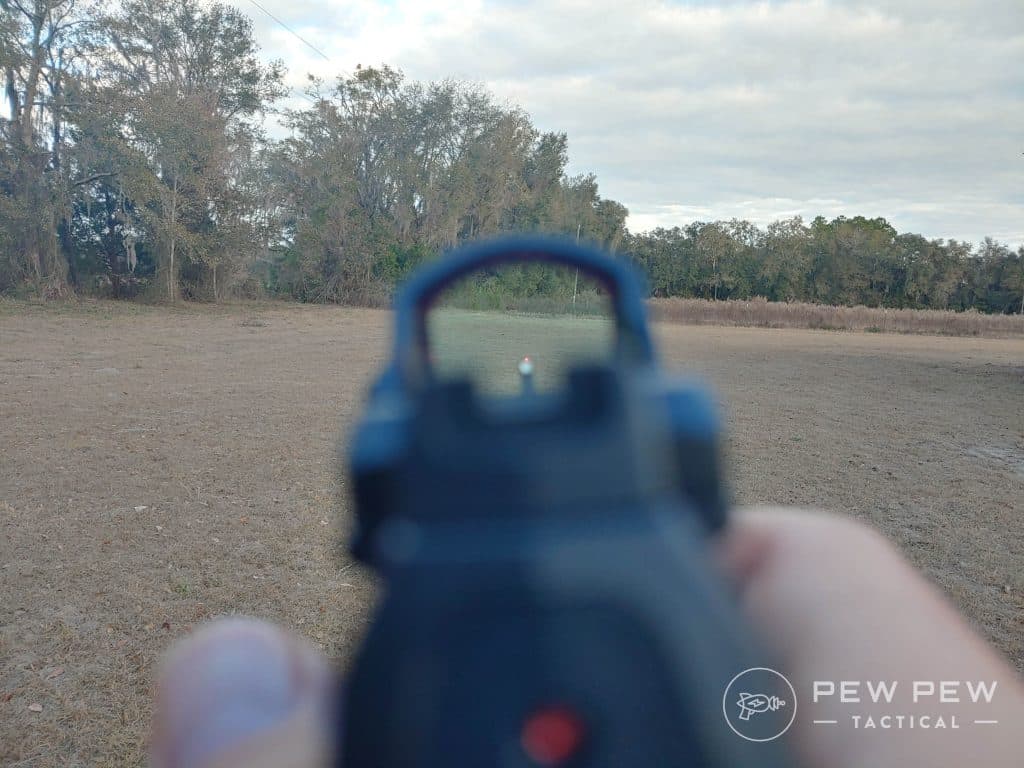
The 24-millimeter window offers a nice field of view, and the rounded hood makes it a little less likely to print if you use this on your CCW pistol. The 3-MOA dot and 1-MOA adjustment increments might not sound ideal compared to a rifle red dot, but they’re perfectly adequate for practical pistol work. Primary Arms claims a battery life of up to 40,000 hours.
It’s a great entry point into the world of pistol optics and reliable enough for light carry or home defense use. Durability isn’t competitive with more expensive pistol optics, though, so if you’re going to put your duty gun through the wringer, it’s worth spending more for something more robust.
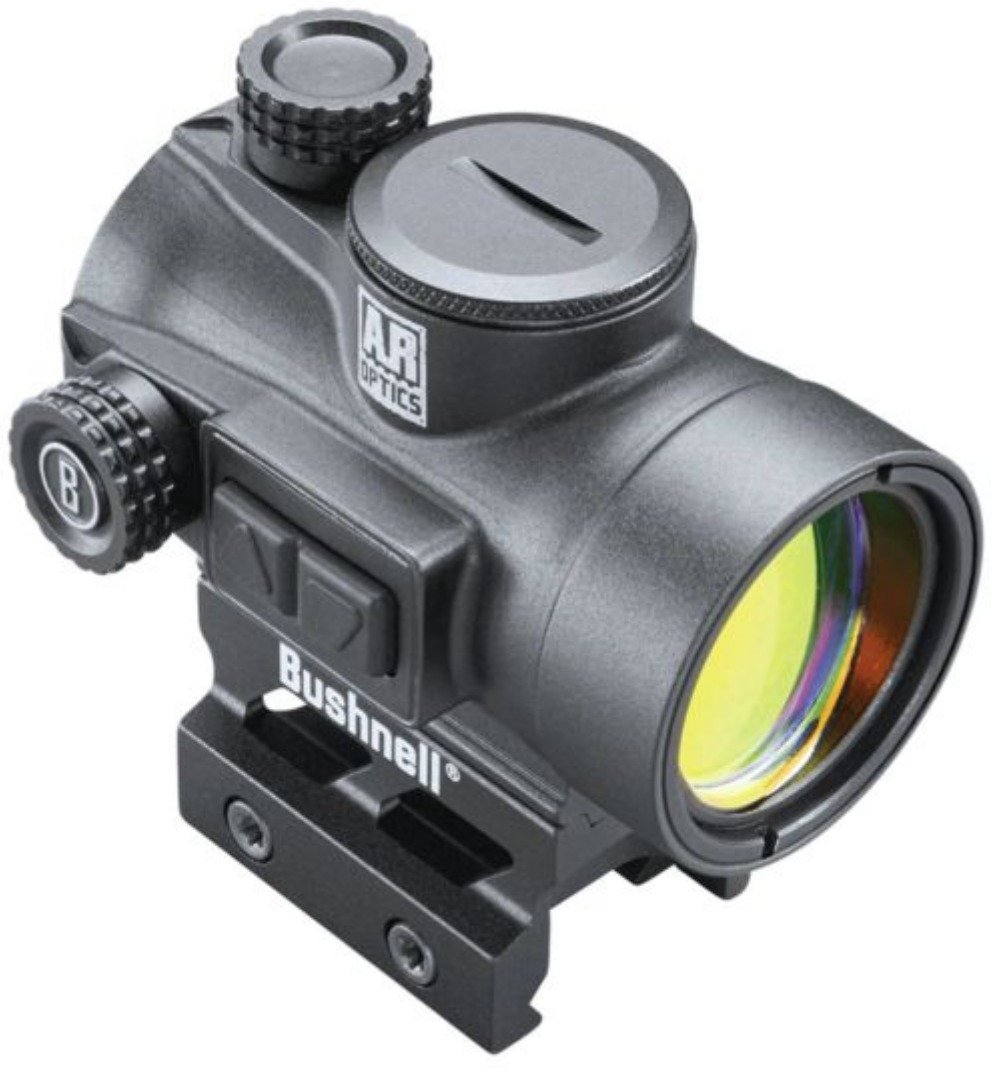
Bushnell's TRS-25 has been a budget champion for a while, and the next iteration in that series, the TRS-26, is equally affordable but with a few upgrades.
Perfect for recreational shooters of rifles and shotguns, the TRS-26 uses a standard T1 mounting footprint, so there's plenty of aftermarket to support you. Not to mention, we found it better than the OG TRS-25 in that it was a lot more sturdy.
It uses a 3 MOA red dot and illumination buttons instead of a dial. The buttons were fine and easy enough to use. Most importantly, the red dot was accurate and holds zero. We've dropped this, shot the hell out of it, and it's still running.
While you're not going to be doing precision shooting, this red dot can tackle recreational and some home defense shooting.
Nothing in this life is free. If you save money on your red dot, you’re going to pay for it in other ways.
Durability
If you’ve ever watched a torture test, you know that cheap optics don’t handle abuse as well as expensive ones. Even a short drop onto a hard surface can crack the glass on an inexpensive optic, even before you mount it on a firearm.
That might not matter if you’re setting up a pistol to live in your nightstand drawer and never leave your carpeted bedroom. If durability is important to you, spend a few more dollars for something with a proven track record of toughness.
Clarity
If you look through two optics side by side, it’s usually pretty obvious which one costs more. Inexpensive optics may cut costs in glass quality and the coatings that are applied to each surface of the glass.
Again, only you can decide how much clarity is worth paying for. The more shooting you do and the more accuracy is required, the more it makes sense to buy a high-end optic.
If all you need is something a little bit better than iron sights, go ahead and save some cash for ammo.
Battery Life
Affordable red dots don’t usually suffer from reduced battery life. That’s because battery life is easy to measure and understand, but clarity (a related factor) is more subjective.
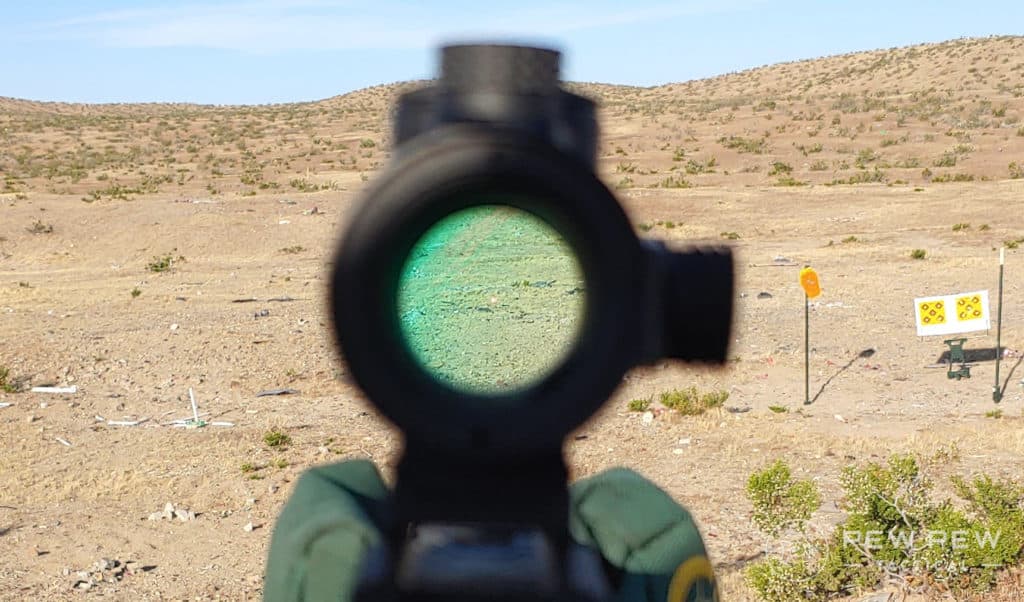
Have you ever noticed that some red dot optics look crystal clear, and some have a blue tint? That color affects more than the quality of your image.
As the clarity of glass increases, so does the amount of energy it takes to achieve a crisp, bright dot. You might notice that inexpensive red dots tend to have either long battery life or a super clear window — but not both.
Why Red Dots Are Better Than Iron Sights, Anyway
It’s 2024, so there probably aren’t many people still clinging to the idea that iron sights are better than a red dot. The bigger question is whether they’re better than the least expensive red dots on the market.
Iron sights will always have an edge in durability because as long as you’re looking through glass, there’s an additional point of failure. One point for irons.
There are several reasons why any red dot optic — even one that costs less than $200 — is a better sighting system, though.
Speed
It doesn’t matter how fast you are with iron sights; you would be faster with a red dot, given a modest amount of training.
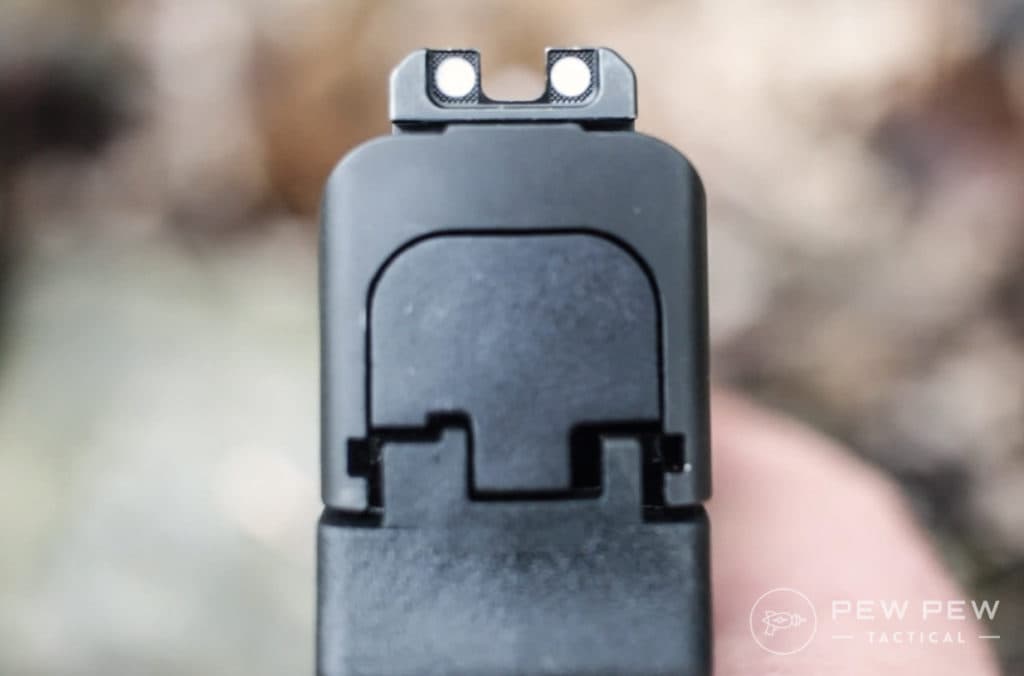
When you use iron sights, you’re lining up three planes: the rear sight, the front sight, and the target. Getting all of those aligned takes more time than putting a glowing red ball on your target and pulling the trigger.
Situational Awareness
Using traditional sights requires us to close one eye. That immediately cuts our field of view in half.
Viewing the world through one eye isn’t a problem when you’re focused on shooting tight groups at a known distance in a controlled environment, but it’s not ideal anywhere else.
If you’re setting up your home defense or CCW gun, it’s obvious why you need to know what’s going on around you. The same goes for hunting and dynamic competitive shooting.
Accuracy
This one can go both ways, but I give red dots the edge in most cases.
Dialing elevation adjustments on certain iron sights (looking at you, A2 carrying handle) can make for surprisingly accurate shooting out to at least 500 yards.
In most cases, people aren’t concerned with shots like that. Getting a front sight post perfectly centered in a rear notch or peep sight will involve more human error than what you’d experience due to the size of your dot reticle or the lack of readily accessible mechanical adjustments.
This all assumes that you know how to zero iron sights, which is easier said than done on some firearms.
Meet the Experts
This article was written and edited by Scott Murdock. Scott is a Marine Corps veteran who competed and qualified as a rifle and pistol expert while in service. He’s passionate about helping readers find quality gear worthy of their money. In addition to shooting, Scott has written for a variety of publications (Task & Purpose, Free Range American, and Outdoor Life), testing, researching, and evaluating guns and gear. He brings that knowledge and skillset to this article, editing and fact-checking for accuracy.
Editor-in-Chief Jacki Billings runs our experienced team of reviewers and added the AT3 Tactical Alpha, Holosun 507K, and Bushnell TRS-26 to the article. She is a National Rifle Association Basic Pistol Instructor as well as a member of the Society of Professional Journalists, ACES: Society for Editing, and the Professional Outdoor Media Association. Jacki has a bachelor’s degree in journalism and has worked as a media professional for close to 20 years, specializing in gun media for almost 10 years. With 2,000+ articles to her name, she uses her professional journalism and editing experience to set testing protocols and editorial standards for Pew Pew Tactical.
Final Thoughts
Affordable gear usually can’t compete with top-shelf competition, but there are times and places when it makes sense to pinch your pennies.
If you’re currently using the stock iron sights on your pistol, backup iron sights on your carbine, or a bead sight on your shotgun, even an entry-level red dot can be a nice upgrade. Just know its limitations, don’t ask too much of it, and start saving money so you have the option to upgrade down the road.
Any other budget red dots you'd like to see? What do you currently run on your AR? Want to go cheaper? We now have a Best Under $100 Red Dots article and video.
Latest Updates
March 2025: Removed the Holosun 403B, added Bushnell TRS-26, AT3 Tactical Alpha, and Holosun 407K
February 2024: Completely rewritten with all new models.
Best Red Dots [Hands-On]: Under $200 Budget - Pew Pew Tactical
Conversation
88 comments
We review products independently. When you buy through links on our site, we may earn a commission to help support our testing. Learn more.














Conversation