
[Review] Colt Python: Truly The Best Revolver?
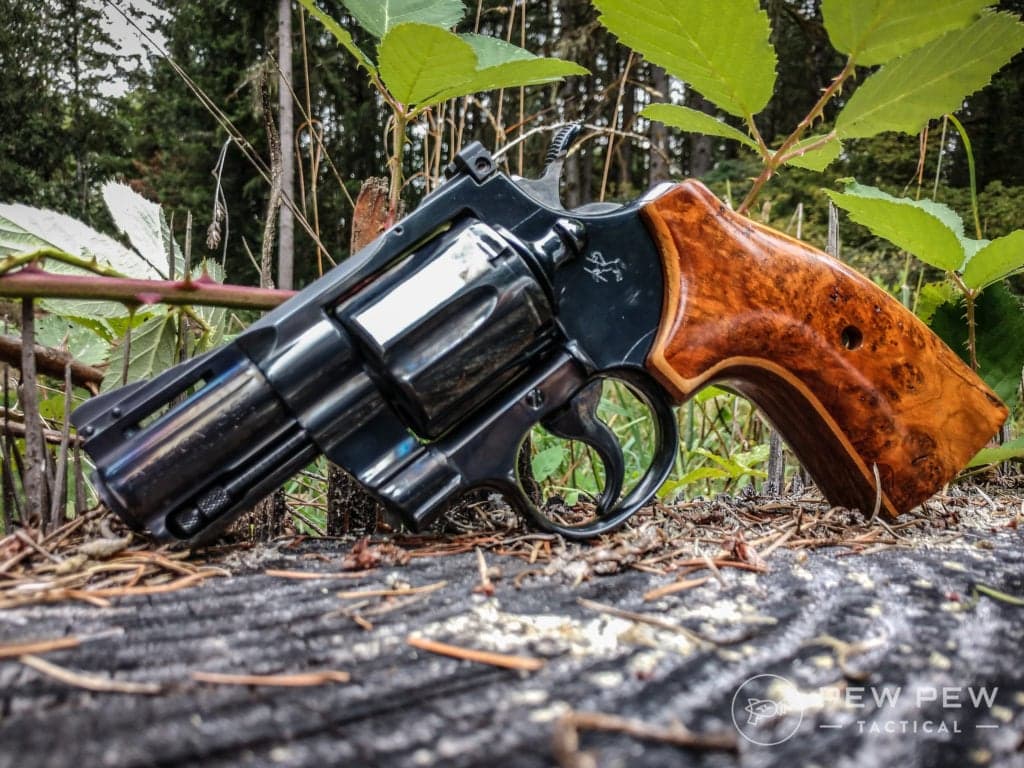
Is the Colt Python really the best revolver of all time? We hands-on review two of them to see...complete with shooting videos.

Career firearms writer & editor. K9 Search & Resscue. 20+ years CCWing. Hunter
We review products independently. When you buy through links on our site, we may earn a commission to help support our testing. Learn more.
Among revolver aficionados, there is really only one model spoken of in hushed tones and afforded nearly spiritual reverence...the Colt Python.
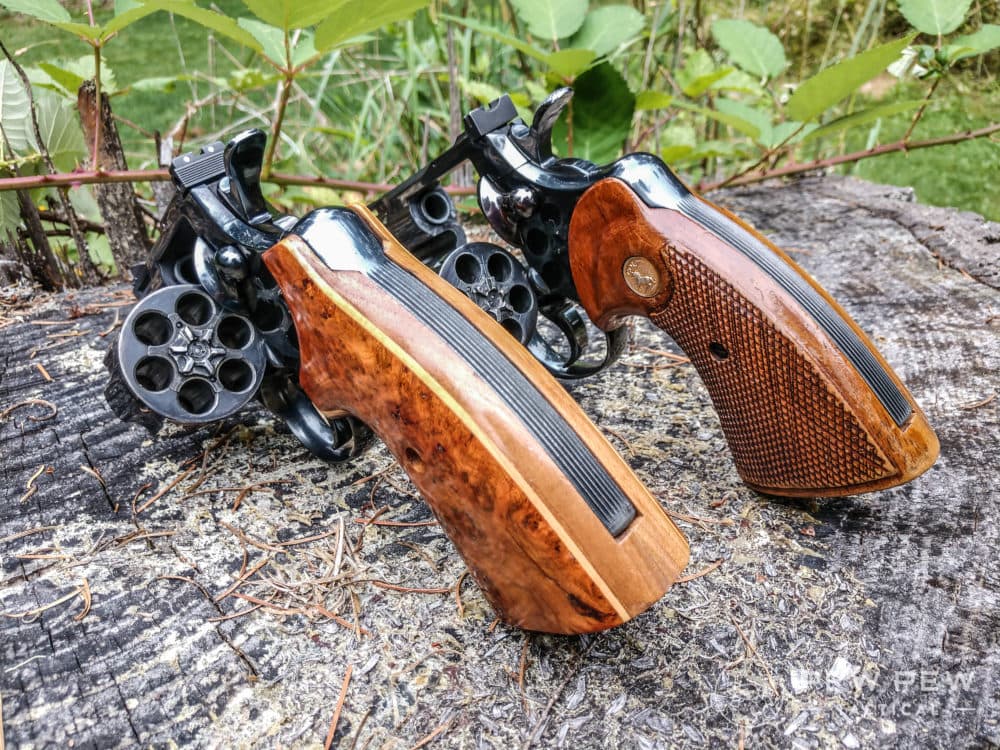
The Python was manufactured from 1955 to 1996 – a time frame during which production understandably slowed – and then from 1996 to 2005 it was offered as a Colt Custom Shop option.
Once 2005 hit, it was discontinued entirely.
And thus ended an era of spectacularly hand-fitted, carefully built revolvers.

Not to say there aren’t some awesome revolvers out there because there absolutely are but the Colt Python wasn’t just a revolver, it was a masterpiece.
Fortunately for me, a friend of mine owns two and lets me run them when I’m in town, so I took the excuse to shoot them again, take some video, and write them up.
They are, after all, legendary in the gun world.
If you're looking for one, you can normally find them used but they won't be cheap!
{
  "blockName": "ppt-utils/affiliate-product",
  "attrs": {
    "id": 42953
  },
  "innerBlocks": [],
  "innerHTML": "\n[ap id='42953']\n",
  "innerContent": [
    "\n[ap id='42953']\n"
  ]
}History Of The Colt Python
When the Colt Python entered production in 1955 it was being built on Colt’s I-frame.
The I-frame was basically the same as the company’s E-frame with one difference: the firing pin was mounted inside the frame. In fact, you’ll find a lot of people talk about E-and-I-Frame models as a whole unit rather often.
They are not actually identical, though.
The first Python to be made was the six-inch barrel variant but the four-inch barrel quickly followed.
Three-inch and eight-inch variants were produced, too. In fact, the three-inch model is often referred to as the Combat Python and is considered a rare collector’s piece.
And, eventually, the 2.5-inch barrel length emerged. According to Al De John, a Colt Master gunsmith from 1946 well into the 1990s, there was a reason it was specifically 2.5-inches.
In an interview with Handguns Magazine several years ago he said “It might have been Al Gunther [superintendent of the Colt factory and production overseer] who first suggested we put a vent rib across the top of the barrel. It didn’t do anything, but it sure looked good.
I also remember there was a controversy over the look and finish of the muzzle.”
Yes, you read right. The rib on the Colt Python was added for aesthetic purposes rather than for specific function. It was also, according to De John, why the shortest barrel offered was 2.5-inches.
It “was the shortest barrel we could make and still fit a vent on the rib,” he said.
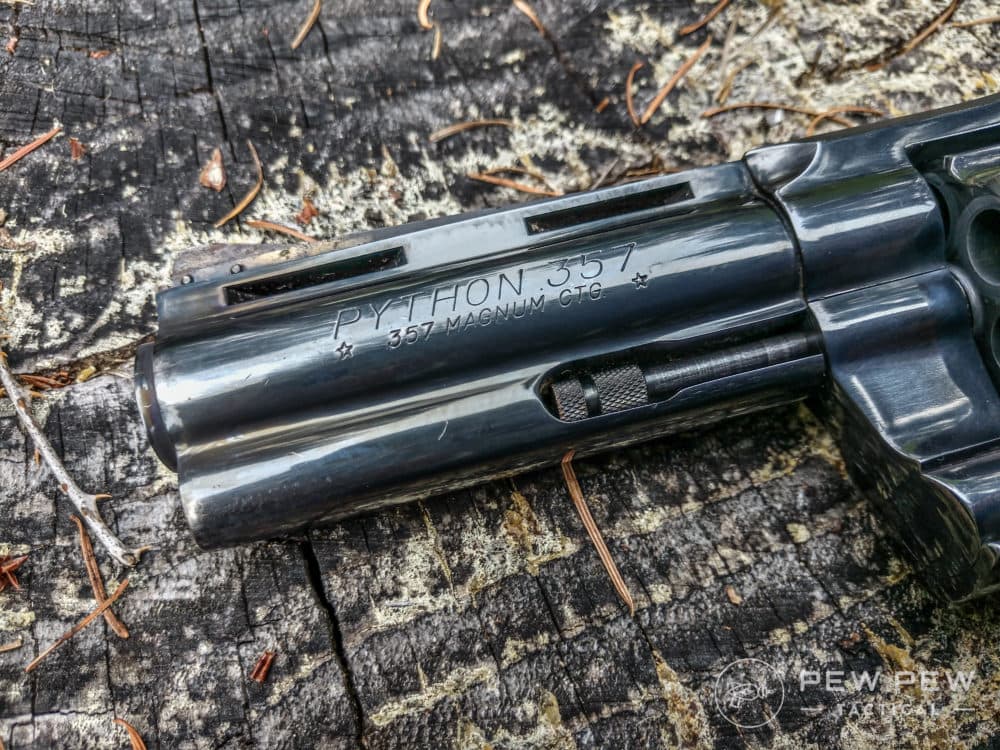
It wasn’t all looks and wow factor, though. Interestingly, in the same interview, De John also referenced the blued barrels as more than only looking good.
“We…had a radius on the muzzles of our guns, but with the Python we ended up getting our best groups with a flat muzzle that had a countersink to it.” The problem with that was a sharp contrast of the polished muzzle and the blued barrel.
De John said the polishing “left a ‘dish’ that produced an optical illusion and made the muzzle look lopsided instead of round.” In the end it was De John who suggested they cut out the polishing and leave the muzzle of the Python blued, retaining accuracy and eliminating the crooked look.
Oh, De John was also the guy who built the very first pre-production Python serialized One.
Also, for the first couple years the Python was in production they were made only by De John and one other gunsmith. You could say he knows his stuff.
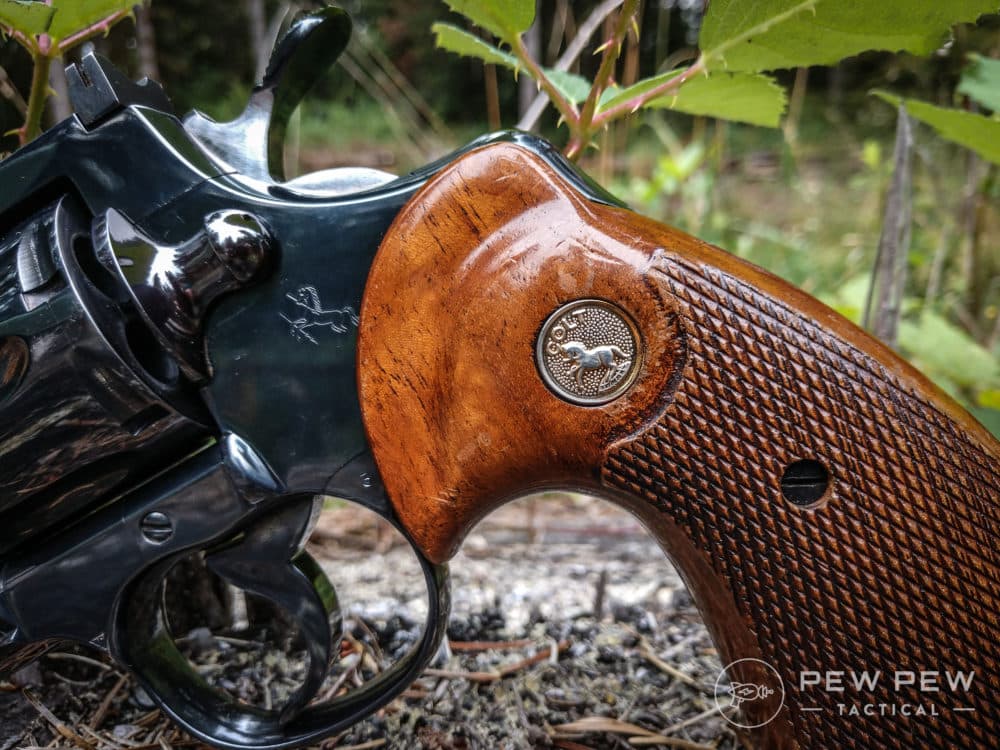
Some nicely-planned features of the Python included a full-length underlug, high-grade walnut grips, and fully adjustable sights.
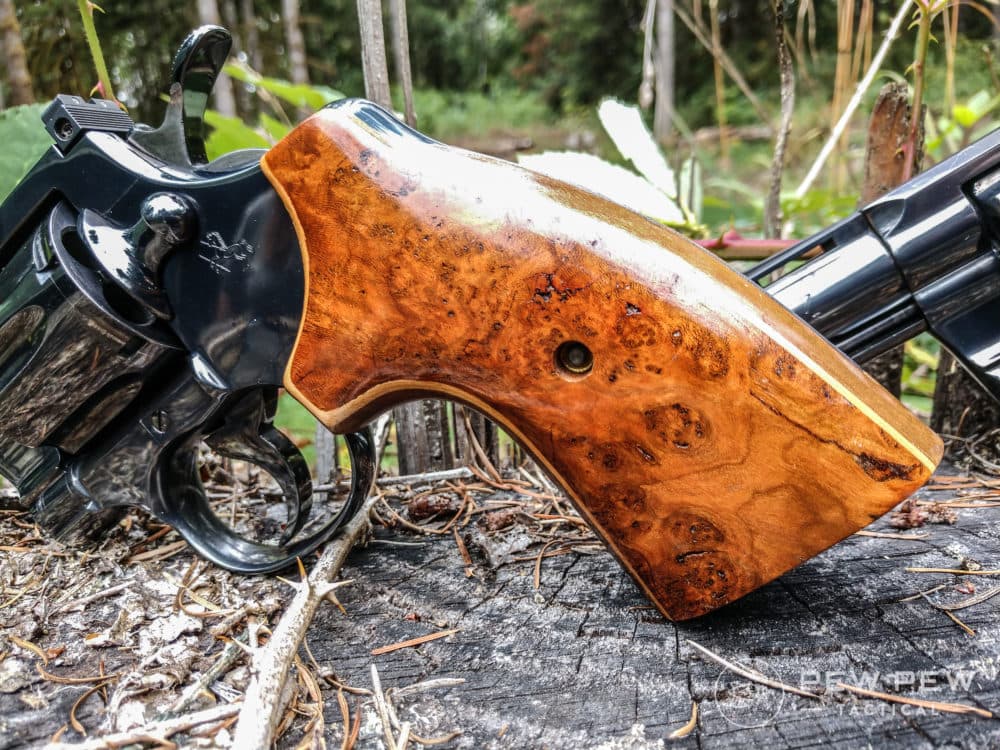
And although there are some guns running around with a shiny nickel-plated finish it’s the deep Colt Royal Blue finish that tends to draw the eye.
Also, the nickel plating ended up replaced by stainless steel with the passage of time.
[wistia id="ma681fqiyg"]
So what makes the Python different than the stuff you find on the market today? Basically, the knowledge and skill of the men who built them.
The guns were hand-fitted, hand-polished, and created as works of usable, durable art rather than an assembly line “that’ll do” pistol.
There are an insane number of clones out there – when in doubt, have a gun checked out – but only an actual Python looks and runs smooth as silk and reliably as clockwork.
{
  "blockName": "ppt-utils/affiliate-product",
  "attrs": {
    "id": 42953
  },
  "innerBlocks": [],
  "innerHTML": "\n[ap id='42953']\n",
  "innerContent": [
    "\n[ap id='42953']\n"
  ]
}
Today Pythons can sell for upwards of $4,000 depending on the model and condition; ever so often someone scores one for $1500 but it’s becoming increasingly rare.
That’s a bit incredible considering the guns originally sold for $125.00.
The Pew Pew
It would be easy to wax poetic about shooting Pythons. I’ve been fortunate to fire several over the years, I’m just too poor to own one myself.
What can I say, writers don’t exactly live the high life. When it comes right down to it, though, it’s the trigger that makes the Python so impressive.
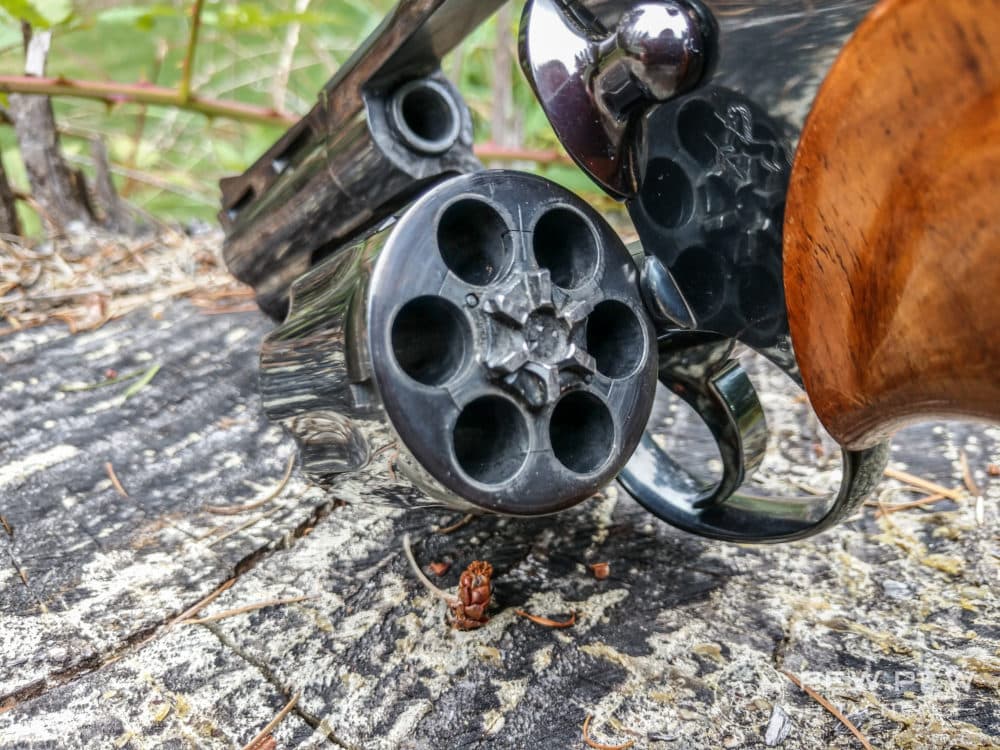
The original triggers on Pythons deliver it all from a smooth, consistent DA pull to a glass-rod-crisp break to a remarkably nice reset.
There aren’t very many DA guns on the market about which I’ll say “nice trigger” but Pythons are definitely one of, if not THE, guns to have earned trigger-related accolades.
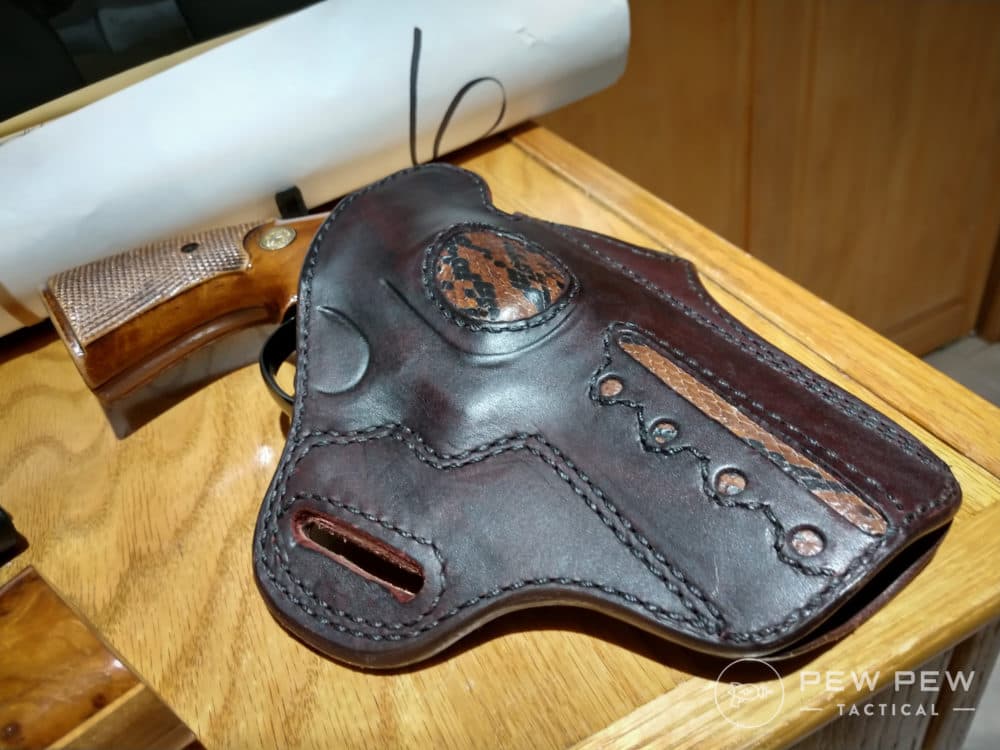
Many shooters believed that fantastic DA pull was the result of a V-shaped mainspring which differed from the single leaf-spring used by other manufacturers at the time.
If you want a revolver with an impressive trigger you want a Colt Python.
The most recent trigger time I had with Pythons was courtesy of Diane Walls, a friend, and firearms instructor at the Firearms Academy of Seattle.
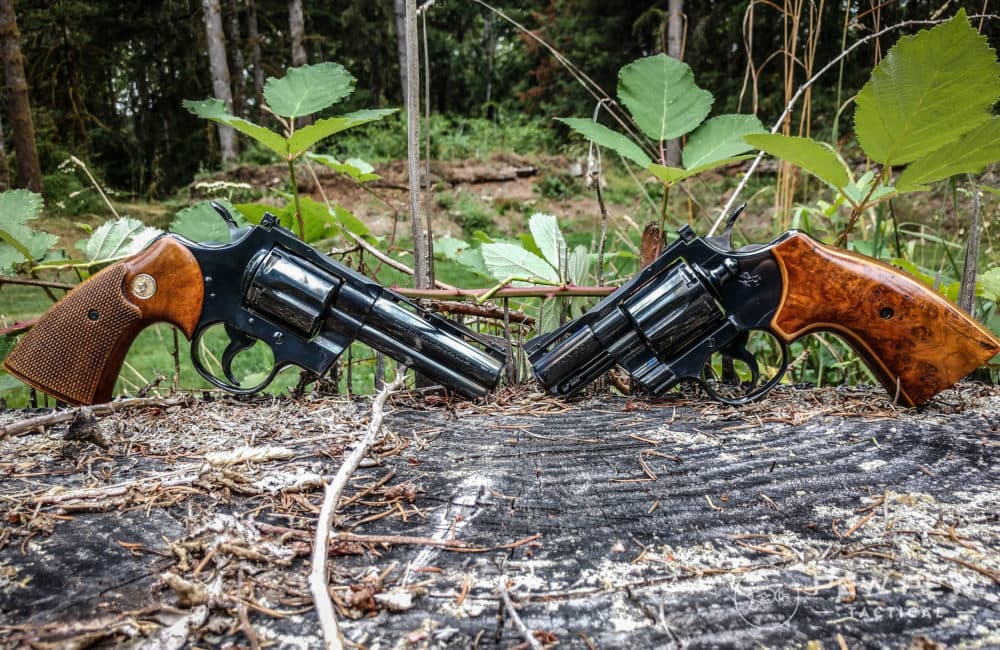
Of her two Pythons, one has the short 2.5-inch barrel and the other has a four-inch barrel; the larger gun has a factory trigger and the smaller one had custom work done by none other than Grant Cunningham.
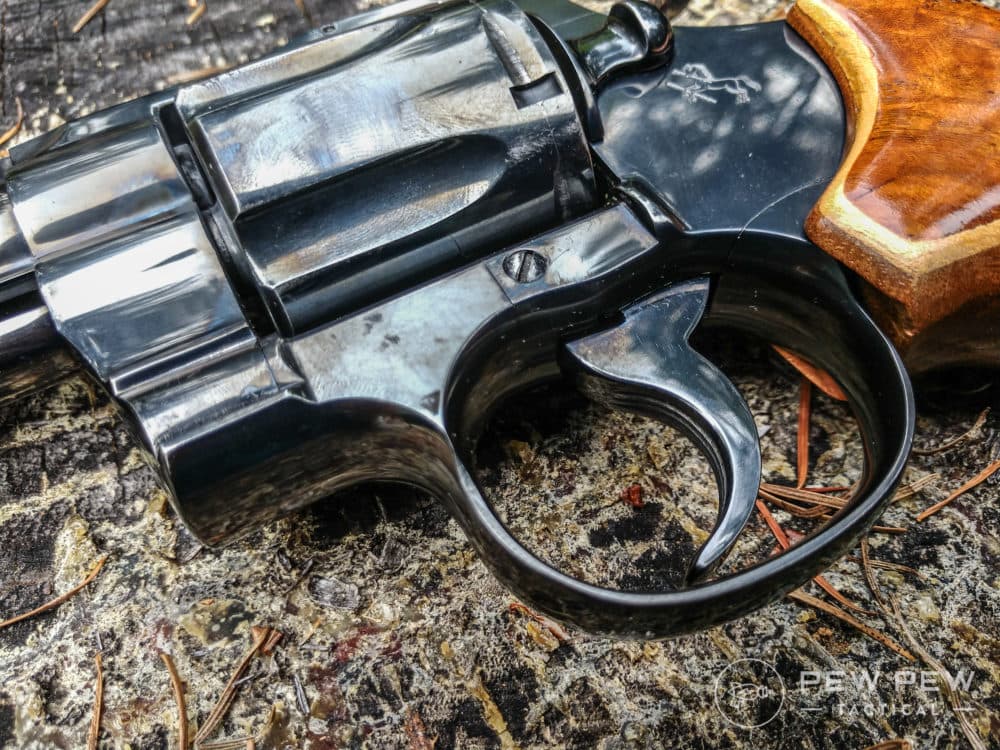
Grant did a stellar job on that trigger – the wow factor is off the charts – and I love every opportunity I get to shoot it. It is, quite simply, the finest revolver trigger I’ve ever pulled.
The larger gun’s factory trigger is good as well and no problem whatsoever to run smoothly and accurately DA.
[wistia id="4y0ovs0920"]
Both guns are accurate and produce beautiful, tight groups with both Remington UMC and Inceptor ARX ammunition. Yes, Pythons eat frangibles like candy.
These are the kind of awesome guns you want in your collection. They aren’t exactly safe queens but I wouldn’t use them as an EDC, either.
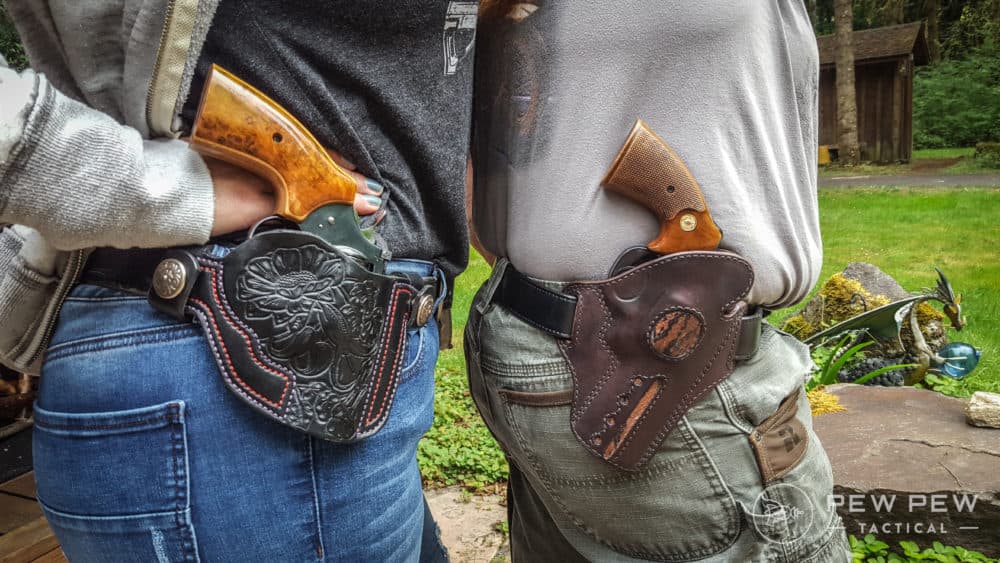
Run your Pythons, just do it carefully.
By The Numbers
Reliability: 5/5
This isn’t because they’re revolvers it’s because they’re Pythons. I’ve had revolvers fail. But Colt Pythons are the gold standard and seem to run beautifully. No reliability issues.
Ergonomics: 5/5
This one is, as usual, subjective. It depends on your hands, your grip, and your personal preferences.
To my hands, the Python frames are extremely comfortable. I love the angle of the grip, the reach to the trigger, and how easy manipulating the cylinder release is…no complaints whatsoever.
Accuracy: 4/5
Okay, so this one depends more on your ability to use a double-action trigger. It also depends on which model you have because barrel length matters.
That said, the Pythons I’ve been lucky enough to run have all been accurate guns and many are definitely precise. Learn to run a double-action trigger and you’ll be getting gorgeous groups with a Python in no time.
Customization: 0/5
No. So much no. You don’t customize a Python. Maybe you replace the grips – while storing the original grips in a safe location – and perhaps you have professional trigger work done.
But these are not guns you take apart or Cerakote or otherwise muck with. Leave it alone. It’s a Python.
Value: 4/5
I only knocked a number off because the price keeps going up on these and once you get your hands on one you’re afraid to shoot it much. Thanks to
The Walking Dead these went from firearms aficionados collectibles to the guns every zombie geek and TWB fanboy was after – and hey, I count myself as a zombie geek, but I’m also a gun lover – and prices skyrocketed. If you can afford one, get one.

Just make sure it is an original because there are knock-offs out there. These are gorgeous pistols and I admit I would do just about anything to own one myself.
Overall: 4.5/5
Found one?
Buy it.
Will We See The Python Again?
Here’s the deal. Even if Colt were to bring back the Python as they do seem to be re-launching their various snake-themed models, it would not be the same.
{
  "blockName": "ppt-utils/affiliate-product",
  "attrs": {
    "id": 42953
  },
  "innerBlocks": [],
  "innerHTML": "\n[ap id='42953']\n",
  "innerContent": [
    "\n[ap id='42953']\n"
  ]
}
The stunning knowledge and precise talents of the original Master gunsmiths like Al De John is what made the original Colt Pythons works of art and that cannot be replicated.
Most likely new run Pythons would be assembly-line produced and probably cool little guns but not even close to the originals. If you really want one, save your pennies and buy one as soon as you find a legit, good quality model.
This gun counts as an investment rather than just a plastic fantastic pistol you buy for plinking – or even for EDC.
The Colt Python is a thing of beauty, but that beauty cannot be copied or renewed. Stick with the originals. You’ll be glad you did.
Will the Python return to new production? Should it? Let us know in the comments! Need a .357 Revolver in your life? Take a look at the Best .357 Magnum Revolvers!