
Hunting Wild Boar in California
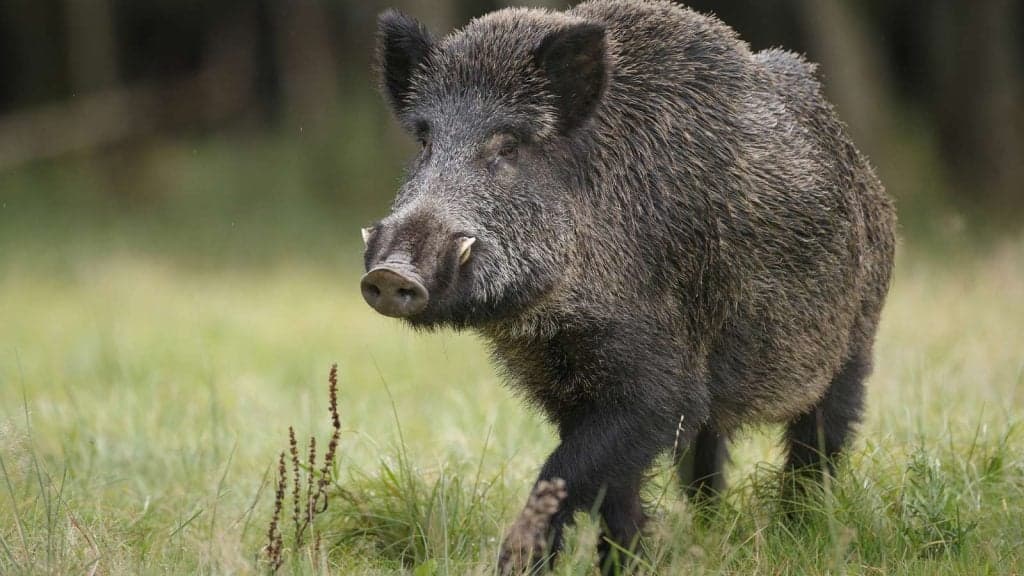
Everything you need to know to hunt wild boar in California. From planning to booking to hunting to cooking.

Career outdoor writer. Avid outdoorswoman. Lifelong hunter
We review products independently. When you buy through links on our site, we may earn a commission to help support our testing. Learn more.
If you’ve ever had an itch to hunt feral swine in California, you’re not alone.
With an estimated 400,000 wild hogs across the state, a year-round open season, new legislation that did away with bag limits, and lowered license fees, the state is pure hog-hunting heaven.
We’re here to help you scratch that porcine itch with everything you need to know to hunt wild boar in The Golden State.
Table of Contents
Why You Should Trust Us
Alice is a lifelong hunter and experienced shooter who grew up flinging arrows and bullets at Virginia whitetails, turkeys, and game birds. Her hunting experience has grown to include other game, such as Elk, wild hog, and more.
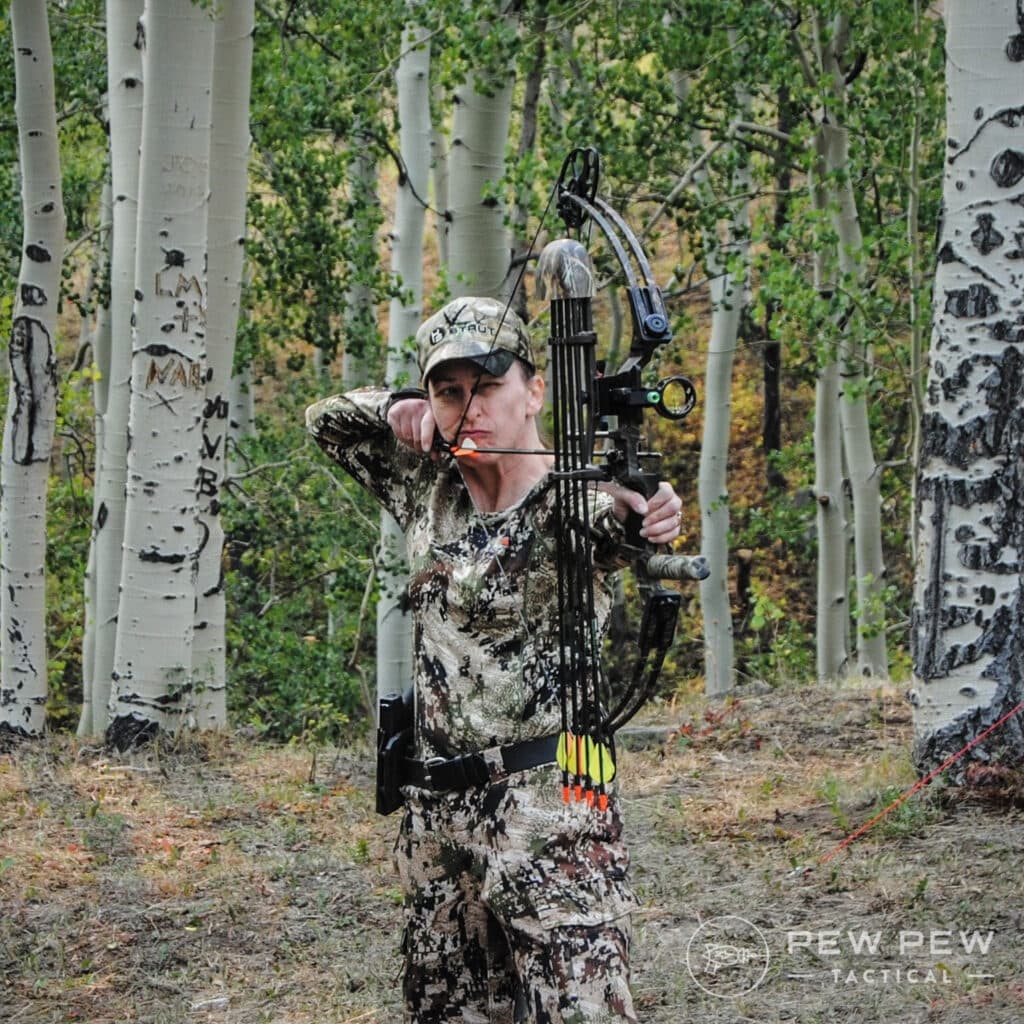
She leverages this knowledge to bring her readers tips, tricks, and recommendations on what works (and doesn’t) in the field.
What is Wild Boar?
Surprisingly, the wild pigs roaming California’s countryside (leaving a wake of destruction behind them) are the same species as the pink barnyard pigs in children’s books — all variants of Sus scrofa.
However, these porkers aren’t native to North America. Before widespread domestication, pigs called Eurasia and northern Africa home.
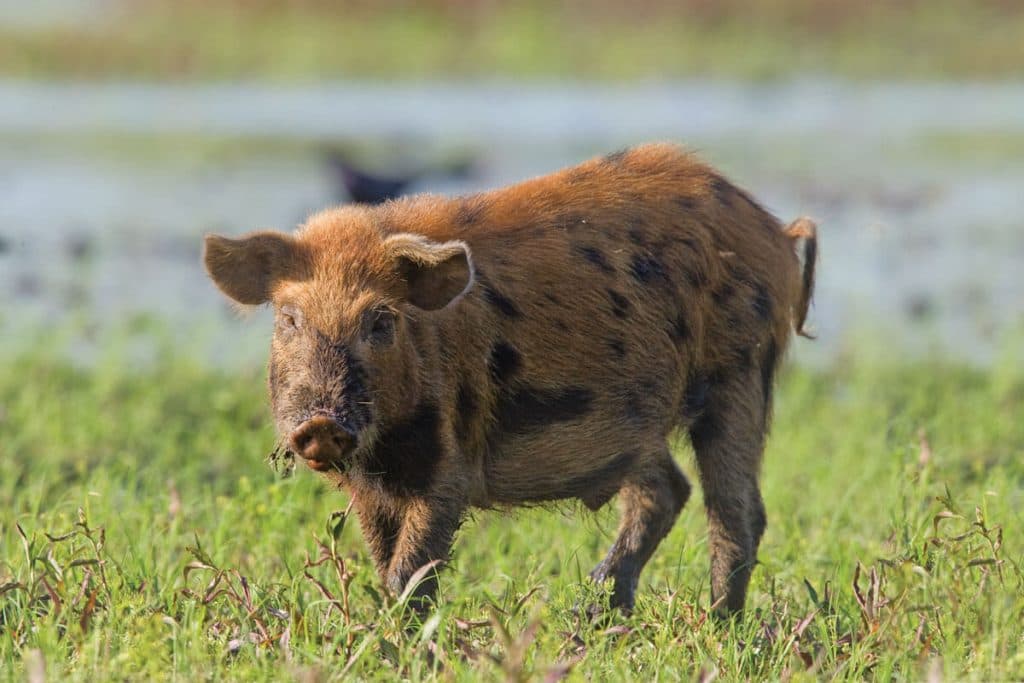
Russian and Spanish settlers brought domestic pigs with them to California as livestock. At some point, a few of these swine staged a jailbreak and escaped into the wilds of California to live their best lives.
In the 1920s, the European wild boar was introduced into California and got busy with some of the descendants of those escaped domestic porkers. The results of those sordid love affairs are the wild boar/feral domestic pig hybrids wreaking havoc across the California landscape.
California’s Plague of Pigs
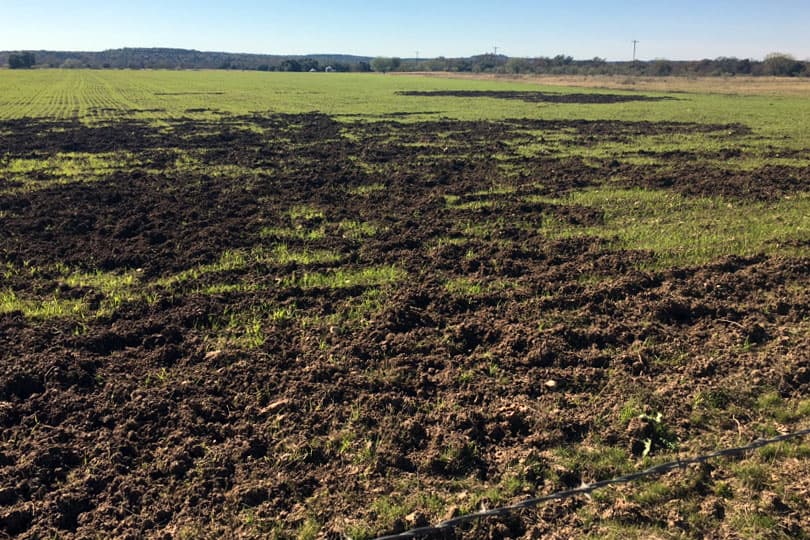
Wild pigs have been damaging North American ecosystems for centuries, rooting, wallowing, and foraging in a way so destructive it costs an estimated $1.5 billion of damage annually.
Wild sows can breed up to twice a year, have up to six or more piglets per litter, and reach sexual maturity by six months old. So, keeping California’s pig population under control has been highly problematic.
In September 2022, California legislators took the wheel and passed new legislation to help slow the rising tide. The new law reclassified wild pigs as “exotic game mammals.”
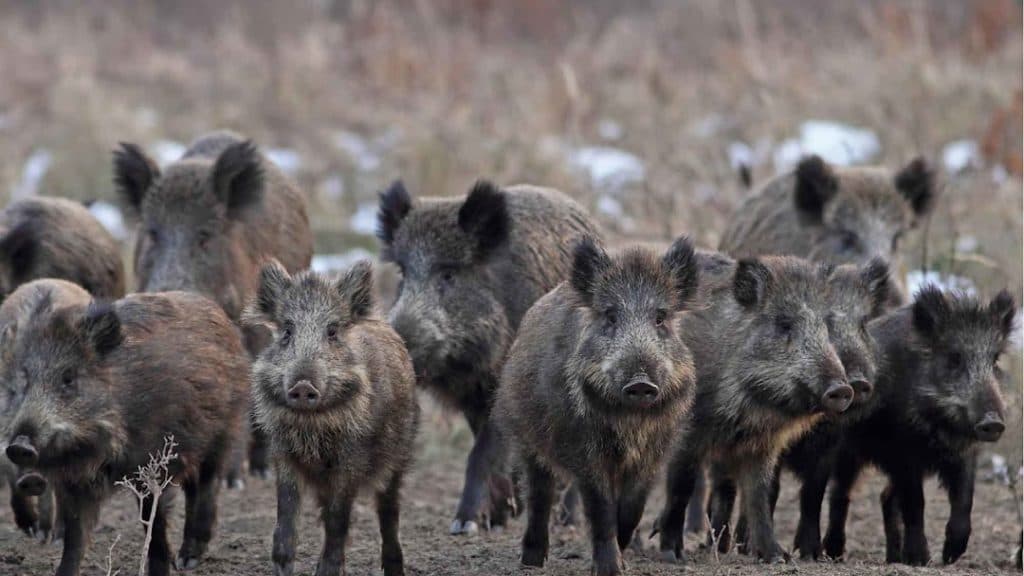
It also allows private ranches and landowners to kill feral hogs without a permit. Hunters in the Golden State can also purchase a year-long wild pig validation, allowing the holder to kill unlimited hogs.
Hog Hunting Opportunities in The Golden State
Wild pigs currently live in 56 of California’s 58 counties. San Francisco and Alpine counties are the exceptions. The heaviest hog concentrations are west of the Central Valley from Mendocino to San Luis Obispo counties.
Although California does have some public land hog hunting opportunities, many are limited-entry, permit-only hunts. According to the state’s Department of Fish and Wildlife, the best counties with public access to hog hunting are Monterey, San Luis Obispo, and Kern.
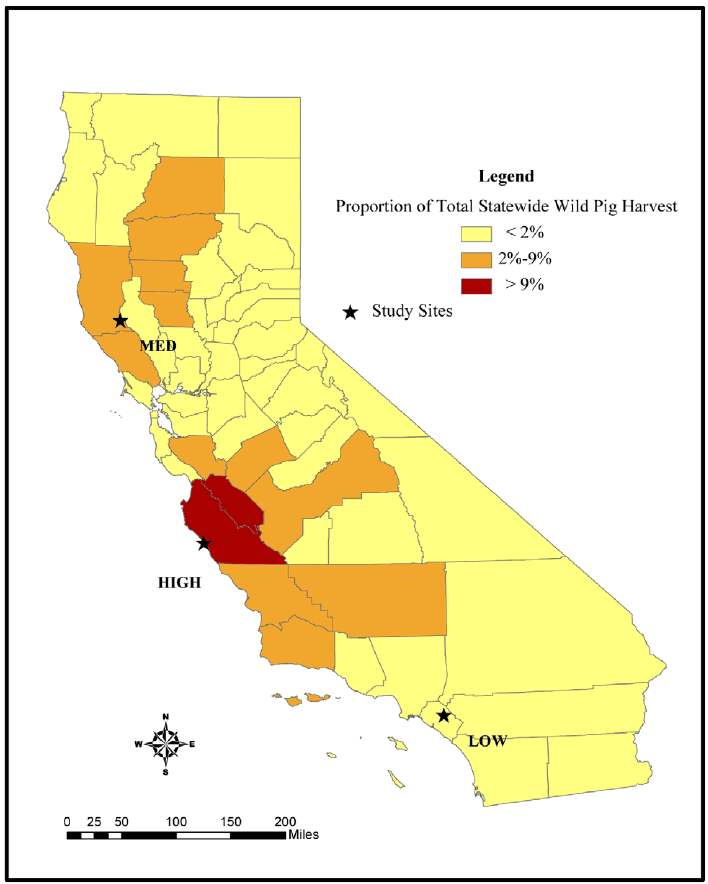
Pigs also see a lot more hunting pressure on public land. This means if you want to increase your odds of bringing home some wild bacon, private land is probably the way to go.
While you can always knock on doors and ask for access if you’re dead set on a DIY hog hunt, there are also tons of guides and outfitters in California, which is particularly nice for out-of-state hunters. You can find a contact list of California’s registered hog hunting guides here.
Essential Hog Hunting Gear
When it comes to hog hunting in California, almost no method is off the table. Hunters can take pigs via archery, crossbow, muzzleloader, shotgun, rifle, or pistol. Baiting is also legal.
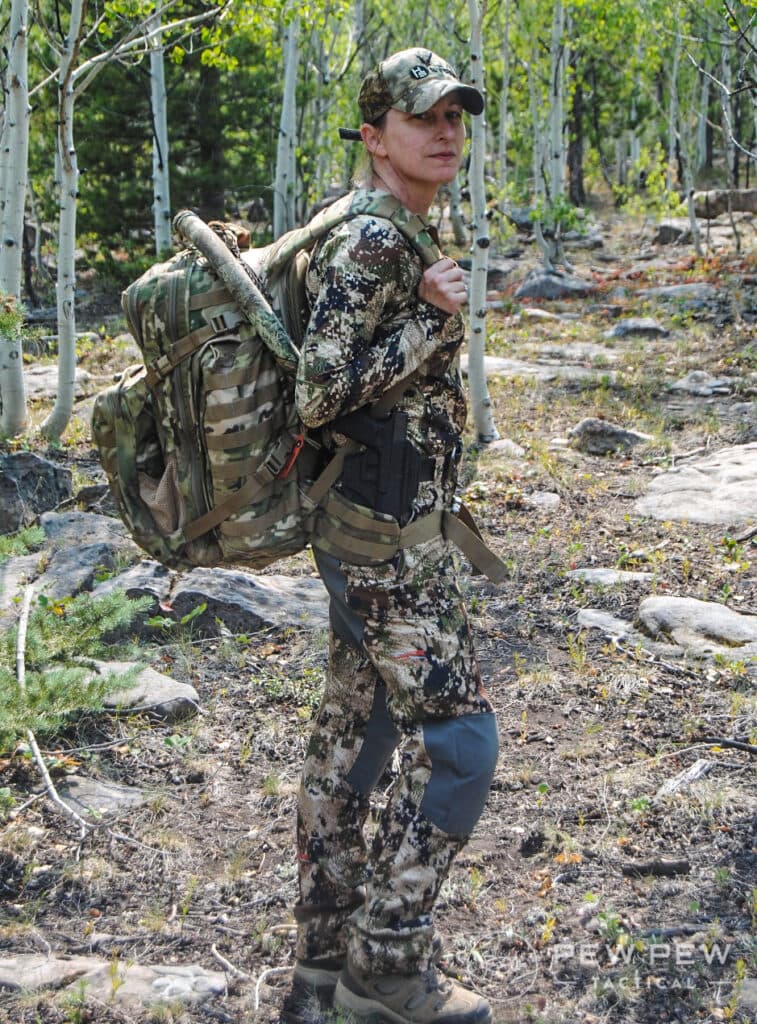
However, unlike states with looser hunting restrictions (like Texas and the Carolinas), California does not allow hog hunting after dark or with night vision. Also, California hunters are legally required to use non-lead ammo.
Guns
A rifle is the most common firearm for taking wild hogs in the Golden State. However, because there are multiple hog-hunting approaches (including hunting from treestands, ground blinds, over bait, and spot-and-stalk), there is no one perfect hog-hunting rifle.

In fact, hunters often use everything from old-school lever actions to tricked-out ARs to take hogs.
If you want the detailed low-down on choosing the best pig-popping rifle, check out our article on choosing the Best Rifles and Calibers for Hog Hunting.
Binoculars
A top-notch pair of binoculars can save you tons of frustration, particularly if you use a spot-and-stalk approach to hunting hogs.
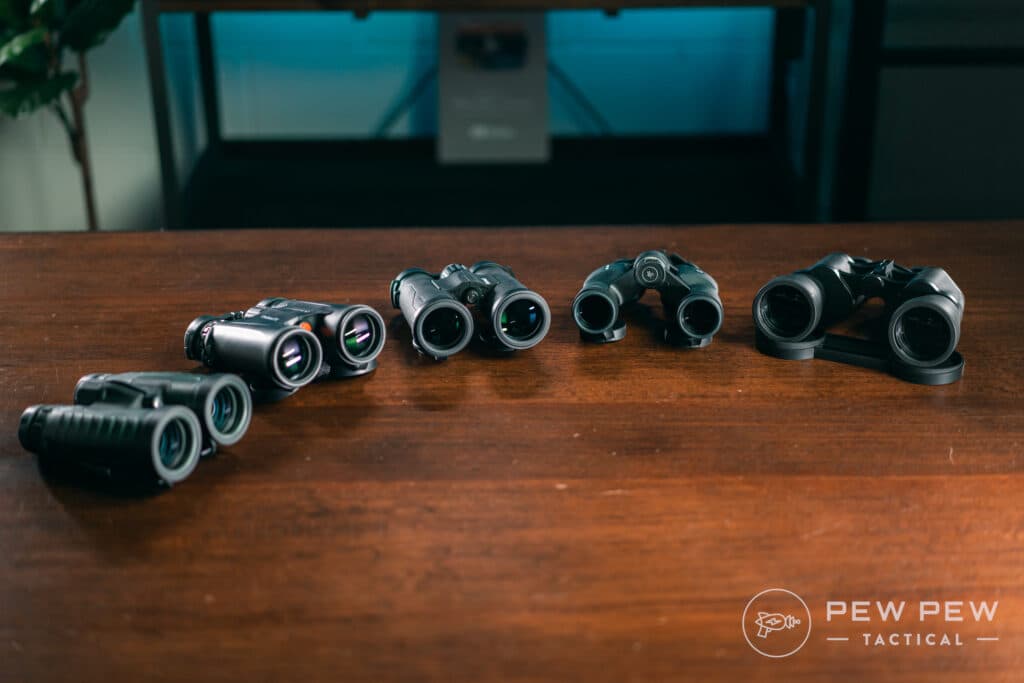
Quality glass isn’t cheap. It’s usually best to get the crying done upfront over the price tag rather than shedding tears later over frustrating quality or broken binos.
For the low-down on the Best Hunting Binoculars of 2023, check out this article. But if you’re in a hurry, the Maven B1.2 10x42 is a top-tier hog-hunting glass.
Boots
Boots are probably the most underrated piece of hunting gear. They can make or break a hunt. While you don’t have to drop a massive wad of cash on footwear, your hunting boots should be comfortable, broken-in, and weather-appropriate.
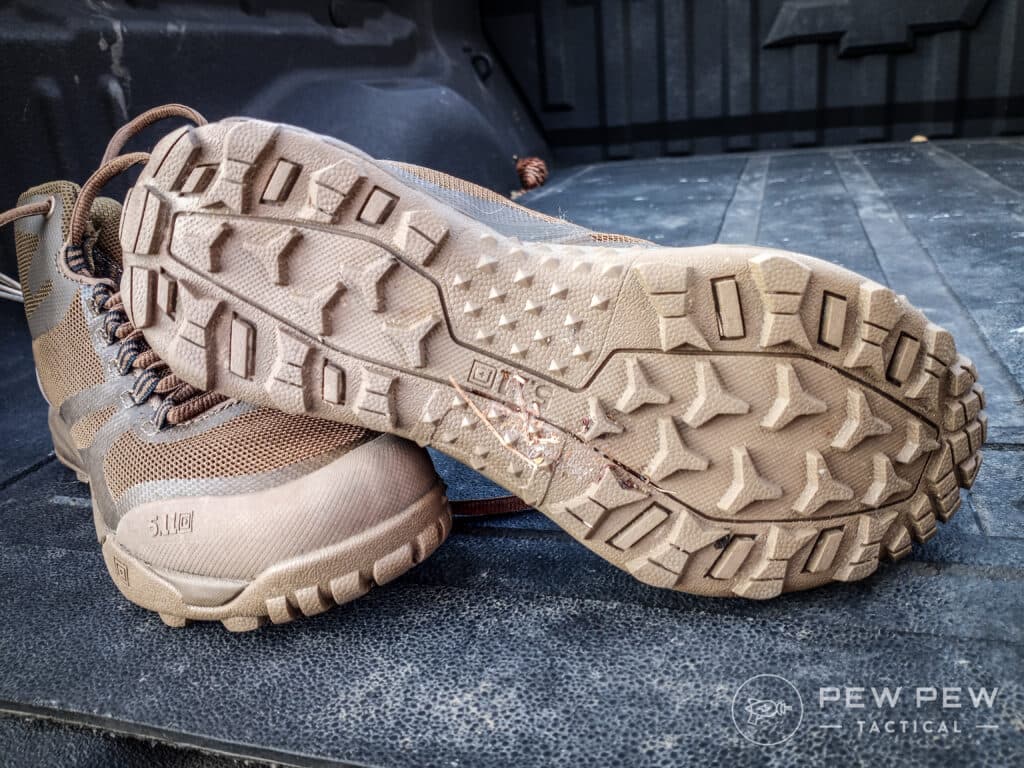
If you’re looking for an excellent all-around boot, I highly recommend the 5.11 A/T 8" Non-Zip Boot. You can read my full review here.
Flashlights
Although a new California law has opened the door to hunting hogs at night, as of this writing, hunting them after the sun goes down is still illegal. Even so, every hunter should tote a reliable flashlight into the field.

Hogs are most active at dawn and dusk, and a late afternoon shot could leave you moving through the woods to follow a blood trail in the dark. If that happens, your flashlight will quickly become your new best friend.
Knives
Every hunter should always have a good, sharp knife, no matter what type of animal they are pursuing. You can decide if you want the compact convenience of a folding blade or the durability of a fixed blade, but whatever you do, don’t settle for a cheap gas station pocket knife.
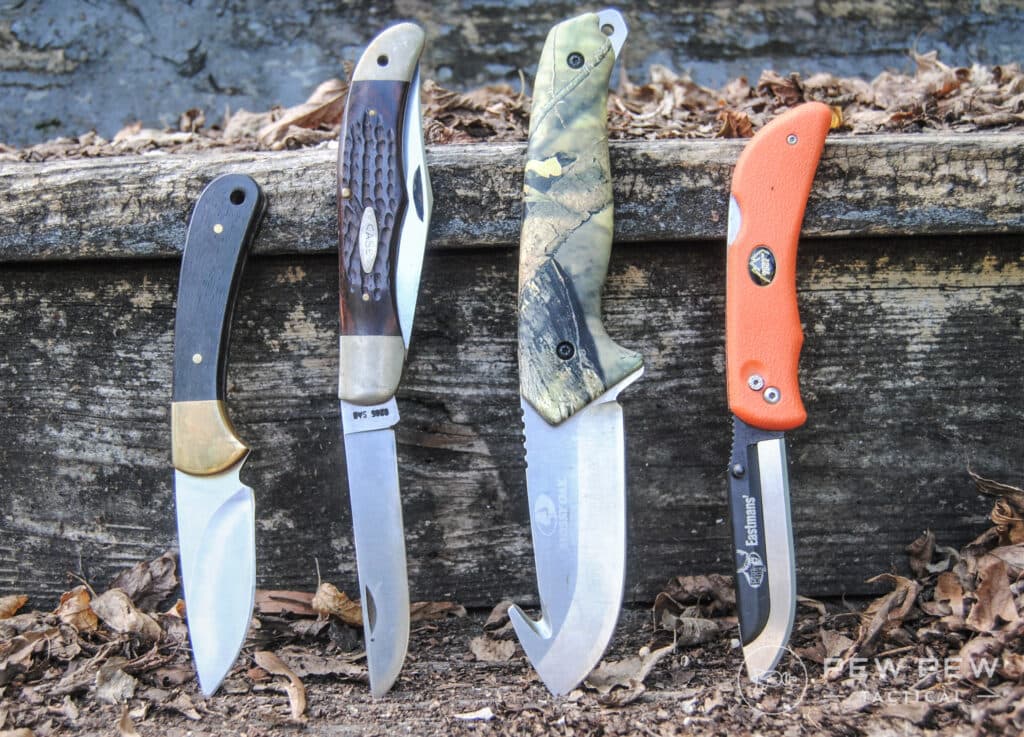
Be sure to check out our articles on the Best Skinning Knives and the Best Bushcraft Knives!
Where to Shoot a Hog
For ethical reasons, hunters should always aim for a quick, clean kill. However, where you place your shot can also affect the quality of the wild pork you’re getting ready to put on the family dinner table.
While dropping a pig dead in his tracks will undoubtedly earn you bragging rights, it also saves you the trouble of following a blood trail and potentially losing your meat.
When it comes to shot placement on wild hogs, it’s important to remember that pigs aren’t deer. Whitetail hunters heading into hog country have to approach shot placement differently.
If you aim for the same sweet spot you would on a whitetail (slightly behind the front leg), you’ll end up sending your bullet right through the hog’s guts.
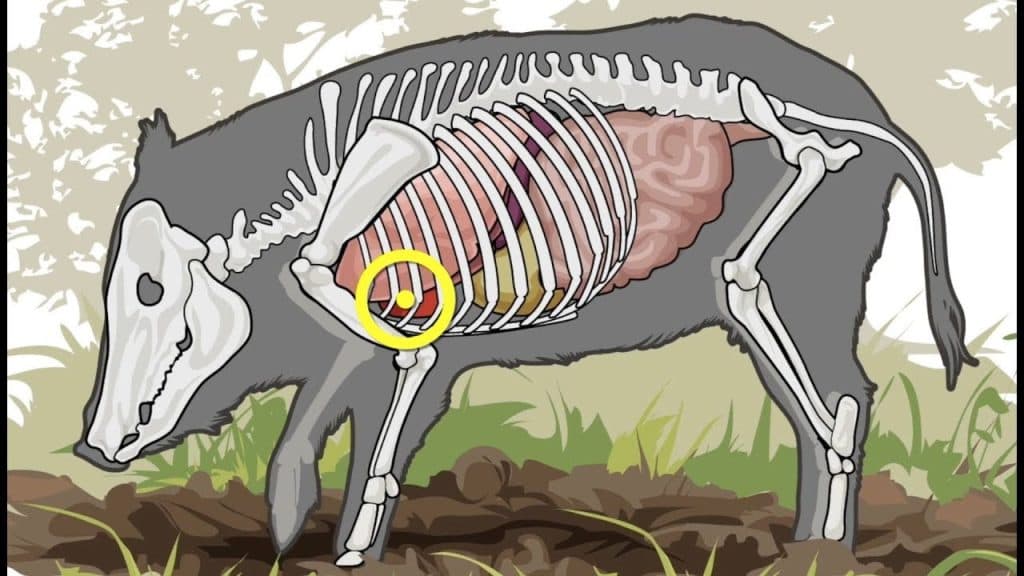
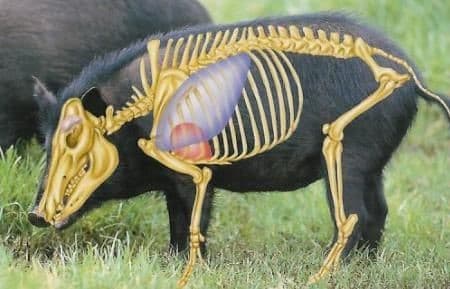
Pigs have compact bodies compared to deer, and their vital organs sit lower and more forward. The lungs are located directly above where the front leg meets the body, and the heart is just below and slightly in front of the lungs.
While a shot straight through the front shoulder is the most direct route to the heart and lungs, wild hogs have thick skin and bony armor that can foil a perfectly placed shot.
Hogs often brawl with each other using their tusks, so mature pigs develop a thick buildup of cartilage and tissue behind their shoulders. If you’re hunting with a .30-caliber rifle, that gristly shoulder armor shouldn’t be a huge problem.
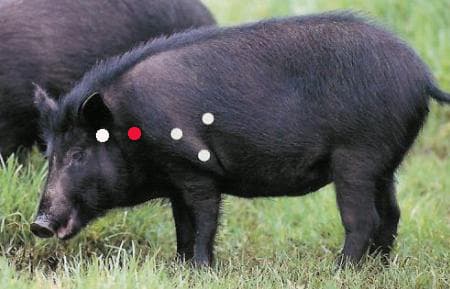
However, if you’re using a broadhead or light-caliber bullet, getting through becomes more of an issue. You’ll have to pay careful attention to your shot angle and wait until the animal is quartering away, especially if your target is a big, mature boar.
Pig Processing Basics
Once you have a pig on the ground, you should approach it with caution. A wounded hog is a dangerous hog, so you’ll want to watch for breathing or movement.
Once you’re certain the animal is dead, it’s perfectly okay to reflect on the hunt and maybe snap some photos for Instagram.
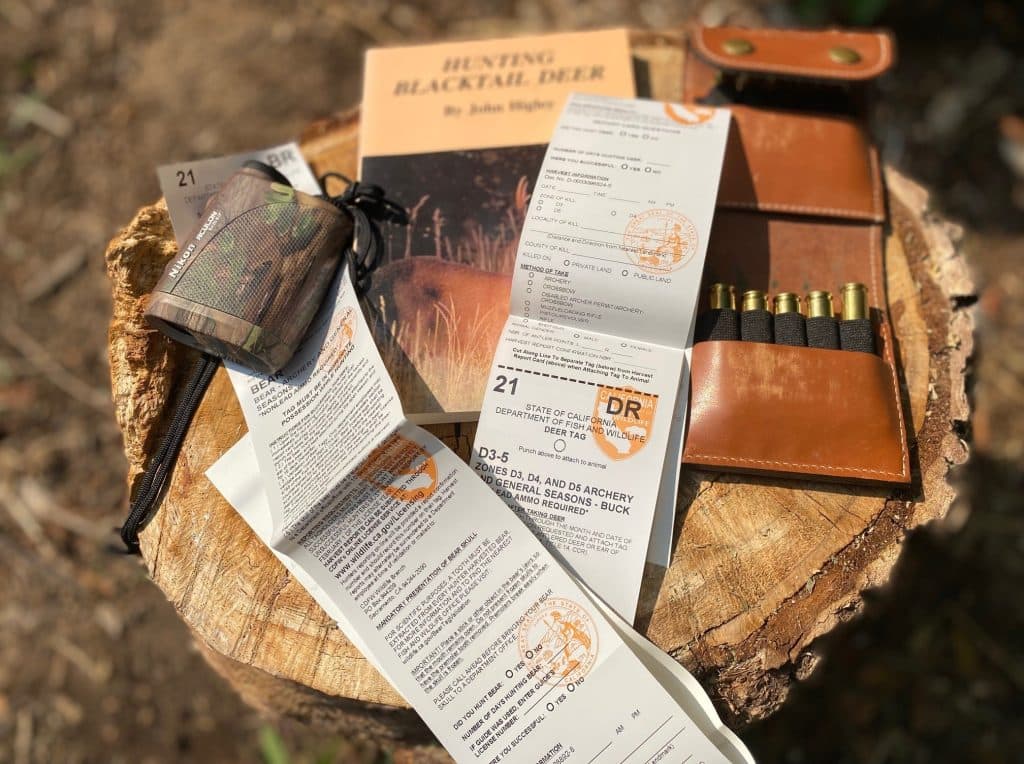
Just make sure the hog is tagged before you move it. When a wild pig is taken in California, hunters are required to “place the tag on the carcass, answer the questions on the other portion of the tag, and return the tag to the California Department of Fish and Game.”
Field-dressing a hog isn’t all that different from field-dressing a deer. However, hogs are known to carry brucellosis, a highly contagious disease that can be transmitted to humans, so you’ll need to take some extra precautions when you’re cleaning your pig.
Use rubber or latex gloves during the gutting and butchering process, and avoid direct contact with the animal’s blood, fluids, or organs with your bare skin. Wash your hands and arms thoroughly with soap and water for at least 20 seconds before touching your eyes, nose, or mouth.
Some meat processors won’t accept wild hogs because of concerns about brucellosis transmission. Unless you feel confident in your own meat processing skills, you should check local processors prior to your hunt to avoid not having anywhere to get your hog processed.
Cooking and Swine Dining
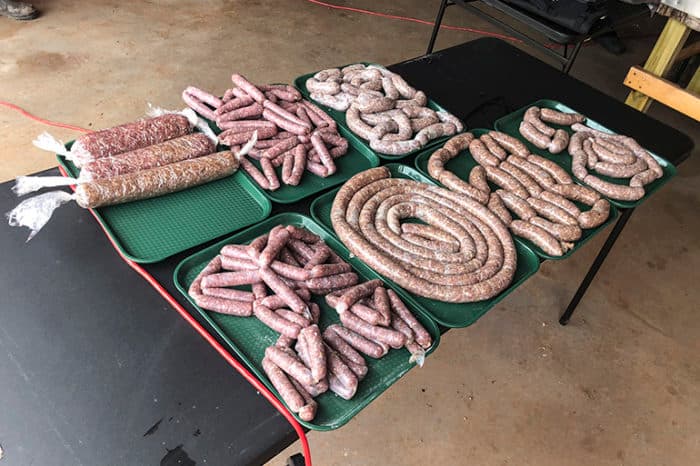
Properly prepared wild pork is even more delectable than the stuff you buy at the grocery store. Wild hog can be turned into mouthwatering barbecue, ham, pork chops, sausage, bacon, and baby back ribs.
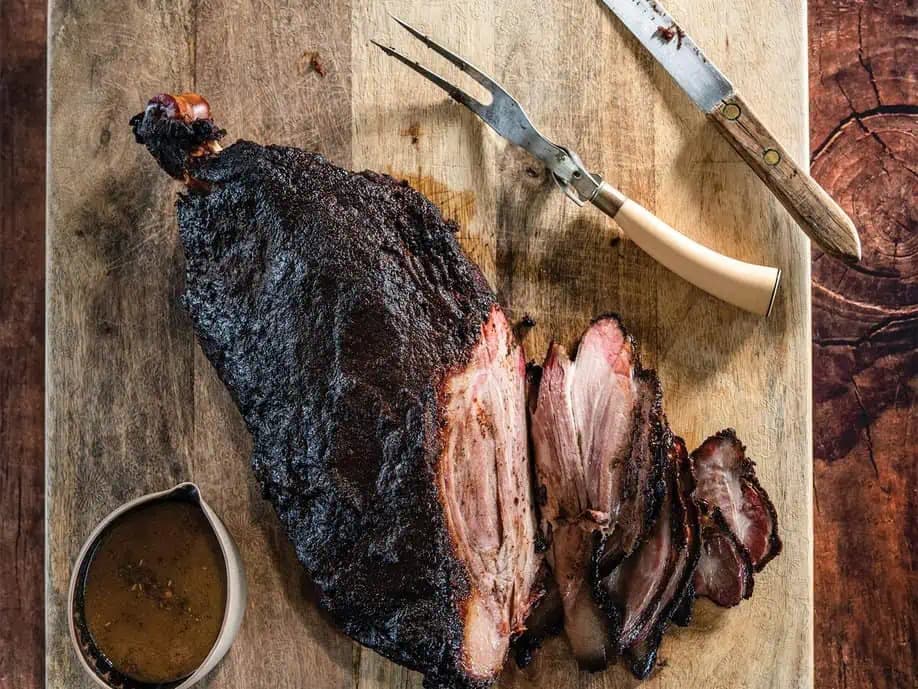
YouTube is an excellent resource for specific recipes, and you can treat wild hog mostly the same as store-bought pork. However, there are a few precautions you should take when handling and preparing wild pork.
Hogs can carry a cocktail of diseases, particularly trichinosis, which triggers unpleasant symptoms such as gastrointestinal distress, muscle cramps, and facial swelling. However, thorough cooking will kill those pesky trichinella parasites.
Use a reliable meat thermometer and cook whole muscle meats to an internal temperature of 145 degrees and ground meat to 160 degrees.
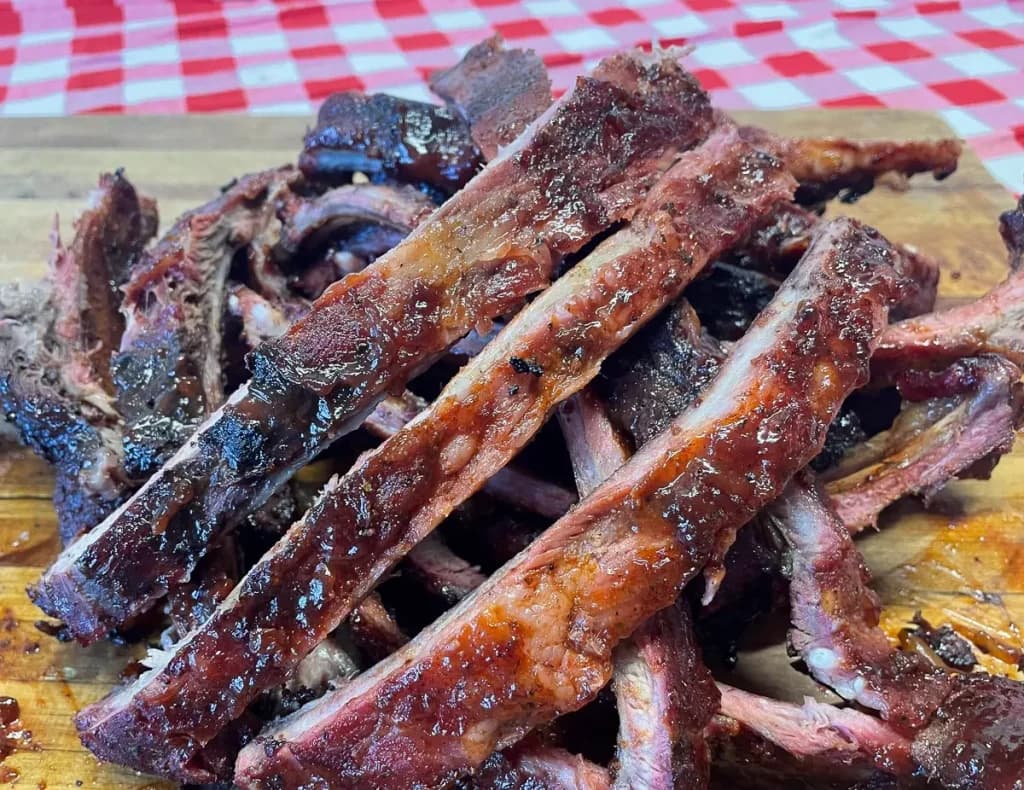
Wild hogs are typically much leaner than their domestic cousins, thanks to their active lifestyles. Because the fat content of the meat is low, wild pork is best when cooked slowly over low heat.
That doesn’t mean chops and steaks aren’t great grilled or fried. It just means you might need to cook them longer and at a lower temperature to ensure they achieve the proper interior doneness without leaving the surface tough and dry.
Final Thoughts
Few things in life are more gratifying than filling your own freezer after a hunt. California hog hunts are among the most fun, highest-value hunting opportunities around.

From seasoned hunters to totally newbies, a guided hunt for wild boar in some of the prettiest country in the U.S. is well worth the time and the investment.
Have you ever hunted hogs in the Golden State? Do you have any practical advice to share with readers? Hit us up in the comments below. And if you’re looking for Cali-friendly ammo to punch pigs, check out our guide to the Best Lead-Free Ammo for Hunting & Shooting.