
M1 Garand Review: Your Grandad’s Favorite Rifle

We review the classic and truly timeless rifle that is the M1 Garand to see how it shoots, how it feels, and if it still holds up.

USMC Veteran. Concealed Carry & NRA Pistol Instructor. 3-Gun Competitor. Career firearms writer
We review products independently. When you buy through links on our site, we may earn a commission to help support our testing. Learn more.
M1 Garand Rifle Pros & Cons
Pros
- Awesome sights
- Surprisingly soft recoil
- Nostalgic
Cons
- Pricey
- Heavy weight
- Ammo is expensive
The Bottom Line
The M1 Garand remains one of the coolest rifles on the market. It's fun to shoot, accurate, and has light recoil for a .30-06. The rifle lives up to its famed reputation and has become one of my favorites. The M1 Garand is truly a unique experience.
What can I say about the M1 Garand that hasn't already been said?
In World War 2, it fought for democracy against authoritarianism worldwide. It was a semi-automatic rifle on a field of bolt actions that changed the world. The bolt action battle rifle died the day the M1 Garand hit the deck.
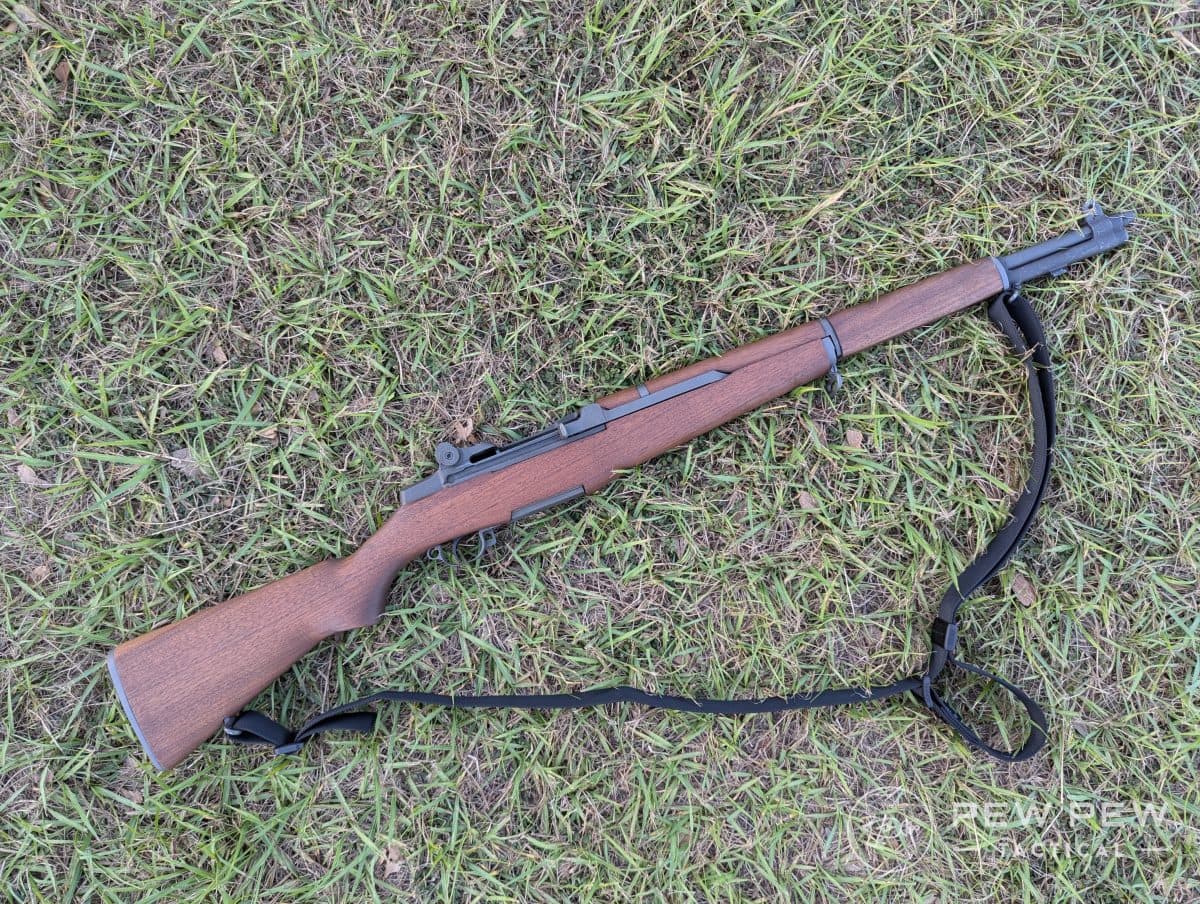
To this day, the rifle is a symbol of the United States, one helluva rifle, and just a vibe.
General Patton said, "In my opinion, the M1 rifle is the greatest battle implement ever devised."
Table of Contents

M1 Garand Specs & Features
Specs
- Caliber: .30-06
- Action: Semi-auto, long-stroke piston
- Capacity: 8
- Length: 43.5"
- Barrel Length: 24"
- Weight: 9.5 lbs
Features
- Ambidextrous safety
- Fully adjustable rear sight
- Hardwood furniture
A Brief History of the M1 Garand Rifle
John Garand was born in Canada, but we won't hold that against him. He only lived there for a year before coming to the United States. He's a man who loved both target shooting and machining, which led to a natural career as a firearm designer.
He must have been pretty good at it because by 19, he had produced a light machine gun, and the War Department selected it. It doesn't seem like that gun was produced, but Garand went to work for the US Government at Springfield Armory in 1919, where he remained till he retired in 1953.
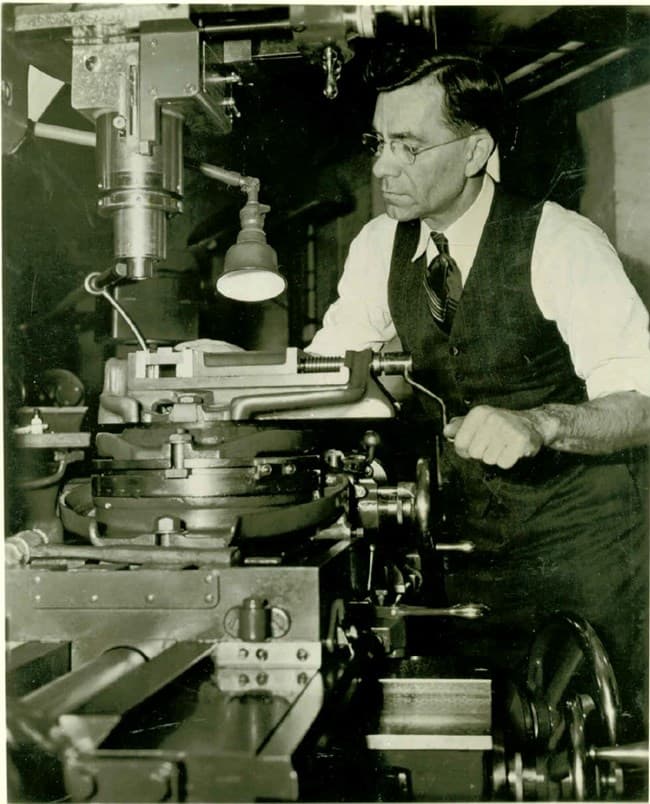
He designed the legendary M1 Garand at Springfield Armory, officially known as the Semiautomatic, Caliber .30, M1 Rifle, and the military adopted it in 1933. Initially, the rifle had some difficulties and issues, and the Army focused on fixing those issues. It wasn't until 1937 that the rifle began being delivered to the U.S. Army.
There were still some issues, but the kinks were unkinked, and by 1941, the U.S. Army was fully equipped with the M1 Garand. Over time, the weapon made its way to the Marine Corps and Navy and became the rifle of the US Armed Forces in World War 2.
It remained the service rifle of choice until 1957 when the M-14 replaced it. However, it's worth noting that the M1 Garand would remain in service past 1957 until the M-14 fully armed the U.S. Military.
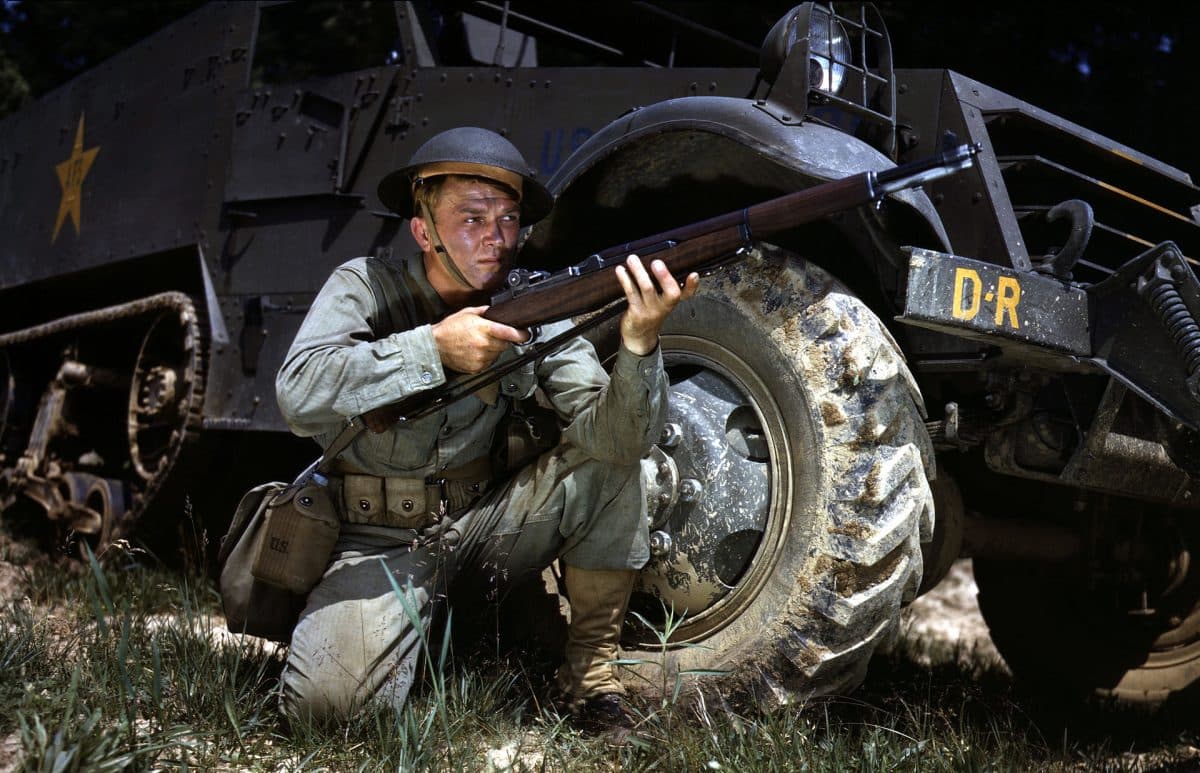
Nearly five and a half million rifles were produced, and after the M1 Garand went out of service, many were sold to foreign countries, and others entered the Civilian Marksmanship Program.
Mine originated from there, and outside of being re-barreled, it's an original gun with beautiful wood furniture. My production date makes the gun a post-World War 2 rifle, and I doubt it ever left the United States with the condition it's in.
Who Is the M1 Garand For?
Who isn't it for? If you're a gun guy or gal, you're likely familiar with the rifle. If you watch movies and video games, you're likely familiar with the rifle.
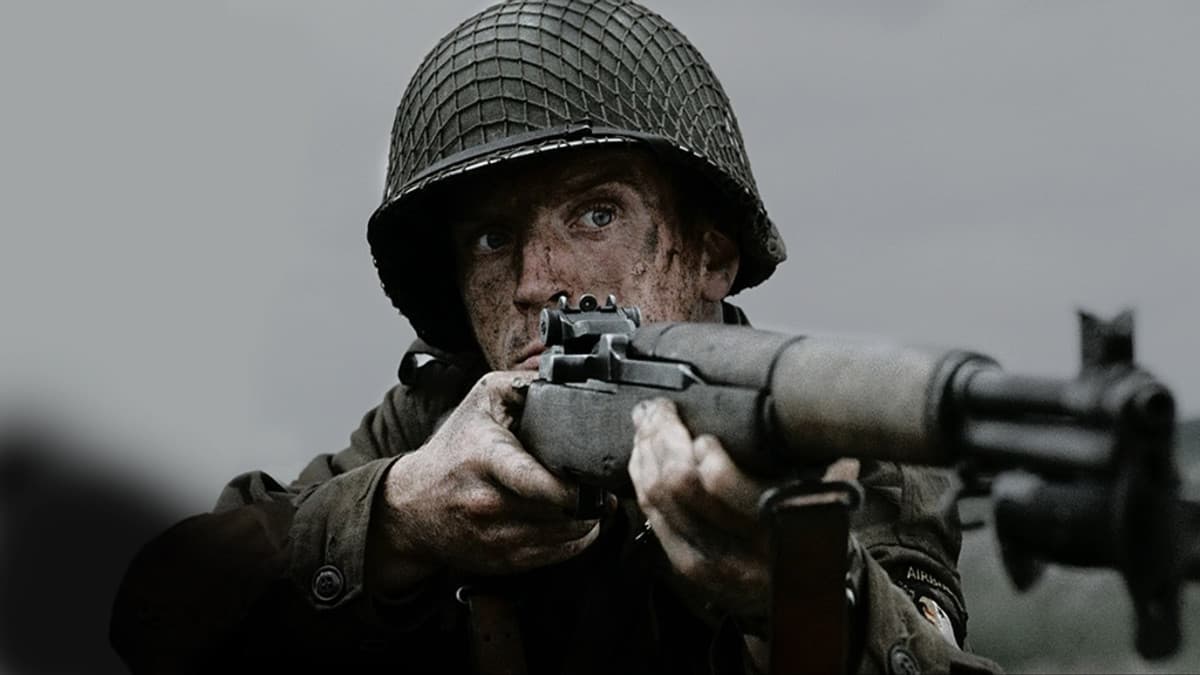
It's an American icon, a cultural icon, and just plain awesome. It's a grail gun for me, and its purpose for me is the historical connection it provides. Shooting this gun and reminiscing about the men who went overseas to fight for democracy and defeat evil is its own reward.
From a practical perspective, the rifle still has some genuine uses. There are dedicated CMP matches, and NRA High Power Service rifle-style matches that the Garand fits into.
In fact, the CMP even has a John C. Garand Match, which uses as-is military rifles. It's a relaxed match that's more focused on fun than shooting jackets and perfect positions.
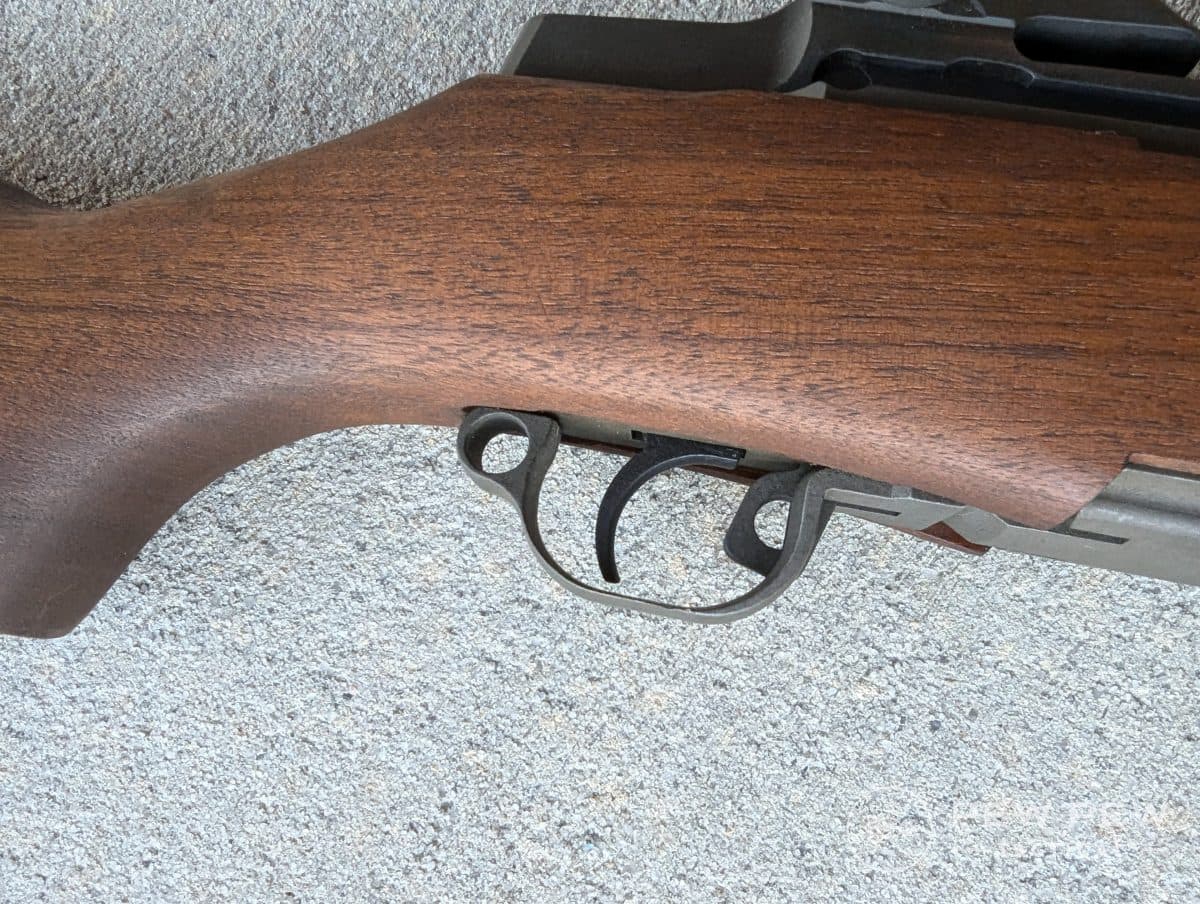
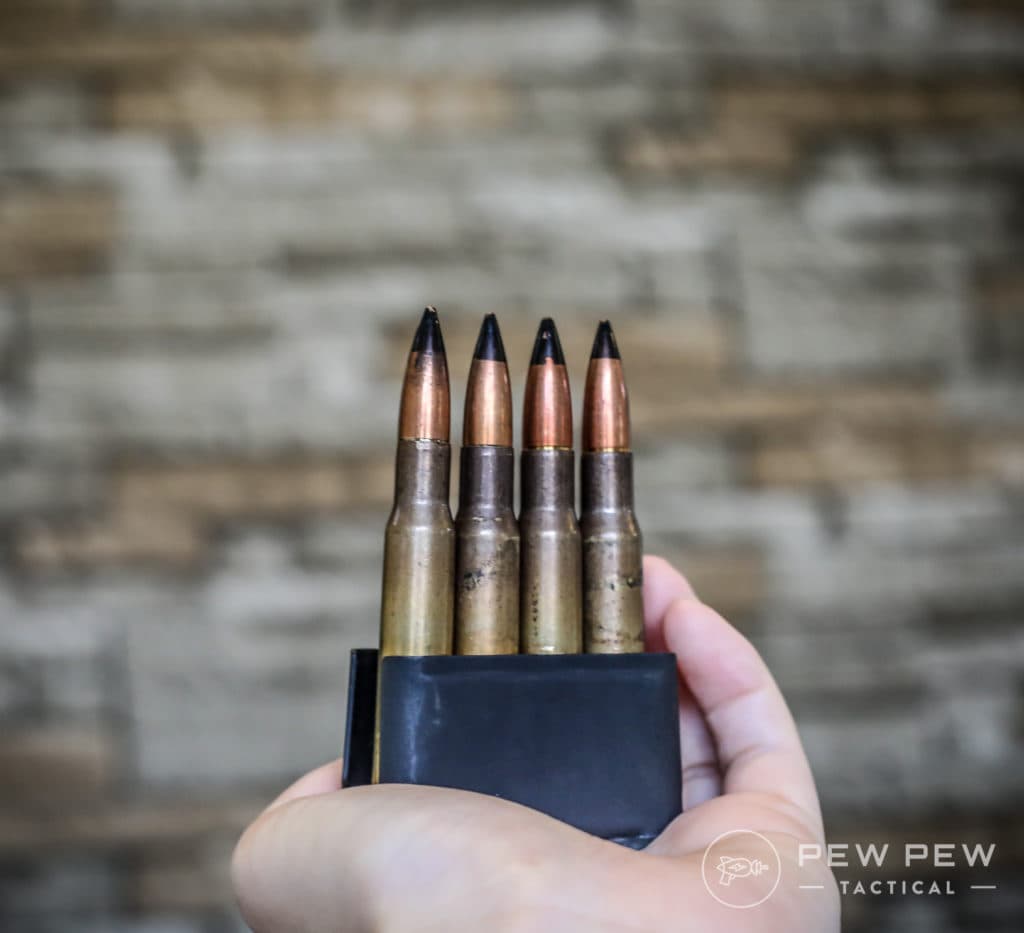
You can most certainly hunt with an M1 Garand. There are five and even two round en bloc clips to make sure you're legal and compliant with various state laws. Admittedly, the M1 Garand is a bit big and heavy and ultimately not a modern option, but if it can kill Nazis, it can kill deer.
Ergonomics: Fit and Feel
It is heavy but in a good way. That's the first thing I thought when I picked up my M1 Garand. The wood stock covers everything, and the weight of wood and steel is very real. It's 9.5 pounds with just iron sights.
A lot of modern ARs weigh close to 10 pounds, but that's with 1-8X LPVOs, M-LOK handguards, lights, lasers, and 30-round magazines. This thing holds eight rounds of America's finest .30-06 and gives you iron sights, and that's it!
The wood is chunky but solid and beautiful, to be honest. The parkerized steel isn't a beautiful blue but a Spartan grey. There is a hardness to this weapon, and you can easily see how this weapon could go from a great rifle to a great spear with a bayonet. It wouldn't break with a butt stroke, that's for sure.
Working the action delivers this loud, churning machine-like sound. It's of its time and honestly just wonderful all around.
With the M1 Garand, you get an exposed op rod that moves every time you shoot. It's an odd quirk, and you'll need to watch your hand placement to avoid it.
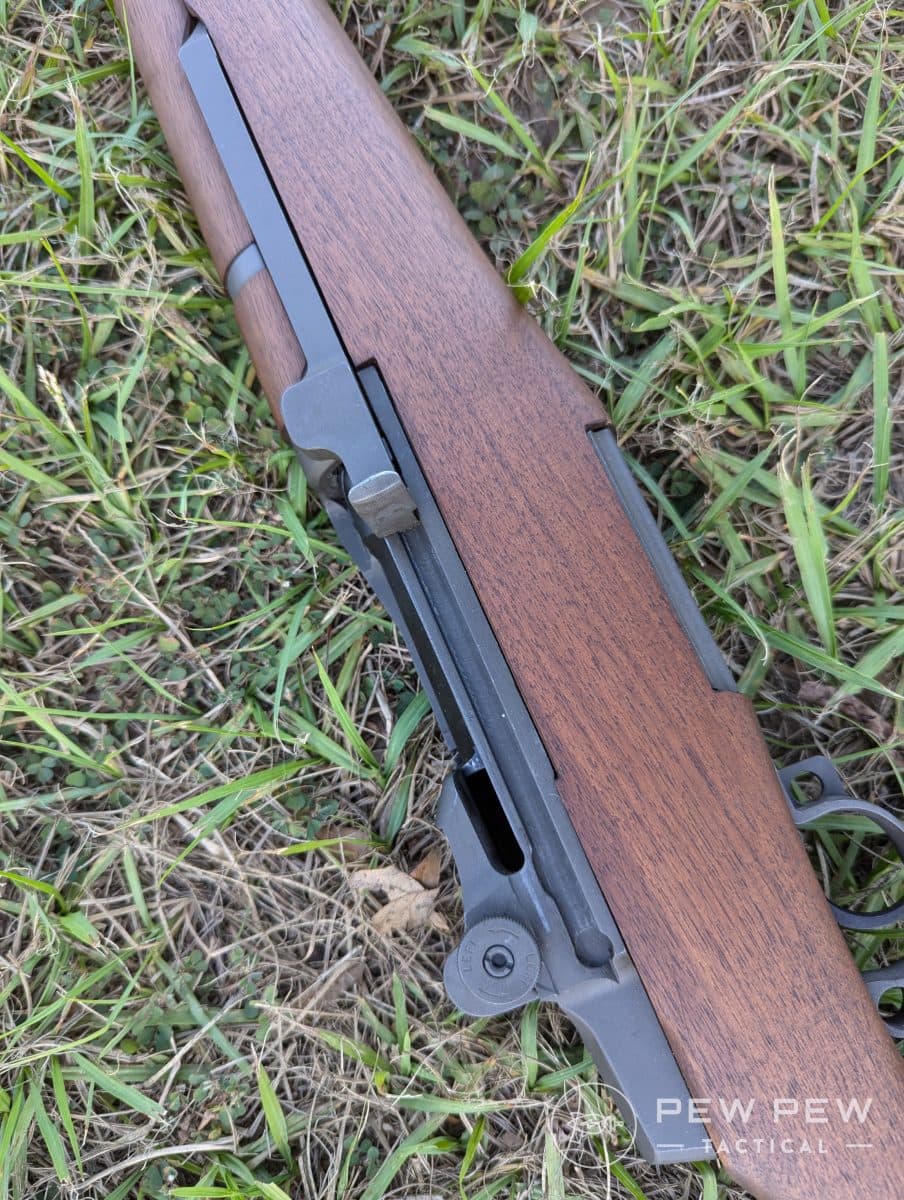
This gun was clearly made for an era when we used a bladed stance and a chicken-wing shooting position. The pull length stretches out fairly far. I'm a big guy, so I can assume a squared-up shooting position, but I don't think many other folks can.
The M1 Garand is a product of its era. Although progressive for the era, the gun was built around dated shooting techniques.
At the end of the day, it feels solid. Solid like an oak tree, solid like a soldier, solid like the American people.
How Does the M1 Garand Shoot?
A life of playing World War 2 first-person shooters perfectly prepared me for this gun. Okay, not really, but it prepared me for the sight picture. Seriously, thanks, Call of Duty and Brothers in Arms.

Looking down at the sights is exactly what you expect if you played these games. The United States was an early adopter of the peep sight, and peep sights are the superior option for long-range iron-sighted shooting. We get a great, easy-to-use sight picture with a fairly broad front sight and a wide open peep sight.
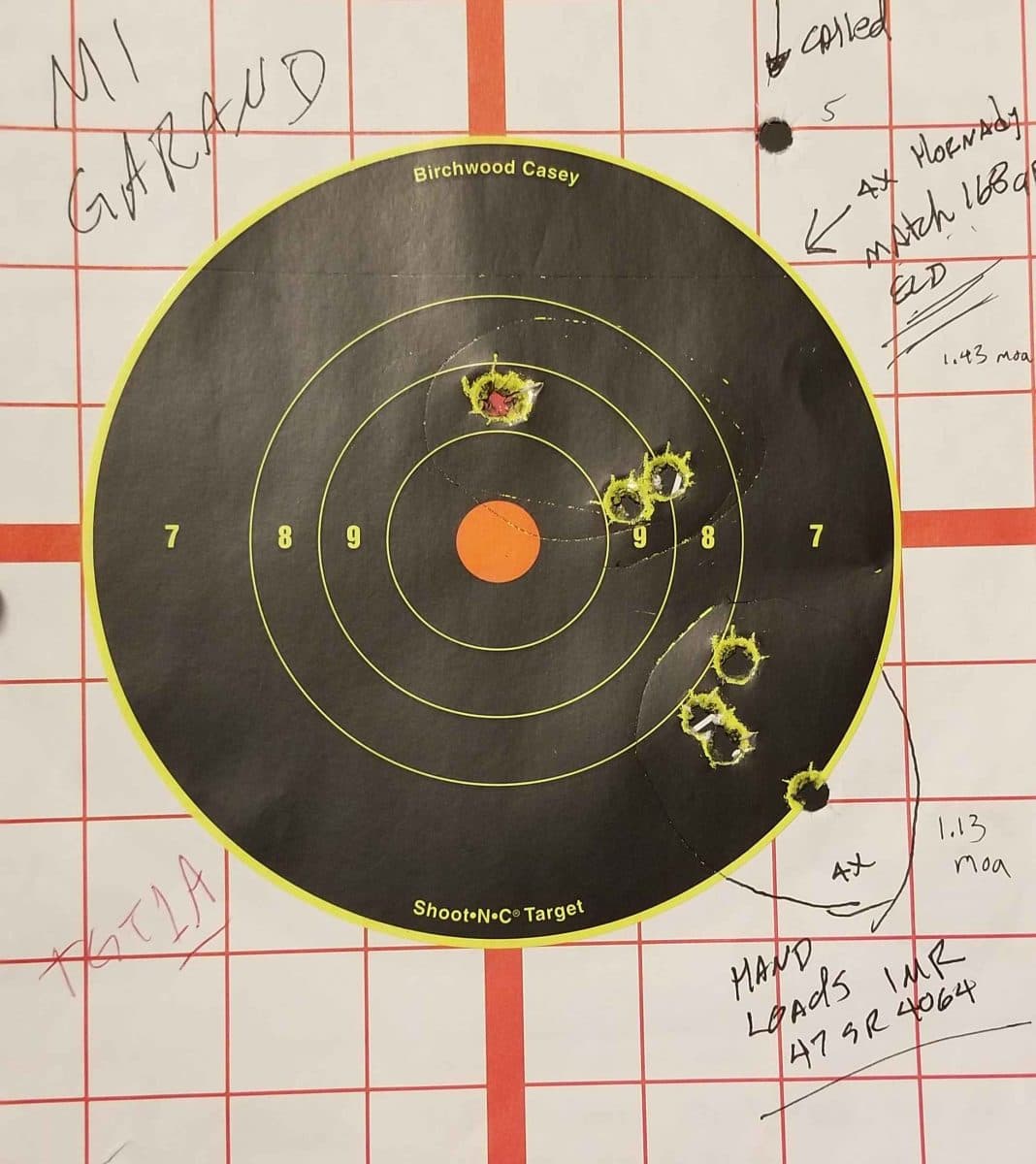
It leads to surprisingly accurate shooting. I used some surplus M2 ammo a friend had, and it's got to be pretty bottom of the barrel as far as accuracy goes. This mass-produced surplus stuff is ancient, but I was producing 3.75-inch groups at 100 yards.
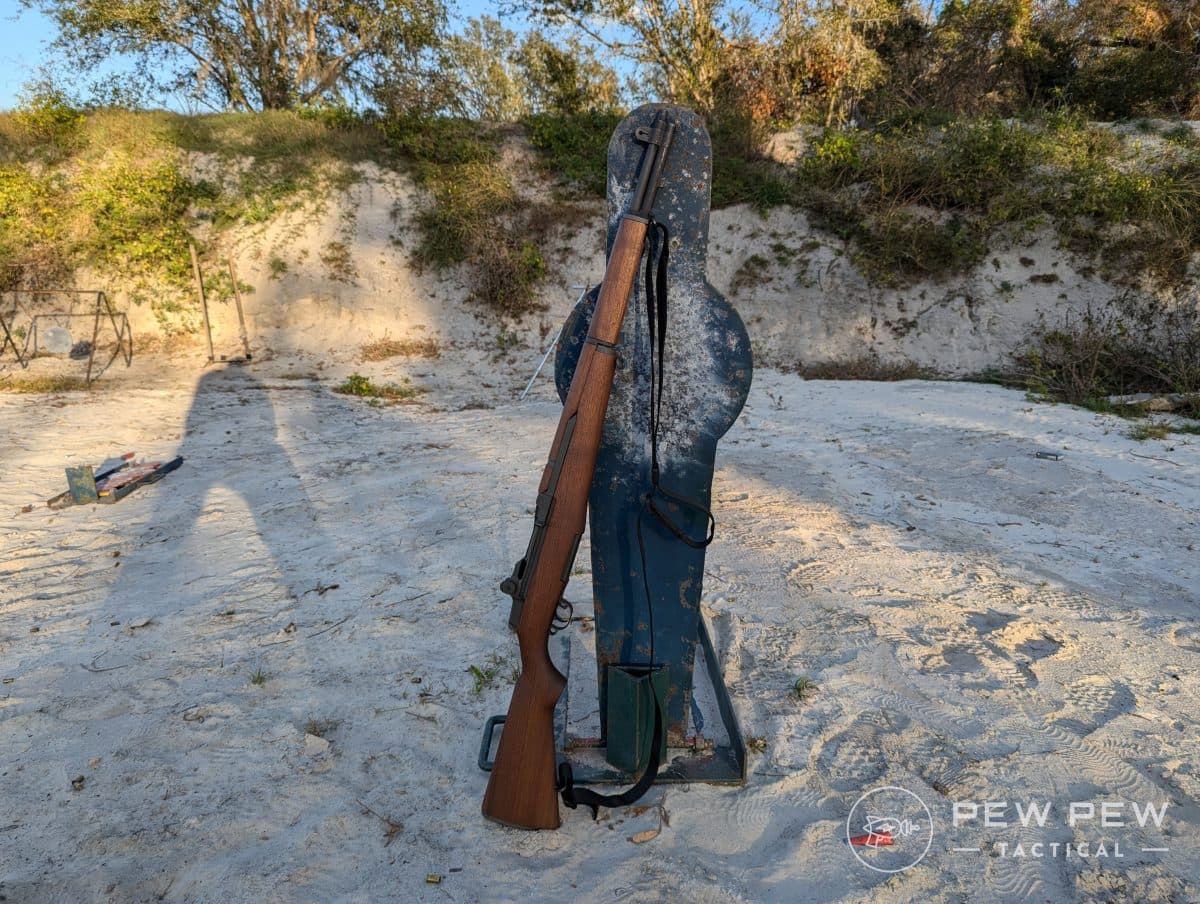
While 3.75 inches may sound huge, the M1 Garand wasn’t built to be a 1 MOA rifle. But remember, this is on iron sights, with old surplus ammo, and this is my first time shooting a Garand.
Some experience and good ammo can cut the group size down. One of the Pew Pew Tactical Editors, Wyatt, has a CMP Special grade Garand with a Criterion barrel that can shoot 1.5 MOA or slightly better with match ammo. Not bad for a rifle that's older than my dad.
Inspired a bit by the modern era, I fired a Bill Drill with the M1 Garand. That's six shots at seven yards into the A-zone of an IPSC target from the low ready. My slowest was 2.3 seconds, and my fastest was 1.98. I learned quickly you have to ride the lightning; just pull the gun into your shoulder and work that trigger.
The recoil isn't as bad as I expected. I typically think of the Winchester Model 70 when I think .30-06, which is much lighter and also a bolt action. This .30-06 weighs nearly ten pounds and has a gas-operated semi-auto design, so the recoil isn't bad.
It's not painful but stout. I think of it a bit like a .45 ACP; it's got a push, but it's not snappy or uncomfortable by any means.

The gun does have some muzzle rise, and its long length makes it tough to get a hand far enough forward to help tame that like a more modern design. With every trigger pull, the gun barks and then jumps before settling back on target.
I used surplus M2 ammo and what I believe are surplus en-bloc clips. With that combo, I had no reliability issues. Between myself and a friend, we fired 208 rounds. I wasn't going to torture test the old gun, and if a gun made in the 1950s had problems, I assumed they show up pretty fast.
What Makes the M1 Garand Special?
I can't figure out if it's the historical context, the fact it's a cultural icon, or simply that it's a semi-auto World War-era rifle that sets this gun apart. I guess the answer could be all three. The M1 Garand is a legend, a living legend at that.

In my experience, the gun lives up to that legendary status. I can see how the M1 Garand left both friend and foe jealous. It's easy to shoot accurately, has great controls, and has a few quirks, but ultimately, it still handles very well.
By the Numbers
Reliability: 5/5
I didn't get into a several hundred-round test, but in 208 rounds, or 26 full clips, the gun had no problems with M2 ammo.
Ergonomics: 3.5/5
The trigger guard safety is an odd duck, and the moving op-rod is a quirk. Also, the LOP is quite long. Let's not forget the potential for a smashed thumb if you load it incorrectly. It's a product of its time.
Accuracy: 3.5/5
It's accurate enough. These old guns were never meant to be 1 MOA shooters, but they'll put that big .30 cal bullet where you want it, or at least close to where you want it.
Customization: 3/5
I know you can customize an M1 Garand with aftermarket stocks, scope mounts, and some other accessories; I've seen Post Malone's. But my advice -- don't. Add a sling and call it a day.
Value: 3.5/5
This is a tough one. The value of mil-surp is definitely in the eye of the beholder. However, Garands have risen in price steeply over the last 10-15 years and will continue to do so.
Overall: 4/5
Upgrades For the M1 Garand
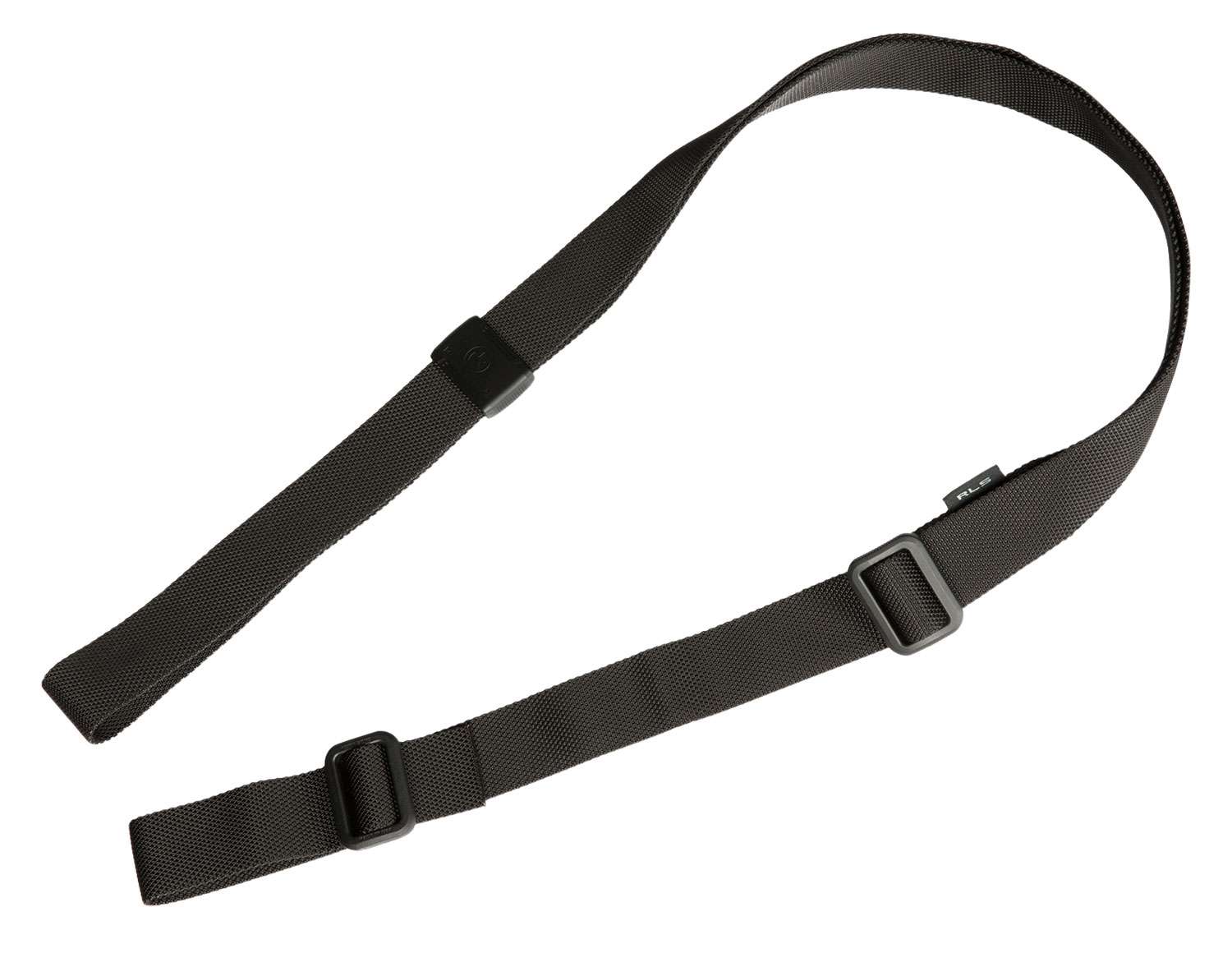
The Magpul RLS is an old-school design that works as a carry strap and as a loop sling to add tension and accuracy. I think it's the only modern thing I'd use on a Garand.
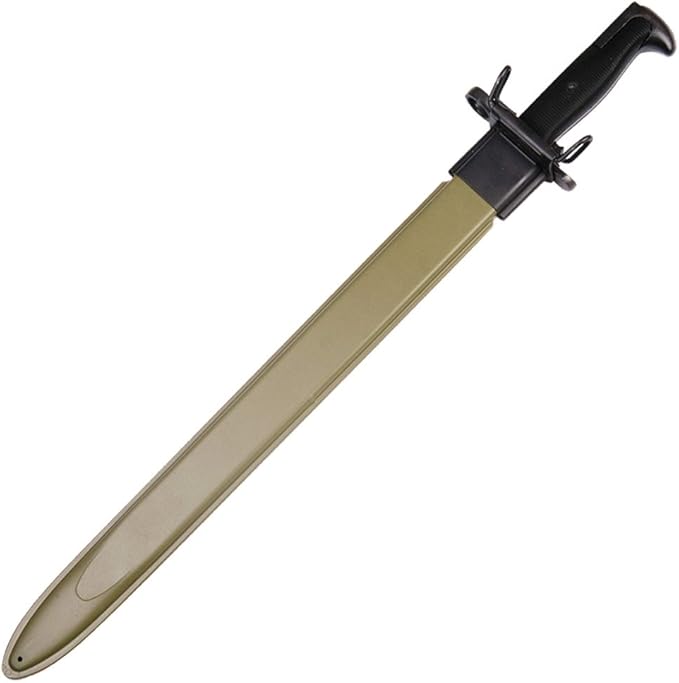
Real, WW2-era bayonets are expensive if you want one in decent condition. This replica isn't as impressive as a bayonet, and I wouldn't charge the Germans with it, but it looks nice and completes the M1 package without breaking the bank.
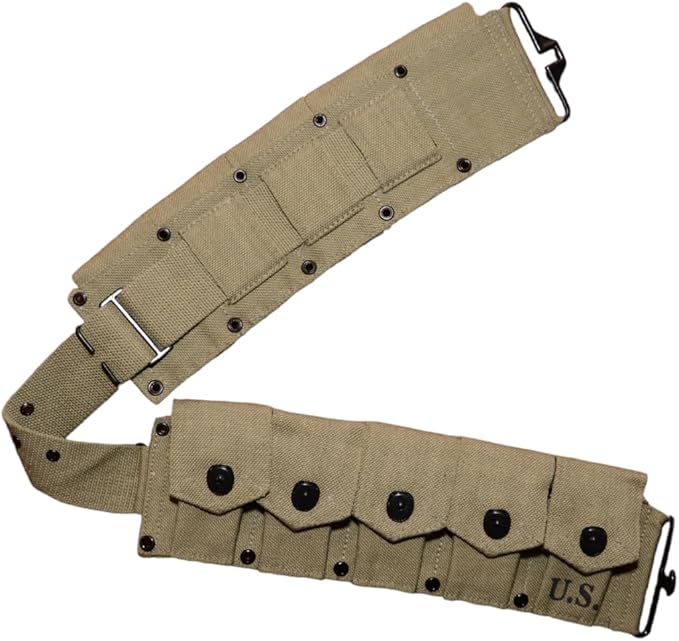
Authentic M1923 cartridge belts are actually quite cheap and common. These simple canvas belts hold ten clips of M1 Garand ammo for easy access. Reproduction versions are also available for those who don't want to hunt down an original.
Meet the Experts
Pew Pew Tactical author Travis Pike helmed this article. Travis spent a lifetime shooting as a kid and later joined the United States Marine Corps, where he spent five years as an infantryman. In the middle of his Marine Corps career, he began writing and never stopped. He has thousands of articles to his name with a variety of publications, including Pew Pew Tactical.

This review was edited by Pew Pew Tactical Editor Wyatt Sloan. Wyatt is an NRA and USCCA-certified instructor with previous experience as a competitive shooter. He personally owns over 200 firearms, a Garand included, and has 10 years of home-based FFL firearm sales. Wyatt uses his extensive experience with firearms at large to test guns for Pew Pew Tactical — evaluating them based on our standards and metrics.
Final Verdict on the M1 Garand
The M1 Garand might be retired and old enough to be a great-grandpa, but it's still got a lot of fight in it.
It might be big, it might be heavy, but it is surprisingly easy to shoot, and it's a ton of fun. Even though it is the most practical rifle for any application, you will never regret buying one.
Do you own an M1 Garand? What do you think about them? Let us know in the comments below! Don't have an M1 yet? Check out our article on Why Now is the Time to Buy an M1 Garand!