
Meet the New Mossberg 990 Aftershock [Review]
We took the brand new Mossberg 990 Aftershock to the range to see if this semi-auto lives up to the Mossberg name or if it's a flop...

Retired LEO. SWAT Commander. POST/NLEFIA/USCCA Instructor. Former FFL. Gun Writer 10+ years
We review products independently. When you buy through links on our site, we may earn a commission to help support our testing. Learn more.
- How We Tested Mossberg 990 Aftershock
- Mossberg 990 Aftershock Specs Snapshot
- First Impressions & Background
- Mossberg 990 Aftershock Range Report
- Reliability
- Ergonomics
- Mossberg 990 Aftershock Is Best For...
- By the Numbers
- Upgrades for the Mossberg 990 Aftershock
- Meet the Experts
- Mossberg 990 Aftershock: Final Verdict
Semi-auto or shotgun?
That's been the question of many home defenders as they shop for a means to protect their homes and families. While there are definite benefits of either...why not get a gun that can do both?
Enter the Mossberg 990.

This "other firearm" takes what makes the Mossberg 590 Shockwave cool, but with the fast-action shooting of a semi-auto shotgun. This banger of a gun removes the need to manually cycle, meaning you can rock through six rounds of 12-gauge mayhem that much quicker.
The question on our mind, though, is whether the 990 Aftershock delivers the same success as its 590 Shockwave sibling. We intended to find out for ourselves, so we loaded up and tested one at the range.
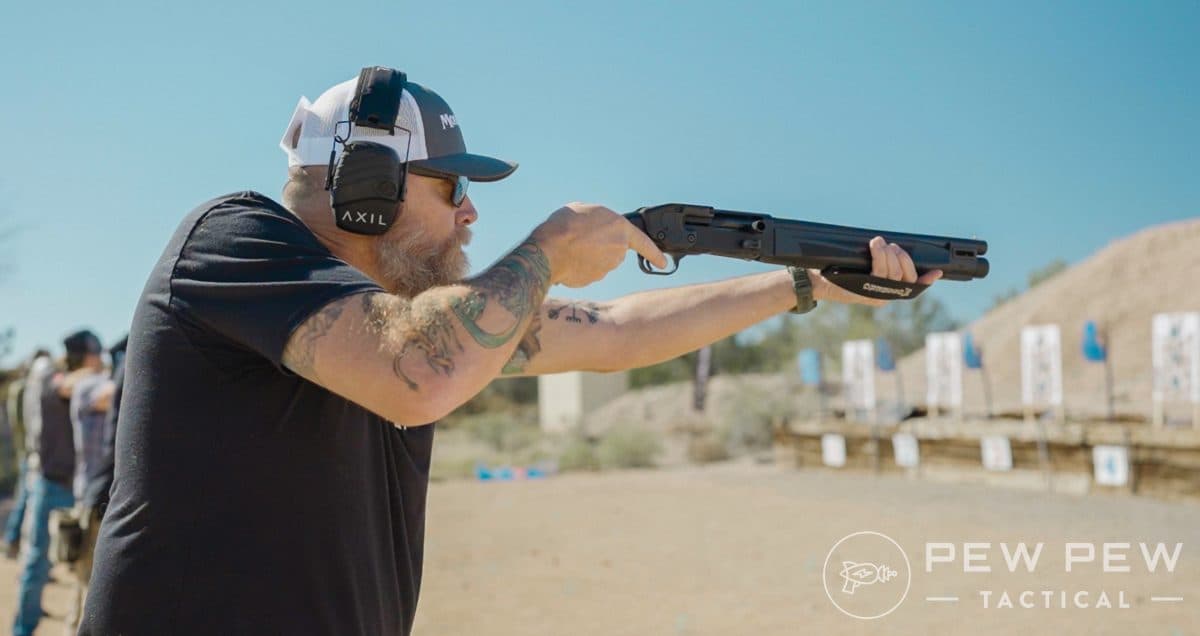
The story goes a little deeper than that, though, as this isn't the first time we've seen the top-secret 990 Aftershock...
So lock those eyes in and keep reading to see how our paths crossed and whether the 990 Aftershock lives up to the hype.
Table of Contents
- How We Tested Mossberg 990 Aftershock
- Mossberg 990 Aftershock Specs Snapshot
- First Impressions & Background
- Mossberg 990 Aftershock Range Report
- Reliability
- Ergonomics
- Mossberg 990 Aftershock Is Best For...
- By the Numbers
- Upgrades for the Mossberg 990 Aftershock
- Meet the Experts
- Mossberg 990 Aftershock: Final Verdict
Mossberg 990 Aftershock Pros & Cons
Pros
- Big firepower
- Small package
- Non-NFA firearm
- Can SBS
Cons
- Two points of contact
The Bottom Line
The Mossberg 990 Aftershock is a shotgun-like semi-auto firearm that’s small, but packs a wallop.
How We Tested Mossberg 990 Aftershock
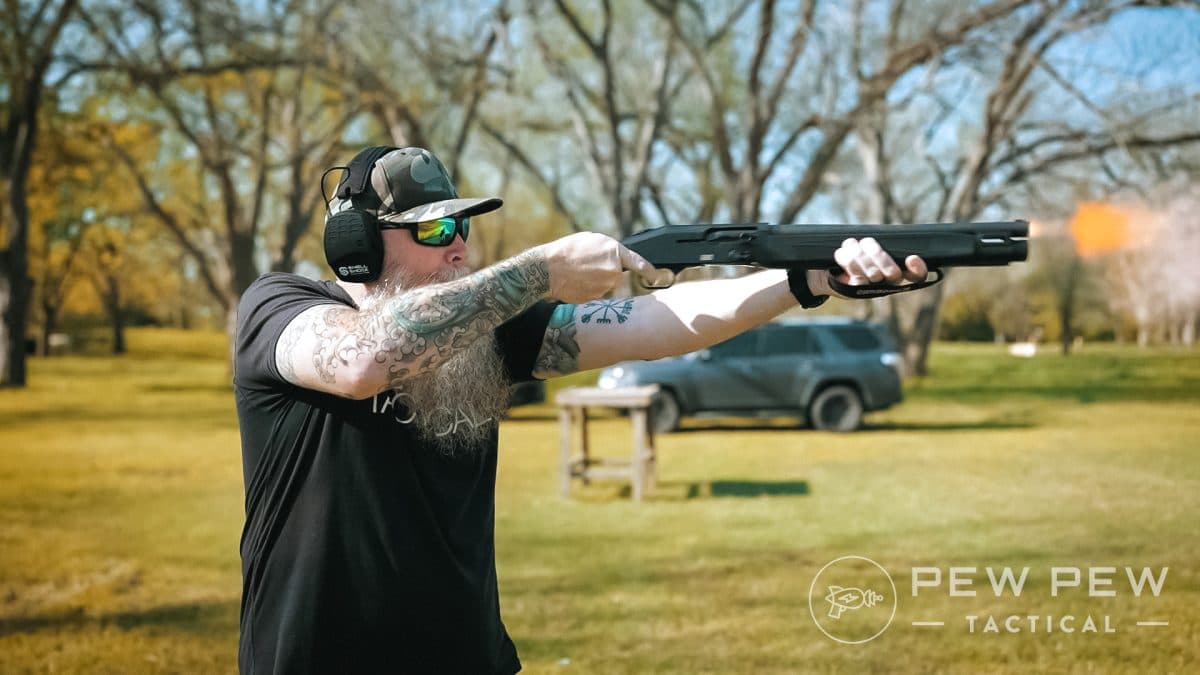
For this review, we tested the Mossberg 990 Aftershock with the included fiber-optic front sight and ghost ring rear, then added a Vortex Viper Red Dot, patterning .00 Buckshot at 5, 10, 15, and 25 yards.
We also grouped 5 slugs at 25 yards for accuracy. We used Winchester #8 birdshot, Winchester .00 Buck, and Hornady TAP 1 oz. slugs, going through 200 shells.
We also tested the trigger on the Mossberg 990 Aftershock with a Lyman Digital Trigger gauge to get an accurate assessment of the actual trigger pull weight.
Mossberg 990 Aftershock Specs Snapshot
Specs
- Caliber: 12 gauge
- Action: Semi-automatic, gas-operated
- Capacity: 5+1
- Length: 27.125”
- Barrel Length: 14.75”
- Width: 2.5” (charging handle)
- Height: 3.6”
- Weight: 6.04 lbs.
- Comes with: Cardboard box, owner’s manual, gun lock
Features
- Cylinder bore choke (not adjustable)
- Anodized orange follower
- 990 Aftershock Grip
- Enhanced loading port
First Impressions & Background
In 2017, Mossberg released the Shockwave as an alternative firearm that was essentially a shotgun with a bird’s head style grip. This new firearm was derived from the Mossberg 590, a battle-tested shotgun that was an advancement from the Mossberg 500.

As a pump shotgun, Mossberg's 590 has proven its reliability, serving in the U.S. military for years. Developing the Shockwave from this platform made sense; it was a matter of adding the grip, shortening the barrel, and changing the magazine tube.
Subscribing to the idea that anything worth doing is worth overdoing, Mossberg set out to make a semi-automatic version of the Shockwave. The challenges were much steeper, though, because the limited real estate didn’t leave much room for the gas system -- with time and effort, engineers cracked the code.
Mossberg is a company that seeks out and implements feedback from its customer base, and that was evident in the 990 Aftershock’s development. Pew Pew Tactical was invited to Gunsite in 2022 to try early prototypes of the gun and encouraged to give our honest feedback.
But did this feedback yield a gun you should pick up? Keep reading...
First Impressions of the Mossberg 990 Aftershock
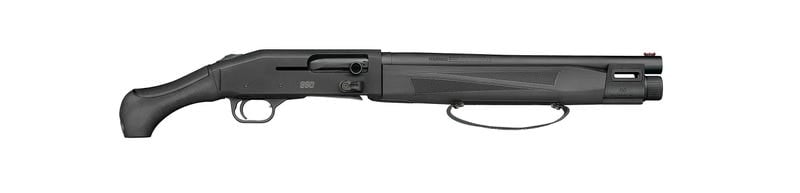
The 990 Aftershock is a shotgun-like firearm with a short overall length and a bird's-head-style grip instead of a stock. There isn’t anything like it on the market.
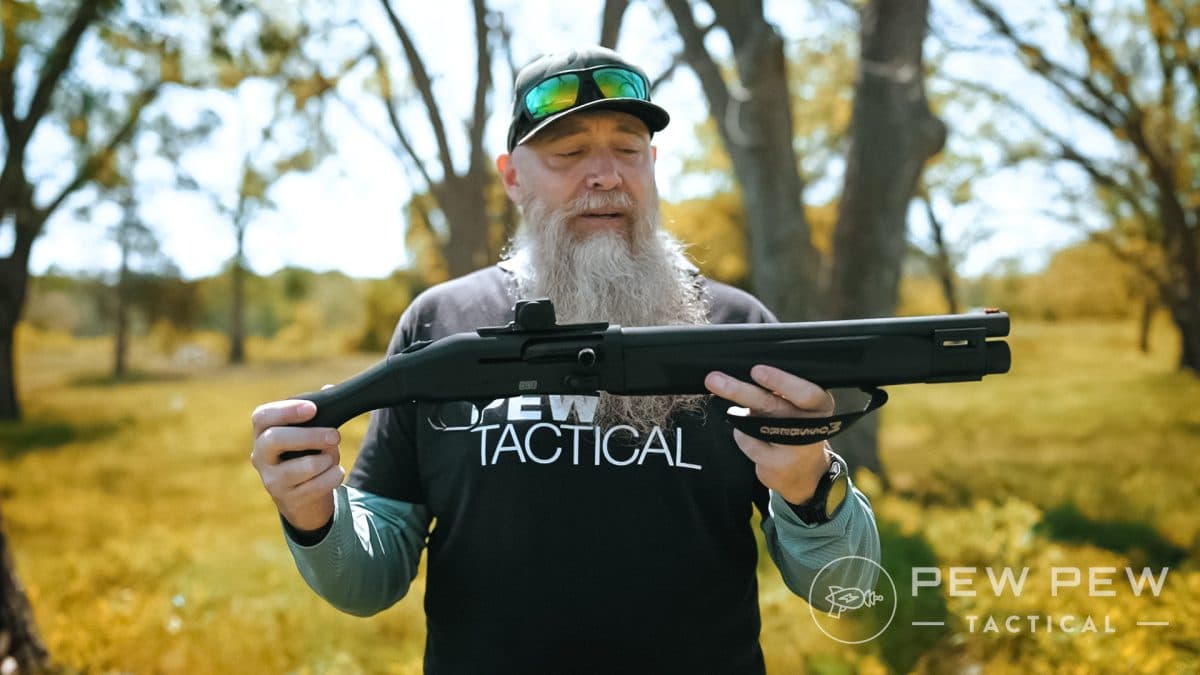
The closest comparable firearm would be the Mossberg Shockwave. However, it is much different than this predecessor because it is a semi-automatic firearm and does not require the user to cycle the weapon each time it is fired.
This intrigued us, so we set out to the range to learn more.
Mossberg 990 Aftershock Range Report
Even shooters who haven’t experienced this type of firearm will recognize that the techniques for handling this gun will be different. Without shoulder contact or cheek weld, recoil mitigation and aiming are a little more challenging than your average shotgun experience.
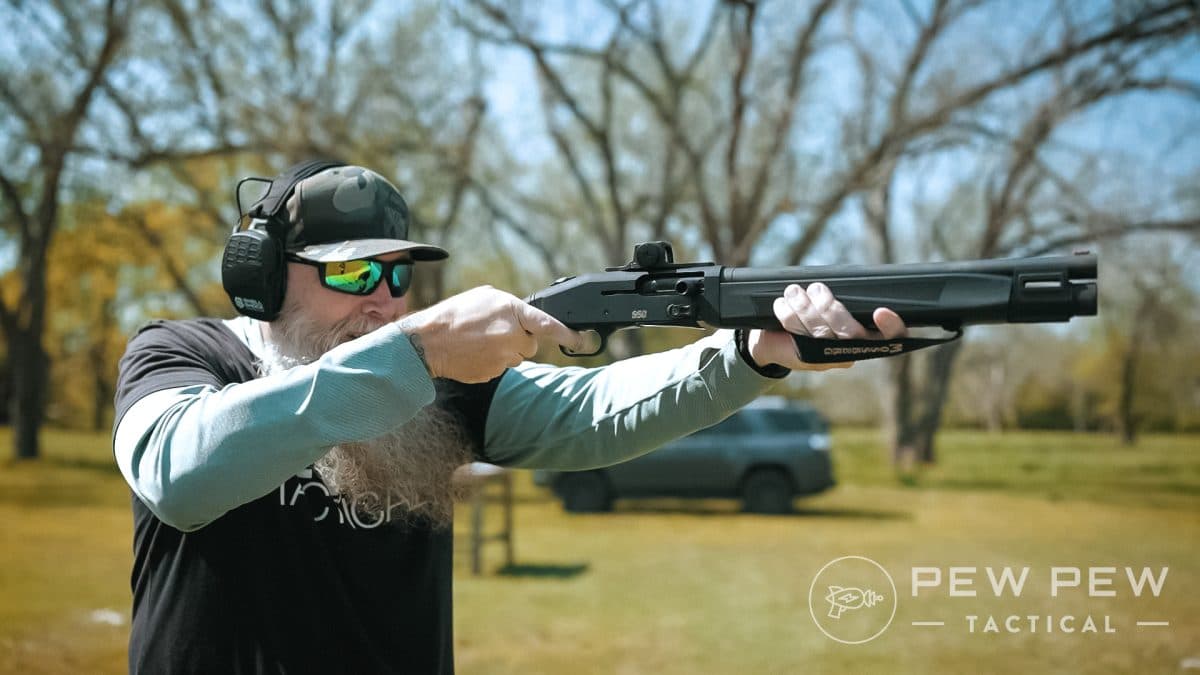
And while this isn’t a shotgun per se, when you pull that trigger, you better be ready. Most folks will recognize that 12-gauge shotshells range in severity of recoil, starting at birdshot and going up to slugs.
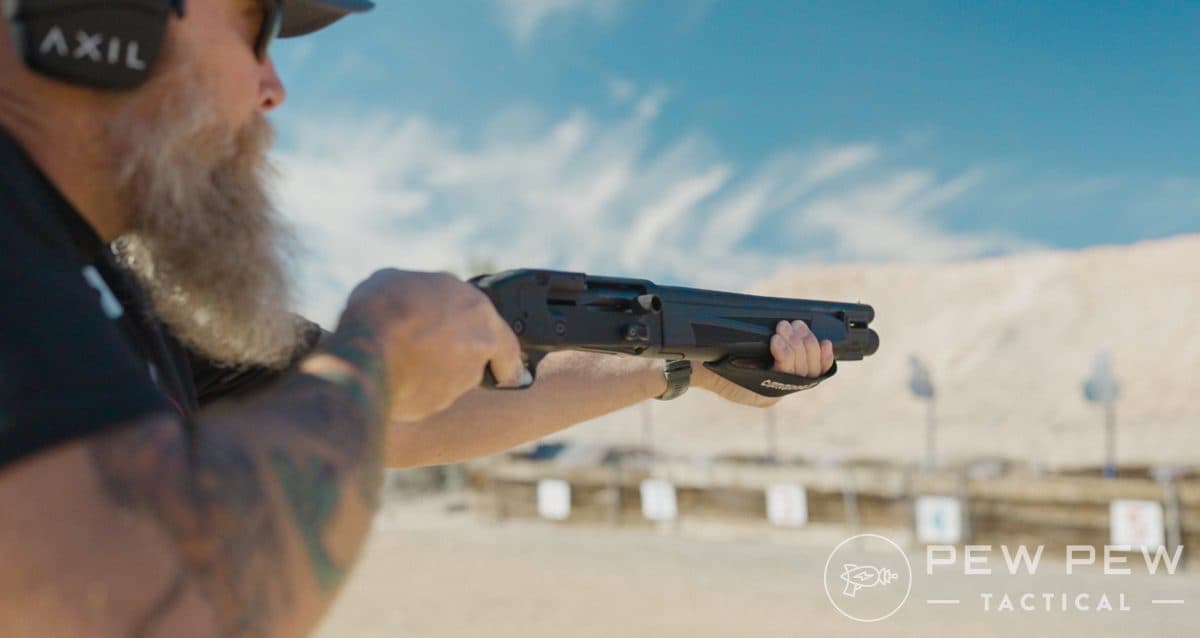
I found pushing my support hand forward in the loop, combined with a firm grip with both hands, helped with recoil. There’s also an interesting intersection between aiming and controlling recoil.
With the front sight only, you’re forced to hold the 990 Aftershock up to eye level for improved accuracy. This means holding a 12-gauge firearm up in front of your face, knowing full well it’s up to you to control just how far back it comes.

Alternatively, you can place the grip on your hip and guess your aim while running the trigger. Seeing hits downrange allows you to adjust aim, but this is not going to be as accurate as sighted fire for obvious reasons.
We started out with .00 buckshot and found the recoil manageable. Birdshot was a breeze and slugs were pretty challenging as they caused the greatest amount of recoil.
Accuracy
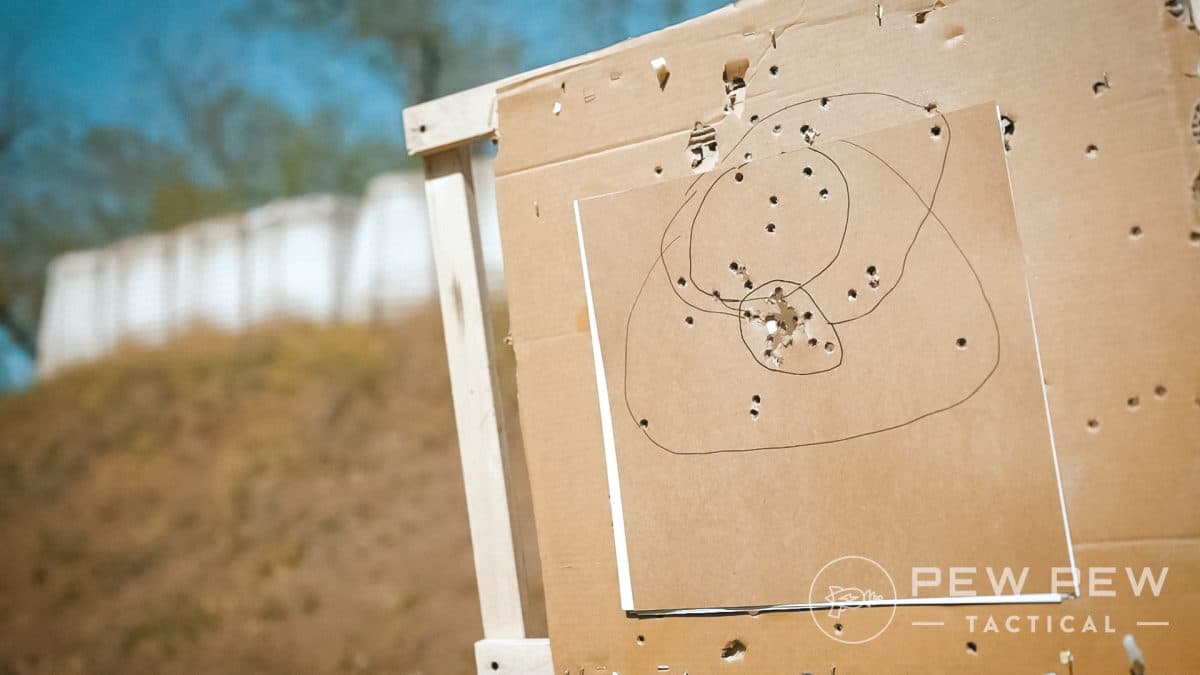
We patterned the 990 Aftershock for accuracy at 5, 10, 15, and 25 yards using Winchester 9 pellet .00 buckshot. At 5 yards, the group was around 2 inches and spread out as you might imagine, though it stayed contained on our man-sized target out to 25 yards.
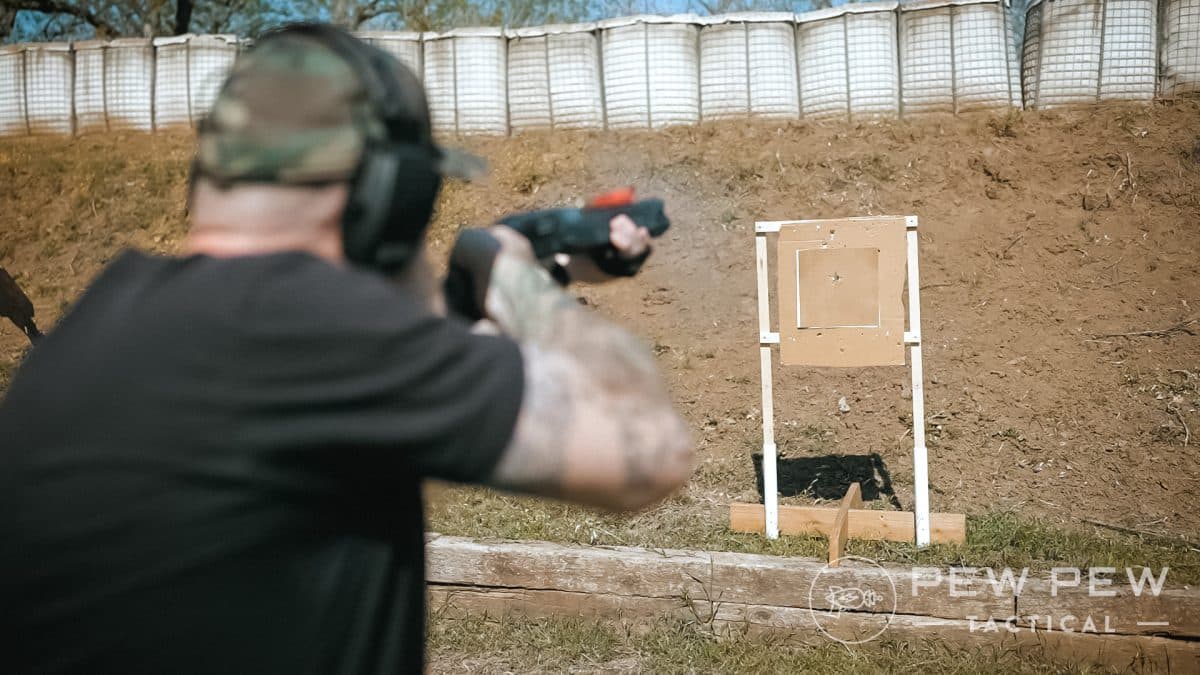
Switching to slugs, I fired five from 25 yards and kept them within 5-6 inches of each other. Notably, it felt like I was holding low and hitting high, only using the front sight to aim. In retrospect, this may have had as much to do with my own height as most of my hits were eye level (where I hold the gun).
Regardless, the accuracy was good and repeatable.
Another key point is that reloading the 990 Aftershock was a piece of cake. It's comparatively lightweight and balanced, so you can easily hold it up or down and stuff those shells in.
The lifter was well designed, serving as an indexing point. It did not pinch my thumb when loading shells in from the bottom. I also appreciated the bright orange follower, which indicates when my magazine is empty.
One thing to keep in mind is that with repeated firing, the barrel gets very hot. The forend does not cover the top of the barrel or even create a gap like the Mossberg 940 Pro Tactical SPX, so care must be used when reaching over the top.
Reliability
Overall, the Mossberg 990 Aftershock was reliable. We had one failure to extract during our first 50 shells of buckshot. However, this cleared up and didn't happen again.
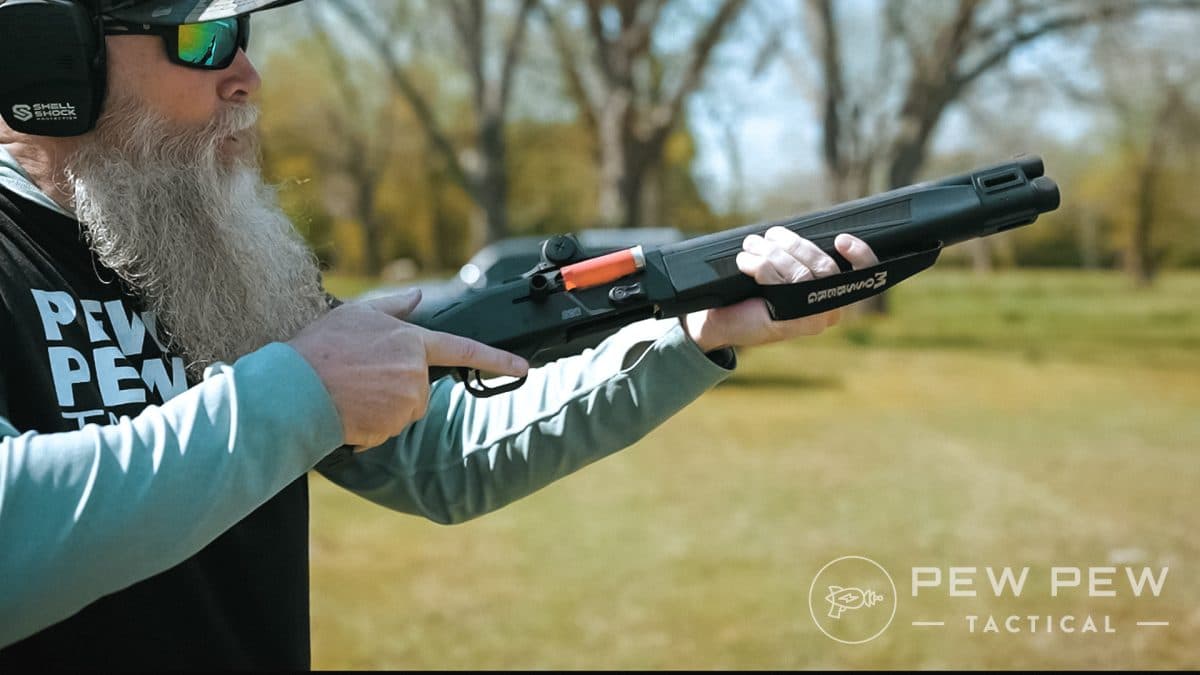
Running birdshot through the 990 Aftershock was a mixed bag. They would usually cycle but occasionally hang, and the weak ejection pattern demonstrated the lack of powder.
Slugs absolutely launched through the gun and sent it back further than anything else. While manageable, it wasn’t pleasant, but it’s good to know you can do it, and that they’ll cycle reliably.
Shotgun Ammo in Stock
Ergonomics
As mentioned, the design removes two points of contact. Shooters cannot tuck the firearm into their shoulder or safely establish a cheek weld.
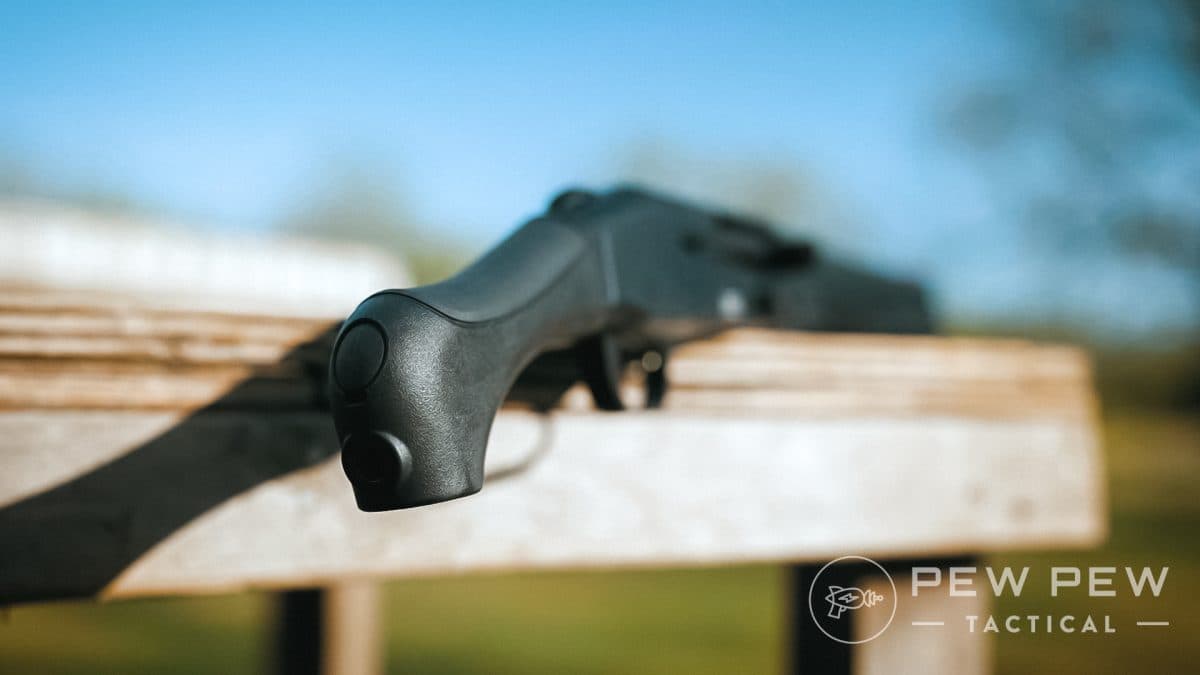
Minus that, the 990 Aftershock has good ergonomics. The grip is an excellent shape designed to prevent the gun from slipping through your grasp.
It’s comfortable to hold at just about any angle, and users can choke up or down on the grip to reach the safety and trigger according to their hand size. The overall texture of the grip is smooth, and that’s probably a good thing considering the hand holding it eats much of the recoil.

In contrast, the forend has a moderately aggressive texture, providing ample grip. A 1.25-inch wide nylon webbing loop is mounted to the bottom of the forend and also works well to control the shock of recoil with the front hand.
The loop is located toward the front/middle of the forend, but I found myself pushing my hand all the way forward into the strap to better secure the 990 Aftershock while shooting. Mossberg also included M-LOK slots on the barrel clamp at the 3, 6, and 9 o’clock positions near the muzzle.
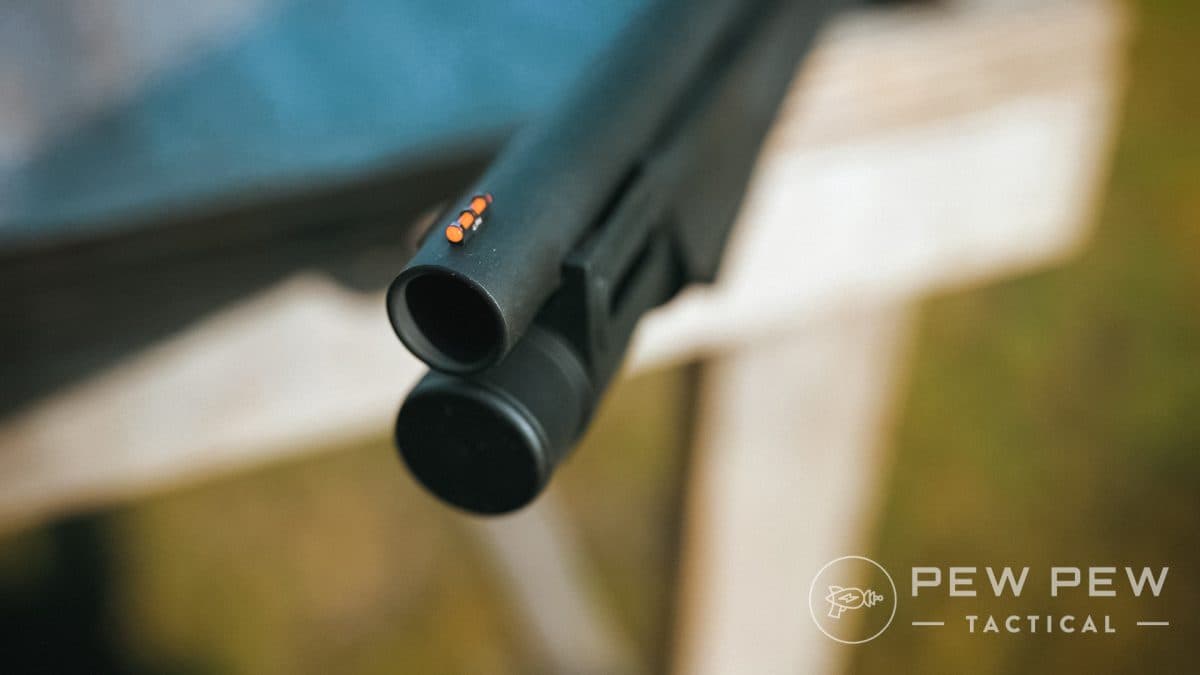
In somewhat of a shotgun throwback, the 990 Aftershock has a front sight. Thankfully, it’s not just a bead. Mossberg went for a red fiber-optic, which glows brightly in the sun and is easy to use.
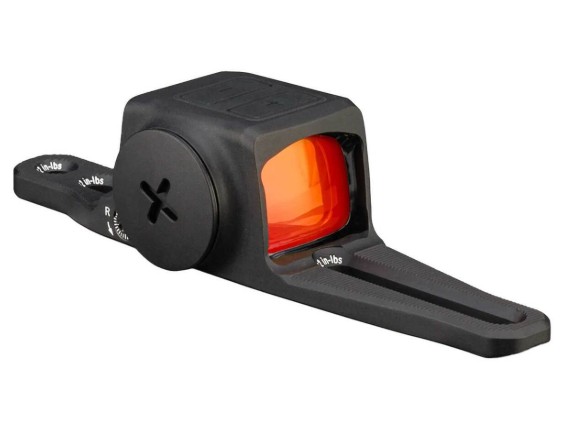
And while there is no rear sight, the firearm has a drilled and tapped receiver. We used it to mount the Vortex Viper Shotgun Enclosed Micro Red Dot designed for just such a setup.
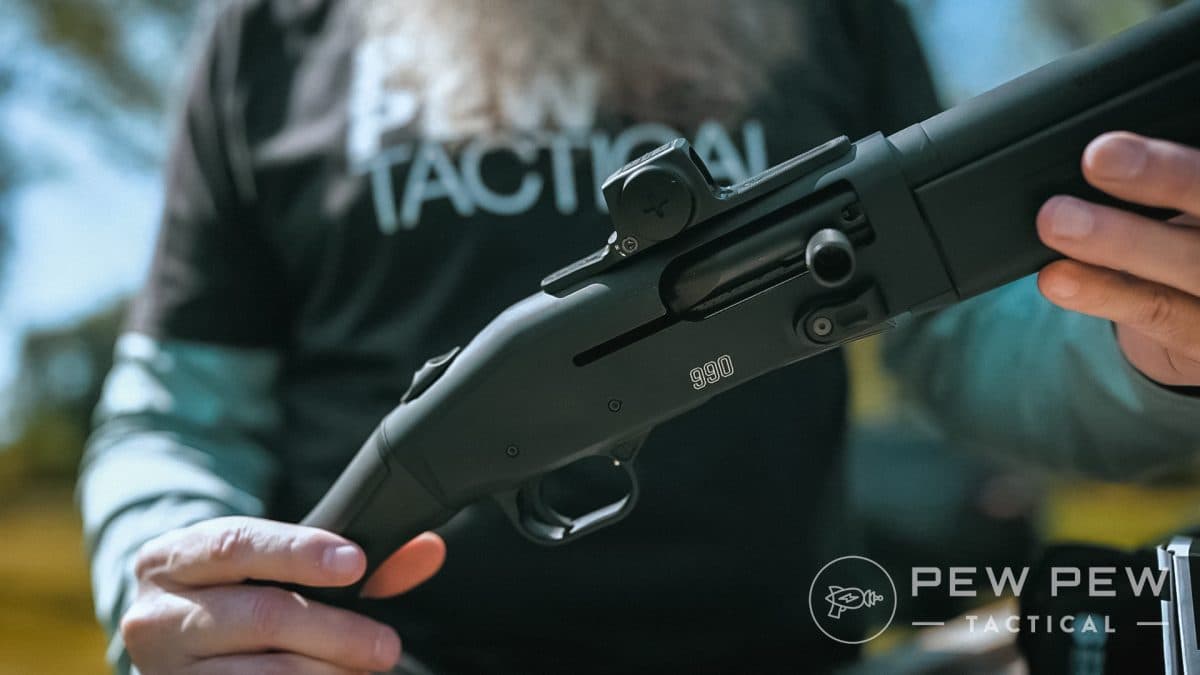
In addition, Mossberg did a great job on the loading port. It is very ergonomic, and the area is widened and beveled for ease of use. It also includes a lifter that doesn’t pinch your thumb when stuffing in shells.
The lifter protrudes a bit from the bottom of the receiver. This great feature allows shooters to index while stuffing shells, without having to watch what they’re doing.
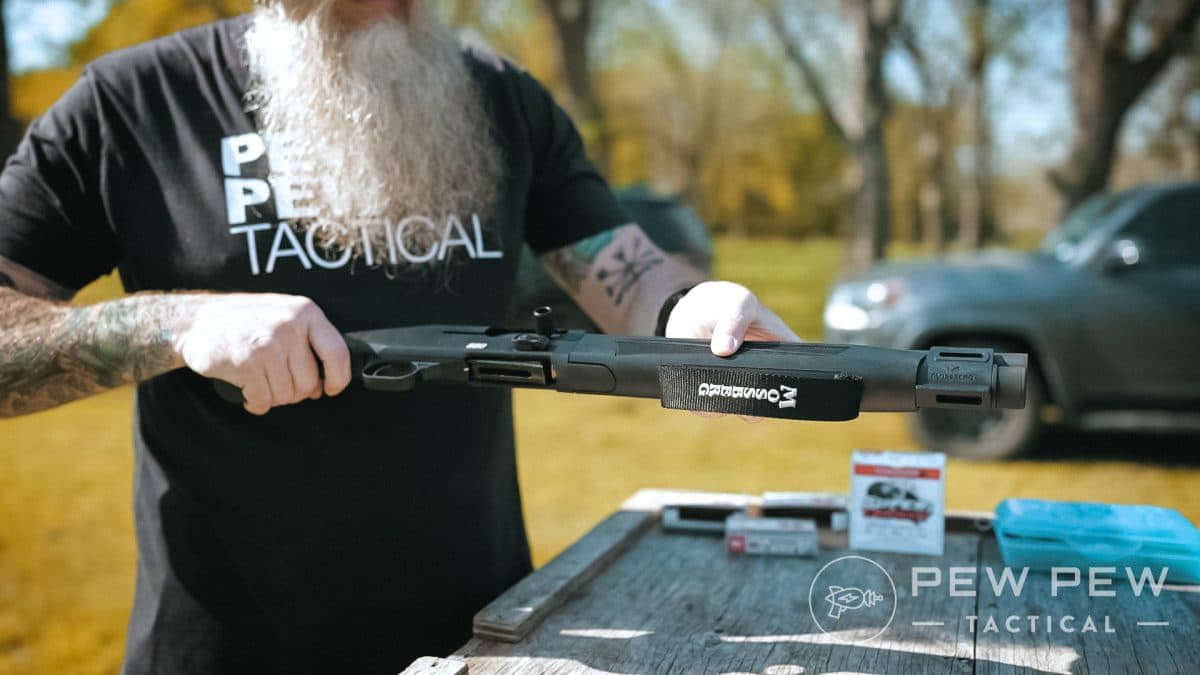
The magazine tube holds 5 shells of 2 ¾ size for the six-shot capacity. We did not try 3-inch shells or mini shells to see if they would cycle.
Shooters have options for slinging the 990 Aftershock. There is a QD cup on the very end of the grip, though I would not recommend a single-point setup unless you enjoy swinging firearms muzzling your feet and hitting your crotch. You’ll need an M-LOK/QD for the front.
Controls
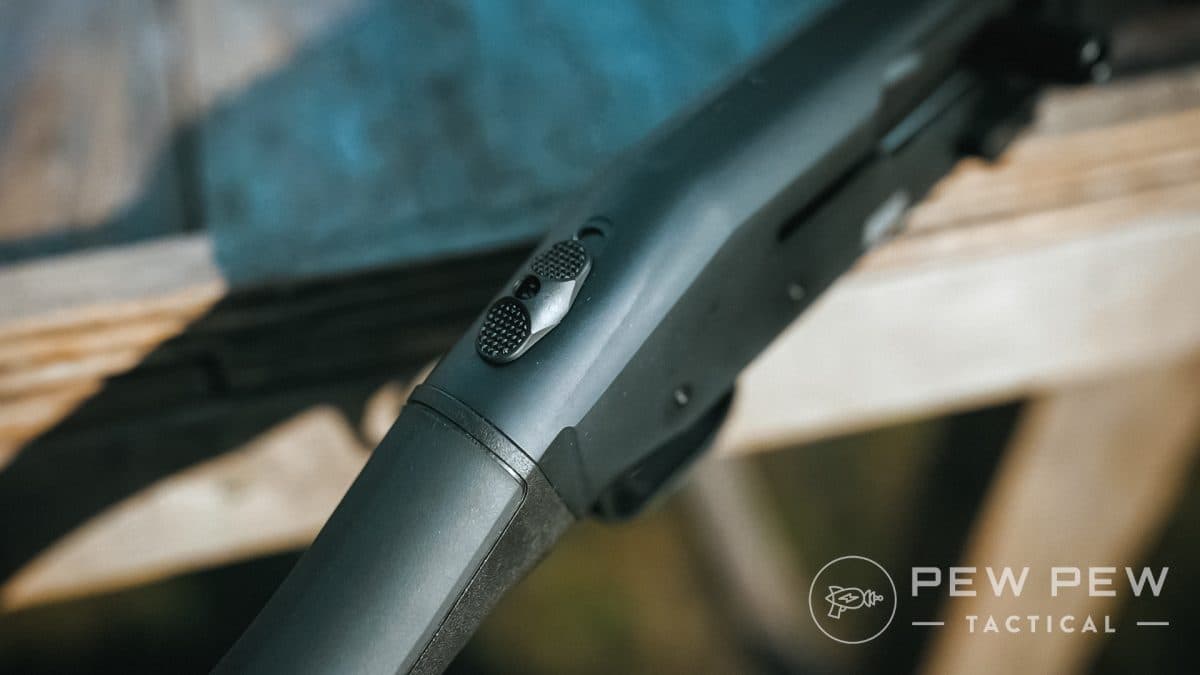
Starting with the safety, Mossberg included a well-shaped switch with grippy texturing mounted on the tang. It is easy to find and manipulate in both directions.
The trigger has a traditional curved bow and pulls back maybe a millimeter before hitting a firm wall. Its break is then crisp, and on a Lyman Digital gauge, it measured an average of 3 lbs. 10 oz.
There is a reset, and though it is fairly light, it is still audible and tactile. Forward of the trigger, the charging handle looms to the right side.
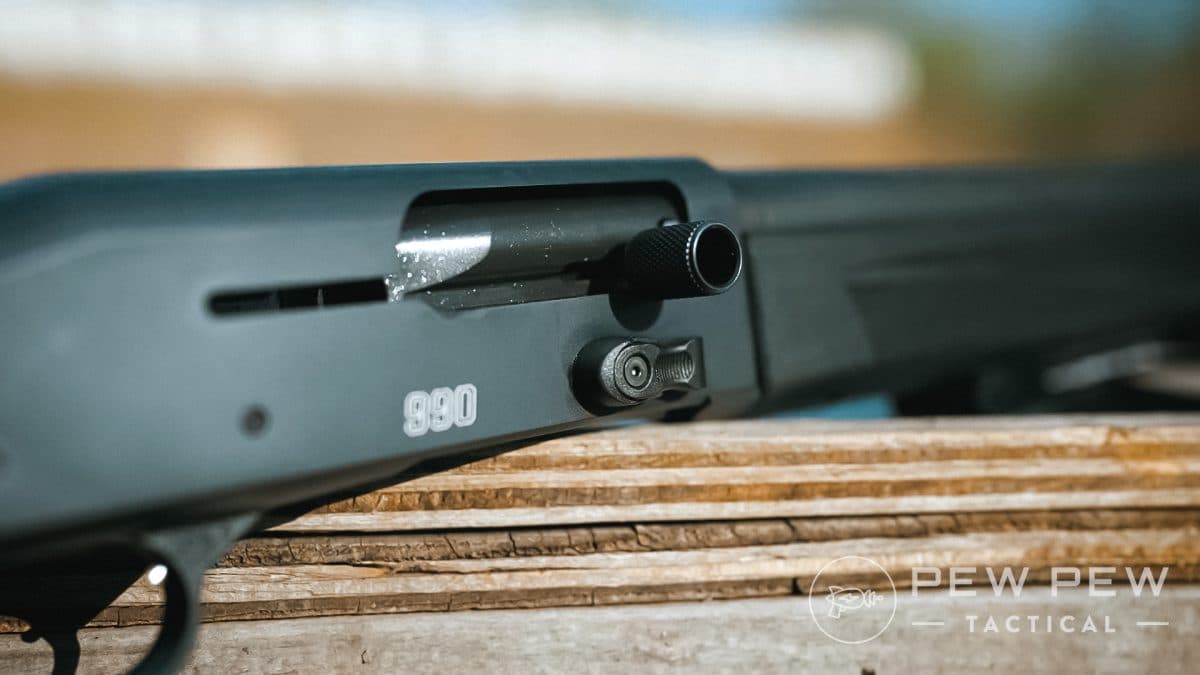
Shaped like a mini open drum, the charging handle is good-sized and covered in fairly aggressive knurling, which gives it good tactility. I never had any issues grabbing or manipulating it, even in the Texas spring heat.
The bolt release below the handle is also well designed. While it isn’t tucked as close to the receiver as the one on the 940 Pro Tactical SPX, it’s of good size and easy to access from either the top or bottom.
Mossberg 990 Aftershock Is Best For...
I envision the 990 Aftershock as a serious upgrade in firepower compared to a pistol. While it isn’t nearly as concealable as a handgun, it’s far easier to tuck away than a comparable 940 Pro Tactical SPX with an overall length of 37 inches.
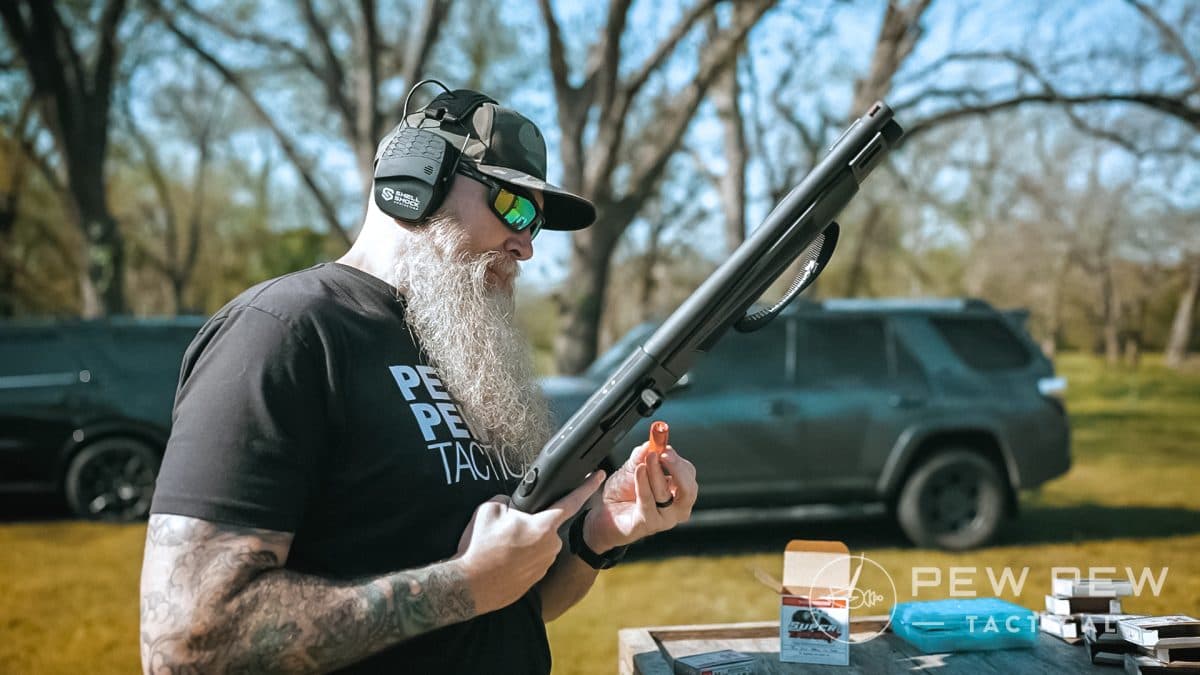
The 990 Aftershock could effectively serve as a home defender. Its relatively small size makes it more concealable, so it would also fill the role as a truck gun or in some other scenario where a stashed upgrade in firepower is needed.
Anyone considering the 990 Aftershock should keep in mind a couple of points: accuracy will take more strength and training, as will recoil mitigation. Without a buttstock, shooters are forced to control the power of each shot with their hands and arms only.
By the Numbers
Reliability: 4.5/5
The 990 Aftershock failed to extract one shell of buckshot during the first 50 shells. Birdshot did not always cycle well, but this isn’t a surprise in a defensive shotgun-like firearm.
Ergonomics: 3/5
The ergonomics of the design are good. Its controls are ergonomic and well placed, but there is no shouldering or cheek weld.
Accuracy: 5/5
Despite not having a stock or the ability to establish cheek weld, the 990 Aftershock had roughly the same accuracy as the 940 Pro Tactical SPX.
Customization: 4/5
Mossberg has included M-LOK up front to allow shooters a range of accessory options and a drilled and tapped receiver for optics. Plus, owners seeking a shortcut can file a Form 1 and turn this shooter into a short-barreled shotgun with no trouble whatsoever.
Value: 4/5
The 990 Aftershock's MSRP is around $1,100 for the standard version or $1,300 for the Crimson Trace laser saddle version.
Overall: 4/5
Upgrades for the Mossberg 990 Aftershock
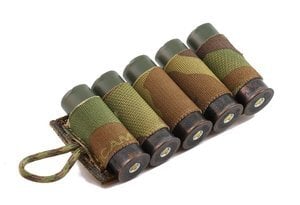
While the 990 Aftershock doesn't come with any accessories, you could easily mount an Esstac shotgun card to the side of the receiver to increase your ammo capacity.
I dig the fact that Vortex is creating red dot solutions for folks using a drilled and tapped receiver. This Viper was a great multi-reticle solution and helped us aim the 990 Aftershock.
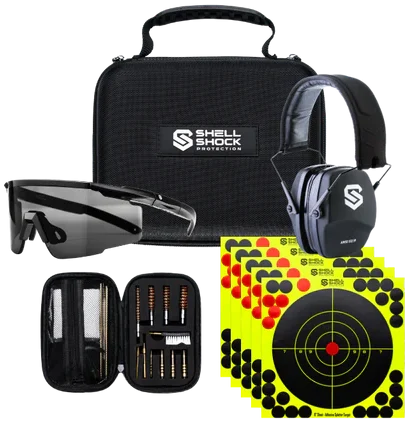
Like most shotguns, the 990 Aftershock is loud and proud, so you'll want some quality ear and eye pro to protect you when airing it out. We might be a bit biased since it's our own brand, but you guys know we don't recommend things we don't like. So, check out ShellShock because it's all day comfortable.
Meet the Experts
At the helm of this review was Pew Pew Tactical Content Producer Sean Curtis. Sean has been shooting since childhood but really began to delve into guns more during his law enforcement career. He spent over two decades in law enforcement, where he became a POST-certified handgun instructor and NLEFIA Red Dot Instructor and received CLEFIA Advanced Firearms Instructor Training and AR-15 armorer training. He has since attended a variety of training, including Tactical Performance Center Handgun Mastery & Carbine Mastery, and earned USCCA rifle instructor certification. Aside from training and prior to joining the Pew Pew Tactical team full-time, Sean wrote for several gun publications evaluating and testing guns and gear and has written hundreds of articles.
This review was edited by Editor-in-Chief Jacki Billings, who runs Pew Pew Tactical’s experienced team of reviewers. Jacki is a member of the Society of Professional Journalists, ACES: Society for Editing, and the Professional Outdoor Media Association and has her bachelor’s degree in Mass Communications. She has worked as a media professional for close to 20 years, specializing in gun media for almost 10 years, and has worked as an editor for five years. She uses her extensive professional journalism and editing experience to set testing protocols and editorial standards.
Mossberg 990 Aftershock: Final Verdict
The 990 Aftershock is the fantastic result of engineers making a semi-auto version of the Shockwave, and it is a powerful upgrade in firepower when compared to defensive pistols.

Its relatively small form gives users different options for stowing it away. During our testing, we found it lightweight, accurate, and reliable.
If you’re strong enough and use good technique, you, too, can wield this rather unique firearm. Just make sure you hang on!
Will you be picking up a 990 Aftershock? Let us know in the comments below. Looking for a less expensive option? Check out our take on the Mossberg Shockwave!