
PSA PA-15 vs. Sabre-15: Which One Is Better?

We tested the PSA PA-15 and Sabre-15 side-by-side to see if the budget AR or high-end AR came out on top. Come see the results!

USMC Veteran. Concealed Carry & NRA Pistol Instructor. 3-Gun Competitor. Career firearms writer
We review products independently. When you buy through links on our site, we may earn a commission to help support our testing. Learn more.
Palmetto State Armory has largely been known as a budget brand, but the company has recently released a line-up that stands a tier above the standard.
The Sabre series represents a step up from what PSA normally does with their budget-centric AR-15s...but that comes with a higher price tag.

So, what upgrades does the Sabre line come with, and what's the real difference between PSA’s budget AR and the higher-priced Sabre?
That's what we’re here to discuss today…
Though many of the basic specs read the same -- 16-inch carbines with adjustable stocks chambered in 5.56 NATO – I wanted to put a barebones PSA PA-15 in a standard, plain-Jane configuration up against a Sabre-15 to compare and contrast the two.
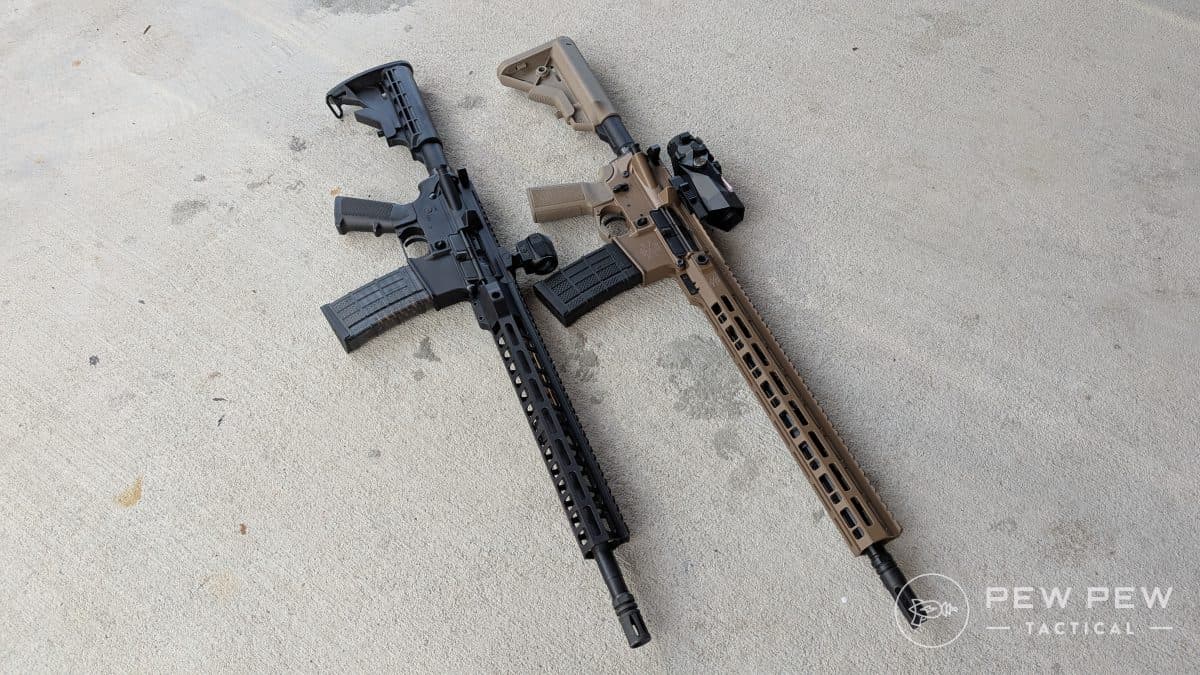
Follow along as we break down the differences between the PSA PA-15 and Sabre-15 to see what’s the same and different.
Keep reading!
Table of Contents
Comparison Table: PSA PA-15 vs. PSA Sabre-15
| PSA PA-15 | PSA Sabre-15 | |
|---|---|---|
| Caliber | 5.56 NATO | 5.56 NATO |
| Barrel Length | 16 inches | 16 inches |
| Finish | Type 3 hard anodized | Cerakote finish (some models also anodized) |
| Gas System | Carbine or mid-length; over-gassed feel | Tuned mid-length system with SpringCo buffer spring |
| Rail | M-LOK slots at 3, 6, and 9 o’clock | M-LOK slots at 3, 6, 9, plus 2 and 4 o’clock |
| Furniture | Basic M4 stock & A2 grip | B5 or Magpul stock & grip, PSA higher-end furniture |
| Controls | Standard Mil-Spec; tight takedown pins | Ambidextrous Radian safety & charging handle; Battle Arms takedown pins |
| Best For | Budget-conscious buyers; upgrade-as-you-go setups | Users wanting a complete, higher-performing AR out of the box |
| Price | $469 | $850 |
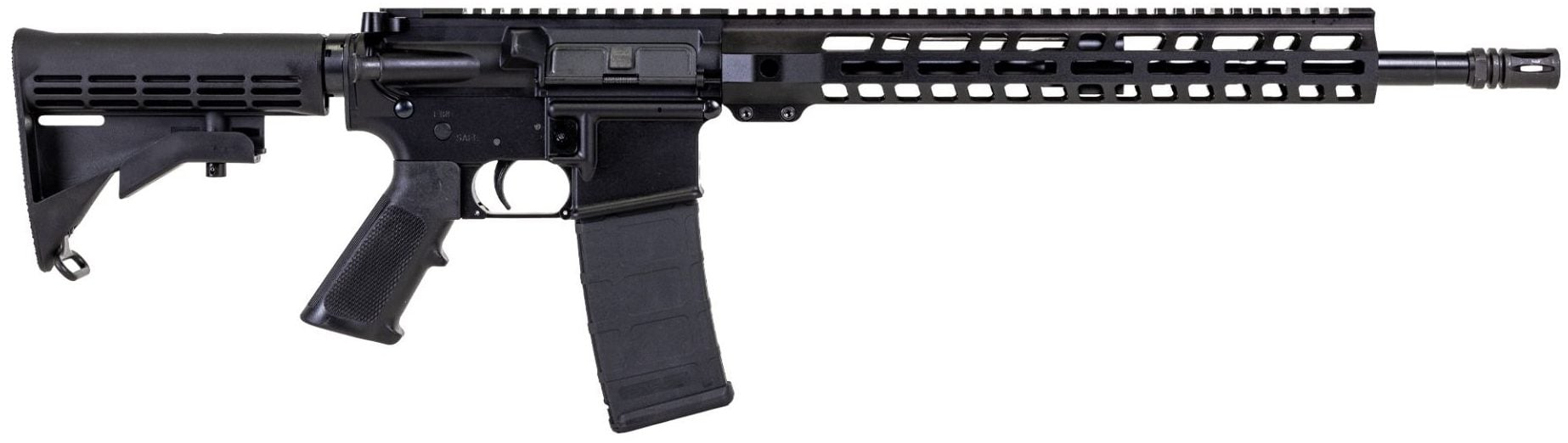
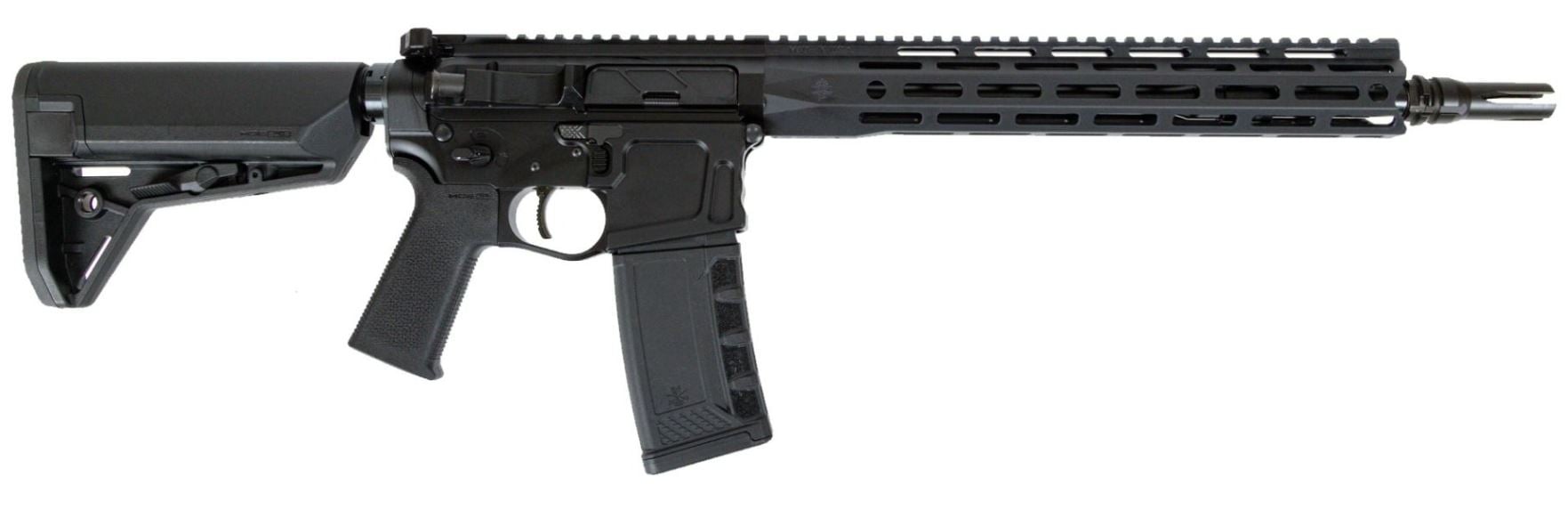
Ergonomics: Fit and Finish
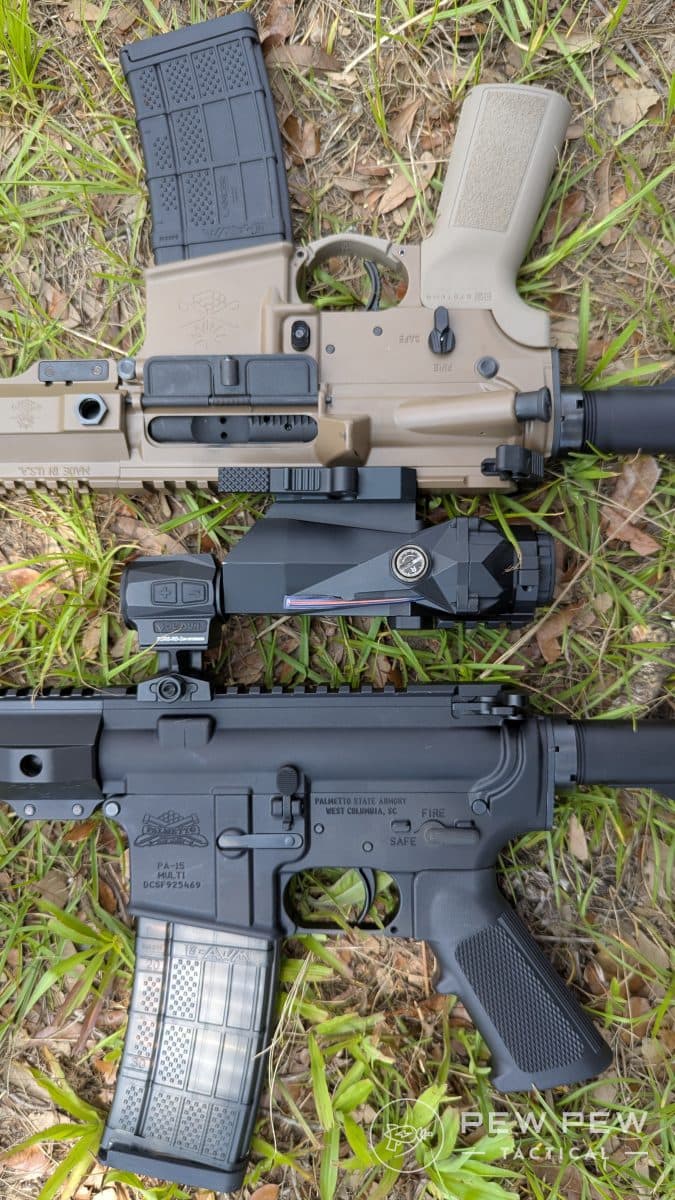
Off the bat, the most obvious difference we see is the color between the two guns.
The PA-15 uses the same Type 3 hard anodizing that most ARs utilize, while the Sabre-15 comes with a Cerakote finish. Though the Sabre lineup also comes anodized, the Cerakote finish is a premium finish and not an option on the base PA-15.
Picking up the PA-15, you’ll notice it rattles like a baby toy. Grab the upper and push and twist it against the lower. It moves and shakes with tons of play. Its rail will even twist a hair with enough pressure.
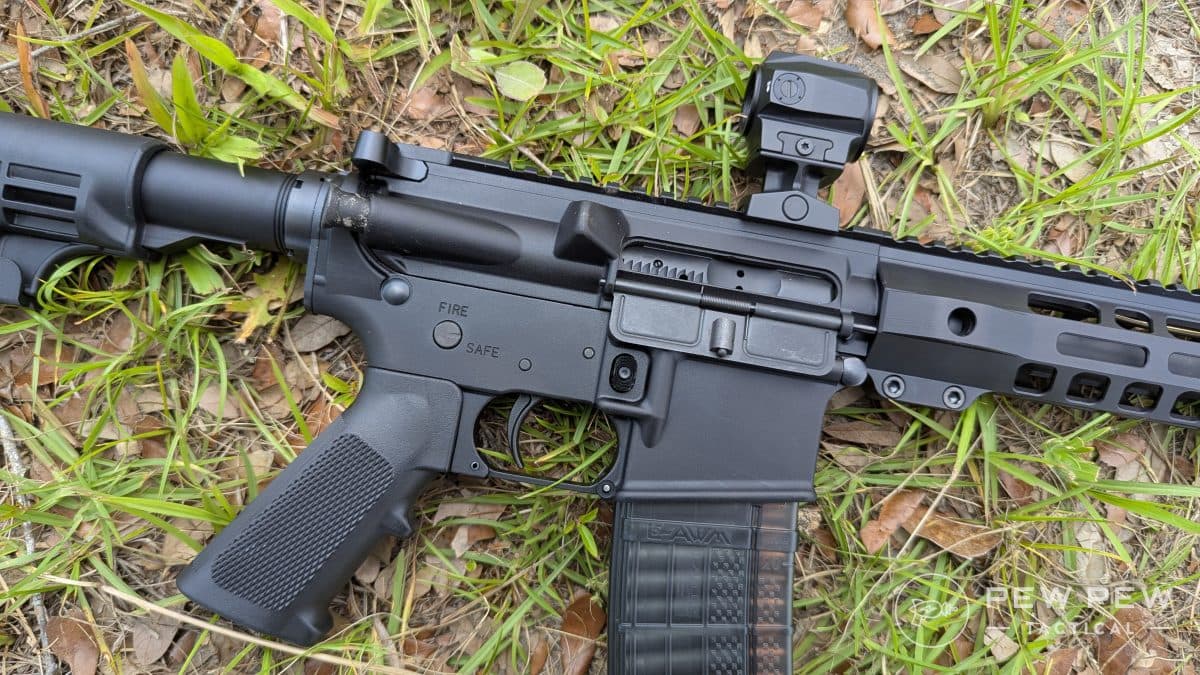
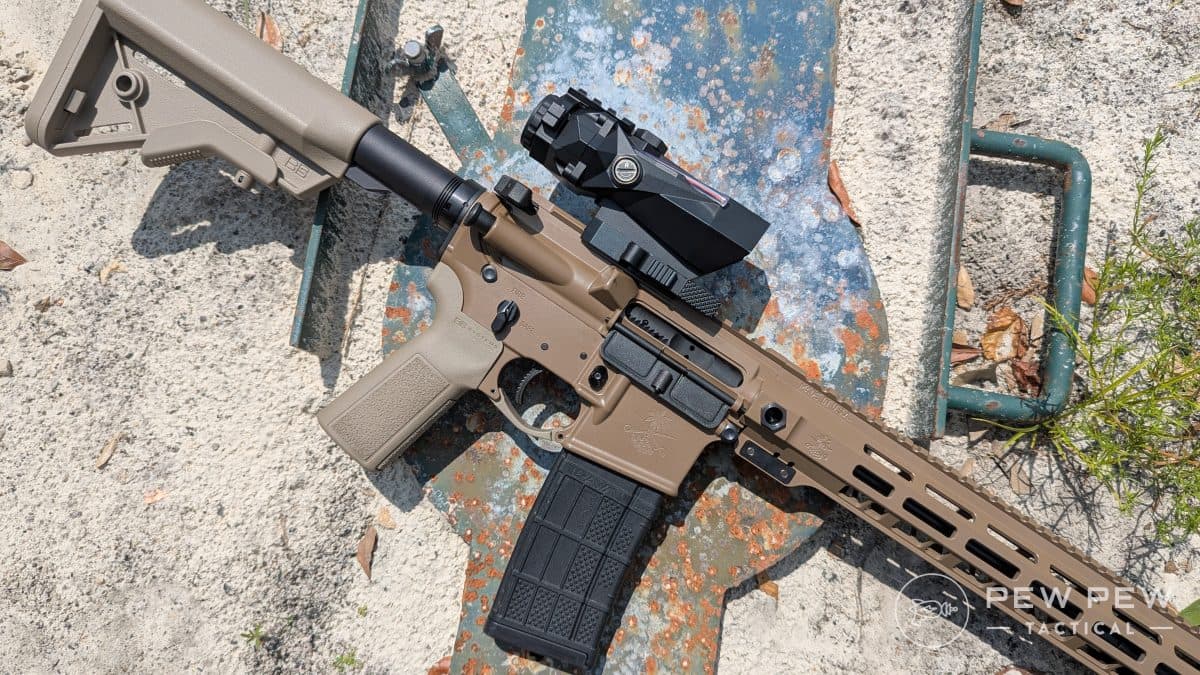
That's not a problem with the Sabre-15. It's tight with no play. The handguard doesn’t move a hair and the fitment of the parts is much tighter – exactly where it needs to be. It's clear these rifles receive a bit more quality control during manufacturing.
Aside from the tighter fitment, you’ll also notice some other little touches that set the Sabre-15 apart.
For example, the takedown pins are from Battle Arms Development. They click in and out of the upper easily.
On the other hand, the pins on the PA-15 are very tight, and a punch is often needed to shove them out. This might mean the lower or upper on the PA-15 could be slightly out of spec where the pins meet the gun.
That might not be a big deal when you spend $500 on an AR, but it’s something you expect when you spend $850.
AR Furniture
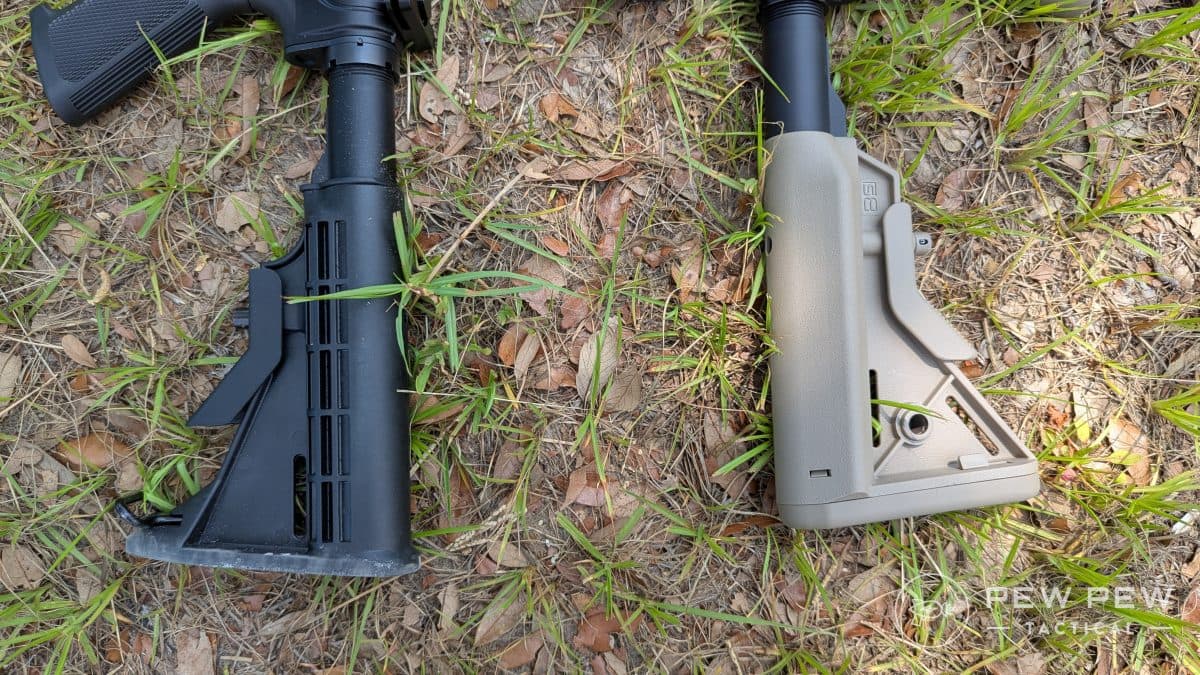
PSA rifles always feature a wide variety of furniture options, but the PA-15 sports basic M4-style furniture. It has an A2 grip and an M4 six-position stock -- perfectly suitable and just fine.
PSA uses furniture from Magpul, Bravo B5, and even PSA’s own brand of higher-end furniture for the Sabre line.
Rails can vary as PSA makes their own premium rail, and they employ ones from companies like Geissele. These are significant improvements when it comes to handling and shooting the rifle.
More supportive stocks allow for a better cheek weld, and modern pistol grips are designed for carbines, whereas the A2 grip was originally designed for a 20-inch rifle with a long length of pull.
PSA’s Sabre rail offers M-LOK slots where you expect them to be, but also at the 2 and 4 o’clock positions. The rail on the PA-15 only gives you slots on the right, left, and bottom.
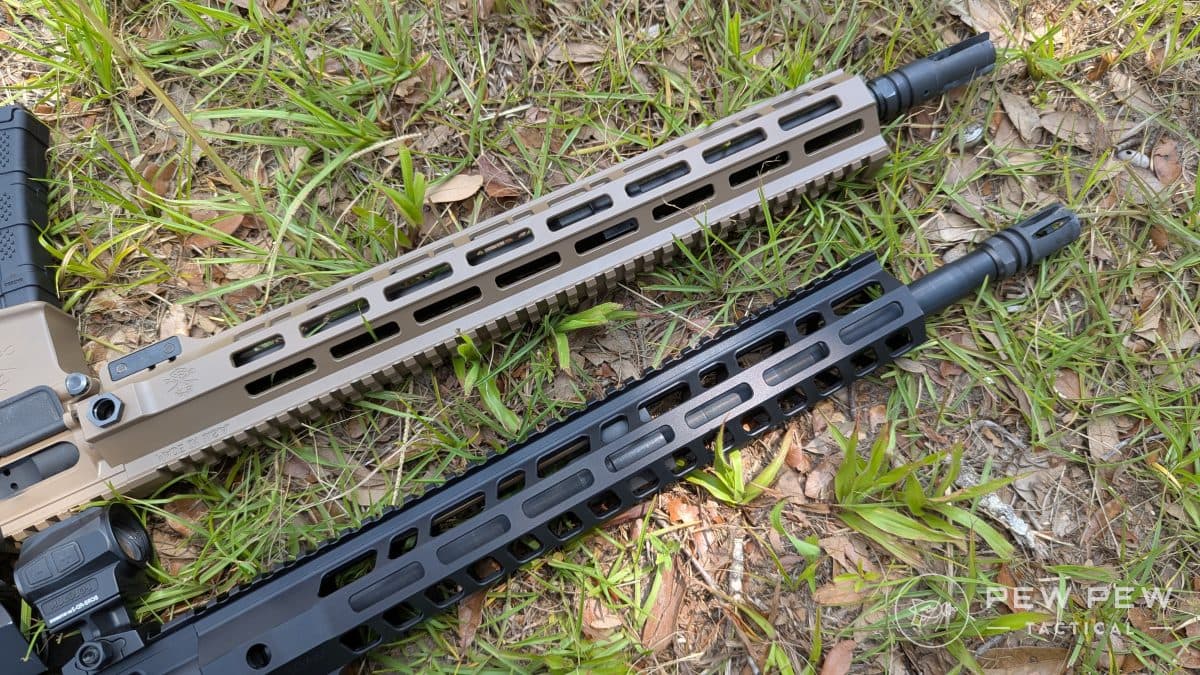
Extra slots on the Sabre-15 rifle allow for more mounting angles, which is important for mounting accessories like lights and lasers. You can mount them at angles that improve their ergonomics and their overall location.
The PA-15 is pretty Mil-Spec when it comes to controls. Nothing ambidextrous other than the charging handle. It’s standard, and it’s fine; not bad, but it can certainly be better.
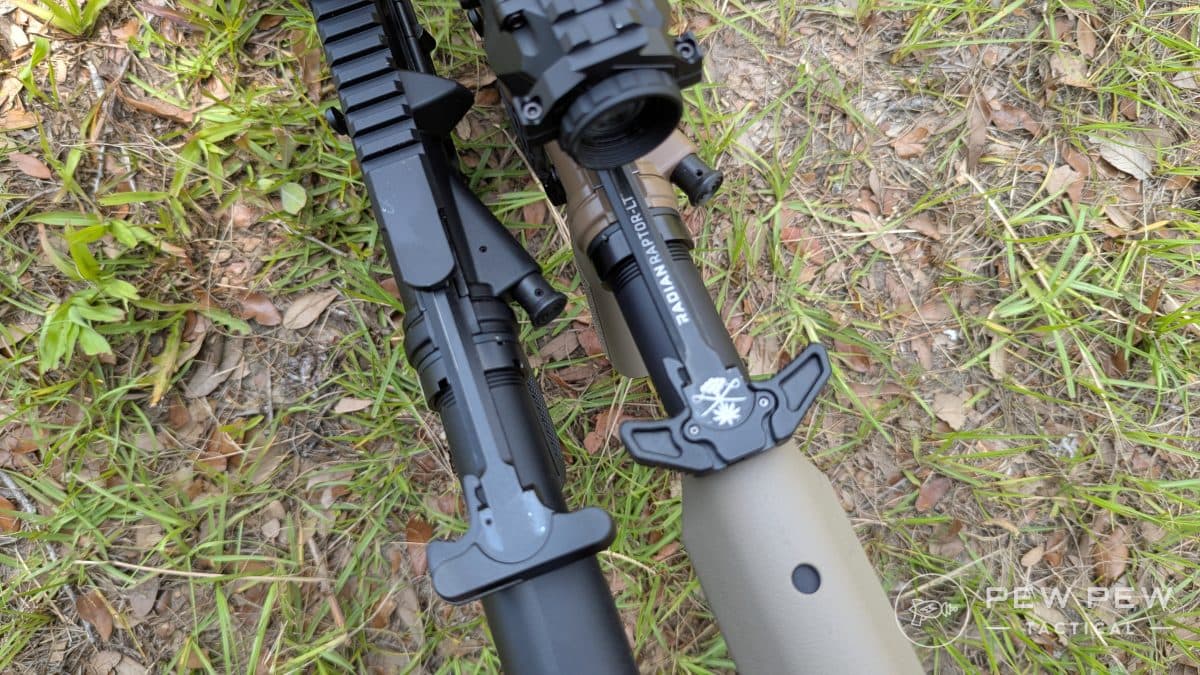
With the Sabre-15, it's better. The Radian safety and charging handle are ambidextrous and easy to use.
Handling the Sabre-15 presents a big difference in the ergonomics department. Fine describes the PA-15, but excellent describes the Sabre-15.
Shooting the PA-15 and Sabre-15: Accuracy & Reliability Analysis
An AR is an AR is an AR, right? They can’t shoot that differently.
You’d think that, but in this case, you’d be wrong.
The PA-15 uses carbine or mid-length gas systems and presents a typical budget rifle, over-gassed feeling.
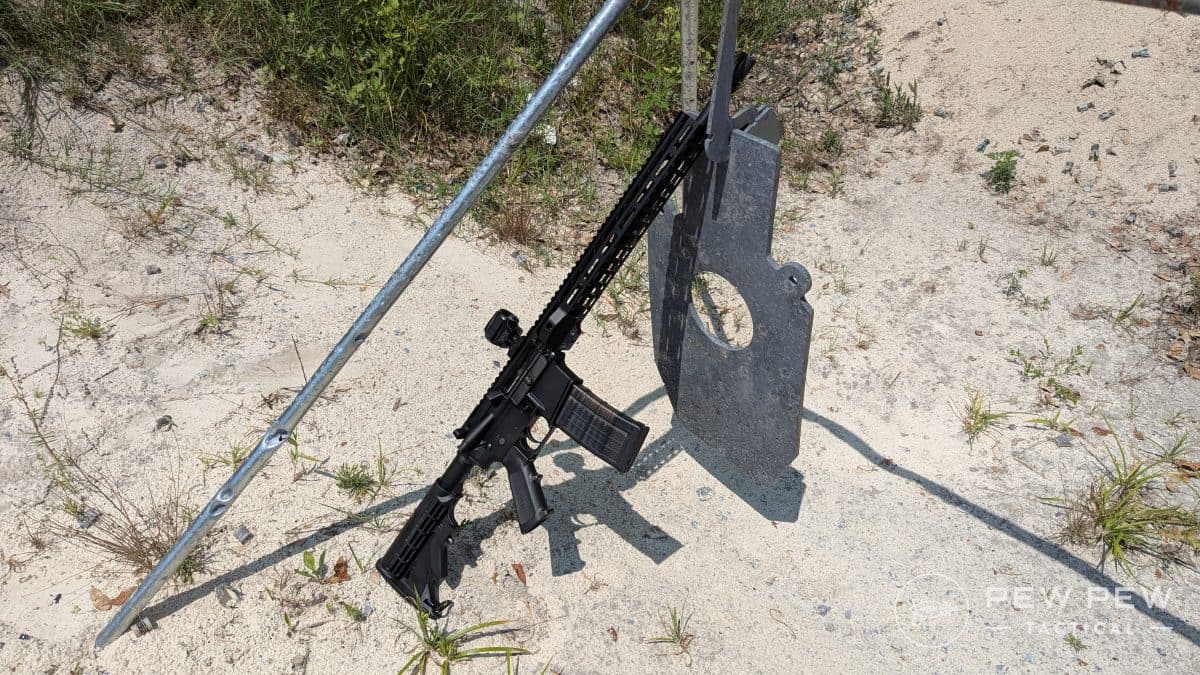
While an over-gassed gun can be very reliable, especially with crap-tier ammo, they do come with downsides. Namely, these types bring with them more recoil, increased parts wear, and gas to the face.
Personally, I think gas to the face is annoying. It makes my eyes water, my throat hurt, and it’s a great way to elevate your lead levels. If you toss a suppressor on it, it’s likely going to get much, much worse.
On the other hand, the Sabre-15 doesn’t have that over-gassed feeling. It uses a fantastic mid-length gas system. It also brings less recoil – part of that is because of not being over-gassed and the other part is due to the buffer spring.
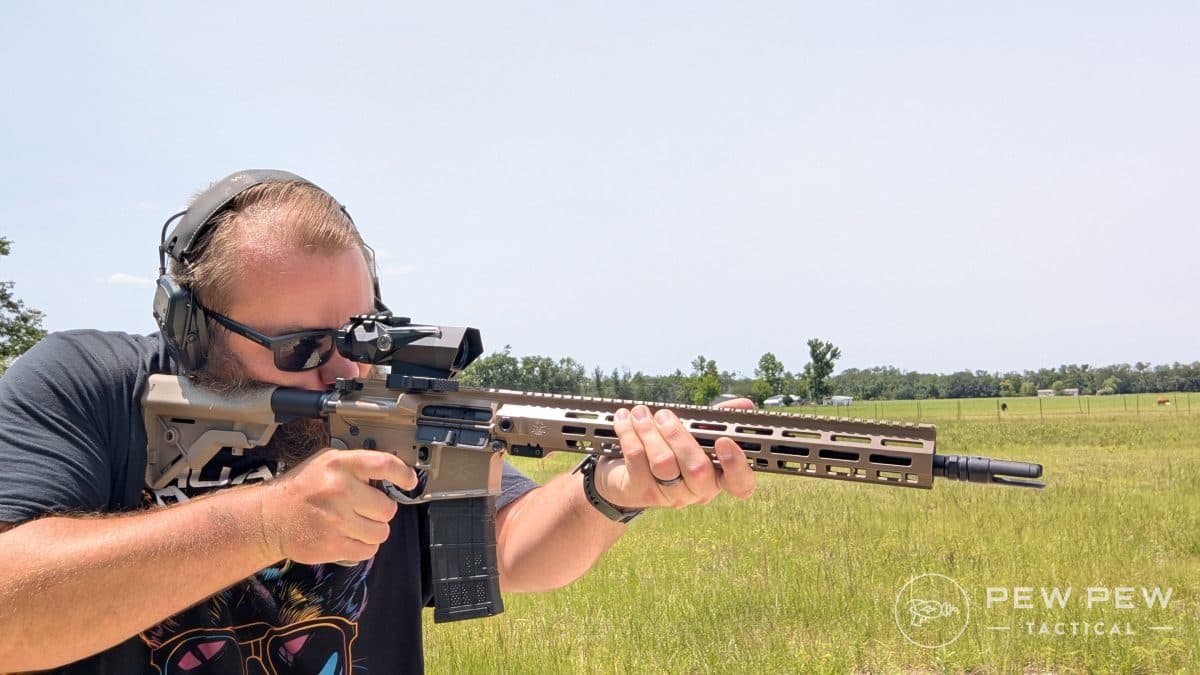
PSA uses a SpringCo buffer spring that has the same tension as a rifle spring. This further reduces recoil and makes the rifle more pleasant to shoot overall.
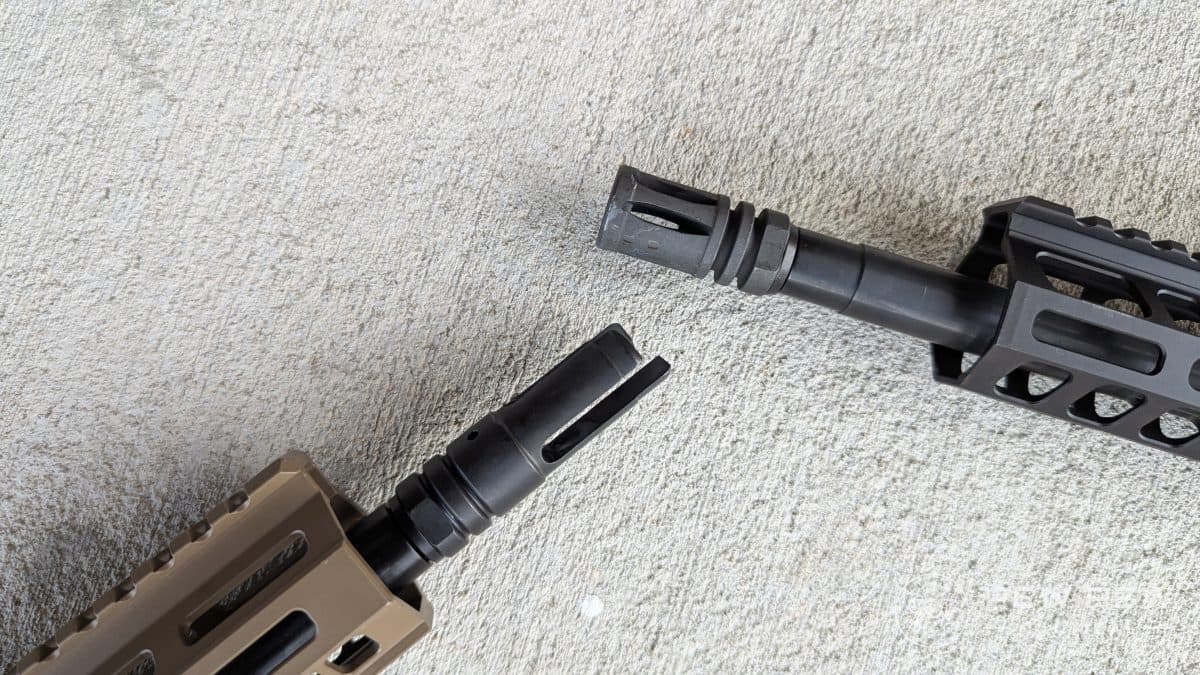
When it comes to muzzle rise, the Sabre-15 has less of it because of the compensator at the end of the barrel. This is an easy upgrade over the birdcage-style flash suppressor, but the difference is minimal. It’s slightly easier to shoot, at the cost of a little more noise.
Reliability & Accuracy
To test accuracy of the PA-15 and Sabre-15 at the range, I used the exact same ammo, firing six, 5-round groups from a supported position at 100 yards. I also used the same optic for both guns.
After assessing accuracy, I moved to reliability and overall performance. I accomplished this by shooting the Bill Drill with each rifle.
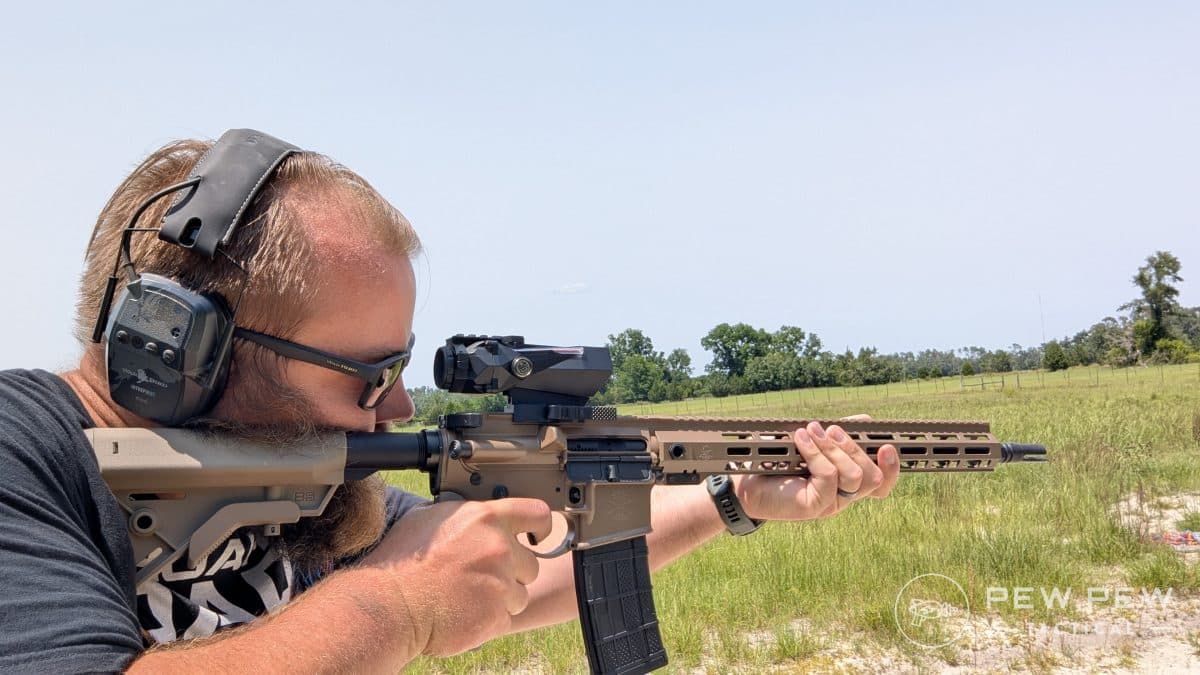
The Bill Drill is mainly a handgun drill, but it can be tweaked to work with rifles. For this test, I use a timer and set up at 7-10 yards. At the sound of the beep, I fire six rounds aiming for the A-zone of the target. The goal is to land all shots under 2 seconds. (You can always up the challenge, but moving further away from the target.)
First up, let’s talk accuracy…
Accuracy
It seems like a small difference, but the Sabre produced a noticeably tighter group.
I wouldn’t call the Sabre-15 a sub-MOA rifle, but, that said, I’ve shot a few sub-MOA groups with the Sabre-15.Typically, the groups are around 1.5 MOA. That’s a higher degree of accuracy for a $850 rifle.
The PA-15 doesn’t quite deliver that same degree of performance. In fact, it typically hits about 3 MOA.
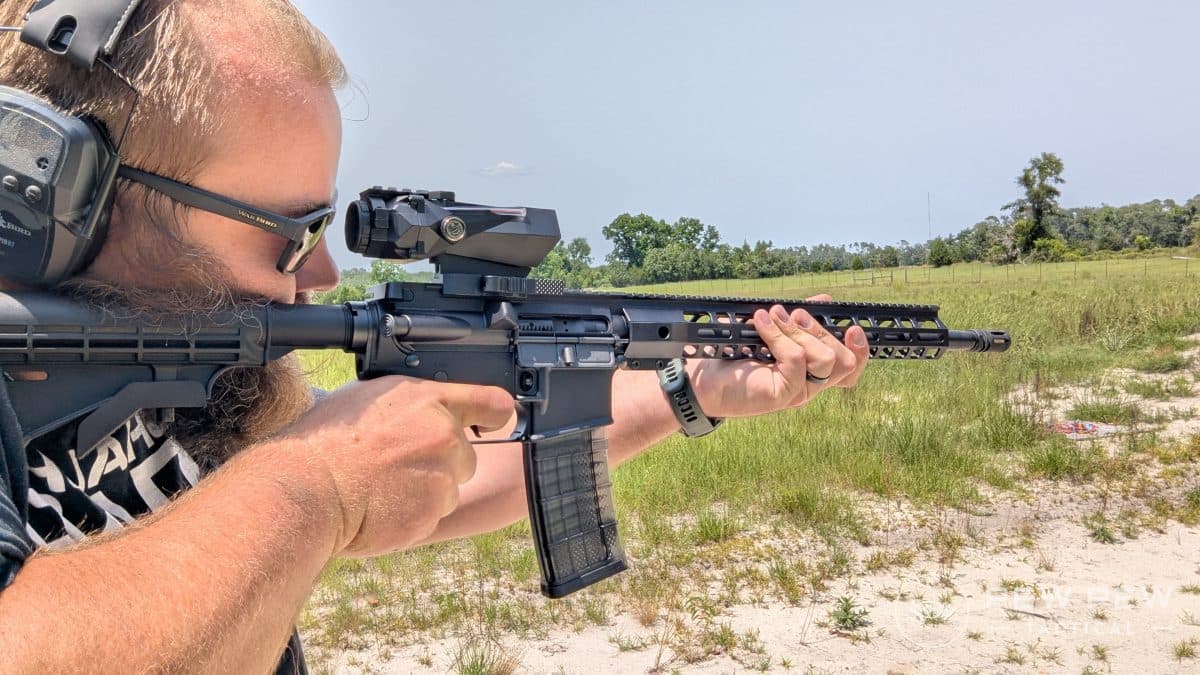
The Sabre trigger probably helps in this area – it’s much better than the standard mil-spec PA-15 trigger. You also have the option of Hiperfire triggers and PSA’s own 2-Stage Black Diamond DLC match triggers for the Sabre.
The Bill Drill showed an even more substantial difference.
All in, the Sabre was faster and more accurate. My best time with the Sabre-15 was 1.67 seconds, while my best time with the PA-15 was 1.83 seconds.
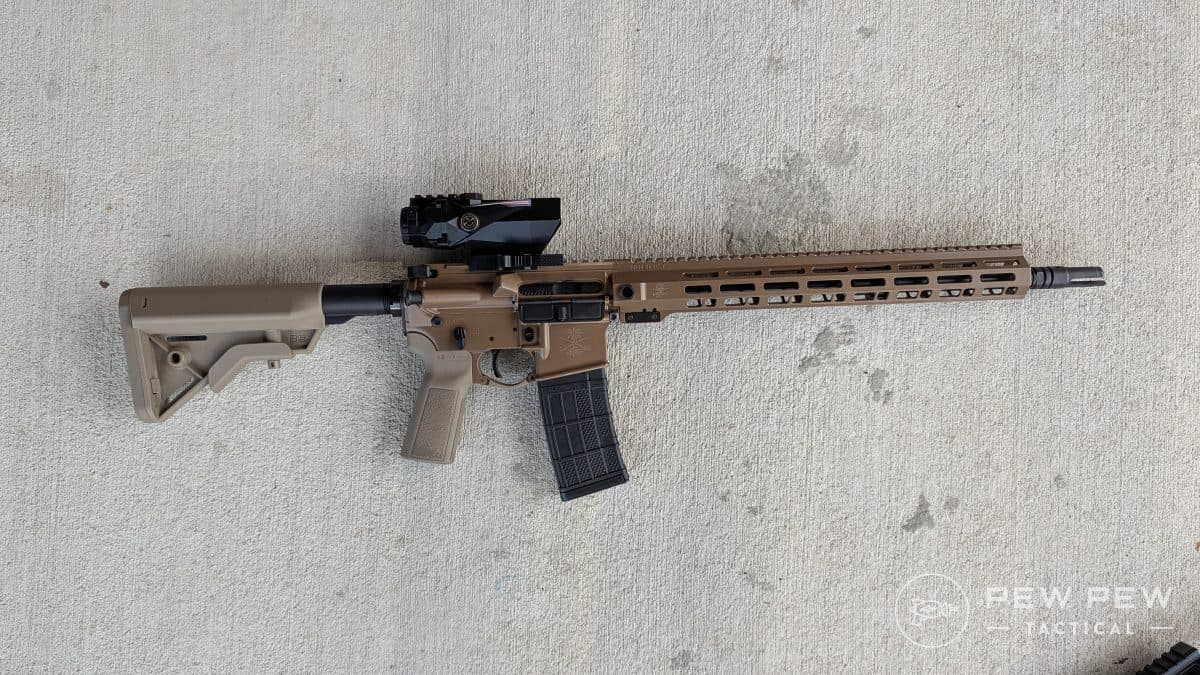
Long strings of fire, or multiple, repeated drills, are easier with the Sabre-15, especially since I’m eating a lot less gas. The difference in recoil is noticeable, and less recoil and muzzle rise means faster, more accurate shots on target.
Reliability
In terms of reliability, both rifles perform admirably.
I never had any serious reliability issues during the course of testing, but there were a couple hiccups here and there with the PA-15. It had two failures to feed with the same magazine; but wasn’t a repeating issue. I never had the issue again.

On the other hand, the Sabre-15 was completely problem-free.
In general, both are reliable, but over years and years of use, I’m betting the Sabre-15 remains the more reliable option overall.
The higher attention to quality control and the parts fitment makes me think the Sabre-15 is the "buy it and forget it" rifle.
5.56 and .223 Ammo in Stock
Price Comparison: PSA Sabre-15 vs. PA-15
PSA’s PA-15 is a fairly standard budget AR. The one I tested costs around $500 -- often less due to daily deals. This setup comes with an M-LOK rail, and other than that, it's as barebones as it gets.
Meanwhile, the Sabre-15 I tested costs $850. It also comes with an M-LOK handguard but the extras are what really set this rifle apart.
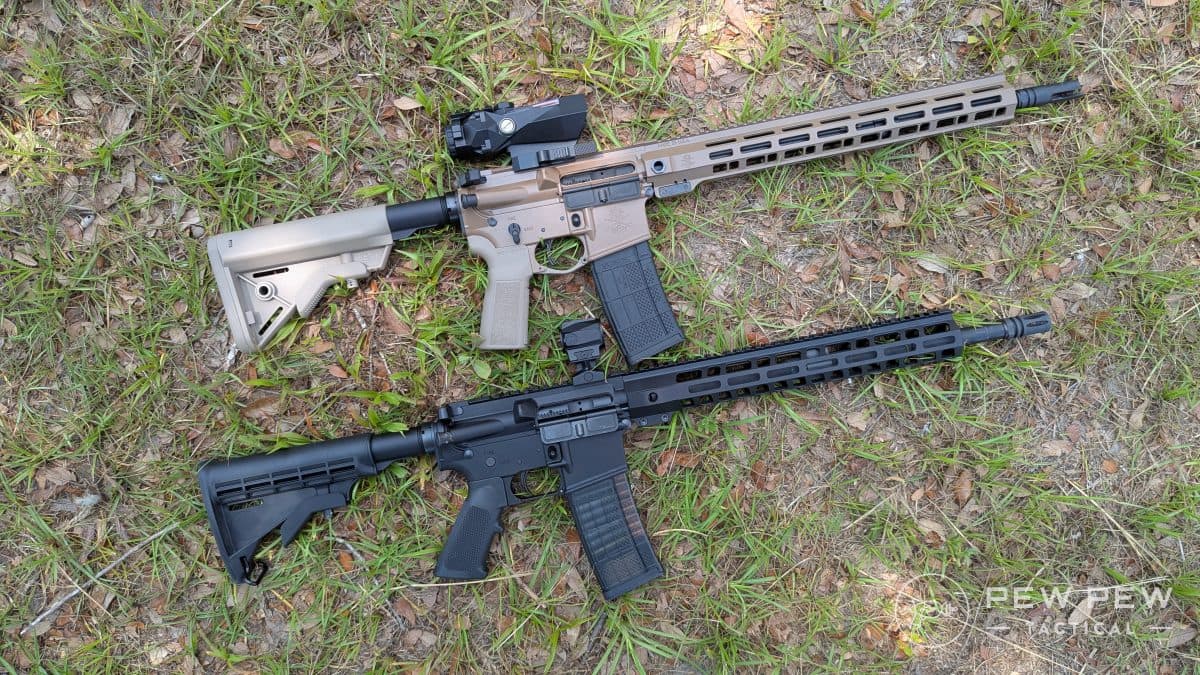
I priced out some of those upgrades on the Sabre-15 if you were to purchase them separately:
- Radian Talon 45/90: $65
- Radian Ambi Charging Handle: $104.95
- B5 Stock: $61
- B5 Grip: $20
- Sabre Trigger: $89.99
That’s around $340 and some change.
Don’t forget, you also get the extra QC, Cerakote, and an all-around better-tuned firearm. Overall, you’re rocking and rolling for what appears to be a very fair price point.
What do you think of the Sabre-15? Rate it below!
Readers’ Ratings
5.00/5 (304 Votes)Your Rating
Final Thoughts
Should you get the PSA PA-15 or the Sabre-15?
Ultimately, that comes down to what you want to spend. If you are short on cash, the PA-15 is going to be the best budget option – plus, you can upgrade accessories and furniture as your financial situation allows down the road.
But if you can spare the extra $350 or so, the Sabre-15 is the overall best bang for your buck. You get a better AR-15 with better parts and furniture that you likely won’t have to pour money into upgrading later.
Of course, it comes down to you. Are you better off with a better rifle? Or an okay rifle and a case of ammo? Let us know below what you think. If you’re in the market for some AR upgrades, we got those. Check out the Best AR-15 Accessories & Furniture. Or to read up on all the PSA guns we've reviewed, see our wrap-up of Palmetto State Armory (PSA) Review: Almost All Their Guns.
FAQs
How We Tested the PSA PA-15 & Sabre-15
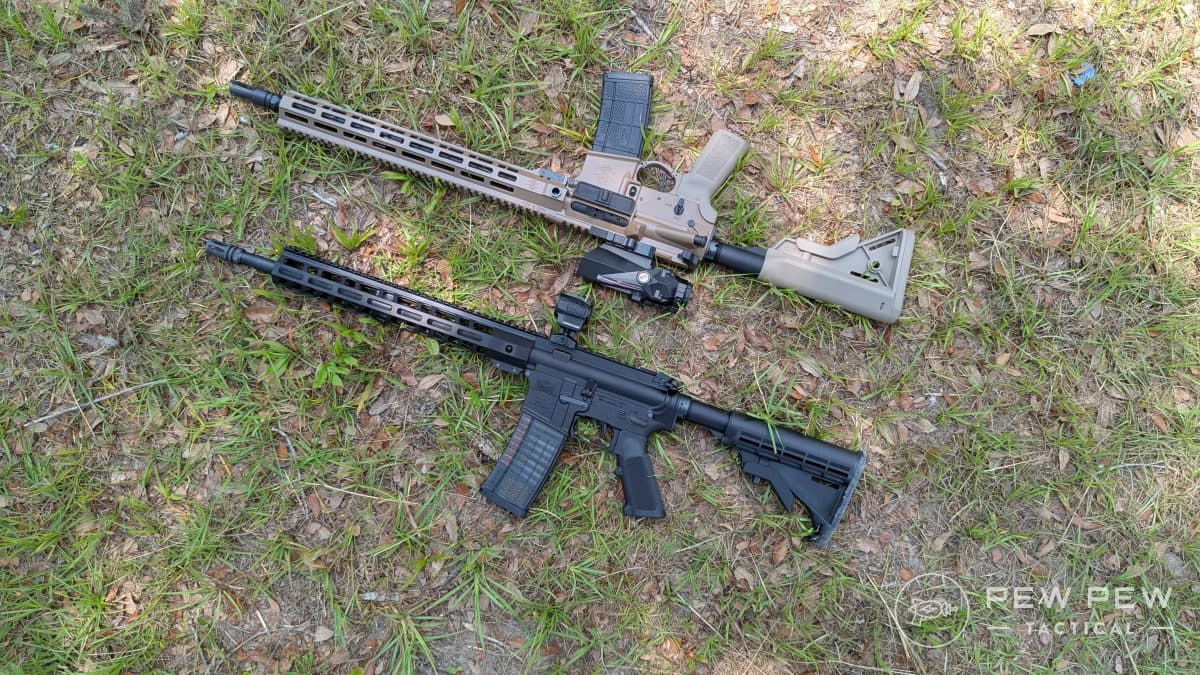
We tested the Palmetto State Armory PA-15 and Sabre-15 side-by-side. We used the same training ammo with both and fired six, 5-round groups at a time from a supported position at 100 yards to assess accuracy. Additionally, we conducted the Bill Drill with each rifle to see how they each performed under a timed standard.
Meet the Experts

Travis Pike led the research and testing for this head-to-head of PSA AR-15s. Travis is a Marine Corps veteran and lifelong shooter who just happened to be mediocre enough with a gun and a keyboard to combine the two and write. He currently teaches concealed carry courses and is interested in helping folks protect themselves with firearms and shoot better at the range. Travis is a prolific writer in the gun industry, authoring hundreds of articles for a variety of publications including Pew Pew Tactical, Sanboxx, The Truth About Guns, Guns America, Breach Bang Clear, The Mag Life, The Armory Life, RECOIL, and SOFREP.
Editing this review is Editor-in-Chief Jacki Billings, who runs our experienced team of reviewers. She is a National Rifle Association Basic Pistol Instructor as well as a member of the Society of Professional Journalists, ACES: Society for Editing, and the Professional Outdoor Media Association. With 2,000+ articles to her name, she uses her professional experience to set testing protocols and editorial standards for Pew Pew Tactical.