
Rimfire vs Centerfire Ammunition: Which is Best?

Quickly learn the difference between rimfire vs. centerfire ammo in appearance and firing mechanism. Plus pros/cons and the best recommended rimfire ammo.

PPT Editor. Marine vet, hunter, and long-range shooter. Articles in 10+ major publications
We review products independently. When you buy through links on our site, we may earn a commission to help support our testing. Learn more.
So, you need ammo. What’s rimfire? What’s centerfire? How do you know which one to buy?
Don’t worry, we’ll break it all down for you. If you already have a firearm to feed, just check the barrel or owner’s manual to find the correct type of ammunition. If you’re hungry for knowledge, let’s get into the weeds!
Here’s everything you need to know about rimfire vs. centerfire ammunition.
Table of Contents
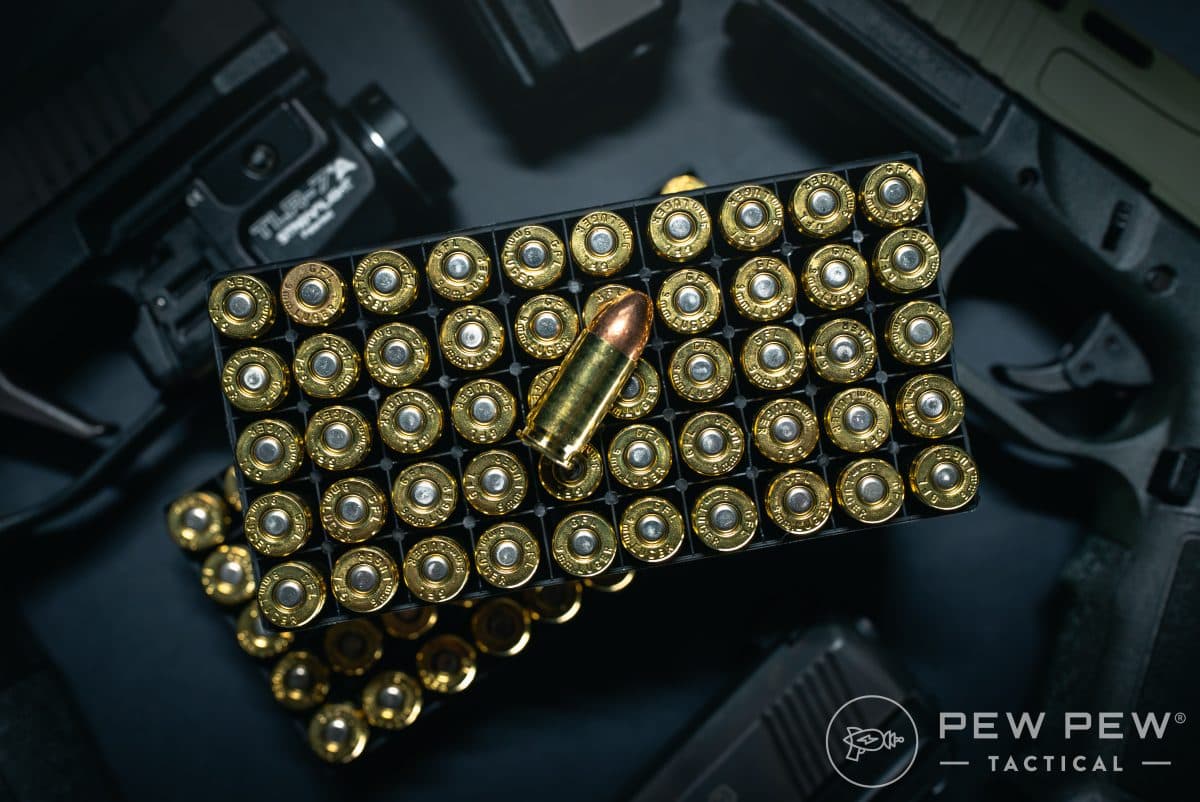
Anatomy of a Cartridge
You could spend the rest of your life reading up on various cartridges but they all share some common components, so we’ll start there.
Projectile
People who aren’t in the know often use “bullet” when they mean “cartridge.” The bullet is actually one part of the cartridge, and today we’ll call it a projectile so we don’t leave out the shotgun crowd.
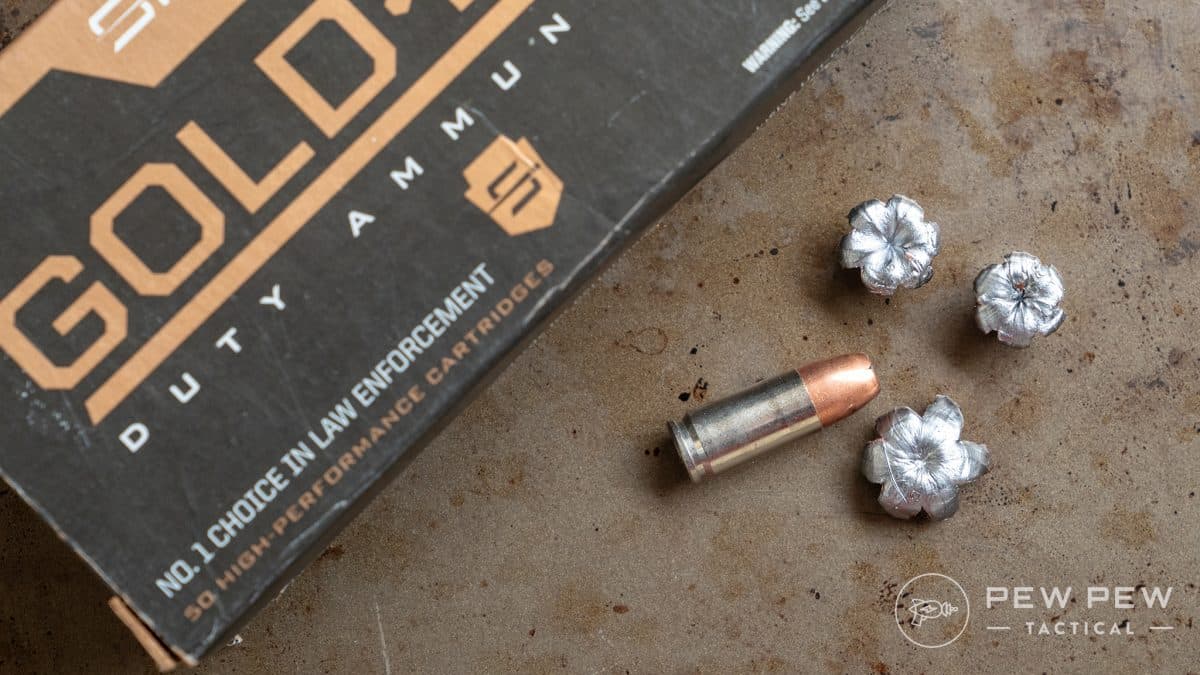
The projectile is whatever leaves your firearm’s muzzle when you pull the trigger. That includes solid bullets, loads of shot, and the plastic wads that cup shot as it travels down the bore.
Propellant
Propellant is the fuel that powers a firearm. It’s gotten more advanced than old-school gunpowder but its job is the same: to get that projectile moving.
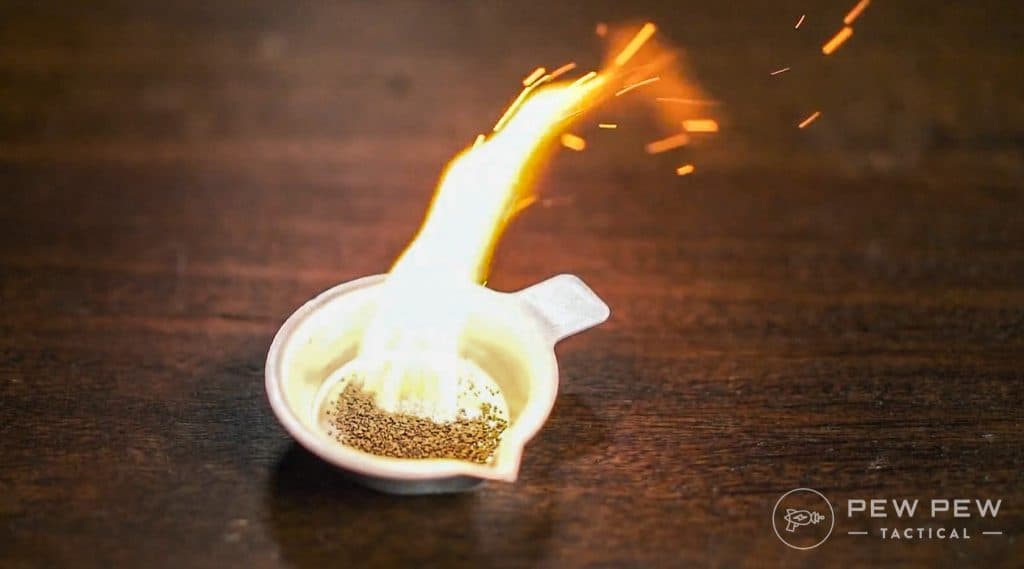
If you reload ammunition, you have to select, store, weigh, and load your propellant extremely carefully. Getting it wrong can have serious consequences for you and your firearm.
If you buy prepackaged cartridges, you’ll never see the propellant.
Primer
Propellant is great at pushing projectiles to incredible velocities, but it’s also very stable (fortunately for us).
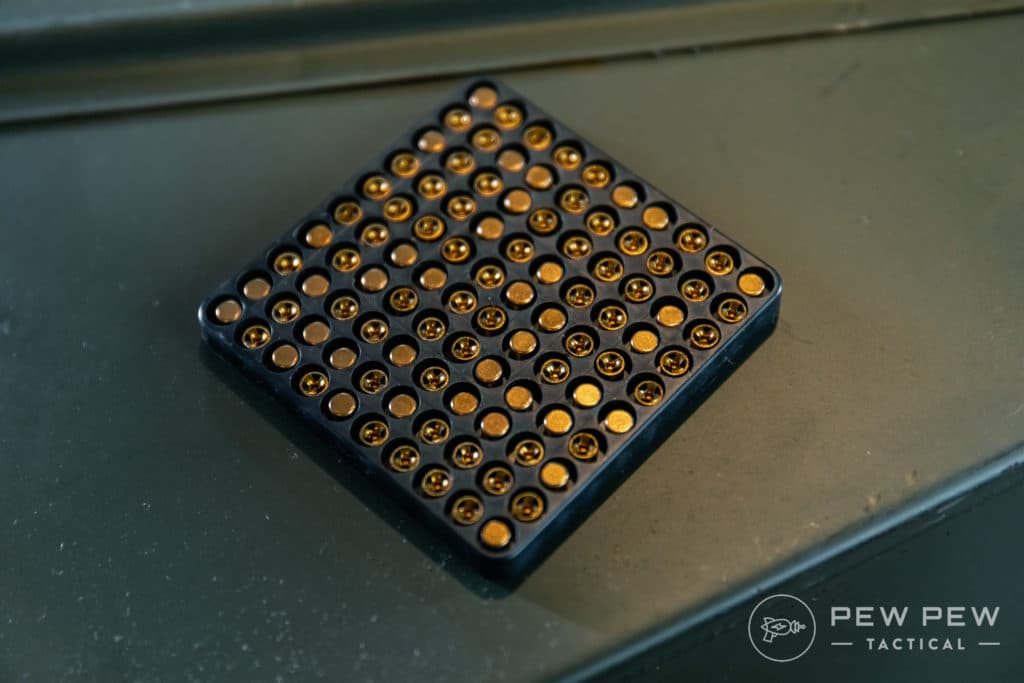
To ignite it, we need something a little more volatile. Primers ignite on impact, making them a perfect catalyst to work between the firing pin and the propellant. If propellant is like gasoline, primers are more like spark plugs.
There are two types of centerfire primers: Boxer and Berdan. They look very similar from the outside, but work differently internally.

Here in the U.S., we generally use ammunition with Boxer primers. They have one flash hole to allow combustion to reach the propellant, which makes them very easy to remove in the reloading process.
There are only a few sizes, which further simplifies reloading whether it’s you or a major manufacturer doing it.
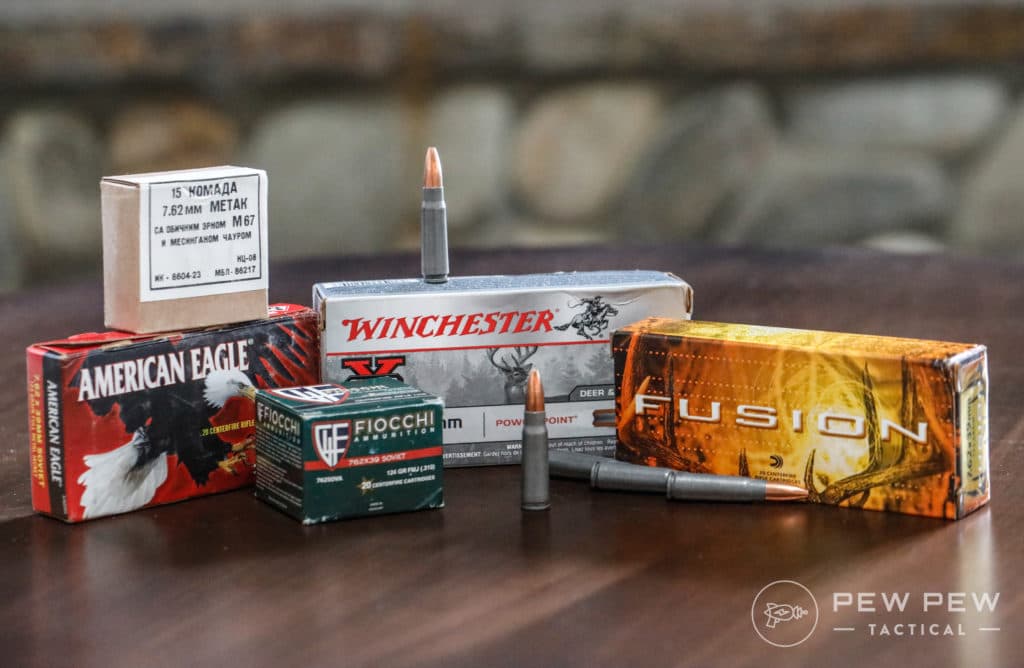
If you shoot a lot of foreign cartridges (think AK ammo), you’ll probably see a Berdan primer. They’re very easy to produce but make reloading difficult. Part of that is due to the use of two flash holes instead of one, which makes it tedious to punch out a spent primer and press in a new one.
Factor in a lack of standardization in primer use and installation, and reloading with Berdan primers gets messy fast.

Finally, there’s rimfire primers. These are built into the case so the whole thing looks like one piece of metal. See the tiny rim? It’s hollow; the primer compound is in there.
Case
Holding all this together is the case. These are usually made of brass, although you might find steel and other metals from time to time.
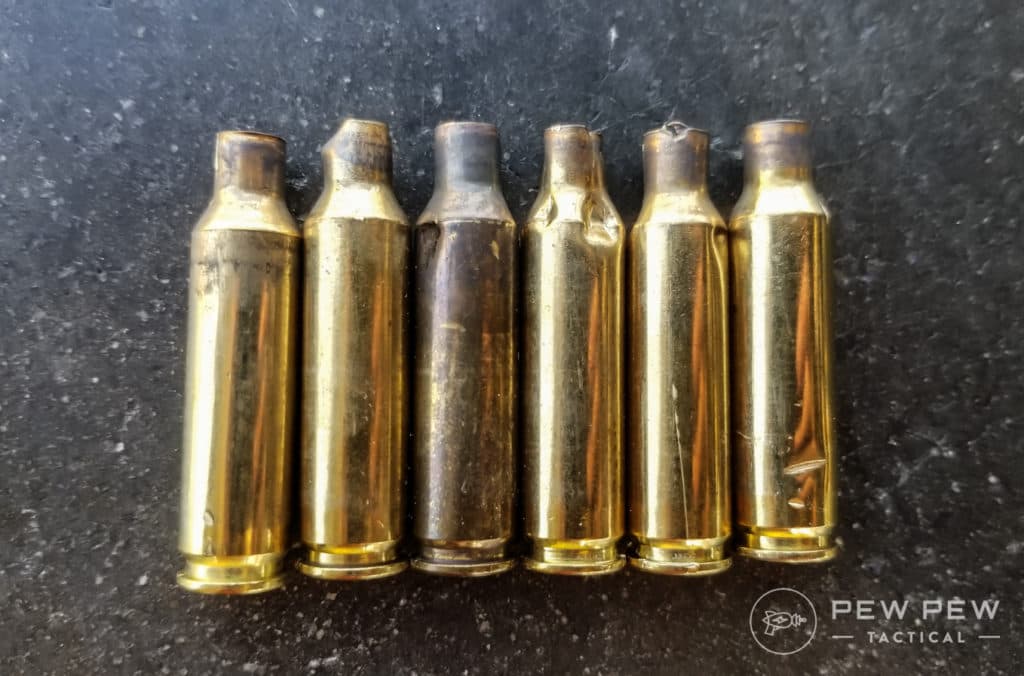
The case is like a cup. Propellant gets poured into the cup, the projectile is the lid, and the primer sits inside the base.
If a brass case doesn't get damaged, you can often reuse it.
Rimfire vs. Centerfire Ammunition: What's the Difference
Those four elements (projectile, propellant, case, and primer) are present in rimfire and centerfire ammunition, but they take different forms.
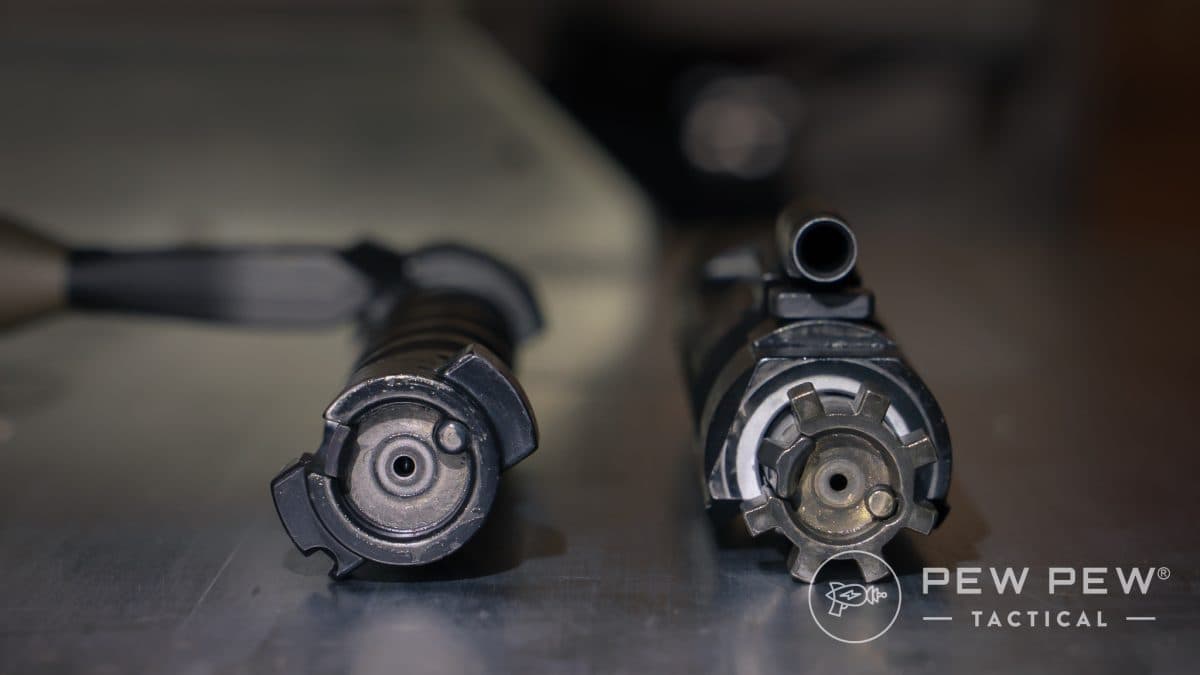
In centerfire ammunition, all four are independent components. You can buy them separately and build a cartridge from scratch.
When you pull the trigger, the firing pin moves straight forward and strikes the primer. The impact causes it to detonate, which ignites the propellant. The expanding gas builds pressure and forces the bullet or shot out of the cartridge, down the bore of your firearm, and (hopefully) into the target.
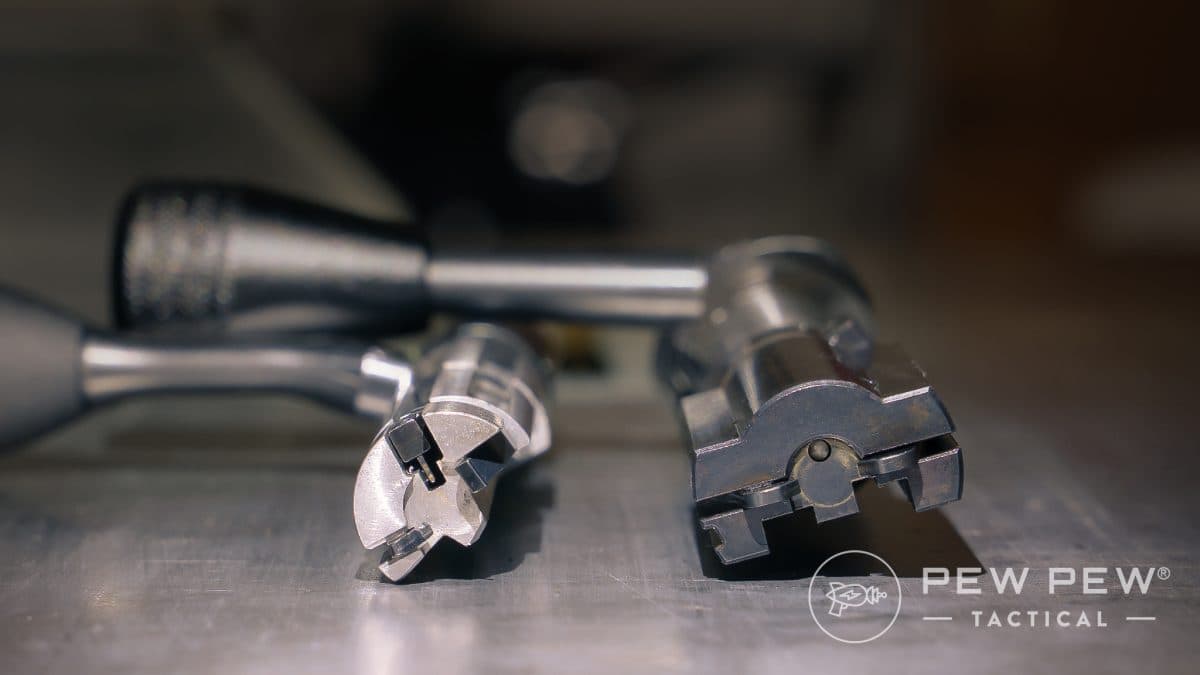
Rimfire ammunition combines the case and primer into one assembly. You can’t separate them, and they make up a single-use item that can’t be reloaded.
This time, pulling the trigger causes the firing pin to strike the cartridge on the edge, or rim – it’s starting to make sense! The primer still detonates and ignites the propellant, the process just happens in one sealed container. Pressure builds and sends the bullet down the bore all the same.
The end results look like this!

Rimfire vs. Centerfire: Pros & Cons
Many people get into shooting with rimfire ammo, but that doesn’t mean it’s for beginners. Shooters of every level, including all of us here, love shooting rimfire guns because it’s just plain fun!
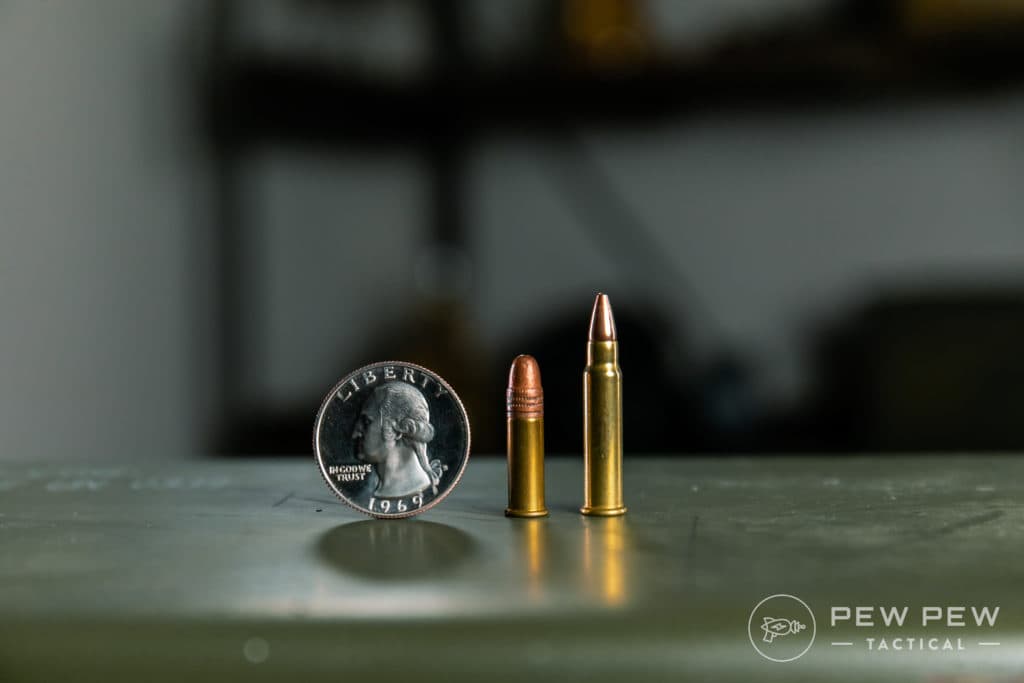
The Sporting Arms & Ammunition Manufacturer’s Institute lists 10 official rimfire cartridges. Here are the top three you’re likely to encounter, with .22 LR being the most popular by far:
- .17 Hornady Magnum Rimfire or .17 HMR
- .22 Long Rifle or .22 LR
- .22 Winchester Magnum Rimfire or .22 WMR (also known as .22 Mag)
Rimfire Ammo Pros
The most common rimfire cartridge is .22 LR, and it’s extremely cheap ammunition. At the time of writing, I saw prices under $0.05 per round as far as the eye could see. That’s as close to free reps as you can get without resorting to dry fire training and you can feel like a big shot every time you bulk-order ammo.

When the cartridges are tiny, you can easily stuff a box of 50 in your pocket. That’s one of the reasons so many survivalists, preppers, and zombie-fighters swear by rimfire guns.
And it’s not just the ammo – rimfire guns tend to be affordable. That includes revolvers, pistols, and all kinds of rifles.
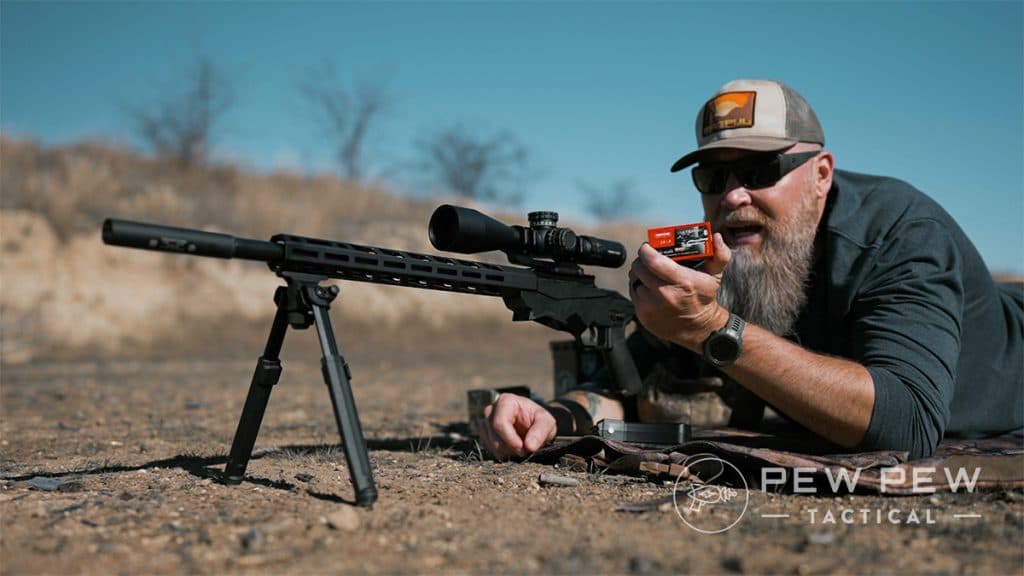
Factor in the low audible volume and almost nonexistent recoil, and it’s easy to see why rimfire guns are so great for new shooters. I have a few just for taking friends to the range for the first time!
Rimfire Ammo Cons
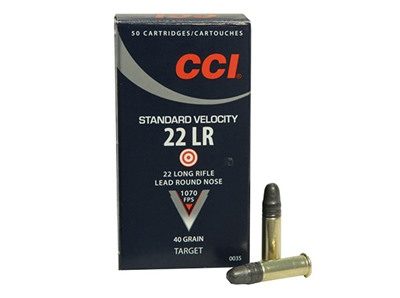
Rimfire ammunition has a reputation for being budget-friendly, but that’s largely because of .22 LR prices. If you venture beyond .22 LR, expect to pay a little more. Cartridges like .17 HMR and .22 WMR can cost almost as much as 9mm ammo.
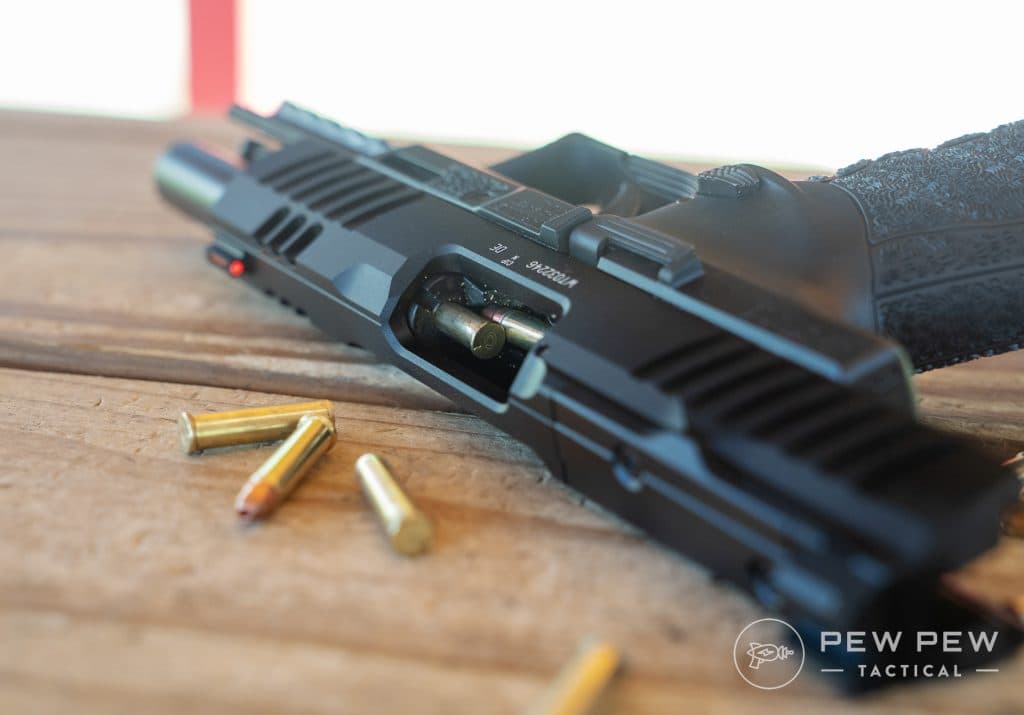
Regardless of which cartridge you pick, all rimfire ammunition is very dirty. After just a few magazines, your firearm’s bore will be a hot mess and the gun’s internals will have a thick layer of grime.
This is extra annoying if you shoot with a suppressor because of the more frequent cleaning you’ll have to do (it’s still worth it, though).

Since the bullets usually have exposed lead, you’ll also want to be extra diligent about wearing gloves or at least washing your hands to remove toxic residue.
Rimfire ammunition delivers very little energy to the target. That’s fine for plinking, mini-precision, and small game hunting but anything much bigger than a prairie dog might present a tall order for relatively slow bullets weighing 40 grains or less.
Rimfire vs. Centerfire: Pros & Cons of Centerfire Ammunition
The vast majority of guns use centerfire cartridges. Let’s figure out why you should – and shouldn’t – use the big stuff.
Pros of Centerfire Ammo
If rimfire ammo is so great, why step up to centerfire ammo? That’s easy: more power, baby!

If you’re looking for a cartridge that you can use for self defense or most hunting applications, it almost has to be centerfire. Just look at this comparison of common cartridges from my own ballistic profiles to see what I mean (diameter specs from SAAMI standards).
| Diameter | Weight | 100-Yard Velocity | 100-Yard Energy | |
|---|---|---|---|---|
| .22 LR | 0.2255” | 40gr | 1,013 fps | 82 ft-lbs |
| .223 Rem | 0.2245” | 55gr | 2,959 fps | 1,069 ft-lbs |
Centerfire ammunition also tends to be more accurate thanks to the superior ballistic coefficients of the bullets and greater investment in load development by the manufacturers.

Centerfire ammo variety is also unmatched. While common rimfire cartridges boil down to three options in the U.S., there are too many centerfire options to count.
Want a suitable self-defense pistol load, a straight-walled hunting cartridge for your lever gun, a long-range precision cartridge, or something light and fast for your AR-15? How about a do-it-all shotgun shell? The world of centerfire cartridges is your oyster, my friend.
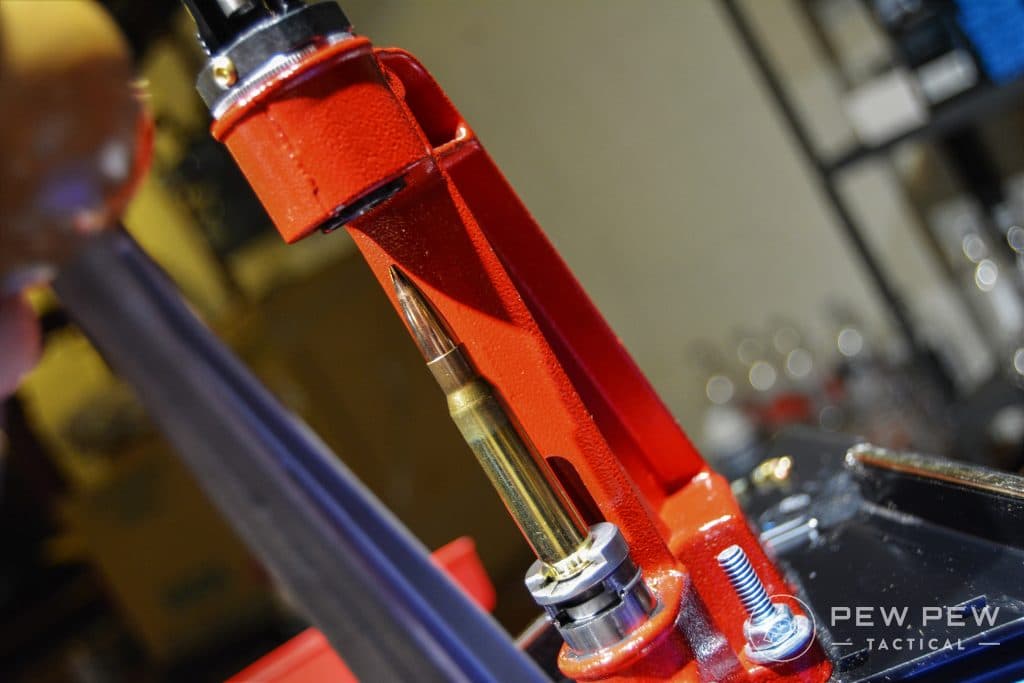
Finally, centerfire ammunition allows you to reuse spent cases. Reloading can be a fun way to fine-tune your ammo and save money in the long run. Check out our Ammo & Reloading Definitive Resource for more!
Cons of Centerfire Ammo
If your shooting experience is limited to .22 LR, everything else is going to come with a serious case of sticker shock. Centerfire ammunition pricing starts about where .17 HMR and .22 WMR top out.

Remember when I wrote that power was an advantage of centerfire ammo? Well, with great power comes great recoil. Even something mild like .38 Spl will feel raucous compared to the spiciest rimfire cartridges.
Volume is another issue. You might get away with foam earplugs with a .22 LR gun, but your long-term hearing will benefit from investing in active hearing protection if you plan on shooting centerfire ammo.

Finally, you may encounter some ammo restrictions when you visit your local shooting range.
If you show up to an indoor range with something unusually powerful, like .338 Lapua or .50 BMG, the RSO will politely ask you to train elsewhere. Shotgun clubs often have restrictions on shot size and composition. When in doubt, call ahead to save yourself a trip.
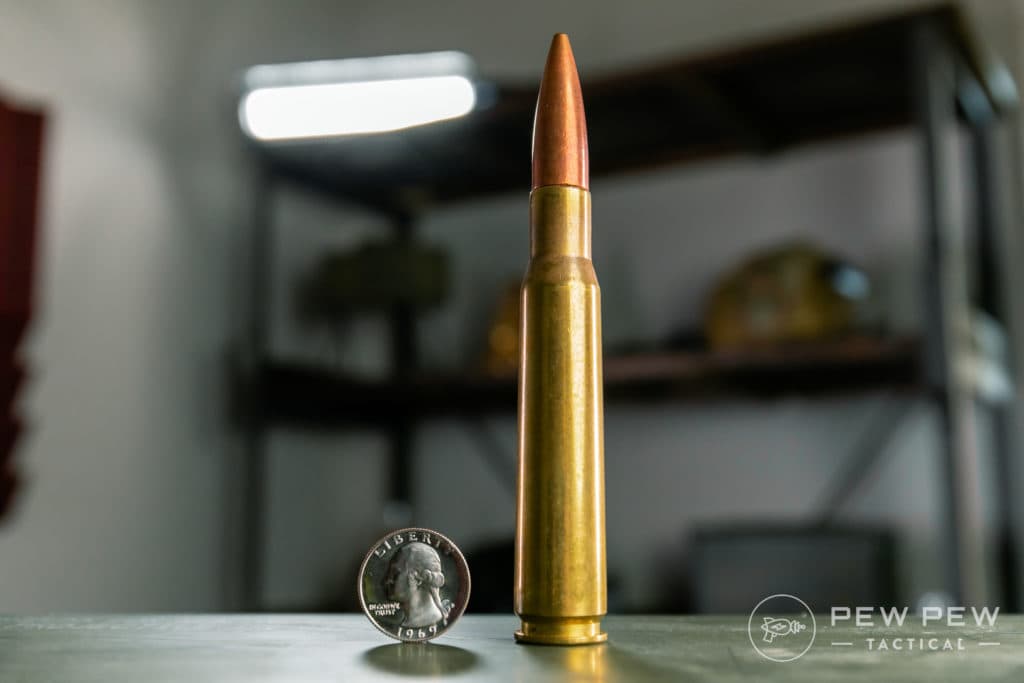
Popular cartridges like 9mm, .45 ACP, and 5.56 NATO should be almost universally acceptable. At most, you’ll have to buy frangible ammunition for certain indoor ranges.
Best Places to Buy Rimfire & Centerfire Ammo
Buying ammo in person is a nice way to support your local gun store, and we do that from time to time.

The most cost-effective way is to shop around for the best prices on the internet and buy in bulk to make the most of those pesky shipping fees.
We have a guide to the best places to buy ammo online that will save you a bundle. Here’s a quick breakdown if you’re short on time.
- Ammunition Depot: good prices, and they usually have what we need in stock.
- GrabAGun: keep an eye out for random deep discounts.
- Lucky Gunner: excellent inventory and fast shipping.
- Midway USA: we love their fast shipping.
- OpticsPlanet: decent prices on ammo and lots of other gear.
- Palmetto State Armory: great deals on bulk ammo, especially AAC.
- True Shot: ships to ban-states like California, and offers discreet packaging.
Final Thoughts
So, does rimfire or centerfire ammo reign supreme? That’s easy: you need both!
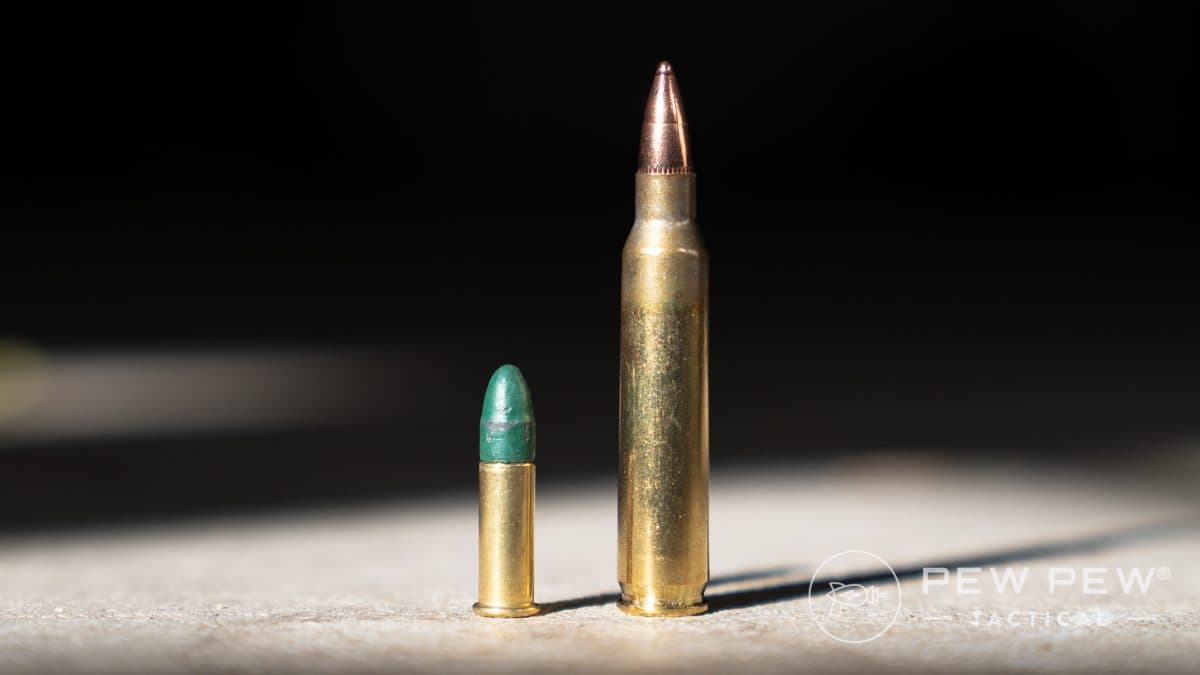
Rimfire and centerfire cartridges do different jobs, and they can’t really replace one another. You may cite this article to your significant other as permission to buy more guns.
What do you reach for more, rimfire or centerfire ammo? Let us know in the comments. If you need more help with cartridge selection, check out our Rifle Caliber Guide and Handgun Caliber Guide!
Latest Updates
November 2025: Complete overhaul with new information and supporting content.