
TASER Pulse 2 Review: Best Less-Lethal Option?
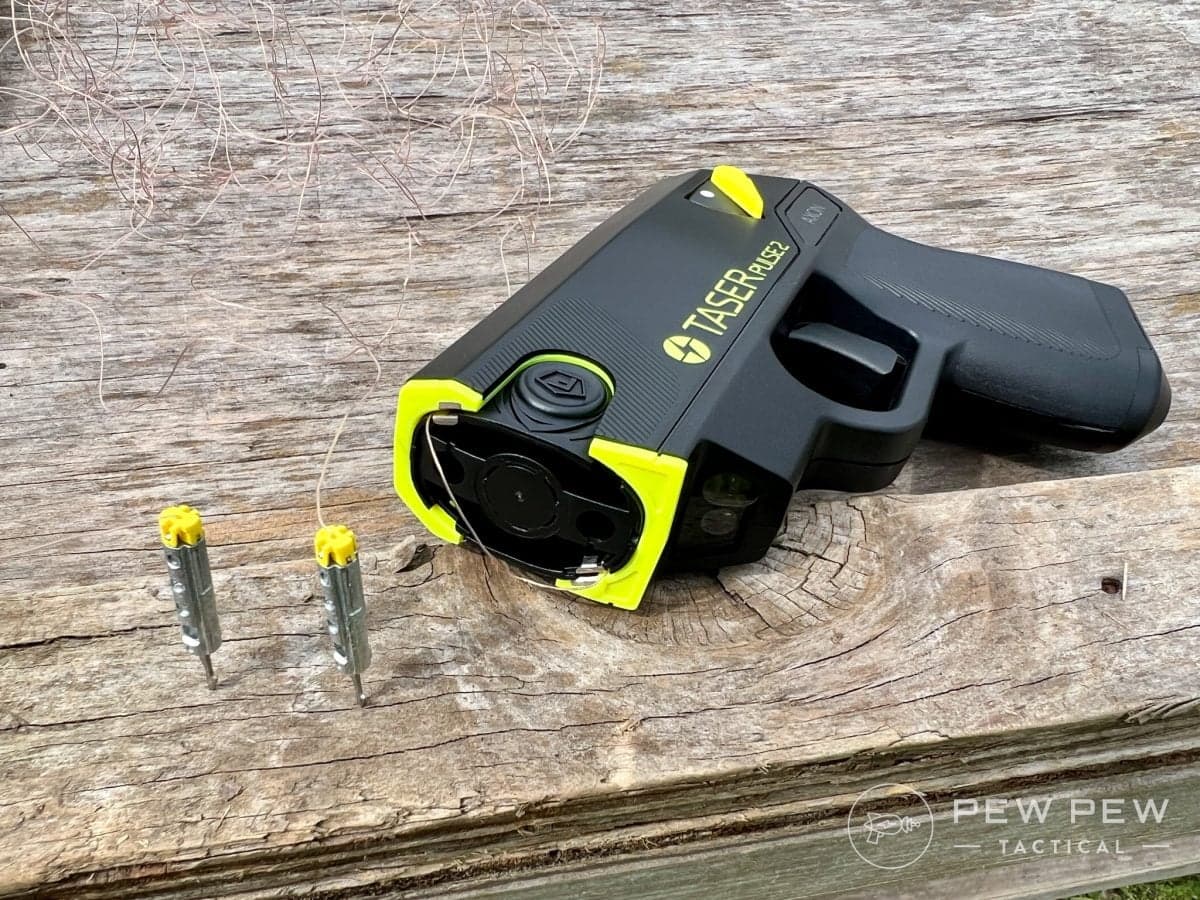
Should you get TASER's Pulse 2 for the civilian market? A former cop lays out his thoughts on the new Pulse 2 as a less lethal defensive option.

Retired LEO. SWAT Commander. POST/NLEFIA/USCCA Instructor. Former FFL. Gun Writer 10+ years
We review products independently. When you buy through links on our site, we may earn a commission to help support our testing. Learn more.
- What Are TASERs & How Do They Work?
- TASER Pulse 2: First Impressions
- Carrying the TASER Pulse 2
- Shooting the TASER
- TASER Limitations & Considerations
- Why Carry the TASER Pulse 2?
- Should You Upgrade from the TASER Pulse+?
- TASER Pulse 2 Specs & Features
- By the Numbers
- Accessories for the TASER Pulse 2
- TASER Bolt 2: Another Option
- How We Tested the TASER
- Meet the Experts
- TASER Pulse 2: Final Verdict
- Latest Updates
“Don’t tase me bro!”
Thanks to body cameras and social media, we’ve all seen the effects of TASER when they are deployed in the wild, and the Wookie-like yowls of the people who ride the lightning. However, you don’t have to go to the police academy to wield one.
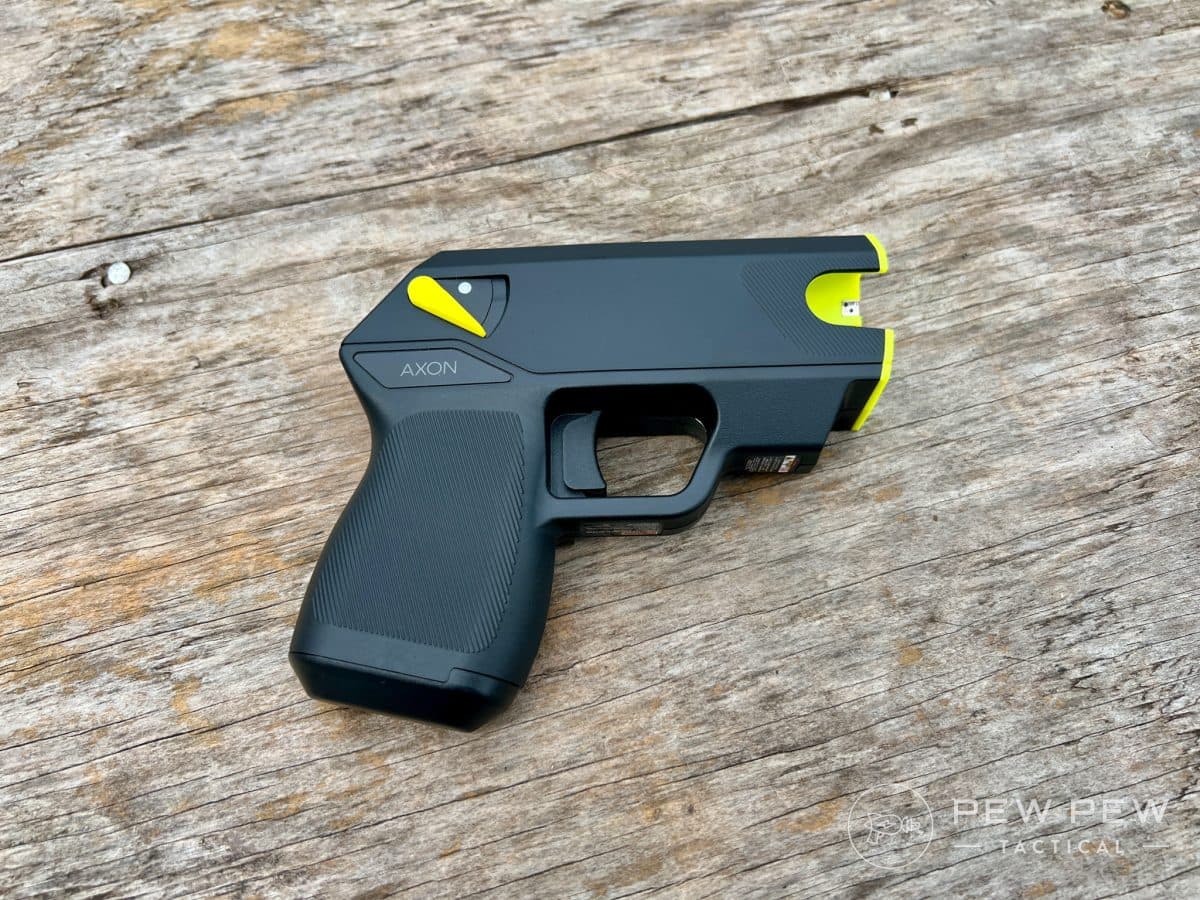
TASER makes the Pulse 2 for civilians, utilizing the same technology that law enforcement carries.
Although it might be tempting to zap an attacker with a TASER, before you tuck one in your pocket, you should know how it works and its limitations.
So, we got a new TASER Pulse 2 in and tested it out, so you won’t have to. We’ll share the results with you below, some of which you may find shocking.
Table of Contents
- What Are TASERs & How Do They Work?
- TASER Pulse 2: First Impressions
- Carrying the TASER Pulse 2
- Shooting the TASER
- TASER Limitations & Considerations
- Why Carry the TASER Pulse 2?
- Should You Upgrade from the TASER Pulse+?
- TASER Pulse 2 Specs & Features
- By the Numbers
- Accessories for the TASER Pulse 2
- TASER Bolt 2: Another Option
- How We Tested the TASER
- Meet the Experts
- TASER Pulse 2: Final Verdict
- Latest Updates
TASER Pulse 2 Pros & Cons
Pros
- Easily concealed
- Lightweight
- Easy to use
Cons
- Defeated by thicker garments
- Need to be close
The Bottom Line
The TASER Pulse 2 has the power to lock up attackers for 30 seconds, or provide a painful stun.
What Are TASERs & How Do They Work?
As a verified sci-fi nerd, I can tell you that TASER is an acronym taken from the 1911 book Tom Swift and His Electric Rifle by Victor Appleton -- short for Tom A. Swift’s Electric Rifle. Nuclear physicist and NASA scientist Jack Cover actually invented the first TASER in 1967 using the book as inspiration.
Today's TASERs are defensive tools designed to temporarily incapacitate people without causing permanent harm. They fire two dart-style electrodes that transfer electricity to cause neuromuscular incapacitation (NMI). This means they lock up the muscles into involuntary contractions. At best, this prevents voluntary control of muscles, meaning the threat is incapacitated.
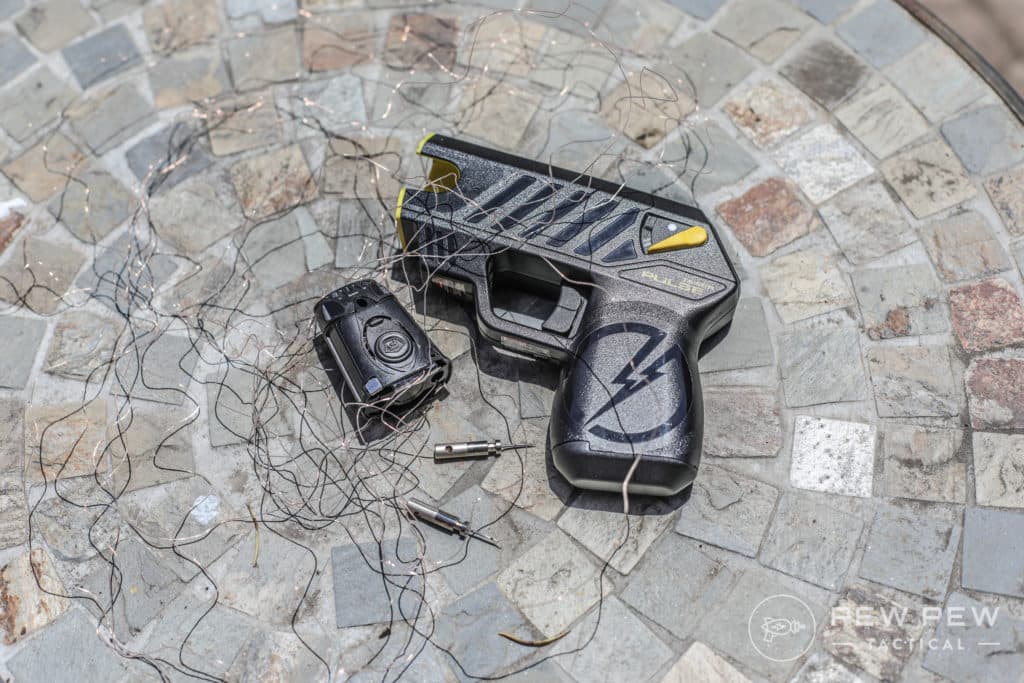
Unlike firearms or knives, TASERs are considered less-lethal devices because they are less likely to kill the assailant when deployed -- though serious injury can occur depending on the circumstances. For this reason, they have gained in popularity in the defensive community as well as the law enforcement arena.
TASERs often appeal to people who don’t like firearms but still want to be able to defend themselves. It could also appeal to people who have a decreased capacity to defend themselves -- such as those living in states with restrictive gun laws. The company claims its devices are legal in all 50 states and you can check out their website for more info on specific state laws.
TASER Pulse 2: First Impressions
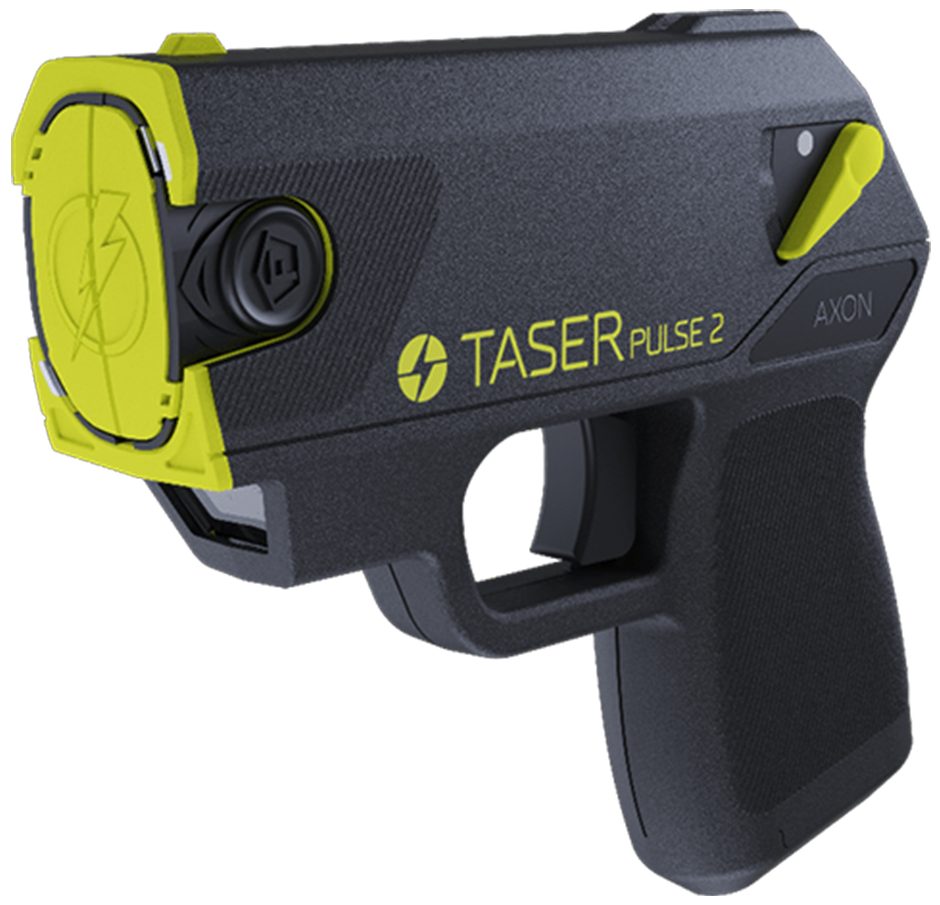
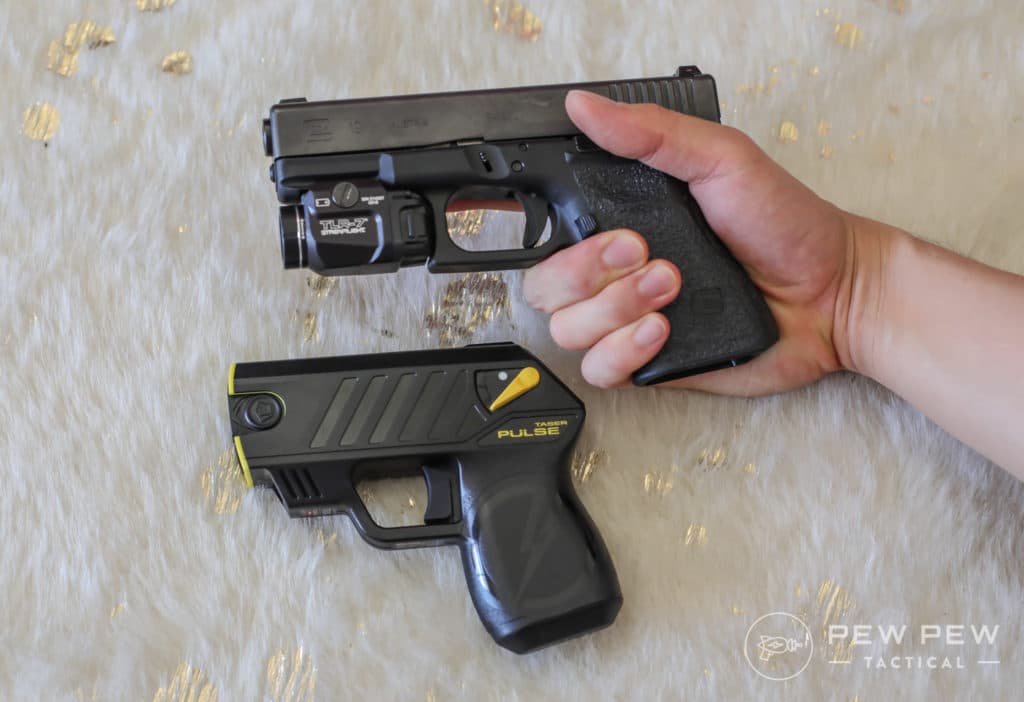
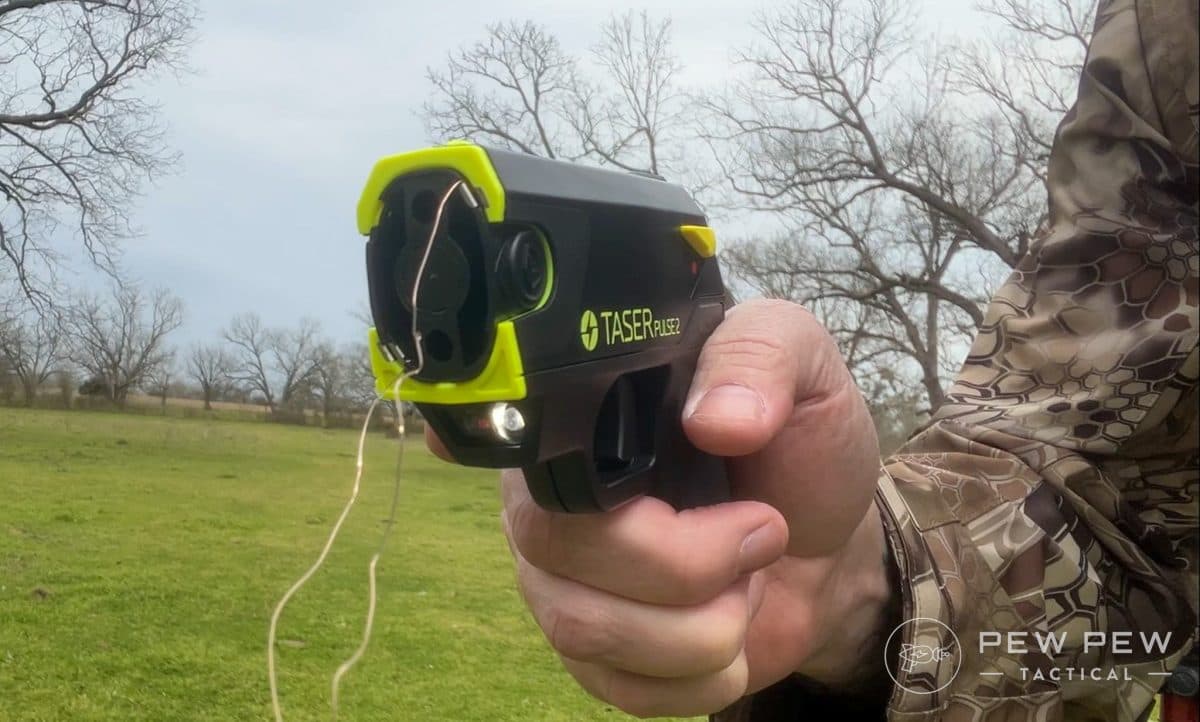
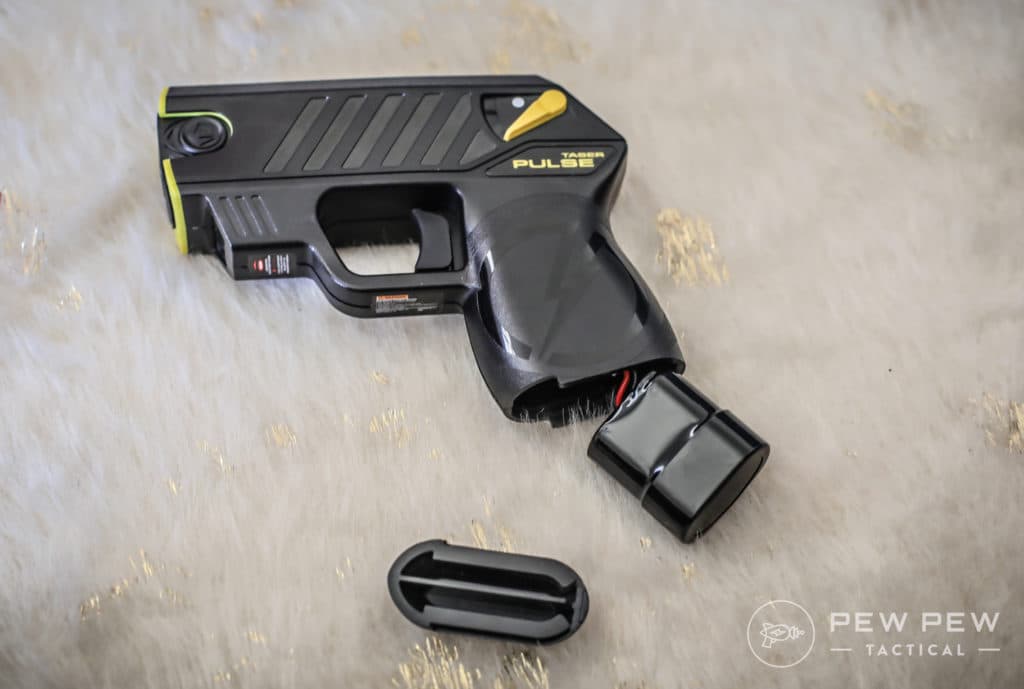
My first impression of TASER's Pulse 2 was the design. It feels very much like a pistol in both shape and function (somewhat). It features a grip, trigger guard, trigger, and even front and rear sights.
Size-wise, it's most akin to a micro-compact — so small that my pinky can’t find purchase on the grip. Despite its size, the Pulse 2 is easy to grip and hang onto because it is so light, only slightly heavier than an iPhone.
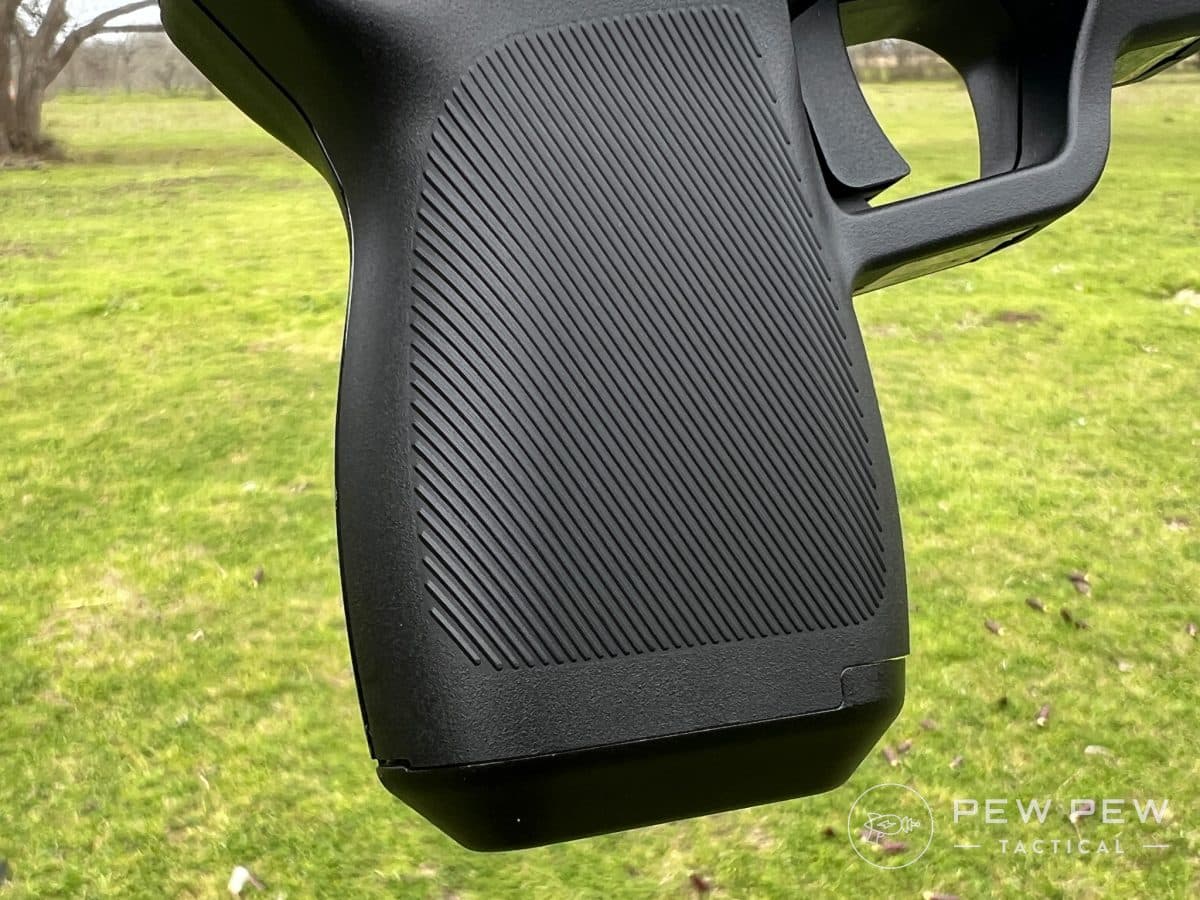
Texturing on the grip is located in blocks on the sides of the grips only. It is far from aggressive, consisting of grooved lines, but it is adequate for the task, considering the lack of real recoil.
Toward the rear, a faux beavertail can be found, though it is surely more about ergonomics than any need to protect the web of your hand. The trigger guard is thick and protective, leaving little room for gloved fingers.
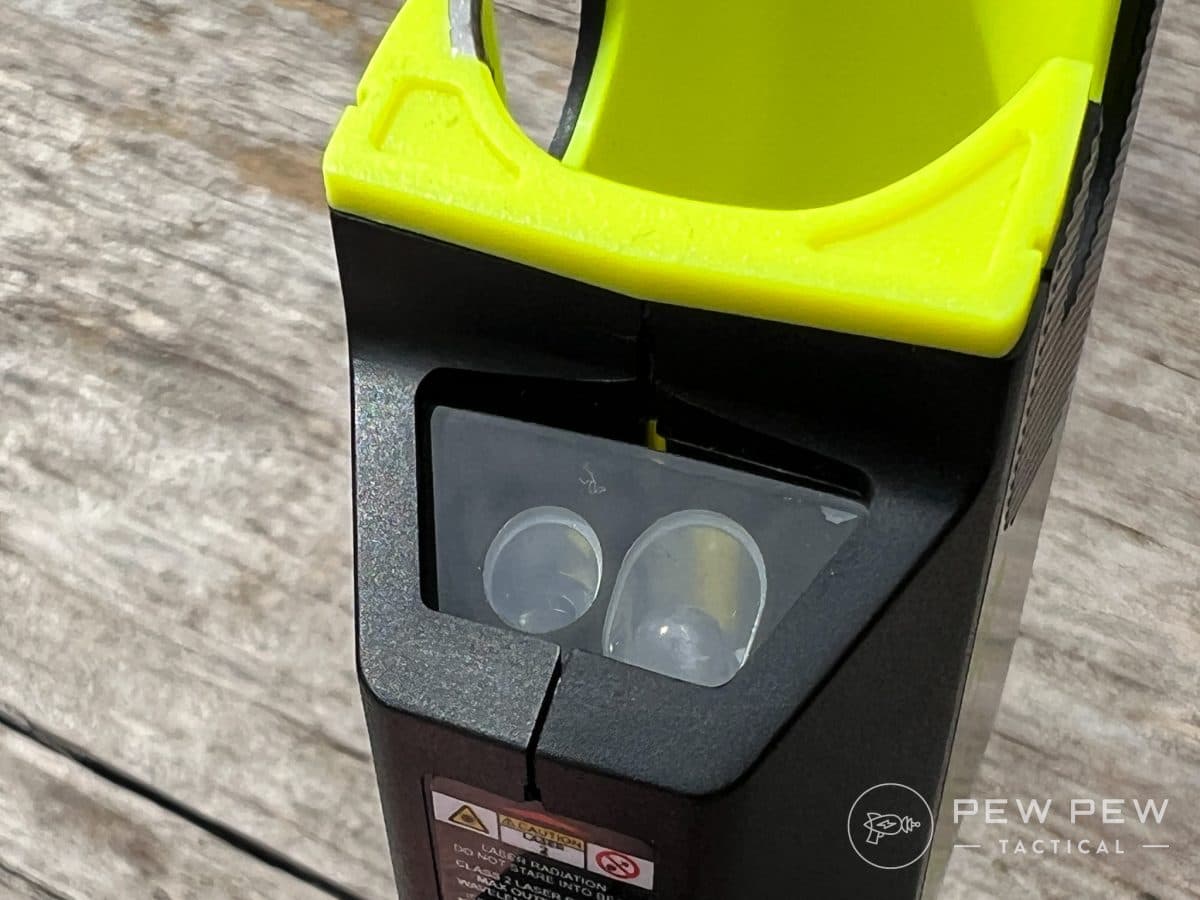
The light and laser combo are located in front of this. These two features are protected behind clear plastic just under the muzzle.
Interestingly, the Pulse 2 is lightweight and made of plastic, but does so without feeling cheap. Sights consist of a florescent green front blade matched with a black, u-notched rear.
Controls
Controls on the Pulse 2 only consist of the trigger and the safety. The trigger features a shoe that covers the mechanism and is comfortable under the finger.
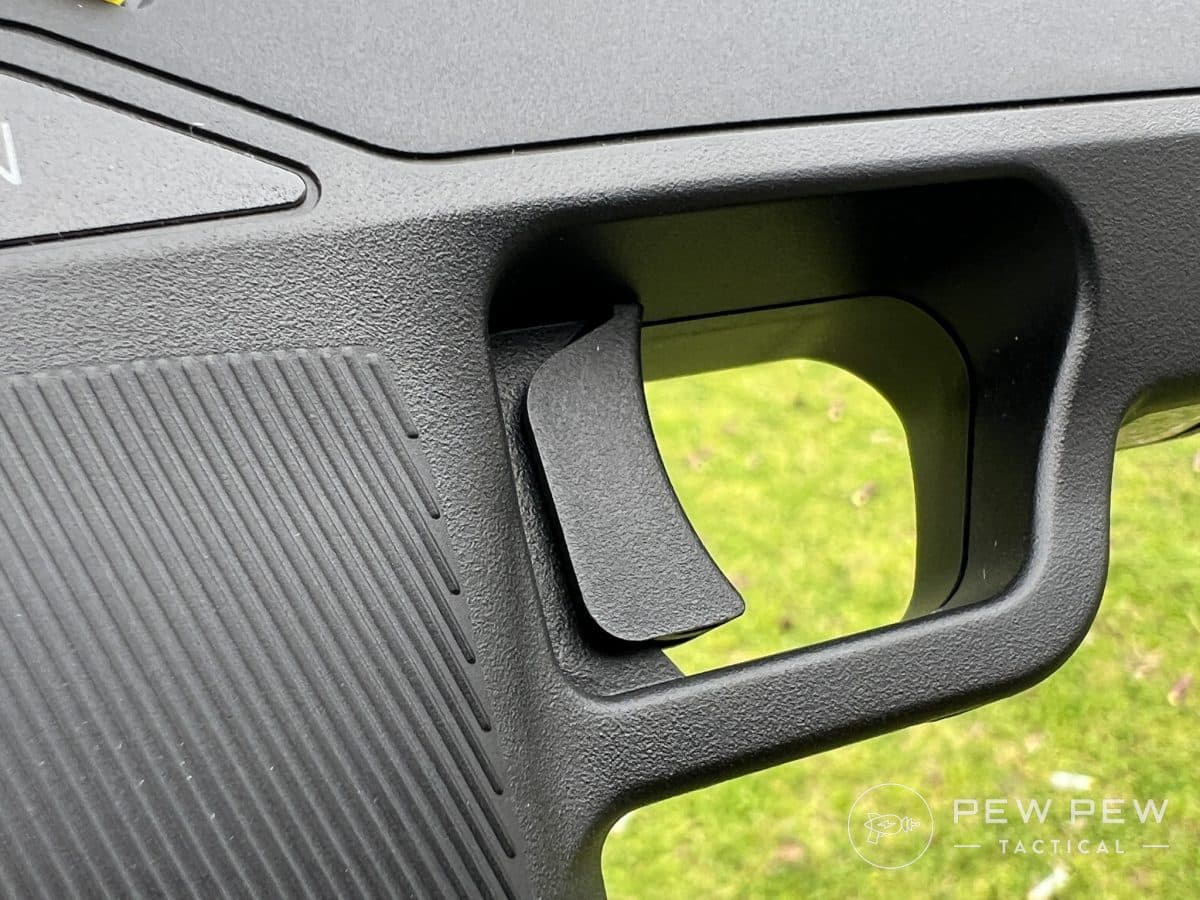
The trigger has no travel per se, but simply presses back maybe a millimeter with a very light click noise. On a Lyman Digital Trigger Gauge, the pull weight averaged 1.15 pounds.
Located just above the thumbs on either side of the Pulse 2, two yellow levers serve as the ambidextrous safety. Pushing either of these up causes the Pulse 2 to turn on and ready to fire.
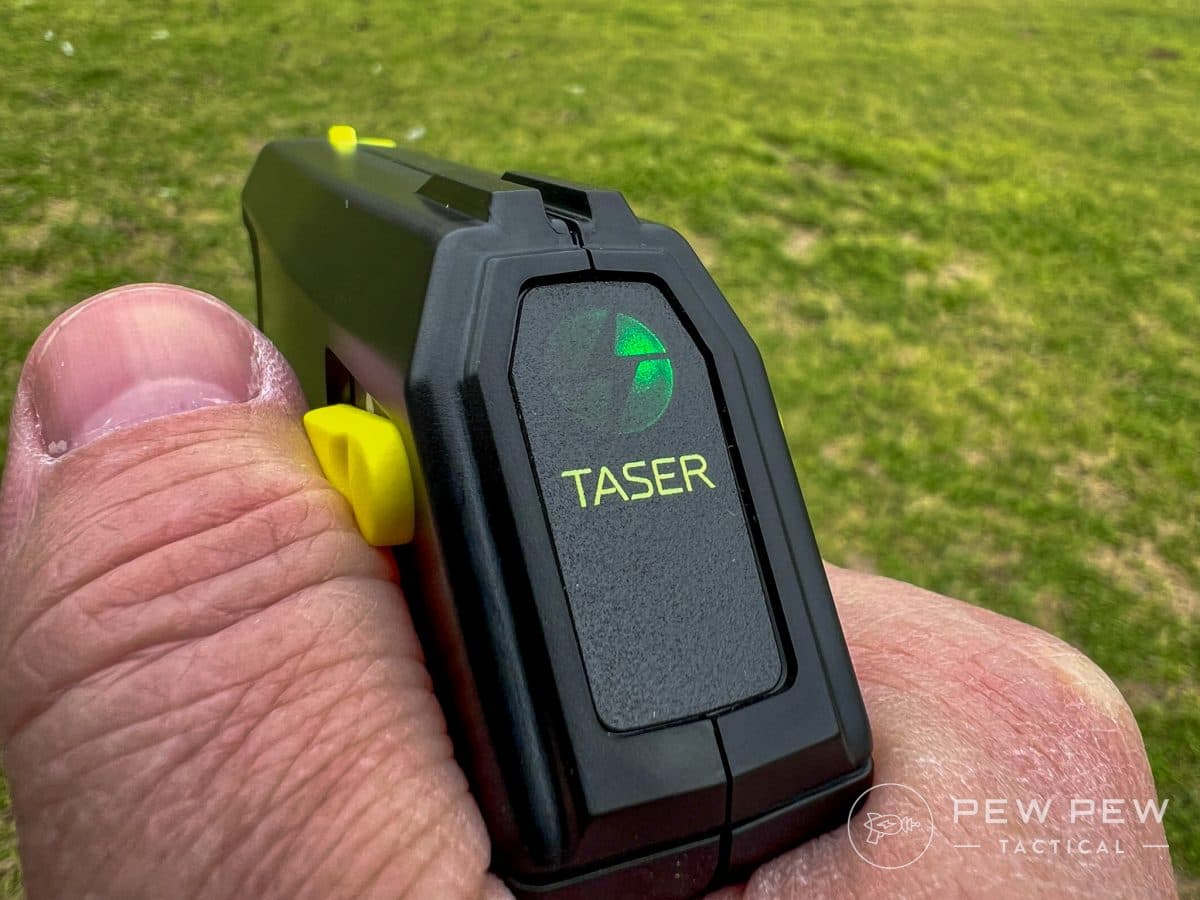
This is evidenced by a green LED light in the rear, which changes to orange or even red when the battery is low. In addition, when the safety is deactivated, the light and laser pointer combo switch on.
Both the trigger and ambidextrous safety are easy to reach and activate. The size of the Pulse 2 and layout of the controls make it easy to use for a wide range of hand sizes.
Carrying the TASER Pulse 2
I installed the Pulse 2 battery in the grip. The power source consists of what appears to be two CR123 batteries in a pack with a small white connector common to RC vehicles.
While there is conflicting data on the web about whether the Pulse 2 is rechargeable, the official TASER product manual states it is not rechargeable and that batteries must be replaced when needed.
For our review, I used the product for over two months, sparking the unit frequently and then conducting one range session to finish testing. Battery levels still indicated green, and TASER estimates the average life should be about one year.
This is pretty impressive, considering the unit delivers a maximum of 50,000 volts (though less than 2,000 actually enter the body). The Pulse 2 does this over a 30-second duration each time you press the trigger.
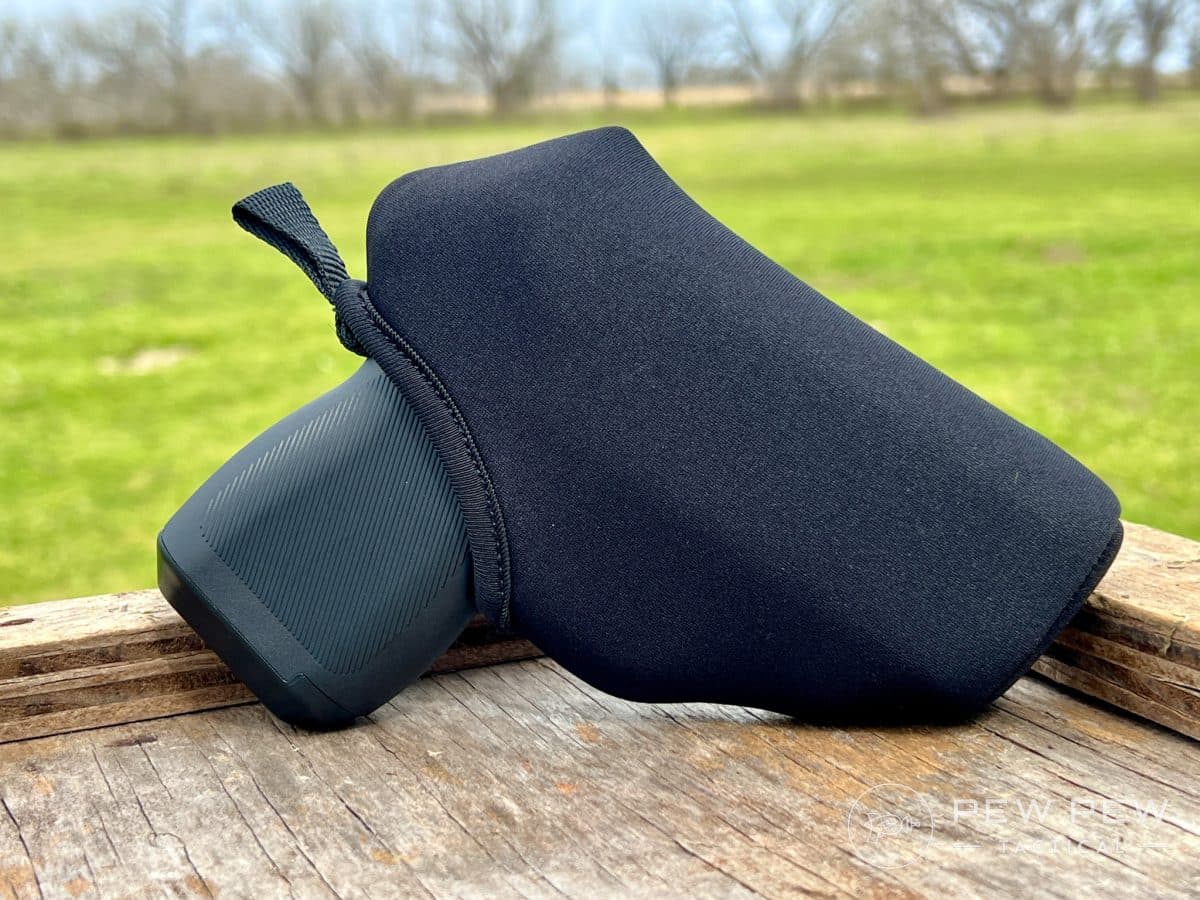
Further testing consisted of carrying the TASER Pulse 2 daily. The unit is small enough to tuck into a pocket, and the included neoprene sleeve helps prevent accidental discharge.
I found no circumstances where the Pulse 2 was more uncomfortable than carrying a firearm and plenty where it was more comfortable because of its lack of weight.
With practice, I was able to draw the unit and remove the sleeve quickly, though donning it was a little challenging.
As noted above, the ergonomics of the Pulse 2 were good, so I was keen to see how it fired on the range. I took it out and set up a test target for accuracy.
Shooting the TASER
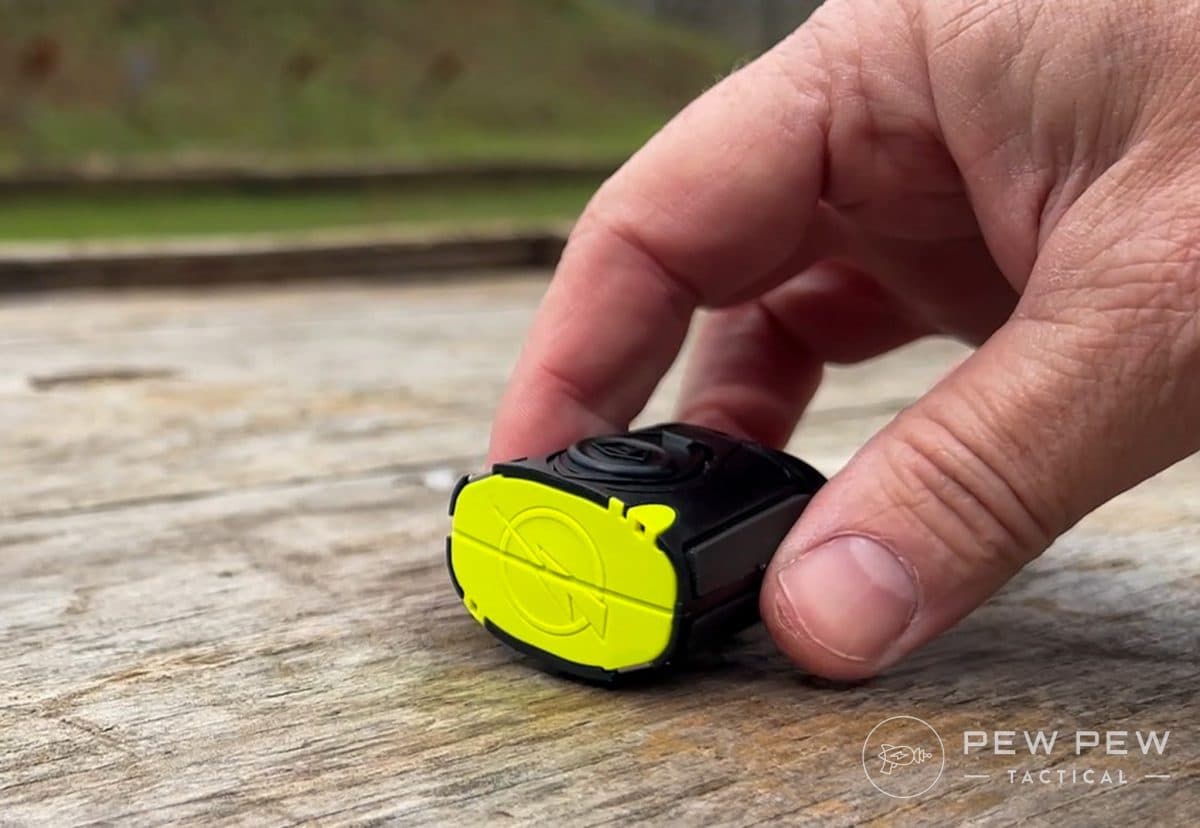
To load, I pushed a cartridge out of its protective carrier and set it on a table with the blast doors down. Next, I hovered the Pulse 2 above the cartridge and pushed down until I heard it click and lock into place.
Watch the video clip below to see exactly how to load it.
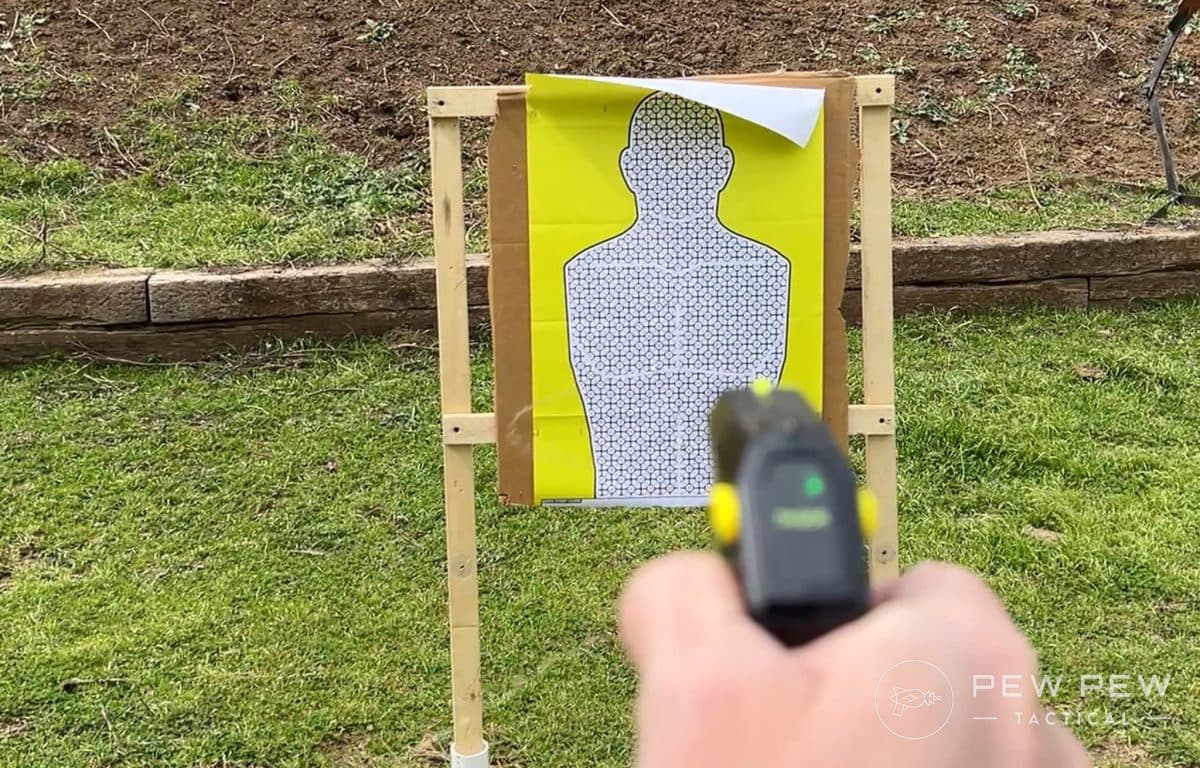
Standing 15 feet away (the maximum recommended distance), I realized there would be some issues. First, I couldn’t see the laser pointer on the target.
Lighting conditions were late morning on a completely overcast day. This could simply have been my eyes, but I understood there would be no way for me to see it in bright sunlight at that distance.
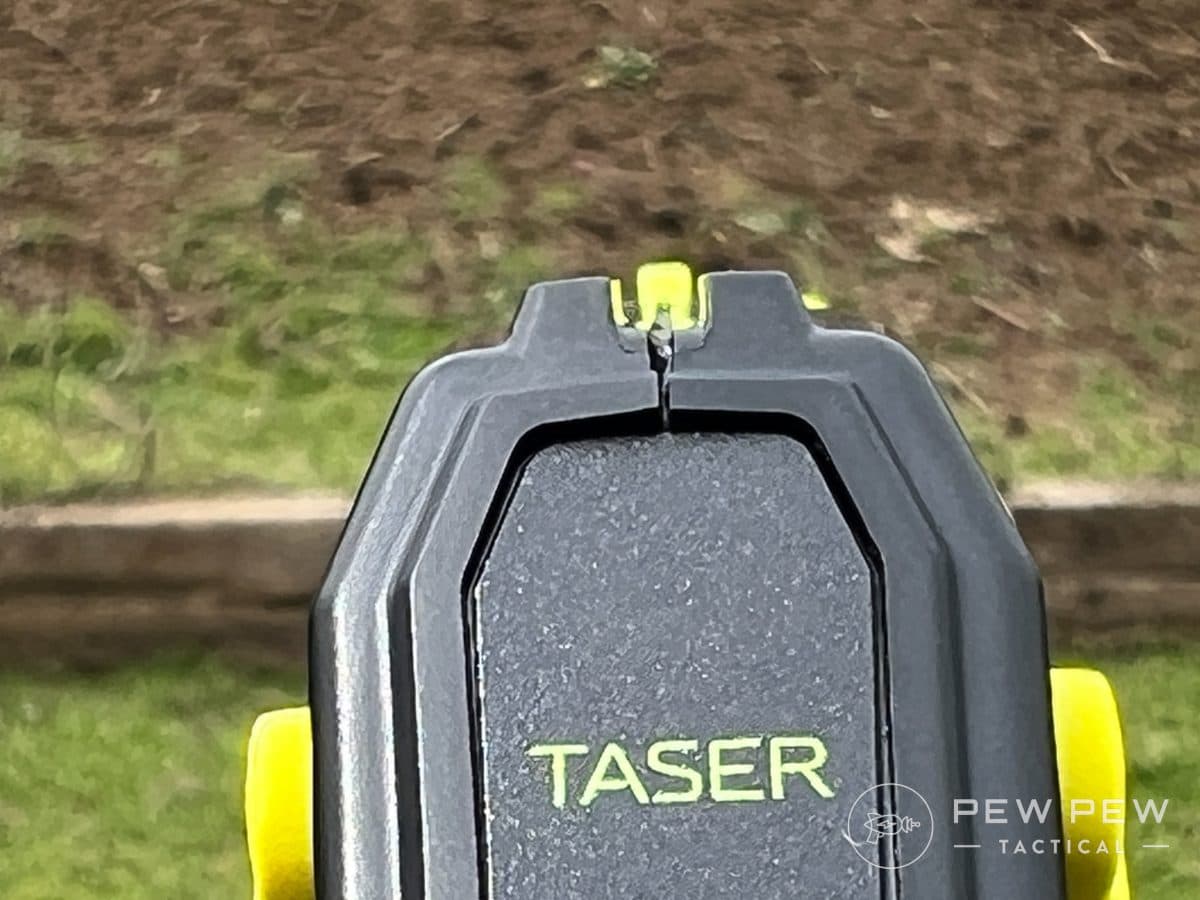
So, I switched to the physical sights on the gun and lined them up on the target. I pressed the trigger back and was rewarded with a pop sound as the blast doors blew open.
There was no recoil, but the two wire-connected prongs launched forth, and the Pulse 2 crackled for a full 30 seconds. During this time, it even switched up the electricity’s cyclic rate, which you can hear.
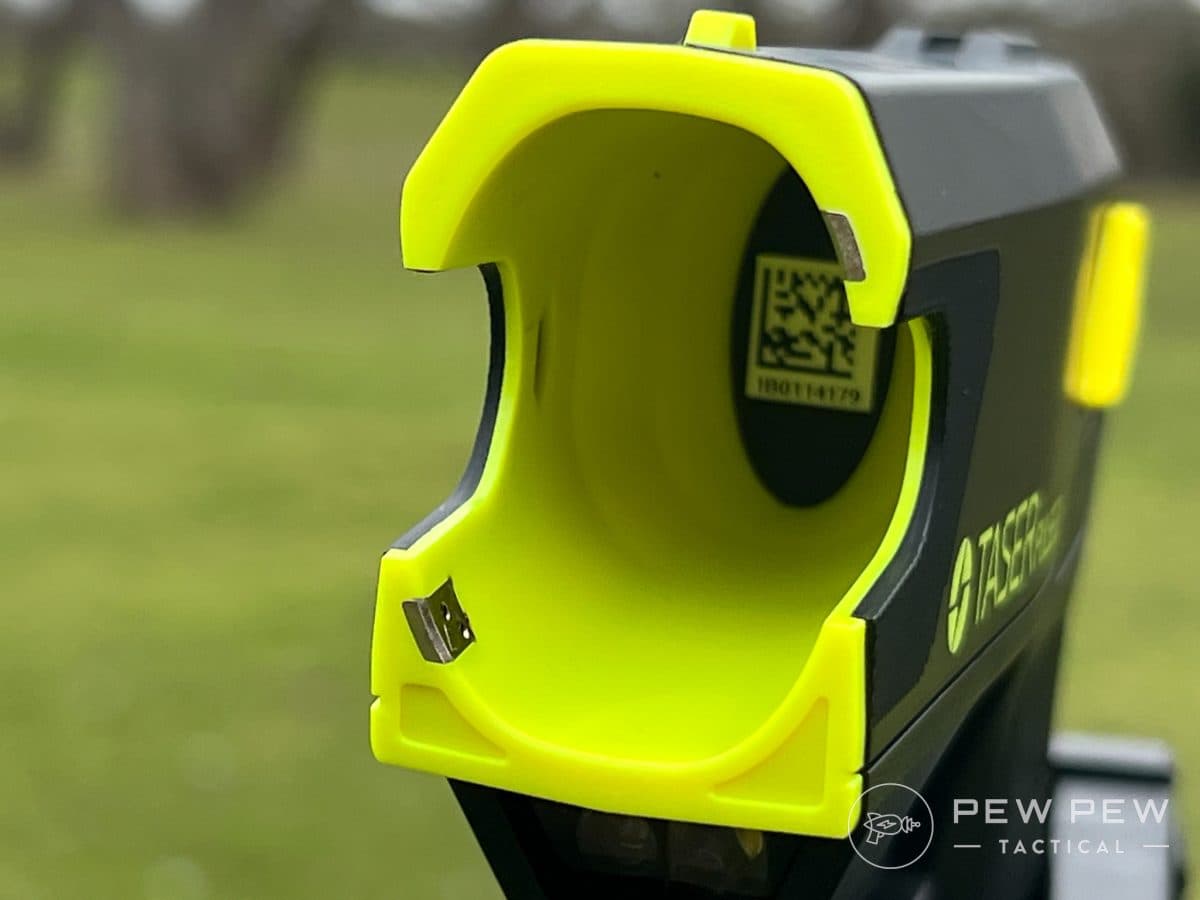
Upon inspection, I had one probe miss just under the target, and other plant squarely in the chest. It was a windy day so I decided to scoot up and try again.
Keep in mind the barbs spread vertically, and the further you are from the target, the further they will separate. TASER recommends good spread for effectiveness, but both barbs have to connect for the unit to work.
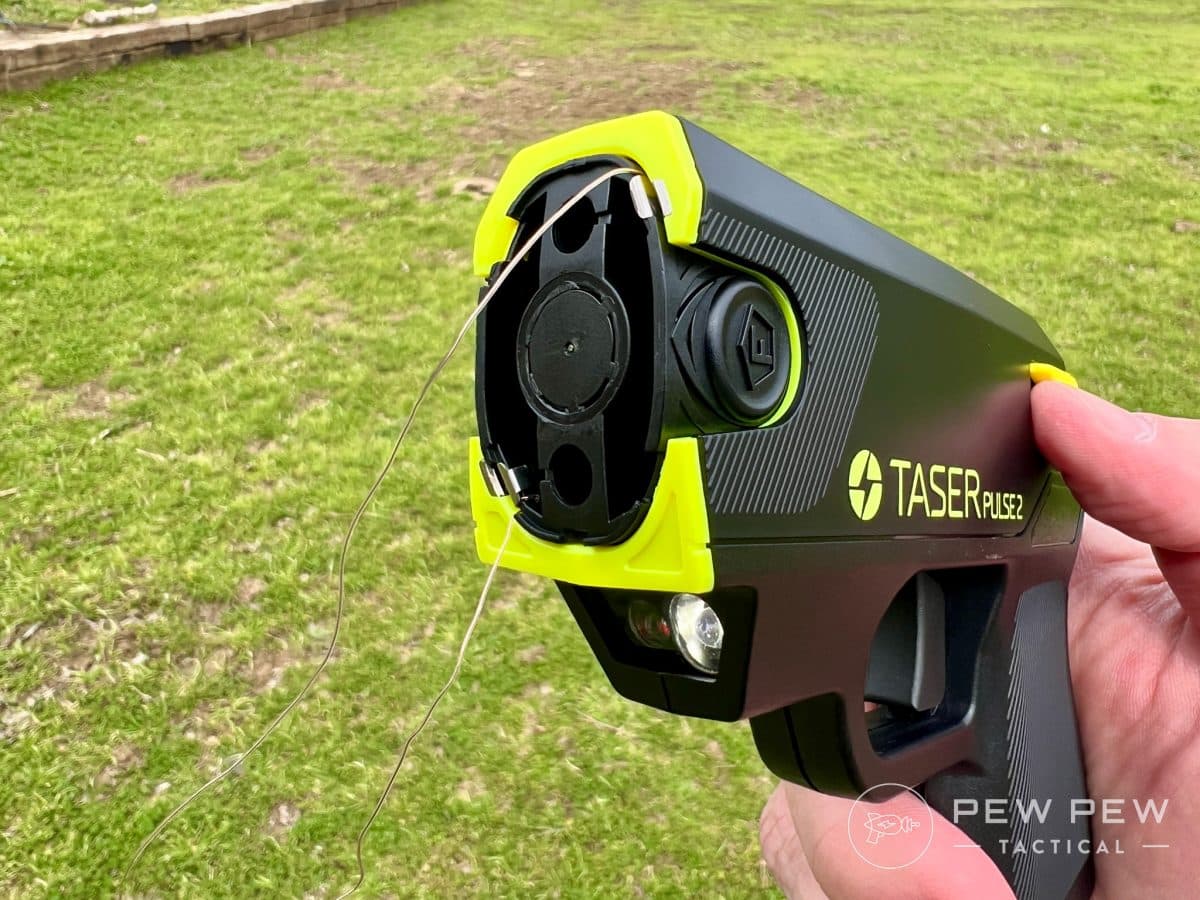
Making sure the Pulse 2 was off, I pressed the sides of the deployed cartridge and wiggled it until it slid free. This was a little difficult, but eventually came with persistence.
I then repeated the aforementioned loading procedure and prepared my next shot. Stepping up to 12 feet away, I could finally see the laser pointer on the target.
Again, I pressed the trigger and heard the pop of the cartridge deploying its shocking payload. This time, my accuracy was better, and my two barbs struck center mass on the target’s silhouette.
You can watch my second try below...
One of the barbs hit near the navel and stuck in the cardboard while the other passed through the target near the chest. This was simply because the cardboard was not present near the chest area of the target backer.
With a solid hit, I had completed a circuit and the Pulse 2 crackled away. Electricity poured through the target in its programmed cycles.
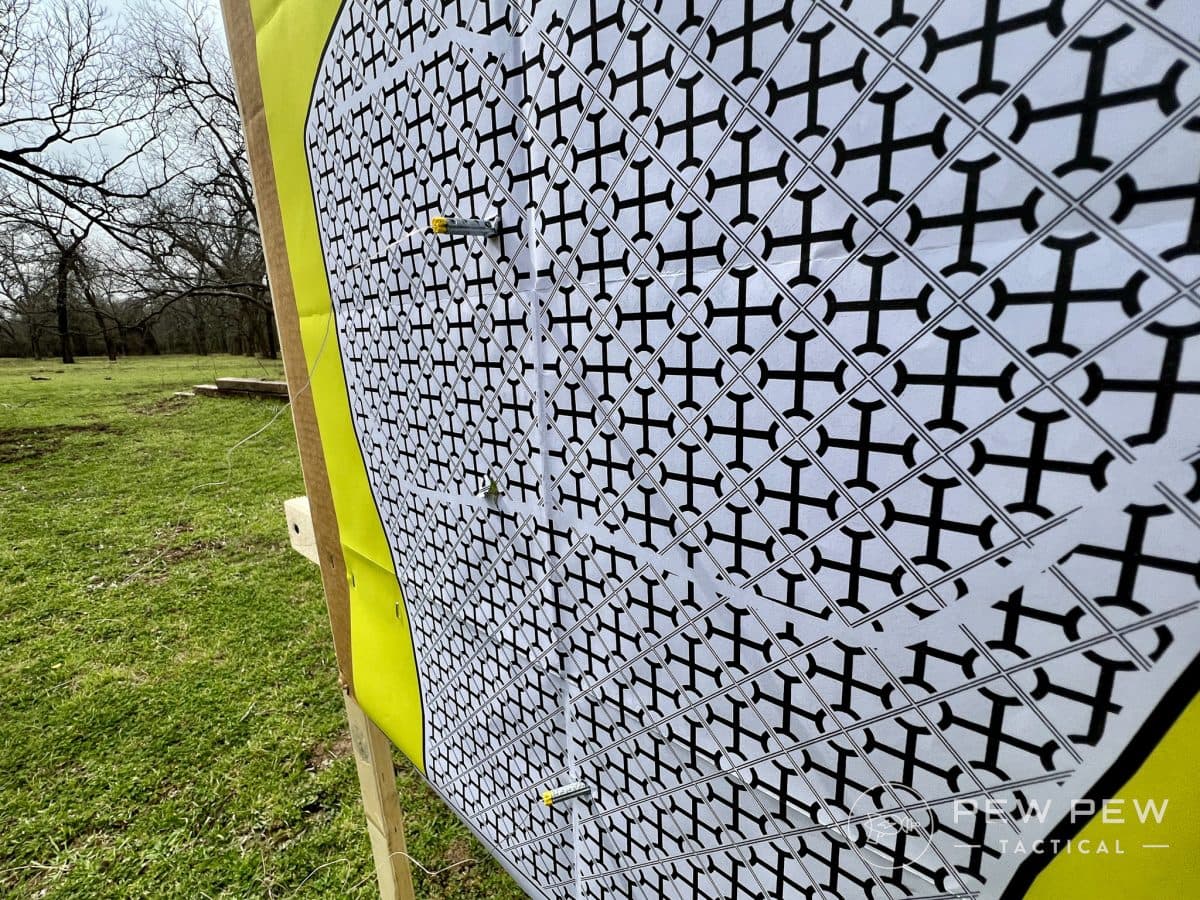
A hit like this would have been ideal to achieve NMI and lock up my target had I hit skin. This practice reinforced how close you need to be for the Pulse 2 to be effective.
The barbs stick in about ½ inch deep when they stay in the cardboard. They’re pretty easy to remove by pulling on them.
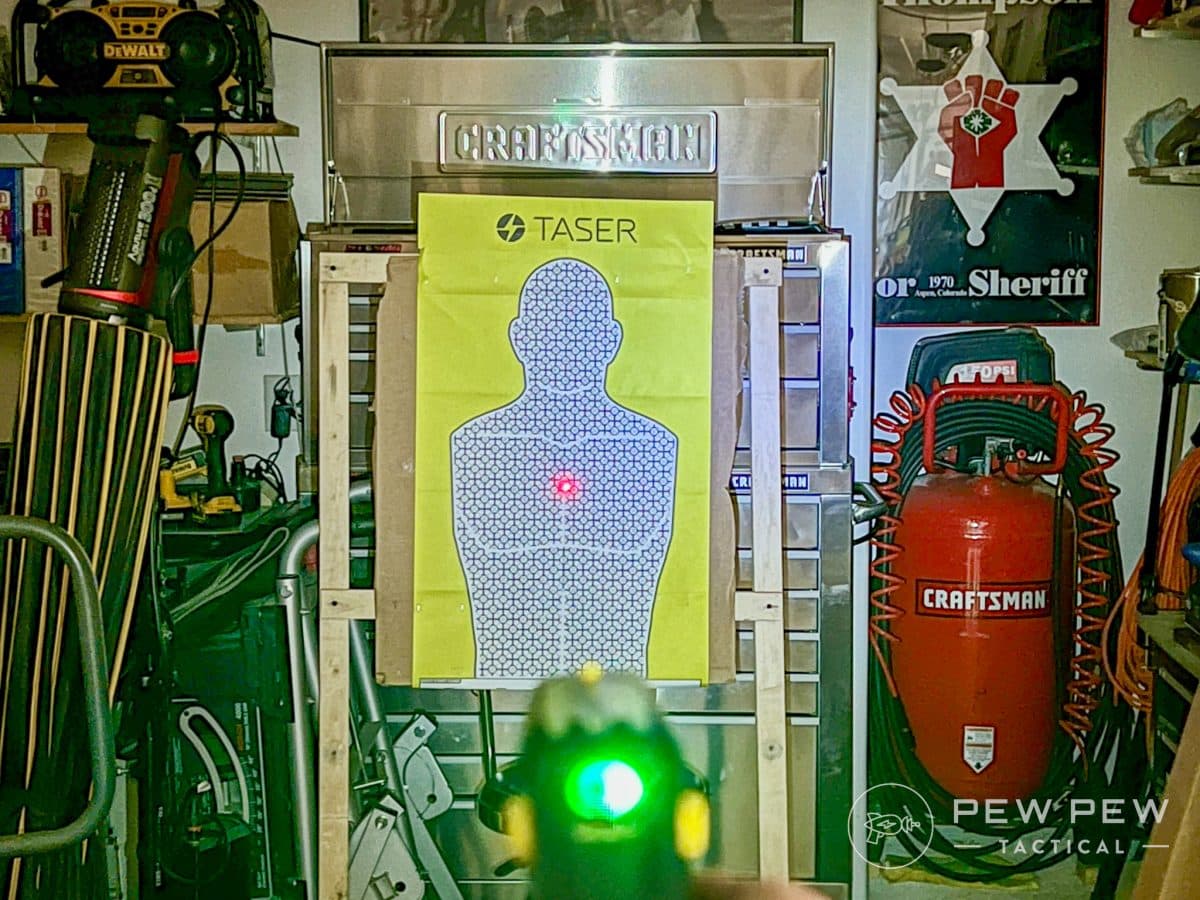
Later, I tested the light and laser combination from 15 feet on the same target in my garage. I wanted to see how it looked in the dark.
While the laser dot was much more visible, and the light did an adequate job of illuminating the target, I’d still recommend carrying a dedicated flashlight with solid features.
Realistically, reloading isn't likely in a defensive situation, so there's no need to carry a second cartridge. If the first round doesn't work, it's time to switch to stun mode or run.
Speaking of that, the Pulse 2 comes with a stun mechanism. Touch an assailant with the end of the unit and press the trigger to deliver a painful shock.

TASER Limitations & Considerations
First, I think it's important to note that I was trained in and carried a TASER on duty as a deputy sheriff for a few years. I have deployed TASERs and seen them used in several use-of-force incidents.

While they are an alternative to firearms, there are some important factors to consider when choosing the TASER route.
First, the fundamental laws of electricity still apply. Heavier clothes or multiple layers can interfere with the TASERs ability to transfer electricity. My career was in Colorado, so folks wore cold-weather garments much of the year. There were times a TASER was unable to stop people simply because they were wearing heavier clothing.
Interestingly, it’s often an all-or-nothing proposition. You either get two solid hits and lock someone up, or you don’t. Occasionally, you’ll get one connection, and the other is fleeting, causing intermittent muscular lockup only when the subject completes the circuit through movement.
Regardless, the level of uncertainty necessitates a backup plan in case your deployment doesn’t go as intended. That backup can be anything from using the stun, calling for help, or running away.

Besides distance and clothing, environmental factors like weather may affect the ability to deploy a TASER. TASER says the Pulse 2 is not rated for water usage, and it isn’t hard to imagine why, since water conducts electricity. Heavy rainfall might alter your ability to deploy the TASER -- so be mindful.
Why Carry the TASER Pulse 2?
The Pulse 2 seeks to incapacitate a person without causing them permanent harm. This device has the potential to accomplish this from 15 feet, but also has a stun feature (causing pain) if the first effort doesn’t work.
TASER also offers the Safe Escape Product Replacement Guarantee, which means they’ll replace your device if you use it in an incident documented by police. (Other restrictions like proof of purchase apply.)
If you're looking for a defensive tool that is non-lethal -- whether that's because you can't legally carry a firearm in your area or don't feel comfortable doing so -- the Pulse 2 presents an option to protect yourself.
Should You Upgrade from the TASER Pulse+?
Yes.
The Pulse+ was discontinued in 2022, so support outside of warranties and guarantees will dwindle. While the functions and features are generally the same, the Pulse+ had access to Noonlight, a monitoring app that would automatically notify emergency responders when the Pulse+ was activated.
Pulse products and the Bolt 2 use the same Taser self-defense cartridges but the Pulse 2 does not come with app access.
TASER Pulse 2 Specs & Features
Specs
- Action: Electronic Control Device (ECD)
- Capacity: 1 shot per cartridge
- Length: 5.25”
- Width: 1.25”
- Height: 4.75”
- Weight: 8 oz.
- Comes with: 2 cartridges, lithium battery, target, soft sleeve
Features
- Safe Escape Product Replacement Guarantee
- TASER & contact stun
- Aiming laser & light
By the Numbers
Reliability: 5/5
During both cartridge deployments, the Pulse 2 was perfectly reliable. In addition, all spark tests ran the full 30-second cycle without fail.
Ergonomics: 4/5
The controls are easy to reach and use, and the Pulse 2 will fit a wide variety of hand sizes. It’s also light and small enough to conceal and carry easily.
Accuracy: 3/5
Proximity is the name of the game. You will need to be within 3-4 arm lengths of a person to ensure you get an accurate hit. Targeting assists (light/laser) are better in dark settings.
Customization: 2/5
While there are a few holster options, there’s not much in the way of customization available to the Pulse 2.
Value: 3/5
For $400, you get a laser pointer and flashlight-equipped electronic control device with two cartridges and the capacity to stun.
Overall: 3.5/5
Accessories for the TASER Pulse 2
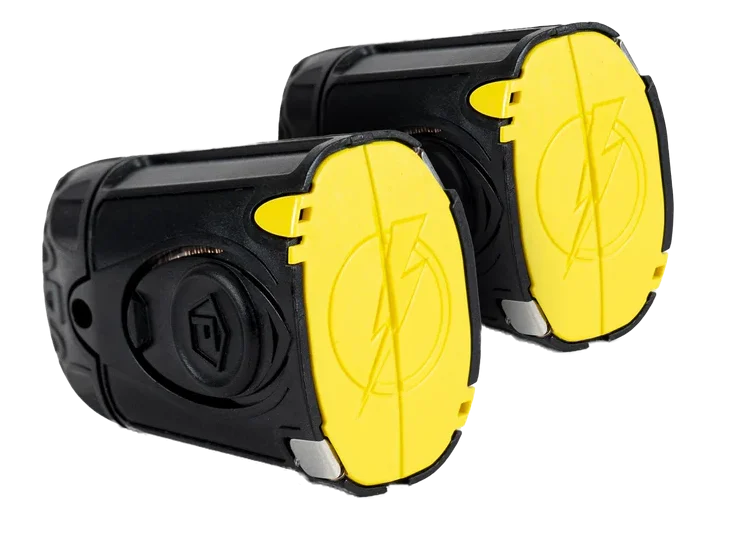
You'll want to spend some time practicing with the Pulse 2 to find out how accurate it is at various distances. Extra cartridges up front will come in handy.
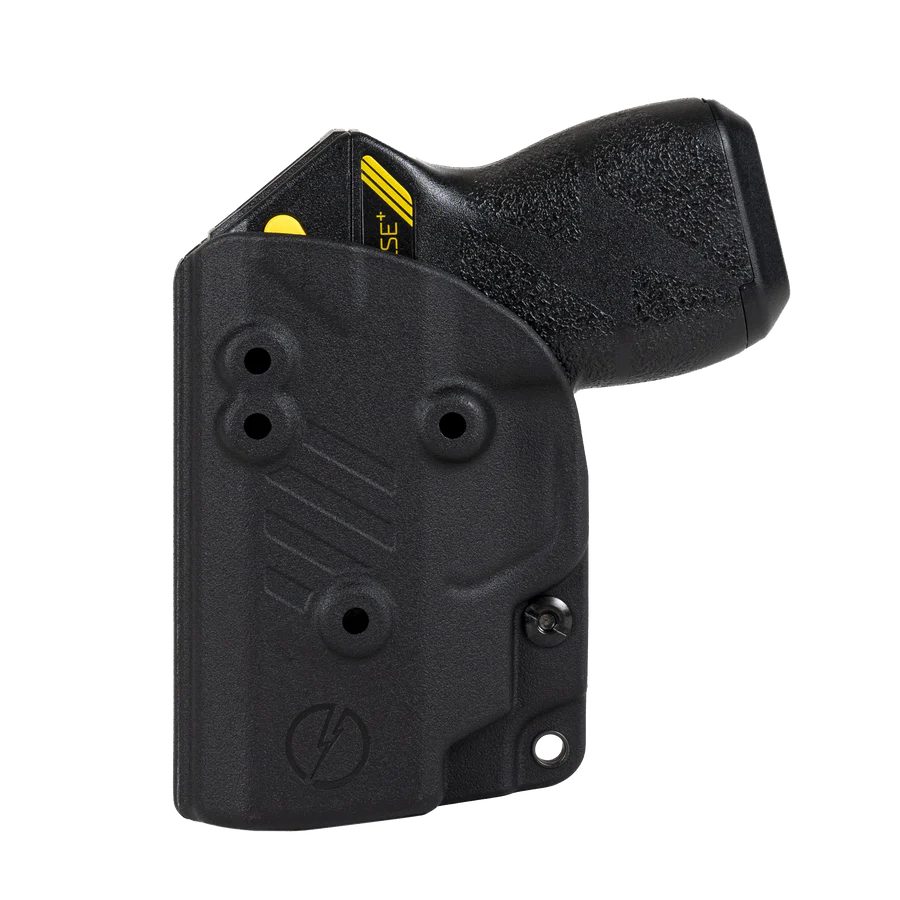
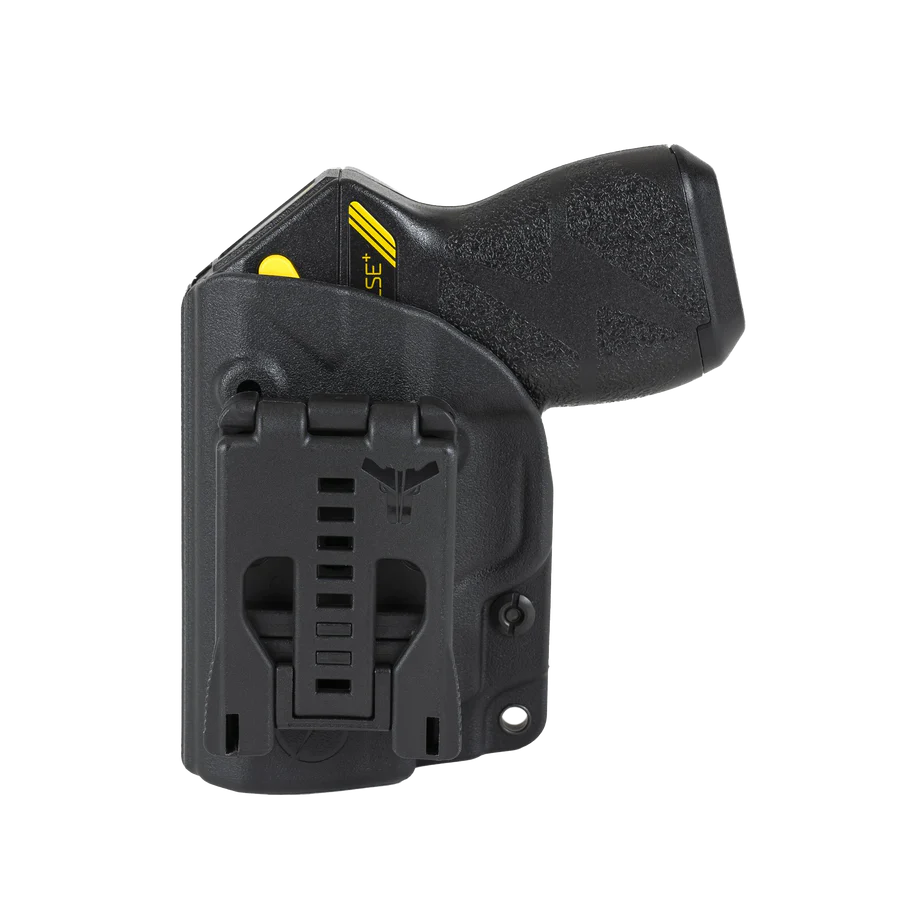
A more rigid holster design will give you an easier draw than fishing the Pulse 2 out of a pocket. Check out this IWB option for great concealment.
In addition, if you'd rather carry the Pulse 2 in an OWB, Blade-Tech has another great holster here. At these prices, you could get both and increase your options.
TASER Bolt 2: Another Option
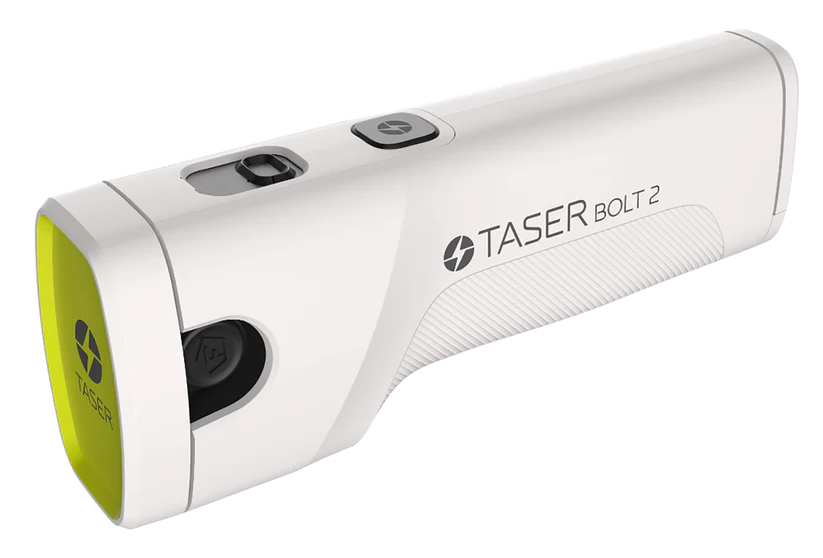
If the gun-shaped Pulse 2 gives pause, but you want the same features, consider the TASER Bolt 2. This product is shaped like a flashlight but functions similarly to the Pulse 2.
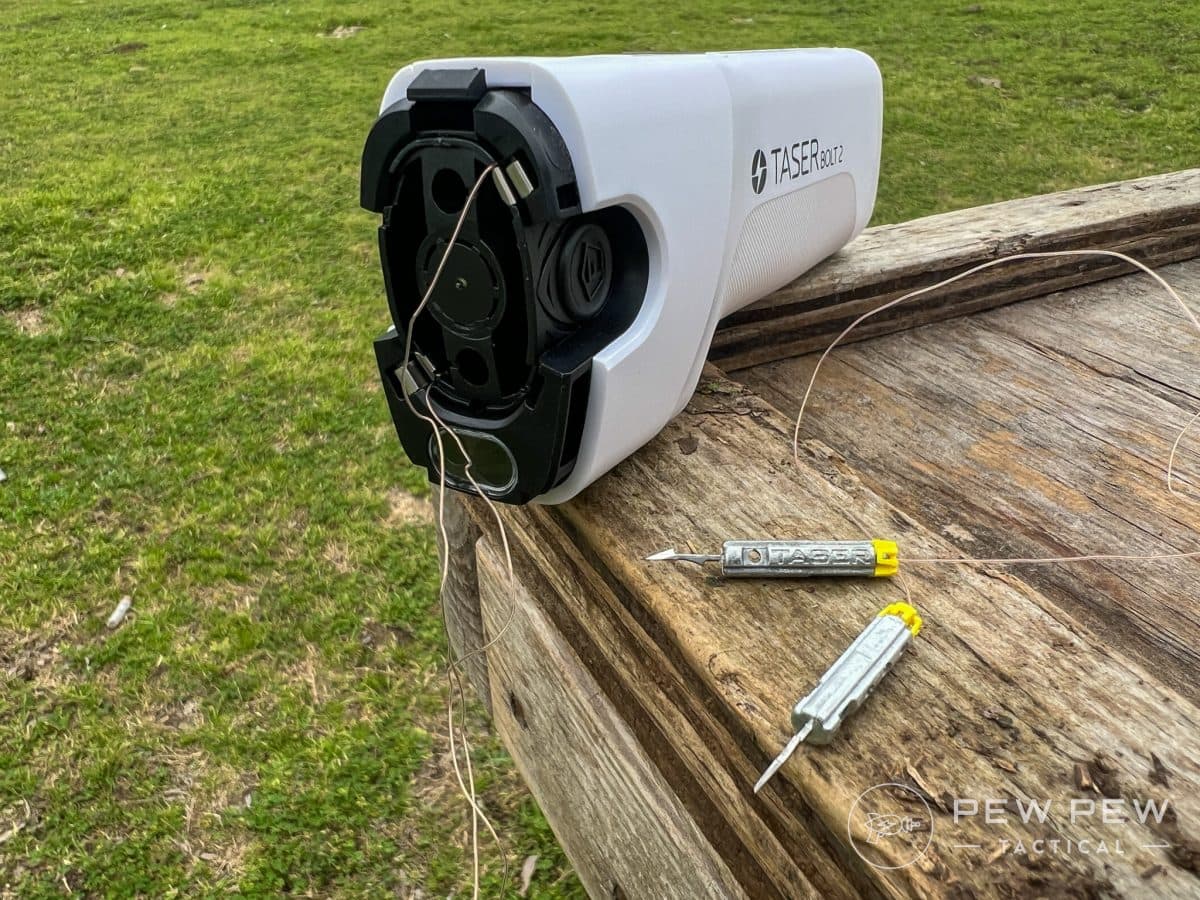
Using the same cartridges, the Bolt 2 fires wired probes within 15 feet. It features a red dot pointer and flashlight as well. In addition, the unit has contact stun capability.
We tested this unit and found it to be very similar to the Pulse 2, though aiming is clearly different. There are no sights, so users have to rely on the laser pointer (or proximity) for targeting.
Get close for best results!
You can watch it in action in the video clip below!
How We Tested the TASER
For this review, we tested the TASER Pulse 2 with the plastic sights and used the onboard light and laser pointer. We fired two cartridges from 15 feet and into the test accuracy.
In addition, we test-fired after the probes were deployed and fired the Pulse 2 without a cartridge for stun capacity.
We also tested the trigger on the Pulse 2 with a Lyman Digital Trigger gauge to accurately assess the actual trigger pull weight.
Meet the Experts
At the helm of this review was Pew Pew Tactical Content Producer Sean Curtis. Sean has been shooting since childhood, but really began to delve into guns more during his law enforcement career. He spent over two decades in law enforcement, where he became a POST-certified handgun instructor and NLEFIA Red Dot Instructor and received CLEFIA Advanced Firearms Instructor Training and AR-15 armorer training. He has since attended a variety of training, including Tactical Performance Center Handgun Mastery & Carbine Mastery, and earned USCCA rifle instructor certification. Aside from training and prior to joining the Pew Pew Tactical team full-time, Sean wrote for several gun publications, evaluating and testing guns and gear, and has written hundreds of articles.
This review was edited by Editor-in-Chief Jacki Billings, who runs Pew Pew Tactical’s experienced team of reviewers. Jacki is a member of the Society of Professional Journalists, ACES: Society for Editing, and the Professional Outdoor Media Association, and has her bachelor’s degree in Mass Communications. She has worked as a media professional for close to 20 years, specializing in gun media for almost 10 years, and has worked as an editor for five years. She uses her extensive professional journalism and editing experience to set testing protocols and editorial standards.
TASER Pulse 2: Final Verdict
While its limitations should be considered, the Pulse 2 is a viable self-defense option for people who want to stop attackers with minimal lasting harm. Our testing showed the unit was reliable and functioned as intended with every use.
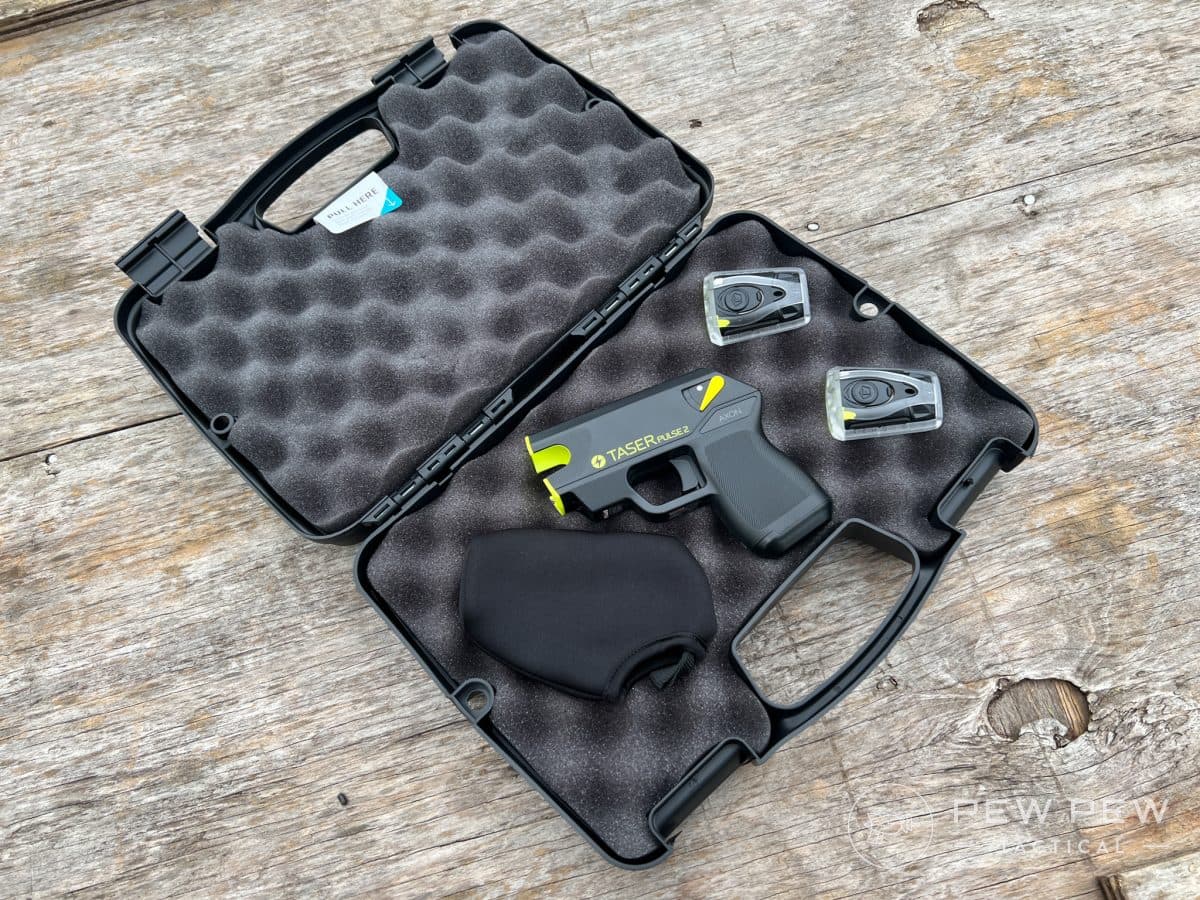
Even if the probes don’t connect, the unit has a painful stun feature to back it up. Whether it prevents an attack or stops one, the Pulse 2 can provide you and your loved ones with peace of mind.
Will you be picking up a Pulse 2? Let us know in the comments below. Check out our other less lethal recommendations: Best Stun Guns & Best Pepper Spray.
Latest Updates
April 2025: Pulse 1 was discontinued. So this is a complete rewrite using the latest Pulse model.