
Best Red Dot Magnifiers [Real Views]
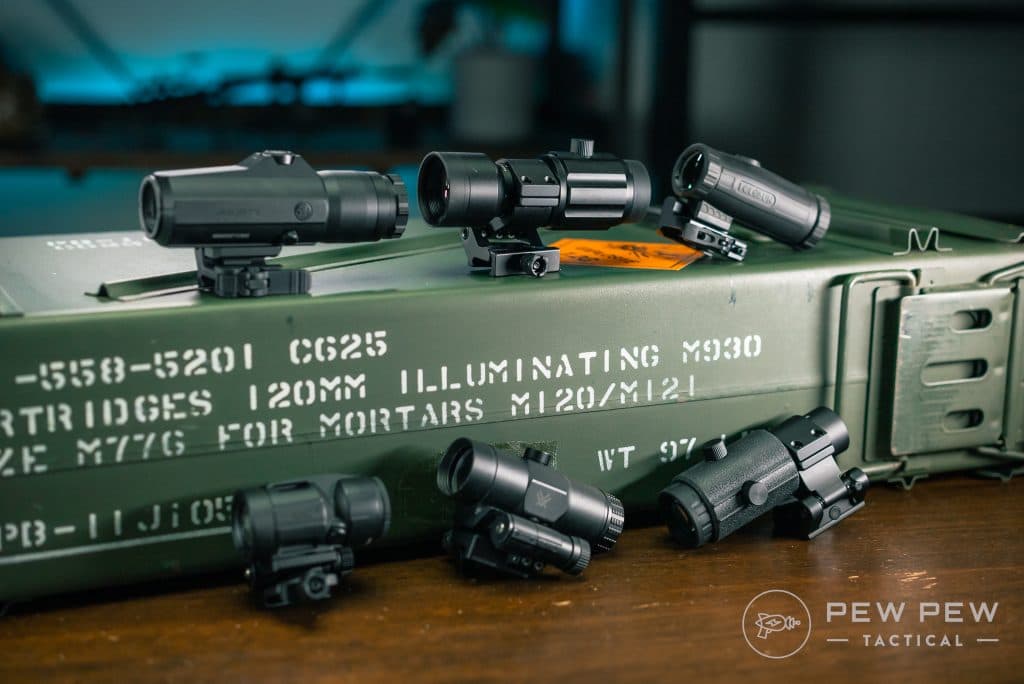
Want to extend the range of your red dot? These are the best red dot magnifiers for any budget and build. Go long!


We review products independently. When you buy through links on our site, we may earn a commission to help support our testing. Learn more.
Red dots are great at close-quarters engagements, but they kind of strugge at longer distances. You can fix that by adding a magnifier.
It doesn't have to break the bank, either!
We tested a ton of affordable magnifiers (plus a few bonus picks) so you can get a real look at what you're paying for and find the best red dot magnifier under $200.
By the end of this list, you'll know the best one for your budget. Let's go!
The Quick List
- Best Value: Vortex VMX-3TJump to details ↓
- Best Budget: Primary Arms LER 3X Gen 4 MagnifierJump to details ↓
- Best Mid-Tier: Vortex Micro3X MagnifierJump to details ↓
- Most Compact: Sig Sauer Juliet3-Micro 3X MagnifierJump to details ↓
- Best High-End Magnifier: Sig Sauer Juliet6 6X MagnifierJump to details ↓
- Editor's Pick: Holosun HM3X 3x MagnifierJump to details ↓
Table of Contents
Red Dot Magnifiers Comparison Chart
| Magnification | Objective Lens Diameter | Field of View | Eye Relief | PicatinnyMount | Weight | Price | |
|---|---|---|---|---|---|---|---|
| Holosun HM3X | 3x | N/A | 7 degrees | 2.75" | QD release | 10 oz | $199 |
| Vortex VMX-3T | 3x | 27 mm | 7.3 degrees | 2.2" | Torx screws | 12 oz | $199 |
| Primary Arms 3X LER Gen 4 | 3x | N/A | ~7.2 degrees | 2.64" | Not included | 8 oz | $99 |
| Sig Sauer Juliet3-Micro | 3x | 22 mm | 6.8 degrees | N/A | Thumb screw | 10 oz | $169 |
| Sig Sauer Juliet6 | 6x | 24 mm | 4 degrees | N/A | QD release | 15 oz | $455 |
| Vortex Micro3X | 3x | 22 mm | 7.3 degrees | 2.64" | QD release | 10 oz | $299 |
How We Chose the Best Magnifiers
Input for this article came from the entire Pew Pew Tactical team, including writers, editors, and freelance contributors.

This article is the result of about two months of hard use and hundreds of rounds. We also update articles to include the latest and greatest, so there are some recent additions that w may not have put through the same testing protocol, but we're psyched about nonetheless.
There are lots of other great magnifiers out there, and we've used many of them. The trick this time was keeping the price down. Got something else to recommend? Shout it out in the comments!
Best Red Dot Magnifiers
1. Holosun HM3X - Editor's Pick
Pros
- Clear glass
- Edge-to-edge clarity
- Dust and water rated
Cons
- Factory mount isn't the strongest
Specs
- Magnification: 3x
- Objective Lens Diameter: N/A
- Field of View: 7 degrees
- Eye Relief: 2.75"
- Picatinny Mount: QD release
- Weight: 10 oz
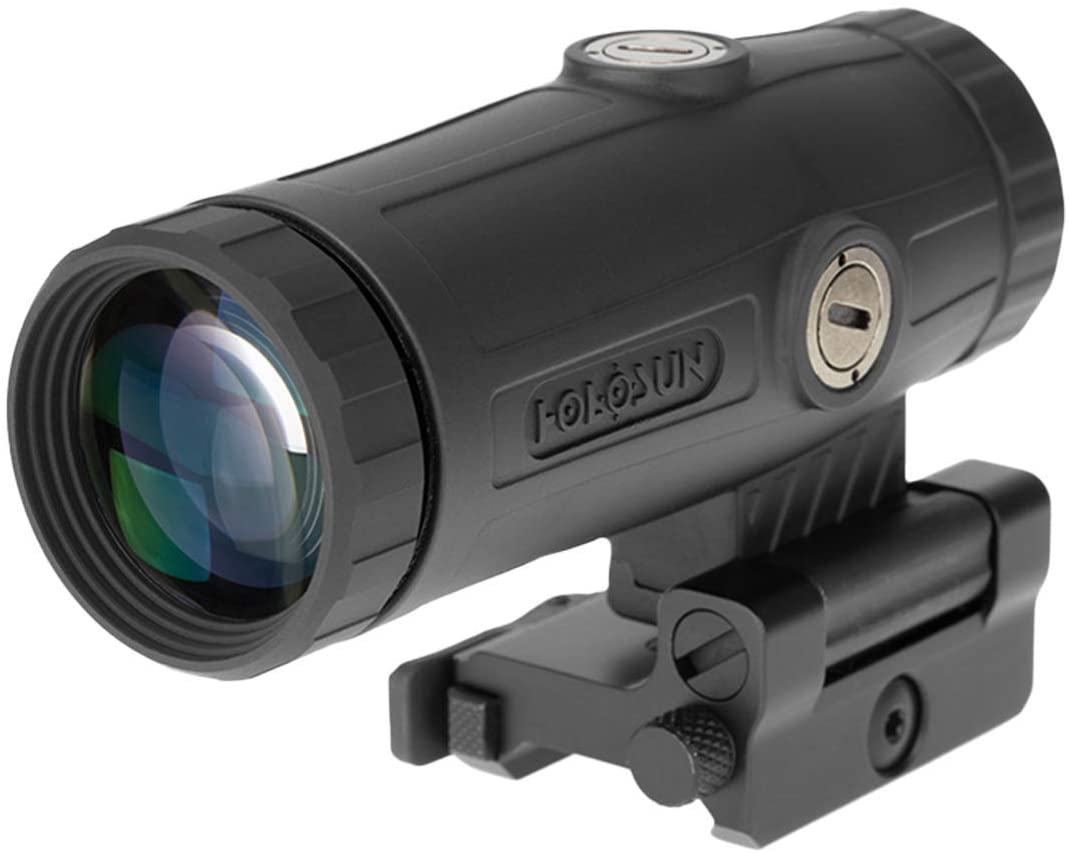
Holosun basically did everything right with the HM3X. After using all of these magnifiers, I have to say that this is my go-to.
It features a QD mount and an IP67 rating -- the only option we reviewed that was both dust and water-rated. It also boasts a 37-foot field of view at 100 yards and weighs just under 10 ounces.
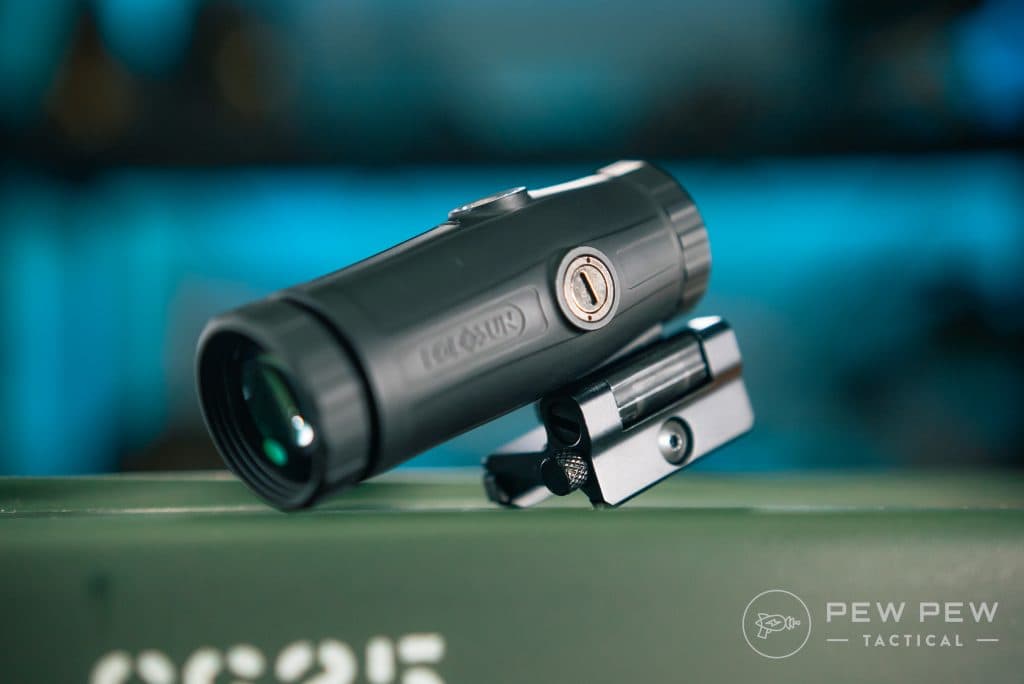
The flip-to-side mechanism relies on simple tension, with no buttons to push.
Edge-to-edge clarity and color are also really good -- far better than most of the others I tried.
If you want my top recommendation, Holosun wins.
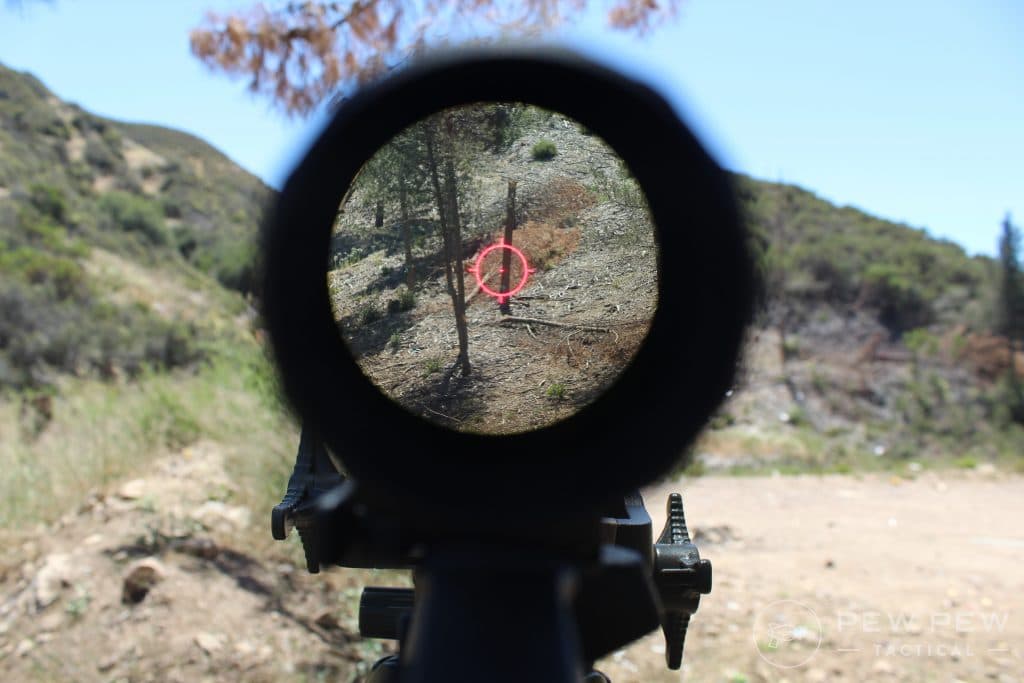
Have you tested the Holosun HM3X? If so, rate it below.
Readers’ Ratings
4.99/5 (2794 Votes)Your Rating
2. Vortex VMX-3T - Best Value
Pros
- Excellent warranty
- Good field of view
Cons
- Mediocre glass clarity
- Push button mount isn't our favorite
Specs
- Magnification: 3x
- Objective Lens Diameter: 27 mm
- Field of View: 7.3 degrees
- Eye Relief: 2.2"
- Picatinny Mount: Torx screws
- Weight: 12 oz
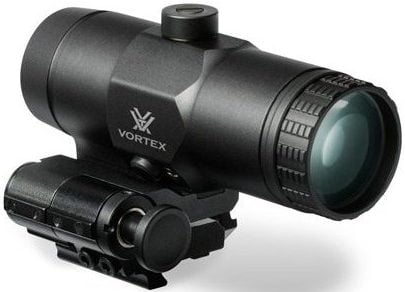
I think the part I like best about the Vortex is that the Vortex warranty always has my back. Outside of that, it felt a little dated because, well, this is an old optic that's still hanging around in the Vortex product catalog.
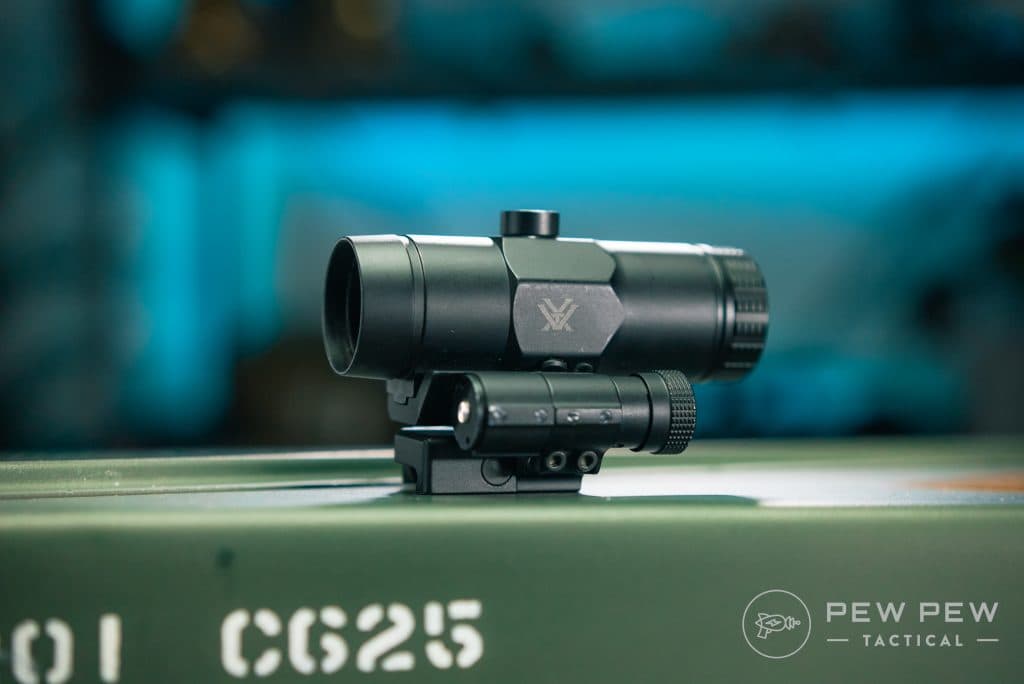
Don't get me wrong, the VMX-3T is still a good product, but it didn't stand out in terms of performance anymore. Glass clarity is usable but not great, price is average, weight is a little heavy, eye relief is fine, field of view is good but only by a foot, and there's no IP rating.
Plus, I really dislike the push-button style of mount. It's secure but a little slow to operate.
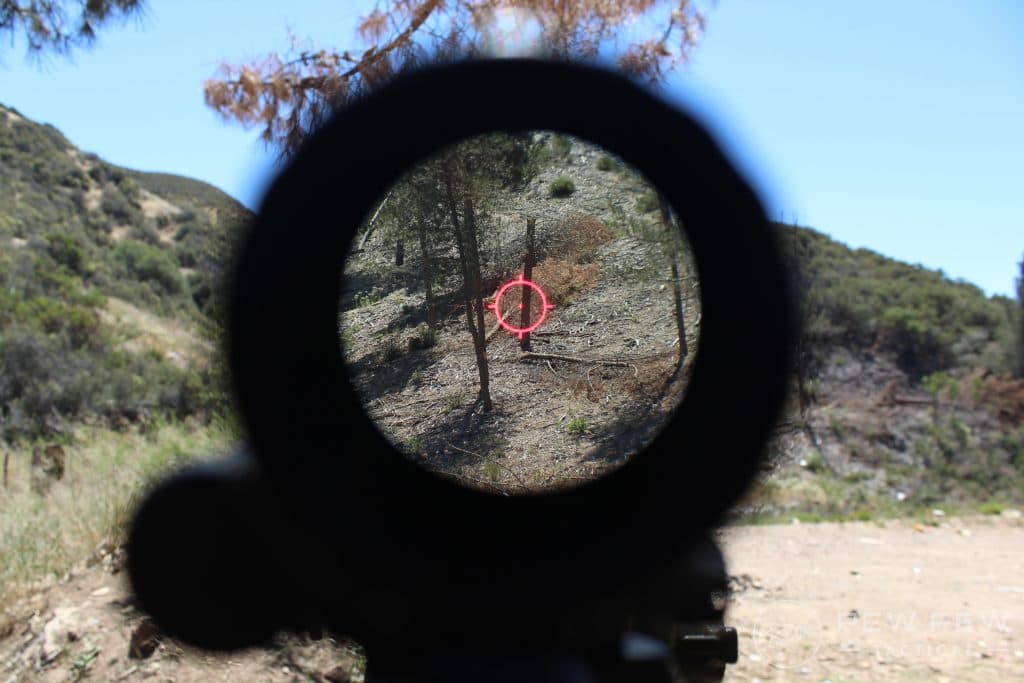
Bottom line, it's a good choice if you're looking for a solid value.
3. Primary Arms 3X LER Gen 4 - Best Budget
Pros
- Long eye relief
- Affordable
- Lightweight
Cons
- No mount included
- No IPX rating
Specs
- Magnification: 3x
- Objective Lens Diameter: N/A
- Field of View: ~7.2 degrees
- Eye Relief: 2.64"
- Picatinny Mount: Not included
- Weight: 8 oz
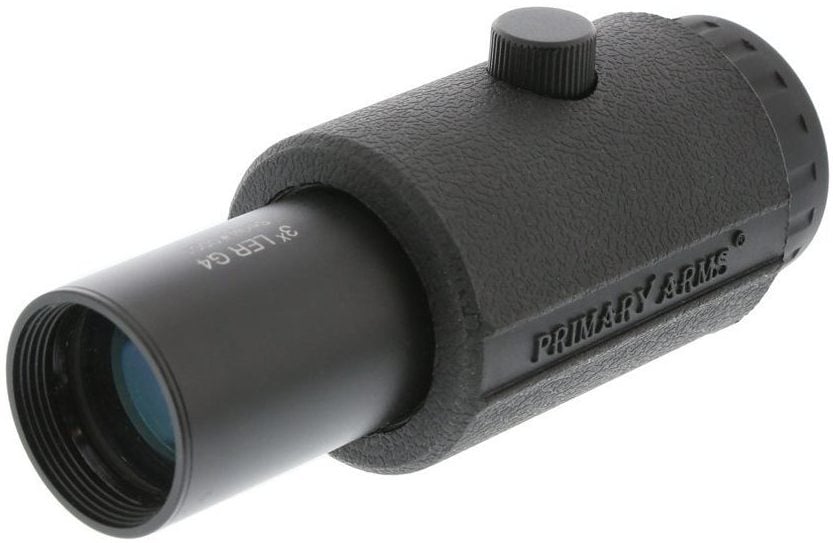
LER stands for Long Eye Relief, and it's true. The Primary Arms 3x LER has a roomy eye box.
For someone like me with a really long length of pull, I dig it a lot.
At less than $100, this magnifier comes in cheap. That's partially because it doesn't come with a mount. I used the similarly affordable Primary Arms Flip to Side, priced at $50.
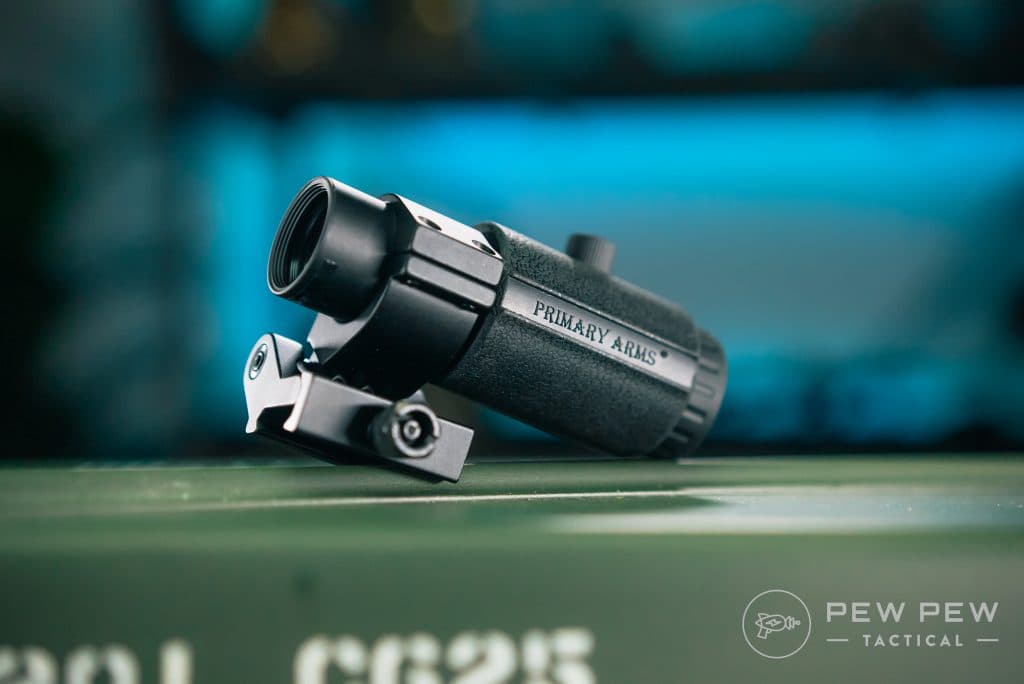
The lack of a mount is a blessing in disguise. No mount means you save some money on something you don't want and can, instead, grab the one you do want. There are lots of options.
On top of it all, this magnifier offers a great field of view, and feels pretty light at 7.9 ounces. The only downside is the lack of an IPX rating. That said, it's been durable in my use.
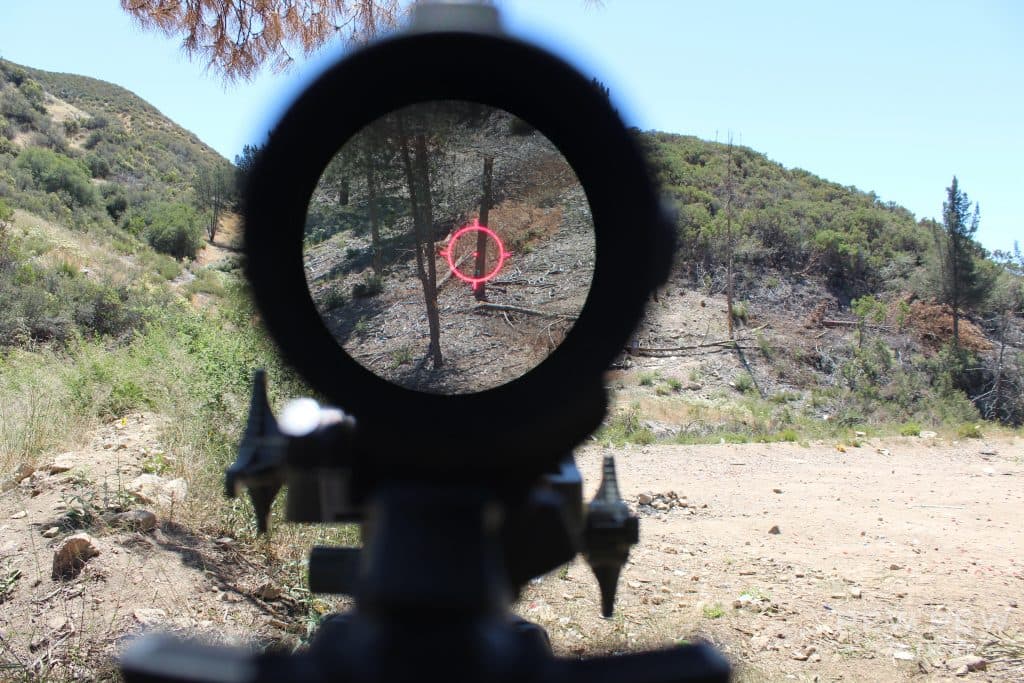
Overall, it's a fantastic budget option.
4. Sig Sauer Juliet3-Micro - Most Compact
Pros
- Small form factor
- Generous eye box
- Priced well
Cons
- Push button mount isn't our favorite
- Okay field of view
Specs
- Magnification: 3x
- Objective Lens Diameter: 22 mm
- Field of View: 6.8 degrees
- Eye Relief: N/A
- Picatinny Mount: Thumb screw
- Weight: 10 oz
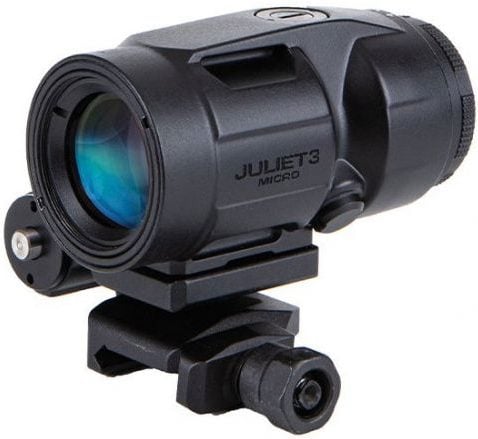
This is one of the best options, and one I strongly recommend for a tiny form factor -- the Sig Sauer Juliet3-Micro.
Though the field of view isn't amazing, it isn't bad; 6.8 degrees or about 35 feet at 100 yards. I'm a huge fan of Sig durability, and this one checks in at an IPX7 waterproof rating.
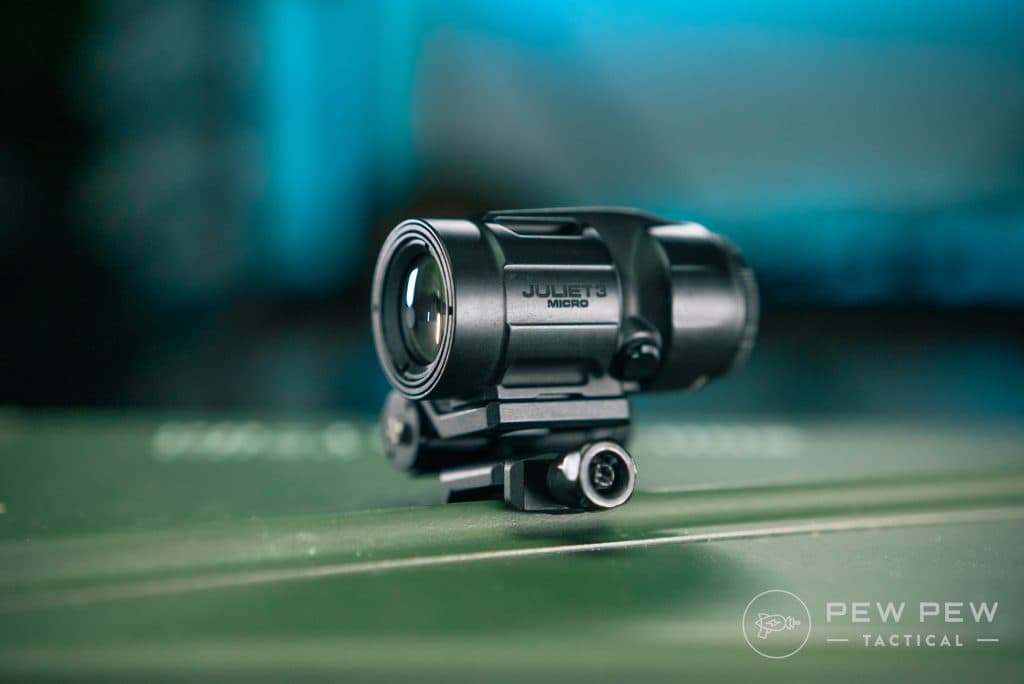
What really set it apart for me, though, was how easy it was to pick up visually.
The eye relief is average, but the eye box is large. Even with a camera, the Micro was almost always right there and easy to use.

The push-button mount isn't something I love, but it's good enough.
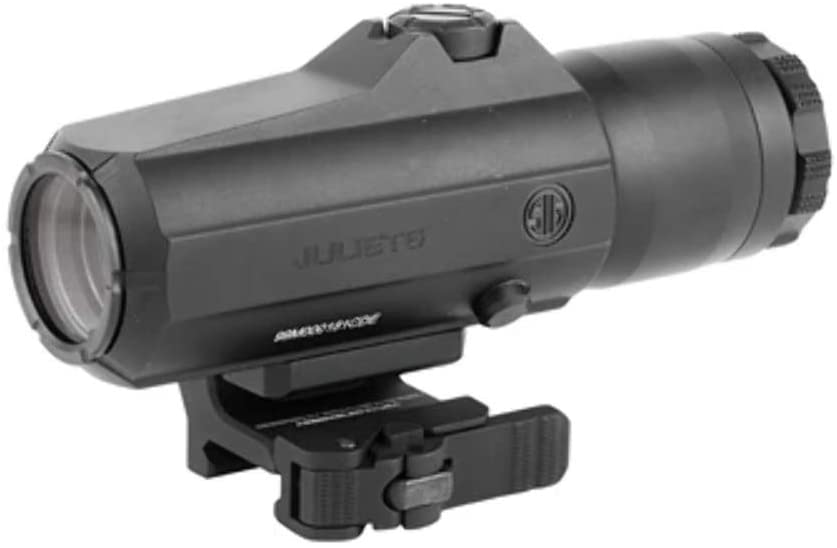
5. Sig Sauer Juliet6 - Best High-End Magnifier
Pros
- High magnification
- IPX8 rated
- Forgiving eye box
Cons
- Expensive
- Heavy
Specs
- Magnification: 6x
- Objective Lens Diameter: 24 mm
- Field of View: 4 degrees
- Eye Relief: N/A
- Picatinny Mount: QD release
- Weight: 15 oz
The Juliet6 6x magnifier is way outside the price range of the other options listed, but Sig sent it along with the Juliet3 so I put it through testing. Want to know what I learned?
It's big and heavy at almost 15 ounces, but the Juliet6 serves as the big sister of the Juliet3.
The field of view is not that great, running only 21 feet at 100 yards.
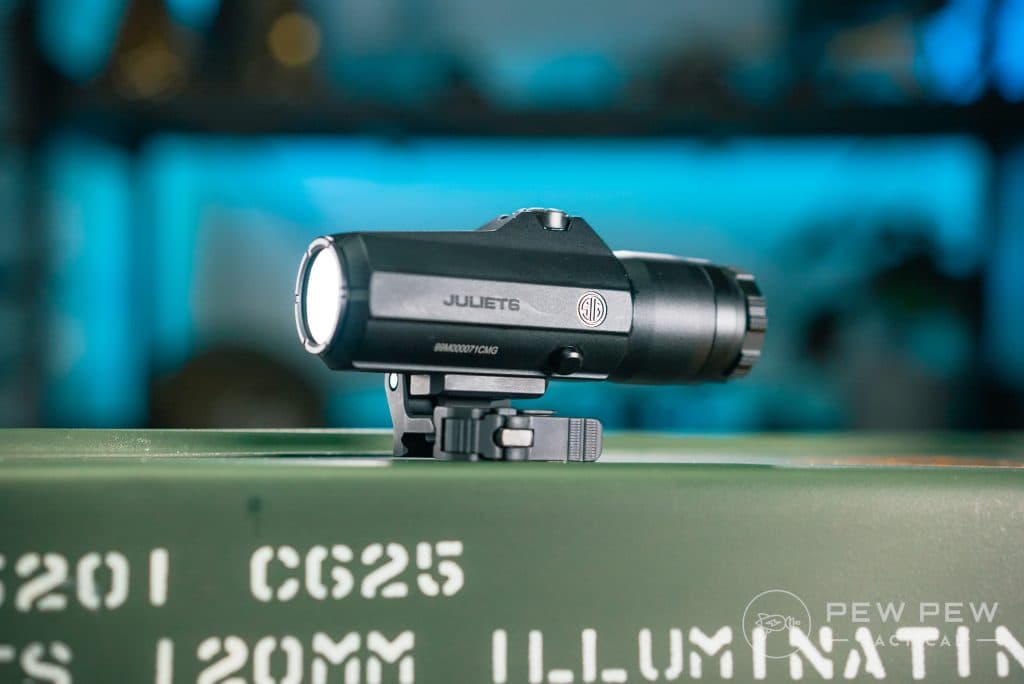
But it's IPX8-rated and offers a QD mount. The unit feels great and is easy to flip over. It's a really nice magnifier in general.
I would argue that if you're looking at spending this money on a 6x magnifier you might be better off with a magnified optic, but you do you.
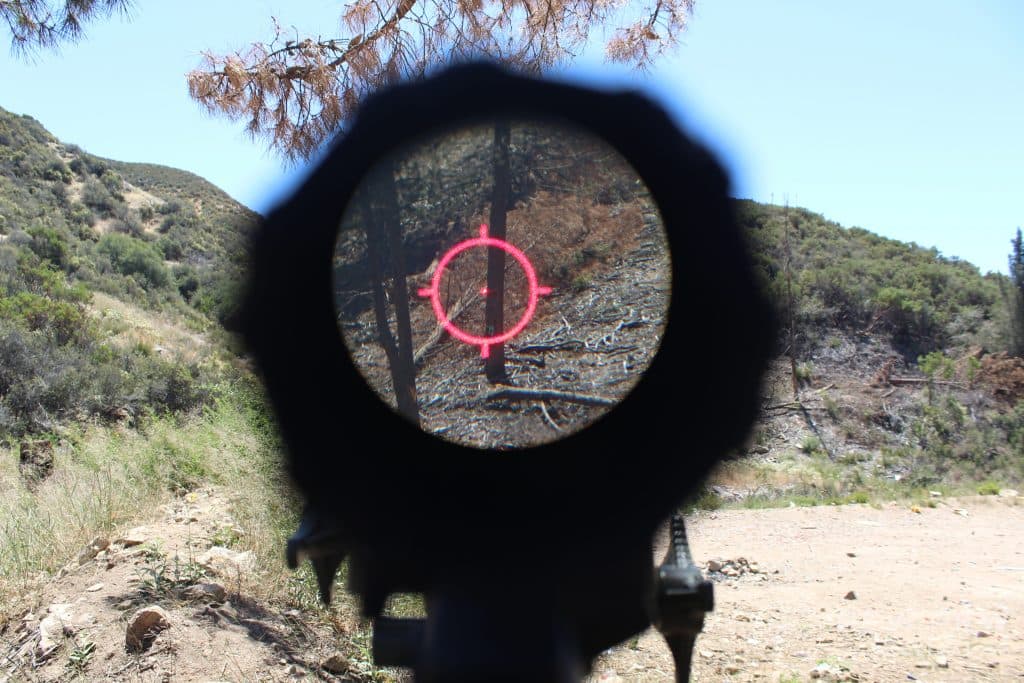
If you already have a red dot you like and don't want to replace it with an LPVO, this is a great way to get the same amount of magnification.
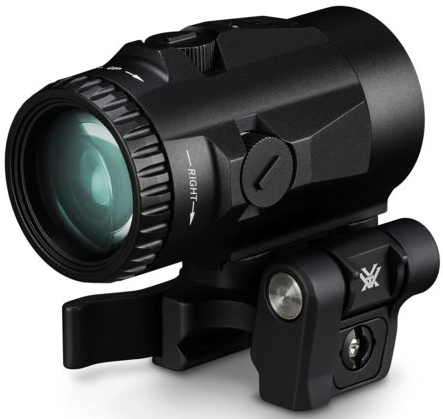
5. Vortex Micro3X - Best Mid-Tier
Pros
- Very compact and lightweight
- Improved optical system
- User-friendly with a killer warranty
Cons
- Just exceeds our budget
Specs
- Magnification: 3x
- Objective Lens Diameter: 22 mm
- Field of View: 7.3 degrees
- Eye Relief: 2.64"
- Picatinny Mount: QD release
- Weight: 10 oz
Here's another one that exceeds our $200 budget, but we wanted to include it since it's the newer version of the VMX-3T that we've liked for so long.
Compared to its predecessor (which is still available at a very attractive price), this one is noticeably smaller and lighter, a little bit more durable, and it offers better optical quality. Its cam system is also smoother to operate than the old push-to-swivel mechanism.
If you're willing to stretch your budget a little, this could be a really nice upgrade that you can grow into.
How to Pick the Best Red Dot Magnifiers
If you know that you want a red dot and magnifier instead of iron sights or an LPVO, and you set a budget of $200, you're well on your way to picking the best red dot magnifier for you.
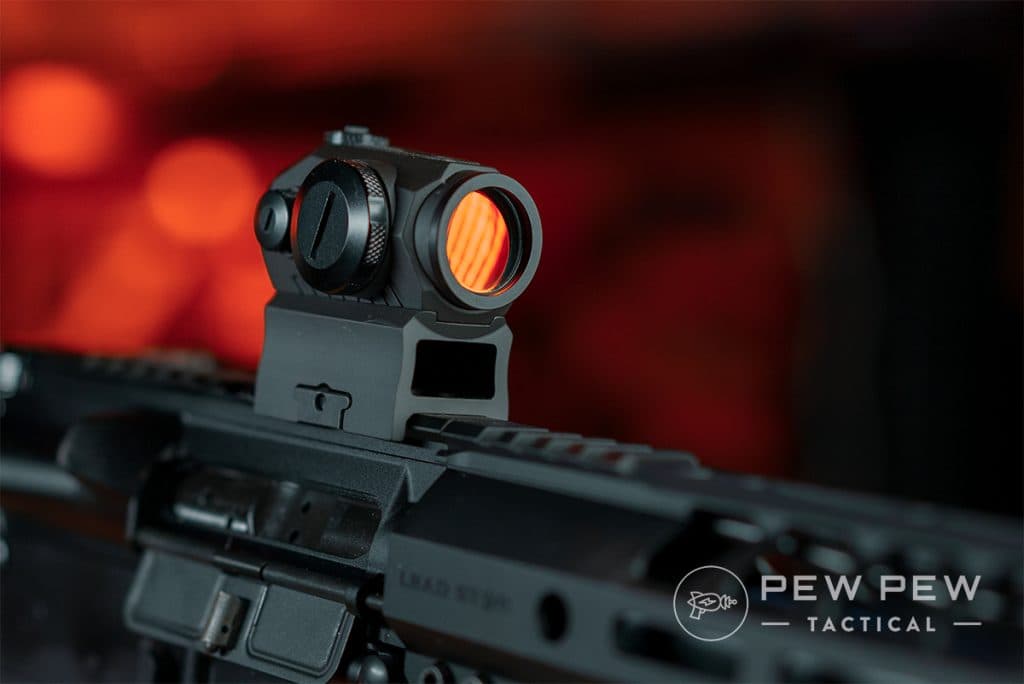
There are a few other factors to consider, though, so let's dig in.
Red Dots, Green Dots, Holographic Sights
Red dot magnifiers don't work alone, they team up with your red dot, green dot, or holographic sight to boost accuracy at longer distances.
We've tested a bunch of AR-15 red dots, and you have some great options under $200.
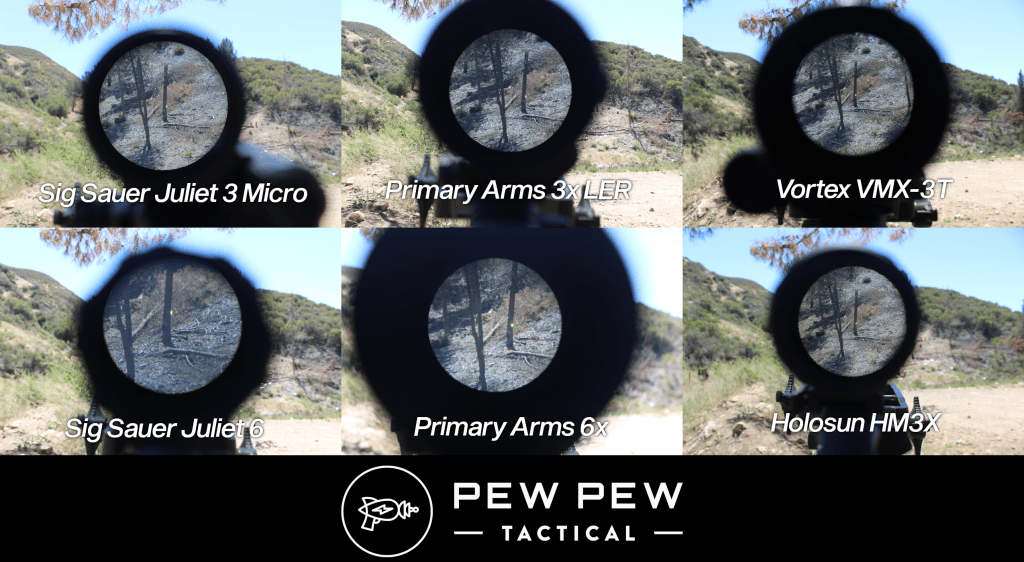
Don't like red? Try a green dot! Green is typically brighter so it performs better in extremely sunny environments, but it might be excessive indoors. If you have astigmatism that makes red dots look like a starburst, switching to a green dot might solve that.
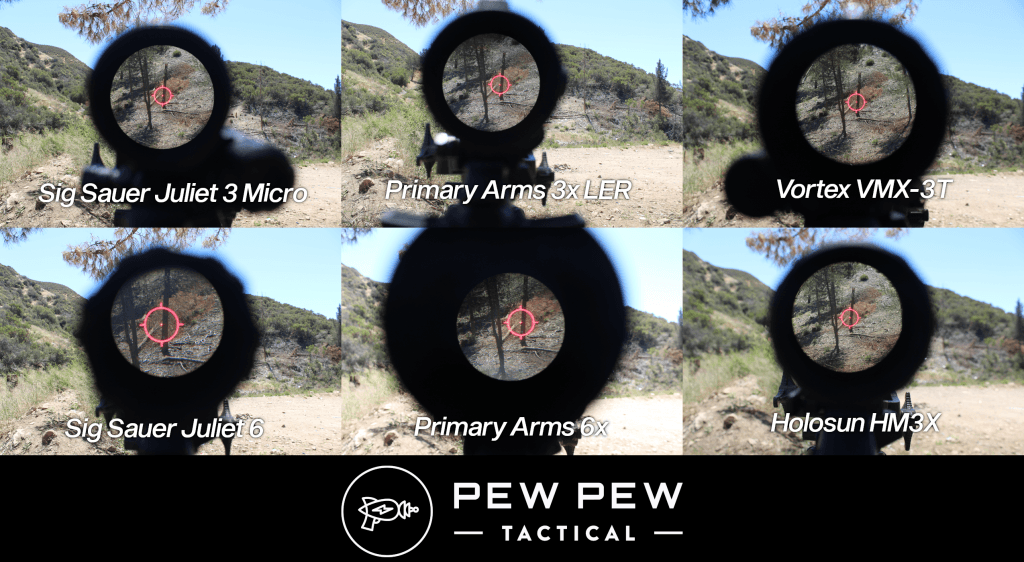
Holographic sights are significantly more expensive, but they have their advantages. If you want to learn more about them, join us for a deep dive into the red dot vs. holographic sight debate!
Red Dot Magnifier Mounts
All of these magnifiers mount to a standard Picatinny rail. That means they're compatible with your AR-15 upper receiver.
They do that in different ways, though.
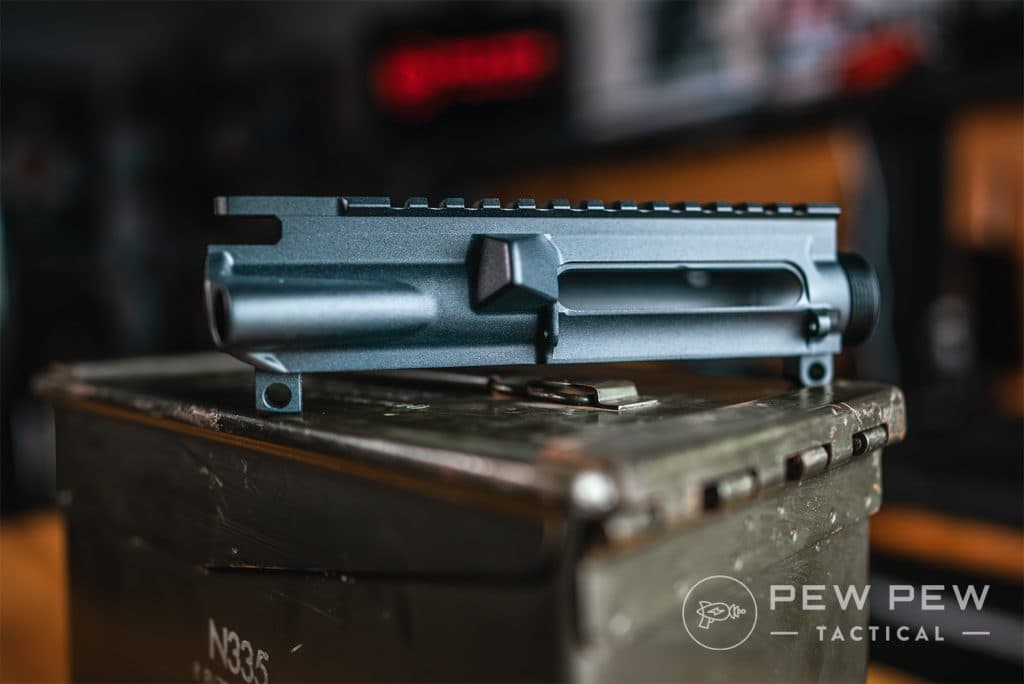
Some use Torx screws. These are secure (especially if you use a dab of blue thread locker) and simple. You need a tool to mount, tighten, or remove them, though, so you won't be doing any of those things on the fly.
We recommend using a paint pen to add witness marks so you know the screws haven't started to back out.
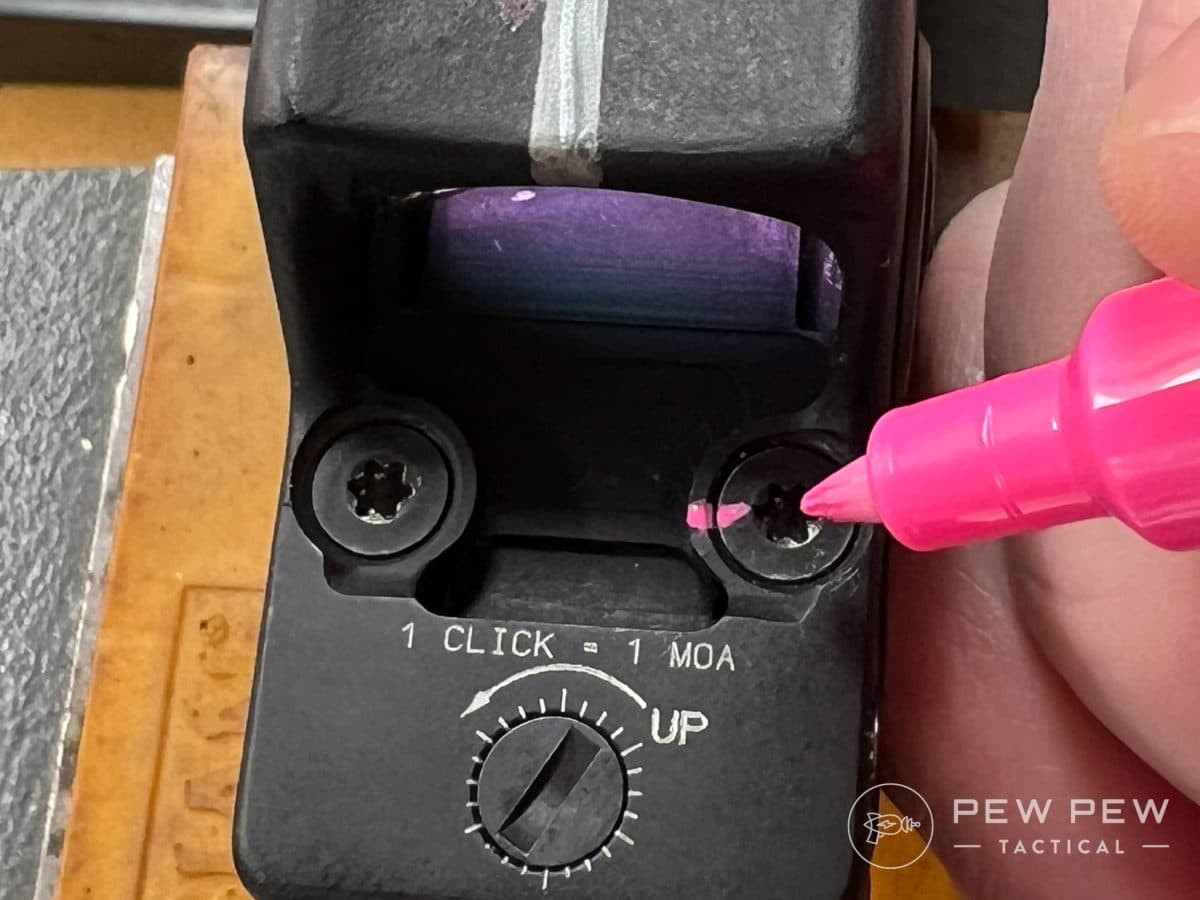
Others use thumb screws. They still screw into place on your Picatinny rail, but you can tighten them by hand if you need to.
The most expensive mount is a quick-detach lever or QD release. These are still secure, but you can pop them on and off without tools. In addition to cost, they also add some weight and mass.
Red Dot Magnifier Alignment
Before you pull the trigger on buying a new magnifier, you want to know that its height will work with your red dot. Don't worry about how tall the optics themselves are; focus on the height of the center of the window or lens.
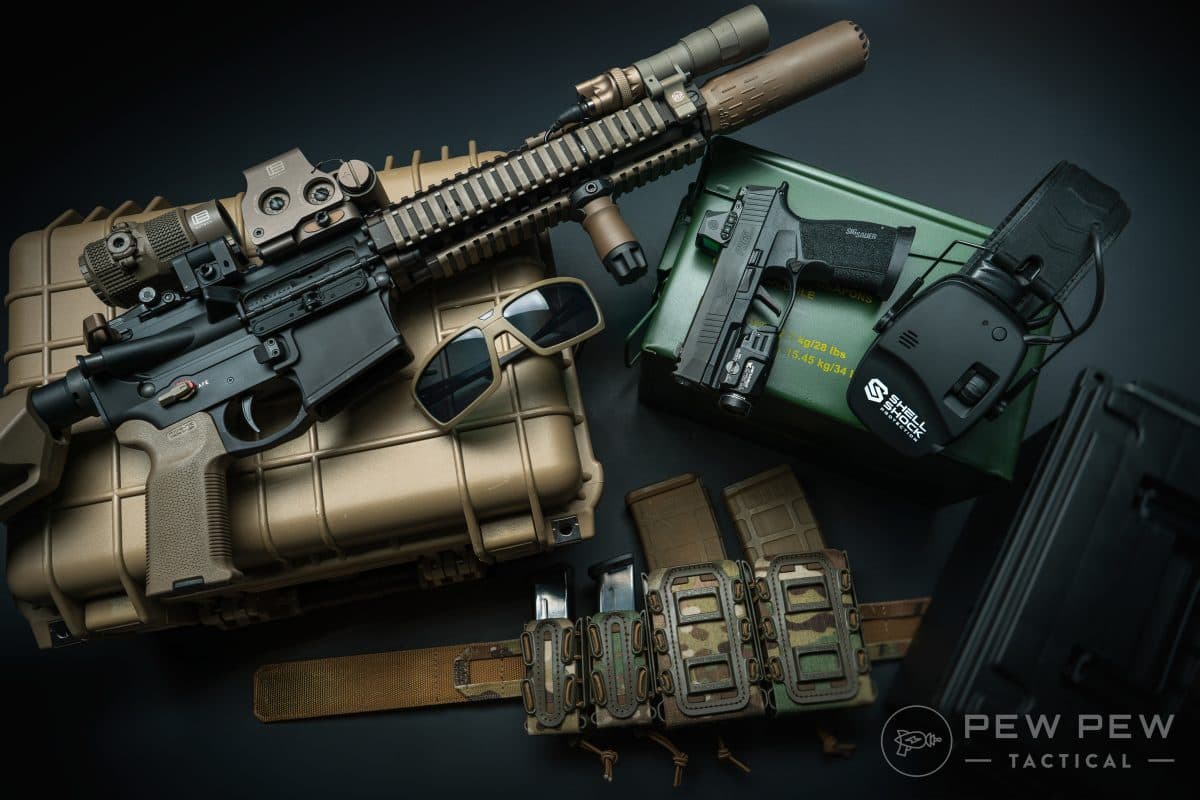
Once you mount your magnifier, you can fine-tune this alignment the same way you'd zero an optic (only this time there's no reticle).
Meet the Experts
This article comes to your from David Lane and Wyatt Sloan, Pew Pew Tactical editor.
David learned to shoot in the Boy Scouts and now spends most of his time working on or with firearms. Be it shooting, upgrading, building, tinkering, or writing about them - sharing his passion and knowledge of firearms with others is an everyday occurrence.
Wyatt is an NRA-certified instructor with previous experience as a USPSA competitor. Wyatt personally owns over 200 firearms and has 10 years of home-based FFL firearm sales. He has used his extensive experience with firearms at large to test guns for Pew Pew Tactical — evaluating them based on our standards and metrics.
Editing this article is Scott Murdock. Scott is a Marine Corps veteran who competed and qualified as a rifle and pistol expert while in service. In addition to shooting, Scott has written for a variety of publications, testing, researching, and evaluating guns and gear. He brings that knowledge and skillset to this article, editing and fact-checking for accuracy.
Editor-in-Chief Jacki Billings runs our experienced team of reviewers. She is a National Rifle Association Basic Pistol Instructor as well as a member of the Society of Professional Journalists, ACES: Society for Editing, and the Professional Outdoor Media Association. Jacki has a bachelor’s degree in journalism and has worked as a media professional for close to 20 years, specializing in gun media for almost 10 years. With 2,000+ articles to her name, she uses her professional journalism and editing experience to set testing protocols and editorial standards for Pew Pew Tactical.
Final Thoughts
When it comes down to it, though, there aren't a ton of differences between the Primary Arms, Holosun, Vortex, and Sig magnifiers on this list.
If you find one you like at a good price, get it!
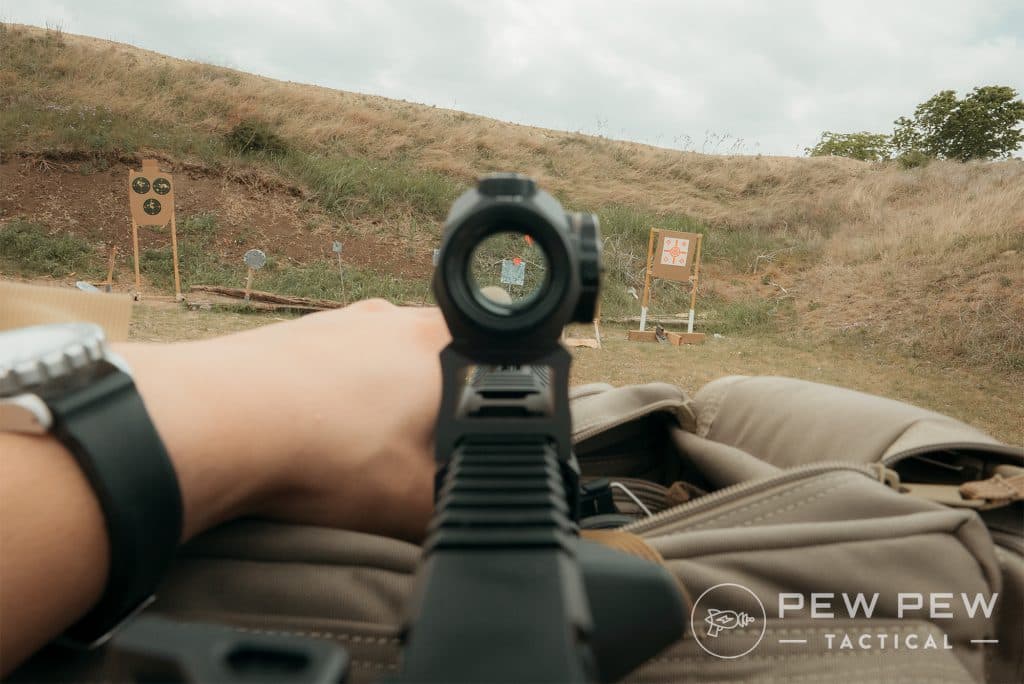
Got a magnifier to recommend? Let us know in the comments. Looking for tried and true combinations? Check out our Best Red Dot & Magnifier Combos, or check out the Best Red Dots on their own!
Latest Updates
- May 2025: Removed the Primary Arms GLx 6x. Added the Vortex Micro3X. Added a comparison chat and updated supporting content.
- Feb. 2024: Replaced Primary Arms 6x with the updated GLx 6x model.