
Best Body Armor [Tested]: Hard Plates & Soft Armor
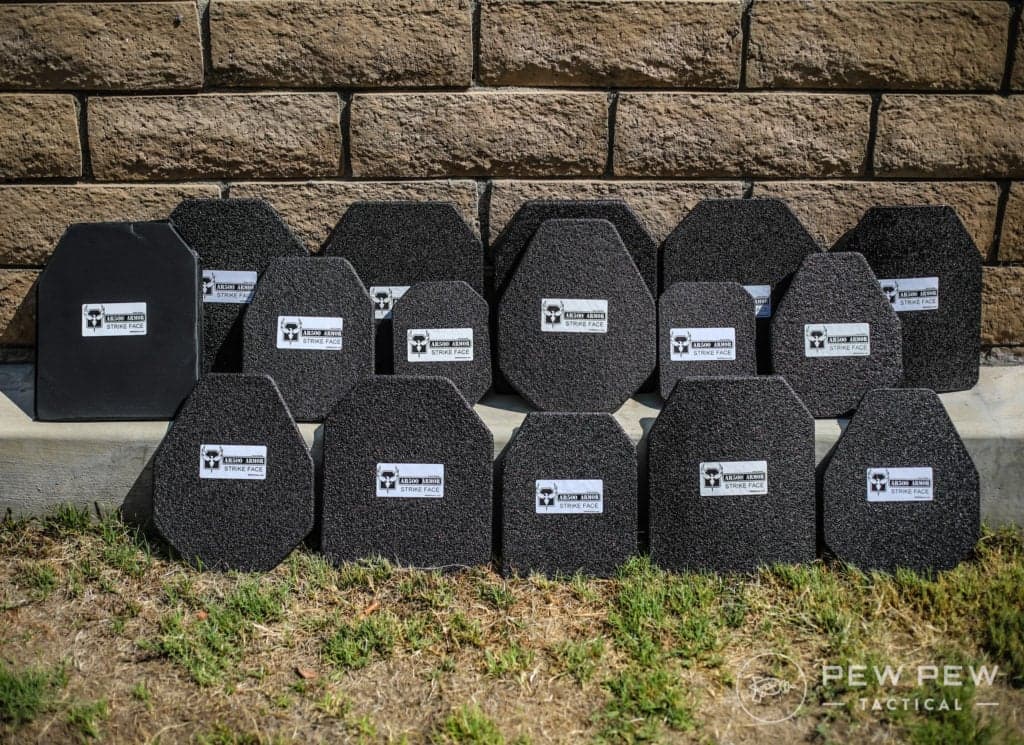
Want the best body armor for your purpose and budget? We've hands-on tested the most popular options out there and cut through the misinformation.

Sport shooting in 4-H, Ham Radio operator. Apartment prepper & survivalist
We review products independently. When you buy through links on our site, we may earn a commission to help support our testing. Learn more.
Want to keep bullets outside your body, where they belong?
There's some scary stuff out there, and figuring out all the jargon and science surrounding body armor isn't easy.
Fortunately for you, we've been testing and wearing body armor for years, and we're more than happy to break it all down for you. By the end of this guide, you'll be able to make an informed decision and pick the best body armor for your personal needs.
Ready? Let’s go!
The Quick List
- Editor's Pick: Mira Tactical Level IV PlateJump to details ↓
- Best Concealable: Premier Body Armor Everyday Armor T-ShirtJump to details ↓
- Best Steel for Movement: Spartan Armor AR550Jump to details ↓
- Best Rifle-Rated UHMWPE: Spartan Armor Elaphros Gen 2Jump to details ↓
- Best Premium Ceramic: Velocity Systems Special Threat Ceramic PlatesJump to details ↓
- Best Lightweight Soft Armor: Safe Life Multi-Threat Level IIIA VestJump to details ↓
- Best Premium Soft Armor: Safe Life Defense FRASJump to details ↓
Table of Contents
Body Armor Comparison Chart
| NIJ Rating | ThreatProtection | Material | Weight | Cut / Curve | Price | |
|---|---|---|---|---|---|---|
| Mira Tactical Level IV | Level IV | Armor-piercing rifle | UHMWPE | 5.9 lbs | Shooters / single | $139 - $249 |
| Safe Life Multi-Threat Level IIIA Vest | HG2 | Handgun | Para-aramid | N/A | N/A | $599 |
| RTS Tactical Ceramic Level IV | Level IV | Armor-piercing rifle | Ceramic | 6.3 lbs / 3.5 lbs | Shooters / single | $269 |
| RMA Level IV Multi-Curve | Level IV | Armor-piercing rifle | Ceramic | 8.2 lbs / 11 lbs | Shooters, swimmers / multi | $179 |
| Safe Life Defense FRAS | N/A | Rifle | Alumina oxide | 16 lbs (2 panels) | N/A | $1599 |
| Spartan Armor AR550 | RF2 | Rifle | Steel | 8 - 11 lbs | Shooters, high-mobility / single, multi | $107 |
| Spartan Armor Elaphros Level III UHMWPE | Level III | Rifle | UHMWPE | 3.4 lbs | Shooters / multi | $649 |
| Velocity Systems Special Threat Ceramic Plates | N/A | Armor-piercing rifle | Ceramic | 6 lbs | Shooters / multi | $334 |
| Premier Body Armor Everyday Armor Shirt 2.0 | Level IIIA | Handgun | Para-aramid | 2 lbs | N/A | $289 |
How We Tested the Best Body Armor
For this article, we narrowed our search down to body armor that balanced protection level, ergonomics/comfort, and value. From there, it was time to test!
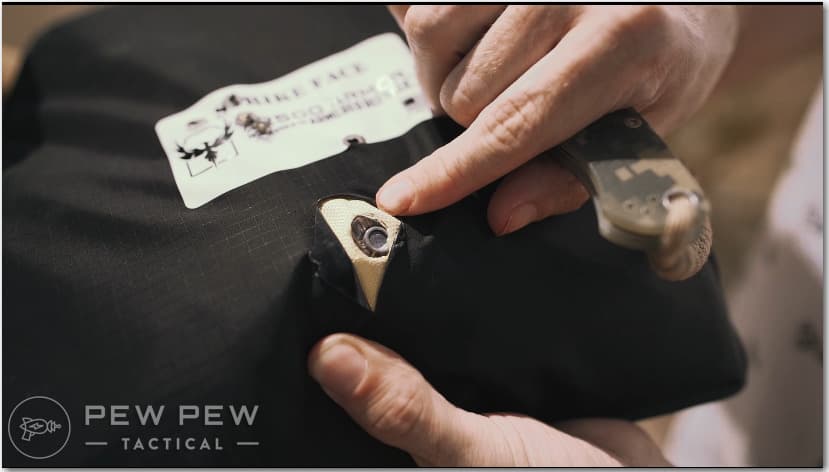
We evaluated each product here while performing activities that require a range of motion, from dry fire drills to running. From there, we took all the body armor to an outdoor range with a ballistic gel torso, where we shot it with 9mm, .45 ACP, .357 Magnum, .223 Rem/5.56 NATO (including M855 green tip), 7.62x39, and .30-06 Sprg black tip.
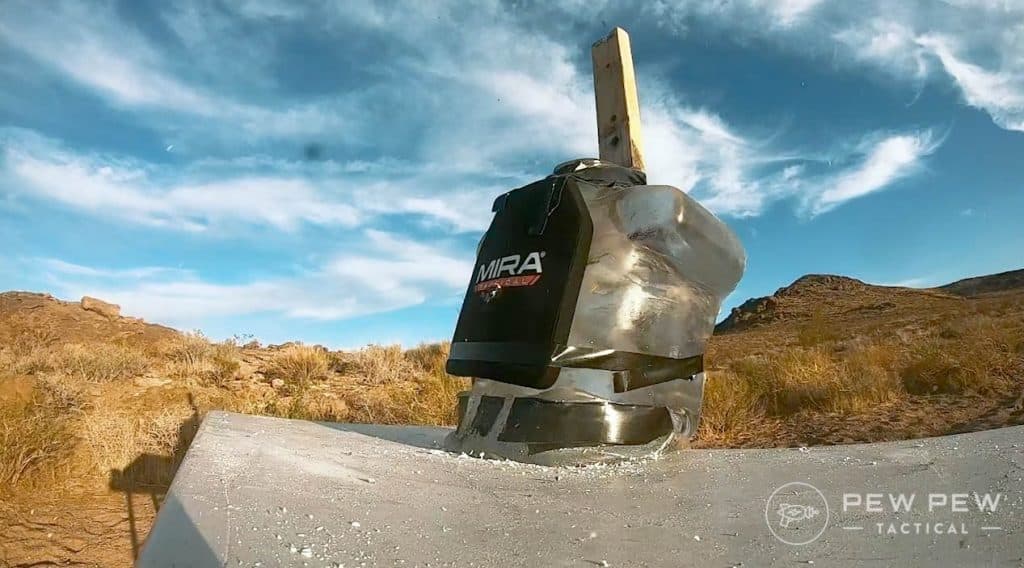
We assessed the ballistic gel torso after each firing round and noted penetration or any other types of damage.
Best Body Armor
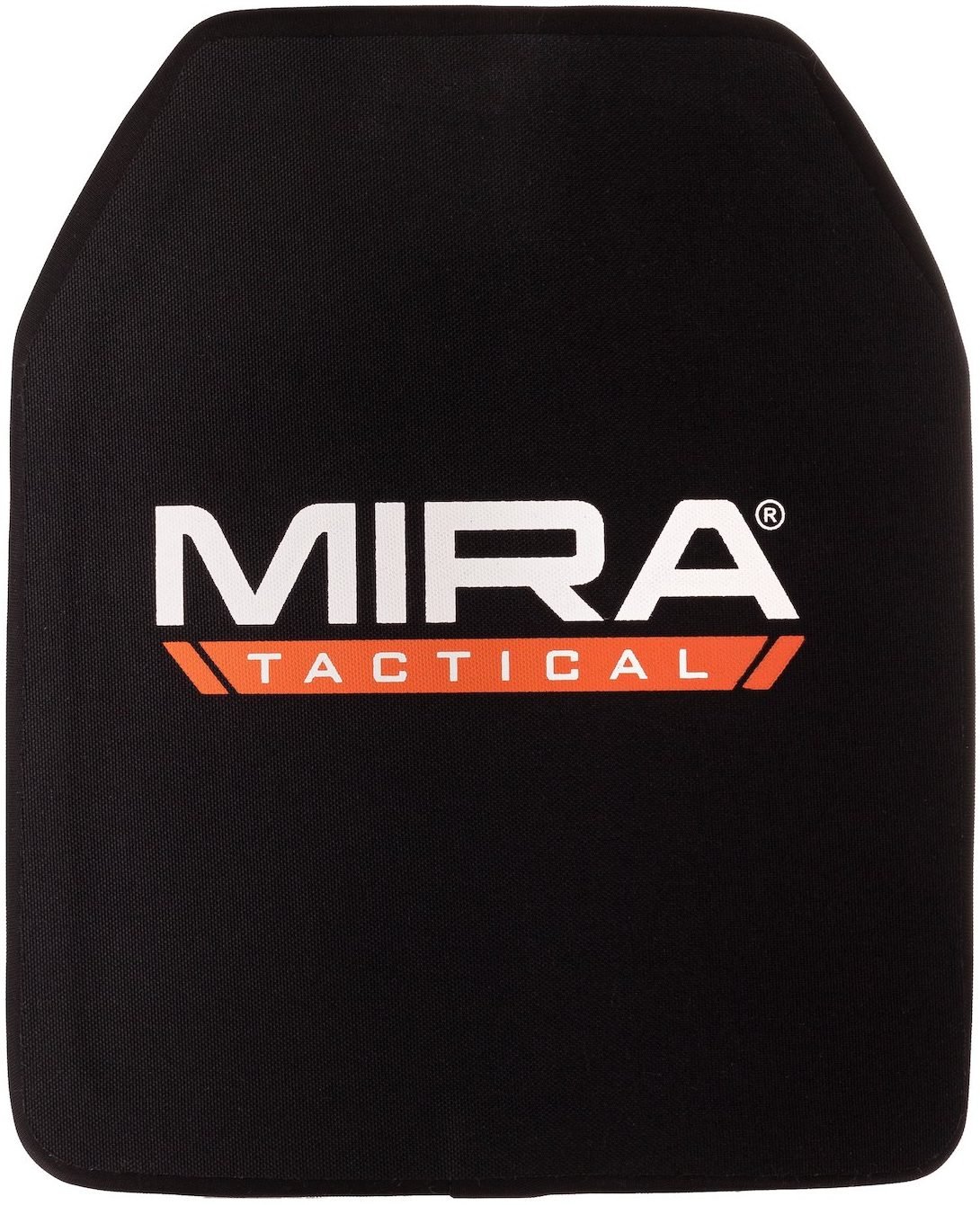
1. Mira Tactical Level IV - Editor's Pick
Editor's Note: PPT readers get 10% off with code PREPARE10!
Pros
- Decent weight and thickness
- NIJ-rated at Level IV
- 10-year extended warranty
Cons
- Expensive
Specs
- NIJ Rating: Level IV
- Threat Protection: Armor-piercing rifle
- Material: UHMWPE
- Weight: 5.9 lbs
- Cut / Curve: Shooters / single
- Warranty: 10 yrs
We love our Mira gas masks (find those in our Best Gas Masks article), but how good are the brand's Level IV plates?

Long story short, this was the only Level IV plate in our test to survive two direct M2AP hits. That's seriously impressive.
Our starting Tula 7.62x39 rounds didn't cause any issues, although a noticeable amount of ceramic was blown out.
The next round, this time a dose of 7.62 NATO, took out another chunk of ceramic but had no exit in the backface. There was a decently noticeable deformation in the back, though.
The second 7.62 NATO shot somehow got deflected upward. Let's give credit where it's due; not many plates can stand up to those impacts.
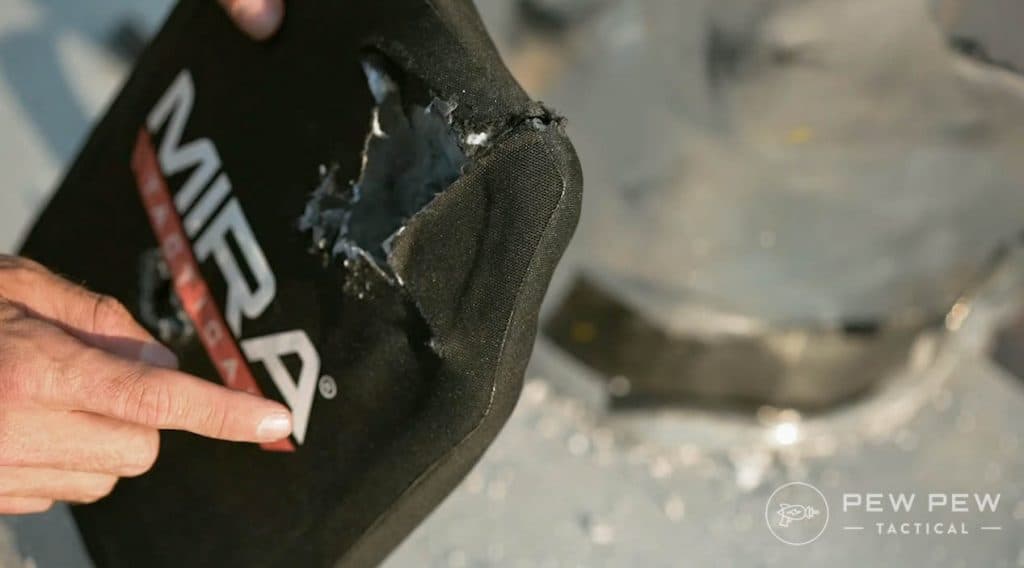
Out of four .223 Rem rounds, only the last one got through after the previous three seriously compromised the area. That's about what we expected, if not better.
At this point, we were afraid the plate was not going to survive any .30-06 Sprg M2AP black-tip rounds.
It caught the first one, which tied it with the previous ceramic plates. Amazingly, it then caught a second one.
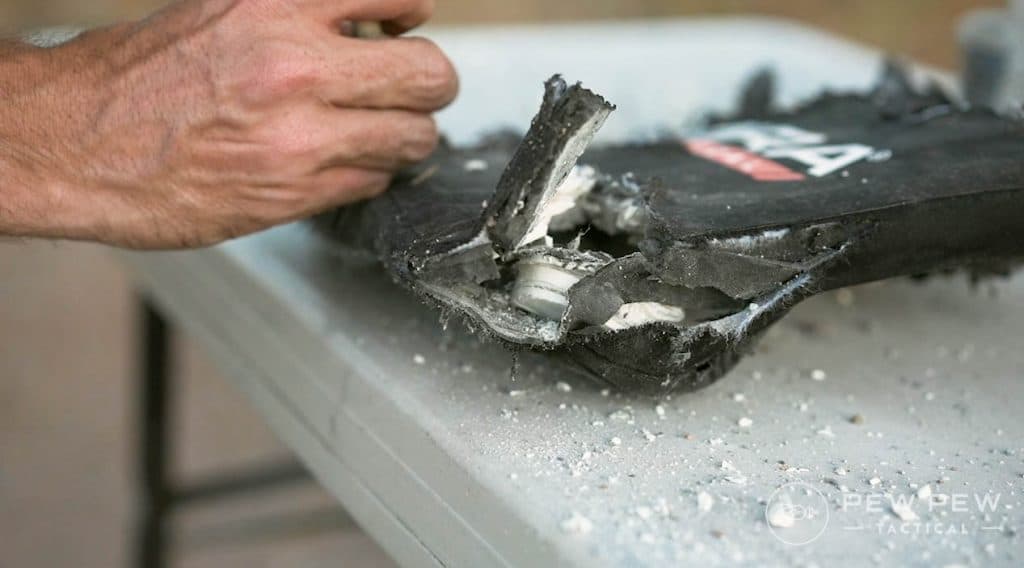
Very impressed!
They are pretty light at under 6 pounds per plate, and they're just under an inch thick so you shouldn't have fitment issues with a plate carrier.
If you're looking at an all-around Level IV ceramic plate, the Mira Tactical Level IV is a great choice.
2. Safe Life Defense Level 3A Vest - Best Lightweight Soft Armor
Editor's Note: Use code PEWPEW10 at checkout for 10% off.
Pros
- Super comfortable
- Good coverage
- Strike- and slash-resistant
Cons
- Expensive
Specs
- NIJ Rating: HG2 (Level IIIA)
- Threat Protection: Handgun
- Material: Para-aramid
- Weight: N/A
- Cut / Curve: N/A
- Warranty: 5 yrs (panels and plates), 2 yrs (carriers and vests), replace if hit within 5 yrs
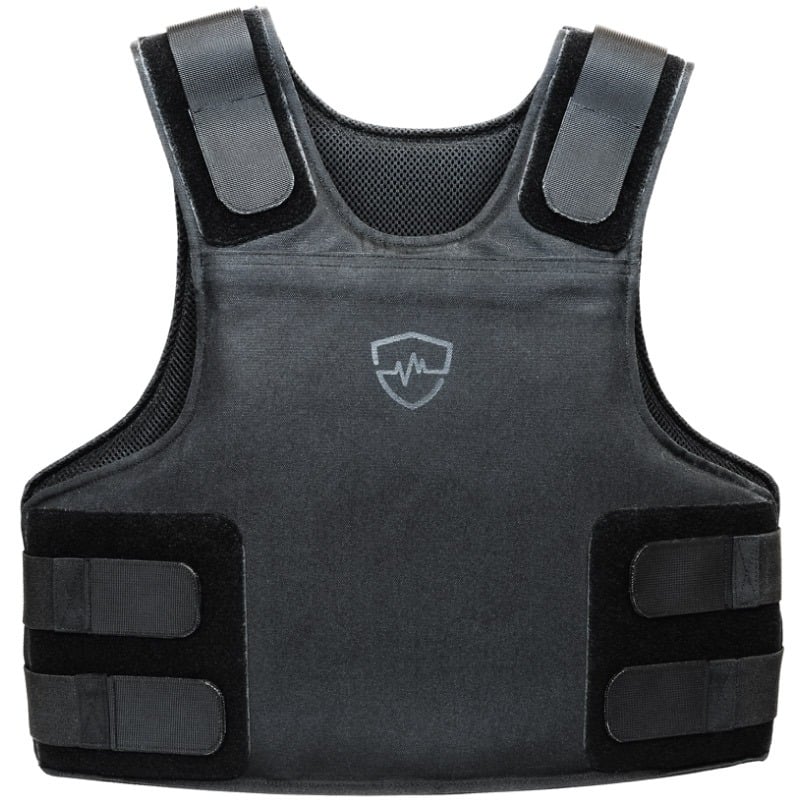
The Safe Life Defense Multi-Threat Vest in Level IIIA gives you a lot of coverage on your torso and sides.
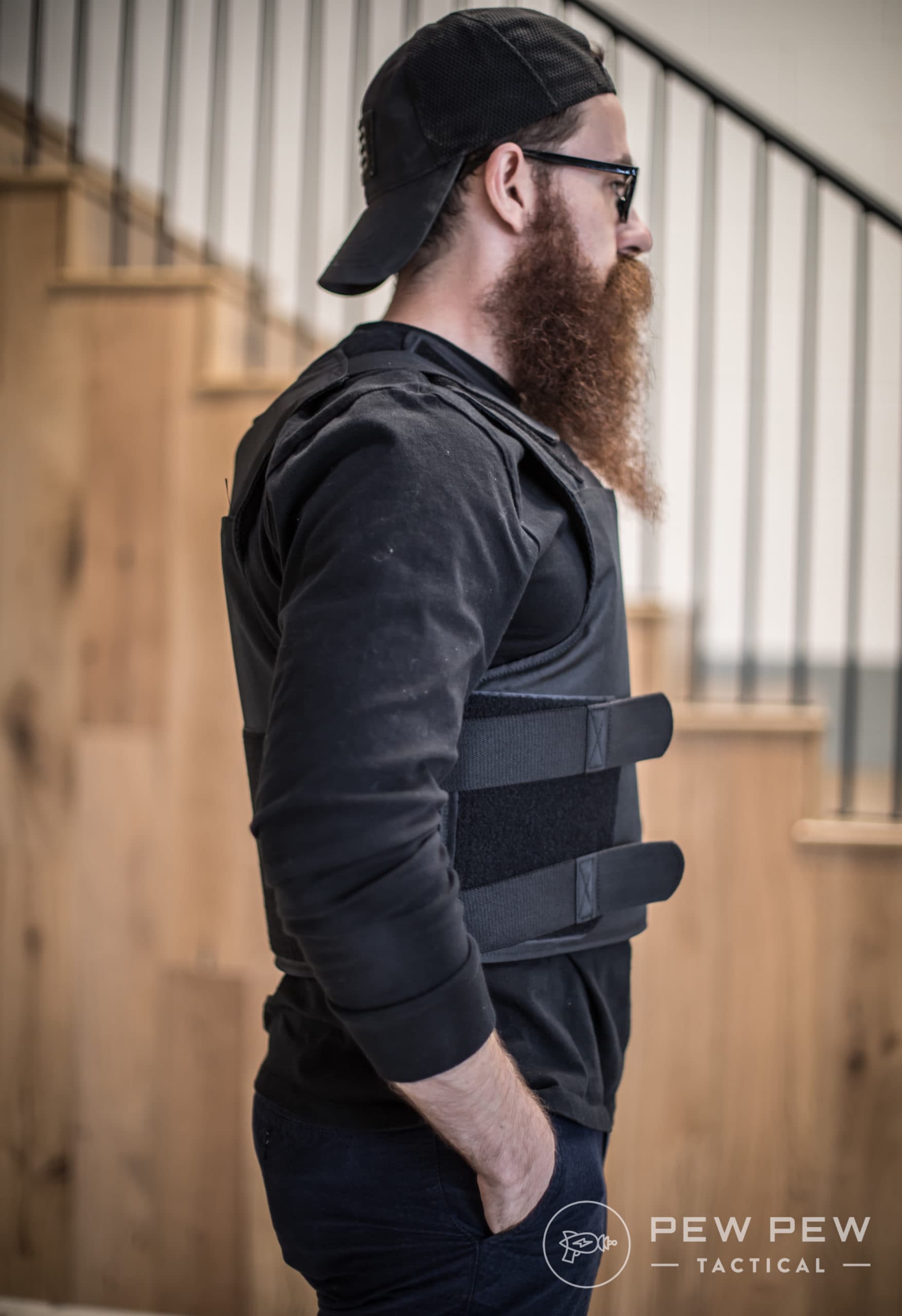
It's a light, comfortable, all-in-one solution that's super concealable.
Plus, it's strike- and slash-resistant. It seems like soft armor that can stop a bullet should be able to stop a knife, but that's not always the case. We're glad this one can handle blades and bullets.
It comes in other variants, including First Response, High-Vis, and Tactical Molle.
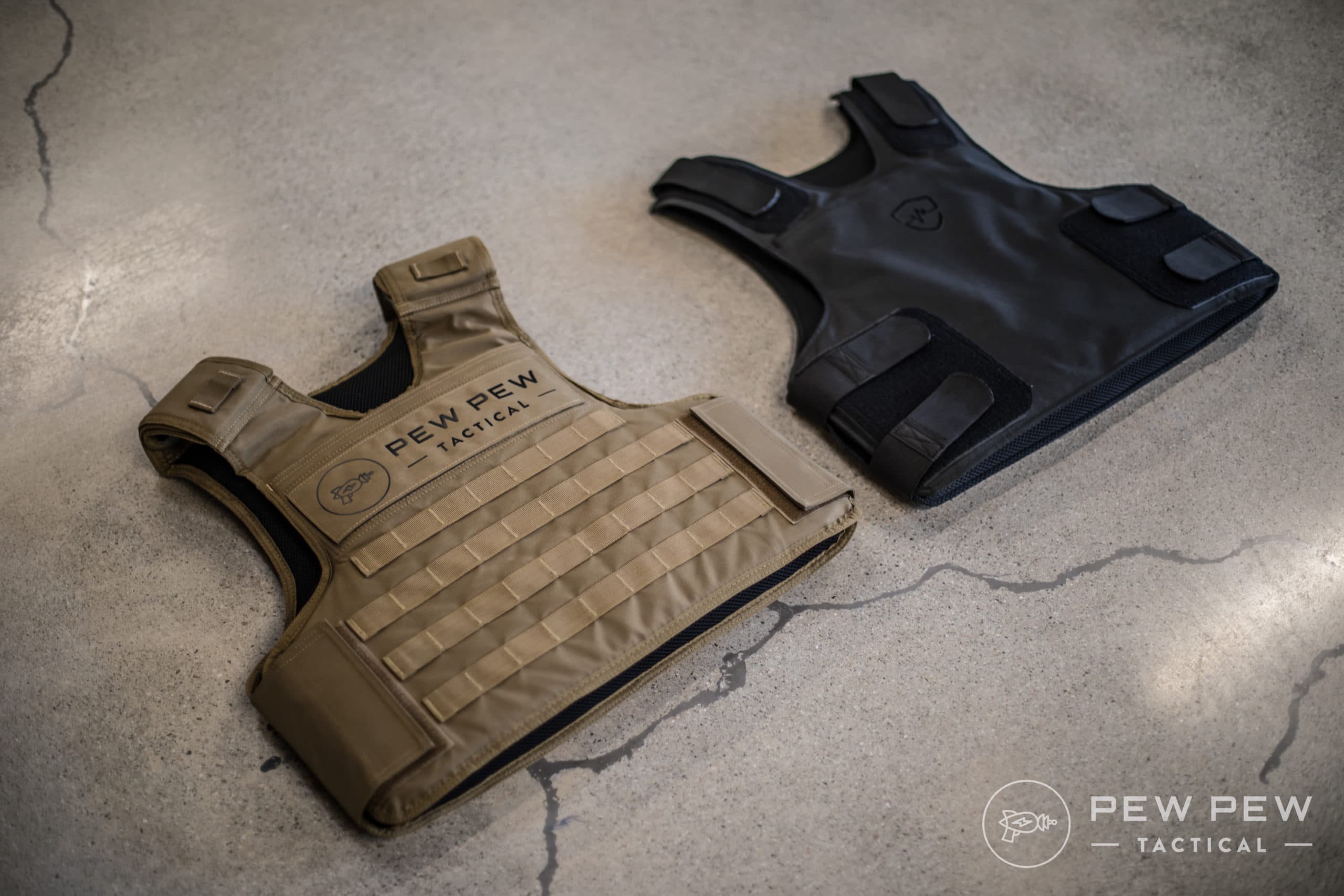
We wore it around the office to see how it feels after a workday, and it's very comfortable.
3. RTS Tactical Ceramic Level IV - Best Budget Ceramic
Pros
- Affordable (for ceramic)
- Level IV protection
Cons
- Thick and heavy
Specs
- NIJ Rating: Level IV
- Threat Protection: Armor-piercing rifle
- Material: Ceramic
- Weight: 6.3 lbs
- Cut / Curve: Shooters / single
- Warranty: Replace if hit within 5 yrs
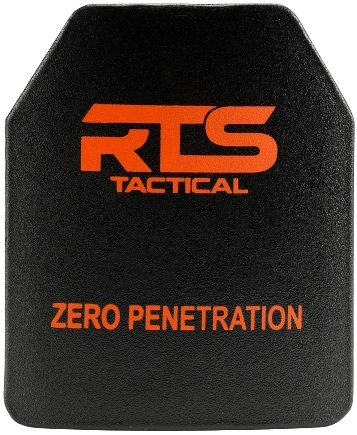
RTS Tactical is a relative newcomer, but the company has made a name for itself with ultra-affordable ceramic level IV armor. Their prices have gone up since then, but they're still not bad.
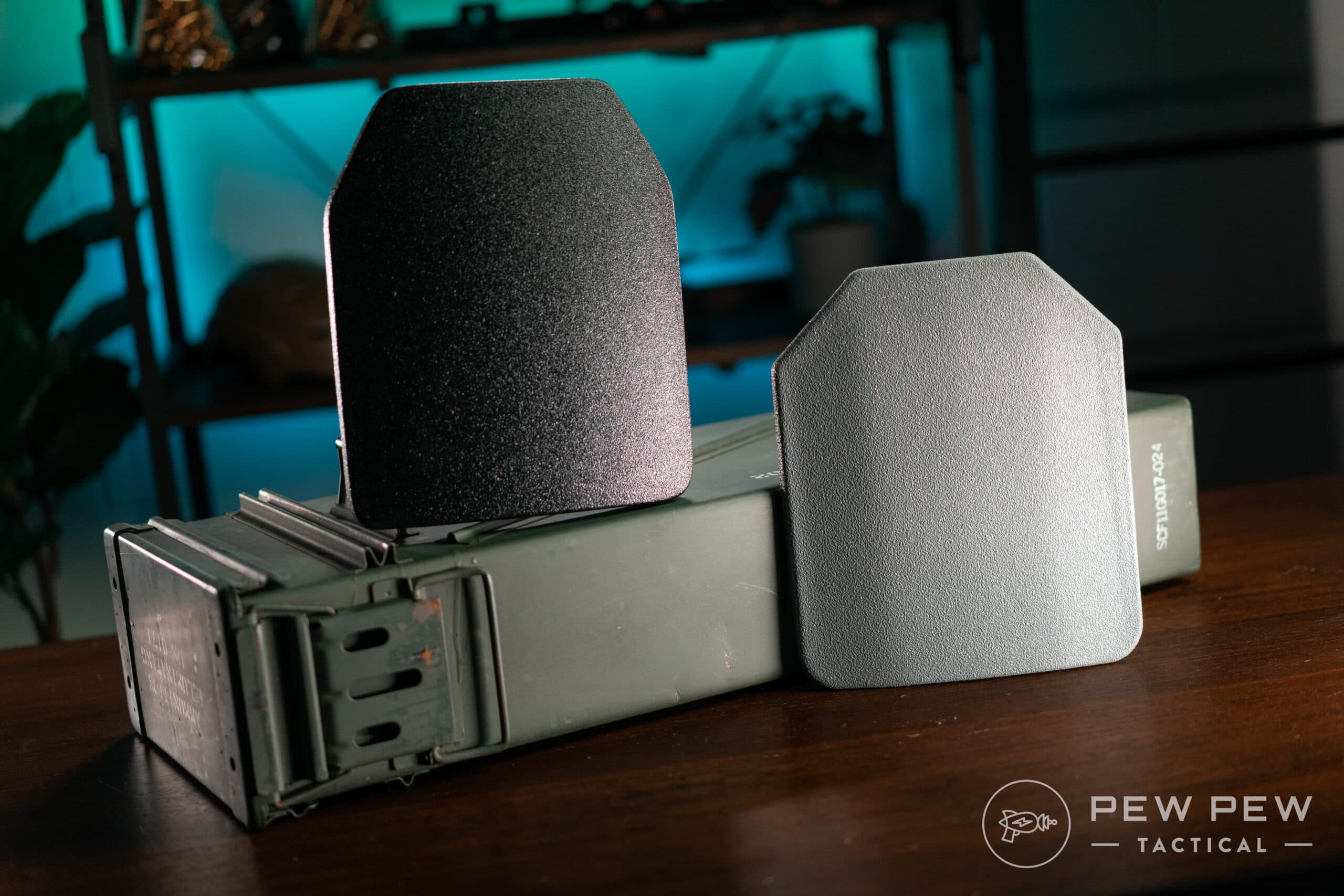
They're more than an inch thick, so check your plate carrier to make sure there's room.
The 6.3-pound weight is ok, but you'll need a tactical plate carrier rather than something more minimalist since it likely won't be able to hold it. My Crye JPC 2.0 did not like it at all.
An initial 7.62x39 shot landed dead center, and the plate has very little cavitation.
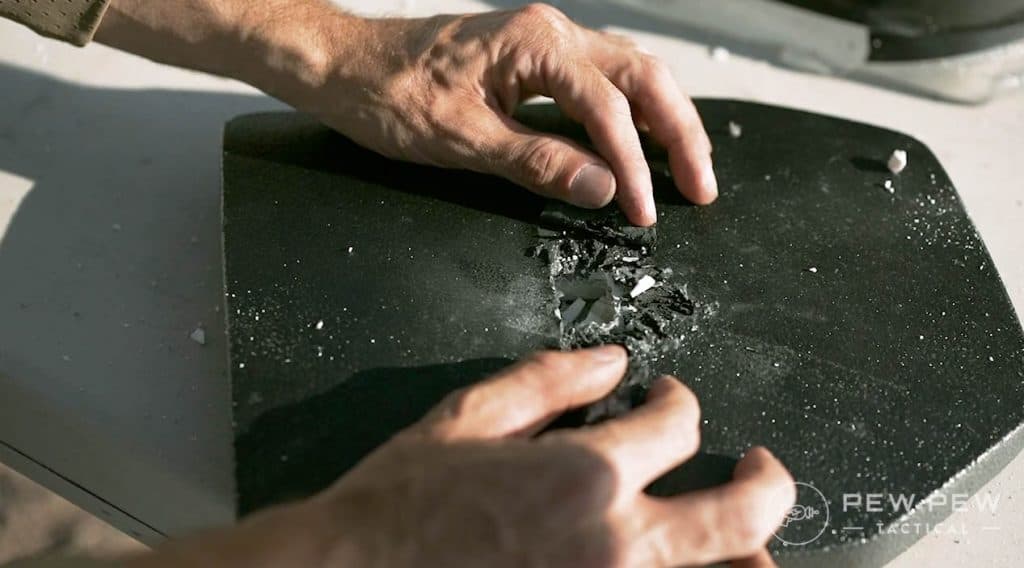
However, additional hits from 7.62 NATO M80 caused severe damage and effectively put the plate out of commission.
Some .223 Rem rounds started deflecting, and the .30-06 Sprg black tip round cut the plate in half -- something we didn't see with other Level IV plates.
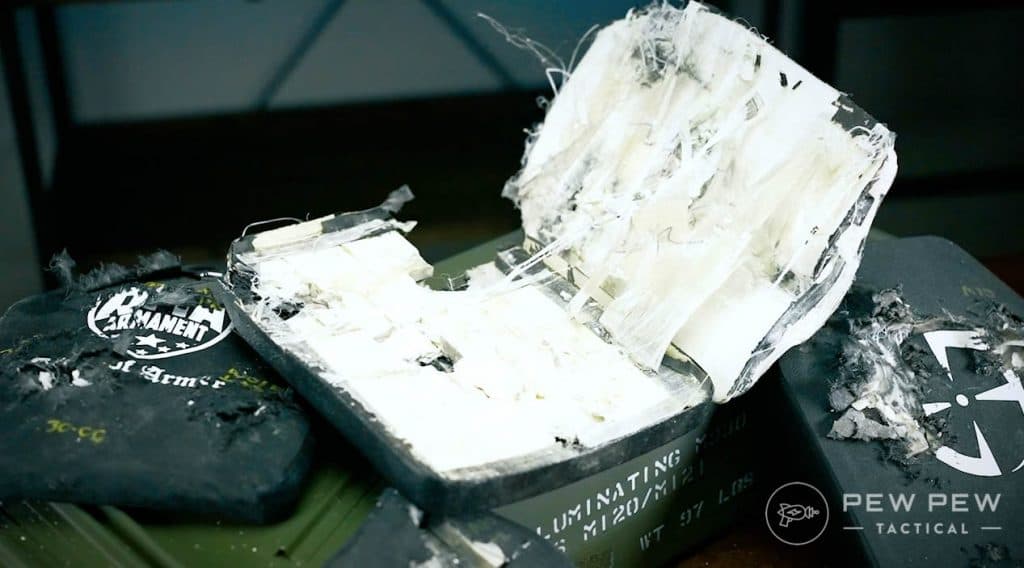
Unfortunately, our sequence of rounds didn't lend the plate well to a direct black tip hit to start off with, but for the price, it did really well against 7.62x39.
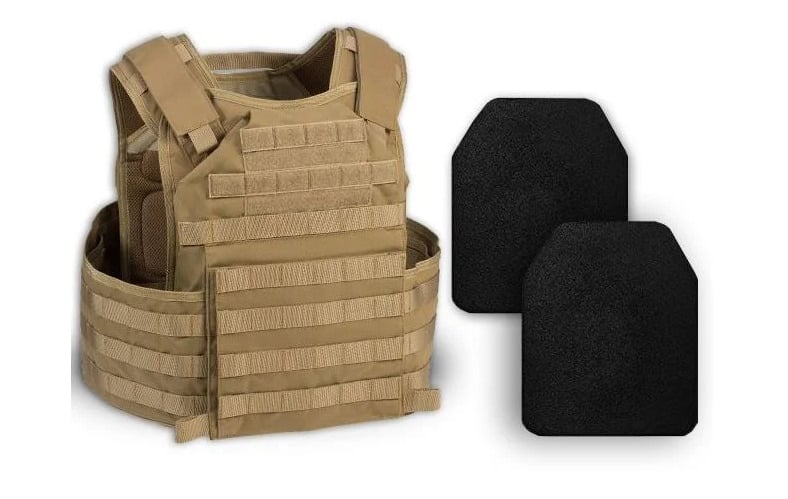
If you're going the affordable route and are primarily concerned with 7.62x39 ammunition and below, check out their plate/carrier combos.
4. RMA Level IV Multi-Curve - Best Value
Pros
- Affordable
- Minimal backface deformation
Cons
- Heavy and thick
Specs
- NIJ Rating: Level IV
- Threat Protection: Armor-piercing rifle
- Material: Ceramic
- Weight: 8.3 lbs
- Cut / Curve: Shooters, swimmers / multi
- Warranty: 10 yrs, replace if hit within 10 yrs
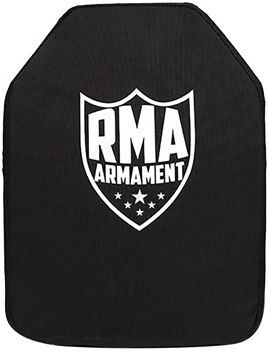
Is RMA really the king of armor?
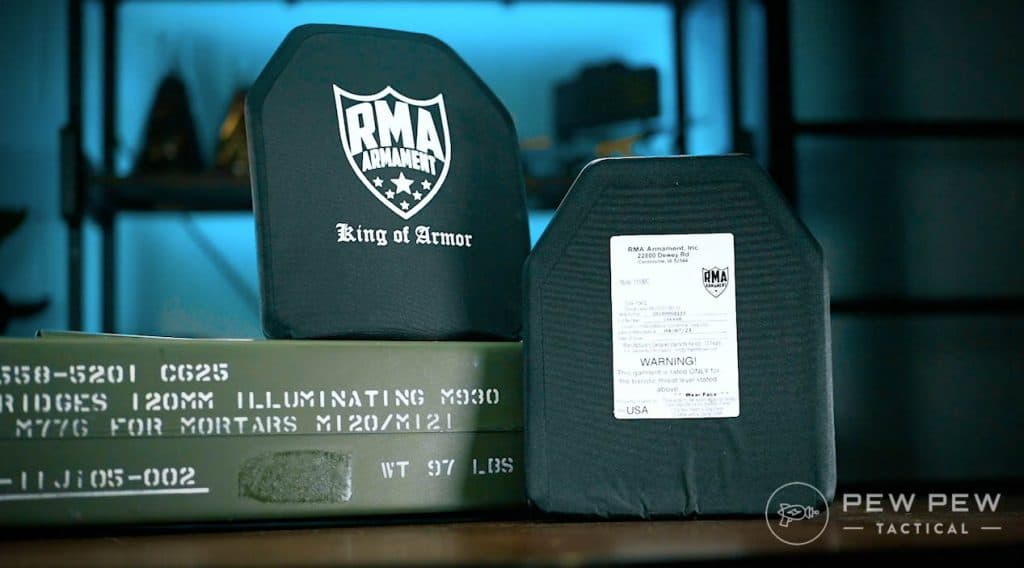
Our first 7.62x39 round took a good chunk of ceramic but didn't reach the backface. On all other plates, we could see the backing material. There was no backface deformation that we could tell.
One of the two 7.62 NATO M80 shots managed to sneak one round through when it hit very close to a previous round.
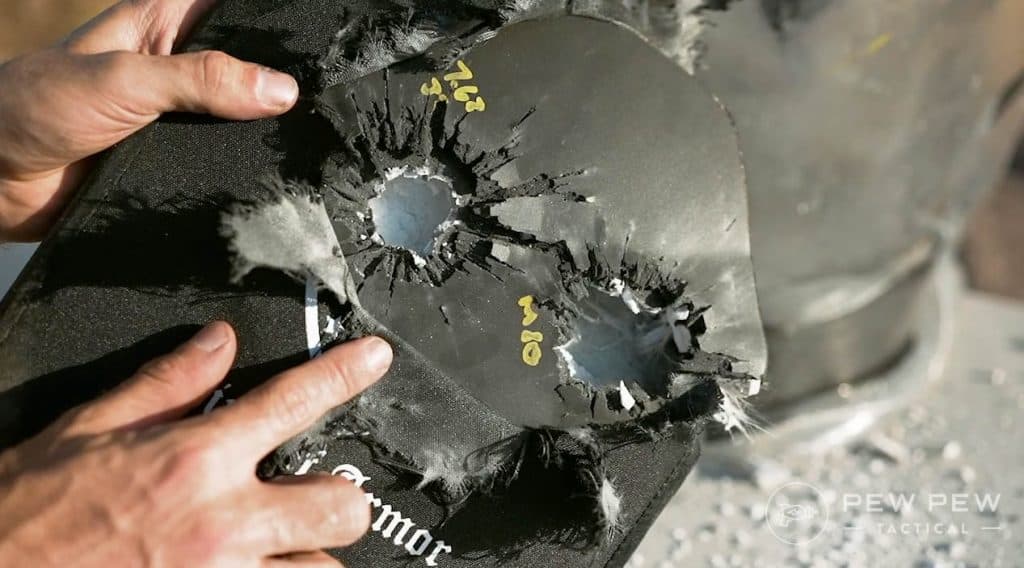
The same thing occurred with .223 Rem as the plate got more and more damaged.
However, the plate stopped M2AP black tip with almost no rear deformation. That bodes well for its ability to handle single hits from most rifles.
A second round of Black Tip was not a good time, though.
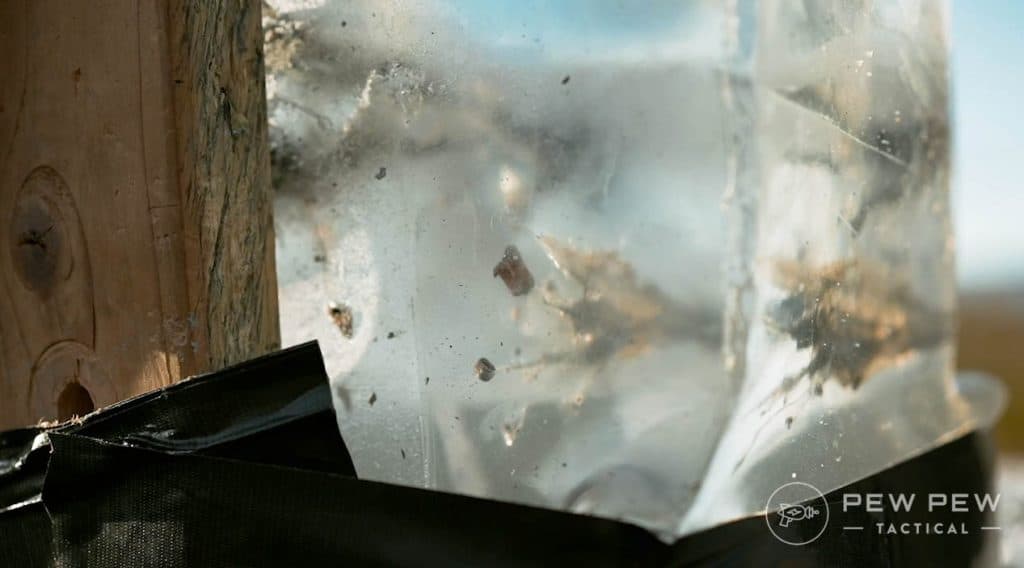
Their Level IV plates come in at a super hefty 8 pounds per plate and are 1 inch thick.
The price is good at around $180 per plate. They're a little heavier than some, but rear deformation is almost nonexistent for the shots it stopped. If you're looking for solid multi-hit protection, you might want to move on.
5. Safe Life Defense Flexible Rifle Armor System - Best Premium Soft Armor
Editor's Note: Use code PEWPEW10 at checkout for 10% off.
Pros
- Soft and flexible
- Good coverage
Cons
- Thick and heavy
Specs
- NIJ Rating: N/A
- Threat Protection: Rifle
- Material: Alumina oxide
- Weight: 16 lbs
- Cut / Curve: N/A
- Warranty: 5 yrs, replace if hit within 5 yrs
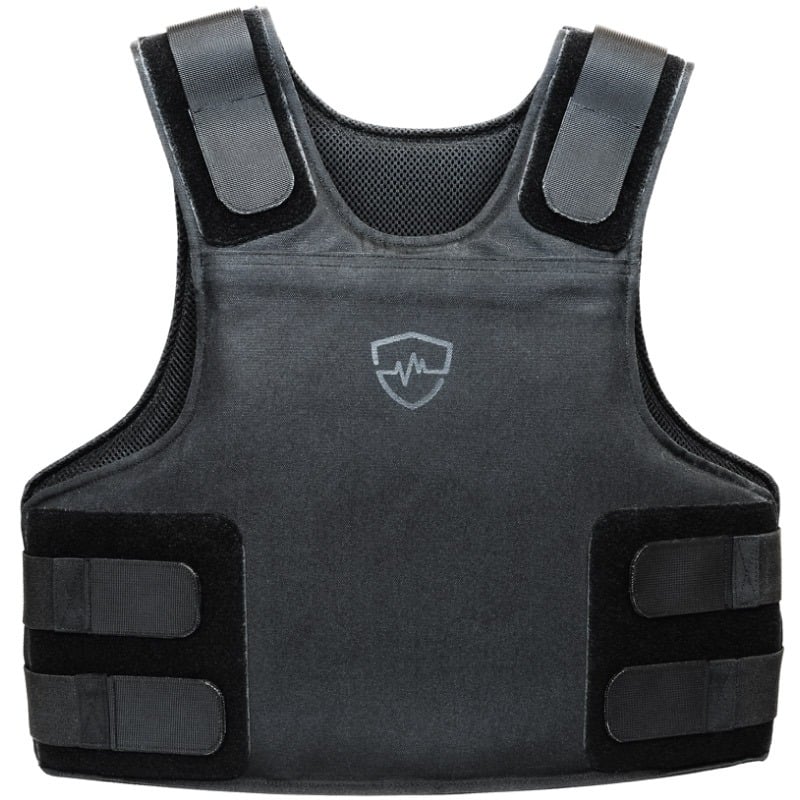
The Safe Life Defense FRAS is much thicker and heavier than the brand's regular Level IIIA vest, but it's still reasonably soft and bendy where it counts -- certainly more comfy than hard plates.
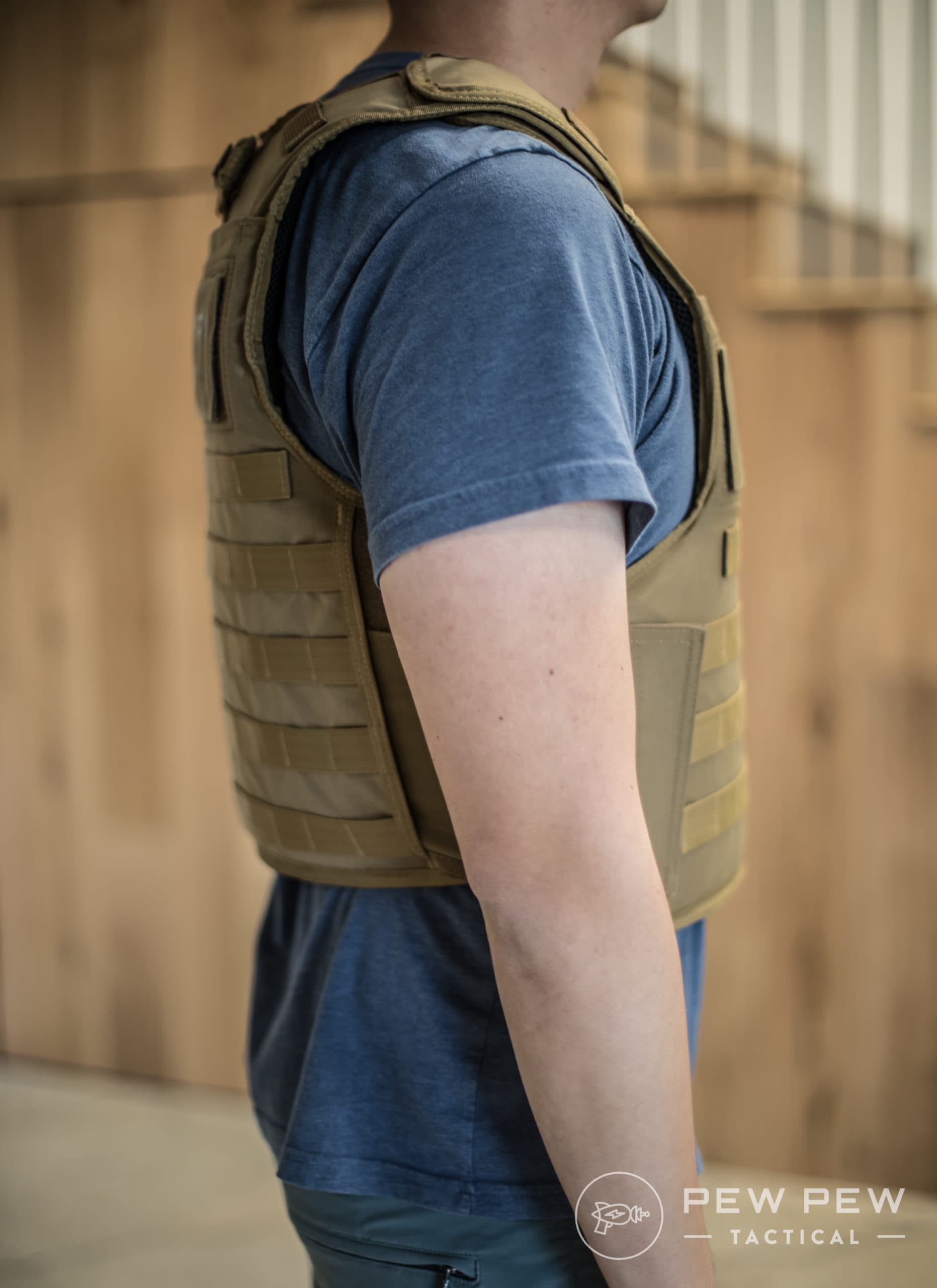
This system covers much more of your torso compared with plates. The weight is around the same as going with a light carrier and plates (about 16 pounds).
Safe Life Defense describes this as rifle armor, but doesn't list an NIJ rating for gunfire. You can get more protection for way less than $1,500, so who is this thing for?
This seems like a great option for people who are concerned about pistol fire -- and potentially lots of it -- but don't want to deal with hard plates. Maybe you're going to layer it with a garment, or maybe you just don't want to look like part of the military. Either way, it's good to have options.
6. Spartan Armor AR550 - Best Steel for Movement
Pros
- NIJ-certified
- Good mobility
- Affordable
Cons
- Heavy
Specs
- NIJ Rating: RF2 (between Level III and Level IV)
- Threat Protection: Rifle
- Material: Steel
- Weight: 8 - 11 lbs
- Cut / Curve: Shooters, high-mobility / single, multi
- Warranty: 5 yrs
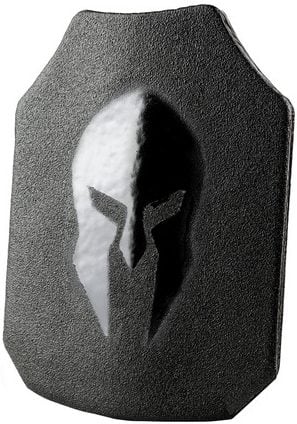
Another big player in the AR500 steel game is Spartan Armor. We think these offer better mobility than AR500 Armor.
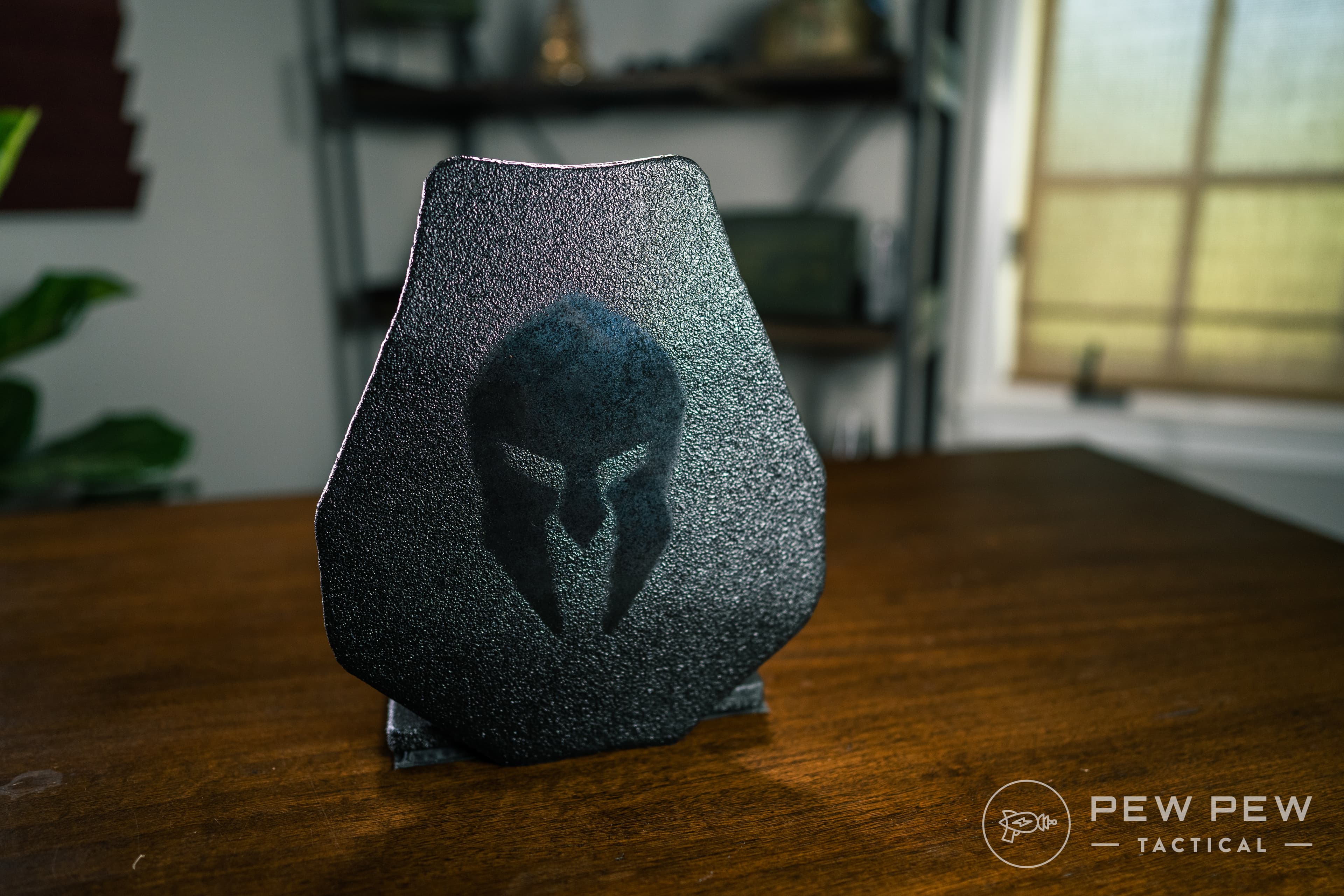
They also use a nicer feeling/looking coating comparatively and a rubbery material on the back...if that matters.
We'd go with their Level III+ plates for rifle protection.

The biggest knock against steel armor is the risk of spalling, or fragmentation created when a bullet strikes the steel surface.
Certain coatings can mitigate this, but it's still a deal-breaker for some people. If that's you, stick to ceramic of UHMWPE plates.
We recommend upgrading these plates with the Full Coat Frag Mitigation Coating for that exact reason. It will increase the weight of your plates, but it will protect you from spalling.
7. Spartan Armor Elaphros Gen 2 - Best Rifle-Rated UHMWPE
Pros
- Rifle-rated
- Lightweight
Cons
- Doesn't stop M855
Specs
- NIJ Rating: Level III
- Threat Protection: Rifle
- Material: UHMWPE
- Weight: 3.4 lbs
- Cut / Curve: Shooters / multi
- Warranty: 5 yrs
Editor's Note: We tested the Gen 1, but since our testing, Spartan Armor has discontinued the Gen 1 and replaced it with the Gen 2. Specs are similar, which is why we're including our throughts based on the Gen 1.
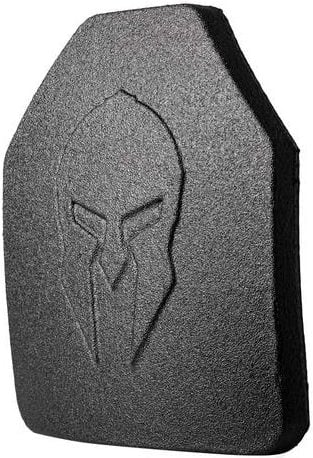
If you want ultra-light protection that still will defend you against rifle threats, check out Spartan Armor Elaphros lightweight Level III UHMWPE body armor.
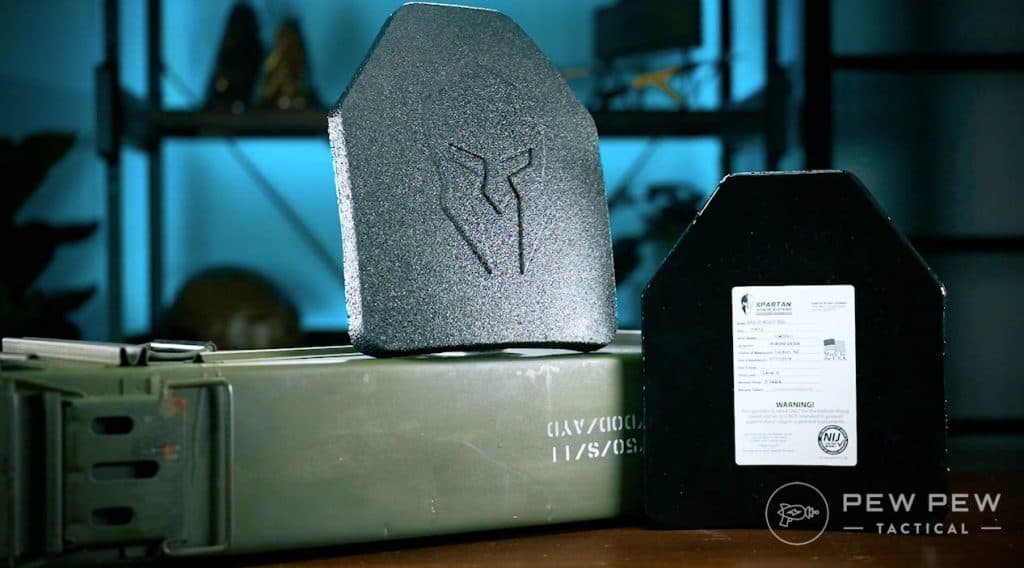
Spartan Armor designed these plates for professionals who need maximum maneuverability, but still want great protection from rifle fire at an extended distance. They’re also stab-resistant for close-quarters protection and are multi-shot rated.
These plates weigh in at a mere 3.5 pounds per 10x12 plate.
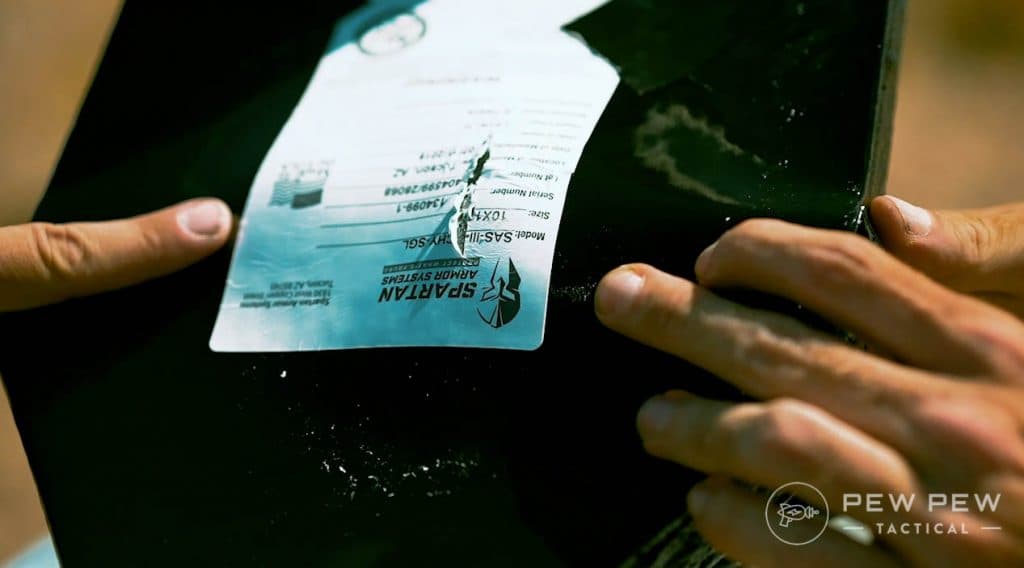
It took Tula 7.62x39 like a champ but had extensive backface deformation from 7.62 NATO.
Stopping Wolf .223 was so easy that we actually had a difficult time finding the impacts. Although the Elaphros isn't rated for M193, it survived that, as well. It did not stop M855.
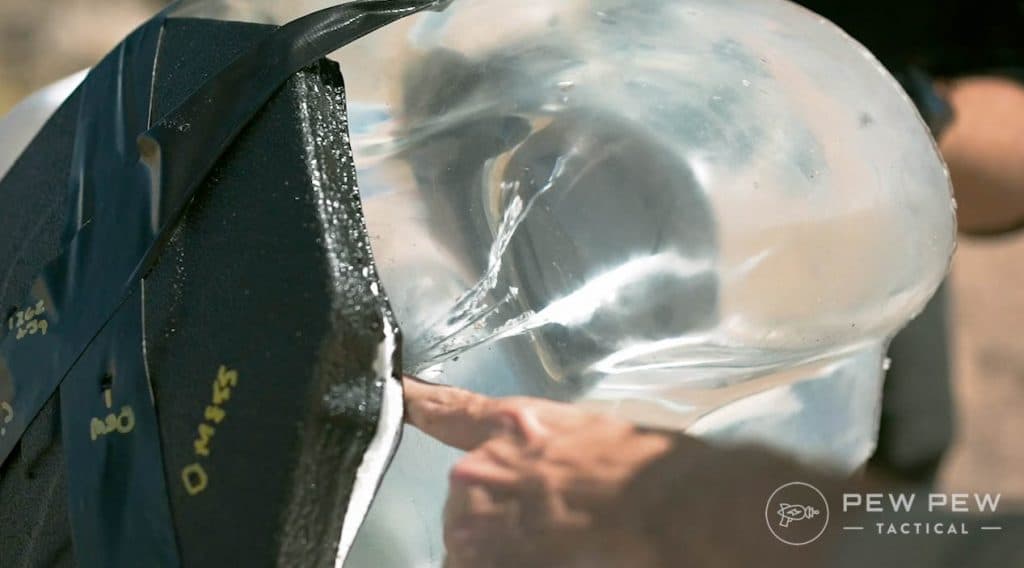
If Level III is all you need, this will do the trick.
Spartan offers a 5-year warranty, and these plates have a 5-year shelf life.
8. Velocity Systems Special Threat Ceramic Plates - Best Premium Ceramic
Pros
- Trusted by law enforcement and military
- Rated for multiple strikes
- Form-fitting
Cons
- Heavy
Specs
- NIJ Rating: N/A
- Threat Protection: Armor-piercing rifle
- Material: Ceramic
- Weight: 6 lbs
- Cut / Curve: Shooters / multi
- Warranty: N/A
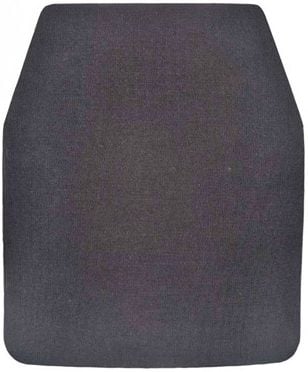
Velocity Systems body armor is top of the line and trusted by law enforcement and military personnel.
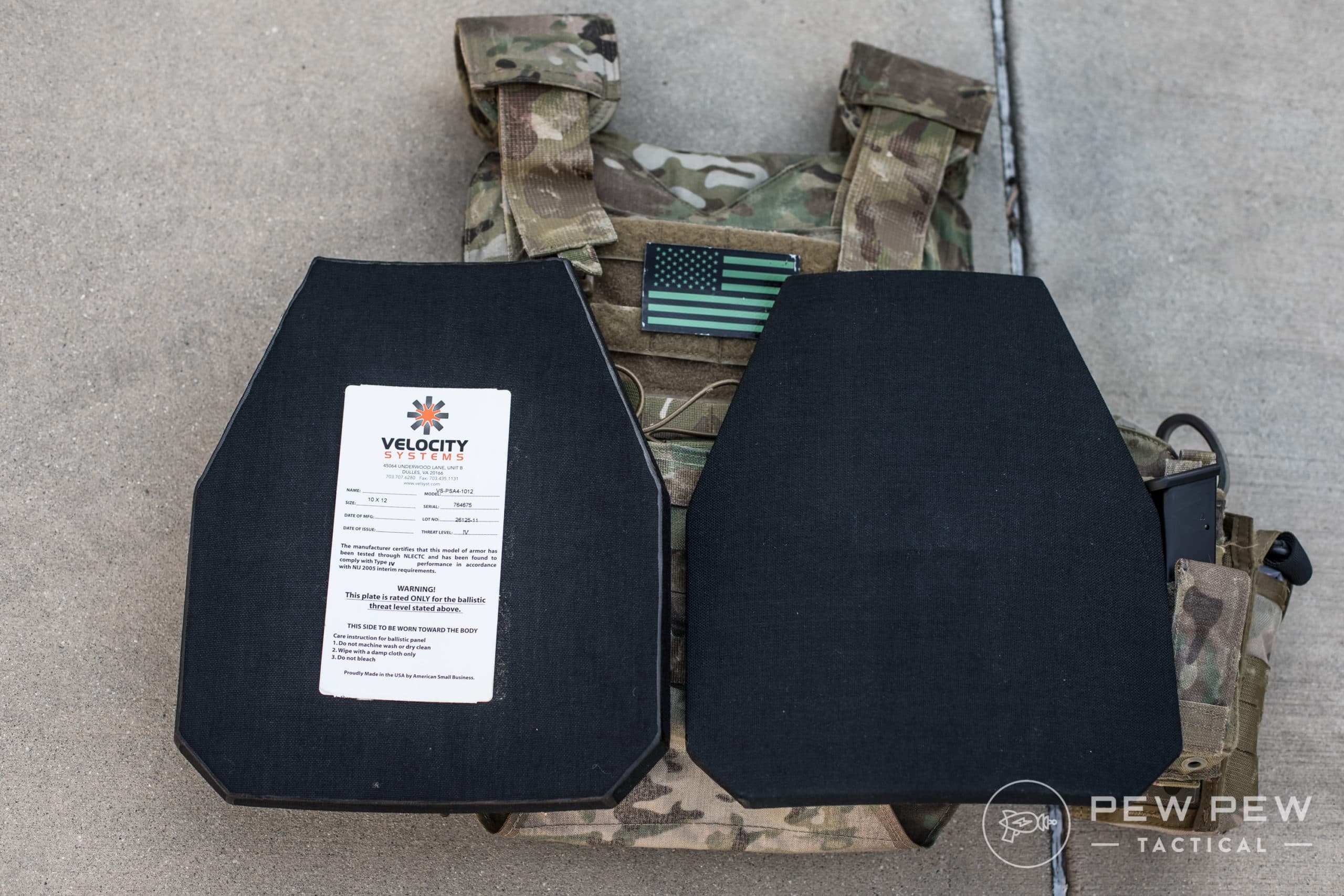
These ceramic plates are multi-strike rated, and tested against 7.62x39 steel core, 7.62 NATO M80, 5.56 NATO M855, and 5.56 NATO M193. That puts this armor at around RF2 (somewhere between Level III and level IV), though Velocity doesn’t specify.
These plates only come in a 10x12 inch traditional cut size, but they’re triple curved to hug the contour of your body and are just 0.6 inches thick.
Each plate weighs 6 pounds, which does put them on the heavier--but more protective--end of things. The biggest drawback is the price: more than $300 a plate.
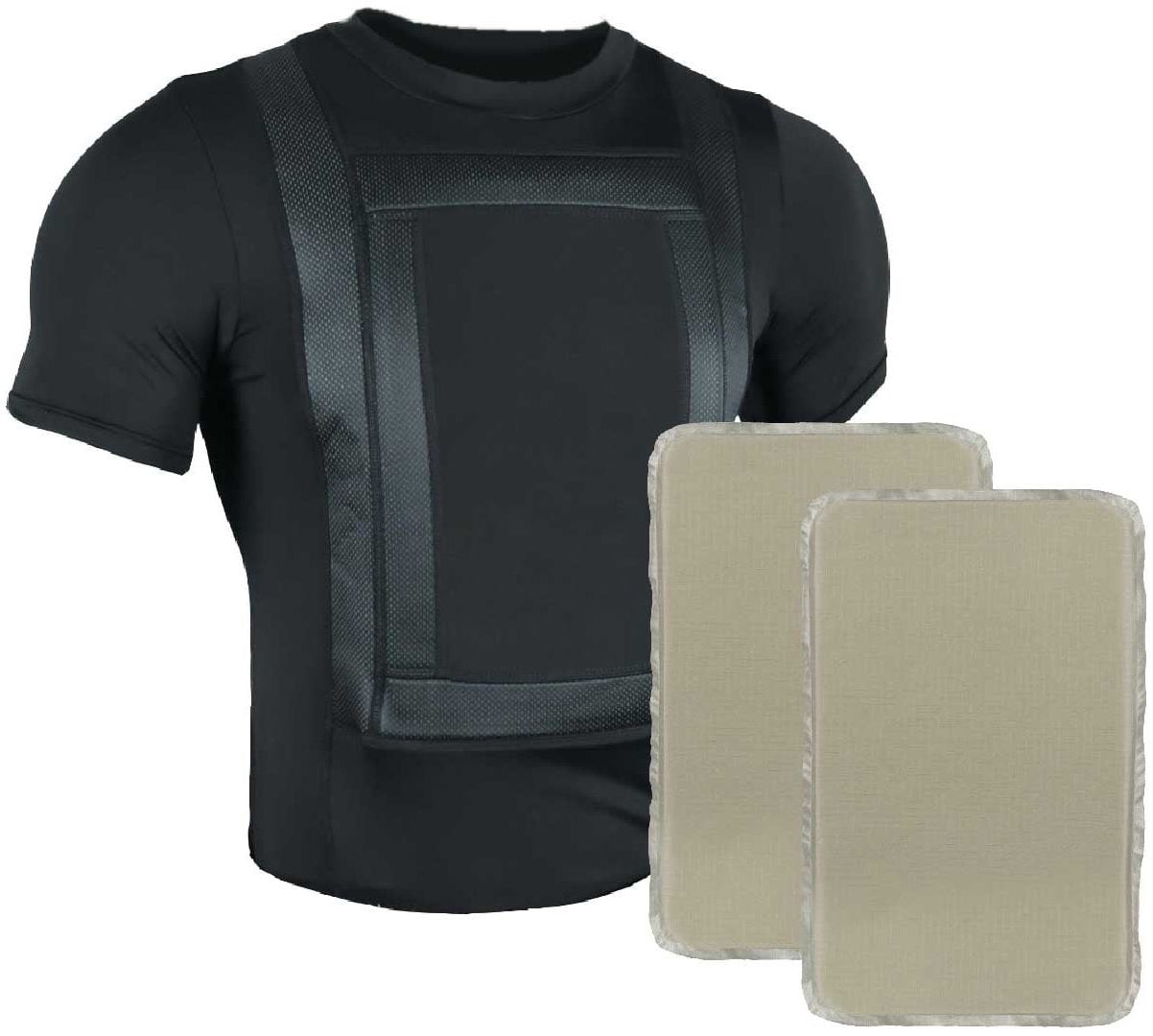
9. Premier Body Armor Everyday Armor Shirt 2.0 - Best Concealable
Pros
- Super low-visibility
- On-body protection
- Comfortable
Cons
- No side protection
- Warm in hot weather
Specs
- NIJ Rating: Level IIIA
- Threat Protection: Handgun
- Material: Para-aramid
- Weight: 2 lbs
- Cut / Curve: N/A
- Warranty: 5 yrs (armor), 1 yr (shirt)
When we want the most covert body armor possible, we put on an Premier Body Armor Everyday Armor Shirt.
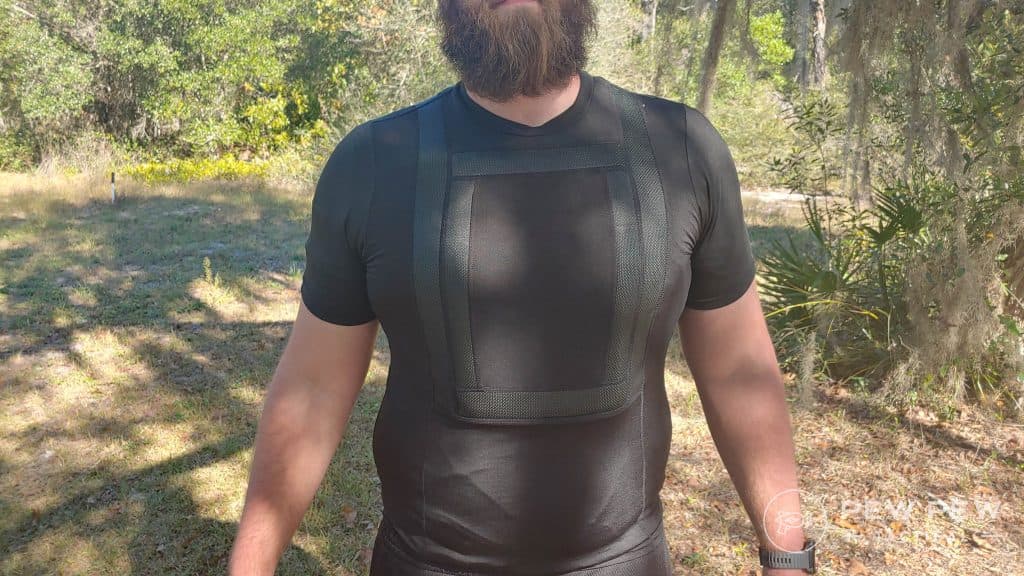
These shirts are way more comfortable than a vest, and offer Level IIIA protection for your vital organs. They fit snug to keep the soft armor inserts in place.
Each shirt comes with two soft Level IIIA inserts that you can remove to wash it.
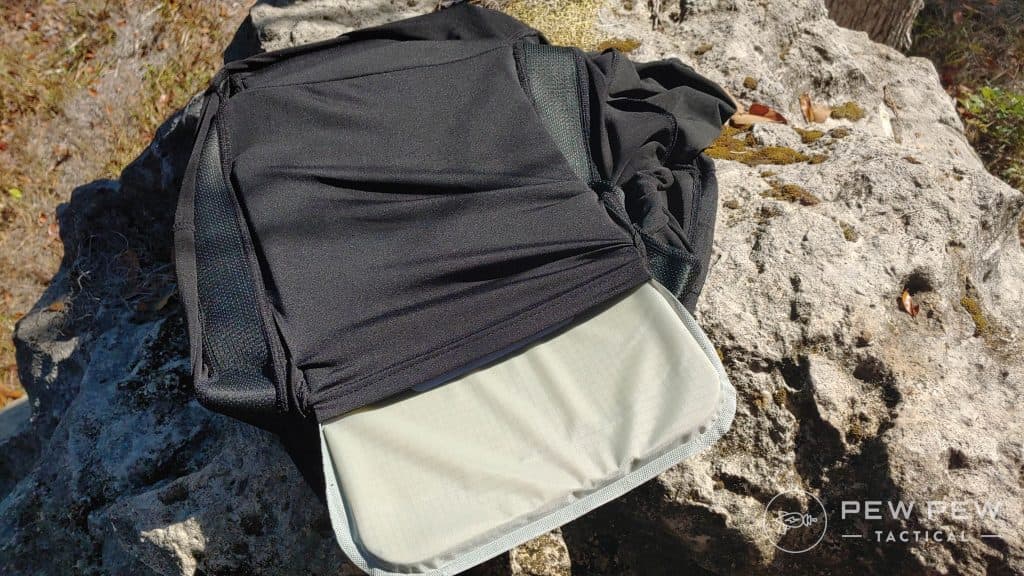
The one critique we have (aside from the price) is that this system gets toasty on a warm day. But hey, what body armor doesn't?
Best Body Armor Accessories
In addition to body armor itself, we have some recommendations for accessories that will help it perform better and feel more comfortable.
There are also some pretty unconventional forms of body armor that we think you should see, too!
Trauma Pads
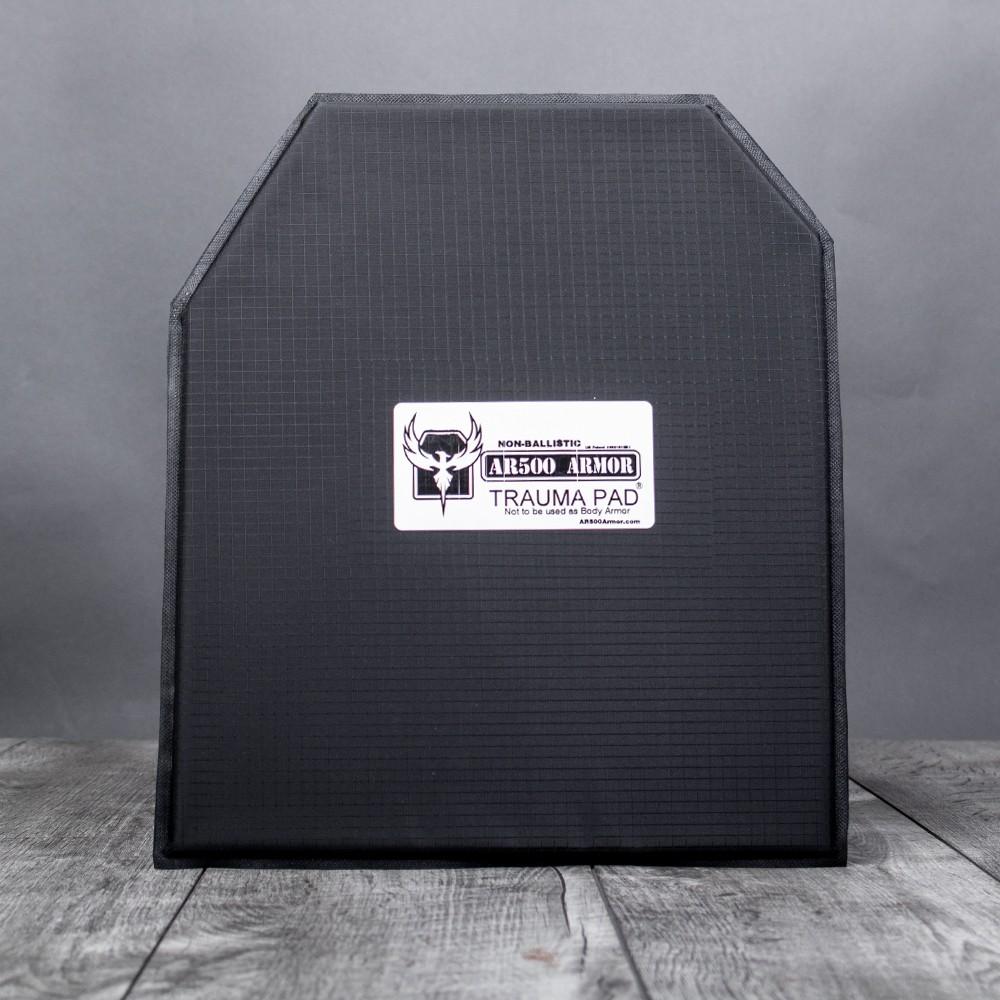
Body armor plates are only designed to stop a bullet, not to make it an enjoyable experience. Imagine taking a big-league pitcher's fastball to the sternum like that bird at the Diamondbacks spring training in 2001.

One way of mitigating the soreness is by wearing a trauma pad, like the AR500 Trauma Pad, under your armor.
These non-ballistic pads don’t provide additional protection against bullets. Instead, they instantly harden upon impact, decreasing the amount of energy transferred from your armor to your body.
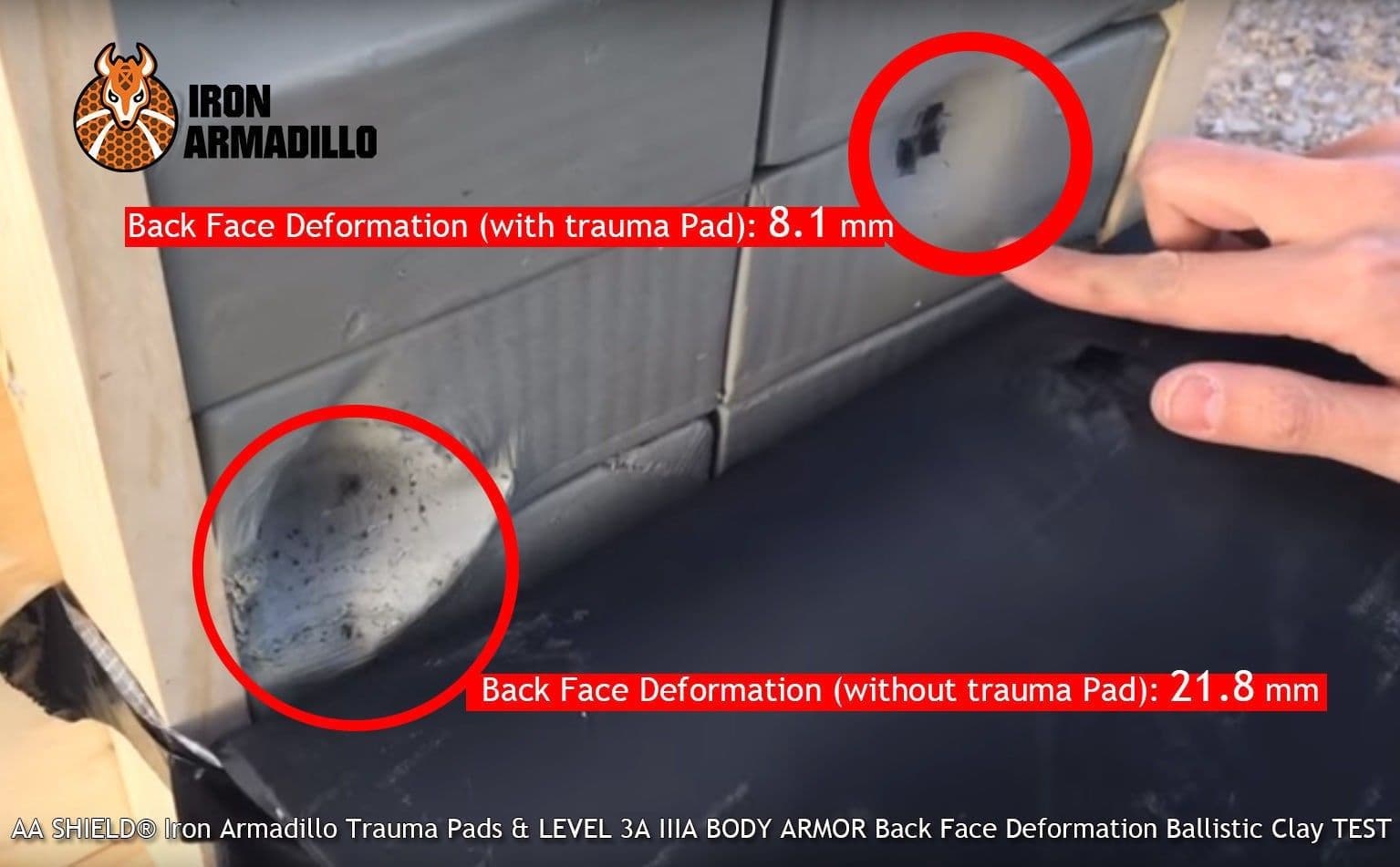
AR500 offers trauma pads cut to match all of their different plate sizes, so all you have to do is match them to your plates.
RTS Tactical Level III+ Rifle Special Threats Mini Shield
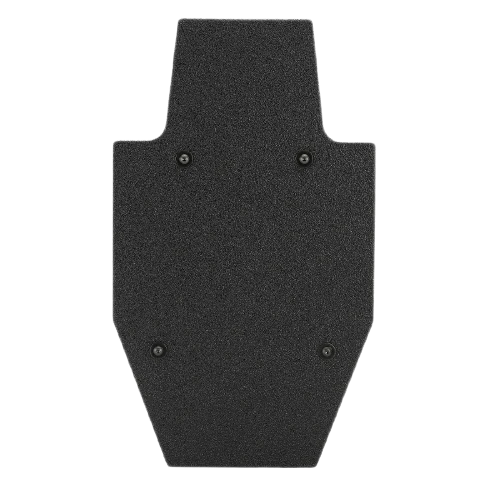
If you prefer Captain America to Iron Man, we have some ballistic alternatives for you! RTS Tactical has a series of shields, and we've tested them.
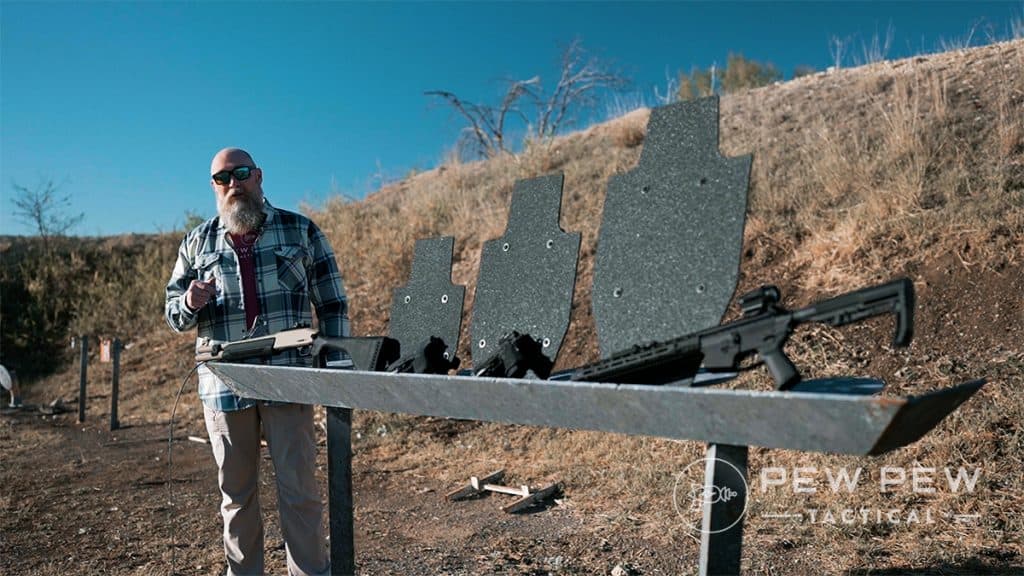
These steel shields have a handle, a trauma pad to protect the forearm, and a retention strap. They are easy to use and comfortable to wear, depending on your strength.
They come in small, medium and large sizes.
You can check out the full review, but the bottom line is that we were impressed with how they performed. We shot one with 9mm, .45 ACP, M855 green tip, and even some shotgun slugs.
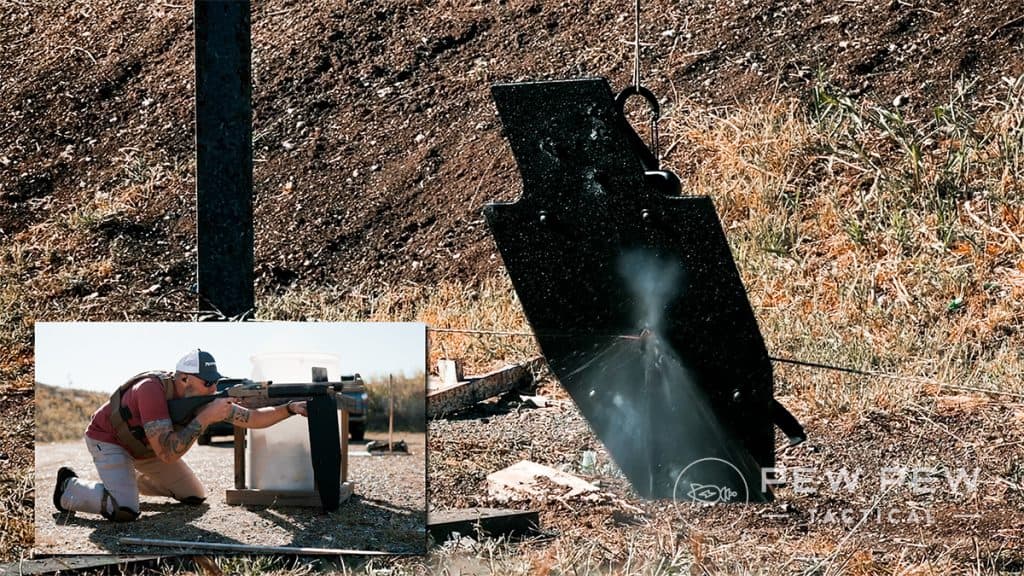
Nothing got through.
Actually, the shield barely even looked worse for wear. The exterior lost some of its finish but the steel was hardly even dented. The handle got a little loose after all the knocking around, but we were able to tighten it right up with basic hand tools.
RTS Tactical Bulletproof Memory Foam Pillow
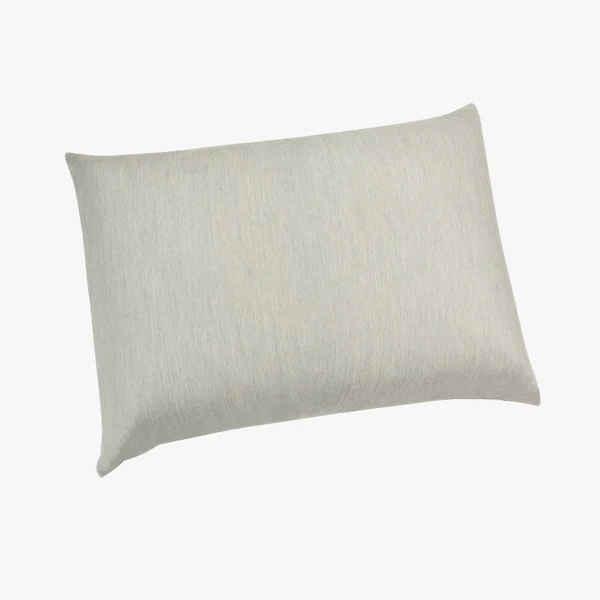
I can see where you might be scratching your head with this one. We were too at first, but we shot it anyway!
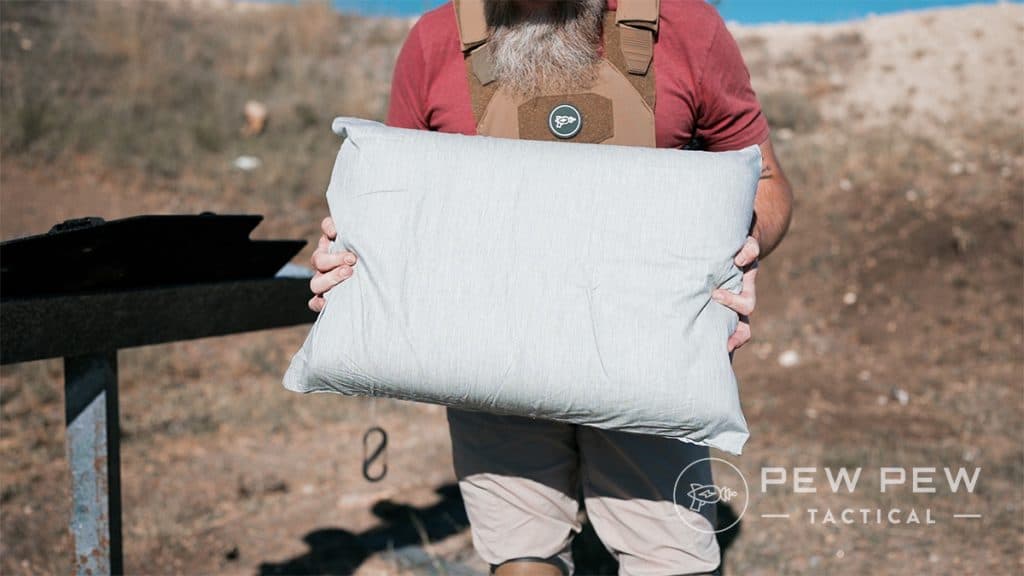
These pillows are memory foam and actually very comfortable to sleep on (tested). They also stop IIIA threats.
Ours caught 9mm, .45 ACP, and 12ga slugs, but M855 zipped right through because these pillows are not rated for rifles.

The idea of a ballistic pillow is interesting. Say you hear something go bump in the middle of the night, a pillow is one of the closest things to you.
You could respond with a firearm in one hand and, using the included handle, a pillow in the other. The tactics are very similar to the shields above.
Premier Body Armor Bulletproof Backpack Armor
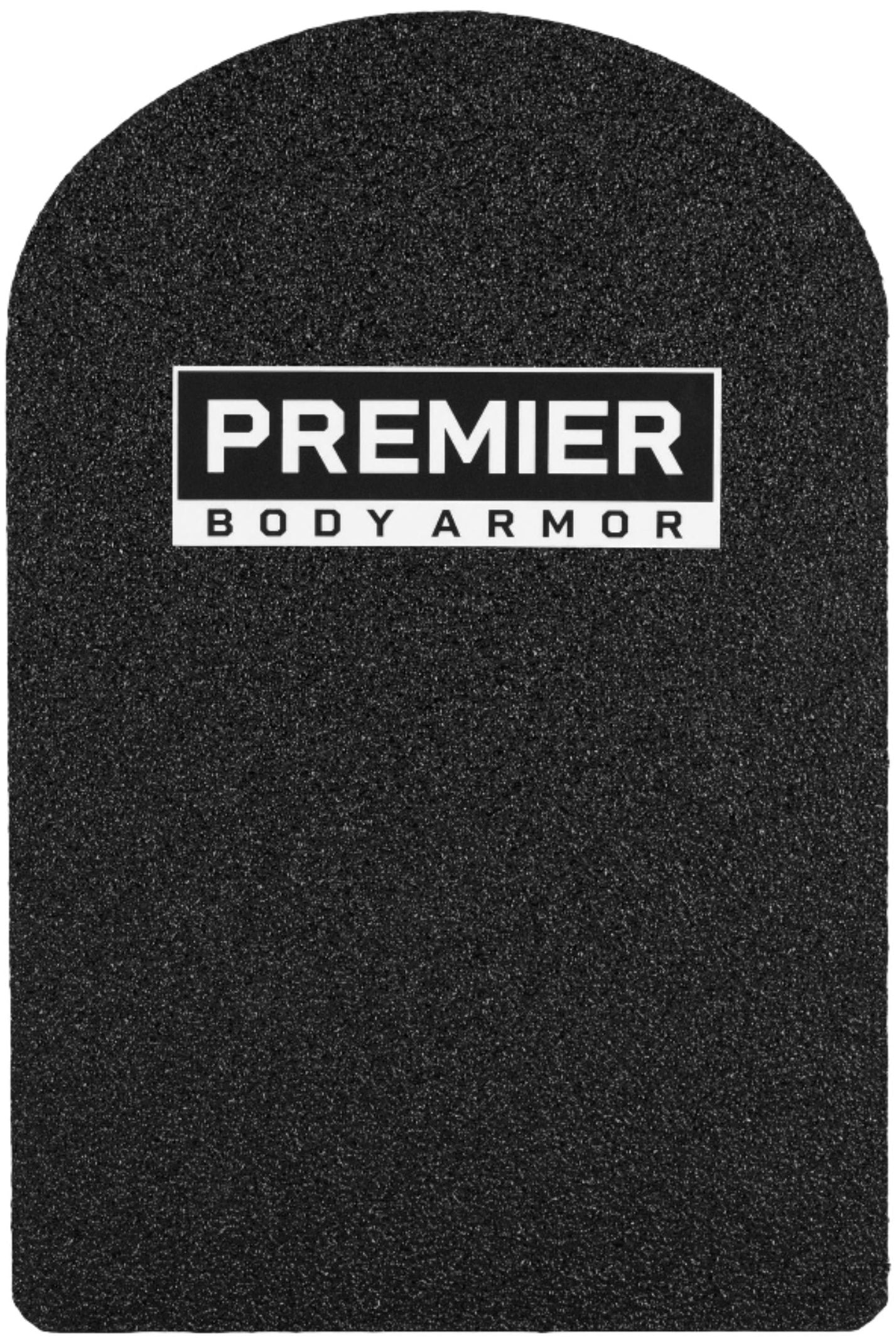
While wearing body armor on your, well, body, is the best way to protect yourself, we realize that it's not always practical - especially for kids. For those situations, we love the Premier Body Armor Bulletproof Backpack Armor.
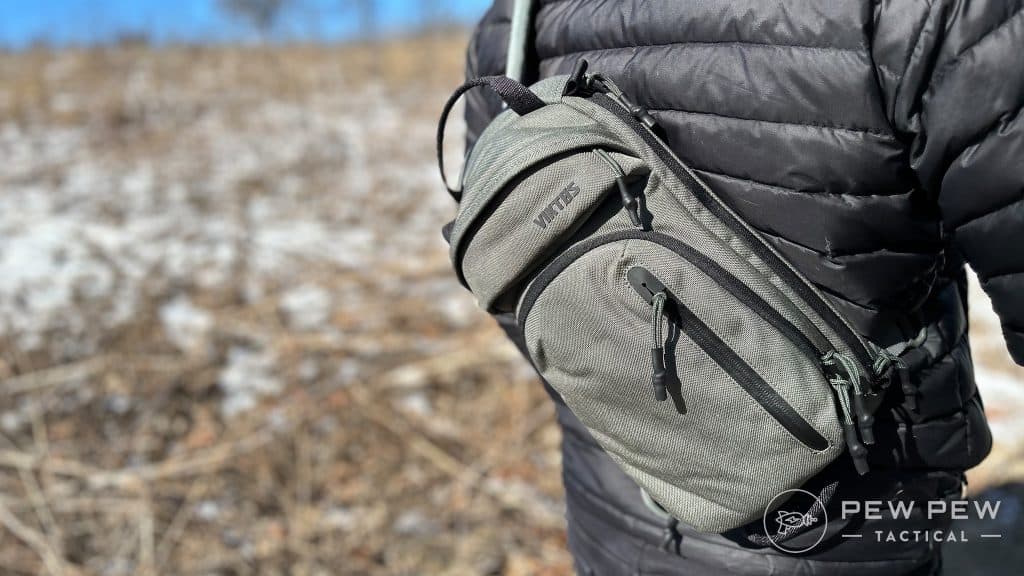
You can slip this universal soft armor into any backpack that's big enough to hold it to add a layer of protection to your daily routine.
Premier Body Armor also offers armor specifically cut for certain bags from Eberlestock, Vertx, and Viktos. That includes backpacks, sling pads, and even fanny packs.
How to Pick the Best Body Armor
Those are our favorites. But how do you know which one is right for you?

Ultimately, it comes down to your protection needs, budget, and body.
Let's cut through all the political arguments, technical terms, and marketing lingo to make sense of it all.
Body Armor Laws in the U.S.
Yes, civilians are allowed to own body armor in the U.S. There are some restrictions regarding convicted felons and local laws, but those are relatively few and far between.
In fact, body armor is nothing new.
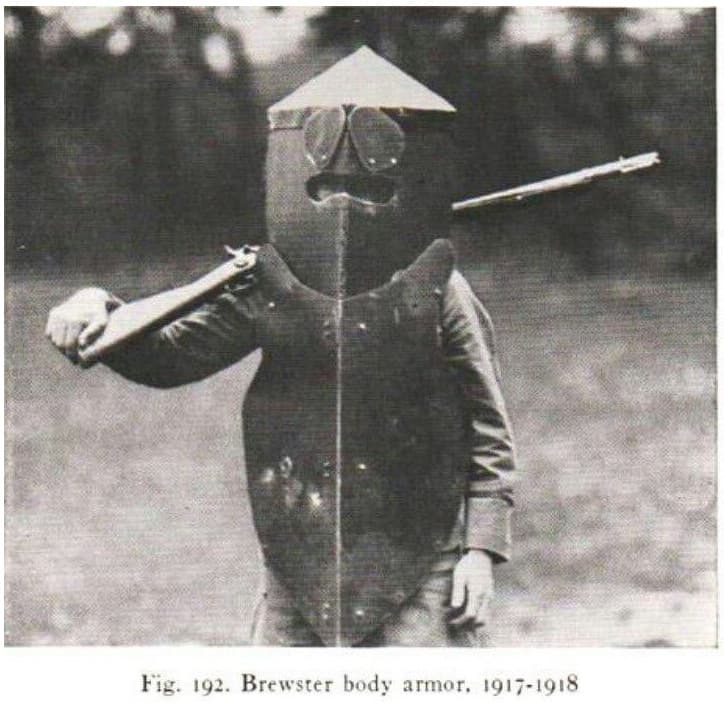
There have been a few attempts to restrict body armor ownership in the U.S., but we're in the clear for now.
Yes, Body Armor Can Be Comfortable
Aside from cost, most people probably avoid using body armor because they're concerned about being uncomfortable after spending all that money.
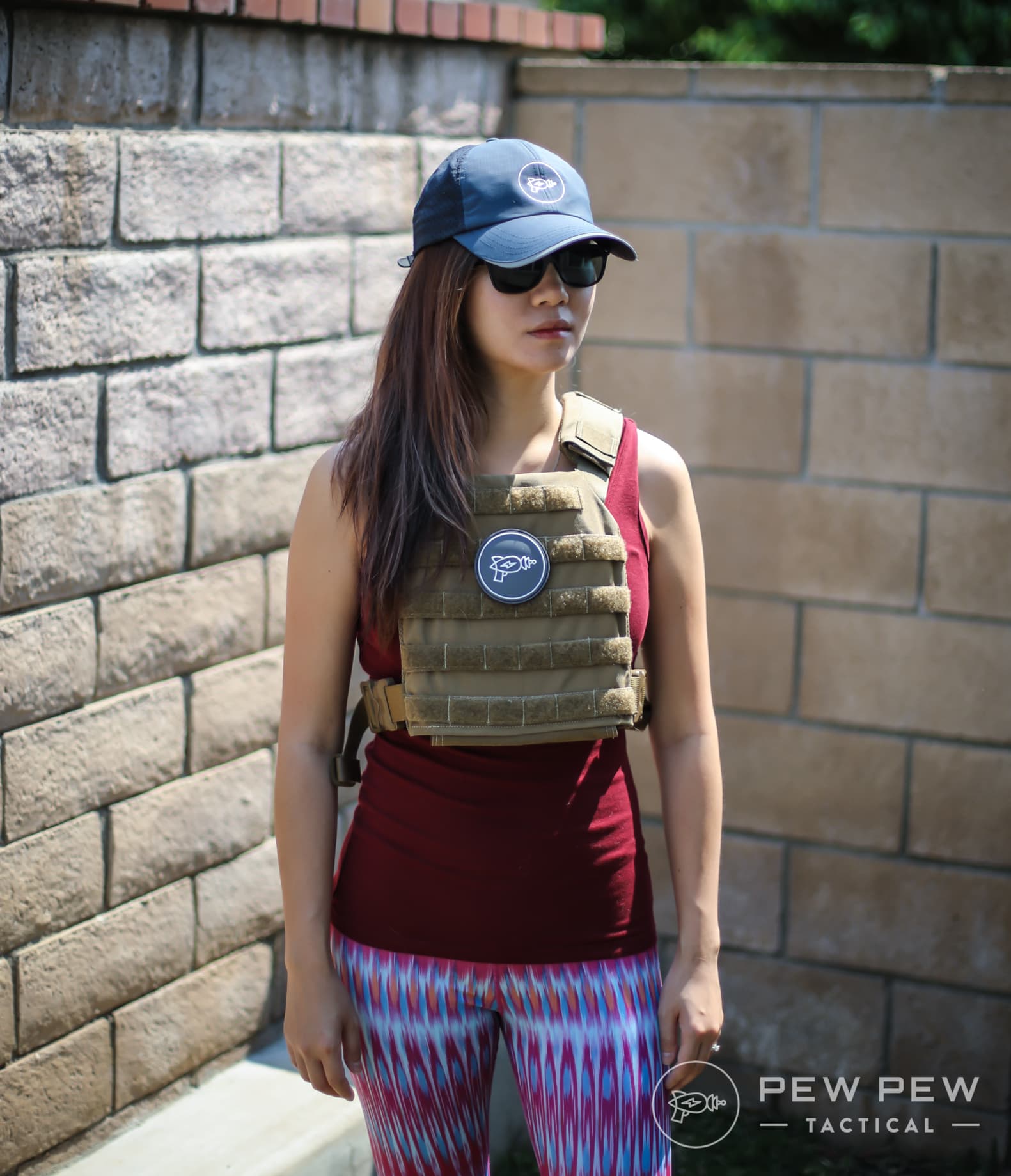
Factors like plate curvature, shoulder strap padding, and breathable materials will all contribute to a more comfortable fit.
A lot of that has to do with choosing your plate carrier, so just focus on getting the right size and shape of body armor for now.
Sizing Body Armor
There isn’t really an industry standard when it comes to sizing plates, and wrong-sized plates usually can’t be returned for safety reasons, so you want to get it right the first time.
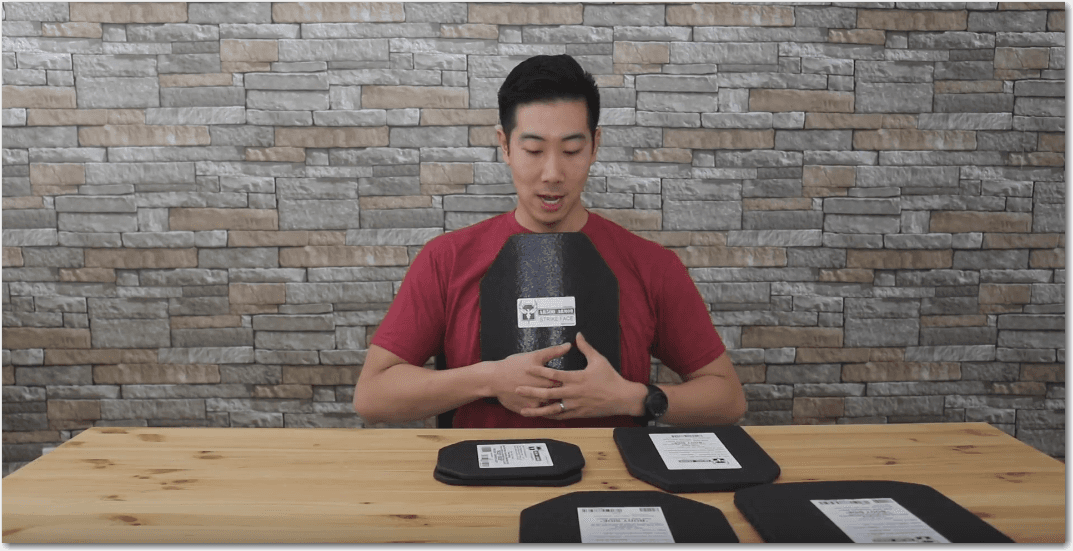
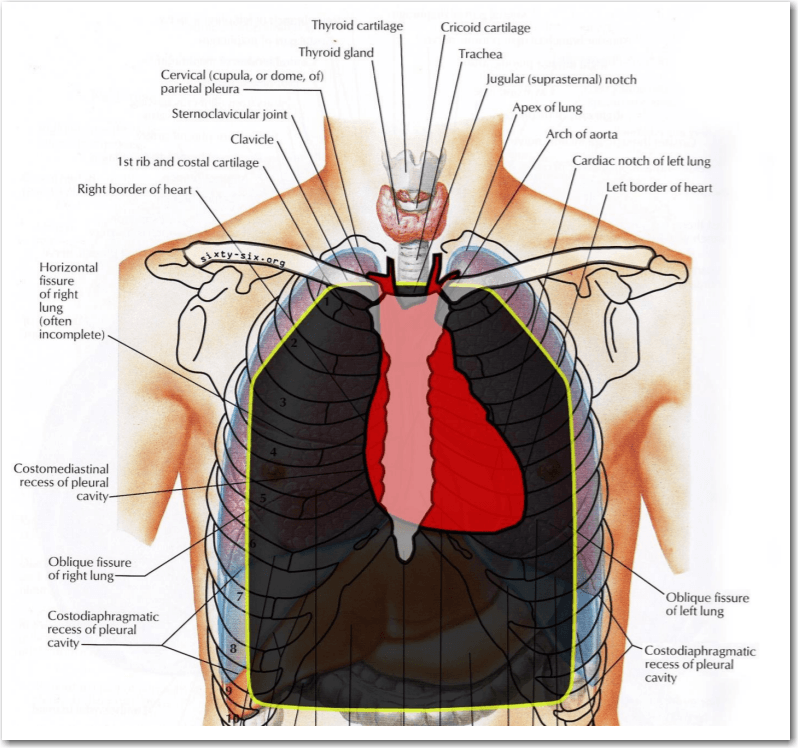
Make sure that the armor plate touches your sternal notch (follow down from your Adam's apple to where you'll gag when you press in) and reaches almost to the bottom of your rib cage.
You'll want the width to cover your nipples. It's going to fit a lot higher than you expect.
The point of armor is to protect your heart and lungs, not your guts.
Cuts & Shapes
Most manufacturers produce armor in just a handful of shapes, but you’ll choose depending on the type of coverage you’re looking for and your body’s unique shape and motions.
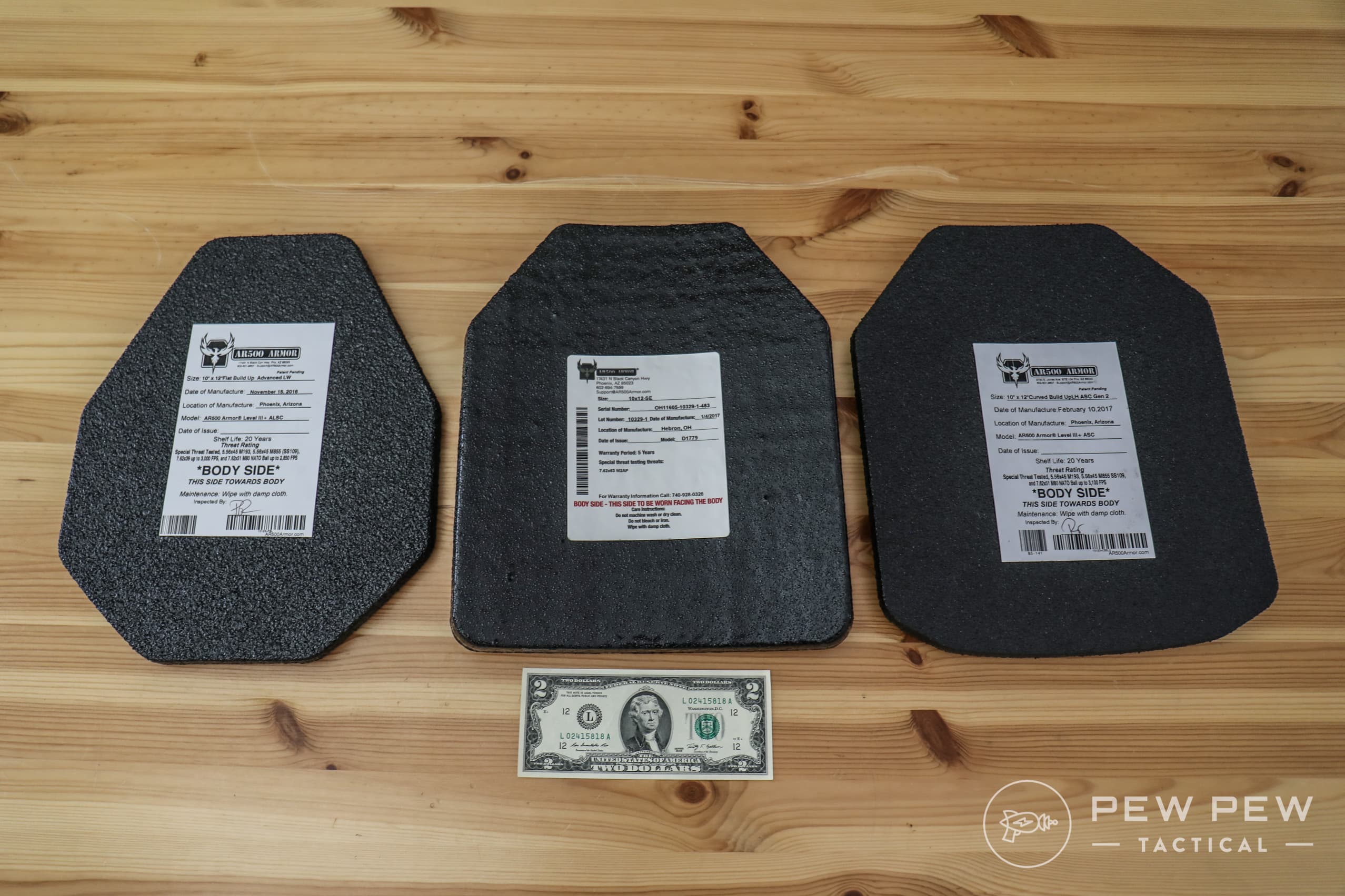
- Rectangular: These plates offer the most coverage but the least mobility. They're primarily popular for back plates since they cover so much.
- SAPI: These plates offer a lot of the same coverage as rectangular plates, but the upper corners are removed to give you a better range of motion.
- Shooter: These plates are similar to the SAPI, but the corners are cut more aggressively. Some have one side that's shaped differently to accommodate a buttstock for right or left-handed shooters.
- Swimmer: These plates are aggressively cut down on all corners, offering the least protection but the most mobility.
Again, it might vary among manufacturers who come up with their own cutesy names.
Curvature
Your body is curved, so it’s well worth your comfort to spring for plates that match, even if it’s a few dollars more.
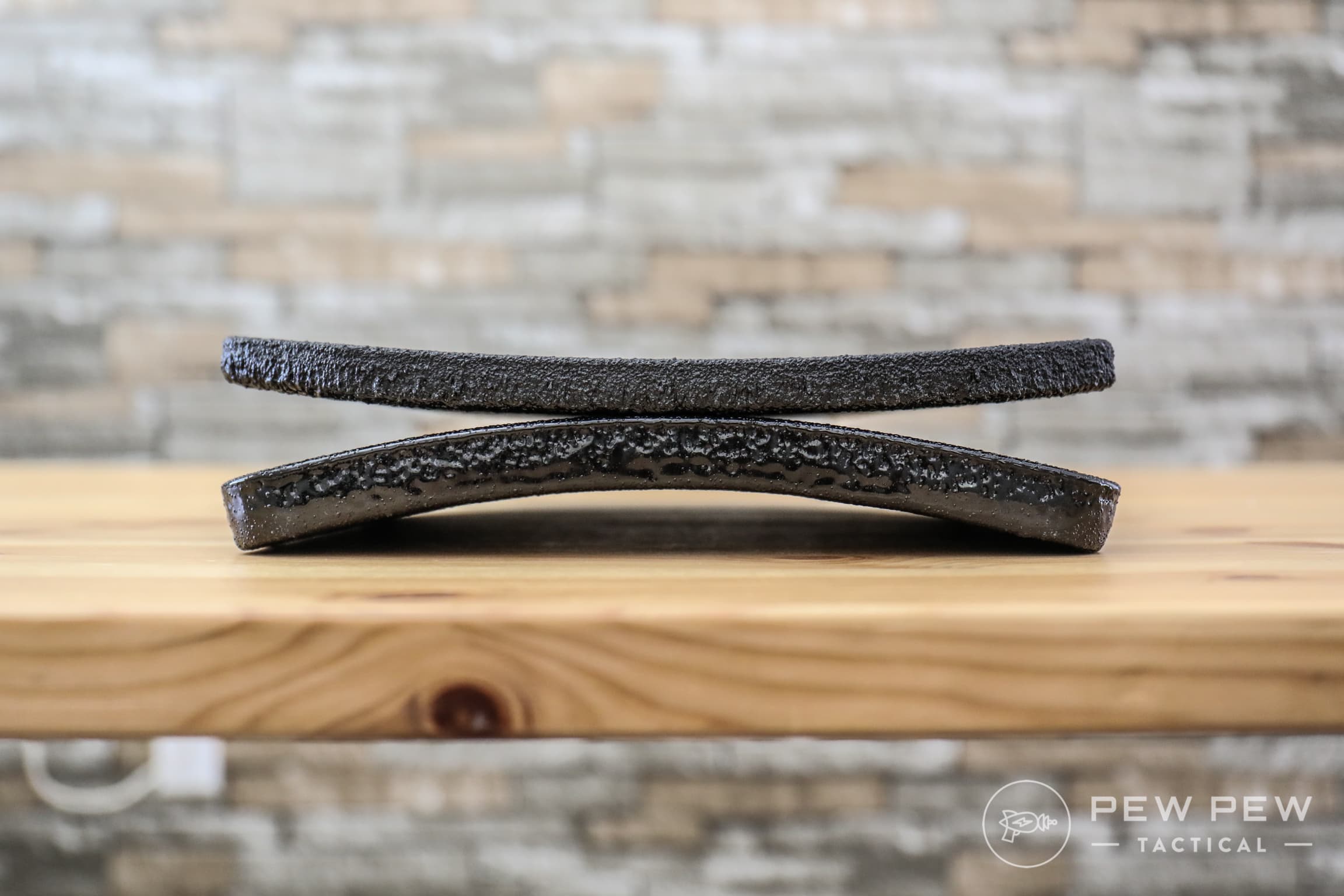
Most plates have a curve from side to side. Some curve from top to bottom, as well, and these are commonly called multi-curve.
Flat plates exist, too. They can be good for back armor, but you may still find that uncomfortable.
Choose what fits your body best. If it feels a little awkward when you first put it on, it might be downright intolerable after an hour.
Body Armor Materials
In addition to deciding what size and shape of body armor you want, you have to pick its material -- and you have lots of options.
Soft Body Armor
Soft armor is very comfortable and does a good job of stopping pistol-caliber rounds and some shrapnel. It's what you see most police officers wearing.

You'll usually find it in complete vests, but you can also get inserts for bags, plate carriers, or shirts.
Steel Body Armor
Steel plates are affordable and extremely durable, but they have some significant drawbacks.
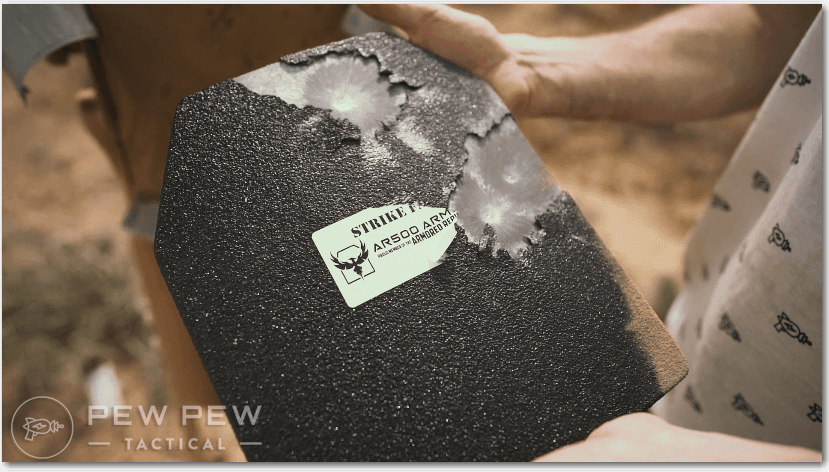
One is weight; these plates are seriously heavy.
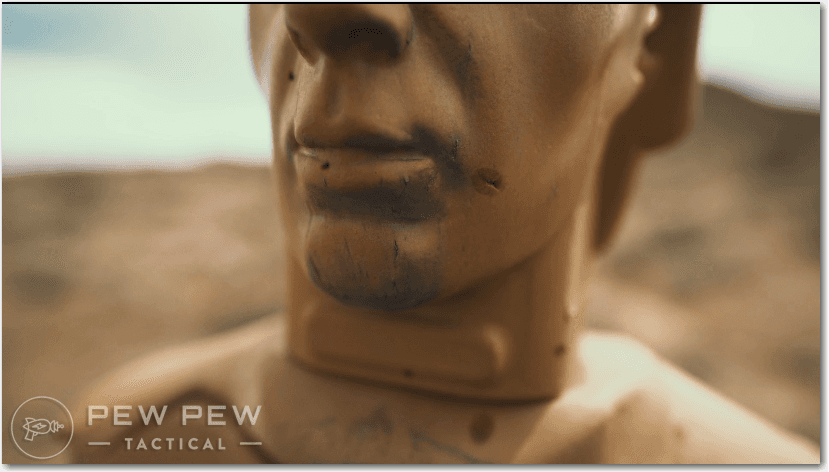
The main issue is the risk of spalling. If a bullet can't penetrate a steel plate, it has to go somewhere and bullets don't bounce. Instead, they splatter into small, sharp pieces that redirect along the plate's surface.

Even if the round doesn't penetrate your armor, you're going to have a bad day if sharp metal hits your throat and face. Just ask our test dummy.
Spray-on coatings reduce this risk for a price. If you ask us, they're a mandatory upgrade. Even then, there's some level of risk involved, especially in the event of multiple strikes.
Ceramic Body Armor
Want to use what the military uses? Go for ceramic plates. They're extremely effective and offer a decent balance between weight and protection.
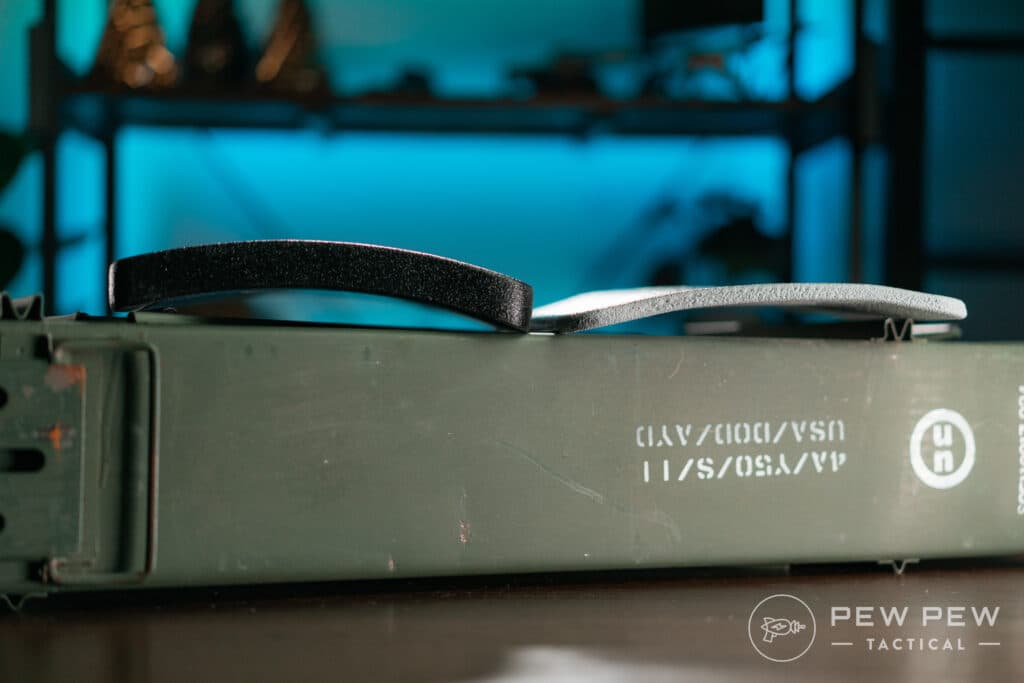
The trade-off is that ceramic plates are the most expensive and the bulkiest.
Surprisingly, ceramic plates are great at catching bullets but they're still somewhat fragile. If you drop them or fall on something while wearing it, you may need to replace it.
Ceramic body armor is mostly rated for a single hit or multiple hits not in the same area.
UHMWPE Body Armor
Plastic may not seem very good at stopping gunfire, but it falls somewhere between ceramic and steel on factors like cost and durability. UHMWPE plates weigh about 3 pounds -- and they float!
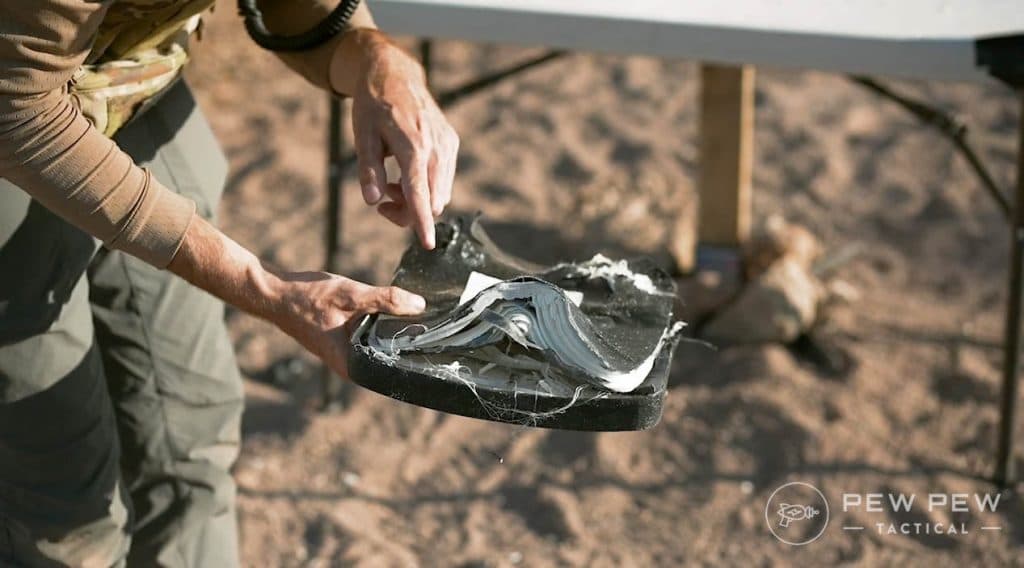
Like ceramic plates, these are a great deal thicker than steel counterparts.
Common rounds, like the M855 green tip, may punch through plastic, but it offers protection against most pistol calibers. It stands up to repeated shots about as well as ceramic.
Want to learn more? Check out our article comparing Ceramic vs. UHMWPE body armor.
Body Armor and Threat Levels
Hollywood might have you believe that all so-called bullet-proof vests are the same, but there are critical differences in the protection various body armor offers.
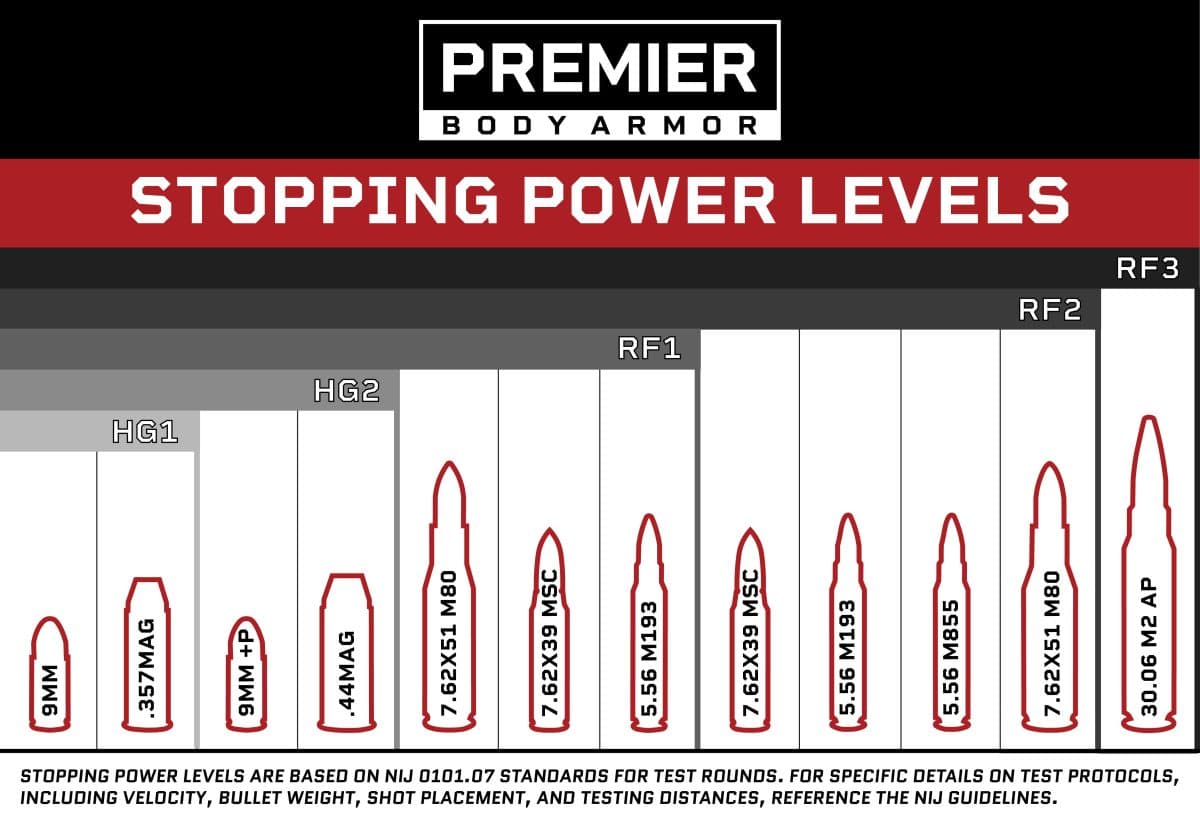
The National Institute of Justice has standards that allow us to compare products from different manufacturers.
Until recently, that involved terms like Level II, Level IIIA, Level III, and Level IV.
In 2024, we got new NIJ body armor standards to account for changes in the kinds of threats we face. These are the more intuitively named HG1, HG2, RF1, RF2, and RF3 (HG stands for handgun, RF stands for rifle).

These are all designed for different lifestyles and threat levels. If you want maximum comfort and mobility, you're probably looking at HG1 (Level II) body armor. If you want protection against rifles, skip to RF-rated body armor (Level III or higher).
Meet the Experts
This article comes t your from former Jr. Editor Allison Goodwin. Allison got a taste of sport shooting in 4-H Club, and has been shooting most of her life. She also has a soft spot for survivalism and loves learning new prepping skills.

Editing this article is Scott Murdock. Scott is a Marine Corps veteran who competed and qualified as a rifle and pistol expert while in service. In addition to shooting, Scott has written for a variety of publications, testing, researching, and evaluating guns and gear. He brings that knowledge and skillset to this article, editing and fact-checking for accuracy.
Editor-in-Chief Jacki Billings runs our experienced team of reviewers. She is a National Rifle Association Basic Pistol Instructor as well as a member of the Society of Professional Journalists, ACES: Society for Editing, and the Professional Outdoor Media Association. Jacki has a bachelor’s degree in journalism and has worked as a media professional for close to 20 years, specializing in gun media for almost 10 years. With 2,000+ articles to her name, she uses her professional journalism and editing experience to set testing protocols and editorial standards for Pew Pew Tactical.
Final Thoughts
Choosing body armor isn’t something that should be taken lightly. After all, it’s your life you’re entrusting to a few inches of steel, ceramic, or plastic, so you want to feel confident in your decision.
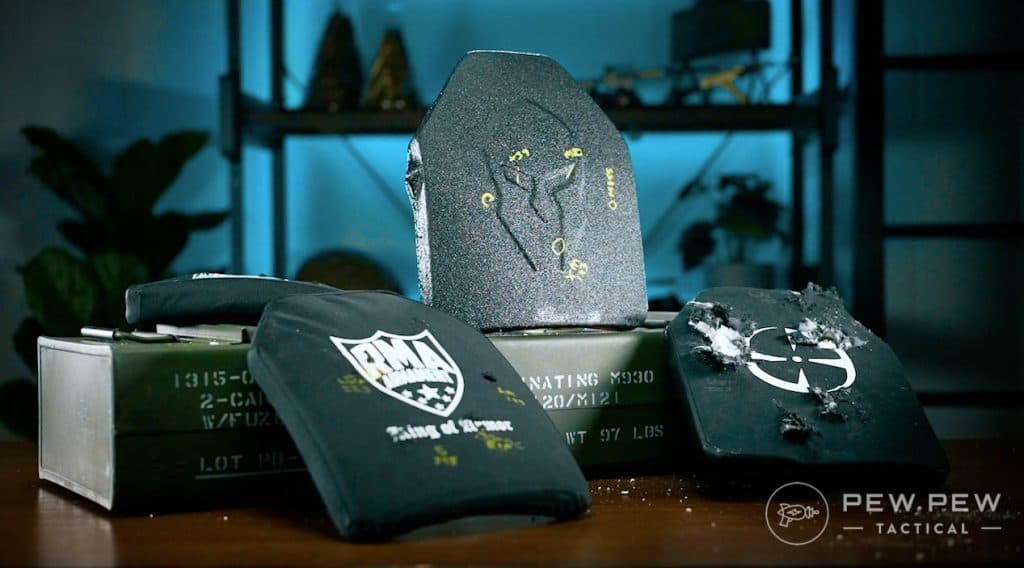
What's your favorite body armor? Let us know in the comments. Need help putting all your gear together? Check out our guide on How to Set Up Your Plate Carrier!
Latest Updates
- June 2025: Removed discontinued AR500 Armor products and unavailable Safariland and US Armor ballistic panels. Added the Premier Body Armor Everyday Armor Shirt 2.0. Updated and restructured supporting content.
- October 2024: Added information on how we tested and a comparative analysis.
- March 2024: Removed Advanced Slickster Plate Carrier.
- October 2023: Removed AR500 Lightweight UHMWPE.