
Best Night Vision Scopes & Optics [All Budgets]
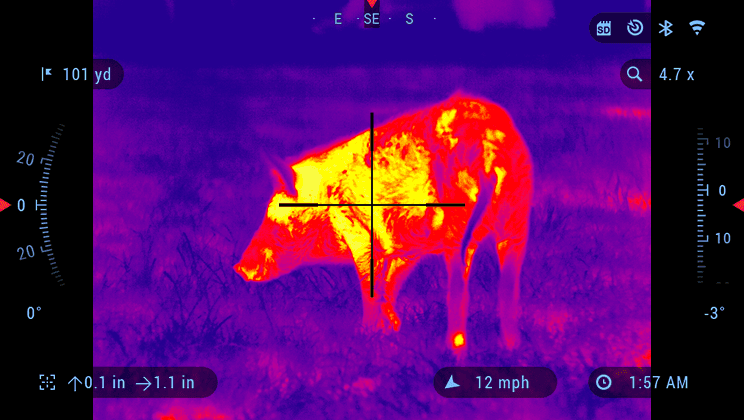
Night vision scopes can be confusing. We cover the technology and showcase some of our favorites, plus some optics that work with night vision goggles.


We review products independently. When you buy through links on our site, we may earn a commission to help support our testing. Learn more.
As soon as the sun goes down, you’re faced with an unfortunate reality. For safety’s sake — or simply to remain on the right side of the law, depending on what your use case is — you have to stop shooting.
At least, you did, until night vision optics became a practical reality for recreational consumer-level shooters. These systems are cheaper, better, and easier to use than ever before, and they can make a ton of sense under the right circumstances.
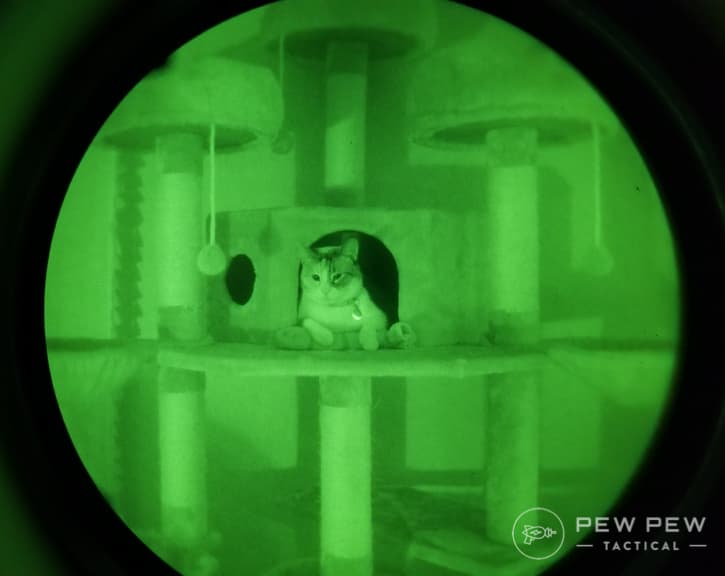
The night vision marketplace can be confusing, but with our guide, you’ll be able to wade through the jargon and figure out what purchases make sense for you. Keep in mind that this isn’t meant to be an exhaustive survey of the night vision optic marketplace.
That would take many thousands of words and is probably beyond the need of most shooters. Instead, we’ll look at a few practical setups you might want to run, either for hunting or tactical applications.
The Quick List
- Best Thermal Scope: ATN Thor 4 384 2-8x Thermal ScopeJump to details ↓
- Best Mid-Tier Night Vision Scope: ATN X-Sight II HD 3-14 Smart Day/Night Rifle ScopeJump to details ↓
- Best tactical Night Vision Scope: ATN X-Sight 5 LRF 5-25Jump to details ↓
- Best Clip-On: Armasight CO-MRJump to details ↓
- Best Monocle: Armasight PVS14 Gen 3Jump to details ↓
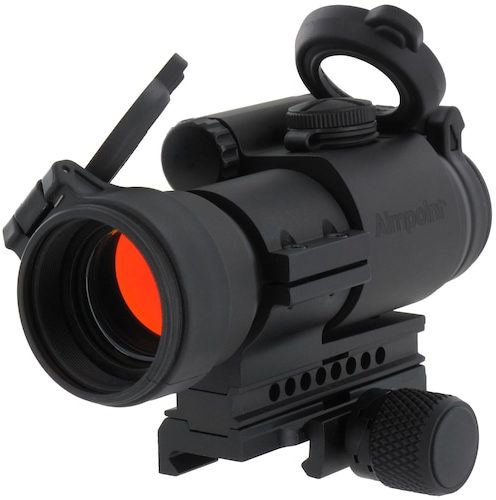
- Best Night Vision Compatible Red Dot: Primary Arms Advanced Micro DotJump to details ↓
Table of Contents
Night Vision Scopes Comparison Chart
| Model | Battery | Run Time | Weight | Price |
|---|---|---|---|---|
| ATN Thor 4 384 2-8x Thermal Scope | Lithium Ion | 18 hours | 2.03 lbs. | $2,000 |
| ATN X-Sight II HD 3-14x | Lithium Ion | 18+ hours | 2.2 lbs. | $530 |
| ATN X-Sight 5 LRF 5-25x | Lithium Ion | 6-14 hours | 2.2 lbs. | $1,195 |
| Armasight CO-MR White Pinnacle (Clip-on) | CR123A (x1) or AA (x1) | 40 hours (CR123A) 24 hours (AA) | 1.85 lbs. | $4,300 |
| Armasight PVS-14 Gen 3 | AA (x1) | 50 hours | 12.4 oz | $3,000 |
| Primary Arms Advanced Micro Dot | CR2032 | 50,000+ hours | 5.5 oz. | $130 |
How We Tested the Best Night Vision Scopes and Optics
For this article, we gathered a bunch of optics we’ve personally used, reviewed, or owned here at Pew Pew Tactical. Every unit we tested had to check off a few qualities before we'd recommend them:
- Reliable operation
- Outstanding features
- Easy to use
- Value (some units are very expensive but we found recommendations for every budget)
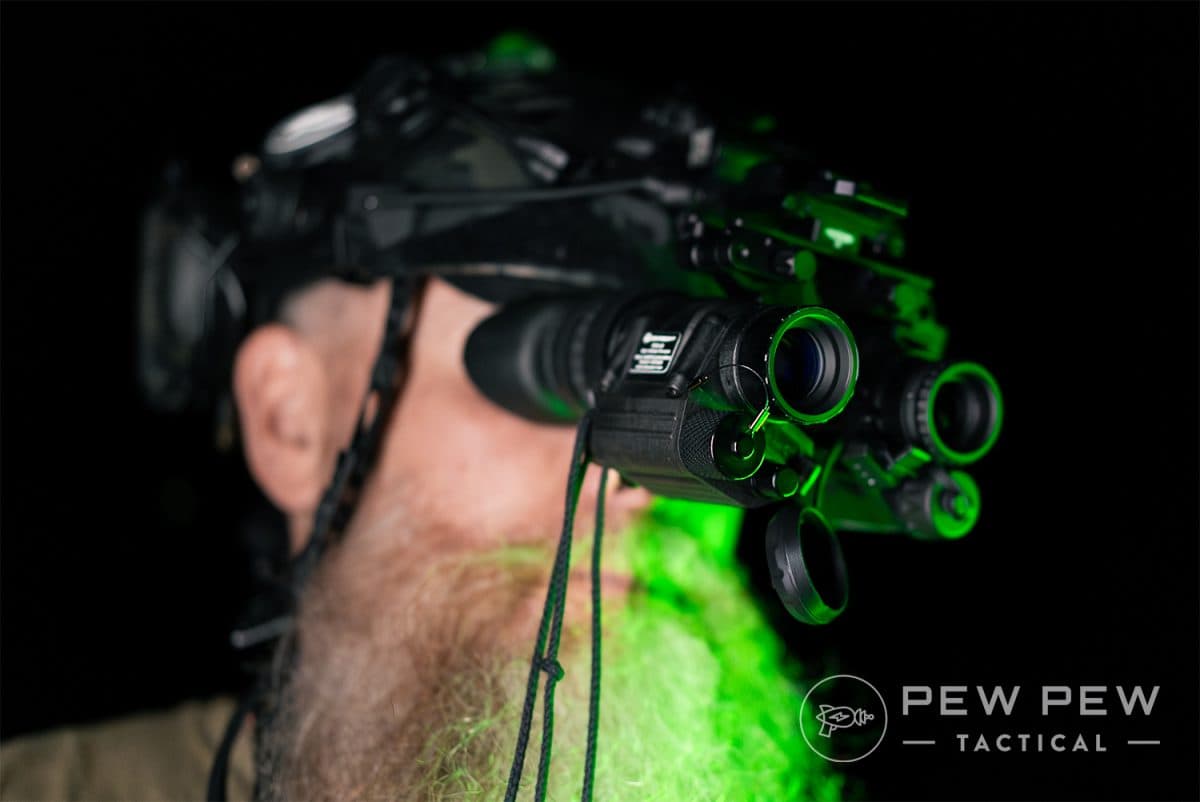
We specifically chose thermal scopes that our staff has had personal, hands-on experience with at night and even did a night shoot recently to test three additional models (the ATN X-Sight 5 LRF, Armasight CO-MR White Pinnacle, Armasight PVS-14 Gen 3). Some of these models are personally owned scopes that have seen hunting/training in various conditions and thousands of rounds.
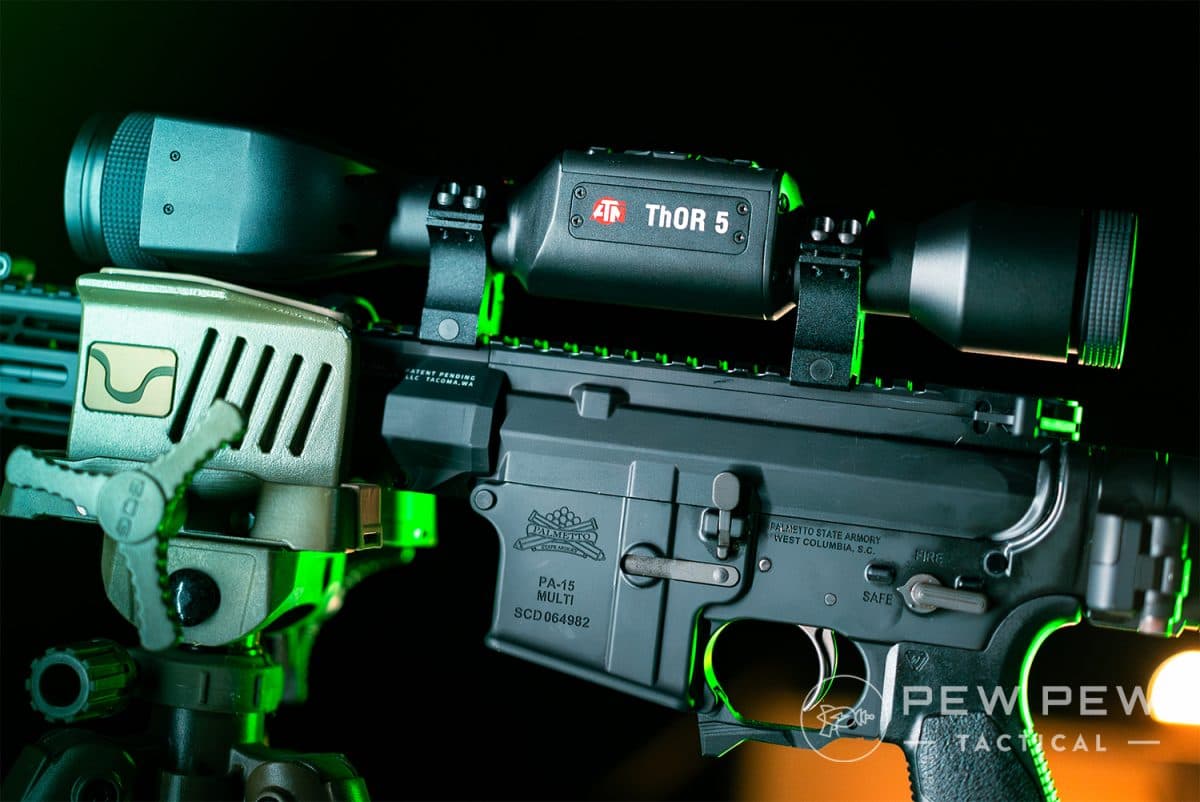
The entire Pew Pew Tactical team, as well as freelance writers, contributed to this guide to offer different opinions based on experience level.
Best Night Vision Scopes
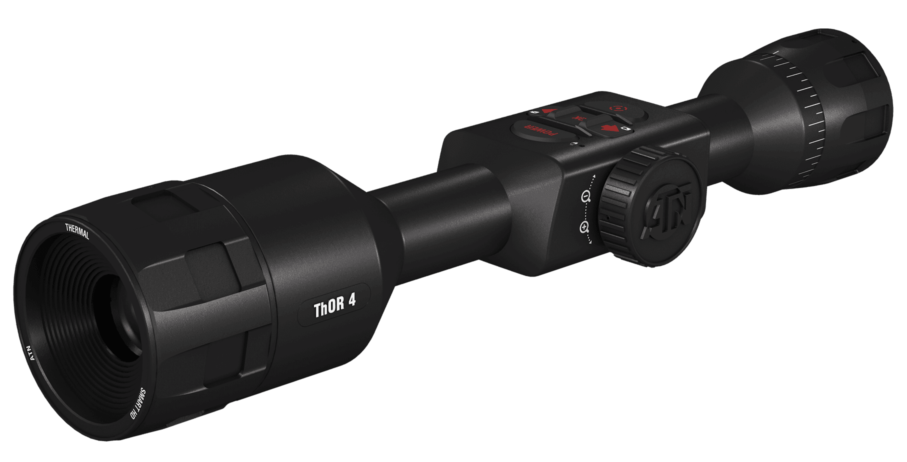
1. ATN Thor 4 384 2-8x Thermal Scope - Best Thermal Scope
Pros
- Ballistic calculator
- Range finder
- GPS geotagging
Cons
- Lower resolution
Specs
- Battery: Lithium Ion
- Run time: 18 hours
- Sensor resolution: 384x288
- Refresh rate: 60 Hz
- Weight: 2.03 lbs.
While anything in the Thor line-up from ATN is going to be quality, the 2-8x magnification is a common sweet spot for hunting. However, you can get ATN thermal scopes ranging from 1.15x all the way to 40x.
Hunting at night has never been easier than with modern thermal scopes. The ability to clearly see and target game in near zero light is a powerful tool, but it doesn't come cheap.
ATN has packed in a lot of goodies though, from computer-assisted one-shot-zero to a self-correcting BDC, plus being able to record in 60-fps!
You'll also have lots of options in terms of sensor model and lenses.
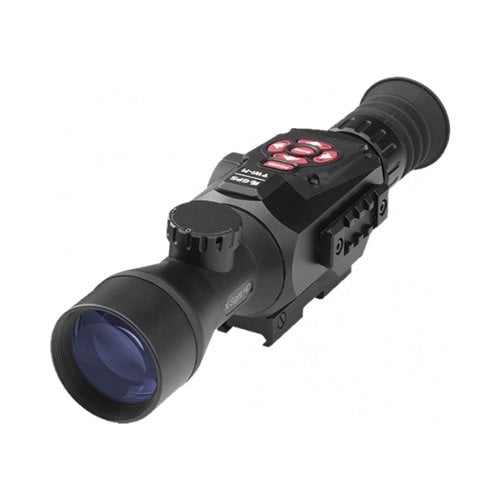
2. ATN X-Sight II HD 3-14x - Best Mid-Tier Night Vision Scope
Pros
- Range finder
- Recoil activated recording
- One shot zero
Cons
- Occasional glitches
Specs
- Battery: Lithium Ion
- Run time: 18+ hours
- Sensor resolution: 3864 x 2218
- Refresh rate: 60 Hz
- Weight: 2.1 lbs.
While the Firefield is a great way to get your toes wet in night vision, sometimes it really helps to get the next rung up from the budget option. In this case, that means the ATN X-Sight II HD - and the extra cash really makes a difference.
Sporting a ballistic calculator, recoil-activated video, night and day vision, E-barometer, gyroscope, and E-compass - this is the scope that coyotes should fear. Plus, it comes in at a very reasonable price point.
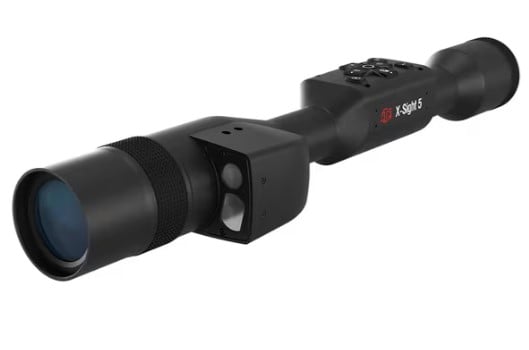
3. ATN X-Sight 5 LRF 5-25x - Best Tactical Night Vision Scope
Pros
- IR illuminator
- One shot zero
- 4K video
- Radar
Cons
- Glitchy
- Somewhat heavy
Specs
- Battery: Lithium Ion
- Run time: 6-14 hours
- Sensor resolution: 4056x3040
- Refresh rate: 30/60/120/240 Hz
- Weight: 2.2 lbs.
ATN has another winner in the X-Sight 5, a feature-packed digital night vision scope that even includes an infrared illuminator. This modern optic allows you to engage targets in the dark using an array of color palettes.
The X-Sight 5 comes in 3-15 or 5-25 magnifications and can be purchased with or without the laser range finder. This gives shooters a range of feature options and different price points.
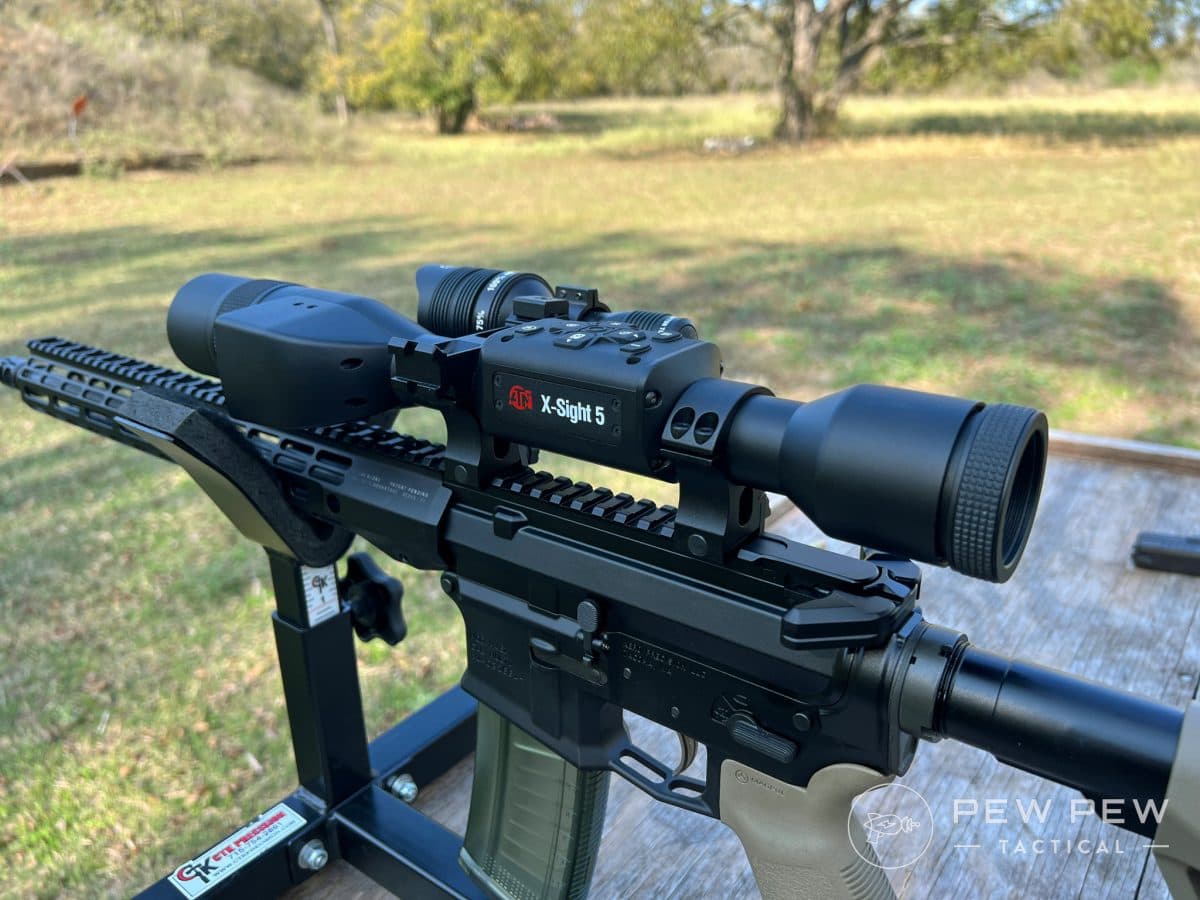
ATN has done a great job of slimming down the size of the X-Sight 5 compared to previous models. We tested the 5-25 version and it isn’t much bigger than an analog optic of similar magnification.
The unit is weather resistant, and mounts up with included 30mm rings. It also includes mounting options for the illuminator, which can attach to MLOK or to one of the rings.
In addition, the IR illuminator comes with a rechargeable battery. ATN also provides a charger for the illuminator that powers up via USB-C.
The X-Sight 5's power comes from a lithium-ion battery that is also USB-C chargeable. Run time varies between 6 and 14 hours depending on usage, though battery packs can expand use in the field.
External controls consist of a series of rubber buttons on top of the optic. The eyepiece has a diopter adjustment, and up front near the objective lens, there is a parallax adjustment ring.
Looking through the X-Sight 5, shooters are treated to a crisp video display with vibrant colors at 1280x960 resolution. It’s also worth noting the optic is not limited to nighttime use like traditional analog night vision.
Within the screen shooters will find a heads-up display on the periphery of the screen with a suite of tools such as a compass, tiltmeter, inclinometer, magnification indicator, and more. The reticle is located in the center of the screen.
ATN has many reticle options to choose from within the options, but you can also use ATN’s reticle builder tool to create your own. Once you select your favorite, you’re off to the races.
Like the thermal optics created by ATN, the X-Sight 5 has a one-shot zero system. In the mode, shooters fire a round at the target, then move the zeroing reticle to the point of impact, zeroing the rifle.
Another powerful tool in the software suite is the ballistic calculator. Shooters enter local environmental data like altitude, relative humidity and temperature, plus hardware data like bullet weight, scope height and zero distance.
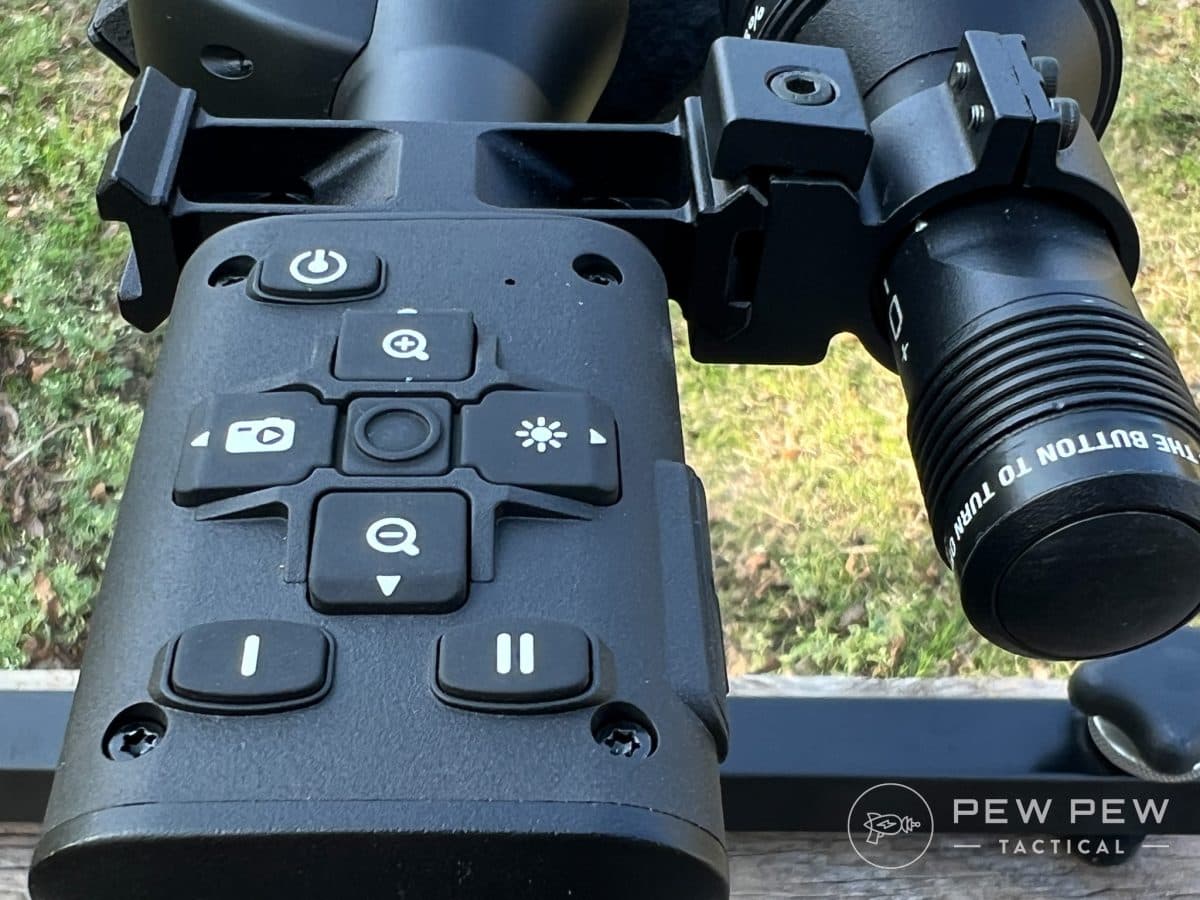
After holding down the ranging button on a target, the screen will show the yardage of the target then adjust your reticle for distance. This feature provides a great deal of confidence in those first shot scenarios.
You won’t miss anything from your shooting experience either. The X-Sight 5 can record up to 4K onboard video. You can manually record but the unit is also shot activated and captures video before and after the shot.
The timing of how much before and after can be adjusted in settings. You’ll also have audio with the included microphone to capture your amazing shot, or close miss.
Video quality is adjustable but can capture up to 4K. Everything is stored on a micro-SD card with a capacity range of 4-64 GB.
The X-Sight 5 has other digital features like WiFi streaming, Bluetooth, and radar via the ATN app. This allows multiple shooters to tag targets and share their locations.
Connecting to the ATN Connect 5 app, you can stream to your phone, which is a great training aid. Shooters can also access all the settings in the digital scope menu, which makes it a little easier to make adjustments on your phone and apply them.
On the night we filmed several night vision/thermal optics, the X-Sight 5 booted up, displayed HUD and reticle, but would not display image. On startup a few days later, it worked fine and has worked ever since.
In addition, it would occasionally not power up. And on at least one occasion, despite being charged the night before, it had to plugged into a power pack to run due to a low battery.
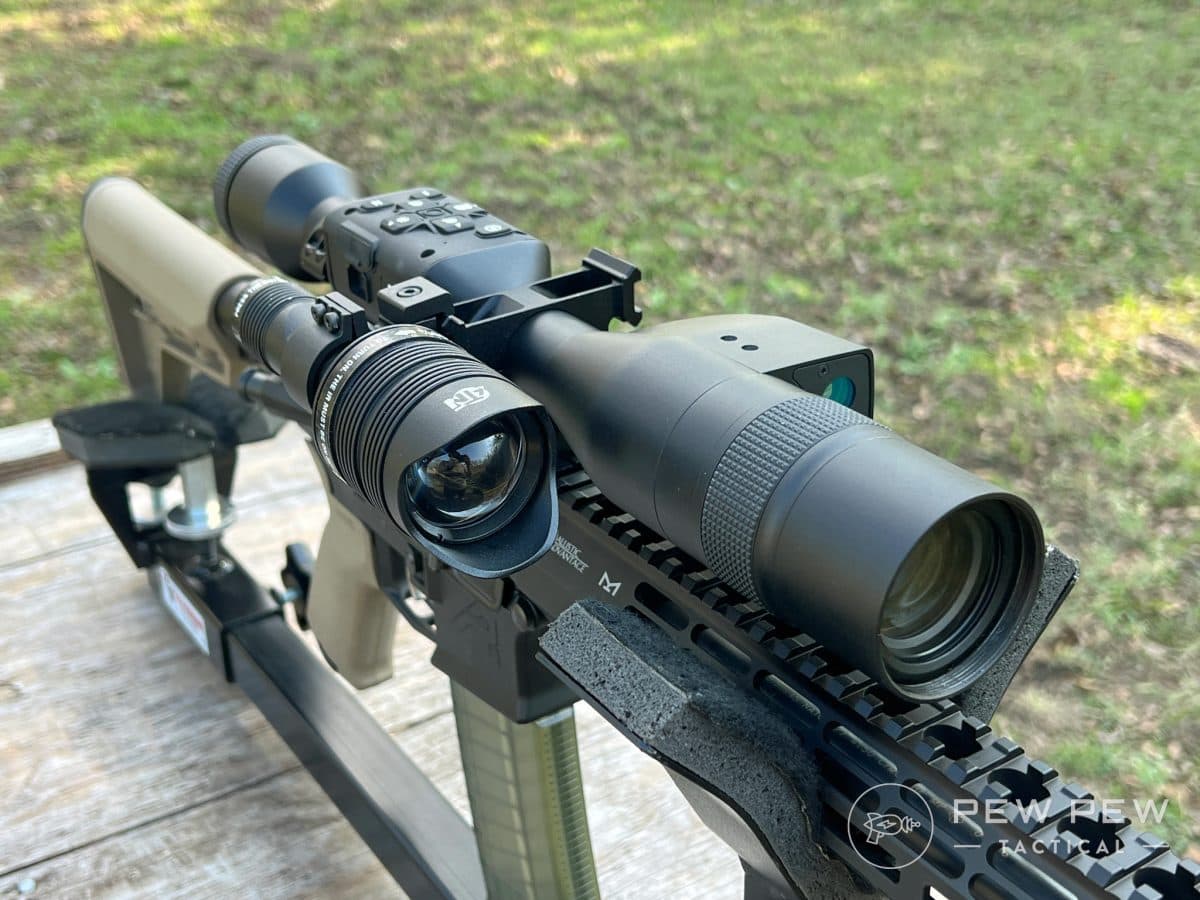
Using the X-Sight 5 during subsequent testing, we ranged and videoed numerous targets. The image quality is great, but the illuminator makes a big difference in lighting up targets.
Plus, because it’s IR, there is no indication to creatures viewing through the normal light spectrum that you are even there.
4. Armasight CO-MR White Pinnacle (Clip-on) - Best Clip-On
Pros
- Works with existing optics
- Third-gen night vision
- Multiple mounting options
- No re-zeroing
Cons
- Range Specific
Specs
- Battery: CR123A (x1) or AA (x1)
- Run time: 40 hours (CR123A) 24 hours (AA)
- Weight: 1.85 lbs.
One of the challenges of shooting with night vision is a question of hardware: do you swap out your daytime optic for a dedicated NV/thermal option or switch back and forth? That’s kind of a pain if you consider mounting, eye relief, and zeroing.
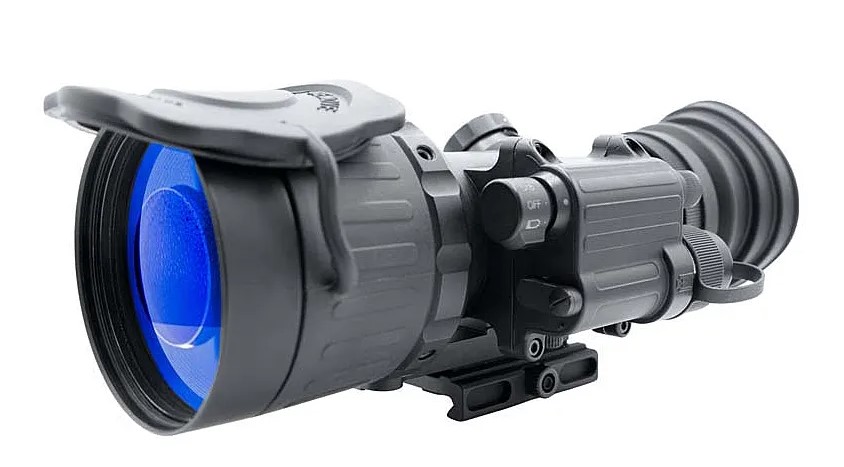
Thankfully, Armasight has a solution that doesn’t require removing your optic. With their night vision clip-on series, you simply add seeing in the dark to your current setup by mounting them in front of your scope or red dot.
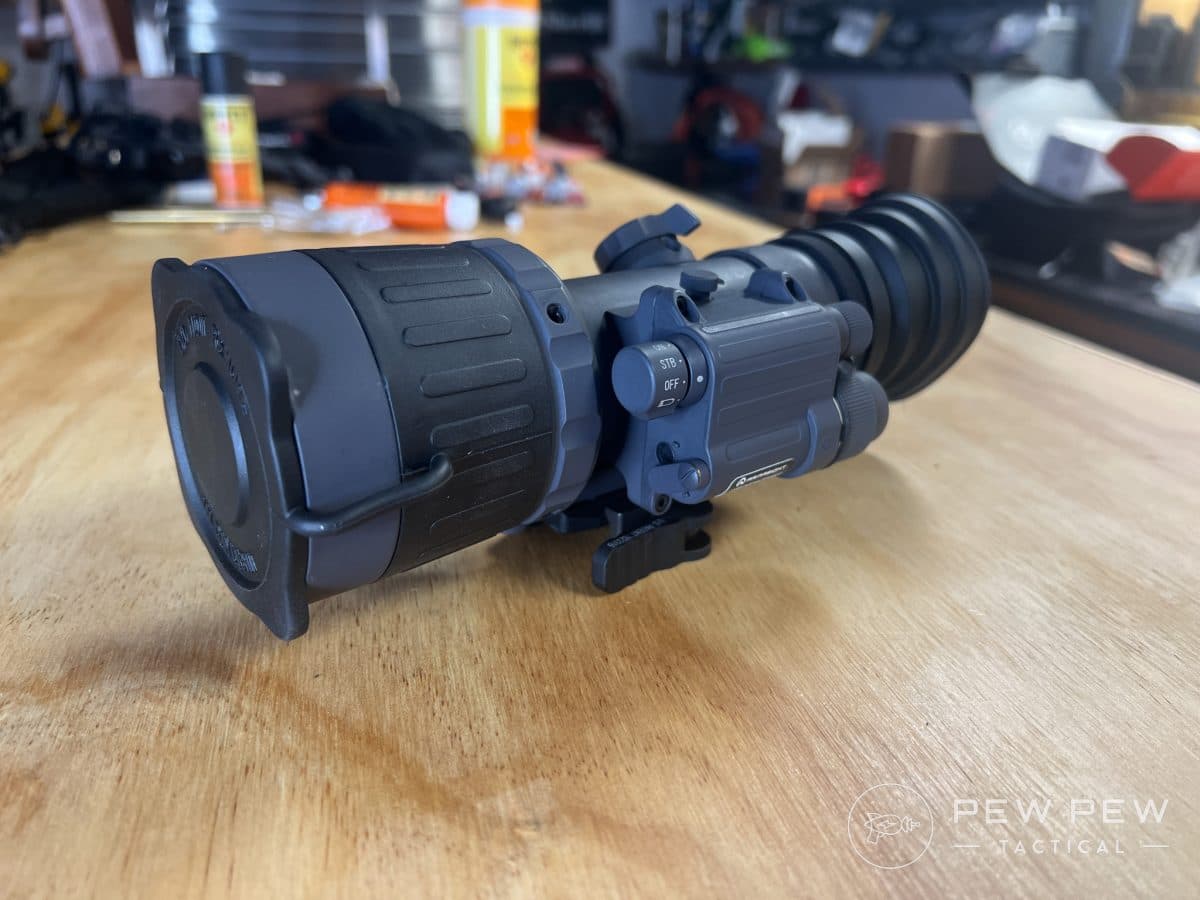
The three options include the CO-Mini for close distances, the CO-MR for out to 700 yards, and the CO-LR for up to 1,000 yards. We tested the CO-MR in white phosphor.
Installing the CO-MR was a snap, thanks to the included Picatinny mount. We simply opened the lever, attached it to the rail in front of our optic, then locked the lever down.
Placement on the rail is crucial. It’s important to ensure the CO-MR is close enough to your optic that the light suppressor mates up for optimal night vision.
Controls are very straightforward. There’s a main power knob that activates the unit, as well as a focus knob that helps you dial in at varying distances.
The overall picture is of good quality and shaded in a blueish color. The unit performs well with some ambient light assisting and would also benefit from an IR illuminator as well.
I appreciated the familiarity of the crosshairs from the scope I was used to already being installed. I also knew my zero was good despite the new ability to see in the dark through the same optic.
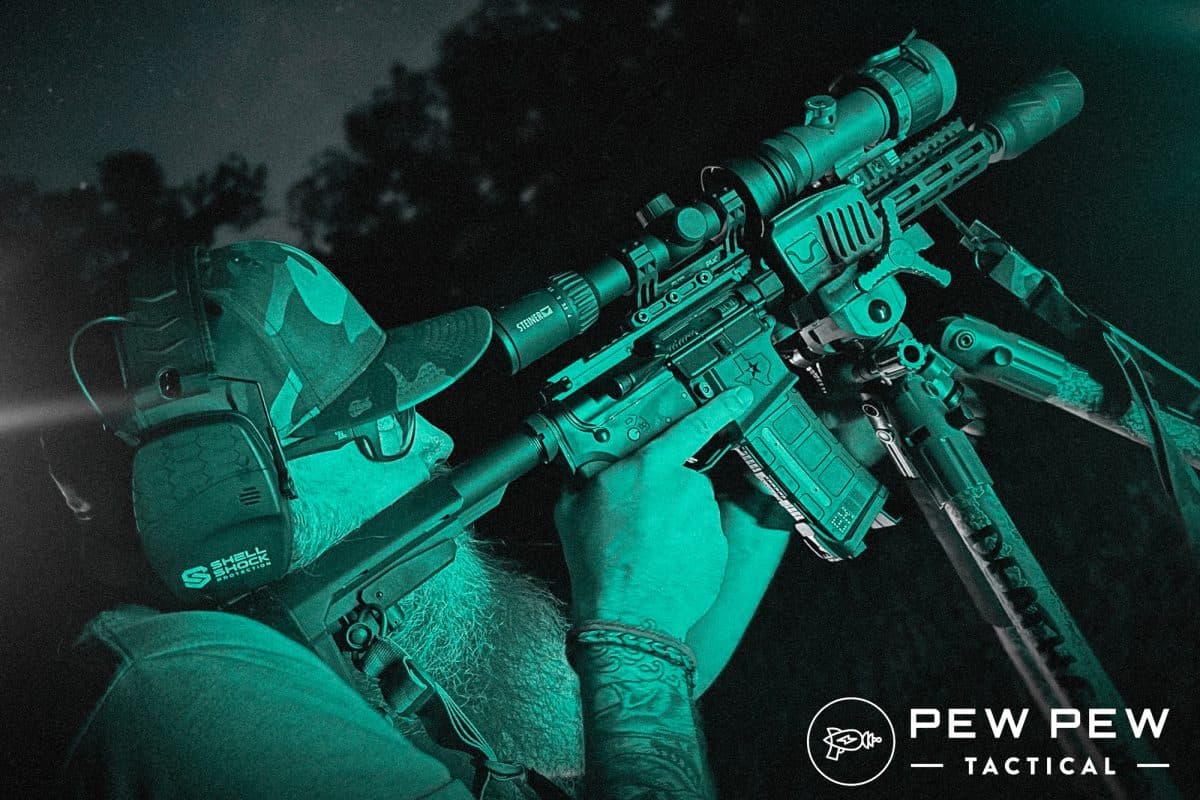
Powered by a CR123A, the unit will run for approximately 40 hours. However, the kit also includes an adapter that allows you to run a AA battery with a 24-hour runtime.
The CO-MR also comes with a zippered, nylon case that covers and protects the unit. It can do so while mounted to a gun, or separate.
5. Armasight PVS-14 Gen 3 - Best Monocle
Pros
- Lightweight
- Great run time
- Common power source
Cons
- Some light sensitivity
- Focal range
Specs
- Battery: AA (x1)
- Run time: 50 hours
- Weight: 12.4 oz
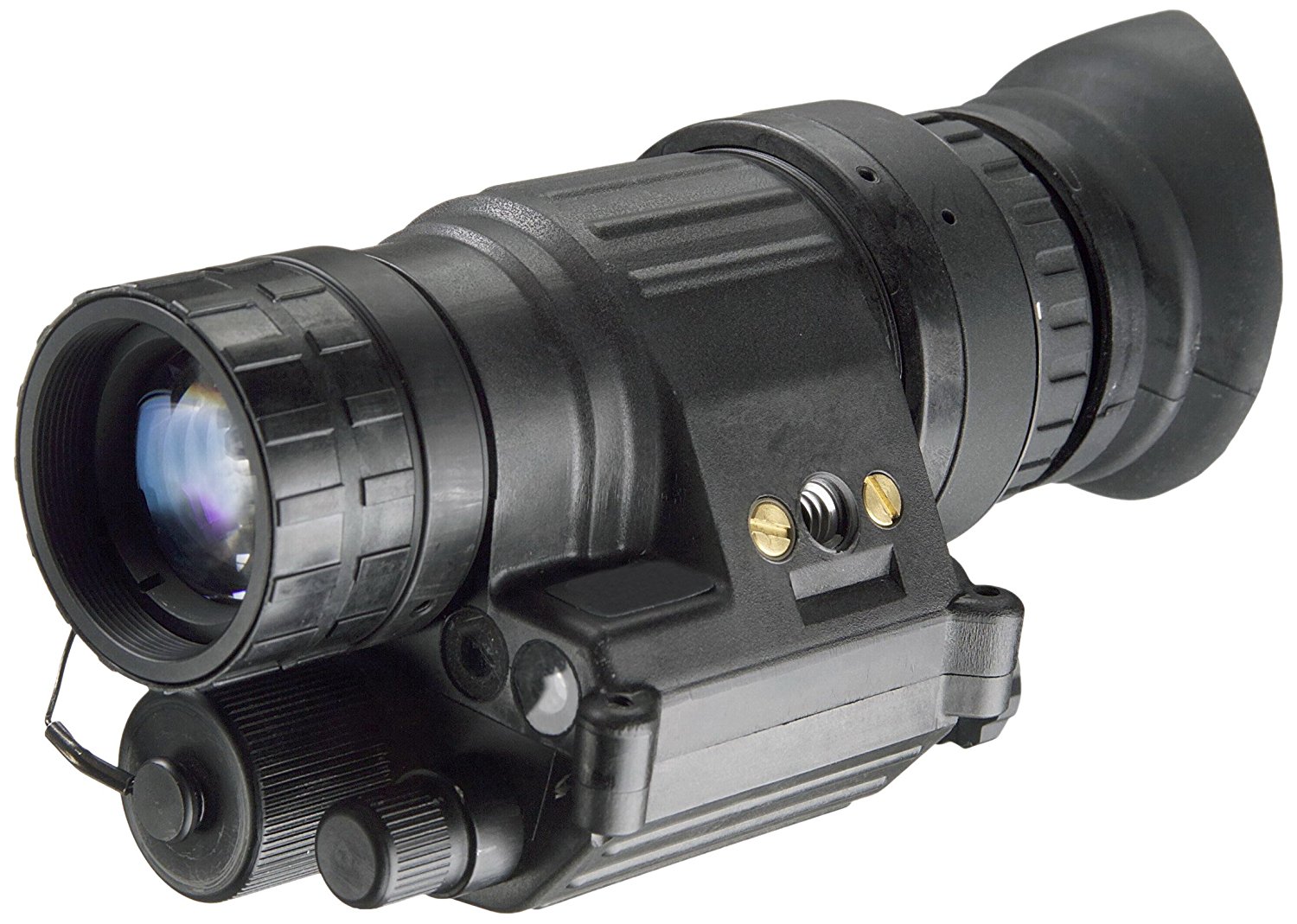
The PVS-14 night vision monocle has been around for quite a while and has been used by the United States military and NATO forces. It’s been manufactured by several companies, though this model is a third-generation version from Armasight.
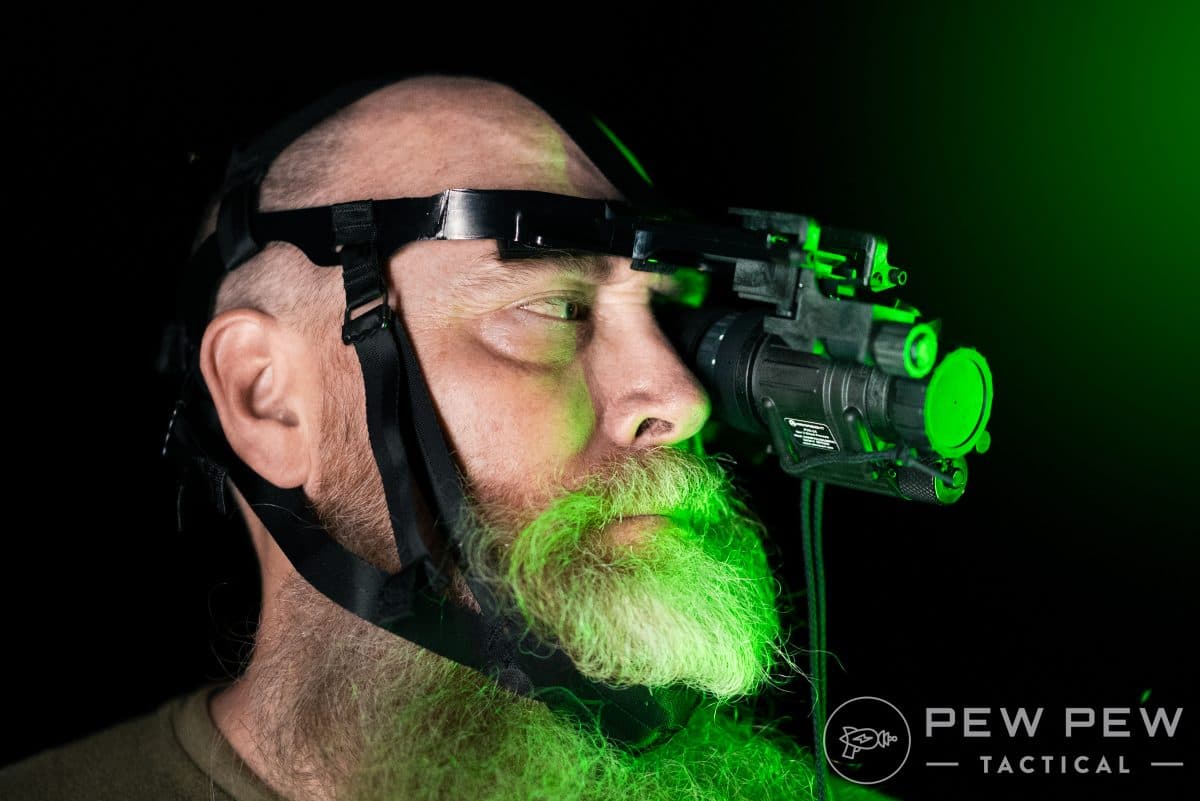
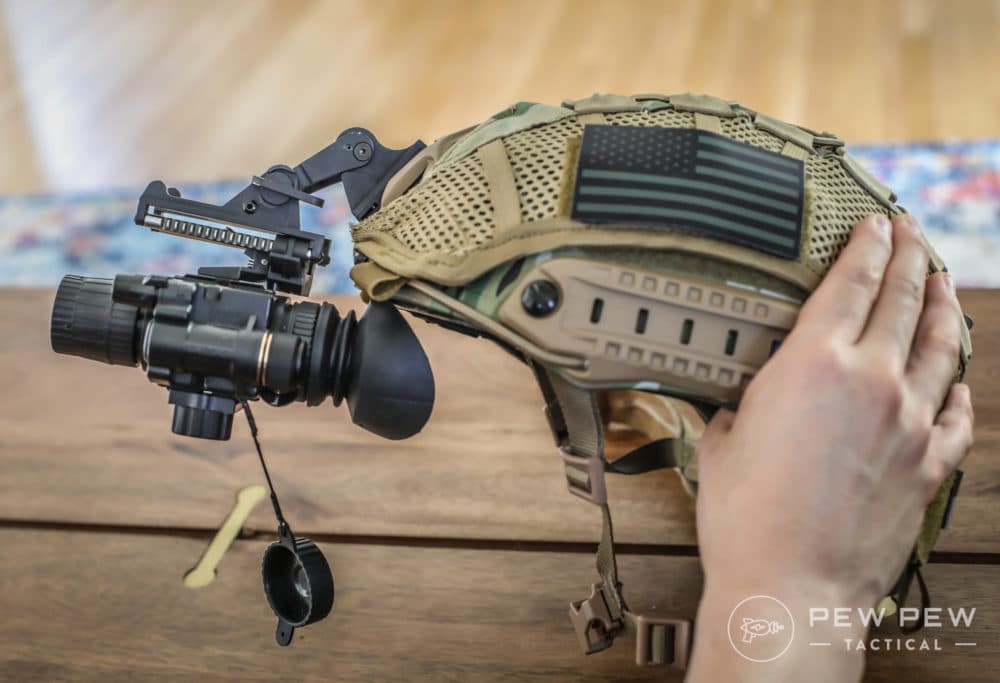
The unit we tested was the white phosphor, though Armasight also offers it in green if you like that traditional look. We tested ours on the included “Skullcrusher” head mount and also mounted it to a ballistic helmet.
While the head mount worked well, a more optimal experience is pairing the PVS-14 with another unit using a Ravengroup bridge. We mated ours with an Armasight sidekick 640 thermal for a mind-bending view of the night.
Using the hardware of either mount, it’s a pretty simple matter of adjusting the monocle to the right distance for optimal viewing. The soft rubber eyecup mates up with your eye socket, preventing peripheral interference, and you’re off to the races.
When the PVS-14 is turned on, the image lights up and provides a 40-degree field of view, everything awash in a whiteish-blue hue. The next adjustment is getting the unit attuned to your vision, which means turning the diopter ring near the eyepiece.
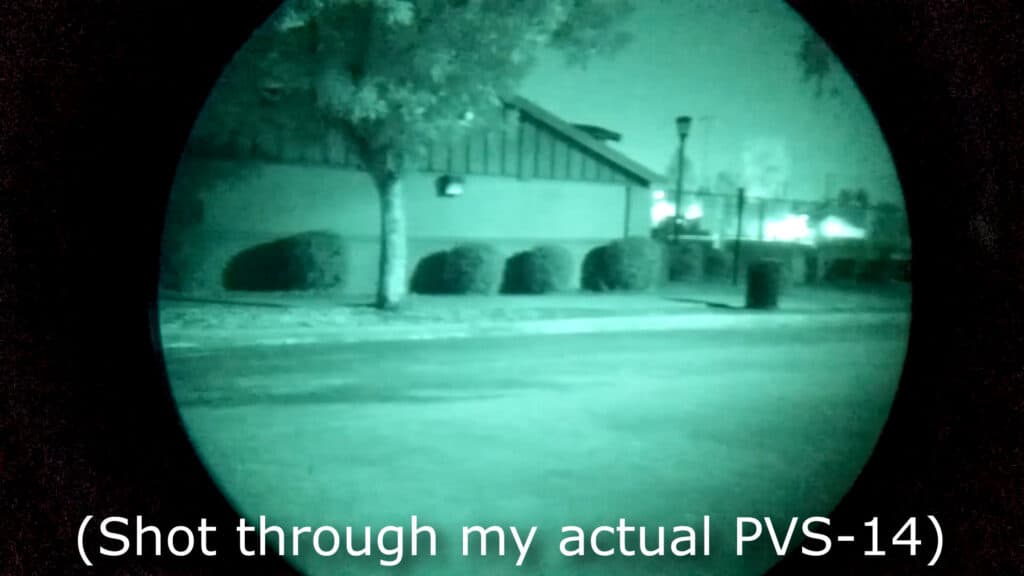
After that, you need to set your focal range. Because of how the PVS-14 is designed, you can’t have perfect clarity in your normal vision range.
Our eyes adjust to clarify our vision at close ranges or far distances and this unit can’t do that. However, there is an objective focus that allows you to set a distance to operate with or adjust on the fly as needed.
The view through the PVS-14 is impressive as the unit pulls in and amplifies ambient light. Although the unit struggles when there is no light to amplify, the built-in IR illuminator does an impressive job of brightening up the picture.
By pulling the knob out and turning it to IR, you can brighten up even a pitch-black room. An IR indicator also appears in your view to let you know it’s still on.
The PVS-14 is rugged and has a combat-tested reputation. It features a waterproof body and an operational temperature range of -40 to 122 degrees Fahrenheit, though extreme temperatures may affect battery life.
That said, the PVS-14 runs for roughly 50 hours and is powered by a single AA battery. Such a common power source is a benefit in its own right.
Controls are simple. Besides the diopter and objective focus, the main power knob also activates the IR illuminator or resets the unit if needed.
6. Primary Arms Advanced Micro Dot - Best Night Vision Compatible Red Dot
Pros
- Works with night vision
- Long battery life
- Durable
Cons
- Not optimal for goggles
Specs
- Battery: CR2032
- Run time: 50,000+ hours
- Weight: 5.5 oz.
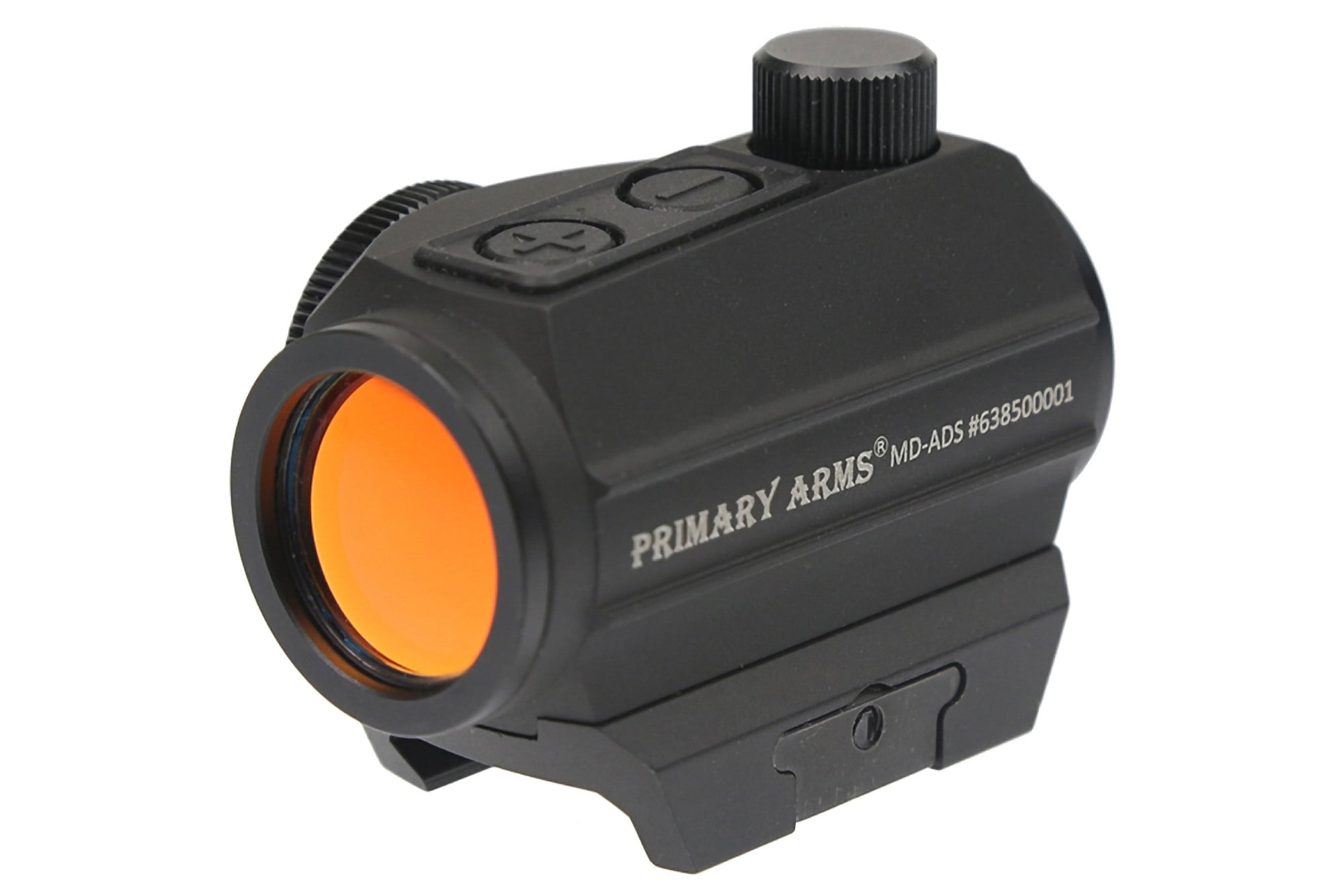
This night vision-compatible red dot setup allows for versatility with an IR or night vision scope mounted inline. While this sort of system really isn’t optimal as the primary aiming system for a goggle-mounted night vision setup.
Because of the issues, you’ll have to try to navigate around and focus your optics at distance, all while trying to line up your red dot. In a tactical scenario, this is far from ideal.
That’s why most goggle-mounted night vision setups rely on IR lasers as their primary aiming system, with red dots and iron sights as backups. With that said, the Primary Arms’ red dot system absolutely can serve for various configurations.
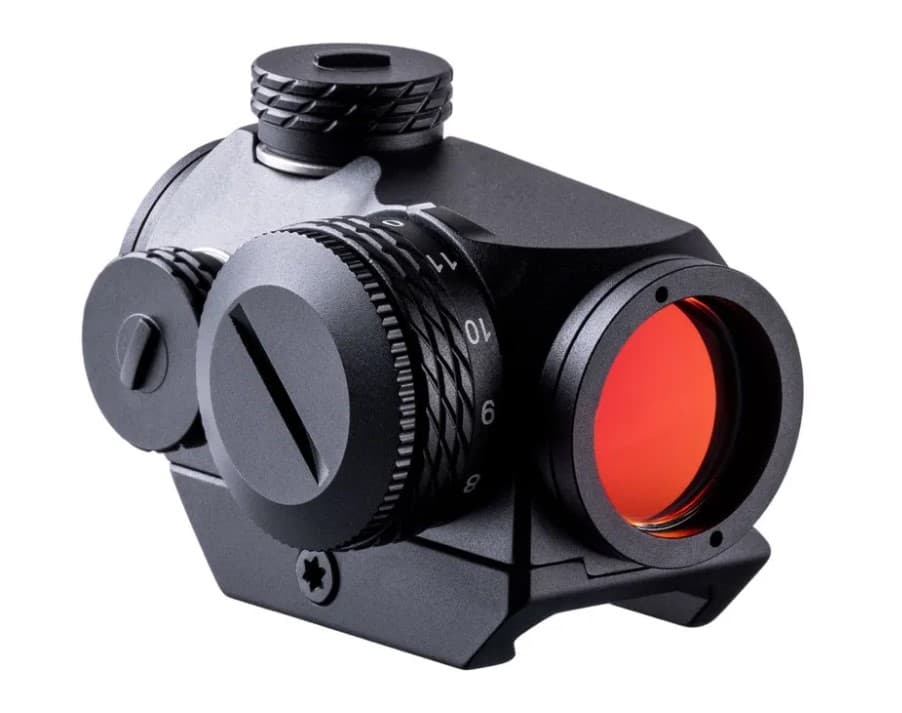
It allows for precise zeroing and features over 50,000 hours of battery life on the medium intensity setting. Great for set-ups that you want to leave turned on even when they are stored away in your safe!
This red dot can provide accurate sighting in line with a night vision or IR scope, or act as a redundancy aiming system in conjunction with an IR laser aiming system. It’s built to be rugged, features a long battery life, and has most of the features for a variety of night shooting and tactical applications.
Daytime Optic Compatibility
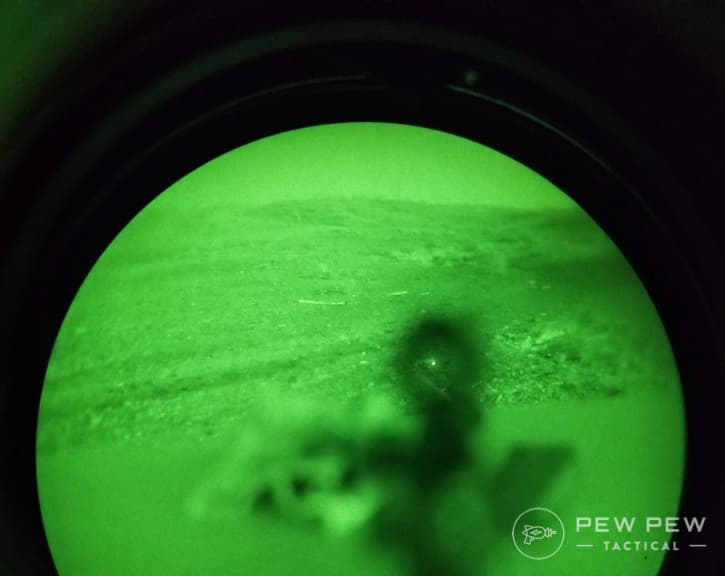
Use caution when paring red dot systems with night vision scopes. Make sure you’re red dot system is compatible with night vision applications because if the red dot is too bright, it’s possible for it to damage your night vision optic.
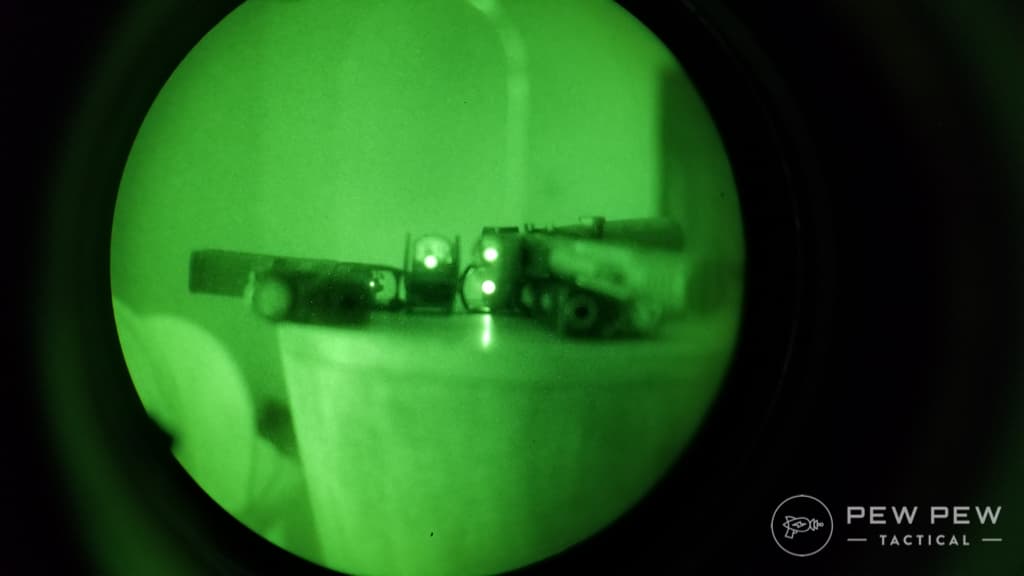
Lower power settings are available for many red dot systems, but be sure to check with the manufacturer and know how to use your equipment before you make a costly mistake.
What is NVD?
Maybe you’re a hunter who can legally take certain types of game at night. In some places, deprivation permits allow hog hunting after dark — which is an excellent time to catch wild pigs out in the open … see our guide to pig hunting here.
Or perhaps you have a rat infestation and an air gun waiting for some target opportunities in a safe setting — (you have read our 5 Best Air Guns, right?).
There are too many possible applications to cover optics for every scenario, so we’ll look at different types of night vision technology and specific optics, along with their range of suitable applications, to help you figure out what you’ll need in the field.
What are people talking about when they discuss night vision optics? There’s a long history that it’s helpful to understand as you go about making a purchasing decision.
Night vision devices, or NVDs, were developed and deployed for military applications as early as World War II. The Germans put a portable unit in the field called the ZG 1229 Vampir, an active infrared device that was mounted on Sturmgewehr 44 rifles and powered by a backpack battery.
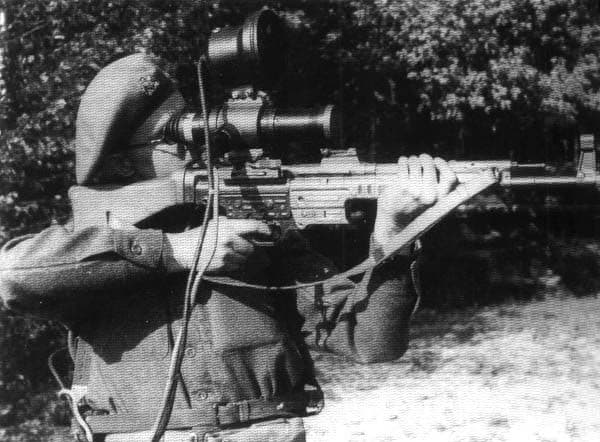
Of course, this type of technology was set to completely change warfare, as night fighting is normally a highly risky proposition without adequate intel and illumination. The U.S. developed “zero generation” active infrared devices in parallel with the Germans, and Sniperscope infrared devices also appeared on WWII battlefields on the Allied side.
Development continued through the Korean War and Vietnam, where first generation passive devices, which rely on ambient light instead of an infrared light source, were put into use for the first time. These offered around 1,000 times light amplification levels and had an effective range out to about 100 yards.
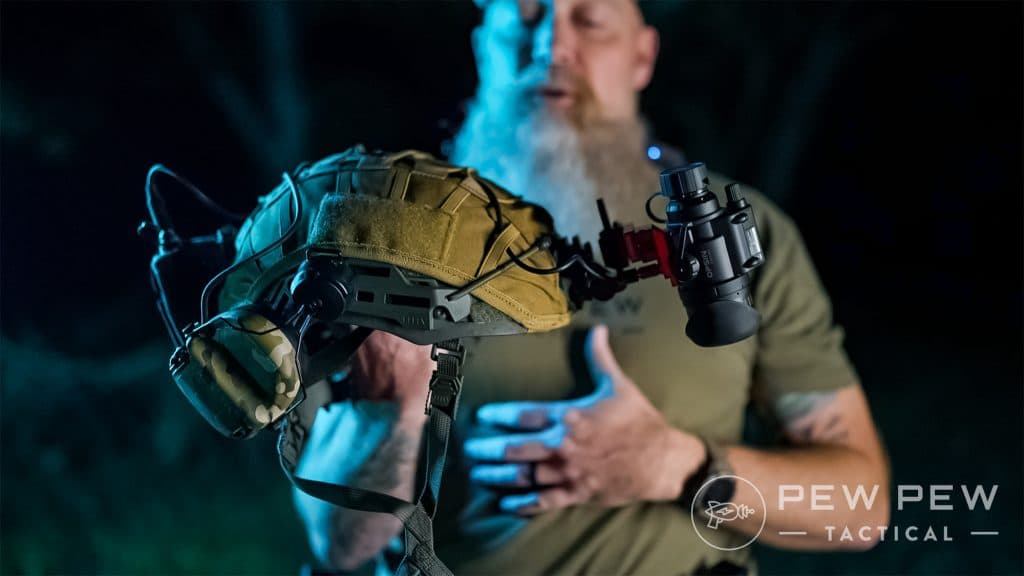
Second generation devices used an image intensifier tube with a microchannel plate, which greatly improved night vision performance to about 10,000 times ambient light levels, or out to about 200 yards.
The third generation saw even more technological improvements, resulting in higher image resolution and greater light magnification, anywhere from 30,000 to 50,000 times greater than ambient levels, offering an effective range of about 300 yards and beyond.
There’s a fourth generation of NVDs out there, sort of, though the U.S. Army went back on this classification after issues arose with the technology. But we don’t need to talk too much about this, except in terms of marketing, as the term does pop up around some devices. Suffice it to say, they aren’t necessarily superior.
I could go into the technical aspects of the technology, but for the average shooter, the result is the same: night vision optics were getting better, and were able to perform in much lower light, such as during a moonless night.
White phosphor technology, which produces a white-and-black, high-contrast image based on amplifying ambient light, is also becoming very popular.
However, for many hunters especially, infrared-sensitive optics are the best bet for hunting at night - where their use is legal, of course. Non-scope-mounted monocular units are also popular for finding game at night.
Why Thermal?
Generally, thermal imaging offers far superior capabilities in terms of detecting animals when compared to light amplification devices. Though the resolution isn’t generally as good, IR units are more than adequate for most applications, and when viewing game through an IR unit, they really stand out versus a light amplifying system.
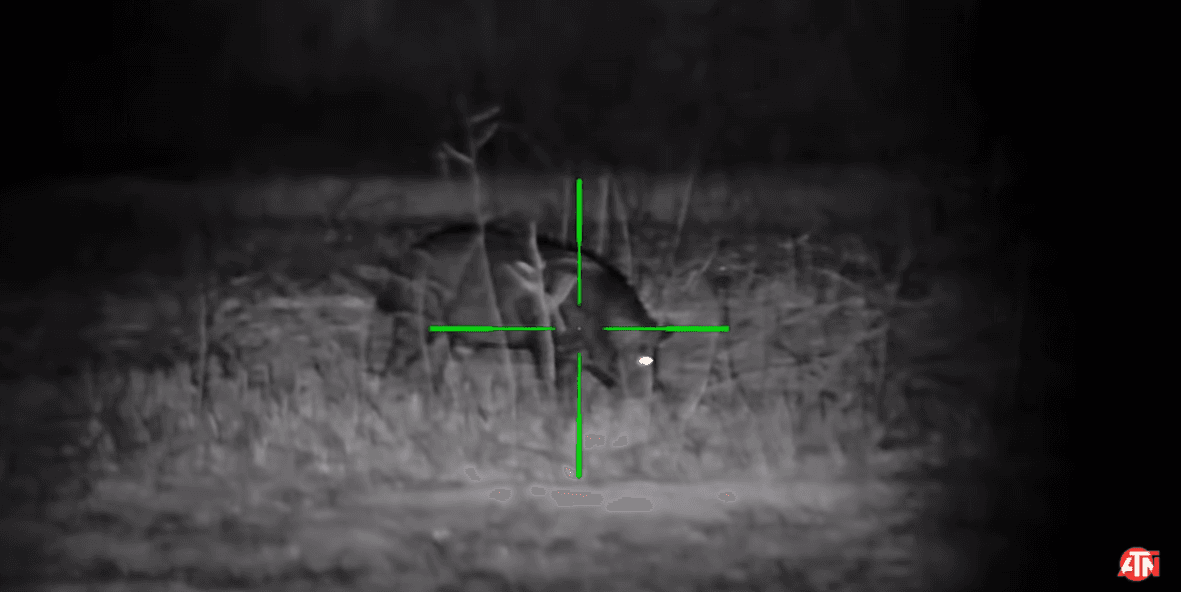
Additionally, thermal imaging technology can be used in complete darkness, and can also be used during daylight for sighting in, whereas light amplification devices aren’t usable during the day and can be damaged if light sources are too bright.
Gen 2 and Gen 3 night vision devices are excellent, however, and can absolutely surpass thermal imaging devices in some applications, especially in terms of target identification and resolution. This is why you need to be very clear about your goals and intended use cases.
Because light amplification devices are highly versatile and offer greater resolution, they excel for navigational applications and in some tactical situations where higher resolution is paramount.

Keep in mind, however, that gen 2 and gen 3 devices will likely be extremely expensive. Most entry-level equipment is going to be gen 1. So we really can’t compare apples-to-apples in terms of image clarity unless we ignore price.
I know I keep saying this, but it’s really important: It really all comes down to your intended application. Instead of dwelling on all of the technical differences, let’s focus on what the average shooter needs to know.
Why Trust Pew Pew Tactical
This article builds on original recommendations from former PPT contributor Ethan Mizer and has been expanded on by PPT CEO and Founder Eric Hung and Content Producer Sean Curtis.

PPT Founder and CEO Eric Hung also contributed to this article, adding the PSA Dagger Compact after extensive hands-on testing at the range. Eric is an NRA-certified pistol instructor and a USPSA/3-Gun/NRL22 competitor. He has also researched and written over 250 articles on firearms and gear. He brings this expertise to this article, offering his perspective.
Sean Curtis edited and added to the original article. Sean has been shooting since childhood but began to delve into guns more during his law enforcement career. He spent over two decades in law enforcement, where he became a POST-certified handgun instructor and NLEFIA Red Dot Instructor and received CLEFIA Advanced Firearms Instructor Training and AR-15 armorer training. He has since attended a variety of training, including Tactical Performance Center Handgun Mastery & Carbine Mastery, and earned USCCA rifle instructor certification. Aside from training and prior to joining the Pew Pew Tactical team full-time, Sean wrote for several gun publications evaluating and testing guns and gear and has written hundreds of articles.
Editor-in-Chief Jacki Billings runs our experienced team of reviewers. She is a National Rifle Association Basic Pistol Instructor as well as a member of the Society of Professional Journalists, ACES: Society for Editing, and the Professional Outdoor Media Association. Jacki has a bachelor’s degree in journalism and has worked as a media professional for close to 20 years, specializing in gun media for almost 10 years. With 2,000+ articles to her name, she uses her professional journalism and editing experience to set testing protocols and editorial standards for Pew Pew Tactical.
Final Thoughts
There are a ton of reasons to be excited about night vision shooting setups. For anyone who hunts, the opportunity to track game at night, such as predators and pest species, is a game changer — where it’s legal to use these systems, of course.

For tactical enthusiasts or those interested in self-defense, the ability to safely engage targets at night is revolutionary. It takes some knowledge and understanding, but if you have the funds and the drive to learn, a night vision setup is within your reach!
Hunt with night vision or thermals? Run tactical ops with them? Let us know in the comments! And if you’re looking for some NVGs, take a look at our best Night Vision Goggles article!