Best 3-Gun Shotguns: Smoke the Competition
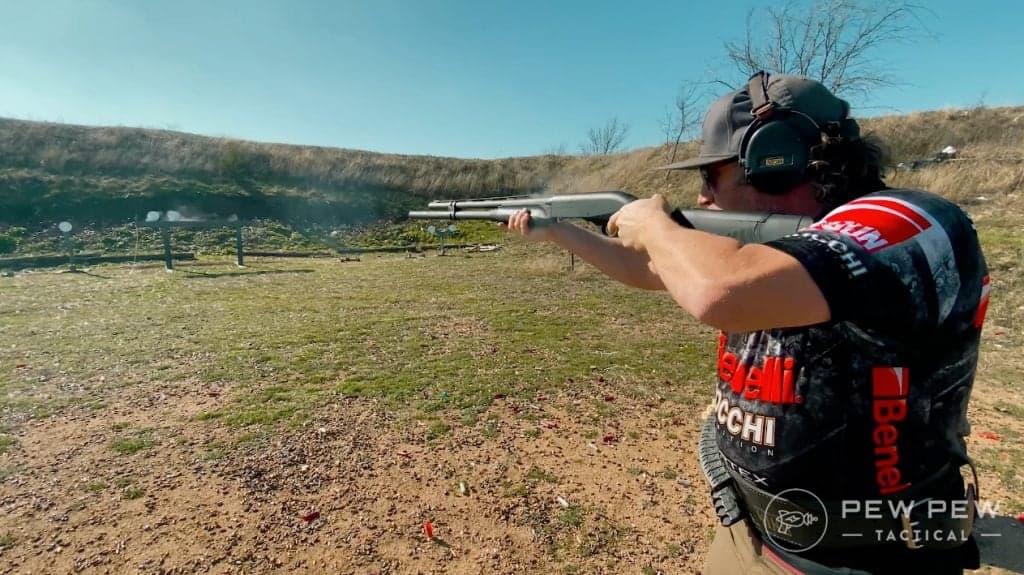
If you're looking to get into competitive shooting, you'll need a good 3-gun shotgun. We've rounded up some of the very best available to help you get started.

USMC Veteran. Concealed Carry & NRA Pistol Instructor. 3-Gun Competitor. Career firearms writer
We review products independently. When you buy through links on our site, we may earn a commission to help support our testing. Learn more.
3-Gun can be a really fun sport, but let’s face it, the shotgun portion can feel a little intimidating.
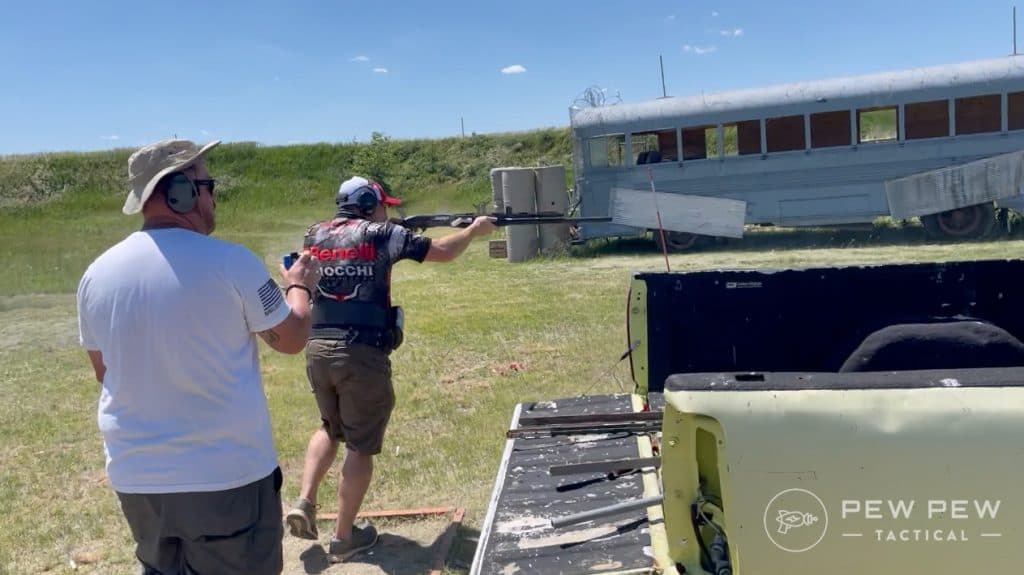
With a wealth of shotguns on the market, how do you choose the right one for competition? We tackle that topic with a list of shotguns we think hit the mark in 3-Gun and a breakdown of competition shooting divisions.
So, keep reading to learn more about 3-Gun shotguns.
The Quick List
- Best Out-of-the-Box: Beretta 1301 Competition ProJump to details ↓
- Editor's Pick: Mossberg 940 JM ProJump to details ↓
- Most Versatility: Mossberg 590 SeriesJump to details ↓
- Best-Pump Action: Benelli SuperNova TacticalJump to details ↓
Table of Contents
How We Chose the Best 3-Gun Shotguns
I’m a shotgun guy through and through, and now that I’ve been bitten by the 3-Gun bug, I’m shotgun shopping. I love my shotguns, and in the world of shotguns, I’m learning a thing or two about what makes a great 3-Gun option.
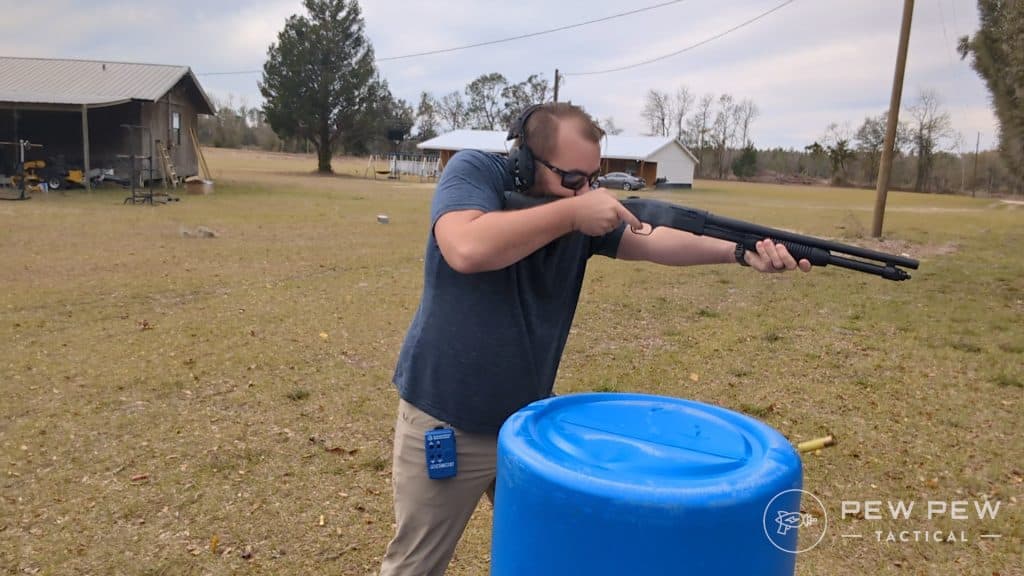
I’ve reached out to a few friends and even the fellas at a 3-Gun clinic I took to get their thoughts. As such, I’ve gathered the best of the best for 3-Gun.
Prior to jumping into the 3-Gun arena, I was a Marine infantry veteran. Beyond that, I’m a firearms enthusiast, lifelong shooter, and NRA-certified instructor who teaches concealed carry classes in Florida.
Best Shotguns for 3-Gun
1. Beretta 1301 Competition Pro

Pros
- Kick-Off system reduces recoil
- Competition-ready out of the box
- High-visibility front sight
Cons
- Fixed length of pull
- U.S. models are plugged to only hold two shells
Specs
- Gauge: 12ga
- Action: Semi-automatic, gas
- Capacity: 2+1
- Barrel Length: 21", 24"
- Sights: Fiber optic front, bead mid, stepped rib
The Beretta 1301 is the hotness in the shotgun department. It dominates the semi-auto shotgun market and delivers one of the most reliable semi-auto shotguns on the market.
In the world of 3-Gun, the semi-auto shotgun has to be extremely reliable because seconds matter, and fixing malfunctions can be killer.
This shotgun uses the Blink gas system, which has two distinct advantages. First, it cycles faster than other shotguns, allowing competitors to get fractions of a second faster follow-up shots. Second, it really does wonders for reducing recoil, which also matters for rapid-fire shooting.

The Beretta 1301 Competition delivers the new kick-off plus system that also helps reduce recoil. Beretta’s goal seemed to be to reduce recoil as much as possible and to create a very soft shooting shotgun that encourages speed. Shooters will have to get used to the kick-off system, which has dampeners and return springs, but it works quite well.

Unlike previous incarnations of the 1301, the Competition Pro comes out of the box ready to compete. The magazine tube can hold 10 rounds of 2.75-inch shells, which is the standard for competition. This gun features a vent rib topped with a high-visibility front sight for easy use.
The downside is the fixed 14-inch LOP. Beretta’s recoil-reducing kick-off stock locks you into a LOP unless you want to change the stock. It’s a hassle, and it’s not great for smaller shooters.
If you can get past that, it’s a great out-of-the-box option for competitive shooters.
2. Mossberg 940 JM Pro

Pros
- Reliable, modern design
- Oversized controls
- Soft recoil
- Great value
Cons
- Stock doesn't feel high-end
Specs
- Gauge: 12ga
- Action: Semi-automatic, gas
- Capacity: 9+1
- Barrel Length: 24"
- Sights: Fiber optic front, vented rib
Mossberg teamed up with Lena and Jerry Miculek to create the Mossberg 940 JM Pro. This beastly gun builds on the Mossberg 930 series shotguns, but the newer 940 models offer a more reliable, modern design.
The gas system can go through at least 1,500 rounds between cleanings, drastically better than the 930 series. Mossberg went through the wringer with the 940 series shotgun. They added massive controls to the gun, giving us a huge charging handle and bolt release.

The loading and ejection ports were opened up for faster reloads, and the gun won’t take a DNA sample when you attempt to rapidly reload it. It’s built to be quad-loaded. Mossberg’s stock is adjustable via a plate system that makes it easy to get the gun to fit your body.
As a bonus the gun comes optics ready with an integral receiver cut that allows you to mount optics with the Holosun K footprint. Another nice feature is the 9-round magazine tube and the high visibility front sight.
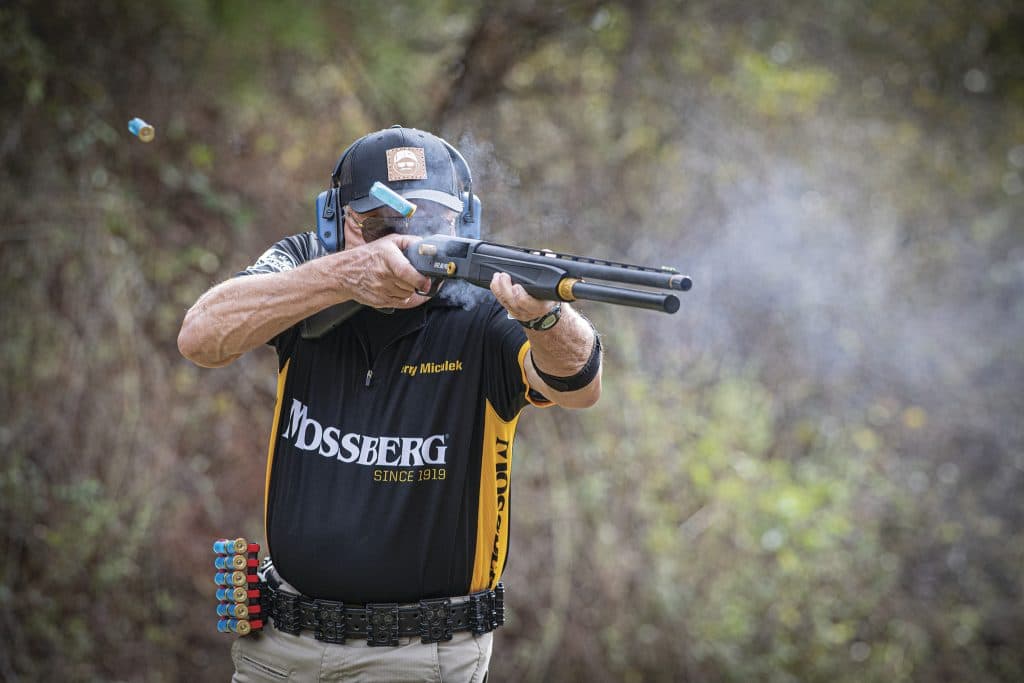
The gas system significantly reduces recoil and makes the gun easy to handle. A big vent rib keeps the mirage down and ensures the gun hits its point of aim, point of impact.
This made-in-America option is one of the more affordable options in the competition-ready 3-gun market.
What do you think of the Mossberg 940 JM Pro? Rate it below!
Readers’ Ratings
4.99/5 (2281 Votes)Your Rating
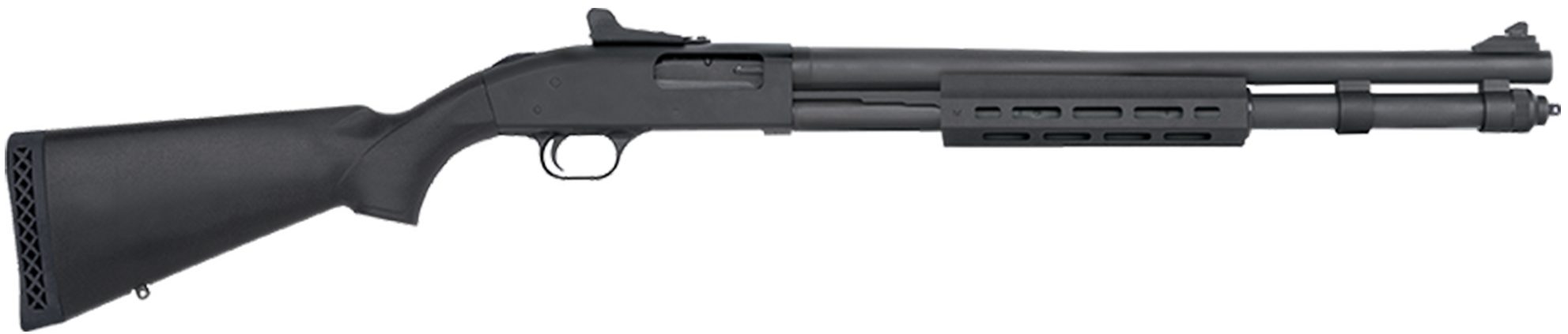
3. Mossberg 590
Pros
- Huge aftermarket support
- Super reliable
- Affordable
Cons
- Some submodes are better for competition than others
Specs
- Gauge: 12ga
- Action: Pump action
- Capacity: 6+1, 8+1
- Barrel Length: 18.5", 20"
- Sights: Ghost ring rear, blade front
It's your one-way ticket to midnight...Call it Heavy Metal. If you’re getting into the heavy metal division, pump actions are your bread and butter.
One of the most common and easily accessible pump action shotguns comes from Mossberg in the form of the 590. Mossberg makes lots and lots of 590 shotguns, and I’d suggest any of the 9-shot models.
Specifically, I prefer the standard bead sight model for heavy metal division. The Mossberg 590 series shotguns give you an 8-round magazine tube, a simple sighting system, and a ton of customization.
The Mossberg 590 series can be tuned and customized in hundreds of different ways. You can swap nearly everything on the gun, and to compete, you might need to move it from the tactical world to the 3-Gun world.

Luckily, you can do this quickly and easily with your gun if it’s a 590…
The Mossberg series pump-action shotguns are great for 3-Gun for various reasons, and one that many competitors love is the ease of reloading. The skeletonized lifter makes it super easy to throw spare shells into the gun without much thought.
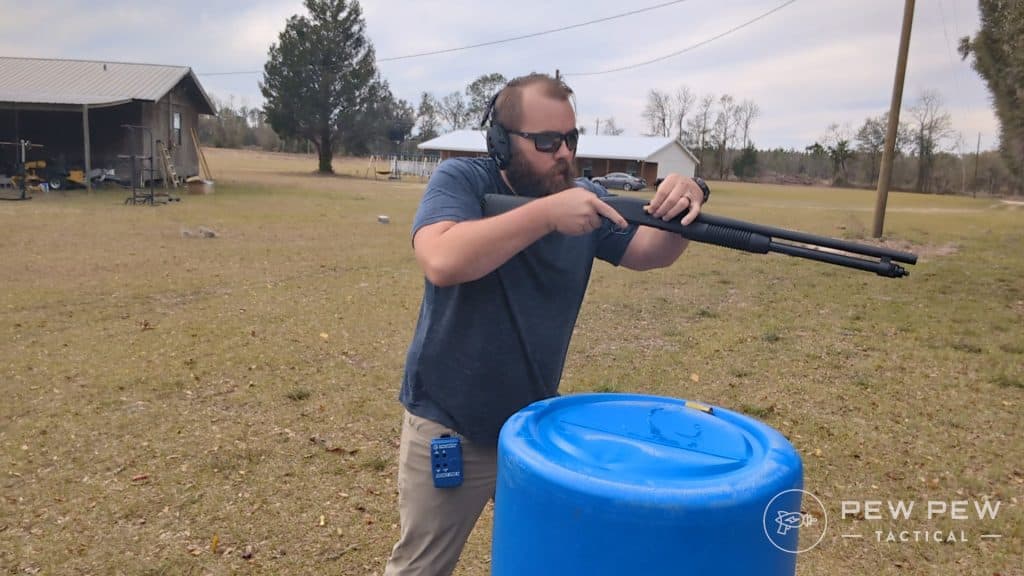
In terms of reliability, the 590 series are tough to beat.
The Mossberg 590 series are well-proven and established as dominant pump action shotguns. It’s the pump-action shotgun of the United States Military, and it occupies that space for a reason.
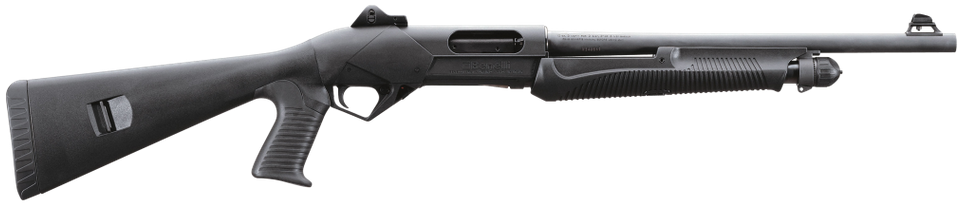
4. Benelli SuperNova Tactical
Pros
- Compact
- Optic-ready
- Comfortable ergonomics
Cons
- Limited customization
- Long length of pull
Specs
- Gauge: 12ga
- Action: Pump action
- Capacity: 4+1
- Barrel Length: 18"
- Sights: Open or ghost ring rear, blade front
As a shotgun nerd, I constantly preach the superiority of the Benelli SuperNova. Guns like the 870 and 590 are essentially designs that are older than my dad. They work, but there is room for advancement, and the Benelli SuperNova is that advancement.
The SuperNova comes in several variants. You could get away with the SuperNova Tactical, but the best option is the 24-inch option. This allows you to install a nice hefty magazine extension to give you at least 10 rounds of ammo.
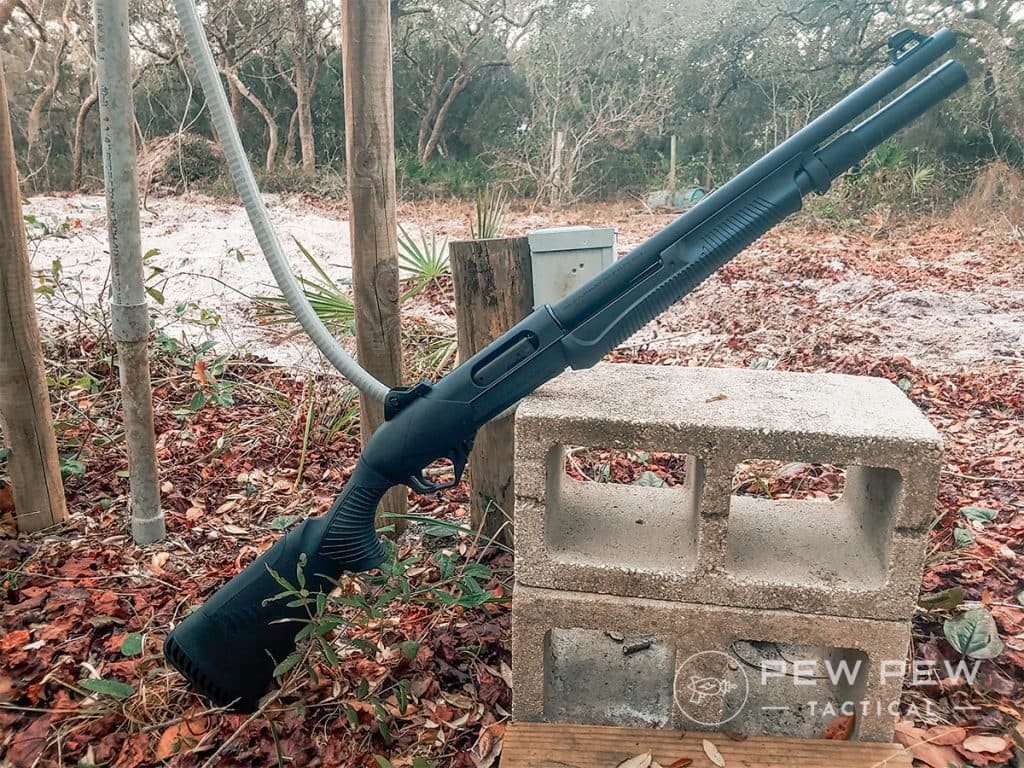
The chamber allows you to use 3.5-inch rounds, but for 3-Gun, this isn’t necessary. However, the benefits of the 3.5-inch chamber are the 3.5-inch loading port and 3.5-inch ejection port. These ports are bigger and make it easy to load 2.75-inch shells.
Rapid reloads are the name of the game, and the SuperNova delivers them in a pump-action design. With the SuperNova and the 24-inch barrel, you get a nice vent rib with a high-visibility bead for rapid engagements.
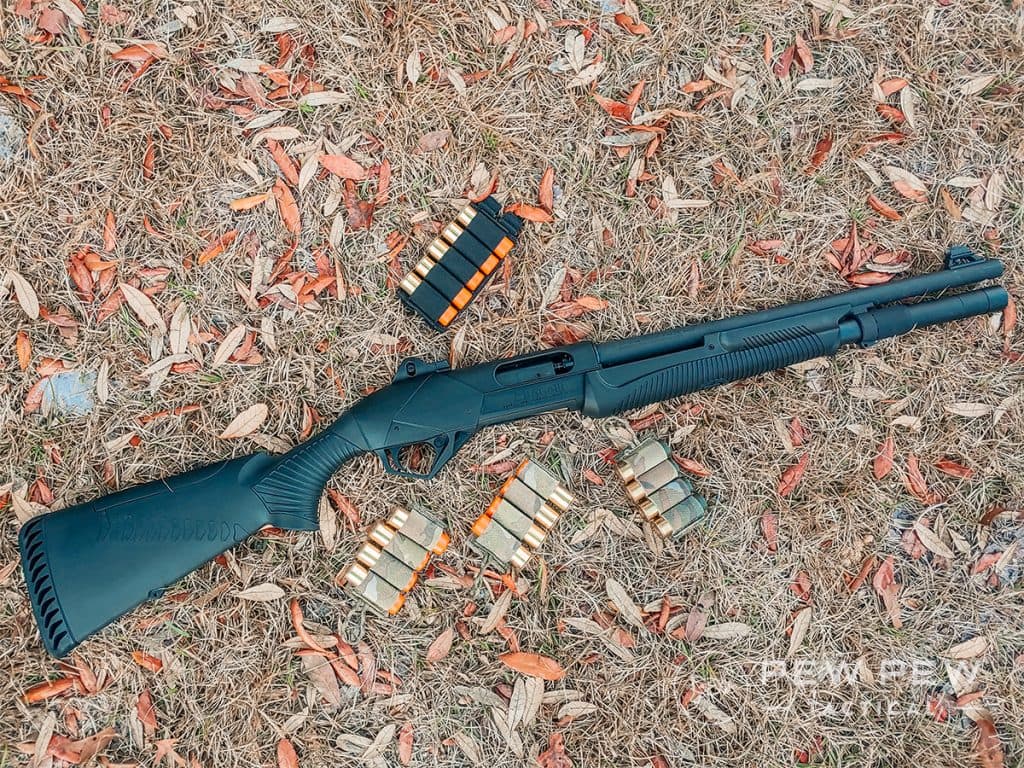
One of the downsides to the SuperNova is the stock. It’s got a long length of pull at 14 inches and some change. On the split side, the stock offers a recoil-reducing technology that makes the gun a bit easier to shoot than most.
The downside to the SuperNova is that finding the 24-inch barrel isn’t as easy as finding the 18.5-inch or 28-inch models. The 18.5-inch model isn’t a bad stand-in and is quite affordable overall.
If you want to step into the next generation of pump action shotguns, then the Supernova is for you.
Honorable Mentions
5. Savage Renegauge Competition
Pros
- Self-regulating DRIV system
- Huge controls
- Easy and intuitive to use
Cons
- Large stock isn't good for smaller shooters
Specs
- Gauge: 12ga
- Action: Semim-automatic, gas
- Capacity: 9+1
- Barrel Length: 24"
- Sights: Fiber optic front, vented rib
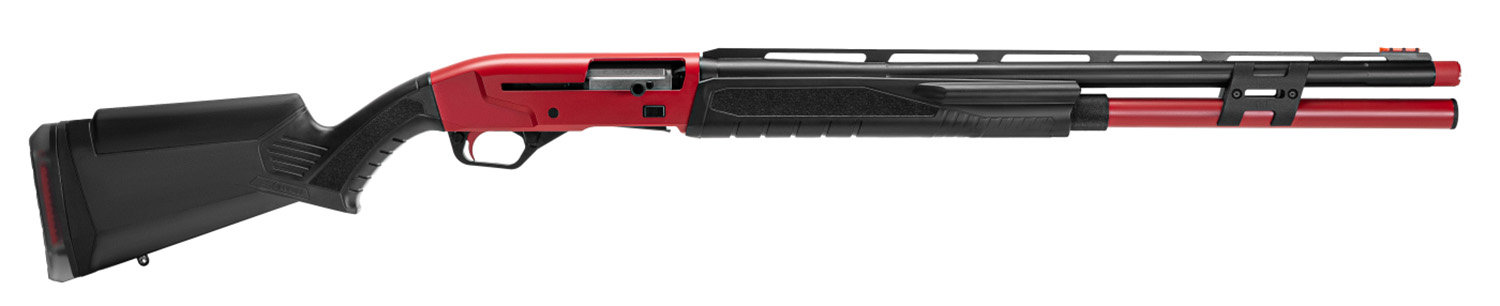
Savage took the trickle-out route with the Renegauge series. They released the Renegauge as your typical hunting and sport shooting gun but finally dived into the tactical and competition world.
Renegauge shotguns utilize the self-regulating D.R.I.V. system, which vents excess gas to cut recoil and even prevent the buildup of excess carbon.
With the Savage Renegauge Competition, we see the barrel stretched to 24 inches, and the magazine tubes cling below, offering us nine rounds. Across the top of the barrel is a huge vent rib that holds the high-visibility red front sight.
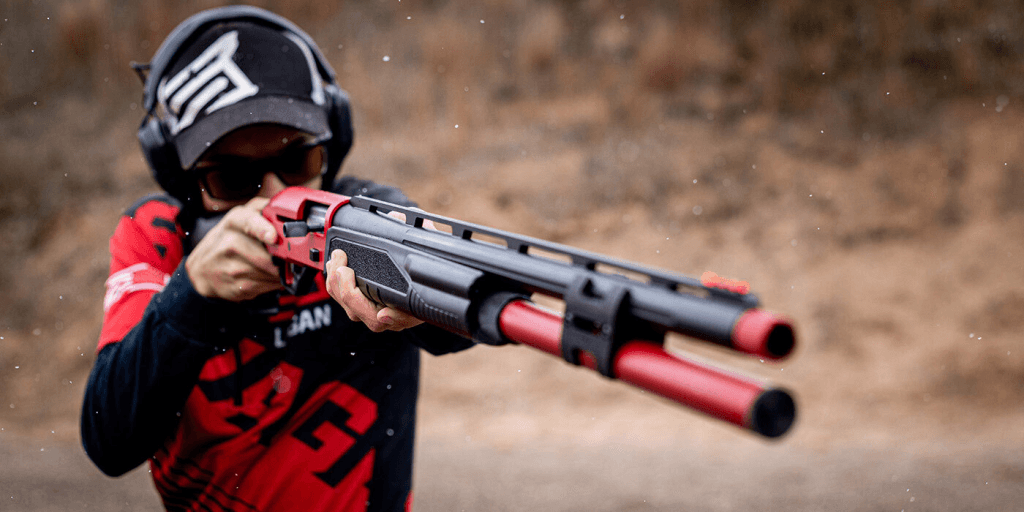
We get a huge safety, charging handle, and bolt release on the receiver. This makes operating the weapon quite easy. Everything from reloads to basic engagement is easy and intuitive. One of the best ergonomic features is the aggressive texture on the handguard and stock.
This ensures your hand clings to the gun and helps you operate the weapon with a good push/pull technique.
Savage makes an interesting stock. You can change the length of pull, but the shortest is 14 inches, and it only gets longer. That’s an odd choice, and the gun won’t fit smaller shooters well.
If Savage swaps the stock, they have a gun that will be tough to beat and is a real sleeper option for 3-Gun Shooters.
6. Genesis 12
Pros
- AR-style layout
- M-LOK handguard and adjustable stock
- Soft recoil
Cons
- Long wait times to buy one
Specs
- Gauge: 12ga
- Action: Semi-automatic, inertia
- Capacity: 5+1, 10+1
- Barrel Length: 18.75"
- Sights: None (Picatinny rail for optics)
The Genesis 12 shotgun got a huge boost of fame from being the shotgun of choice for John Wick in John Wick 4.
Remember that gun blasting the dragon’s breath rounds? That was the Genesis 12.
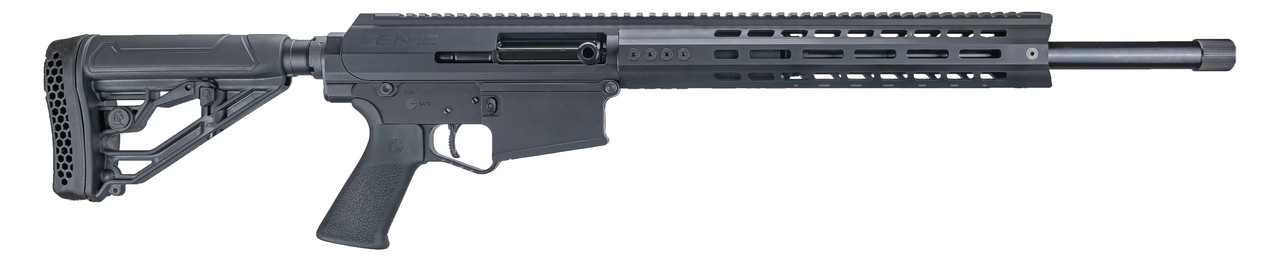
Genesis Arms is an American company that produces short recoil-operated semi-auto shotguns that look and handle like an AR-type rifle. In fact, they use AR-10 pattern lowers for these guns. Toss on the novel short recoil-operated upper, and you will have a high-tech option for 3-Gun.
They feature all the awesome modularity of the AR design. This includes an M-LOK handguard for accessories, a flat top upper for optics, a six-position adjustable stock, and AR-like controls.
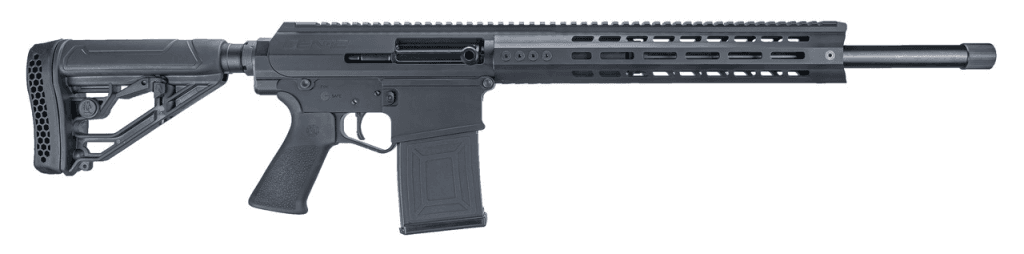
Its biggest difference comes from the right-side charging handle rather than an AR-type charging handle. This results in a very ergonomic and easy-to-operate firearm.
Forget learning to reload a tube. Just slap a new magazine in the gun and let it rip! The gun comes with a 5-round magazine, but we both know you want that 10-round magazine.
It’s open division, so slap that 10-rounder in, reload less, and shoot more. Shooting more won’t beat you up either because the short recoil system does a fantastic job of reducing recoil. It’s quite reliable, and you aren’t saddled with the weight of a gas system on the front of your gun.
The Genesis 12 quickly took over the open division, and it's easy to see why. The downside is that the popularity means you might have to wait out a 33-week lead time to get one. If you can wait, well, you get an awesome shotgun.
7. Dissident Arms KS-12 Elite
Pros
- Massive magazine well for fast reloads
- Cycles fast
Cons
- Expensive
- Long lead times
Specs
- Gauge: 12ga
- Action: Semi-automatic, inertia
- Capacity: 12+1
- Barrel Length: 18.25"
- Sights: Bead mid
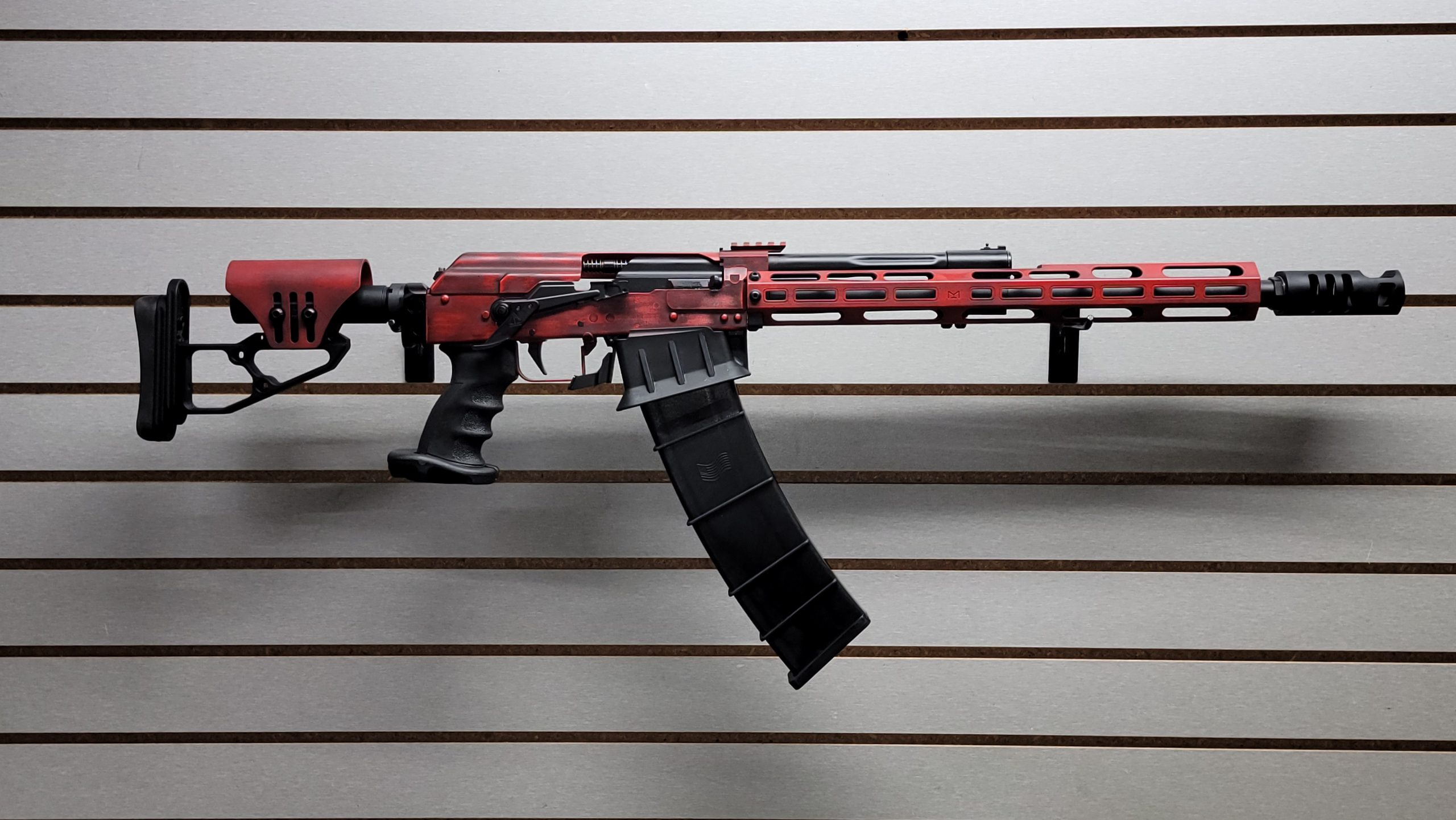
Open division used to be ruled by Saiga 12 shotguns. AK pattern, box mag-fed shotguns used to be the only reliable box mag-fed options. That established culture of AK-pattern shotguns led to companies like Dissident Arms producing some of the best 3-Gun shotguns ever created.
Dissident Arms takes the KS-12 from Kalashnikov USA and turns it into a 3-Gun-ready animal. If I listed every part and feature the weapon had, we’d be here all day. The gun comes with an ALG trigger, huge magwell, competition tuning, massive controls, and so much more.
Dissident Arms created a weapon that’s tough to beat. Things like the massive magwell encourage fast reloads, and the muzzle device prevents climb. Delivering round after round to Texas Stars, poppers, and clay pigeons has never felt easier.
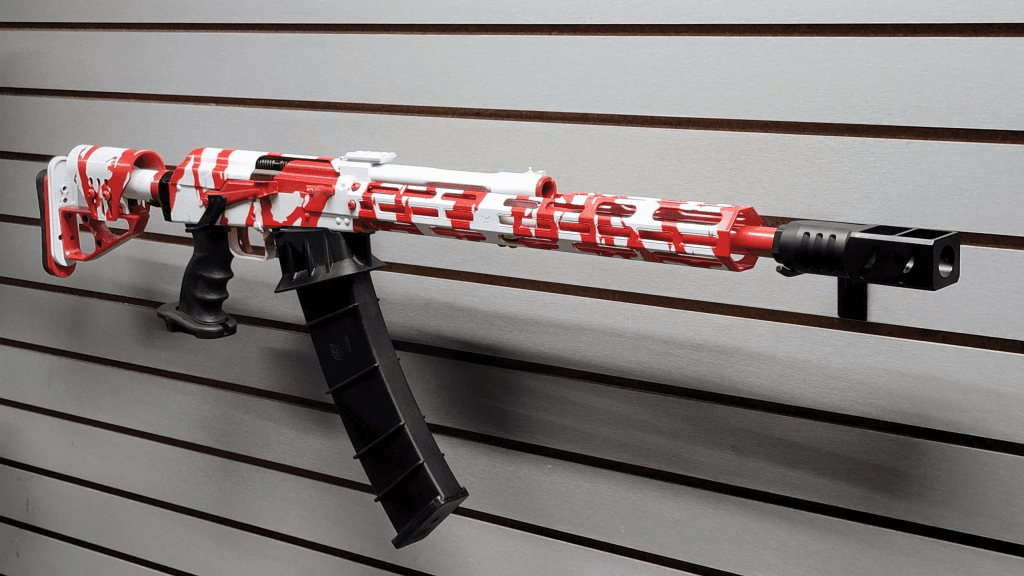
Reliability issues aren’t a concern. Dissident Arms tunes these guns to last seemingly forever. They will run with light recoiling loads without a hitch, and the tuned magazines solve the reliability gap from gun to mag.
It barely seems to be a Kalashnikov KS-12 shotgun. Dissident Arms created a beastly shotgun that shoots fast, cycles quickly, and reduces recoil. Everything about the gun is customized for 3-Gun usage.
The downside? Well, the minimum price is $3K. From there, it gets even more expensive, and you’ll be waiting a good bit of time before your gun arrives for the next match.
What Is 3-Gun Competition?
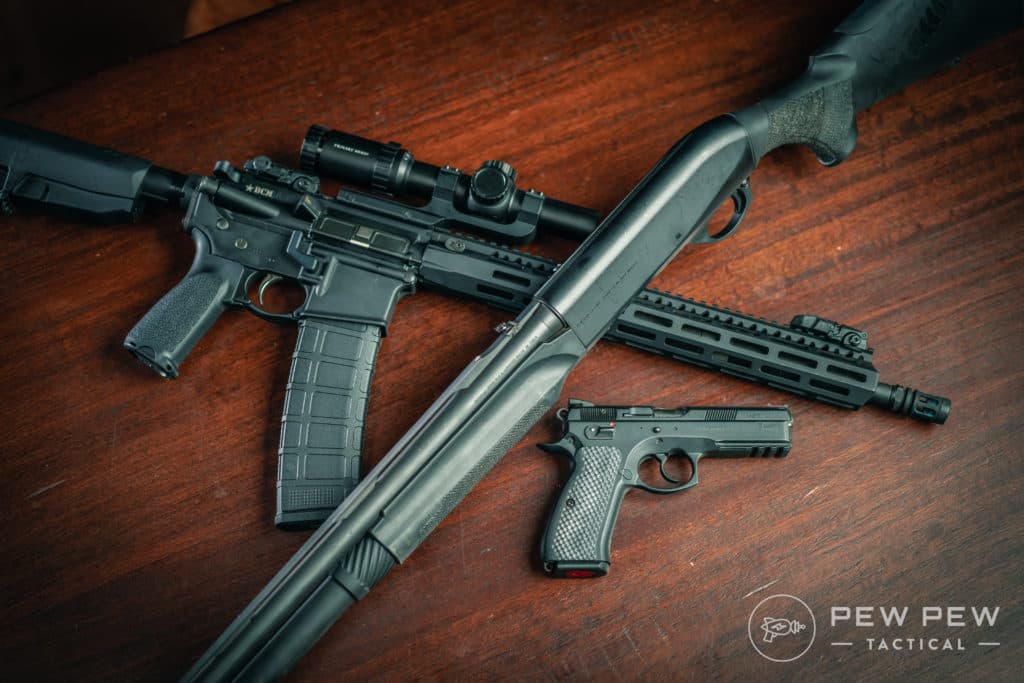
If you’re new to the idea, 3-Gun is a dynamic shooting sport involving three guns. The guns are handgun, rifle, and shotgun.
Typically, the handgun field is semi-automatic mag-fed pistols, while the AR type dominates the rifles. Shotguns, however, are a bit more dynamic.
The sport involves lots and lots of run and gun. You’ll engage targets both near and far and be presented with a variety of challenges that are present on the square range. It’s not the easiest shooting sport out there, but it’s one of the most interesting and dynamic.
You’ll be challenged to swap from pistol to rifle and shotgun throughout the sport. This requires your gear to be locked on and for you to be a well-rounded shooter.
One thing to know is that there are a number of divisions that create a series of rules you are required to follow to shoot in that division.
This includes your choice of weapons; let’s dive into those divisions.
3-Gun Divisions
There are four main divisions in the sport of 3-Gun. As the sports evolved and grew, a few other divisions spun off. The four most important are open, tactical, limited, and heavy metal.
Open Division
In Open anything goes. You can use basically any shotgun you want.
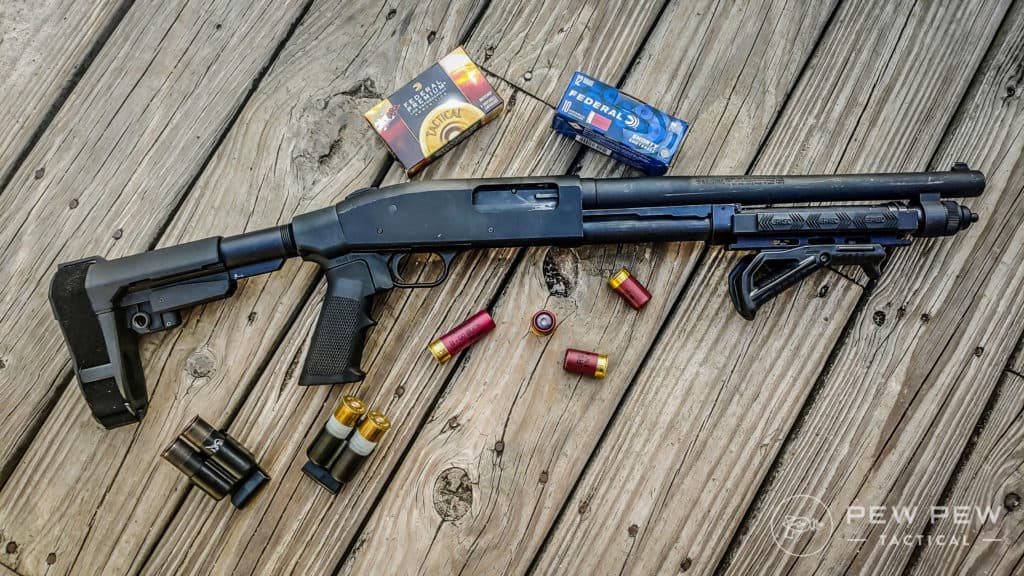
With this in mind, Open has been completely conquered by magazine-fed semi-auto shotguns. The quick reloads, and high capacities make these semi-auto shotguns the clear winner.
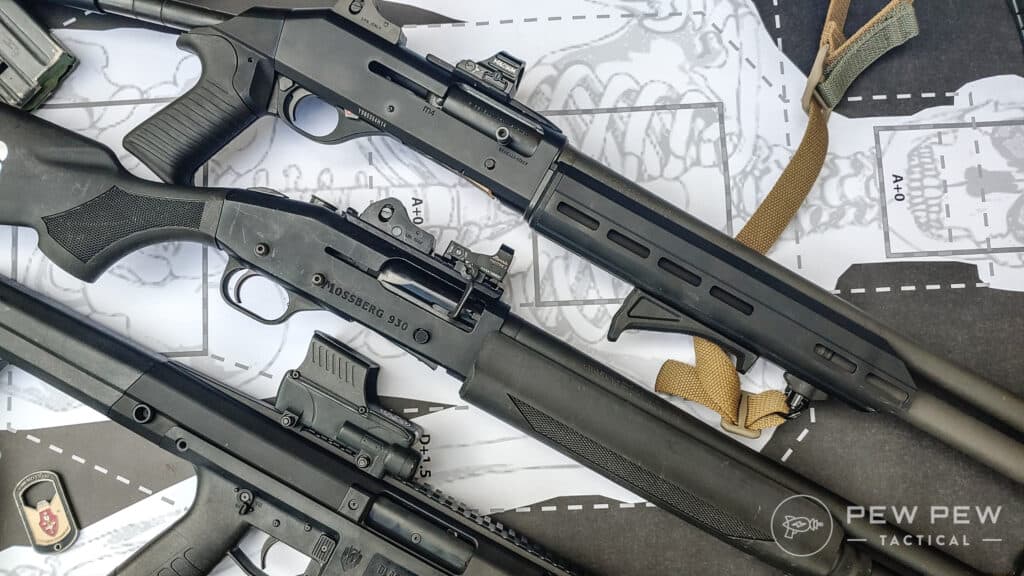
Tactical Division
Tactical is aimed at more practical weapons and attachments. This division limits us to tube-fed shotguns.

There are some restrictions on optics and accessories, but they don’t necessarily apply to shotguns for practical purposes. Semi-auto tube-fed shotguns rule this division.
Limited Division
Limited is much like tactical but only allows one 1X optic on your guns. Semi-auto tube-fed shotguns rule this division.
Heavy Metal Division
Heavy Metal is for the hardcore guys. These guys use battle rifles and pump-action shotguns.
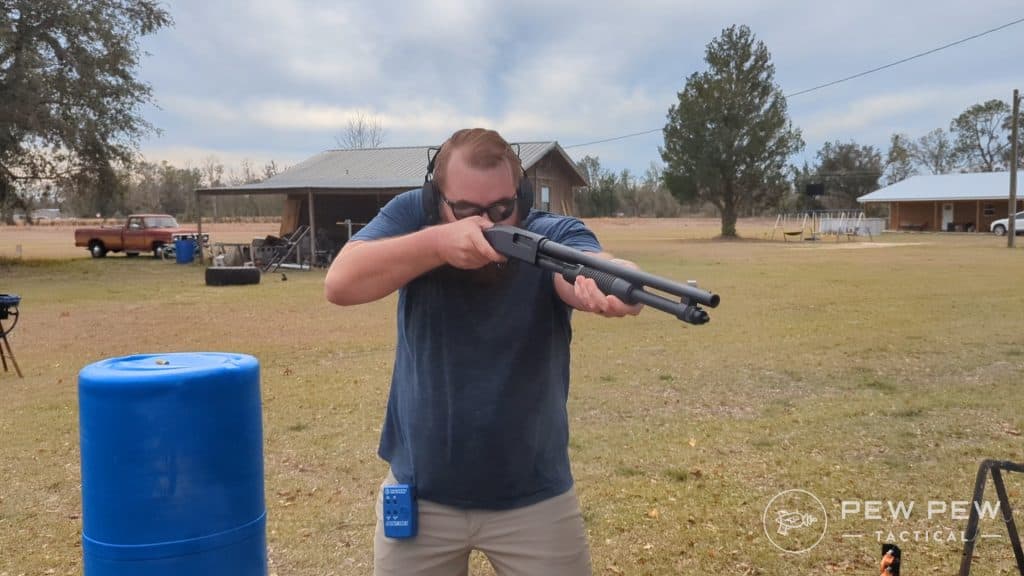
Due to the restrictions, you’re fairly limited in your options, and pump actions are dominated by sheer force of will (and rules).
Final Thoughts
While many a 3-Gunner dreads the shotgun portions, I think that’s where the real competition is. Shotguns are not gentle and will not allow for much skill gap.
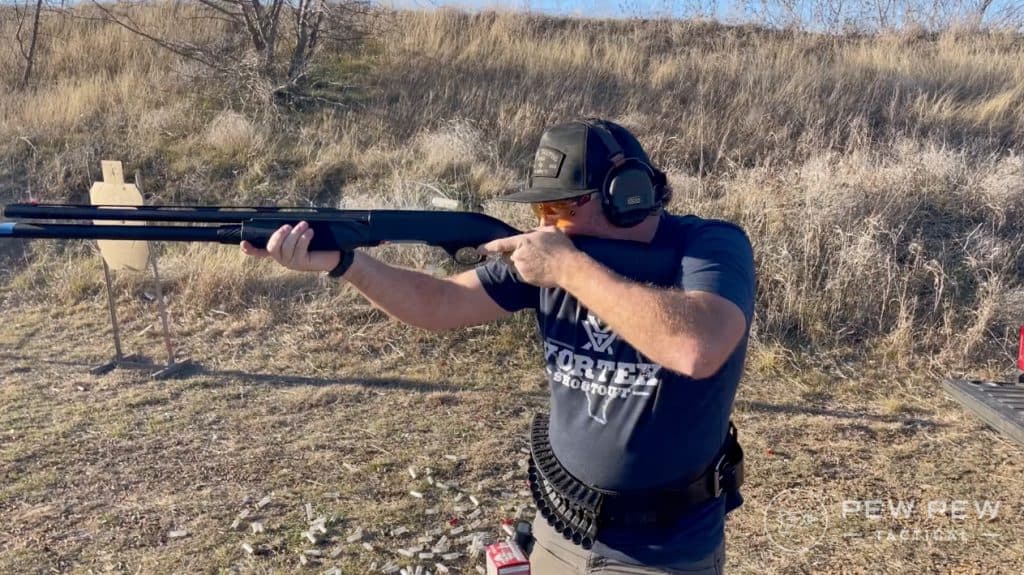
Although some shotgun stages are absurd, the shotgun tests your ability to adapt. We’ve supplied you with some options to get you started in the world of 3-Gun shotguns.
For some tips and tricks, check out our video with a pro-shotgunner!
I love the shotgun, and hopefully, you jump on the 3-Gun train with me. What’s your shotgun of choice? Let me know below! For a jump on accessories, check out our guide to the Best Shotgun Sights.
Latest Updates
April 21, 2024: Complete re-write with all new models.