Best AR-15 Flashlights [Real Views]
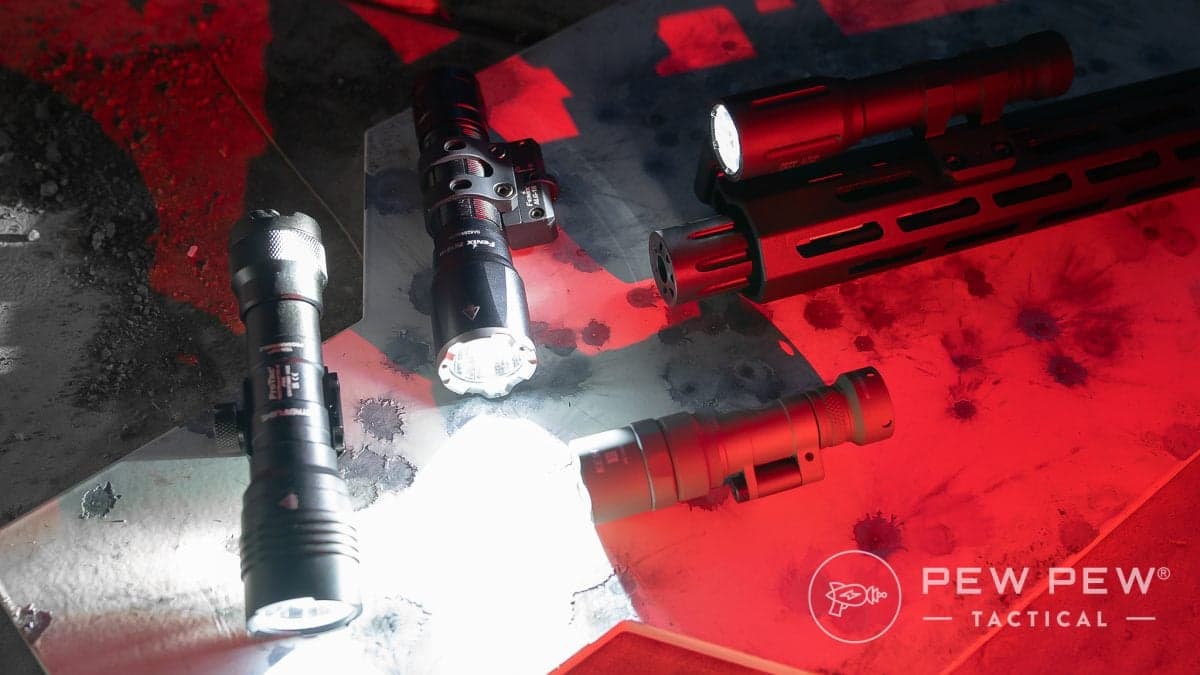
We hands-on test some of the most popular AR-15 flashlights. Complete with tons of pictures, beam patterns, mounting options, and more.

PPT Editor. Marine vet, hunter, and long-range shooter. Articles in 10+ major publications
We review products independently. When you buy through links on our site, we may earn a commission to help support our testing. Learn more.
Is your AR-15 currently restricted to daytime shooting? That’s no fun!
It doesn’t matter if you’re setting up a home-defense gun or just looking to build a new skill; an AR-15 flashlight is one of the best upgrades you can buy.
There’s more to it than just slapping on any old flashlight, though. With lumens, candela, Picatinny, M-LOK, and batteries to consider, expanding into nighttime shooting can be daunting.
Fortunately, I’m going to make it simple with four recommendations for different needs and budgets.
Ready to roll?
The Quick List
- Best Overall: Modlite PLHv2-18650 Rifle LightJump to details ↓
- Best Compact: SureFire Mini Scout Light ProJump to details ↓
- Best Value: Streamlight ProTac Rail Mount HL-X ProJump to details ↓
- Best Budget: Fenix TK16 V2.0Jump to details ↓
Table of Contents
AR-15 Flashlight Comparison Chart
| Price | Power | Intensity | Waterproof | Battery | |
|---|---|---|---|---|---|
| Fenix TK16 V2.0 | $99 | 3,100 lumens | 36,100 candela | IP68 | 21700 |
| Modlite PLHv2- 18650 | $309 | 1,350 lumens | 54,000 candela | IPX8 | 18650, 2 x CR123A |
| Streamlight ProTac HL-X Pro | $139 | 1,000 lumens | 50,000 candela | IP67 | 2 x CR123A, SL-B26 |
| SureFure Mini Scout Light Pro | $332 | 500 lumens | 7,600 candela | IP67 | CR123A |
How We Tested the Best AR-15 Flashlights
Each light you see here earned its spot on this list with thorough testing and impressive real-world performance. Here’s a look at my testing criteria.
Nighttime Live Fire
These flashlights are made to help you spot, identify, and engage targets at night. No test would be complete without doing just that, so off into the darkness I went.
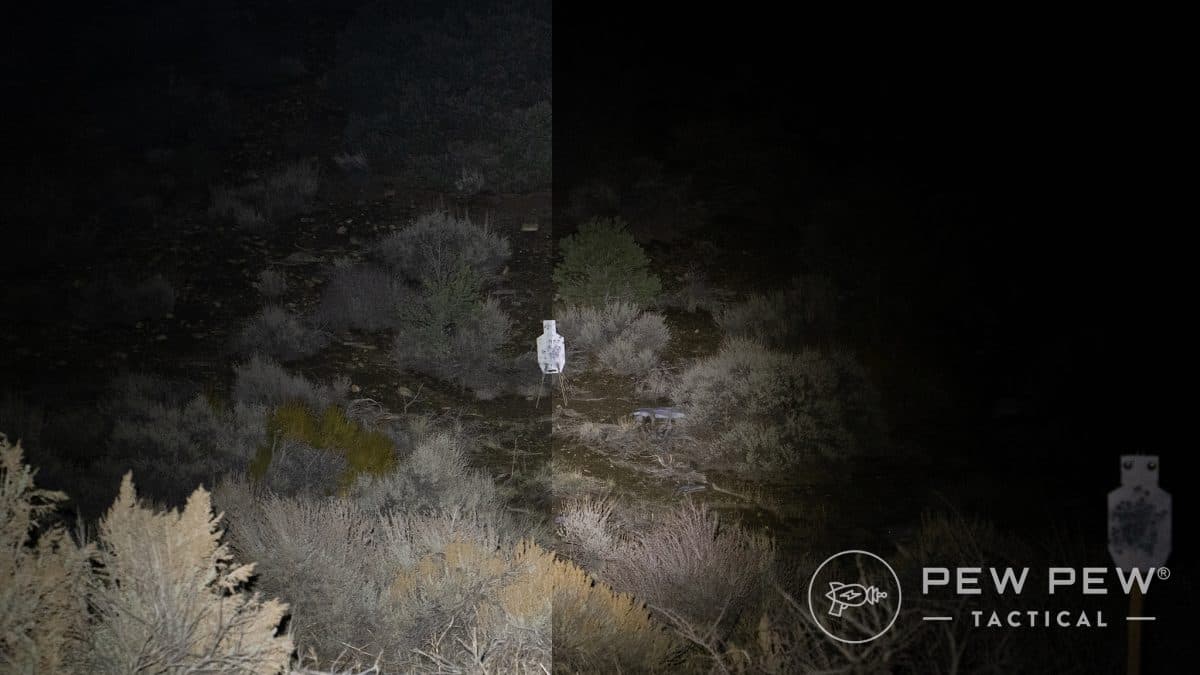
I set up a series of reduced-size steel silhouette targets to challenge each light’s capabilities. One small, white target at 15 yards served as a baseline for close-quarters engagements. A small, dark gray target at 15 yards provided a more difficult challenge against the dark nighttime background. Finally, a 50-yard C-zone target demonstrated how well each light projected its brightness at a distance.
Adding to the challenge of this test were steady wind and temperatures hovering around 20 degrees Fahrenheit. The winter conditions revealed any difficulty feeling and activating the lights with cold hands or gloves.
Durability Testing
This isn’t a torture test and I don’t intentionally break gear, but bumps and scrapes are inevitable. You and I both need to know our weapon lights are up to the challenge.
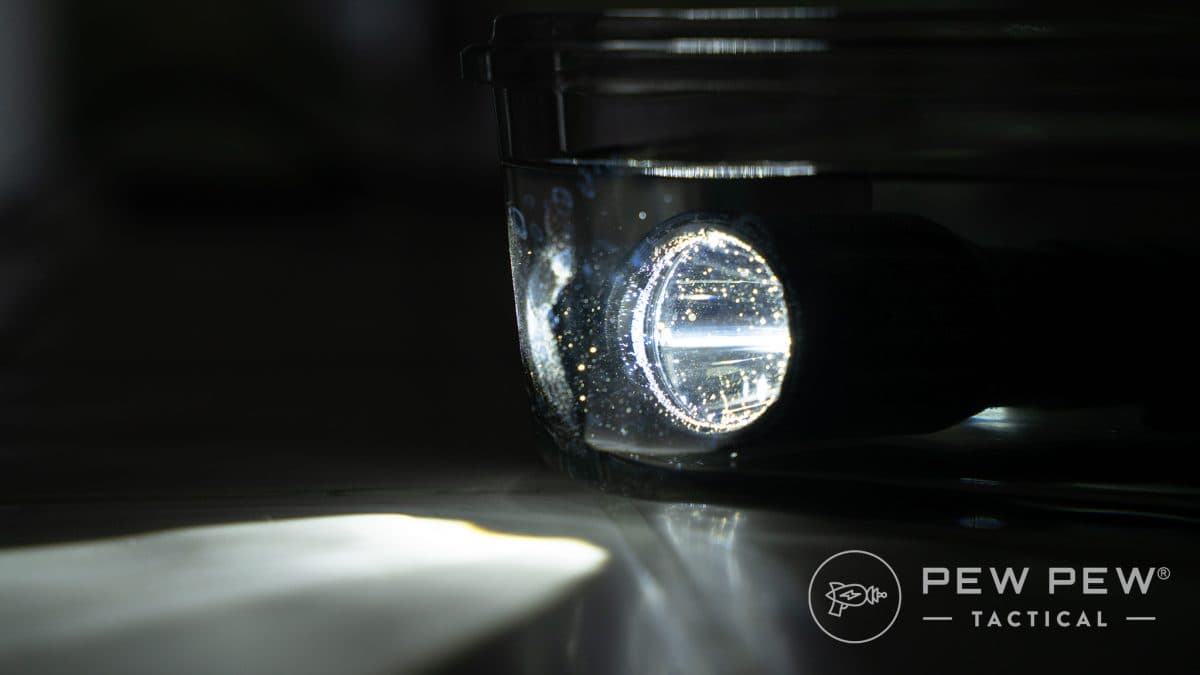
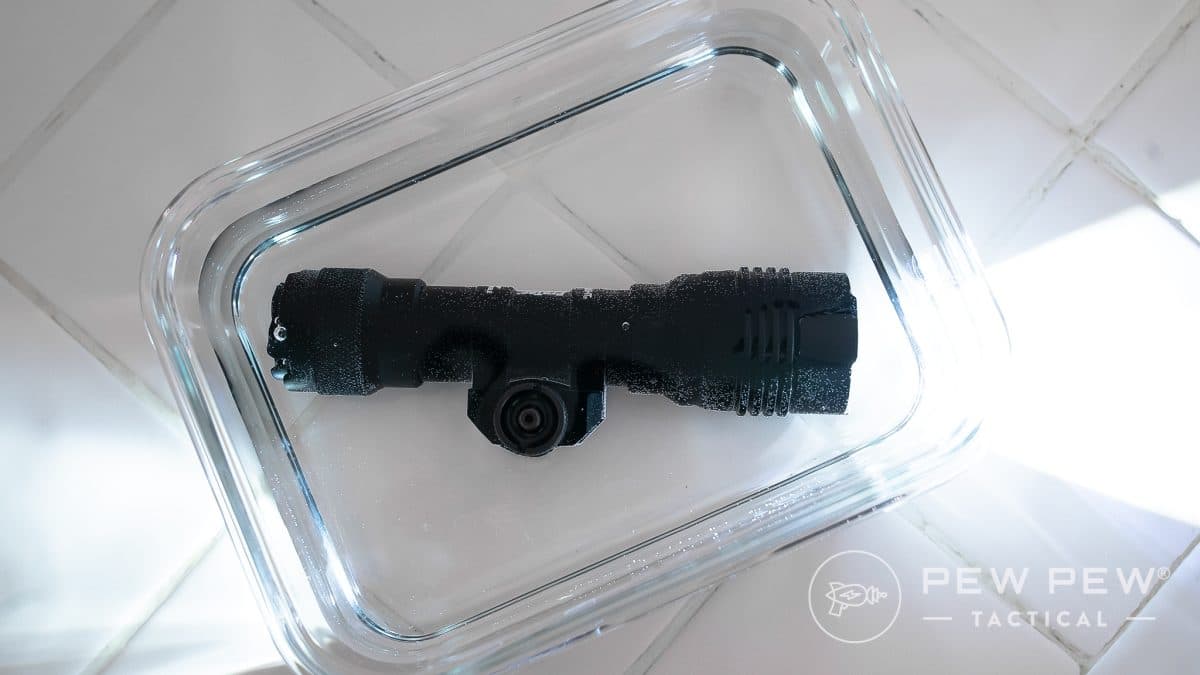
Each of these carries a waterproof rating of IPX7 or better. That means they should all be able to withstand one meter of submersion for 30 minutes. I gave the whole group a 30-minute soak in the kitchen to spot-check this.
I also dropped each light onto concrete from waist height. Rather than doing this mounted, I sent them alone and unafraid in a lens-first nosedive to ensure a direct hit.
Yes, mounting them on an AR-15 would add weight and increase velocity, but the rifle would also almost certainly absorb some of the impact and give the light an easy out. Direct hits it is, then.
Ease of Use
Some characteristics are subjective, so I made note of how easy each light is to install, operate, and power.

Batteries are a major consideration when choosing a weapon light. Many of you have strong personal preferences. I don’t try to sway readers one way or another, but I do want to make sure you have enough information to make an informed decision.
Are they rechargeable? Can you easily find replacements and stock up on them? These are things we all want to know.

Many AR-15 flashlights are compatible with remote pressure pads that replace or supplement the power switch on the tailcap. I made note of the options you have if you want to use a pressure pad with each of these picks.
Meet the Experts

This article comes to you from Pew Pew Tactical Editor & Senior Review Analyst Scott Murdock. Scott has completed nighttime firearms training both as a Marine and a civilian. That experience includes using night vision, white light, rifles, pistols, and machine guns. He’s also tested a wide range of gear for several major outdoor publications, which gives him a solid understanding of testing and evaluating mission-critical equipment.
Editor-in-Chief Jacki Billings runs our experienced team of reviewers. She is a National Rifle Association Basic Pistol Instructor as well as a member of the Society of Professional Journalists, ACES: Society for Editing, and the Professional Outdoor Media Association. Jacki has a bachelor’s degree in journalism and has worked as a media professional for close to 20 years, specializing in gun media for almost 10 years. With 2,000+ articles to her name, she uses her professional journalism and editing experience to set testing protocols and editorial standards for Pew Pew Tactical.
Best AR-15 Flashlights
1. Modlite PLHv2-18650 - Best Overall
Pros
- Test-leading intensity offers superior reach
- Swap out components for different purposes
- Excellent build quality
Cons
- Only one brightness setting and no strobe
- Building modular setups requires some forethought
The Bottom Line
The Modlite PLHv2-18650 is the AR-15 flashlight to have if your budget allows. I was impressed by its ability to pierce through the darkness, shrug off abuse, and keep a relatively low profile on the handguard. If you prefer build quality and a modular system over programmable modes, this is a home run.
Specs
- Power: 1,350 lumens
- Intensity: 54,000 candela
- Battery: 18650, 2 x CR123A
- Modes: Constant-on, momentary-on
- Mounting Options: Aftermarket
- Waterproof: IPX8
- Dimensions: 5.38” long x 1.19" diameter
- Weight: 5 oz
- Country of Origin: USA
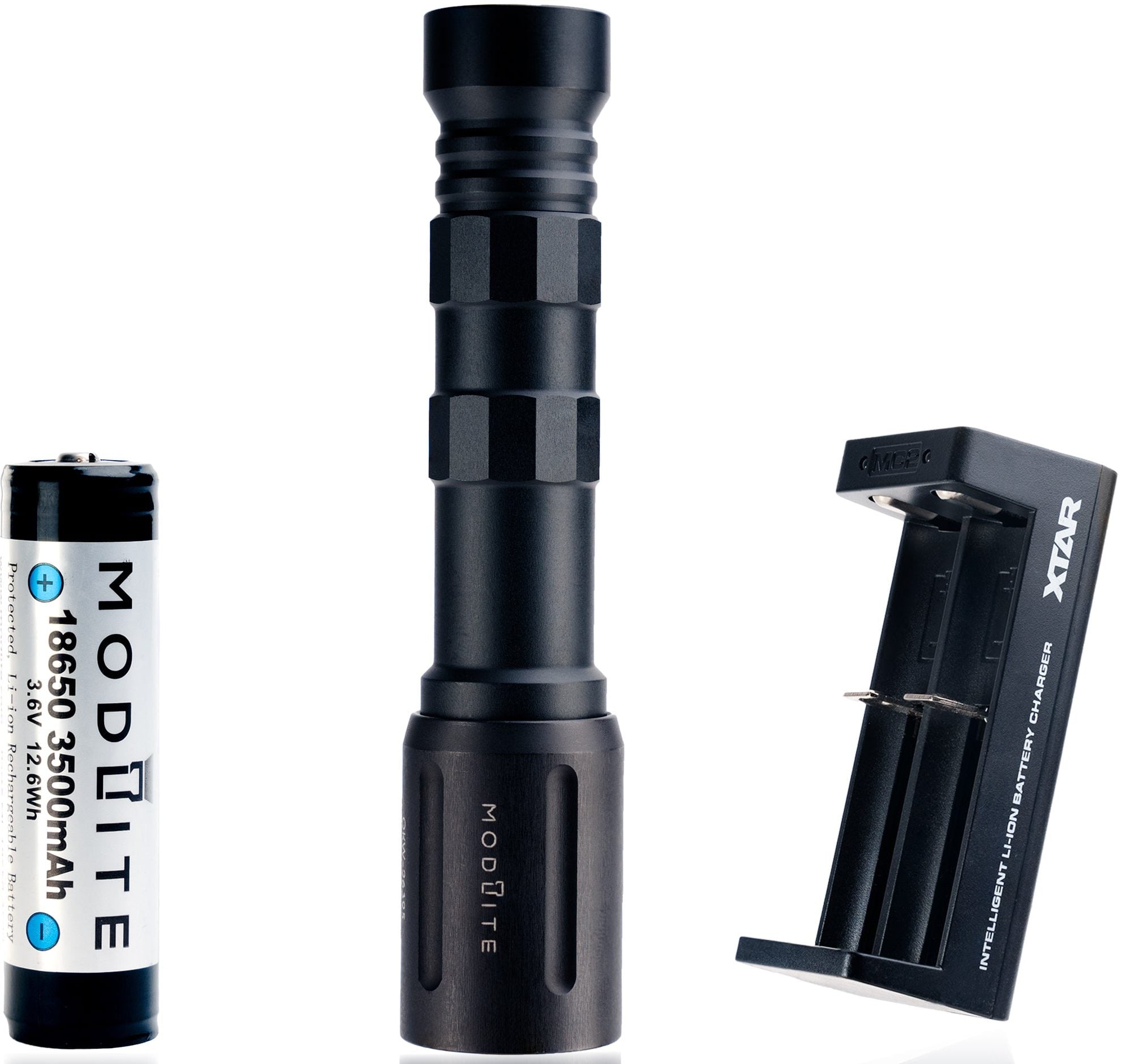
I got into the Modlite game with a tactical EDC flashlight and never looked back. The Modlite PLHv2-18650 is a classic example of doing one thing extremely well, with no distractions.

As the name suggests, this is a modular system. I took the battery and PLHv2 head from the handheld light, installed a weapon light body and tailcap, and picked up an Arisaka offset mount to make the conversion.
It took a little bit of research and planning to put together exactly what I wanted, but the result is a setup that’s perfect for my needs. If you don’t have a light to start with, you can also buy the weapon light ready to go.
Installation was as simple as turning a few screws, and Arisaka provides torque specs -- be still, my beating heart!

This beam is all about going the distance. There’s enough spill to see what I’m doing indoors, and the progressive fall-off prevents tunnel vision, but the hot spot in the center is the star of the show.
Power output of 1,350 lumens is nothing to scoff at. Intensity of 54,000 candela will reach way out into the darkness.
The only way to get another mode is to buy the multi-mode head separately, or start with a handheld package like I did. That will get you a low-power administrative mode that’s less useful in a weapon-mounted application.
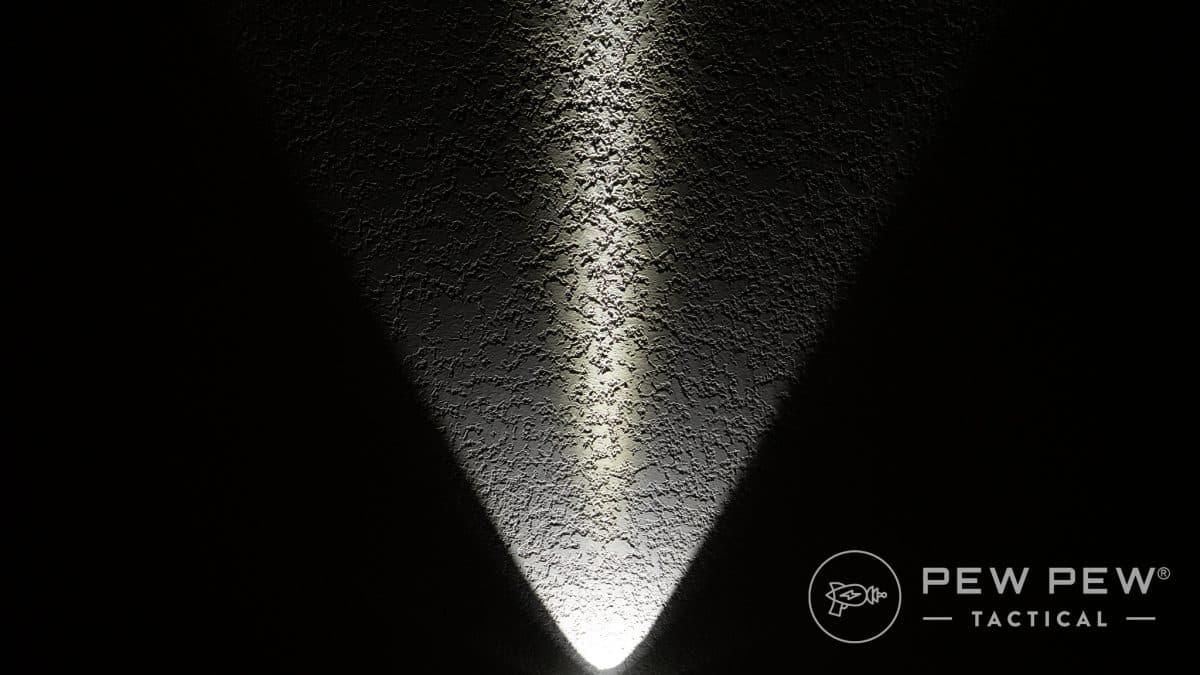
Nighttime live fire showed me just how useful that focused hot spot is. At CQB or home-defense distances, it blasted the targets with blinding intensity. Even my dark gray target popped out against the darkness behind it as clear as day.
At 50 yards, the beam was still going strong. I’d have no qualms about reaching out to 100 yards or more with this light. Anyone up for some hog hunting?
Activating the light with the included tailcap was easy and intuitive. The bezel prevents accidental activation much better than the handheld tailcap (which is not compatible with the weapon-mount body).
If you want to use a pressure pad, this body is compatible with SureFire-pattern tailcaps that accommodate wiring.
I didn’t doubt the Modlite’s functional durability, but matte finishes tend to be softer and more susceptible to scratching than glossy ones. I’m happy to report that several one-meter drops onto concrete (hey, I want the right angle in the video) did nothing to mar this light.
That’s welcome news, considering it costs more than $300.
My dunk tank didn’t harm the light either. Rain, snow, and even submersion aren’t going to be an issue for this battle-ready AR-15 flashlight.

Modlite provides an 18650 battery with this weapon light, and you can buy more individually. The PLHv2 is a dual fuel head, which means you can also use two CR123A batteries in a pinch. Since that’s what I use in my pistol lights, I appreciate the commonality.
This rechargeable cell uses a charging dock instead of a power port, and I prefer Modlite’s approach. Power ports always seem a little fragile to me, so it’s nice to stick the whole battery into a secure charging station and let it take power the same way it discharges it: from its terminals.
The more I use this light, the more I like it. I’d only advise against it if you’re on a tight budget or really insist on having multiple power modes or a strobe function.
One alternative to consider is the Modlite OKW-18650. It’s even more focused on long-range applications, albeit at the cost of close-range performance.
2. SureFire Mini Scout Light Pro - Best Compact
Pros
- Super wide beam in close quarters
- Durable and reliable
- Convenient mounting hardware
Cons
- A very expensive way to buy 500 lumens
- Pick the full-size version for outdoor use
The Bottom Line
Will some kind of SureFire Scout ever not be on these lists? The SureFire Mini Scout Light Pro has earned its status an icon with rock-solid dependability, great real-world usability, and a healthy catalog of compatible parts. Run it as-is, or build a high-speed setup with all the bells and whistles.
Specs
- Power: 500 lumens
- Intensity: 7,600 Candela
- Battery: CR123A
- Modes: Constant-on, momentary-on
- Mounting Options: Picatinny, M-LOK (included)
- Waterproof: IPX7
- Dimensions: 4.21” long x 1.13” diameter
- Weight: 4 oz
- Country of Origin: USA
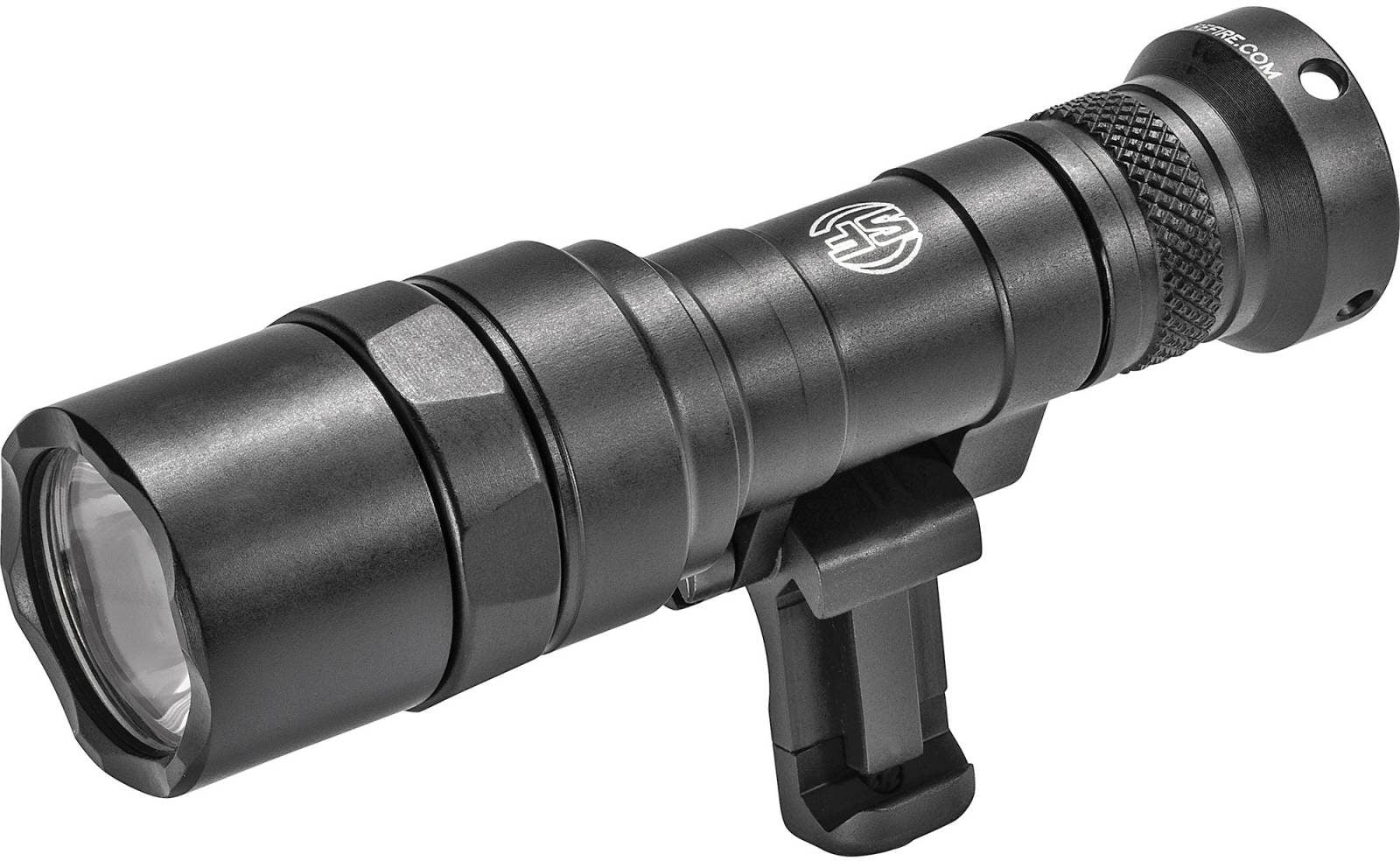
For many of you, SureFire is probably your default option when it comes to weapon lights. That’s fair. They’re all good, and my favorite is the itty bitty SureFire Mini Scout Light Pro. This little powerhouse is ideal for home defense, whether you’re running a carbine, AR-15 pistol, PCC, or some kind of AK.
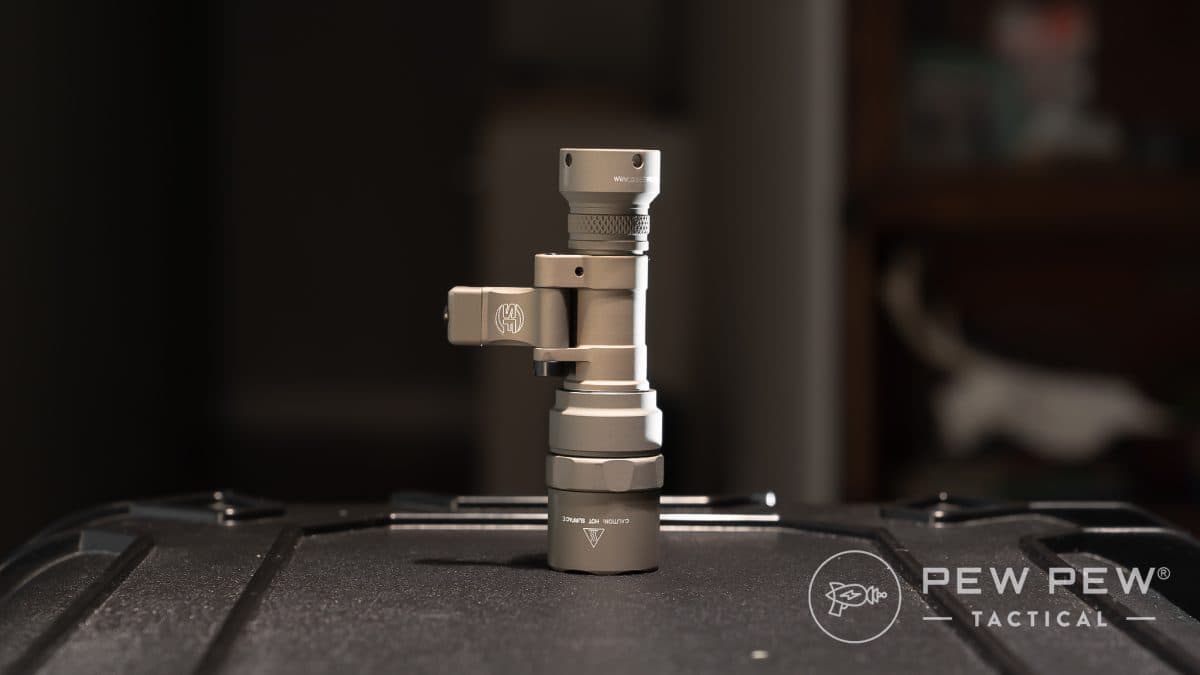
SureFire ships this light with two mounting options: Picatinny and M-LOK. They’re both very compact, and they swivel so you can rotate the light into different orientations relative to your handguard.
Installation is a piece of cake.

Once you fire this light up, you’ll notice the widest beam of the group by far. The broad, warm hot spot isn’t as intense as some of the others, but it’s definitely usable. Indoors, it’s also much easier on the eyes without being underpowered.
Light spills almost perpendicular to the bezel, so the Mini Scout does a great job of maintaining peripheral vision and situational awareness.
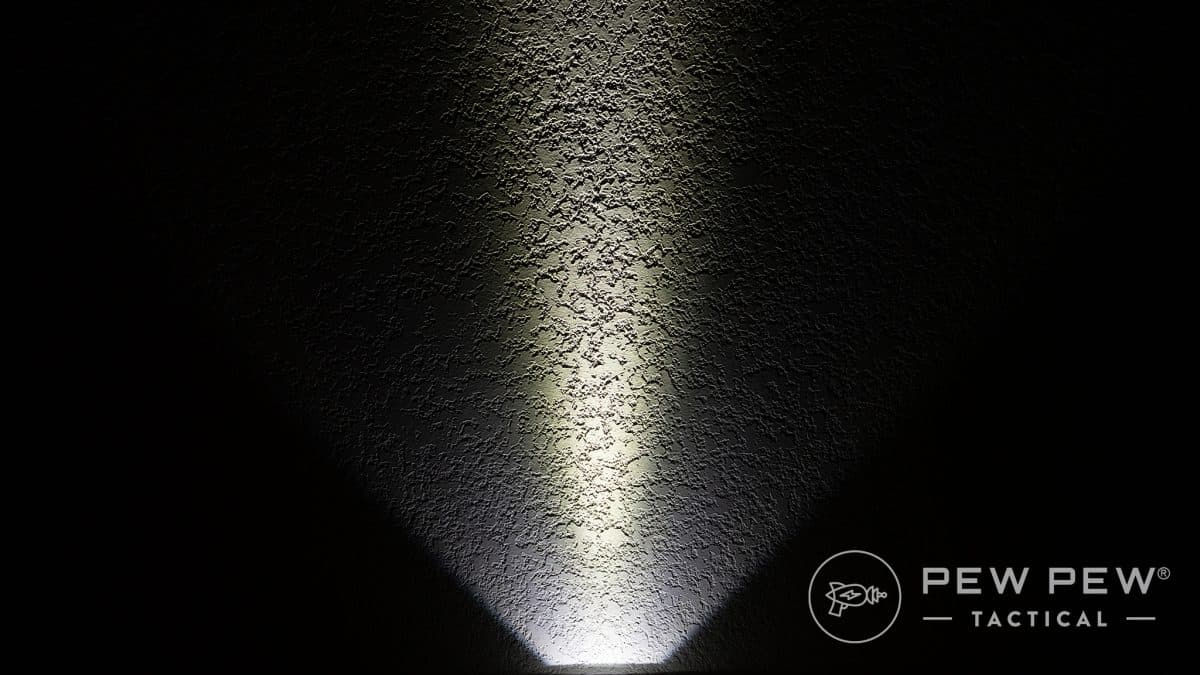
My five-fire testing took place outdoors, which isn’t the optimal place for this particular Scout. It allowed me to quickly and effectively transition between the 15-yard targets, but didn’t light up the 50-yard target as well as the other AR-15 flashlights on this list.
Indoors, it would be the exact opposite. High power and tight beams become somewhat of a liability in confined spaces, where there isn’t room for the beam to open up and light-colored walls bounce light back into your face.
The tailcap offers great protection, and there are four holes that you can use if you like to dummy-wire all your gear together.
Once again, you can swap this out for one of many compatible tailcaps. If you want to use a pressure pad, SureFire and aftermarket suppliers have plenty of options for you.
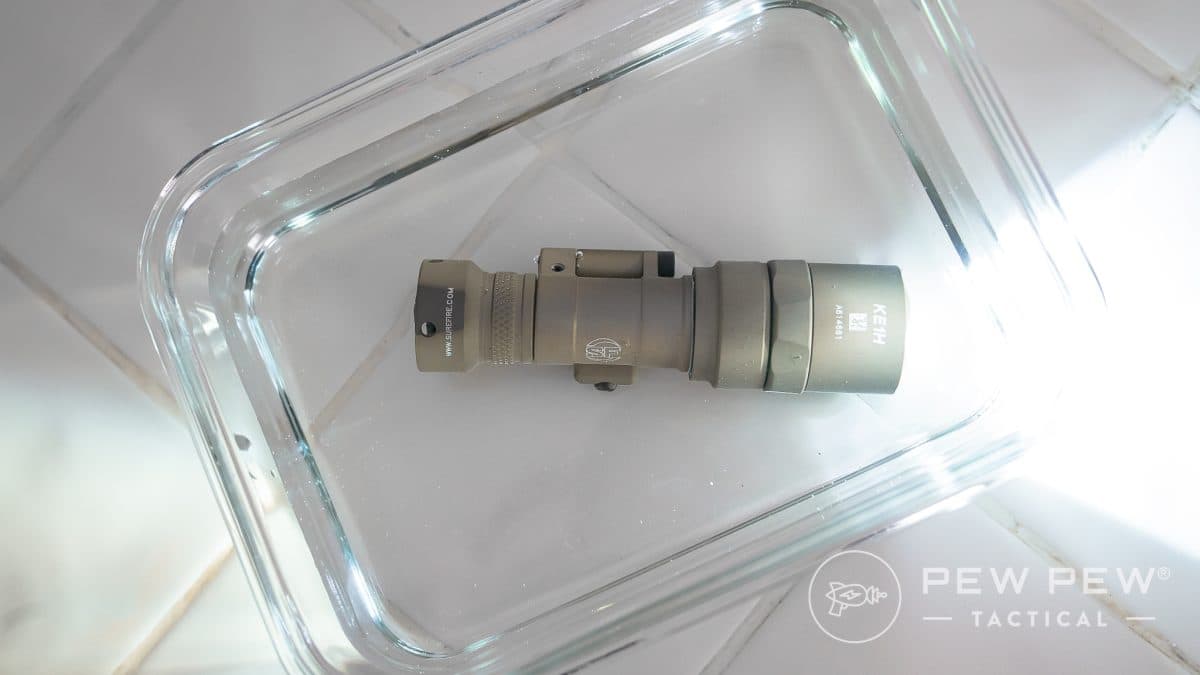
As I expected, neither the drop test nor the dunk tank compromised the SureFire. There are some scratches in the matte finish, but that’s cosmetic and kind of adds to its rugged appeal.
SureFire kept size to a minimum by opting for a single CR123A battery to power the Mini Scout Light Pro. That means shorter run times and lower output than the larger flashlights on this list, but I’d be happy to make that trade to outfit something like a home-defense AR pistol.
The SureFire Scout series is ubiquitous for a reason. If you want to get a solid, compact light without overthinking it, grab one of these and get training.
If you want more power, longer battery run time, and more battery options, size up to the Scout Light Pro Dual Fuel.
3. Streamlight ProTac Rail Mount HL-X Pro - Best Value
Pros
- Comes with multiple mounts and switches
- Programmable power modes and strobe function
- Tool-free Picatinny installation
Cons
- Cluttered tailpiece
- Big and bulky
The Bottom Line
I don't think any AR-15 flashlight gives you more value than the Streamlight ProTac Rail Mount HL-X Pro. Mounting hardware, a pressure pad, and all the necessary hardware comes in the box. Program high, low, and strobe modes the way you want to use them. This is a great way to get into nighttime training for a reasonable price.
Specs
- Maximum Power: 1,000 lumens
- Maximum Intensity: 50,000 candela
- Battery: 2 x CR123A, SL-B26
- Modes: Low, high, strobe, constant-on, momentary-on
- Mounting Options: Picatinny, M-LOK (included)
- Waterproof: IP67 (IP54 with pressure pad)
- Dimensions: 5.43” long x 1.45” diameter
- Weight: 7 oz
- Country of Origin: China
I’m a big fan of Streamlight because the brand reliably delivers tactical, EDC, and weapon lights that punch above their weight. The Streamlight ProTac Rail Mount HL-X Pro offers a bunch of useful features and hardware for a surprisingly accessible price.

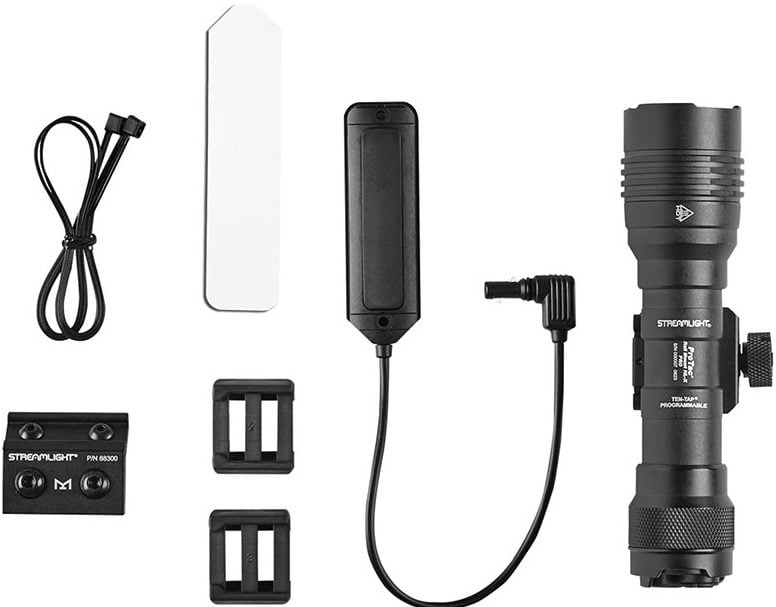
The light comes from the factory with more mounting options than anything else here.
A Picatinny mount comes installed, and the knurled thumb screw lets you tighten it down without tools. Don’t want to use a Pic rail? Take the adapter off with a hex key and screw on the included M-LOK attachment.

It also comes with a pressure pad. Unlike the other lights here, you don’t need a separate tailcap; this one has a port right next to the power button (more on that in a minute). Everything you need is included, right down to 3M tape and zip-ties.
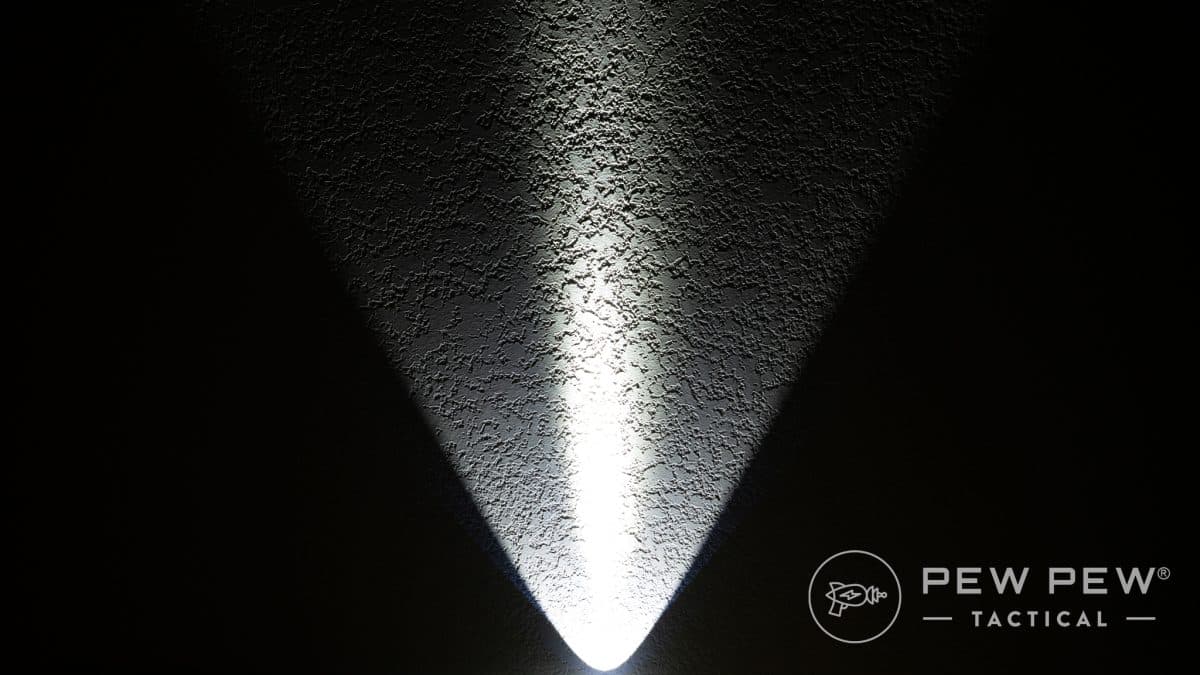
The closest comparison in terms of beam is the Modlite. The ProTac casts a little more light at the edges, and gives up some intensity in the center.
Considering the spec sheet figures, that checks out.
The ProTac Rail Mount HL-X Pro has three modes and three ways to configure them. Using the tailpiece and the included instructions, you can program the light to give you high/strobe, high/low, or high-only.
| Power | Intensity | Estimated Run Time | |
|---|---|---|---|
| Low | 60 lumens | 3,100 candela | 21 hrs |
| High | 1,000 lumens | 50,000 candela | 1 hr 15 min |
| Strobe | 1,000 lumens | 50,000 candela | N/A |
When I went hot, the ProTac’s high beam struck a nice balance between the Modlite’s long-range focus and the SureFire’s close-quarters speed.
It didn’t outperform either, but it did well enough that I think this is a versatile option for anyone who needs one light for every job.
Now, about that tailcap. I appreciate being able to add a pressure pad and maintain the power button’s functionality, but sometimes I found myself pressing it instead of the button. The three-piece shroud doesn’t completely cover the button, either, so there’s a greater chance of accidental activation.
Are these deal-breakers? No, but they’re factors you should consider and then train around to keep everything running smoothly.
Once again, I had no malfunctions during my durability testing. Not even a scratch.
The ProTac Rail Mount HL-X Pro comes with two Streamlight CR123A batteries. Together, they provide more than enough power and intensity. You can swap these out for a Streamlight SL-B26 battery and recharge it via USB-C.
It’s a great option for new shooters or anyone on a budget. Not sure if you want to use a tailcap or pressure pad? Curious about strobe functions and power modes? This covers the bases with one purchase.
If you want something with a little more reach, check out the Streamlight ProTac Rail Mount HP-X Pro. It offers greater range at the expense of a narrow beam and a 200-lumen dip in power.
4. Fenix TK16 V2.0 - Best Budget
Pros
- Doubles as a handheld EDC flashlight
- Super convenient M-LOK attachment available separately
- Several modes to choose from
Cons
- Limited reach
- More complicated mode interface
The Bottom Line
How often do you plan on using your weapon light? If the answer is not very often, the Fenix TK16 V2.0 is a great way to get an AR-15 flashlight and a tactical EDC flashlight for less than $100. For the money, I couldn't ask for much more.
Specs
- Maximum Power: 3,100 lumens
- Maximum Intensity: 36,100 candela
- Battery: 21700
- Modes: Eco, low, medium, high, turbo, strobe, constant-on, momentary-on
- Mounting Options: Picatinny, M-Lok, clamp (available separately)
- Waterproof: IP68
- Dimensions: 5.63” long x 1.34” diameter
- Weight: 4 oz
- Country of Origin: China
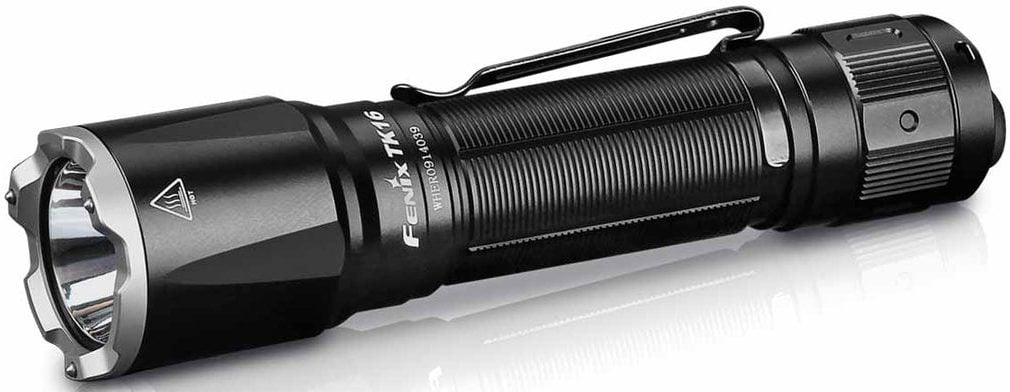
If the Fenix TK16 V2.0 looks familiar, that’s because I featured it as a handheld light in my guide to the Best Tactical Flashlights Under $100.
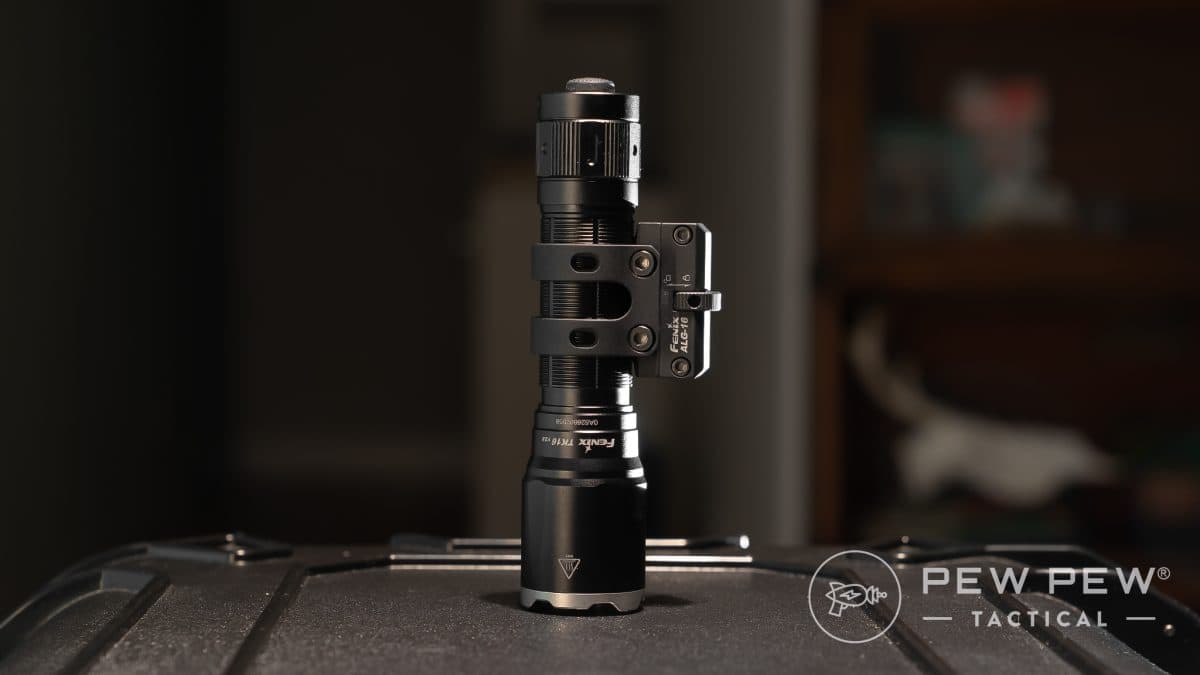
The Fenix ALG-16 mount I used in this testing wraps around the light body rather than bolting into it, so the TK16 V2.0 retains its functionality as a handheld light.
It’s incredibly easy to use. The only tool I used was a hex key to secure the light in the mount and really crank down the dial that adjusts pressure on the handguard’s M-LOK slot.

If you occasionally like to run your AR-15 without your weapon light, or plan on using your next AR-15 flashlight with multiple firearms, this is a very convenient option.
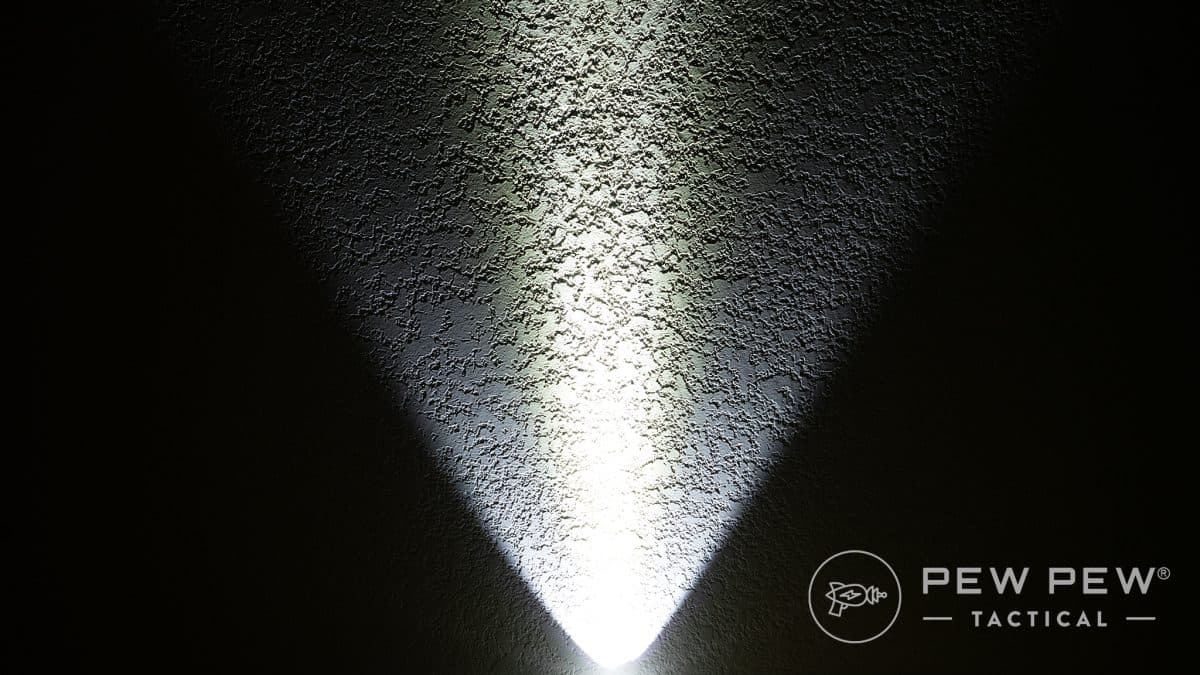
The TK16 V2.0 throws a very bright, full beam. The throw angle is similar to those of the Modlight and Streamlight, but with a much larger hot spot in the center and a little sharper fall-off at the beam’s edge.
This light has the most modes to choose from. There are five brightness settings ranging from 30 lumens and 330 candela to 3,100 lumens and 36,100 candela.
| Lumens | Candela | Run Time | |
|---|---|---|---|
| White Light (Ultra Low) | 30 | 330 | 43 hr 20 min |
| White Light (Low) | 150 | 1,650 | 19 hr 10 min |
| White Light (Medium) | 350 | 3,900 | 8 hr 20 min |
| White Light (High) | 1,000 | 1,200 | 2 hr 50 min |
| White Light (Turbo) | 3,100 | 36,100 | N/A |
| Strobe | 3,100 | 36,100 | N/A |
The power button activates constant-on and momentary-on. A tap and hold of the mode button activates the strobe. Do this with the flashlight off, and it’ll be a momentary effect that shuts off when you let go of the button. If you hold the mode button with the flashlight already on, the strobe will stay active when you release the button.
On paper, this is a ton of capability in a very affordable flashlight. At the range, it can be a lot to keep track of. This light requires the most practice to master all its settings and features before trusting it as your primary AR-15 flashlight.
During my live fire testing, I really appreciated the Fenix’s generous, floodlight-style beam. Transitioning from one 15-yard target to the other was easier than usual because I had so much peripheral awareness.
It was definitely usable at 50 yards, although the intensity was noticeably lower than what I got from the Modlite and Streamlight.
In most cases, this isn’t an issue – maybe you prefer the edge-to-edge brightness of this beam. I’d pick something else if your training, hunting, or profession requires you to reach further than that, though.
The budget-friendly Fenix didn’t just pass my durability test; it showed off one of its unique features.
The bezel of this light has three glass-breaking protrusions. They’re primarily there for when you carry this light by hand, but they would still work on the end of an AR-15. While not a necessity by any means, this capability is something the other lights on this list don’t offer.
Likewise, the water test showed no weakness.
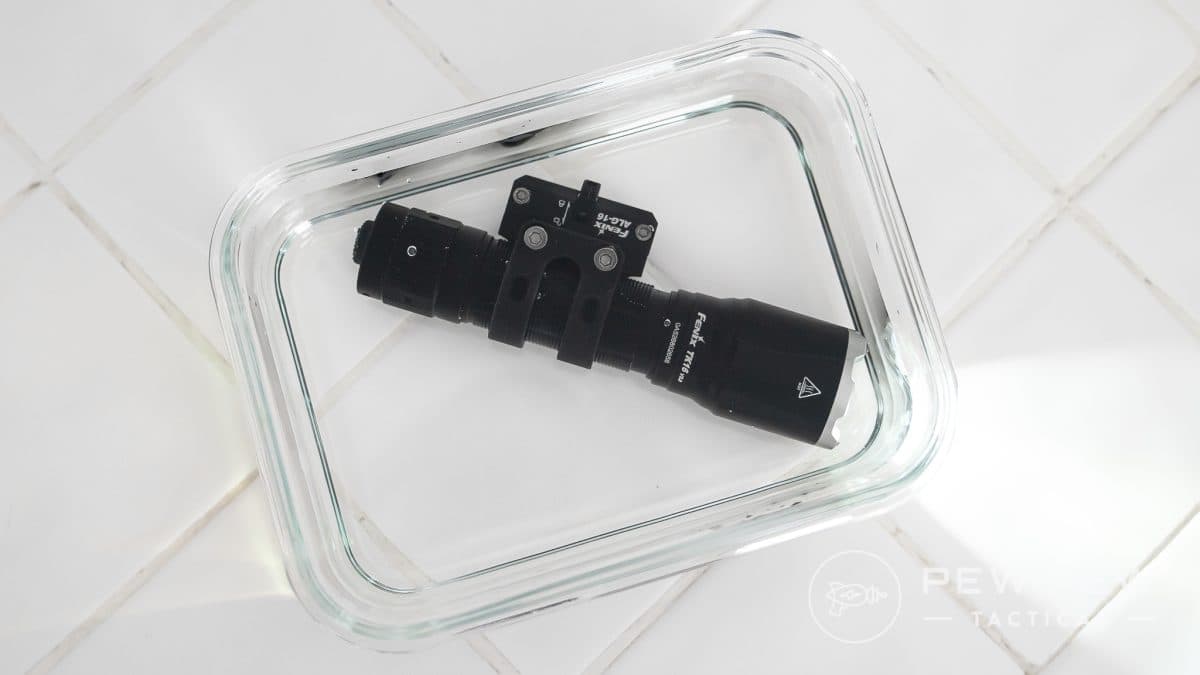
Power comes from a Fenix 21700 cell that recharges via USB-C. It’s big and bulky, but has plenty of power and charges faster than batteries that rely on a Micro USB port.
While I appreciate the variety of modes the TK16 V2.0 offers (especially when using it by hand), there are times when less is more. If your weapon light doesn’t have modes that are too dim, you can’t activate them.

If you’re trying to keep costs down, this is a great way to check two boxes at once. Carry the TK16 V2.0 as your EDC tactical light, then mount it to your AR-15 when you want to do some night training.
How to Pick the Best AR-15 Flashlights
I love high-end weapon lights like the Modlite and SureFire you see here, but there are definitely times when you can – and maybe should – opt for something more affordable. Here are some factors to help you decide which is the best AR-15 flashlight for you.
Power, Intensity, and Beams
When we talk about a flashlight’s output, it’s useful to break it into two categories: power and intensity.
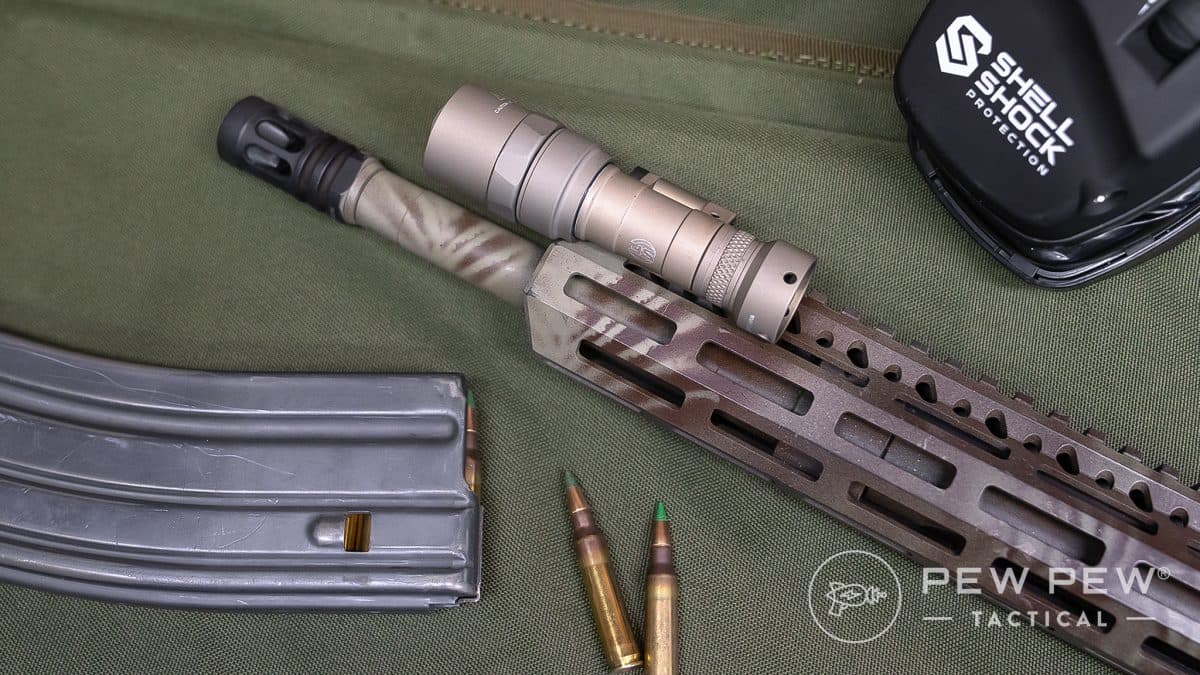
Power, measured in lumens, describes how bright a light is. Intensity, measured in candela, describes how far the beam will reach.
Beams can be wide or narrow. They can have consistent light distribution from edge to edge or a hot spot in the center. The falloff can be sharp or gradual.
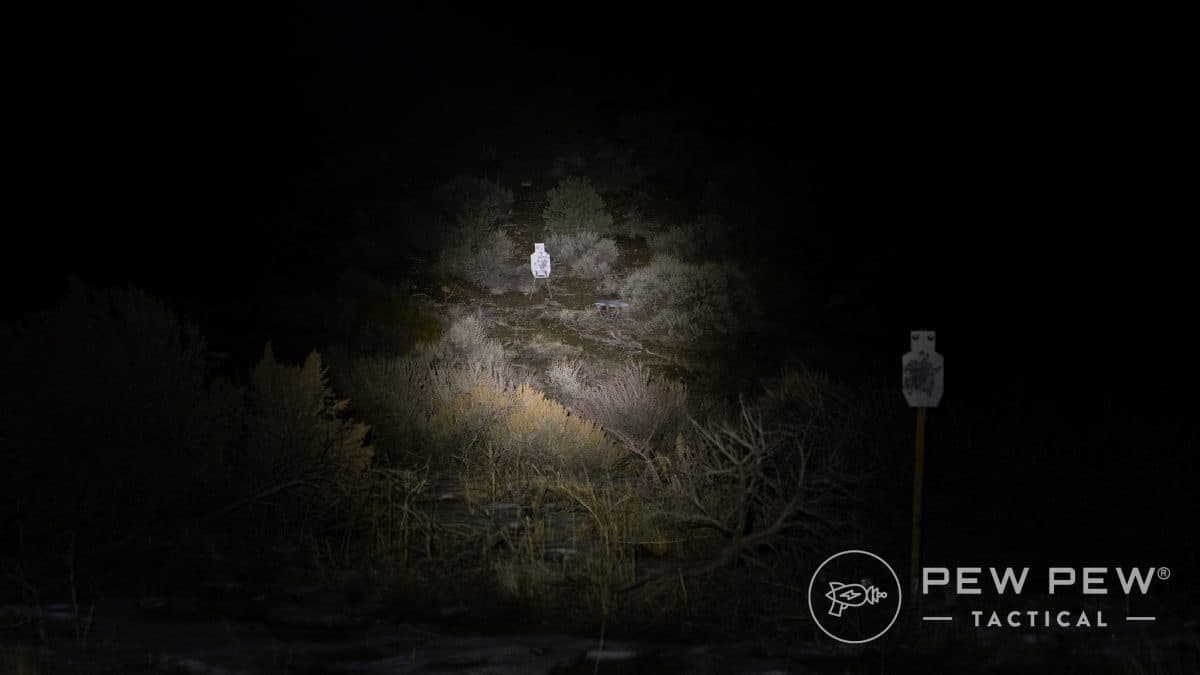
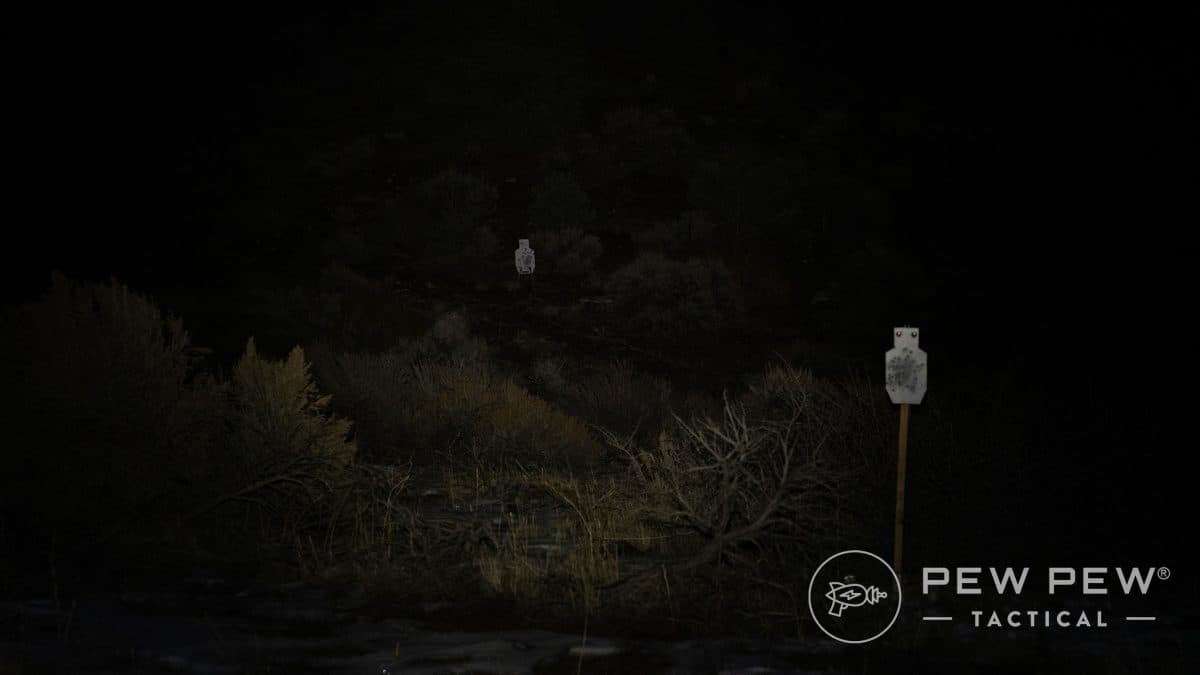
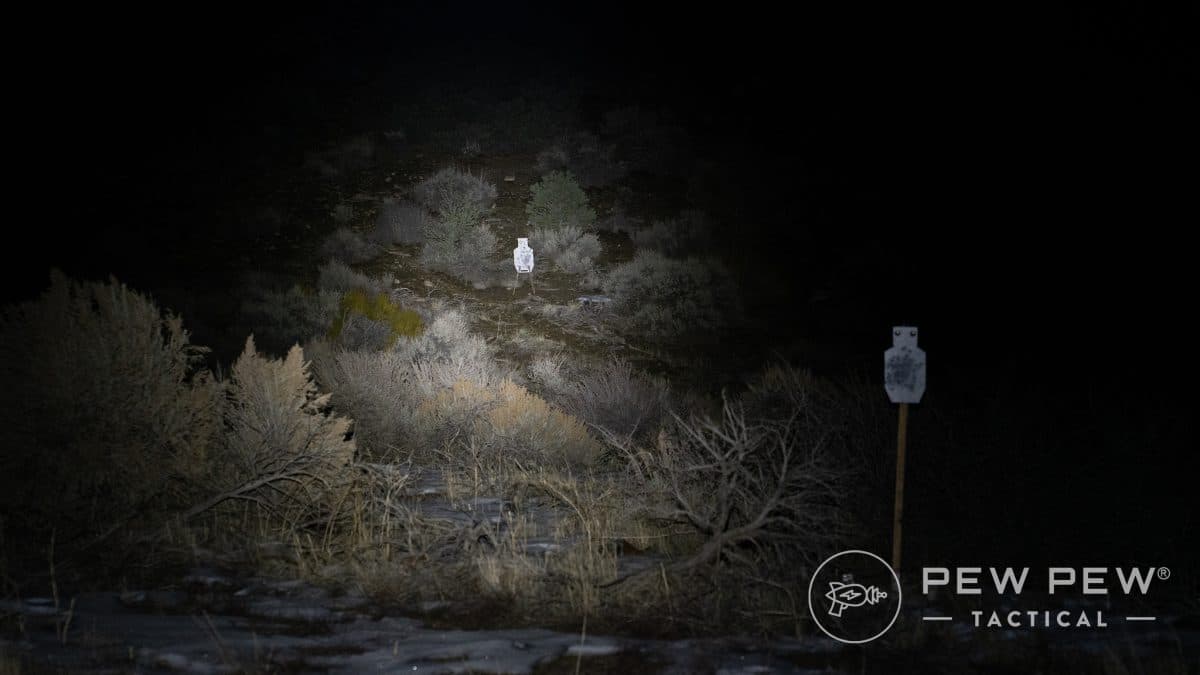
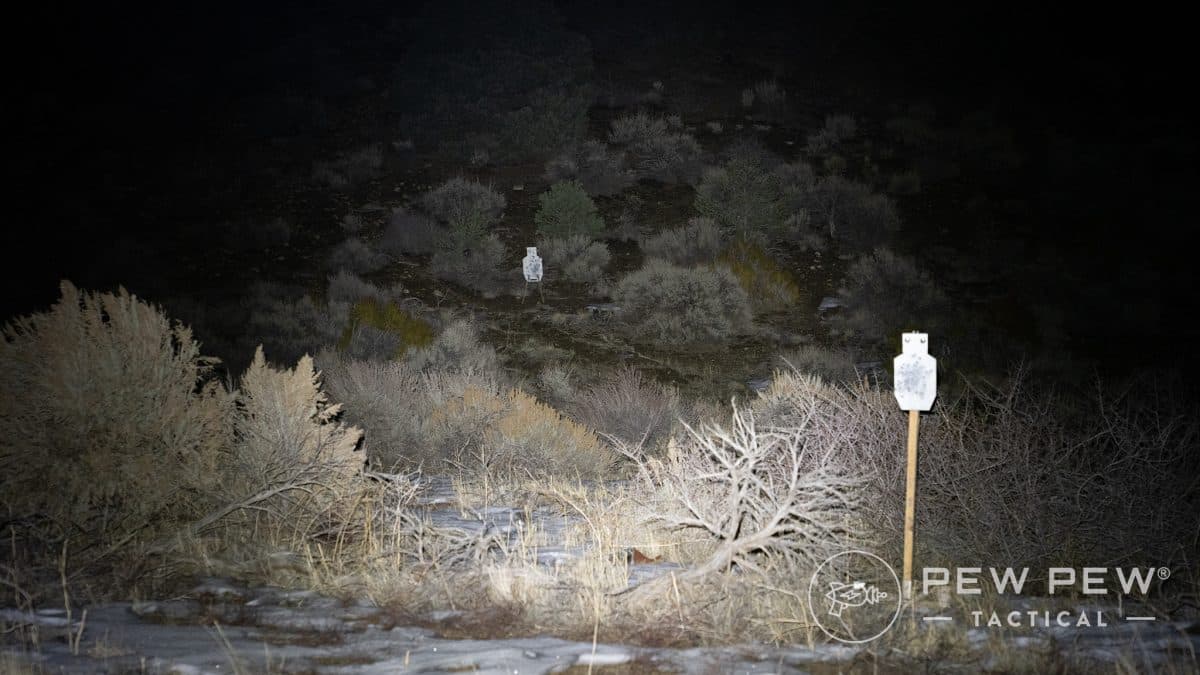
All of these characteristics combine to make flashlights that seem very similar on paper perform very differently in the real world. If you’re going to use your AR-15 flashlight for home defense, a wide beam with moderate power might work well for you indoors. If you’re going coyote hunting at night, a light with serious intensity is going to be your friend.
Modes and Controls
Most AR-15 flashlights have two modes: constant-on and momentary-on. That’s usually enough, but some also have a strobe mode. Pick what works best for you.
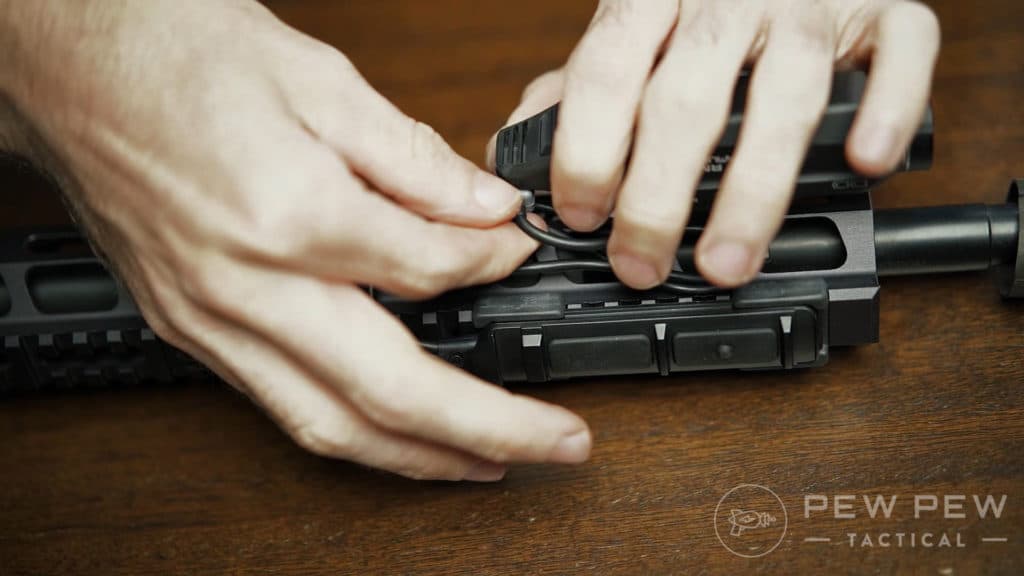
You also have options when it comes to activating your light. All of these come with a standard tailpiece. Push for constant-on, tap and hold for momentary-on.
The Streamlight includes a pressure pad, and various remote-activation systems are available for the others. That’s a really nifty option (and I love that it’s included with my value pick) but not everyone likes them.
More gear creates more potential points of failure, and getting used to a tailpiece isn’t difficult. But it’s ultimately your AR-15, and you get to build it however you want. Experiment, test your gear, and be open minded!
Mounting Hardware
Whichever light you choose, you’re going to have to mount it on your AR-15. How you do that depends on whether you have an M-LOK, Picatinny, or KeyMod handguard (some handguards combine a Picatinny rail with one of the other styles).
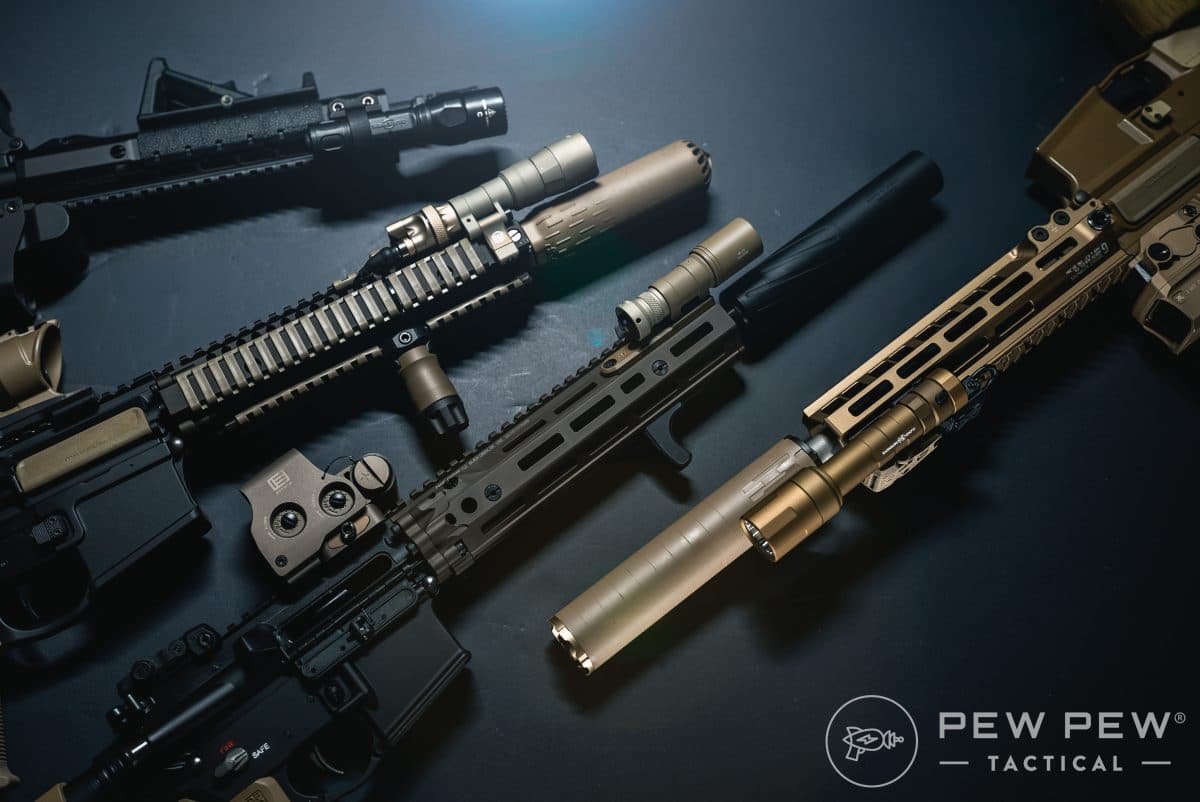
Some lights come with one or more mounting solutions. Others make you buy what you need separately. Just do a little homework before you buy to make sure you get what you need.
Final Thoughts
There’s no perfect way to build out your AR-15. As with cartridge selection, optics, and furniture, it all depends on what you want to do with your AR and how much you want to spend in the process.

The good news is that AR-15 flashlights are relatively affordable and easy to switch out. It’s ok to own different lights for different purposes as long as you train with them.
Once you have some range time under your belt, come on back and let us know what you picked and what you like about it!
What’s your favorite AR-15 flashlight? Give other readers your recommendation in the comments. Looking for more awesome upgrades? Check out our guide to the Best AR-15 Lasers!
Latest Updates
January 2025: Complete overhaul with new products, testing, and supporting content.