Best AR-15 Scopes & Optics: Red Dots to Magnified [2026]

Find the best AR-15 scopes & optics for your budget and use. From red dots to magnifiers, prisms, holographic, and scopes.

PPT Editor. Marine vet, hunter, and long-range shooter. Articles in 10+ major publications
We review products independently. When you buy through links on our site, we may earn a commission to help support our testing. Learn more.
You’re not going to run iron sights on that new AR-15 of yours, are you? Let’s upgrade!

You have all kinds of options when it comes to choosing a sighting system for your carbine, pistol, or SBR. With all the red dots, holographic sights, prism optics, and variable-power scopes out there, it’s easy to get overwhelmed.
Well, life’s about to get a lot simpler because these are the best AR-15 scopes and optics for any budget. While not exhaustive, there’s something for every goal and every price range.
Let’s get into the good stuff!

The Quick List
- Best Red Dot: Aimpoint Duty RDS MRJump to details ↓
- Best Budget Red Dot: Sig Sauer Romeo5 Gen IIJump to details ↓
- Best Holographic Sight: EOTECH EXPS3 HWSJump to details ↓
- Best Prism: Trijicon ACOG TA31 4x32mmJump to details ↓
- Best Budget Prism: Primary Arms SLx MicroPrismJump to details ↓
- Best LPVO: Nightforce ATACR 1-8x24 F1Jump to details ↓
- Best Budget LPVO: Primary Arms SLx 1-6x24 Gen IVJump to details ↓
Table of Contents
AR-15 Optic Comparison Chart
| Price | Magnification | Objective Lens | Power Source | Weight | |
|---|---|---|---|---|---|
| Aimpoint Duty RDS MR | $599 | 1x | 18 mm | CR2032 | 4 oz |
| EOTECH EXPS3 HWS | $719 | 1x | 1.2" x 0.85" | CR123A | 11 oz |
| Nightforce ATACR 1-8x24 F1 | $2,800 | 1-8x | 24 mm | CR2032 | 21 oz |
| Primary Arms SLx 1-6x24 Gen IV | $359 | 1-6x | 24 mm | CR2032 | 18 oz |
| Primary Arms SLx 3x MicroPrism | $349 | 3x | 23 mm | CR2032 | 8 oz |
| Sig Sauer Romeo5 Gen II | $128 | 1x | 20mm | CR2032 | 6 oz |
| Trijicon ACOG | $1,128 | 4x | 32 mm | Fiber optic | 15 oz |
How We Tested the Best AR-15 Optics
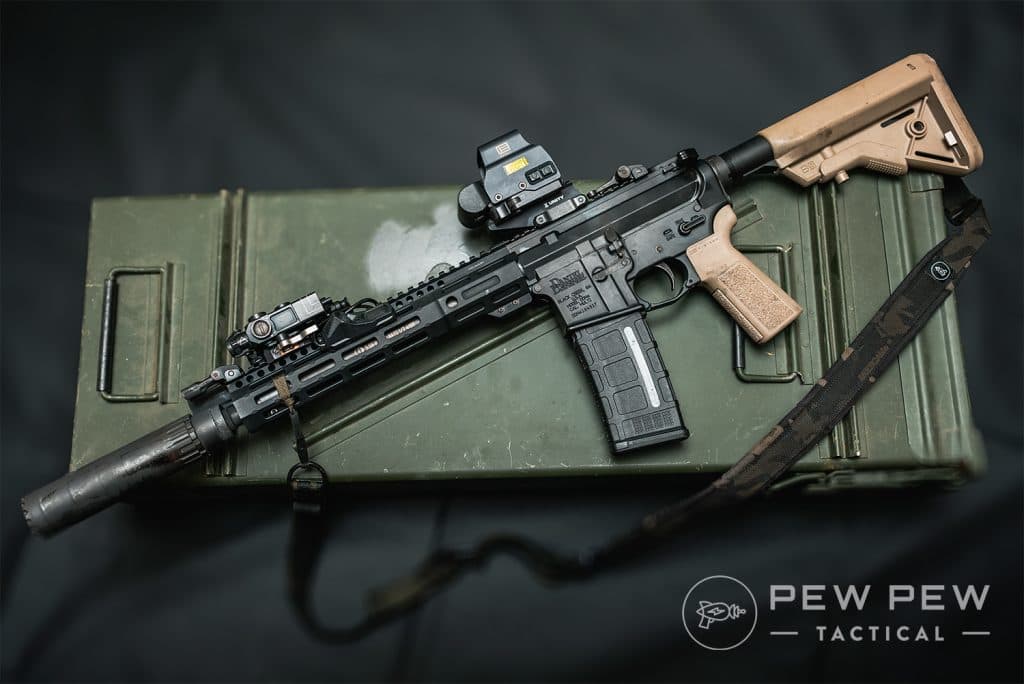
This guide features AR-15 scopes and optics recommended by the Pew Pew Tactical staff based on our collective experience. This includes reviews, comparisons, training events, competitive shooting, and service in law enforcement and the military. We even own several of these optics.
Testing Protocol
My testing started with an assessment of optical quality. I used a distortion grid to reveal any flaws in clarity, shape, or color. This was also a good opportunity to evaluate light transmission in consistent conditions.
Next, I mounted each optic and got a feel for the controls. Are they intuitive and tactile? Can you use them with gloves? Do adjustments require tools? I made note of any issues that might pop up, either on the workbench or in the field.
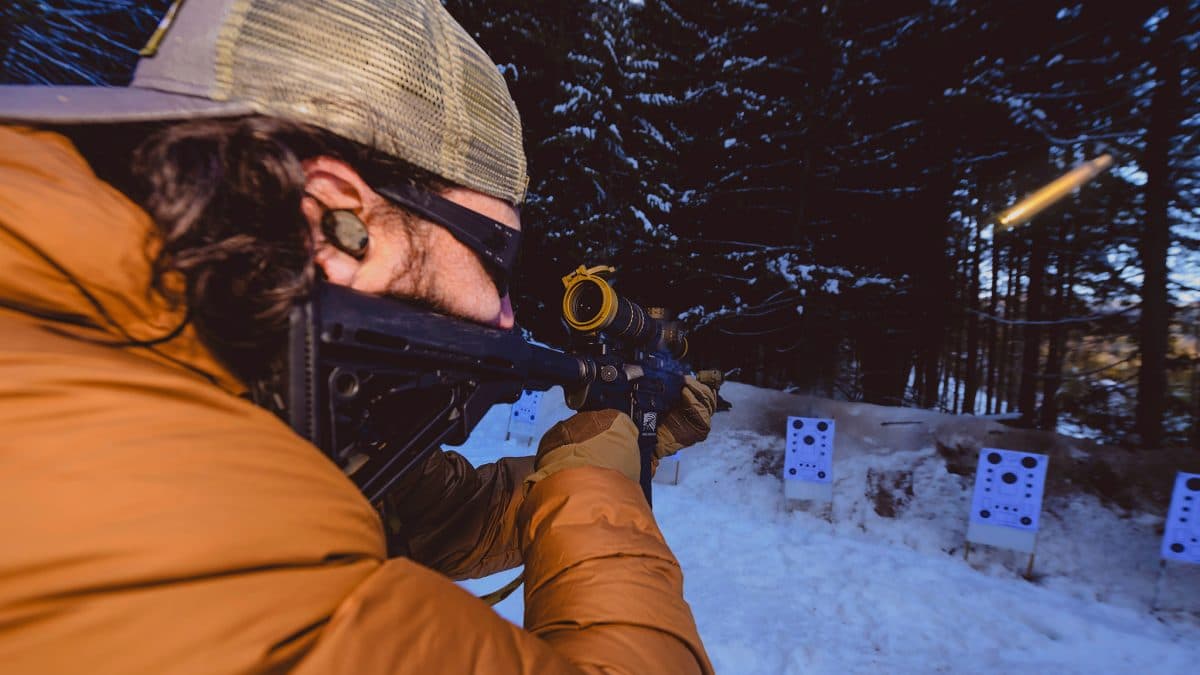
Finally, I hit the range for some live fire. I tested each optic in an appropriate setting: close-range carbine drills for unmagnified optics and mixed-range engagements for magnified optics. The proof is in the pudding, so this served as a culmination event that tested every aspect of these optics.
While I didn’t intentionally abuse these optics, I did use them the way I’d use my own: like tools. They got knocked around in a pickup and sprayed with water to simulate the elements. If it was raining or snowing, they got wet. If it was hot, they got baked. I live in the desert, so being blasted by sand and high winds is a given.
Meet the Experts

Editing this article is Scott Murdock. In addition to personal and professional shooting experience, Scott has extensive experience testing and reviewing a wide variety of optics. This includes assessing optical quality and evaluating live-fire performance. He has worked closely with major manufacturers to build an informed perspective on how optics are designed and built.
Best AR-15 Optics
1. Aimpoint Duty RDS MR - Best Red Dot
Pros
- Clear, distortion-free glass
- Extremely crisp reticle
- Usable with lens caps in place
Cons
- Small brightness control buttons
- Fairly expensive for an unmagnified optic
The Bottom Line
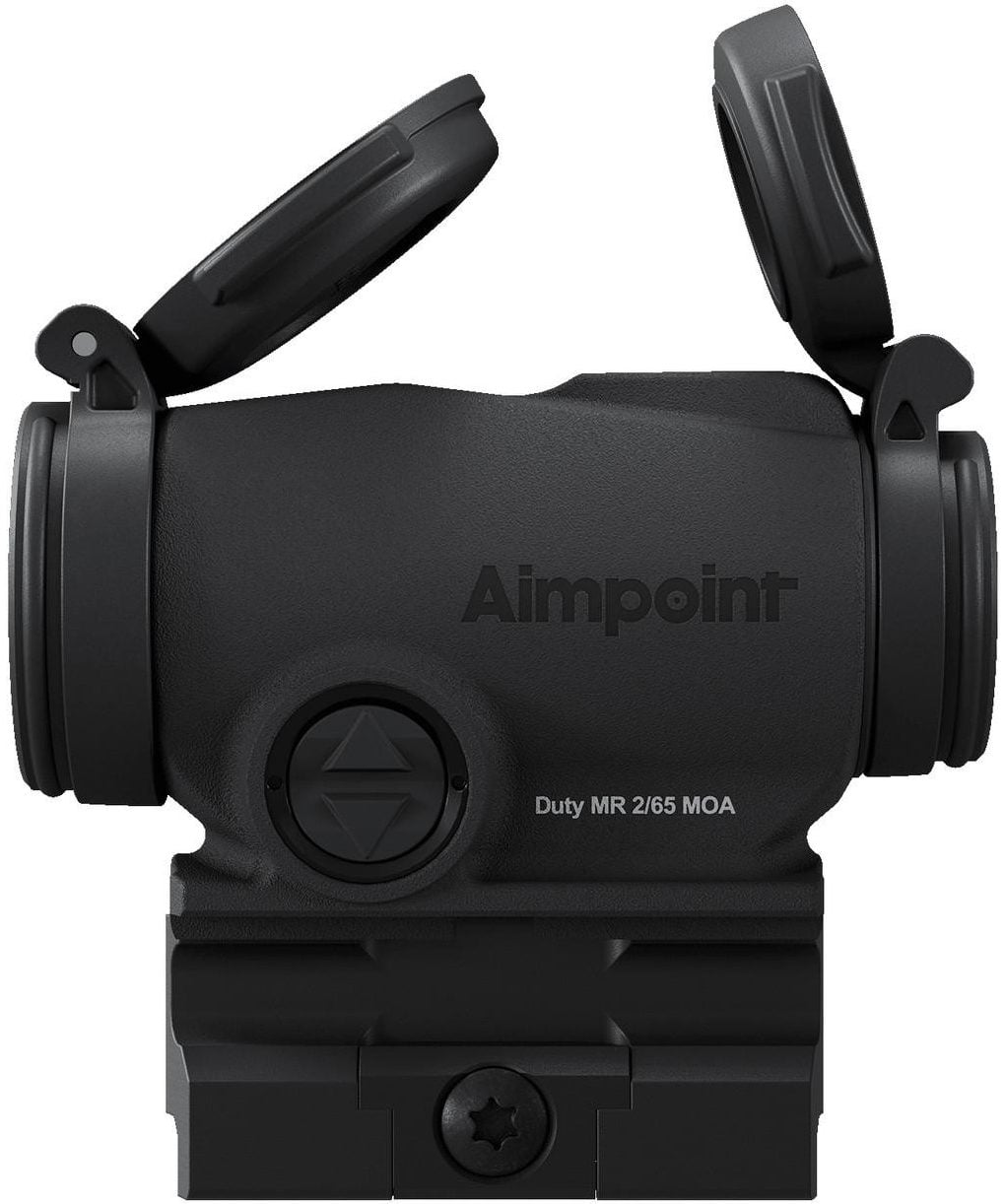
The Aimpoint Duty RDS MR isn't the brand's flagship AR-15 red dot, but I love the balance it strikes between performance and price. Between the all-metal housing and a clear ocular lens cover that lets you shoot with the glass protected, it's one of the more rugged optics I've used. Dollar for dollar, I can't think of a better red dot for your AR-15.
Specs
- Magnification: 1x
- Objective Lens: 18 mm
- Reticle: Multi-reticle (2-MOA dot, 65-MOA circle)
- Illumination: 8 daylight, 4 night vision
- Battery: CR2032
- Dimensions: 2.7” x 1.5” x 1.7”
- Weight: 4 oz
- Country of Origin: Sweden
For a lot of people, Aimpoint rules the AR-15 red dot kingdom. You can agree or disagree, but I’m here to tell you that the Aimpoint Duty RDS MR is one of the best buys in the business. It strikes a balance between performance and price that’s hard to argue with.

The Duty RDS MR occupies the middle of Aimpoint’s unmagnified lineup. It’s about 40% less expensive than the range-topping Micro T-2, but smaller and less battery-hungry than the older Patrol Rifle Optic. Think of this as a duty optic for the value-conscious shooter.
To my eye, Aimpoint offers noticeably better optical quality than other AR-15 red dots I’ve used. The distortion grid confirmed this. The glass is noticeably brighter, more clear, and exhibits less fisheye effect than budget red dots like the Sig Sauer Romeo5 or Vortex Crossfire.

The “MR” in the name stands for multi-reticle. Unlike the base Duty RDS, this one lets you choose a 2-MOA dot, a 65-MOA ring, or both. Multi-reticles are a matter of preference, but I appreciate them on an AR-15 even more than on pistol red dot.
This one is very crisp compared to others I’ve used, and I didn’t see any starburst effect – a big plus for me. There are 12 brightness settings, and eight of them are daylight bright. That’s kind of a less-is-more approach that saves time in a duty environment. I’d rather get to a usable setting quickly than spend more time fiddling around for the perfect one.

The two-button control panel is simple and straightforward, with both accessible from the optic’s left side. This lets you adjust brightness or change reticles without breaking your shooting-hand grip (well, for righties, anyway), but the buttons can be tricky to identify by feel or with gloves on. A little more physical separation would make this interface more duty-friendly.
I do want to give Aimpoint credit for the super-precise and tactile turrets. Each click is firm in the hand and loud to the ear. This is how turrets should be. Just remember to bring the supplied Torx wrench to make adjustments at the range.

The Duty RDS excelled during live fire. I was surprised by how noticeable the difference in clarity – both in terms of glass and the crisp reticle – is between this optic and the more budget-friendly red dots I’m used to. I typically see a little bit of starburst effect from astigmatism, but this reticle looked clean.
I also want to pay special attention to the flip-up lens covers on the Duty RDS. The front cover is solid plastic, as usual, but the rear cover is clear. When you put both covers over the lenses and shoot with both eyes open (which you should with a red dot), you can still see the reticle floating over the target – even with the front of the optic obscured.

This is a massive advantage in austere environments, where you may not want to choose between exposing glass to flying debris and being able to shoot effectively. The “Duty” name is well-earned.
All things considered, I wouldn’t call the price a drawback for the Aimpoint Duty RDS. It’s a fairly expensive red dot, but the performance is worth it. The only change I’d like to see is some more space between the brightness adjustment buttons.
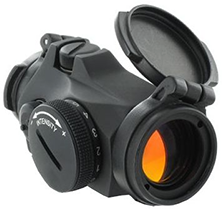
If you have close to four figures to spend, spring for the Aimpoint Micro T-2.
It offers a step up in performance and longer battery life (claimed 50,000 hours vs. 30,000 hours), but the rotary brightness dial is probably the most noticeable upgrade.
What do you think of Aimpoint? Rate them below!
Readers’ Ratings
4.98/5 (4489 Votes)Your Rating
2. Sig Sauer Romeo5 Gen II - Best Budget Red Dot
Pros
- Available with a red or green reticle
- Better reticle definition than most optics at this price
- Intuitive, ambidextrous controls
Cons
- Slight blue tint
- Basic single-dot reticle
The Bottom Line
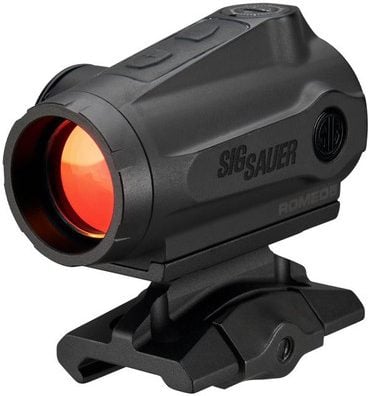
Many of you probably want a legitimately good red dot for your AR-15 without spending more than you have to, and the Sig Sauer Romeo5 Gen II is my recommendation. During testing, this value-forward optic performed closer to big dogs than the price might have you believe. While it's not going to replace those optics, it's a good piece of gear that you can own and use with pride.
Specs
- Magnification: 1x
- Objective Lens: 20 mm
- Reticle: 2-MOA red dot, 2-MOA green dot
- Illumination: 10 daylight, 2 night vision
- Battery: CR2032
- Dimensions: 2.76” x 1.57” x 2.44”
- Weight: 6 oz
- Country of Origin: China
What are you to do if you want a great AR-15 red dot but don’t want to spend a huge chunk of your paycheck to get one? Time and time again, we keep reaching for the Sig Sauer Romeo5 Gen II.

This is a great option for AR-15 pistols or carbines that are primarily going to be used for close-quarters training or home defense.
Optical quality is fairly standard for the price – maybe even a little better than average. No, it’s not on par with Aimpoint glass, but neither is the price. There’s a noticeable blue tint and a bit of fisheye distortion, but nothing that will throw you off target at red-dot engagement distances.

The Romeo5’s reticle is simple and effective: a 2-MOA dot available in either red or green. Sure, I appreciate a well-designed reticle with multiple holds for further or extremely close engagements, but this one works nearly as well for a much more attainable price. Getting it daylight bright in the desert sun was no issue.

Sig Sauer did a great job with the controls on this optic. They sit on the top of the tube, which makes them accessible to either hand. There’s enough space between them that they’re easy to manipulate with gloves on, or when you’re reliant on gross motor skills.

During live-fire testing, the Romeo5 felt instantly familiar; it’s very simple and intuitive to use. I wouldn't say it's a drastic improvement over other red dots in this price range, but I do think it’s a little bit better in terms of optical quality and reticle refinement.

I really didn’t find any major drawbacks with the Romeo5 – especially for the price. Sure, I always appreciate a larger window, but 20 millimeters is standard for AR-15 red dots; some are actually smaller. For the average shooter who uses their AR-15 for target shooting and home defense, this is a fantastic choice.
Learn more in our Sig Sauer Romeo5 Gen II review!
Want something even more affordable? We’ve had great results with the AT3 Alpha. This red dot offers a slim profile, a user-friendly brightness control knob, and a clear field of view.
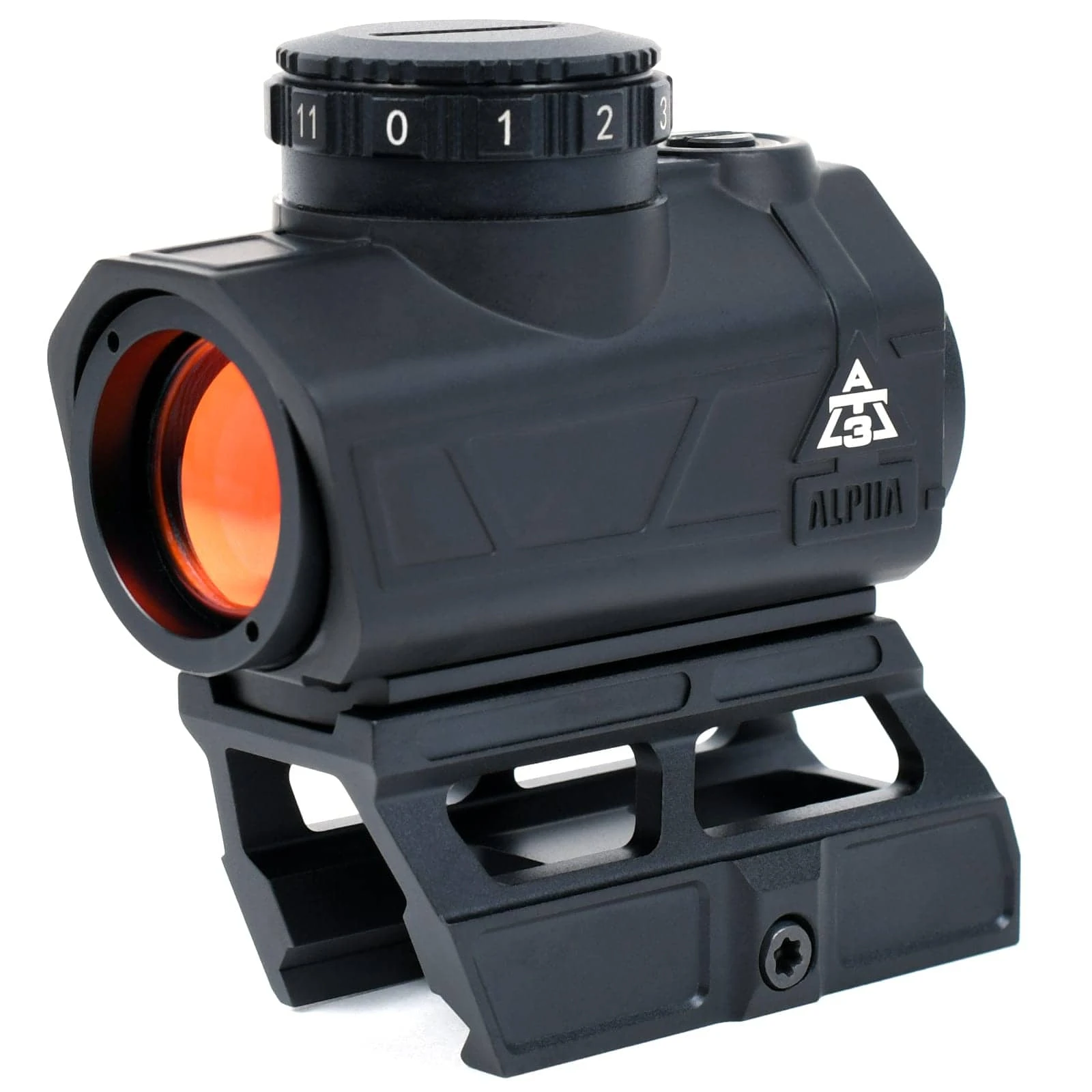
It’s survived drop testing, water submersion, and live fire with everything up to hard-hitting tactical shotguns. It’s a tough little red dot, and it costs right around $100.
Read more in our AT3 Alpha review!
3. EOTECH EXPS3 HWS - Best Holographic Sight
Pros
- Giant window and great glass
- Multiple cleverly designed reticle options
- Dedicated button for night vision brightness settings
Cons
- Burns through batteries faster than a red dot
- Adds more weight and physical mass than most red dots
The Bottom Line
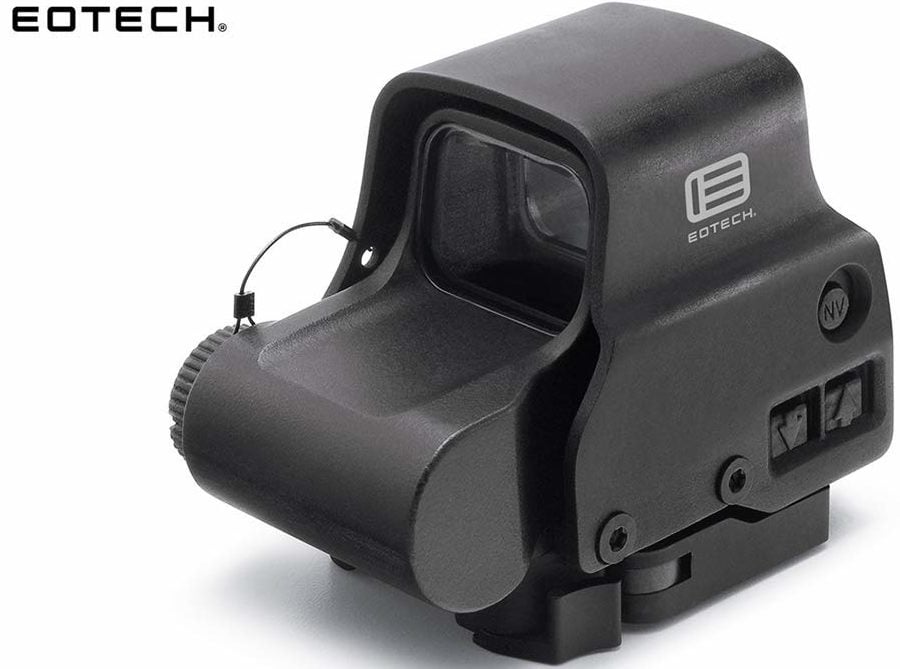
Holographic sights like the EOTECH EXPS3 are significantly more complicated and expensive than a red dot, but shooting with this one convinced me that the money is well spent. While the EXPS3 costs as much as many AR-15s, it'll be right at home on a high-end build. This is one time when I'd happily shell out more money for a premium optic.
Specs
- Magnification: 1x
- Window: 1.2” x 0.85”
- Reticle: Dot, one-dot speed ring, two-dot speed ring, four-dot speed ring, DCR
- Illumination: 20 daytime, 10 night vision
- Battery: CR123A
- Dimensions: 3.8” x 2.3” x 2.9”
- Weight: 11 oz
- Country of Origin: USA
Do you want the best holographic sight you can get? Do you have the money to pay for it? Then get the EOTECH EXPS3 HWS and call it a day. There’s a reason professional door-kickers everywhere swear by this optic.
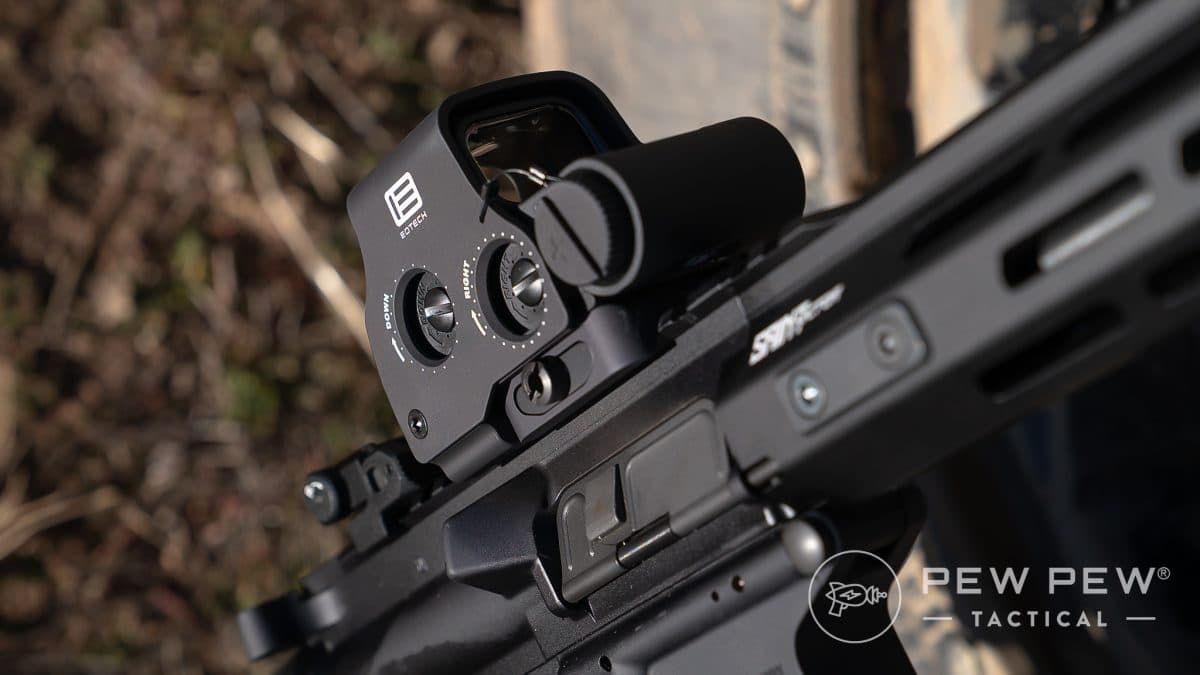
The EXPS3 is perfect for close engagements, especially in CQB-type settings where peripheral vision and situational awareness are critical.
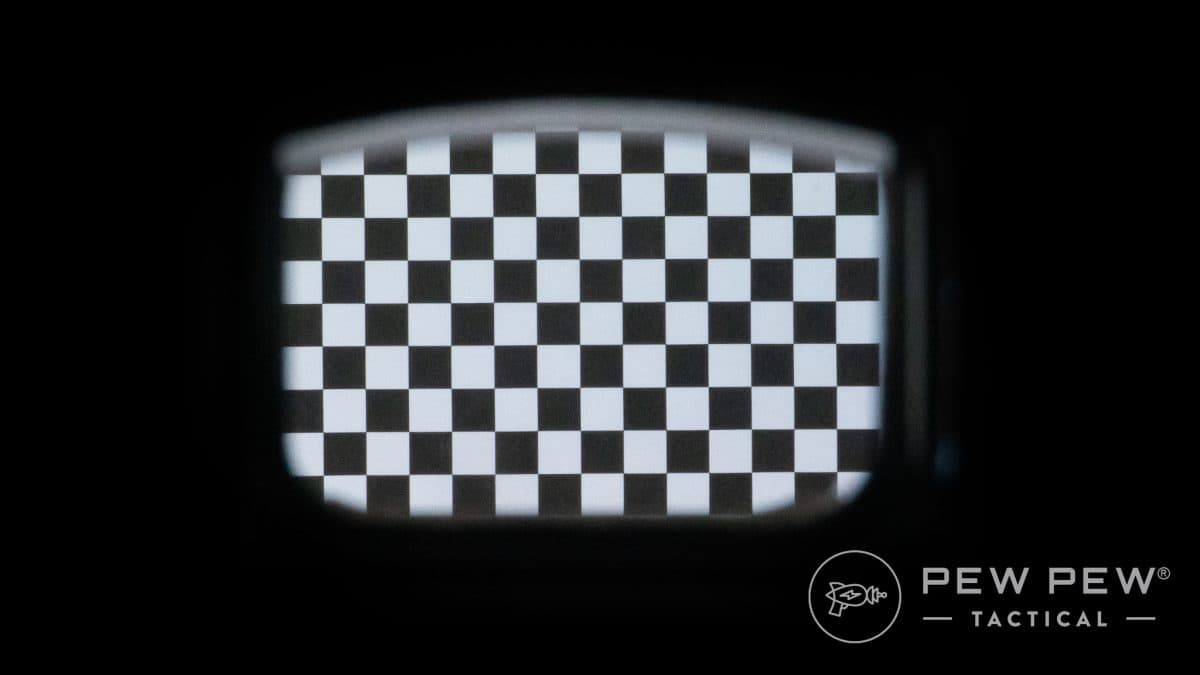
Optical quality is, in a word, excellent. EOTECH’s glass is free of flaws and exhibits outstanding light transmission. I detected no tint or distortion whatsoever with the distortion grid. Combine that view with an extra-large window, and the visual experience really starts to pull away from other optics. I can see why top-tier military and law enforcement units swear by these.
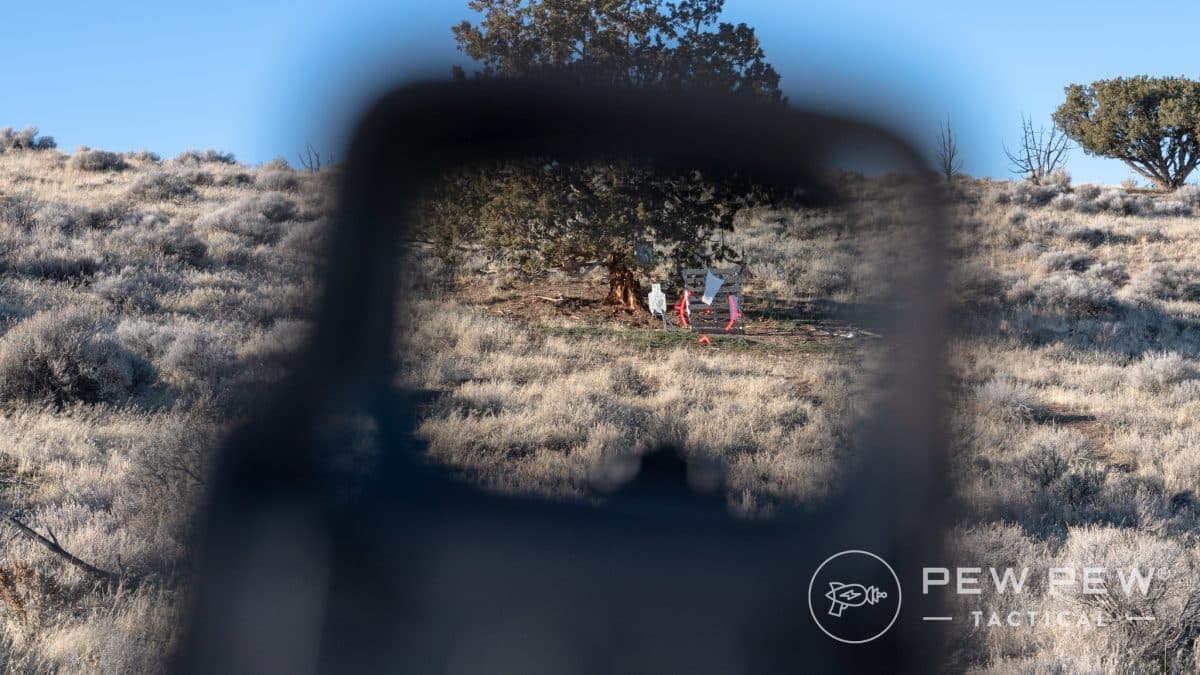
EOTECH offers five reticle options for the EXPS3, with varying combinations of dots and speed rings. I chose the DCR reticle, which has a 1-MOA dot, an aggressively segmented outer speed ring (only the sides remain), and a chevron at the 6-o’clock position.
When zeroed with 5.56 NATO at 50 yards, the center dot gives an accurate hold for 50 to 200 yards, and the chevron provides a 7-yard hold for CQB. The brackets make the reticle easier to pick up and put on target in a hurry. For the kind of shooting I do with an unmagnified AR-15 optic, this feels just about perfect.
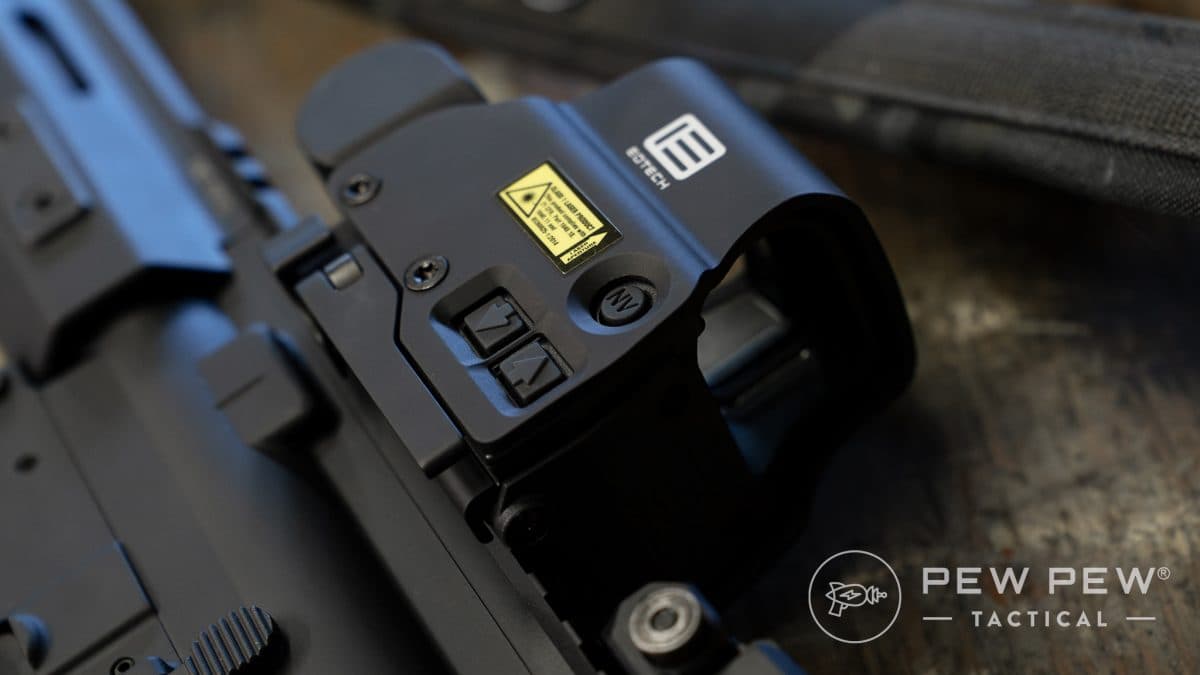
The controls include up and down brightness buttons on the left side of the optic. These buttons sit fairly close together, but they're recessed and tactile enough to use with gloves.
There’s also a dedicated night vision button that switches from daylight to night-vision-compatible settings with one touch. Most of us don’t need that, but it’s a very considerate feature for those who do.
If you haven’t shot with a holographic sight before, there can be a little bit of a learning curve. Some people dislike the slightly grainy reticle. That appearance can actually help your eye focus on the target, though, and it’s better for people with astigmatism. For my eyes, it works wonders.
If you ever damage or obstruct part of the window of a holographic sight, the reticle will still be visible and functional in the remaining glass – that’s not true for red dots.
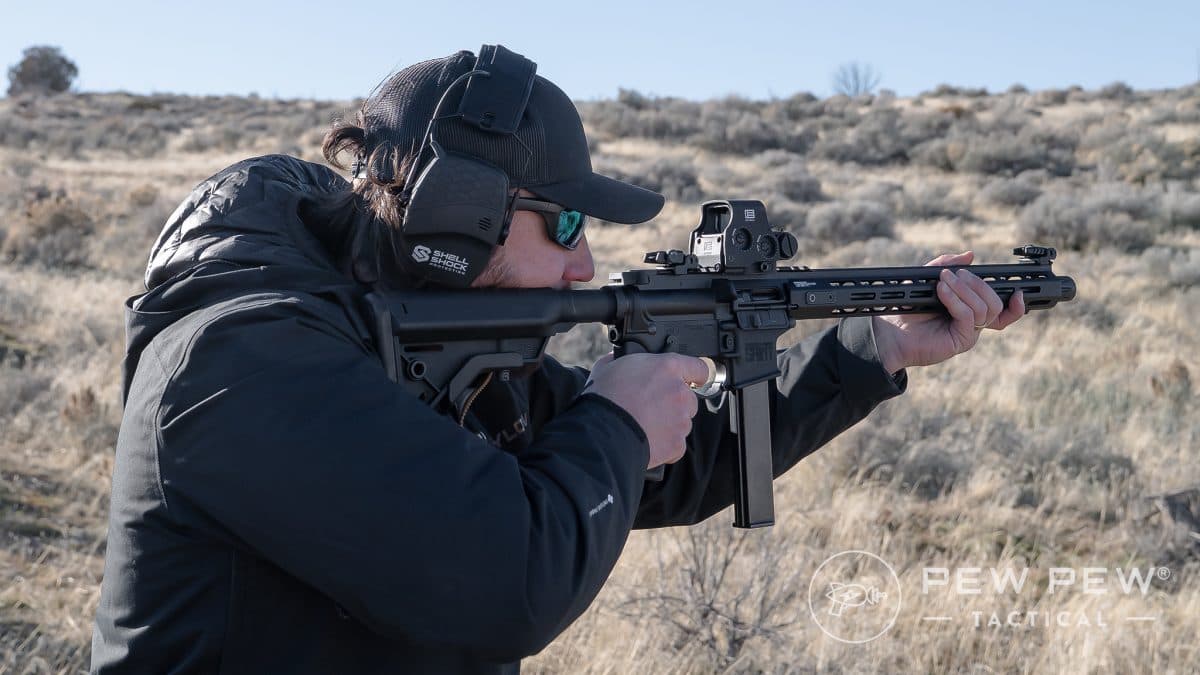
The EXPS3 is significantly more bulky than most AR-15 red dots, but it never got in the way during my life-fire testing. I didn’t experience any snagging on gear or bumping into my surroundings. The extra weight wasn’t enough to notice.
The large window and clever reticle, on the other hand, were noticeable. I loved shooting with this optic because it gave me a wider field of view than most red dots and made it easier to transition between multiple targets at varying distances. I also take comfort in knowing that it’s just about indestructible.

As far as I’m concerned, the only downside to the EXPS3 is its price. This is the top of the food chain when it comes to unmagnified AR-15 optics, and it costs more than many AR-15s.
It’s fun to have the same gear that elite military and law enforcement units use, but you can save some money if you don’t need night-vision compatibility.
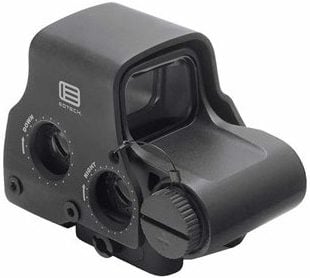
The EOTECH EXPS2 HWS is more than enough for most recreational shooters, and it makes for one heck of a home-defense setup.
It’s just as durable as the EXPS3 HWS. There are three reticle options: one dot with a speed ring in red, one dot with a speed ring in green, and two dots with a speed ring in red. Power comes from a CR123A battery, and there are 20 daytime brightness settings.
Want more? Check out our guide to the Best EOTECH Holographic Sight Models!
4. Trijicon ACOG TA31 - Best Prism
Pros
- Combat-tested, Marine-approved
- No batteries required for illumination
- Simple, effective BDC reticle
Cons
- Not as easy to master as a red dot
- Not as precise as an LPVO with a technical reticle
The Bottom Line
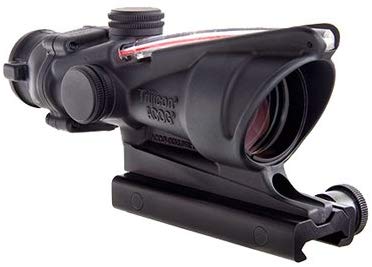
To me, the Trijicon ACOG will always be the king of AR-15 prism optics. It's accurate, doesn't rely on any electronics, and has proven itself to be practically indestructible after decades of combat use. There's a learning curve to shooting with the ACOG, but the view is worth the climb.
Specs
- Magnification: 4x
- Objective Lens: 32 mm
- Reticle: Chevron BDC
- Illumination: Fiber optic
- Battery: None
- Dimensions: 5.98” x 2” x 2.3”
- Weight: 15 oz
- Country of Origin: USA
I know LPVOs have taken much of the shine off prism optics, but they still have their place. Maybe this is my internalized generation GWOT talking, but there is no better prism optic than the Trijicon ACOG (or RCO, for my Marines out there).

The ACOG is great for all-purpose AR-15 builds. It’s not as quick as a red dot up close, or as precise as an LPVO with a technical reticle at distance, but it does everything reasonably well. If you want a set-it-and-forget-it optic that you can take to hell and back, this is it.
Once I nestled the ocular lens right under my eyebrow, the ACOG delivered a bright, sharp image worthy of the hefty price tag. The distortion grid revealed the tiniest amount of perceptible pinch distortion, but only at extremely close range. At normal engagement distances, the view is perfect.

Instead of using MOA or MRAD stadia, the BDC reticle has holds for specific distances. Depending on your ammunition, barrel length, and environmental conditions, these holds might be slightly off. Remember that this optic was built for combat – the idea is to get minute-of-man shots off right now rather than spending precious seconds to dial in the perfect ballistic solution.
Illumination comes not from a battery or tritium vials, but from a fiber optic strip that directs ambient light into the reticle. This gives you illuminated holds at 100, 200, 300, and 400 yards. Beyond that, finer, unilluminated aiming references take over. The width of each horizontal line correlates to 19 inches at the designated distance.

The controls are – in the nicest possible way – Marine-proof. Mount the ACOG on your AR-15’s Picatinny rail with thumb screws and tighten them down with a flathead screwdriver or coin. There are no rings to overtighten; no bubble levels required.
Zero the ACOG with the elevation and windage turrets, return the dummy-corded turret caps, and forget about them. The reticle is the only tool you need.
Pro tip: if you want to get really advanced and score some street cred with GWOT vets, slap a piece of electrical tape over the fiber optic. Peel some back to make it brighter, stick it down to make it dimmer. It’s a perfect system.
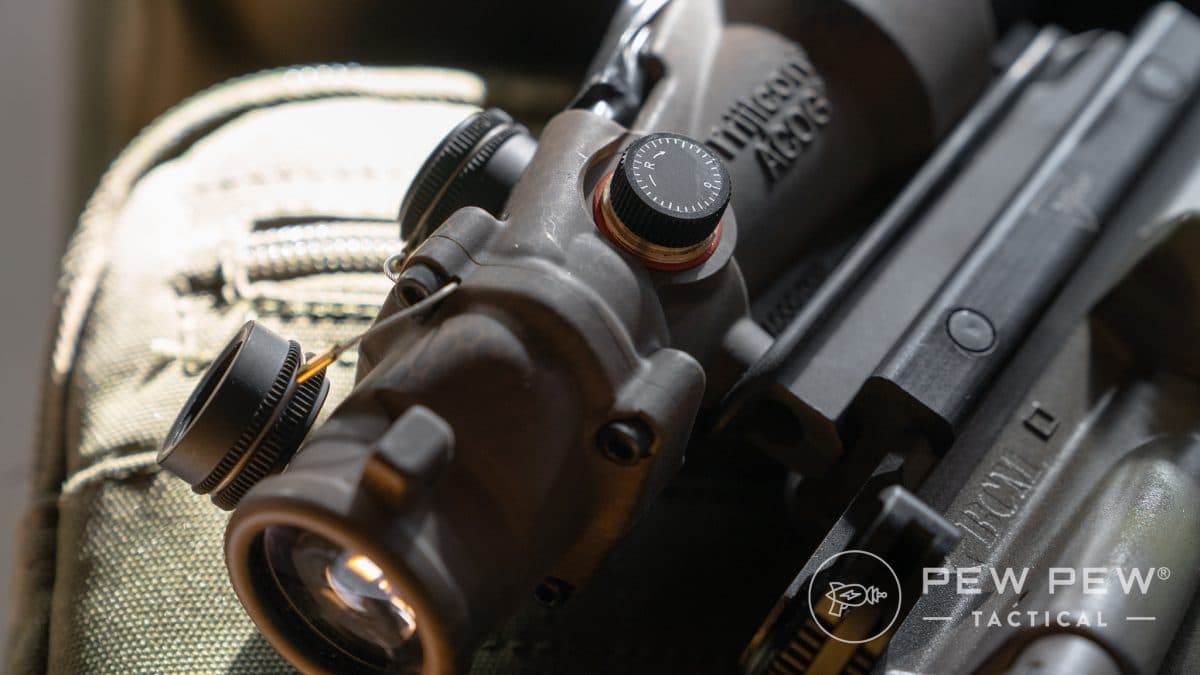
The ACOG provides quick aiming references from 100 out to 800 yards. On the range, that makes for quick engagements at mixed distances. During testing for this article, I had a blast alternating between 300- and 500-yard gongs as quickly as possible.
At closer distances (think common carbine drills), the bold, red chevron takes center stage. It’s not as refined of an aiming point as a red dot, but it’s good enough for speed work. As is the theme, it’s a balancing act between speed and precision.
By keeping both eyes open, you can train yourself to focus on the target with your non-dominant eye and see the reticle floating in space, the combined image almost unaffected by the magnification your dominant eye sees. It takes practice, but it’s very effective once you get the hang of it. (Or you can mount an offset pistol red dot; your call.)
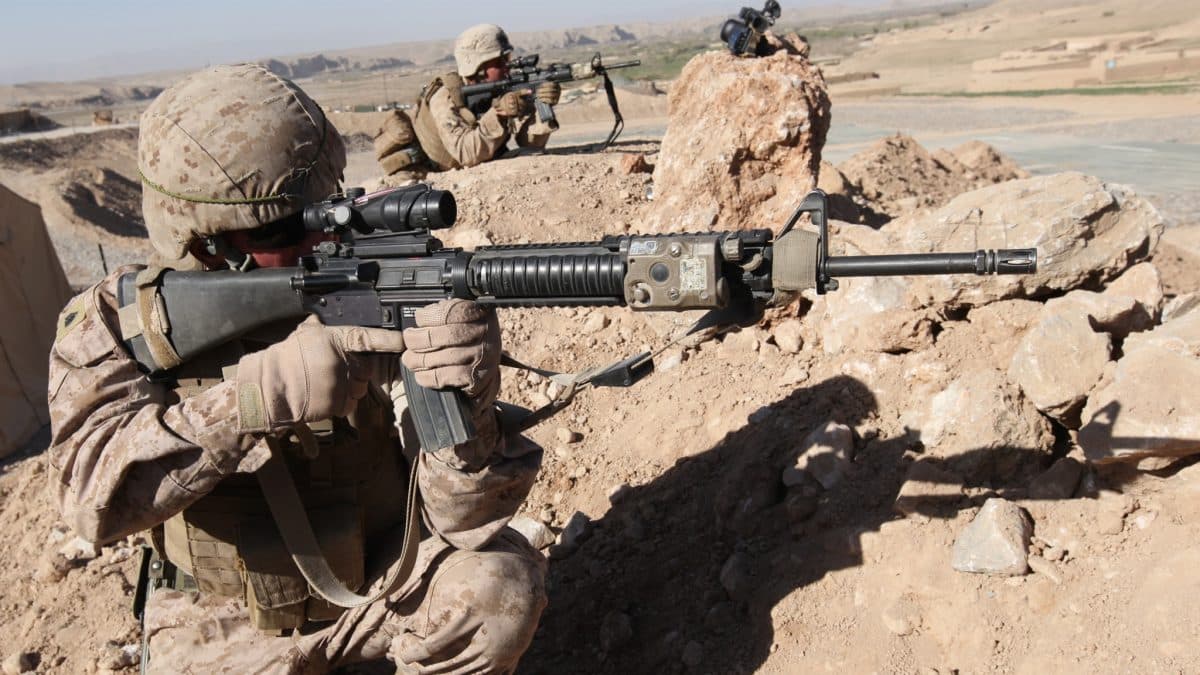
There’s one primary drawback with the ACOG. After shooting the other optics here, I was reminded how tight its eye box is. I mount mine as far back on the receiver as possible, then put my nose almost on the charging handle. That might feel awkward at first, but it’s the ACOG way.
The ACOG is an acquired taste more so than any other optic here. Mastering it requires time and practice, but it’s possible to run this optic just as quickly and effectively as any other. If you’re willing to put in the training hours, you’ll love owning an ACOG. If you want the easiest pathway to proficiency, you’ll probably prefer a red dot or LPVO.
There are several versions of this optic, so check out our guide to the Best ACOG Models!
5. Primary Arms SLx 3x MicroPrism ACSS Raptor - Best Budget Prism
Pros
- Easy-to-use BDC reticle
- User-friendly controls
- Robust, with minimal moving parts and an etched reticle
Cons
- Elevation holds are very small
- Turret feel is light and vague
The Bottom Line
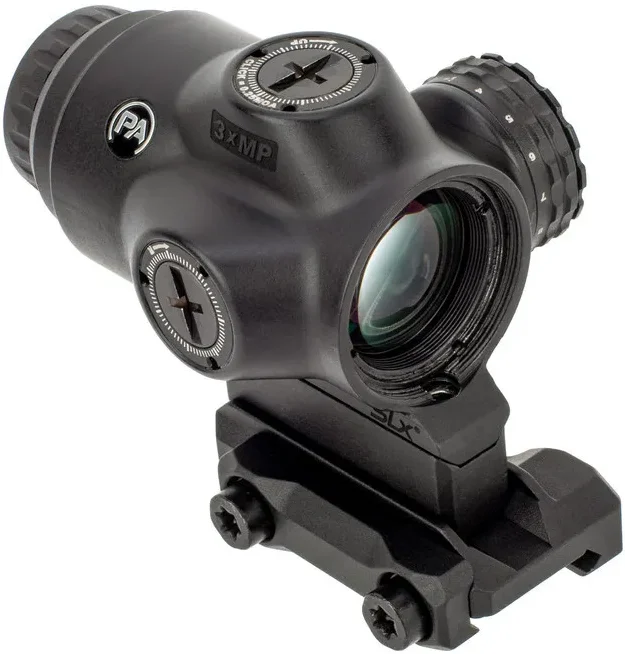
How did Primary Arms make the SLx 3x MicroPrism so small? It's no larger than a red dot! This little powerhouse is perfect for compact builds, like a budget-friendly AR-15 pistol. Think of this as a red dot that's able to stretch just a little bit further; not quite an LPVO, but definitely capable of delivering more information than an unmagnified optic.
Specs
- Magnification: 3x
- Objective Lens: 23 mm
- Reticle: ACSS Raptor
- Illumination: 10 daylight, 3 night vision
- Battery: CR2032
- Dimensions: 2.95” x 2”
- Weight: 8 oz
- Country of Origin: China
If you appreciate the simplicity, clear reticles, and compact size of prism optics but don’t want to spend ACOG money, I’m happy to report that you have other options. Meet the Primary Arms SLx 3x MicroPrism; the people’s prism.

The best use for the SLx 3x MicroPrism is a build where close-quarters maneuverability is a priority, but you still want some magnification to help with longer engagements. It’s supremely lightweight and compact without being fragile or underpowered.
This optic does well in terms of distortion, with only a slight amount visible around the edge with a distortion grid. There might be a slight blue tint, though, and the grid exposed significant chromatic aberration.
See how the black squares have a thin line of blue on the left and red on the right? It’s pretty severe on the grid, but it’s less of an issue in real life. On the range, I didn’t notice it at all.

The etched reticle is perfectly crisp – I’d be happy with this level of definition at any price. The ACSS Raptor design provides an illuminated chevron, elevation holds out to 600 yards (or meters, depending on which variant you choose), and horizontal holds for wind or moving targets.
It’s a lot of information presented in a very clean display, but it is very small as a byproduct of low magnification. I hope your eyes are good.
Power comes from a CR2032 battery, and there are 13 brightness settings: three for night vision, 10 for daylight. The SLx 3x MicroPrism features auto-shutoff and shake-awake, so you can leave it on your preferred setting and let it go to sleep on its own to conserve power.

Primary Arms opted for a left-side dial instead of buttons to control brightness. This one spins sequentially through the settings, and you can rotate past zero rather than dialing all the way to reach the maximum or minimum setting.
I found the exposed elevation and windage turrets a little challenging. They’re stiff and somewhat gritty, then jump through several clicks at once with very vague feedback. Fortunately, this is likely a one-time nuisance; once the optic is zeroed, you can ignore them. What I do appreciate is a diopter bezel to fine-tune the reticle’s focus.

Live-fire with the SLx 3x Micro Prism reminded me a lot of using the ACOG. The eye box is just as restrictive, which required me to press my face as close to the optic as possible.
The ACSS Raptor reticle is similar, but I found it small enough that using the elevation holds below the chevron required significant mental focus on my part.

The modular base helps with the eye box issue. Eight different spacer combinations let you position the optic wherever you feel most natural behind it. This is a pretty creative solution to a common prism issue.
All in all, I’m impressed by how much capability Primary Arms crammed into an optic that’s actually smaller than most red dots – and I love the price. If you’re building an AR-15 pistol and want a little more visual information at longer ranges, this optic needs to be on your short list.

Aside from cheap-feeling turrets, the main drawbacks are the tight eye box and the relatively tiny reticle. That’s par for the course, though; if you don’t want to deal with it, check out my LPVO picks.
6. Nightforce ATACR 1-8x24 F1 - Best LPVO
Pros
- Excellent optical quality and a technical reticle boost precision potential
- Off setting between each illumination setting
- High-end construction justifies the price
Cons
- I'd love an option with exposed, locking turrets
- You can buy several good AR-15s for this price
The Bottom Line
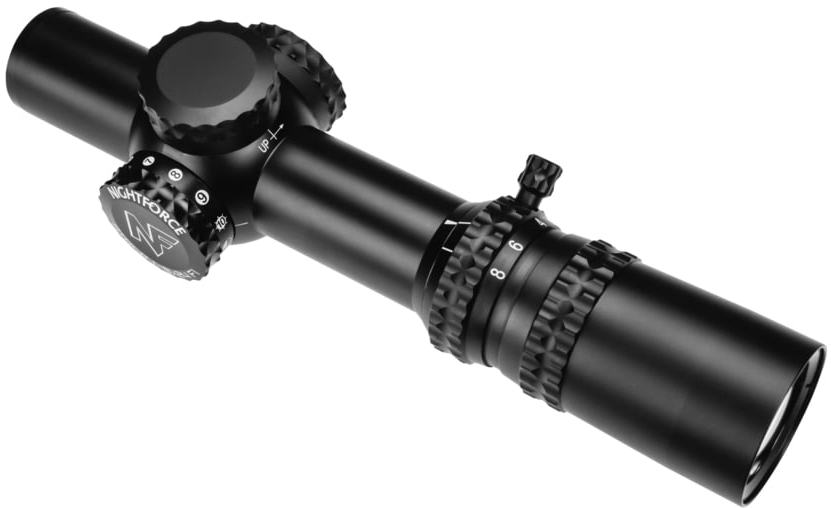
After using the Nightforce ATACR 1-8x24 F1 several times, I'm a believer in this top-shelf LPVO. This is a great way to get the most out of your premium AR-15. It's tough and easy to use, with a technical reticle that steals the show at longer distances. And the glass? Practically perfect.
Specs
- Magnification: 1-8x
- Objective Lens: 24 mm
- Reticle: FC-DMx MRAD, FC-DMx MOA
- Illumination: 10 daylight, 2 night vision
- Battery: CR2032
- Dimensions: 10.1” x 2.75”
- Weight: 21 oz
- Country of Origin: USA
In a lot of ways, the Nightforce ATACR 1-8x24 F1 is the ultimate AR-15 optic. It’s great at any distance; you can effectively engage with 5.56 NATO, and the build quality justifies the price. This might be as close as you’ll ever get to a State Department SUV and a Pelican case full of SOCOM gear.

The best use case for this LPVO is a 16-inch, do-it-all carbine that has an emphasis on precision at longer distances. If your AR-15 frequently takes on targets at 500 yards or more, the ATACR and its technical reticle will be a tremendous asset.

The optical quality from this glass is a significant step up from almost all the other LPVOs I’ve used.
Light transmission is outstanding, it’s perfectly clear, and there’s just the tiniest perceptible pinch distortion at single-power magnification – you’re not going to see it without a distortion grid placed very close to the objective lens.

At the lowest magnification setting, the FC-DMx reticle looks like a red dot with long, black indicators at the 3-, 6-, and 9-o’clock positions to quickly push your focus to the aiming point. Dial up the magnification, and the technical reticle looks like something you’d see on a precision rifle.
There is detailed information for elevation and wind holds. Measuring targets and impacts is possible, so I felt empowered to unleash my penchant for precision shooting during live-fire testing.
Nightforce gave the ATCR 1-8x24 F1 12 illumination settings: two for night vision, and 10 for daylight. They’re accessible through a dial on the left side, with an off-setting between each brightness setting. I love this approach because it saves time that would be spent clicking through a bunch of settings to turn it on or off.

The brightness and magnification rings require deliberate effort, but not in a taxing way. There’s just enough resistance to make me confident that they haven’t moved without me knowing. When establishing zero, I found the turrets to be very smooth and delightfully clicky.
They’re capped, so you’ll have to rely on the reticle for quick long-range engagements, but you do have the option to install a thread-protecting ring and run them open if you often find yourself dialing for distance often.
There is no parallax adjustment on the ATACR; it’s fixed at 125 yards. While I appreciate the ability to fine-tune my parallax on other scopes, this didn’t cause any problems for me during testing.
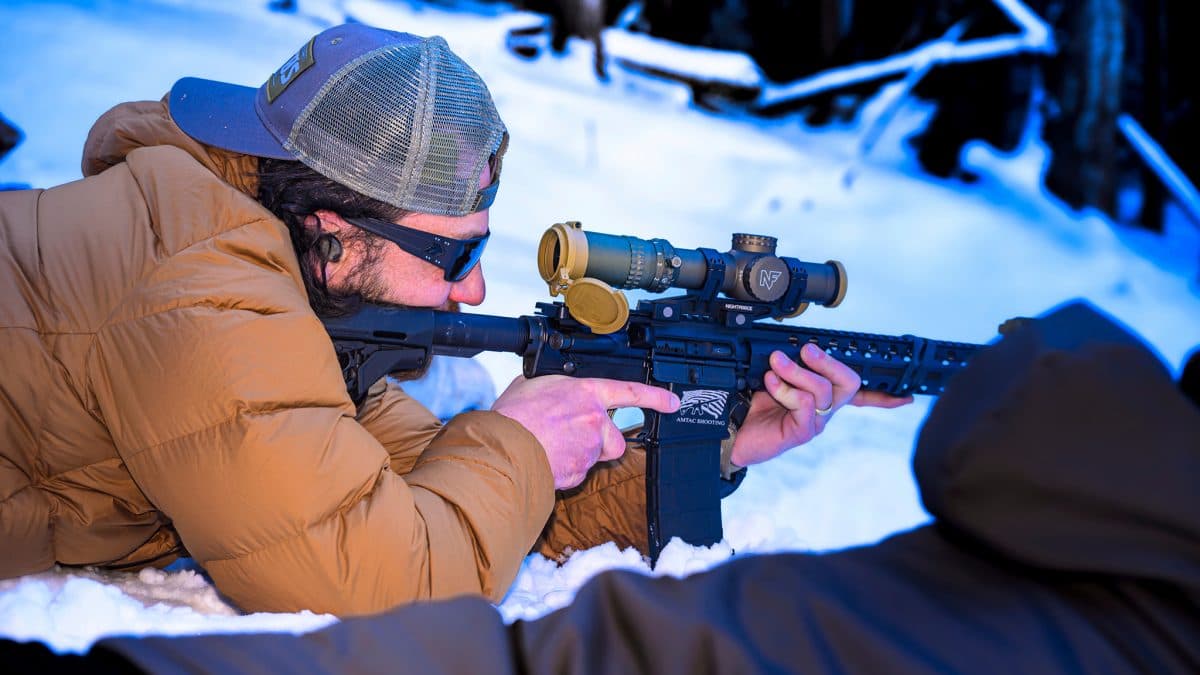
Shooting with the ATACR will kind of spoil other LPVOs for you. The optical quality is superb in both low light and broad daylight. Nightforce calls this a “true 1x” optic, and the unmagnified view is indeed very close to what you’d get from a red dot (but with better glass and a larger ocular lens).
At longer distances, the FC-DMx reticle shines. All the information you need is available in a clean, uncluttered layout. It’s a first focal plane reticle, so the measurements remain accurate throughout the magnification range. With second focal plane LPVOs, I sometimes end up using the minimum and maximum settings, but nothing in between.
The main drawback here is price; this is a very expensive way to aim your AR-15. It’s also a little chunky, so it’s not ideal for ultralight builds. Then again, that’s not what it’s for. This is a rough-and-tumble scope for making extremely accurate shots in the worst conditions you can encounter. Lift some weights and save up some cash; the ATACR is worth it.
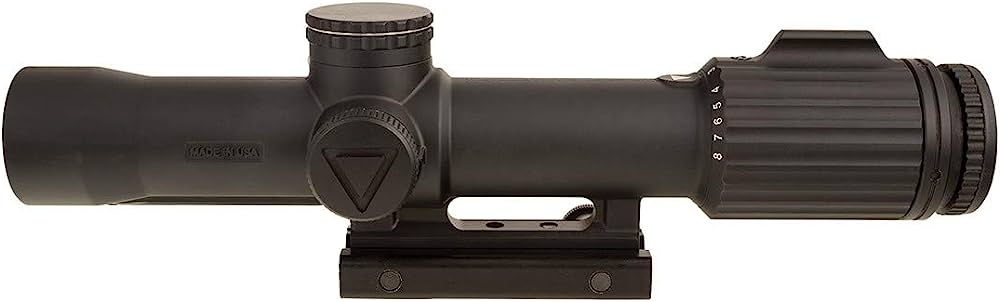
Alternative LPVOs in this price range include the Trijocon VCOG (successor to the ACOG) and the brand-new Vortex AMG 1-10x24 FFP.
While all three are excellent optics, they each have their own personality compared to the wiz-kid ATACR. The VCOG is simpler to operate and arguably more robust, albeit at a significant weight increase. The AMG just hit the scene, so it’s relatively unproven, but I have no reason to doubt it, and I love the compact size.
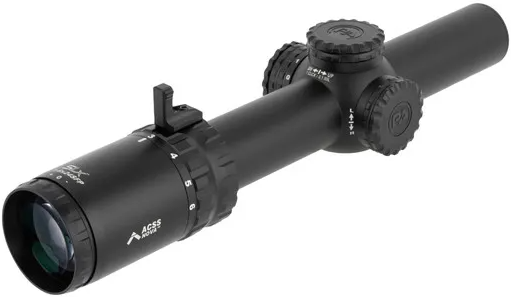
7. Primary Arms SLx 1-6x24 ACSS Nova - Best Budget LPVO
Pros
- Love that ACSS Nova reticle
- Simple, intuitive controls
- Affordable for the working-class shooter
Cons
- Very stiff magnification ring
- Noticeable fisheye distortion
The Bottom Line
Budget-friendly magnified optics often cut corners, but I've been pleased with the Primary Arms SLx 1-6x24 Gen IV every time I've shot with it. Between the super bright center point and multiple reticle options, it delivers more than customers pay for. If this is your entry into variable-power AR-15 scopes, you're on the right path.
Specs
- Magnification: 1-6x
- Objective Lens: 24 mm
- Reticle: ACSS Nova
- Illumination: 11 daylight settings
- Battery: CR2032
- Dimensions: 10.4” x 2.5”
- Weight: 18 oz
- Country of Origin: China
As much as I love premium gear, I have a budget just like the rest of you. When it’s time to maximize your budget and leave enough money for ammo and training, it’s hard to do better than the Primary Arms SLx 1-6x24 ACSS Nova.
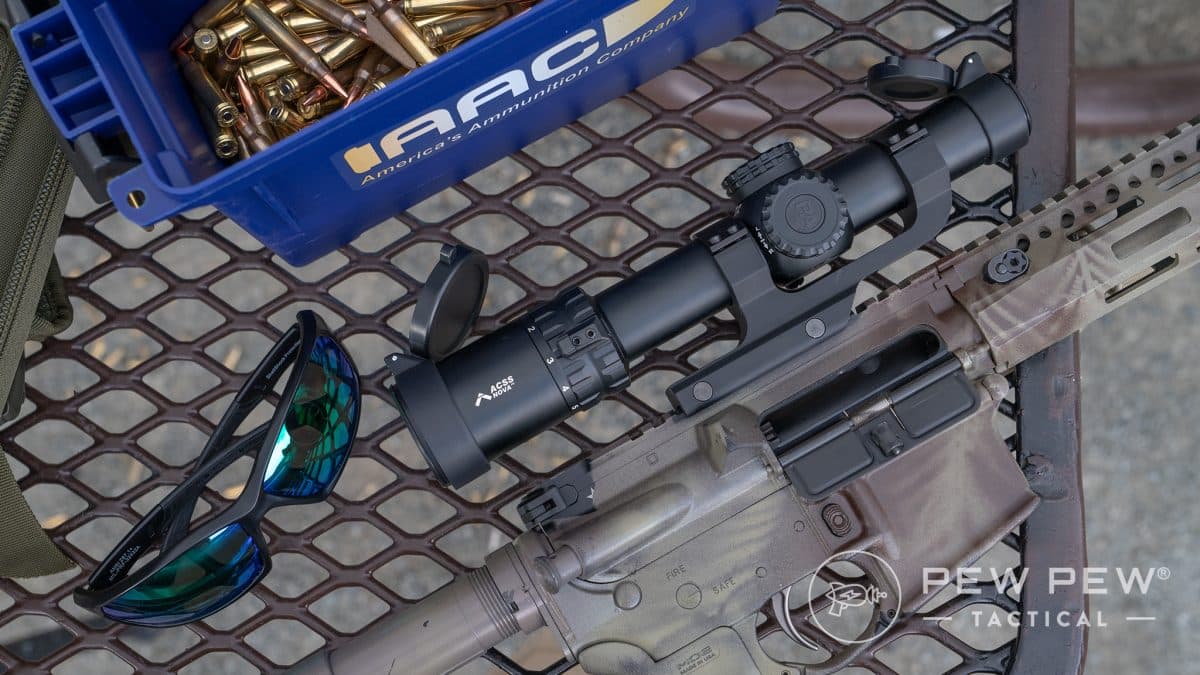
We often find ourselves reaching for this LPVO when we’re reviewing budget-friendly AR-15 carbines. It’s effective at close distances, capable of reaching as far as most people are able to shoot at their local range, and it offers quite a bit of bang for the buck.

This humble LPVO offers surprisingly good optical quality. There’s little to no tint or edge degradation, and light transmission is totally acceptable.
The distortion grid revealed no issues with chromatic aberration, but you’ll notice a bit of fisheye effect. I could still see that on the range, but only when I was specifically looking for it.

There are a few reticle options. I chose the versatile ACSS Nova for the super-bright center aiming point and MRAD elevation holds.
This is a second focal plane optic, so remember to dial all the way up to six-power magnification if you’re going to use those holds.

Primary Arms gave this scope 11 illumination settings, and they’re all daylight bright. That’s fine with me. If you’re planning on shooting with night vision, you’re not shopping in this price range.
Like most LPVOs, the turrets are capped. Use them to set zero, then leave them alone. The only controls you need to touch on a regular basis are the brightness knob and the magnification ring. I found the magnification ring to be one of the stiffest I’ve used. It would be nice if it were a little bit lighter.
In addition to testing the SLx 1-6x24 ACSS Nova for this article, I’ve used it several times in various AR-15 reviews. Despite being fairly simple in the world of modern LPVOs, it still gets the job done. There are more expensive optics that make my job easier, especially as distance increases, but not enough that you can’t close the gap significantly with training. For most shooters – especially those on a budget or at the beginning of their firearms journey – this is a great way to hit the range and start enjoying your AR-15.
The main drawback for me is the stiff magnification ring, and that might actually resolve itself in time. The reticle isn’t built to go long, but most people aren’t shooting beyond 100 yards, anyway.
Learn more about this budget-friendly AR-15 scope in our Primary Arms SLx 1-6x24 Gen IV review!
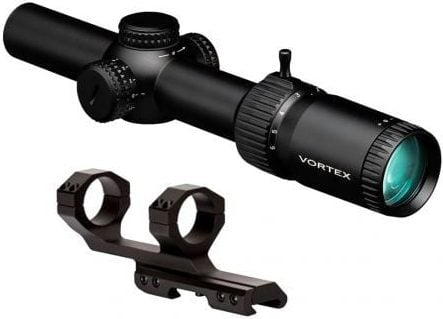
Another budget-friendly LPVO worth mentioning is the Vortex Strike Eagle 1-6x24. This one even comes with a scope mount.
How to Pick the Best AR-15 Optics
Popular AR-15 optics come in all shapes and sizes. These are specialized pieces of equipment, so it’s important to choose one that meets your specific needs. Let’s talk about what that means.
Magnification
How far are you planning to shoot? The answer to that question will determine how much magnification you need.

Many people use an unmagnified optic on their AR-15, and it’s almost always a red dot. These optics are affordable, easy to use, and you really don’t need anything else for shots out to 100 yards or so. For some people, that’s the longest distance they have access to at their local shooting range.
Holographic sights do the same job, but at a much higher price. The tradeoff is a more advanced system that’s typically more durable and built for military and law enforcement professionals.
If you’re setting up a home-defense carbine or pistol, a red dot or holographic sight is an excellent choice. Need to shoot a little further every so often? We can help with that -- check out our guide to the Best Red Dot Magnifiers.

Prism optics are a great choice for an AR-15 because they’re relatively compact and extremely durable. Etched reticles are easier to see than a red dot if you have astigmatism, and fixed-power magnification simplifies the shooting process (fewer parts also mean fewer potential points of failure).
You can spend a bunch of money on the battle-proven Trijicon ACOG, but you don’t have to. Manufacturers like Primary Arms make some affordable prism optics that won’t drain your wallet.

A low-power variable optic, or LPVO, offers the best of both worlds. These scopes offer variable magnification from single-power up to six-, eight-, or even ten-power for better target identification and increased precision.
These are significantly larger and heavier than red dots or prism optics, but many people gladly accept that tradeoff for the ability to have such a versatile system.
Reticle & Illumination
A reticle is the visual aiming tool inside an optic. Sometimes, it’s a simple dot; other times, it’s a complex array of measurements and symbols stacked up like a Christmas tree.
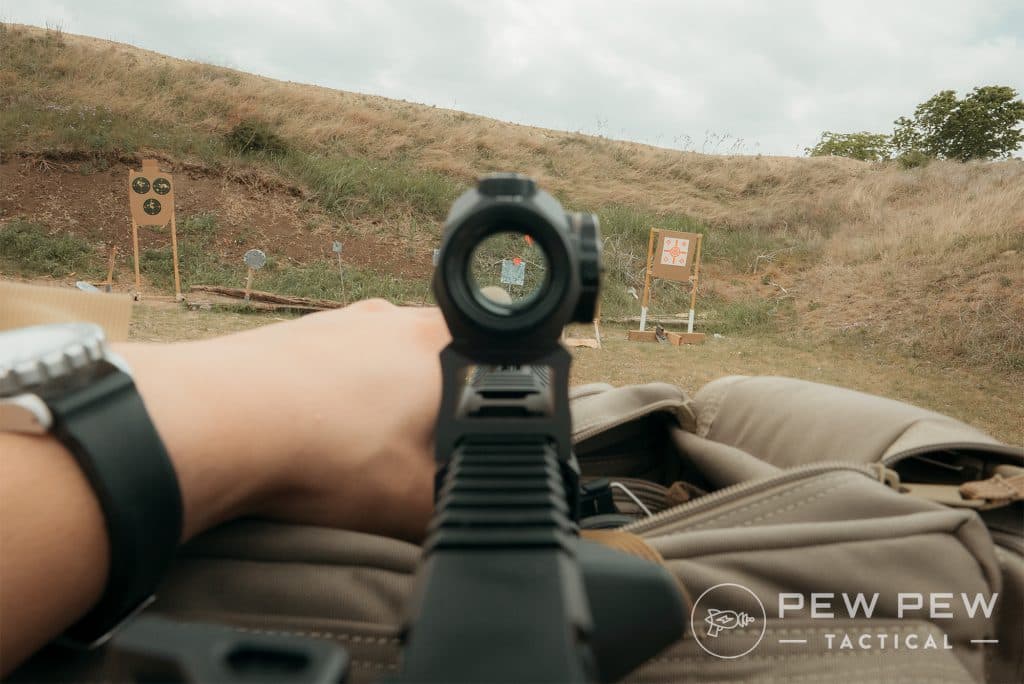
Unmagnified optics, like red dots and holographic sights, use very simple reticles. In some cases, like certain EOTECH reticles, there might be multiple aiming points.
Prism optics often have a similar style of reticle. Some, like the Trijicon ACOG, have a bullet-drop-compensating (BDC) reticle that provides holds for certain distances. These are positioned based on specific ballistic calculations, so they may or may not be exactly correct for your specific firearm.
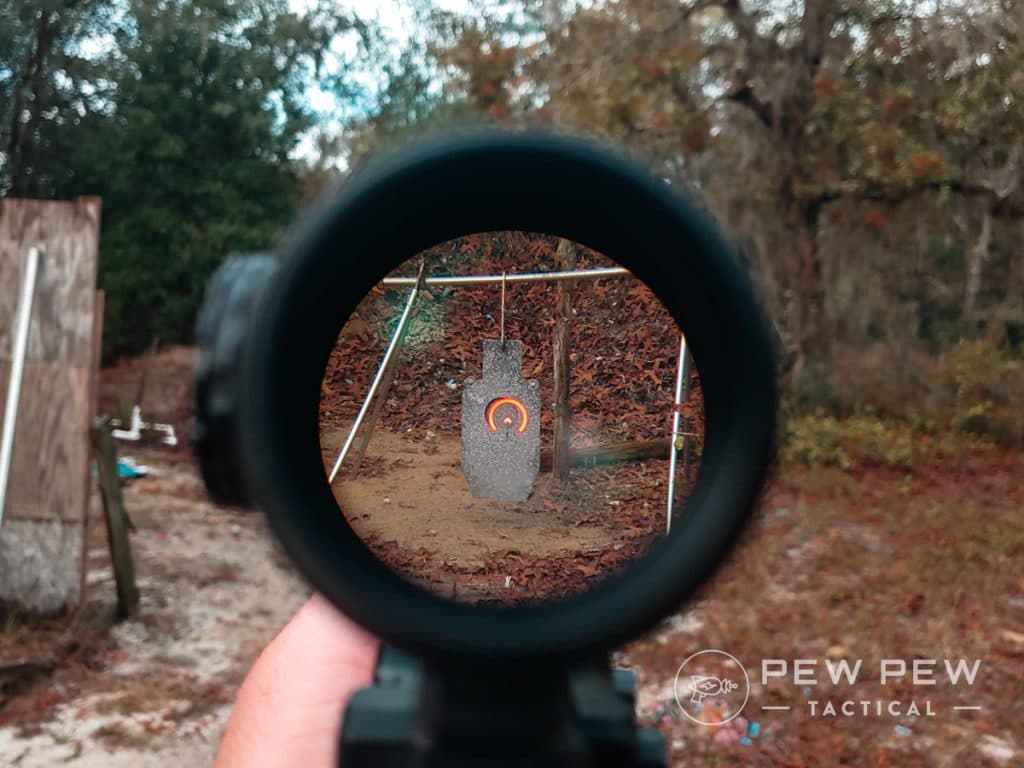
In variable-power optics, reticles can be first or second focal plane.
First-focal-plane (FFP) reticles grow and shrink proportionally throughout the magnification range, so wind and elevation holds remain consistent. Second-focal-plane (SFP) reticles do not change. The center point is always usable, but any holds on the reticle will continually shift in value, so you’re best off only using them at full magnification.
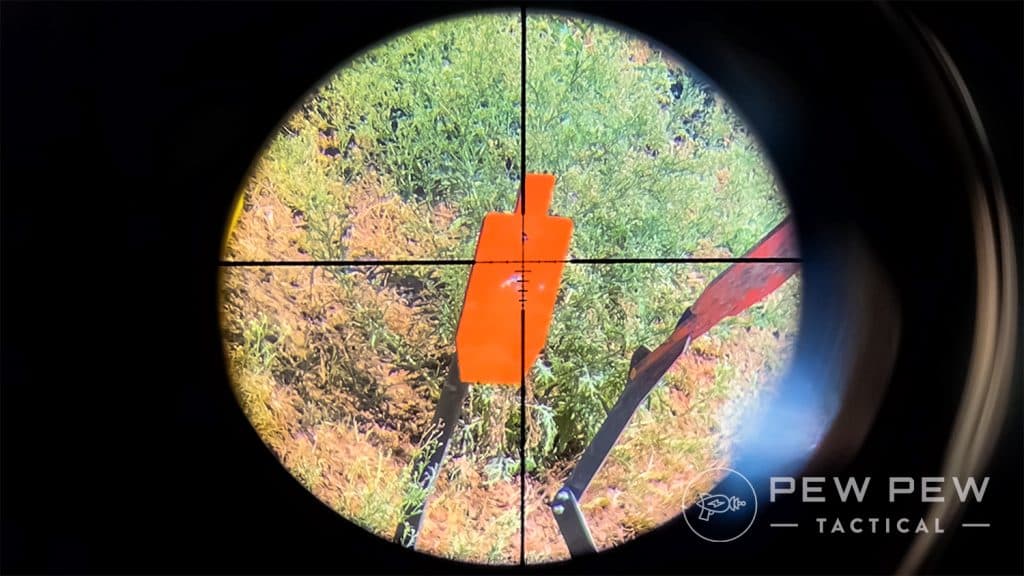
Measurements and adjustments can be in minutes of angle (MOA) or milliradian (MRAD). This is kind of like using inches or centimeters; both units of measure work, and which one you pick is really a matter of personal preference.
Just remember that if you’re using one and your friends are using the other, you’re going to be speaking two different languages.
Size & Weight
Once you decide how much magnification you’re looking for, you can start thinking about how much mass you’re willing to add to your AR-15. More gadgetry doesn’t always equal a better firearm, so pick what works best for you.

Most unmagnified AR-15 optics are very compact and lightweight. EOTECH’s holographic sights are about as bulky as they get.
Prism optics can be about the same size as a red dot, although the additional glass will tack on a few more ounces. The Trijicon ACOG is fairly heavy for a prism optic, but it’s still lighter than a variable-power scope and mount.
Picking an LPVO will add the most weight and bulk to your AR-15, but it’s not all bad news. You’ll gain the ability to change magnification settings with the twist of your wrist.
Cost
Only you can decide what’s affordable, but it’s important to understand what you’re getting for your money.
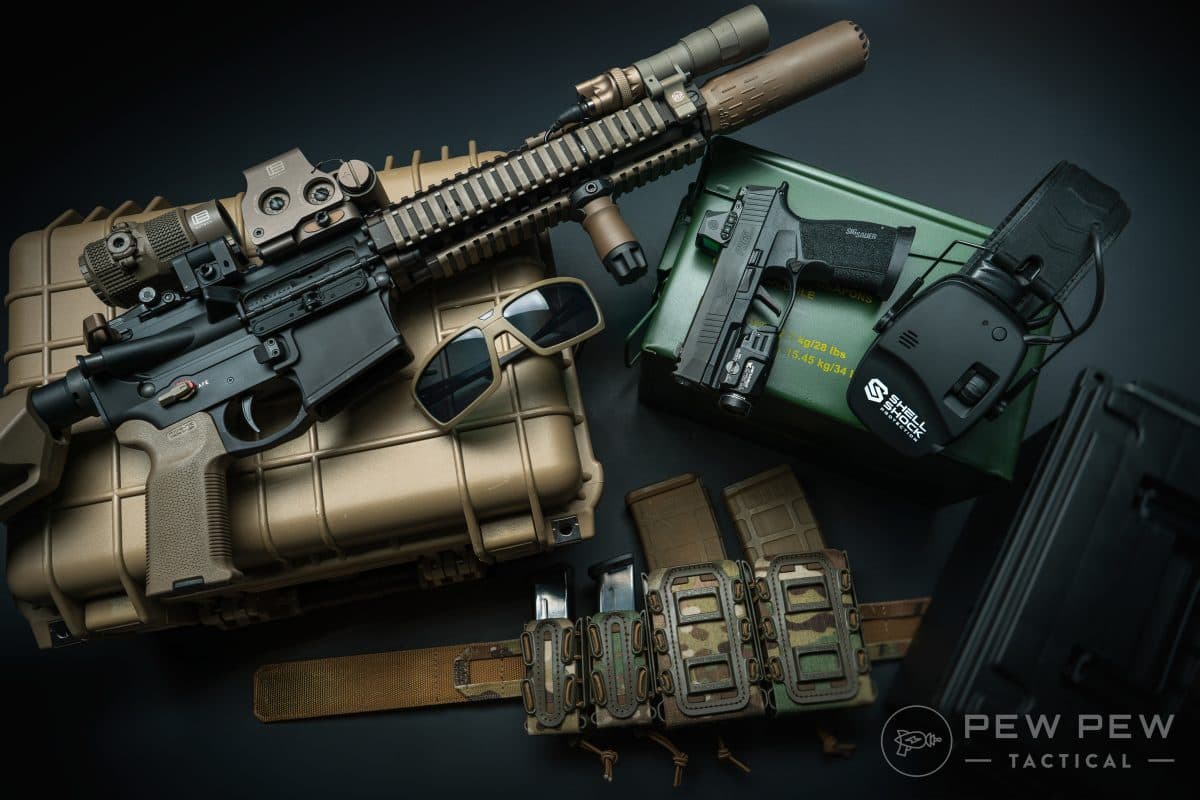
Top-shelf optics from brands like Aimpoint, EOTECH, Nightforce, and Trijicon are built to an extremely high standard. They’re accurate and durable enough for combat, and many of them have earned massive government contracts. Long story short, they can handle what you dish out.
But you may not need that kind of optic. If you’re planning on a few range days a year and using your AR-15 for home defense, there are lots of red dots, prism optics, and scopes that will do everything you need for a fraction of the price. Don’t let online snobbery pressure you into maxing out your credit card on something you don’t need.
Final Thoughts
If you ask 10 people what the best AR-15 optic is, you’ll probably get 10 different answers -- maybe more. That’s because we all have different priorities and goals.

This list gives you some of my all-time favorites. Something here should be just what you need, and you might even have multiple options.
As always, get some range time and then come back to let us know what you think in the comments!
What was your first AR-15 optic, and what are you running now? Sound off below. Looking for more great accessories? Check out our guide to the Best AR-15 Flashlights!
Latest Updates
March 2026: Complete overhaul with new products, testing, and supporting content.