We review products independently. When you buy through links on our site, we may earn a commission to help support our testing. Learn more.
Not sure to go with standard brass or the shinier nickel plated cases? We’ll go over the pros and cons of each with regards to ammo and reloading.
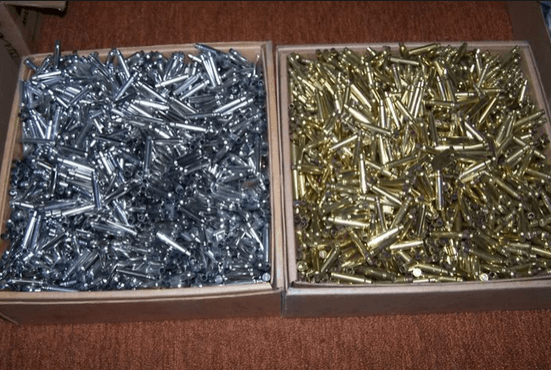
Brass vs Nickel, Predator Masters
Why Brass?
Brass is an alloy made from a mixture of copper and zinc. It’s the primary case material for most cartridges for a couple of reasons:
Cheap
Soft enough to expand and fill a chamber
Not soft enough to split
Does not scratch gun parts
Does not spark with other metals
Reloadable many times
Cons of Brass Cases
We went over the numerous advantages of brass cases, but the one large con of brass cases is that they tarnish, especially when repeatedly handled, stored in adverse conditions, or kept in leather holsters.
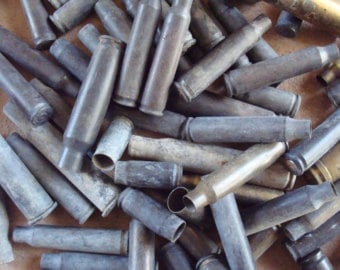
Tarnished Brass Cases
What is Nickel Plated Brass?
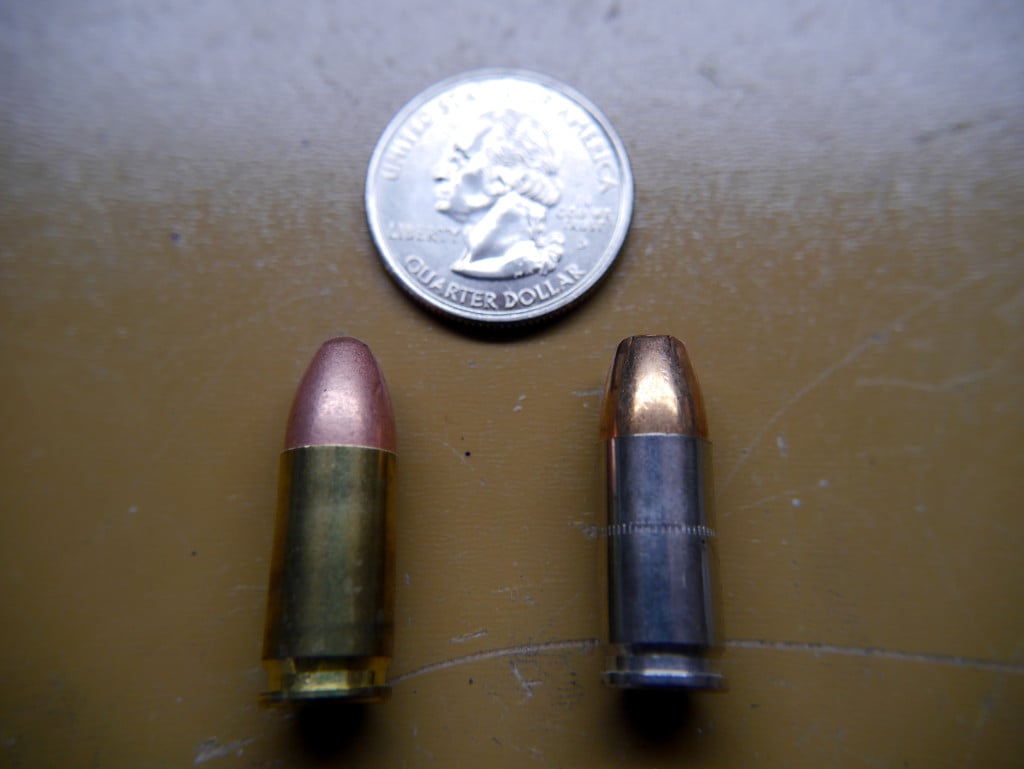
Brass vs Nickel Plated Brass Casings
Nickel plated brass is just that…it is regular brass that covered by a thin layer of nickel through electroplating.
Fun random fact, as of the end of 2013, it costs 9 cents to produce a US nickel coin which is 25% nickel and 75% copper.
Lower coefficient of friction which allows slicker feeding in semi-autos (easier sliding rounds on top of each other in the magazine)
Easier loading/unloading in revolvers
Looks pretty/different which allows easier identification of brass at the range or designation of a special load
Disadvantages of Nickel Plated Brass Cases
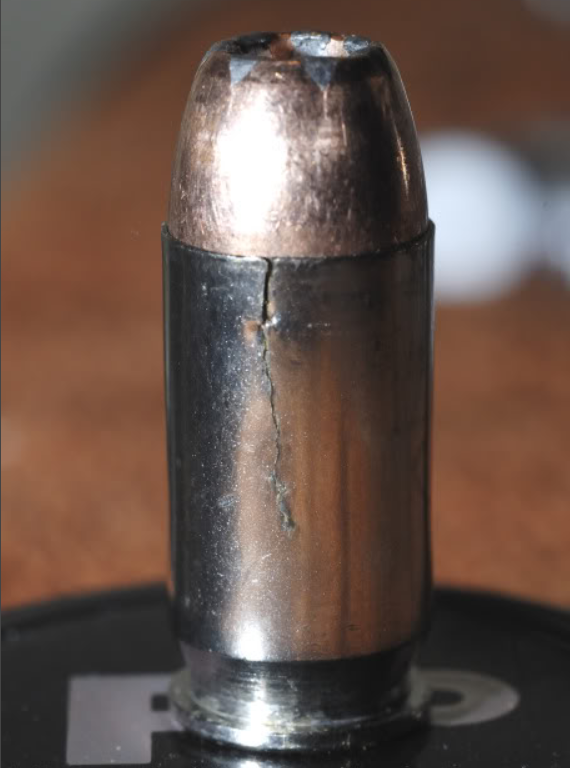
Split Nickel Plated Brass Case, Smith & Wesson Forum
More expensive than regular brass
More brittle so may neck split/crack after fewer reloads
Different metal properties may require modification of reloading dies (check length and crimp)
Plating may flake and get into dies where it can scratch die and future rounds
Verdict
The advantages of nickel plated brass are numerous and we believe you can use all the things you can get in choosing defensive ammo. Nickel plated brass should be more corrosion resistant, offer slicker feeding, and designate your defensive rounds easier. And remember to always periodically test out your defensive rounds!
The disadvantages of nickel are all centered around reloading. We have some nickel cases in our reloads and haven’t found the necks more brittle. But then again, we don’t reload more then 3-5 times before we lose the brass for good at competitions.
We find that regular yellow brass works fine for plinking and competing, but if you are reloading, just be sure to double-check the entire nickel case each time, clean out your dies, and check your length/crimps. Or, just get a new set of dies for nickel cases only.