[Review] KelTec SU16B: Abomination or Admiration?
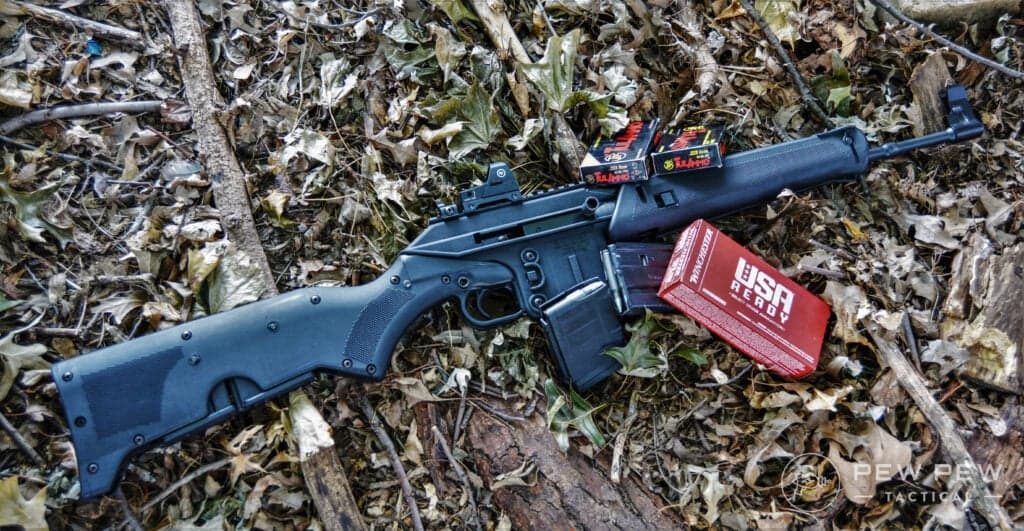
What...is it? We go hands-on with the weird Kel-Tec SU16B to see if it's really that terrible or simply misunderstood.

Martial artist. Urban & rural survivalist. Avid outdoorsman. Firearms writer
We review products independently. When you buy through links on our site, we may earn a commission to help support our testing. Learn more.
When I initially started using polymer lowers on my AR rifles, I got a little worried.
If aluminum will break, what’s to say polymer won’t get completely screwed up? Personal injury was also a concern. Trust me--my body is much softer than polymer.
As a result, when it was announced that the KelTec SU16 was selling strong across the United States and Canada I was shocked.
Pretty much the whole freakish thing is made from polymer! Outside of the barrel, bolt, piston, carrier, and small odds-and-ends, the whole gun is comprised of polymer.
Not just polymer but BENDABLE polymer. I can flex it with my pinky! *tightens green belt*

My expectations for this rifle were not optimistic and speaking with Pew Pew Tactical writer Ken Whitmore my hopes sunk more.
He hated the rifle.
There were some words observed that I cannot repeat in polite company. It was not his favorite rifle.
So, he needed to be proved wrong, just because I’m petty like that.

Read on to see what I found out in my journey.
Table of Contents
What Is... It?
Okay, the SU16 is a unique rifle, no matter how you look at it. Most people look at it with disdain, and I can’t blame them.
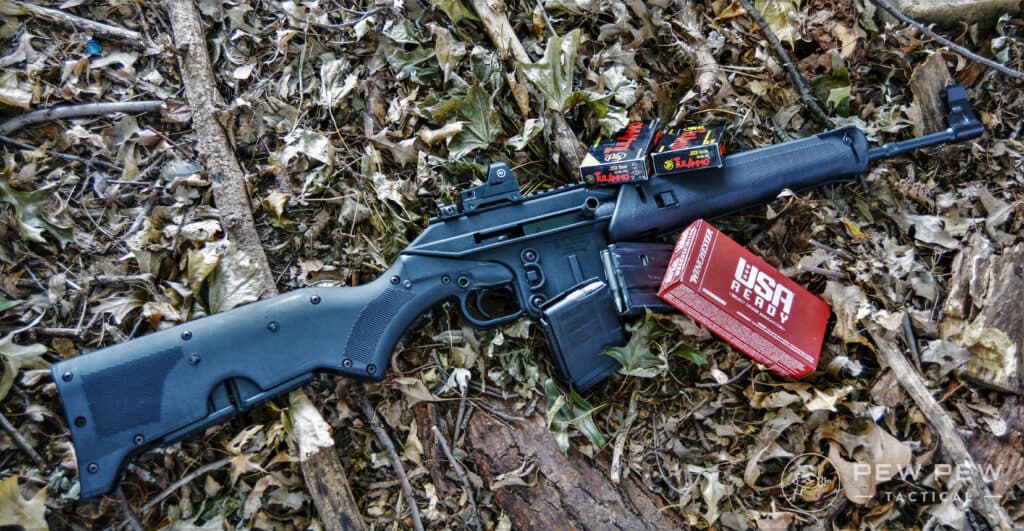
The SU16B is one of those unnecessary answers to the current and potential restrictions of firearms in the US. From the small proprietary magazines that mimic STANAG dimensions to the contours stock, it all feels very “SAFE Act.”
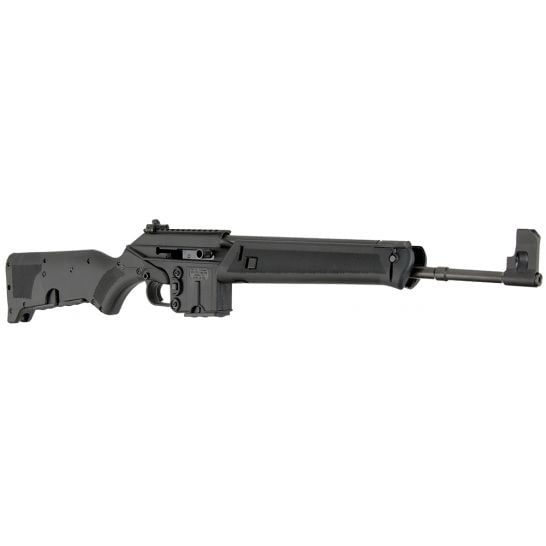
I’m not saying that in a bad way. It sincerely does feel like the only decent looking option for New York residents short of the horror that is a featureless rifle.
This whole rifle is essentially a blob of polymer around some metal parts. The polymer material seems strong enough, but it's truly a plastic rifle! This may be the same argument of combat Tupperware, but the reality will be how well it can actually hold up.
To make things a bit better, it's operated by a piston 5.56/.223. 55-grain projectiles are the real winner with this platform.
What is Weird?
The whole thing. The whole damn thing is bizarre. Well, just look at it. The thing is fugly.
Besides the polymer construction, which I will overlook at this time, it is 50 state legal in most configurations. Yes, you read that right. Honolulu can suck my aloha because this rifle is completely legal.

That said, it is in no way equal or better than a standard AR15 in a similar type of configuration.
The SU16 exhibits some unique characteristics. The first is magazine storage. In most models (A, B, and CA) the stock serves as a storage place for two 10-round magazines or one 20/30-round magazine.
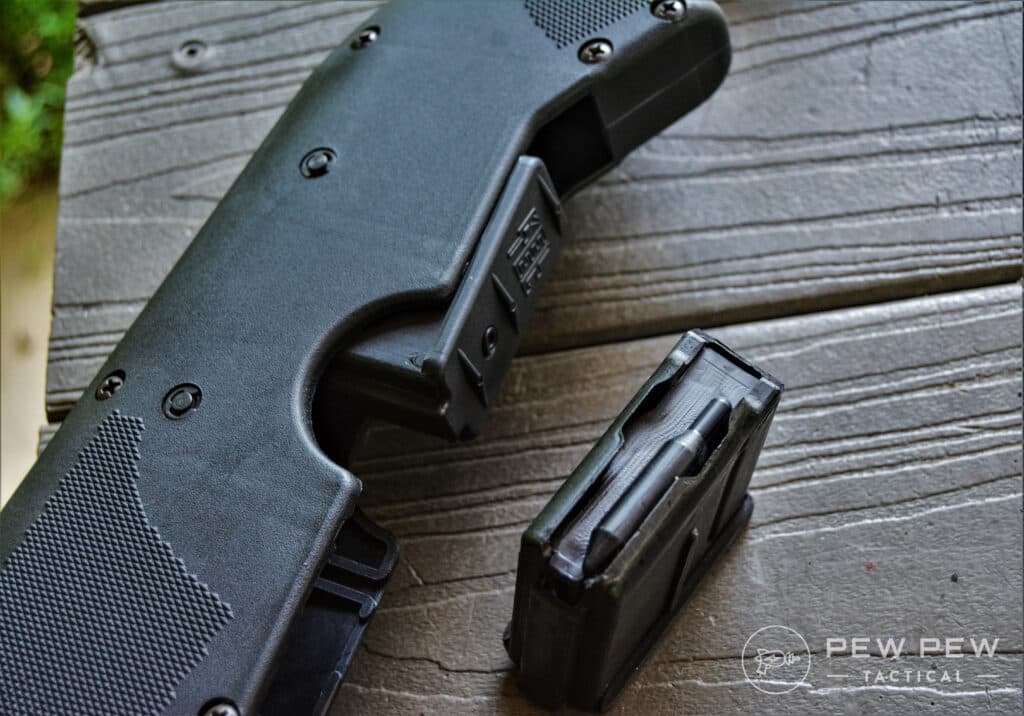
These three models come with two polymer molded 10-round magazines straight from KelTec. They fit into the stock, but hoo, boy, they are really problematic to get out. The 30-round is no different, as it fits long ways and is also relatively tricky to extract.
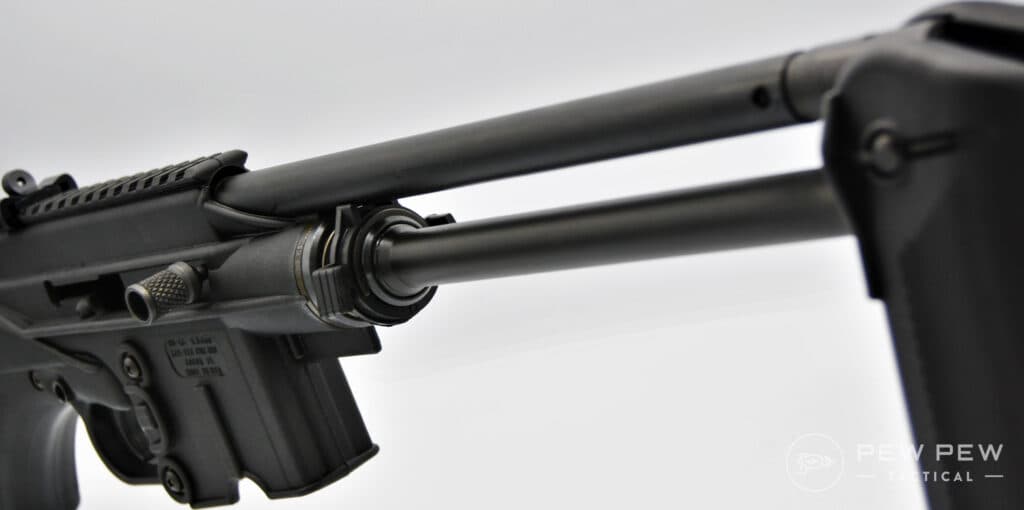
Most of the models (A, B, C, and CA) also feature a foldable stock. To stay compliant, the A, B, and CA models do not fire when folded. On the butt of the stock, there is a small cutout with rubber fittings that wrap around the barrel itself to hold it into the folded position.
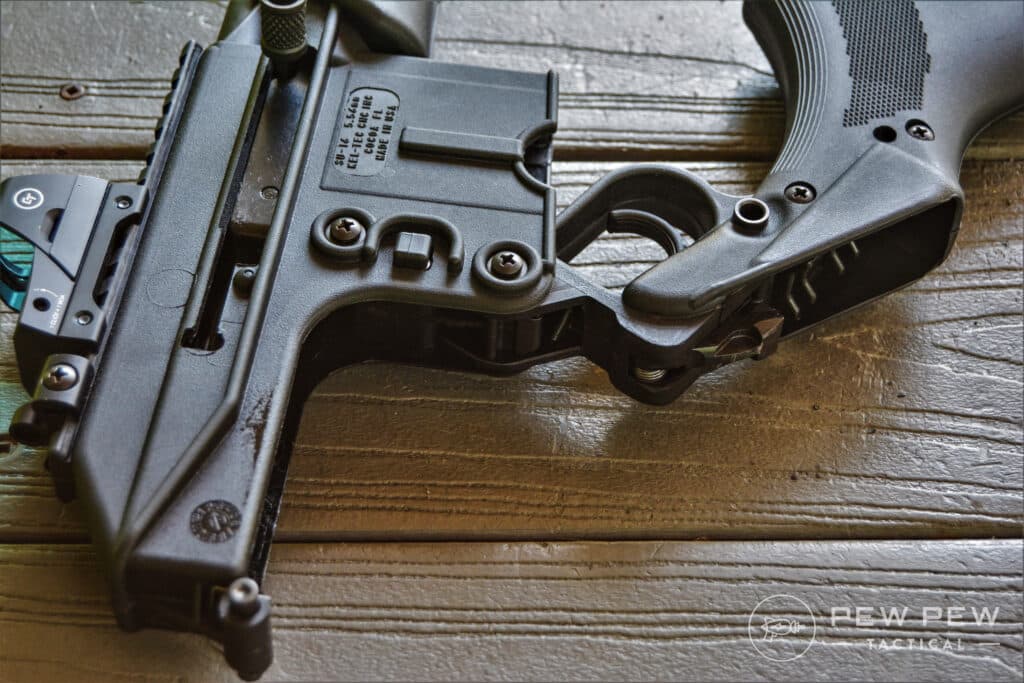
This can even be done with the stored magazines in tow! Actually, I was rather impressed by this.
The A, B, C, and CA also have a funky handguard/bipod. The handguard is held in place with some type of spring-loaded barrel nut which deploys the under-powdered bipod. It’s like the transformer no one asked for.
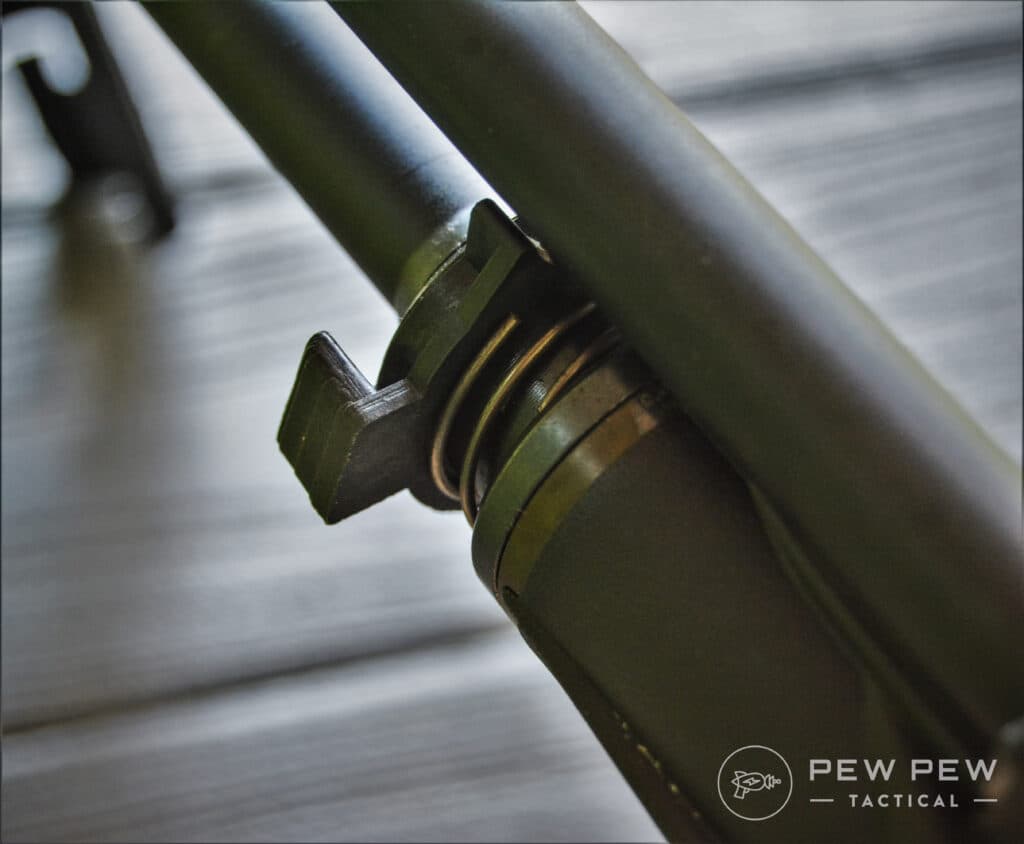
This is a cool gimmick that is a significant selling feature for 18-year-old “operators” everywhere.
What is Bad?
I’ve already said it; the polymer construction is questionable. If you want a rifle to pass down to the grandkids, look elsewhere.
With the piston system pushing that carrier back directly into the receiver, I’m curious if the receiver will be able to continually handle that abuse for several decades. Regardless, the deterioration of the polymer material from standard use and even UV light may be enough to do it in.
The barrel itself is thin. Stick thin. I feel like it would be on a Victoria Secret runway, kind of thin. Gun bunnies everywhere will be using this barrel as a type of measurement.

Besides the small nub near the muzzle of the device that assists in holding the stock into the folded position, it’s a pretty standard pencil barrel. This may be only on the model I tested, as many of the other models do show a heavier barrel, but they are also longer.
To cover that pencil barrel is a giant handguard/bipod/thing. It is a neat concept. The handguard splits into two separate but mobile pieces that make a bipod. Cool, I suppose.
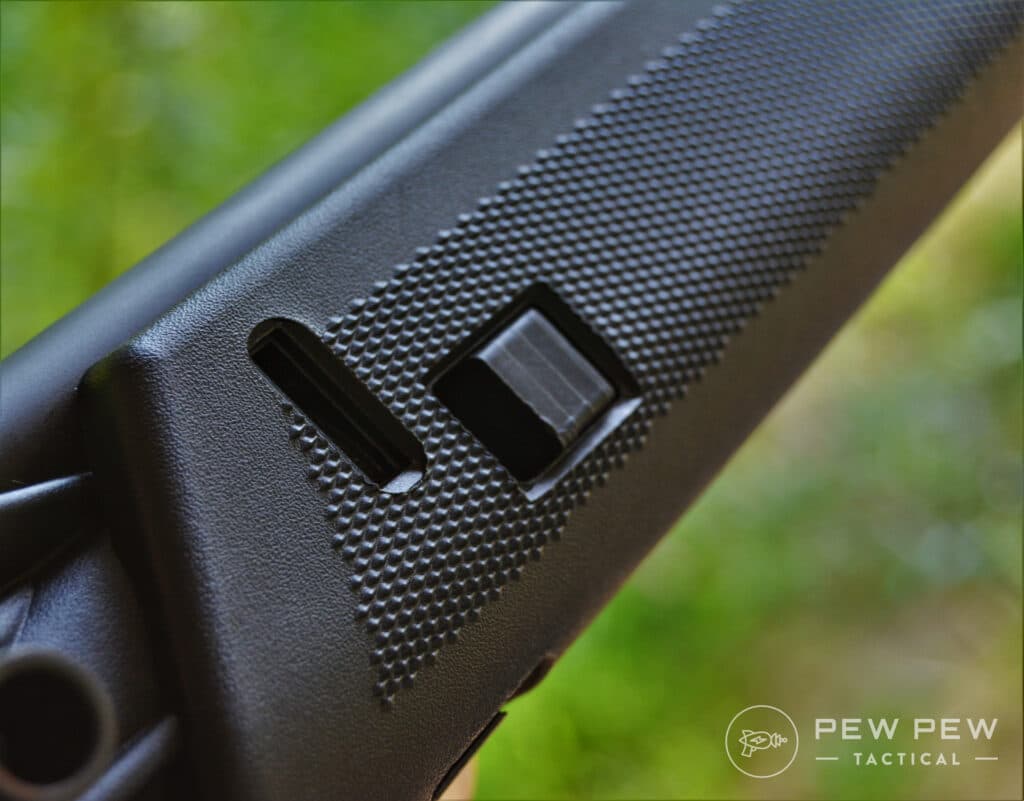
It doesn’t work too well.
Even after a few rounds, the bipod likes closing because the spring holding it into the open position is extremely weak. Some people replace this spring with an AK hammer spring successfully. I may try and do that since AKs are sooo cheap.
Keep in mind, the bipod/handguard is pretty thin and the gas piston vents right at the handguard. So, it is very possible to quickly heat your polymer handguard to a melting point.

The folding system is also not without its downfalls. To keep the entire rifle in an open and locked position, a pin is forced through the stock and the rear of the receiver. This works really well, almost too well, when the rifle is brand new.
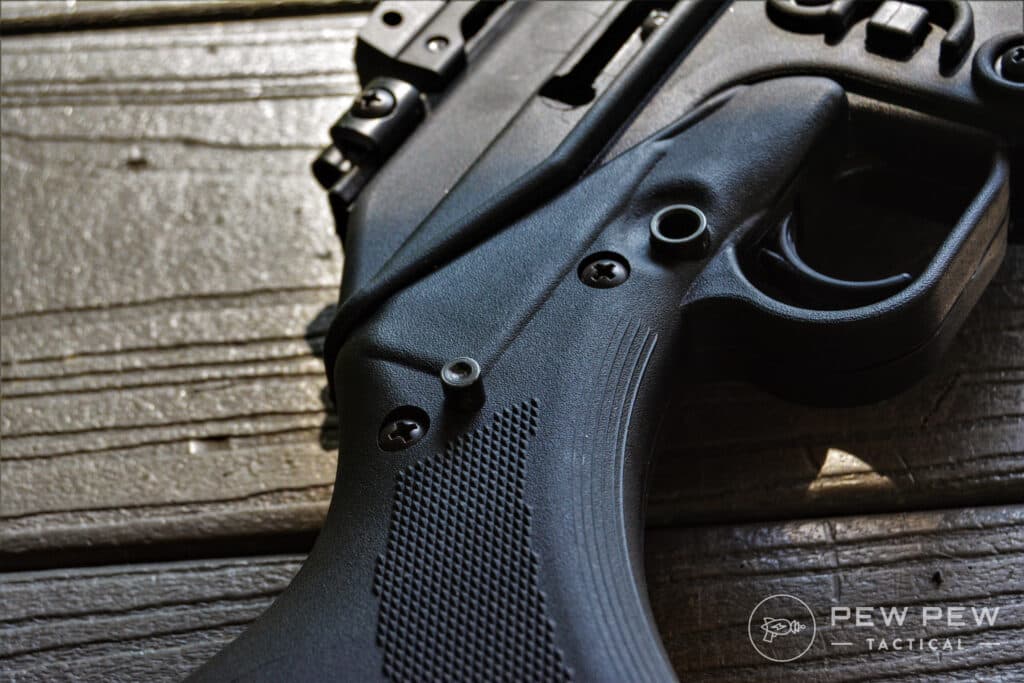
After a few dozen times taking it down, that pin is too easy to remove and there have been reports of shooters losing the retention pin mid-firing.
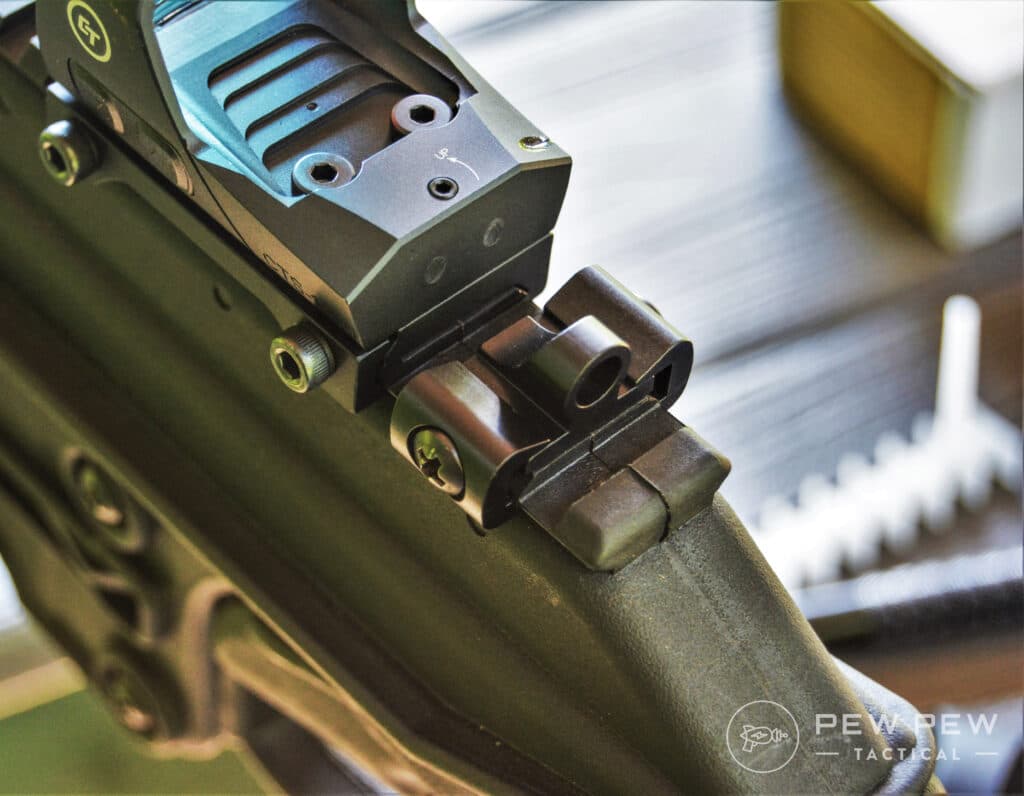
As with any modern rifle, you need a way to keep an optic attached, right? KelTec comes to the rescue with a Picatinny system on the top of the rifle! This is a great system made of... polymer.
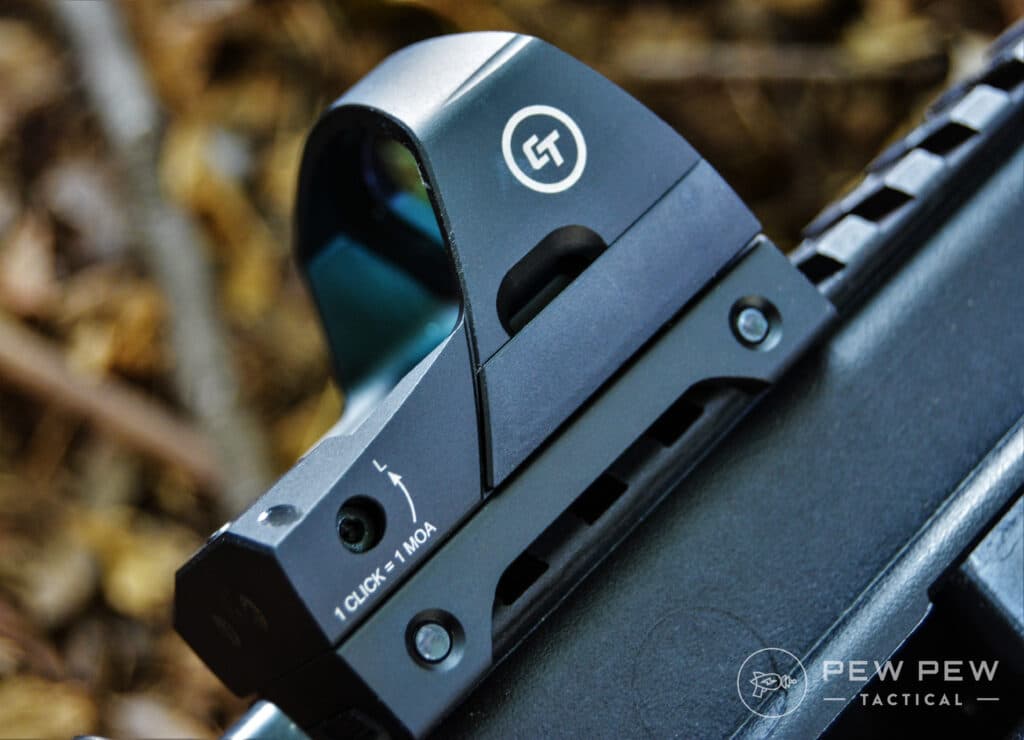
That’s right, I’m certain everyone has put some kind of optic on a rifle with an aluminum rail system and really deformed or damaged the rails. Well, KelTec thought it would be a brilliant idea to make one out of polymer molded directly into the receiver.
Talk about lipstick on a pig.
It’s lighter than an Olsen twin. One of the factors to mitigate recoil is the weight of the firearm. The heavier the firearm is, the less recoil you feel. Well, this rifle is so lightweight that you absolutely feel the recoil.

Is that entirely bad?
No, it’s not wholly terrible especially in a 5.56/.223, but it is something to be aware of. It’s a guess, but because it’s so light means they completely neglected sling attachments. Anyone who carried this firearm needs some strong forearms.
Every SU16 also comes standard with iron sights. In a few models, the front sight is a large post threaded on the front of the barrel. The California model front sight is part of the gas block so that there is a smooth barrel. This is not removable in either configuration, so you’re stuck with it.
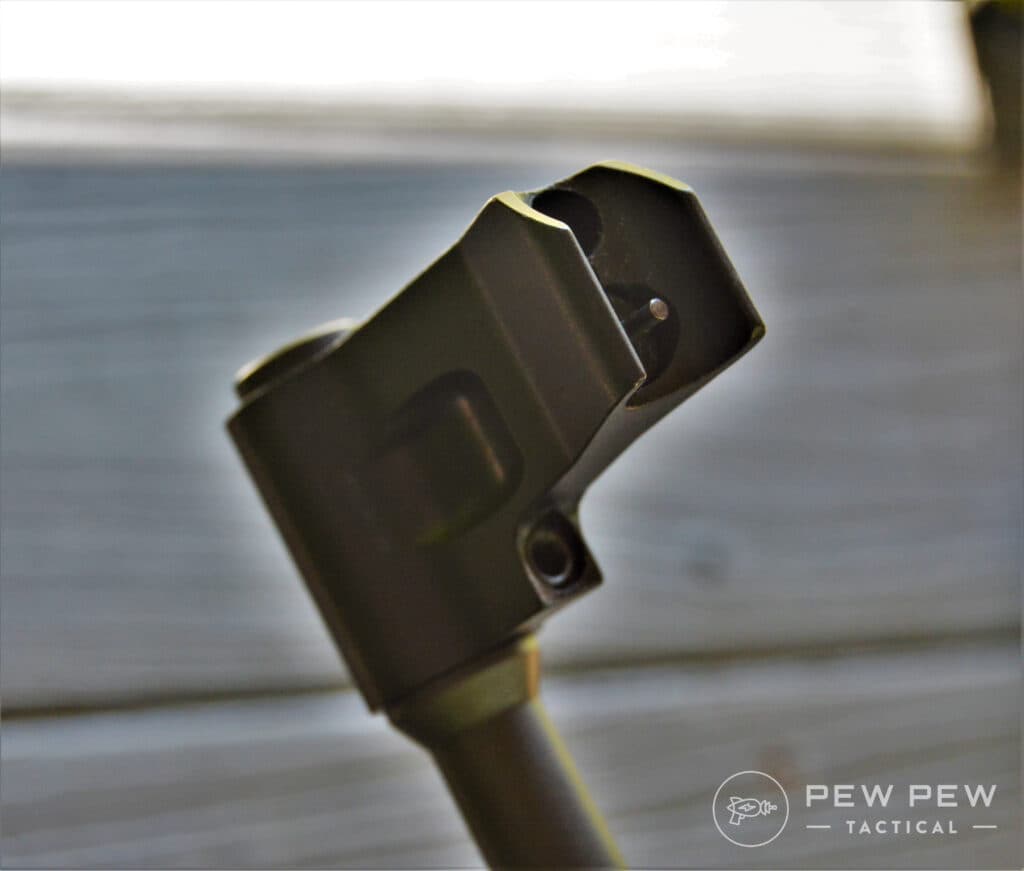
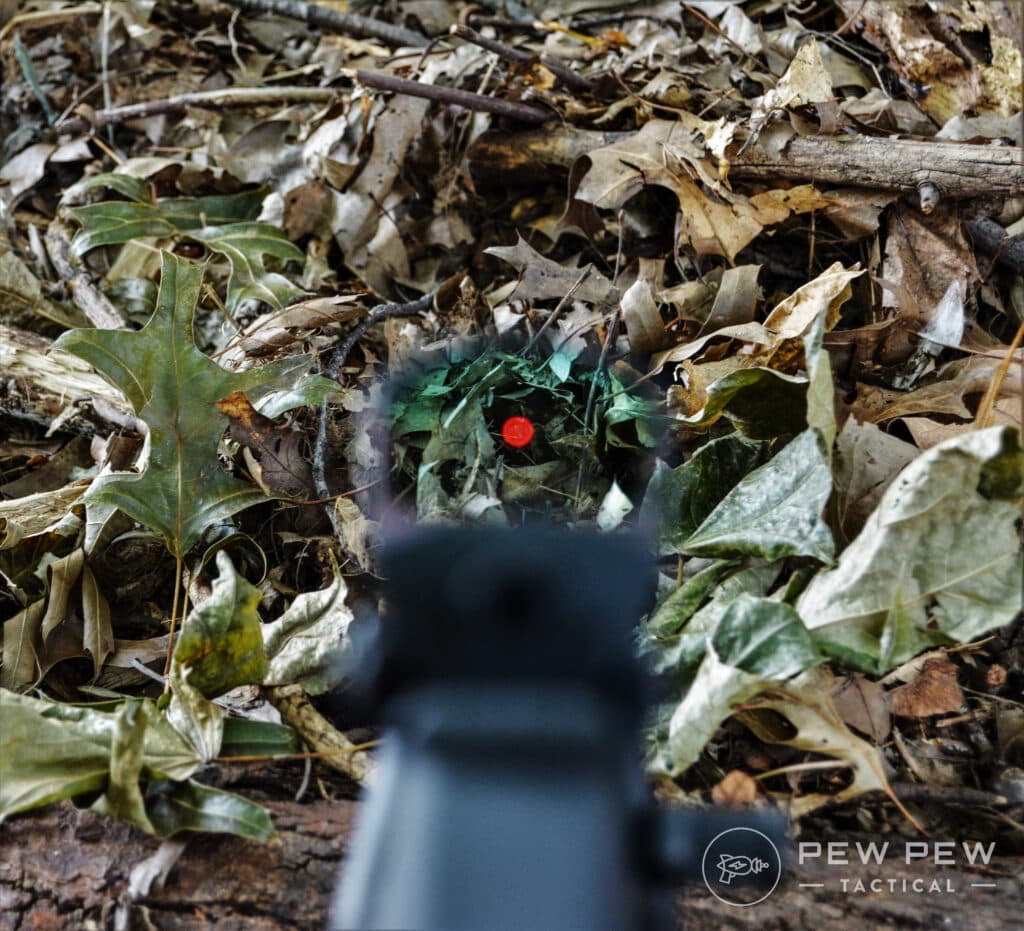
The rear sight is also one of the paltriest things I’ve ever seen on a rifle.
There’s no way to easily adjust for windage. Unscrewing the rear sight from the Picatinny rail and sliding the top plate with the ghost ring plate over before tightening it down is the only option. It’s foolishly stupid but cheap.
What is it Good For?
A few pleasant things to report, actually. Some of these negatives have systems in place that will help to lengthen the lifetime of the SU16.
You know that polymer receiver? Well, just imagine how long it would last with a direct impingement gas system.
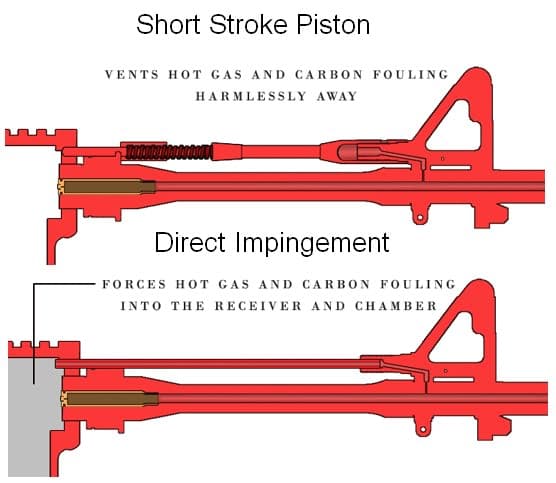
The piston system does a good job of venting the gasses out by the handguard. Maybe too good a job, because it does get extremely hot very quickly. That pencil barrel is also not built for heavy firing. But overall, the gas system is great.
When shooting with standard 55-grain ammunition I found the cycling of the rifle to be spot on. The carrier bumped the rear of the receiver a little, but not enough to make me worry for my ACL.
Switching to 69 grain or heavier and the rifle became to cycle slowly or produce significant stove pipes. So, in all, cheap ammunition is better with the SU16, and that is a good thing.
Folding the rifle makes it very easy to pack and carry, even in a full range bag. I can fit it in some of the larger front pockets of a range bag instead of the rifle storage sections.
This makes it a great toy to bring to the range with a “real” rifle. The SU16B has a 16” barrel, so that packs up tighter than most of the other non-SBR/pistol models.

Along with that 16”-18” barrel is the front sight placed at the end (only on the A and B model) which gives an outstanding sight radius. It's fixed on tight and absolutely does provide a great length for acquiring a target. I’m certain the gas block front sight would be good, but I prefer long radii.
Weight, while a negative for felt recoil, is a great subtraction for a packable survival rifle. Plus, a 5.56 doesn’t really have all that felt recoil anyway. There’s no way a bee sting is going to blow through your shoulder under normal operation unless you’re Gert Kuntzman.
Weight, while a negative for felt recoil, is a great subtraction for a packable survival rifle. Plus, a 5.56 doesn’t really have all that felt recoil anyway. There’s no way a bee sting is going to blow through your shoulder under normal operation unless you’re Gersh Kuntzman.
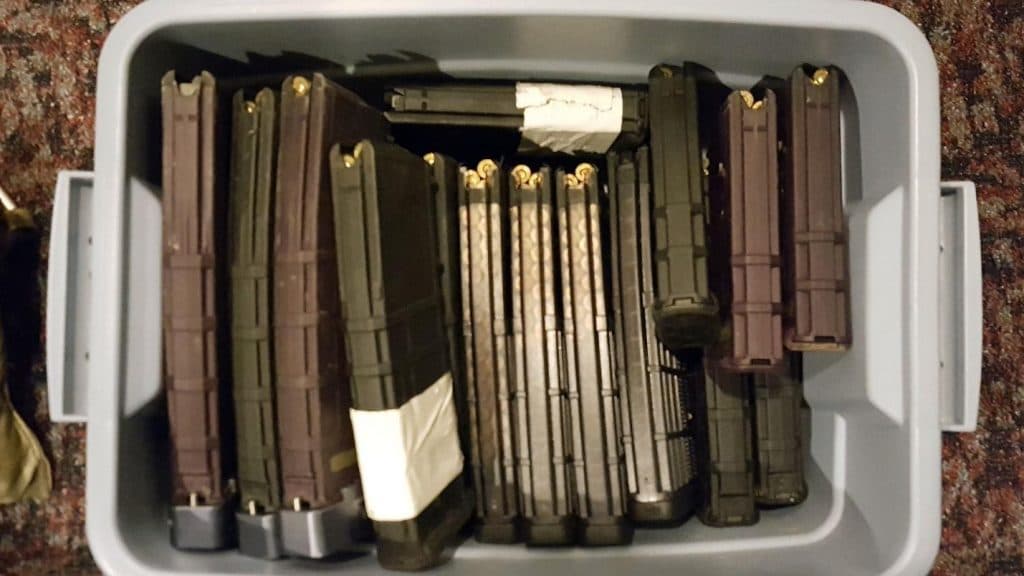
The largest benefit appears to be the ability to use most common magazine types. Magpul, Hexmag, STANAG, and Promag fit well even if snug. Lancer and ETS fit a bit too tight and the magwell appeared to bulge a little bit upon insertion. I decided to forgo these brands for this rifle.
Personal Experience
I mentioned before that I had been speaking with Pew Pew Tactical writer Ken Whitmore about this rifle. It was his opinion that really set me off to find something redeemable about the SU16B.
That’s not to say Ken is wrong, because he absolutely is, but there are some things about this rifle that made me love it.

The total operation of this rifle is easy enough. Outside of the folded configuration, there is nothing mysterious about how this rifle is loaded, charged, and fired. The magazines themselves also load up pretty easily, once you pry them from the cold dead stock.
Even when the mags were completely loaded, they sat comfortably in the stock and added some weight that may or may not mitigate some felt recoil. One item I needed to get used to was how tightly the magazines fit into the magwell. They are molded into the exact same dimensions and really stick in there.

When loaded they refuse to drop out so there isn’t much hope for a quick “Instagram Tactical Reload.” Save the filters for a different gun.
Once loaded the charging handle pulled back cleanly without any feeling of bunding and only some resistance over the cartridge in the magazine. I liked the texturing on the charging handle. The whole carrier slid forward with no binding and was ready to go.
Bringing my face down to the level of the absurd rear sight I didn’t feel awkward or contorted when holding the rifle. I’m also not a huge guy and have an average arm length, so it'd be safe to assume more people would be able to hold it comfortably when firing.
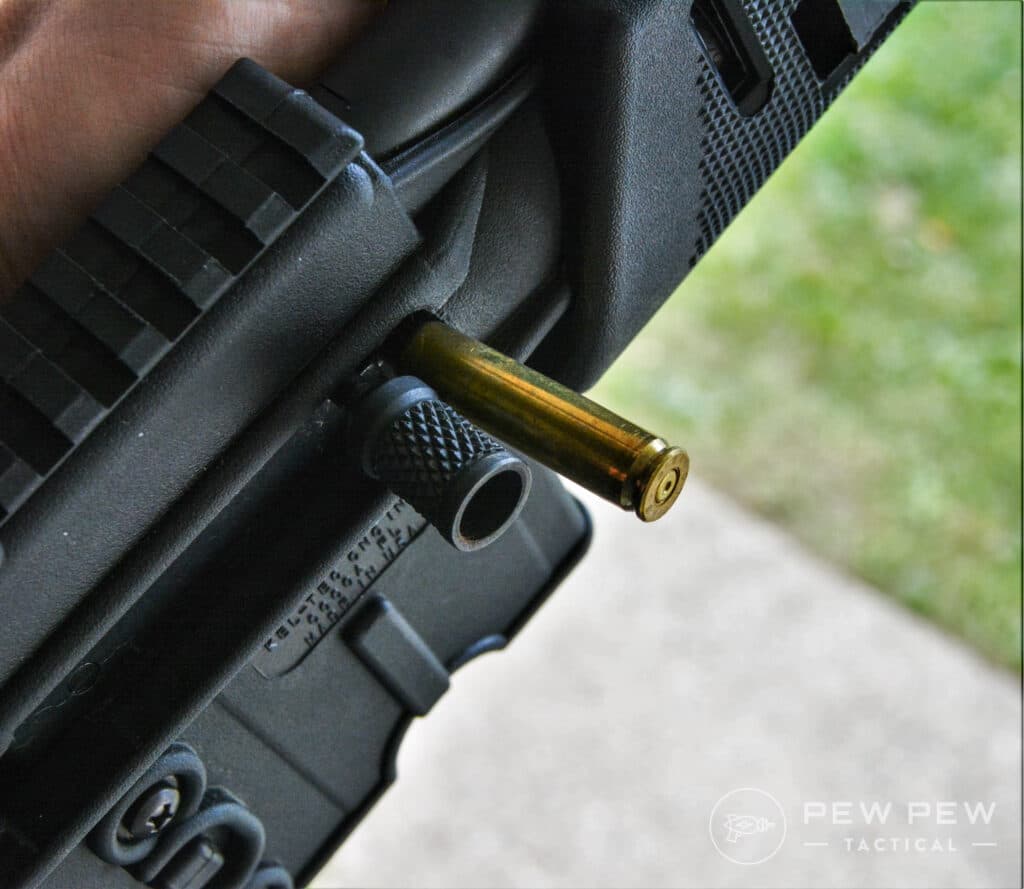
Selecting fire was a bit different than any other rifles that are currently the “competition” to KelTec. KelTec chose a push-button safety like it’s a 10/22. This gave me that childish fumble of pulling the rifle away, examining the safety and setting the shot back up before really putting pressure for “fire” selection.
And it worked. Nothing fancy or noteworthy about the trigger other than it is a process I need to remember.
The trigger is not absurdly heavy, but just a little heavy. In fact, I love the trigger.
There is only about 2-3mm of travel before finding the wall and then absolutely no creep before the hammer falls. The hammer seems to hit pretty hard, as well. Even with that hard hit, it doesn’t feel heavy to reset during dry fire.
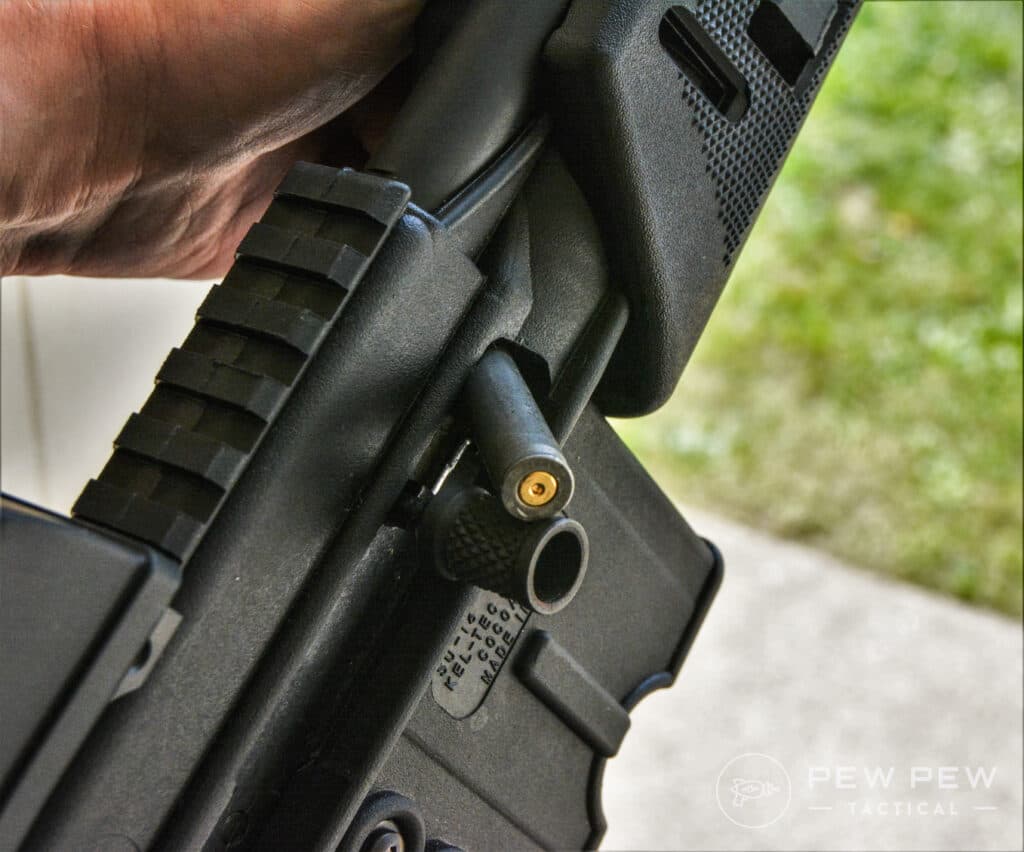
When fired the carrier really starts to move. There doesn’t feel like much recoil at all, at least, no more than a standard AR. What does exist is the slap on the charging handles into the rear of the handle channel. That tends to drive the nose of the rifle up.
Being a piston system, the front spring pulls the carried back into position pretty damn fast. This feels hard enough to pull the rifle back into firing position. Overall, even with a little bounce, it was effortless to compensate for.
The only negative I have is the handguard would get hot quickly, but that is the nature of piston actuated actions.
Ammunition Choices and Function
I will preface this entire section by saying: KelTec does not recommend the use of steel-cased ammunition.
I say, fuck that.
I loaded up TulAmmo and Barnaul for testing and just got to work. The goal was just to test the overall function of steel cased ammunition in 55 grain.
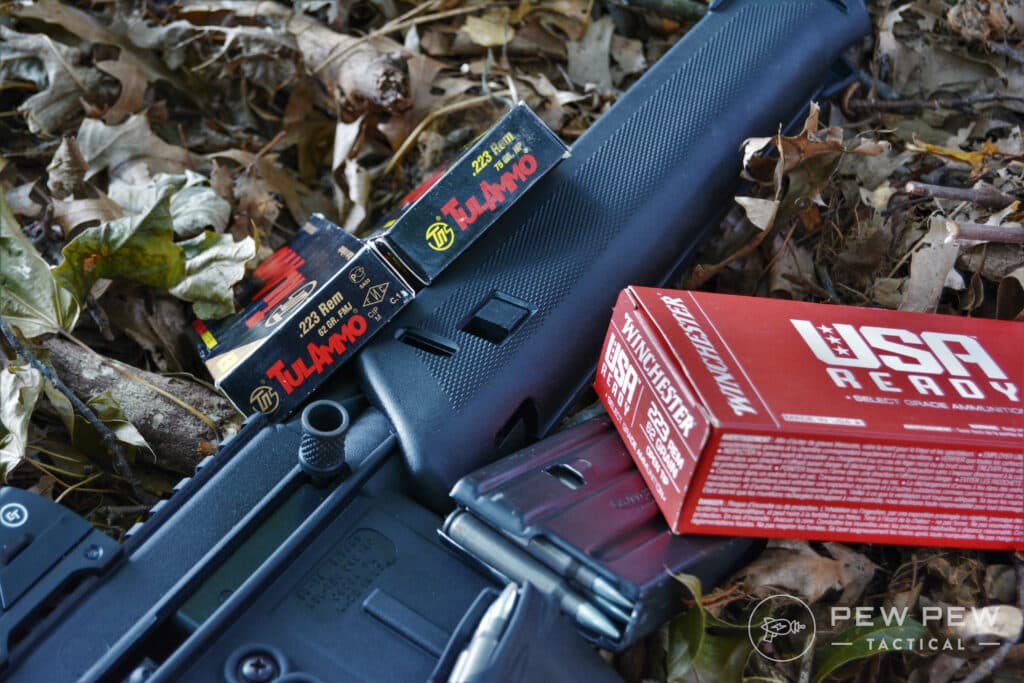
Honestly, I don’t have a single negative thing to say about this. It devoured the ammunition as if it was candy. Very, very dirty candy. TulAmmo seemed to run a bit hotter of the two brands and the handguard got hot pretty quickly.
I also ran some white box Winchester .223 through after the steel-cased ammunition. I know, I know, everyone says to clean the rifle when switching from steel back to brass.
Go ahead and yell, ol’ Johnny 4-fingers doesn’t care. Honestly, white box performed as well as you’d expect. It was filthy, but it also felt a bit inconsistent.
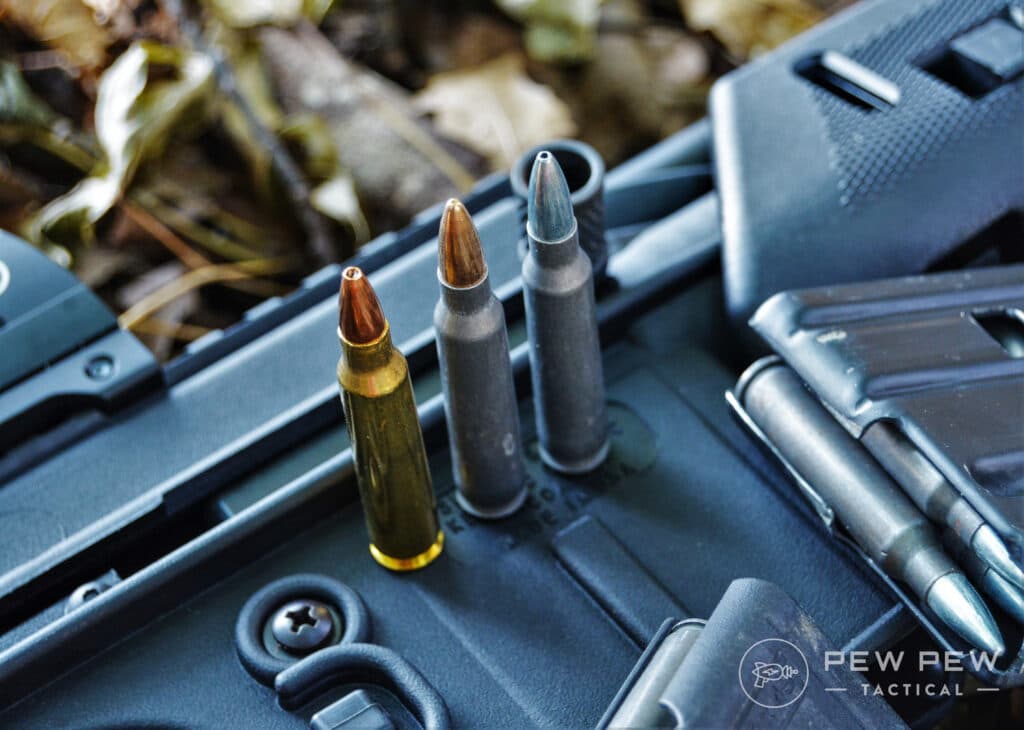
What I mean by that is: every once in a while the carrier would feel a little sluggish.
After a quick clean and lube, I decided to try a few other grain choices. First, was Winchester 62 grain. I loaded it up in the stock magazines and gave way to the carnage. The rifle still seemed a little sluggish. In fact, I felt as if the entire carrier was running slowly and that it was just barely chambering the next round.
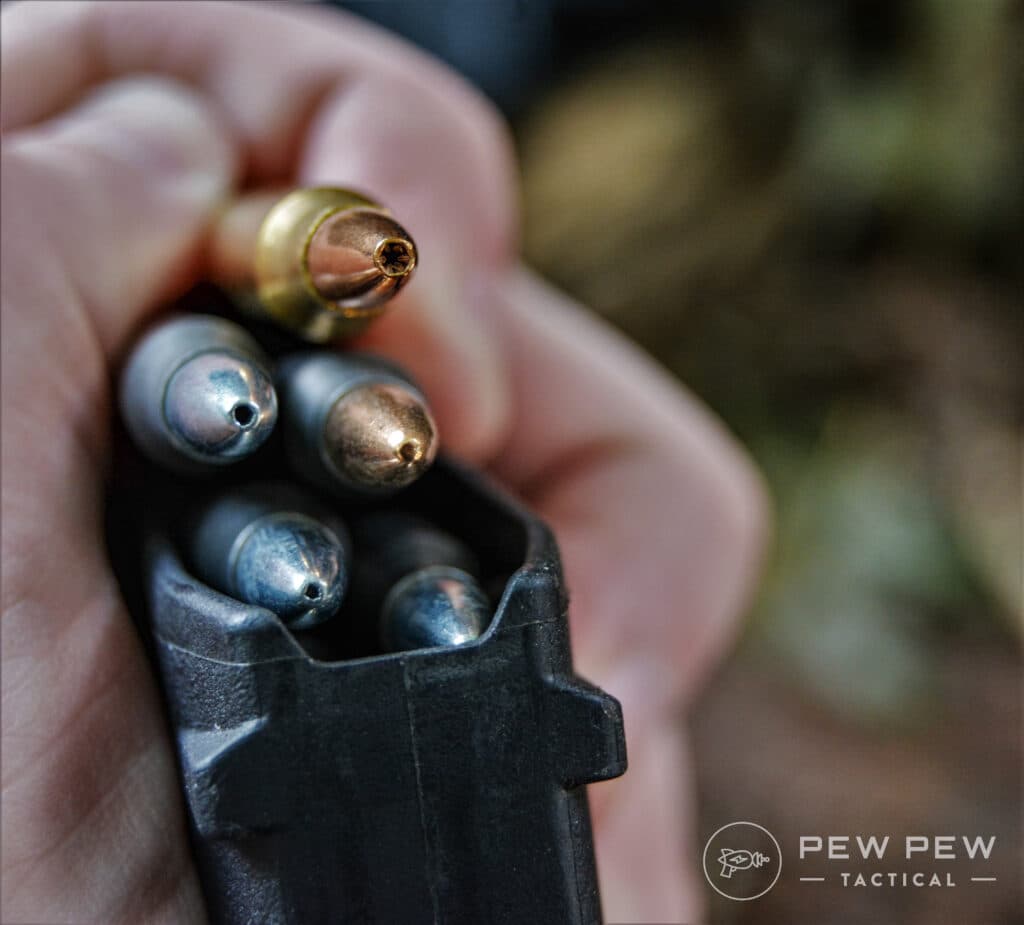
In an effort to test the problem further, I went to steel-cased 62-grain FMJ TulAmmo in the same grain weight. To my surprise, it seemed to function exactly the same; sluggishly.
A quick cleaning, then 55 grain .223 TulAmmo was loaded for a quick function test. The entire rifle performed flawlessly so I moved onto the 75-grain hp TulAmmo steel-cased ammunition. Once loaded up I fired the first shot and got a stove pipe.
Cleared, fired again, and the same issue. The rifle was promptly unloaded and 55-grain TulAmmo was put back in with outstanding results.
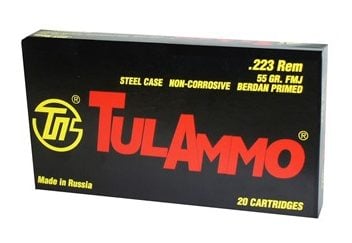
TL;DR in short: use 55-grain ammunition for best results.
Accuracy? What Accuracy?
Okay, it’s accurate. It’s not, “knock your socks off at 300 yards accurate”’ but it will get the job done. All the ammunition I used was roughly 2MOA. No matter if it was steel cased or not, the SU16 was a constant 2MOA.
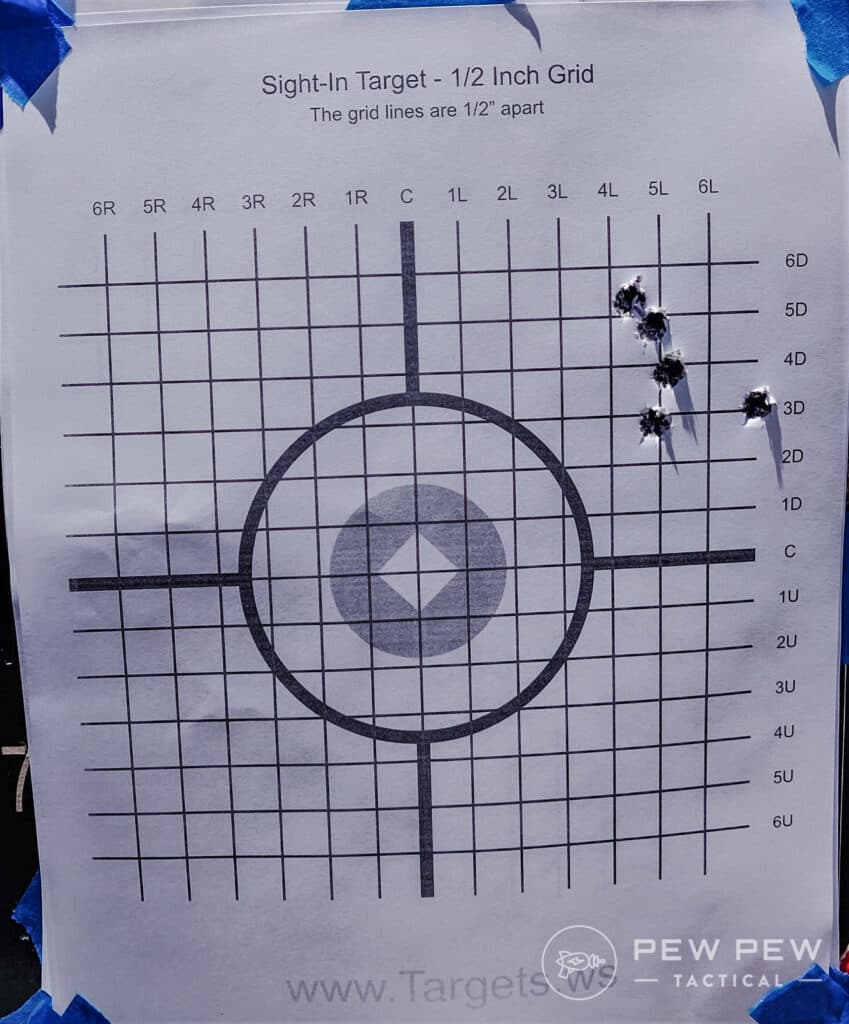
I ended up throwing on the Crimson Trace CTS-1400, which costs just as much as the rifle. If the optic is just as much it must make it a better shooter, right? Wrong. I know I’m not the best shot, but I sure as shit am not a 2MOA all day.
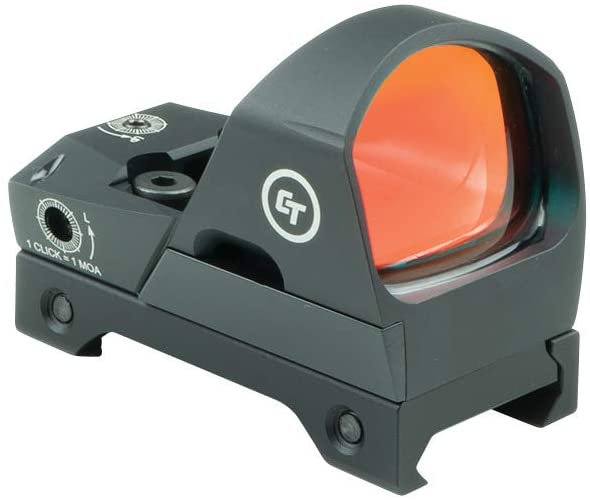
The Crimson Trace improved my point of aim, but not by much. Still a 1.75 MOA group, but absolutely improved.
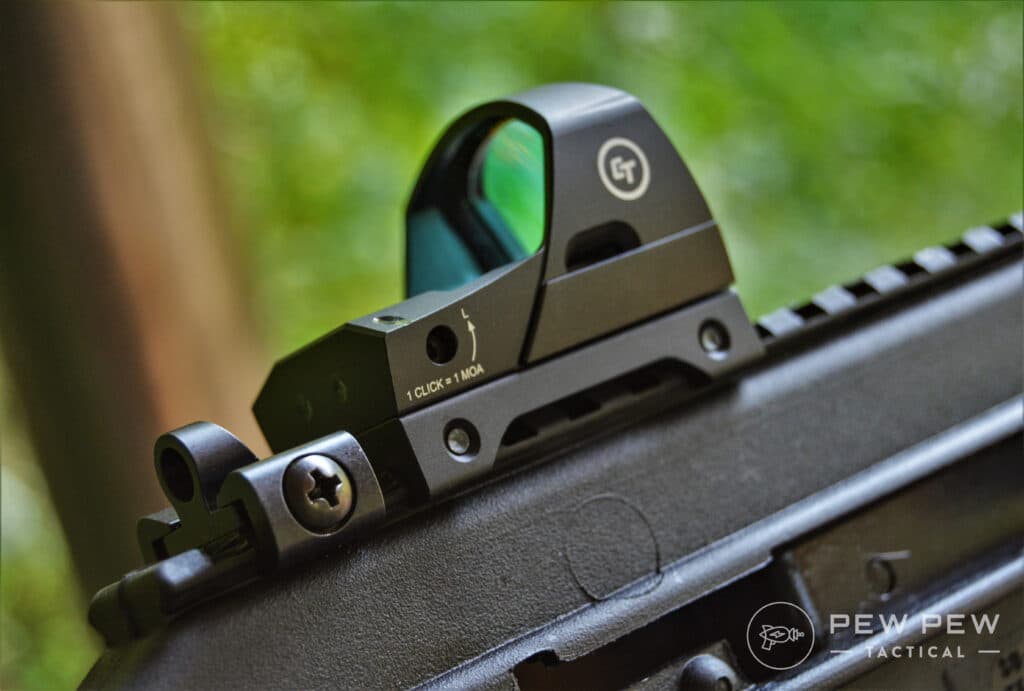
One of the difficulties with this rifle, in particular, is the inability to quickly set the iron sights. The rear sight ring adjustment is impossible on the fly and if it’s off, compensating is a pain in the ass. You can hit the broad side of a barn with it, but don’t expect to hit anything smaller.
Overall Impressions
Okay, despite the negatives there are quite a few positives. While the list seems to be grossly malapportioned to the negative side, I can’t help but like this rifle. It feels moderately comfortable, is a blast to shoot--even with irons--and even has a last round bolt hold!
Sure, there are some things I would change if I had the opportunity, but there is also a good reason I am a writer and not a firearms engineer.
I still have my worries about what might happen and how the firearm is constructed for “my” long-term use. The fact is that people put a lot of effort into the design and construction of the SU16. It’s held as a moderately good rifle for years now and that didn’t change.
There is a laundry list of preferences that the SU16 rifle doesn’t have, carry, or could even possibly adapt. Keeping that in mind, this is a great training tool. I’ve started using the SU16 with mixed 55 grain and 75-grain ammunition to help my clearing of stovepipes.
Overall, this rifle is reliably unreliable, in a good way.
By The Numbers:
Reliability: 4/5
I’m not giving this a full 5/5 because it fails to run higher weight projectiles efficiently in factory loads. Regardless, it will run a standard 55 grain with little effort and can handle any brass or steel that I threw at it.
Accuracy: 3/5
Again, because of the limiting projectile grain choices it’s hard to truly make this rifle as accurate as it potentially could be. 2MOA may be okay for general or generic use, but it’s not willing any awards either. This rifle is going to be hell for the handloader.
Ergonomics: 4/5
I don’t like the safety, the bipod is useless, and the magazines are hard to remove from the stock. Other than that, it’s a great little setup. Nothing is perfect and this really shows that it isn’t perfect, but it’s as close as it can be.
Looks: 1/5
I mean, look at it, just look at it.
Customization: 3/5
For a rifle that can use standard STANAG magazines and most polymer mags, this rifle fails at true customization to really be competitive against other rifles in the same caliber. The inability to swap handguards with aftermarket companies, proprietary trigger, and a fragile polymer picatinny rail really limit the options.
Bang for the Buck: 5/5
So far this is a sub-$1000 polymer rifle with a few tricks up its sleeve (stock?). The price is decent for a piston actuated rifle and KelTec is known to stand behind their products. The model I tested has an MSRP of $738. Overall MSRP will range from $678-$904.
Overall Rating: 3.5/5
Despite the negatives, this rifle does hold its own pretty well. Realistically, there aren’t efficient solutions on this firearm to make everyone happy, especially when it is compared to an AR platform. So, keeping this as a stand-alone firearm platform it holds well.
Wildcard: 5/5
I had to add a wildcard to this because. The whole folding stock, bipod, and magazine storage really add a “weird” factor to this rifle. It is unique and an oddball so that really needs to be taken into consideration. This by no means fails as a plinker and very well suited for that purpose.

Conclusion
The Kel-Tech SU16B is a great range toy; it is not a direct AR-15 replacement. So, don’t pretend that any of the trouble states are going to receive a huge influx of the SU16s and begin to fight tyranny at a local level. This is not an “operator tier” (whatever the hell that means) firearm.
This is a rifle that is probably going to sit in the closet and really shock-and-awe some middle schoolers more than your buddies. That isn’t really a bad thing, just know your audience.
In conclusion: Ken, I still like the SU16B.

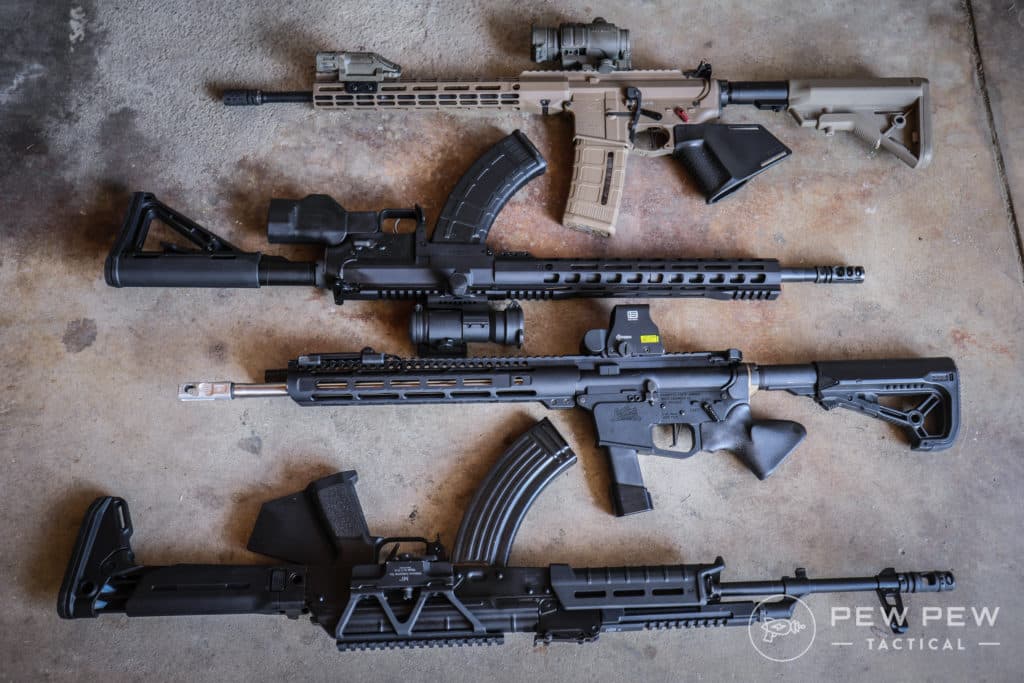
What are your thoughts on the SU16B? Love it? Hate it? Gotta have it? Tell us in the comments section below. If you are looking for an AR-15 replacement, check out the Best 5.56 Rifles that aren't an AR!