
How Does the Military Train? [From a Marine]
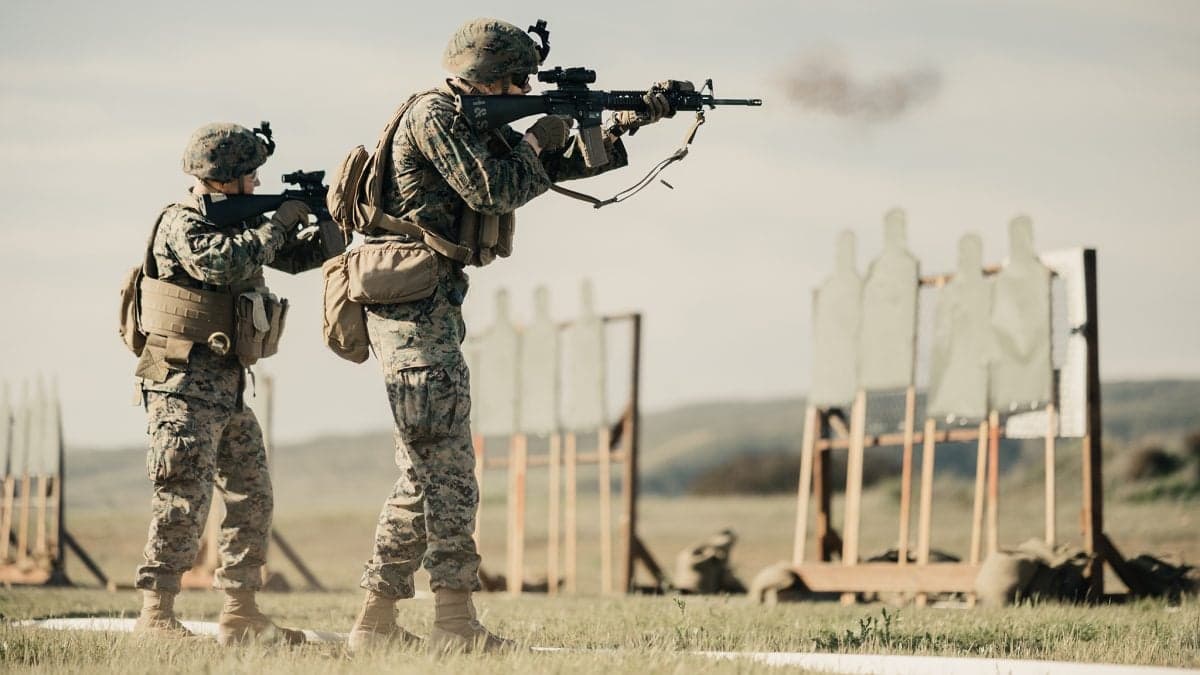
The military doesn’t provide one-size-fits-all firearms training. Compare one Marine’s experience to what civilian gun owners can get.

USMC Veteran. Concealed Carry & NRA Pistol Instructor. 3-Gun Competitor. Career firearms writer
We review products independently. When you buy through links on our site, we may earn a commission to help support our testing. Learn more.
What’s the deal with military firearms training?
Depending on who you ask, everyone in the military is either a stone-cold shooting expert or a rookie who can’t load a magazine without step-by-step instructions.
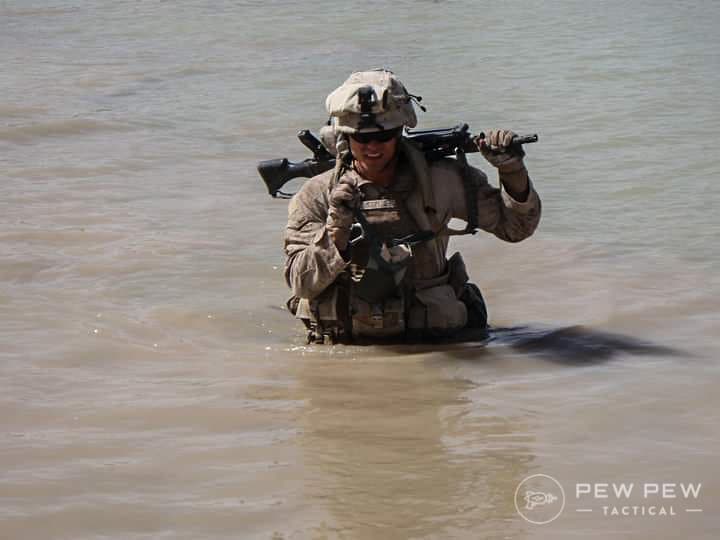
The truth is a little more nuanced than that. Allow me to share my experience in the Marine Corps and give you a little perspective on how civilian firearms training stacks up.
Stand by… targets!
Table of Contents
Myths About Military Firearms Training
I’ve noticed a lot of misconceptions about military firearms training. Interestingly enough, opinions are split. One side thinks military members are all immediate firearms experts, while the other assumes that they are very poorly trained in firearms.
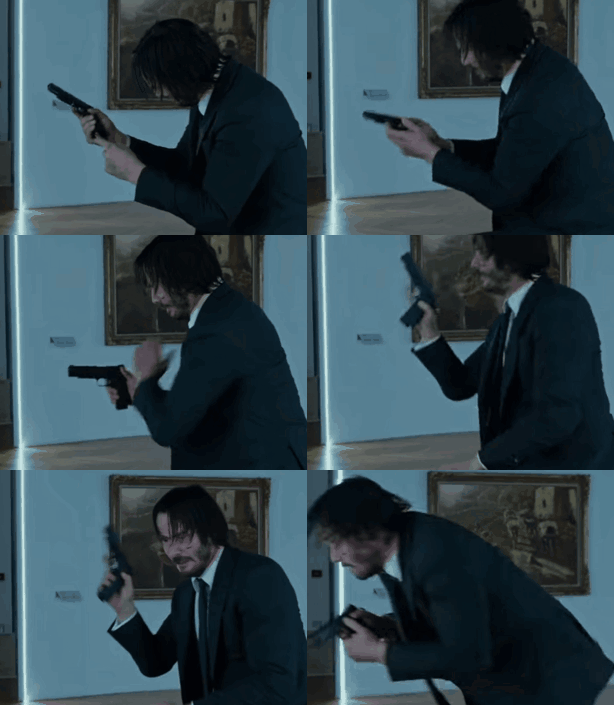
Pop culture reinforces one side that portrays every soldier, Marine, sailor, and airman as an expert with any gun they pick up.
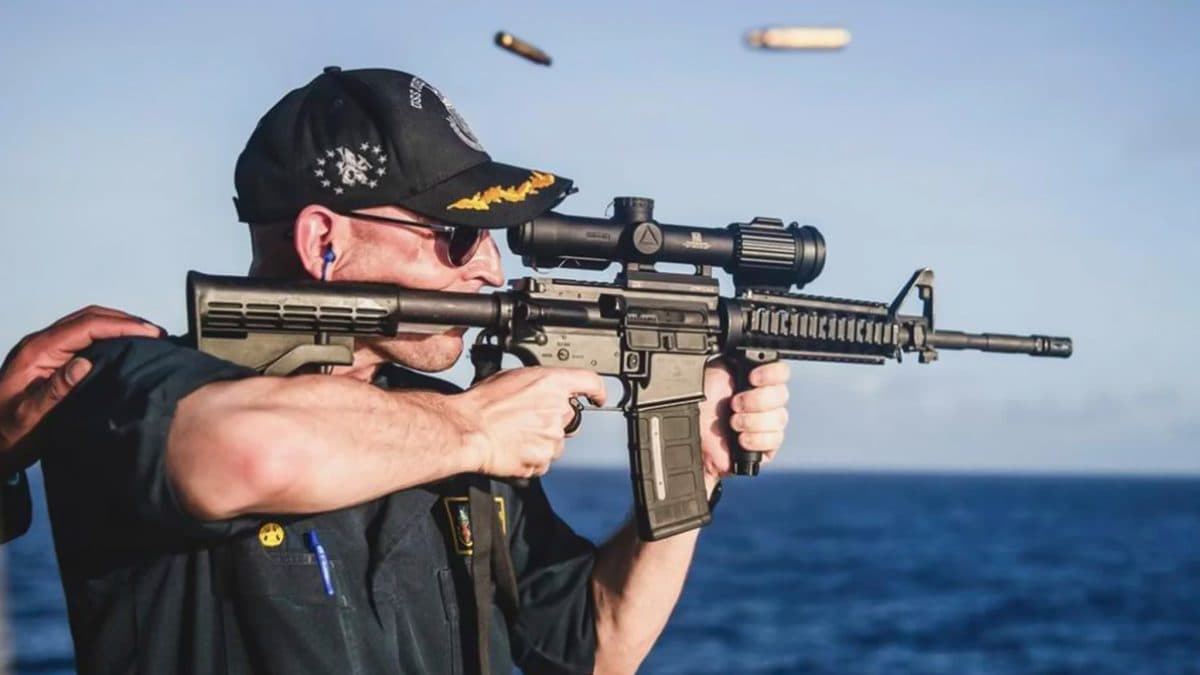
The other side typically shoots a lot, maybe competitively, and has a low opinion of military firearms training because they’ve seen photos of bad examples in uniform. Remember that Navy captain who shot an M4 with the optic mounted backward?
It's easy to see why the split exists, and with that in mind, I thought it would be interesting to discuss what military firearms training is actually like from someone who has real experience.
I served five years as a Marine infantryman. I think this gives me a nice middle ground of experience between non-combat troops and special operations. We received a lot of training as a combat arms position, but we weren't getting the same experience as, say, a SEAL or Green Beret.
Military Firearms Training Depends on the Job and Branch of Service
As a grunt, I shot a lot. However, the military is a very big apparatus with many different jobs.

While it's easy to see the military as nothing but combat arms forces, you have to remember that it also has dental hygienists, accountants, and mental health professionals.
For example, my wife was a medical officer in the Air Force. During her service, she never touched a firearm, and she received zero firearms training or experience.
As a mental health professional in the Air Force, she didn’t need to know how to clear rooms, hit targets at 300 yards, or run a squad automatic weapon.
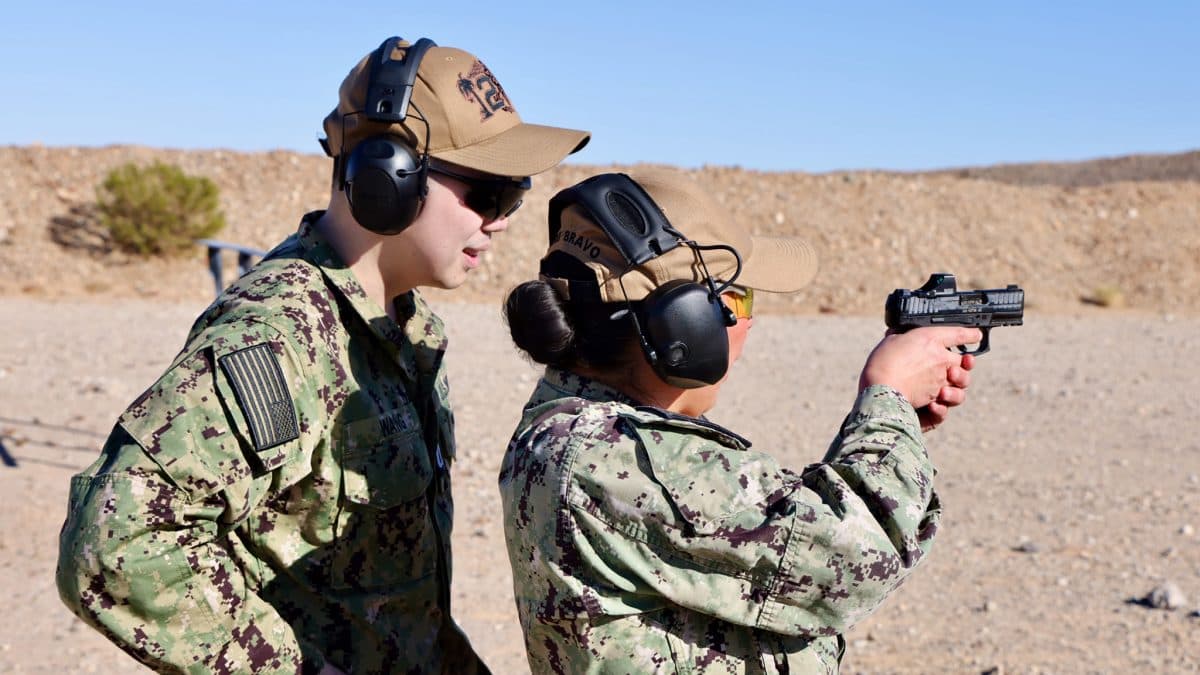
Different branches take different approaches to firearms training. The Marine Corps tends to be very combat-focused and puts every enlisted Marine through a post-bootcamp course called Marine Combat Training. Every Marine is also required to qualify with a rifle yearly.
This doesn't mean that every Marine is an expert. However, every Marine has exposure to rifles, grenade launchers, and light machine guns. I'd assume most soldiers also received some degree of combat training due to their land warfare nature.
Military Firearms Training in Boot Camp
I love to point out boot camp training to folks who dog on military firearms training. Nobody becomes John Wick in boot camp, but they do quickly learn how to shoot a rifle at various distances.
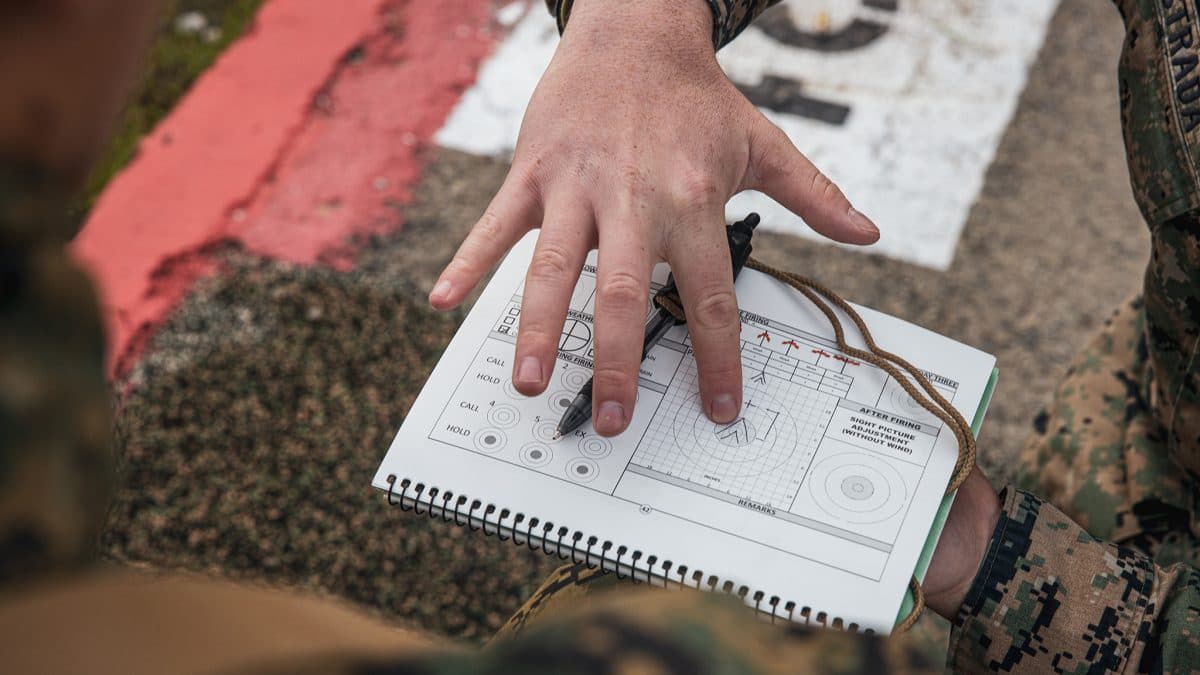
The training is basic but impressive. If you are an experienced shooter, you know it can be difficult to train a new shooter. Imagine having to train a hundred new shooters – the vast majority of whom have never touched a gun – and they’re mostly teenagers.
Instructors have to take a hundred recruits and teach them to consistently hit targets at 500 yards.
My boot camp platoon consisted of about 90 recruits. Of those, only two failed on qual day, and they requalified the following week. That's an impressive success rate; the system clearly works.
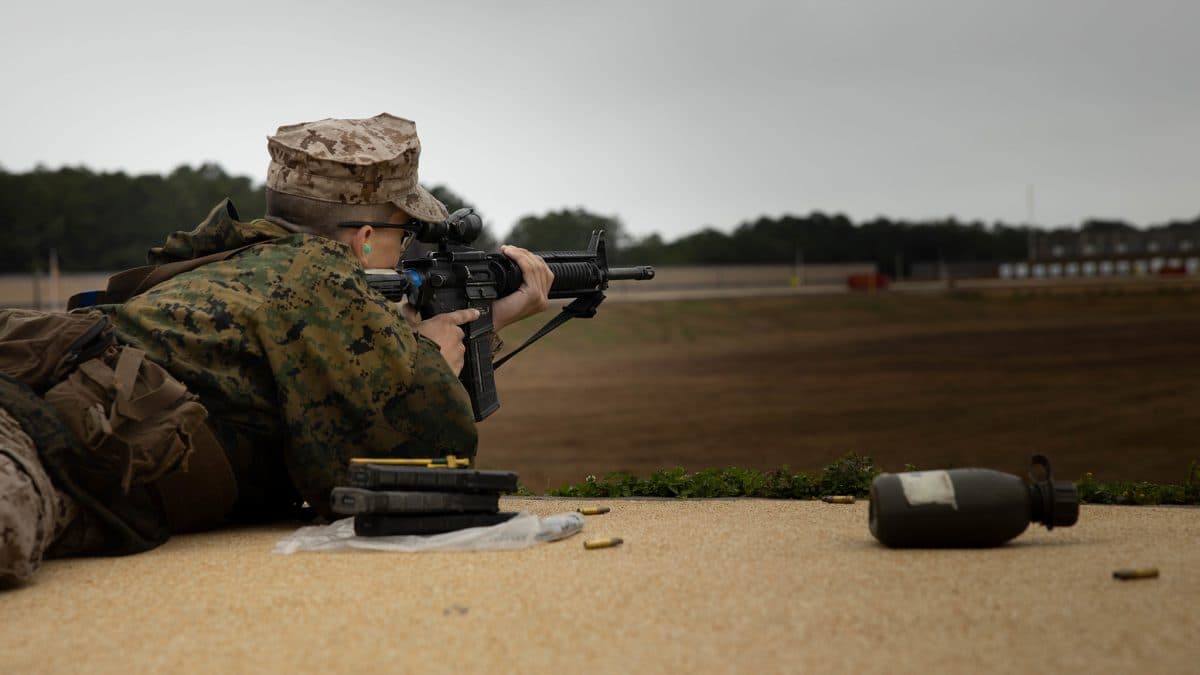
The initial firearms training has a large focus on safety. It also focuses on the fundamentals of marksmanship. Recruits learn how to use sights or an optic, how to assume a solid shooting position, and how to keep that position while shooting.
We did tons of dry fire on white barrels with stenciled targets. We dry-fired in a variety of positions between lectures. The second week took us to the range for live fire practice and qualification. We shot the qualification course of fire every day for five days, with our final day resulting in an official score.
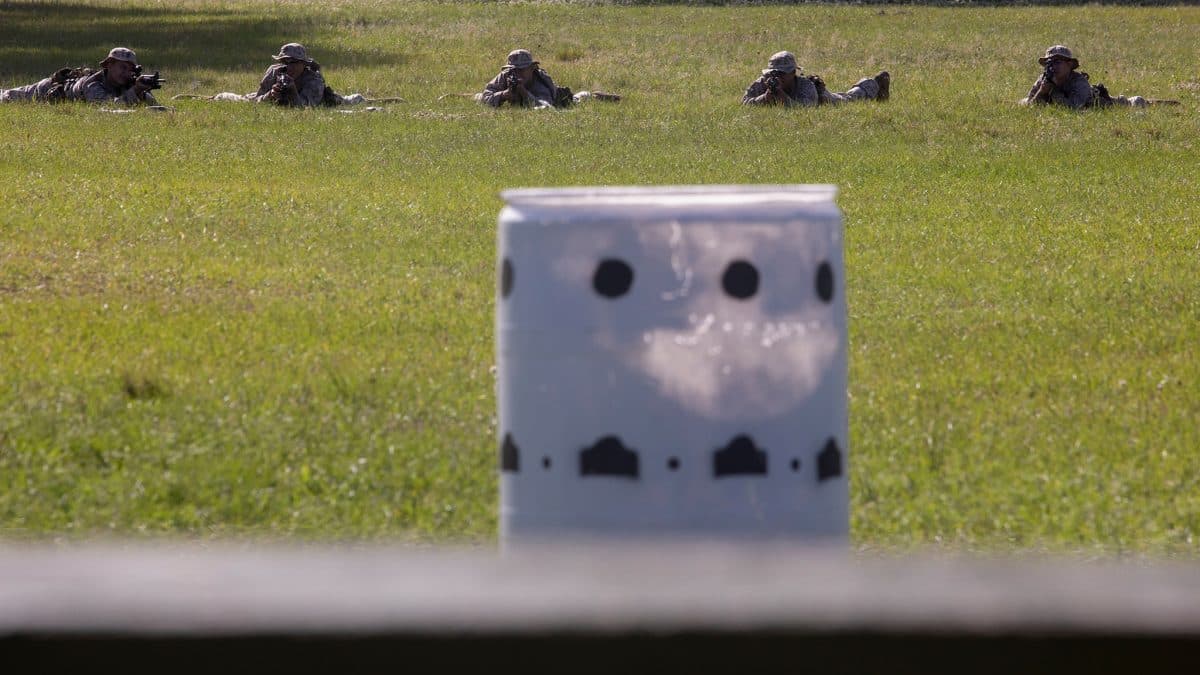
I think the military has mastered the initial training for recruits. They've designed courses that are extremely effective at getting young recruits trained on the fundamentals of marksmanship.
Military Firearms Training in the Infantry (And Beyond)
Beyond boot camp, troops will typically go on to their specific job training. Prior to that, they may go on to some form of advanced combat training. This is where they will typically begin to learn the more advanced tasks.
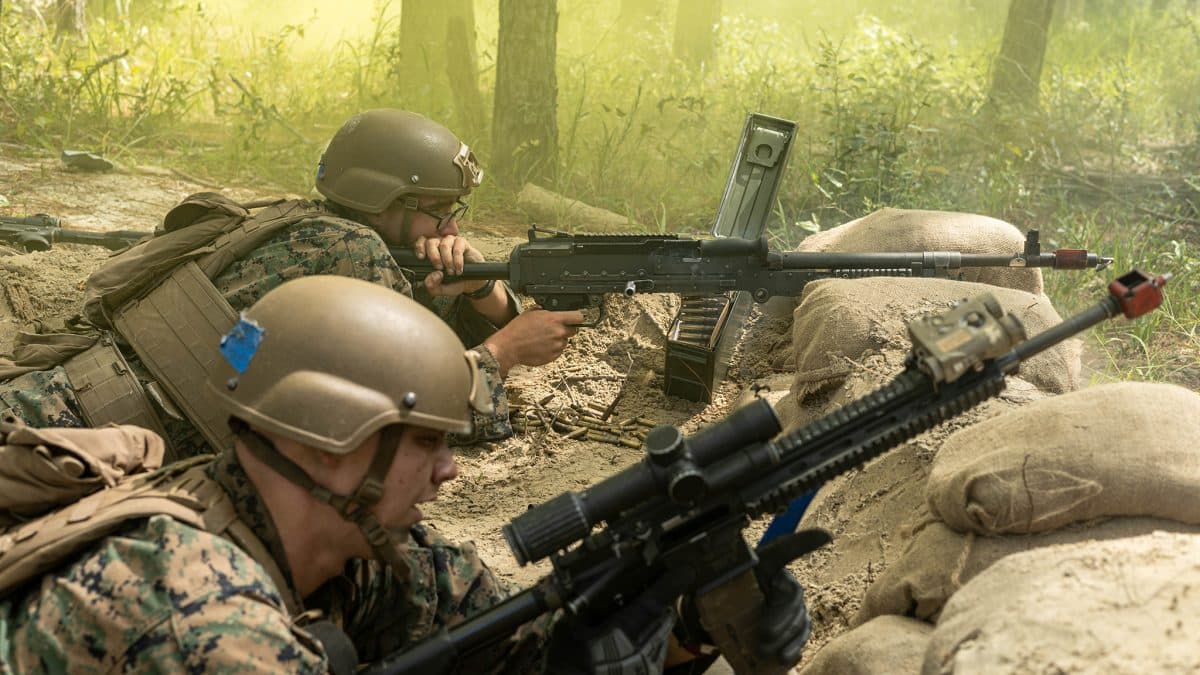
They begin to learn fire and movement, room clearing, shooting under night vision, and a variety of weapon systems, from light machine guns to grenades. They begin to shoot with gear on, like plate carriers and helmets, and learn how to reload, shoot around barriers, and other individual skills.
In my case, I completed additional firearms training prior to each deployment.
The training may vary depending on the deployment, but the basics are largely the same. The pre-deployment cycle begins with a review of the basics and an opportunity for new troops to learn their place in the unit.
Individual skills remain a part of the training cycle, but they’re no longer the most important part; the emphasis is on unit performance.
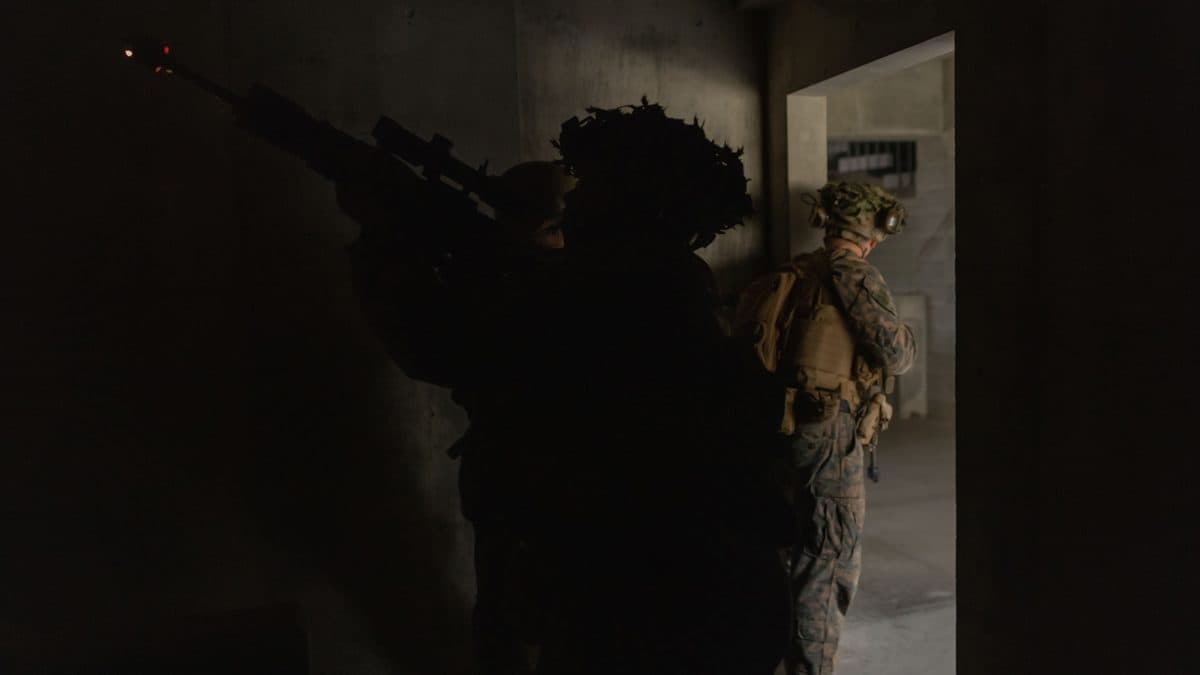
Military firearms training is very repetitive. At the beginning of military operations in urban terrain (MOUT) training, for example, we patrolled the same street 100 times. We cleared the same room 100 times before moving on to a second room.
Everything is very slow and methodical. There is a massive focus on safety, but live fire training is always dangerous. That danger gets cranked up to eleven when considering some of the military's ranges.
Infantry forces aren't just training on a flat range. Most of the training takes place on a fire and maneuver range. This means that troops assault an objective with live fire. Troops will rush, bound, and cover each other as they assault an objective that could be a few hundred yards or a mile away.
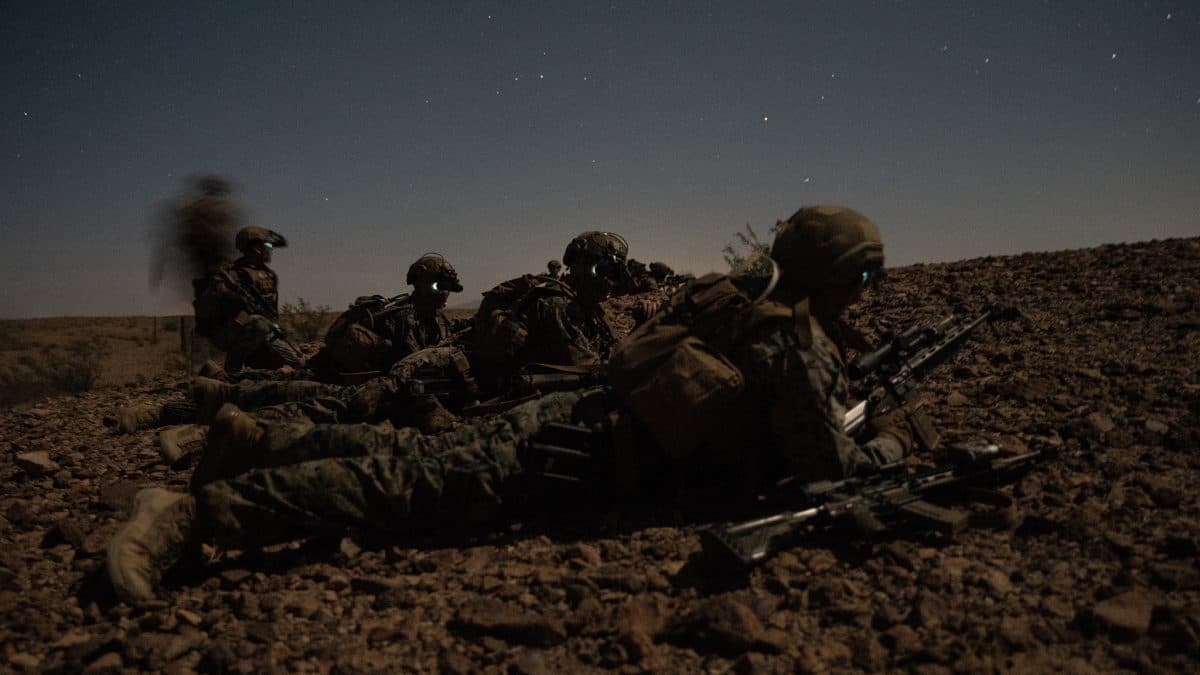
We did each range slick, dry, and live. This means that we started with a walk-through, then geared up for a dry-fire rehearsal, and finally carried out a live-fire course. By the time we finished, we were dead tired.
Machine guns provide cover fire for the assault. A rocket shot at a bunker or armor might be followed by the need to call for close air support, mortars, or artillery fire. Marines run in full gear while paying attention to all of that happening around them.
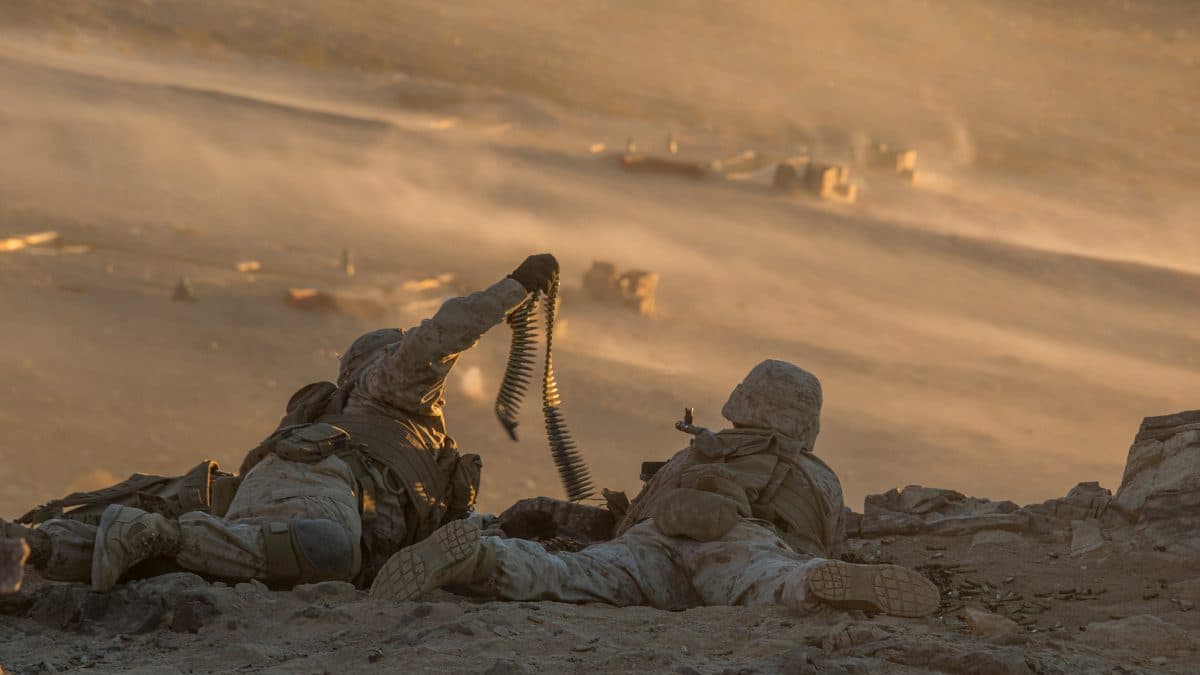
Units might travel to different states to use more advanced and complicated ranges. For example, in the desert of California, a range allows for overhead machine gun fire. That means troops maneuver under the live fire of a machine gun position.
This is dangerous, and a lot of safety measures have been implemented, but it's still an incredibly complicated task for infantry and machine gunners to accomplish. Again, individual skill will only get you so far. Teamwork is essential.
Military Firearms Training vs. Civilian Shooting Courses
If you were to break out the shot timers and run Bill Drills or other individual skills, a well-trained civilian might do fairly well against the average service member.

Why? Civilians who seek training get far more one-on-one attention. If you take a good rifle class, you'll receive a fair bit of quality, individualized coaching.
That attention allows for small tweaks to make you a better shooter. That kind of individual attention isn't possible for the average infantryman. The military is also much slower in adapting to the latest firearms training techniques.
In civilian firearms training, we are obsessed with individual skills because, at the end of the day, most of us won't have a team to help us defend our homes.
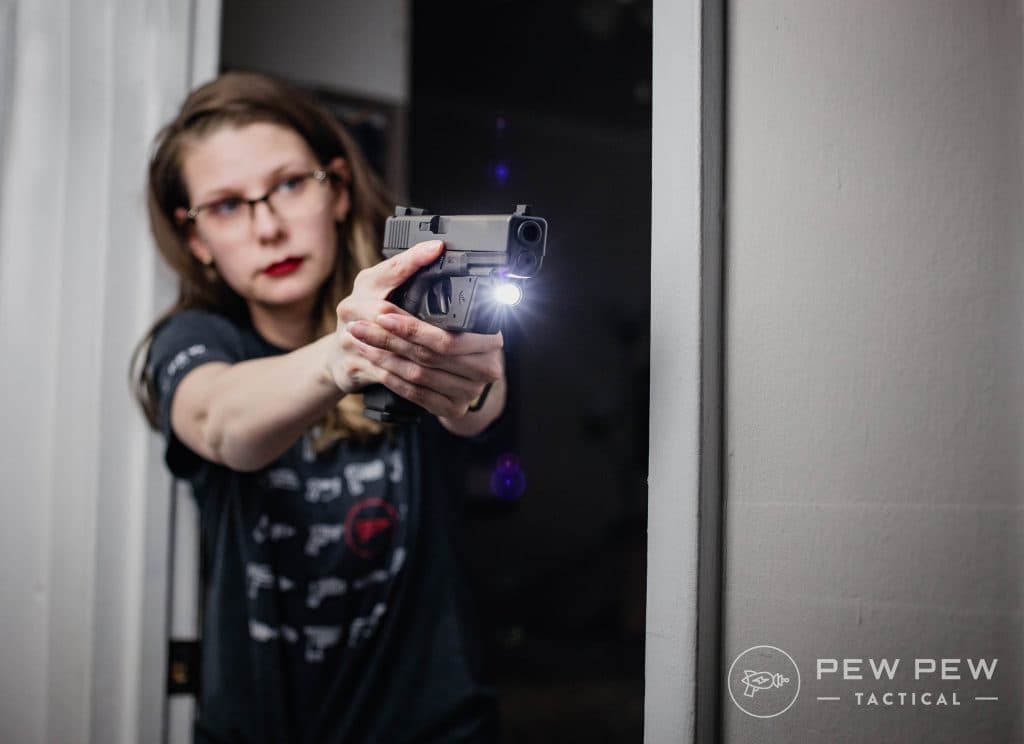
Bottom line: we’re training for different things.
The biggest focus for the military will always be on unit performance. Perfect form and technique with a rifle simply aren't as important as proper small-unit tactics. In combat, breaking through an ambush is a lot more important than your one-reload-one time.
When someone remarks, "OMG, he's holding the magwell," they might not understand that the service member in a picture has been clearing rooms for the last 12 hours, and he’s dog tired. Sure, it's not a great way to hold a rifle, but it might allow him to train longer and keep his focus on retaining more information.

A fast Bill Drill isn't as important to a machine gunner as their ability to manage their ammunition supply to make sure it lasts the entire duration of an assault.
Meet the Experts
Heading up this article is Pew Pew Tactical author Travis Pike. Travis spent a lifetime shooting and hunting before joining the United States Marine Corps, where he spent five years as an infantryman. Travis is also an NRA-certified instructor and concealed carry instructor in the state of Florida.
Editing this article is Scott Murdock. Scott is a Marine Corps veteran who competed and qualified as a rifle and pistol expert while in service. In addition to shooting, Scott has written for a variety of publications, testing, researching, and evaluating guns and gear. He brings that knowledge and skillset to this article, editing and fact-checking for accuracy.
Editor-in-Chief Jacki Billings runs our experienced team of reviewers. She is a National Rifle Association Basic Pistol Instructor as well as a member of the Society of Professional Journalists, ACES: Society for Editing, and the Professional Outdoor Media Association. Jacki has a bachelor’s degree in journalism and has worked as a media professional for close to 20 years, specializing in gun media for almost 10 years. With 2,000+ articles to her name, she uses her professional journalism and editing experience to set testing protocols and editorial standards for Pew Pew Tactical.
Final Thoughts
While the individual skills training received in the military isn't always top-notch, it's also not easy to adapt to new technology or techniques.
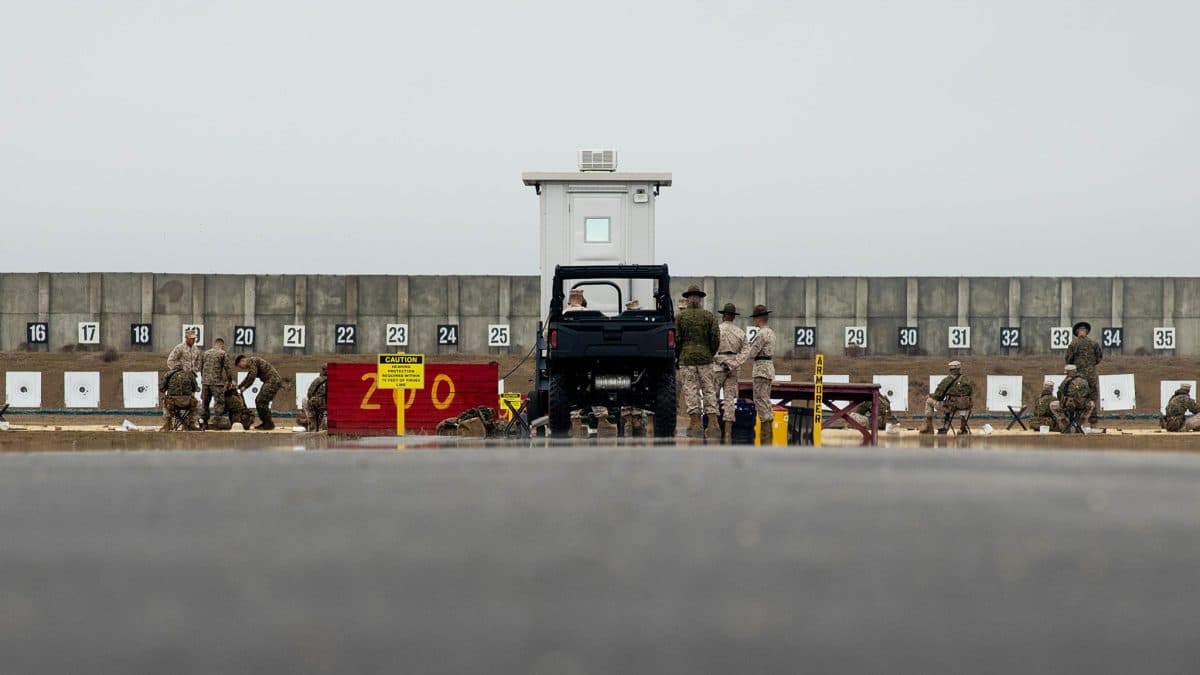
Military training focuses more on your part of the team, tactics, and job. You might be a rifleman or a radio guy. Both are incredibly important to mission success.
What are your experiences with firearms training in the military or as a civilian? Let us know below. Looking for professional instruction? Check out some of our favorite carbine and pistol courses!