
300 Blk vs. 8.6 Blk vs. 338 ARC: Who Is The King Of Subsonic Ammo?
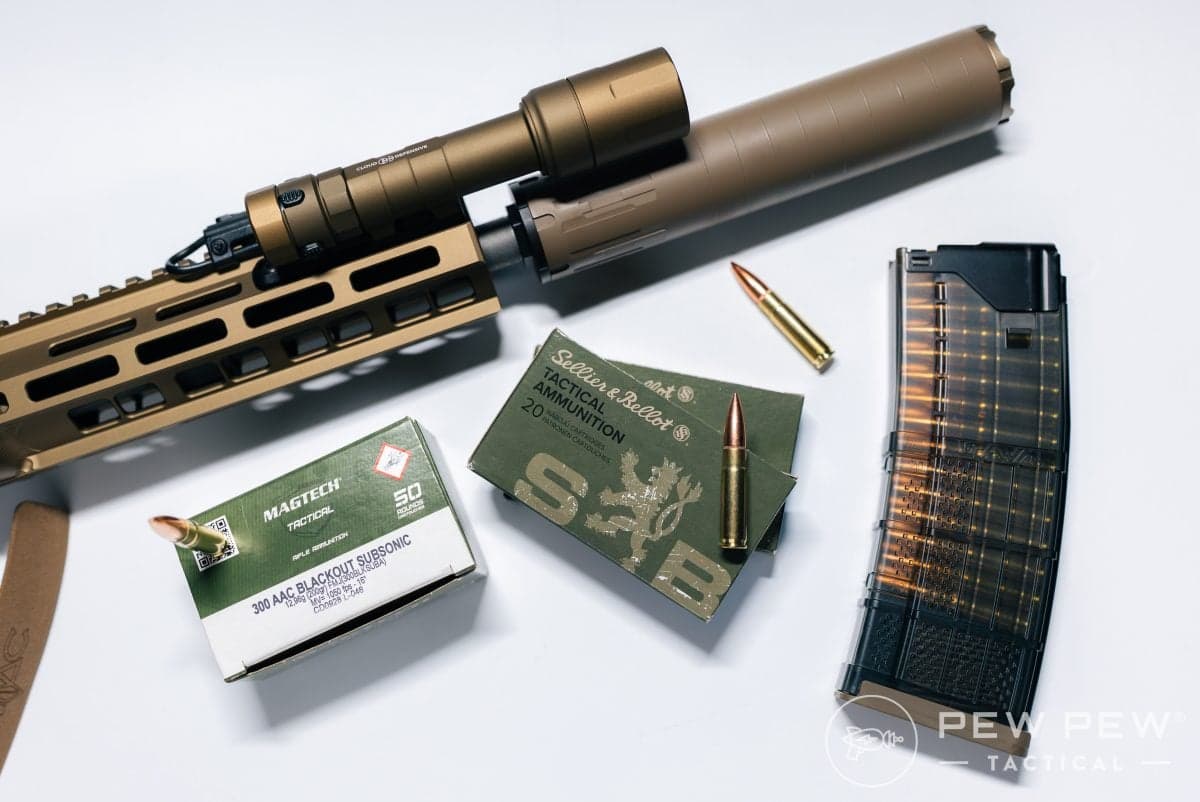
When it comes to suppressed shooting, three cartridges rise to the top. Here’s how to pick the best one for your style of shooting.

USMC Veteran. Concealed Carry & NRA Pistol Instructor. 3-Gun Competitor. Career firearms writer
We review products independently. When you buy through links on our site, we may earn a commission to help support our testing. Learn more.
Now that the $200 tax stamp on suppressors is dead and gone, a lot more people are deciding that filling out a few forms is a small price to pay for putting a suppressor on everything with a threaded barrel.
Suppressor ownership has expanded rapidly, and there have been several advancements in firearms and ammunition specifically for suppressor use. This offers tremendous performance advantages over alternatives like subsonic 5.56 NATO or .223 Rem.
The three biggest contenders in the dedicated suppressor cartridge world are .300 Blackout, 8.6 Blackout, and .338 Advanced Rifle Cartridge. But which one should you shoot?

That’s not easy, but it's what I plan to answer today. I’ll dissect each of these suppressor-ready cartridges, examining their pros and cons and the benefits they offer over each other.
By the end of the article, you’ll be able to settle the .300 Blk vs. 8.6 Blk vs .338 ARC debate for yourself.
Table of Contents
.300 Blackout: The Original Subsonic Specialist
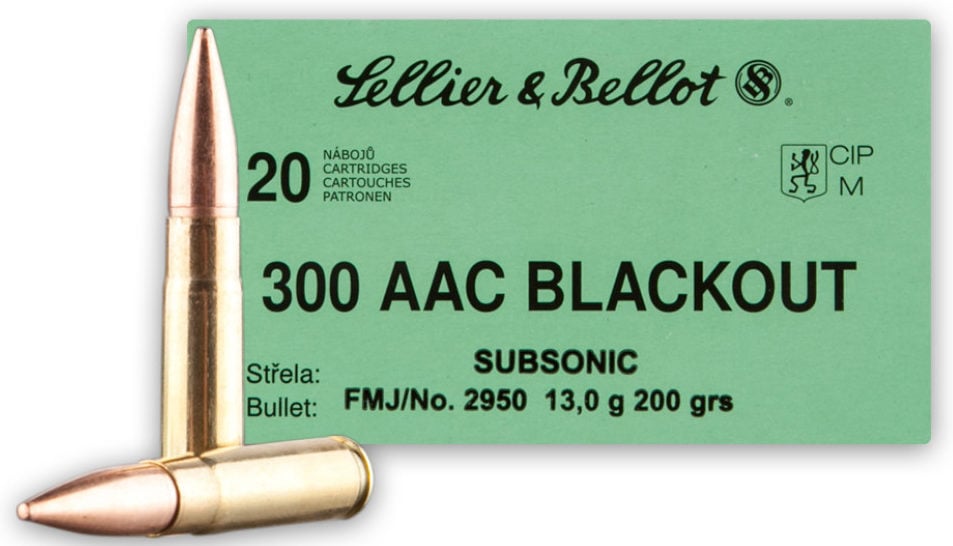
Of these three, .300 Blk is the oldest. We can trace its origin back to the wildcat (meaning non-standardized) .300 Whisper cartridge. Advanced Armament Corporation produced the .300 Blk in 2010 for standard AR-15 platforms.
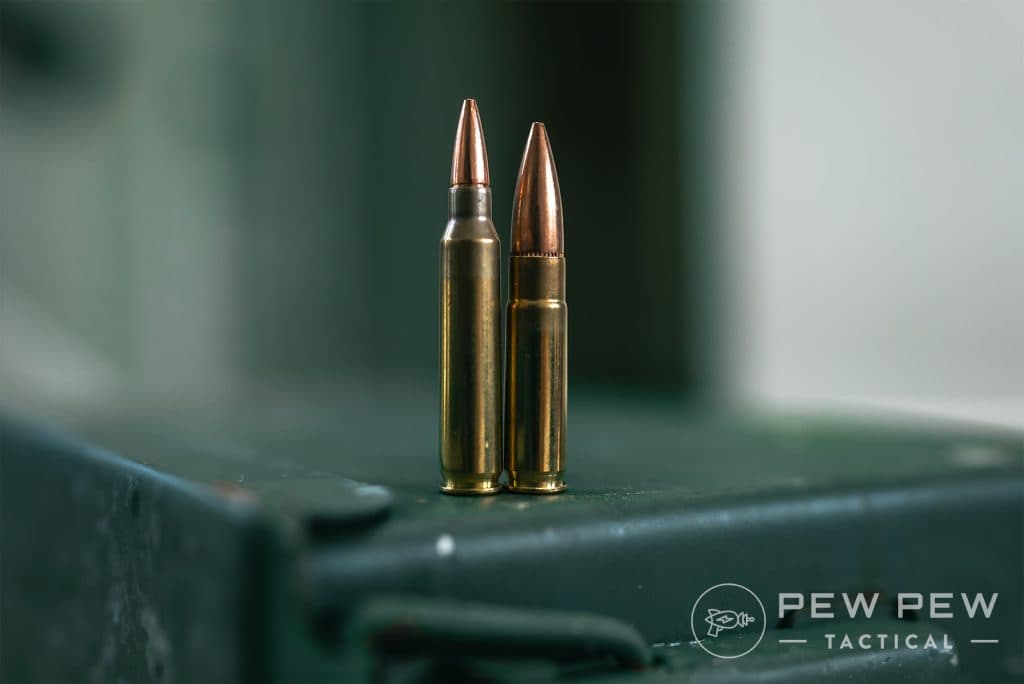
It essentially combines a .30-caliber bullet from 7.62 NATO and a modified case from 5.56 NATO.
The goal was to meet the demands of special operations troops who needed a round that did three things well:
- Performs from a short barrel similar to that of a suppressed MP5
- Offer subsonic and supersonic ammunition
- Work with the existing AR-15 platform

The new .300 Blk cartridge achieved all three of these goals and became one of the first new AR-15 cartridges to achieve commercial success. This success is largely attributed to the goal of complementing the dominant 5.56 NATO cartridge rather than replacing or competing directly against it.
Ammunition manufacturers quickly responded to demand by spinning up a wide range of subsonic and supersonic products. The popularity of .300 Blk also resulted in expansion from the AR-15 into a whole host of weapons, including AKs, bolt-action rifles, lever-action rifles, and more.
It’s safe to say .300 Blk is the most popular suppressor-ready cartridge you can buy today.
Benefits of Shooting .300 Blk
The .300 Blk cartridge meets all AAC’s stated goals, including functioning effectively from very short barrels. Thanks to fast-burning propellants, .300 Blk can reach peak velocity from stubby 8-inch barrels that leave plenty of room for a suppressor.
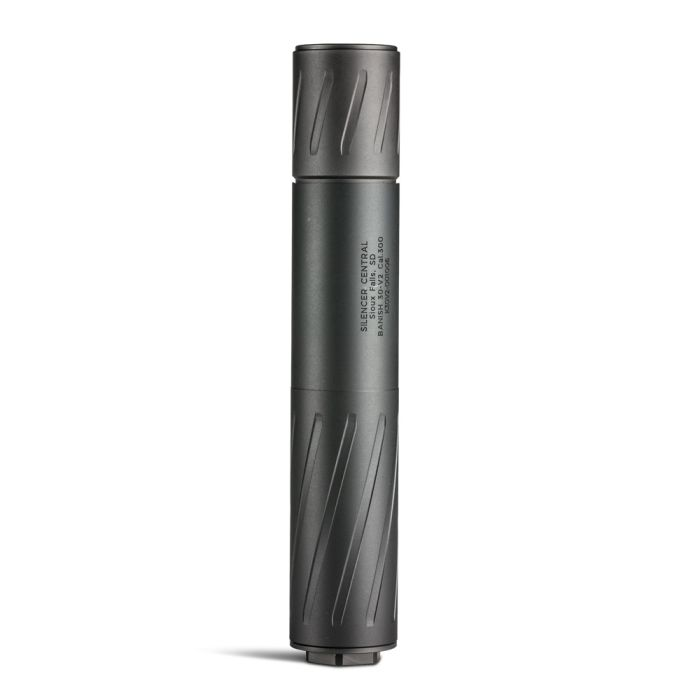
You have the option to switch between subsonic and supersonic cartridges without any adjustments to your firearm.
Help yourself to quiet subsonic ammo or faster, harder-hitting, supersonic rounds for longer engagements – just remember that you’ll have to use two very different points of aim as distances increase.
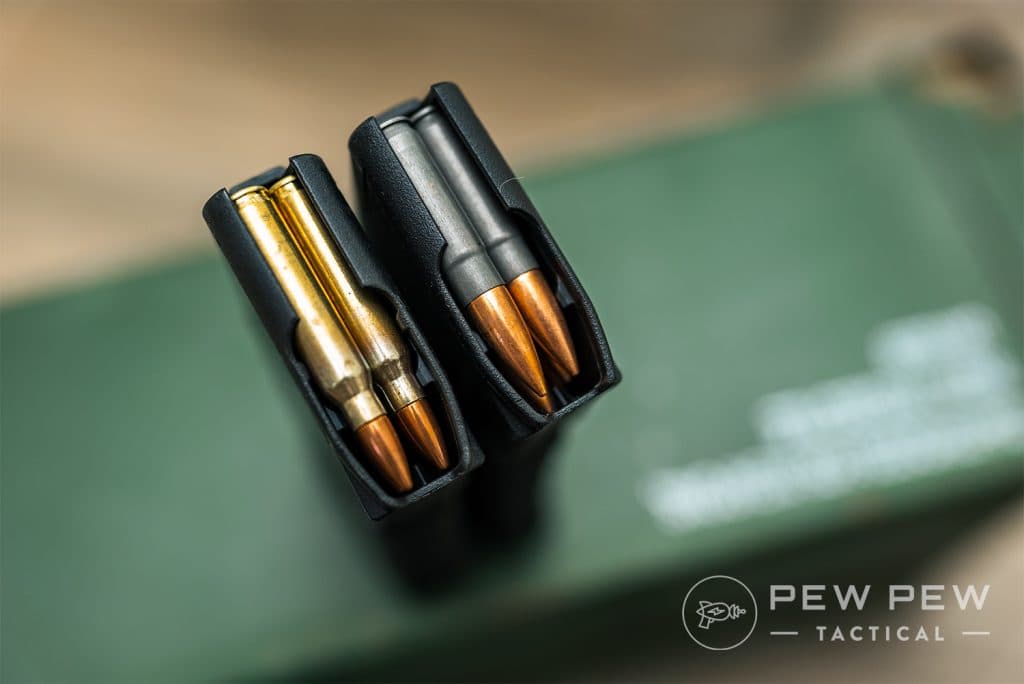
The cartridge has experienced immense success because of its compatibility with standard AR-15 parts – all you need to do is swap the barrel and gas system. It uses the same receivers, bolts, and magazines as 5.56 NATO. This makes adopting the cartridge inexpensive for firearm manufacturers and easy for consumers without involving new, expensive, and proprietary parts.
The .300 Blk cartridge is very versatile. It’s excellent for home defense, hunting, and recreational shooting.
Downsides of Shooting .300 Blk
One common downside you’ll see for all three of these cartridges is expensive ammo. The price of .300 Blk ammo has dropped, and it’s the cheapest of the three suppressor-ready cartridges, but it’s still pricey compared to 5.56 NATO. It’s also not as readily available, although it’s the most common of the three suppressor-ready rounds.
Compared to 5.56 NATO, .300 Blk has very limited effective range.
Supersonic cartridges seem to work best within 300 yards. You can hit targets further than that, but you’ll have to compensate for a lot of bullet drop.
Subsonic rounds are ballistically similar to .45 ACP, so you’ll be stretching its limits to even reach 200 yards when you factor in environmental conditions. Switching between subsonic and supersonic ammo is easy, but you have to use different zeroes. Some optics have accounted for this, but they’re few and far between.
The biggest downside is the potential for user error. You could accidentally chamber a .300 Blk cartridge in a 5.56 NATO rifle, and you wouldn’t know until you pulled the trigger and the gun exploded.
If you’re shooting 5.56 NATO and .300 Blackout, you have to be careful and double-check your ammo. I tend to use different-colored magazines to differentiate between the cartridges.
Why You Should Shoot .300 Blk
Of the three, .300 Blk is the most common, least expensive, and easiest to shoot. It’s a solid cartridge and would be the best home-defense option of these three suppressor-ready cartridges.
8.6 Blackout: The Big Dog
Kevin Brittingham, the creator of .300 Blk and owner of Q, followed his success by releasing 8.6 Blk in 2022.
Remember how .300 Blk was basically a mashup of 7.62 NATO and 5.56 NATO? Well, 8.6 Blk is just a bigger, more powerful manifestation of that concept. It basically stuffs a .338-caliber projectile into a modified 6.5 Creedmoor case.
The 8.6 Blk cartridge does some of the same things as .300 Blk. It offers both subsonic and supersonic options, and it performs well out of short barrels.
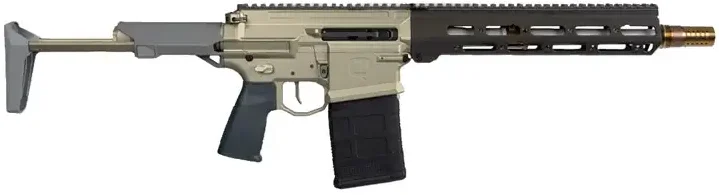
Q produces a few rifles for 8.6 Blk, but several other companies are getting in on the action as consumer demand ramps up. So far, 8.6 Blk has made its way into semi-automatic, bolt-action, and single-shot rifle and pistol platforms.
Benefits of Shooting 8.6 Blk
Like .300 Blk, 8.6 Blk can perform well in barrels as short as 8 inches, but 12 inches seems to be the sweet spot for the cartridge. That’s impressively short for a full-powered rifle round; models like the Q Boombox and Q Fix are absolute beasts.

Shooting 8.6 Blk offers surprisingly decent range. A supersonic round can reach out to 1,000 yards, and subsonic rounds deliver a wallop out to 400 yards. That’s brilliant for a cartridge coming out of such a short barrel.
And 8.6 Blk hits like a freight train. In addition to simple mass, the .338-caliber bullet benefits from a uniquely fast twist rate to impart huge amounts of rotational force. The resulting energy and penetration make it a very capable hunting round.
Once again, Brittingham tapped into a massive ecosystem of components rather than reinventing the wheel with a bunch of proprietary machining. This time, the new cartridge is compatible with a wide array of components designed for .308 Win and 7.62 NATO. That includes receivers, bolts, magazines, and more.
Downsides of Shooting 8.6 Blk
Predictably, this cartridge is expensive. Finding ammo is also a little difficult due to its relatively niche status. The extremely fast twist rate requires robust bullet composition, which also drives up ammo prices.

While the cartridge has decent range, it still experiences far more drop than cartridges like .308 Win and 6.5 Creedmoor. Swapping from subsonic to supersonic ammo will have a significant effect on your zero, so you’d better memorize elevation holds for both cartridges.
You’ll also need a fairly large suppressor. Unlike .300 Blk, which works with a common .30-caliber can, 8.6 Blk requires a larger and less common (read: more expensive) .338-caliber can.

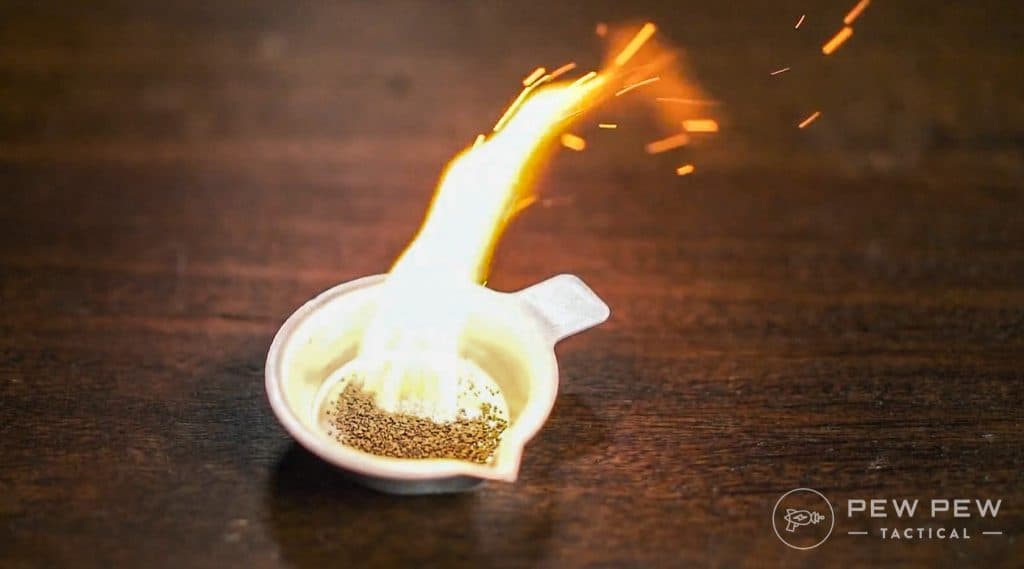
There are ballistic consistency issues with 8.6 Blk ammo, too. The case is large to make room for all the propellant needed for subsonic loads, but subsonic ammo leaves much of that space empty. This allows the propellant to rattle around in the case, which can lead to inconsistent ignition and, by extension, accuracy.
Industry politics play a role, too. Since 8.6 Blk didn’t achieve SAAMI approval until 2026, commercial uncertainty caused ammunition and firearm manufacturers to be cautious about jumping on the bandwagon for the first few years. That should be resolved now that 8.6 Blk is an official SAAMI-approved standard cartridge.
Why You Should Shoot 8.6 Blk
If you ask me, supersonic 8.6 Blk offers the best long-range performance of the three. It’s a heavy-hitting round that goes nice and far while still accounting for excellent subsonic performance.
.338 ARC: The (Relatively) New Hotness
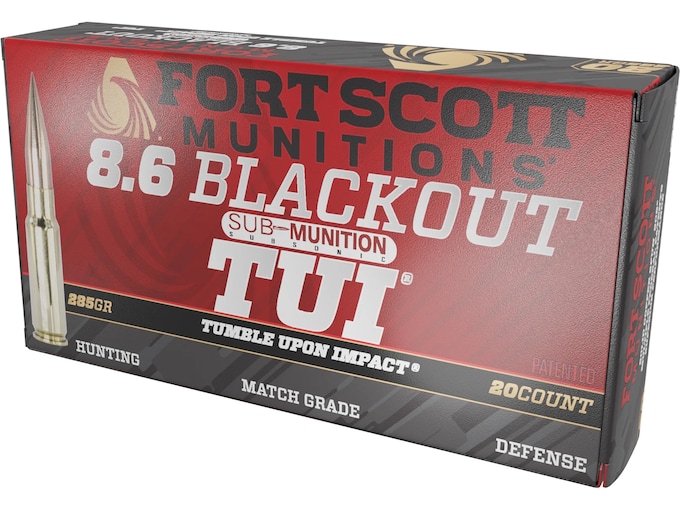
Of these three cartridges, .338 ARC is the newest. Hornady released it at the tail end of 2024 specifically suppressor use.
Hornady used the same formula as Brittingham to build .338 ARC. It uses a .338-caliber projectile just like 8.6 Blk, but with a 6.5 Grendel case that lets it fit in an AR-15 rather than sizing up to an AR-10.
The big bullet and short case create look a little goofy, but I can’t help but like it.
Benefits of Shooting .338 ARC
The .338 ARC cartridge is compatible with AR-15 receivers. This lets you use a lighter platform than you would if you shot physically larger 8.6 Blk.
The .338 ARC cartridge also does well in terms of energy transfer. It achieves about the same velocity as .300 Blk, but the heavier bullet packs a much harder punch.
Ammunition manufacturers offer supersonic and subsonic options, but .338 ARC is really all about being subsonic. A 307-grain bullet slaps the target hard, even when it's moving slower than sound. A subsonic bullet produces around 752 foot-pounds of muzzle energy, which is roughly 250 foot-pounds more than subsonic .300 Blk loads produce.
Bottom line? It’s a hard-hitting, soft-recoiling, quiet cartridge that fits somewhere between .300 Blk and 8.6 Blk.
Downsides of Shooting .338 ARC
Like the other two cartridges on our list, .338 ARC is expensive and hard to find. It is arguably the hardest to find of the three.

Another problem you’ll encounter is the lack of compatibility with existing components. You need a special bolt, magazine, buffer setup, among other things.
Magazines are a common problem. Many owners report difficulty finding a standard-capacity magazine that works reliably with .338 ARC. Duramag is the only brand I know of that consistently works.
The bolt design uses a relatively thin bolt face, which might be a weak point. There are good bolts that run reliably over high round counts, but they tend to be expensive.

Finally, recoil is harsher from .338 ARC than .300 Blk. The zero between subsonic and supersonic ammo will again be significantly different, and .338 ARC doesn’t offer the same range as 8.6 Blk or the .300 Blk.
Why You Should Shoot .338 ARC
Of these three options, .338 ARC would probably be the best hunting option for a lighter, more common rifle platform. Feral hogs, beware.
Meet the Experts

This article comes to you from Pew Pew Tactical contributor Travis Pike. Travis spent a lifetime shooting as a kid and later joined the United States Marine Corps, where he spent five years as an infantryman. His experience as a machine gunner, recreational shooter, and hunter has given him unique insight into various guns and accessories.
Travis has thousands of articles to his name with a variety of publications, and has used countless suppressors, shotguns, rifles, handguns, and other firearm accessories. His time behind numerous different platforms and different optics has provided him with an excellent knowledge of what makes some cartridges better for certain roles than others.
.300 Blk vs. 8.6 Blk vs. .338 ARC: Is There a Winner?
Of course, in the gun world, there is rarely one “best” option for everyone and every purpose.
Each of these suppressor-friendly cartridges offers plenty of benefits and a few downsides. There is no outright best cartridge, so you have to weigh your needs with the benefits and downsides of each.
Which would you pick, .300 Blk, 8.6 Blk, or .338 ARC? Let us know below. Still looking for the right can? Check out our guide to the Best AR-15 Suppressors!