
Best 9mm Ammo of 2025: Self Defense & Range [Ballistic Gel Tested]

We tested more than a dozen types of 9mm ammo with multiple barrels, a chronograph, and ballistic gel to find the best training and defensive loads for you.

PPT Editor. Marine vet, hunter, and long-range shooter. Articles in 10+ major publications
We review products independently. When you buy through links on our site, we may earn a commission to help support our testing. Learn more.
- 9mm Range Ammo Comparison Chart
- Self-Defense 9mm Ammo Comparison Chart
- Our Favorite 9mm Ammo in Under a Minute (ish)
- How We Tested the Best 9mm Ammo
- 9mm Ammo Testing Tools
- Best 9mm Range Ammo
- Best 9mm Self-Defense Ammo
- Key 9mm Ammo Testing Definitions
- Meet the Experts
- Final Thoughts
- Additional Resources
- Latest Updates
Editor's Note: Current supply chain issues are affecting the ammunition market, so you might notice inconsistencies in price and availability. We got in touch with Dan Wolgin, CEO and owner of Ammunition Depot, for an inside look at the factors shaping the industry.
“Despite the narrative, we are not seeing a true primer shortage in today’s market," Wolgin said. "In fact, domestic primer capacity is expanding, with recent investments such as Fiocchi’s new facility in Arkansas, White River Energetics, LLC’s expansion in Illinois, and Ikonick Energetics in Indiantown, Florida. We’ve worked directly with multiple manufacturers to produce tens of millions of rounds over the past year without any primer-related constraints. The bigger issue right now is powder availability, which remains tight and continues to drive cost increases across the industry.”
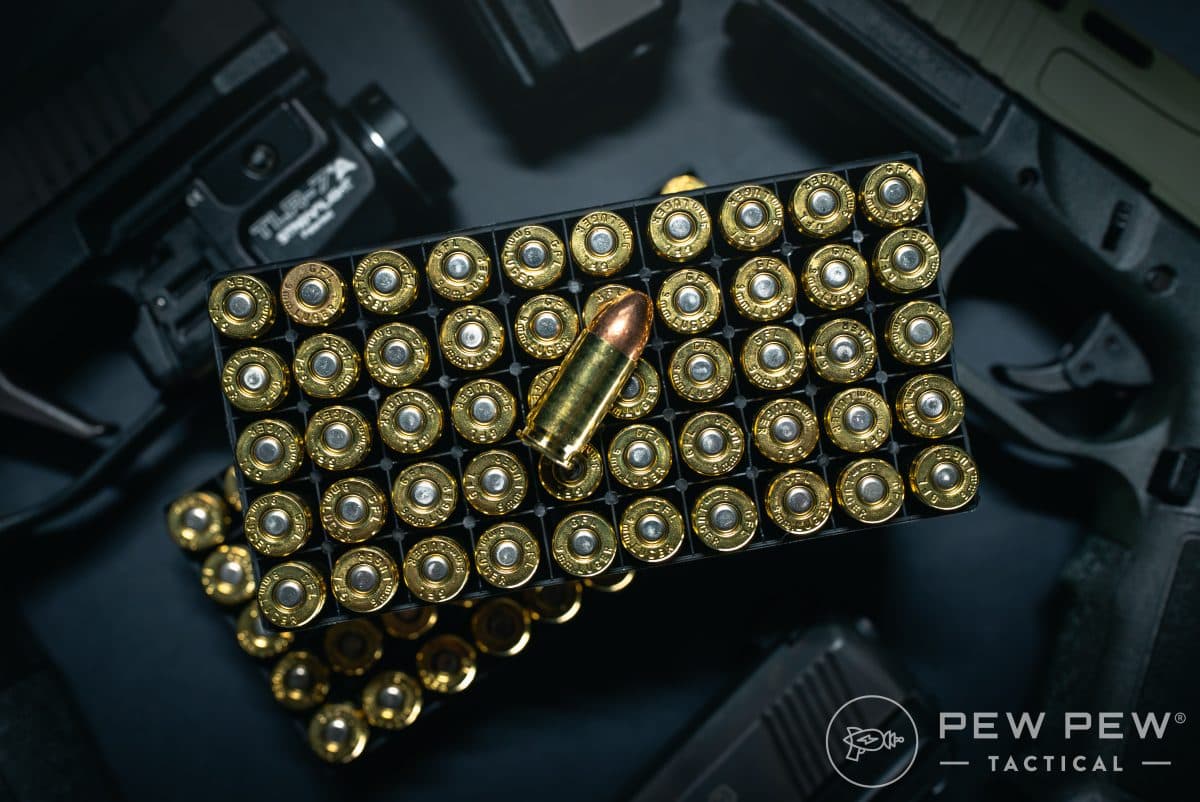
Have you ever walked into your local gun store and felt like Alice in Wonderland looking at all the 9mm ammo options?
You’re not alone. It’s hard to pick the best 9mm ammo when all you have is other people’s anecdotal recommendations to go by.
That’s why we bought some of the most popular 9mm ammo out there and put it through a gauntlet of testing and evaluation. By the end of this article, you’ll have all the information you need to buy the best 9mm ammo for you.
Let the science begin!
The Quick List
- Most Versatile Hollow Point: Federal Premium HST 9mm Ammo 124gr JHPJump to details ↓
- Best Value Range Ammo: Blazer 9mm Ammo 124gr FMJJump to details ↓
- Best Premium Range Ammo: PMC Bronze 9mm Ammo 124gr FMJJump to details ↓
- Best Penetration Hollow Point: Speer Gold Dot 9mm Ammo +P 124gr JHPJump to details ↓
- Best Budget Range Ammo: Magtech 9mm Ammo 115gr FMJJump to details ↓
- Best Velocity Defensive: Underwood Xtreme Defender 9mm +P 90grJump to details ↓
- Best Frangible Range Ammo Round: Norma 9mm Ammo 65gr FrangibleJump to details ↓
- Best Subsonic Self Defense 9mm: Winchester Defender 9mm Ammo 147gr BJHPJump to details ↓
- Best Subsonic FMJ: Winchester Super Suppressed 9mm Ammo 147gr FMJJump to details ↓
Table of Contents
- 9mm Range Ammo Comparison Chart
- Self-Defense 9mm Ammo Comparison Chart
- Our Favorite 9mm Ammo in Under a Minute (ish)
- How We Tested the Best 9mm Ammo
- 9mm Ammo Testing Tools
- Best 9mm Range Ammo
- Best 9mm Self-Defense Ammo
- Key 9mm Ammo Testing Definitions
- Meet the Experts
- Final Thoughts
- Additional Resources
- Latest Updates
9mm Range Ammo Comparison Chart
| Average Five-Shot Group | Average Muzzle Velocity | Extreme Spread | Standard Deviation | |
|---|---|---|---|---|
| AAC 115gr FMJ | 0.68" | 1,297 fps | 39 fps | 14 fps |
| AAC 124gr FMJ | 0.98" | 1,269 fps | 65 fps | 23 fps |
| Blazer 115gr FMJ | 0.63" | 1,189 fps | 35 fps | 13 fps |
| Blazer 124gr FMJ | 0.50" | 1,136 fps | 35 fps | 12 fps |
| Magtech Steel Case 115gr FMJ | 0.61" | 1,275 fps | 38 fps | 14 fps |
| Norma Frangible 65gr | 0.83" | 1,704 fps | 48 fps | 18 fps |
| PMC Bronze 124gr FMJ | 0.67" | 1,123 fps | 30 fps | 10 fps |
| Winchester Super Suppressed 147gr FMJ | 0.48" | 1,068 fps | 51 fps | 18 fps |
Self-Defense 9mm Ammo Comparison Chart
| Average Five-Shot Group | Average Muzzle Velocity | Extreme Spread | Standard Deviation | Average Penetration | Average Expansion | Average Weight Retention | |
|---|---|---|---|---|---|---|---|
| Federal Premium HST 124gr JHP | 0.67" | 1,256 fps | 18 fps | 6 fps | 18.67" | 61% | +/- 0 gr |
| Hornady Critical Defense 115gr JHP | 0.82" | 1,231 fps | 27 fps | 10 fps | 11.75" | 47% | -1 gr |
| Speer Gold Dot +P 124gr BJHP | 1.02" | 1,315 fps | 37 fps | 13 fps | 15.33" | 67% | +/- 0 gr |
| Underwood Xtreme Defender +P 90gr | 0.85" | 1,598 fps | 33 fos | 12 fps | 18.75" | 0% | +/- 0 gr |
| Winchester Defender 147gr BJHP | 0.47" | 1,092 fps | 66 fps | 25 fps | 18.92" | 61% | +/- 0 gr |
Our Favorite 9mm Ammo in Under a Minute (ish)
Looking to make a quick purchase without reading all the scientific mumbo-jumbo? I’m not offended. Here’s a down-and-dirty breakdown of what I found during my testing.
Best 9mm Training Ammo
- AAC 115gr FMJ: This ammunition wasn’t high-achieving in any category, but it wasn’t lacking, either. It’s a decent training load that’s reasonably priced.
- AAC 124gr FMJ: AAC’s heavier ammunition didn’t quite keep up with the lighter load in my testing. Your results may vary.
- Blazer Brass 115gr FMJ: Blazer’s lighter ammunition didn’t do quite as well as its 124-grain alternative, but it was close. This is a decent training load.
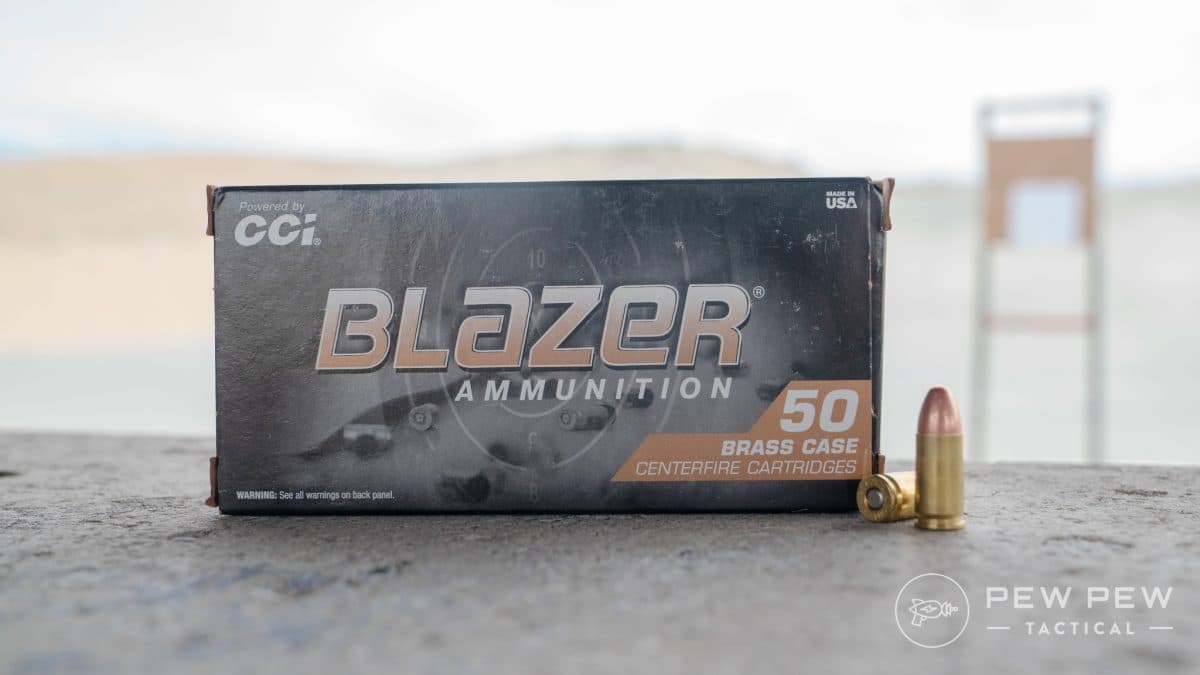
- Blazer Brass 124gr FMJ: This ammunition recorded the best accuracy out of the compact pistol with a 0.36-inch five-shot group. It’s also incredibly consistent, tying with the standard deviation for PMC Bronze 124 gr FMJ with a full-size pistol at three feet per second.
- Magtech Steel Case 115gr FMJ: Magtech recorded great data considering the price. Is the low price enough to offset the accelerated wear from using steel-cased ammo? That’s for you to decide.
- Norma 65gr Frangible: This ammunition isn’t just for satisfying indoor range safety officers. Its performance in this test was unremarkable, but that’s probably better than a lot of shooters might expect from frangible ammo. At the very least, it’s hilarious to see a 9mm PCC knock on the door of 2,000 feet per second.
- PMC Bronze 124gr FMJ: Looking for consistency? This ammunition led the group in terms of standard deviation and extreme spread. It also topped the supersonic crowd in price.
- Winchester Super Suppressed 147gr FMJ: Winchester designed this ammunition for suppressors, but they didn’t forget how to make it accurate. When I compared shot groups across all target loads, this was the winner.
Best 9mm Defensive Ammo

- Federal Premium HST 124gr JHP: This is a solid all-around performer. It yielded commendable results for accuracy out of a PCC, consistent muzzle velocities, and expansion. It overpenetrated slightly using the full-size pistol.
- Hornady Critical Defense 115gr JHP: I would like to see better penetration and expansion from this ammunition. That may or may not be a deterrent for you.
- Speer Gold Dot +P 124gr BJHP: This ammunition struggled with accuracy from the compact pistol (your results may vary), but it did well in every other category – especially expansion.
- Underwood Xtreme Defender +P 90gr: This ammunition didn’t produce great accuracy for me, and it consistently overpenetrated. But holy wound cavity, Batman! Solid copper terminal ballistics are indisputable.
- Winchester Defender 147gr BJHP: Think subsonic ammo is just for keeping volume down? This was the most accurate defensive load across the board. It achieved 50% expansion or better out of every barrel. There is one weak point: it failed to cycle reliably in the PCC I used for testing.
How We Tested the Best 9mm Ammo
For this test, the Pew Pew Tactical team put our heads together and narrowed the seemingly endless sea of 9mm ammo to a few of our favorites. Based on personal experience, recommendations from other shooters, and available data, we chose eight of the top training loads and five of the top defensive loads.
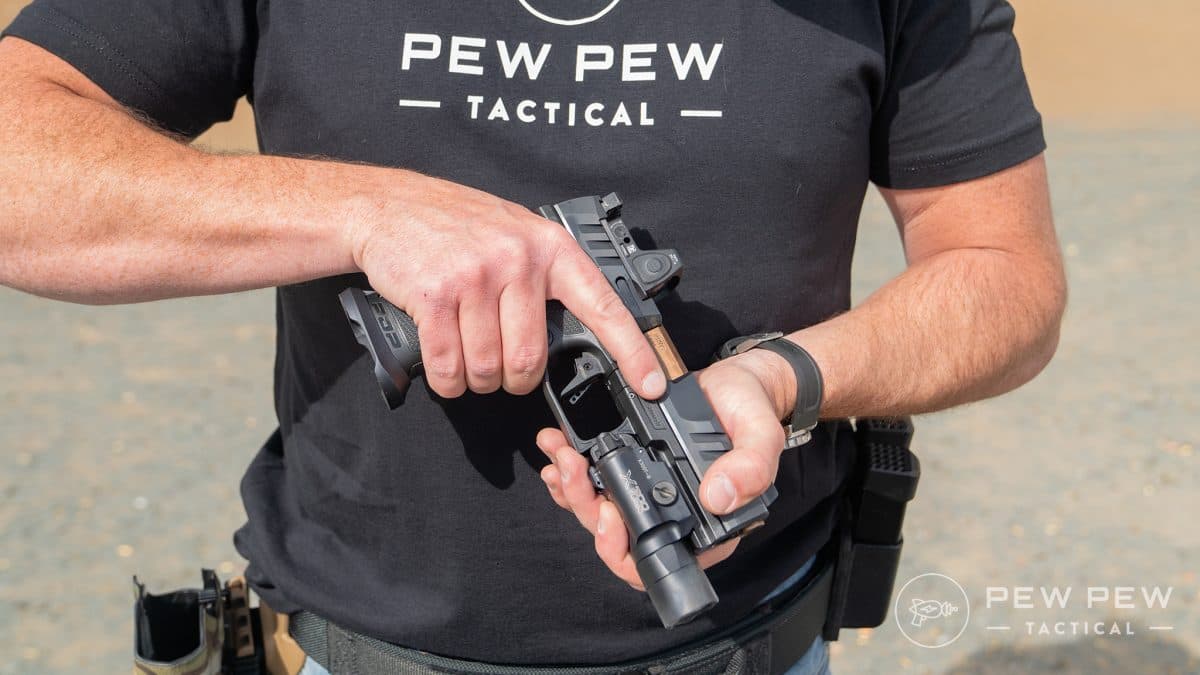
Our selections cover training, indoor shooting ranges, self-defense, and even shooting with a suppressor.
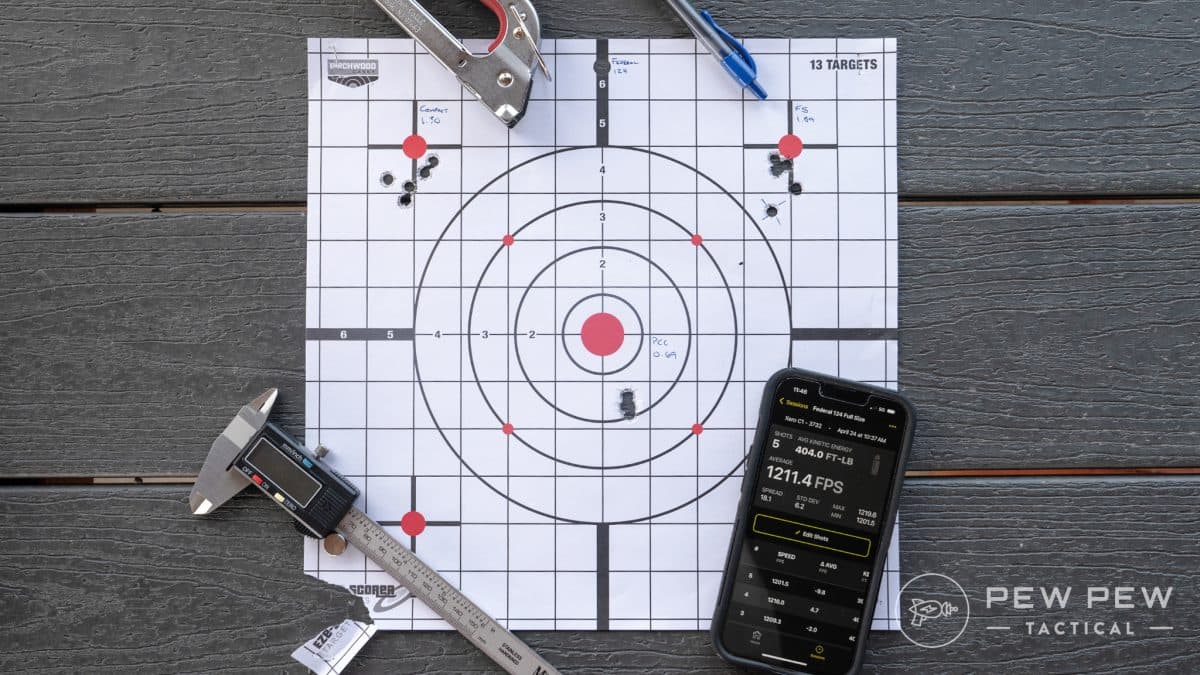
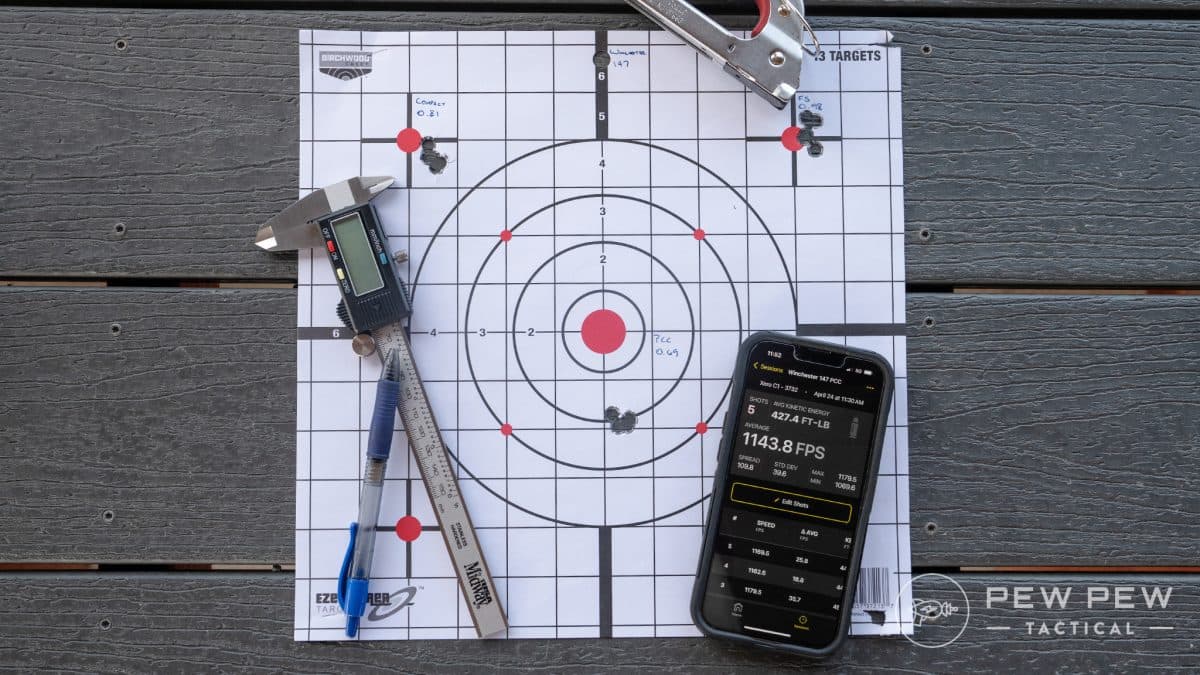
To test accuracy, I shot five-round groups from seven yards with a rest from a hot, fouled bore to level the playing field. Seven yards is a realistic engagement distance for handguns, and I wanted to take as much human error out of the equation as possible.
In two cases, I felt that I pulled one of the shots. To remove human error, I omitted those from my measurement. You’ll see these as crossed-out shots in the accuracy test photos.
To measure each shot group, I used calipers to measure the widest portion (this is the number you’ll see in photos) and subtract the diameter of the cartridge (in this case, nine millimeters or 0.354331 inches). This method provides a group based on center-to-center distance, eliminating the bullet’s diameter from the equation.
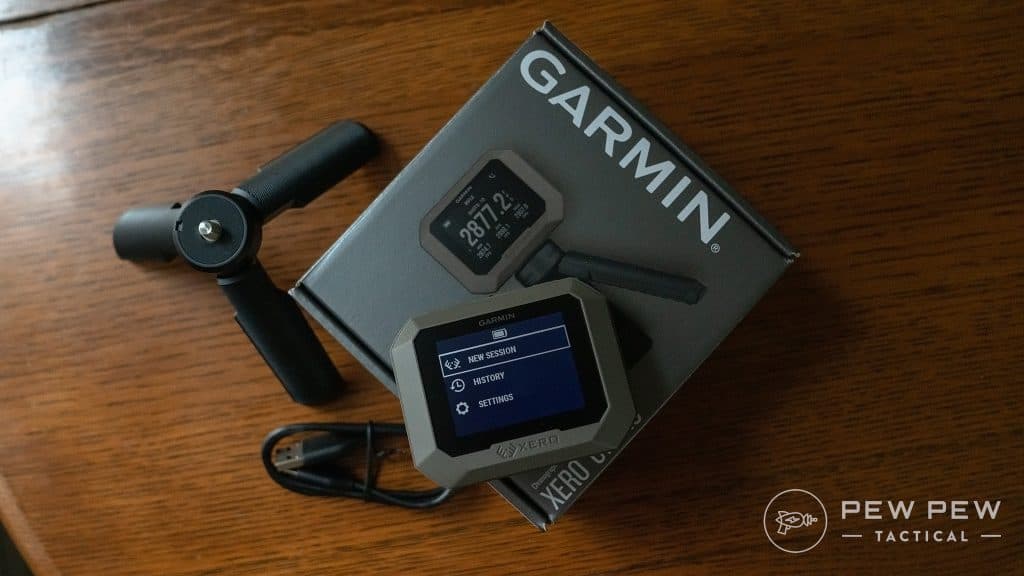
I also evaluated each type of ammunition with a chronograph using five-shot samples. This recorded the muzzle velocity of each shot and provided data on average muzzle velocity, extreme spread, and standard deviation for the group (don’t worry, we’ll cover all these terms and more in a minute).
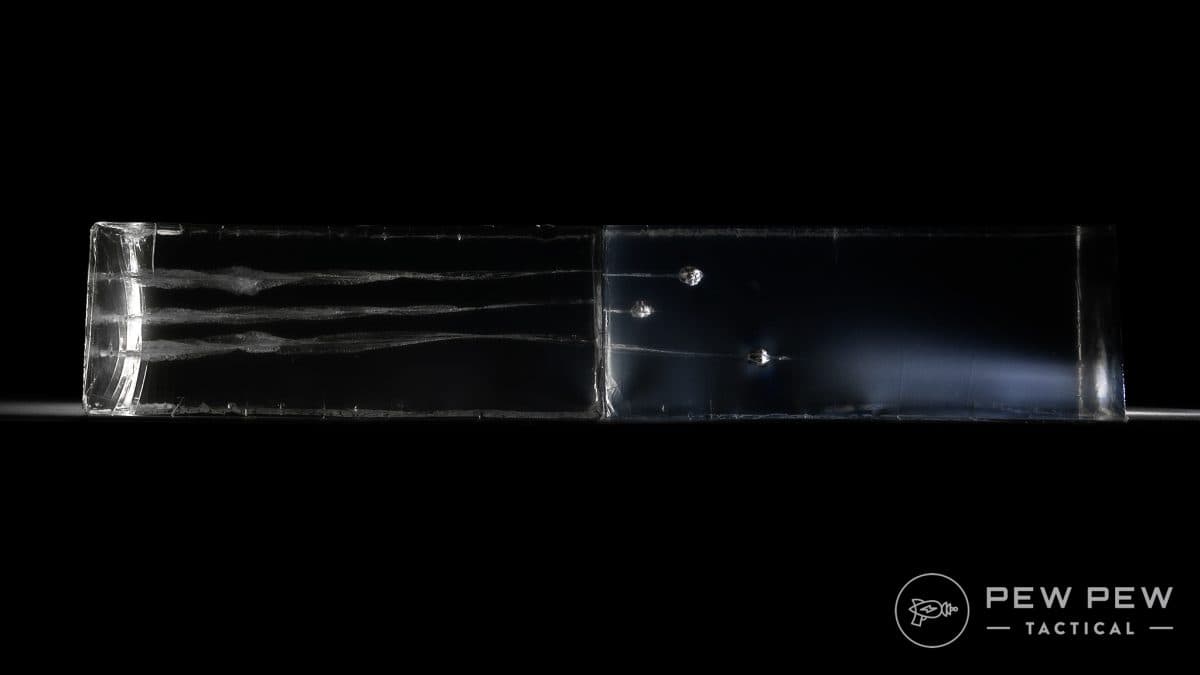
Defensive ammunition got additional testing adhering to the Federal Bureau of Investigation's Ammo Testing Protocol that ammo makers like Hornady use. To evaluate terminal ballistics, I shot each type of ammunition through four layers of clothing into ballistic gel from 10 feet away. This allowed me to visualize terminal performance, measure penetration, weigh each bullet to check for weight retention, and measure each bullet’s diameter for expansion.
Barrel length can affect all of these factors, so I used three different barrels for each type of ammunition.
9mm Ammo Testing Tools
My compact, CCW-style pistol for this test was a Springfield Armory Hellcat Pro with a Vortex Defender-CCW red dot. For supersonic ammunition, I used a 3.7-inch barrel. For subsonic ammunition, I used a 4.4-inch threaded barrel.
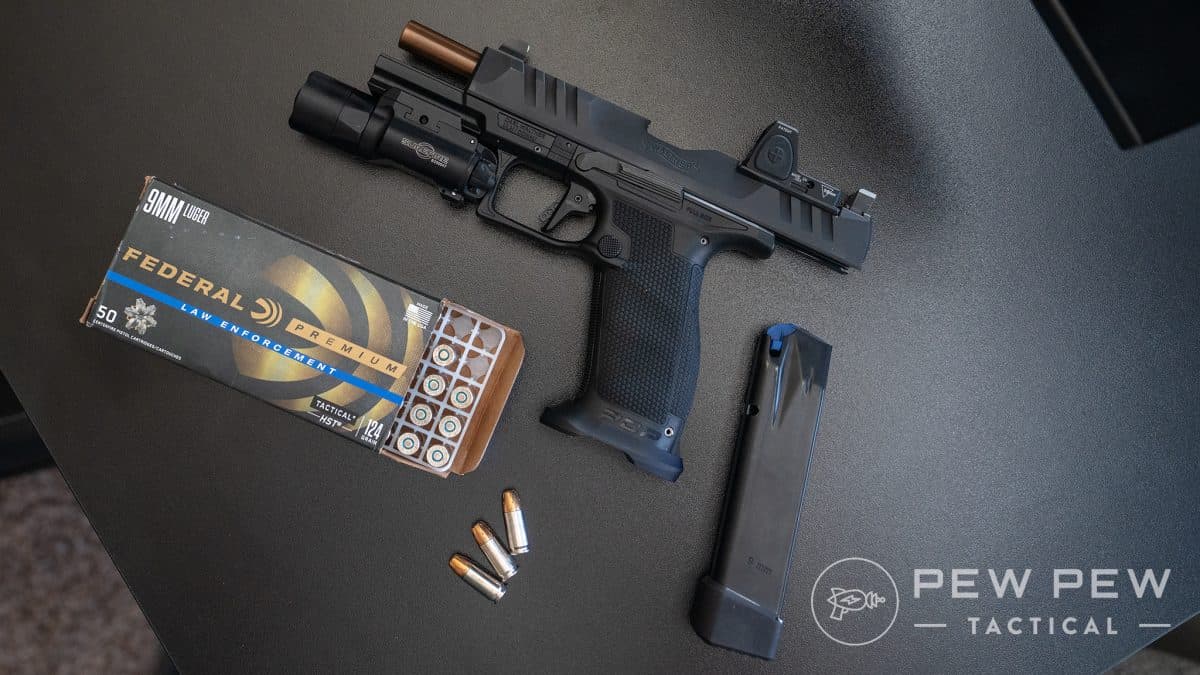
My full-size pistol for this test was a Walther PDP Pro SD with a Trijicon RMR red dot. I used a 4.5-inch match-grade barrel for supersonic ammunition and Walther’s factory 5.1-inch threaded barrel for subsonic ammunition.
To find the maximum velocity of each ammunition type, I used a Springfield Armory Saint Victor Carbine with a Vortex Crossfire green dot. The PCC’s 16-inch barrel worked for supersonic and subsonic ammunition.
Subsonic ammunition is designed for use with a suppressor, so I used a Silencer Central Banish 9K for each of those.
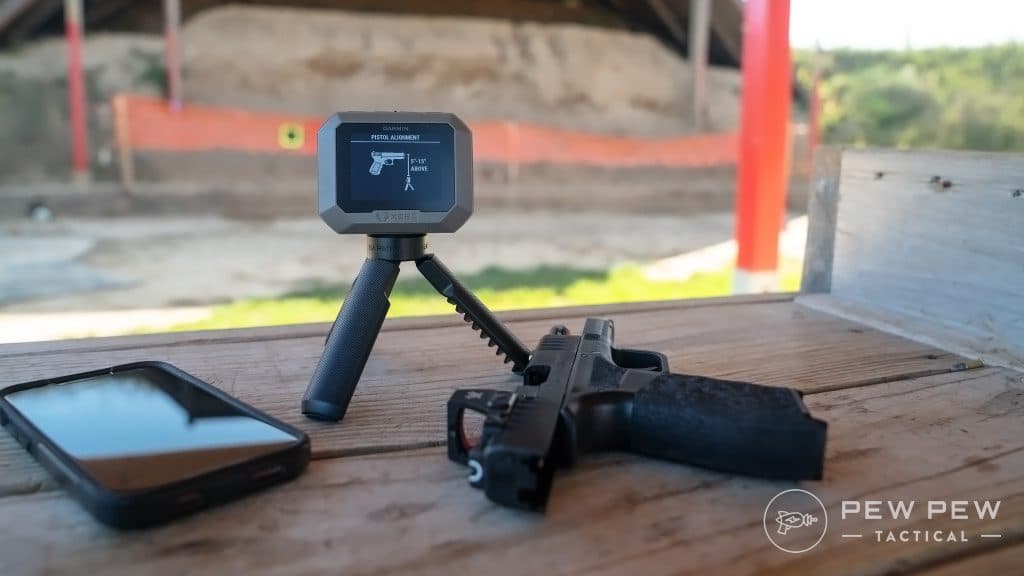
My chronograph to measure the muzzle velocity for this test was the Garmin Xero C1 Pro paired with the Garmin ShotView app.
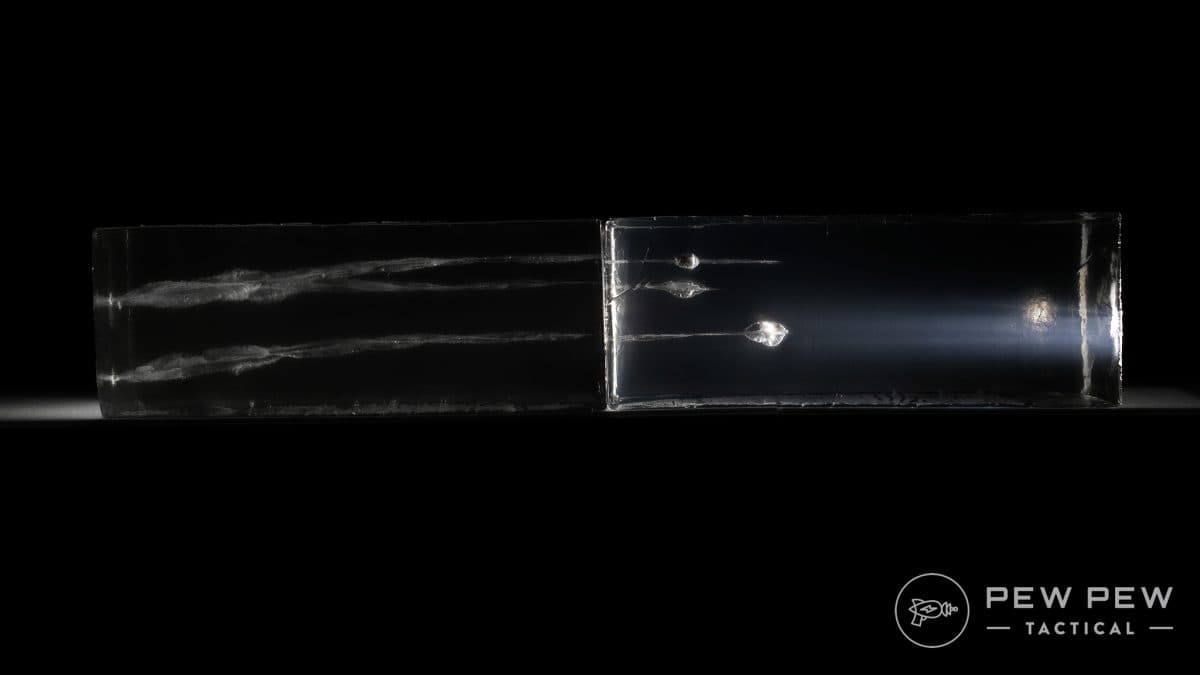
I collected terminal ballistic data for each defensive load using a pair of 16-inch Clear Ballistics 10% Gel FBI blocks stacked front to back. I used the FBI standard of 12 to 18 inches of penetration as the acceptable range, with 14 to 16 inches being ideal.
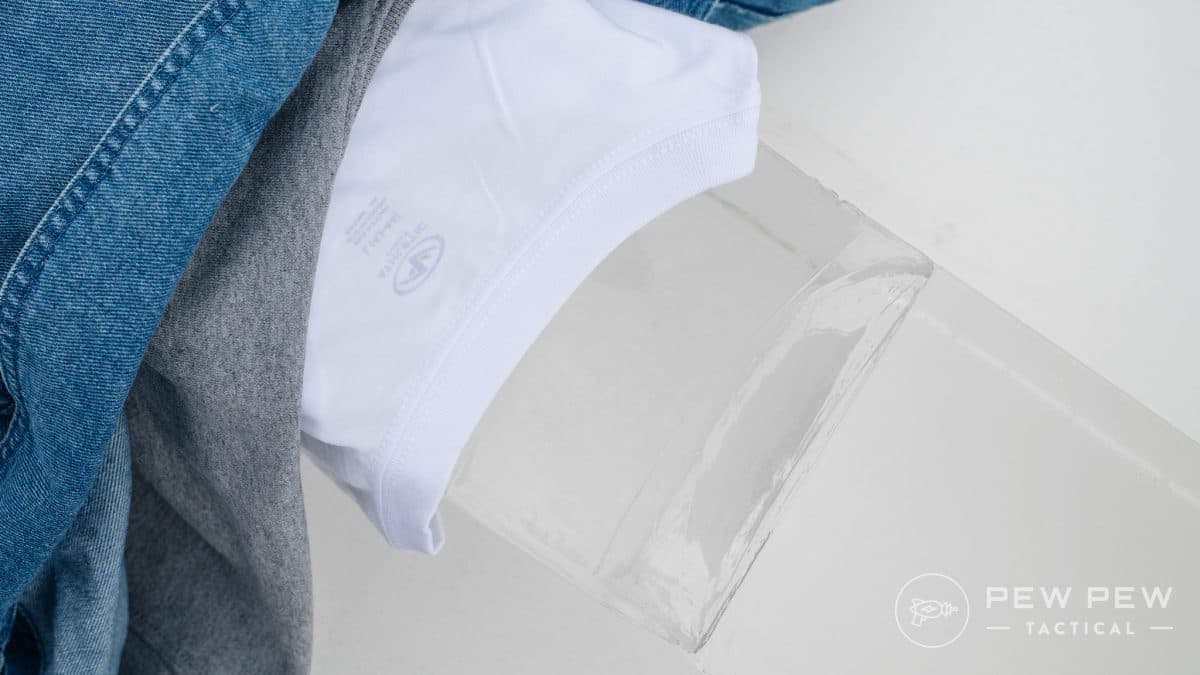
The FBI tests defensive ammunition with clothing, so I did, as well. Each defensive load passed through two layers of cotton T-shirt material, one layer of fleece sweatshirt material, and one layer of denim jacket material.
Once I had recovered each bullet from defensive ammunition testing, I weighed it on a Dillon Precision D-Terminator reloading scale calibrated with Lyman check weights (the more mass a bullet retains, the better).
To determine how much each defensive bullet expanded inside the ballistic gel, I measured the diameter with a MidwayUSA digital caliper. Again, more expansion is preferable. I used the same caliper to measure shot groups for accuracy.
Best 9mm Range Ammo
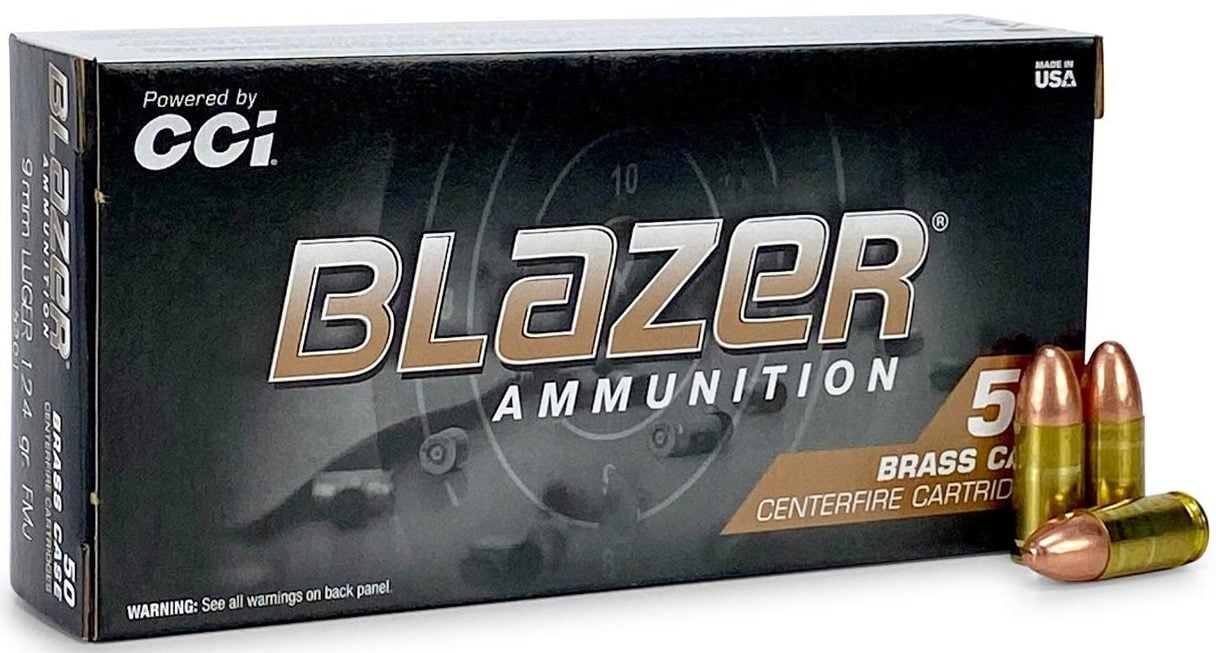
1. Blazer Brass 124gr FMJ - Best Value Range Ammo
Specs
- Bullet Construction: Full metal jacket
- Bullet Weight: 124 gr
- Accuracy (compact / full size / PCC): 0.36” / 0.67” / 0.47”
- Muzzle Velocity (compact / full size / PCC): 1,058 fps / 1,088 fps / 1,262 fps
- Extreme Spread (compact / full size / PCC): 9 fps / 15 fps / 81 fps
- Standard Deviation (compact / full size / PCC): 3 fps / 5 fps / 29 fps
I suspect that many of you are reading this article because you need training and defensive ammo for your concealed carry pistol. If that’s you, Blazer Brass 124-grain FMJ is my recommendation.

I saw solid accuracy results from this ammo, with all three firearms printing five-shot groups in less than an inch, discounting a pulled shot with the compact pistol. The average group was exactly half an inch.
More importantly, it was the most accurate target ammunition with the compact Hellcat Pro’s 3.7-inch barrel. When you discount the one shot that I clearly pulled, it produced a four-shot group in 0.36 inches. That means you could almost cover the center points of those four impacts with one 9mm bullet.
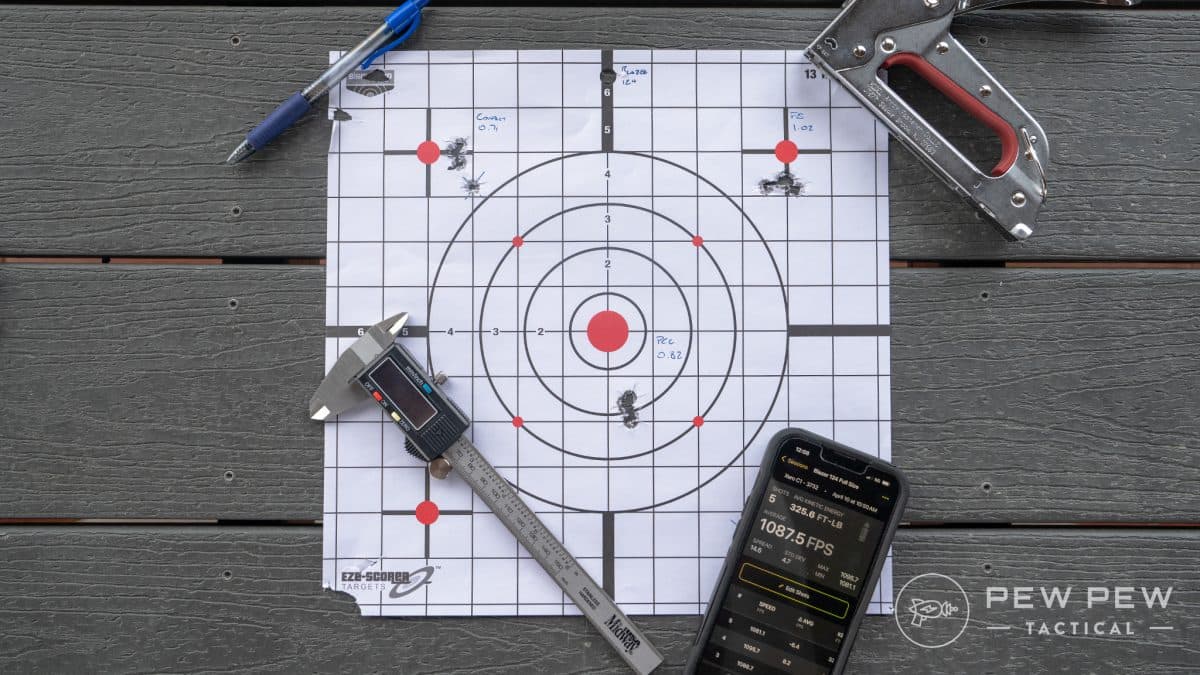
It’s great training ammo, especially for compact pistols, and the price is right. At the time of this test, Blazer Brass 124-grain FMJ was selling for $0.27 per round.
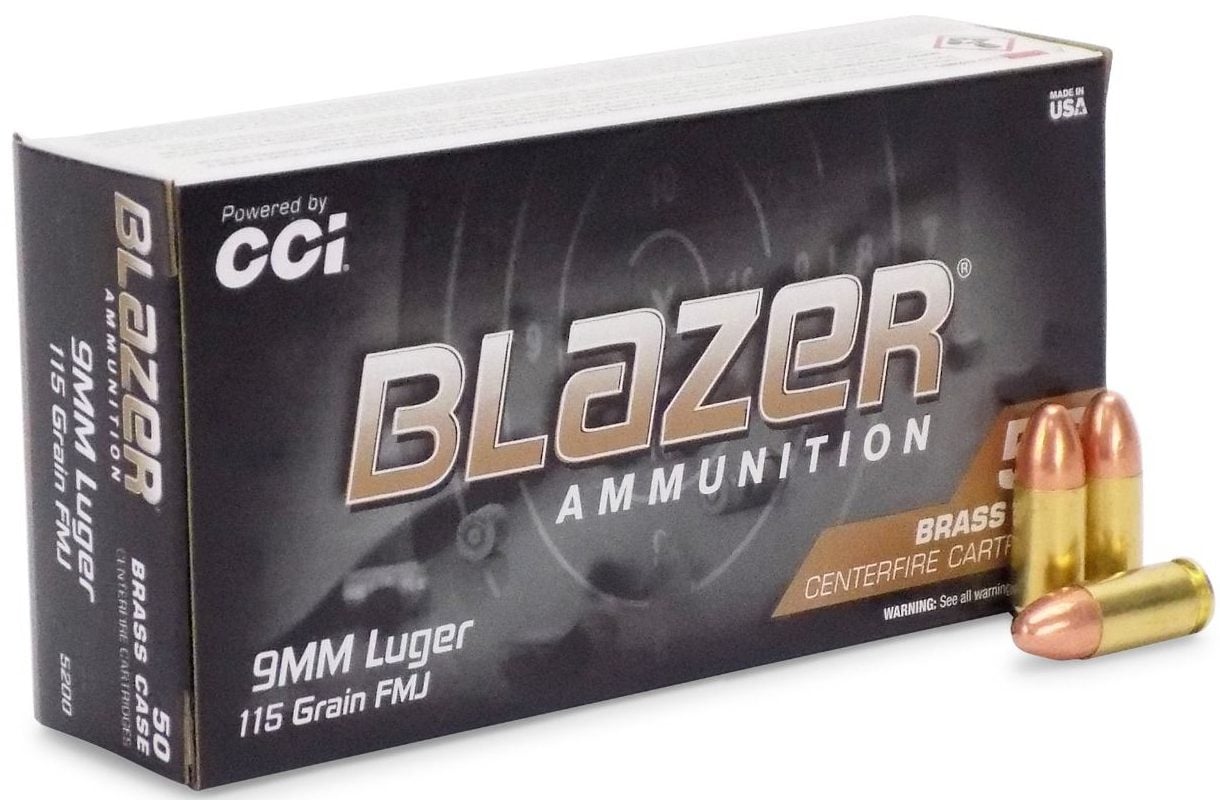
2. Blazer Brass 115gr FMJ
Specs
- Bullet Construction: Full metal jacket
- Bullet Weight: 115 gr
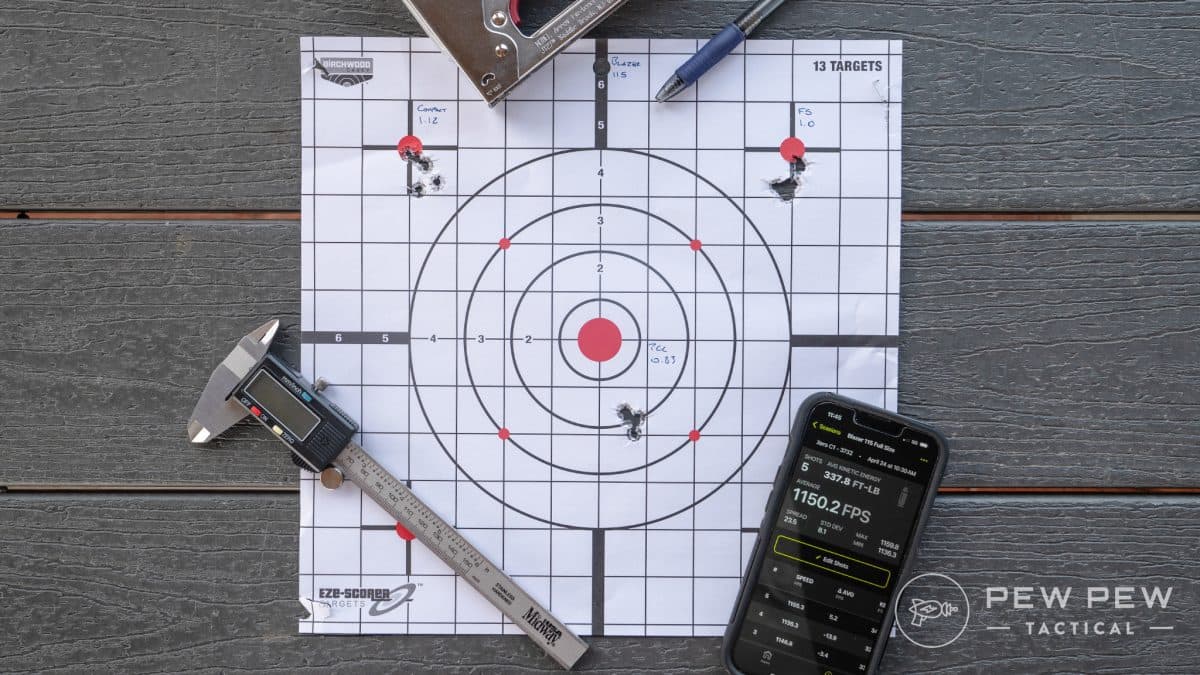
- Accuracy (compact / full size / PCC): 0.77” / 0.65” / 0.48”
- Muzzle Velocity (compact / full size / PCC): 1,106 fps / 1,150 fps / 1,310 fps
- Extreme Spread (compact / full size / PCC): 38 fps / 24 fps / 42 fps
- Standard Deviation (compact / full size / PCC): 14 fps / 8 fps / 16 fps
Blazer Brass 115-grain training ammunition was another contender that performed well, but not remarkably – that’s neither praise nor condemnation.
It achieved decent accuracy results. Each barrel length kept five shots inside an inch, and the average was 0.63 inches. The Garmin Xero C1 Pro showed that the ammunition was reasonably consistent; certainly good enough for training use.
At the time of my test, this ammunition cost one cent per round more than Blazer’s 124-grain load. Contrary to my recommendation for AAC, I’d start with the heavier stuff when it comes to Blazer Brass and switch to this if you’re not happy with the results.
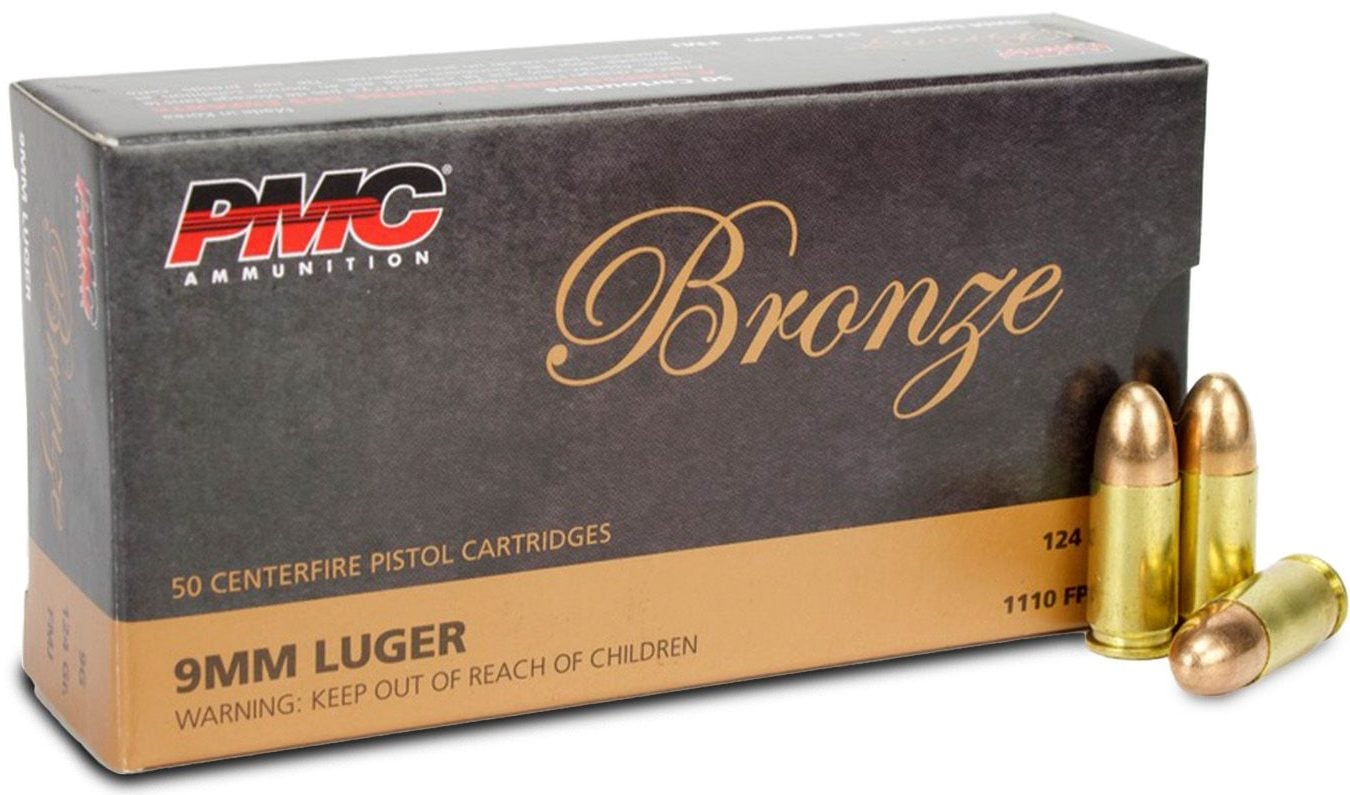
3. PMC Bronze 124gr FMJ - Best Premium Range Ammo
Specs
- Bullet Construction: Full metal jacket
- Bullet Weight: 124 gr
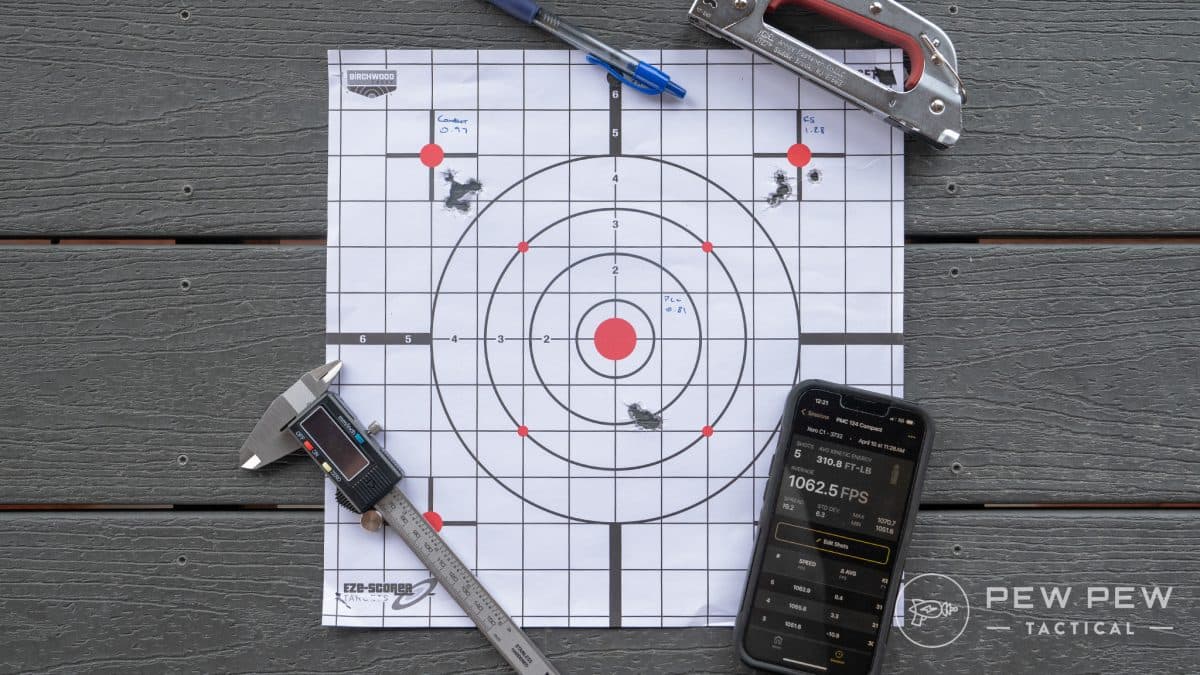
- Accuracy (compact / full size / PCC): 0.62” / 0.93” / 0.46”
- Muzzle Velocity (compact / full size / PCC): 1,063 fps / 1,090 fps / 1,215 fps
- Extreme Spread (compact / full size / PCC): 19 fps / 7 fps / 64 fps
- Standard Deviation (compact / full size / PCC): 6 fps / 3 fps / 22 fps
PMC Bronze was the most expensive supersonic ammunition in this test at $0.32 per round. Is it worth the upcharge?
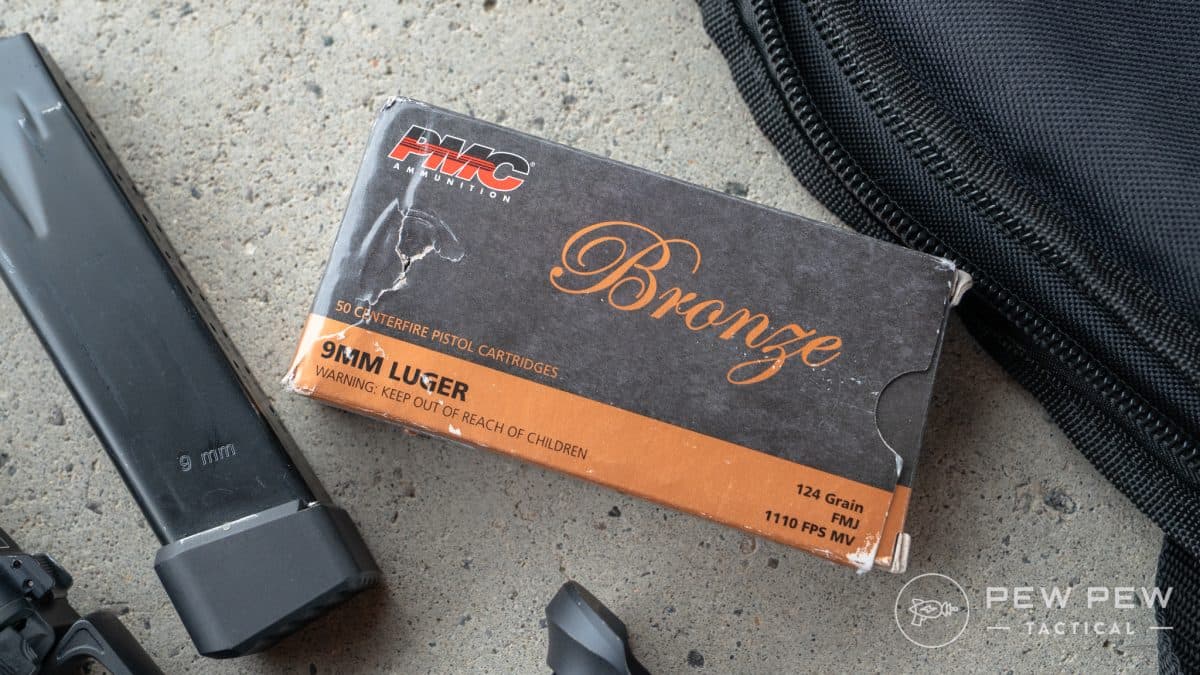
Five-shot groups all stayed inside an inch. Chronograph figures for the compact pistol were very good, they led the test in the full-size pistol, and they were decent for the PCC. I experienced no malfunctions (although that’s generally true in this test).
Given the price difference between PMC Bronze and some of the more budget-oriented ammo from AAC and Blazer, I’m inclined to save a few bucks on my training ammo. This is certainly quality ammo, though, so shoot it if you like it.
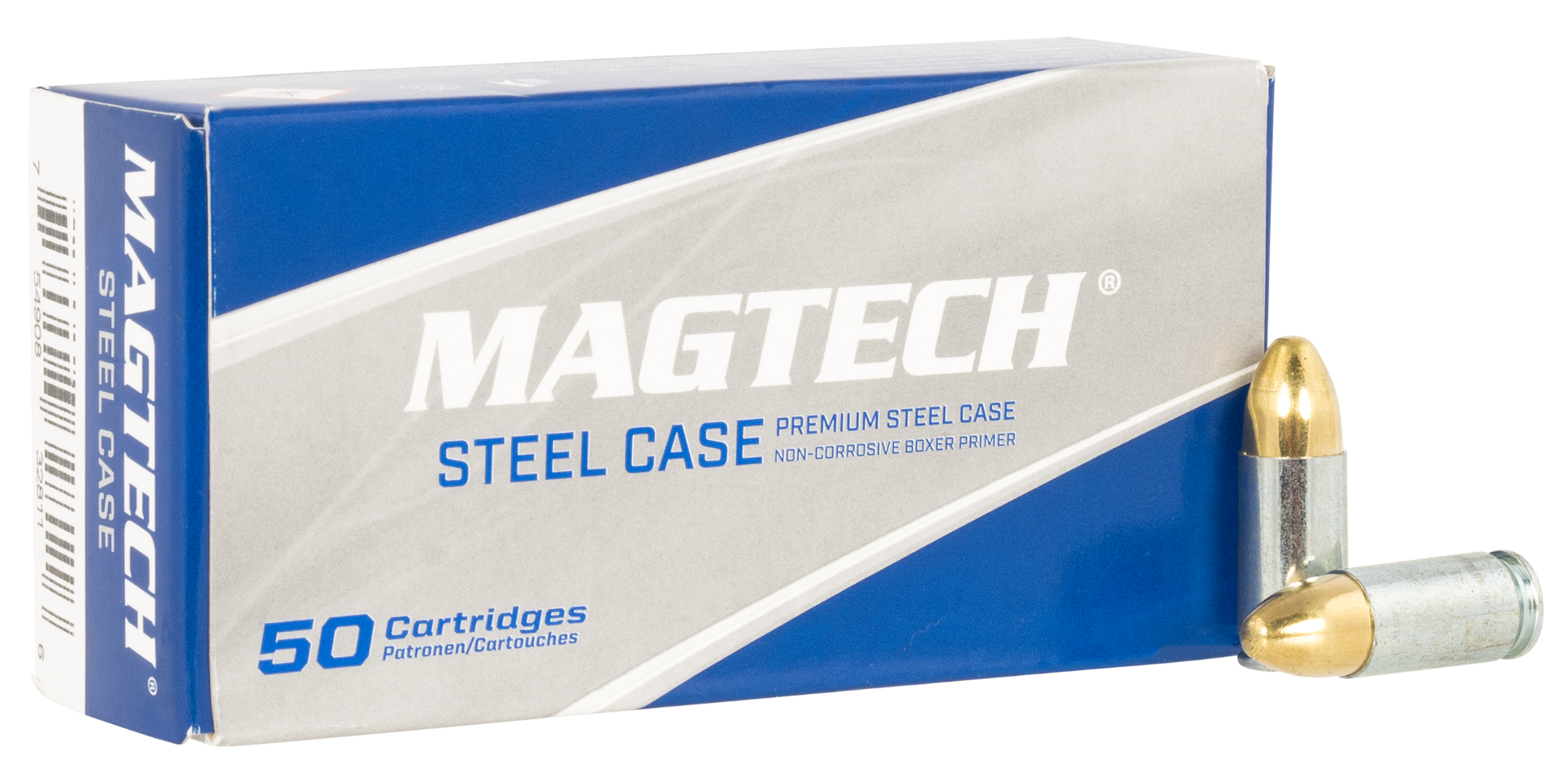
4. Magtech Steel Case 115gr FMJ - Best Budget Range Ammo
Specs
- Bullet Construction: Full metal jacket
- Bullet Weight: 115 gr
- Accuracy (compact / full size / PCC): 0.88” / 0.65” / 0.31”
- Muzzle Velocity (compact / full size / PCC): 1,190 fps / 1,229 fps / 1,407 fps
- Extreme Spread (compact / full size / PCC): 35 fps / 48 fps / 32 fps
- Standard Deviation (compact / full size / PCC): 12 fps / 18 fps / 12 fps
At the time of my test, Magtech Steel Case was the cheapest training ammo on the list at $0.24 per round.
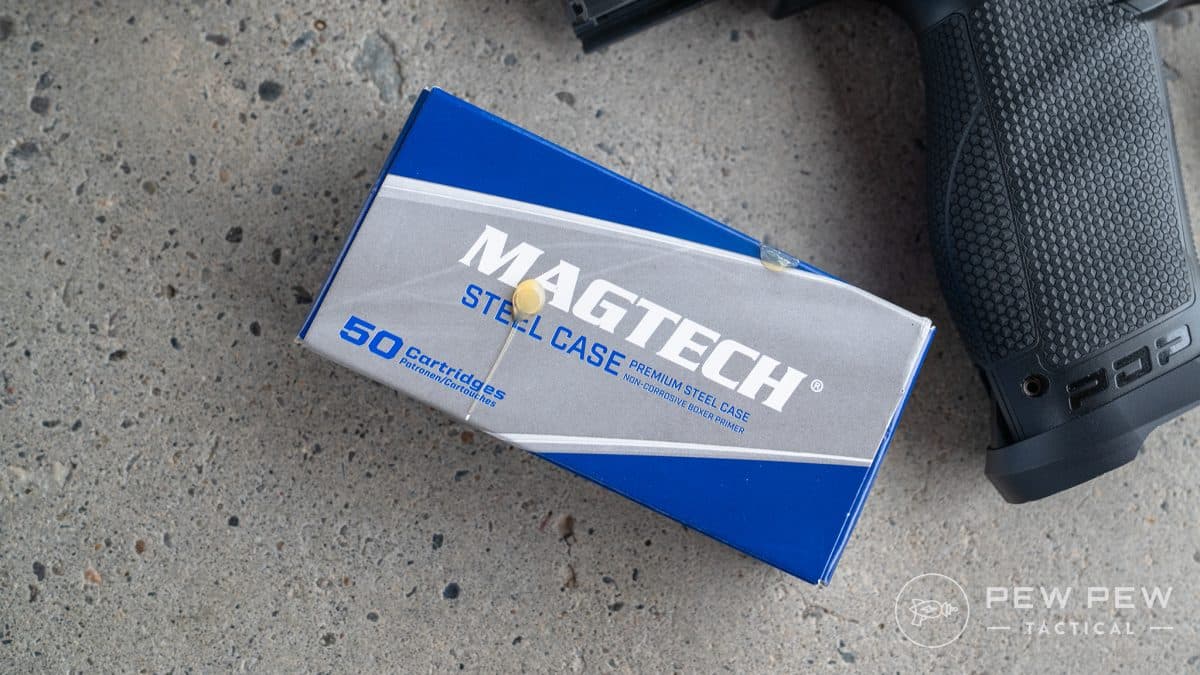
Lower cost didn’t translate to lower performance at the range. This ammunition finished right in the middle of the pack in terms of accuracy across all barrel lengths, caused no malfunctions, and logged the best muzzle velocity standard deviation and extreme spread out of the PCC.
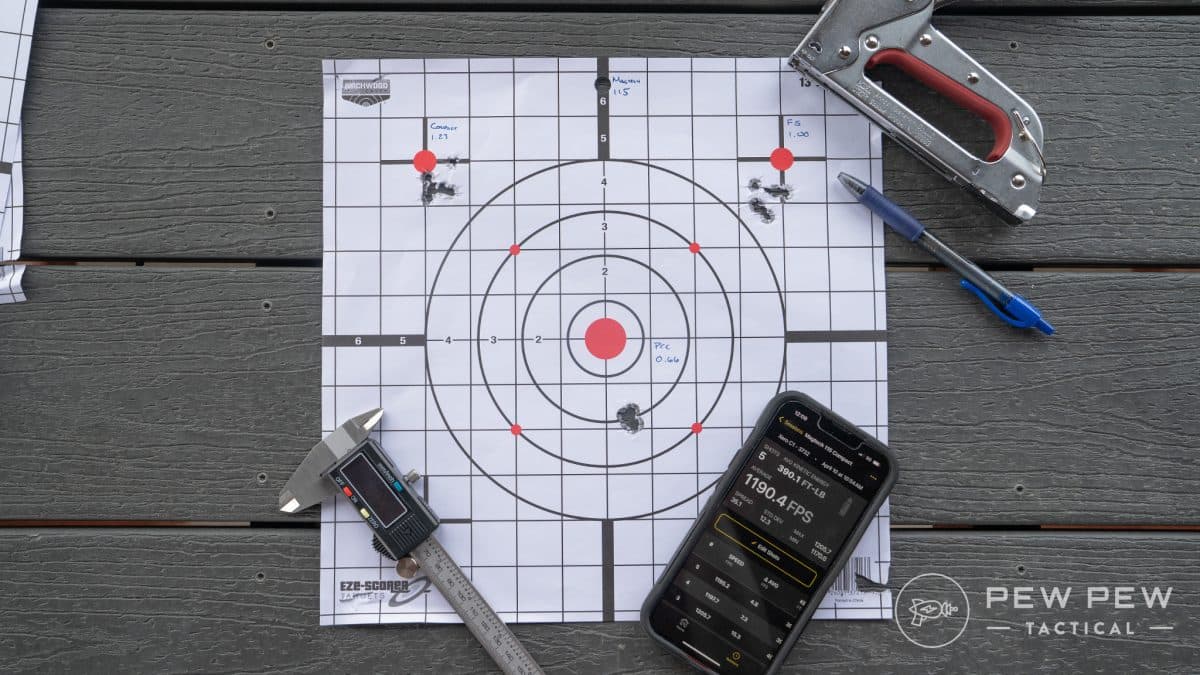
As the saying goes, there’s no such thing as a free lunch. While you’ll save money at checkout, steel is much harder than brass, so this ammo will accelerate wear compared to brass-cased ammo. If you shoot it exclusively, expect to replace components like your pistol’s extractor earlier than usual.
Because of that, high-volume shooters might want to fork over the extra pennies for brass-cased ammo. If you don’t shoot very often, I doubt you’ll reach the point where it becomes an issue.
5. Norma 65gr Frangible - Best Frangible Range Ammo
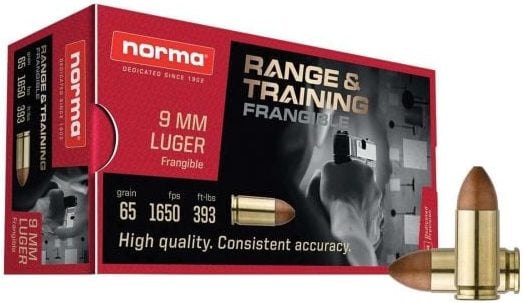
Specs
- Bullet Construction: Frangible
- Bullet Weight: 65 gr
- Accuracy (compact / full size / PCC): 1.17” / 1.15” / 0.17”
- Muzzle Velocity (compact / full size / PCC): 1,568 fps / 1,627 fps / 1,916 fps
- Extreme Spread (compact / full size / PCC): 36 fps / 45 fps / 62 fps
- Standard Deviation (compact / full size / PCC): 14 fps / 19 fps / 21 fps
I, like a lot of you perhaps, used to write off frangible ammo as something I’d only shoot if an RSO made me do it. After testing Norma Frangible, I changed my tune.
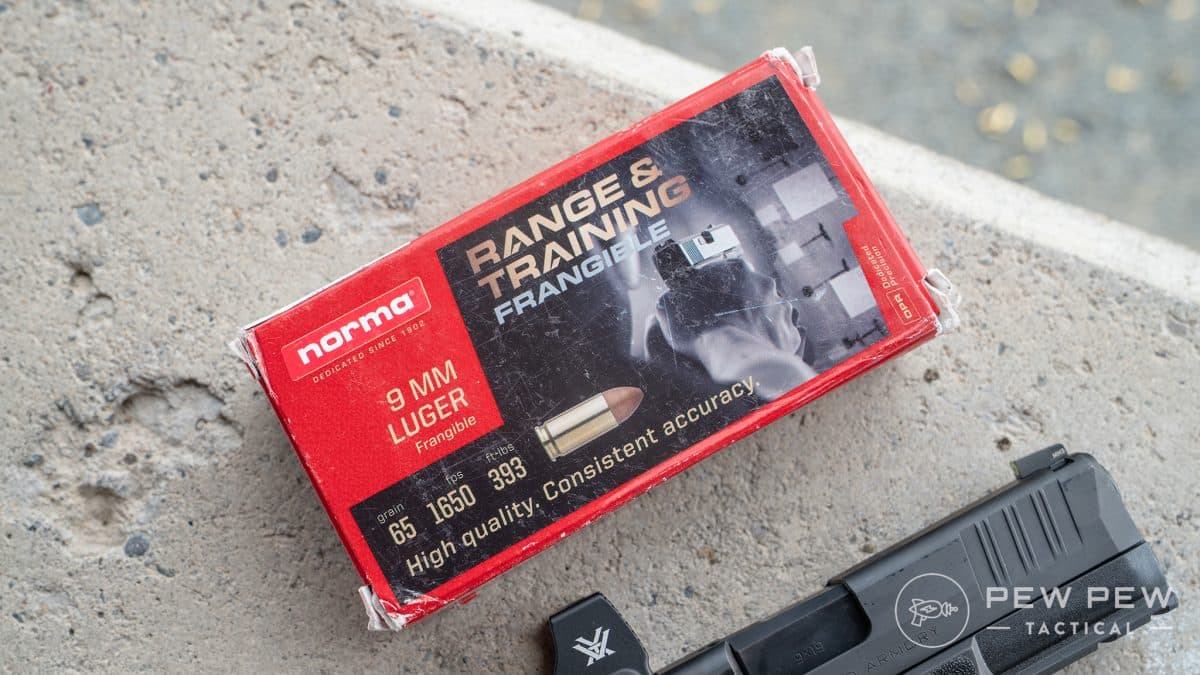
This ammo didn’t exactly outperform the FMJ competition, but it held its own. I certainly wouldn’t say anything about it held me back, especially at common pistol-shooting distances.
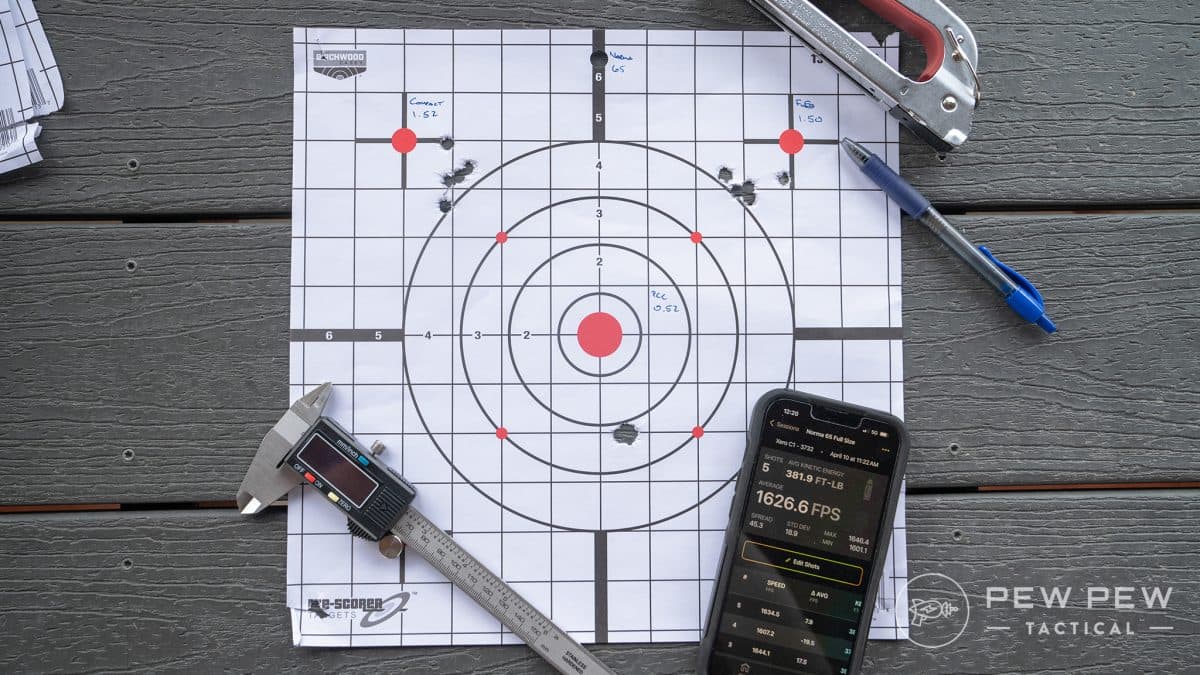
I recommend keeping a box or two of this in reserve. Maybe you’ll visit an indoor range that requires frangible ammo. Maybe you’ll have a chance to do some close-quarters training that could be unsafe with FMJ ammo. Either way, I’d rather have it and not need it than need it and not have it.
6. Winchester Super Suppressed 147gr FMJ - Best Subsonic FMJ
Specs
- Bullet Construction: Full metal jacket
- Bullet Weight: 147 gr
- Accuracy (compact / full size / PCC): 0.87” / 0.42” / 0.17”
- Muzzle Velocity (compact / full size / PCC): 1,032 fps / 1,071 fps / 1,102 fps
- Extreme Spread (compact / full size / PCC): 33 fps / 20 fps / 100 fps
- Standard Deviation (compact / full size / PCC): 12 fps / 7 fps / 34 fps
According to the box, Winchester Super Suppressed runs cleaner than other ammunition, reducing the rate of carbon buildup in your suppressor. While I can’t comment on that, I can say it’s an extremely effective training load.
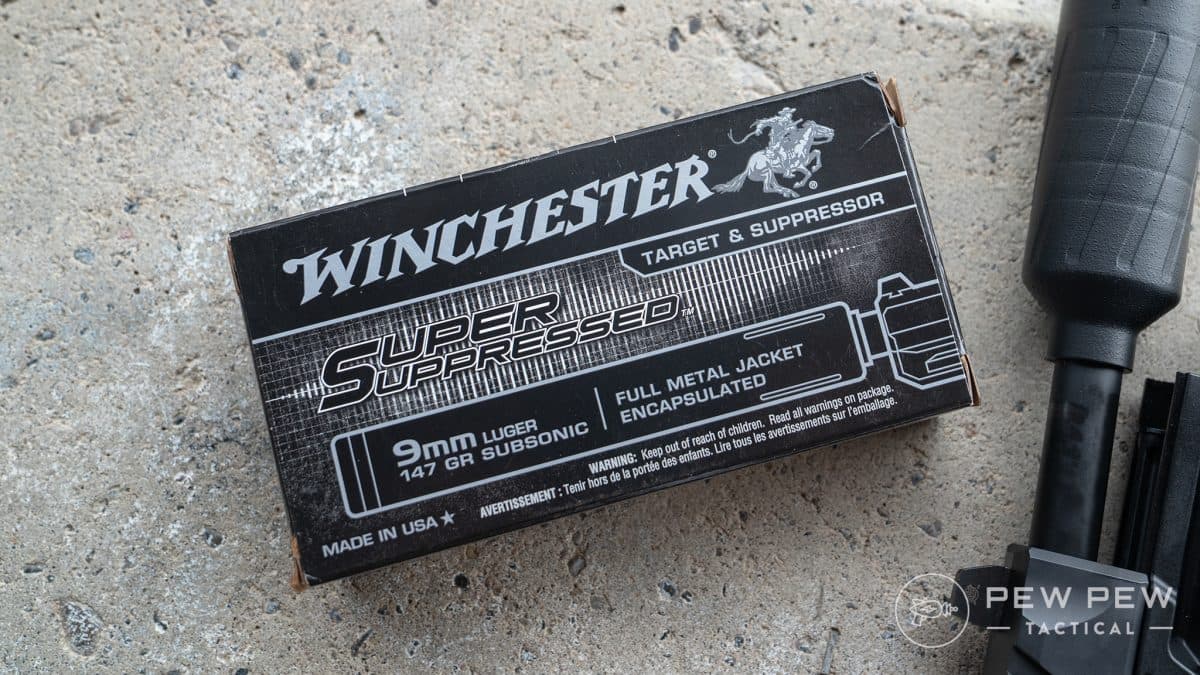
It’s certainly quiet with a suppressor. Muzzle velocity consistently came in well under 1,100 feet per second with both pistols. It just barely broke that average with the PCC at 1,102 feet per second.
I was surprised to see that it was also the most accurate ammunition for both the full-size pistol and the PCC.
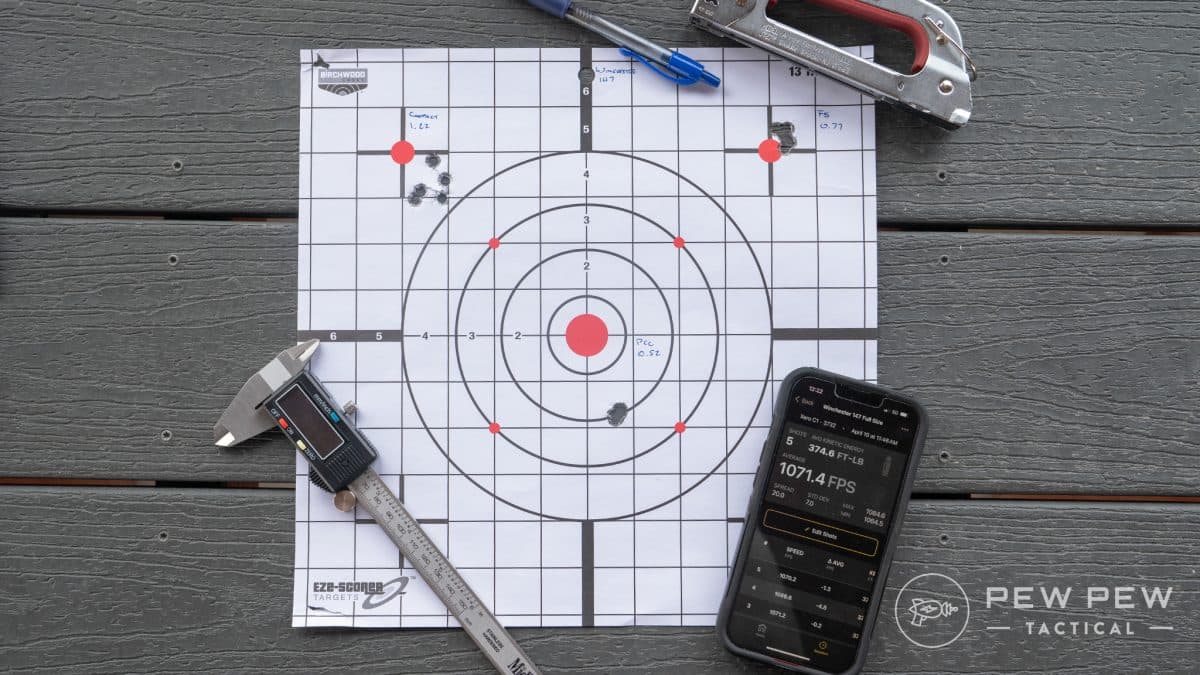
On the second shot with the full-size pistol, I experienced a failure to feed. Given this particular PDP’s track record and my overzealous cleaning regimen, I attribute this to the ammunition. All subsequent shots went off without a hitch.
This is the most expensive target ammunition of the group. At the time of this test, it cost $0.46 per round. Of course, if you’re buying this, it’s because you’re pushing it through a significantly more expensive suppressor. You have to pay to play, I guess.
7. AAC 115gr FMJ
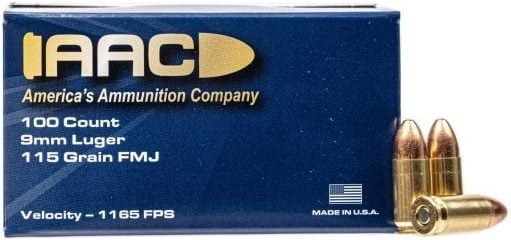
Specs
- Bullet Construction: Full metal jacket
- Bullet Weight: 115 gr
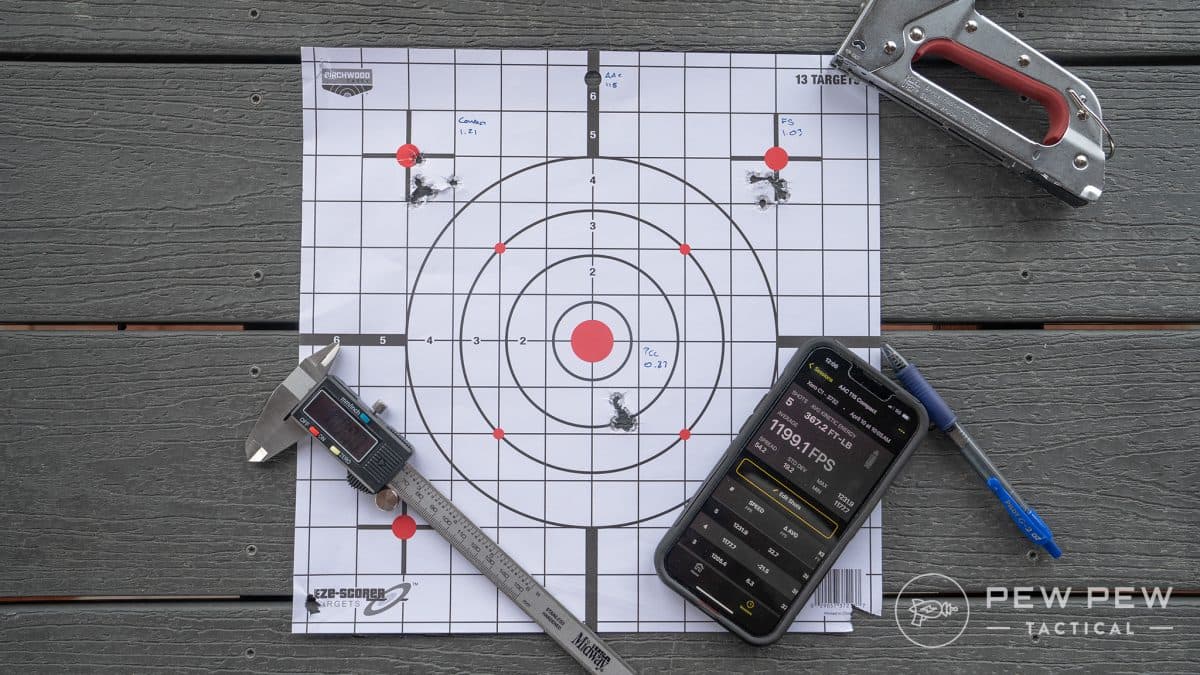
- Accuracy (compact / full size / PCC): 0.86” / 0.68” / 0.52”
- Muzzle Velocity (compact / full size / PCC): 1,199 fps / 1,205 fps / 1,486 fps
- Extreme Spread (compact / full size / PCC): 54 fps / 30 fps / 30 fps
- Standard Deviation (compact / full size / PCC): 19 fps / 11 fps / 13 fps
AAC 115-grain training ammunition turned out to be one of the best bargains of the bunch. While slightly more expensive than the cheapest option, Magtech Steel Case, it was the least expensive brass-cased, non-frangible ammo I tested.
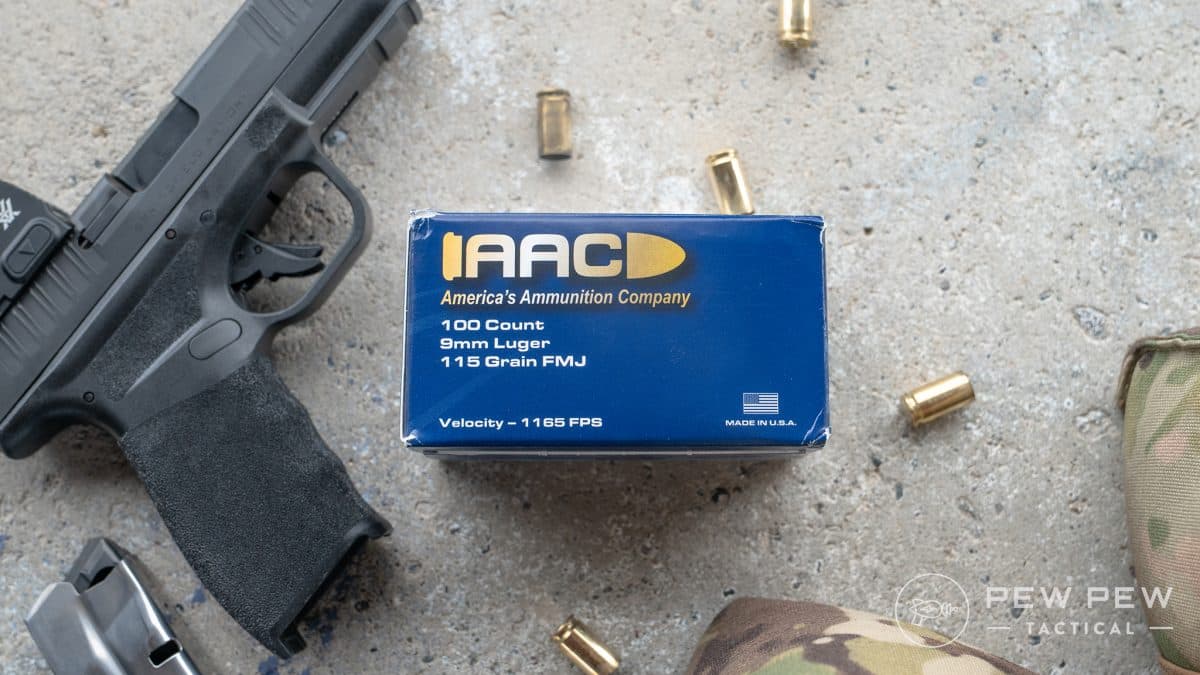
Nevertheless, it shot decent groups. It printed under an inch with each barrel length, and had an average five-shot group size of 0.68 inches.
The combined averages for extreme spread and standard deviation of muzzle velocity weren’t anything to write home about, but they certainly didn’t disappoint.
To get better at shooting, we need to get quality reps with live ammo. When it comes to pistol shooting, a few tenths of an inch in average group size isn’t going to make or break your training. This is my pick for getting the most training value for your money.
8. AAC 124gr FMJ
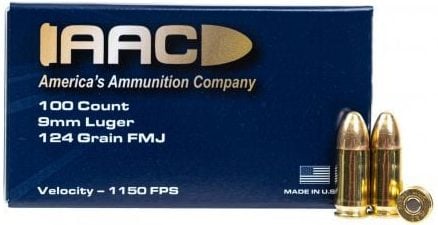
Specs
- Bullet Construction: Full metal jacket
- Bullet Weight: 124 gr
- Accuracy (compact / full size / PCC): 0.69” / 1.98” / 0.27”
- Muzzle Velocity (compact / full size / PCC): 1,172 fps / 1,192 fps / 1,442 fps
- Extreme Spread (compact / full size / PCC): 54 fps / 56 fps / 85 fps
- Standard Deviation (compact / full size / PCC): 19 fps / 20 fps / 30 fps
Like most manufacturers, AAC offers 155- and 124-grain versions of what’s otherwise the same ammunition.
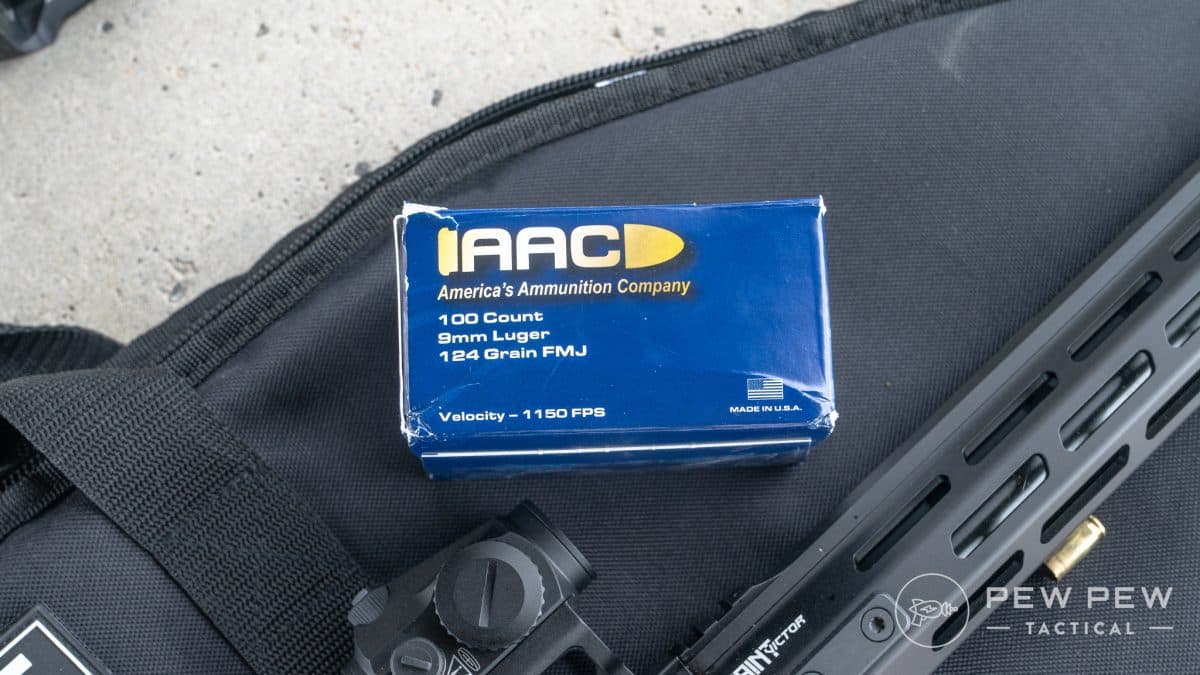
This is the same price as the 115-grain load, but it didn’t perform as well for me in this test.
The biggest problem was a huge jump in five-shot group size with the full-size pistol – 1.98 inches! At seven yards from a rest, that’s a deal-breaker for me.
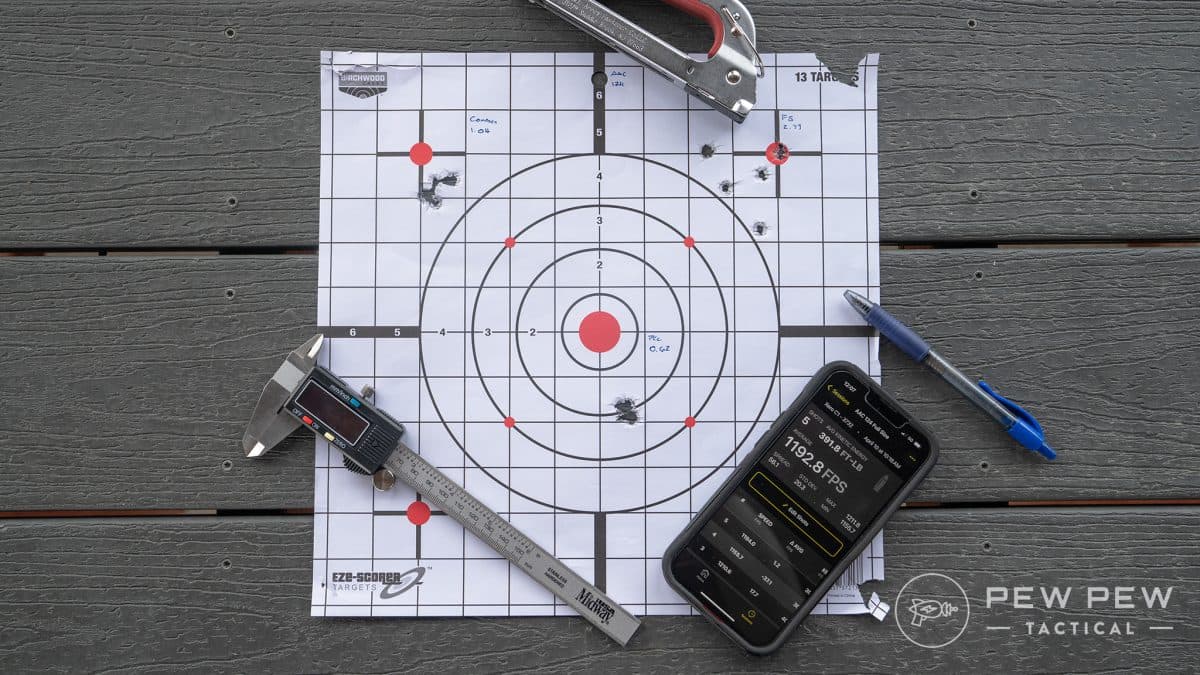
On the chronograph, it was identical to AAC 155-grain FMJ from the compact pistol but noticeably less consistent out of the other two.
My advice? Start with AAC’s lighter training ammo. If that gives you spotty results, switch to this. Every barrel is different, so find ammo that your firearm likes.
Best 9mm Self-Defense Ammo
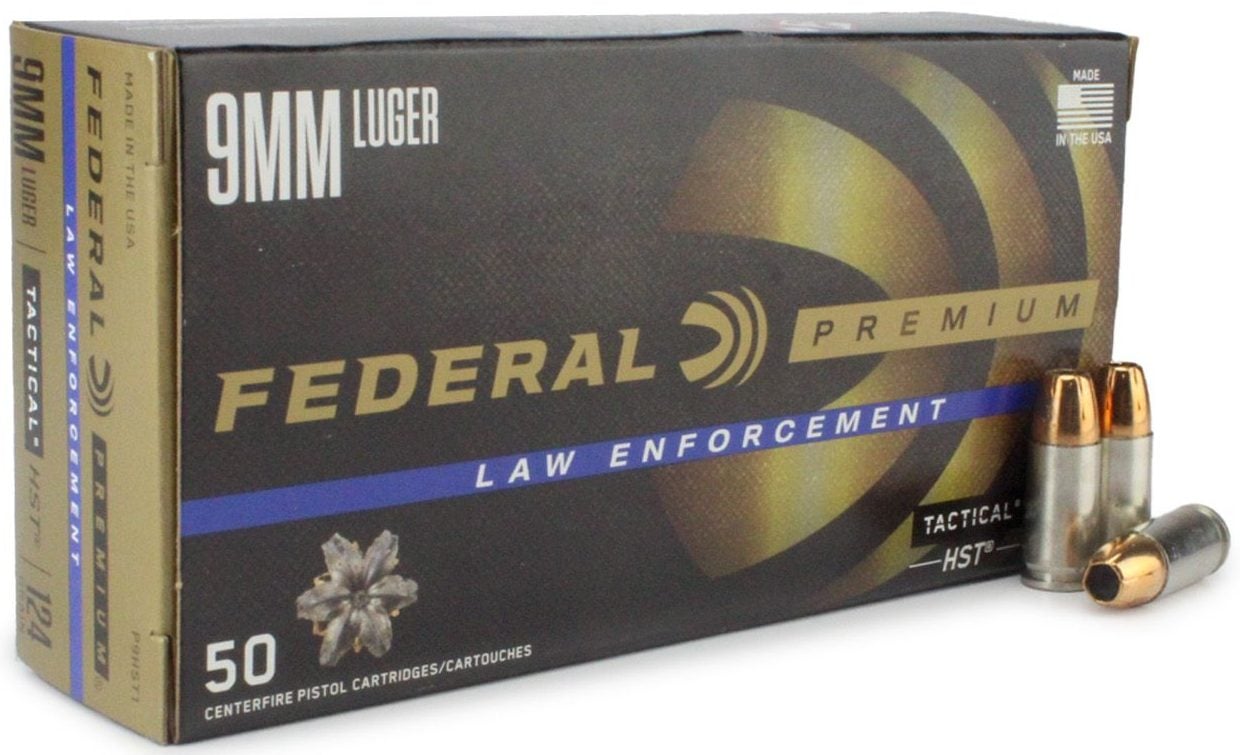
1. Federal Premium HST 124gr JHP - Most Versatile

Specs
- Bullet Construction: Jacketed hollow point
- Bullet Weight: 124 gr
- Muzzle Velocity (compact / full size / PCC): 1,173 fps / 1,211 fps / 1,383 fps
- Extreme Spread (compact / full size / PCC): 23 fps / 18 fps / 14 fps
- Standard Deviation (compact / full size / PCC): 8 fps / 6 fps / 5 fps
I’ve heard so many people recommend Federal Premium HST through the years that it seems like a default option for a lot of shooters. Naturally, I was curious to see some first-hand results.
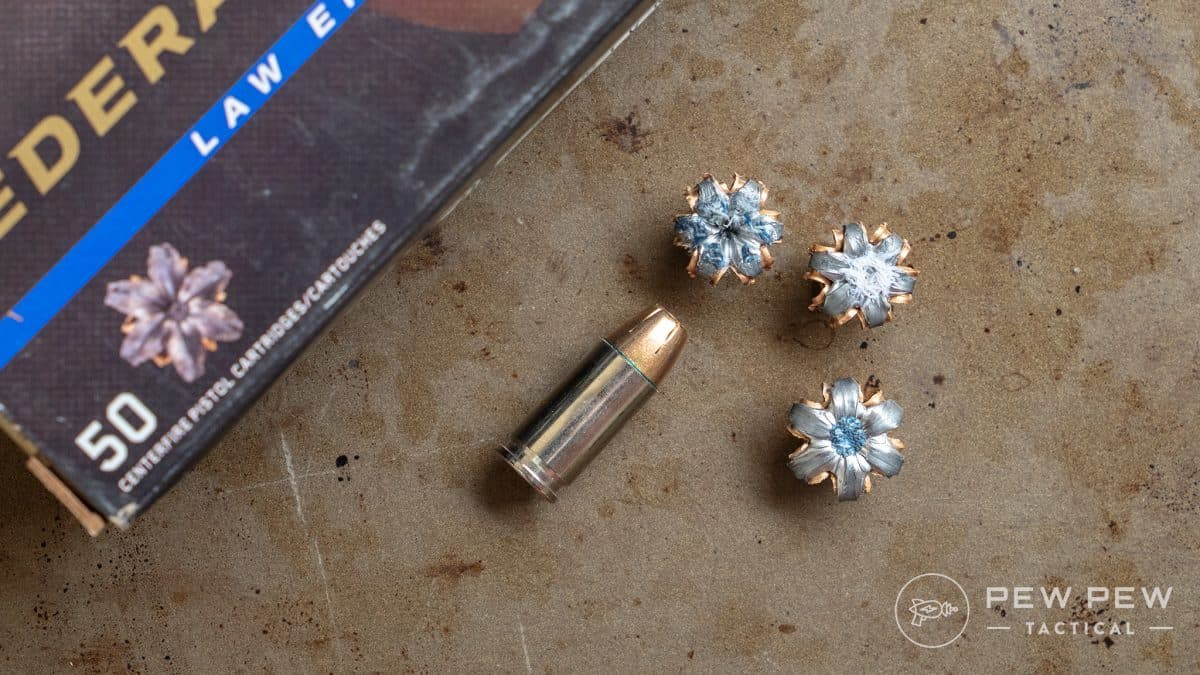
On paper (targets, that is), Federal HST proved reliably accurate. When I averaged the shot groups across all three barrel lengths, it came in second at 0.67 inches. When I averaged the extreme spread and standard deviation across all barrel lengths, it ranked first. Disregard my pulled shot with the full-size pistol.
Shooting the compact pistol into ballistic gel, Federal HST provided the best expansion of the bunch. The 75% expansion out of a PCC was also impressive. It overpenetrated by half an inch from the compact pistol and 2.5 inches from the full-size pistol – something worth considering.
So, are gun store clerks right to push a box of HST across the counter to anyone who asks for defensive ammo? Probably.
There are specialized rounds that do certain things better, but this is a very effective and versatile option. If you’re going to buy one kind of defensive ammo for a variety of 9mm firearms, this one won’t let you down.
2. Hornady Critical Defense 115gr JHP
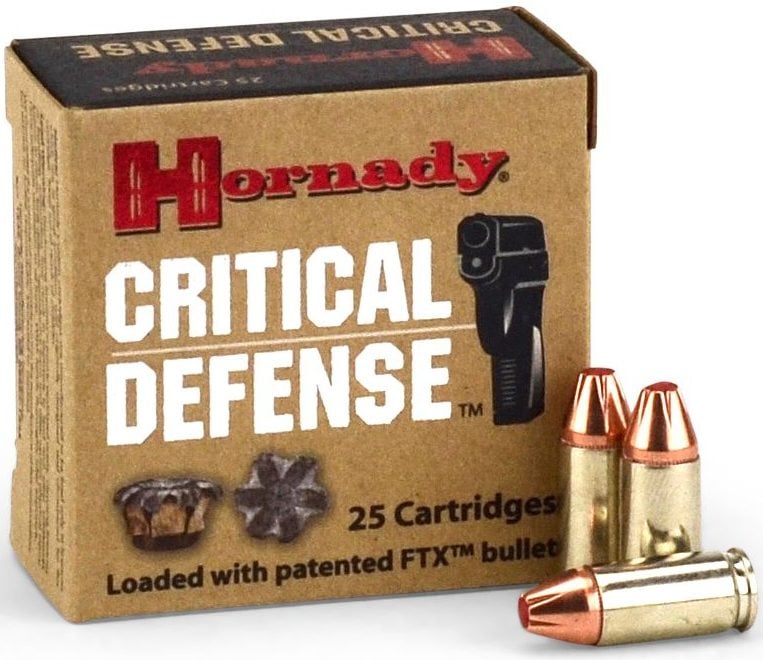

Specs
- Bullet Construction: Jacketed hollow point
- Bullet Weight: 115 gr
- Muzzle Velocity (compact / full size / PCC): 1,159 fps / 1,160 fps / 1,375 fps
- Extreme Spread (compact / full size / PCC): 47 fps / 22 fps / 13 fps
- Standard Deviation (compact / full size / PCC): 16 fps / 8 fps / 5 fps
I’ve had fantastic results with certain Hornady loads, particularly ELD Match ammo – my precision rifle load of choice. Is Hornady Critical Defense just as good?
Critical Defense didn’t stand out for better or worse in accuracy testing; it was right in the middle of the pack.
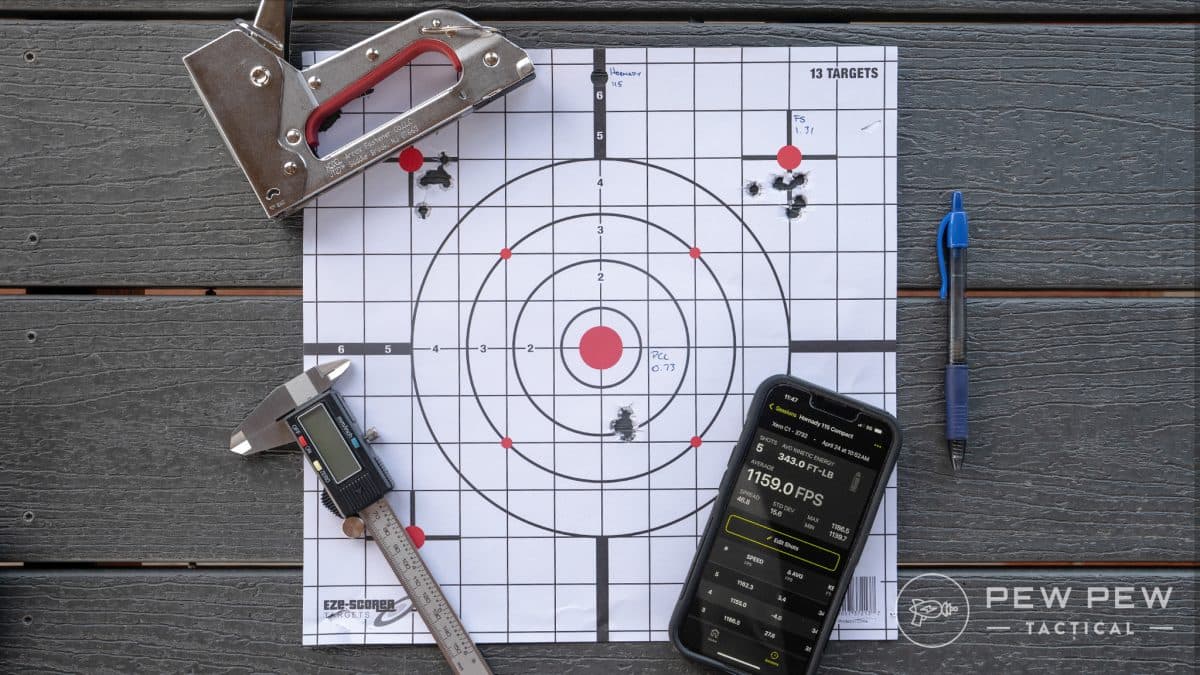
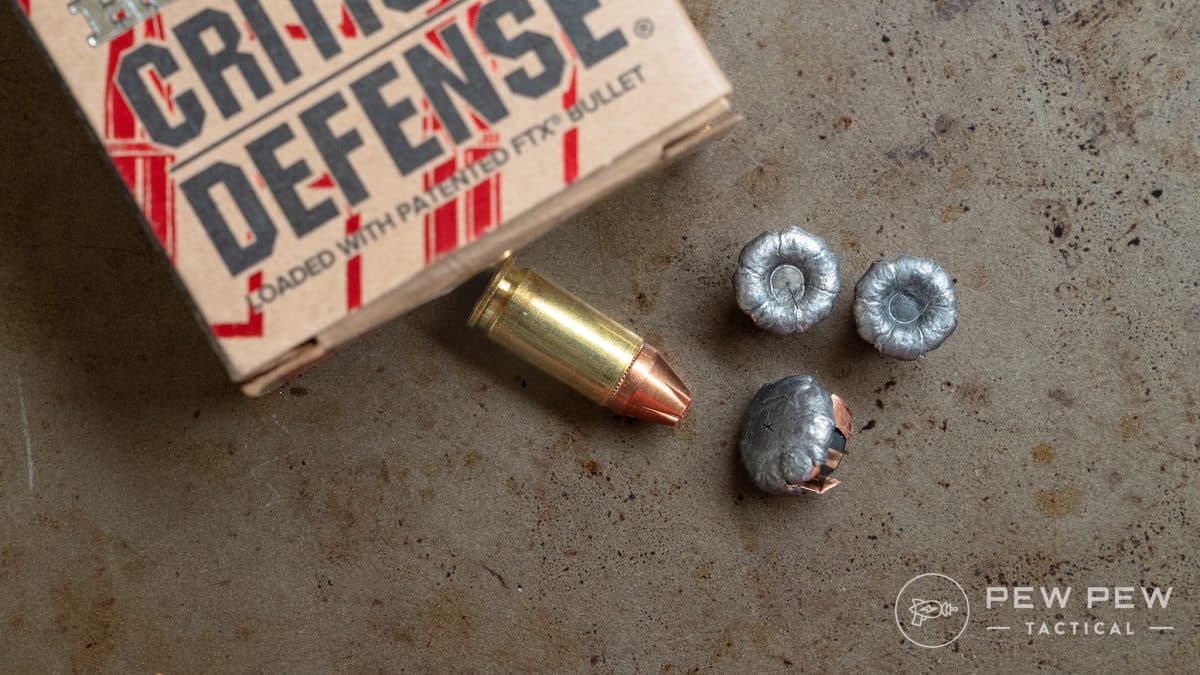
In ballistic gel, it underperformed in terms of expansion out of the pistols (38% from the compact pistol and 35% from the full-size pistol) but did well out of the PCC with 67% expansion.
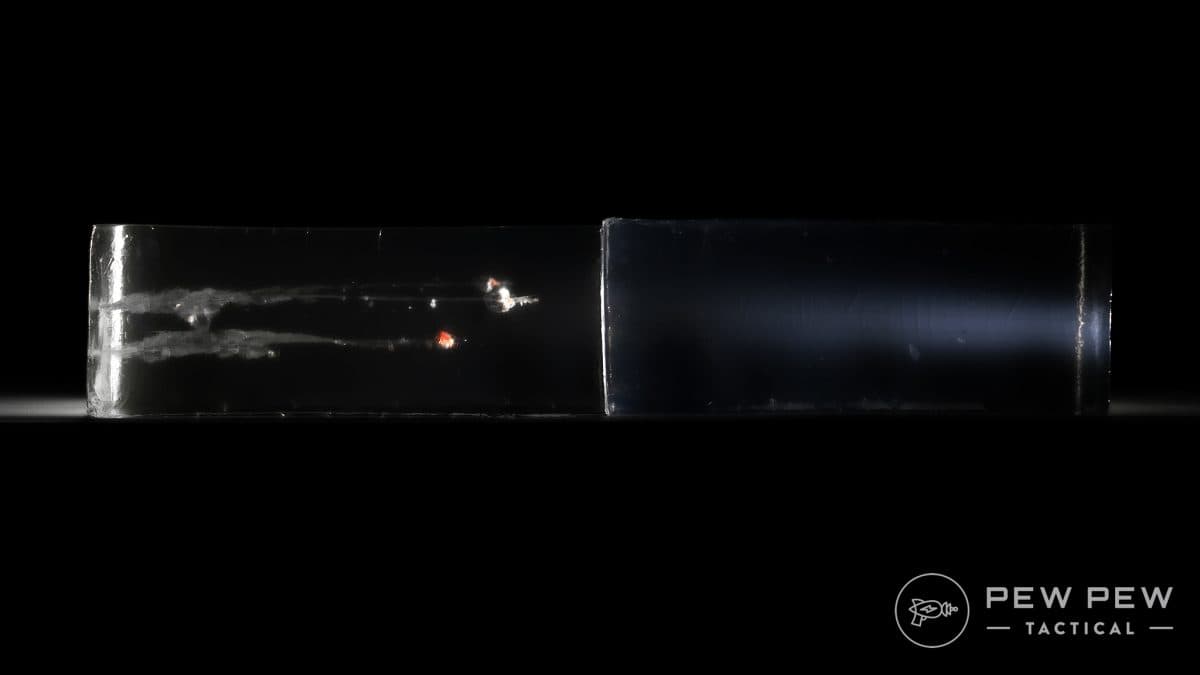
It achieved the least penetration in the test, with 12 inches from the compact pistol, 12.5 inches from the full-size pistol, and only 10.75 inches from the PCC. The bullet fired from the PCC was also the only one of the entire test to change more than a grain in weight, losing 3.4 grains.
If you live in a congested area and have major concerns about overpenetration, this could be a good option for you. If not, look elsewhere.
3. Speer Gold Dot +P 124gr BJHP - Best Penetration JHP


Specs
- Bullet Construction: Bonded jacketed hollow point
- Bullet Weight: 124 gr
- Muzzle Velocity (compact / full size / PCC): 1,207 fps / 1,281 fps / 1,458 fps
- Extreme Spread (compact / full size / PCC): 20 fps / 63 fps / 29 fps
- Standard Deviation (compact / full size / PCC): 8 fps / 21 fps / 11 fps
I know of a few door-kicker types who swear by Speer Gold Dot +P. Should we take their advice?
First, make sure your pistol can safely shoot +P ammunition (loaded to a higher case pressure). In most cases, manufacturers just warn that it will cause accelerated wear. Since this isn’t going to be your primary training ammunition, that’s not something I’d worry about.
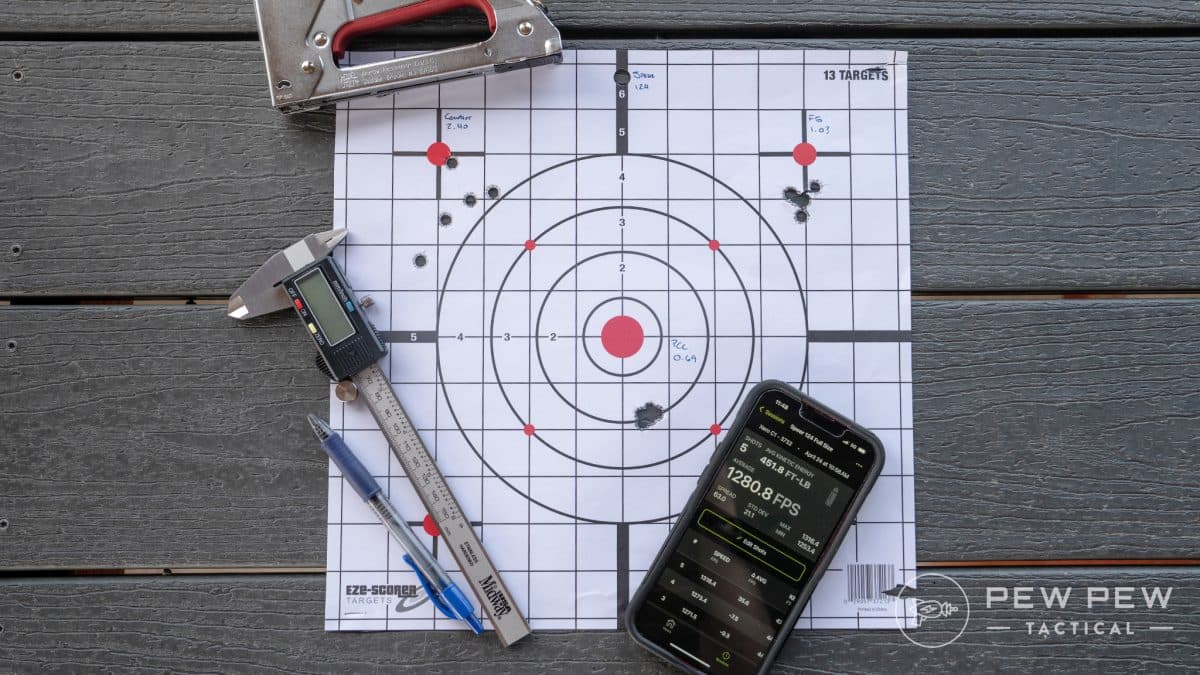
This ammo actually recorded the worst average accuracy across all three barrels at 1.02 inches. That’s because the average got thrown off by the compact pistol, which really didn't like this ammo. At 7 yards from a rest, my best five-shot group was 2.05 inches. For comparison, I shot a 0.68-inch group with the full-size PDP and a 0.34-inch group that tied for first place out of the Saint Victor carbine.
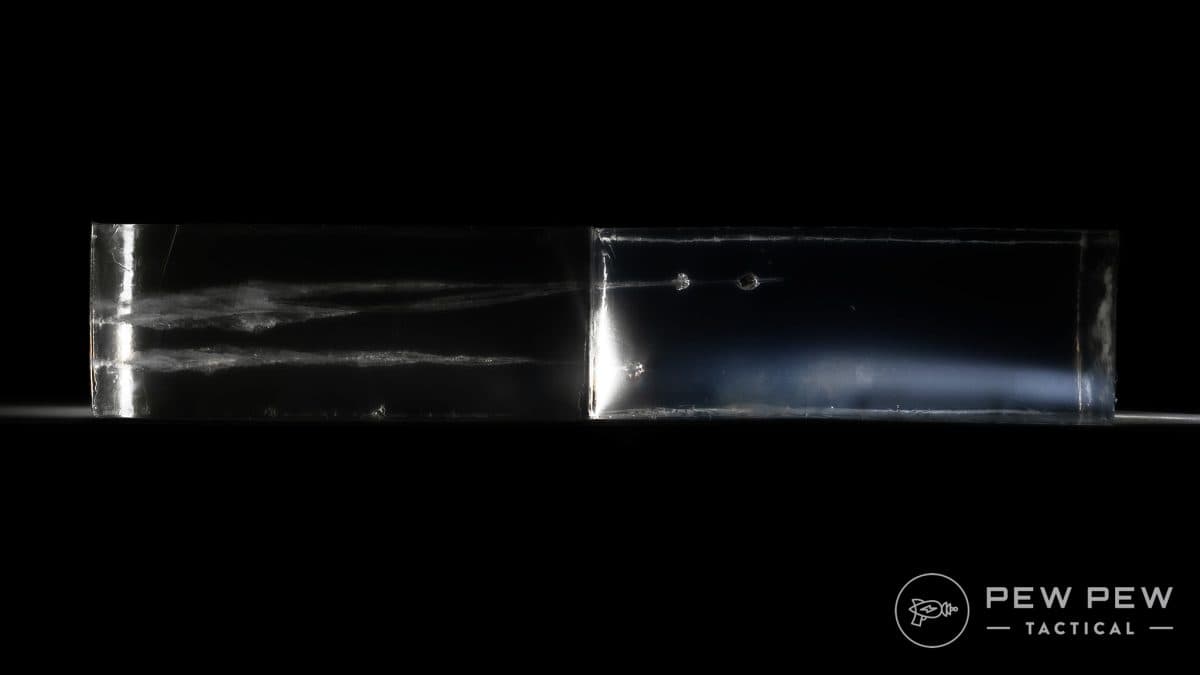
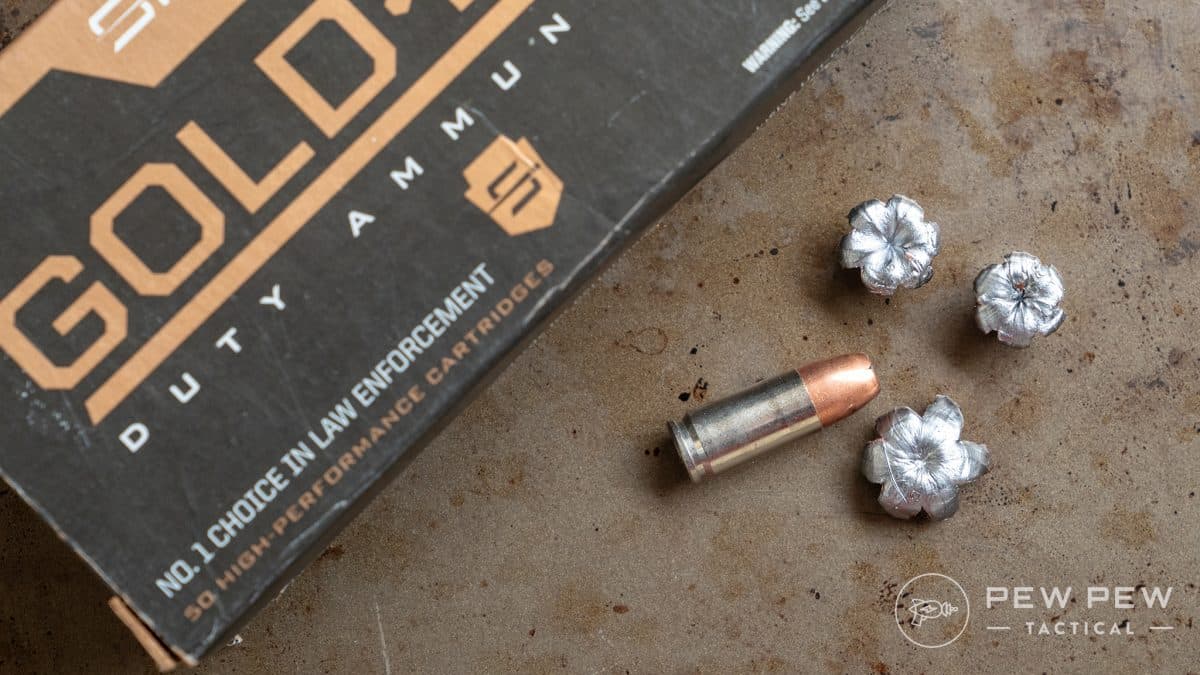
Ballistic gel tells the real story, here. Gold Dot +P was the only ammunition that never under- or overpenetrated. Expansion was good out of the compact pistol (55%), nearly there out of the full-size pistol (47%), and downright eye-popping out of the PCC (98%, and that’s not a typo).
Don’t be deterred by my experience with compact pistol accuracy because some guns just don’t do well with certain ammunition. This is a very strong performer, and I encourage you to test it with your own pistol. If it shoots tight groups, you already know the ballistic performance is there.
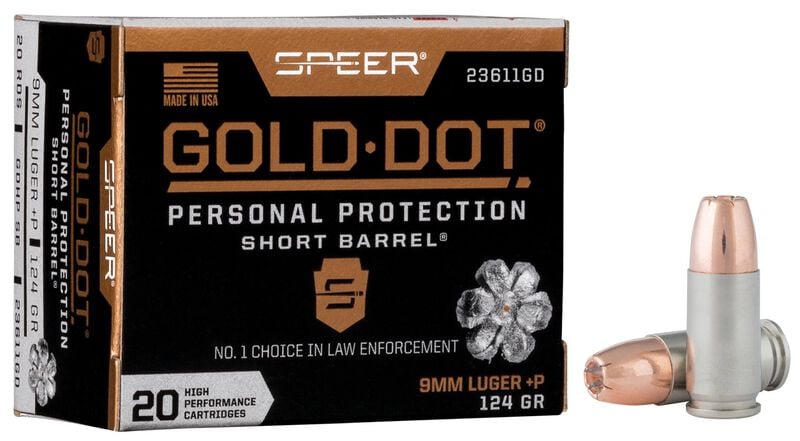
Besides, Speer makes a version of this ammunition specifically for short barrels. Check it out!
4. Underwood Xtreme Defender +P 90gr - Best Velocity Self-Defense

Specs
- Bullet Construction: Copper
- Bullet Weight: 90 gr
- Muzzle Velocity (compact / full size / PCC): 1,477 fps / 1,544 fps / 1,774 fps
- Extreme Spread (compact / full size / PCC): 30 fps / 56 fps / 13 fps
- Standard Deviation (compact / full size / PCC): 10 fps / 19 fps / 6 fps
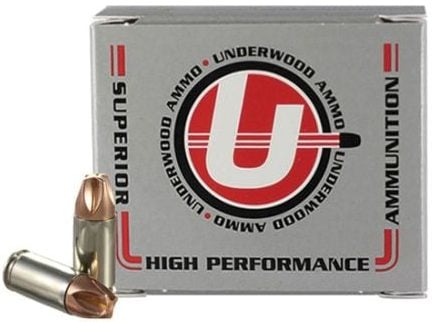
Here’s another extra-spicy +P round. I’ve had great results hunting with solid copper bullets, so I had high hopes for Underwood Ammo Xtreme Defender.
Check out the chronograph data on this stuff. The featherweight 90-grain bullet positively screams out of any barrel length, clocking between 1,477 and 1,774 feet per second in this test. Accuracy wasn’t great, though, and its average five-shot group came in fourth ahead of Speer Gold Dot +P.
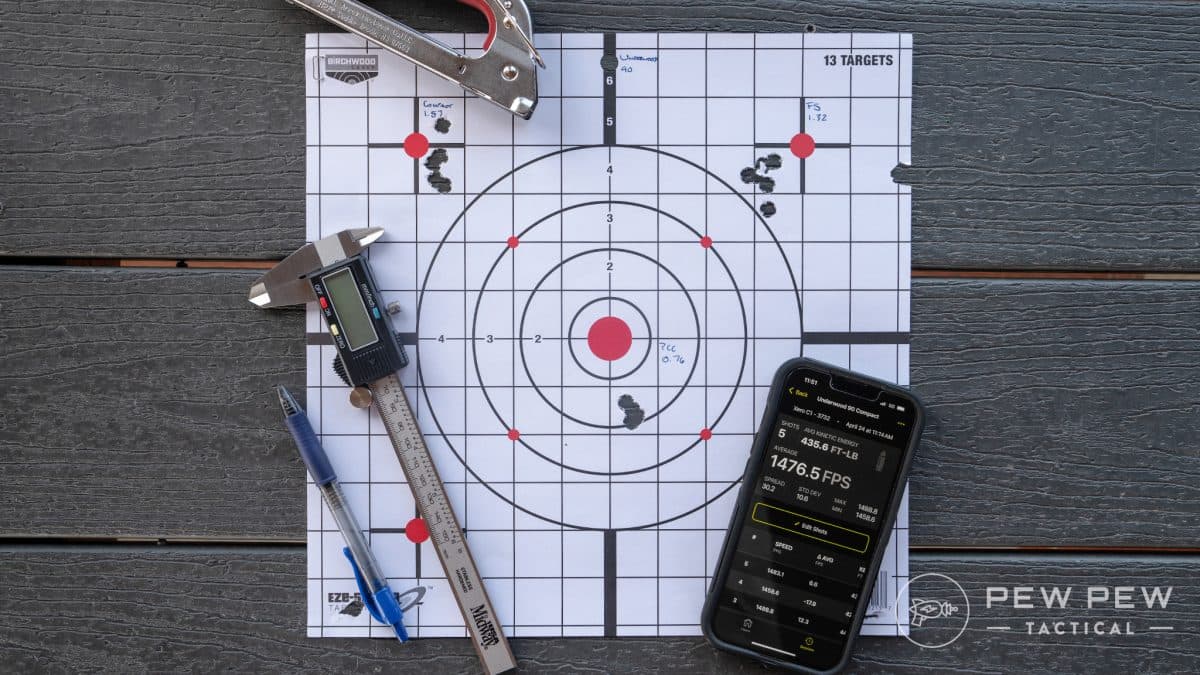
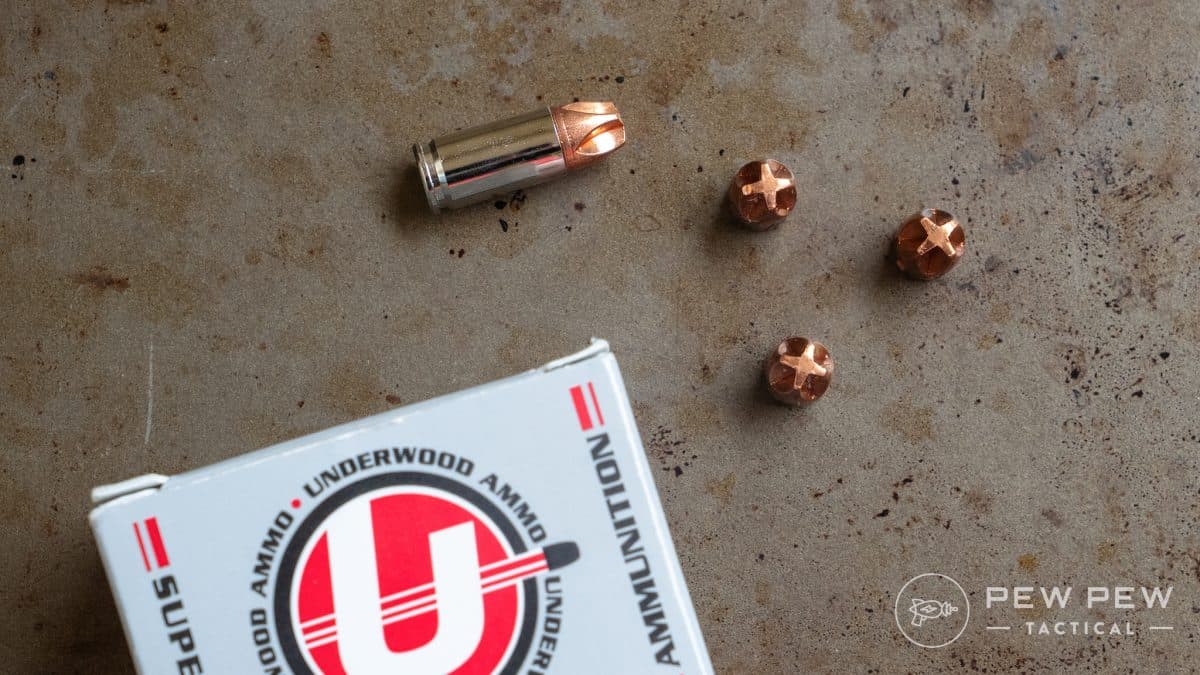
In ballistic gel, it overpenetrated by an inch and 1.25 inches out of the full-size pistol and PCC, respectively. There also wasn’t enough gas behind it to cause any expansion whatsoever.
I should also point out that my first shot out of the full-size pistol took a detour out of the gel block, so I fired a second to capture a fired bullet.
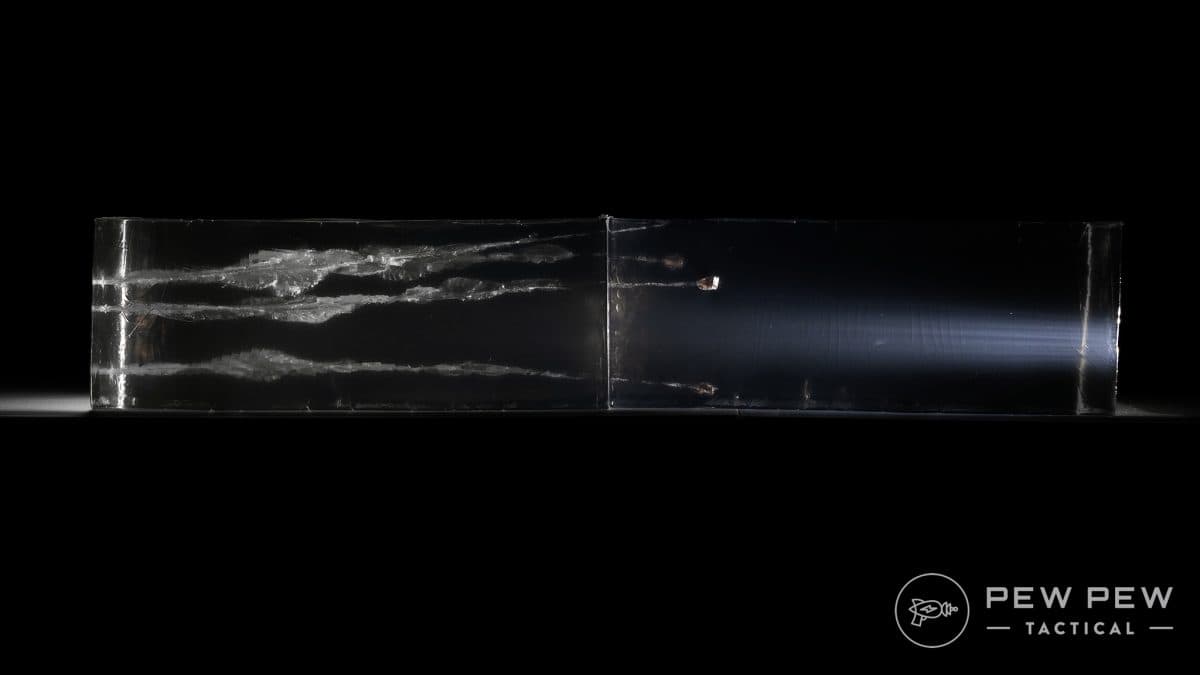
Ballistic gel also allows us to evaluate permanent wound cavities. In that regard, this ammunition was absolutely shocking. The bullets may not have expanded, but they tumbled inside the gel and all landed facing backward. The wound cavity from the compact pistol looked like it came from a magnum revolver or small rifle, not a 9mm pistol.
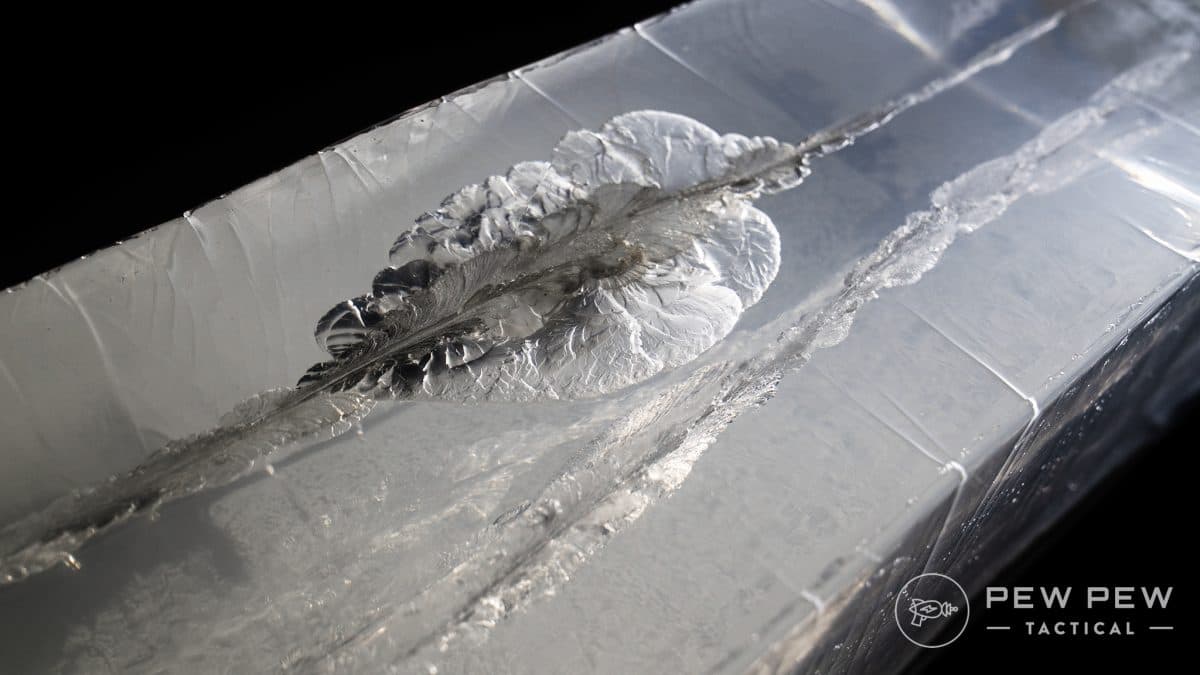
I’d have concerns about using this for home defense based on the overpenetration issue. If you’re looking for a round that can handle aggressive predator species or barriers like car doors and auto glass, this is a clear favorite.
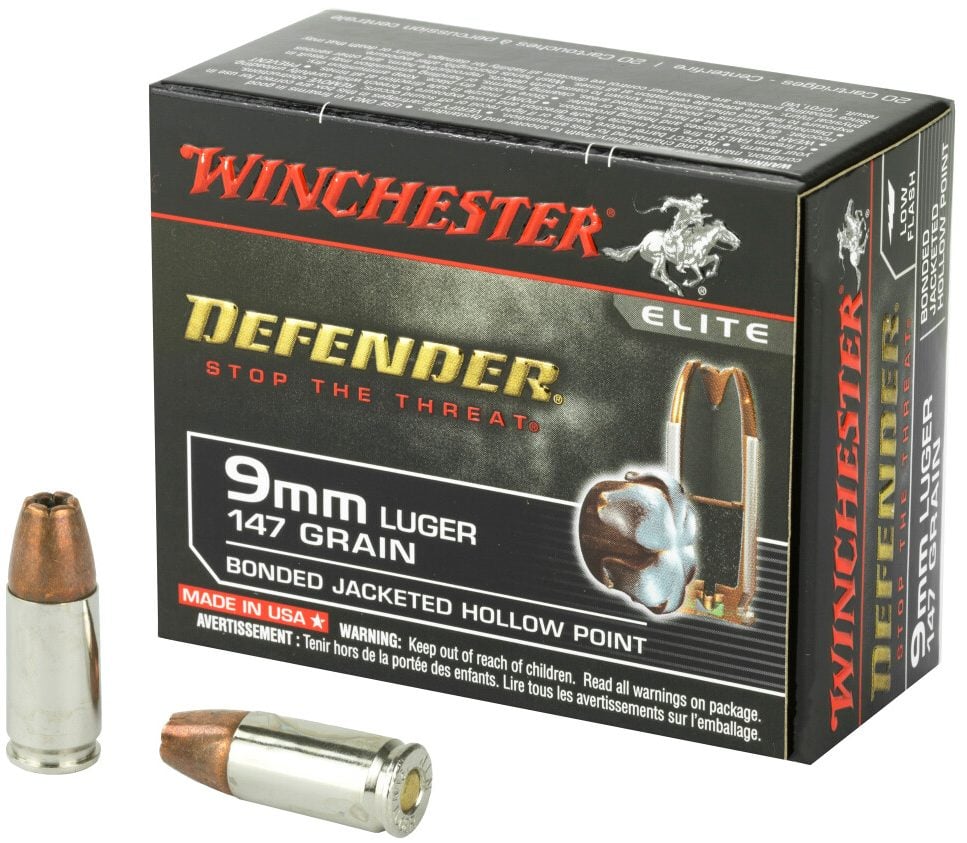
5. Winchester Defender 147gr BJHP - Best Subsonic Self-Defense Ammo

Specs
- Bullet Construction: Bonded jacketed hollow point
- Bullet Weight: 147 gr
- Muzzle Velocity (compact / full size / PCC): 1,040 fps / 1,092 fps / 1,144 fps
- Extreme Spread (compact / full size / PCC): 7 fps / 82 fps / 110 fps
- Standard Deviation (compact / full size / PCC): 3 fps / 33 fps / 40 fps
After conducting this test, Winchester Defender has me reevaluating my thoughts on defensive pistol ammo.
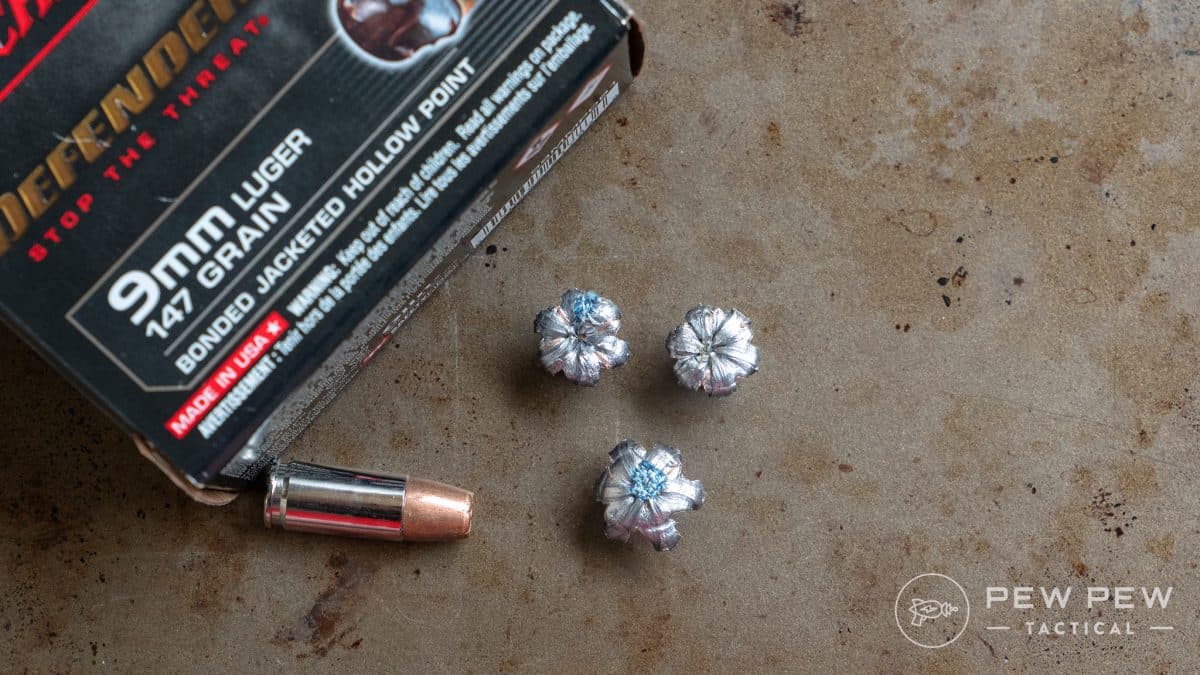
It recorded the best accuracy with each of the three barrel lengths and recorded an average five-shot group of 0.47 inches. This subsonic load may be slow, but it’s a tack-driver.
In ballistic gel, it reached or exceeded 50% expansion every time. You might expect it to struggle with penetration at these speeds, but it did well there, too. Both pistols achieved penetration within a quarter inch of the 18-inch mark, and the PCC actually overpenetrated to 21 inches.
On top of all that, it was remarkably quiet out of both pistols with the Banish 9K suppressor. The longer PCC barrel gave it enough runway to break the sound barrier.
The biggest fault with this ammo is that it failed to cycle in the PCC more often than not. It performed flawlessly in the pistols, though.
More and more people are considering suppressors for home defense. After seeing this ammo in action, I might join them. I still wonder about this ammo’s ability to defeat barriers like car doors, but it made a very compelling case for itself, regardless of whether or not you run a can.
Key 9mm Ammo Testing Definitions
These are definitions in my own words, but they will give you an idea of what I was looking for, so we can all stay on the same page.
- Accuracy: How consistently ammunition impacts at the point of aim.
- Average: A figure obtained by combining the results of a five-shot sample and dividing the sum by five.
- Expansion: Diameter of a fired bullet compared to the unfired bullet in millimeters, expressed as a percentage.
- Extreme spread: The difference between the fastest and slowest shots in a string of fire in feet per second.
- Frangible: Bullet construction that is designed to shatter or disintegrate on contact with a hard surface like a berm or steel target. Some indoor shooting ranges require frangible ammunition because it reduces the risk of injury from ricochets.
- Muzzle velocity: How fast a bullet leaves the muzzle in feet per second.
- Penetration: How far each bullet traveled into ballistic gel.
- Standard deviation: A statistical measurement of consistency. In this case, the Garmin Xero C1 Pro calculated the standard deviation for each type of ammunition in feet per second.
- Subsonic: Slower than the speed of sound (approximately 1,125 feet per second).
- Supersonic: Faster than the speed of sound (approximately 1,125 feet per second).
- Weight retention: Mass of a fired bullet compared to the unfired weight in grains, expressed as a percentage.
- BJHP: Bonded jacketed hollow point. This bullet construction is similar to JHP but uses an additional process to connect the copper exterior to the lead core.
- FMJ: Full metal jacket. This bullet construction wraps a copper exterior around a lead core.
- JHP: Jacketed hollow point. This bullet construction is similar to FMJ, but it features a hollow section in the nose of the bullet to improve expansion.
FAQs
Meet the Experts
This article comes to you from Editor Scott Murdock. Scott is a Marine Corps veteran who competed and qualified as a rifle and pistol expert while in service. In addition to shooting, Scott has written for a variety of publications, testing, researching, and evaluating guns and gear. He brings that knowledge and skillset to this article, editing and fact-checking for accuracy.
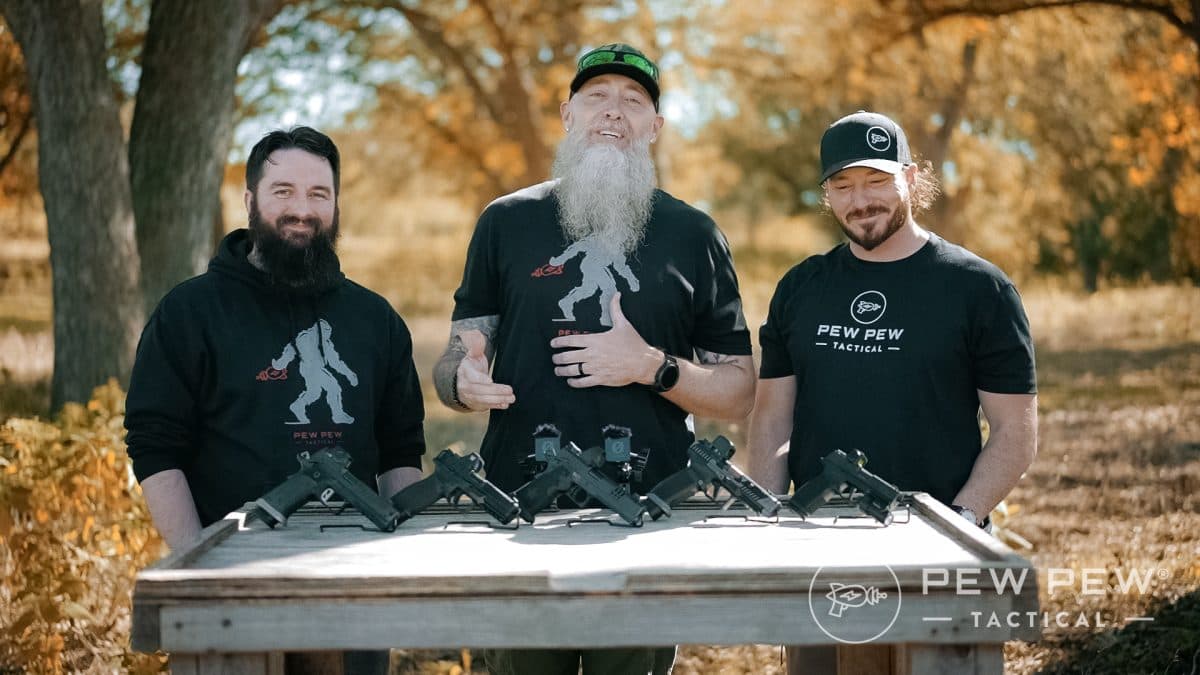
Editor Wyatt Sloan also provided input for this article. Wyatt is an NRA-certified instructor with previous experience as a USPSA competitor. Wyatt personally owns over 200 firearms and has 10 years of home-based FFL firearm sales. He has used his extensive experience with firearms at large to test guns for Pew Pew Tactical — evaluating them based on our standards and metrics.
Editor-in-Chief Jacki Billings runs our experienced team of reviewers. She is a National Rifle Association Basic Pistol Instructor as well as a member of the Society of Professional Journalists, ACES: Society for Editing, and the Professional Outdoor Media Association. Jacki has a bachelor’s degree in journalism and has worked as a media professional for close to 20 years, specializing in gun media for almost 10 years. With 2,000+ articles to her name, she uses her professional journalism and editing experience to set testing protocols and editorial standards for Pew Pew Tactical.
Pew Pew Tactical has been around since 2016, delivering
Final Thoughts
Any of this 9mm ammo is worth shooting, depending on what your goals are.

Rather than naming favorites, I’ll encourage you to evaluate your personal needs and dig into the data I collected. Want tack-driving accuracy? Concerned about overpenetration? Just looking to get as many reps as possible without blowing your training budget? There’s something here for you.
9mm Ammo in Stock
I’m sure there are great options we weren’t able to test, so if there’s something you recommend, share the wealth in the comments section. We’d love to hear it!
Which cartridge would you like to see us test next? Drop a comment and let us know! Looking for a pistol to shoot all this awesome ammo? Find your next gun in our guide to the Best 9mm Pistols.
Additional Resources
Listed here are additional resources we used for this article, including research papers/studies, as well as national organizations' standards and protocols, which helped us test and evaluate the ammunition.
- Sporting Arms & Ammunition Manufacturers' Institute: SAAMI American National Standards
- Hornady: FBI Ammo Test Protocol
- Applied Ballistics: Measuring Muzzle Velocity
Latest Updates
- March 2026: Added an editor's note regarding supply chain issues. Updated supporting content.
- March 2025: Total rewrite with new ammunition, testing procedures, and supporting content.