Best AR-15 Lower Receivers: Budget to Baller
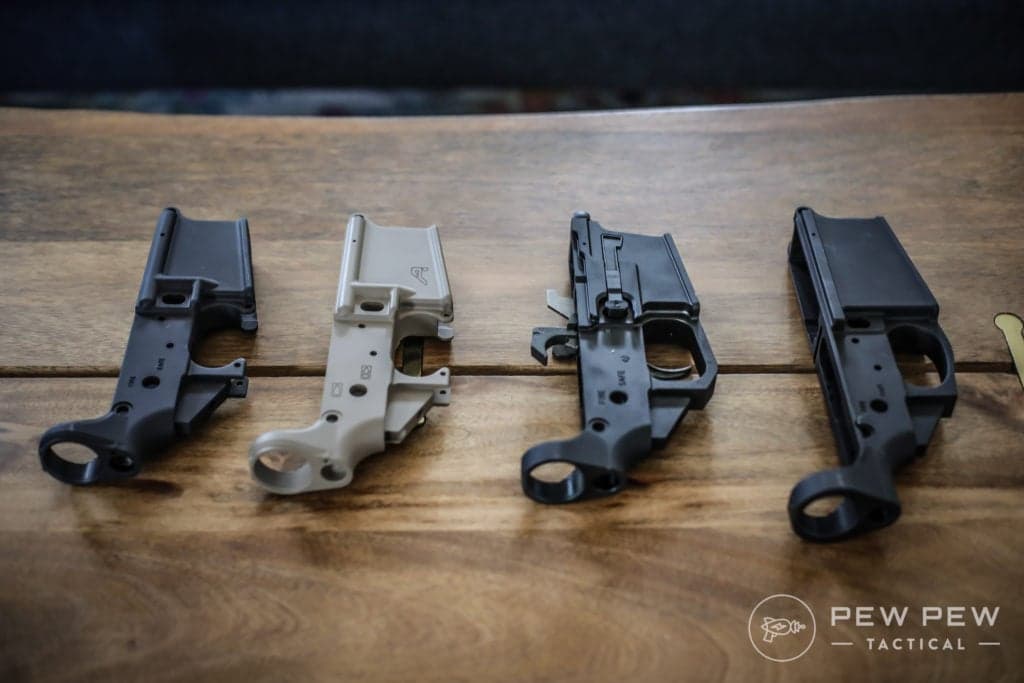
So many AR-15 lower receivers out there...We cover our top picks of the best lowers across budgets, materials, & end-use.


We review products independently. When you buy through links on our site, we may earn a commission to help support our testing. Learn more.
We know what you're thinking right now:
Why are some AR-15 lower receivers $30 and some $300+?
How do I know what's best for me?
It’s not as intimidating as it seems, so don’t worry!
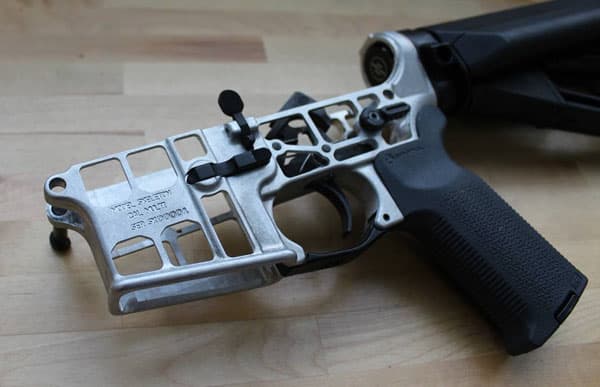
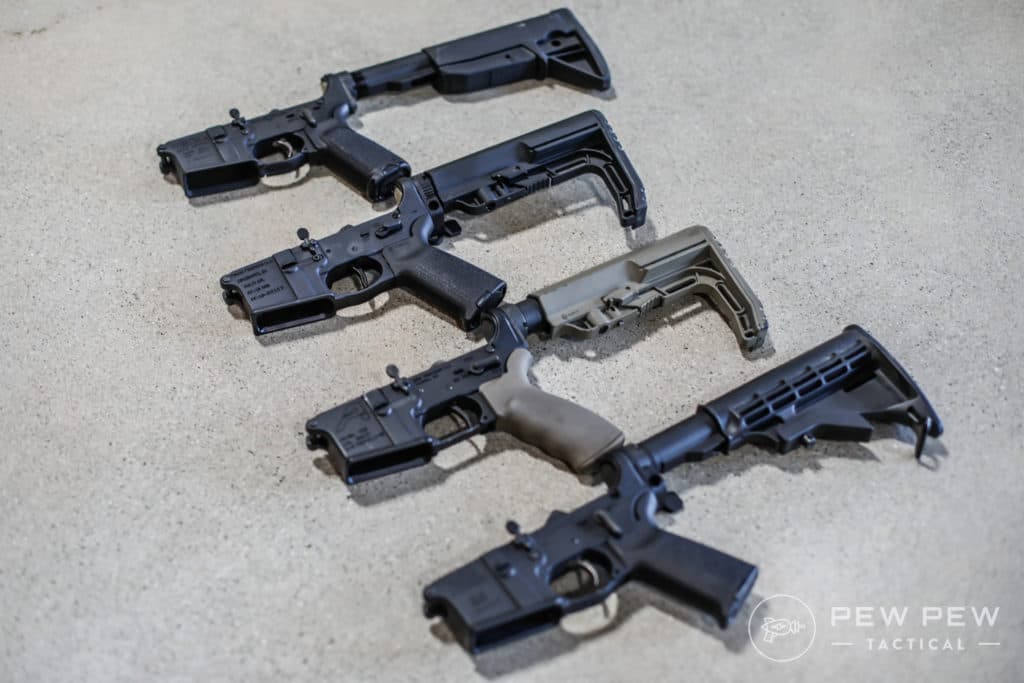
And we've built our fair share of ARs with a variety of lowers!
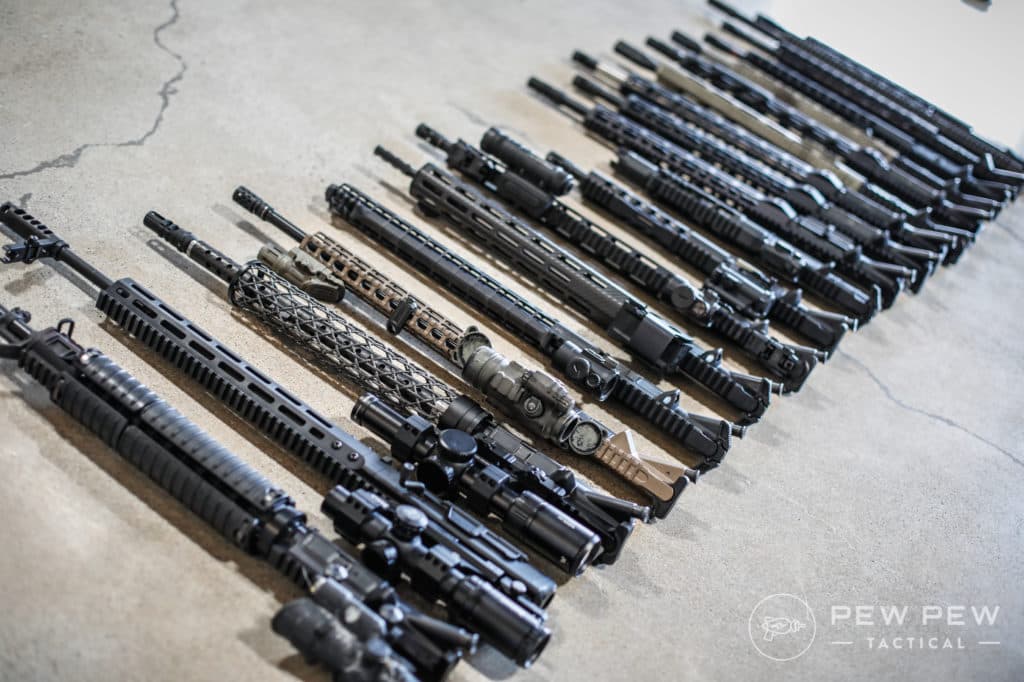
We’re going to cover the differences in manufacturing, materials, and weight to help you pick the best lower for your budget and build.
The Quick List
- Best Overall AR-15 Lower: Aero Precision M4E1 Stripped LowerJump to details ↓
- Best Budget Lower: PSA Stripped LowerJump to details ↓
- Reliable u0026 Affordable: Anderson Stripped Lower ReceiverJump to details ↓
- Best High-End Ambi Lower: Lewis Machine u0026 Tool MARS-L Ambi LowerJump to details ↓
- Best Retro Lower: Hu0026R Lower ReceiversJump to details ↓
- Best 9mm Lower: PX-9 Stripped LowerJump to details ↓
Table of Contents
How We Tested the Best AR-15 Lower Receivers
For this article, we gathered a bunch of lowers we’ve personally built, shot, reviewed, and trained with at Pew Pew Tactical. All lower receivers that made this list had to have a few things in common to earn a spot in our recommendations:
- Lowers must function properly when paired with an AR-15 upper, each shooting at least 500 rounds.
- Ergonomics (fitment and controls) need to work for a range of different shooters.
- Most lowers should be reasonably priced, or their price should be justified by materials/features.
- Lowers must also accept and release a variety of magazines.
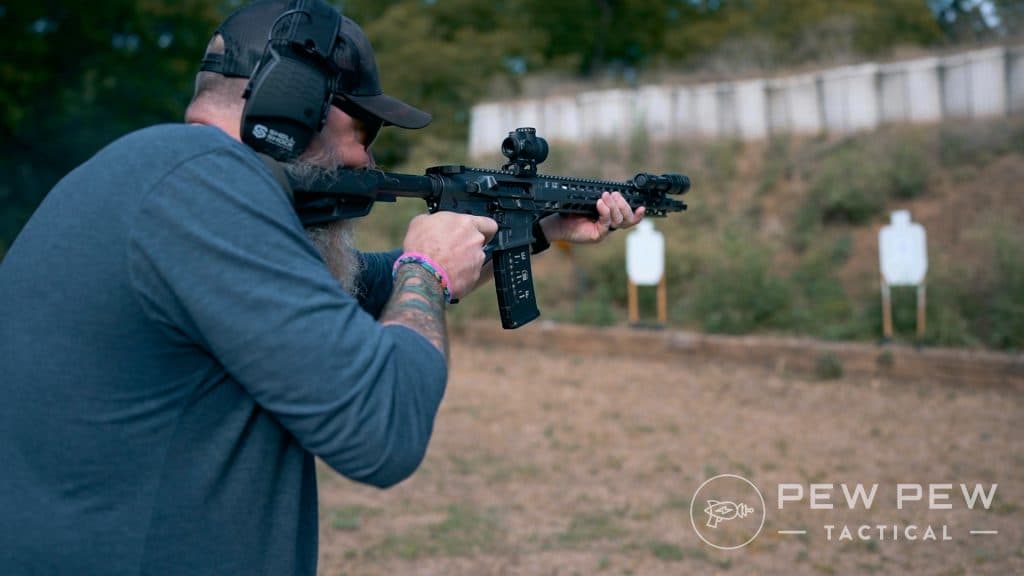
Whether staff or freelance, the entire team at Pew Pew Tactical pitched in their experience for this piece, contributing perspectives from various sizes and experience levels. Every lower receiver underwent a strict testing protocol that required a minimum of 500 rounds of practice ammo and heavier match-grade ammo at 50 and 100 yards with a 5-25x scope (unless otherwise noted).
Notably, most of the lowers in this article have well over 1,000 rounds through them and have been used a number of years. We also require all lowers to be tested with at least three magazines to assess compatibility.
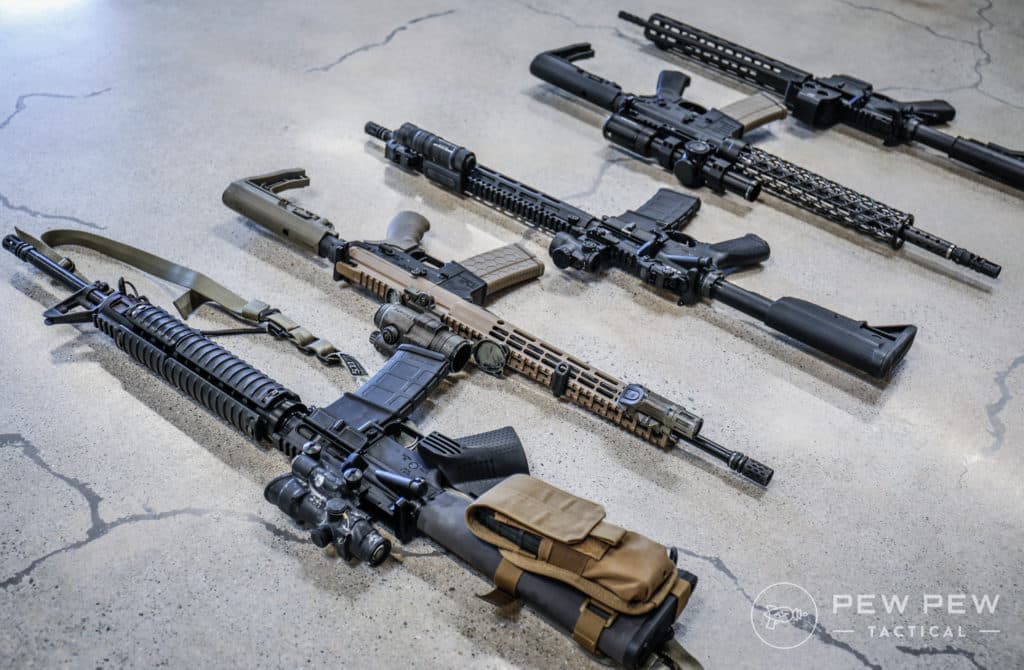
Lastly, we won’t cover cast lowers for two easy reasons --- they’re weak, and we think they’re ugly. We don't use cast receivers in our builds, and don’t think you should either.
Now, let's get on with our top picks! These are not in any set order. All of them are great; some are better than others for different reasons.
Best AR-15 Lower Receivers
1. Aero Precision M4E1 Lower - Best Overall AR-15 Lower
Pros
- 7075-T6 forged aluminum
- Nice finishing
- Threaded bolt catch pin
- Adjustable upper/lower tension screw
Cons
- None for the price point
My buddies and I have built at least a dozen ARs with Aero lowers. They are all running great with an estimated combined 10,000+ rounds.

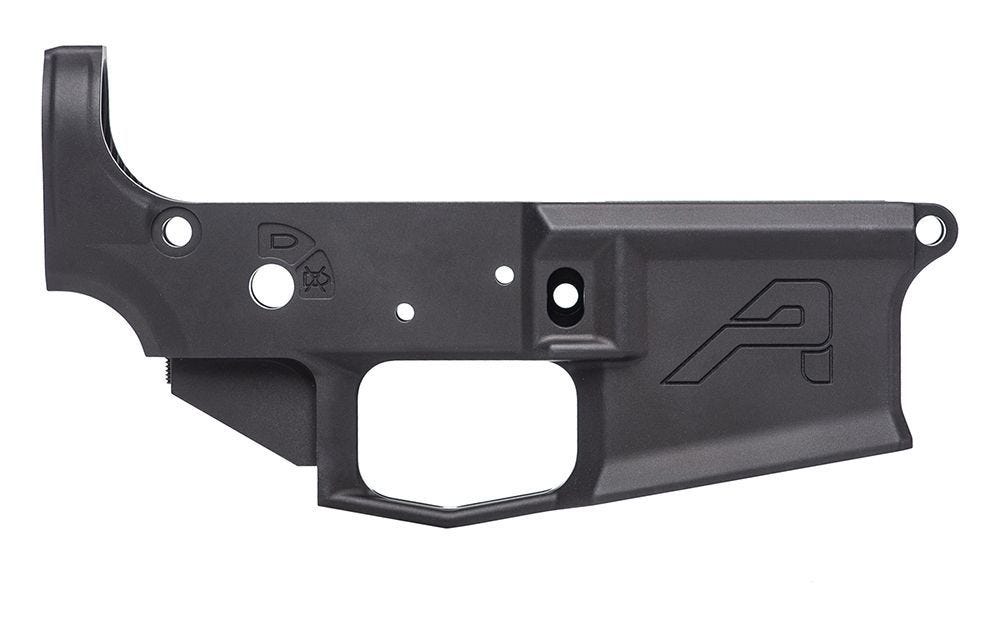
Aero Precision lowers are forged 7075-T6 with a nice-looking and nondescript logo.
You can pair it with an Aero stripped upper receiver, too which is our current favorite.
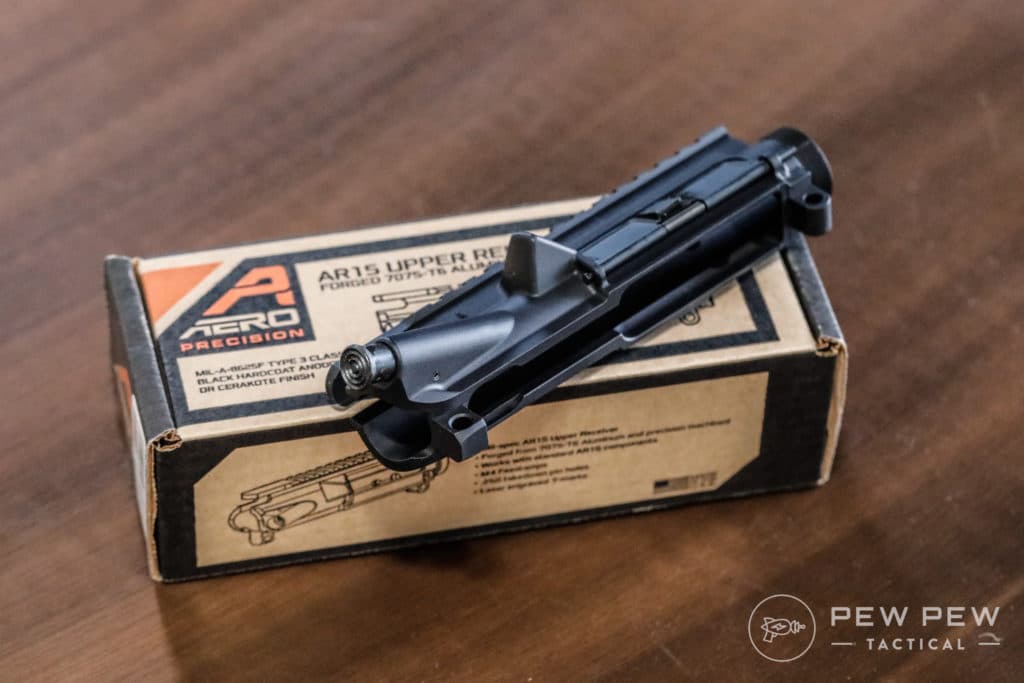
Otherwise, every brand of mil-spec upper we have has fit on the Aero lowers.
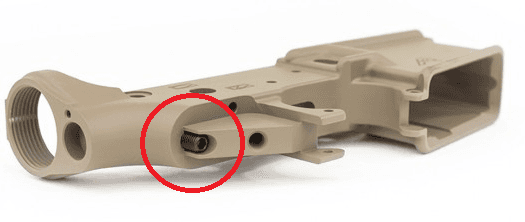
And why I love the M4E1 specifically...there's a threaded bolt catch pin so no more tapping and using a third hand trying to install that little roll pin. This alone makes it worth it.
Plus there's also an adjustable screw for Gen 2 models that makes a tighter fit with your upper...no more rattling around!
My newest competition build utilizes an Aero FDE Gen 2 lower receiver.
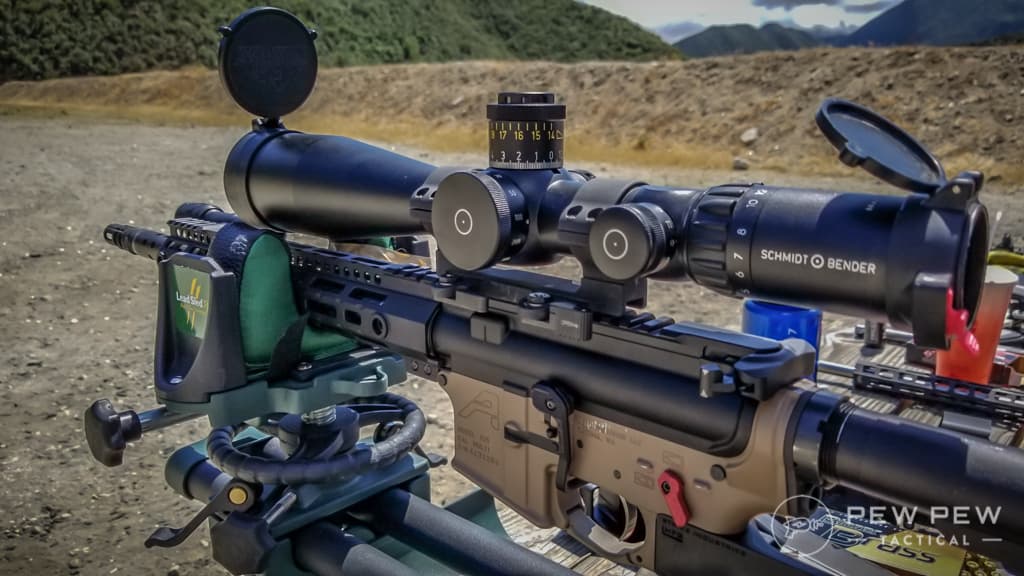
Oh...and now we have a full review on Aero's M4E1 uppers and build kits using...you guessed it...Aero lowers.
Check out the full review of the M4E1 and all the parts used in the build.
2. Palmetto State Armory - Best Budget AR Lower
Pros
- Lots of designs
- DIAS compatible
- 7075-T6 forged aluminum
- Very affordable
Cons
- None for the price
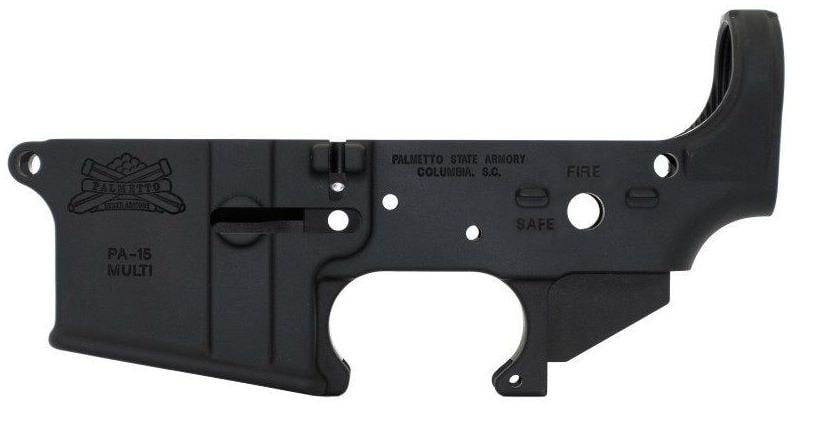
Simple forged lowers for a great price, they also offer a host of complete lower options for basically every type of AR-15 you can think of.
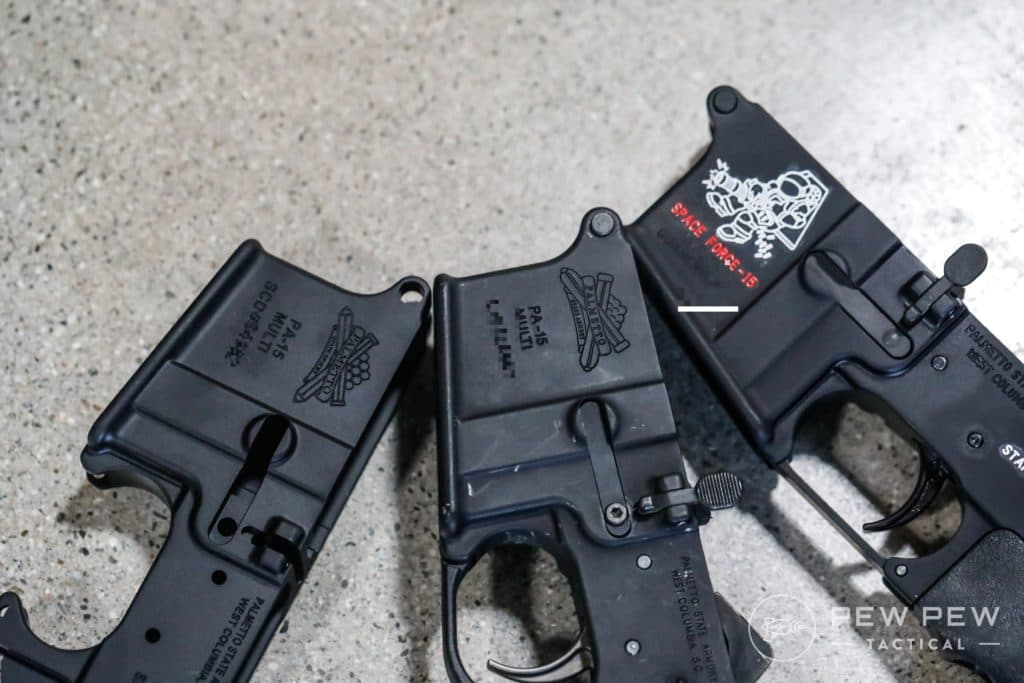
We've used and reviewed just about every AR-15 and AR-10 rifle that PSA makes, and their lowers have never given us even a hint of a problem through a combined 10,000+ rounds.
They even have some awesome limited edition lowers that change all the time from US Flags to M4/M16 clones and even memes.
On the flip side...they also have "stealth" lowers that I like.
Otherwise, you can't go wrong with their regular ones. And if you don't feel like building the lower...check out their complete lowers.
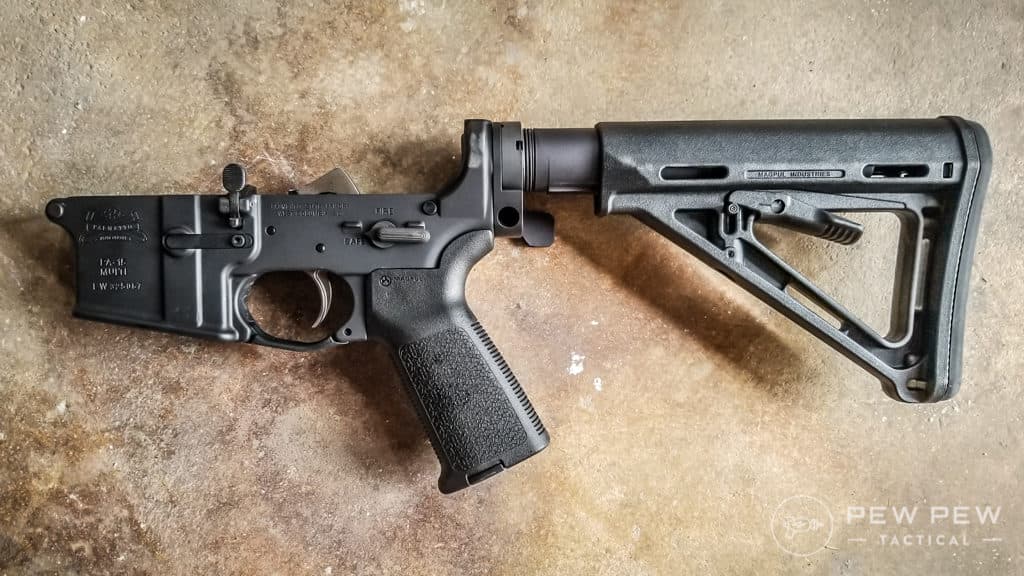
And for the lucky few out there...they are "low-shelf" receivers that can take drop in auto sears (DIAS). We've used ours to great effect because no one thinks the PSA lower is full-auto.
What's your take on PSA lowers? Rate them below!
Readers’ Ratings
4.96/5 (2650 Votes)Your Rating
3. Anderson Manufacturing - Reliable & Affordable AR Lower
Pros
- Very affordable
- 7075-T6 forged aluminum
- Readily available
Cons
- Unfortunate nickname of "Poverty Pony"
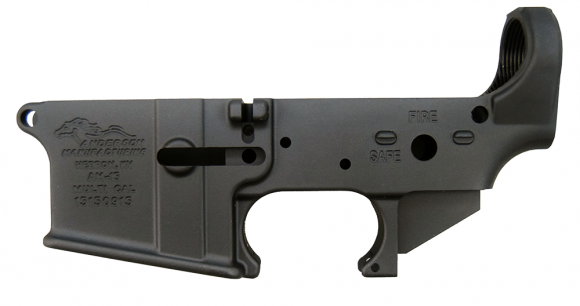
Here it is, the Honda of lower receivers.
Anderson Lowers are cheap, they’re forged 7075-T6, and they’re readily available.
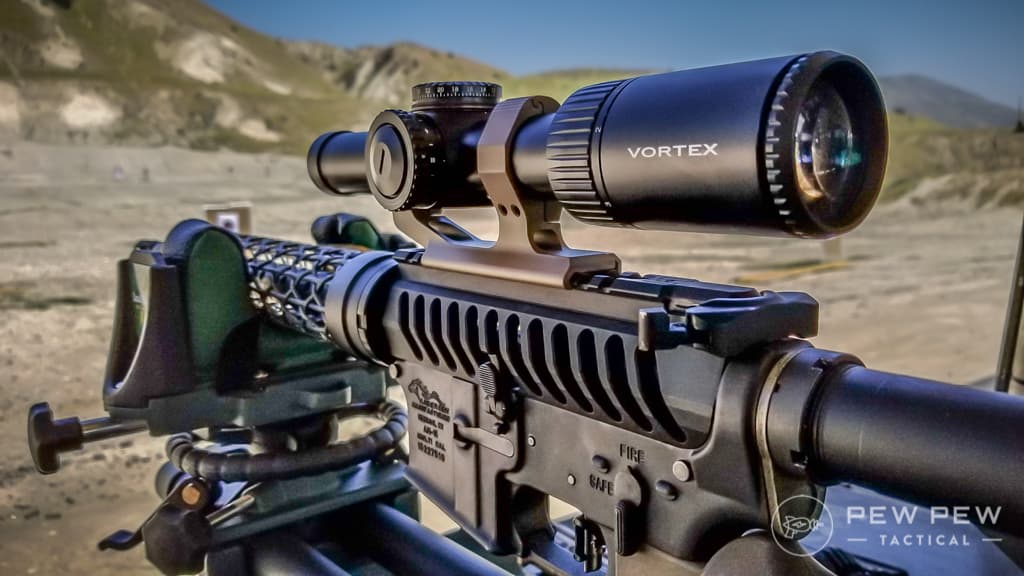
My accuracy testing lower uses an Anderson and a Hiperfire trigger (Best AR-15 Triggers). I have used their lowers on countless builds and have had zero issues with them.

If you scratch it while building, who cares?
Don't let the price fool you, these are quality basic lowers good for 95% of your potential builds as a hobby shooter. I have four of these in my safe right now just waiting to be built.
Plus, there are also "stealth" versions where they don't have the horse logo if that makes you feel better!
4. Lewis Machine & Tool (LMT) MARS-L - Best High-End Ambi Lower
Pros
- True ambidextrous lower
- High quality
Cons
- Hard to find in stock
- Expensive
A truly ambi lower, the MARS-L is, in our editor’s opinion, the greatest lower on the market right now.
This is the same pattern of lower that New Zealand adopted as their standard issue rifle, and it comes with some great features.
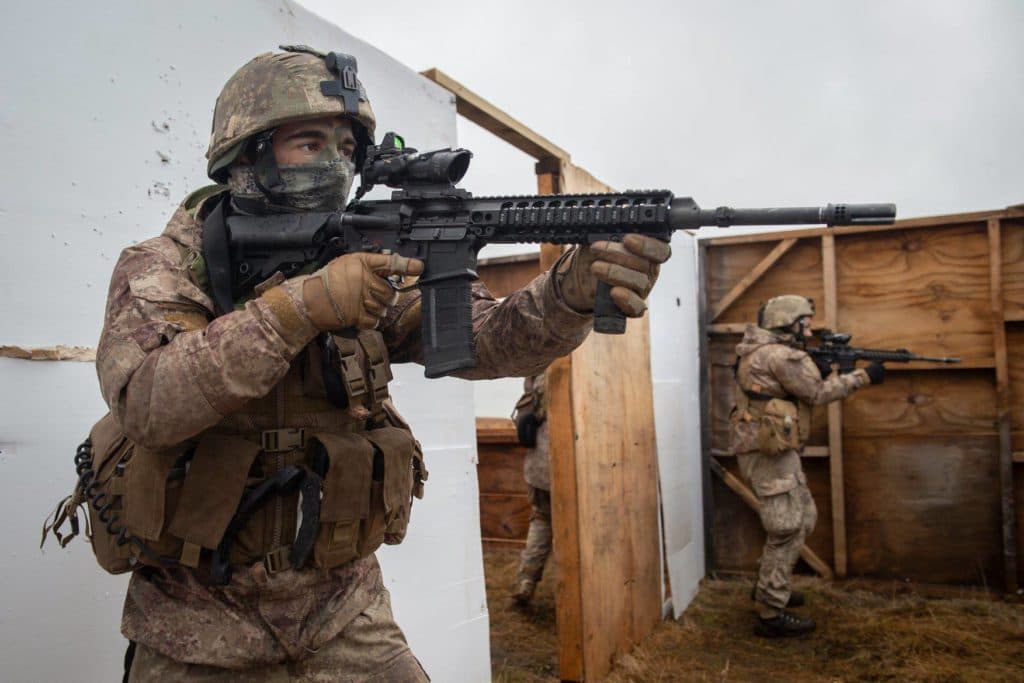
First and foremost, this is truly completely ambidextrous. Every control can be used from both sides, including the bolt release and stop.
They are also proprietary to the MARS-L, not just aftermarket parts slapped on a standard lower sold for 4x the price.

The downside of all of that is that these are not cheap and are often hard to find. LMT often has these back-ordered for 6 months or more at a time.
If you see one for sale, get it fast! They never stay on the shelves for long.
5. H&R Retro Lower - Best Retro AR Lower
Pros
- Retro specific
- Affordable for the clone builder
Cons
- None for the niche
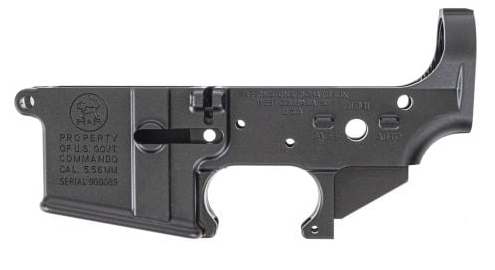
Okay, there really isn’t anything too crazy about the H&R lowers, except that they are patterned after lowers from long ago.

The AR-15 lower has changed in small ways over the years, and these are throwback lowers to those bygone designs. These are awesome for those who are looking to make a clone build like an old-school M16A1, XM177, XM16E1, 635 builds, or other older AR variants.
They look good, they’re well made, and they’re fun. Plus, they are a lot cheaper than trying to source originals.
See our review of the H&R 723 above.
6. PX-9 Stripped Lower - Best 9mm AR Lower
Pros
- Built for Glock mags
- 7075 T6 forged
- Accepts many AR-15 parts
Cons
- No last round bolt hold open
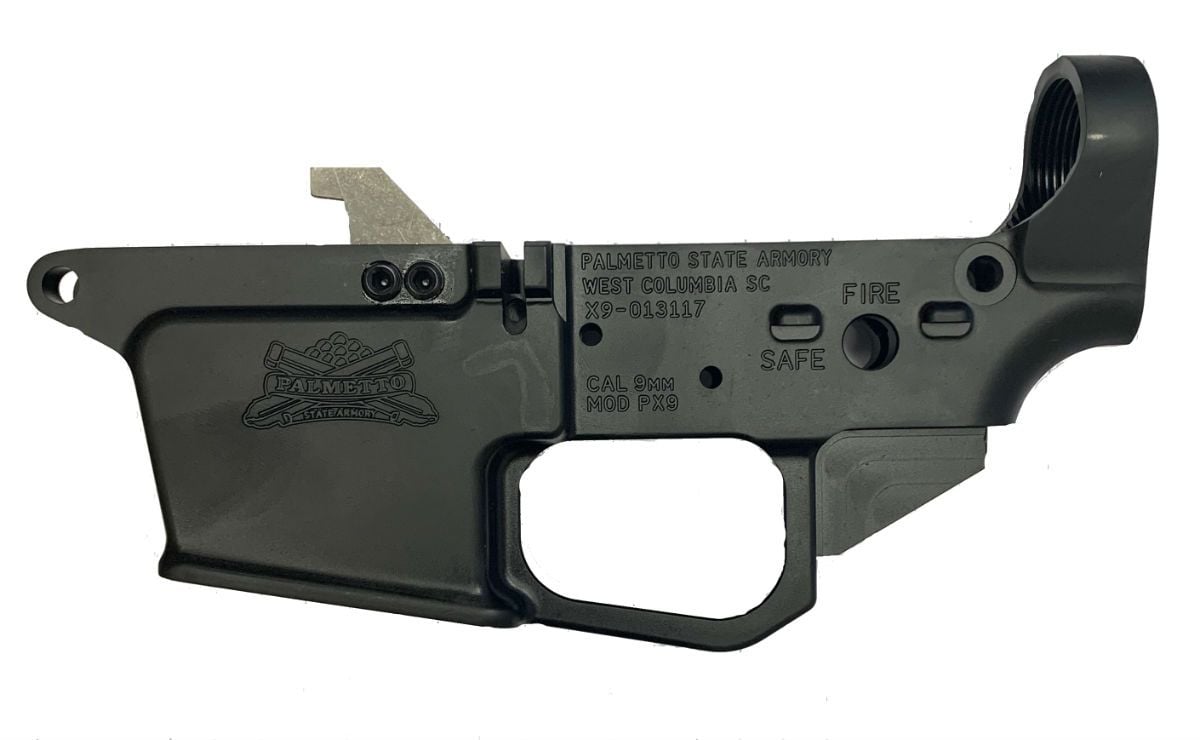
If we had to choose one...it'd be the PSA PX-9 lower that takes Glock mags.
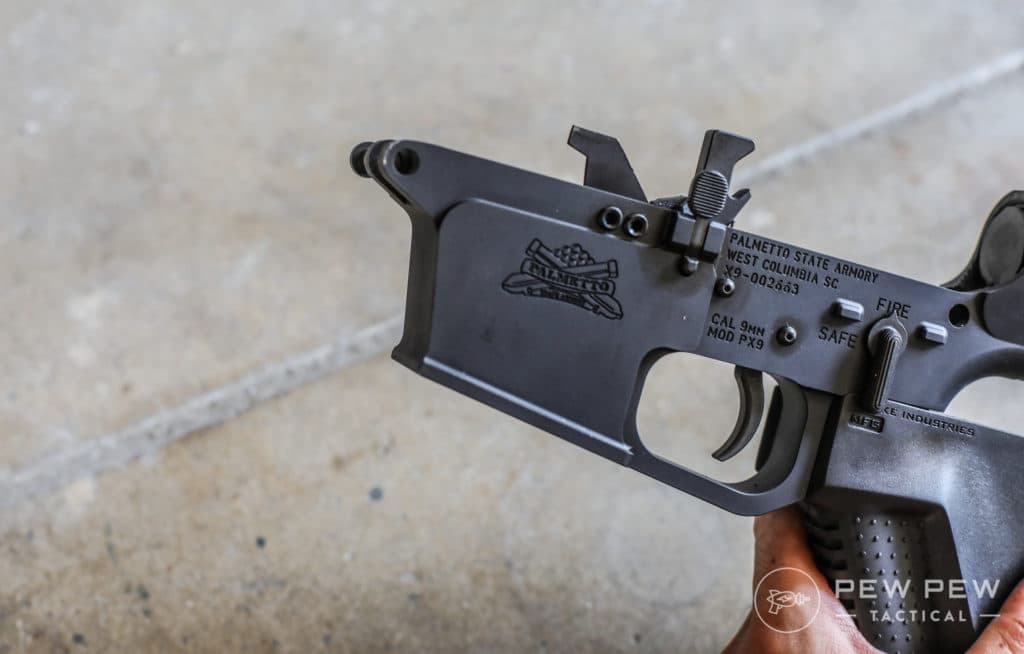
See how it already looks different from regular AR-15 lowers? It's got an ejector built in and a longer mag release.

We cover all the differences you'll see in pistol caliber AR lowers and the rest of our choices in Best 9mm AR Lower Receivers.
How to Choose an AR-15 Lower
There are countless other places manufacturing and machining lower receivers. As such, there are three things you should keep in mind when shopping around for them...
Material, process, and reputation of the manufacturer. A good place to start for manufacturer reputation is with our AR-15 Buyer's Guide. If their complete rifle is good...chances are their lowers are good too.

The overwhelming majority of lower receivers are made of aluminum. While there are other options such as steel, titanium, and polymer, we'll focus mostly on the three ways aluminum is made into an AR-15 receiver.
We'll touch on polymer also, but I'll try to be brief. First, what are those numbers in front of the aluminum?
6061-T6 vs 7075-T6 Aluminum Receivers
There are two types of aluminum alloys that are used in making lowers. 6061-T6 and 7075-T6.
So, what’s the difference? Simply: strength and corrosion resistance
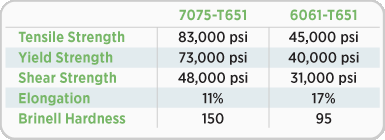
7075-T6 is nearly twice as strong as 6061-T6. Naturally, there will be a cost difference between the two.
However, 6061 is more corrosion-resistant. But unless your receiver is bare aluminum, this part shouldn't affect your decision too much.

When planning your build, think about how much that strength is worth to you. Want our advice?
The difference nowadays between 7075 and 6061 is so minimal that we like the peace of mind that comes with 7075.
But if budget dictates 6061...you're fine too. Now onto the three ways of manufacturing a receiver.
Cast Aluminum
The casting process is very basic.
Pour the molten aluminum into a mold and once cooled, you have a lower receiver ready for final machining.
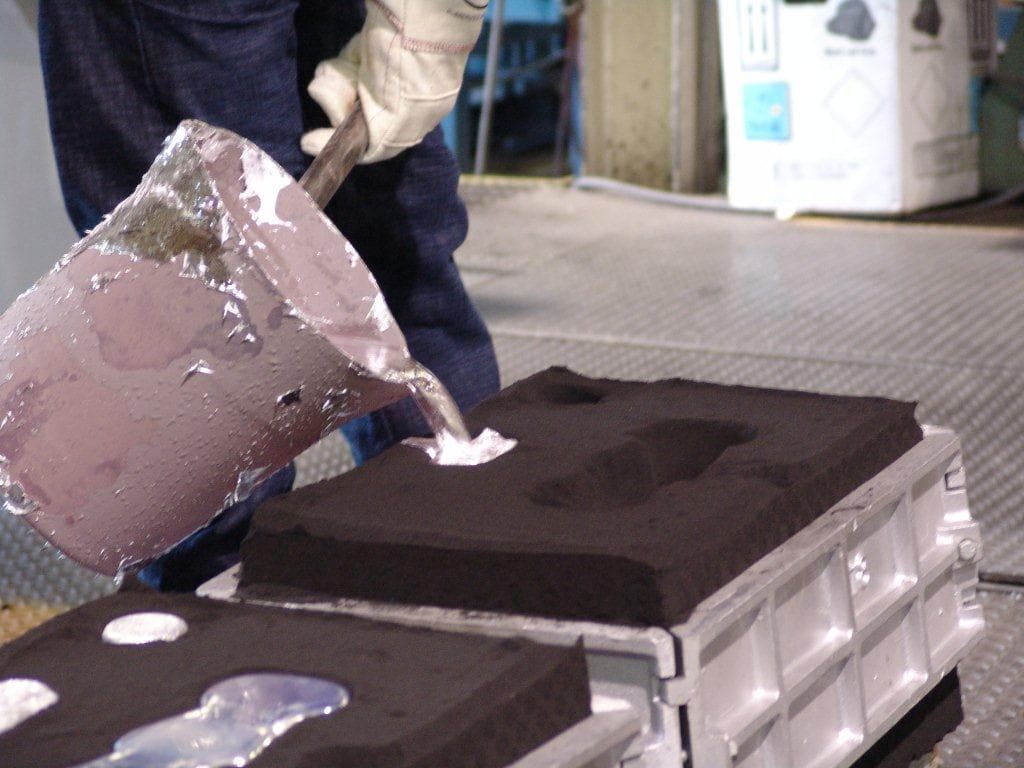
Since the aluminum is poured into the cast as a liquid the final product will have a loose crystalline structure making it the weakest form of the three types of aluminum.
It is still strong enough for the receiver to be perfectly safe without fear of malfunction. However, it is the least desirable of the processes.
Billet Aluminum
Think of it this way, the manufacturer is Michelangelo and the billet bar stock is the marble.
The lower starts out as a block of pure aluminum that ends up on various machines that mill it into a finished product.
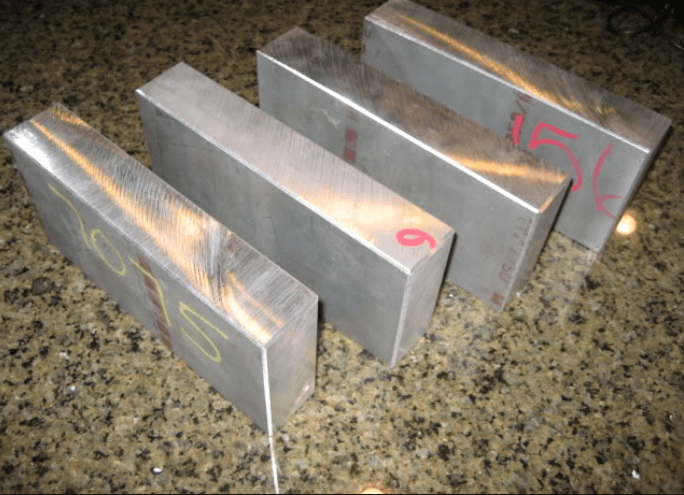
It is just sculpting with metal. Because the aluminum remains solid billet lowers are stronger than cast and have a finer finish.
If you’re looking to build a “show gun” consider a billet lower! They also have the added benefit of being easily customized by manufacturers since they start with raw aluminum.
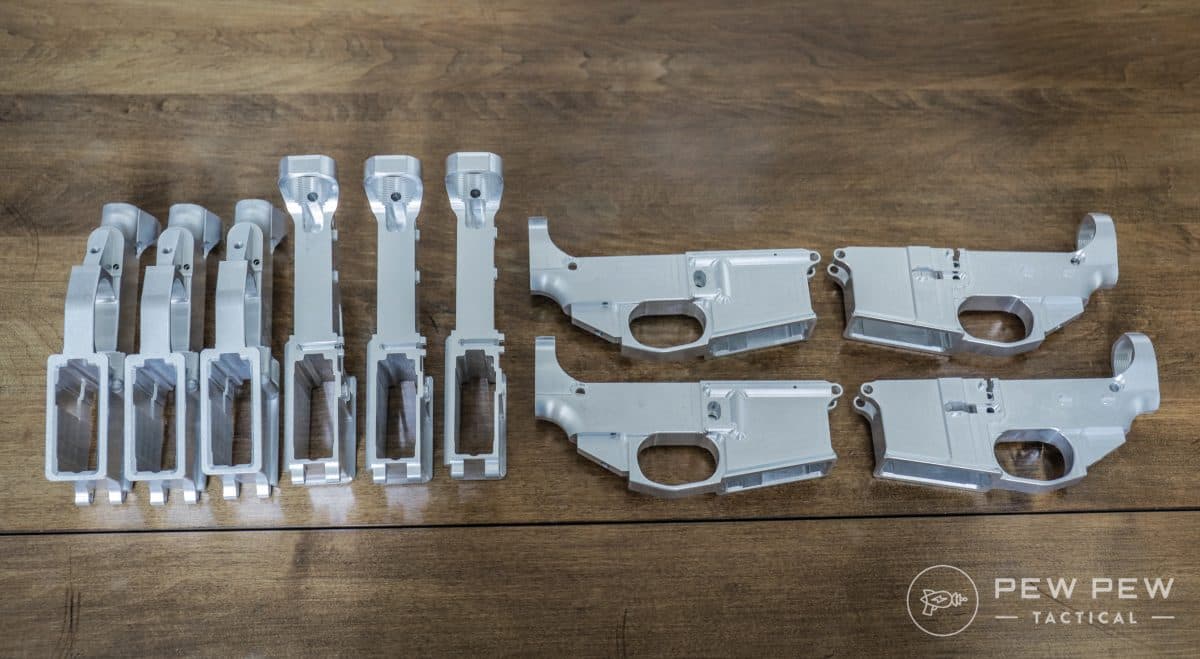
This allows for creative changes to be made such as a skull-shaped magazine well, built-in trigger guards, and extra machining for weight savings.
Forged Aluminum
The strongest and most common of the three types. Take some aluminum and smash it into submission.
That’s essentially what’s going on in this process.
Machines press a block of aluminum into the desired shape and then it gets machined to finish it off. The compression of the aluminum increases its strength.
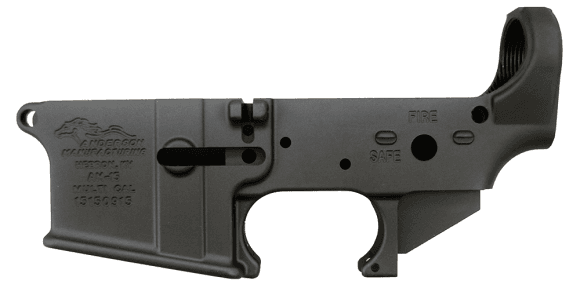
This is ideal for an AR-15 you plan on using often and hauling around with you.
Polymer Lowers
Because of the growing popularity of polymer lowers, it’s worth talking about the pros and cons, how they are generally made, and why you might want one...or might not want one.
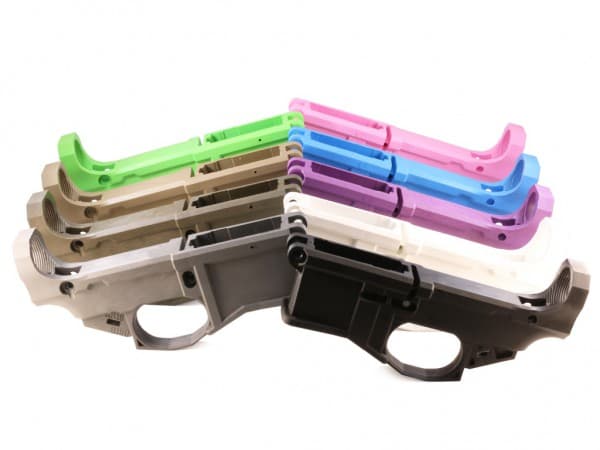
Surprisingly, polymer lowers really aren’t new. Colt was playing around with the design in the late ‘60s, it didn’t get past the testing phases -- but they still were the first.
Polymer lowers would languish and be mostly ignored for several decades but the idea eventually came back.

Plastic is cheaper than aluminum, easy to work with, and lighter. So on paper, it makes for good material for a non-wear part like the AR-15 lower receiver.
But is it strong?
This is where we run into some issues. If you take the specs for a standard AR-15 lower and try to just make it out of polymer, you’re going to have a bad time.
Failure points like the walls around where the safety detent goes are very thin and prone to breaking.
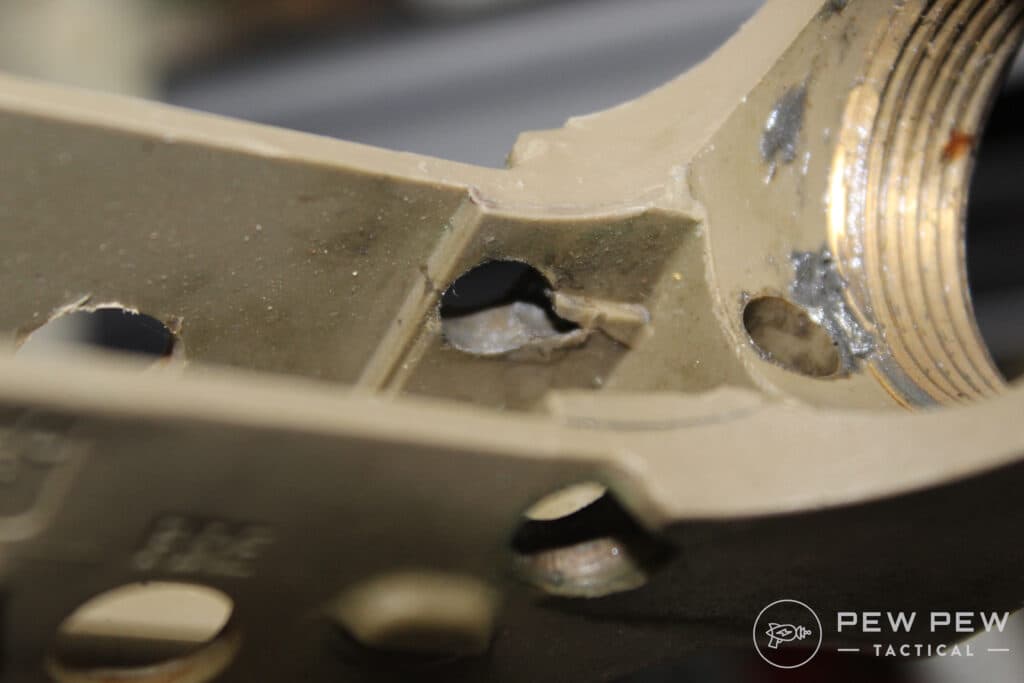
Where the buffer tube connects to the lower is another weak point, and even the threads for the buffer tube are often a problem and wear quickly if the buffer tube is replaced more than a few times.
There are other weak points but you get the idea.
To combat this, you need a lower that is designed to be a polymer lower. You can’t just take AR-15 lower specs and switch to plastic.
Overall though, the problem with these designs is that they are just too much weakness for not enough gain.

A standard aluminum stripped lower is about 8.5 ounces, and a polymer stripped lower that is decently designed is about 5.5 ounces.
Three ounces really isn’t much weight savings and pre-covid the price wasn’t much different either, maybe a $10 difference.
Ambidextrous Lowers
This is a term you’ll see pop up now and then generally on premium lowers.
If you see a brand making lowers for one price, then see some lowers for 2x or 3x the price from the same brand -- chances are the expensive ones are ambi.

Ambidextrous lowers mean they have controls on both sides of the lower. How, what, and where depends on the lower.
There are no standard naming conventions for these features so you’ll often have to inspect each lower on their own to see what type they are. The bare minimum of an ambi lower is one that has a safety selector on both sides.
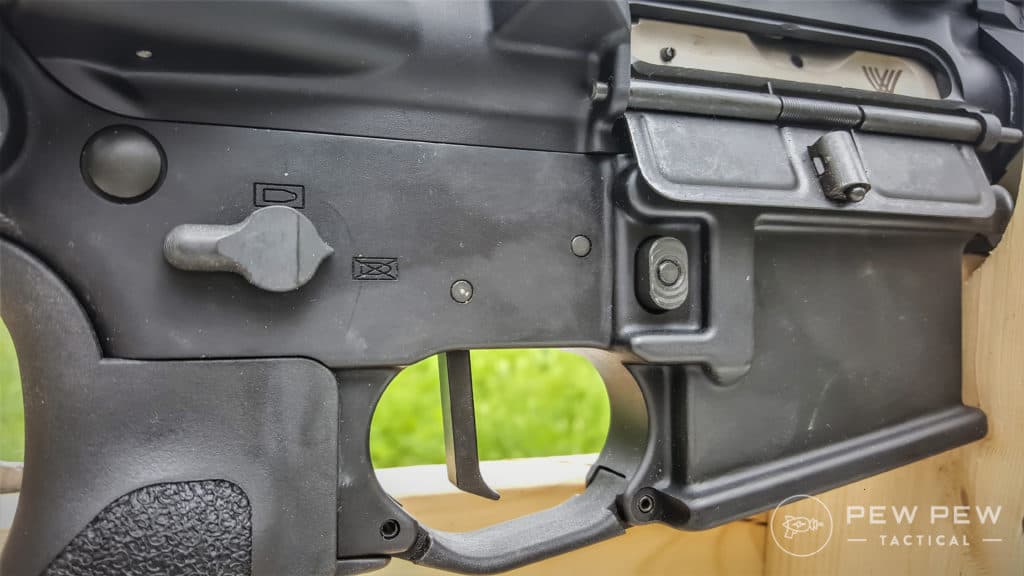
A step up from those will have a magazine release AND a safety selector on both sides.

Good ones will have the mag release, the safety, and a bolt release on both sides.
The best, and in my opinion the only ones that should have the right to call themselves ambidextrous, will have the mag release, the safety, the bolt release, and a bolt catch on both sides.
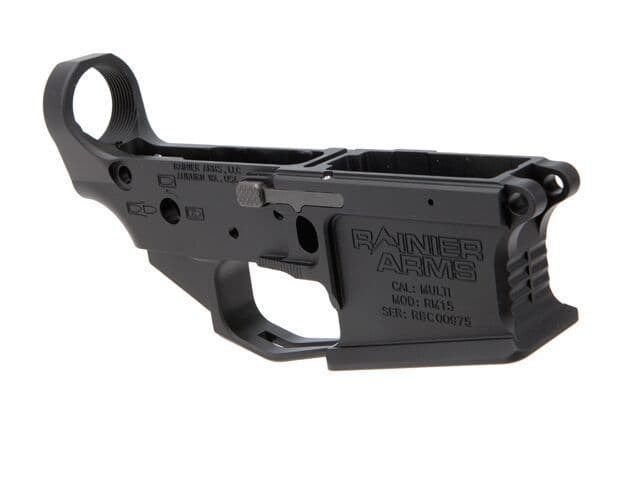
Note the difference between a bolt release and a bolt catch. Often an ambi lower will let you release your bolt from both sides, but will only let you lock it back from one side. That’s useful, but it isn’t the best.
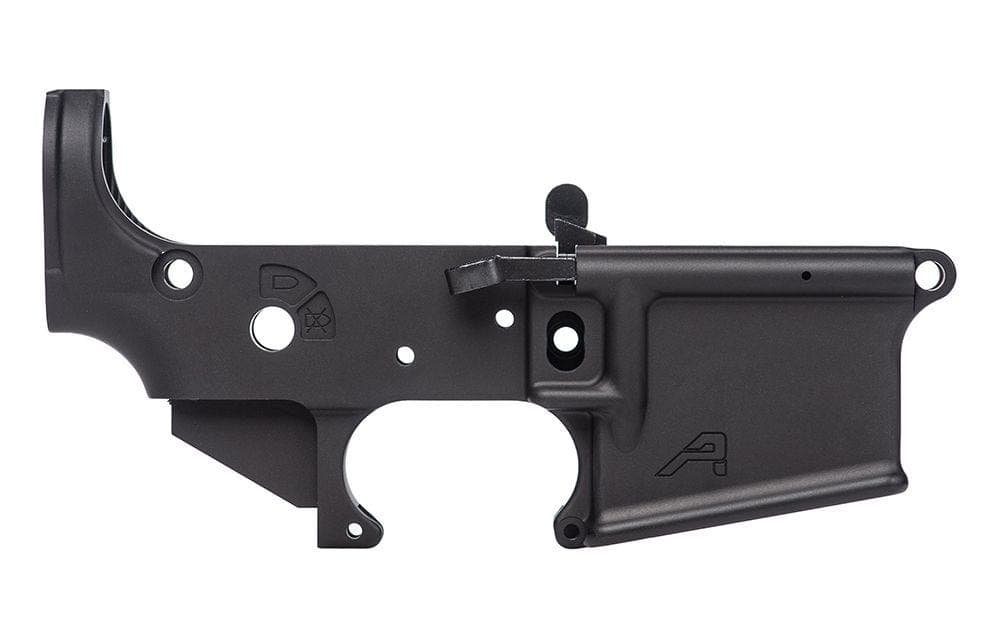
Okay, But Why?
Simple, so you can use all of the controls from both sides of the rifle.
If this is purely a range toy, then ambi really doesn’t matter. But for competition, SHTF, or home defense -- I really recommend looking at ambi lowers or at least adding an ambi safety and mag to your normal lower.
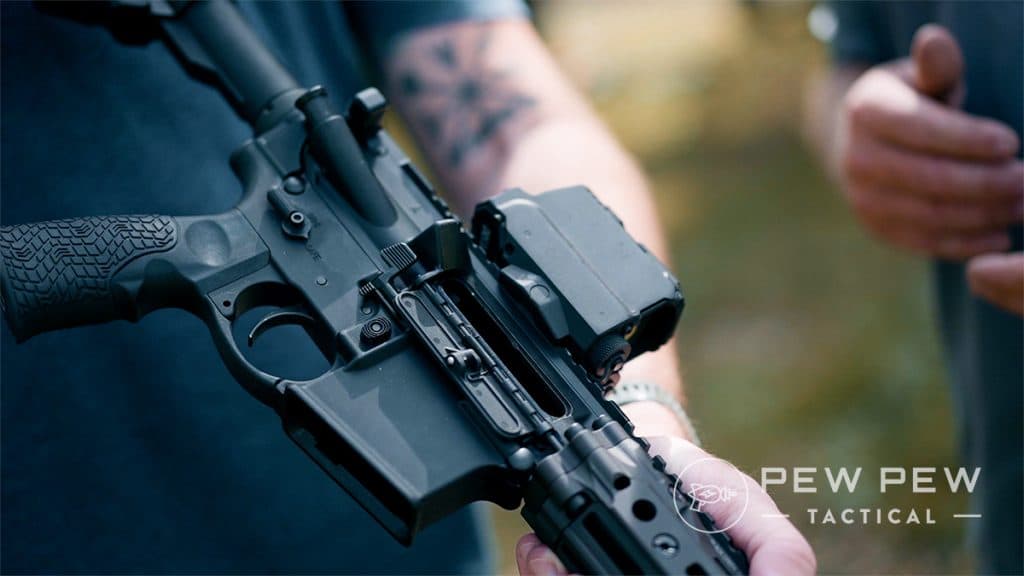
You never know when you’ll be hurt, when you’ll need to switch sides when you’ll have your hands full with something or someone else.
The ability to manipulate your rifle from both sides has benefits that will only present themselves when you truly need them.
Check out our favorites in Best Ambidextrous AR-15 Lowers.
Final Thoughts
Ultimately, you’ll get a feel for each company and find favorites, as I have.
Some people prefer different logos or roll marks, some have brand loyalty, and others only worry about the price of the lower.

There are many who choose a forged lower over the pricier billet lowers using the simple mantra “a lower, is a lower, is a lower.”
Personally, If I had to choose one lower for the rest of my builds...I'd go with the Aero. That is because Uncle Sam taught me was KISS method: Keep It Simple, Stupid.

Now that you’re armed with enough knowledge to help you sort through the haystack and narrow your search get out there and find what works for you.
Finish your lower with our Best Lower Parts Kits and also the AR-15 Resource Guide for all other parts. Or...fancy completing an 80% lower receiver? Check out our Best 80% Lowers & Jigs article.
LATEST UPDATES
- December 2024: Added PX-9 and more details on how we tested the lowers
- May 2024: Added How to Choose an AR-15 Lower section.
- October 2023: Added Icon Defense and updated pricing throughout.