
How to Shoot a Rifle: AR-15 & Bolt Action
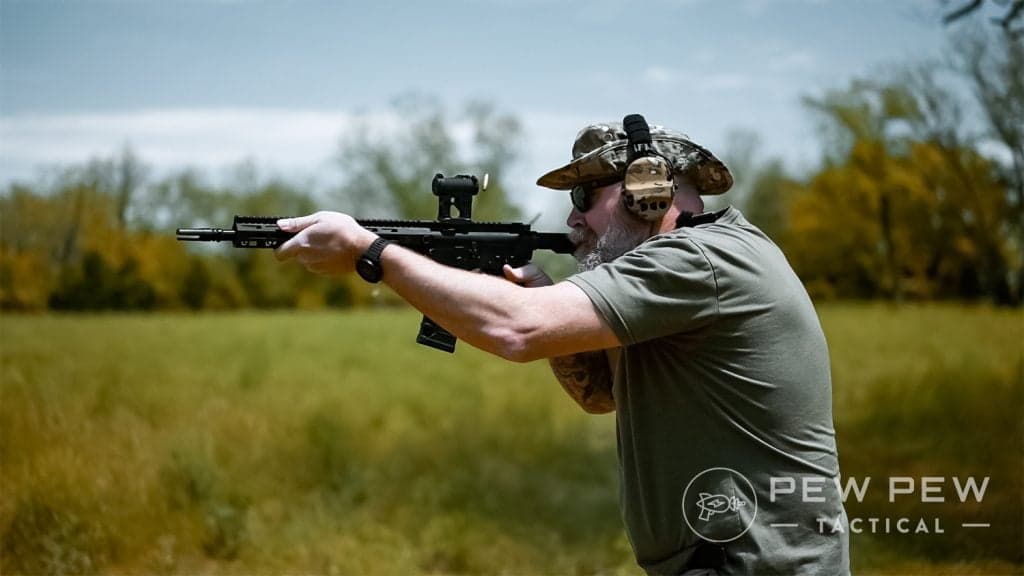
Learn how to shoot the most common semi-automatic rifle, the AR-15, as well as a bolt action rifle.

PPT Founder. NRA Pistol Instructor. USPSA/3-Gun/NRL22 Competitor. 250+ articles
We review products independently. When you buy through links on our site, we may earn a commission to help support our testing. Learn more.
Want to know how to safely shoot a rifle?
Here, we’ll go over the most common semi-automatic rifle, the AR-15, as well as bolt action rifles. We’ll cover some grip, stance, and general functions.
Before we dive in, here are some important safety rules:
- All guns are always loaded
- Never let the muzzle cover anything you are not willing to destroy
- Keep your fingers off the trigger until your sights are on the target
- Be sure of your target and what is beyond it
Table of Contents
Step-by-Step Instructions: How to Shoot an AR-15
Step 1: Understanding the Parts of an AR-15 & How It Works
The AR-15 is the most common sporting rifle in the US and is the civilian version of the M16/M4. It is one of the most customizable guns out there, so what you see below are just some possibilities
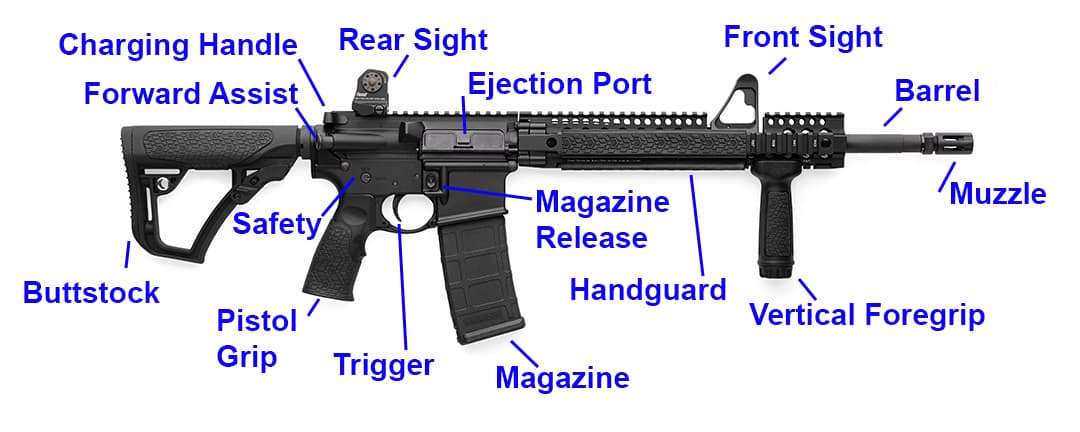
- The vast majority of AR-15s are semi-automatic rifles that use what is known as a direct-impingement (DI) operating system. A select few AR-15s and AR-style rifles are piston-operated. While the general user operation is the same, there can be some slight maintenance differences, as seen here.
Here is a video showing the detailed function and operation of a standard direct-impingement AR-15.
Step 2: Learn How to Load, Unload, and Field Strip Your AR-15
Being able to effectively and safely manipulate any firearm is important, but the AR-15 has a few features that make it a bit different than other rifles
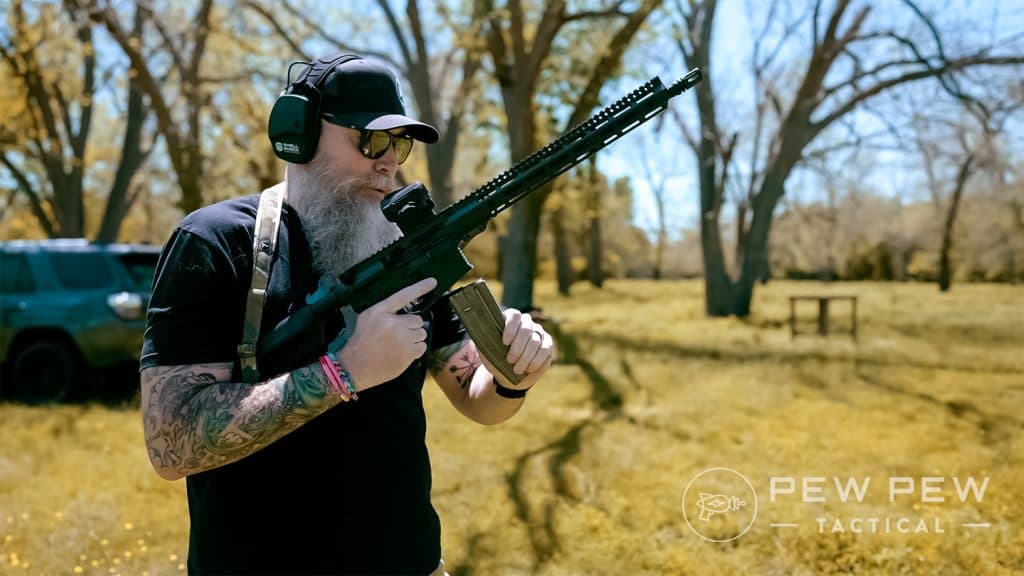
- Most AR-15s utilize the same or very similar controls and magazines.
- A properly built AR-15 should also lock open after all of the rounds in the magazine have been fired.
- Although the charging handle locations can vary on some ARs, the general operation is still the same.
- Please note that certain state-compliant AR-15 models may have different features.
Below is a wonderful tutorial video that further shows the operating procedures of the AR-15. This video also shows you how to load and unload the AR-15, as well as how to do a basic disassembly for cleaning and maintenance.
Step 3: Master Proper AR-15 Grip and Stance
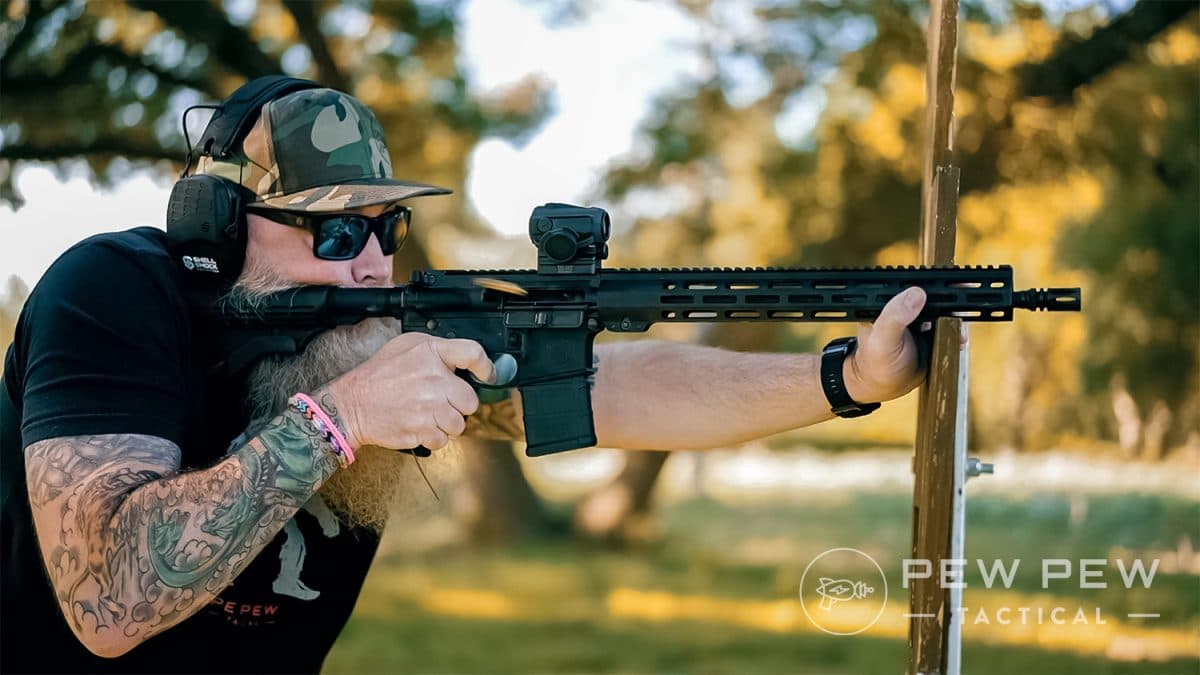
A good grip and a strong stance are key to getting the most out of your AR-15 rifle. Mastery of these mechanics can help improve your accuracy and speed while also cutting down on the amount of fatigue you incur when shooting.
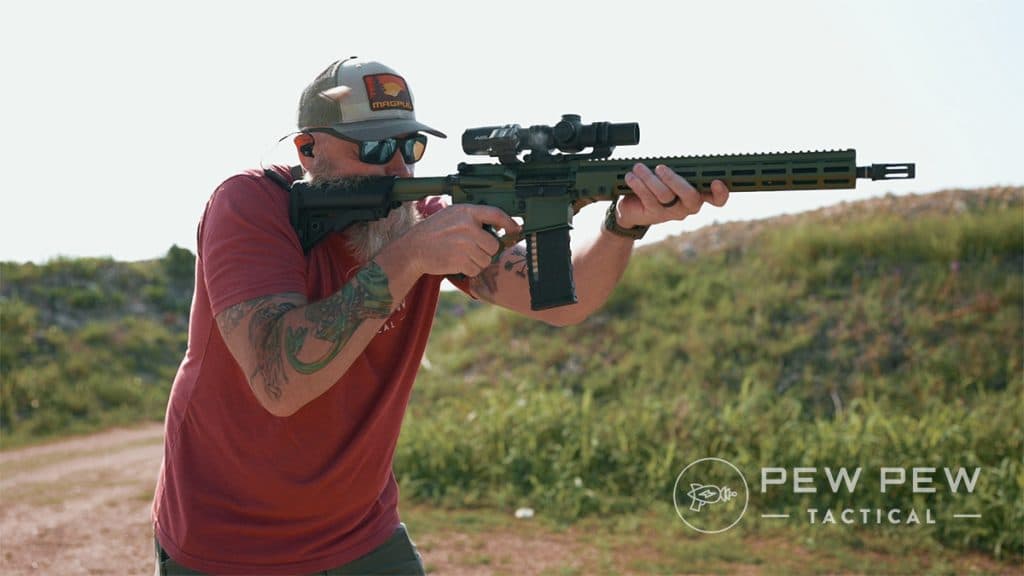
- Ensure the rifle stock is seated firmly in your shoulder pocket.
- Maintain a nice, high grip on the pistol grip. You should be utilizing the pad of your finger on the trigger if possible.
- Use your support hand to firmly grasp the rifle in the middle or forward part of the handguard to offer the highest level of stabilization.
- Get a solid cheek weld on the stock and keep your head in the same shooting position throughout your course of fire.
Jerry Miculek, for those who don't know, is one of the best shooters on planet Earth. He is back in the video below to teach us about AR-15 rifle grip, stance, and how to effectively control your firearm and switch from target to target.
Step-by-Step Instructions: How to Shoot a Bolt-Action Rifle
Step 1: Understanding the Parts of a Bolt-Action Rifle & How It Works
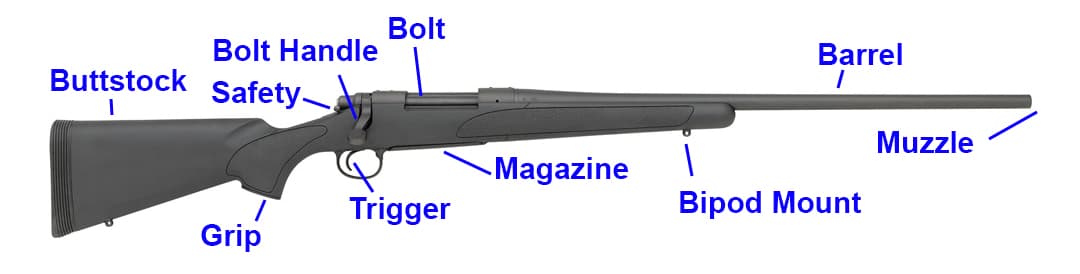
A bolt-action rifle requires you to move the bolt manually to chamber live rounds and eject spent ones.
- Most bolt-action rifles are "turn-bolt" guns, meaning you have to lift the bolt up, pull it to the rear, push it back forward, and then turn the bolt back down.
- Some bolt action rifles are "straight-pull" guns. These rifles only require you to pull the bolt to the rear and push it back forward; no turning is required.
Since there are fewer moving parts and traveling gasses, bolt-action rifles are generally regarded as being more accurate than their semi-auto brethren. Here’s one of the most popular bolt-action rifles of all time, the Remington 700.
Step 2: Improve Your Bolt-Action Rifle Technique
First up is a video showing how to properly cycle the bolt action using two different grip methods.
- Make sure to grasp the bolt firmly or make secure contact with the palm of your hand.
- Using a fair amount of force, push the bolt upward and firmly pull it to the rear.
- Once the spent cartridge is ejected, push the bolt all the way forward with authority before turning the bolt handle back into the downward position.
Next up is a video that has some useful tips on head placement, hand placement, and breathing techniques to help you form a repeatable shooting process for repeatable results.
Common Mistakes to Avoid
- Poor Head Placement – Failing to get a good cheek weld and get your head in the same position on the rifle each time can cause accuracy issues with both iron sights and optics.
- Jerking the Trigger – Pulling too fast or inconsistently introduces movement and throws off accuracy.
- Poor Support Hand Placement – Having your support hand too close to your shooting hand can cause instability in both your aiming and your recoil control.
FAQs
Q: Can I use this guide with other rifles?
A: This guide is primarily focused on AR-15s and bolt-action rifles. While some things like trigger control, head placement, and breathing techniques are applicable across all rifles, certain things like loading and general operation may not apply to other guns.
Q: I chambered my AR-15, why is it not working?
A: Running the charging handle too slow on the AR-15 can cause the gun to not chamber the round fully. Check out our quick guide on How to Make Sure Your AR-15 is Chambered.
Q: I am having accuracy issues even after applying these techniques. What gives?
A: Accuracy can be affected by a variety of things. Be sure to make sure your optic is mounted correctly, try a few different types of quality ammo, and shoot from a rested position on a calm day, if possible, to rule out any accuracy issues on the gun itself.
Meet the Experts
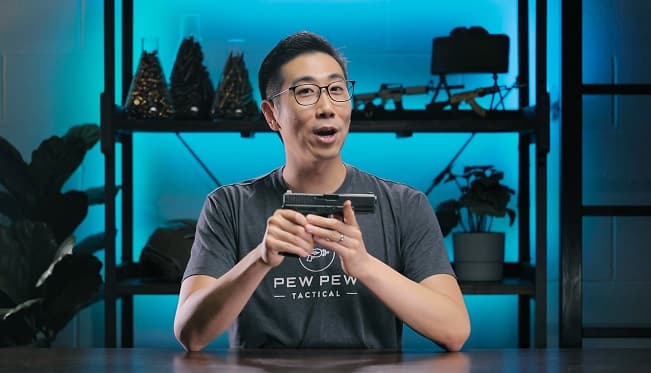
This article was written by Pew Pew Tactical CEO and Founder Eric Hung. In addition to founding Pew Pew Tactical as a place for shooters to learn, he’s also an NRA-certified instructor and a USPSA/3-Gun/NRL22 competitor. Eric has also researched and written over 250 articles on firearms, training, gear, and just about everything else related to firearms.

Editor-in-Chief Jacki Billings runs our experienced team of reviewers. She is a member of the Society of Professional Journalists, ACES: Society for Editing, and the Professional Outdoor Media Association. Additionally, she is an NRA-certified Pistol Instructor and former Concealed Carry Instructor. Jacki has a bachelor’s degree in journalism and has worked as a media professional for close to 20 years, specializing in gun media for almost 10 years. She uses her professional journalism and editing experience to set testing protocols and editorial standards for Pew Pew Tactical.
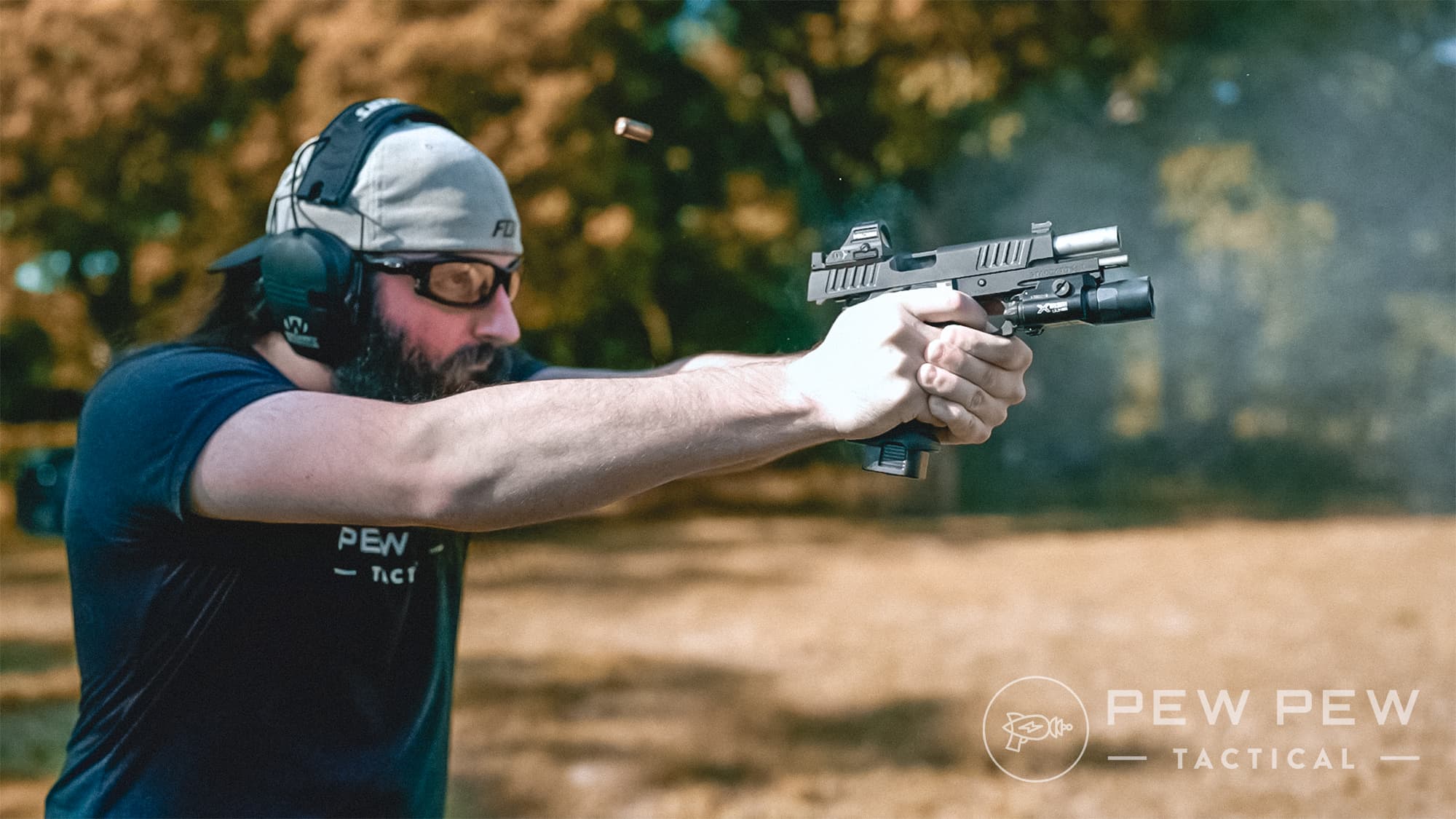
Also editing this article is Wyatt Sloan, Editor. Wyatt is an NRA and USCCA-certified instructor with previous experience as a competitive shooter. Wyatt personally owns over 200 firearms and has 10 years of home-based FFL firearm sales. He has used his extensive experience with firearms at large to test guns for Pew Pew Tactical — evaluating them based on our standards and metrics.
Final Thoughts & Next Steps
Now that you have a grasp of how to shoot a rifle properly, it’s time to hit the range and get some sweet practice!
Looking to push things further? Check out our article on Long-Range Shooting [Intro & Fundamentals] for more in-depth info on how to push your rifle at distance. Don't have a rifle yet? Be sure to also check out our list of the Best Rifles of 2025!
Additional Learning
- AR-15 Long Range Shooting with .223/5.56: Interested in pushing the AR-15 out further? This guide covers extended range shooting with 5.56 AR-15s specifically.
- How to Zero a Red Dot on a Rifle: Have a red dot on your AR or other rifle? This guide will help you get it sighted in.
- How To Zero a Rifle Scope: How about a full-on rifle scope? We've got you covered in this zero guide as well!
LATEST UPDATES
- April 2025: Article has been completely revamped.
- June 2024: Fixed broken video links and updated text and pictures.