Best Beginner Revolvers: 5 Wheelguns For The Modern World
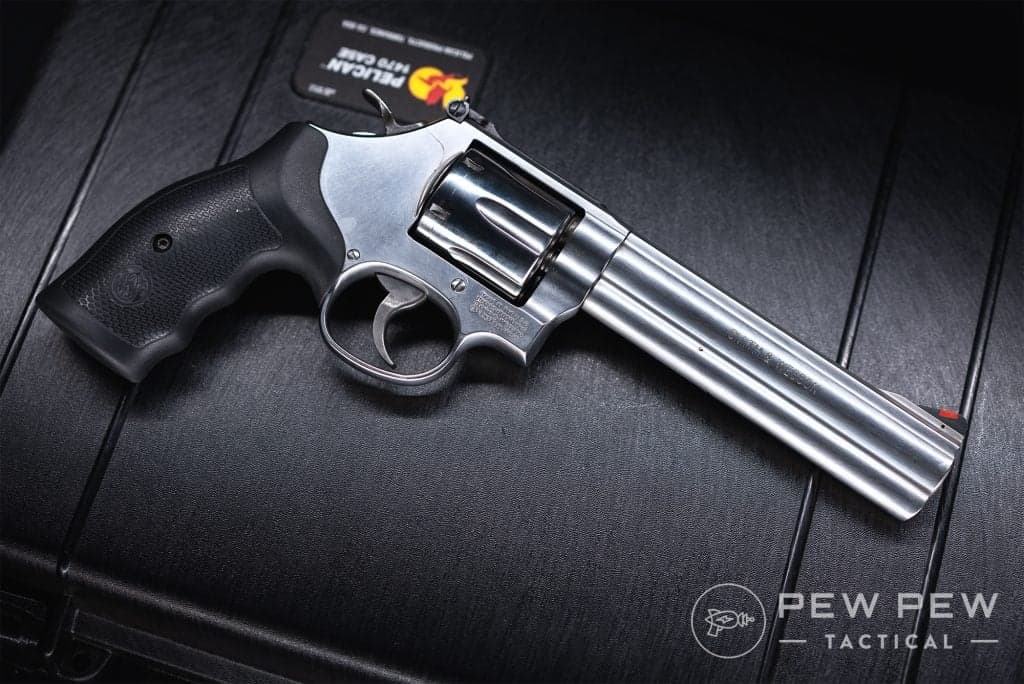
Think revolvers are too old school? We'll cover reasons why revolvers still rule in the modern world (plus our picks of the best models and brands.)

PPT Editor. NRA & USCCA instructor. Hunter, former competitive shooter, collector (200+ firearms)
We review products independently. When you buy through links on our site, we may earn a commission to help support our testing. Learn more.
Revolvers might be old news, but they will never go out of style.
But not all revolvers are created equal, and not all of them are well-suited to beginners or shooters who are new to revolvers in general.
So how do you pick the right one without falling into the pitfalls of gimmicky or useless guns? Great question!
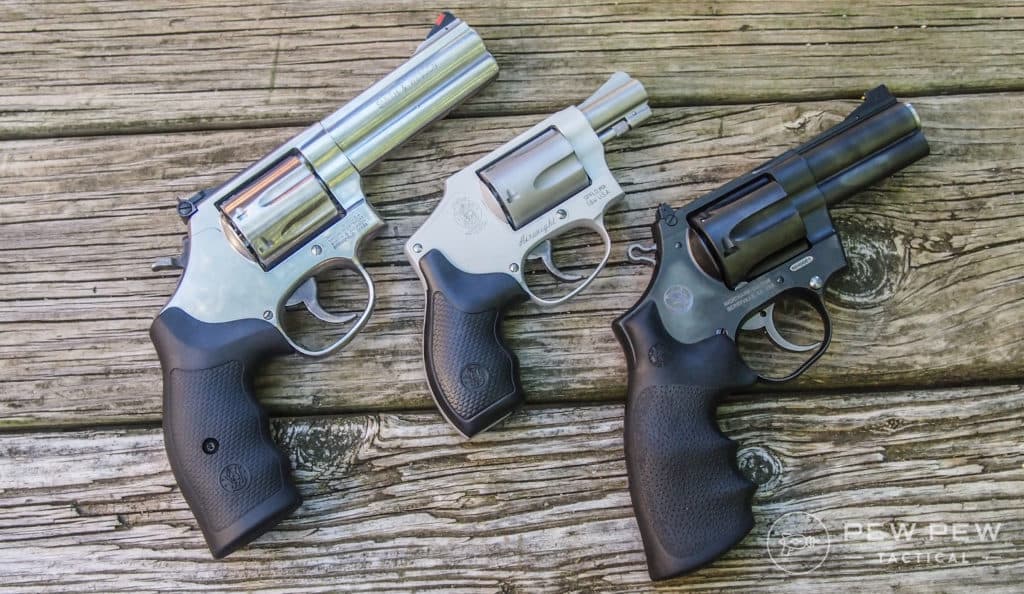
We handled all the heavy lifting for you and put together a list of revolvers that are great for beginners, no matter your use case.
All of these have seen extensive testing by the Pew Pew Tactical team and have our stamp of approval, so let’s dive in and find the right revolver for you!
The Quick List
- Best Overall Beginner Revolver: Smith & Wesson Model 686 PlusJump to details ↓
- Best Rimfire Revolver: Ruger WranglerJump to details ↓
- Best Budget Revolver: Taurus Tracker 627Jump to details ↓
- Best Concealed Carry Revolver: Ruger LCR 9mmJump to details ↓
- Best Small Frame Revolver: Ruger SP101Jump to details ↓
Table of Contents
Beginner Revolver Comparison Chart
| Caliber | Action | Capacity | Barrel Length | Overall Length | Weight | Price | |
|---|---|---|---|---|---|---|---|
| S&W 686 Plus | .357 Mag / .38 Spl | DA/SA | 7 | 2.5-7" | 7.5"-12.3" | 35-48 oz | $895 |
| Ruger Wrangler | .22 LR | SAO | 6 | 3.75-7.5" | 8.62-13" | 28-34 oz | $177 |
| Taurus Tracker 627 | .357 Mag / .38 Spl | DA/SA | 7 | 4", 6.5" | 8.75", 10.75" | 35 oz, 40 oz | $490 |
| Ruger LCR 9mm | 9mm | DAO | 5 | 1.87" | 6.5" | 17 oz | $627 |
| Ruger SP101 | .22 LR, 9mm, .327 Fed Mag, .357 Mag/.38 Spl | DA/SA, DAO | 5 (9mm, .357, .38), 6 (.327 Fed), 8 (.22LR) | 2.25-4.2" | 7.2-9.1" | 25-30 oz | $659 |
How We Tested the Best Beginner Revolvers
Every gun on this list has had a minimum of 500 rounds through it. That said, some revolvers have seen upwards of 1,000+ rounds over extended periods of time. Many of these picks are wheelguns that members of the PPT staff have owned for years.
Picks are prioritized based on ease of use, features, ergonomics, reliability, accuracy, and value -- keeping in mind that this article is aimed at beginner shooters without extensive revolver experience.

Accuracy & Reliability Testing
Revolvers with dedicated reviews have undergone strict testing to assess accuracy. This includes a minimum of 500 rounds of ammunition of both practice FMJ and defensive JHP. Accuracy tests are conducted with five-round groups at 7 yards using a shooting rest to remove shooter error. Groupings are measured after every string of fire.
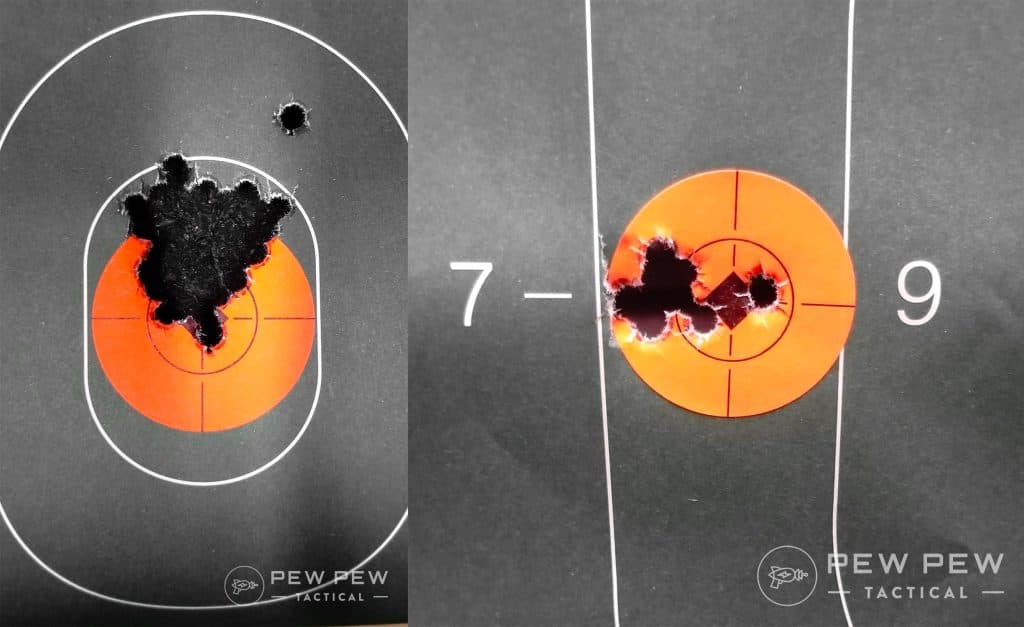
Any malfunctions or issues while shooting at the range are noted during testing.
Revolvers with written reviews are linked so that you can learn more about each.
Meet the Experts
This article was spearheaded by Pew Pew Tactical Editor & Senior Review Analyst Wyatt Sloan. Wyatt is an NRA-certified and USCCA-certified instructor, a former competitive shooter, and an avid hunter.
His experience as an instructor gives him unique insight into what sets newcomers up for success when it comes to shooting revolvers.

To say he is a revolver enthusiast is an understatement. Wyatt has previous experience as a home-based FFL and personally owns over 200 firearms -- over 20 of which are revolvers. He grew up shooting revolvers and has hands-on experience with every single revolver on this list, as well as countless others that weren't included.
Best Beginner Revolvers
1. Smith & Wesson Model 686 Plus - Best Overall Beginner Revolver
Pros
- Excellent trigger
- 7-shot capacity
- Soft on recoil with .38 Special
- Fully adjustable rear sight
Cons
- On the more expensive side
- Might be too large for those with smaller hands
Specs
- Caliber: .357 Magnum / .38 Special
- Action: Double-Action/Single-Action
- Capacity: 7
- Barrel Length: 2.5-7"
- Overall Length: 7.5-12.3"
- Weight: 35-48 oz
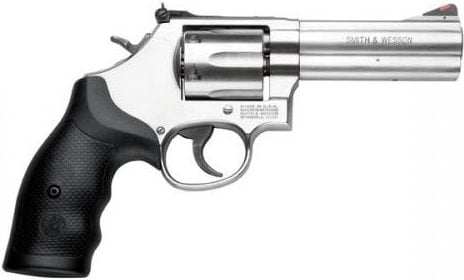
I am coming out swinging with my favorite overall pick — the 7-shot Smith & Wesson 686 Plus.
If you are looking for a target revolver, range toy, or even a potential home defense revolver that you don’t need to fiddle with or upgrade, this is the guy.
What makes this the top dog? Simply put, it has everything you’d want in a revolver.
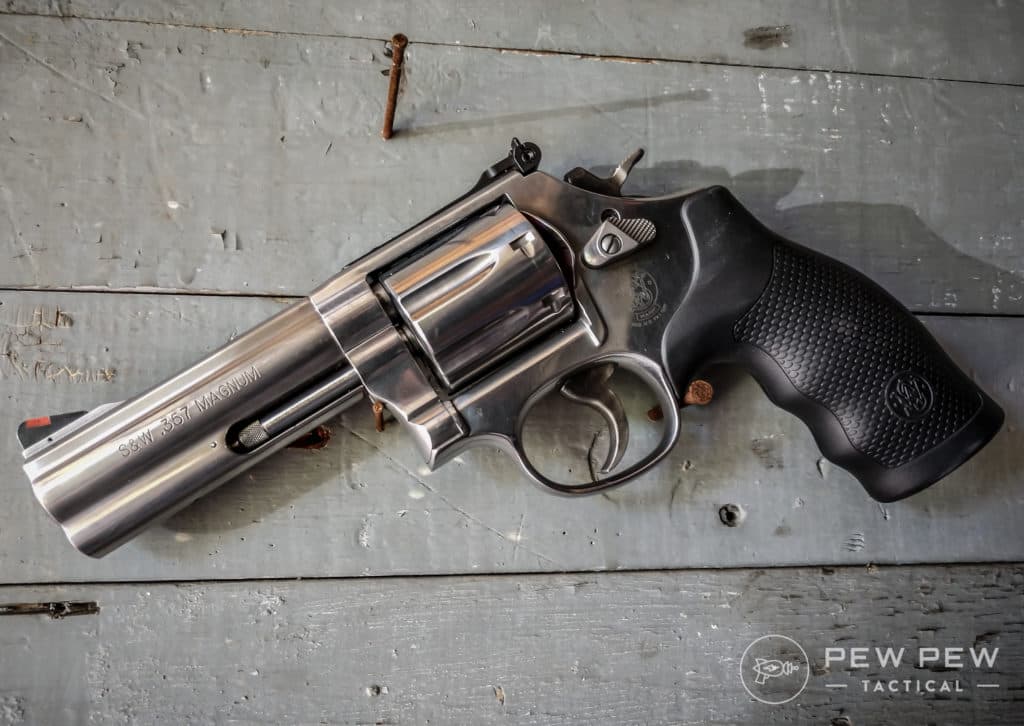
The balance is superb if you spring for a 4” or 6” model. It also has good sights, and one of the better revolver triggers out of the box, both of which help highlight the 686’s knack for outstanding accuracy.
If you start with the lighter .38 Special loads, you can easily develop some good fundamentals before moving up to the more powerful .357 Magnum.
I have a 6" 686, and I can comfortably say that it is the easiest .38/.357 revolver to shoot in my collection.
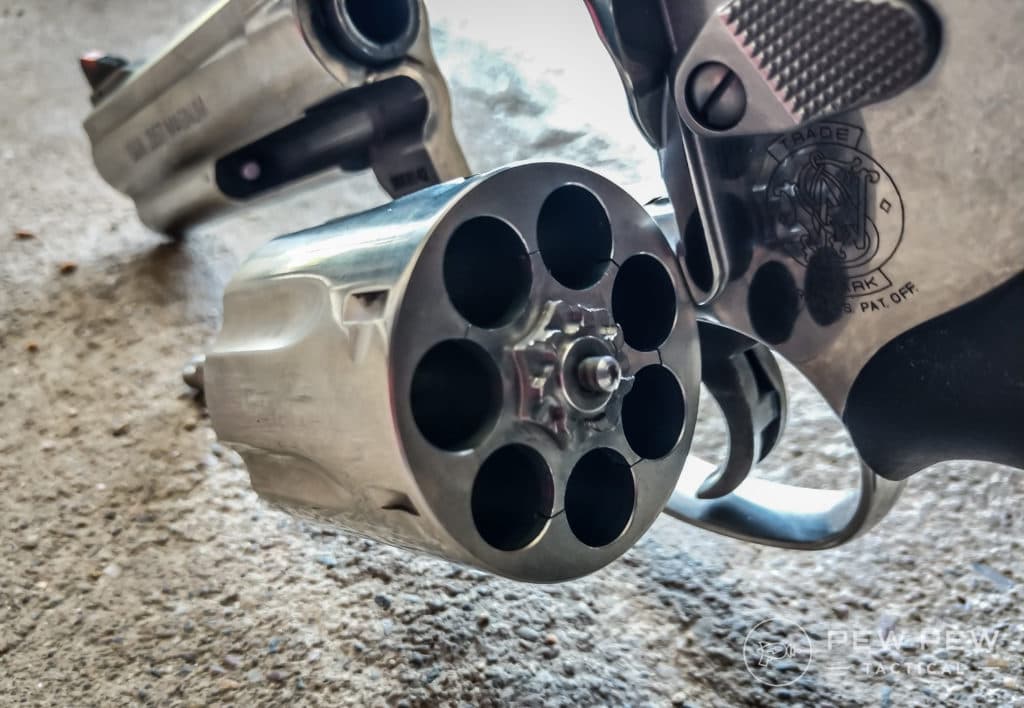
Smith & Wesson offers the 686 Plus in barrel lengths from 2.5” to 7”, ensuring there is one that is the right size for you.
The 686 Plus handles so well and is a gem to shoot, especially with .38 Special. It truly is the gold standard by which all large-frame revolvers are judged.
Be sure to check out our full, hands-on Smith & Wesson 686 Plus review!
What do you think of the 686 Plus? Rate it below!
Readers’ Ratings
4.99/5 (2604 Votes)Your Rating
2. Ruger Wrangler - Best Rimfire Revolver
Pros
- Extremely low recoil
- Both the gun and ammo are very affordable
- Also great for younger shooters
Cons
- The sights aren't the best
- Loading can be tedious
Specs
- Caliber: .22LR
- Action: Single-Action Only
- Capacity: 6
- Barrel Length: 3.75-7.5"
- Overall Length: 8.62-13"
- Weight: 28-34 oz
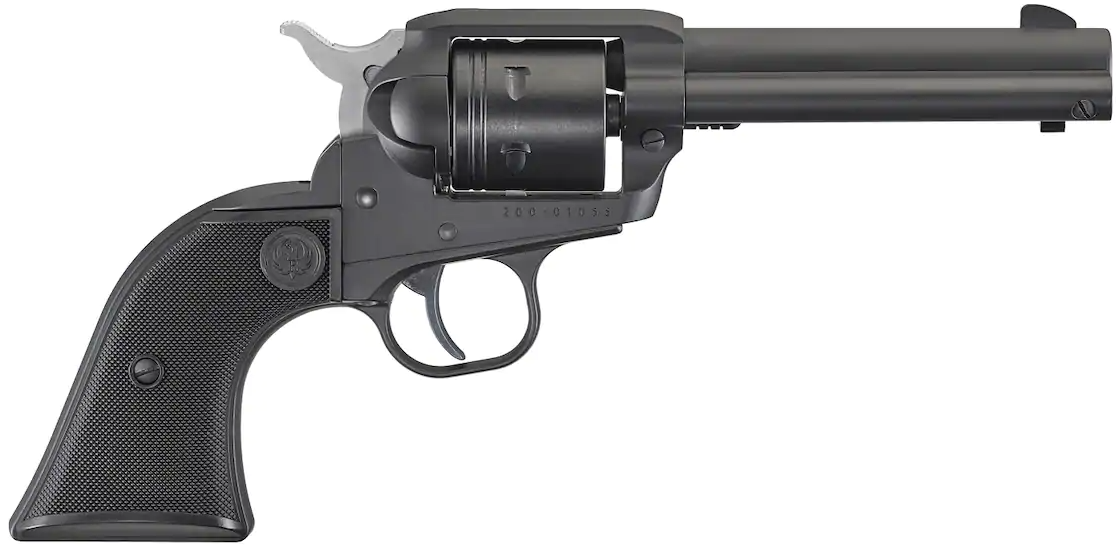
Forget about revolvers, the Ruger Wrangler is an excellent beginner gun — period.
The Wrangler is a .22LR revolver that is roughly based on the old Colt Single Action Army (Peacemaker) revolver of the Old West.
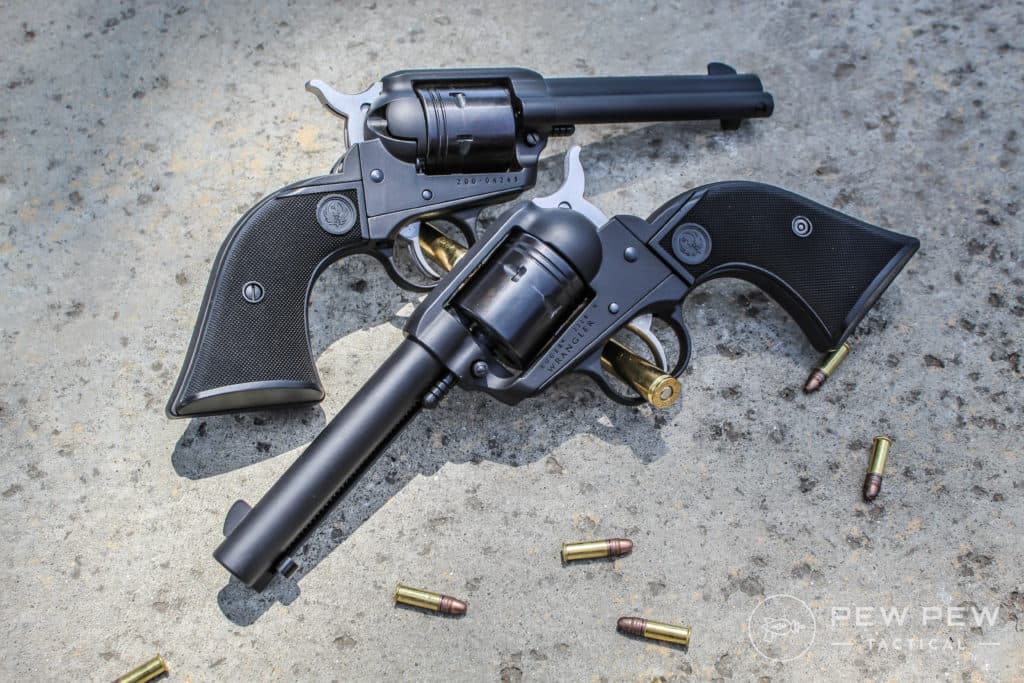
As such, the Wrangler is a single-action-only revolver, meaning the hammer needs to be cocked before every shot. While this might sound like a chore, it is great for a few reasons.
Firstly, it means you are always getting a light and short single-action trigger pull, which makes accurate shooting that much easier. Secondly, it slows down your shooting, giving you more time to focus on fundamentals and less on ripping through ammo as fast as possible.
Since the Wrangler is chambered in .22LR, you can shoot on the cheap all day and shoot without getting fatigued due to the complete lack of recoil.
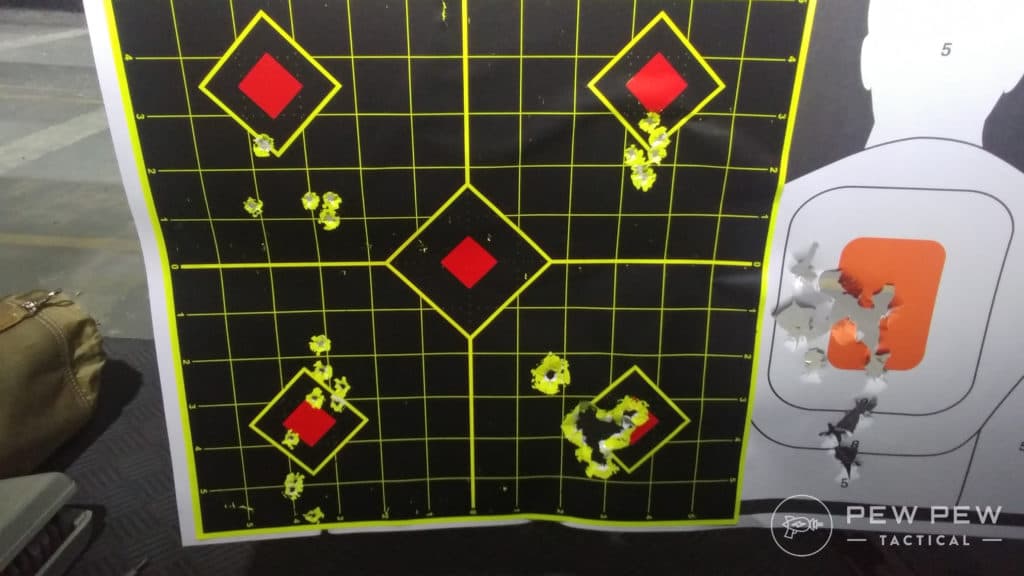
I purchased a Wrangler for my fiancée a couple of years back as a Christmas gift. It was her first revolver, and it proved to be a perfect entry into the category due to how accessible and easy it is to shoot and operate.
These revolvers are very affordable, and the ammo is dirt cheap. Those two things are a recipe for squeezing in a lot of training. And who doesn’t want to play the part of a cowboy every now and then?
Interested? Read up on our complete Ruger Wrangler review!
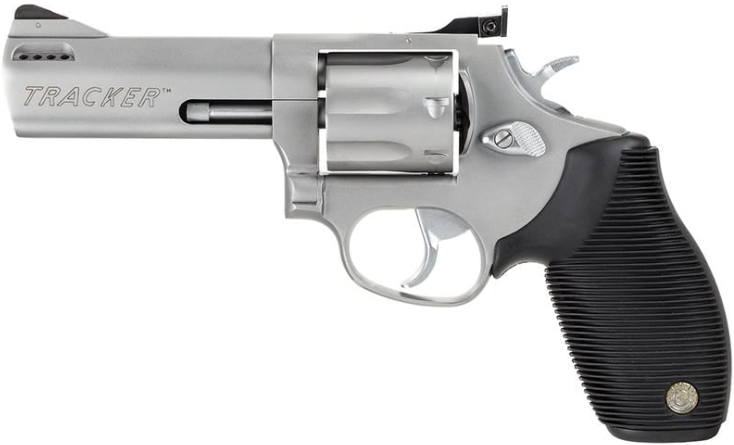
3. Taurus 627 Tracker - Best Budget Revolver
Pros
- Ported barrel helps reduce recoil
- Fully adjustable rear sight
- 7-shot capacity
- Priced well
Cons
- Action and trigger aren't as smooth as a S&W or Ruger
Specs
- Caliber: .357 Magnum / .38 Special
- Action: Double-Action/Single-Action
- Capacity: 7
- Barrel Length: 4", 6.5"
- Overall Length: 8.75", 10.75"
- Weight: 35 oz, 40 oz
So you want to dip your toes into the revolver pool without shelling out $700-1000? You’re going to love the competitively priced Taurus Tracker 627.
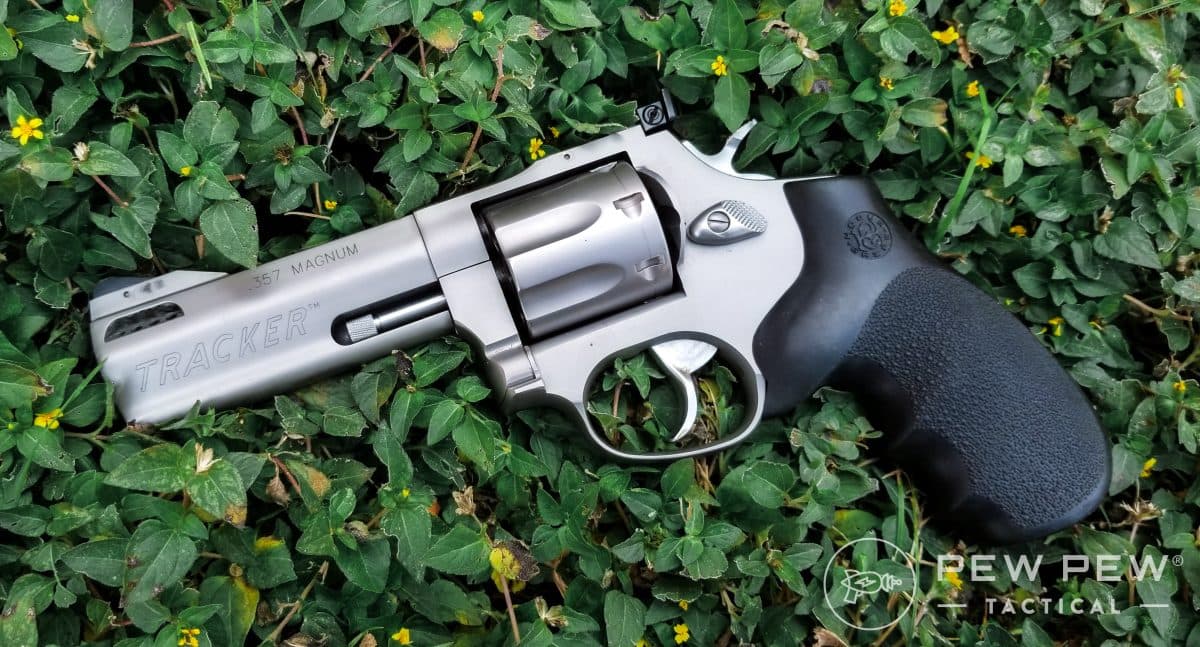
Coming in at $450-$550, the Tracker is notably cheaper than many of its rivals, like the 686 Plus. While the price may scream entry-level, the Tracker is packed with some quality features.
Like the 686 Plus, the 627 Tracker also has a 7-shot cylinder that accepts .357 Magnum and .38 Special.
You also get a fully adjustable rear sight, nice rubber grips that soak up recoil, and the real icing on the cake — a ported barrel for even more recoil reduction.
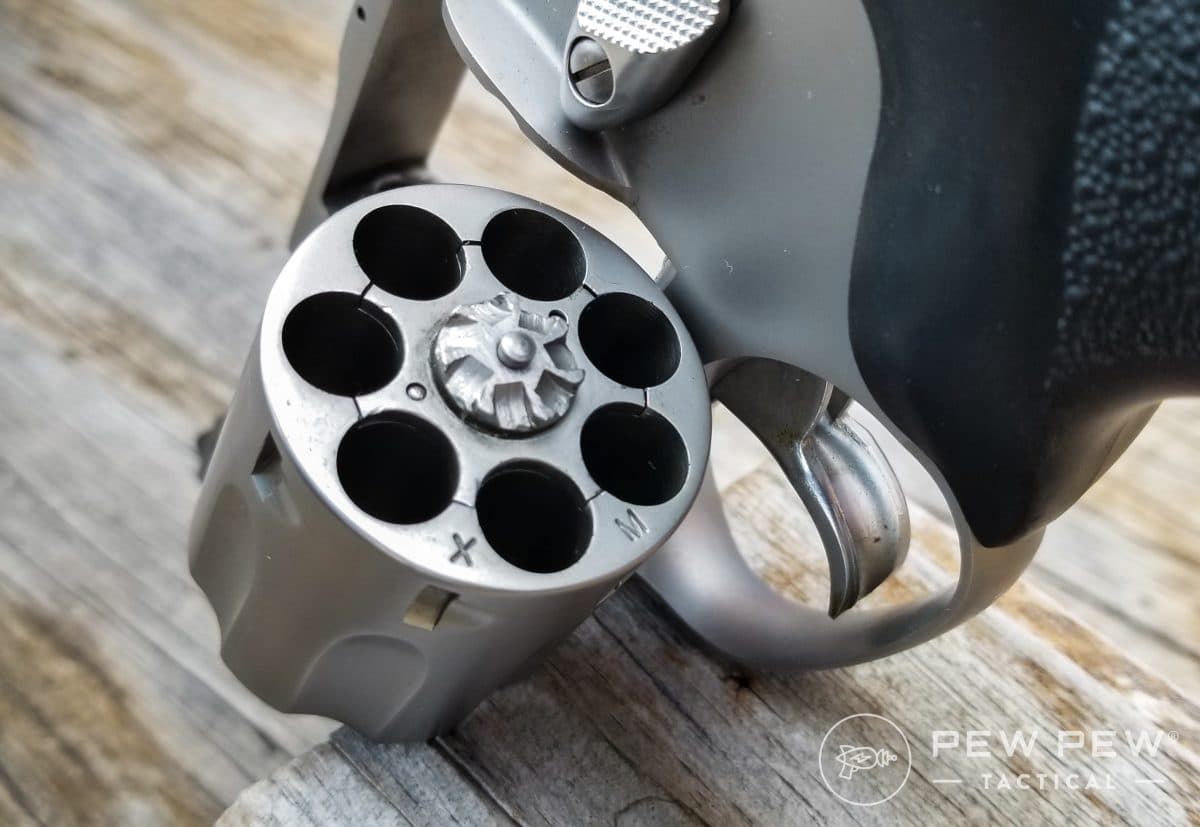
I have had my 627 Tracker for well over a decade now. It has served me well as a range gun and has been a stalwart companion on my hip during some long hunting treks deep in the woods.
Taurus revolvers may not be as smooth as a Smith & Wesson or as rugged as a Ruger, but they shoot well, have excellent features, and are easy on the wallet.
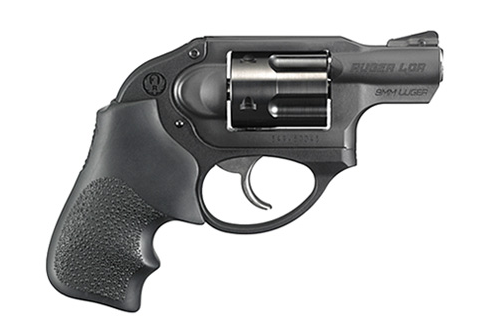
4. Ruger LCR 9mm - Best Concealed Carry Revolver
Pros
- 9mm is more affordable than .38 Special
- Very smooth double action trigger
- Lightweight and easy to conceal
Cons
- Sights aren't the best
- Smaller size makes it harder to shoot
Specs
- Caliber: 9mm
- Action: Double-Action Only
- Capacity: 5
- Barrel Length: 1.87
- Overall Length: 6.5"
- Weight: 17 oz
Snub-nosed revolvers are not good beginner guns, but the Ruger LCR 9mm is the least-bad snub-nose for beginners. Allow me to explain.
Tiny guns are inherently difficult to shoot accurately because there’s less gun to hold onto, and the short distance between the front and rear sights makes aiming tricky. It’s extra challenging with a powerful magnum cartridge.
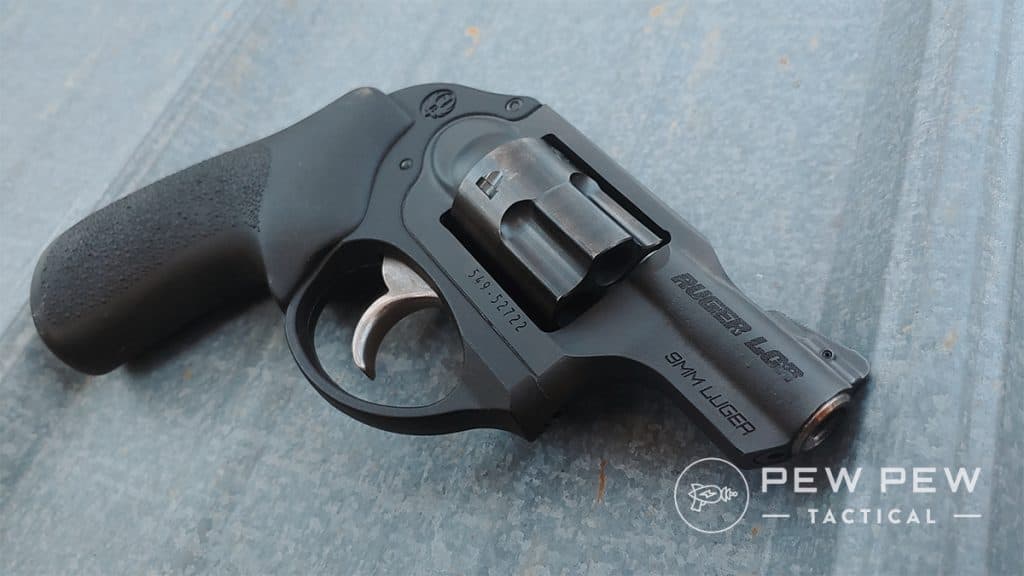
So what makes the LCR the best of the snubbies for newer shooters? Two things.
Double-action triggers are notoriously long and can be really heavy. The Ruger LCR uses a patented friction-reducing cam that helps produce a very smooth rolling break. It is by far the best factory double-action revolver trigger in a gun this small.
The other thing is that the Ruger LCR is one of the few revolvers that comes chambered in 9mm. Not only does 9mm provide plenty of power for self-defense while keeping recoil manageable, but it’s also much cheaper to train with than .38 Special or .357 Magnum.
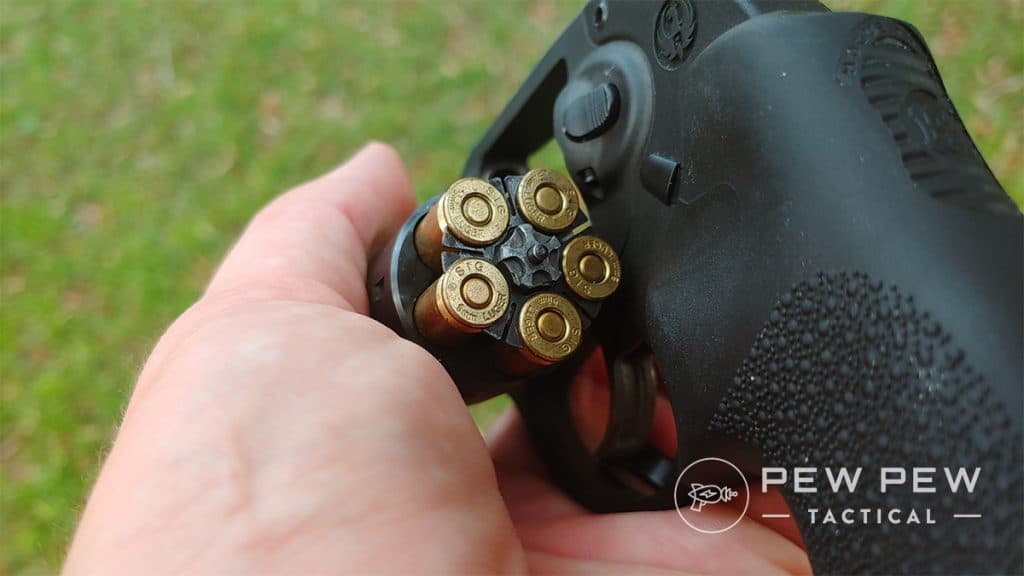
If you are new to revolvers and are dead set on carrying a snub-nose, the 9mm LCR is just about the best option out there.
Take a peep at our review of the 9mm Ruger LCR to get all our shooting impressions.
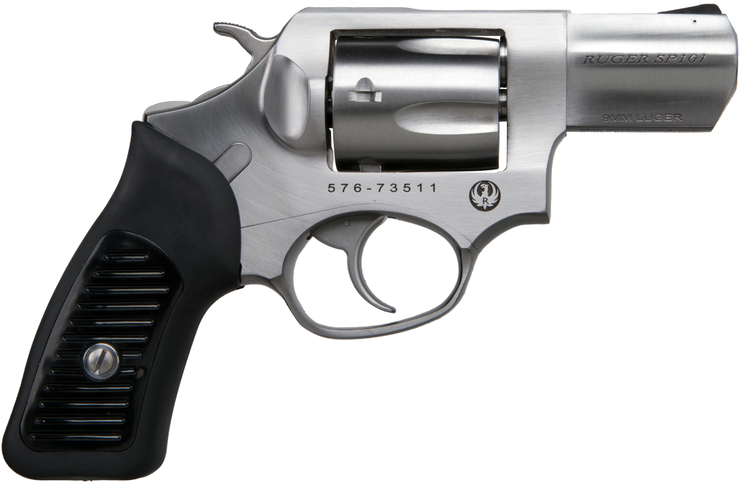
5. Ruger SP101 - Best Small Frame Revolver
Pros
- Extremely durable
- Sized nicely for those with smaller hands
- Still has soft recoil even for the smaller size
Cons
- Only holds 5 shots of .38 Special or .357 Magnum
- Price can start rising when you look at models with adjustable sights
Specs
- Caliber: .22 LR, 9mm, .327 Federal Magnum, .357 Magnum, .38 Special
- Action: Double-Action/Single-Action or Double-Action Only
- Capacity: 5 (9mm, .357, .38), 6 (.327 Fed), 8 (.22LR)
- Barrel Length: 2.25-4.2"
- Overall Length: 7.2-9.1"
- Weight: 25-30 oz
Our last spot once again goes to Ruger (have I mentioned that they really know revolvers?).
The SP101 is a small-frame revolver that covers a lot of bases. It is small enough and light enough to conceal, but also has just enough weight and grip real estate to make it easy to shoot.
These guns are perfect if you want something more substantial than a true pocket snub-nose, but don’t want something as big as the 686 or the 627 Tracker.

Ruger offers the SP101 in a variety of calibers, with the most common versions being the .38 Special and .357 Magnum variants, both of which hold five shots.
The majority of SP101s come with 2.25” barrels, but 3” and 4.2” barrels are available. For me, the 3” barrel is my “Goldilocks” size that strikes that perfect balance between shootabiltiy and concealability. I have a 3" SP101 in .327 Federal, and it is one of my all-time favorite revolvers.
On top of barrel and caliber configurations, you can also get the SP101 with an exposed hammer or without (if you are going for full concealment). Base models feature a fixed rear sight, but adjustable sights are available on some of the other models.
Ruger is known for making ultra-rugged and reliable revolvers at reasonable prices, and the SP101 is one of the building blocks upon which that reputation was built. If you are seeking that perfect small-ish to medium-sized revolver, look no further.
Want to know more? Check out our full review of the Ruger SP101!
Understanding Action Types
You may see the term DA/SA, double-action, or other “action” terms thrown around. Don’t know what those terms even mean? Don’t worry, we have you covered.
- Single-Action Only (SAO): These revolvers require the hammer to be manually pulled back (cocked) after every shot. Since the hammer is already pulled back by the user, all the trigger does is release the hammer, making for a very short and light trigger pull. This type of action is most commonly seen with cowboy and western-style revolvers.
- Double-Action/Single-Action (DA/SA): Revolvers that are DA/SA can operate in two different ways. In double-action mode, the trigger the cocks the hammer for you and then releases it all in one pull. This results in a longer, heavier trigger pull because it has to perform two actions (double-action) at once. DA/SA revolvers also have exposed hammers that can be cocked manually. Doing so sets the trigger further back and gives you the same short and light pull of an SAO revolver.
- Double-Action Only (DAO): A double-action only revolver utilizes the same double-action firing method mentioned above, but typically features a design with no exposed hammer. This means the gun cannot be manually cocked into single-action for a lighter trigger pull and can only fire in double-action mode. These types of revolvers are typically built with concealed carry in mind. The lack of a hammer means nothing can get snagged on clothing when being drawn from concealment.
Choosing the Right Caliber
While it may be appealing to go full Dirty Harry and pick up a .44 Magnum revolver or even a behemoth bear-slaying .500 S&W Magnum, neither is really ideal for the beginner.
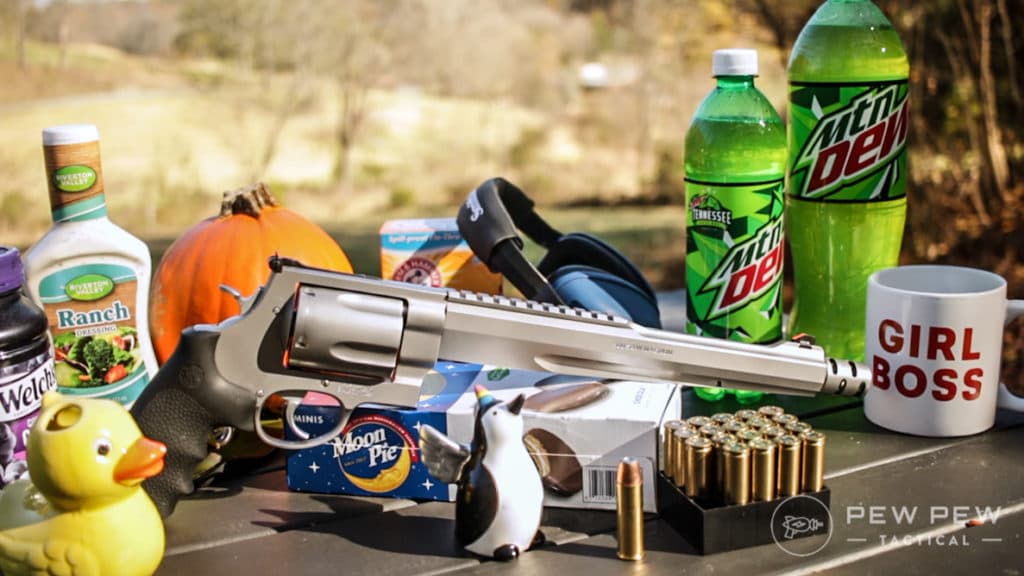
Revolvers already have a bit of a learning curve. Learning to manage a long double-action trigger is tough enough, and the tall bore axis of revolvers and the lack of a slide mean they already produce more recoil than most standard semi-automatic pistols.
Springing for a caliber with even more recoil right out of the gate can easily lead to recoil anticipation, poor accuracy, sore hands, and really expensive ammo — none of which you want.
For most shooters looking for a do-all revolver, the best choice is either .38 Special or .357 Magnum. These calibers strike a balance between power, shootability, affordability, and availability.
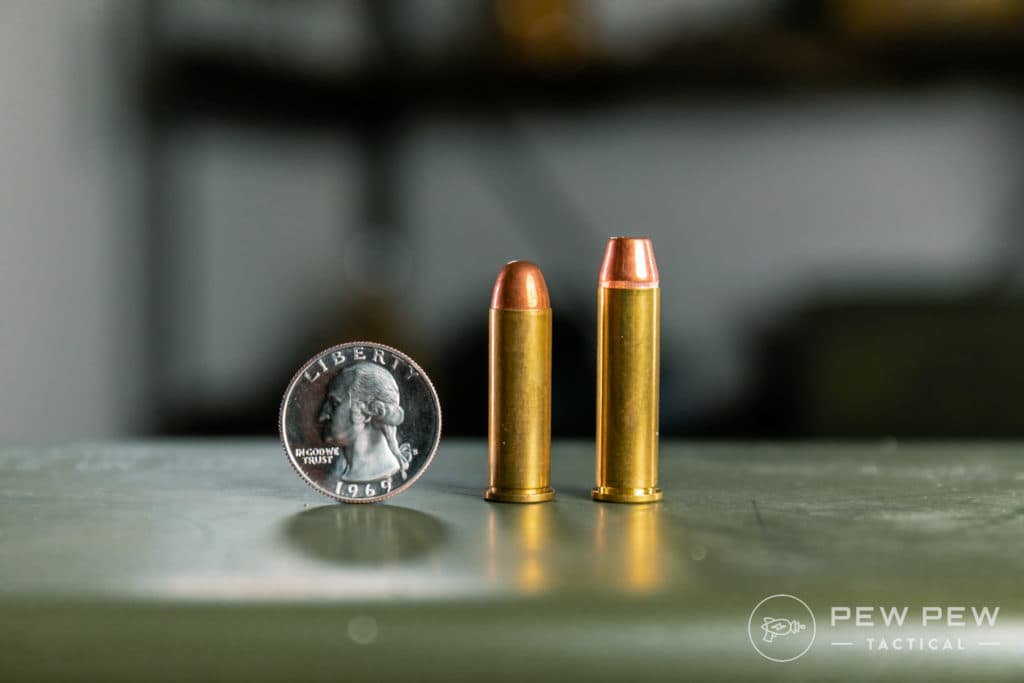
Going with a .357 Magnum revolver is the most popular option because it can also safely chamber and fire the cheaper, lighter-recoiling .38 Special. This allows you to use .38 Special for general plinking and training while also keeping the magnum power of .357 on tap.
For small plinker or trainer revolvers, .22LR is the obvious choice due to its prevalence, low recoil, and extremely cheap ammo prices.

I also like 9mm if the revolver is available in that chambering. While it offers less flexibility than something like .357 Magnum, it still produces good terminal ballistics and is cheaper to shoot and train with than .38 Special.
Final Thoughts
Whether you are looking for a fun range toy, a home defense tool, or even a concealed carry gun, a revolver might be the right choice.
Remember, choosing the best gun for you is a personal decision. But now you have an idea of where to start and what to look for!
Already into revolvers? Let us know your favorites in the comments below! Not sold on a revolver quite yet? Then check out some other options in our article on the Best Handguns for Beginners!
Latest Updates
November 2025: Complete re-write of the article based on new testing. Removed the previously included Cimarron Model P and Ruger GP100.