
Best PCC Optics: Red Dots and Beyond [2026]
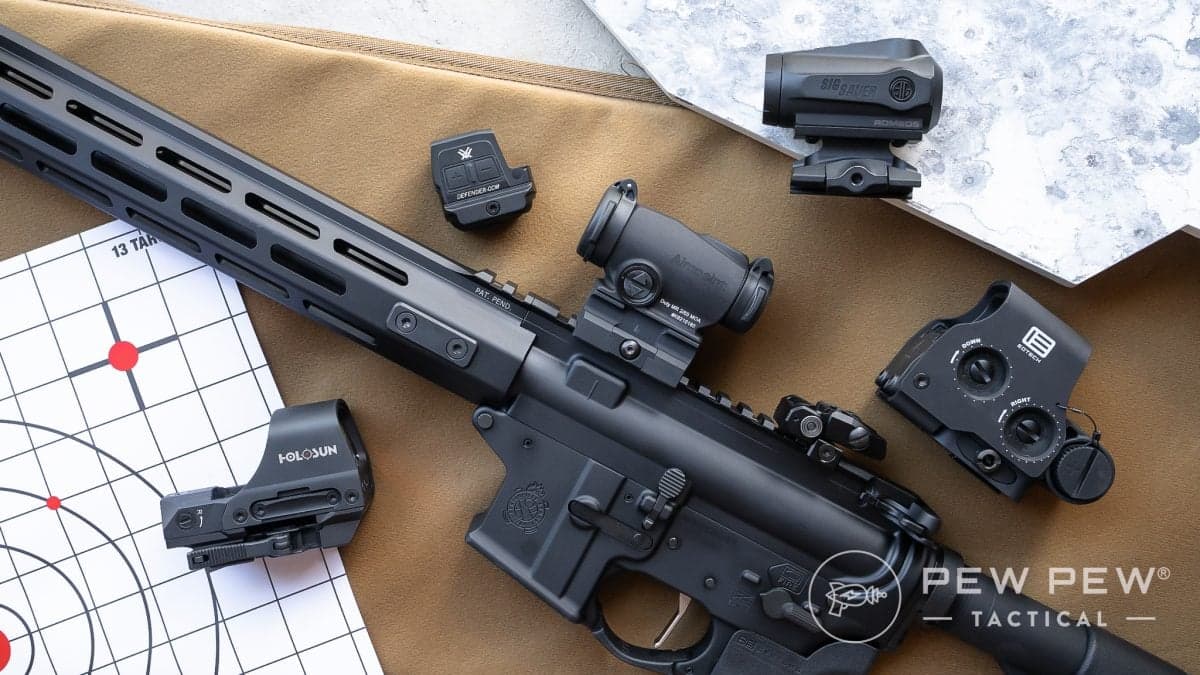
Contemplating pistol caliber carbine competitions, but don't know what optic to toss on your PCC? We list out some of our faves for PCC competitions here!

PPT Editor. Marine vet, hunter, and long-range shooter. Articles in 10+ major publications
We review products independently. When you buy through links on our site, we may earn a commission to help support our testing. Learn more.
Pistol-caliber carbines are an effective training tool, a great way to save money on ammo, and they’re crazy fun to shoot!
But which optic should you buy? Are red dots your only option? How much should you spend?
I have answers to all that and then some. Pull up a chair and get ready to feast your eyes on the best PCC optics I’ve personally tested, reviewed, and owned (with a few bonus picks at the end).
The Quick List
- Best Overall: Aimpoint Duty RDS MRJump to details ↓
- Best Value: Holosun HS510CJump to details ↓
- Best Budget: Sig Sauer Romeo5 Gen IIJump to details ↓
- Best Holographic Sight: EOTECH EXPS3 HWSJump to details ↓
- Best Micro Red Dot: Vortex Defender-CCW EnclosedJump to details ↓
Table of Contents

PCC Optic Comparison Chart
| Price | Magnification | Objective Lens | Reticle | Illumination | Battery | |
|---|---|---|---|---|---|---|
| Aimpoint Duty RDS MR | $514 | 1x | 18 mm | Multi-reticle | 8 daylight, 4 night vision | CR2032 |
| Holosun HS510C | $309 | 1x | 0.91” x 1.26” | Multi-reticle | 10 daylight, 2 night vision | CR2032 |
| Sig Sauer Romeo5 Gen II | $119 | 1x | 20 mm | Dot | 10 daylight, 2 night vision | CR2032 |
| EOTECH EXPS3 | $755 | x1 | 1.2” x 0.85” | Varies by model | 20 daylight, 10 night vision | CR123A |
| Vortex Defender-CCW | $259 | 1x | 0.8" x 0.73" | Multi-reticle | 10 daylight, 2 night vision | CR2032, solar |
How We Tested the Best PCC Optics
Each optic you see here earned its place based on the collective recommendations and personal experience of the Pew Pew Tactical crew. Once I got them in my hands, I put the whole group through a gauntlet of testing to see where they excel, where they leave me wanting more, and who should consider buying them.
My testing protocol evaluated the following:
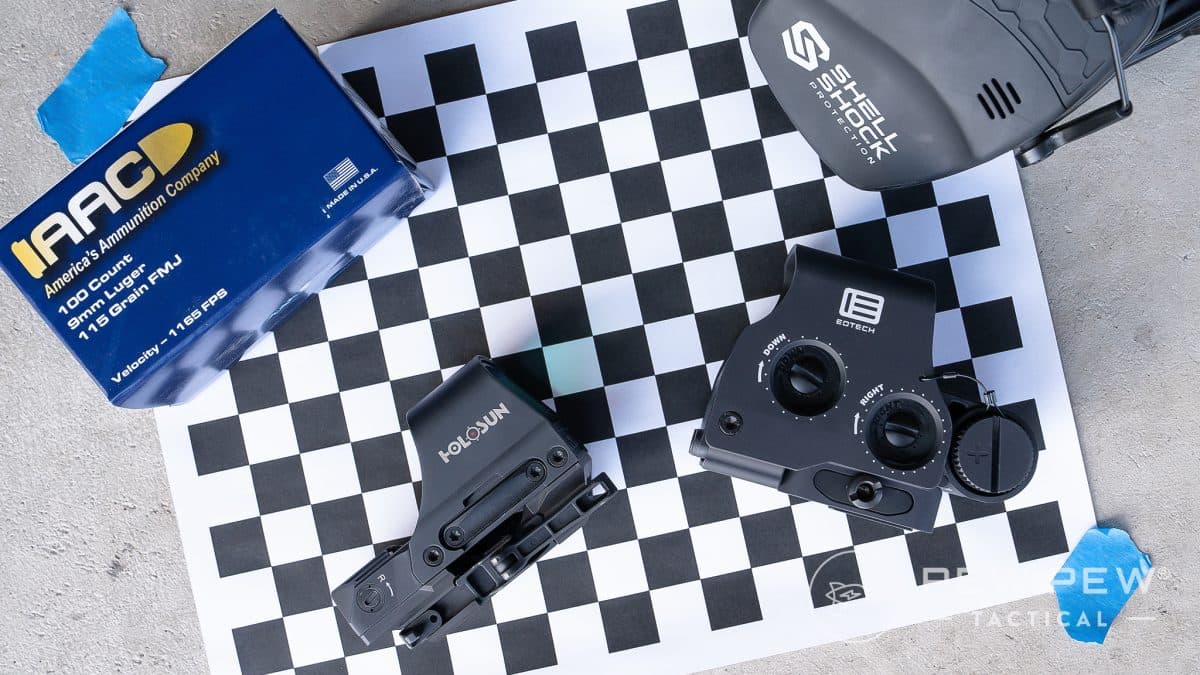
- Optical quality: I used a checkerboard-style distortion grid to assess light transmission, tint, and distortion – with photos so you can see for yourself.
- Reticle: Most PCC optics use a simple dot reticle or multi-reticle, but there are exceptions. You’ll get to see what each looks like with real view-through photos.
- Controls: When it’s time to increase or decrease brightness, how easy is it to make an adjustment without breaking your grip and taking your eyes off the target? I used these optics with and without gloves, so I’ll let you know.
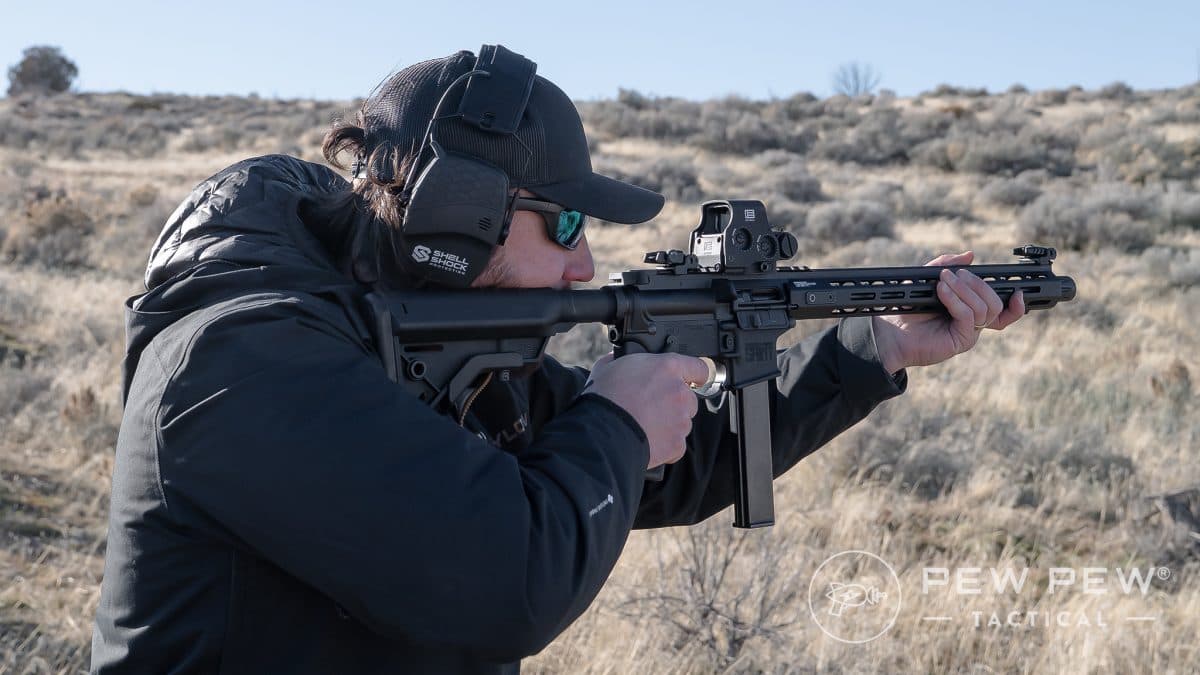
- Live-fire impressions: Finally, the fun part! After putting thousands of rounds downrange with this batch of optics in both daylight and white-light shoots, I have thoughts.
Meet the Experts
Editing this article is Pew Pew Tactical Editor & Senior Review Analyst Scott Murdock. Scott is a Marine Corps veteran who competed and qualified as a rifle and pistol expert while in service. He personally selected and tested every optic you see here. This article is informed by years of reviewing optics, training with various PCCs and PDWs, and professional relationships with major optic manufacturers.
Editor-in-Chief Jacki Billings runs our experienced team of reviewers. She is a National Rifle Association Basic Pistol Instructor as well as a member of the Society of Professional Journalists, ACES: Society for Editing, and the Professional Outdoor Media Association. Jacki has a bachelor’s degree in journalism and has worked as a media professional for close to 20 years, specializing in gun media for almost 10 years. With 2,000+ articles to her name, she uses her professional journalism and editing experience to set testing protocols and editorial standards for Pew Pew Tactical.
Best PCC Optics
1. Aimpoint Duty RDS MR - Best Overall
Pros
- Excellent glass
- Clean, crisp reticle
- Usable with lens covers installed
Cons
- Buttons could use some more spacing
- Priced in LPVO territory
The Bottom Line
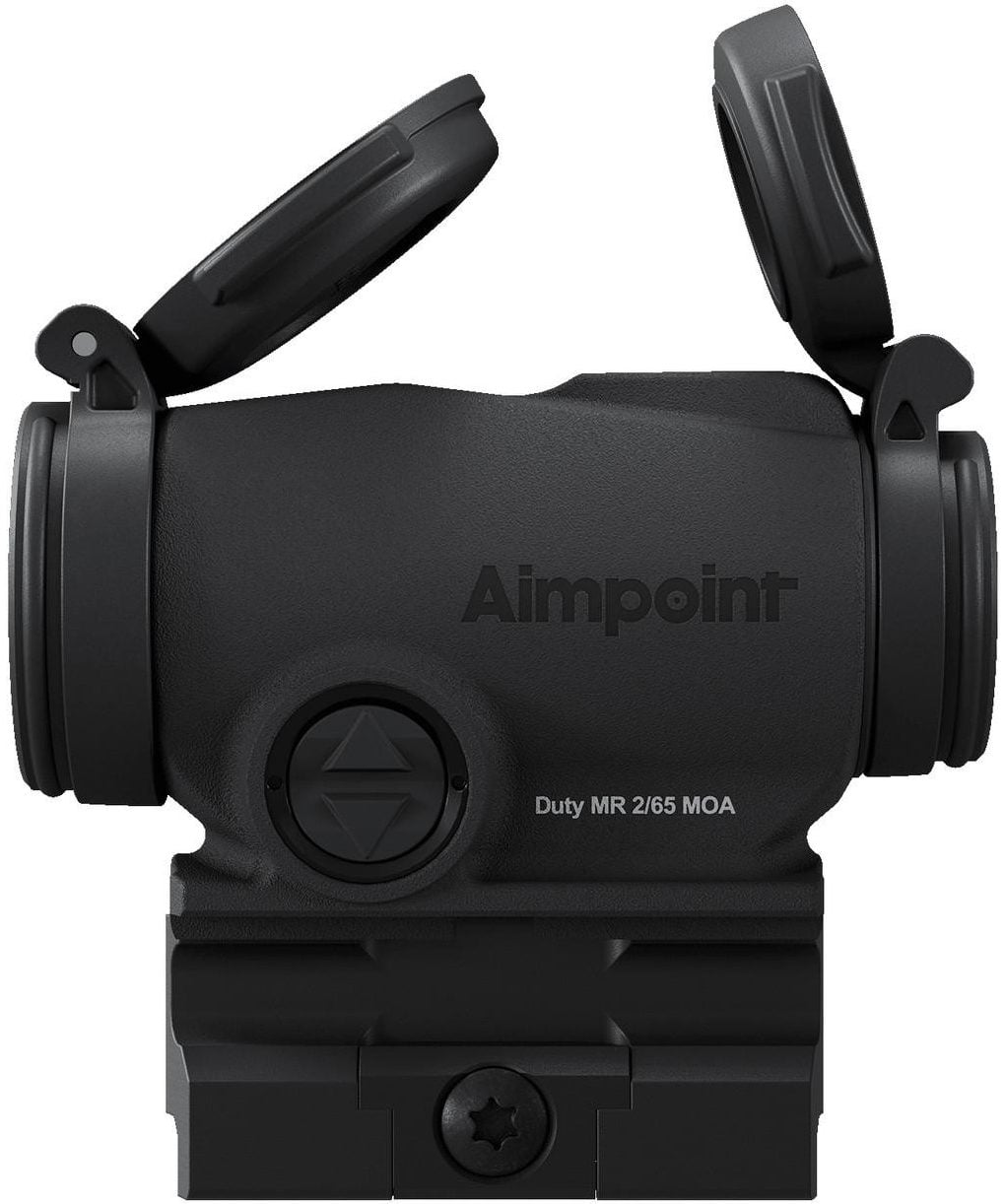
The Aimpoint Duty RDS MR occupies a sweet spot in the market. It's more affordable than the top-tier Aimpoint Micro T-2, but still incredibly durable with excellent optical quality. I'd trust this optic for anything from home defense to competition to target shooting. Sure, it's expensive, but you still get more than you pay for.
Specs
- Magnification: 1x
- Objective Lens Diameter: 18 mm
- Reticle: Multi-reticle (2-MOA dot, 65-MOA ring)
- Illumination: 8 daylight, 4 night vision
- Battery: CR2032
- Dimensions: 2.7” x 1.5” x 1.7”
- Weight: 4 oz
- Country of Origin: Sweden
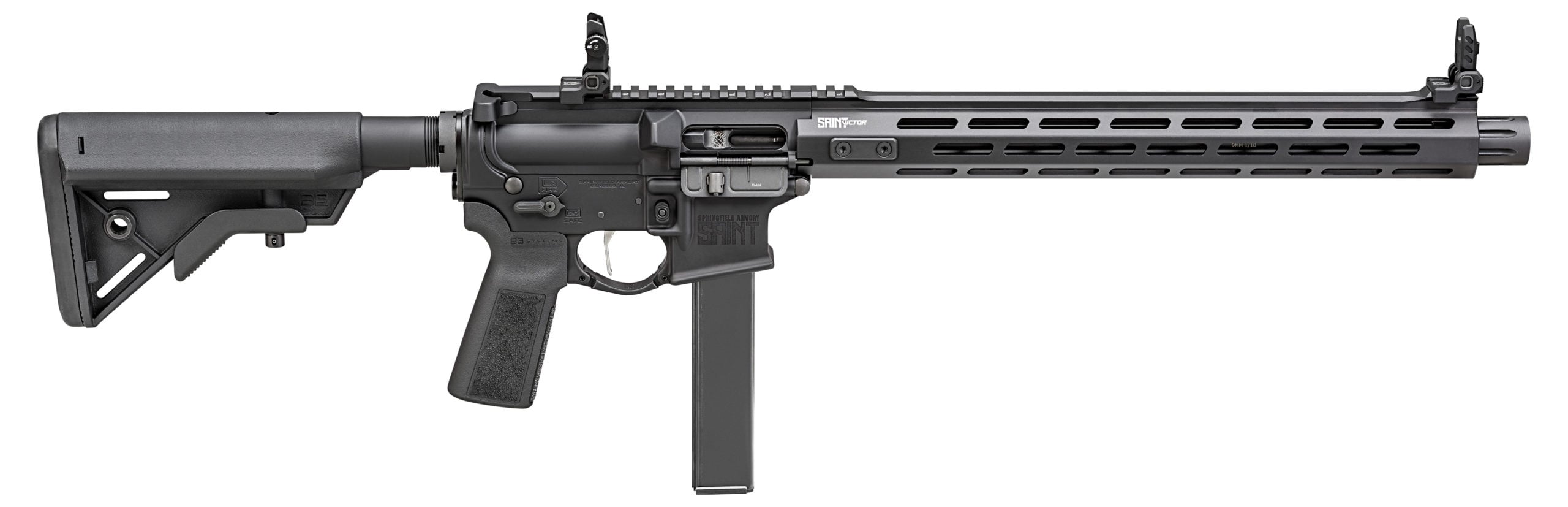
Why yes, this is the same red dot that won out in my Best AR-15 Optics shootout – but the Aimpoint Duty RDS MR is just that good! Actually, there’s tremendous overlap between AR-15s and PCCs. This is a true duty-grade red dot that you can trust for range days and home defense, regardless of whether you’re shooting rifle or pistol ammo.

Spending more for a high-end PCC red dot like the Duty RDS MR gets you certain favorable traits – accurate turret adjustments, durability, quality control – but one of the most noticeable is optical quality. A peek through various optics at a distortion grid showed me how clear, flat, and sharp the Duty RDS MR is.
Light transmission is excellent, which is critical in low-light environments. The image is clear and undistorted from edge to edge, which presents a very natural-looking view of the target and reticle when shooting with both eyes.

Speaking of the reticle, Aimpoint’s multi-reticle (hence the MR) is the sharpest red dot reticle I remember using. I detected no blooming or blurriness throughout extensive live-fire testing. If you’d rather use the dot or ring alone, go right ahead.
Aimpoint also sells a Duty RDS without the multi-reticle for a little bit less money.

My one suggestion for Aimpoint is that the controls could be spaced a little further apart. They’re large enough to use with gloves, shaped so it’s easy to tell them apart, and plenty tactile, but just a touch more room between them would help me avoid hitting the wrong one unintentionally.
This is a very minor complaint, but I always try to find something that could be improved.
One other thing to keep in mind is that the turrets – which are delightfully clicky and precise – require a Torx bit (included) rather than a flathead screwdriver or piece of brass. Make sure you bring the right tool when you zero this optic.

If you’ve used a similarly sized red dot, the shooting experience is what you'd expect. It’s intuitive and easy.
One thing that stands out about the Duty RDS MR is the lens covers. The front one over the objective lens is solid, but the rear one that covers the ocular lens is clear. That’s because it keeps the reticle visible to your dominant eye. When you shoot with both eyes open, your brain can actually transpose the dot onto the target by combining the view from each of your eyes, even if the tube is capped on the far end.
Being able to protect the optic’s glass without giving up functionality is a huge advantage. If I were setting up a PCC for home defense or duty, the Aimpoint Duty RDS MR would be an easy choice.

If there’s one hangup with the Duty RDS MR, it’s the price. A $500 or $600 red dot could be a hard sell if your main goal is to save money. For any other purpose, this is arguably the best buy in the PCC game.
2. Holosun HS510C - Best Value
Pros
- Solar power
- Toolless QD mount
- Giant, clear viewing window
Cons
- Bulky
- Getting up there in age
The Bottom Line
Will the Holosun HS510C ever cease to be relevant? This old red dot is still as strong as ever, with a sharp multi-reticle, solar power, and tool-free installation. It bridges the gap between something like a Sig Sauer Romeo5 Gen II and an Aimpoint Duty RDS MR nicely.
Specs
- Magnification: 1x
- Objective Lens: 0.91” x 1.26”
- Reticle: Multi-reticle (2-MOA dot, 65-MOA ring) in red or green
- Illumination: 10 daylight, 2 night vision
- Battery: CR2032 (solar backup)
- Dimensions: 3.3” x 1.68” x 1.78”
- Weight: 5 oz
- Country of Origin: China
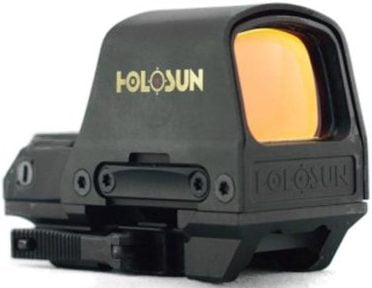
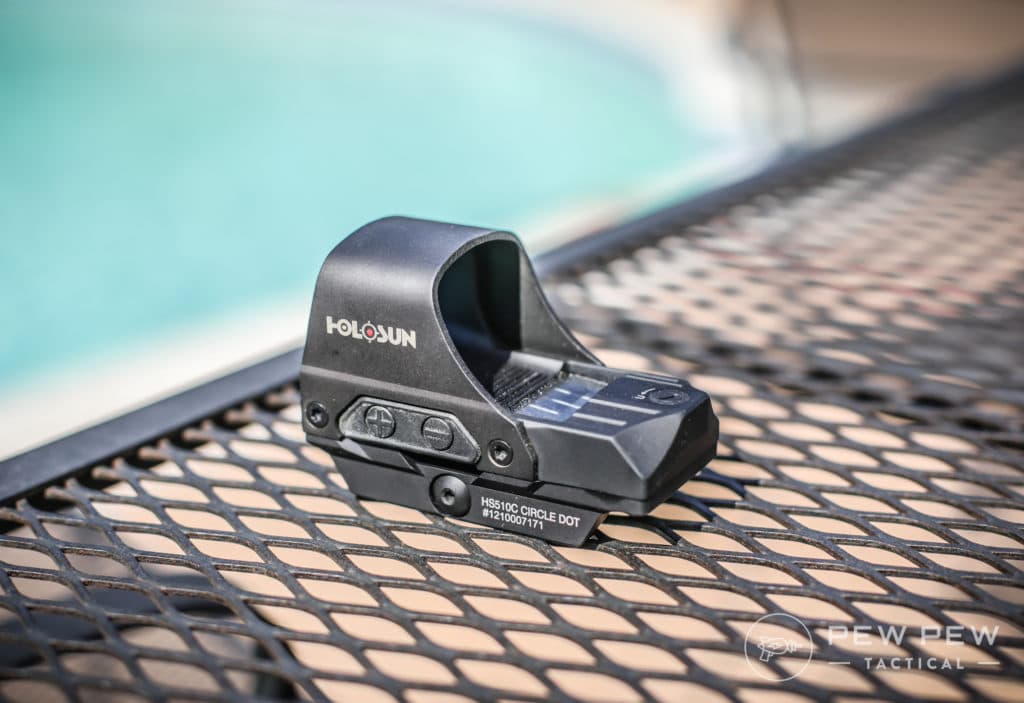
If there’s any PCC optic with staying power, it’s the Holosun HS510C. This red dot has been a top recommendation for years because it’s effective, reliable, and affordable. It’s hard to go back once you’ve experienced its panoramic field of view, too.
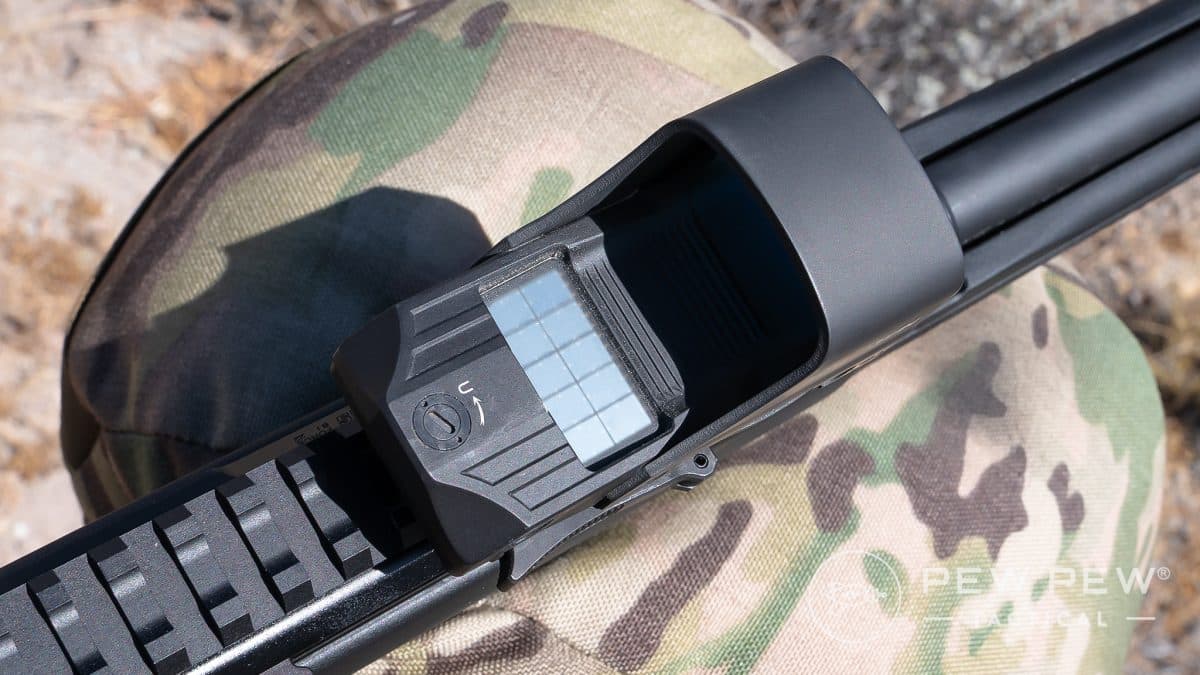
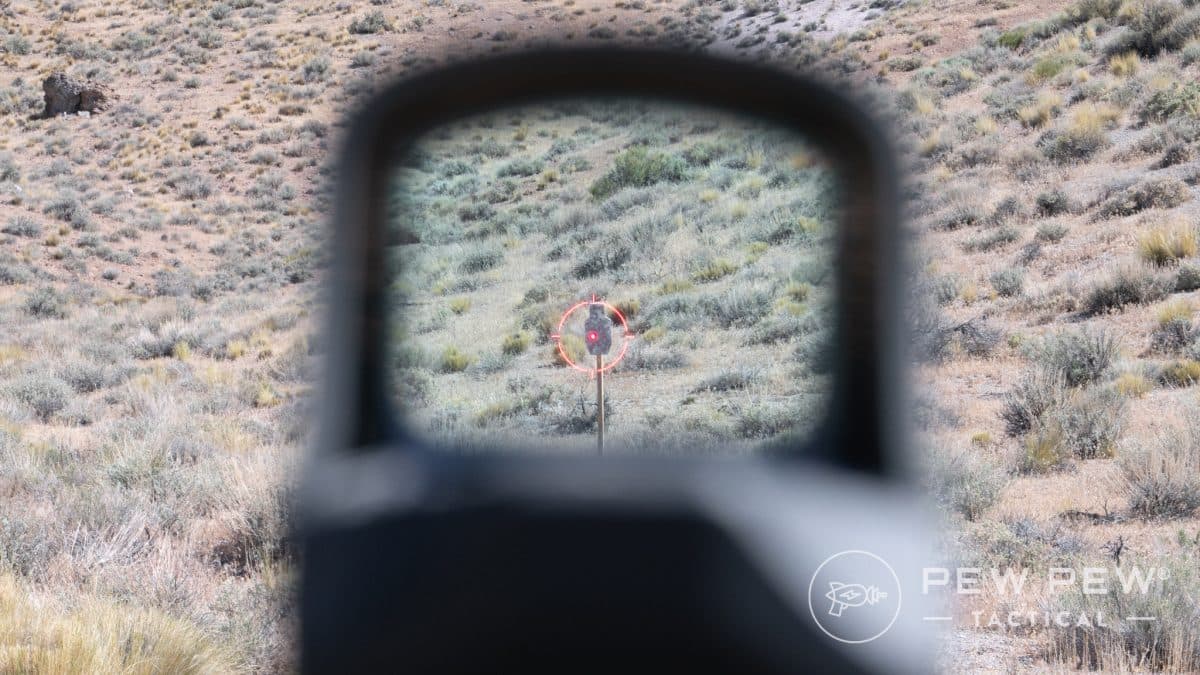
Optically, the view through the HS510C is nice and bright. That’s partially due to good light transmission from the glass, and partially because of the giant window.
I don’t see any distortion. If anything, there seems to be a slight blue tint with perhaps a touch of red in the center from the forward-side coating. For the price and age of the optic, this glass looks really good.
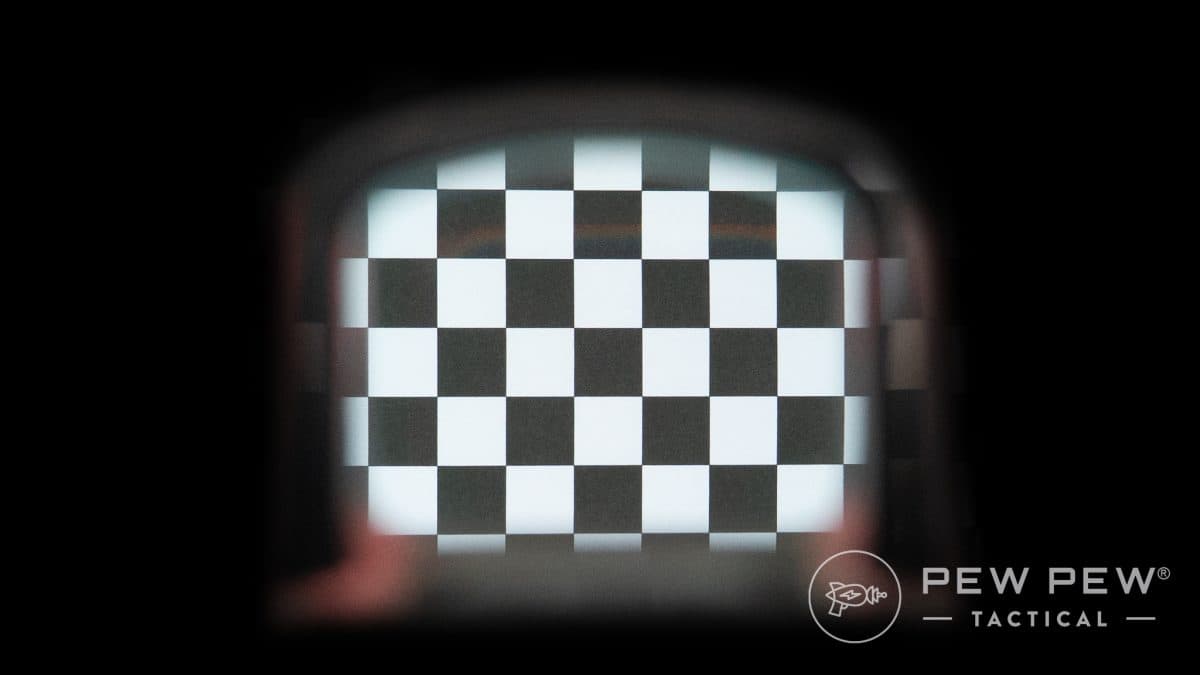
I know the tech is old and this is a budget red dot, but this is a very crisp reticle. I’m not sure if it’s quite Aimpoint-good, but it’s definitely sharp.
I prefer using the dot-and-ring combination because it’s easier to find in the giant window, and the ring is large enough that the sight picture around the dot is still uncluttered enough to make accurate shots on small targets.
The two-button controls are easy enough to operate with or without gloves. Their size and separation help prevent tapping the wrong one by accident. You can also skip them by putting the optic in automatic mode and letting it adjust brightness to the ambient conditions.
Between automatic shutoff/shake-awake and the solar panel that takes over for the battery whenever adequate light is available, a single CR2032 battery will last a very long time.
On the range, the first thing I notice whenever I use the HS510C is the massive window. Like an EOTECH, it provides a widescreen viewing experience. Targets are easy to pick up, situational awareness is enhanced, and spotting impacts is a breeze with this setup. Automatic brightness does a good job, and making manual adjustments is a snap.
Yes, it’s bigger than something like the Romeo5 Gen II, but not enough to bother me – especially on a carbine.
Is this optic a poor man’s EOTECH? Yeah, kind of, and I don’t see that as a bad thing.
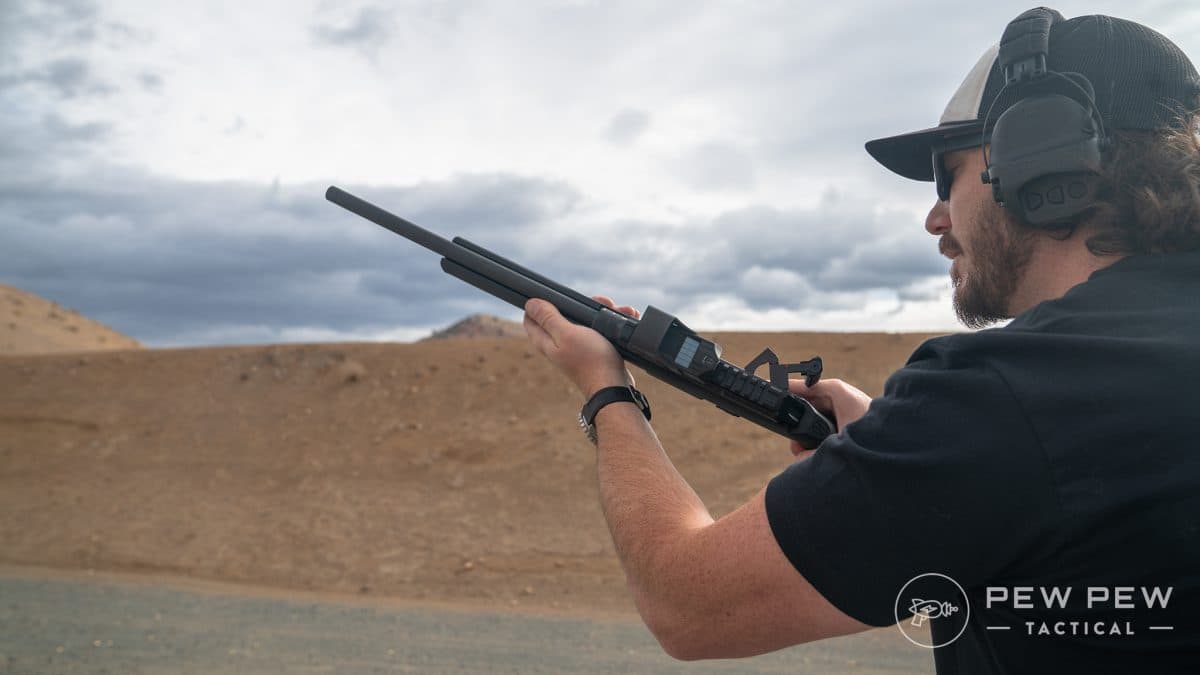
I’ve used one for years, and it’s been a fantastic optic. In fact, I pulled my personal HS510C off my Hammerli Force B1 for this comparison. It’s rugged, reliable, accurate, and I really love the solar backup. Here in the high desert, I basically never draw power from the battery.
Want to learn more? Head over to our Holosun HS510C review!
3. Sig Sauer Romeo5 Gen II - Best Budget
Pros
- Red dot and green dot versions available
- Surprising optical quality at this price
- Great button placement
Cons
- Basic dot reticle
- Blue tint and slight distortion
The Bottom Line
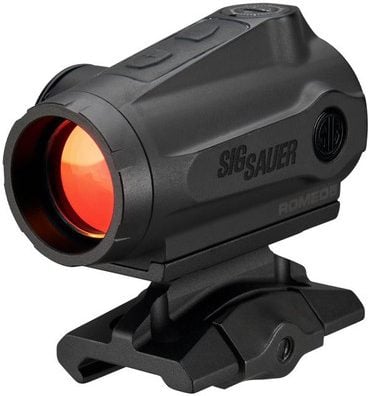
The Sig Sauer Romeo5 Gen II is one of the best-selling AR-15 and PCC optics for a reason. It gets the job done for a fraction of what you'd pay for most carbine red dots. For the money, you can't beat it. At the same time, it's genuinely usable if you aren't caught up in getting high-end glass.
Specs
- Magnification: 1x
- Objective Lens Diameter: 20 mm
- Reticle: 2-MOA red dot, 2-MOA green dot
- Illumination: 10 daylight, 2 night vision
- Battery: CR2032
- Dimensions: 2.76” x 1.57” x 2.44”
- Weight: 6 oz
- Country of Origin: China
One of the most popular reasons to get into the PCC game is saving money. When 9mm ammo costs about half of what you’d pay for 5.56 NATO, training becomes much more doable. The same goes for competitive shooting and home defense. If you need a good optic without a punishing price tag, help yourself to a Sig Sauer Romeo5 Gen II.

This budget-friendly red dot isn’t on the same optical level as my picks from Aimpoint or Holosun, but it’s not bad.
If you can deal with a little bit of blue tint and fisheye distortion, there’s no reason you can’t save a big chunk of change.

The simple 2-MOA dot is available in either red or green. Green might be better if you struggle with astigmatism, live in an environment with a lot of natural warm tones, or need maximum brightness.
Again, it’s not the sharpest dot I’ve seen, but it’s better than many at this price or lower. I had no problems achieving adequate brightness for bright or dim environments.

I really like what Sig Sauer did with the controls on this red dot. Both brightness settings are positioned on the top of the optic, which makes them accessible with either hand. There’s also enough distance between them that you’re unlikely to tap down when you want up, or vice versa.
It’s unlikely that you’d need to adjust the turrets in the field, but it’s possible to do the job with the rim of a piece of brass. I always appreciate it when I can work on an optic or field-strip a firearm without tools.

On the range, the Romeo5 Gen II proved to be a great little red dot. It was quick for my eyes to acquire, put rounds where I needed them to go, and held zero through hundreds of rounds of testing. It checks all the boxes without putting a strain on the wallet.
Dollar for dollar, it’s a great buy.

The Romeo5 costs a fraction of what you’d pay for many other PCC red dots, and the optical quality shows where Sig pinched pennies.
But did that affect my ability to shoot effectively during testing? Nah. For the vast majority of recreational shooters, this is all the glass you need – and the money you save can go toward more training ammo or enrolling in a class.
Hey, we have a Sig Sauer Romeo5 Gen II review if you want even more info!
4. EOTECH EXPS3 - Best Holographic Sight
Pros
- Truly world-class glass
- Industry-leading reticle options
- One-touch night-vision modes
Cons
- Eats up batteries
- Polarizing reticle fuzziness
The Bottom Line
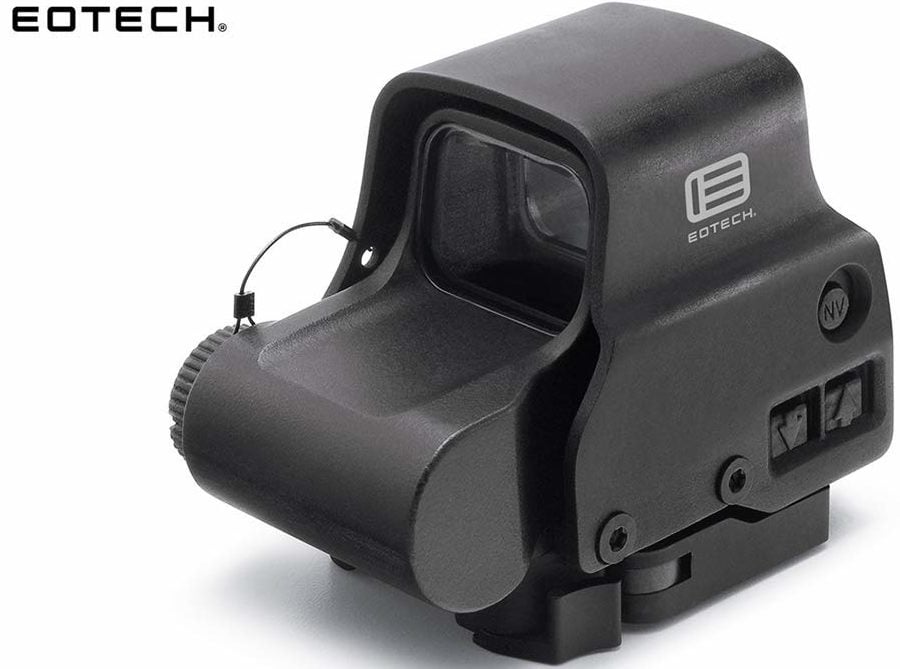
Most people don't need (or want to pay for) a holographic sight, but if you do, there's no substitute for the EOTECH EXPS3. This professional-grade duty optic is nearly indestructible, gives you a range of clever reticles to choose from, and has a dedicated night-vision button with 10 NVG-compatible modes. It's big, it's expensive, and it's what I recommend when money isn't a factor.
Specs
- Magnification: 1x
- Objective Lens: 1.2” x 0.85”
- Reticle: Dot, one-dot speed ring, two-dot speed ring, four-dot speed ring, DCR
- Illumination: 20 daylight, 10 night vision
- Battery: CR123A
- Dimensions: 3.8” x 2.3” x 2.9”
- Weight: 11 oz
- Country of Origin: USA
You’ve probably seen a lot of high-dollar PCC and AR-15 builds sporting an EOTECH EXPS3. It’s big, it’s expensive, and it’s famously durable by the nature of its holographic optical system. After lots of trigger time with the EXPS3, I can also say it’s worth the money.
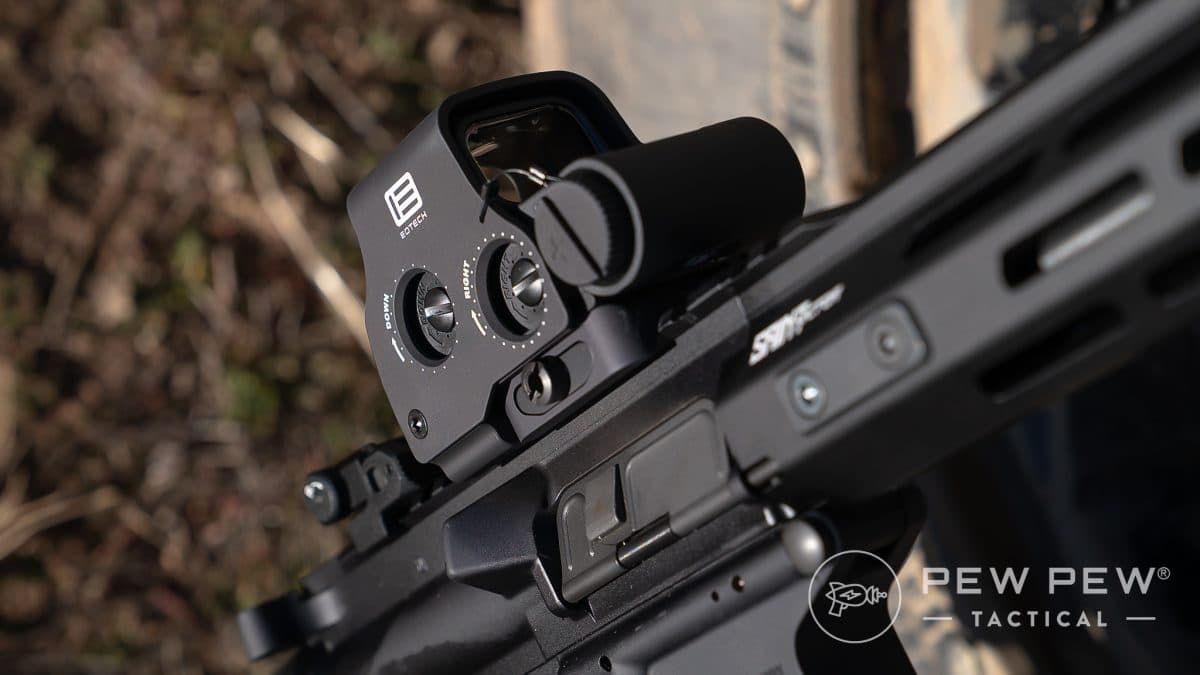
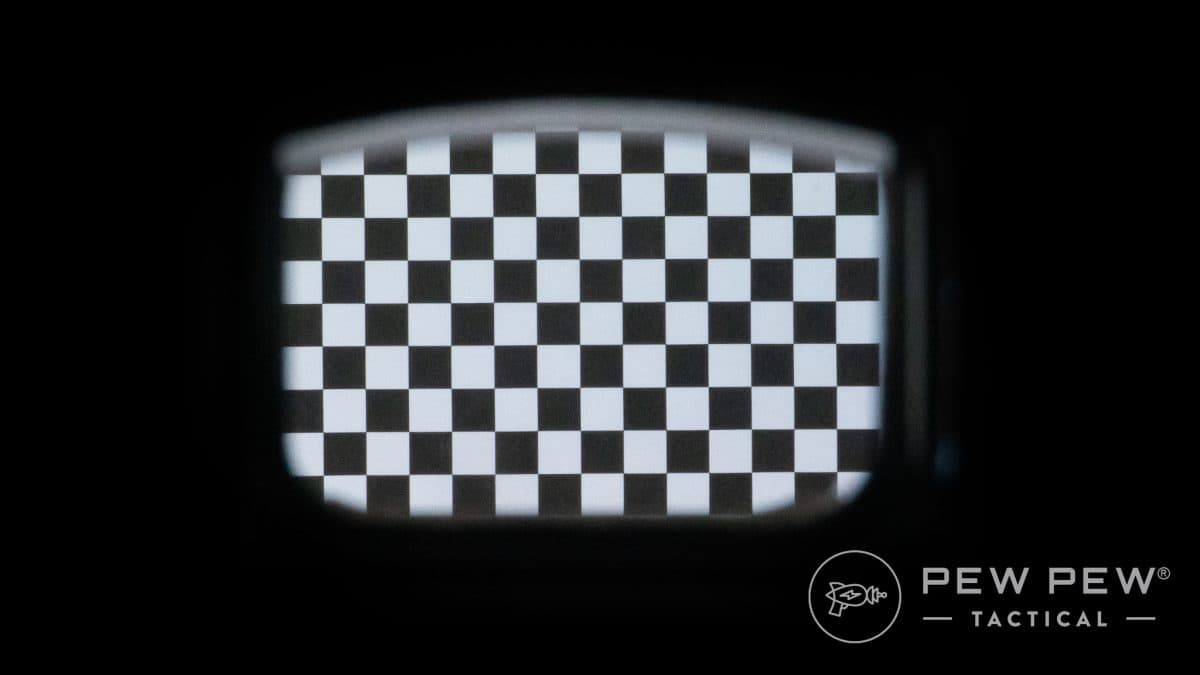
Optically, it takes the top spot in this group. The glass is brighter and clearer than other unmagnified optics, and it creates no perceptible distortion. It’s also giant, which I always appreciate when I’m dialing up speed or maintaining situational awareness.
See for yourself what spending top dollar gets you.
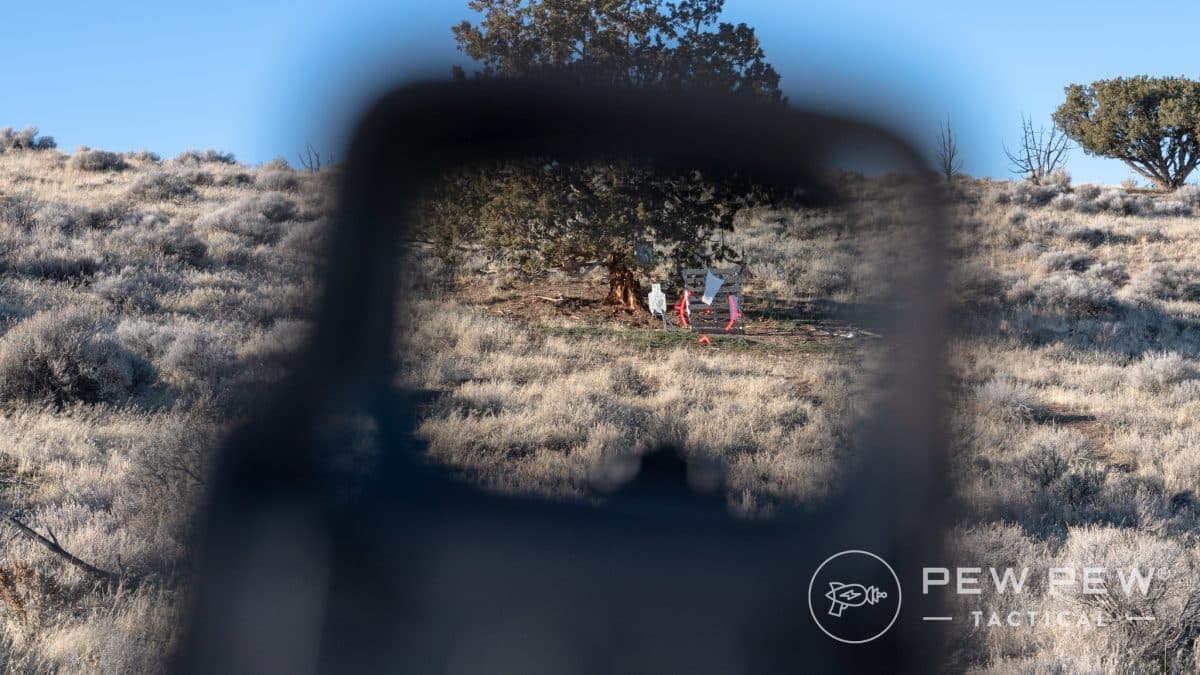
The reticle is another story, but that’s by design.
Holographic sights like the one you see here have inherently grainy reticles. I actually find that it pushes my eye’s natural focus to the target, so it doesn’t bother me. Shooters with astigmatism also report that holographic reticles don’t bloom and glow like a red dot.
EOTECH offers several advanced reticle options for the EXPS3, although they’re tailored to 5.56 NATO. Elevation holds are still usable for 9mm; they just correlate to different distances, and you’ll need to figure out what those are for yourself with live-fire data validation.
The brightness controls sit recessed in the optic’s protective housing to protect them from getting bumped accidentally. A physical divider divides them to make sure you only hit the one you want.
In the case of the EXPS3, there’s also a dedicated button to switch from daylight to night-vision brightness modes.
For most people, that’s unnecessary and you can save a bundle with the EXPS2. For professionals and night-vision enthusiasts, quick access to 10 night vision settings is a really meaningful capability.
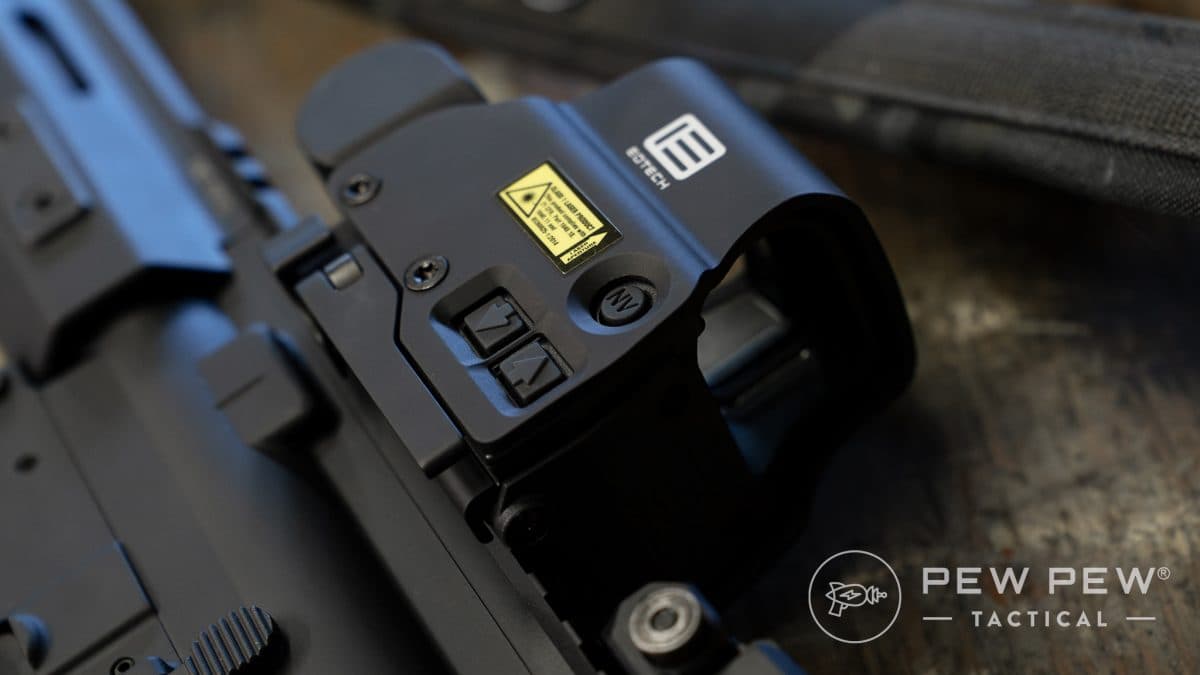
After spending a bunch of time shooting the EOTECH EXPS3, I get what all the hype is about. The optical quality is excellent, the size helps me shoot and transition between targets quickly, and it’s about as fragile as an anvil.
Day or night, I always enjoy a chance to break out the EXPS3 and let this professional-grade optic do its thing.
Aside from the eye-watering price, critics of the EXPS3 point out that the battery life isn’t great, and it’s a hefty chunk of metal to slap on your PCC. The fuzzy reticle is kind of a love-it-or-hate-it situation, too. Those are valid points, but I’d still be very relieved to have an EXPS3 on my PCC if my life depended on it.
5. Vortex Defender-CCW Enclosed - Best Micro Red Dot
Pros
- Solar power
- Selectable multi-reticle
- Extremely compact
Cons
- Small viewing window
- Sits lower than carbine red dots
The Bottom Line
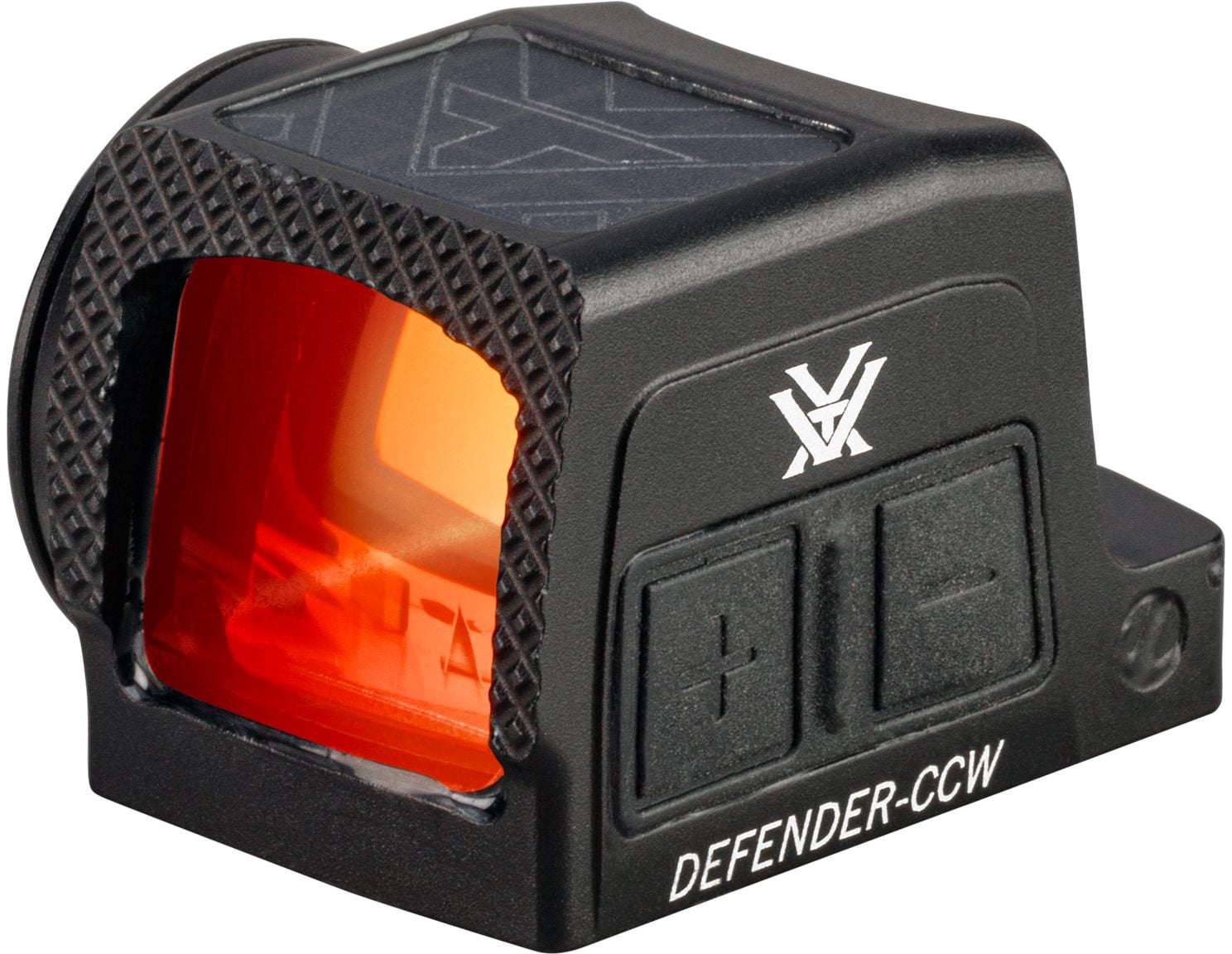
The Vortex Defender-CCW enclosed micro red dot is one of my go-to CCW optics, but it's equally good on other platforms. The multi-reticle is handy, and solar power extends battery life. If keeping your PCC or PDW as small as possible is a priority, this is the optic you need.
Specs
- Magnification: 1x
- Objective Lens: 0.8" x 0.73"
- Reticle: Multi-reticle (3-MOA dot, 32-MOA ring)
- Illumination: 10 daylight, 1 night vision
- Battery: CR2032 (solar backup)
- Dimensions: 1.6” x 1.2” x 1.1” (Defender-CCW), 1.8” x 1.3” x 1.2” (Defender-ST)
- Weight: 1 oz (Defender-CCW), 2 oz (Defender-ST)
- Country of Origin: China
If you’re setting up a PDW for backpack carry, a Vortex Defender-CCW or Defender-ST micro red dot is a fantastic choice.
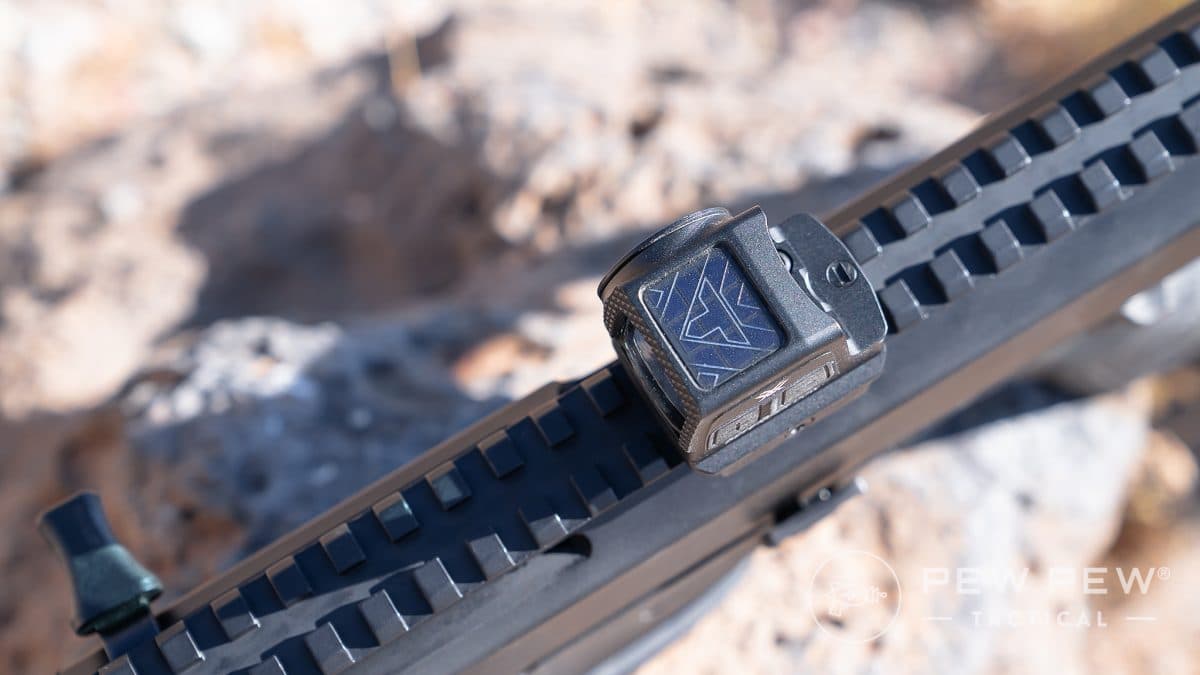
The Defender family is one of my favorite places to get pistol optics, and these enclosed-emitter versions are just the ticket when you’re working on a space-conscious PCC build.
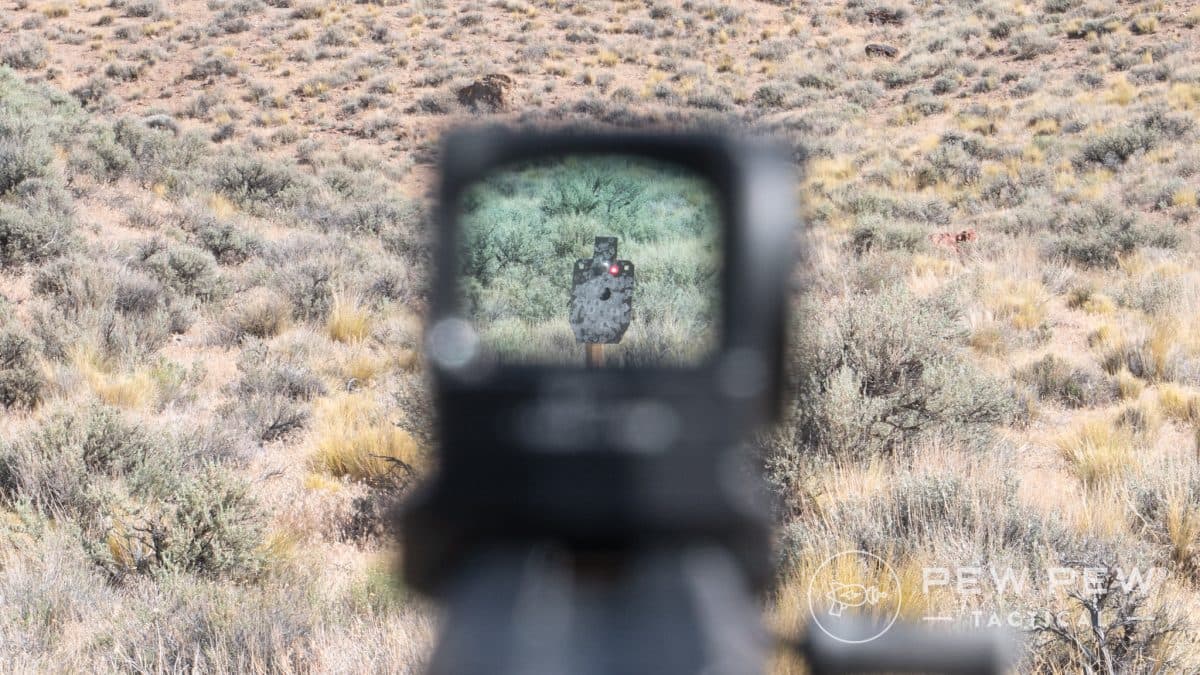
Using the distortion grid, I detect a slight blue tint in the glass. The lines appear straight, and I see no clarity issues. On the range, the view through the enclosed Defender-CCW looks perfectly clear.
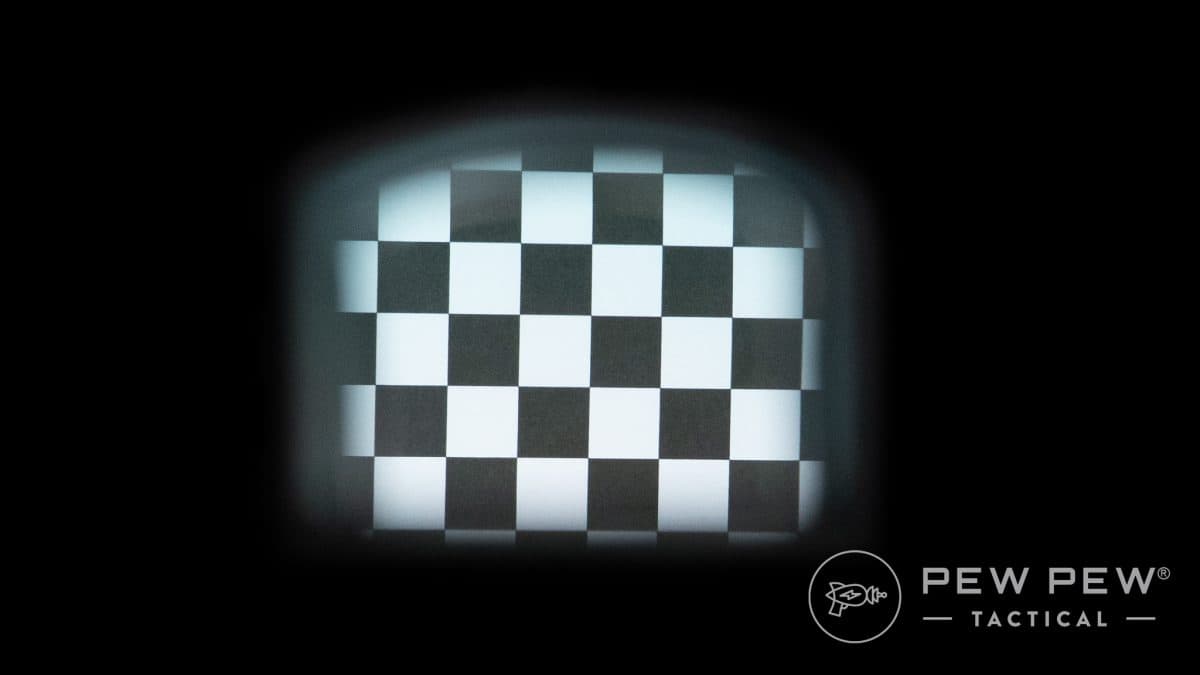
This multi-reticle optic gives you the option to use a 3-MOA dot, a 32-MOA ring, or both. In the case of micro red dots, I prefer to use the dot by itself to keep the sight picture as uncluttered as possible.
Vortex makes a very crisp dot, and I’ve been able to land repeated 100-yard shots on C-zone steel with a compact pistol using this one.
Brightness is controlled with a pair of buttons on the left side of the optic.
They’re small and close together compared to a rifle optic, but remember that this is primarily for concealed carry pistols. For what this red dot is, I’m very happy with the controls.
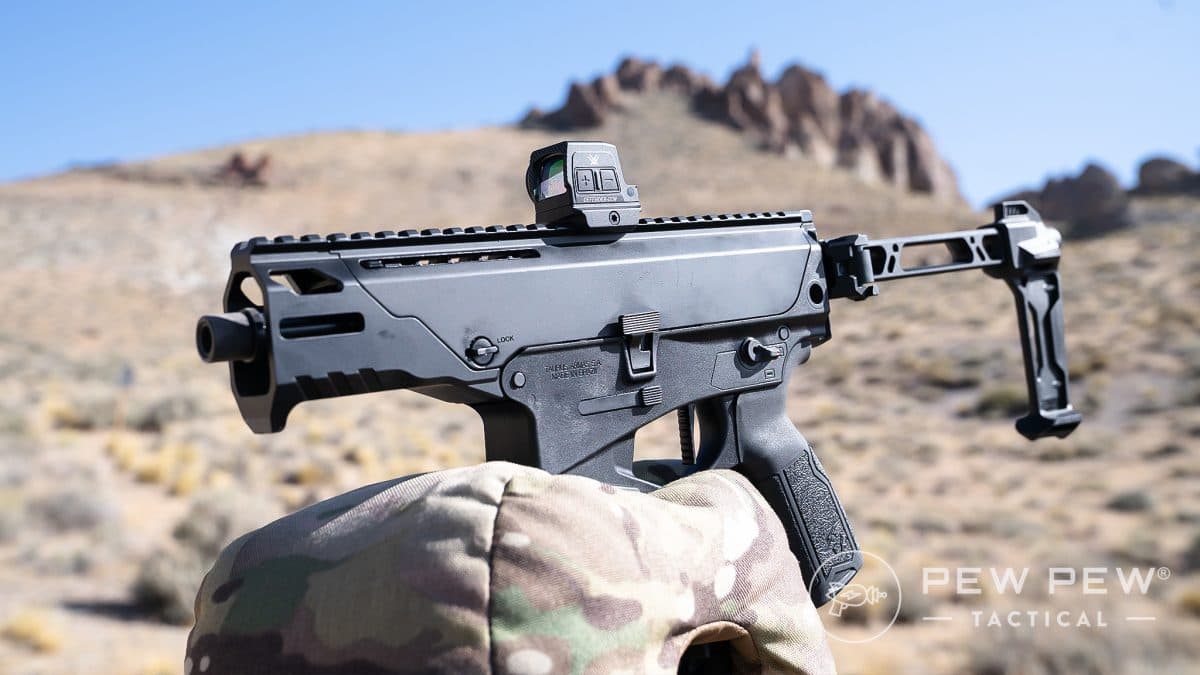
For this article, I tested the Defender-CCW on the Taurus RPC. Prior to that, it was my carry optic since its launch several months earlier.
I’ve been very happy with the optical system, the solar backup is a reassuring second layer of dependability, and shooting with it feels very natural. Factor in the price, and this is an excellent value.
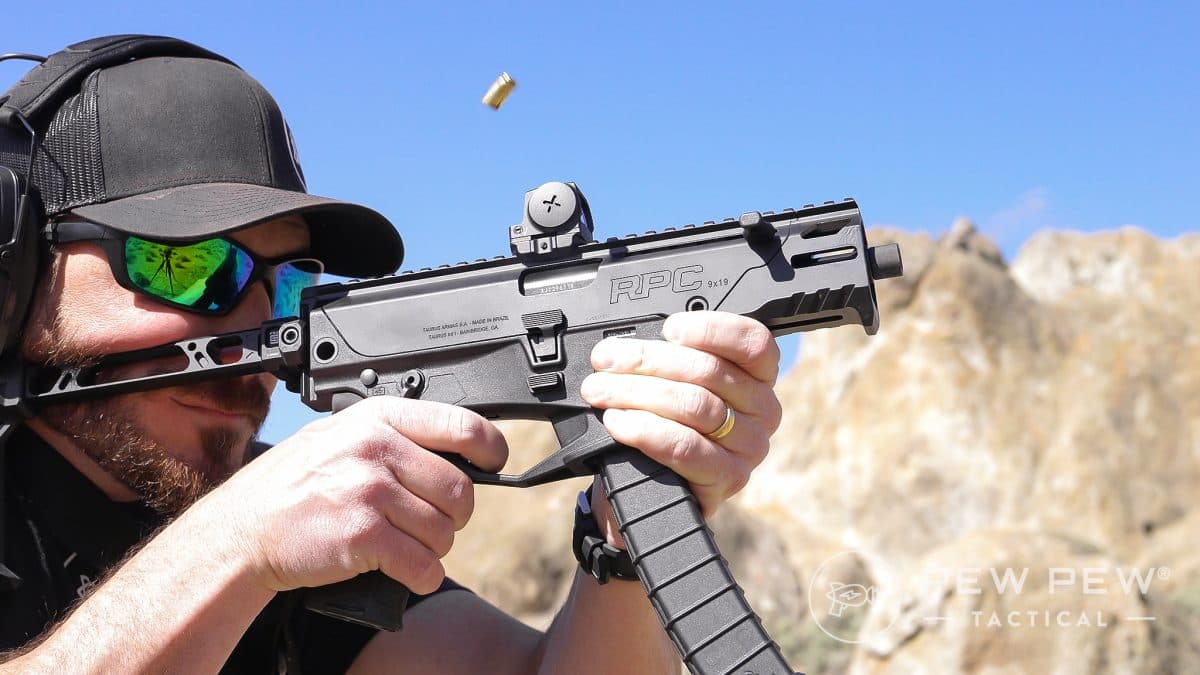
Either the Defender-CCW or the slightly larger Defender-ST would be a great choice for a PDW, but I’d size up for a 16-inch carbine. The Defender’s comparatively tiny windows and low height work better on a compact platform built to fit in a backpack or behind the seat of a car.
Travis did a whole Vortex Defender-CCW enclosed micro red dot review. Check it out to see this optic run a gauntlet of punishing tests.
How to Pick the Best PCC Optic
Budget & Intended Use
As with anything, your budget will largely dictate where your search for the best PCC optic starts. You probably aren’t cross-shopping a Romeo5 Gen II and an EXPS3, for example.

Top-shelf optics like the EOTECH and Aimpoint on this list definitely have their advantages, but you may not have a reason to spend more on them.
If you’re primarily setting up your PCC for target shooting or competition, a more affordable red dot is not going to ruin the experience for you. On the contrary, you’ll have more money for ammo, classes, and match fees!

On the other hand, if you’re prepping your PCC for home defense, it might be worth spending a little more to get a more robust optic, a light, and even a suppressor if funds allow.
Size
Technically, a PCC is a carbine-length firearm; i.e., it has a 16-inch barrel. If that’s what you have, it makes sense to use an AR-15 red dot. There’s no reason an unmagnified red dot that works with a rifle-caliber carbine won’t be equally effective on a pistol-caliber carbine.
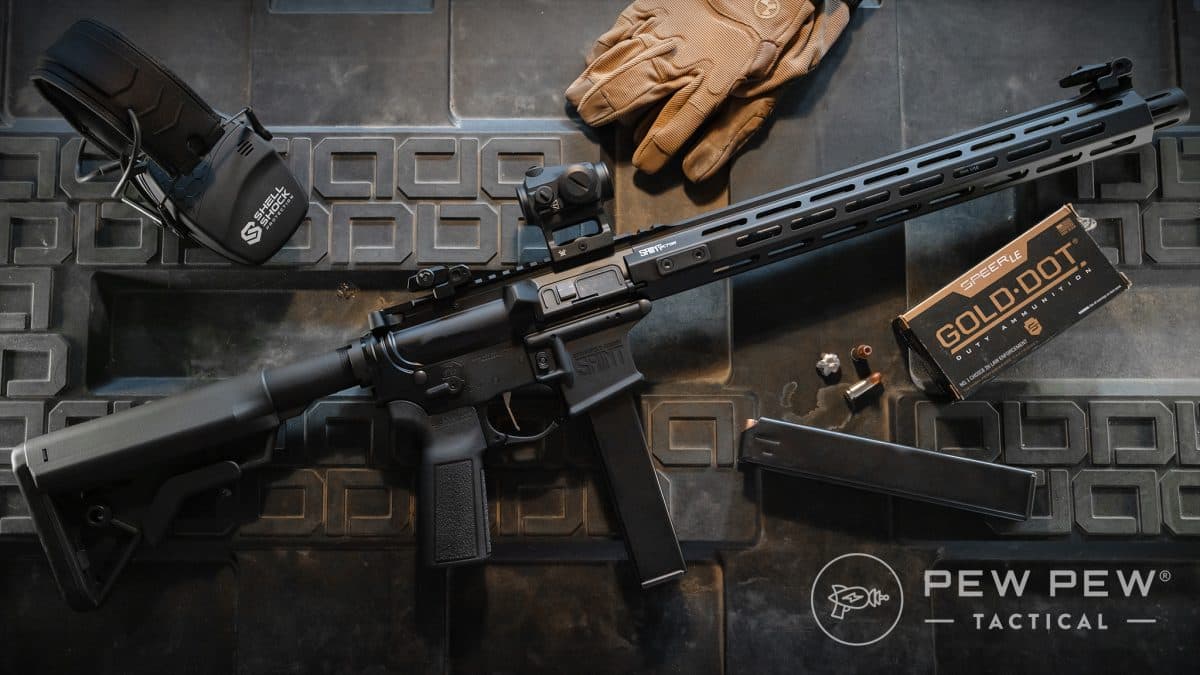
The term has evolved in its common use, though. Many people say PCC when they’re talking about a firearm that isn’t a carbine at all – like a CZ Scorpion pistol or Springfield Kuna.
The value of these personal defense weapons (PDWs) is their compact size and light weight. Maybe the same red dots that work on an AR-15 will suit you just fine in this case, but maybe not. If you want something smaller, an enclosed-emitter pistol optic is a fantastic alternative.
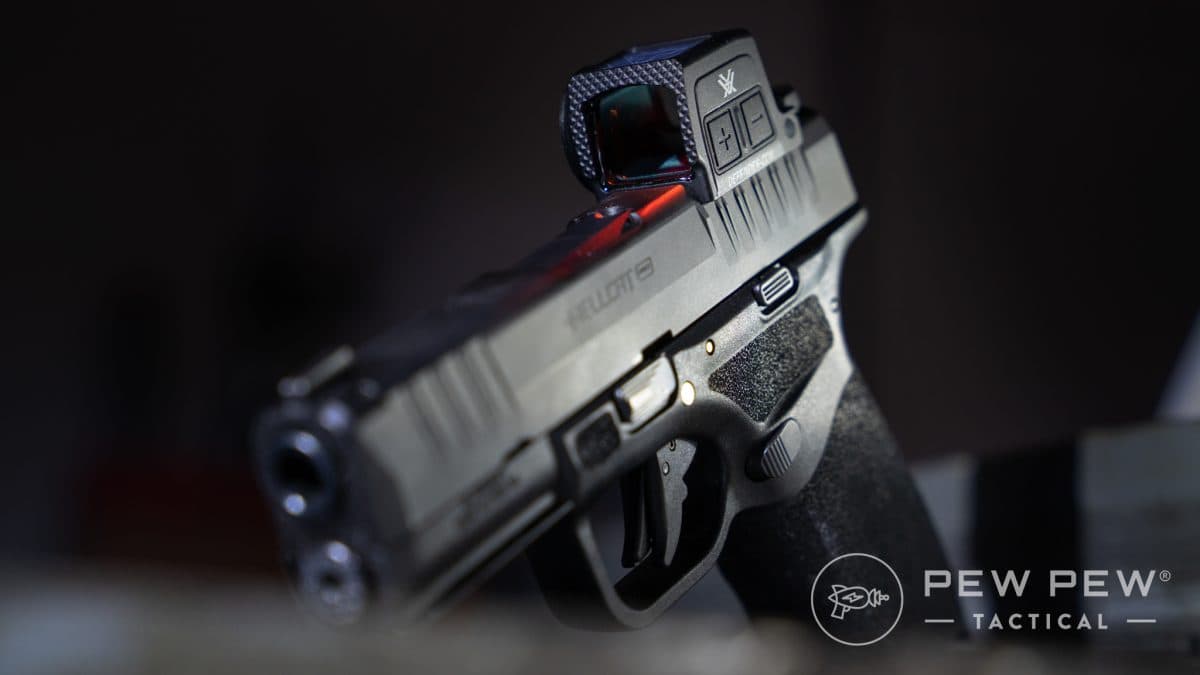
They’re just as effective and tough as a full-size red dot, just smaller. The main drawback is having a smaller window and a lower height.
Magnification
Since we’re talking about pistol cartridges that have a limited effective range, magnification generally isn’t necessary in a PCC optic. I can think of two good reasons to bump up the power, though.

One is competitive shooting. If your flavor of competition involves particularly distant or small targets, having the option to crank magnification up to six-power or more can be helpful.
The other is using your PCC to save money while gaining proficiency with your rifle-caliber AR-15. If your goal is to get better at shooting a carbine chambered in 5.56 NATO and equipped with an LPVO, mounting a similar optic on a PCC that shoots cheaper 9mm ammo will help you transfer the skills learned from those reps from platform to platform.
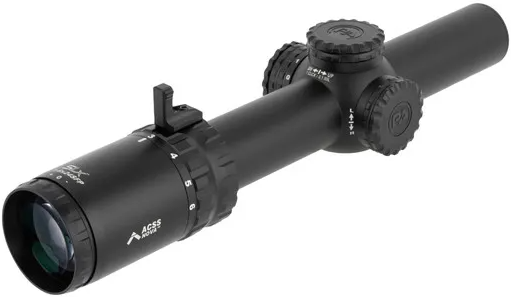
If either of these applies to you, the Primary Arms SLx 1-6x24 Gen IV is a great LPVO that won’t blow the budget (affordability is half the fun of a PCC, after all). Just keep in mind that your elevation holds will not transfer from 9mm to 5.56 NATO or .300 BLK.
While you’re at it, check out the Primary Arms SLx 1X MicroPrism with an ACSS reticle just for 9mm PCCs. This is particularly great for people with astigmatism, because the etched reticle won’t cause the same blooming effect as a red or green dot.
Final Thoughts
PCCs may not be as varied as rifle-caliber AR-15s, but we all have our own goals. Whatever your vision, whatever your budget, you can build it.
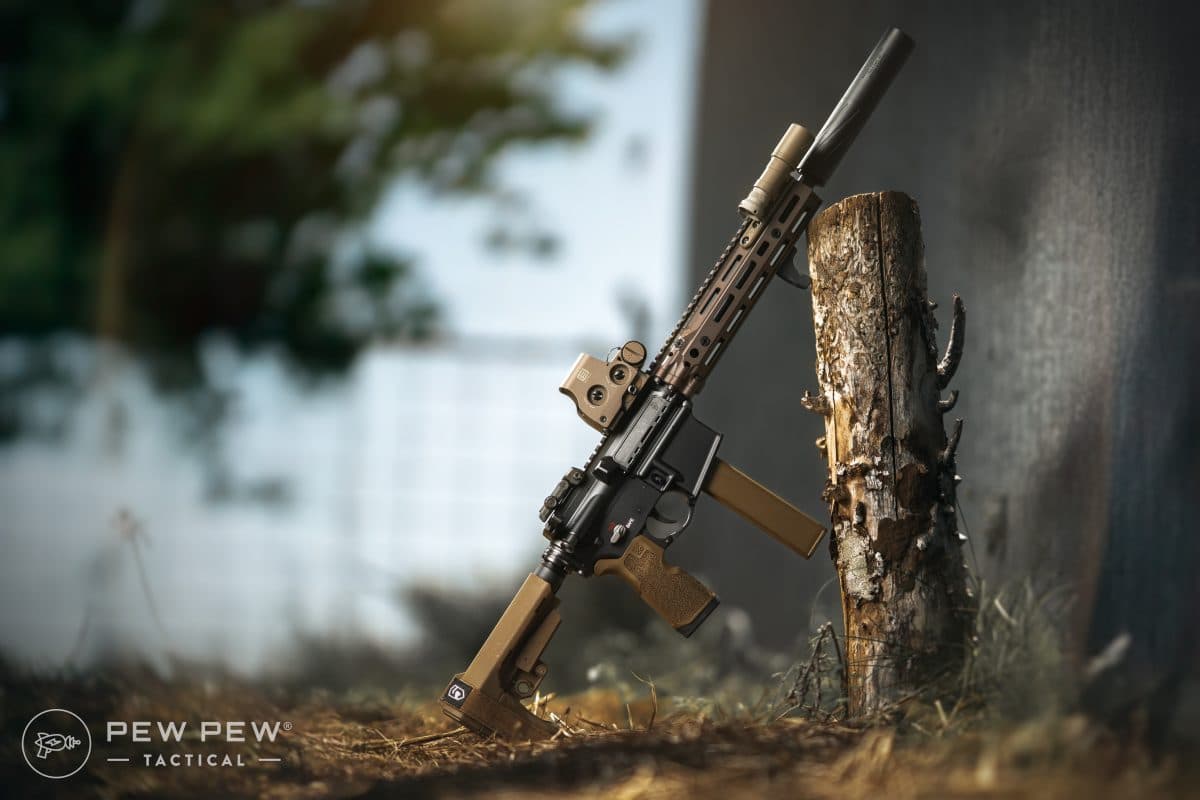
These picks cover all the bases, and I’m confident that you can find something that works for you. Maybe that’s a rugged duty optic, a budget-friendly red dot, or an LPVO.
Whatever you choose, be sure to come back and tell us what you think!
What’s your favorite PCC optic? Drop a comment to let us know. Looking for your first PCC? Check out our guide to the Best Pistol Caliber Carbines in 9mm and beyond!
Latest Updates
Month 2026: Complete overhaul with new products, testing, and supporting content.