
Best Pistol Lights For Home Defense & Concealed Carry [Tested]
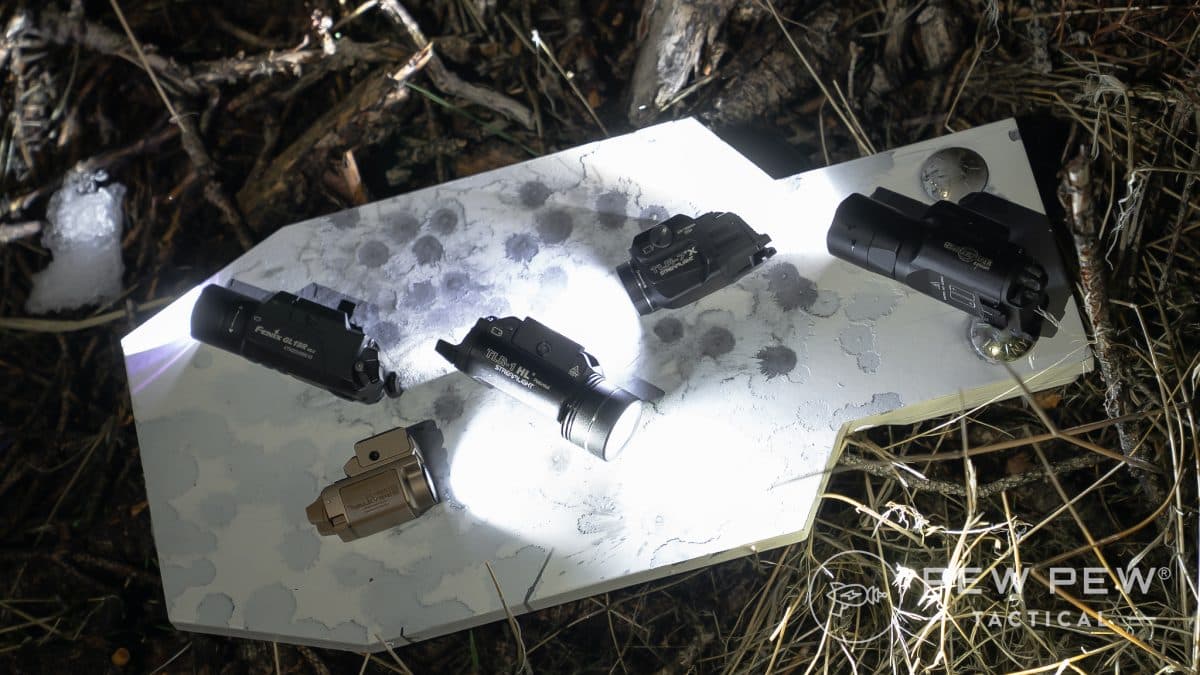
The best popular pistol lights tested. Find out the best in terms of reliability, budget, lumens, beam, and more.

PPT Editor. Marine vet, hunter, and long-range shooter. Articles in 10+ major publications
We review products independently. When you buy through links on our site, we may earn a commission to help support our testing. Learn more.
So, you’ve got a great CCW or home-defense pistol. How well does it work in the dark?
I consider a pistol light just about essential for defensive purposes, because threats don’t disappear when the sun goes down. There are a lot of lights to choose from, though, so picking the best pistol light can be tricky.
Luckily for you, I put some of the top contenders through a gauntlet of testing to find out where they shine, where they struggle, and who each one is for.
The Quick List
- Best Overall: SureFire X300 TurboJump to details ↓
- Best Compact: Streamlight TLR-7XJump to details ↓
- Best Value: Streamlight TLR-1 HLJump to details ↓
- Best Budget Full-Size: Fenix GL19R V2.0Jump to details ↓
- Best Budget Compact: Olight PL-MINI 3 ValkyrieJump to details ↓
Table of Contents
Pistol Light Comparison Chart
| Price | Power | Intensity | Battery | Waterproof | |
|---|---|---|---|---|---|
| Fenix GL19R V2.0 | $99 | 1,200 lumens | 44,300 candela | 18350 | IP66 |
| Olight PL-MINI 3 Valkyrie | $99 | 600 lumens | 2,500 candela | Proprietary rechargeable | IPX6 |
| Streamlight TLR-1 HL | $167 | 1,000 lumens | 20,000 candela | 2 x CR123A | IPX7 |
| Streamlight TLR-7X | $139 | 500 lumens | 5,000 candela | SL-B9/CR123A | IPX7 |
| SureFire X300T | $341 | 650 lumens | 66,000 candela | 2 x CR123A/SFLFP123 | IPX7 |
How We Tested the Best Pistol Lights
This list is the result of extensive hands-on testing. In some cases, that includes years of personal use. I set out to follow a thorough shakedown that replicates real-world use so you can buy your next pistol light with confidence.
Testing Protocol
To achieve an apples-to-apples comparison, I subjected each pistol light to the same testing protocol. This should give you a usable, real-world basis of comparison to help you make a buying decision.

Mounting: I kicked off testing by mounting each light on an appropriate pistol, taking note of any manufacturer-provided torque specs, rail adapters, and instructions.
Beam: I compared lighting performance in three ways. First, I placed each pistol light up against a textured wall to illustrate center hot spots, throw angle, and edge fall-off. Second, I measured each beam’s width at 15 feet to get a practical understanding of its ability to illuminate a target and its surroundings. Third, I used a rangefinder to measure the furthest object I could realistically expect to engage to find a working maximum reach for each light.
Ergonomics: This is subjective, but I manipulated the controls of each light with and without gloves to determine how easy they are to use, and how well they avoid a light negligent discharge, or light ND (turning the light on by accident).
Live-fire: I fired at least 200 rounds of ammunition with each light to assess its ability to activate on command, illuminate targets effectively, and survive the recoil of 9mm ammunition. I placed two small targets at 15 yards – one white, one dark gray. I placed a white C-zone target at 50 yards. This gave me an opportunity to test each light’s range and ability to pick up low-contrast targets. All three were high-quality steel from TA Targets.
Durability: The Streamlight and SureFire pistol lights you see here are rated for submersion of one meter for 30 minutes; the Fenix and Olight are rated for exposure to water jets, but not submersion. For the sake of fairness, I subjected all to sprayed water to simulate rain. Finally, I performed a drop test from 1 meter onto concrete.
Batteries: So many factors affect battery life that it's hard to make a transferrable comparison. What I can compare is how easy it is to charge reusable batteries and source disposable ones. There are some clever power solutions in some of these lights, so I made special note of those.
Meet the Experts
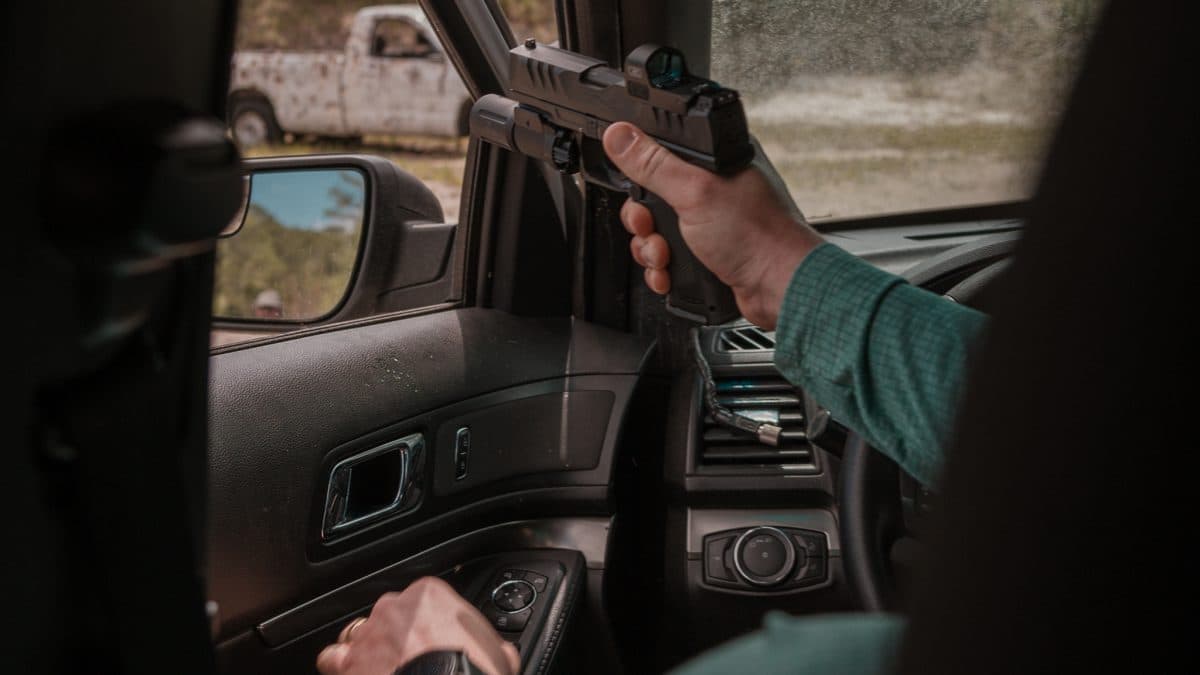
This article comes to you from Pew Pew Tactical Editor & Senior Review Analyst Scott Murdock. In addition to personally testing and evaluating each pistol light you see here, Scott has used pistol lights extensively in various training environments, including CQB, vehicle combatives, and live-fire obstacle courses.
He also uses a pistol light on his home-defense and concealed-carry pistols. Some of those even appear in this guide!
Best Pistol Lights
1. SureFire X300T - Best Overall
Pros
- Excellent long-range performance
- Combat-proven durability
- Multiple mounting styles to choose from
Cons
- Bulky, especially for CCW
- Budget more for batteries
The Bottom Line
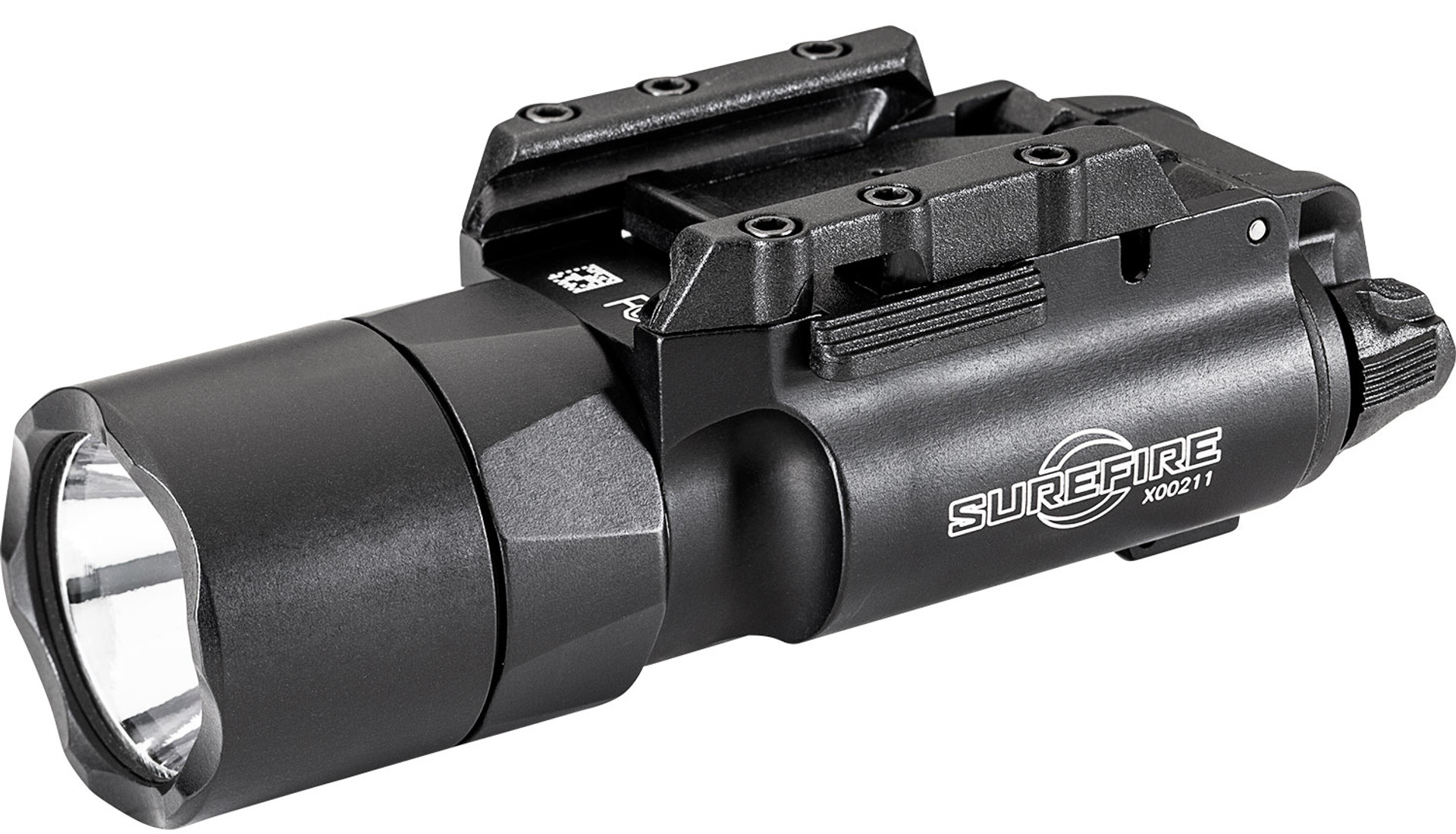
I get it, the SureFire X300T costs as much as some pistols. It can back up the price, though. This pistol light is perfectly dependable and lights up targets near and far. If you have the money, treat yourself.
Specs
- Power: 650 lumens
- Intensity: 11,300 candela
- Battery: 2 x CR123A/SFLFP123
- Modes: Constant, momentary
- Waterproof: IPX7
- Length: 3.76”
- Weight: 4 oz
- Country of Origin: USA
If I could only own one pistol light, I’d take the SureFire X300T and learn to deal with its size for CCW duty. This is a rock-solid light that you can take to the ends of the earth and back.
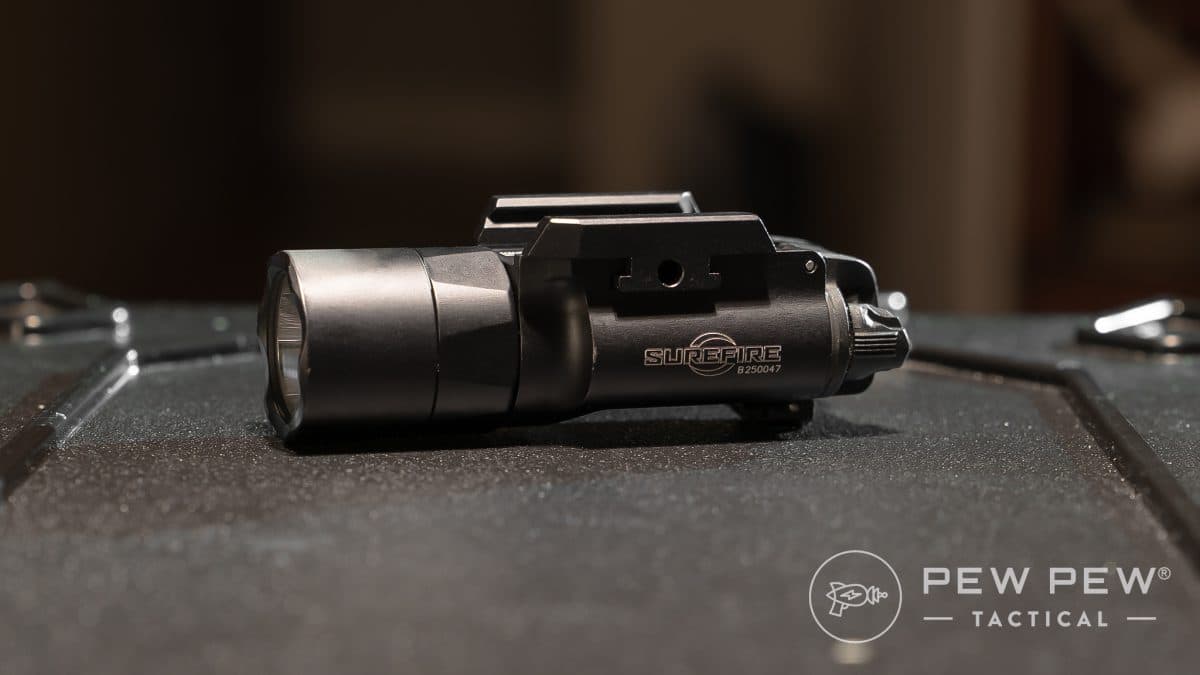
Like the X300U, the X300T comes with one of two available mounting systems.
The A-model features a universal quick-release mechanism that makes it easy to move the light from one pistol to another, but it’s not always a tight fit; I don’t like the light rattling around. The B-model uses a screw and clamp to get a nice, tight fit on your pistol’s accessory rail.
Regardless of which model you choose, you’ll need to install the appropriate rail adapter. SureFire ships these lights with inserts for Glock and Picatinny accessory rails. These are available separately if (when) you lose one.
You might notice a small dab of green paint on mine. I use this as a witness mark to make sure the screw isn’t backing out. I do the same thing with my optic-mounting screws.
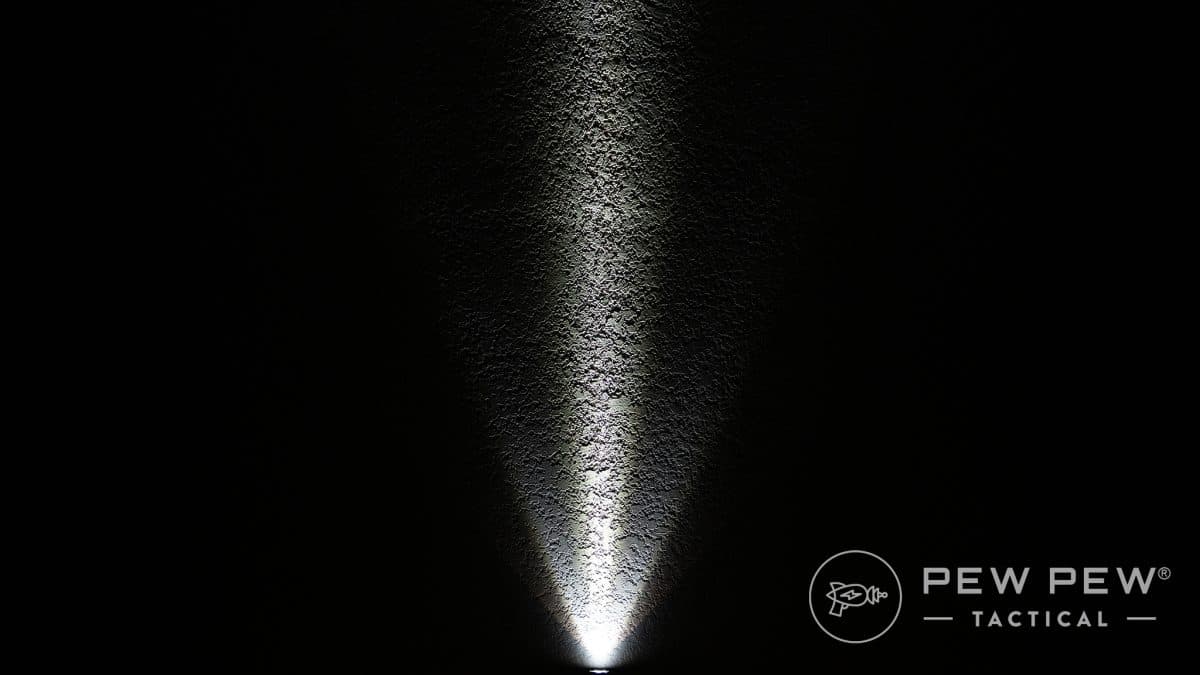
The X300T casts a narrower beam than some, with a hyper-focused hot spot in the center. In my experience, that gives me usable situational awareness with extra reach when I need it.
In close-quarters scenarios, the center portion of the beam is small and defined enough that it’s even possible to use it as an aiming reference.
Compared to the base model, the X300T kicks intensity up from 11,300 to a whopping 66,000 candela for those of you who want extra range. At the same time, SureFire dialed power down from 1,000 to 650 lumens.
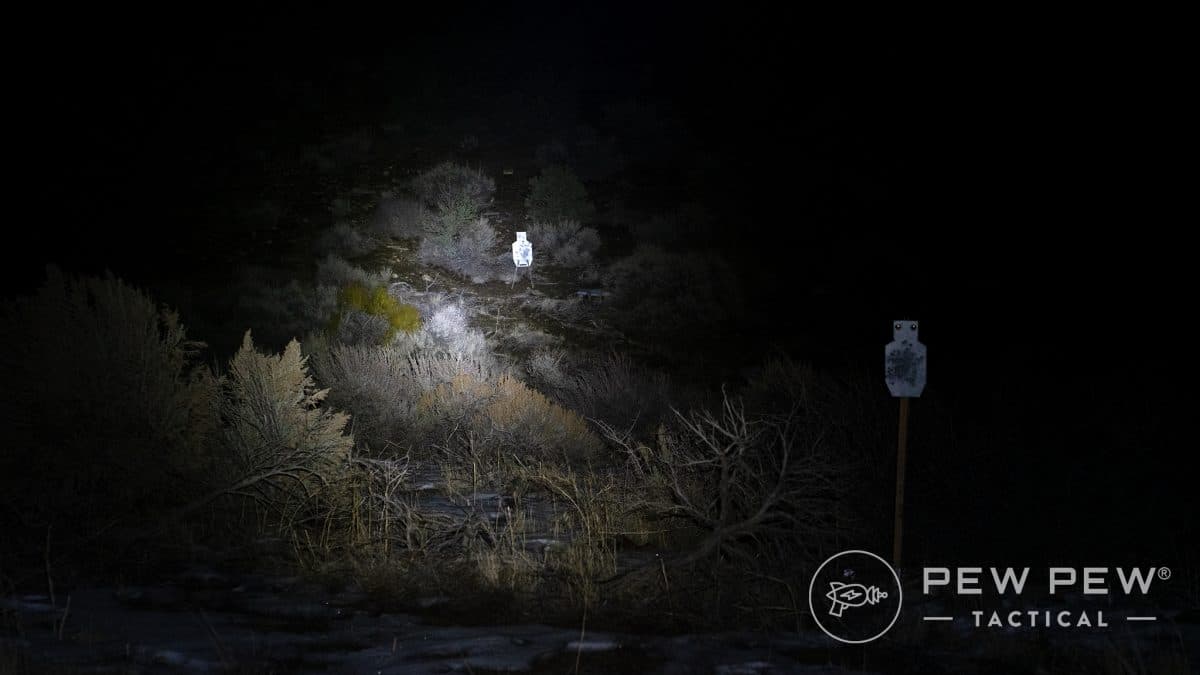
More candela, fewer lumens — can that be right?
It is, and I love this configuration. Indoors, 650 lumens is more than adequate. Sometimes, a brighter light just leaves me blind after momentary use, which makes quick peeks while maneuvering in darkness out of the question.
But with 66,000 candela on tap, I don’t have to give up outdoor capability with this light. I get eyeball-friendly brightness with the ability to see deep into the darkness. It’s the best of both worlds.
SureFire is somewhat unique in terms of ergonomics because the controls are very stiff. That’s good for preventing accidental activation, but it also takes more effort to run the light. I have average-sized hands and have trouble activating constant-on mode with my index finger.
The solution is to use the thumb of my support hand, but that requires adjusting my grip (in the case of my hands and my PDP, anyway).
To activate constant-on, rotate the controls in either direction. For momentary-on, press either side forward. This approach makes it easy to remember which is which.
Live-fire training revealed the edge the X300T offers. The gradual fall-off from light to darkness subtly kept me aware of what I couldn’t see, rather than getting tunnel vision on what I could see. It’s hard to quantify, but the way light scatters is important.
The value of being able to see, identify, and engage targets out to 50 yards and beyond with a pistol in complete darkness cannot be understated.
I once participated in a winter night shoot that involved running between stations in complete darkness. If my pistol light had been overpowered, the light bouncing off the snow would have blown out my natural night vision instantly, leaving me stranded in the woods for several minutes.
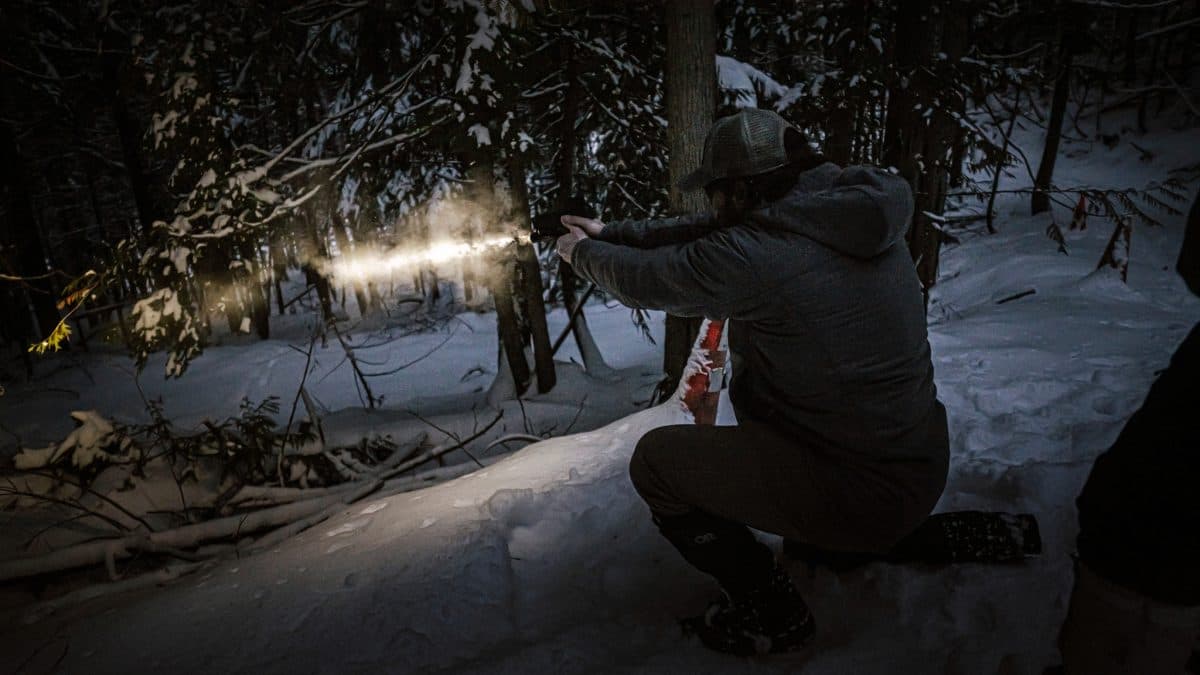
The X300T didn’t subject me to such torture, and it still burned right through dense trees to locate and illuminate targets at distances most people never shoot with a pistol under the best conditions.
Controls that might normally feel stiff feel just right when adrenaline is pumping, and fine motor skills start to deteriorate. A lot of military and law enforcement types swear by the X300, and I can see why.
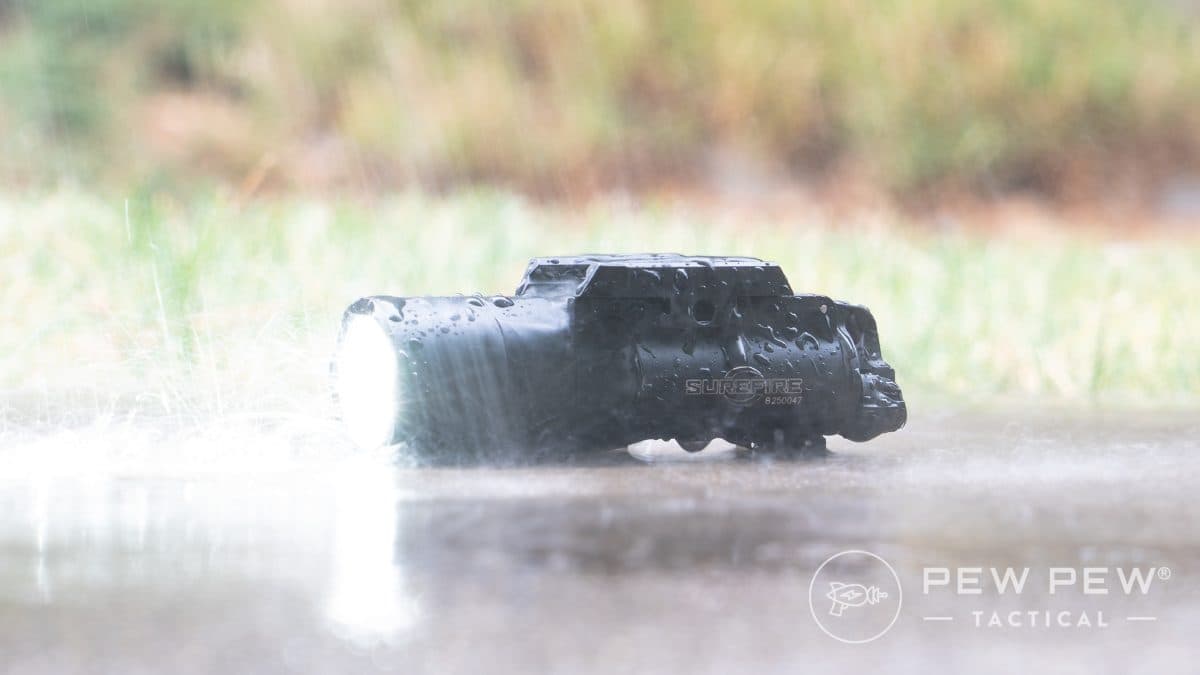
If you’ve heard lore about how tough SureFire weapon lights are, this one will live up to the hype.
Mine was unbothered by this test’s water and drop tests. At the cold-weather survival course I attended, freezing temperatures and deep snow didn’t faze it.
I’ve been using and abusing this particular X300T for a few years, and it’s as good as new (minus a few battle scars). The only things I’ve done to it are adding a witness mark and stocking up on rechargeable SureFire batteries and a charger.
2. Streamlight TLR-7X - Best Compact
Pros
- Huge selection of compatible holsters
- Very user-friendly controls
- Fits smaller carry guns well
Cons
- Starts to struggle as distance increases
- Outshined by the (more expensive) TLR-7 HL-X
Specs
- Power: 500 lumens
- Intensity: 5,000 candela
- Battery: CR123A/SL-B9
- Modes: Constant, momentary
- Waterproof: IPX7
- Length: 2.58”
- Weight: 2 oz
- Country of Origin: USA
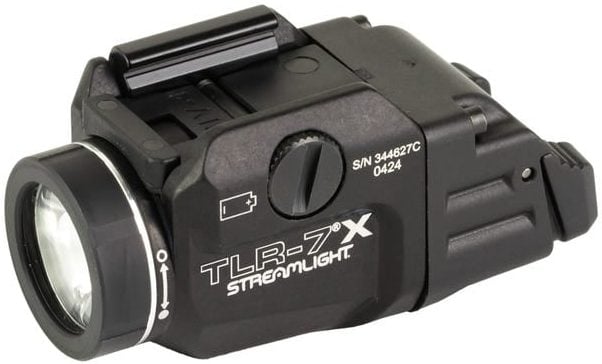
I’m a huge proponent of putting a light on your carry pistol, and the Streamlight TLR-7X is my current go-to.
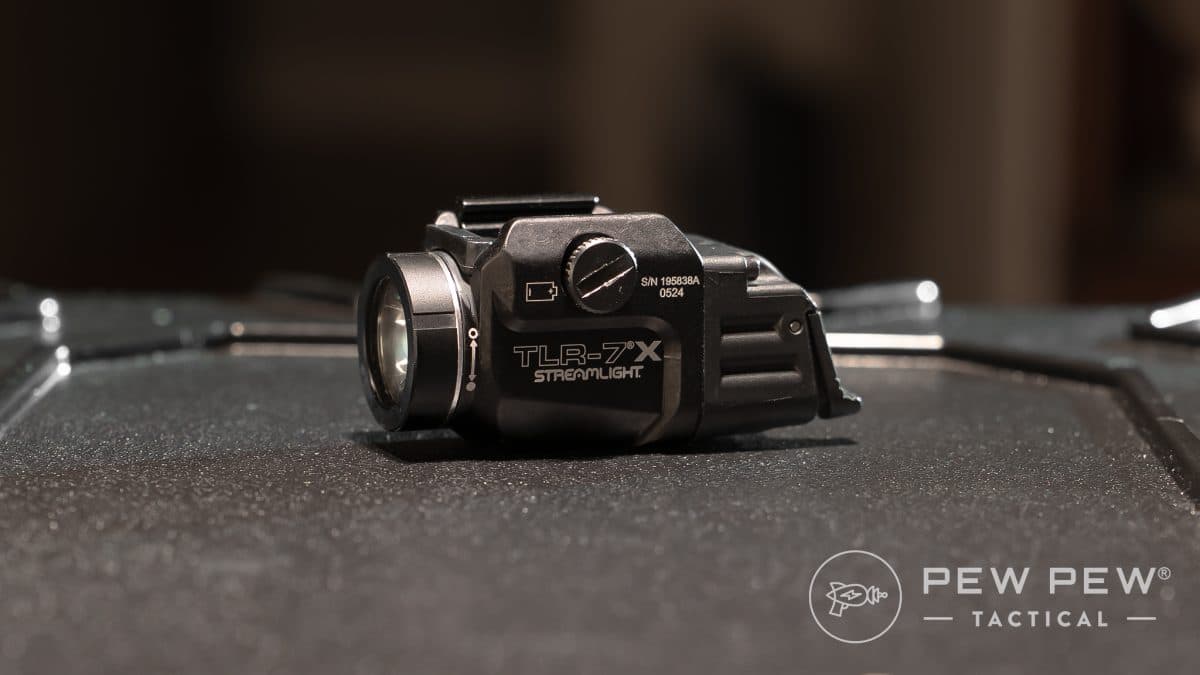
This time, the TLR-7 takes a rechargeable SL-B9 battery or a disposable CR123A. I appreciate the flexibility.
Streamlight ships the TLR-7 with a range of universal and Picatinny rail adapters. Check the compatibility chart to find the right fit for your pistol.
The spring-loaded, screw-down clamp makes installation fast and easy. I like to get it finger tight, then use a screwdriver to get it nice and snug.
Self-defense situations that involve a concealed pistol typically occur at very close distances. When that happens, you need situational awareness more than long-range illumination.
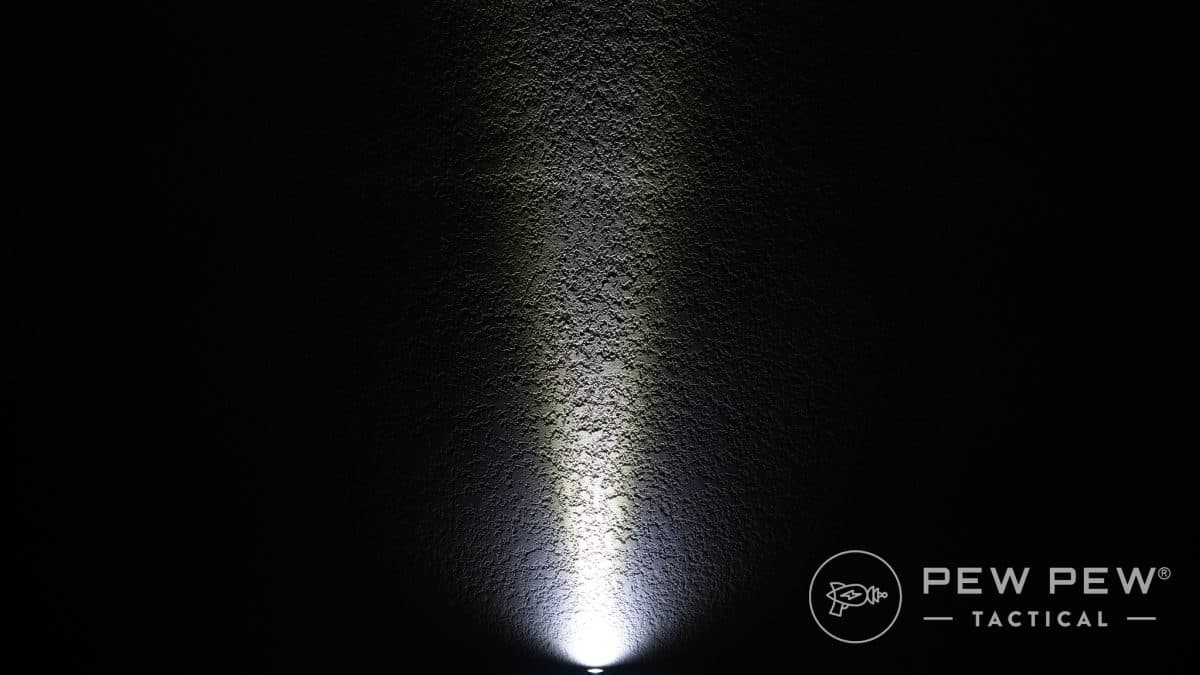
The TLR-7 throws a very wide beam that’s capable of lighting up an entire room. At close range, it does a fantastic job of spreading to the edges of my peripheral vision at a relatively close distance.
When you need to light up everything in your field of view right now, this is the light you want on your pistol.

The compromise is reach; the TLR-7’s 5,000 candela aren't going to stab through the darkness outdoors like the larger pistol lights. I’m fine with that in this case, though, because the 500-lumen output is suitable for close-quarters work.
I find the TLR-7’s ambidextrous switches easy to activate. They don’t rotate; instead, tap for constant-on or press and hold for momentary-on.
Streamlight provides two sets of switches. This allows you to fine-tune the controls to match your grip. They don't look that different, but the effect of ergonomics is noticeable. I really appreciate this customization.
Streamlight also built a safety into the bezel. Rotating it will disable the light, which I find handy when I’m transporting it in a case or storing it and don’t want the switches to get bumped and drain the battery by accident.
Live-fire testing validated my fondness for the TLR-7’s paddle switches. Even as temperatures dropped below freezing, I was able to quickly tap the right-side paddle with my trigger finger and shift to the trigger very quickly – without messing up my grip.
The wide beam and adequate light had no problem with either 15-yard target. I was even able to effectively reach out to the 50-yard target, albeit with less light than some of the more powerful alternatives.
I’d still feel comfortable with such distances – hence this being my current CCW light of choice.
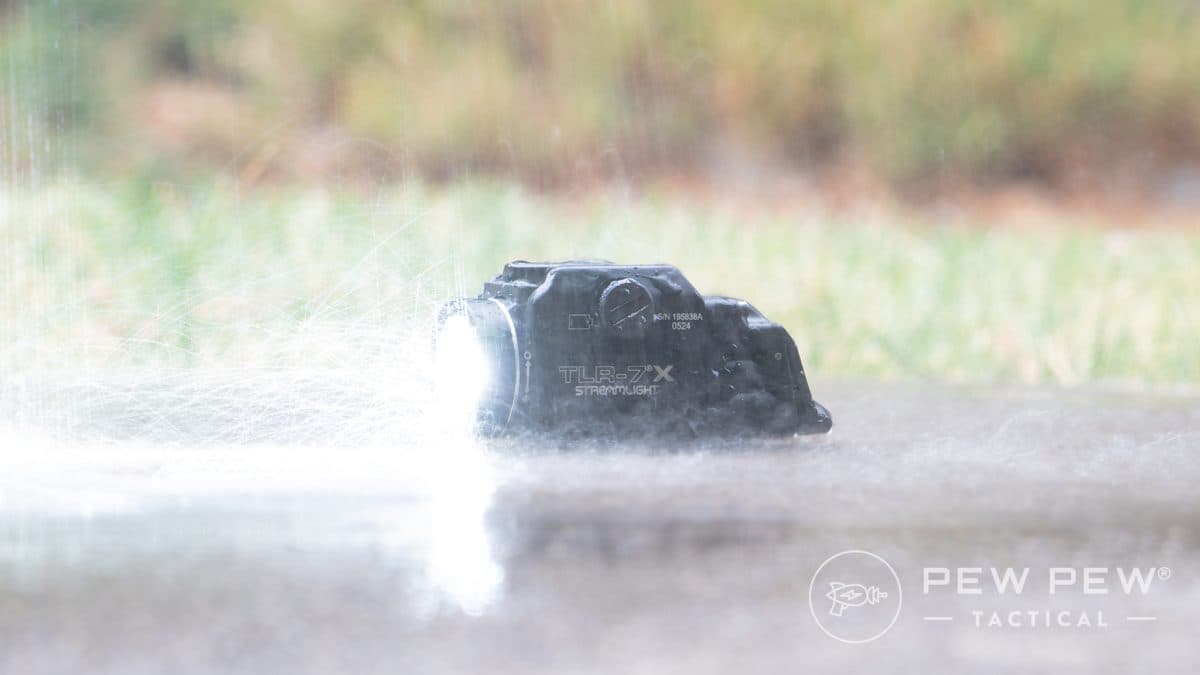
The TLR-7X is rated for 30 minutes of submersion 1 meter deep, so I wasn’t surprised when it shrugged off my water test. It took the drop onto concrete like a champ, too.
I’ve also used this particular light on a bunch of different pistols, so it’s been installed and uninstalled more times than I can remember. The mounting system doesn’t show any signs of wear.
If you like this setup but want more power, grab the hot-rodded Streamlight TLR-7 HL-X and call it a day.
3. Streamlight TLR-1 HL - Best Value
Pros
- Great range
- Easy-to-access strobe function
- Duty-ready, but not priced like it
Cons
- Switch feels a little fragile
- I don't love the chrome accent
Specs
- Power: 1,000 lumens
- Intensity: 20,000 candela
- Battery: 2 x CR123A
- Modes: Constant, momentary
- Waterproof: IPX7
- Length: 3.39”
- Weight: 4 oz
- Country of Origin:
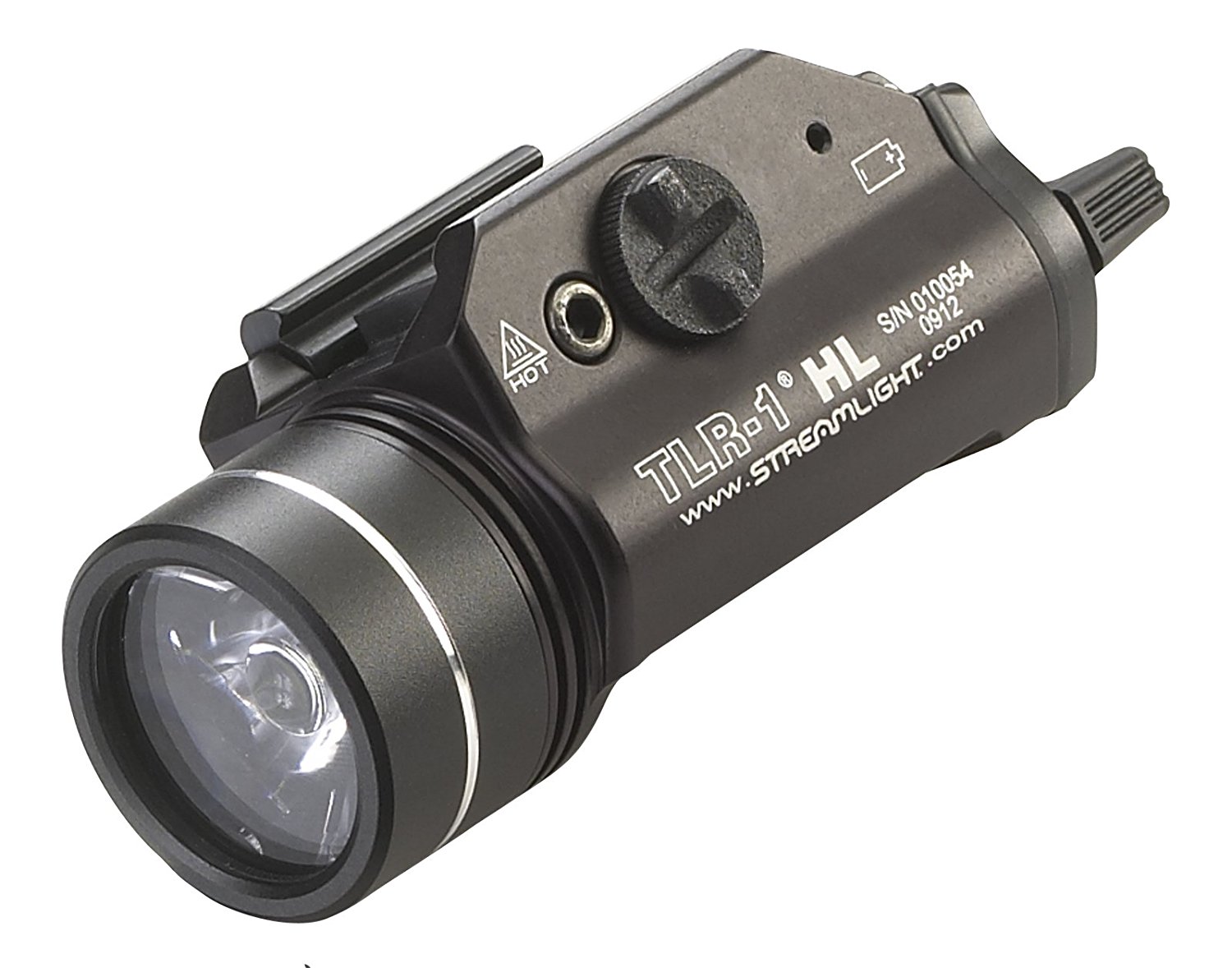
If the prospect of dropping new-pistol money on a light doesn’t sit well with you, fear not. The Streamlight TLR-1 HL provides lots of performance at a very reasonable price.

Due to its size, I recommend the TLR-1 series for full-size pistols like the Glock 17 or Glock 47, but it also works nicely on crossovers like the Glock 19X and Glock 45.
As with other weapon lights in the TLR family, Streamlight provides multiple rail adapters and the fitment guide I referenced with the TLR-1.
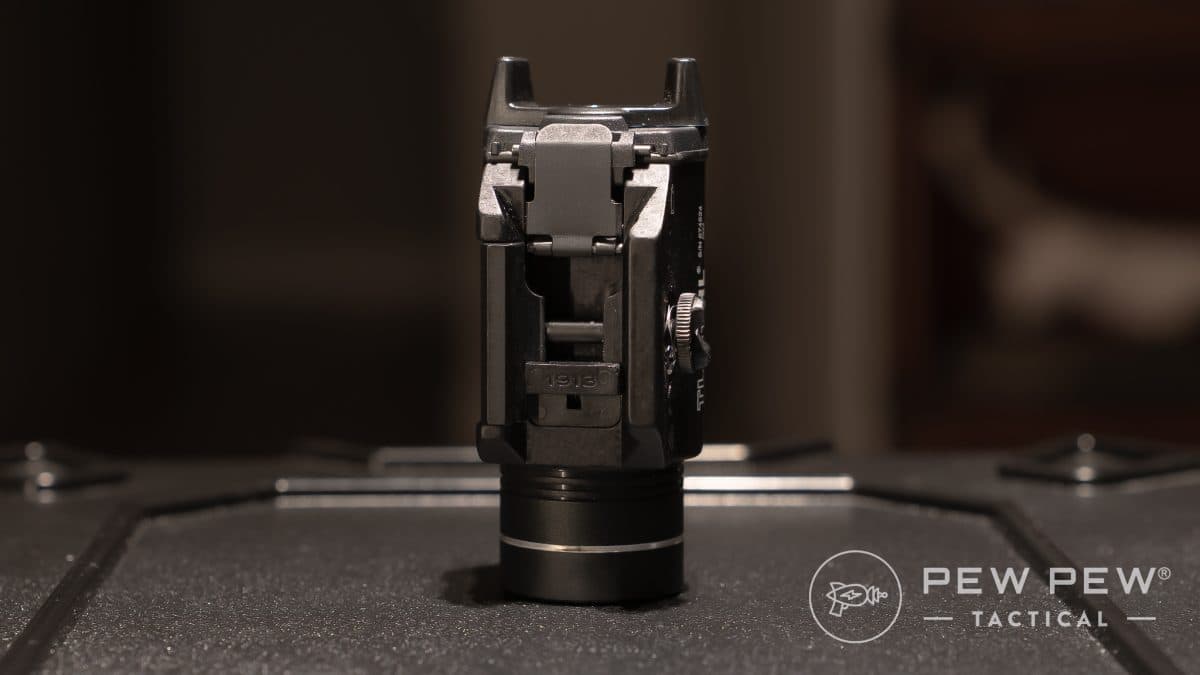
Raised studs on the spring-loaded thumb screw make it easy to get a fairly tight fit with your fingers, but I still recommend using a flathead screwdriver for that last bit of security.
Aside from installing the right adapter and getting adequate tightness, there really isn’t much involved with mounting this light.
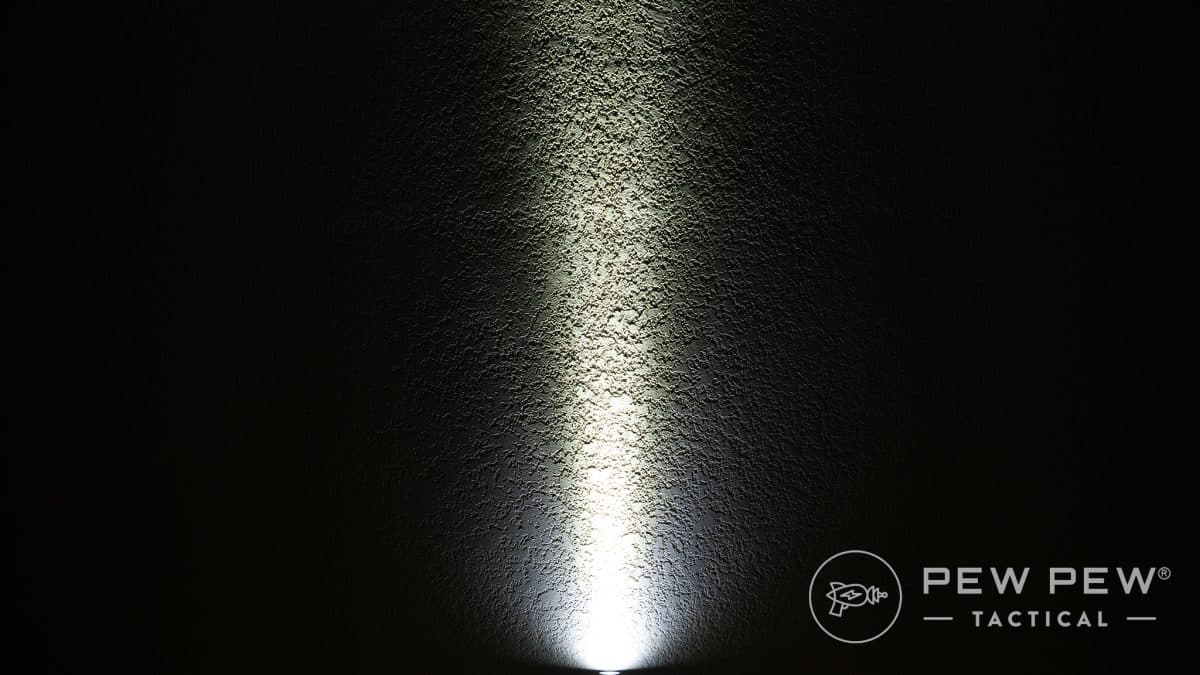
The TLR-1’s 1,000-lumen power rating is nice, but the 20,000 candela is what puts light where you need it, especially in wide-open spaces (unsolicited Dixie Chicks reference).
What really impressed me during testing was the TLR-1’s ability to blast light at almost a 90-degree angle to the lens. No pistol light on this list demonstrated a wider beam. That’s critical if you’re concerned about lighting up large areas instead of waving a narrow beam around looking for your target.
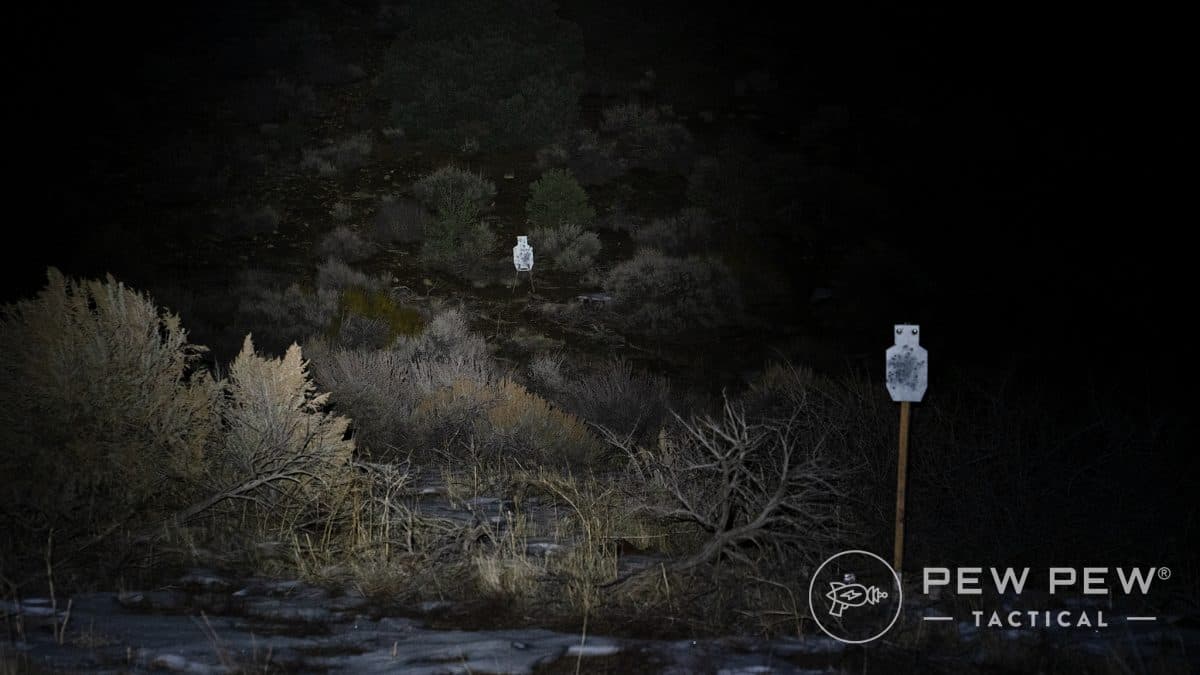
Think of this as a floodlight rather than a spotlight.
The controls on the TLR-1 look similar to those on the X300 series, but they function differently. For constant-on, rotate the paddles clockwise until they click into place. For momentary-on, rotate them counter-clockwise.
This requires you to remember which is which, so training is key – especially if you run different lights on different pistols.
The TLR-1 also has a strobe function. Quickly double-tap and hold either switch counter-clockwise to activate it, and let go to turn it off. Of course, you’ll have to do with your support hand if you plan on shooting with the strobe.
There’s very little resistance, so activating either switch with one finger is relatively easy.
The TLR-1’s floodlight-style beam excelled in my live-fire testing. Once again, numbers don’t tell the whole story. The beam was so wide that it instantly illuminated all three targets. That let me plan ahead and move from one to the next without searching in the darkness.
Engaging the 50-yard target was no issue with this amount of power and intensity.
The skinny posts on the rotating switch weren’t quite as easy for me to find as the X300T’s chunky knobs, but less resistance made it easier for me to flick the light on with my trigger finger.
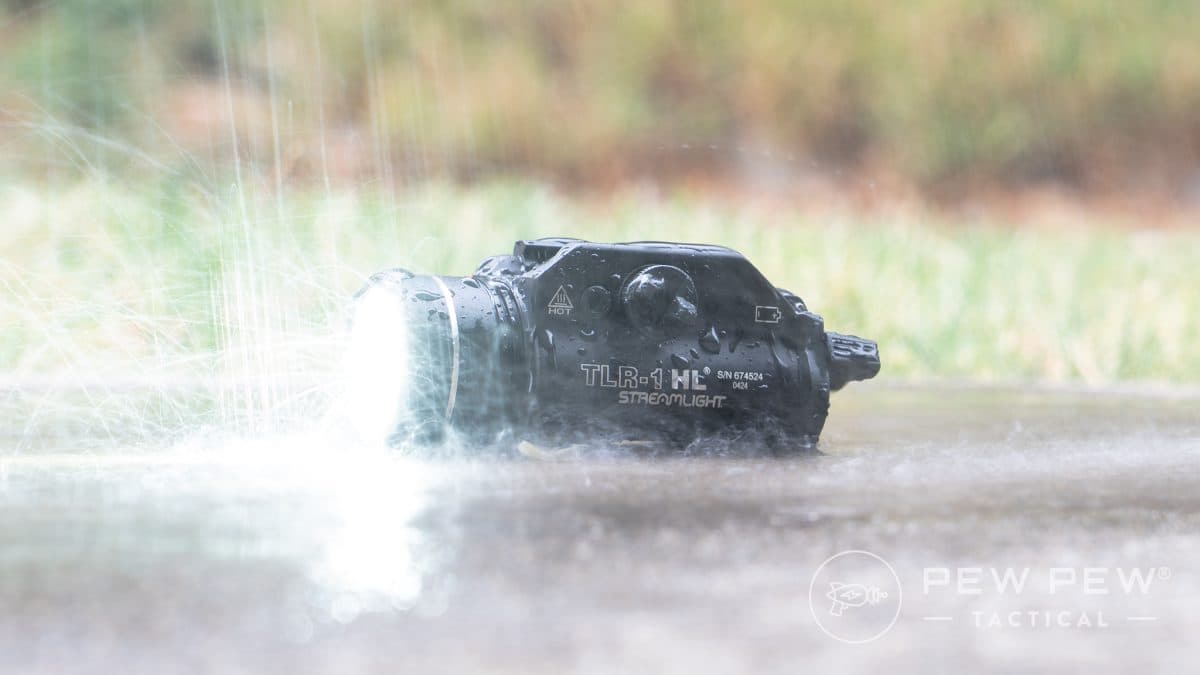
The TLR-1 HL is a large pistol light that doesn’t weigh very much – that could suggest that it’s not particularly strong. Fortunately, it aced my water ingress and drop tests.
While I still suspect the X300T is tougher, I don’t have any reservations about recommending the TLR-1 HL as a duty or home-defense pistol light.
4. Fenix GL19R V2.0 - Best Budget Full-Size
Pros
- Great quick-release system
- Sturdy construction
- Three sizes of switches included
Cons
- Switches don't feel as nice as the rest of the light
- Too long for a lot of pistols
Specs
- Power: 1,200 lumens
- Intensity: 44,300 candela
- Battery: 18350, USB-C charging port
- Modes: Constant, momentary
- Waterproof: IP66
- Length: 3.7”
- Weight: 4 oz
- Country of Origin: China
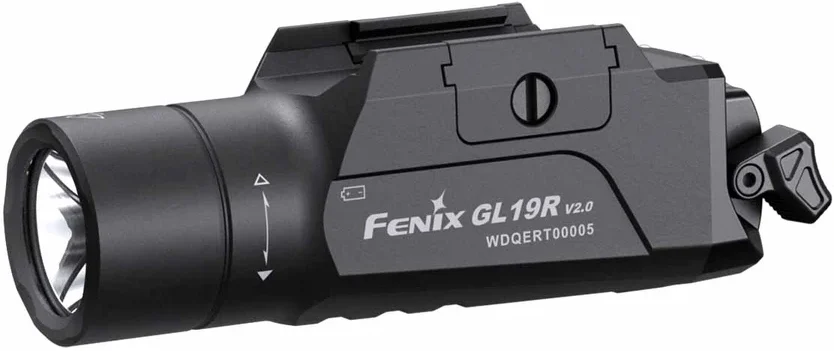
Can you really get a usable duty pistol light for less than $100? That’s what I wondered when I got my hands on the Fenix GL19R V2.0 when it first launched.
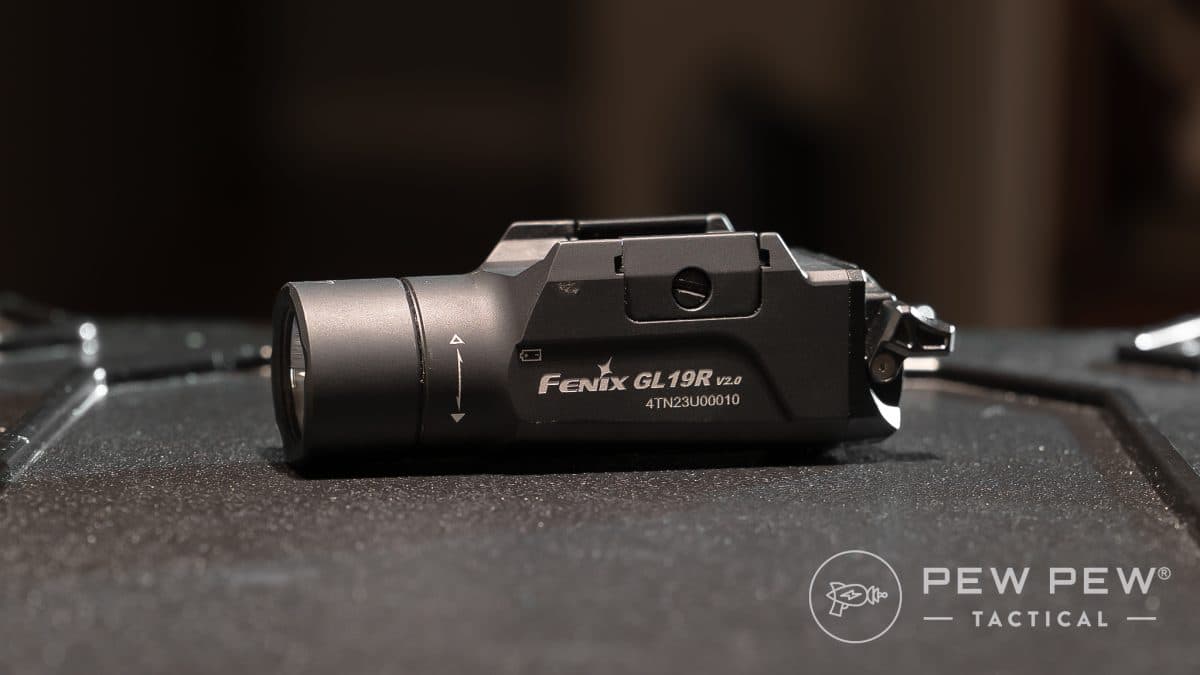
The aluminum body and tight tolerances are a good start. The paddle-style switches feel a little flimsy, but they work and require minimal effort. They’re not so light that I’m worried about accidental activation, though.
The battery is rechargeable via USB-C, or you can unscrew the bezel to replace it in seconds. An LED battery level indicator under the rubber dust cover will give you a heads-up when power runs low. I happen to like being able to charge the battery without removing it.
I’d recommend the GL19R for larger pistols simply because of its length. If you pair this with something like a Glock 19, it’s going to look like a Narwhal tusk.

Mounting this light is easy because the Glock and Picatinny rail adapters pop in and out with no tools. Just be careful not to drop them; these tiny discs could disappear in a hurry.
Rather than using a screw to fasten the light onto a pistol, Fenix opted for a lever-style latch that has really won me over during the past several months. It’s easy to move the light from one pistol to another in seconds, and it’s never failed on me. I actually think it might be less likely to lose grip than a screw, which could back out over time with enough recoil vibration.
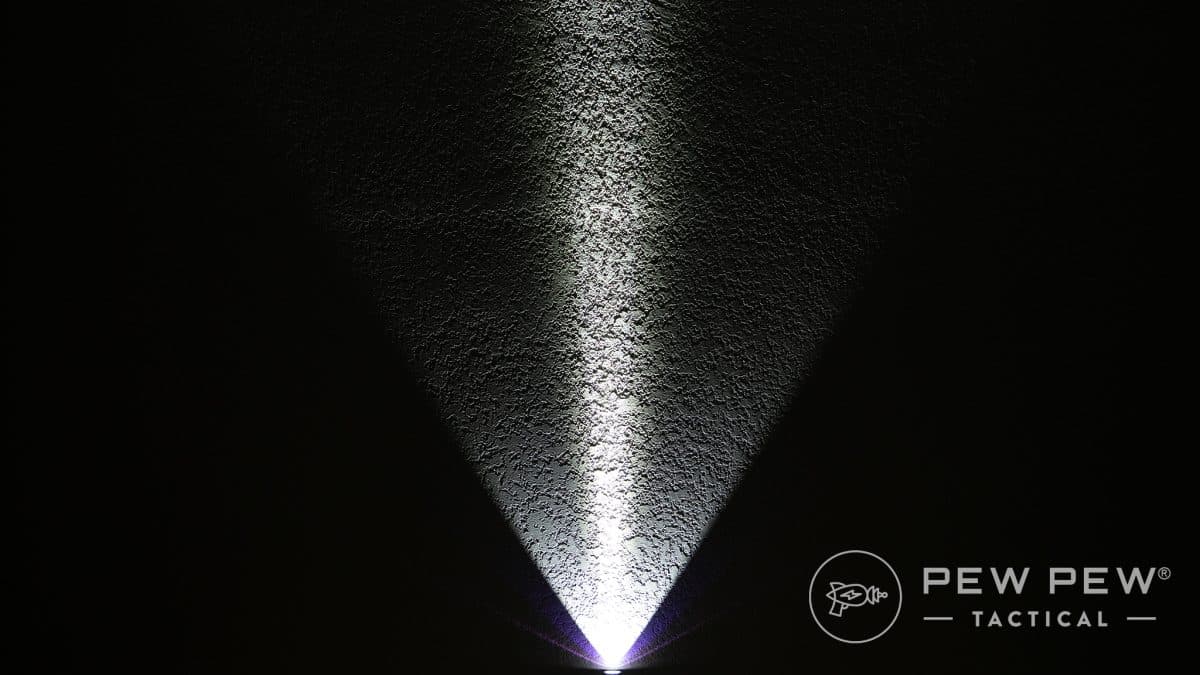
Fenix might pitch the GL19R V2.0 as a budget pistol light, but the output certainly doesn’t look budget to me. The 1,200 lumens and 44,300 candela combine for a seriously bright spotlight that can go the distance.

Fall-off is very crisp. While that looks incredibly satisfying in my wall demonstration, it’s not ideal in the field.
That drastic of a contrast really encourages you to hyperfocus on the narrow spot of light and forget about what’s happening around it.
Could the switches be more tactile? Sure. But, for the money, I’m not going to whine about it. I do appreciate that Fenix provides three sets of switches so you can fine-tune the reach to your fingers.
Press either switch up to activate momentary-on, or flip them down to activate constant-on. Once depressed, they’ll stay there until you return them to the center position.
The narrow, sharp beam pattern became extra apparent during live-fire testing. It sort of felt like looking through a straw.
The power certainly wasn’t lacking, though. This was one of the best performers at 50 yards.
But would I bet my life on it? The controls don’t inspire as much confidence as I’d like, and the harsh fall-off isn’t my cup of tea. It works, though. For the price, you could do a whole lot less. Actually, there are pistol lights that cost more and don’t perform this well.
If money is tight, this is way, way better than taking a shot in the dark (unsolicited Ozzy reference; what a diverse musical diet we’re enjoying today).
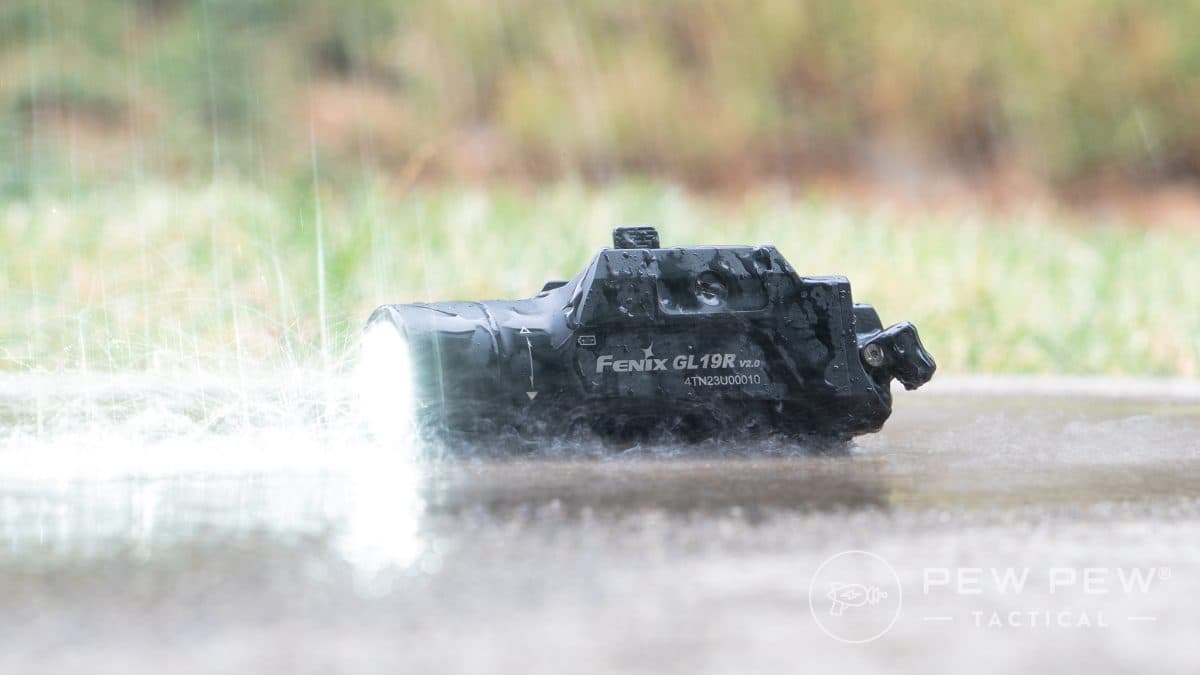
Like other all-metal pistol lights, the GL19R V2.0 did well in my water and drop tests. I expected as much after using it for several months prior to testing.
The fact that you can get such a rugged light for such a reasonable price is encouraging. Just keep an eye on those switches; if this light has a weak point, I suspect they’re it.
5. Olight PL-MINI 3 Valkyrie - Best Budget Compact
(Editor's Note: Pew Pew readers get 10% off at Olight with code PEWPEWTACTICAL)
Pros
- Flexible mounting system
- Replace the rechargeable battery quickly
- Constant-on strobe function
Cons
- Very limited range
- Proprietary battery
Specs
- Power: 600 lumens
- Intensity: 2,500 candela
- Battery: Proprietary rechargeable
- Modes: Constant, momentary
- Waterproof: IPX6
- Length: 2.07”
- Weight: 3 oz
- Country of Origin: China
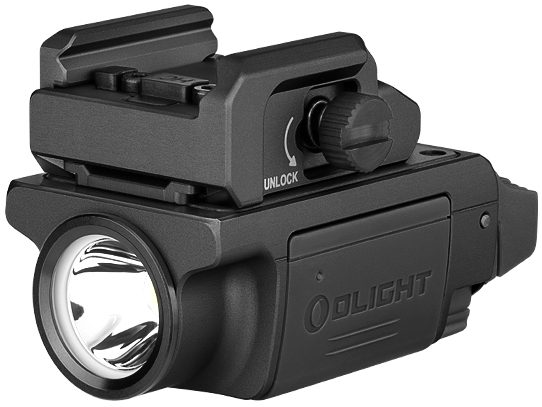
I’m not sure that any lighting company has a starker contrast between a devoted fanbase and a mob of angry detractors than Olight. I’m all about testing and data, though, so I got busy with the Olight PL-MINI 3 Valkyrie.

This tiny pistol light is well-suited to CCW pistols like the smaller Glocks, the Smith & Wesson M&P Shield, and Springfield Hellcat. With separately-sold adapters, it’ll also work with pistols like the Sig Sauer P365.
The battery is rechargeable via a proprietary charging dock, and you can swap it out for the spare in seconds – a big upgrade for this model. There is a charge status LED, but you have to remove the battery to see it.

There’s a module that sits between the light and the pistol’s accessory rail – that’s where you install the appropriate rail adapter.
This assembly slides forward and rearward on the light when it’s not screwed down, which means you can position it right where you want it.
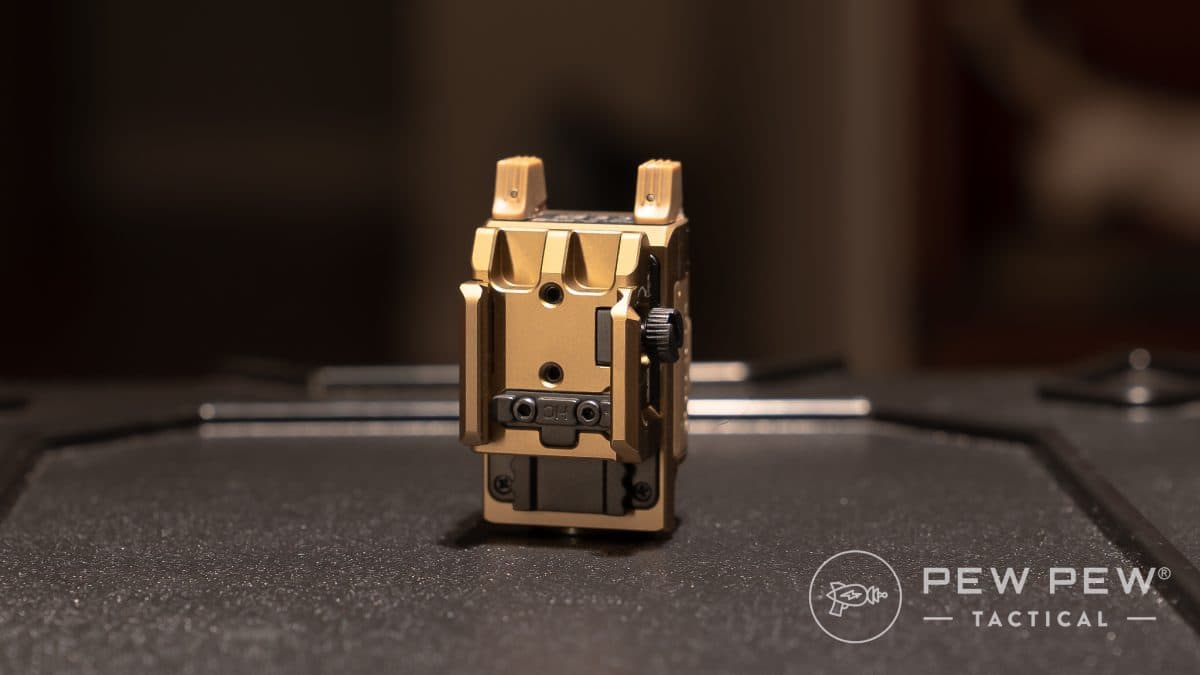
The various rail adapters fasten in place with a pair of tiny set screws. Fortunately, Olight includes spares.
This many moving pieces seems like tempting fate, but the system worked for me once I tightened it down with a screwdriver.
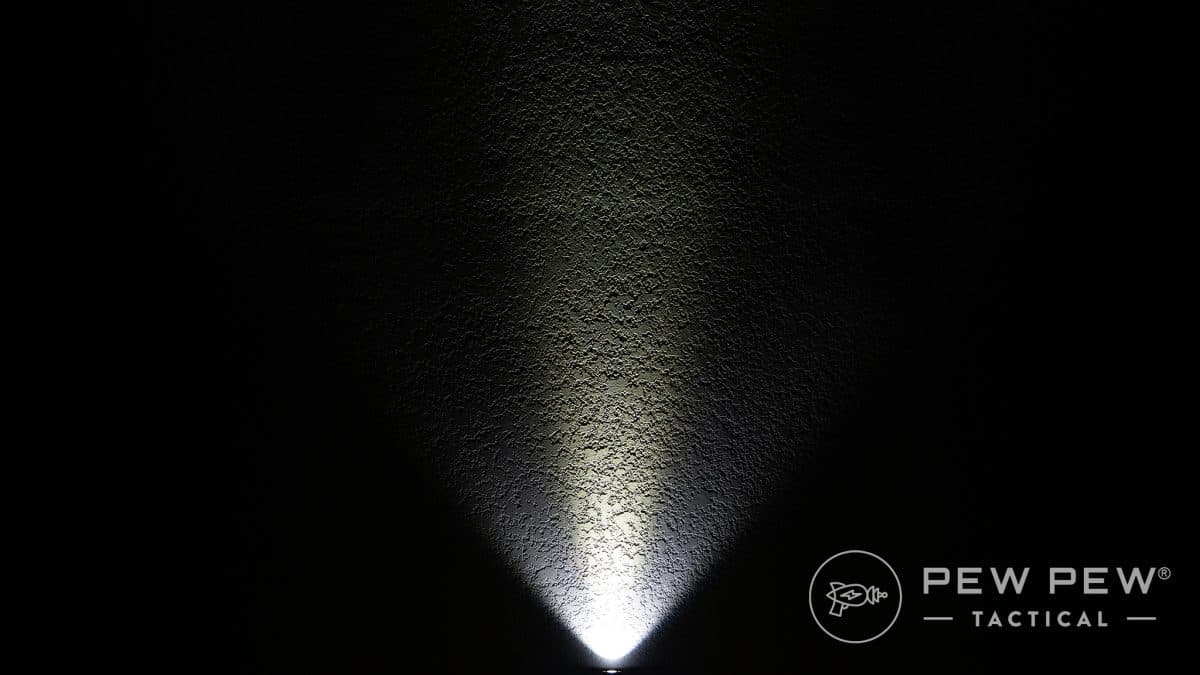
The PL-MINI 3 throws a wide, full beam that’s useful in close-quarters situations. When you’re indoors, lighting up all corners of the room is more important than blasting an intense beam into the abyss.
There is some degree of hot-spotting in the center, where you want the most light and need to keep your eyes focused.
Thanks to the sliding interface, the buttons are always easy to reach. Tap for constant-on, press and hold for momentary-on.
The PL-MINI 3 also has the best strobe function because it stays on once you activate it. Some people like shooting with a strobe, some don’t; I’m glad the option exists so everyone gets what they want.
The tactile feel of these buttons is a little vague, and they didn’t always respond how I expected them to during my live-fire testing. Practice makes perfect, though. That’s true for all of these pistol lights.
My night shoot made it extremely clear where the PL-MINI 3 excels and where it struggles.
Up close, the wide beam was helpful when transitioning between my 15-yard targets. I could have used more power to separate the dark gray silhouette from the dark background, but it was usable.
The 50-yard target was a no-go with the PL-MINI 3. I could just make out the target – possibly because I set up the range and had shot on it moments before – but I did not consider it a safe engagement distance with this light. It just doesn’t have the intensity to reach that far.
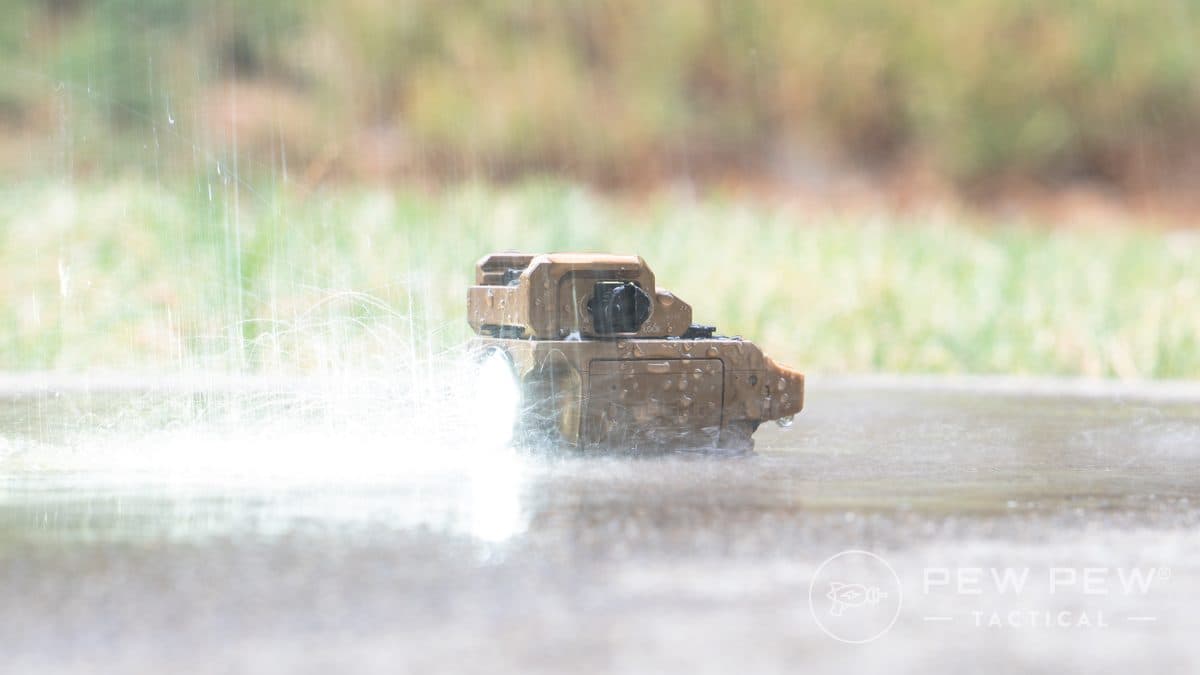
Whenever I handled the PL-MINI 3, it didn’t give the impression that it thrives on abuse, like some of my other picks. There are too many moving parts and too much plastic for me to recommend it for hard use, but it did pass my durability tests.
That means it lives up to Olight’s promises. It’s an odd duck, but one that I think a lot of people would enjoy on a range toy or plinker.
(Remember, Pew Pew readers get 10% off with code PEWPEWTACTICAL)
How to Pick the Best Pistol Lights
While I recommend all these lights, some are better for certain situations than others. Here are some things you need to consider when you make your choice.
Size & Holster Compatibility
Pistol lights come in various sizes, so it’s important to pick one that’s appropriate for the host pistol you’ve chosen. A full-size light wouldn’t make much sense on a subcompact pistol, and a tiny light would produce a huge barrel shadow on a full-size pistol.

If you plan on using a holster, you’ll need to find one that works with your pistol light. That might be a holster that’s built specifically for your pistol/light combo, a light-specific holster that’s compatible with a range of pistols, or a pistol-specific holster that’s compatible with a range of lights.
Power & Intensity
Pistol light manufacturers measure performance in lumens and candela. Lumens tell us how bright the light is, while candela tell us how far we can expect it to reach into the darkness.
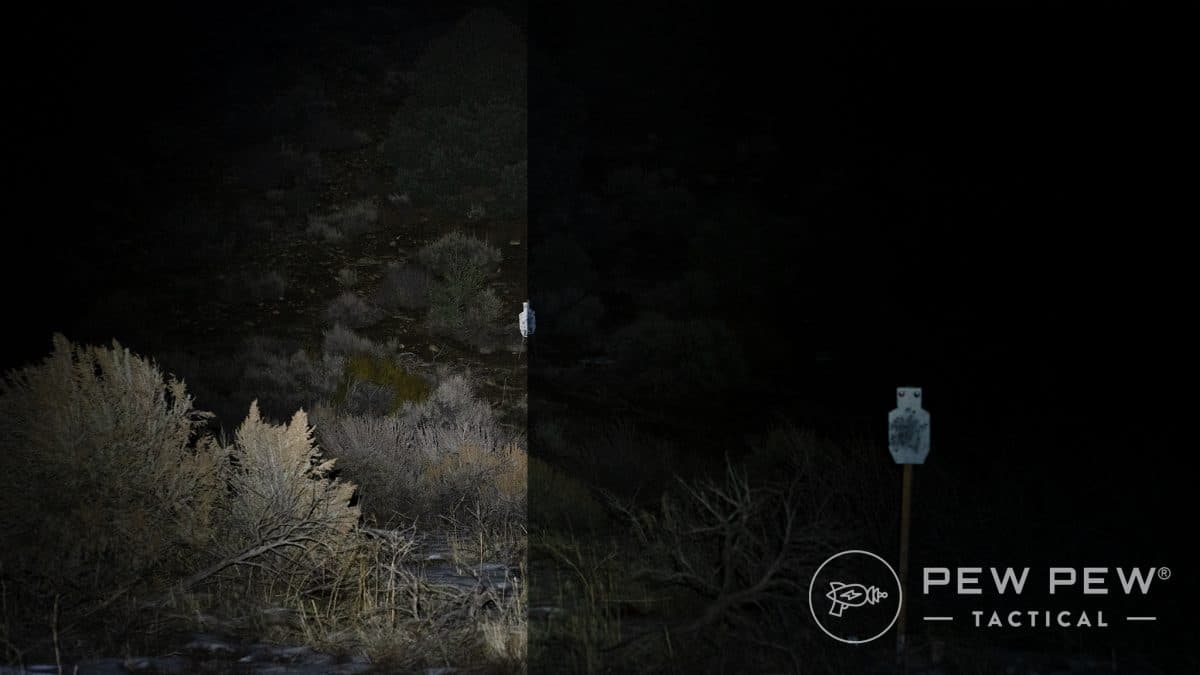
It’s important to get a light that’s powerful enough for your needs, but more isn’t always better. Using too much power in a small room with white walls is a recipe for temporary blindness. Likewise, using an underpowered pistol light outdoors might give your position away without giving you a chance to engage the threat.
Battery
Pistol lights don’t all use the same batteries, and there are some awfully strong opinions out there about which power source is best.
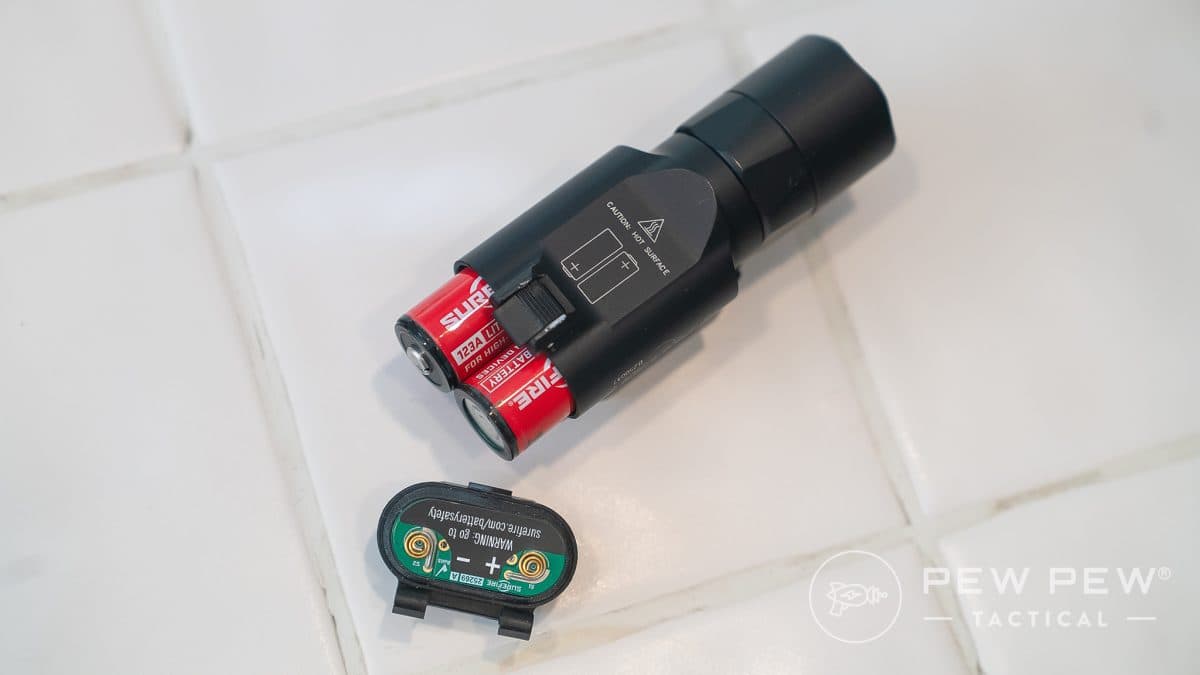
Disposable batteries let you swap in fresh ones in a hurry. Rechargeable batteries save money and let you start each day with maximum power. Removable, rechargeable batteries offer the best of both worlds.
Whichever power source you choose, make sure to stock up on batteries so your pistol light doesn’t leave you in the dark.
Durability
Finally, think about how much abuse your pistol light needs to stand up to.
If you’re outfitting a duty pistol that’s going to get knocked around all day, every day, spend the extra money to get something rugged.
If you’re setting up a range-day plinker, you might be able to get away with something less expensive.
Final Thoughts
Does spending more money necessarily get you a better product? When it comes to pistol lights, the answer is yes.
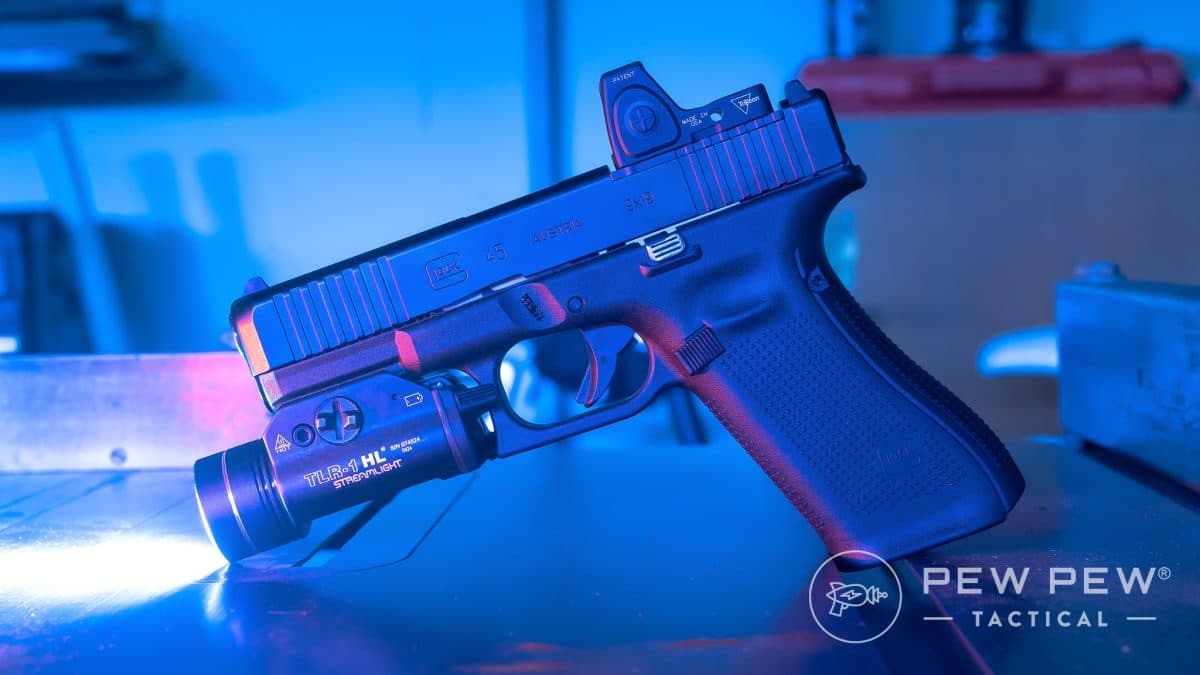
There’s a reason professionals stick to the same few weapon lights, but that doesn’t mean there aren’t times when something more affordable will do the trick.
If you’re going to be hard on your gear and put your life on the line, a SureFire or Streamlight will serve you well. If money is tight, a Fenix or Olight is way better than eating a few carrots and hoping you’ll develop superhuman night vision.
Whatever you choose, come on back and share your experiences in the comments!
What’s your go-to pistol light? Let us know below. Looking to set up all your guns with lights? Check out our guide to the Best AR-15 Flashlights!
Latest Updates
January 2026: Complete overhaul with new products, testing, and supporting content.