
Best Shotgun Mini Shells: Birdshot, Buckshot & Slugs [Hands-On]
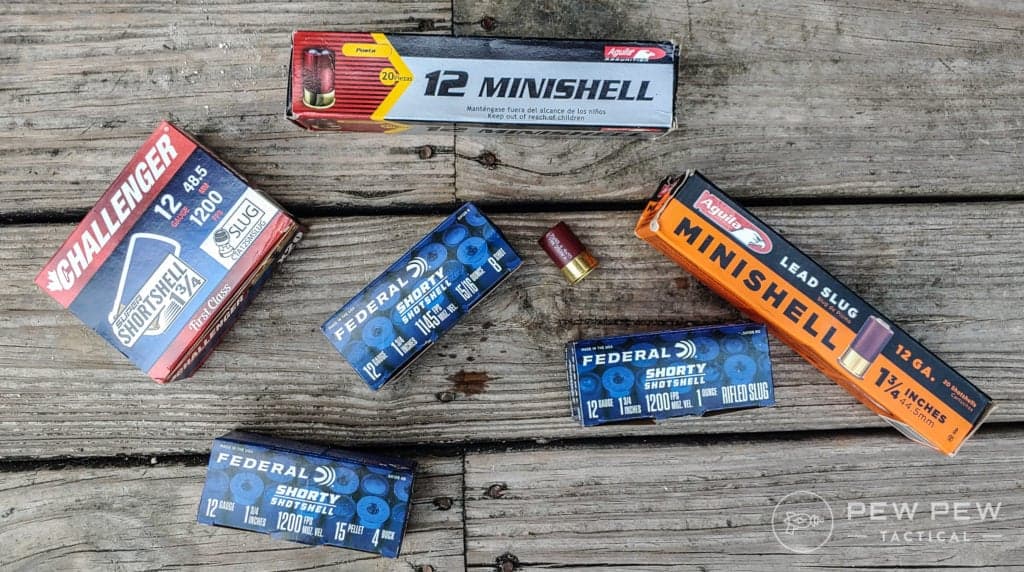
What are shotgun mini shells good for? We give you all the deets plus our favorite shells for plinking, hunting, home defense, & more.

USMC Veteran. Concealed Carry & NRA Pistol Instructor. 3-Gun Competitor. Career firearms writer
We review products independently. When you buy through links on our site, we may earn a commission to help support our testing. Learn more.
In the world of shotguns, “DoEs iT tAkE mInI ShElLs?” has pretty much become the new “Does it take Glock magazines?”
And it’s a shame because shooting mini shells can be really fun.
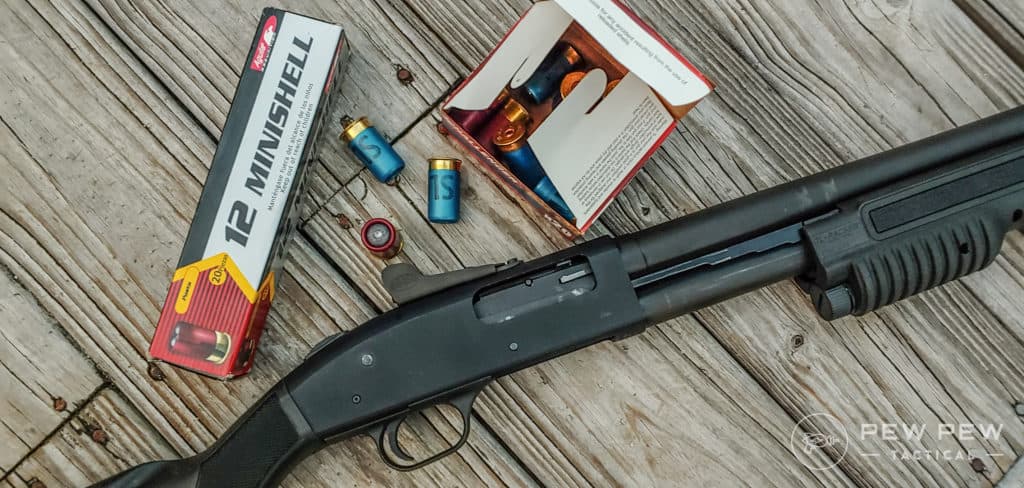
Mini Shells are great for plinking, skeet shooting, and certain types of hunting. These achieve a lot in a small package -- recoil is light, accuracy is on point, and they are an absolute blast to shoot.
Today, I’m going to stoke your appreciation by delving into the history of mini shells, exploring the pros and cons surrounding this type of ammo, and evaluating the performance and best uses of slugs, buckshot, and birdshot.
The Quick List
- Best Buckshot Mini Shells: Aguila Buckshot Mini ShellsJump to details ↓
- Best Birdshot Mini Shells: Challenger Birdshot Mini ShellsJump to details ↓
- Best Mini Slugs: Federal Mini SlugsJump to details ↓
- Best Mid-Length Shell: Nobel Sport MiniBuckJump to details ↓
Table of Contents
How We Choose
I’ve spent a lifetime shooting that started in a family that hunted every season they legally could. From there, I joined the United States Marine Corps and spent five years as an infantryman. In the middle of my Marine Corps career, I began writing and have never stopped.
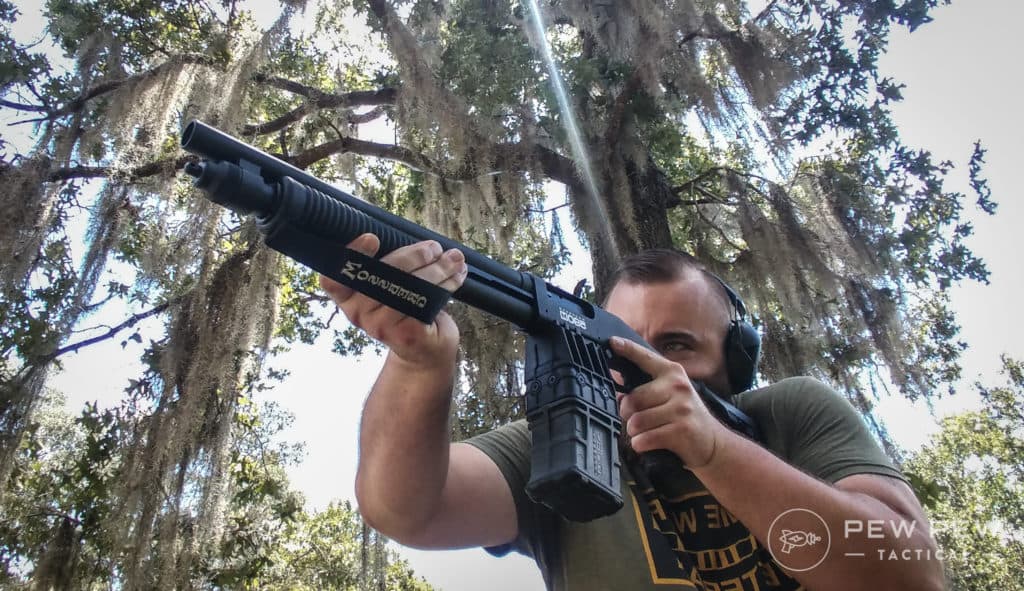
I love shooting, and I love guns — weird guns, old guns, new guns, tactical guns, but especially shotguns. I have tested numerous shotguns, shotgun accessories, and shotgun ammo for multiple publications and strive to deliver the best information possible to the readers of Pew Pew Tactical.
Best Mini Shell Loads
Like most shotgun shells — or any ammo, really — mini shells tend to vary quite a bit in performance.
To give you a solid breakdown of the different mini shells available, I’m going to review the birdshot, buckshot, and slugs sold by the big manufacturers.
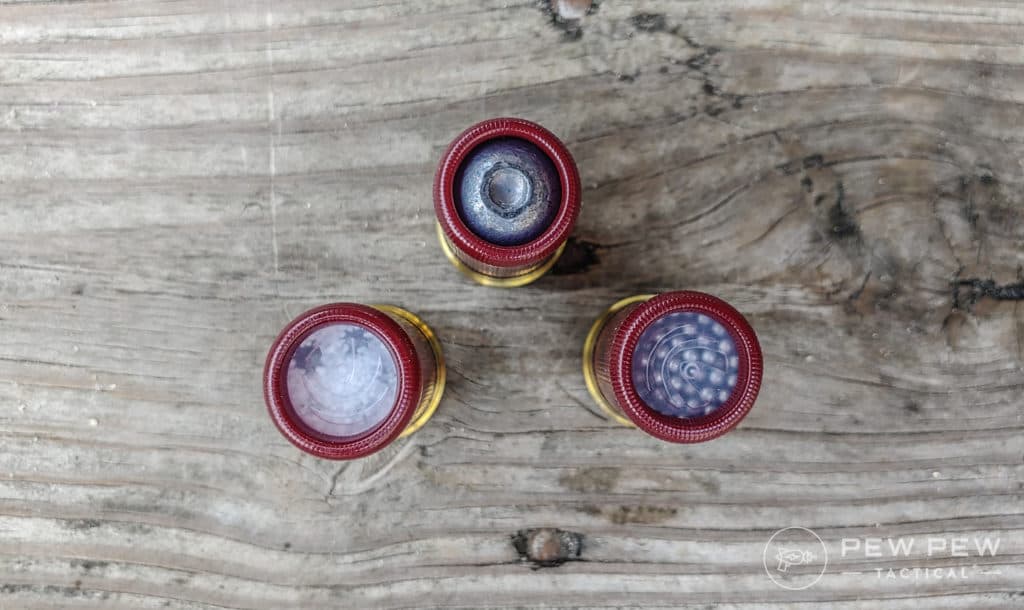
This should give you a general idea of how each mini shell performs on its own merit, as well as in competition with its key rivals.
Best Birdshot Loads
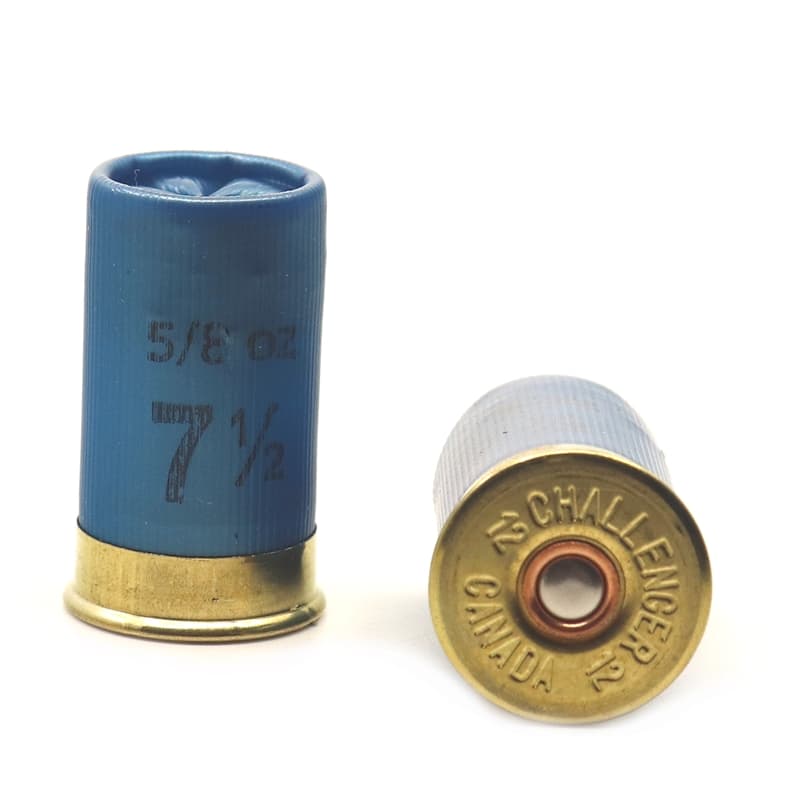
1. Challenger Birdshot
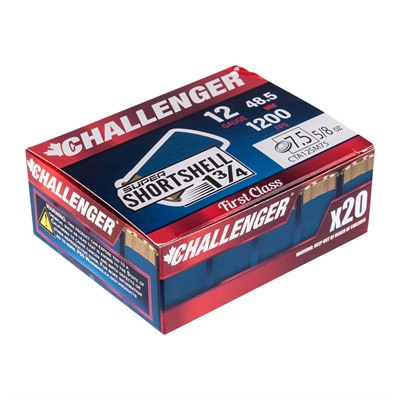
Birdshot rounds are pretty similar across the board. You can’t go wrong, no matter what brand you choose to try out.
Aguila and Challenger deliver 7.5 shot loads that are a light 5/8 ounce of a shot at 1,200 feet per second.
However, Federal went a different route with a light eight-shot loaded to 15/16 of an ounce at 1,145 feet per second.
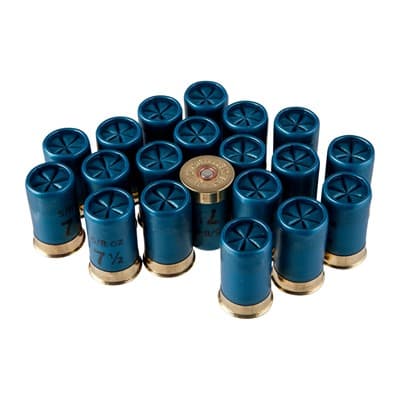
But performance-wise? There really isn’t a difference between these shells.
They are super light recoiling loads that spread remarkably fast. So quick, in fact, that they’re not really useful for most tasks, including hunting birds or shooting trap/skeet.
Not much else to see here, kids.
Your relationship with birdshot is highly dependent upon your expectations and needs.
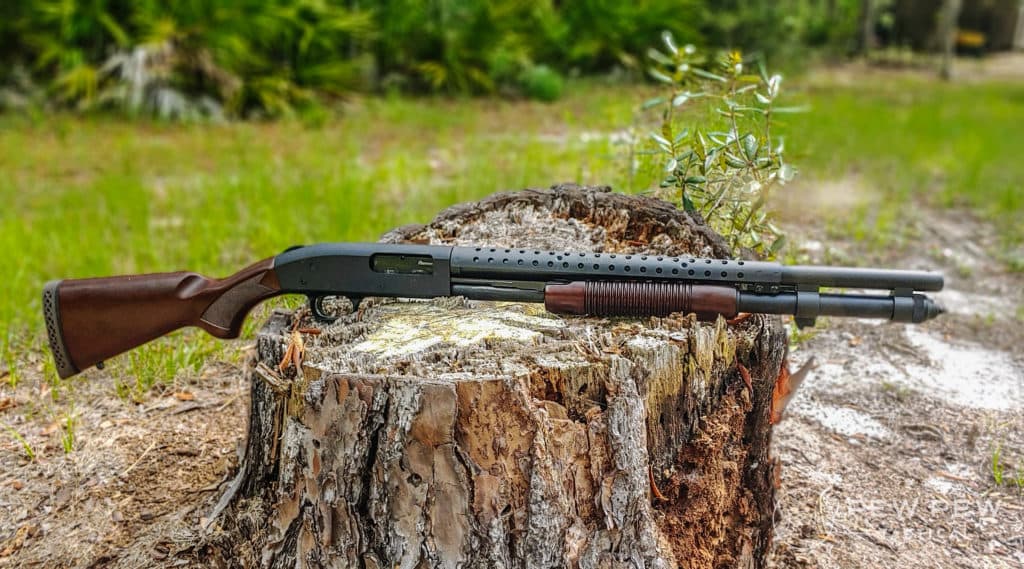
Want to go plinking? Birdshot has your back. These little bad boys shine at the range, especially out of a Mossberg 590 Shockwave equipped with an OPSol Mini-Clip.
New to shooting? Look no further; these are fun target rounds that double as excellent training tools for new and young shooters.
Need a solid shell that can stop a home invader in their tracks? Look elsewhere. Anything will serve you better than birdshot.
Best Buckshot Loads
2. Aguila Buckshot
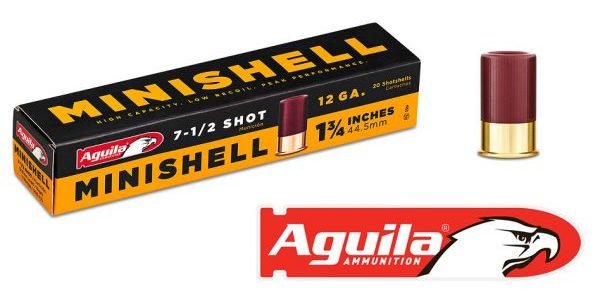
Buckshot loads are where things get interesting. Unlike birdshot, you’re going to see a significant difference between these shells.
In my opinion, the Aguila load is the most interesting buckshot option on the market. Whether it’s the “best” option comes down to personal preference.
We’re dealing with low-powered ammo, so I want more penetration. This swanky little shell encases a combination of four #1 pellets and seven #4 pellets.
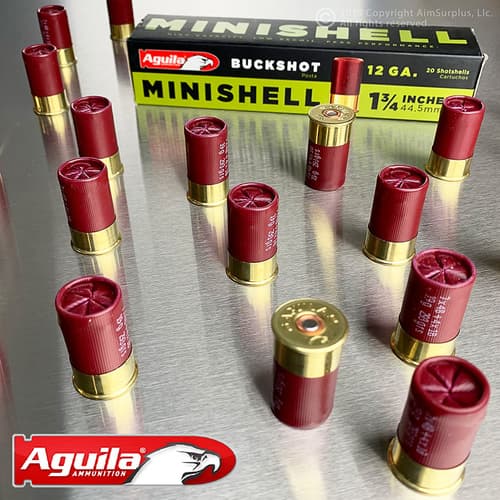
However, in use, Aguila's buckshot patterns are wide and are way less consistent than Federal shells.
It patterns left, right, in a circular shape, or maybe strung out horizontally — it's almost frustratingly unreliable.
The recoil is more significant than the birdshot but still very light and comfortable. To me, that extra bit of recoil makes shooting PGO firearms a lot more fun. Recoil is just part of the experience.

Fortunately, the recoil from these shells is not at a dangerous level, and even new shooters should be able to handle it.
These rounds are a bit more capable and useful than birdshot but understand that your range is limited.
3. Federal Buckshot
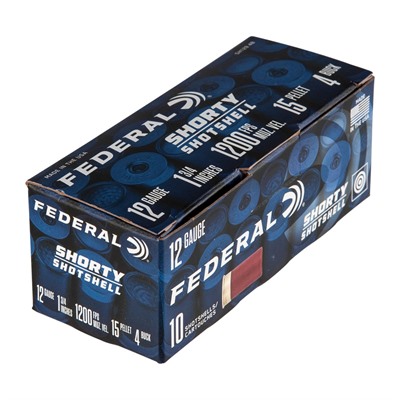
The Federal load is a #4 buckshot caliber with 15 pellets traveling at 1,200 feet per second.
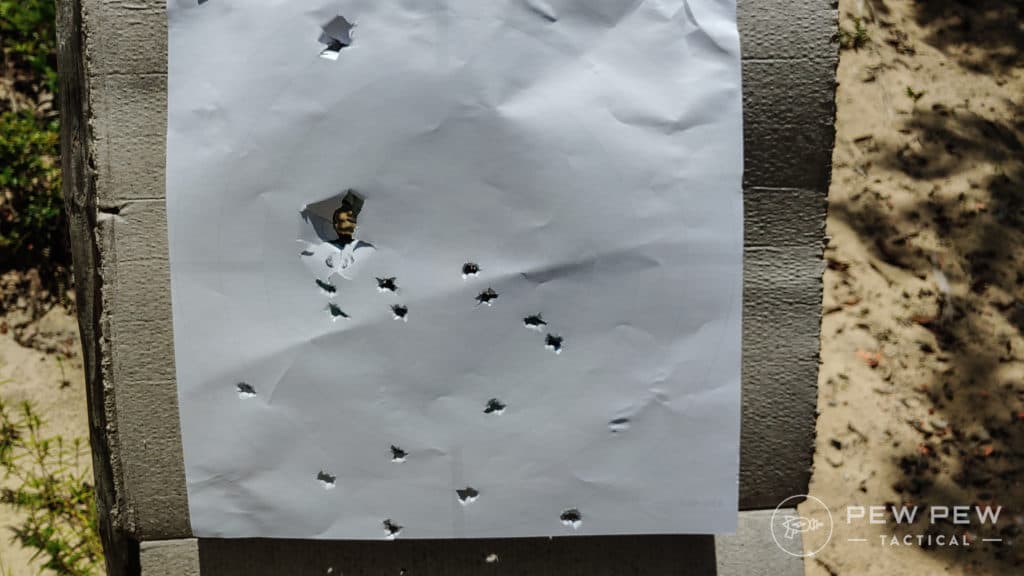
When fired, Federal’s buckshot loads can cover an 8.5x11 piece of paper at 10 yards, so they are far from FliteControl standards.
Not only is the recoil noticeably light, but the spread patterns are tight and impressively consistent to the point of predictability.
Best Slugs
4. Federal Mini Slugs
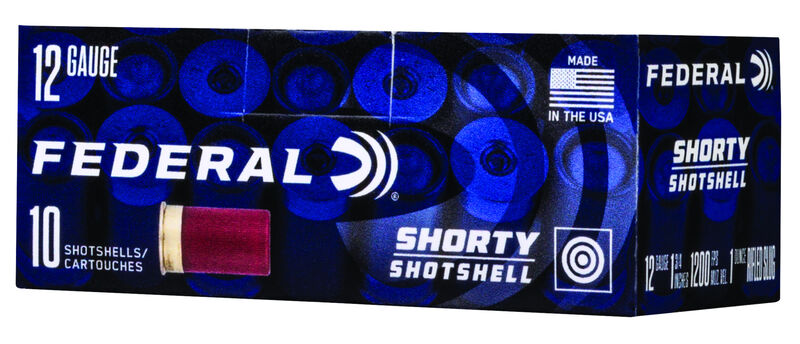
Slugs are by far the most useful of the mini shell family when it comes to power.
They don't pack the same effective range as a standard slug, but they also have a lot less recoil than a 1,600 fps slug.
Slugs are quite stout, and I’m pleasantly surprised at their limited recoil and overall efficiency.
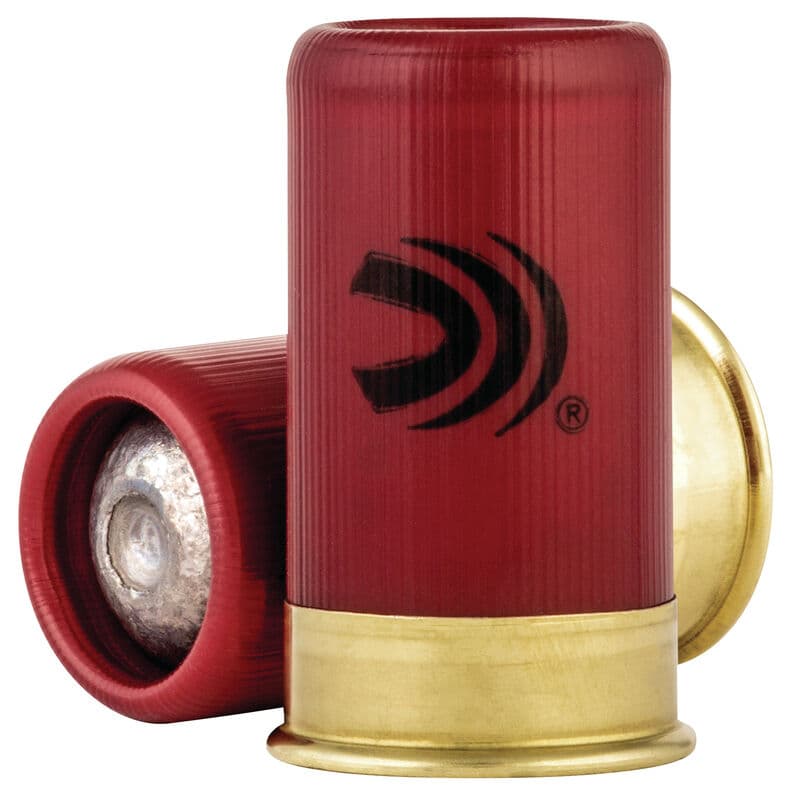
Unfortunately, they also share a trait that I could do without. When my bead sight was equipped, the slugs tended to land high from where I was aiming.
This isn’t a deal-breaker for me, but it’s absolutely something you should keep in mind when deciding which mini shells to purchase.

Of course, all three brands have their differences and vary in weight.
For example, Federal’s mini slugs are the heaviest at 1 ounce, and they fly at 1,200 feet per second.
These slugs are your most potent option. They’re also the most accurate.
I produced the best groups with these slugs; the end result was typically one ragged hole. They land almost dead-on.
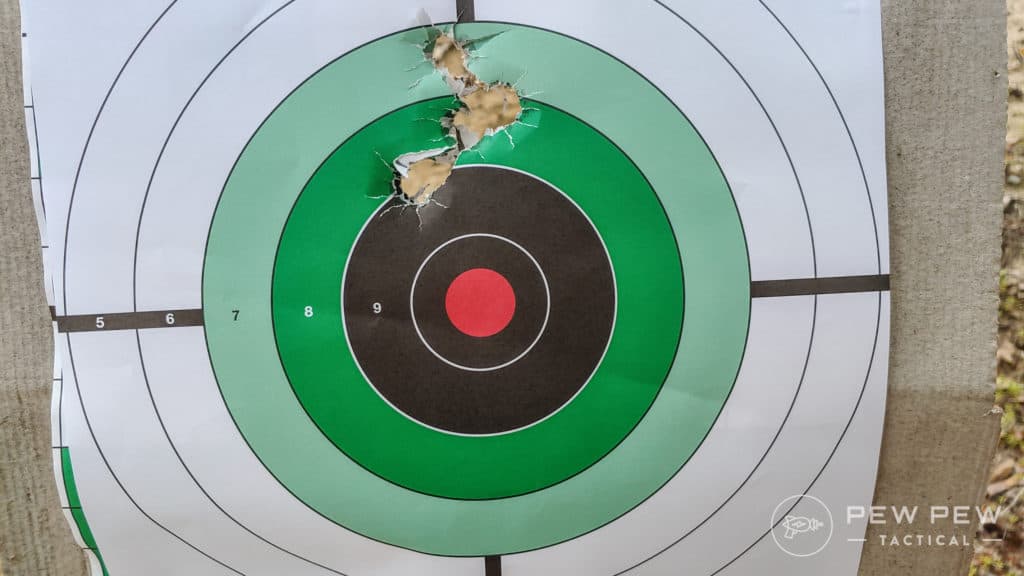
As you can probably guess, Federal’s slugs are my favorite and definitely my go-to mini shell for serious use.
It’s almost up to par with their standard reduced recoil law enforcement slug, which is 1 ounce at 1,300 FPS.
5. Aguila Mini Slugs
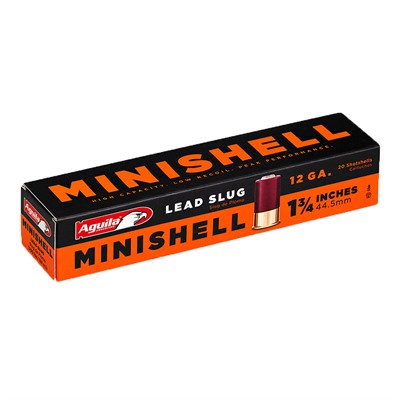
Lastly, the Aguila slugs fall right in the middle, the Goldilocks porridge, if you will, with 7/8 of an ounce at 1,300 feet per second.
These are fast little fellas. Aguila’s slug would be a great option if speed was all we needed in a mini shell.
But speed doesn’t change or hide the fact that Aguila’s slugs are incredibly inaccurate and tend to fly wherever they please after approximately 25 yards.
Honestly? Even at 15 yards, there appeared to be inches between rounds. This was never an issue with its rival.
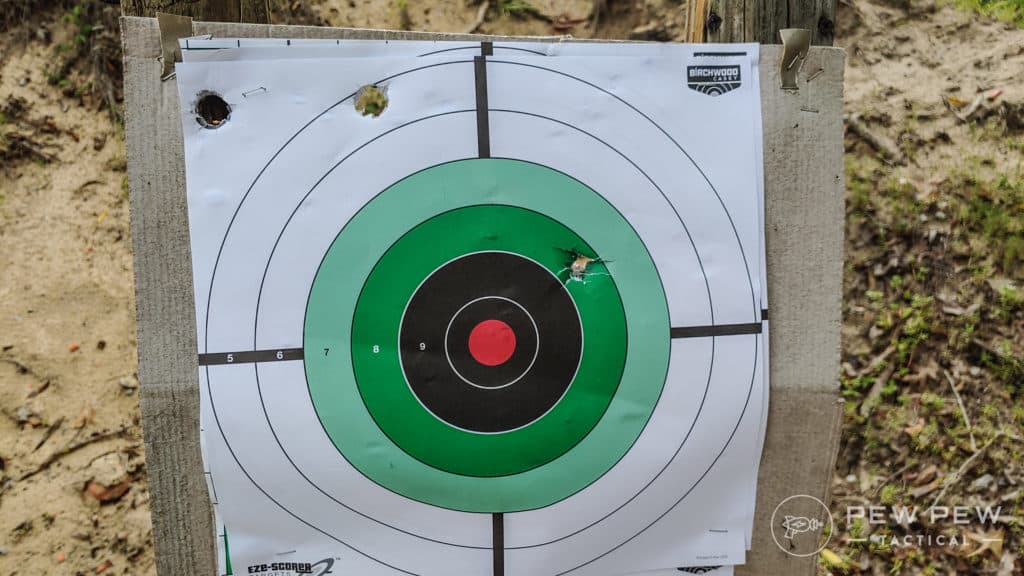
As you can probably guess, this is not my favorite mini slug.
What do you think of Aguila Mini Slugs? Rate them below.
Readers’ Ratings
5.00/5 (1475 Votes)Your Rating
What About Other Lengths?
So far, we’ve talked a bit about 1.75-inch shells, but what about other lengths of mini shells? They do exist, and I’ve recently gotten my hands on 2- and 2.5-inch shells.
6. Takho Mini Slugs
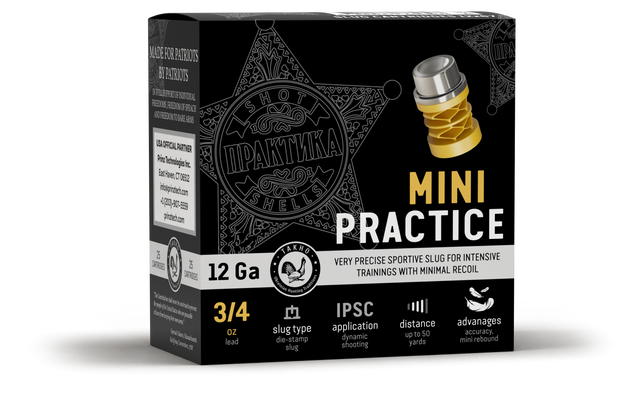
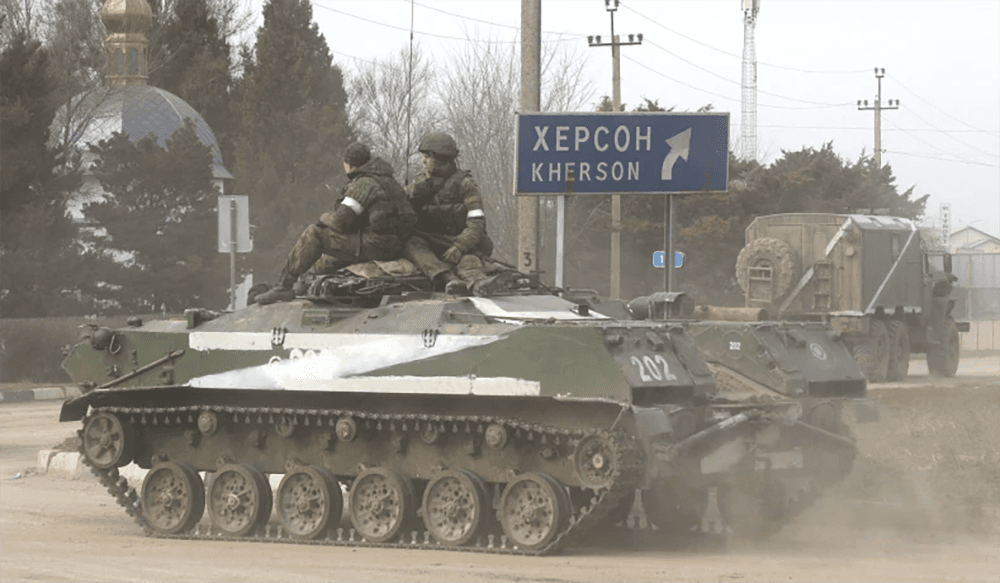
While Ukraine might be battling Russians as I type this, they still found some ammo to spare.
Kind of. I’m not sure when these shells were imported, but these mini slugs are 2 inches long and fire a 3/4-ounce chunk of lead.
They are a little longer than traditional mini shells by just a bit. I hoped they would improve reliability without the use of adapters. Do they? Well, kind of.
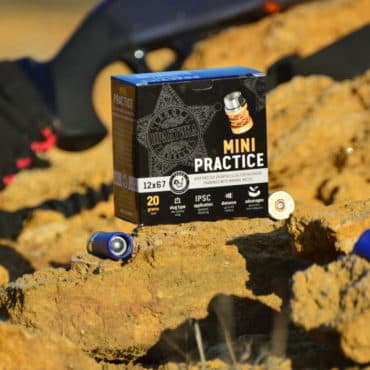
These shells won’t cycle in a semi-auto, and believe me, I tried. They do cycle in a number of pump guns. The guns they won’t cycle in are guns with skeletonized shell lifters, like the Mossbergs.
They flipped and got caught in the skeletonized shell lifter. However, in guns like the Remington 870 and Benelli Supernova they ran without complaint. They were smooth shooters.
It bears mentioning that the velocity isn’t mentioned, and the recoil is downright soft. These slugs are made for “Practical Shotgun” competition. Do you know how people use little cheats to get an advantage in competition?

This seems to be an example of that. They increase capacity by two rounds, run mostly fine, and have very little recoil. Not to mention, they are fun to shoot and accurate -- but the listed range, according to the box, is 50 meters.
These aren’t your grandpa’s slugs for deer hunting, and I would only really use them for hunting smaller predators like coyotes.
7. Nobel Sport MiniBuck
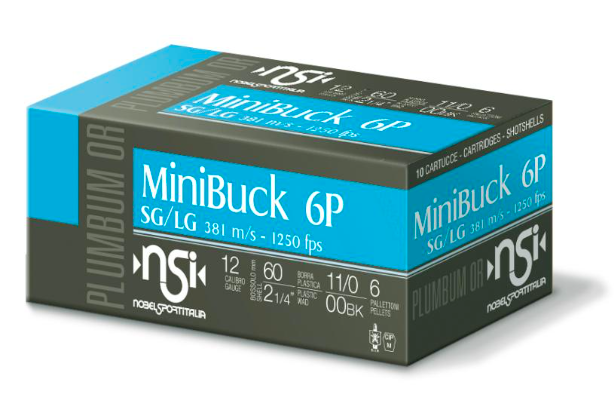
Nobel Sport is an Italian firm I stumbled across in an out-of-town gun store. They carried boxes of 12-gauge shells that were a mere 2.25 inches long. Sadly, the store had a limit, and I could only score two boxes.
These short buckshot shells contain six pellets of 00 buckshot at 1,250 feet per second. Not too bad.
How do they run? Well, honestly, absolutely perfectly.
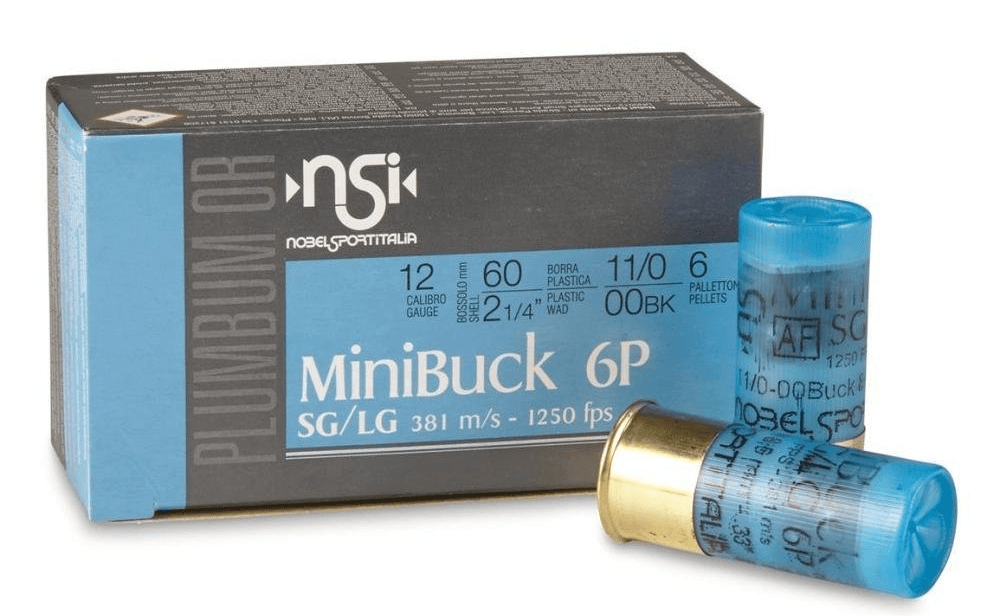
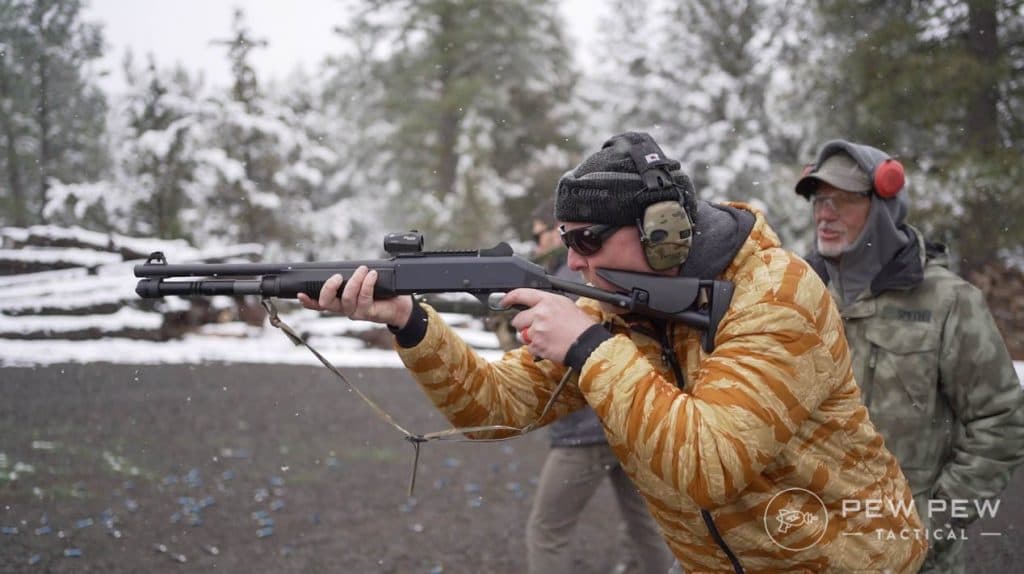
They run in my Benelli M4 and Mossberg 930 SPX without issue and are the first mini shells to do so. The MiniBuck loads run very well in pump-action shotguns, too.
They are a little longer but allow shooters to pack an extra round in their tubes on average. Nobel Sport MiniBuck rounds even tend to pattern fairly well, at least good enough for home defense purposes.
The velocity and payload make them the most practical of these mini shells. Recoil is fairly light, and they function reliably. This seems to be the optimum size for universal use among guns.
The downside seems to be the fact they cost as much or more than my favorite buckshot loads, Federal FliteControl. That makes their only benefit one extra round in the gun.
I’m not sure if they’re worth that kind of premium price point.
What Is a Mini Shell?
The science behind the mini shell is simple -- increase capacity and reduce recoil by making the shell shorter.
In other words, a mini shell is just a small shotgun shell — a self-contained cartridge filled with shot and manufactured for a good time.
As far as I can tell, mini shells only exist in the 12-gauge variety at this time.
There are various shell lengths these days, running from 1.75 inches to 2.5 inches. But when I say “mini shells,” I’m talking about the 1.75-inch shells.
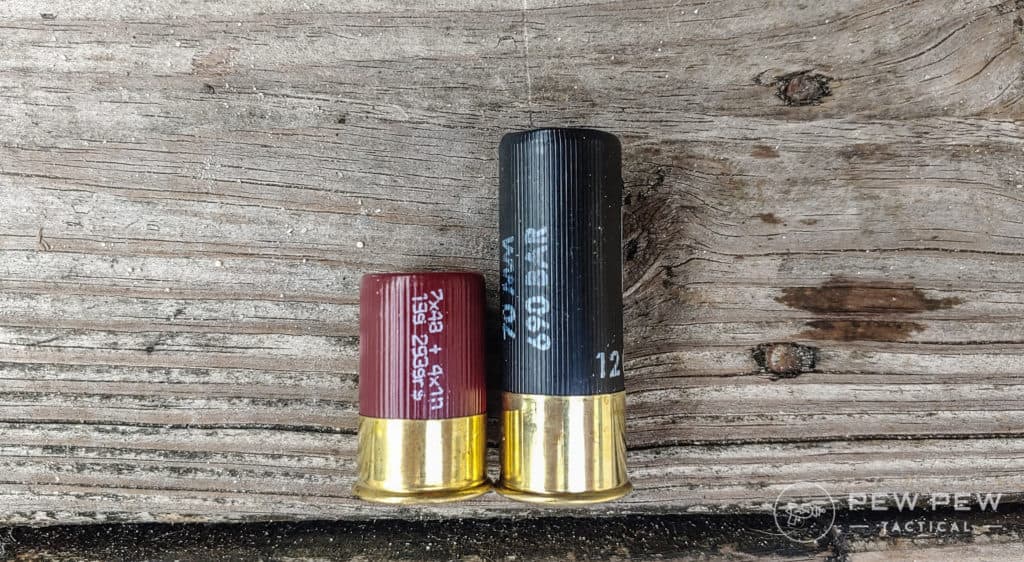
The 2.25-inch and 2.5-inch shells are not in the same boat. Not only are they hard to find, but they’re also less…mini. If anything, they should have been called short shells, not mini shells.
These short shells are neat but not in the same class as the 1.75-inch mini shells.
The good news is that 1.75-inch mini shells are getting a set of SAAMI specs, so we’ll likely see more companies producing these bad boys.
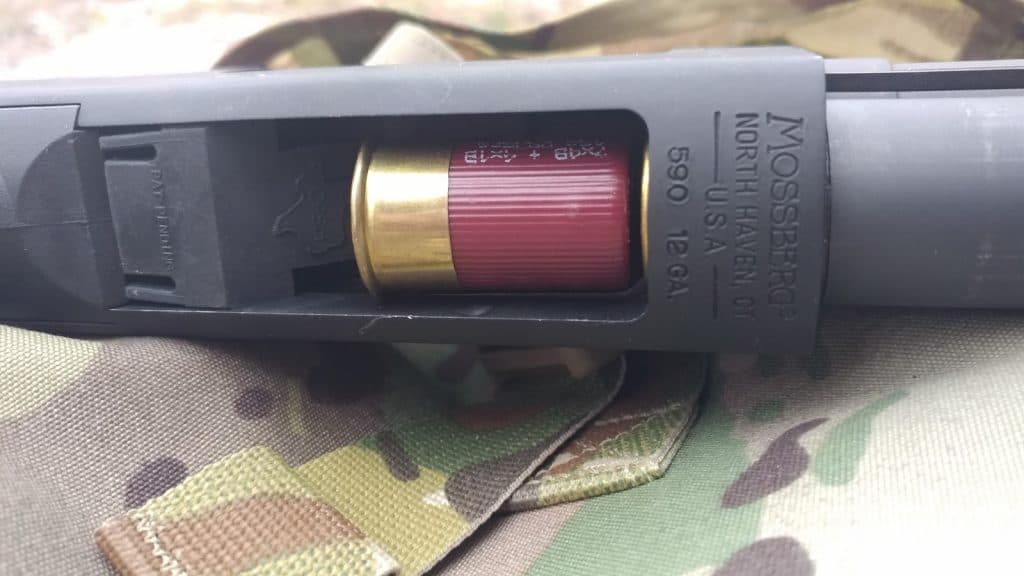
What a win for mini shell fans and shotgun lovers!
The Ups & Downs Of Mini Shells
Over the last decade, manufacturers and powder companies have been tinkering with mini shells to improve their load density and efficiency.
But, like everything else in the gun world, mini shells have their pros and cons.

The immediate advantages include:
- Lower Recoil: The recoil from a 12-gauge mini shell is comparable to a 20-gauge buckshot load on the high end and a .410 birdshot load on the low side.
- High Capacity: These mini shells allow you to squeeze in a few extra shells in a magazine tube. A Mossberg 590 Shockwave can hold 8 mini shells, while a Mossberg 590 8-shot magazine tube can hold 12.
As for the downsides, we have:
- Reliability Issues: These shells work like a dream in single- or double-barreled guns and Mossbergs equipped with an adaptor. But they won’t run in most pump-action shotguns and 99.9% of semi-autos.
- Low Power: The smaller the shell, the less power; unfortunately, less power also equals less penetration and range.
I know that might have left you with more questions than answers. No worries, we're going to analyze these little shells, so you have a full understanding of what you're getting into.

Home Defense With Mini Shells
Many people buy mini shells for home defense. The increased ammo capacity is a huge perk, and the low recoil makes it a relatively safe and accurate option for homeowners.

But there are a few questions you need to ask yourself before relying on mini shells for home defense, particularly if you’re a new shooter or someone who rarely picks up a gun.
Is this ammunition reliable? Does it cycle? Does it cycle all the time, regardless of how you manipulate the pump?
If the answer is no, then you need to switch the ammo out for something different. And if you aren’t certain, I recommend taking your home defense gun and a few ammo options out to the range.
After all, it’s always best to prepare and experiment before a worst-case scenario occurs.

So, which mini shells are the best for home defense?
Off the bat, we can go ahead and strike birdshot off the list. Full-powered birdshot isn't adequate, so why would I recommend a lower-powered shell?

The buckshot loads may work, but why bother?
You want your shotgun to deliver a sledgehammer’s payload per trigger pull. Reducing the payload per round minimizes the gun's effectiveness and cuts one of its biggest selling points as a home defense weapon.
So, how can lower-powered mini rounds deliver optimum performance?

If I had to choose one of these buckshot loads, I would pick the Aguila because it has the most lethal potential with its #1 buckshot.
I wish it patterned more consistently, but a 10-yard shot aimed at center mass will take the bad guy down, no problem.
Finally, we get to the slugs, which are quite suitable for home defense.
I don’t like to rely on minis when it comes to protecting my house, but the numbers don’t lie.
Even the light Challenger slugs I've tested in the past weigh in at 328 grains and move at 1,200 feet per second. That level of power makes for an effective home defense round.
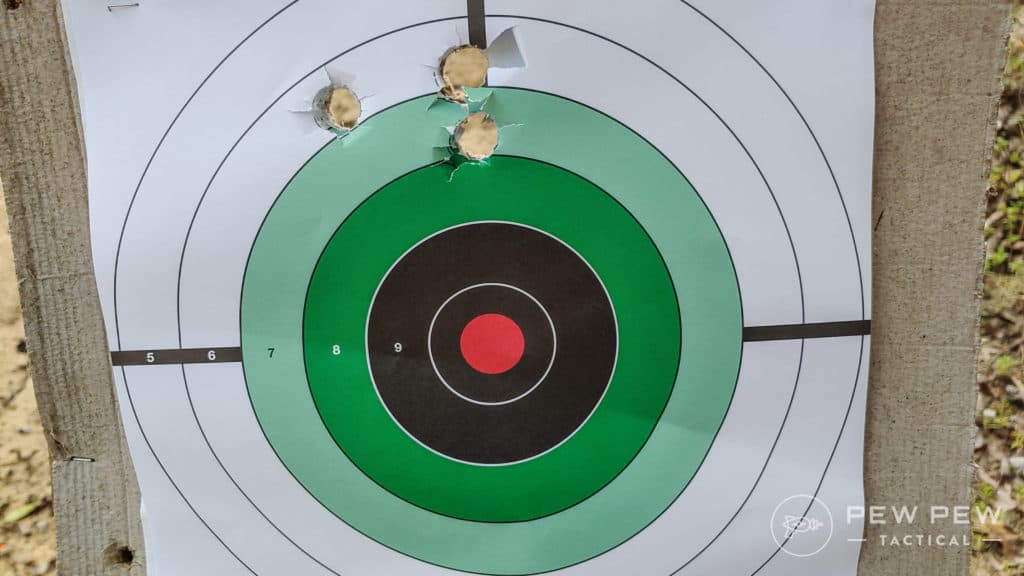
When fired from a long gun, mini slugs are controllable and slightly soft. Any brand will get the job done.
In my testing, Federal’s slugs were easily the most accurate out to 25 yards. But since distance isn’t an issue inside your house, any mini slug can do the job.
However, the heaviest ones tend to be the most accurate, so Federal’s slug (437 grains) still gets my vote.

Final Thoughts
While their uses may be limited, mini shells have certainly earned their place in the ammunition pantheon. Are mini shells a replacement for standard shotgun shells? No, never.
They are a niche product that capitalizes on the shotgun's versatility -- great for training new shooters and, depending on your mood, the perfect addition to your plinking lineup.
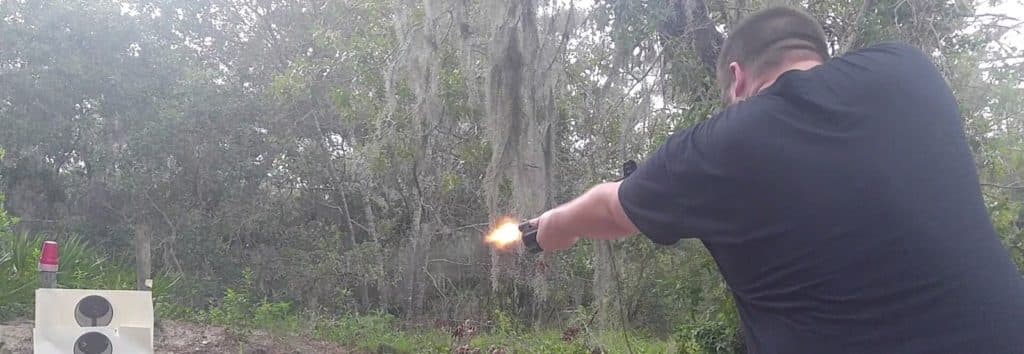
Some people use mini shells for certain types of hunting and even home defense. But in most cases, you should probably stick to your standard shells.
Did any of these mini shells spark your interest? Have any solid advice for people new to mini shells? Let us know in the comments below! Also, check out 6 Best Home-Defense Tactical Shotguns [Hands-On] and Best Shotgun Ammo [2020]: Home Defense & Target Shooting.