
5 Best Long-Range Cartridges: Hit Stuff Really Far Away
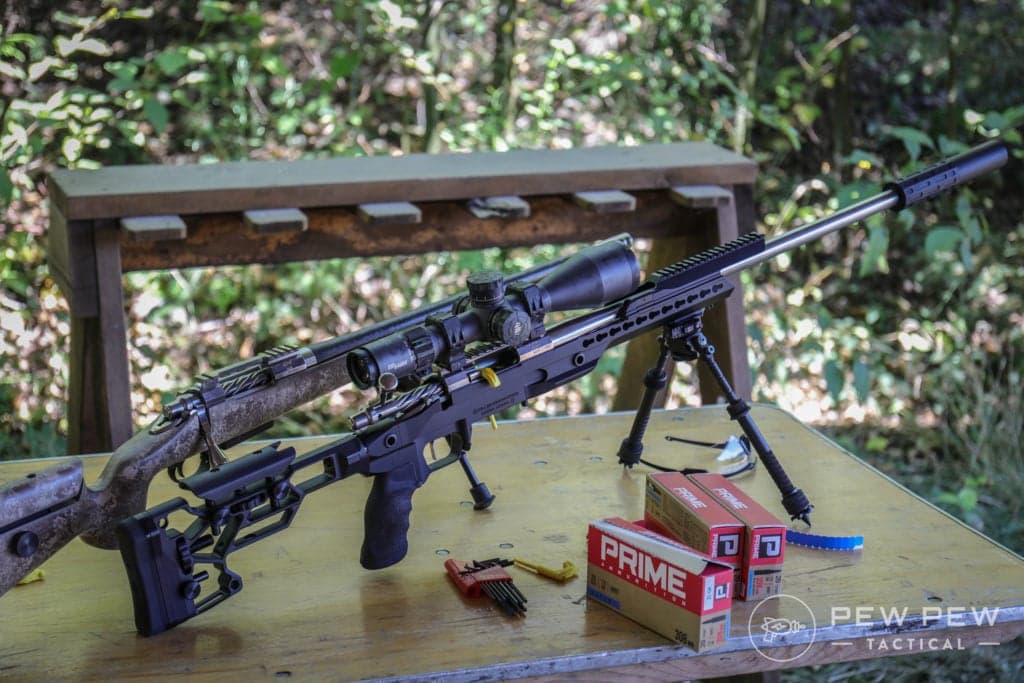
Want to send it really far downrange? We cover a few of our favorite long range cartridges. Complete with ammo suggestions, capability, rifles, and more.

Retired LEO. Outdoorsman. Owns law enforcement consulting company
We review products independently. When you buy through links on our site, we may earn a commission to help support our testing. Learn more.
Every time I listen to my favorite Guntuber podcast when I hop in my car, I inevitably end up hearing about a newly designed cartridge that has incredible ballistic performance.
It is always a cartridge so sleek and fast-looking that the only thing to rival it is the speed at which my hard-earned cash flows through my hands to purchase a new setup to test it out.
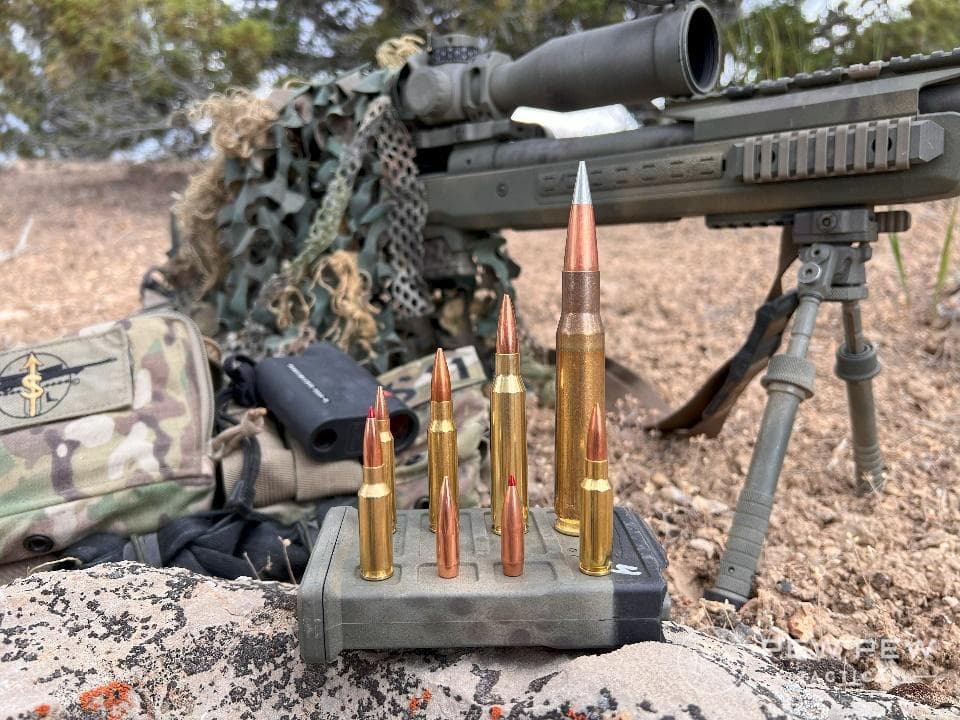
This has led me to a collection of newly designed cartridges and boxes of fired brass waiting for the reloading dies to arrive in the mail so that I can stretch the legs on these long-range screamers.
In this article, we’ll look at some of the best cartridges for long-distance shooting and the role each one serves, so keep reading!
Table of Contents
How We Chose the Best Long-Range Cartridges
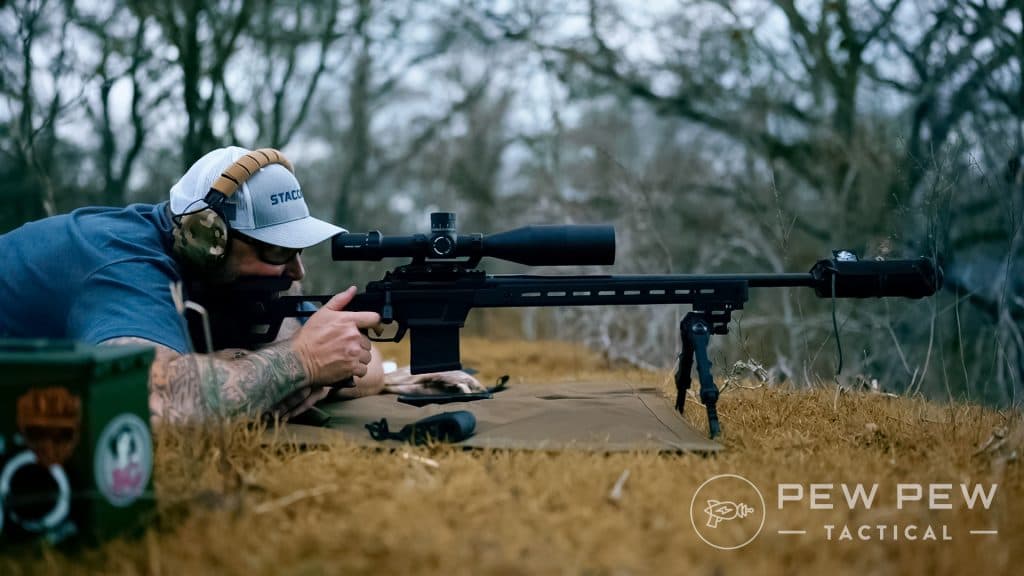
Various members of the Pew Pew Tactical team have spent time shooting various cartridges at long range, whether for tactical training, competition, or extended-distance hunting.
We know the ins and outs of reloading, how expensive these rounds can be, and what it takes to get the most out of your cartridge without going completely broke.
Our main criteria for the long-range cartridges we selected for this list are overall accuracy, consistency, ballistics, trajectory, round availability, rifle availability, and average price point.
Best Long-Range Cartridges
1. 7mm PRC - Best for Long-Range Hunting
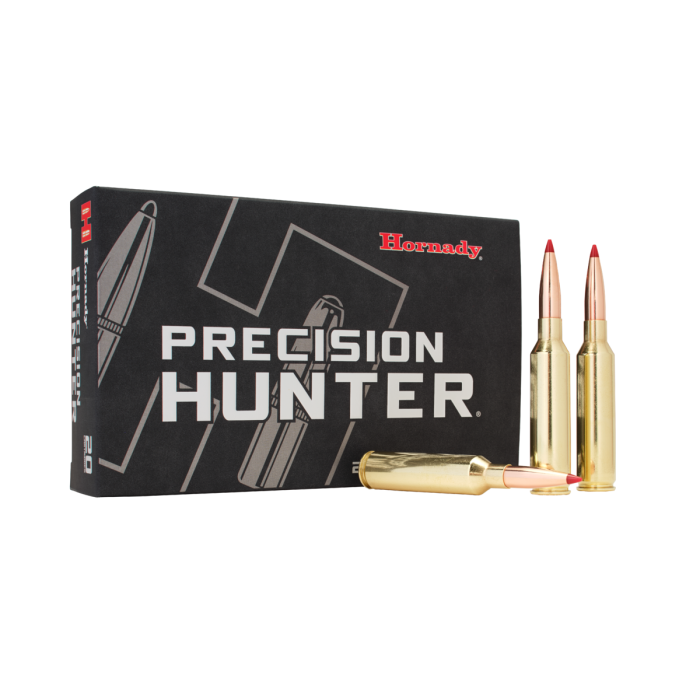
The 7mm PRC (Precision Rifle Cartridge) by Hornady is a hot cartridge and an excellent middle ground between lighter-weight 6.5mm cartridges and larger .30 caliber cartridges.
Speed-wise, it performs like the legendary 7mm Remington Mag. You are looking at a listed box velocity of 3,000 fps, pushing a 175-grain ELD-X with a G1 ballistic coefficient of .689.
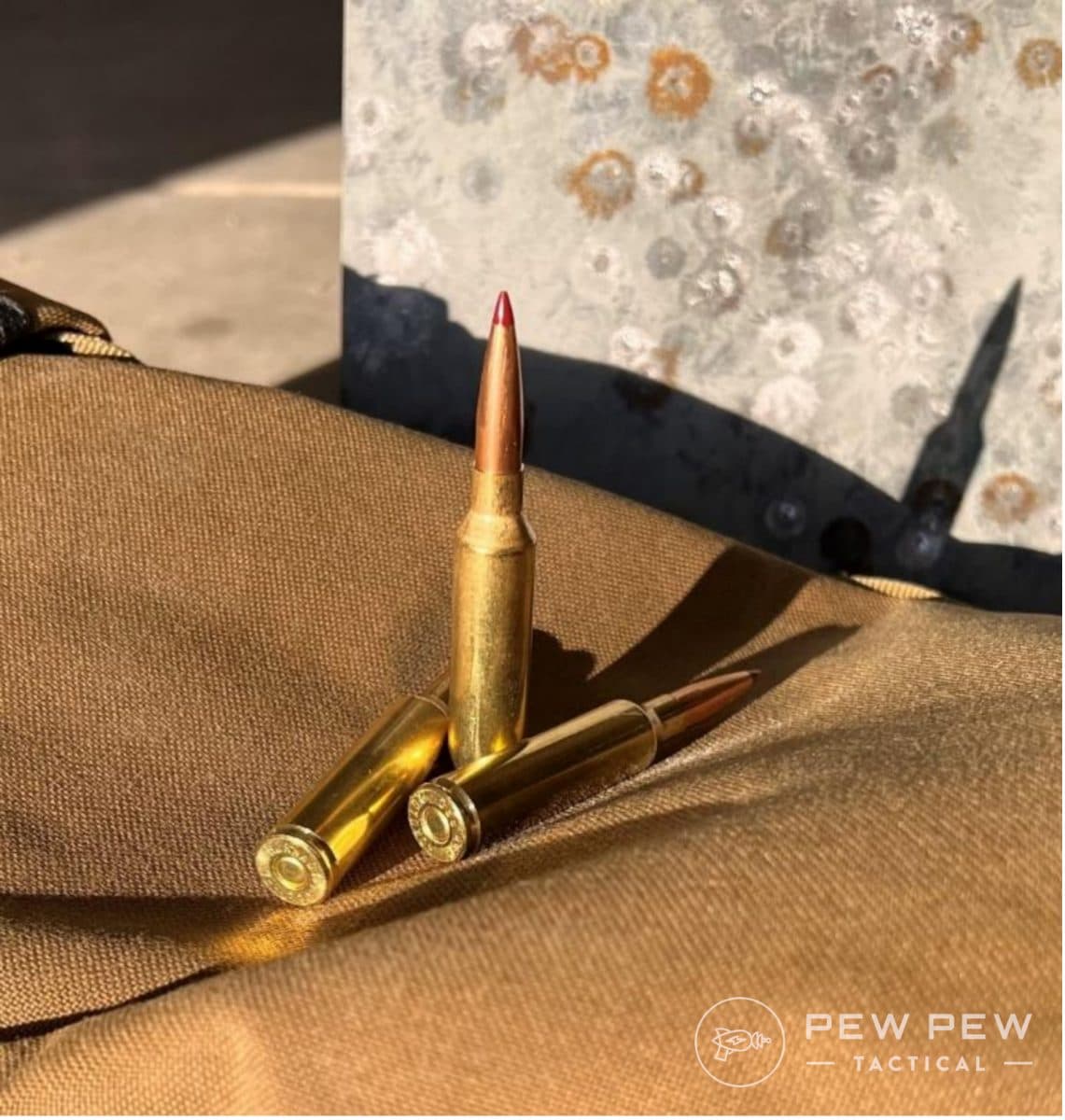
But what sets the 7mm PRC apart from the classic 7mm Mag is its cartridge design, which is short enough to accommodate longer and heavier 7mm bullets than the 7mm Mag.
The design also increases accuracy due to the cartridge and chamber's tight tolerances and a fast twist rate of 1:8. This combination gives big game hunters outstanding accuracy mixed with hard-hitting energy at extended distances.
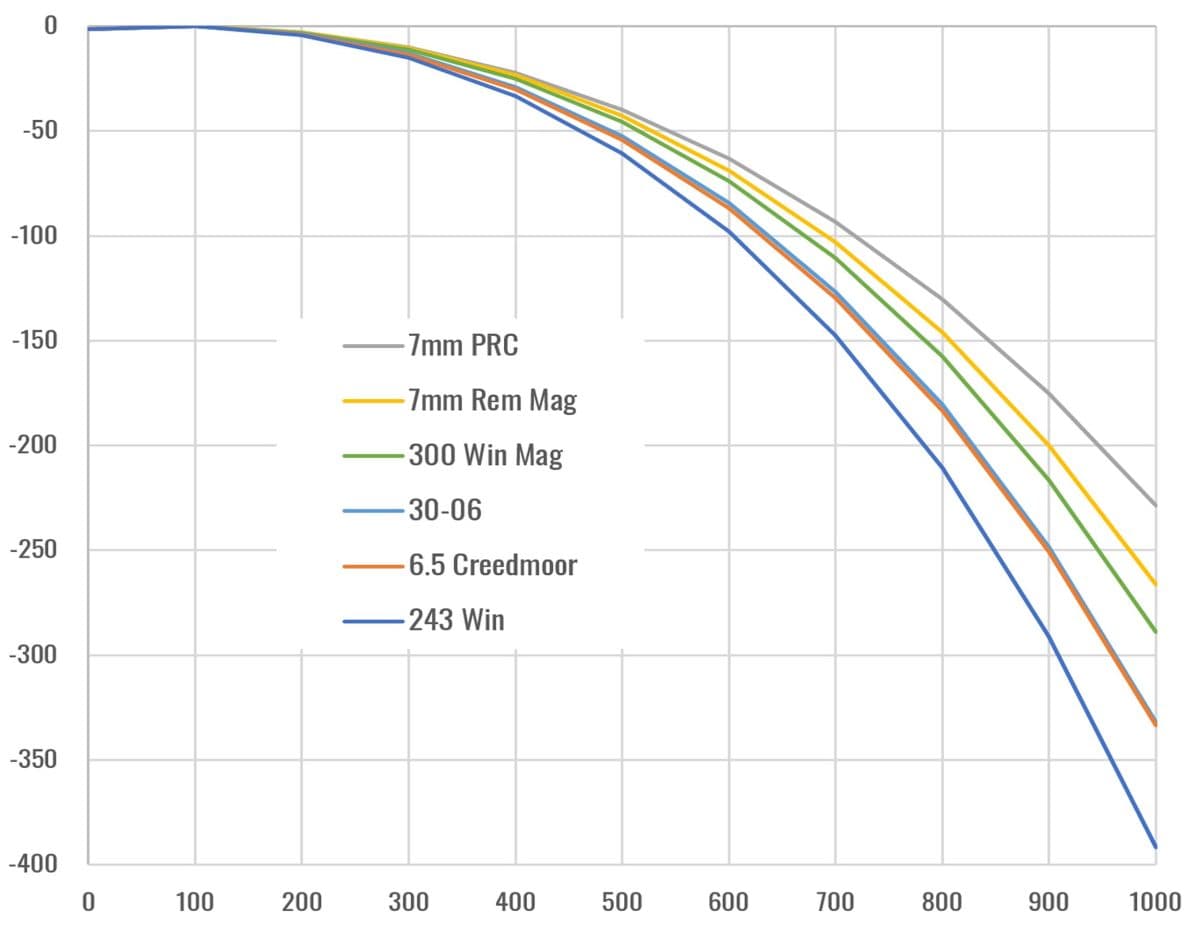
This means the 7mm PRC provides 875 foot-pounds of energy at 1,000 yards. The drop is also approximately 243 inches at that distance, slightly less than the 7mm Remington Magnum drop of roughly 268 inches.
So, this cartridge is impressive, but what’s the downside? Three factors could probably be considered drawbacks here.
First is ammunition selection. Being a relatively new cartridge, very few loadings limit factory ammunition to three or four configurations.
Next is price. Factory ammunition costs approximately $45-65 for a 20-round box and can go up to as much as $100 a box. The ammo selection is currently more limited and pricier than 7mm Mag. But there is a very real possibility that as the 7mm PRC gains wider popularity in the long-range world, there will be more loadings and lower prices.
The last factor that should be considered is that it is often referred to as a “barrel burner” due to the high pressures of the cartridge and correspondingly smaller caliber. High round count competition shooters may avoid this cartridge to extend the life of their barrel. Still, the vast majority of hunters will never fire enough rounds through their rifles to approach the count needed to burn out a barrel.
This round has so much potential that I’m betting it will stay around for quite some time. Its capabilities make it a perfect choice for long-range big-game hunters.
2. .50 BMG - Best Extreme Long-Range Cartridge
It is no secret that .50 BMG is an old cartridge. There are a host of extremely capable or ballistically superior cartridges for extremely long-range applications, like .338 Lapua Magnum, .375 Cheytac, .408 Cheytac, .416 Barrett, the list goes on.
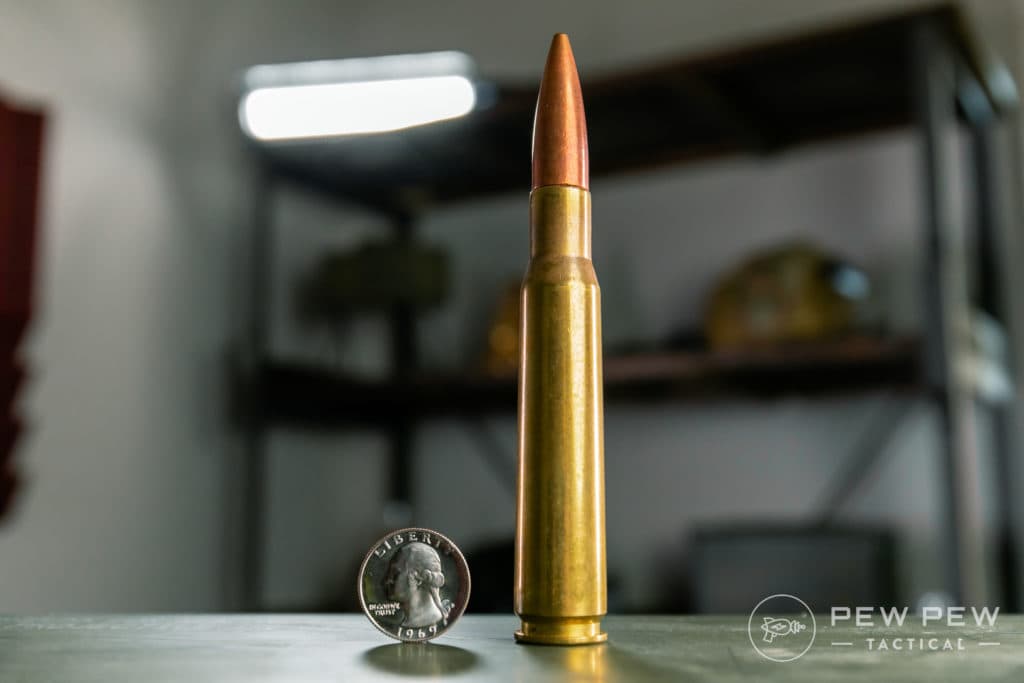
But there’s just something about launching a .50 caliber projectile after pressing the trigger on a cartridge designed for heavy machine guns.
The .50 BMG is sight and sound to behold when the shooter sends the largest legally available projectile (without extra paperwork) down-range, an impressive 2,800 fps.
There are a host of “affordable” entry-level.50 BMG rifles capable of decent accuracy. Price ranges for rifles in this category can range from $2,000 for AR-15 conversion uppers and $2,600 for single-shot rifles.
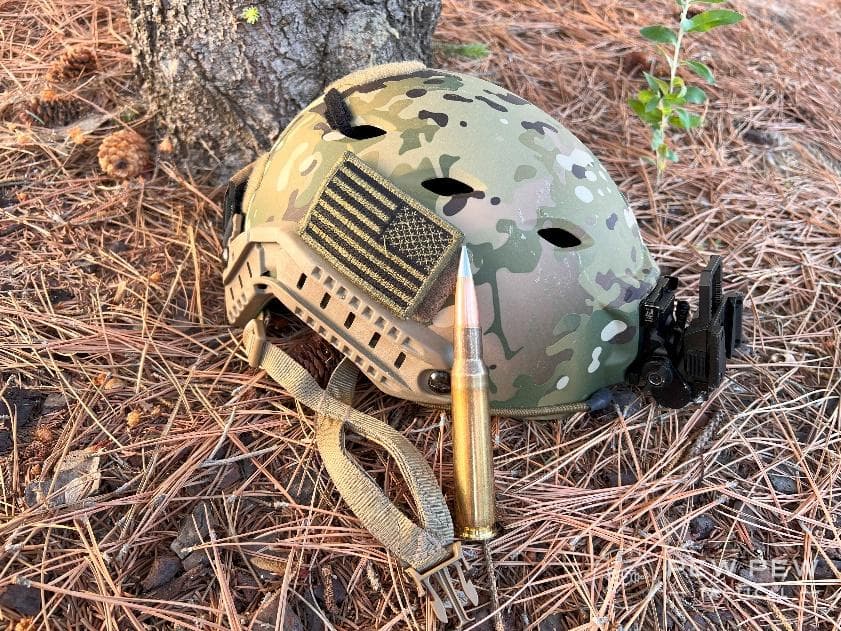
Higher-end rifles can go for $10,000 and up. In this category of long-range precision, there’s no getting around an expensive entry fee into the club.
Hornady’s 750-grain match-grade A-Max provides outstanding accuracy for this caliber, and I’ve achieved consistent hits at 1,000 yards on a 15” x 15” steel target. With a G1 ballistic coefficient of 1.050, this bullet can go a long, long, long way.
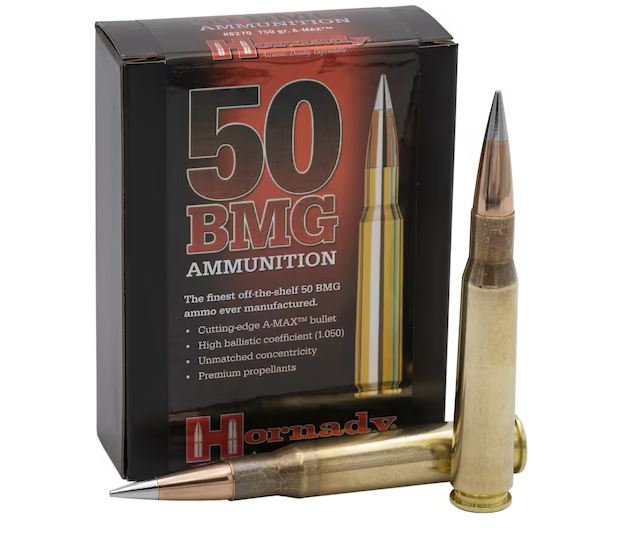
Shooting .50 BMG gives you quite a bit of bang for your buck due to the availability of surplus ammunition. With some .50 BMG precision rounds costing about six or seven dollars a piece, it’s nice to throw some cheaper 660-grain FMJ into the chamber. This is the way for punching massive holes in targets for fun or offering a friend an opportunity Instagram-worthy picture.
There is no substitute for the sheer energy and destructive capability of the .50 BMG, nor is there a substitute for how cool it is to tell people you own one.

But do your research first before considering laying down the big bucks. State restrictions, local range restrictions, and distance considerations can all be valid reasons as to why a .50 BMG may not be in the cards for everyone.
3. 6mm Creedmoor - Best for Long-Range Competition
Let’s get this out of the way right at the beginning: the 6mm Dasher is an excellent cartridge for competition. It is ballistically superior to 6mm Creedmoor.
But I didn’t pick the 6mm Dasher because this article is aimed at the beginner/intermediate shooter. You can’t just walk into the local sporting goods store and get ammo or even a rifle in 6mm Dasher.
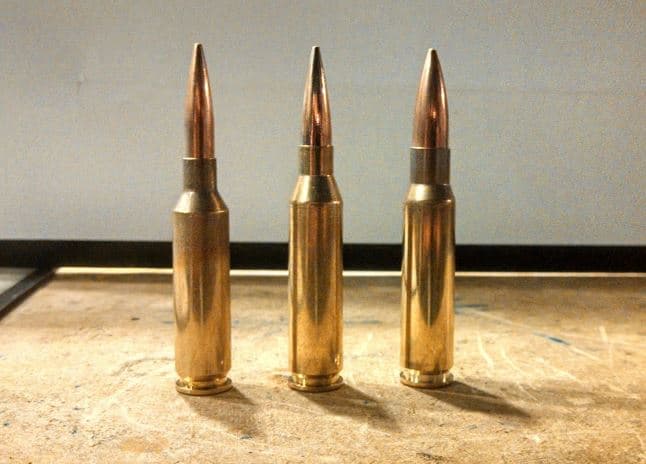
Conversely, the 6mm Creedmoor has been on the market long enough that there is a variety of ammunition selections, and it is generally available in most gun shops.
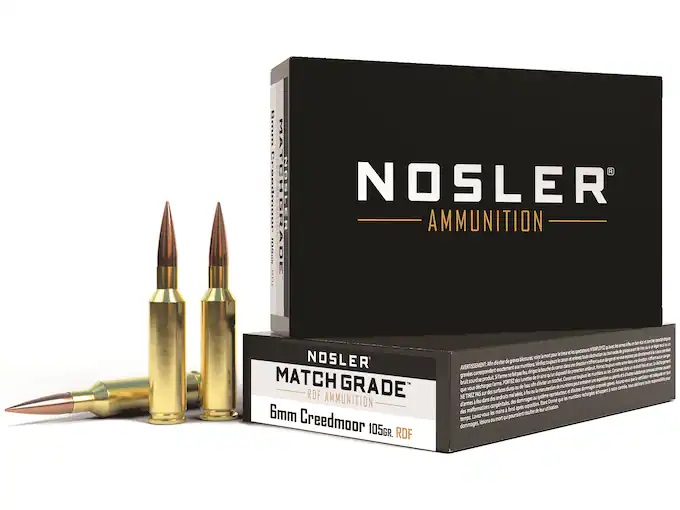
The Nosler RDF Match grade ammunition has produced some of my tightest groups.
The 6mm Creedmoor can handle bullet weights ranging from 55 to 115 grains. Most match bullets are likely to be in the 105- to 108-grain range.
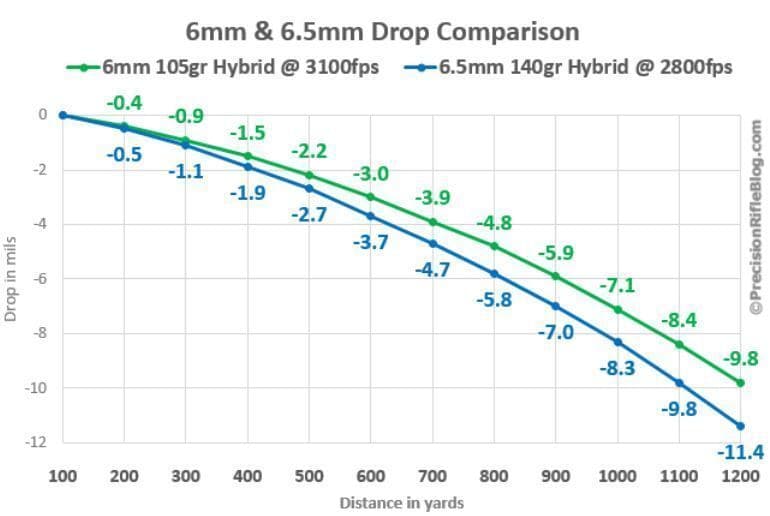
For example, the Nosler 105-grain reduced Drag Factor (RDF) bullet has a G1 ballistic coefficient of .571. And when hand-loaded, the 6mm Creedmoor can reach blistering speeds of over 3,000 fps.
The 6mm Creedmoor's recoil is quite low, allowing the shooter to see what happens downrange without any effort. Combined with excellent ballistics, it almost seems unfair.
However, this cartridge will burn through barrels if used for high-volume matches. Factor that into your considerations when picking a cartridge.
4. 6mm ARC - Best Long-Range AR-15 Cartridge
The AR-15 is more than capable of hitting targets to the 1,000-yard mark using its native 5.56 NATO chambering.
But if you want to add a little zip, Hornady’s 6mm ARC (Accurized Rifle Cartridge) makes it even easier to hit at ranges 1,000 yards and even beyond.
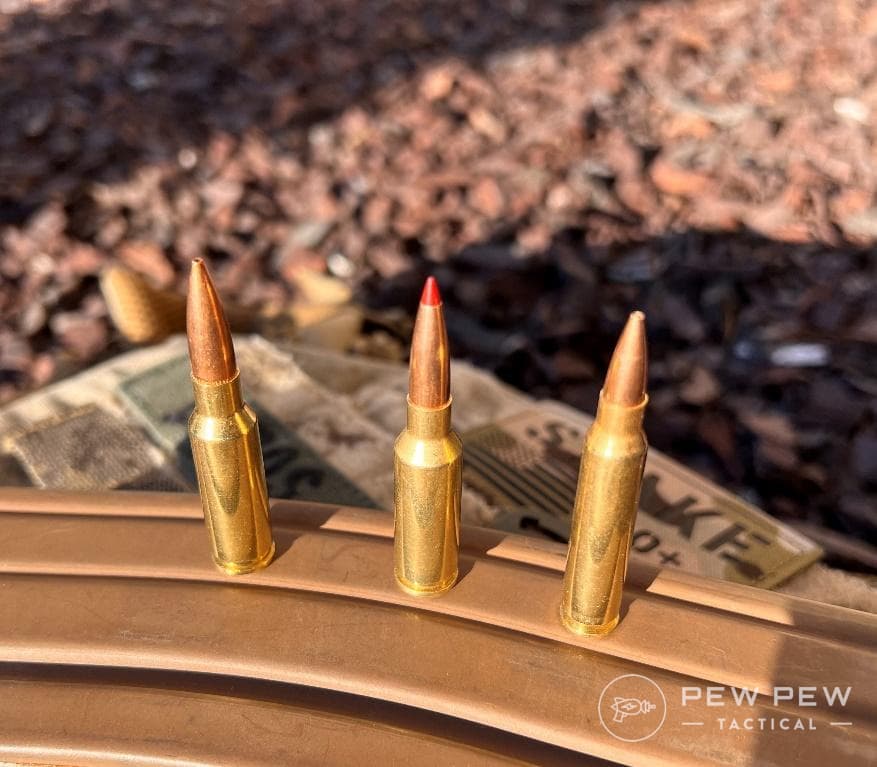
When trying to increase the ballistic capabilities of the AR-15, there are three calibers that provide better performance than the .223/5.56 while still being able to fit in the AR-15 platform.
These are the 6.5 Grendel, .224 Valkyrie, and 6mm ARC.
The .224 Valkyrie is a competent and accurate selection. However, it lacks the down-range energy of the heavier 6mm and 6.5mm cartridges. This limits the hunting capability of the round at extended distances.
Comparing the remaining 6.5 Grendel and the 6mm ARC, you nearly have to bust out the microscope to split the differences in ballistic capabilities of the two rounds, depending on the loadings you select.

For this comparison, I examined the two most common match-grade loadings of each cartridge. The 6mm ARC 108-grain ELD Match has a G1 ballistic coefficient of .536, with a listed muzzle velocity of 2750 fps.
At 1,000 yards, the 6mm ARC is still cooking along at 1358 fps with 442 foot-pounds of energy and only 342” of drop. The 6.5 Grendel 123-grain starts at 2580 fps at the muzzle and is at 1212 fps, producing 401 foot-pounds of energy with 413” of drop at 1,000 yards. So, a slight edge goes to the 6mm ARC.
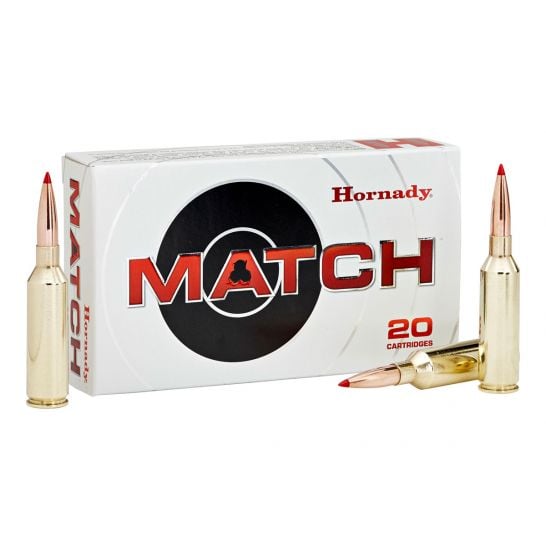
Because the 6mm ARC is the new kid on the block, there aren’t many options. But this cartridge has lots of promise as it provides a decent middle ground for shooters who might want to have a capable cartridge for hunting medium-sized game while still being able to print super-tight groups at extended range.
5. .308 Winchester - Most Versatile
Several modern long-range riflemen are most likely clutching their chests and breathing heavily into a paper bag after reading this.
With all the advancements in recent cartridge designs, why would I label the .308 Winchester as the most versatile long-range cartridge when there are cartridges like the 6.5 Creedmoor that offer a variety of bullet types, is flatter shooting and less affected by wind?
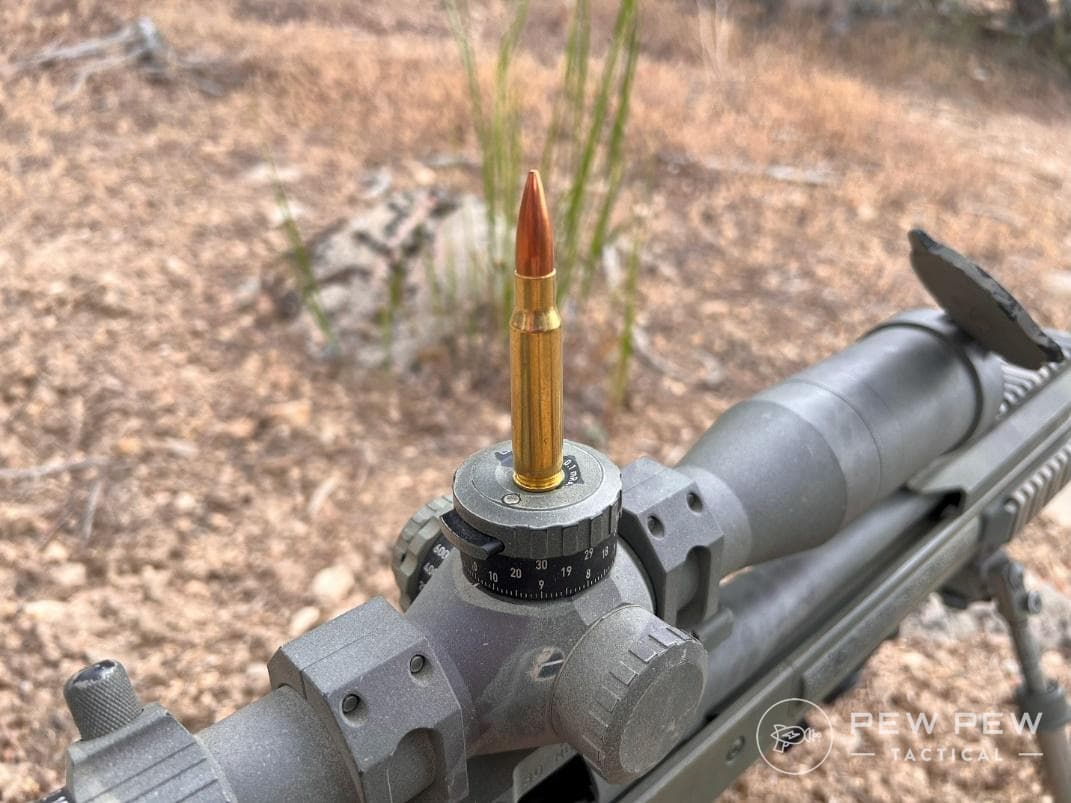
Well, because it has a tenured reign as a hard-hitting cartridge capable of delivering outstanding accuracy. It is the standard against which nearly all modern cartridges in its class are judged.
The 6.5 Creedmoor seems to be slowly taking the top spot from the .308 Winchester. But I truly believe that .308 is still tough to beat for its overall versatility and availability and has a few more years before it finally dethroned.
With all of the legislation and economics surrounding shooting sports in today’s society, it’s safe to say that as ammo prices rise, we probably won’t see a drop in ammunition prices anytime soon.
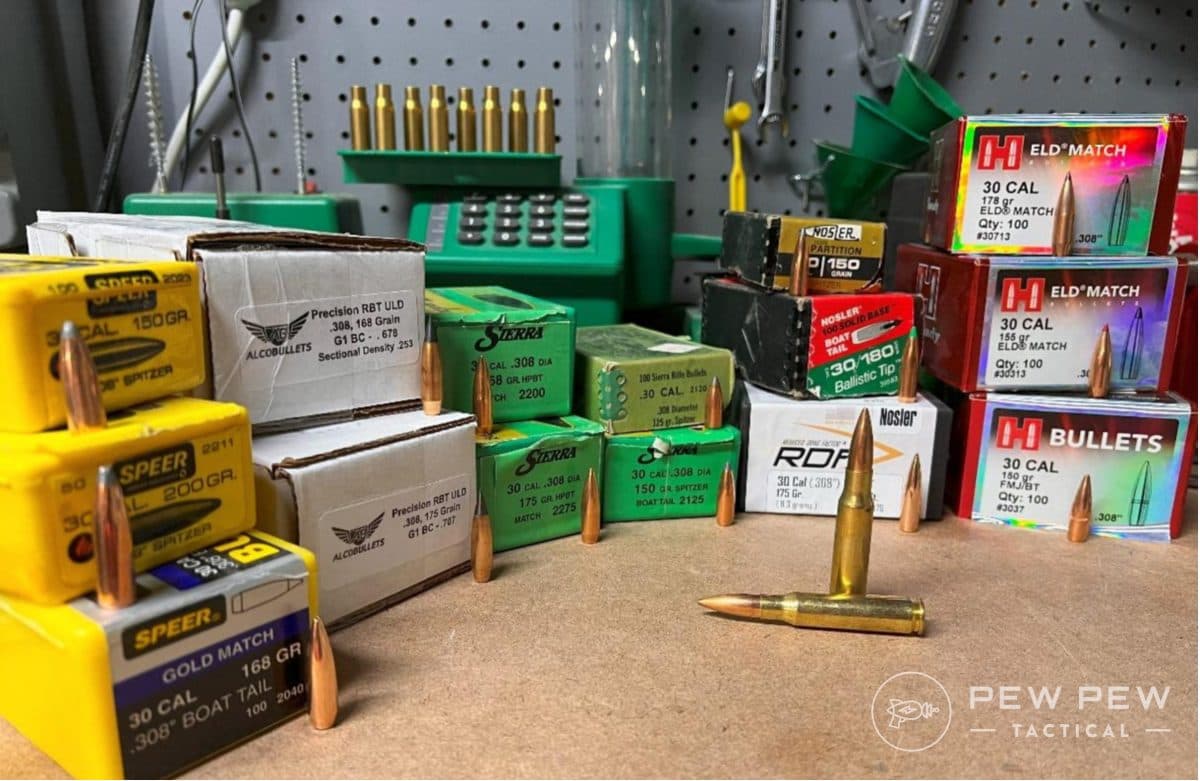
Our parents used to say “remember when gas was $1.29?” Well I remember when surplus AK ammo was $4.99 a box. Comparatively speaking, the .308 Winchester has been able to stay affordable compared to some of the newer cartridges that do not have as much long-time manufacturer support.
If you reload or plan on trying it out, finding good deals on reloading components for the .308 Winchester is much easier than other cartridges.
The .308 Winchester also offers excellent barrel life compared to some of the newer cartridge designs.
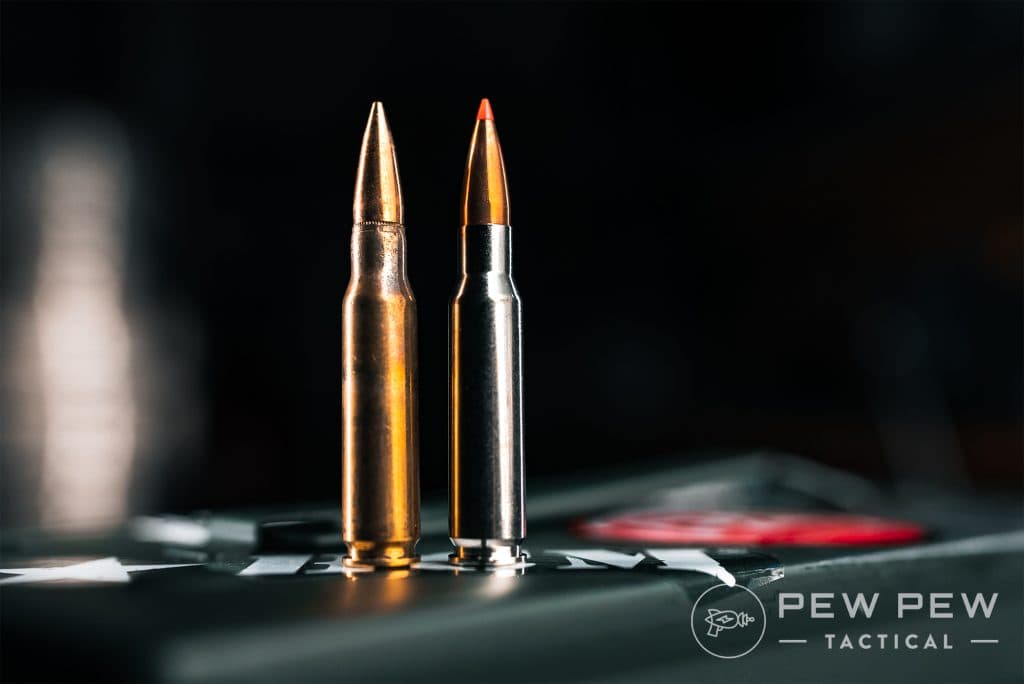
My first sniper rifle hit somewhere over the 7,000-round mark (a combination of government-supplied ammunition and hand loads) with diligent and consistent care before the barrel was completely shot out.
Some of the small caliber high powder volume cartridges are simply not able to reach those numbers before a barrel needs to be replaced. So, if you are planning on being a truly high-volume shooter, the .308 Winchester won’t let you down in that area.
Another valuable benefit to this cartridge is the availability of a variety of single-shot, semi-automatic, and bolt-action rifles, which are chambered for this cartridge.
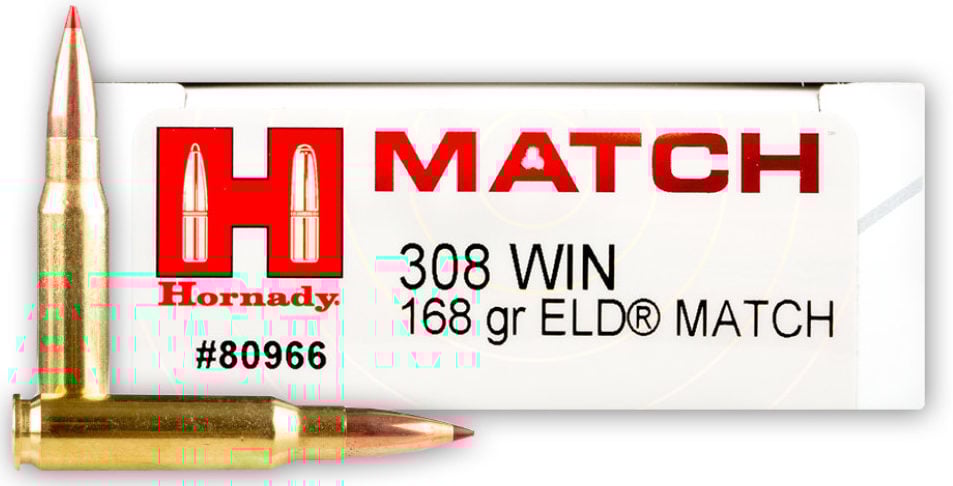
The .308 Winchester has good ballistics, especially when loaded with the 168-grain or 175-grain BTHP. When moving down to a 168-grain bullet, you can expect velocities of approximately 2650 fps with 2600 foot-pounds of energy.
Compared to some of the newer cartridge designs, like the 6.5 Creedmoor, there will be noticeably more recoil, but it is not overwhelming.
Whether you’re trying to bag a North American game animal or shooting in a match, the .308 Winchester will always have a rifle and bullet combination that will fit your needs.
.308 / 7.62x51mm Ammo In Stock
Ballistic Coefficient and Why It Matters
The current trend for new cartridge design is to launch a long, sleek bullet with a high ballistic coefficient at scorching speeds through a barrel with fast twist rates.
This combination ensures that the bullet will shoot flatter, be less affected by wind, and remain stable longer in its flight path before passing under the speed of sound.
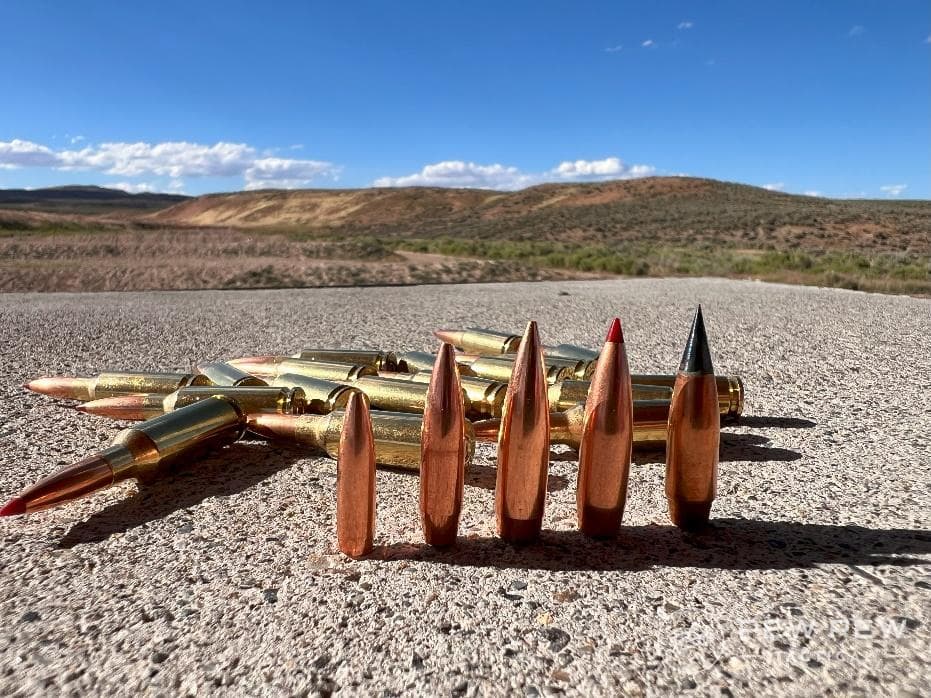
For those unfamiliar, ballistic coefficient is a measure of the ability of a projectile to overcome air resistance along its trajectory.
It is measured using a standard form factor projectile designated as the G1 or G7 and is usually expressed in a three-digit number.
For example, the ballistic coefficient of the legendary Sierra 168gr Hollow Point Boat Tail Match King bullet utilizing a G1 form factor is .462 above 2600 fps.
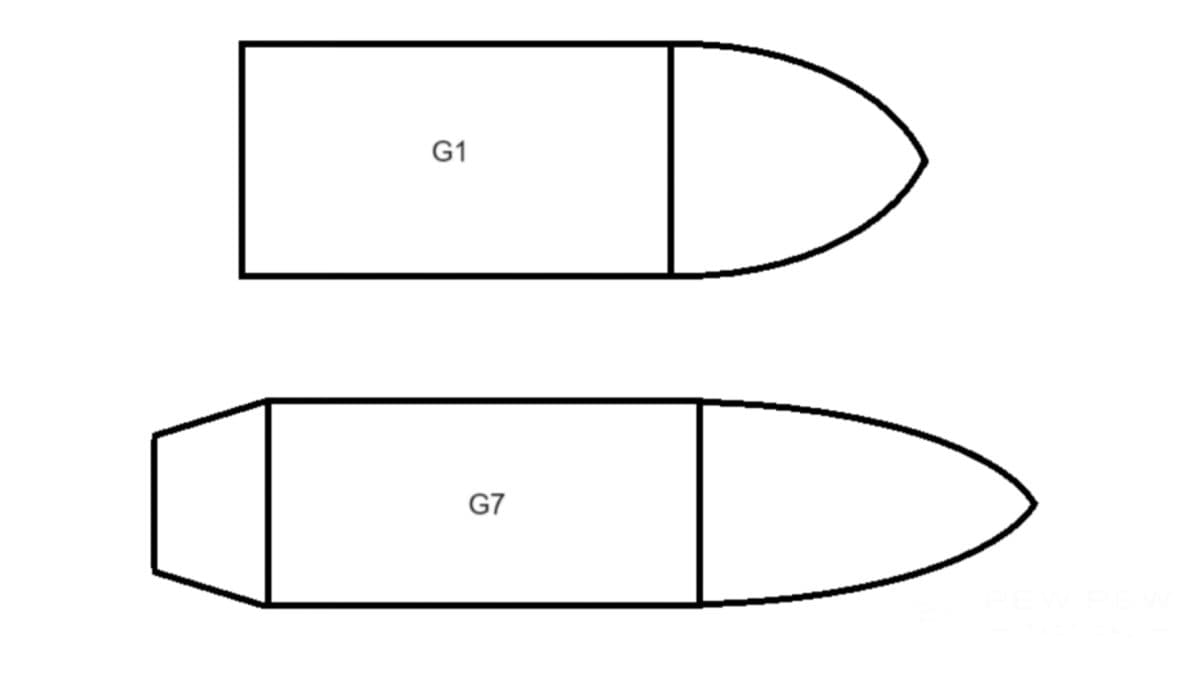
It is important to note that the ballistic coefficient will also change as velocity is reduced, and many manufacturers will have a data list for coefficients for several velocities.
The subject of ballistic coefficients is complex and lengthy, so if you want to bust out the slide rule and launch into the world of long-range science, check out our article: Ballistic Coefficient: Everything You Ever Wanted to Know.
Meet the Experts
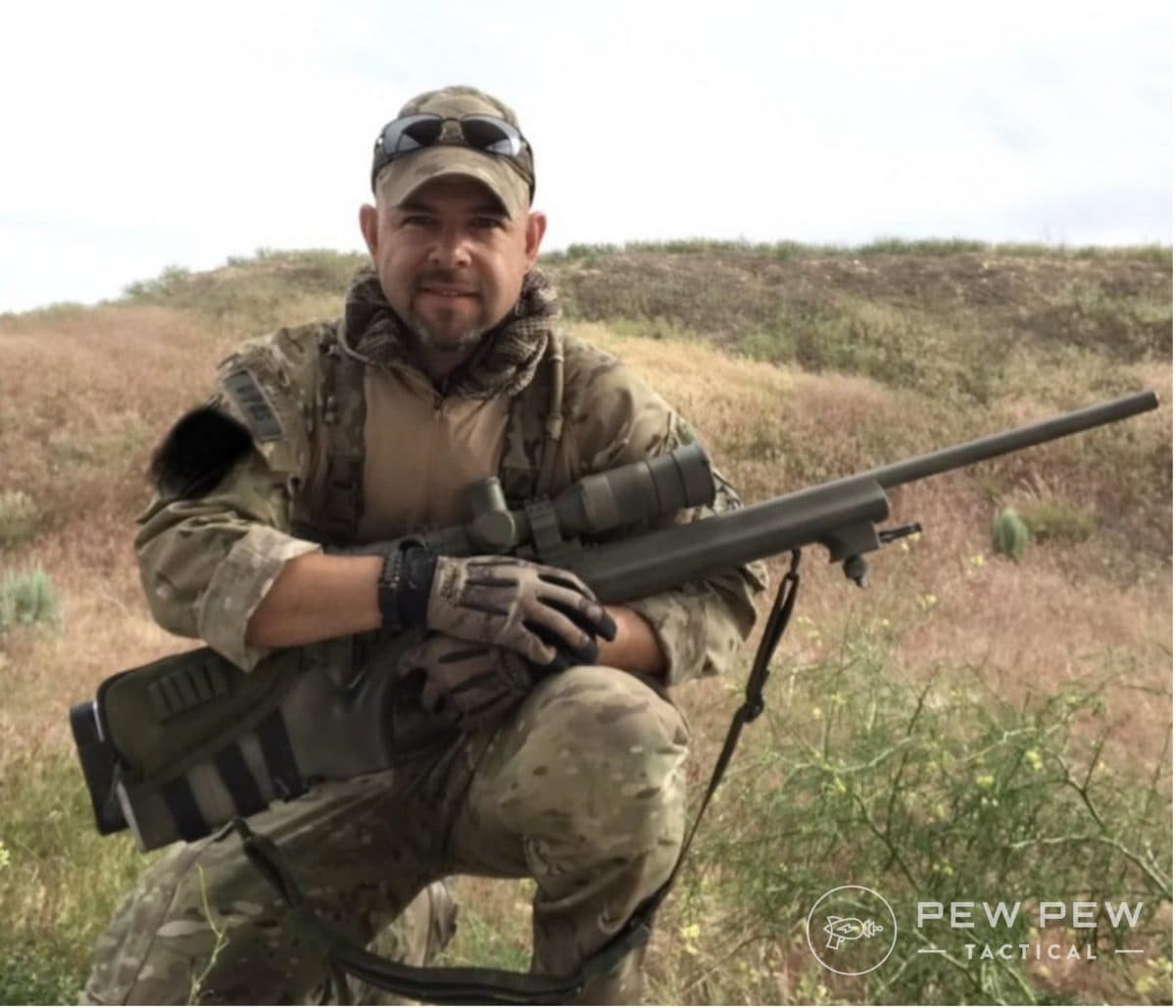
Heading up this article is PPT contributing writer Nick Stake. Nick is a retired law enforcement officer, having served as a detective sergeant, jail deputy, patrol deputy, field training officer, department range master, counter-sniper instructor, and handgun instructor. In addition to his extensive LEO career, Nick also owns a law enforcement consulting company and is an avid outdoorsman and recreational shooter.
Editing this article is one of our Editors, Wyatt Sloan. Wyatt is an NRA-certified instructor with previous experience as a USPSA competitor, long-range shooting, and hunting. Wyatt personally owns over 200 firearms and has 10 years of home-based FFL firearm sales. He loves carrying a wide variety of handguns and, by necessity, has tried a wide variety of holsters.

Editor-in-Chief Jacki Billings runs our experienced team of reviewers. She is a National Rifle Association Basic Pistol Instructor as well as a member of the Society of Professional Journalists, ACES: Society for Editing, and the Professional Outdoor Media Association. Jacki has a bachelor’s degree in journalism and has worked as a media professional for close to 20 years, specializing in gun media for almost 10 years. With 2,000+ articles to her name, she uses her professional journalism and editing experience to set testing protocols and editorial standards for Pew Pew Tactical.

Final Thoughts
It’s truly hard to narrow down the amazing cartridges that are available to the modern long-distance shooter. For every application, there is a group of niche cartridges that will probably perform exactly to the standards you need.
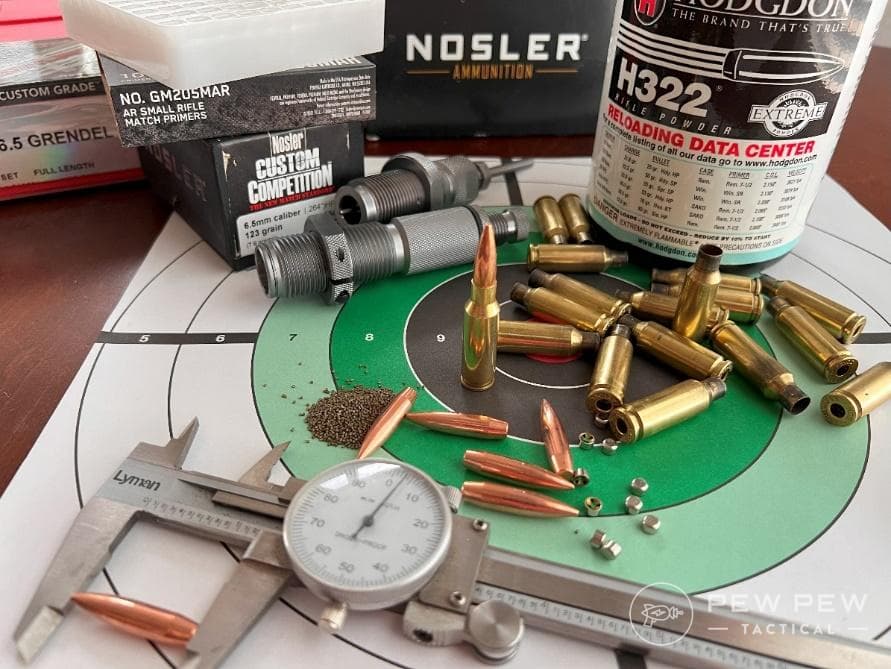
Hornady managed to land two great cartridges on this list this year. But I’m sure there are some great cartridges still being developed in research facilities that rival the security of Area 51, which may unseat some of these cartridges from the list by next year.
What’s your favorite long-range cartridge? Let us know in the comments below! Interested in getting into reloading to save money on ammo? Check out our Ultimate Beginner's Guide to Reloading Ammo!