[Guide] Sight Picture & Eye Dominance: Shoot Better

Quickly discover your eye dominance for shooting in less than 60 seconds and learn proper sight alignment, holds, and where to focus on your front sight.

PPT Founder. NRA Pistol Instructor. USPSA/3-Gun/NRL22 Competitor. 250+ articles
We review products independently. When you buy through links on our site, we may earn a commission to help support our testing. Learn more.
Are you wanting to shoot faster and more accurately?
In today's article, we are taking a look at eye dominance and how it relates to sight picture when using standard iron sights. This is an important in helping you gain a better understanding of some important shooting fundamentals.
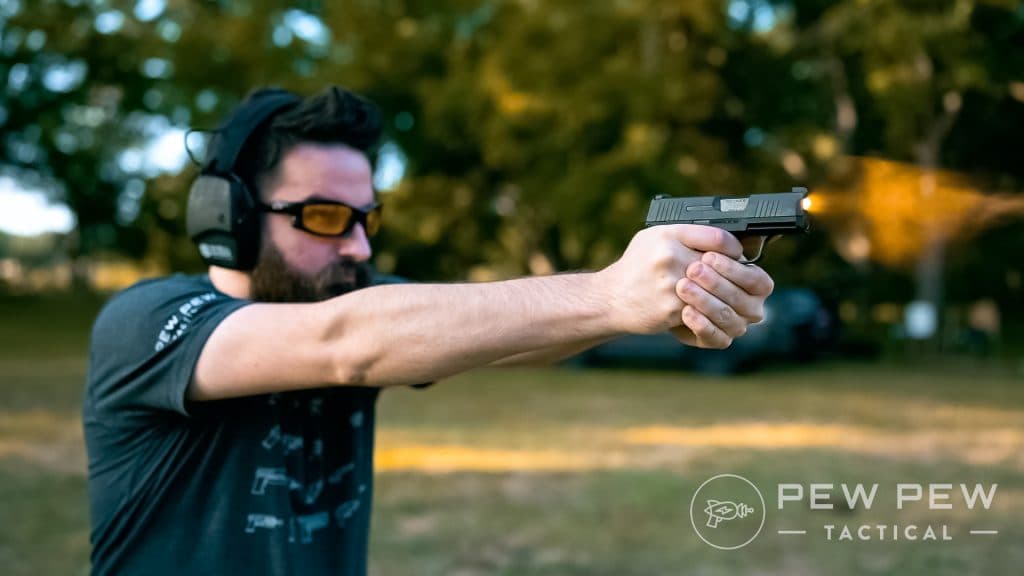
But before we do, now’s a good time to review our safety rules.
- All guns are always loaded
- Never let the muzzle cover anything you are not willing to destroy
- Keep your finger off the trigger until your sights are on the target
- Be sure of your target and what is beyond it
Table of Contents
Step-by-Step Instructions: How to Acquire a Proper Sight Picture
Step 1: Establishing Eye Dominance
Every person has a dominant eye, just like they do with hands and legs. Knowing which eye is your dominant one is a crucial part of being able to shoot accurately and repeatably.
While the vast majority of people have a dominant eye that matches their dominant hand, a few, including myself, are what is called cross-dominant.
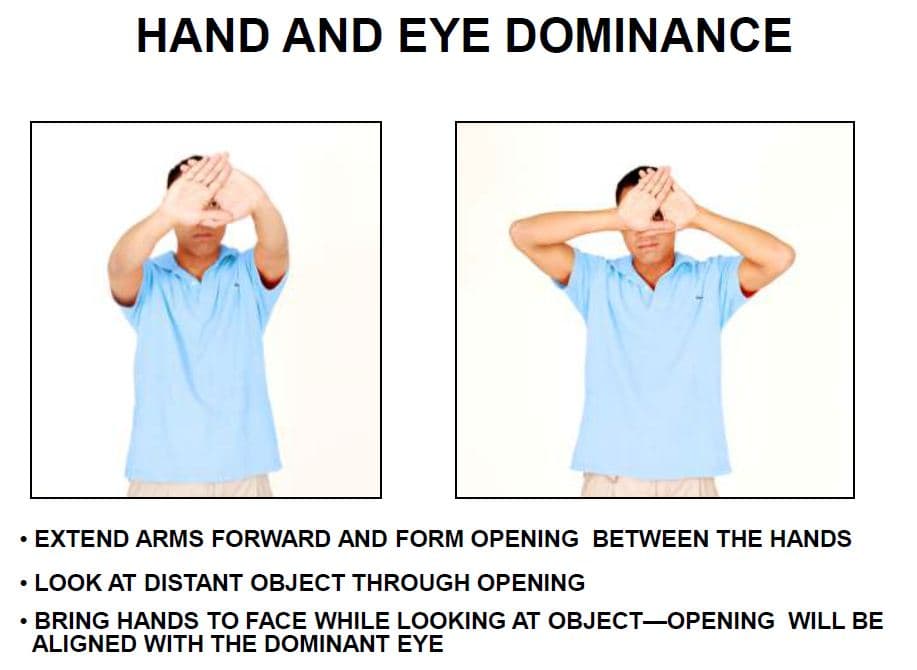
- Extend your arms forward and form an opening between the hands.
- Look at a distant object through the opening.
- Bring your hands to your face while looking at the object.
- Your hand opening should automatically align with your dominant eye.
Below is a video with an easy test to see which of your eyes is dominant:
Not wanting to watch a video? We got you covered anyway!
Shooting will typically be easier for beginners if they start by closing one eye and using their dominant eye.
However, as you progress, you will likely find yourself shooting better with both eyes open. It will take some time to train your brain, but you’ll notice benefits such as improved depth perception and enhanced orientation.
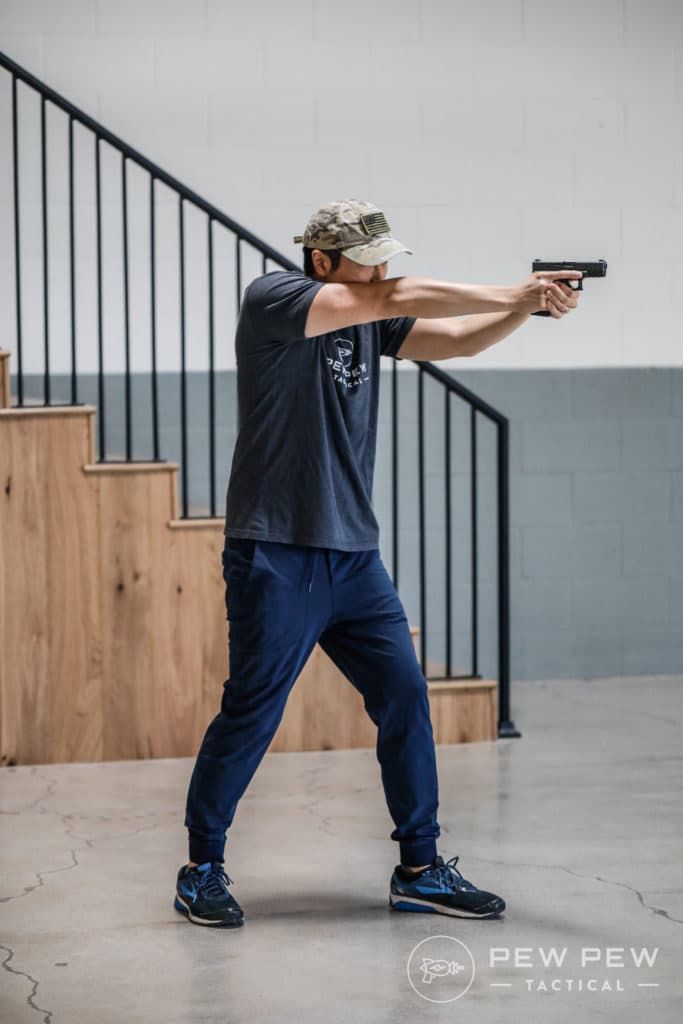
Your eye dominance can often dictate which stance you like better.

For me, since I'm left-eye dominant and right-hand dominant, I prefer the Modified Weaver/Chapman stance since it puts my left eye more behind the sights.
Step 2: Understanding Sight Picture
Aiming a gun is just a matter of point and shoot, right? In the grand scheme of things, yes, that’s pretty much it.
But proper sight picture is one of those fundamental things that makes the difference between a shooter and someone who just plays with guns.
The sight picture is everything you see with your sights and your target.

There are several different types of sights, but most firearms will have a notch or circular rear sight with a post or bead as the front sight.
All of them, regardless of their setup, work on the same principle. The front sight can be many things, but they are usually colored or textured differently than the rear sight to draw the eye to it.
- When presenting your gun to the target, ensure that the top of the front sight post is aligned with the top of the rear sight.
- Next, make sure that the front sight post is centered within the rear sight. There should be an equal amount of light on both sides.
- Focus on the front sight, not the target.
Step 3: Figure Out Where to Hold
When you superimpose your sights onto the target, there are a few different ways you can go about it.
Neither of these are wrong, and much if it will come down to personal preference or how the sights on the gun itself are regulated.
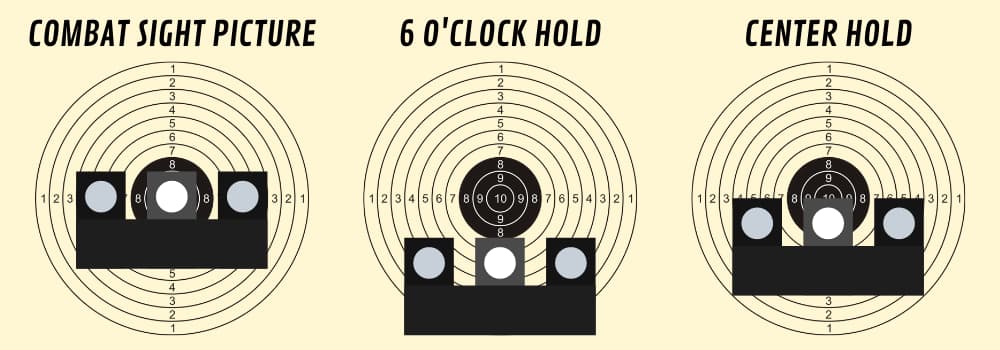
- Combat hold: With this method, you completely cover the target/area you are aiming at with the front sight post.
- 6 o'clock hold: This is where you line up the bottom of the target with the top of the front sight. This allows you to see most of the target.
- Center hold: This is the most traditional method, and is sometimes called point of aim, point of impact. Herer, you line up the top of the front sight in the middle of the target, effectively "cutting the target in half."
Step 4: Focus on the Front Sight
The final question is where do you focus with your eyes?
There are three places that people tend to focus on — the rear sight, the front sight, or the target.
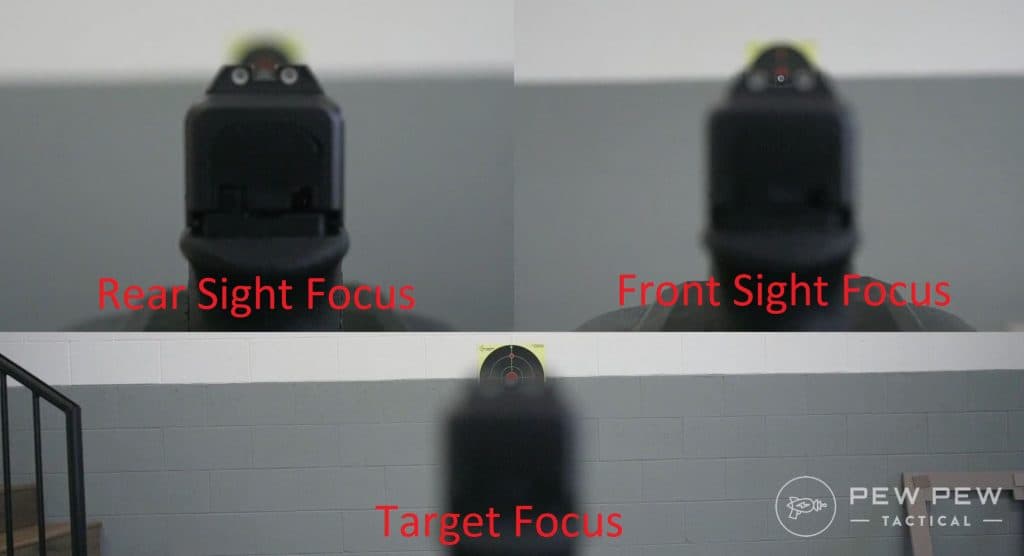
However, the correct thing to focus on is the front sight since the bullet will go where the front sight is pointing.
Every expert in the world will tell you that you will get the best results by keeping the front sight in focus while pulling the trigger, as it will really help you to keep the gun steady.
This is the main reason why a lot of front sights are distinctly colored. When you’re correctly focusing on the front sight, the rear sight and target will appear blurry.
The best flow is to first focus on the target and loosely line up the dots onto it. At this point, change your focus to that front sight and line it up with the rear sights as well as the blurred-out target.
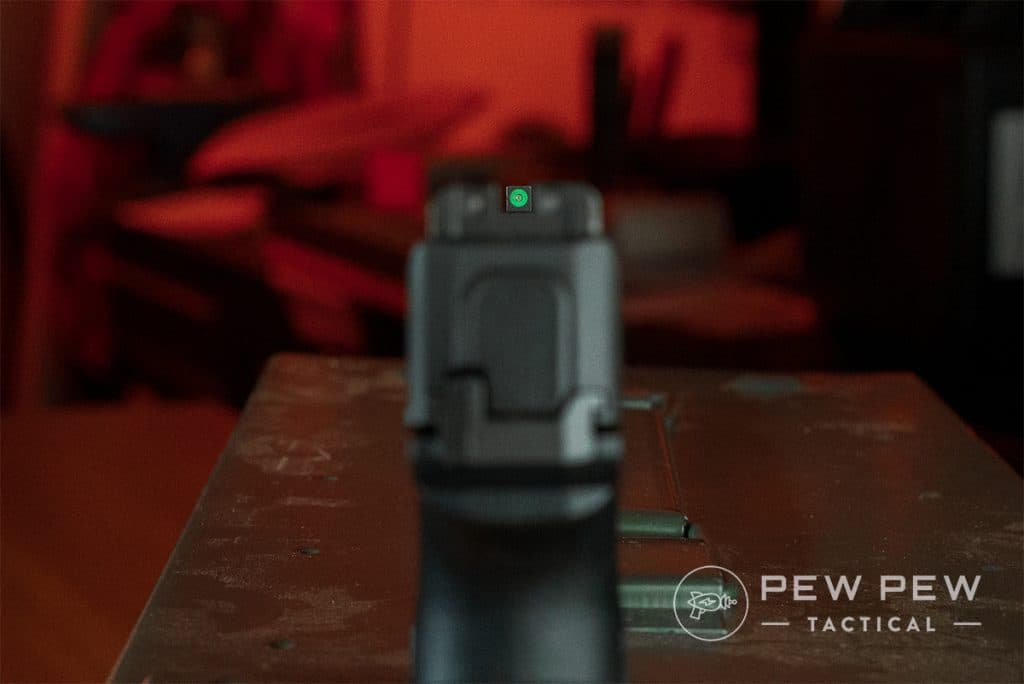
As you slowly squeeze the trigger, focus on keeping that front sight as stationary as humanly possible. With that front sight in focus and stationary, your shots will improve greatly.
There are also electronic sights that allow for both eyes to be open and focus only on one object - the dot. Here is an example of a typical red dot sight.
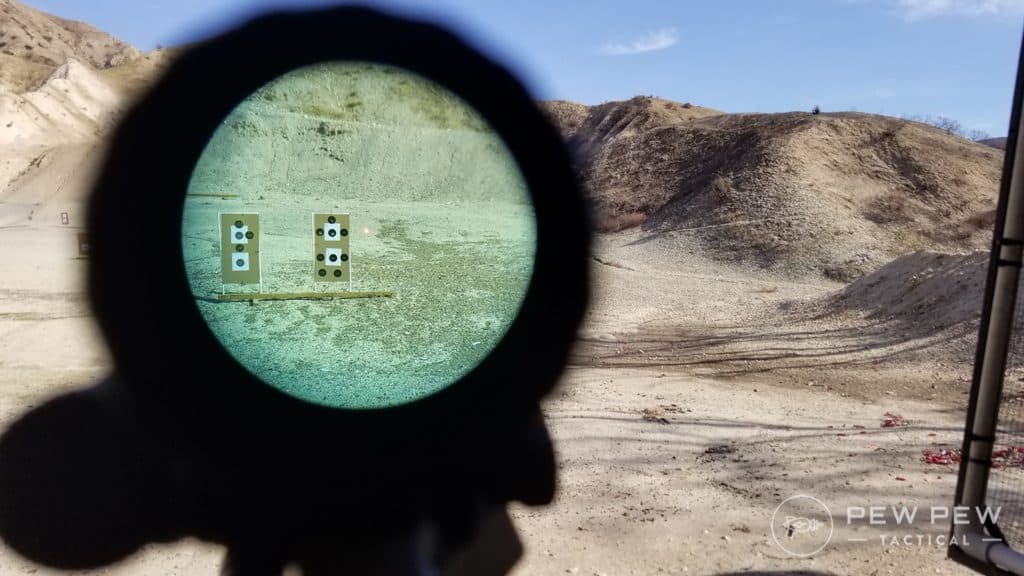
Want even more red dot action? Check out some of our favorite Red Dot Sights.
Common Mistakes to Avoid
- Not keeping the rear sight centered – It is common for people to line up the top of the front and rear sights, only to not pay attention to the left-to-right. Make sure there is an equal amount of space on both sides of the front sight post.
- Focusing on the target – It can be instinctual to keep the thing you are pointed at in focus. However, maintaining focus on the front sight until the target is fuzzy is the correct method.
- Incosistent head positioning – If your head is not in the same place relative to the gun each time, you can throw off your sight picture. Make sure you aren't tilting your head or leaning to far back during shooting.
FAQs
Q: Can I use this guide for red dots?
A: Eye dominance is important for all forms of sights, whether it is optics or iron sights. With that being said, the parts in this article about sight alingment are directly for use with iron sights.
Q: I am using a center hold and my gun is shooting high or low. What gives?
A: Some guns can shoot high or low from the factory. This can also change depending on the ammo you use as well. If possible shoot the pistol from a resting position at a target that is level with your shooting bench or table to minimize any shooter error. If the gun shoots high or low, you can either adjust your sights (if applicable), or try a different hold until the bullets impact in the desired location.
Q: My sights are lined up, but my grouping is bad. What is going on?
A: Even if you have your sights lined up correctly, your accuracy issues may be caused by other things such as grip, trigger management, or recoil anticipation. Using a diagnostic chart can help you figure out what may be going on during shooting.
Meet the Experts
This article was written by Pew Pew Tactical CEO and Founder Eric Hung. In addition to founding Pew Pew Tactical as a place for shooters to learn, he’s also an NRA-certified instructor and a USPSA/3-Gun/NRL22 competitor. Eric has also researched and written over 250 articles on firearms, training, gear, and just about everything else related to firearms.

Editor-in-Chief Jacki Billings runs our experienced team of reviewers. She is a member of the Society of Professional Journalists, ACES: Society for Editing, and the Professional Outdoor Media Association. Additionally, she is an NRA-certified Pistol Instructor and former Concealed Carry Instructor. Jacki has a bachelor’s degree in journalism and has worked as a media professional for close to 20 years, specializing in gun media for almost 10 years. She uses her professional journalism and editing experience to set testing protocols and editorial standards for Pew Pew Tactical.
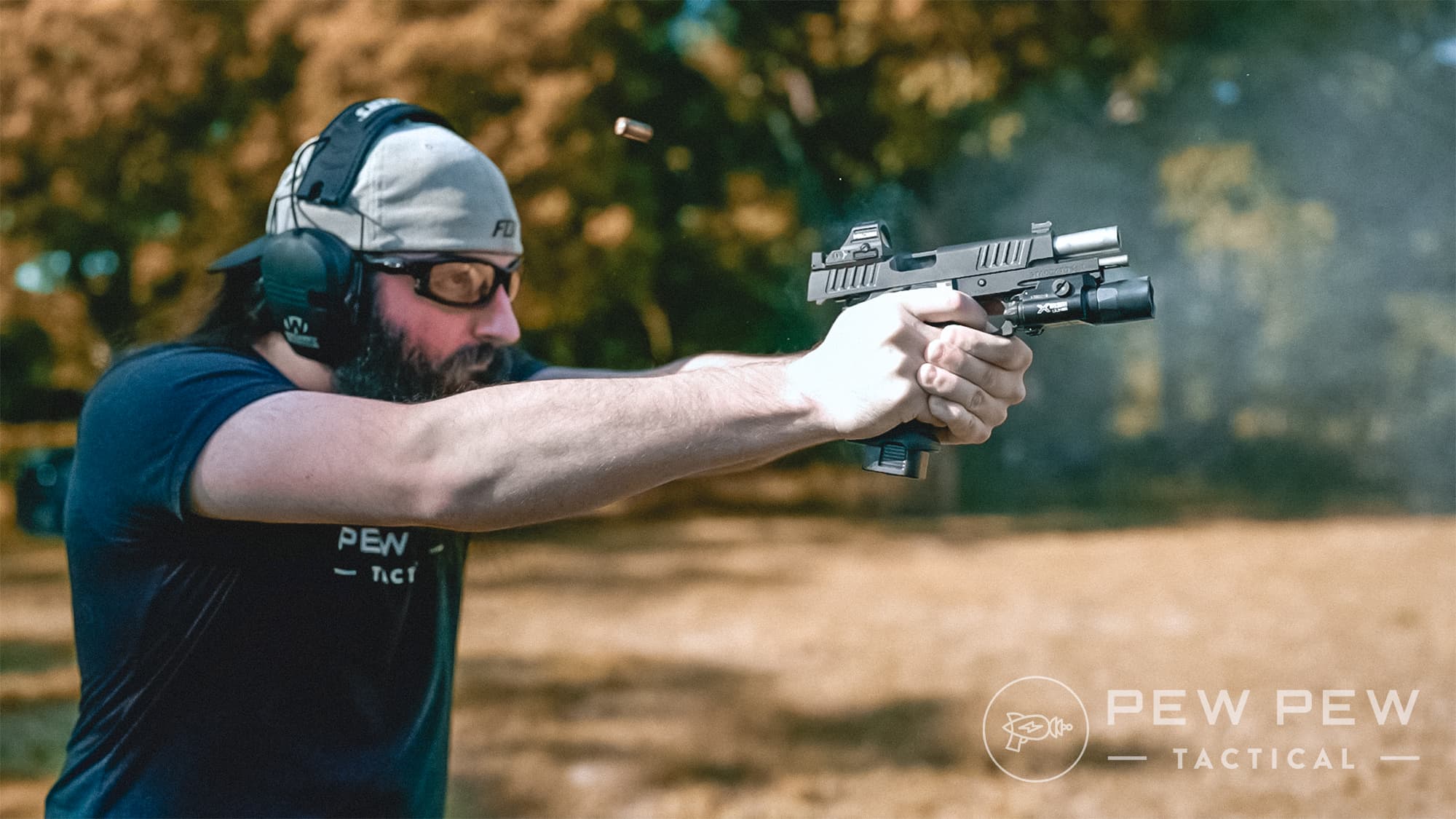
Also editing this article is Wyatt Sloan, Editor. Wyatt is an NRA and USCCA-certified instructor with previous experience as a competitive shooter. Wyatt personally owns over 200 firearms and has 10 years of home-based FFL firearm sales. He has used his extensive experience with firearms at large to test guns for Pew Pew Tactical — evaluating them based on our standards and metrics.
Final Thoughts & Next Steps
Determining eye dominance is the first step in shooting more accurately.
Paired that knowledge with a good sight picture and you're sure to be nailing those targets in no time!
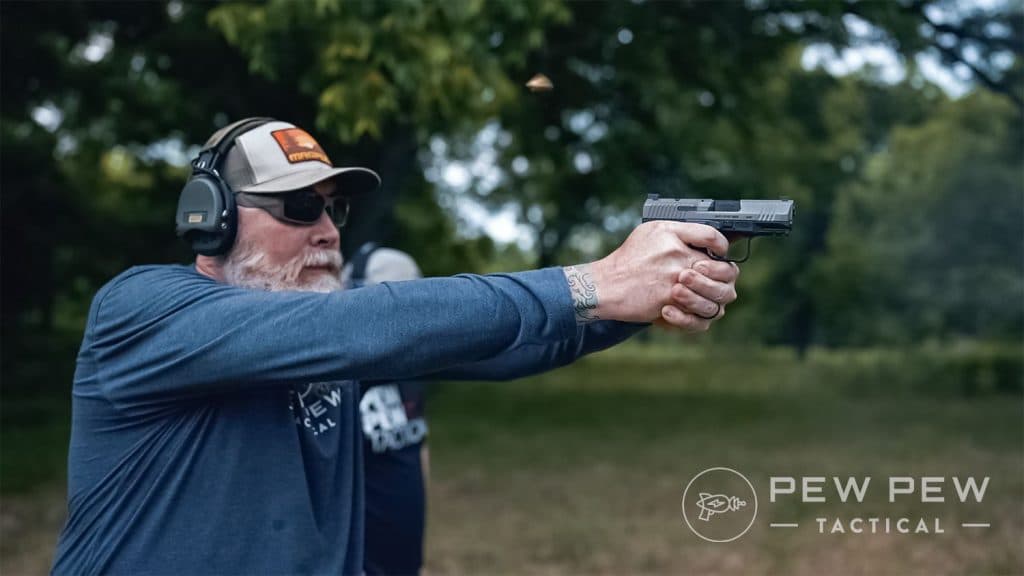
But as always, there is more to shooting a handgun than just lining the sights up. Mastering the basic fundamentals will give you a great foundation to build upon to improve both your defensive and recreational handgun shooting abilities.
Looking for more shooting tips? Try out our guides on How to Properly Shoot a Handgun and How to Shoot Handgun More Accurately!
LATEST UPDATES
- April 2025: Article has been completely revamped.