
How To Prevent Scope Bite [Step-by-Step Guide]
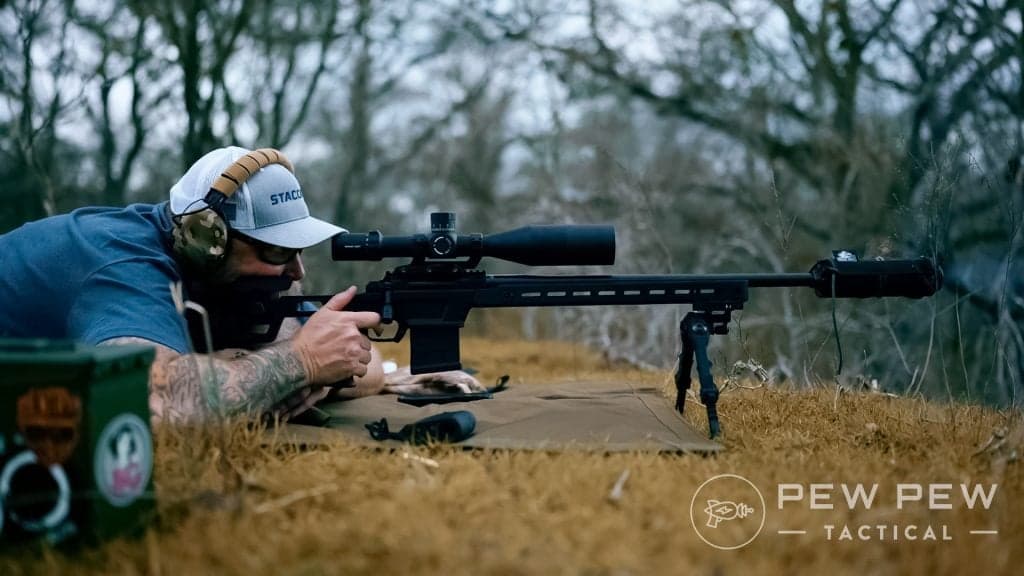
In this article, we cover the crucial steps you should take in order to avoid getting injured by scope bite when shooting.

USMC Veteran. Concealed Carry & NRA Pistol Instructor. 3-Gun Competitor. Career firearms writer
We review products independently. When you buy through links on our site, we may earn a commission to help support our testing. Learn more.
If you follow the four basic firearm safety rules, it’s tough to hurt anything or anyone with a firearm.
That said, the business end of a gun isn’t the only thing that can hurt you. If you have ever shot a .357 Magnum airweight snub nose, a .416 Rigby, or gotten a dose of slide bite, you know that.
For those who shoot rifles with scopes attached, another danger that lurks in the shadows — scope bite.
By the end of this article, you’ll know what scope bite is and exactly how to avoid it!
Table of Contents
What is Scope Bite?
Scope bite happens when the scope on your rifle smacks you in the face. This happens when you fire the gun, and the recoil drives the rifle rearward. If you have a scope attached, it will follow the rifle as everything moves rearward.
The severity of a scope bite can vary wildly from a mild sting to a black eye to needing stitches in extreme cases.
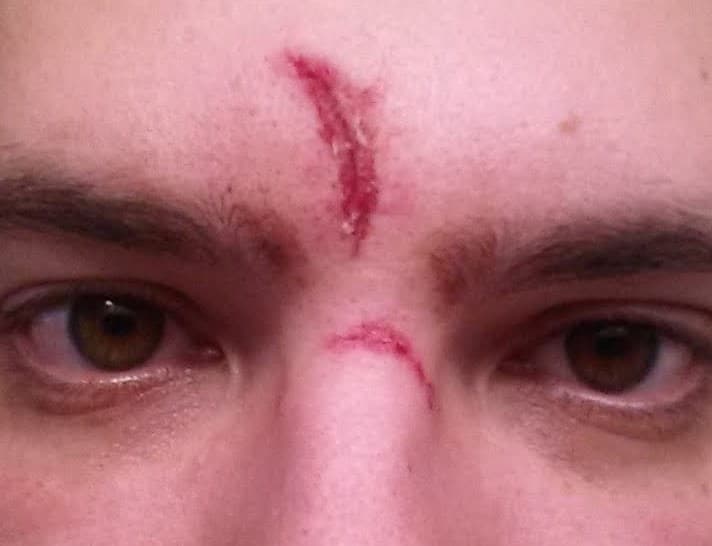
My old doctor and I were both hunters, and one day, he had a bit of a black eye. When I asked, he humorously told me that it was his first ‘gunshot wound.’
He’d been shooting uphill and got a nasty bit of the scope to the eye. Scope bite is non-lethal, but it can hurt or even ruin a hunt if you need to run off to get stitches.
Step-by-Step Instructions
Step 1: Know Your Eye Relief
My first real lesson in eye relief came from the Trijicon ACOG mounted on an M16A4. I never noticed it was important until I had hardly any of it.
Eye relief refers to how far your eye can be from the scope while still maintaining a completely clear and full sight picture.
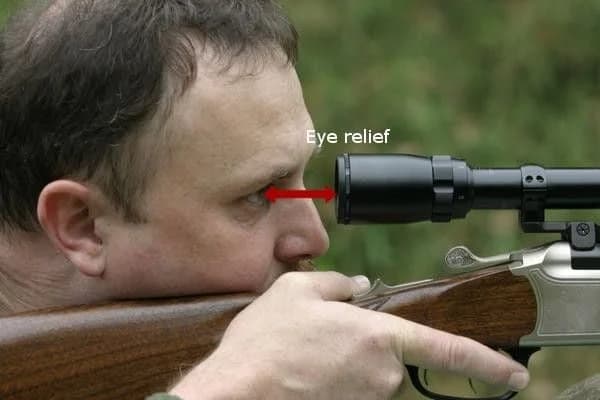
The amount of eye relief you can have varies wildly depending on the optic. For example, the Trijicon ACOG has hardly any relief, so you have to have your face very close to the optic to get a good sight picture.
Many modern hunting and target scopes aim to offer a fair bit of eye relief. It’s not uncommon to see modern eye relief exceed 3.5 inches. This means your aiming eye can be a good bit away from the optic.
Putting distance between your eye and your optic helps prevent scope bite. When purchasing an optic, keep eye relief in mind.

This becomes even more important when you start shopping for hard-hitting calibers, which brings us to the recoil discussion.
Step 2: Understanding Recoil
The third law of motion states that for every action, there is an equal and opposite reaction.
When firing a gun, the force used to propel the projectile down the barrel is also directed rearward to the user. This can be mitigated and reduced, but elimination isn’t an option unless you create a recoilless rifle.

When a gun recoils, it travels rearward and often up due to muzzle climb. As the gun recoils rearward and up, the distance between your eye and the gun shortens.
If your eye is too close to the optic, and the recoil is too much, you can get bitten by the scope. Recoil can also vary greatly depending on each gun.
For example, an M16A4 fires a 5.56 NATO round from a 20-inch barrel with very little recoil. When I press my nose to the charging handle on said M16 to get the proper eye relief on an ACOG, I don’t need to worry about scope bite.
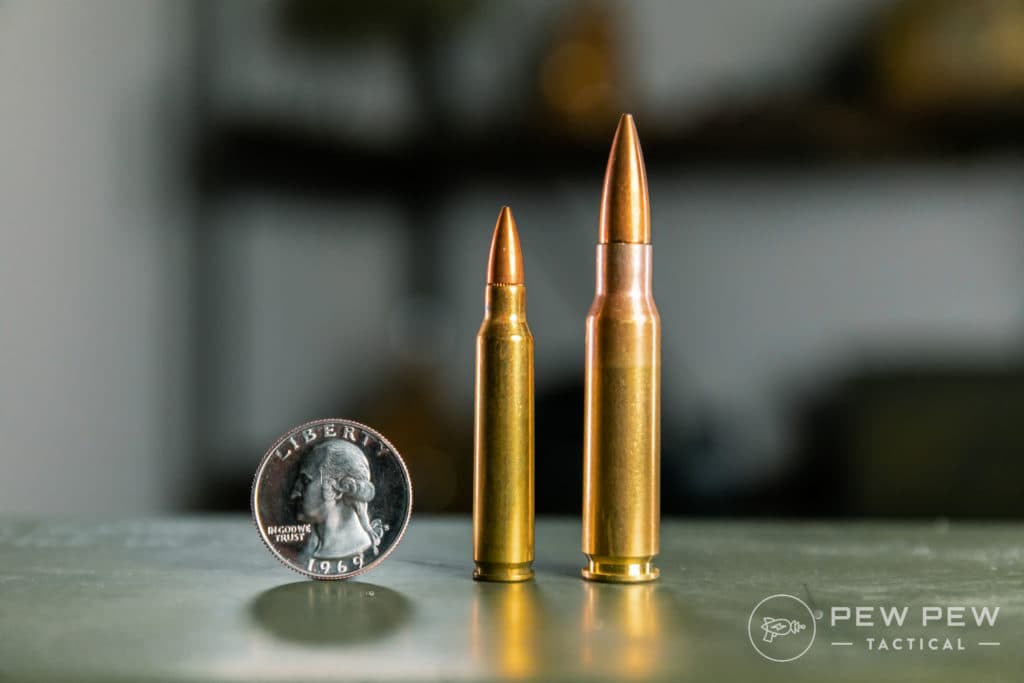
But toss a short eye relief scope on a .338 Lapua Magnum that is generating 8-10 times the recoil of a 5.56, and things might go a bit south.
Understanding how recoil works and how much recoil your rifle will generate is critical to avoiding scope bite.
Step 3: Controlling Recoil
Recoil control is a critical skill that’s often underutilized by lower-volume shooters.
Low-volume shooters are people who don’t shoot rifles very often, if at all. There are more than a few hunters who don’t routinely train with their hunting rifle. It’s honestly not all that needed because it’s not that hard to hit a whitetail deer.
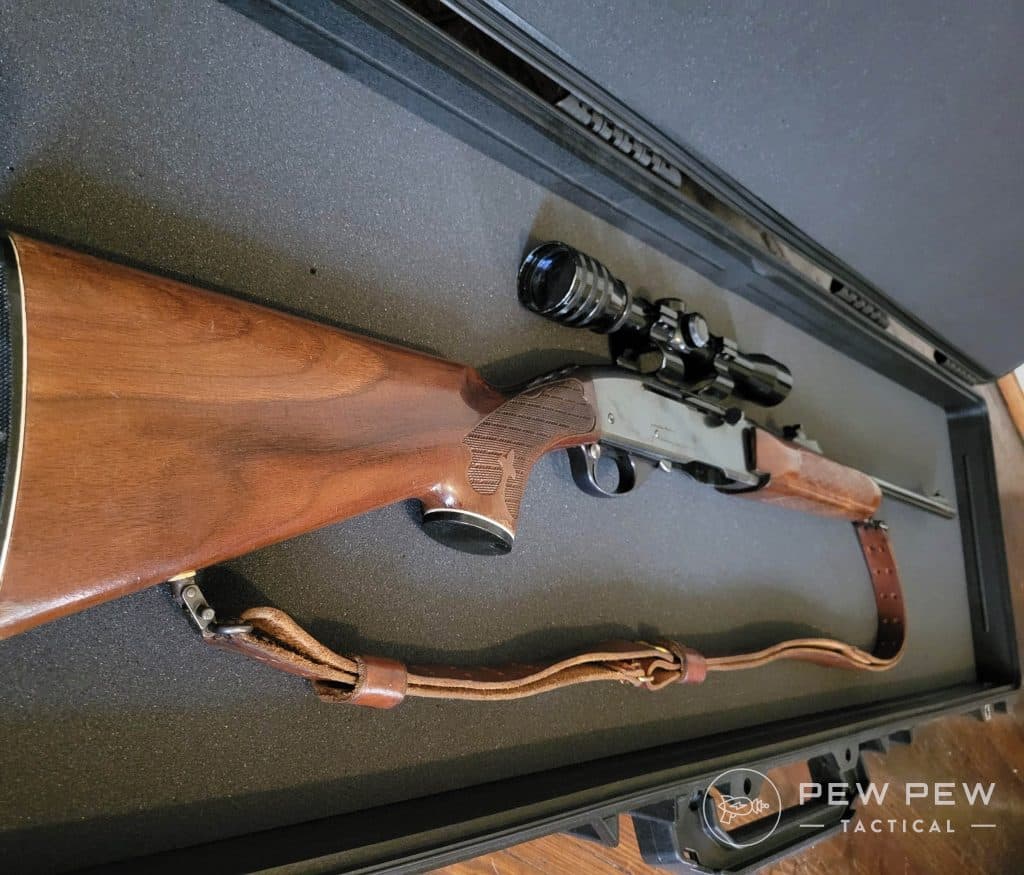
The problem comes when it is time to pull the trigger on that heavier recoiling gun, and they aren’t ready for it.
This is where recoil management comes into play. Recoil management is nothing more than using your body and bones to absorb the energy of a rifle.
It starts with stance. You want to square up behind the target and present a good, rigid body structure. Assume a boxer’s stance with your non-dominant leg forward and your dominant leg placed a bit rearward. I think of myself as an artillery piece with the rear leg bracing the gun to absorb recoil.
Lean forward just a bit, putting your upper body behind the gun. I like to eat Swiss rolls, and this stance means I make all those calories work in my favor for recoil control.
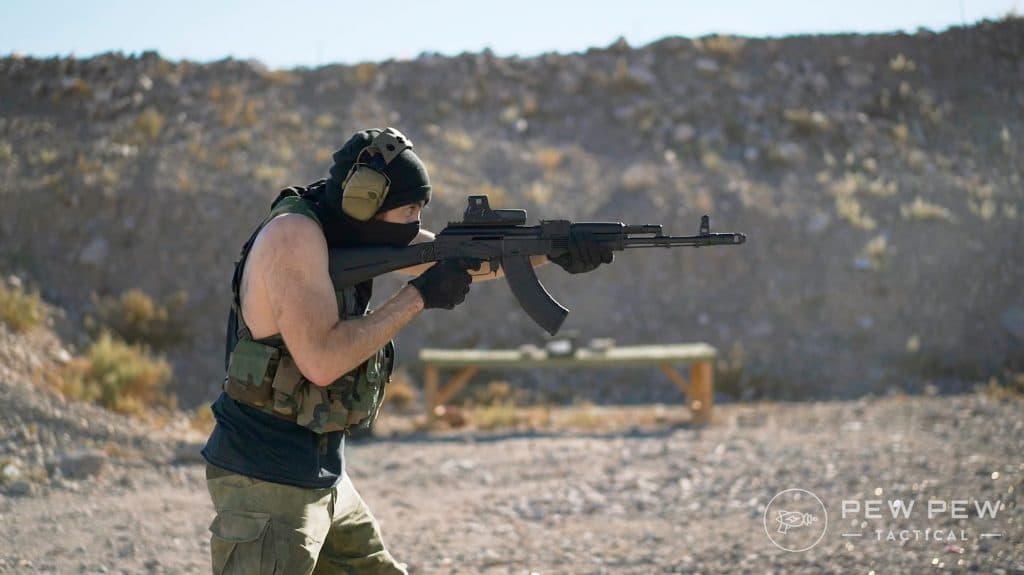
Pull the gun into your shoulder nice and tight. If it’s not tight enough to your shoulder, the gun will move freely and multiply the effects of recoil.
You don’t have to pull it like you're trying to pull through your shoulder, but you want to minimize the rifle’s movement.
Step 4: Checking Gun Fitment
It is important to have a gun that comfortably fits into your shoulder while comfortably reaching the forend.
As an avid shotgunner, I can tell you a lot of guns simply aren’t made for anyone outside of giants. This is why measuring the length of pull for your rifle or shotgun is critical.
Length of pull is simply the distance between the trigger and the end of the buttstock. But depending on your body size, you may need a longer or shorter length of pull.
Check out this short two-minute video from Brownells on how to properly measure length of pull.
Some guns will have adjustable stocks or adjustable lengths of pull, but many guns don’t. And to be honest, most guns don’t fit most people.
However, things are getting better in recent years as more companies have moved to adjustable stocks of one sort or another. Aftermarket companies like Magpul also produce stocks with adjustable lengths of pull and cheek height.
Remember, we want to square up behind the gun. If the gun forces you to shoot in a bladed position, then your long gun is too big for you.
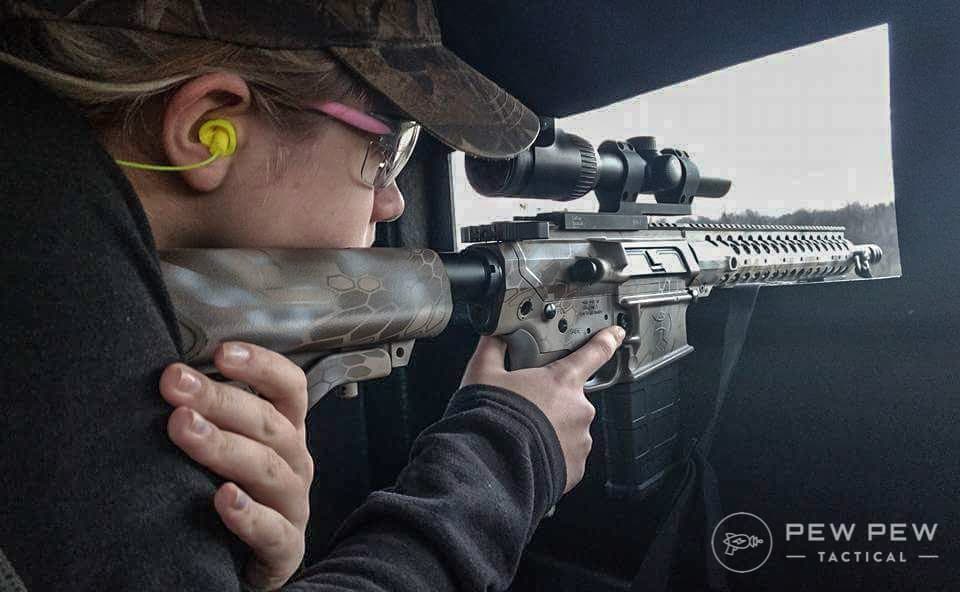
Too long a stock will force you to lean your head forward and away from a good cheek weld in order to use the optic. Combine the recoil with you craning your head forward on the gun to see through the scope, and you have a recipe for a gun that smacks you in the eye.
If I had to suggest an adjustable pull range for the end user, I’d pick something that can adjust between 12.5 and 14 inches. That will cover the vast majority of users.
Step 5: Manage Your Shooting Angles
Finally, let’s talk about angles. The angle you shoot at could greatly affect your ability to resist scope bite. Remember the story about my doctor?
He was shooting at an upward angle. When you aim upward, the distance between the top of your scope and your eye decreases. You might not even notice until you’re sporting a shiner.
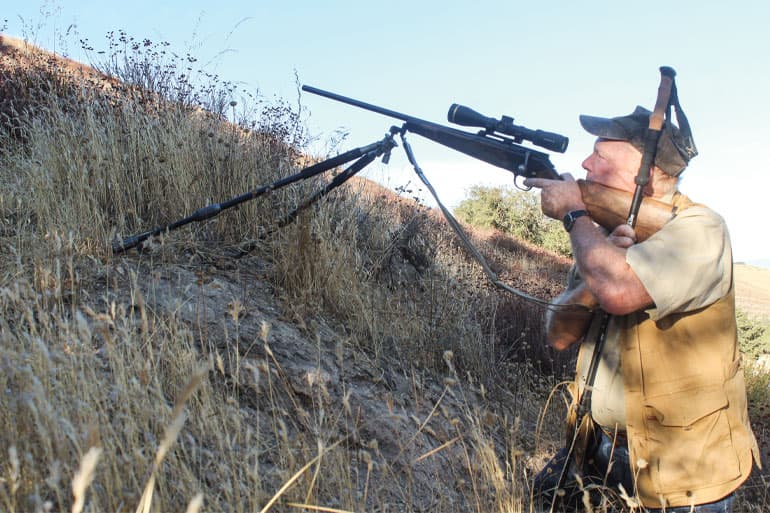
Shooting downward doesn’t get your eye closer to the optic, but the downward angle can make recoil control a bit more difficult.
In this situation, we can practice perfect recoil control. When aiming upward, acknowledge that the gap has shortened, and hold on a little tighter. Make sure your stance is solid.
When shooting downward, reinforce your position. Gravity helps pull your weight forward, including your rifle. Make sure you are pulling your rifle tight into your shoulder and not letting gravity create a gap. It often helps me to take a slightly larger step forward with my dominant leg to gain better control over the gun.
Common Mistake to Avoid
Newer shooters have a tendency to not maintain their shooting stance after firing a few shots. You might not notice right away, but next thing you know, you could be leaning back too far without even realizing it.
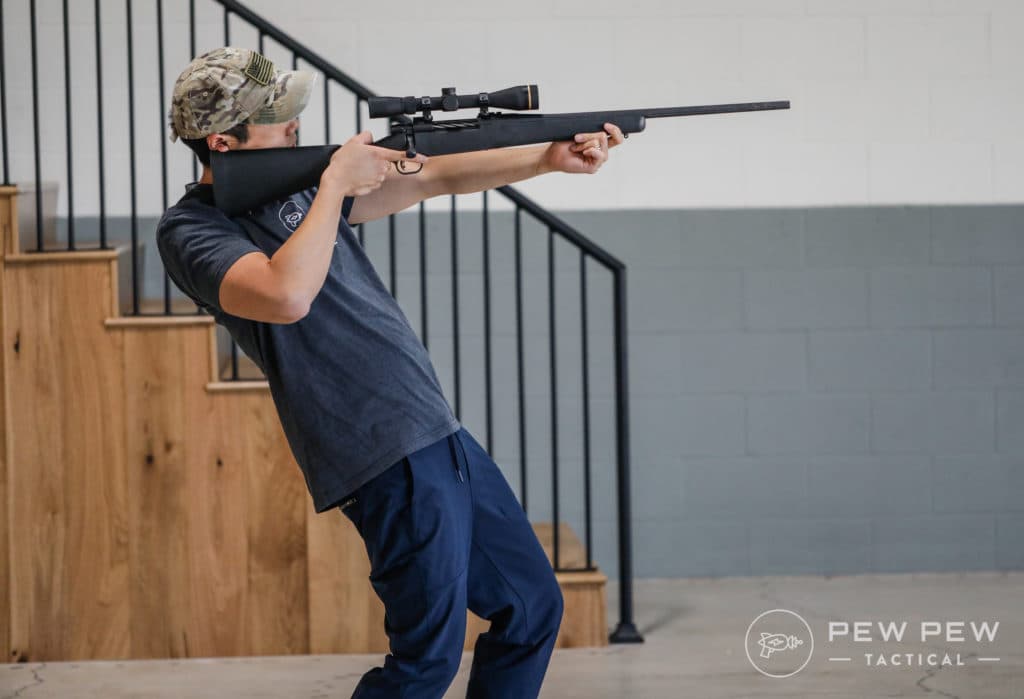
Be sure to keep a mental note of your proper shooting stance and then take a break periodically to make sure you haven't moved out of position.
One of the other main issues that can cause scope bite is the improper mounting of a scope. If the optic is mounted too far back, it can lead to a compromised shooting position where your head is too close to the scope, even if your cheek is in the correct spot relative to your length of pull.
You can learn more about setting eye relief in our article on how to mount a scope.
Meet the Experts

Pew Pew Tactical author Travis Pike wrote this article. Travis spent a lifetime shooting as a kid and later joined the United States Marine Corps, where he spent five years as an infantryman. His experience as a machinegunner, recreational and competitive shooter, and hunter has given him unique insight into various weapon platforms. Additionally, Travis has thousands of articles to his name with a variety of publications, and has tested countless guns and other firearm accessories.
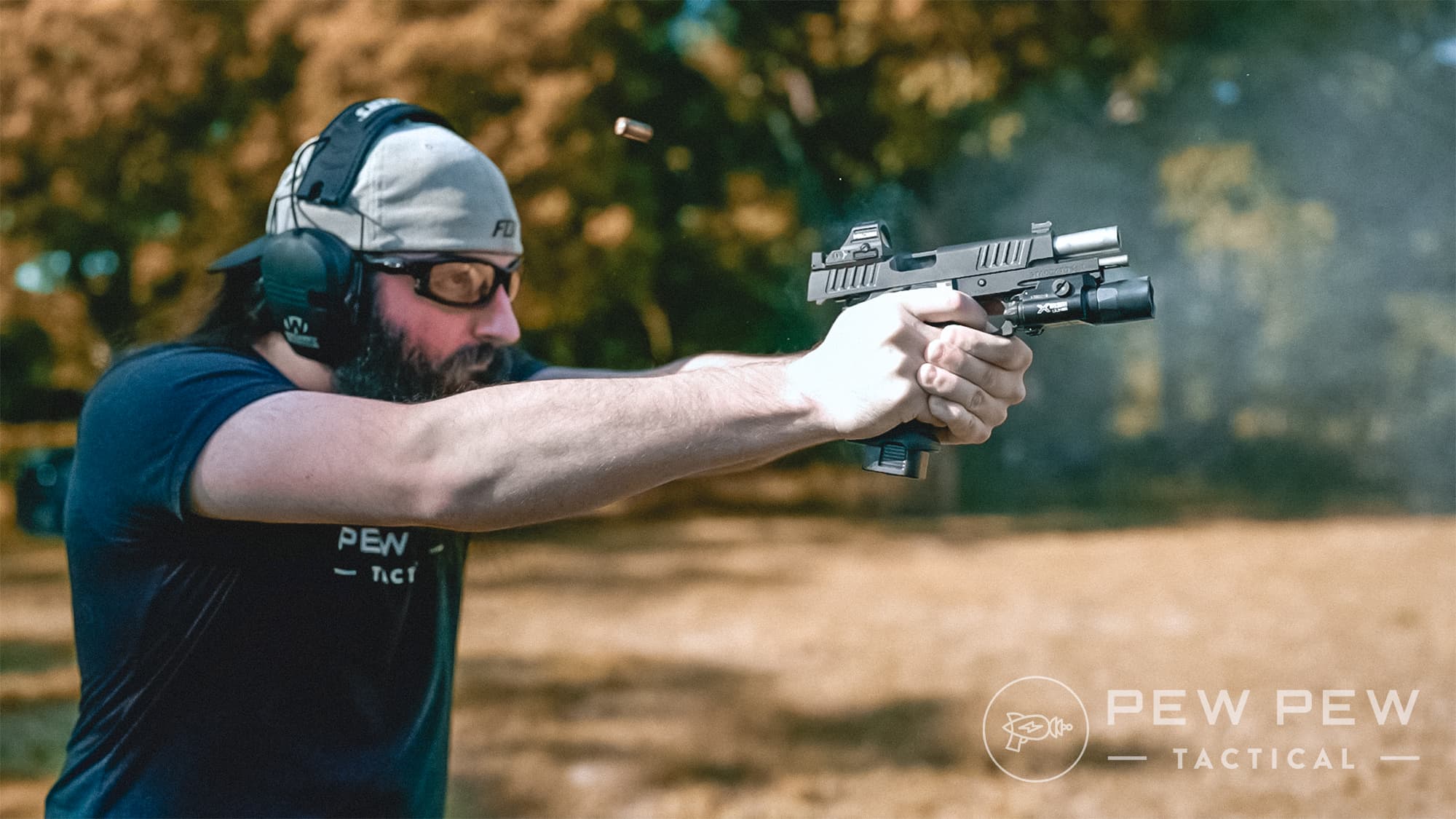
Editing and adding to this article is Pew Pew Tactical Editor, Wyatt Sloan. Wyatt is an NRA-certified instructor and also has experience with competition shooting and hunting. Wyatt personally owns over 200 firearms and has 10 years of home-based FFL firearm sales.

Editor-in-Chief Jacki Billings runs our experienced team of reviewers. She is a National Rifle Association Basic Pistol Instructor as well as a member of the Society of Professional Journalists, ACES: Society for Editing, and the Professional Outdoor Media Association. Jacki has a bachelor’s degree in journalism and has worked as a media professional for close to 20 years, specializing in gun media for almost 10 years. With 2,000+ articles to her name, she uses her professional journalism and editing experience to set testing protocols and editorial standards for Pew Pew Tactical.
Final Thoughts
Scope bite is completely optional; it doesn’t have to happen. Understanding recoil control, eye relief, and rifle fitment is key.
If you remember to check all of those boxes, you’ll keep your face happy and your dignity intact!
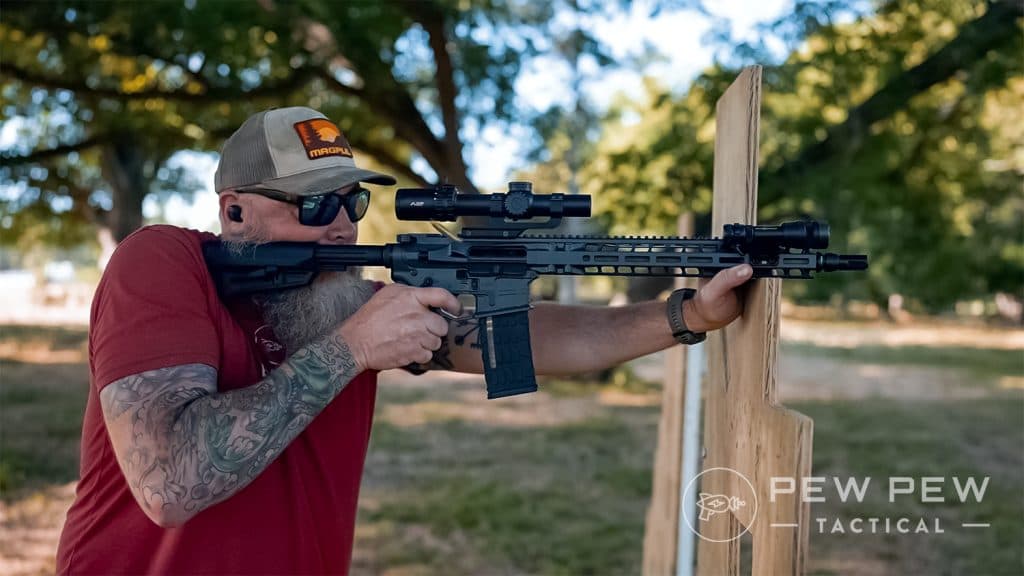
Don’t have a scope yet? Or maybe you are looking for something with better relief? Well, don't worry, we have you covered with our full rundown on the Best Rifle Scopes!