
Best AR-15 Bolt Carrier Groups (BCG): Hands-On Tested
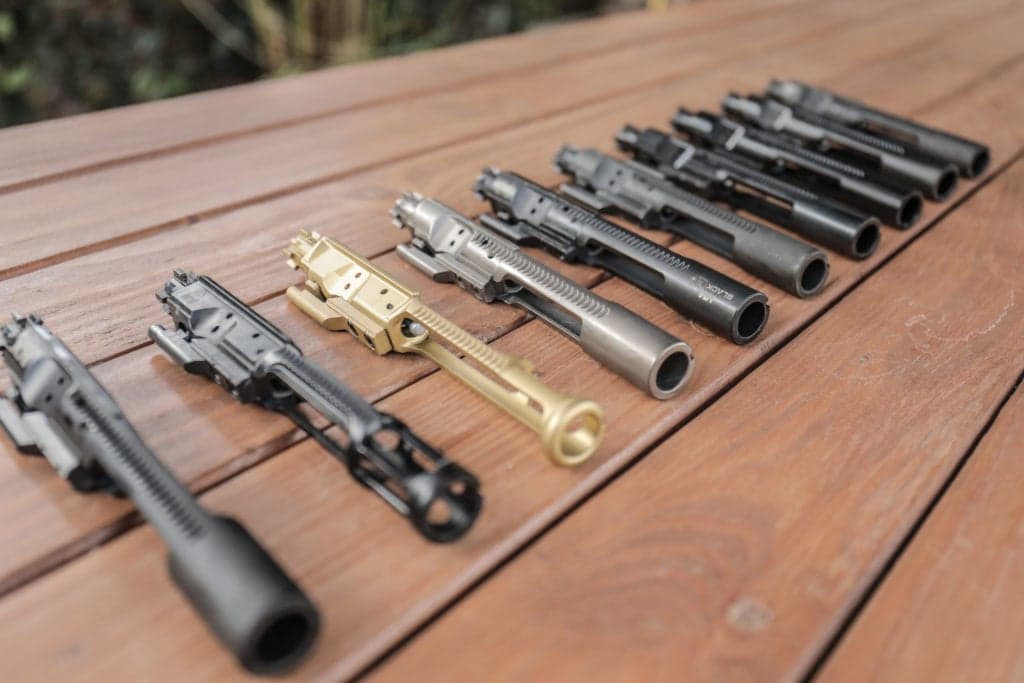
These are the best-in-class bolt carrier groups for mil-spec, low-mass, slick coatings, exotic materials, and more.


We review products independently. When you buy through links on our site, we may earn a commission to help support our testing. Learn more.
A sports car needs a great engine. An awesome AR-15 needs a great bolt carrier group (BCG).
But there are A LOT of choices.
From full-auto to lightweight, different coatings, MPI inspections, and more. It can make you go nuts (the above is probably only a few of my BCGs).
But don't worry, we've got a list of go-to BCGs.
We'll cover some of the choices and then our favorites for different purposes and budgets...from mil-spec to lightweight, gas-reduction, and even some builds just for looks.
The Quick List
- Best Overall BCG: BCM Mil-Spec BCGJump to details ↓
- Editor's Pick: Geissele Reliability Enhanced Bolt Carrier GroupJump to details ↓
- Best Nickel Boron BCG: WMD NiB-X BCGJump to details ↓
- Most Affordable BCG: PSA Mil-Spec Phosphate BCGJump to details ↓
- Best Lightweight BCG: Walker Defense Ti BCG 5.56/.300 BLKJump to details ↓
- Great Titanium BCG: Rubber City Armory Titanium BCGJump to details ↓
- Most Affordable Lightweight BCG: Brownells BRN M16 Lightweight BCGJump to details ↓
- Best for Reducing Gas Blowback: KAK K-Spec BCGJump to details ↓
- Best Adjustable BCG: Bootleg Adjustable AR-15 BCGJump to details ↓
- Tough & Reliable BCG: Sharps Rifle Co. Xtreme Performance BCG (DLC)Jump to details ↓
Table of Contents
Best AR-15 BCG Comparison Chart
| Price | Carrier Material | Bolt Material | Finish | Individually MPI/HPT Tested | Weight | |
|---|---|---|---|---|---|---|
| BCM M16 BCG | $189 | 8620 Steel | Carpenter 158 Steel | Phosphate | Yes | 11.5 oz. |
| Geissele Enhanced Reliability BCG | $385 | 8620 Steel | Carpenter 158+ Steel | Nanoweapon (Chrome Nitride) | Yes | 11.48 oz. |
| WMD NiB-X BCG | $156 | 8620 Steel | 9310 Steel | NiB-X (Nickel Boron) | Yes | 11.75 oz. |
| PSA Mil-Spec BCG | $89 | 8620 Steel | Carpenter 158 Steel | Phosphate | MPI Only | ~11.5 oz. |
| Walker Defense Titanium BCG | $369 | 6Al-4V (Grade 5) Titanium | 9310 Steel | Ionbond DLC (Diamond-Like Carbon) | HPT Only | 7.8 oz. |
| RCA Titanium BCG | $304 | Titanium | 9310 Steel | Aerospace Nitride | Not Listed | 7.8 oz. |
| Brownells BRN M16 Lightweight BCG | $139 | 8620 Steel | 9310 Steel | Nitride | MPI Only | 8.2 oz. |
| KAK K Spec BCG | $139 | 8620 Steel | 9310 Steel | Various | MPI Only | 11.5 oz. |
| Bootleg Adjustable Carrier | $199 | S7 Tool Steel | S7 Tool Steel | Lithium Isonite | MPI Only | 11.4 oz. |
| Sharps Xtreme Performance BCG | $219 | S7 Tool Steel | S7 Tool Steel | DLC (Diamond-Like Carbon) | Yes | 11.2 oz. |
How We Tested AR-15 BCGs
The Pew Pew Tactical team has put a lot of rounds through a lot of BCGs during our testing of complete rifles, builds, barrels, optics, & ammo.

And now that we've been testing more silencers and NVGs, we've added thousands of rounds downrange with suppressors, which have a habit of really gunking up BCGs.
Testing Protocol
Below is our criteria and testing protocol for each bolt carrier group on this list.
- At least 2000 rounds across at least rifles over a 1-year timeframe
- At least 1000 rounds running 100% without lubing or cleaning
- At least 500 rounds suppressed
- Meets or exceeds Mil-Spec standards
- Individually MPI (magnetic particle inspected)
Meet the Experts
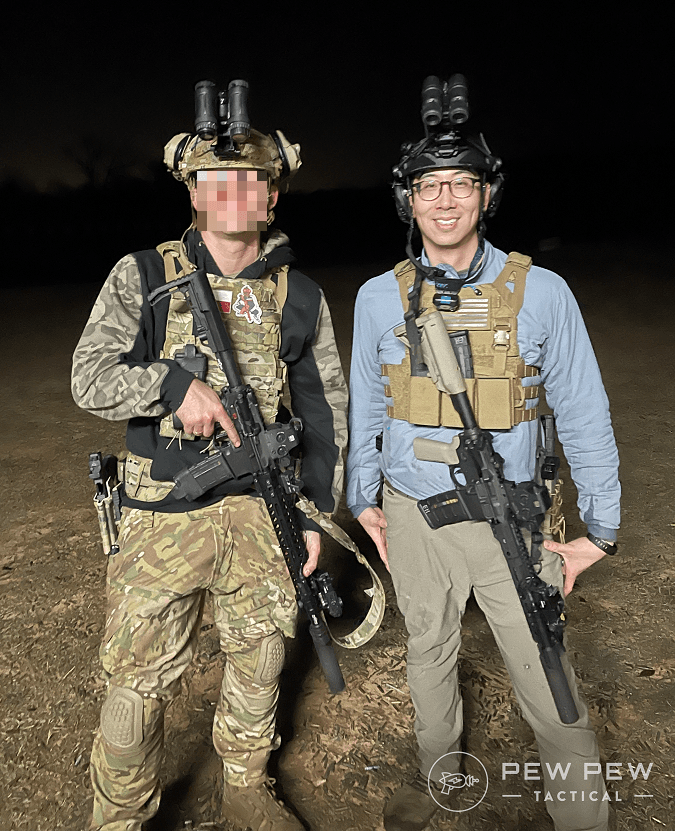
While input from this article came from multiple Pew Pew Tactical members, this article was spearheaded and authored by Pew Pew Tactical founder, Eric Hung. Eric is an NRA-certified pistol instructor and a USPSA, 3-Gun, and NRL22 competitor. He has also researched and written over 250 articles on firearms and gear. He has personally run almost every BCG on this list and offers his perspective on what works and what doesn't.
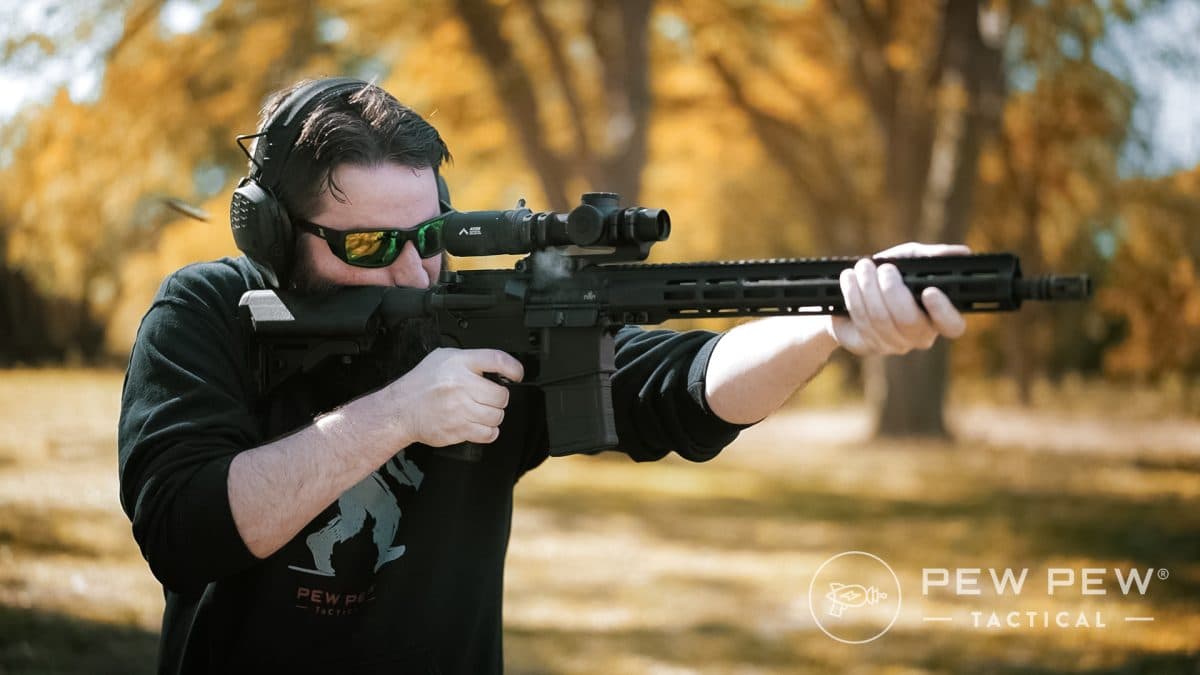
Editing this article is Pew Pew Tactical Editor, Wyatt Sloan. Wyatt has been involved in shooting sports for over two decades as an avid hunter, recreational shooter, and former competitive shooter. He is an NRA-certified handgun instructor and a USCCA AR-15 defensive instructor. He owns over 200 guns in his personal collection, including over a dozen AR-15s, which he uses to test and judge AR parts, including bolt carrier groups.
Best AR-15 Bolt Carrier Groups (BCG)
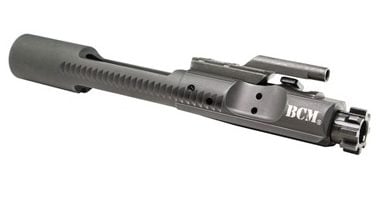
1. Bravo Company Manufacturing (BCM) M16 BCG - Best Overall BCG
Pros
- Mil-spec everything
- Each BCG is MPI & HPT tested
- Each BCG is test-fired for function
Cons
- None
Let's just start with our overall pick for the best mil-spec BCG.
If you ask most people online what their go-to BCG is, you will undoubtedly hear more than a few people recommending BCM's M16 BCG.
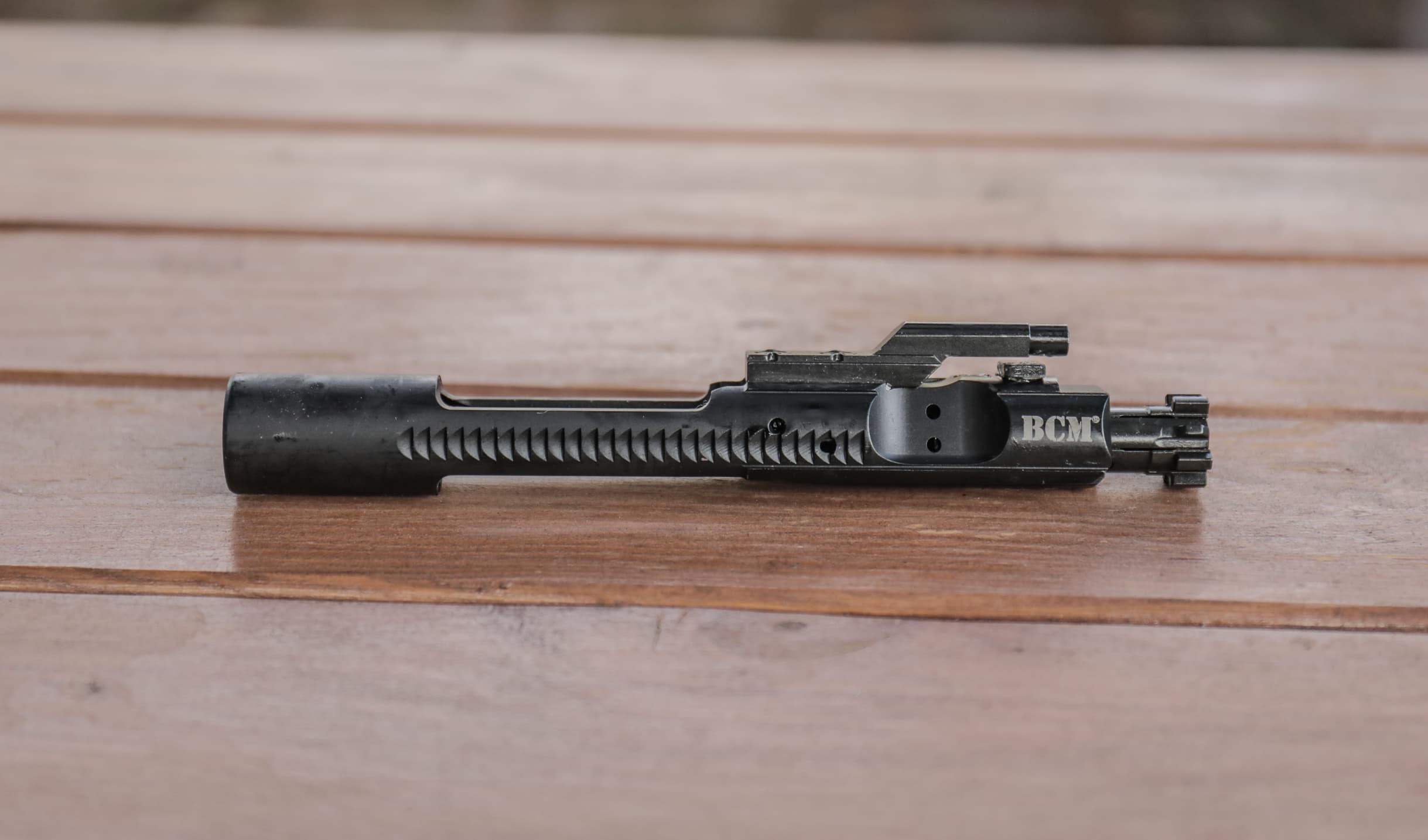
These BCGs are manufactured to BCM's specifications by Microbest, which is one of the most well-known and highly regarded OEM manufacturers of BCGs.
Each individual BCG is MPI (magnetic particle inspected) & HPT (high-pressure tested), and test-fired.
We've run multiple BCM BCGs in various builds, from 11.5-inch suppressed to 16-inch carbine builds. The most tested of these builds is well past the 3000-round count.
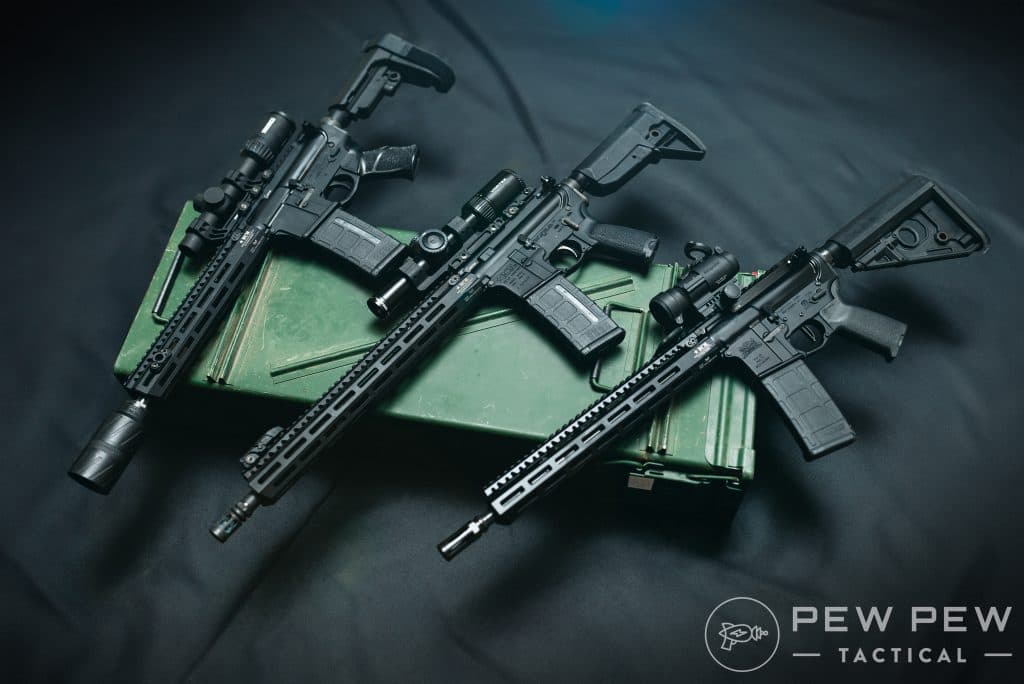
There is not much else to say except that these have mil-spec everything and have a great reputation.
But no matter what we throw at them, the BCM BCGs keep on chugging. That's why BCM is also one of our go-tos for AR-15 uppers.
2. Geissele Enhanced Reliability BCG - Editor's Pick
Pros
- Nanoweapon Coating
- Individually MPI & HPT
- Proprietary Carpenter 158+ Steel Bolt
Cons
- Expensive
- Can be tough to find in stock at times
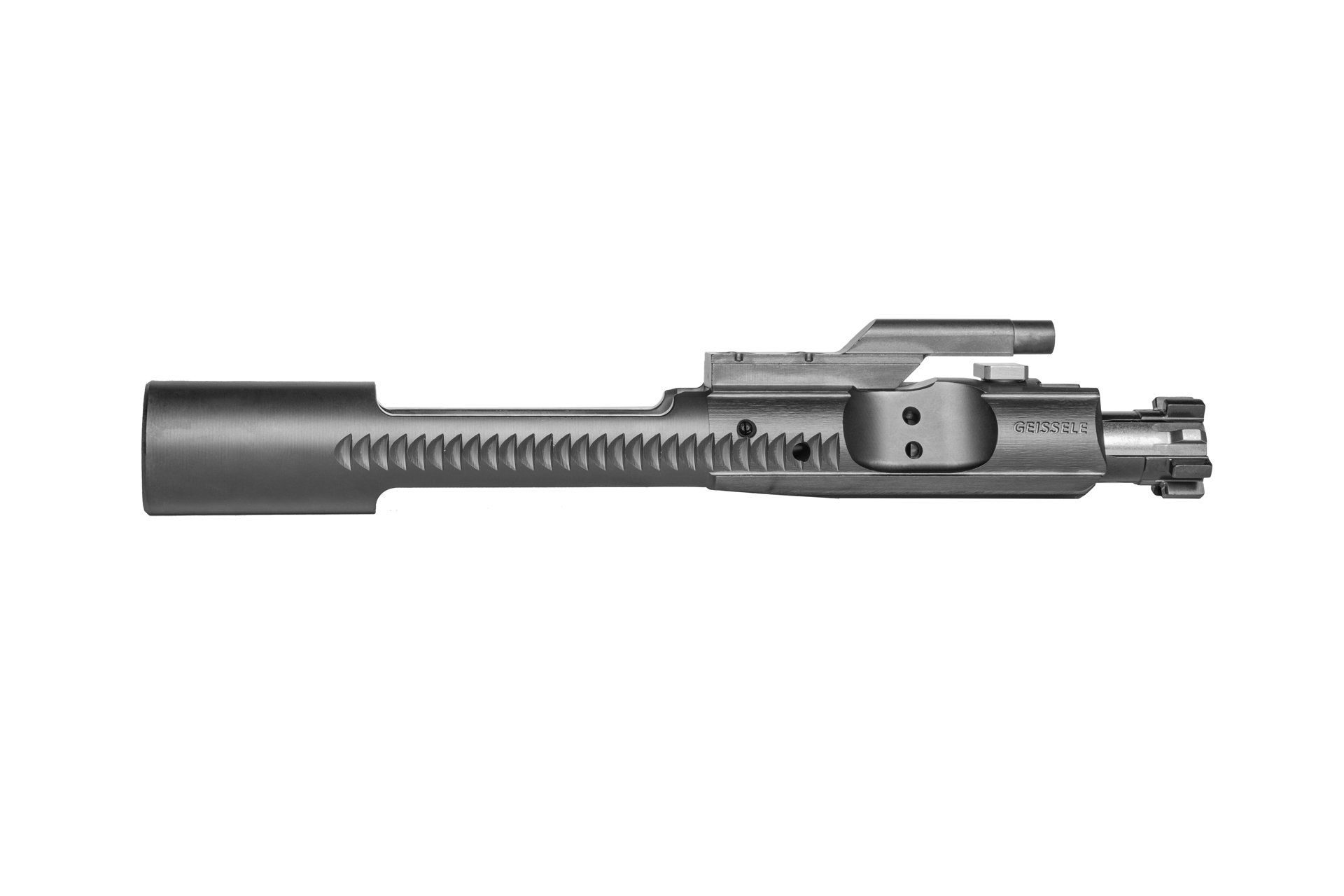
Geissele is known for its excellent rifles, especially the Super Duty line. Much of the performance of those rifles can be attributed to their excellent Enhanced Reliability BCG (ERBCG).
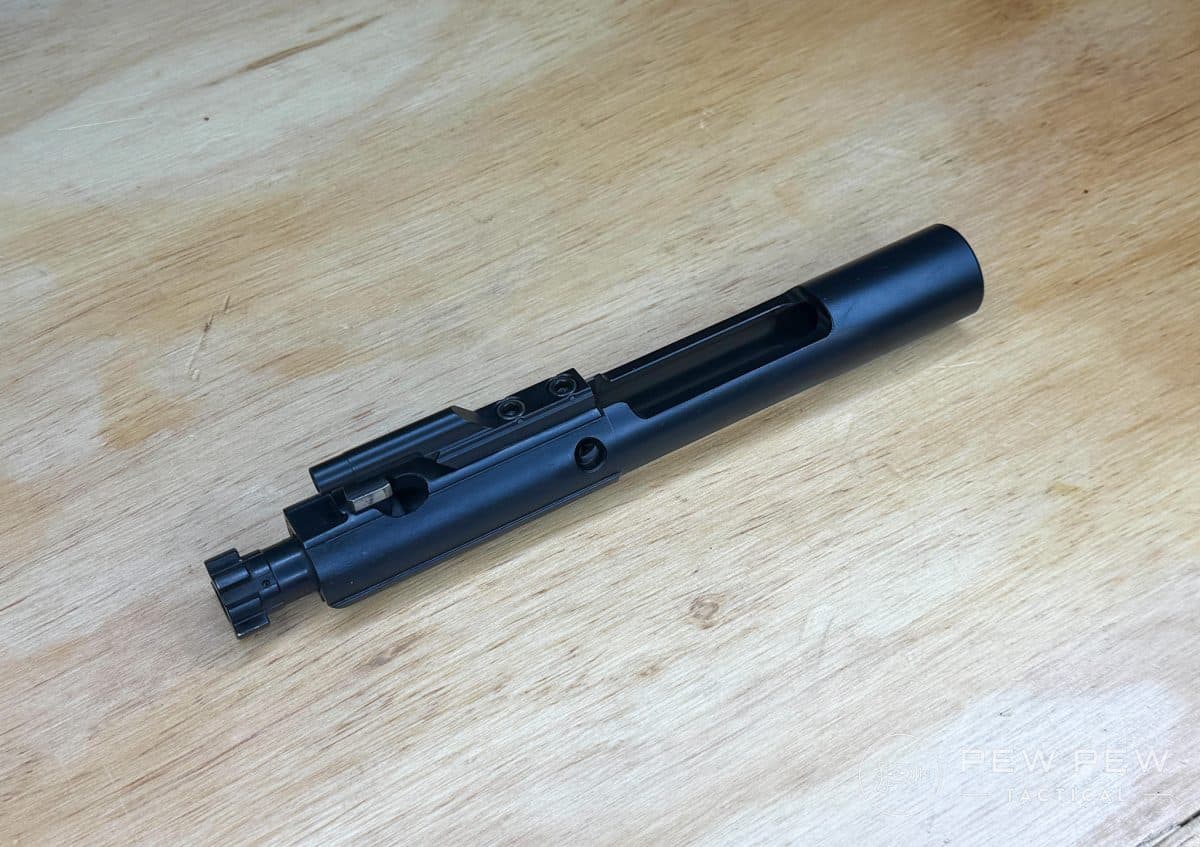
The ERBCG is coated in Geissele’s Nanoweapon coating. This proprietary chrome-nitride mixture offers improved corrosion, wear, and abrasion resistance, while also making cleaning fairly easy.
Each BCG is MPI and HPT, but the real secret sauce is in the bolt. Geissele collaborated directly with the metallurgists at Carpenter to create what they call a C158+ Stressproof bolt.
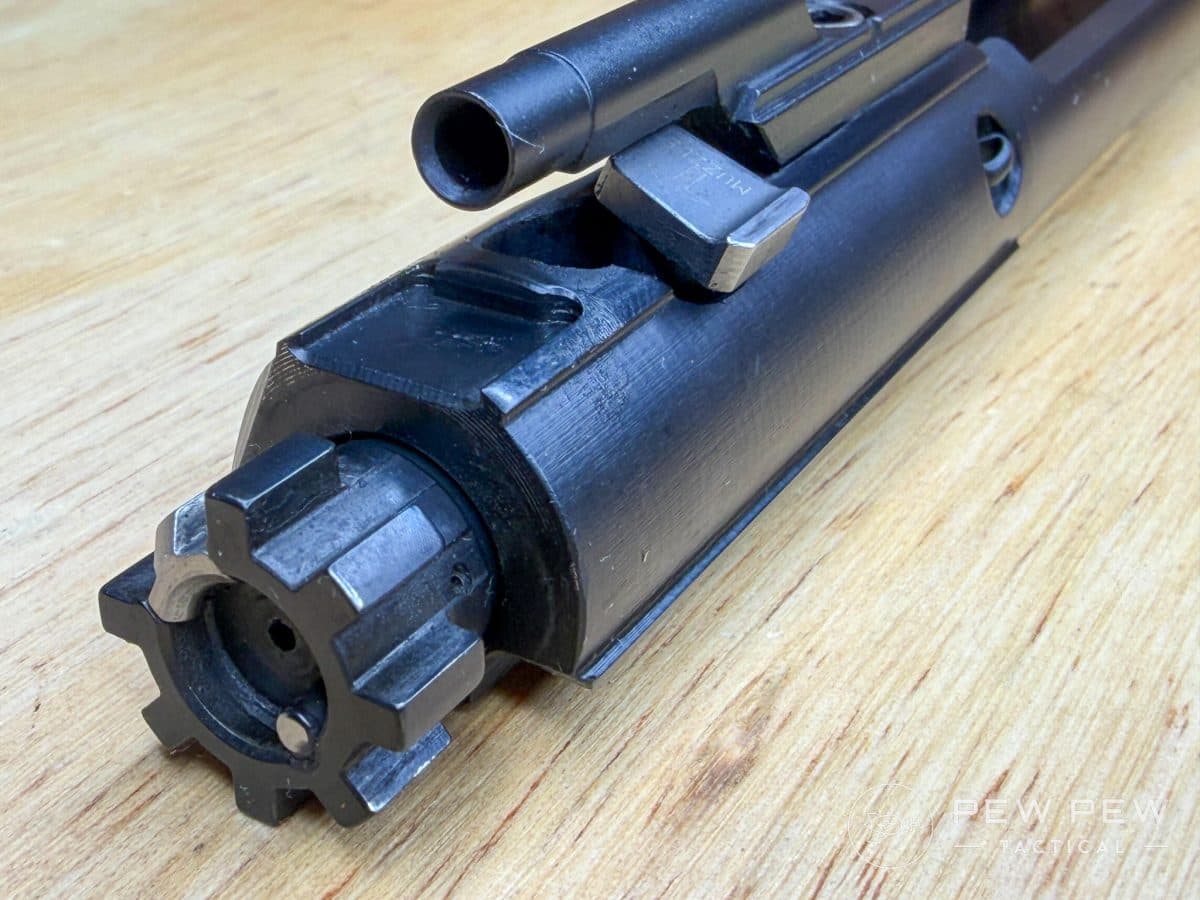
Geissele claims that their Stressproof can last up to 5 times longer than a standard mil-spec bolt, thanks to its proprietary, wear-resistant steel.
Between the Nanoweapon coating and Stressproof bolt, Geissele's ERBCG has proven itself to be one of the best in the business.
3. WMD NiB-X BCG - Best Nickel Boron BCG

Pros
- Easier to clean Nickel Boron coating
- Silver color pops out look-wise
Cons
- Darkens with use
We have our first Nickel Boron (NiB) coated BCG, this time from WMD.
BCGs with this type of coating used to be much more expensive, but prices have normalized since there are now quite a few manufacturers that offer NIB BCGs.
NIB coating on bolt-carrier groups helps increase lubricity and ease of cleanup. Plus, the silver color pops out in your upper receiver.
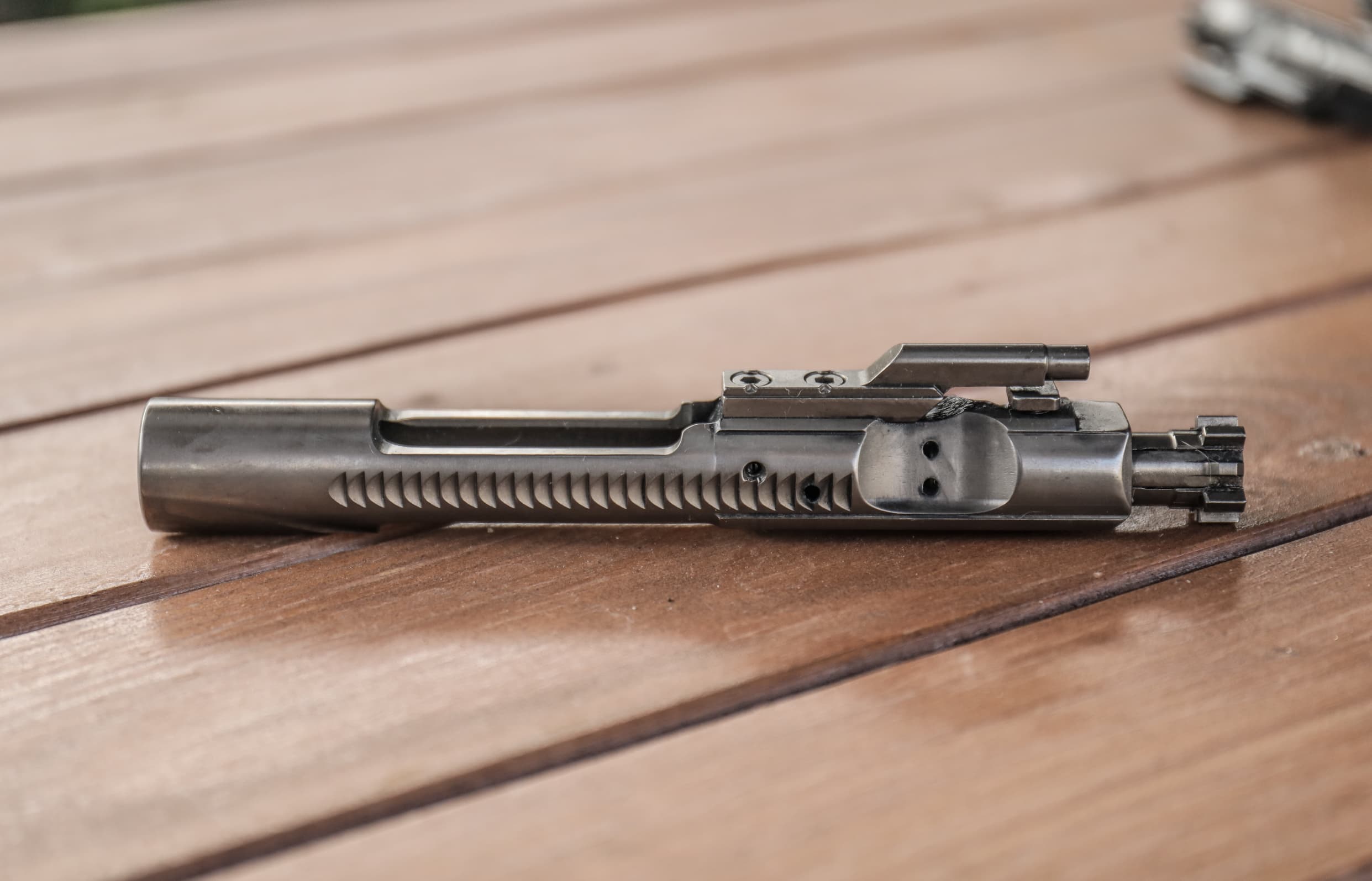
However, the more you shoot it (especially suppressed), the darker it will turn. Don't worry, that's totally normal.
My WMD NiB BCG has been chugging along in my AR pistol for a few thousand rounds, and I've only needed to wipe it down with some cleaner and a microfiber cloth.
4. Palmetto State Armory (PSA) Mil-Spec BCG - Most Affordable BCG
Pros
- Mil-Spec and MPI tested
- Most affordable
- Very reliable
Cons
- Cosmetically could look better
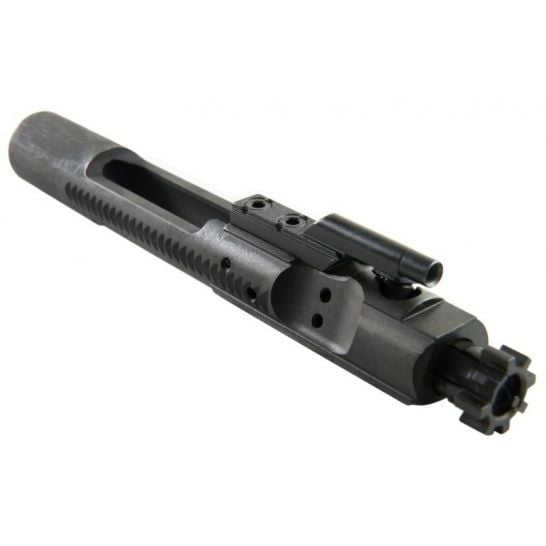
If you are looking to save some cash on your next build but want something that still works reliably, Palmetto State Armory's BCG is your ticket.
Toolcraft, which is one of the largest OEM manufacturers of bolt carrier groups, makes these for PSA. Each of these carriers is MPI and HPT, and features a full-auto profile.
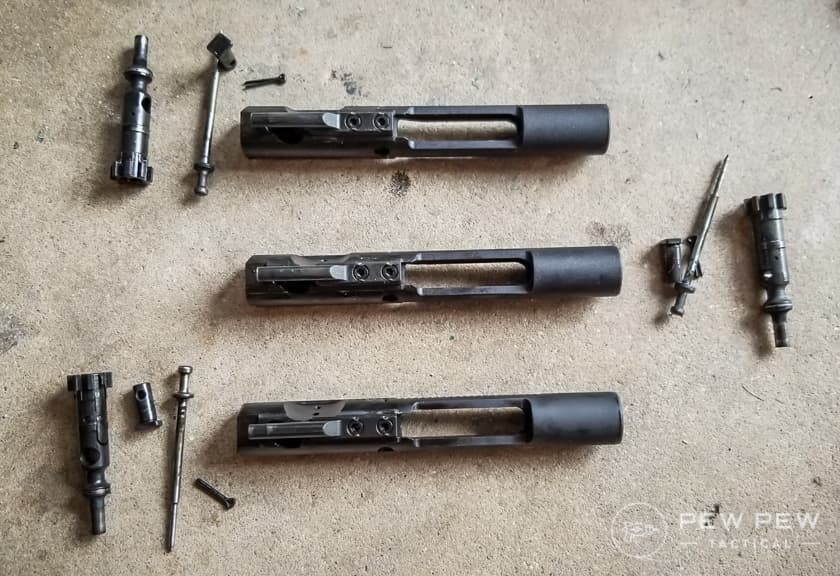
Their mil-spec phosphate BCGs might not be the best-looking, but they work, and we've had thousands of rounds through them over the last 10 years.
What's your take on the PSA BCG? Give it a rating below.
Readers’ Ratings
4.98/5 (2494 Votes)Your Rating
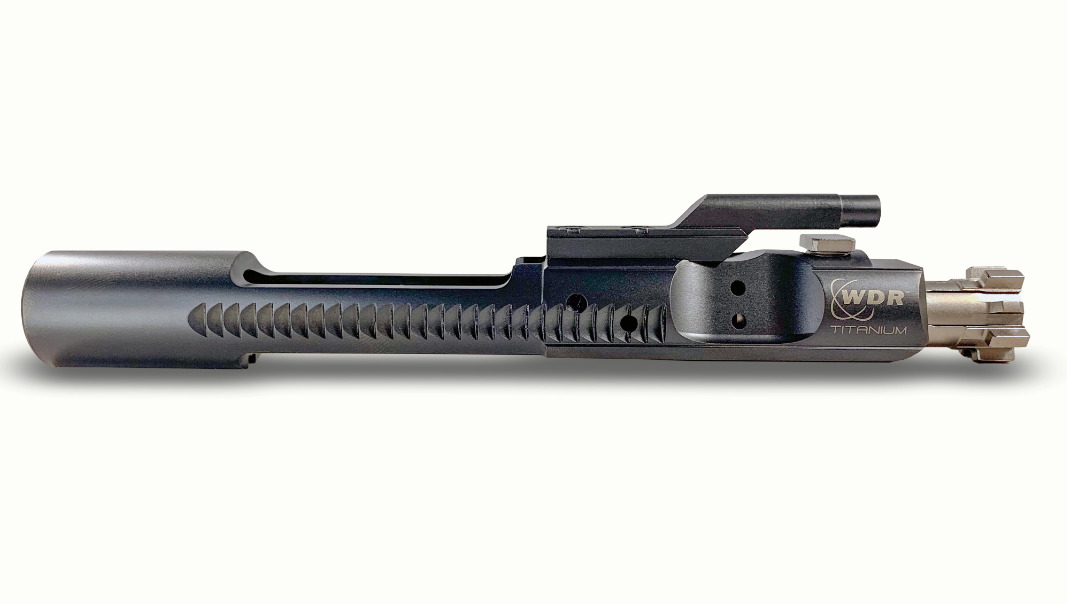
5. Walker Defense Titanium BCG - Best Lightweight BCG
Pros
- 7.8 oz (33% lighter than most)
- High-end materials & coatings
Cons
- More expensive
Walker Defense is known for its use of specialized materials. They make hi-tech AR-15 muzzle devices 3D printed from Inconel (think rocket ship engines), but also make BCGs out of titanium.
I really dig their 5.56/.300 BLK Titanium BCG. If you look closely, you'll see that the Titanium carrier is black DLC (diamond-like coating) while the bolt is silver (nickel-boron).
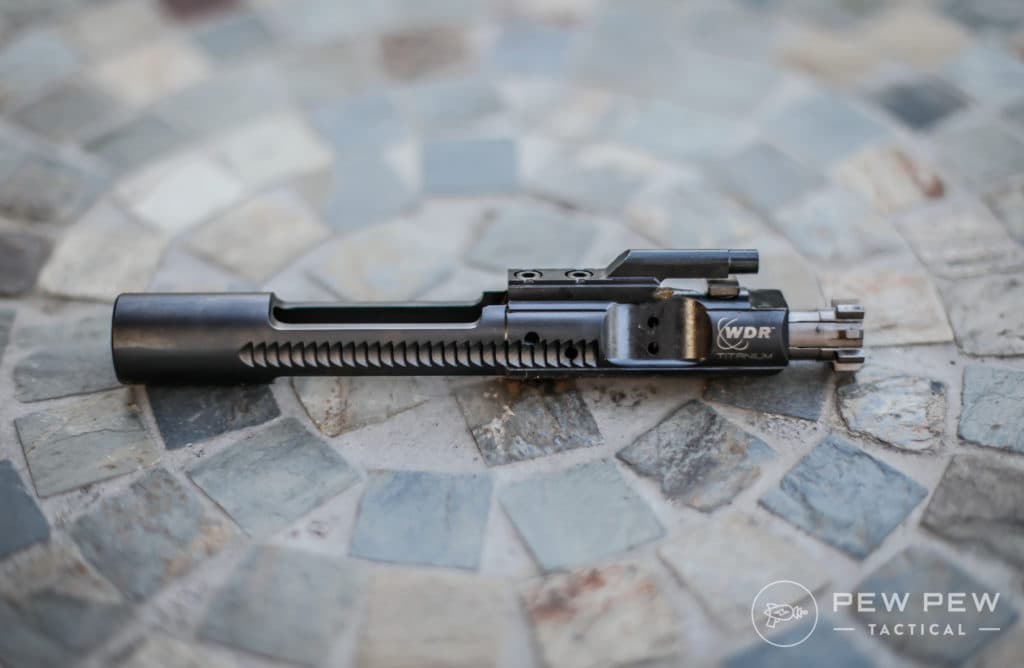
The DLC was chosen for high wear resistance and a low coefficient of friction. While the Nickel Boron on the 9310 steel bolt was chosen for being easy to clean, having a low coefficient of friction, AND having the benefit of better heat dissipation.
Something something about the bolt having similarities to a heat sink and making contact with fresh/cooler air.
It looks great, but it has also been an excellent performer so far in my competition rifles. It may be $300+, but the Walker Defense hooked you up with the coupon code “PEWPEW” for 10% off if you buy direct.
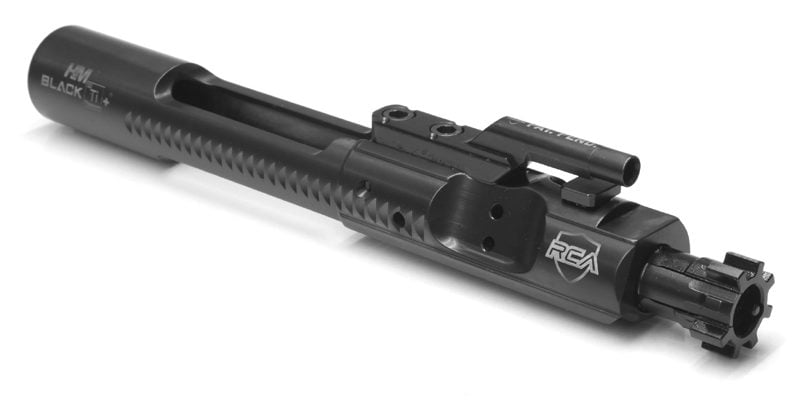
6. Rubber City Armory (RCA) Titanium BCG - Great Titanium BCG
Pros
- 7.8 oz
- Titanium carrier
- Still looks good after lots of rounds
Cons
- Expensive
- Not sold by many vendors
Another go-to for competition shooting is the Rubber City Armory Titanium BCG, but it costs a pretty penny since the carrier is Titanium.
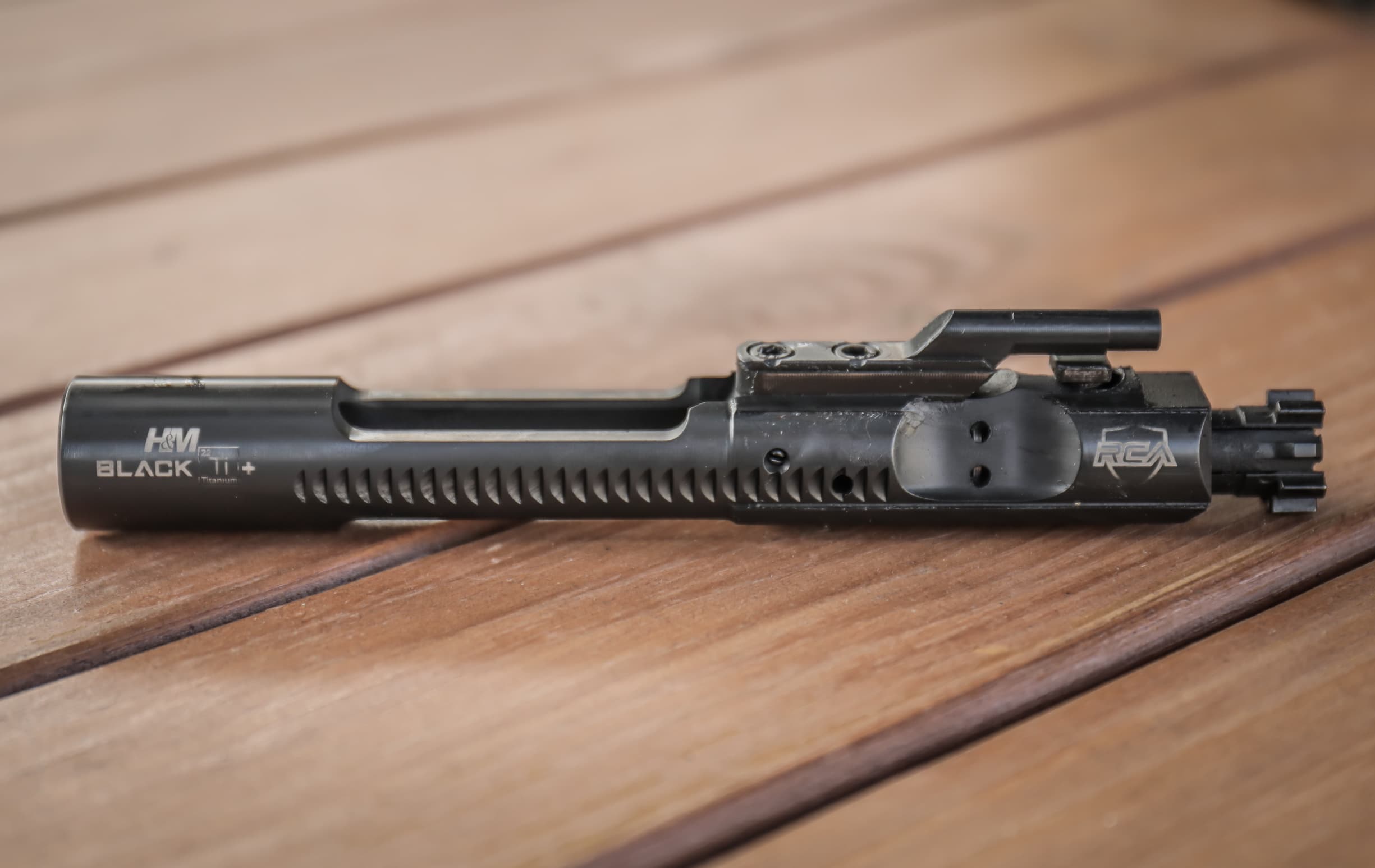
The total weight is 7.87 oz, which isn't that much less than the other steel-cut lightweights, but I like having the complete full-auto form factor.
It also features a 9310 steel bolt, which is pretty standard for lightweight builds.
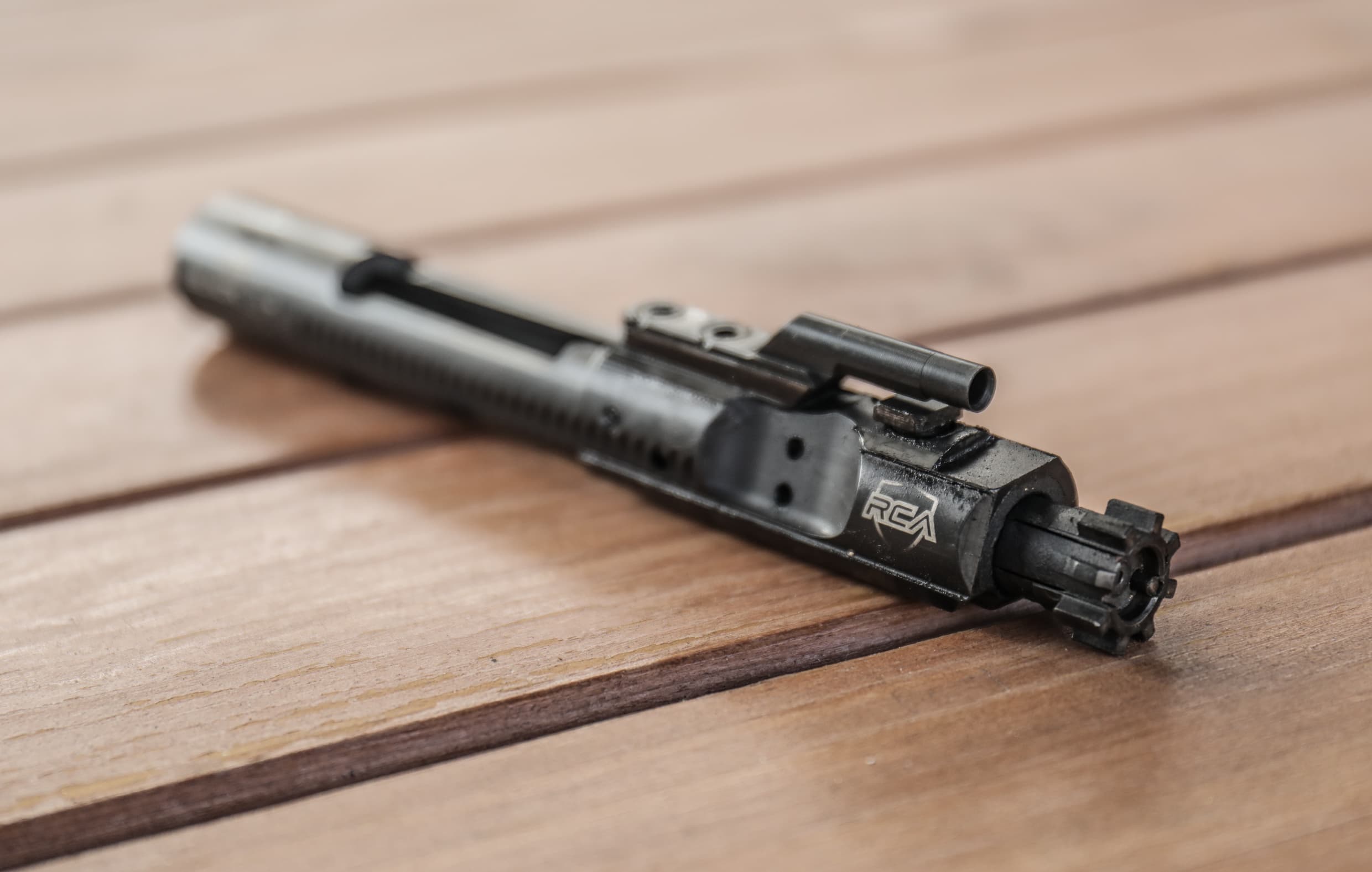
I've shot many thousands of rounds through my RCA Ti BCG, and it still looks new. There are not even that many wear marks on the contact surfaces. It has been rather impressive.
7. Brownells BRN M16 Lightweight BCG - Most Affordable Lightweight BCG
Pros
- Only 8.2 oz
- Much more affordable than lightweight titanium options
Cons
- Frequently goes out of stock
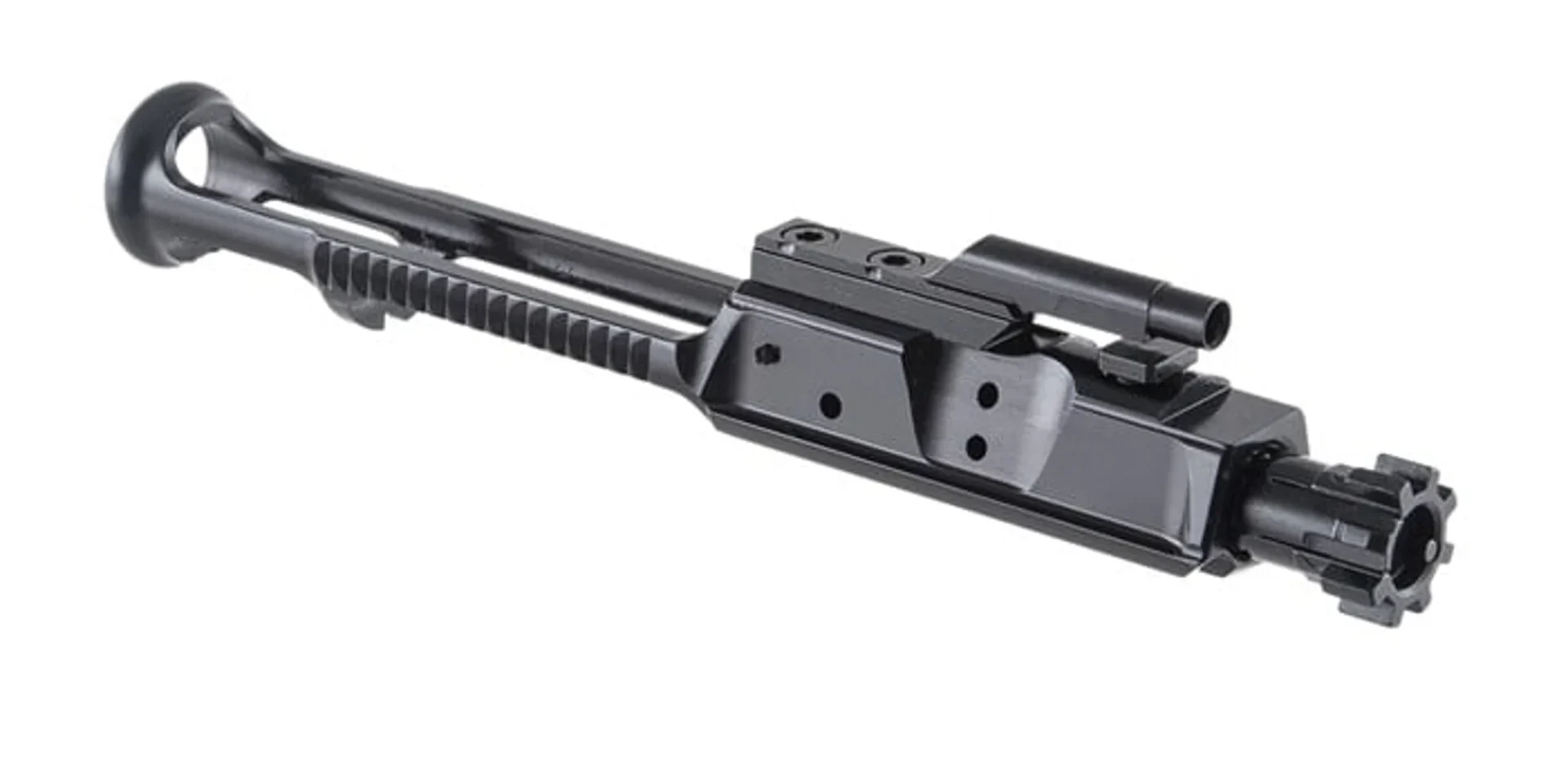
Brownells has thrown a contender into the ring with their in-house lightweight BCGs.
Their bolt uses 9310 steel, but again, it is standard practice for lightweight builds and likely won't matter too much unless you are pushing super high round counts.
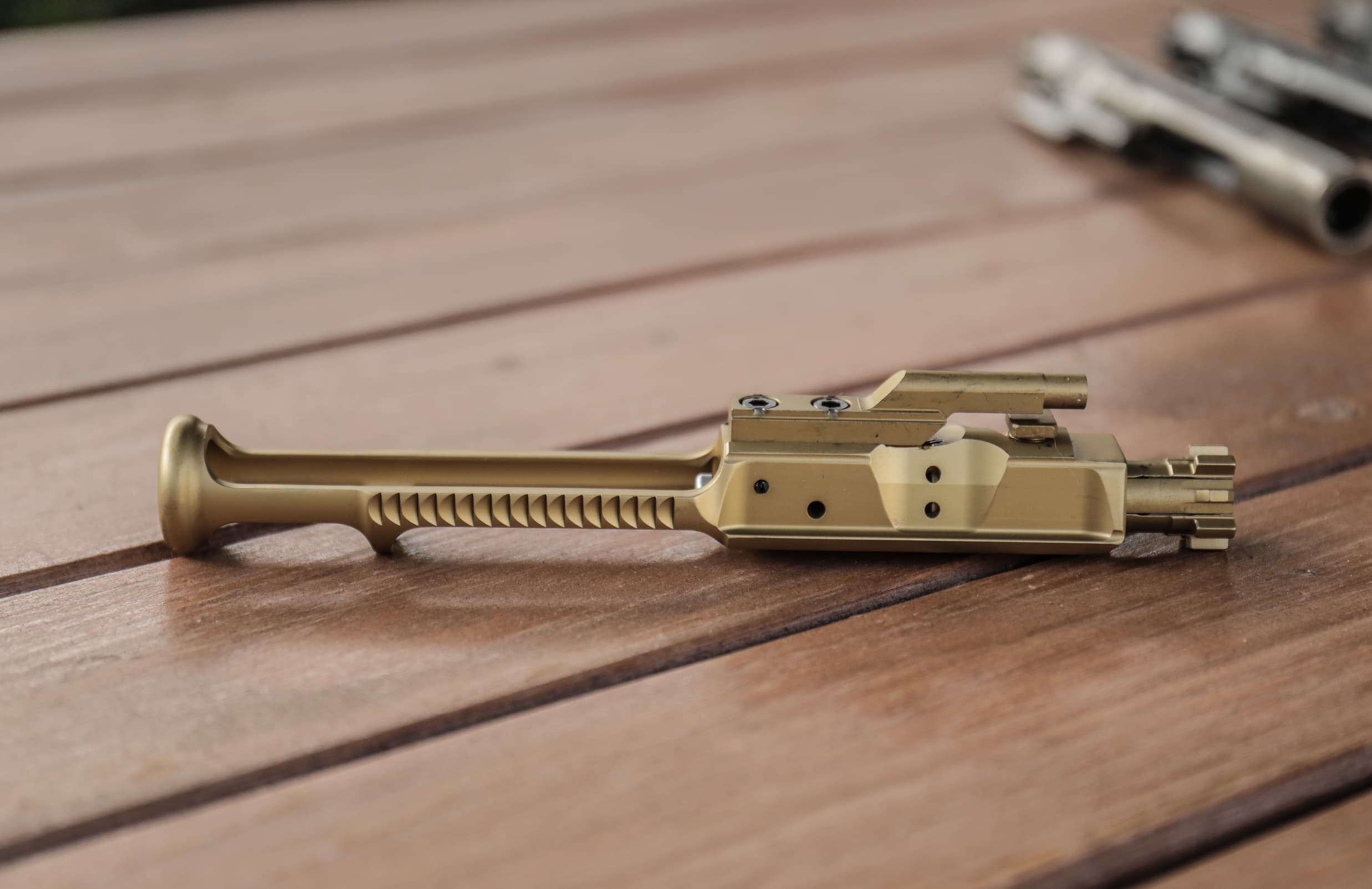
It weighs in a little heavier than the titanium counterparts at 8.2 ounces, but since it is steel, it is less than half the price.
Brownells originally offered different finishes, of which I chose their gold Titanium Nitride finish. However, they have since consolidated their product line and now only offer their lightweight BCG in a black nitride finish.
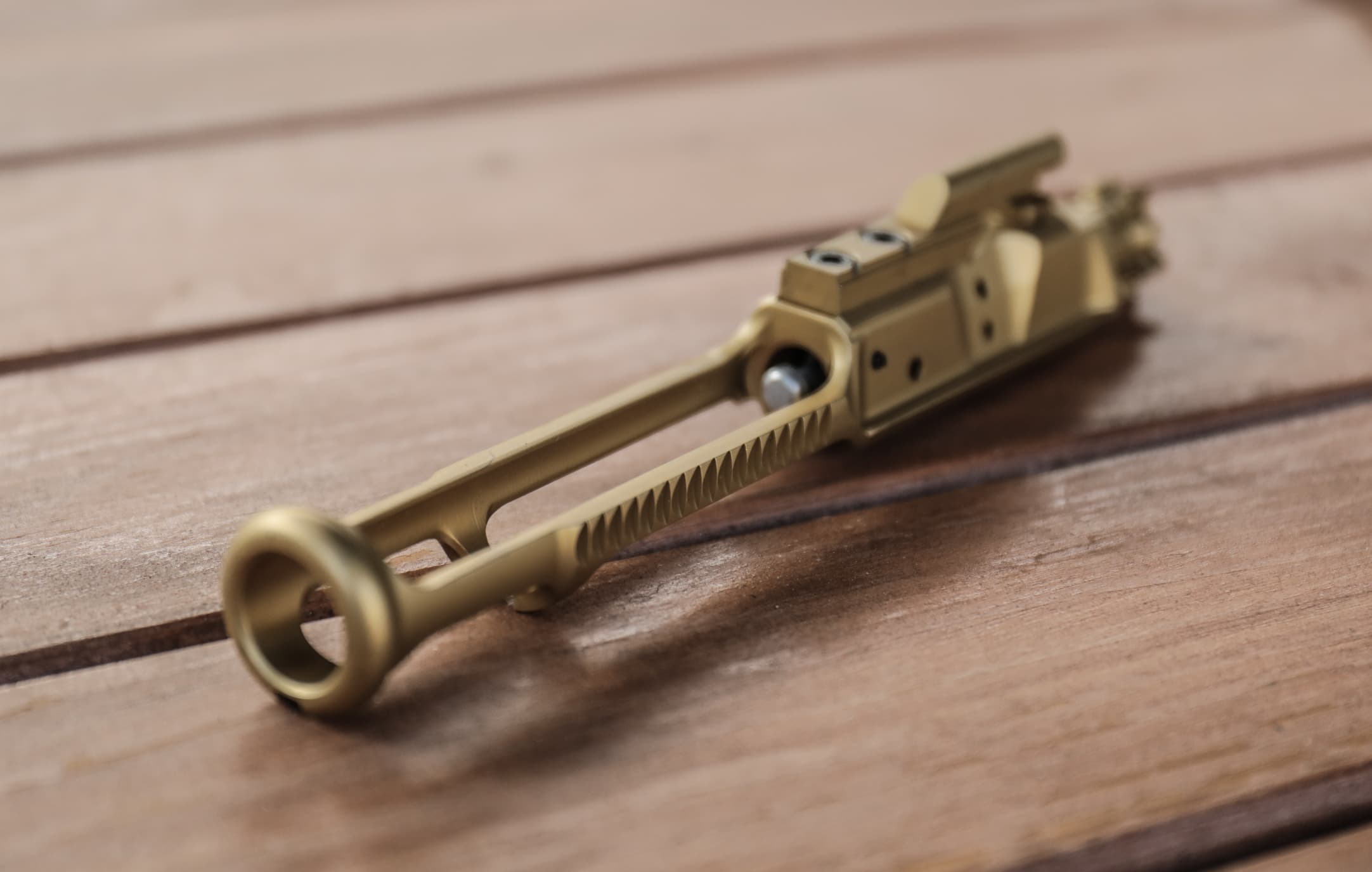
If you can catch these in stock, they are great options for lightweight builds if you are still trying to stay on a reasonable budget.
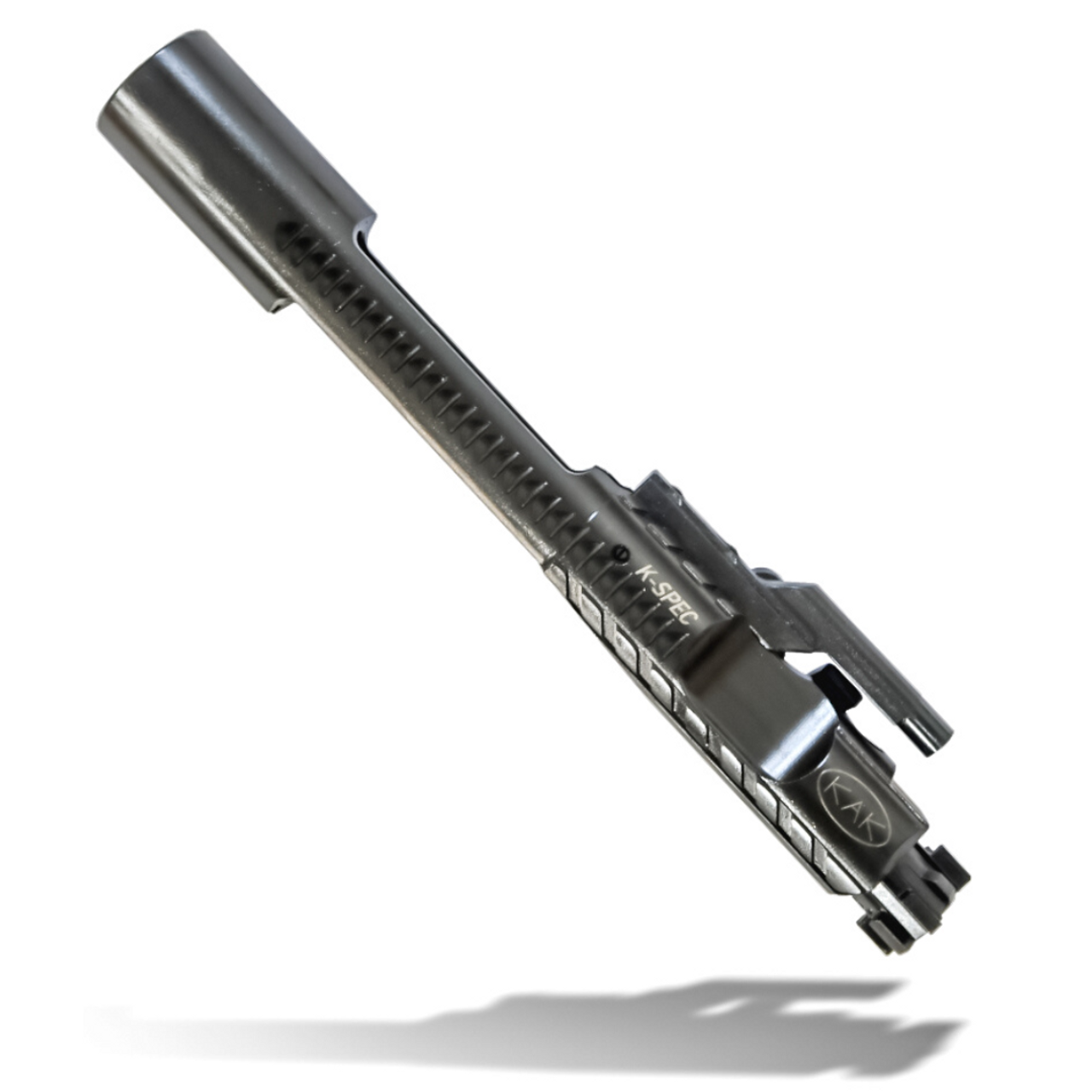
8. KAK K-Spec BCG - Best for Reducing Gas Blowback
Pros
- Vents gas downward
- Sandcutter rails
- Dual ejectors
Cons
- None
If you don't have an adjustable gas block and you're running a standard suppressor on a short barrel, you're going to get tons of gas in your face.
That is where the KAK K-Spec BCG comes in. This BCG solved my over-gassing problems on my suppressed 10.3" MK18.
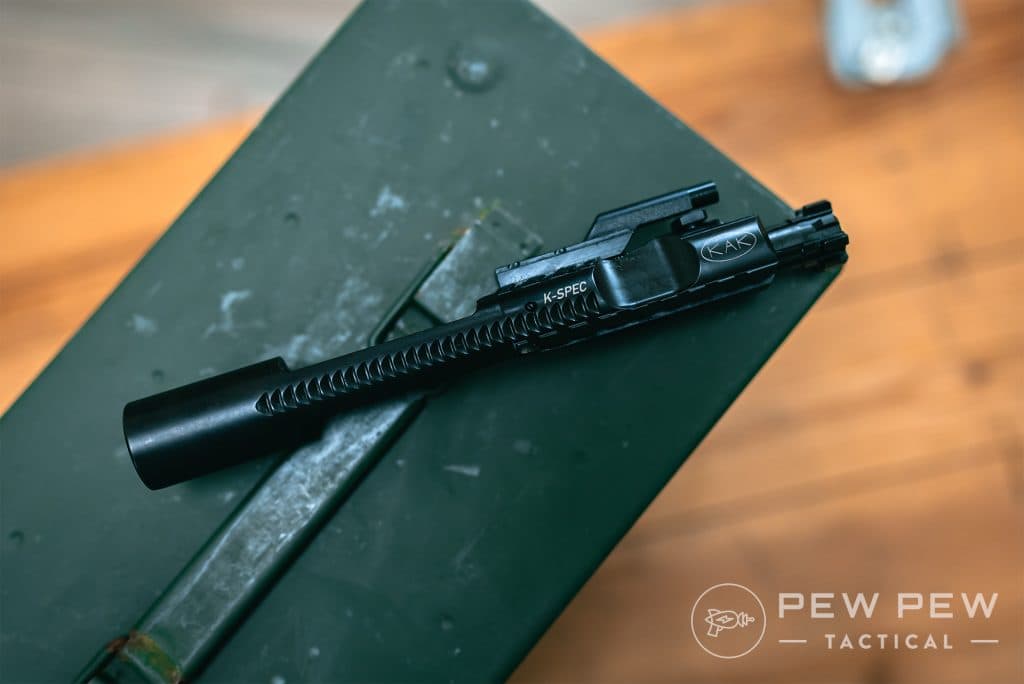
I didn't want to take my factory MK18 apart to add an adjustable gas block, so I got the K-Spec for its excellent feature set
Firstly, it has some aggressive "sandcutting" rails that help divert debris into less critical areas of your AR.
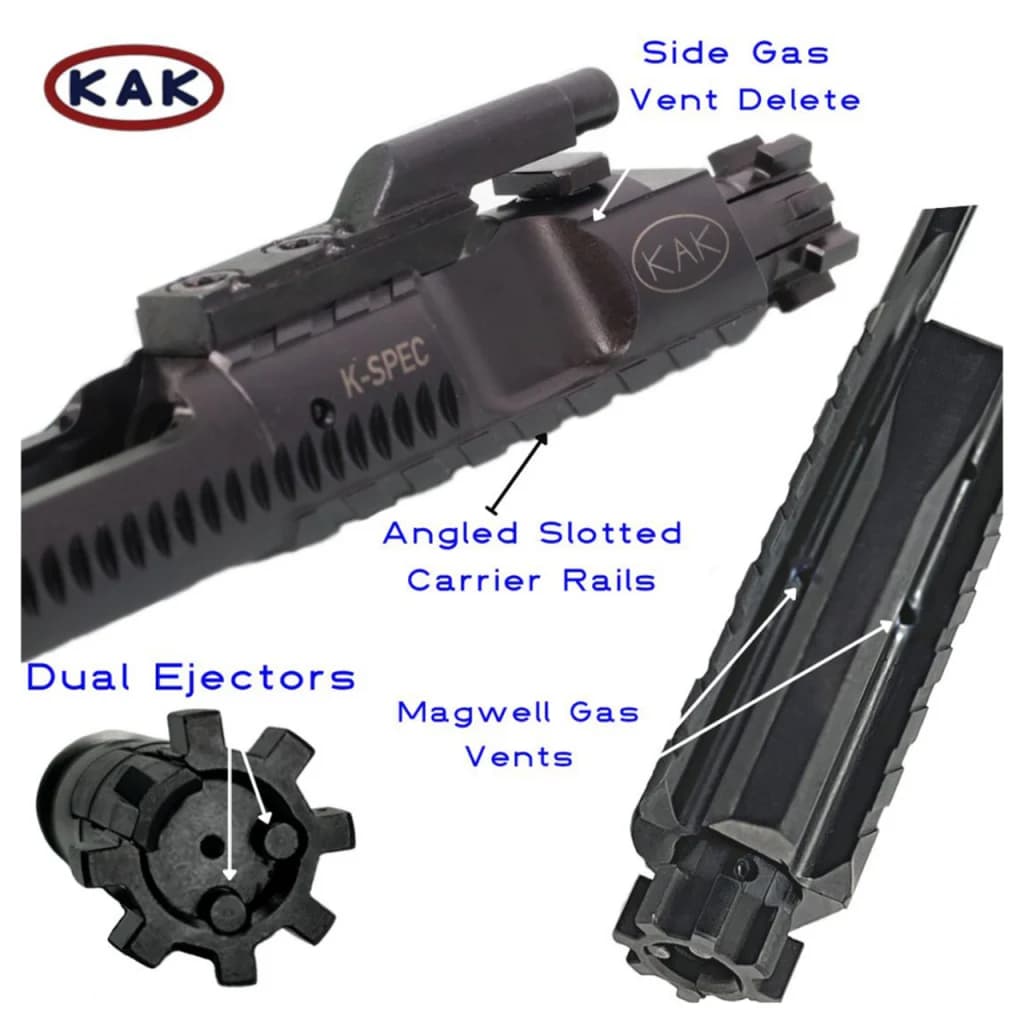
And, more importantly to me for my purpose, it has gas-diversion holes that go into the magazine.
Now hold up...did I say magazine? Yup!

It sounds weird, but chances are your mag will get really dirty from any kind of suppressed shooting anyway. Check this video to see a side-by-side.
Lastly, the dual ejectors are intended to enhance reliability. I'm over 2000 rounds on this BCG, and so far, so good.
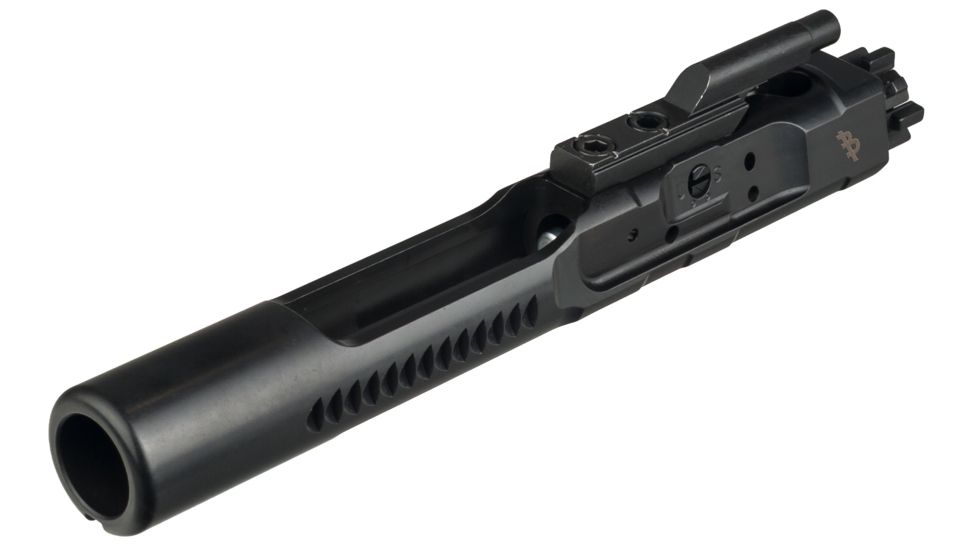
9. Bootleg Adjustable Carrier - Best Adjustable BCG
Pros
- Adjust gas on the BCG
- Great for short barrel suppressed builds
Cons
- More parts that can go wrong
Here's a BCG that has a trick up its sleeve.
Bootleg's adjustable carrier lets you adjust the amount of gas returning via a nifty 4-position vent system on the carrier itself.
The carriers are awesome if you want adjustable gas for a suppressed build, but don't want to mess with installing or using an adjustable gas block.

I can say that I definitely feel the recoil difference between the different gas settings. But since there are only 4 settings, you can't quite get the exact amount of fine-tuning as you would with a fully adjustable gas block.
But for quick gas adjustments that require no heavy modification to the rifle, the Bootleg Adjustable Carrier is a sweet option.
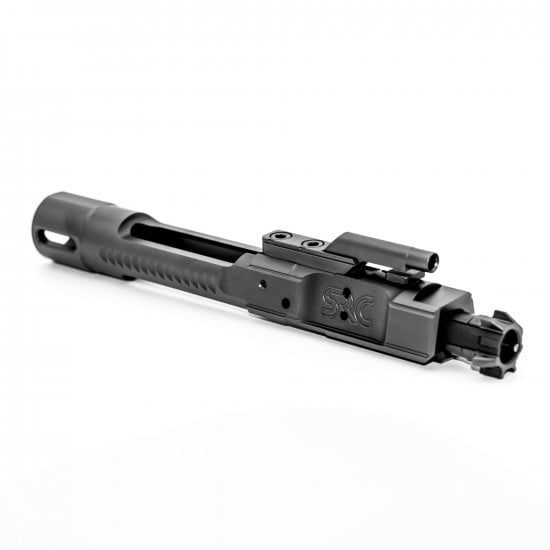
10. Sharps Xtreme Performance BCG - Tough & Reliable BCG
Pros
- Super tough BCG
- DLC coating
- Worked well with steel case ammo
Cons
- Some proprietary parts
Sharps Rifle Company has a storied history strongly tied to the Old West.
It's pretty cool to see they are still around, innovating products like their Xtreme Performance Bolt Carrier Group.
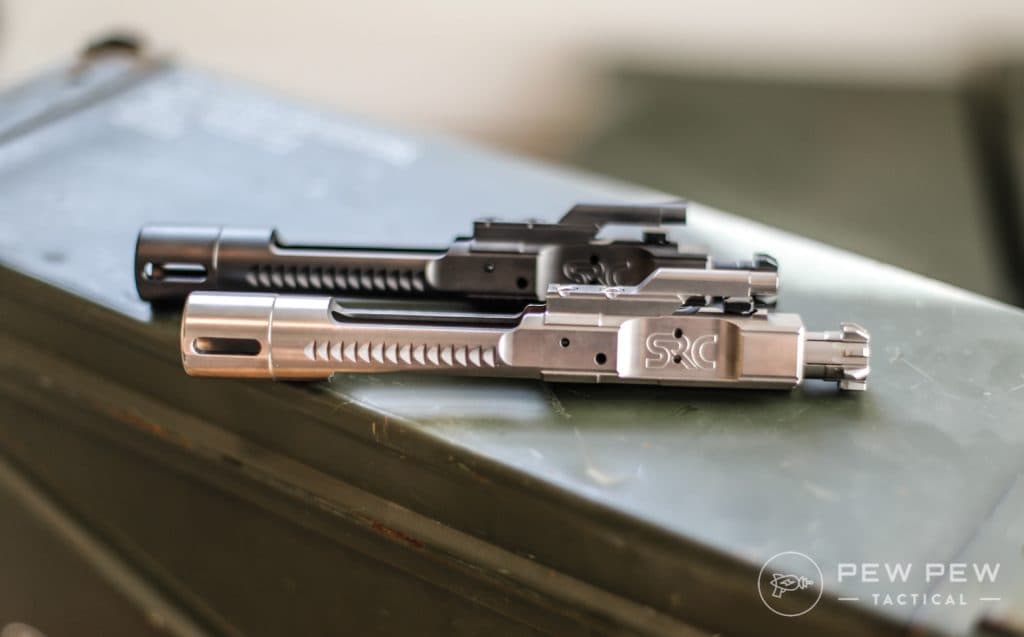
The XPB features a patented Relia-Bolt and is machined from S7 tool steel. During its creation, each one is thermal-cycled before being treated with a diamond-like coating.
With a reputation for absorbing punishing treatment, I put this one to the test. With nothing more than an initial lube, I ran this bolt carrier suppressed at breakneck speeds for just over 2,000 rounds...the last 500 or so were steel-cased.
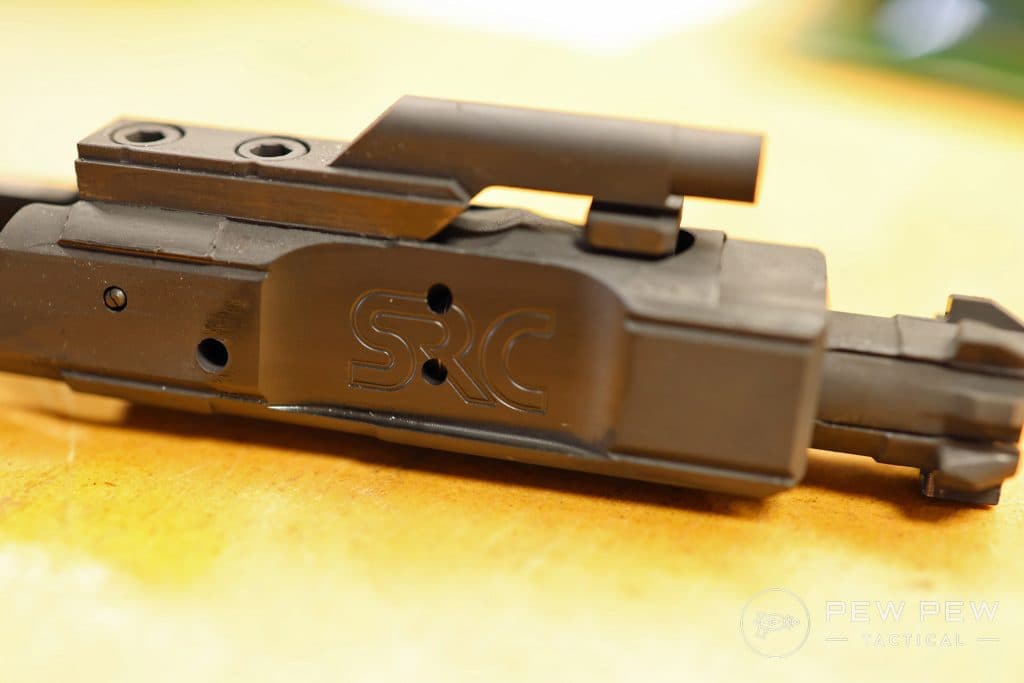
This is a recipe for testing a lot of parts, but particularly the BCG. The Sharps passed with flying colors, and the clean-up, even though it was filthy, was a snap.
For a super tough and reliable BCG, look no further than the XPB.
Full Auto vs Semi-Auto Bolt Carrier Groups
Let's clear the air first - "full-auto" BCGs are legal and don't magically make your AR-15 automatic.
Full-auto profile means that the BCG is slightly longer and heavier, with an additional lug at its rear.
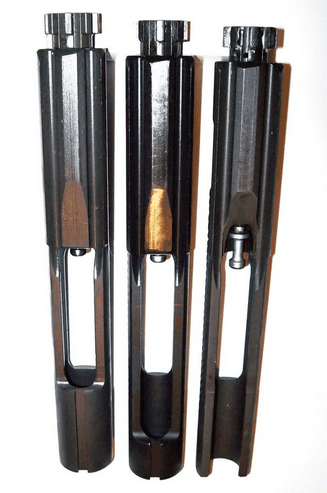
On a full-auto AR-15 or M16, this rear lug pushes the sear release downward, allowing rifles equipped with full-auto sears to fire in either auto or burst modes. In a semi-automatic rifle, this has zero effect on the rifle's fire modes.
Semi-auto carriers have an additional cut that reduces mass, which can negatively affect reliability and durability. While semi-auto versions used to be significantly cheaper than full-auto carriers, that is no longer the case.

Even though most people don't have automatic-capable rifles, they still prefer full-auto profile carriers. Semi-auto carriers are now the ugly stepchild of the BCG world and serve few purposes.
The main takeaway here is just get a full-auto weighted BCG if reliability is a concern.
How to Choose a Bolt Carrier Group
Mil-Spec is a bit of a buzzword in the AR community. But all it really means is that it is built to certain dimensional specifications so that it can work in military firearms.

Mil-spec doesn’t mean the best or the worst; it’s just in spec for a military contract. Here are some of the important bits:
- High Pressure Tested (HPT)
- Magnetic Particle Inspected (MPI)
- Heat-treated and shot peened
- Bolt carrier machined from 8620 steel
- Carpenter 158 steel bolt
- Chrome-lined interior bolt carrier key and bolt carrier
- Torqued and staked gas key screws
- Coated with a matte black mil-spec finish
HPT and MPI Tested
See that "high pressure tested" and "magnetic particle inspected" above? That means each bolt is individually tested at a proof load.
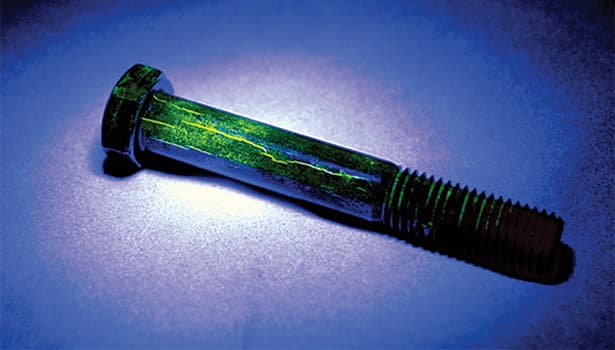
Usually, it's printed onto the bolt (either as MP or MPI), but this isn't always the case.
If the description doesn't say "individually tested," it is probably only batch tested. And you never know whether they are testing one out of a batch of 10 or out of 1,000.
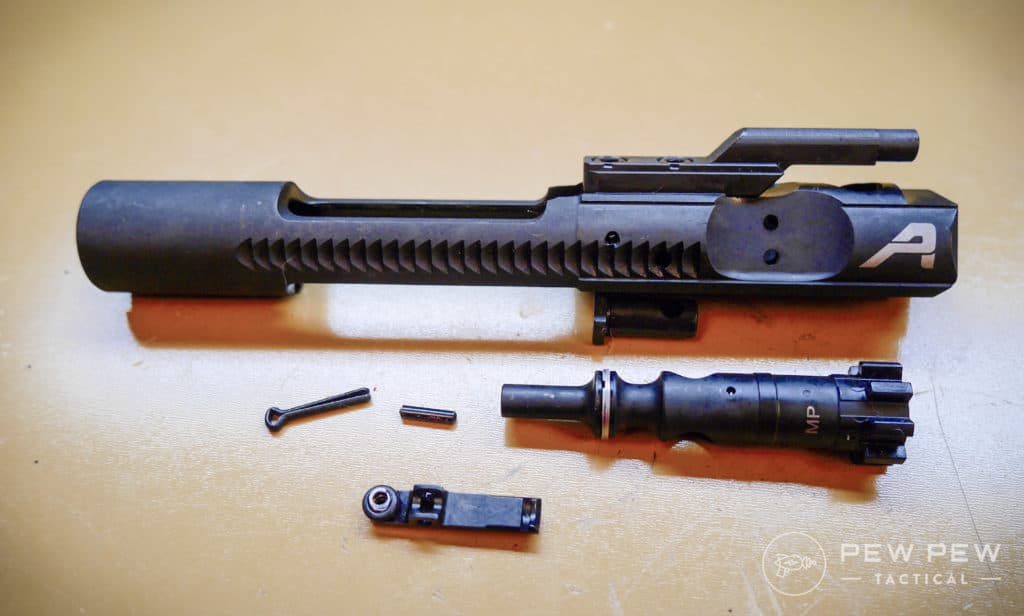
Again, if it's a duty or self-defense gun, I'd opt for something individually MPI and HPT.
Different BCG Coatings
Mil-spec generally means phosphate-coated. Phosphate coatings are matte coatings that might feel a little bumpy or rough on the surface.
It does its job, but requires more cleaning than higher-end coatings.
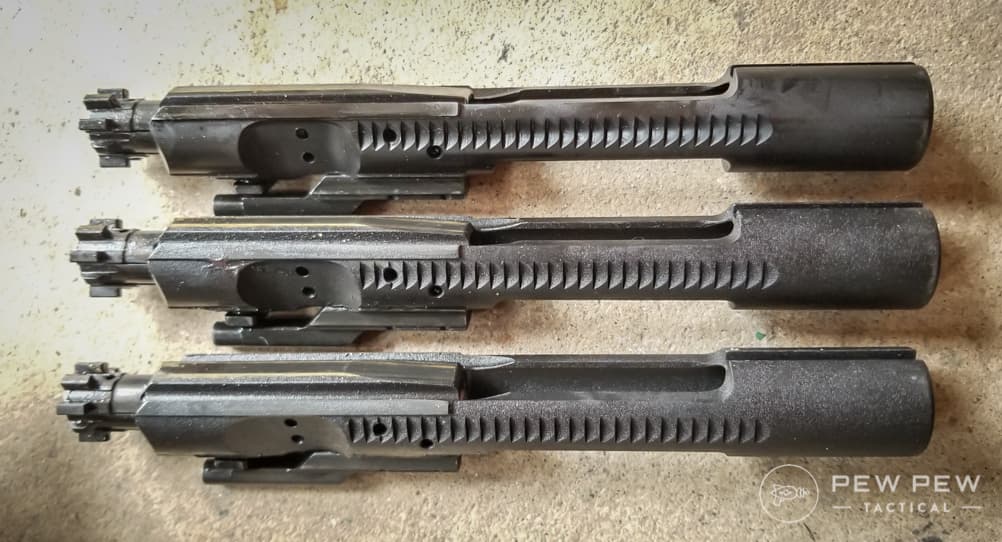
Different coatings come and go, and each claims to be the latest and greatest. But here are a few common coatings you will run into when shopping for BCGs:
- Nitride - Black, shiny coating with more lubricity that is easier to clean than phosphate.
- Nickel Boron (NiB) - Silver, shiny coating with even more natural lubricity than nitride. Very easy to clean.
- Titanium Nitride (TiN): Gold-colored finish with high durability and lubricity. Usually costs more.
Why Use a Lightweight or Low-Mass Bolt Carrier?
Low-mass or lightweight bolt carrier groups are relatively new to the market.
A low-mass BCG serves two purposes.
If you are following the current fad of super lightweight AR-15s, you want to trim weight basically everywhere. You can cut a few ounces off by using a low-mass bolt carrier.

A Mil-Spec BCG is about 11.6 ounces, but you can be much lighter now...especially with cuts and exotic materials like titanium. The primary advantage of this is to reduce recoil.
Since the bolt carrier group is shot backward towards the shooter, the weight of it affects recoil. The more mass you have coming rearward, the more recoil you’ll feel.
Any reduction in recoil and firearm movement, in general, helps you stay on or get back on target as you fire. A low-mass BCG moves faster, which could increase your rate of fire, but skill ultimately makes a bigger difference in cyclic rate than bolt weight in a semi-auto gun.
Why do regular bolt carrier groups still exist?
A lightweight BCG is designed for a tuned rifle and a builder who’s willing to toss an adjustable gas block on and really tune the gun. The heavier standard BCGs are better suited to running any kind of ammo through any kind of gas system.
So, if you're building an SHTF, zombie-apocalypse-proof rifle, go with a regular BCG.
We also have a whole guide just on choosing a lightweight bolt carrier group, so be sure to check that out if you want to learn more.
Final Thoughts
That does it for BCGs. There are lots to choose from, but the important part is identifying your use case so you can select the right BCG for the job.
Hopefully, our list helped you get pointed in the right direction!
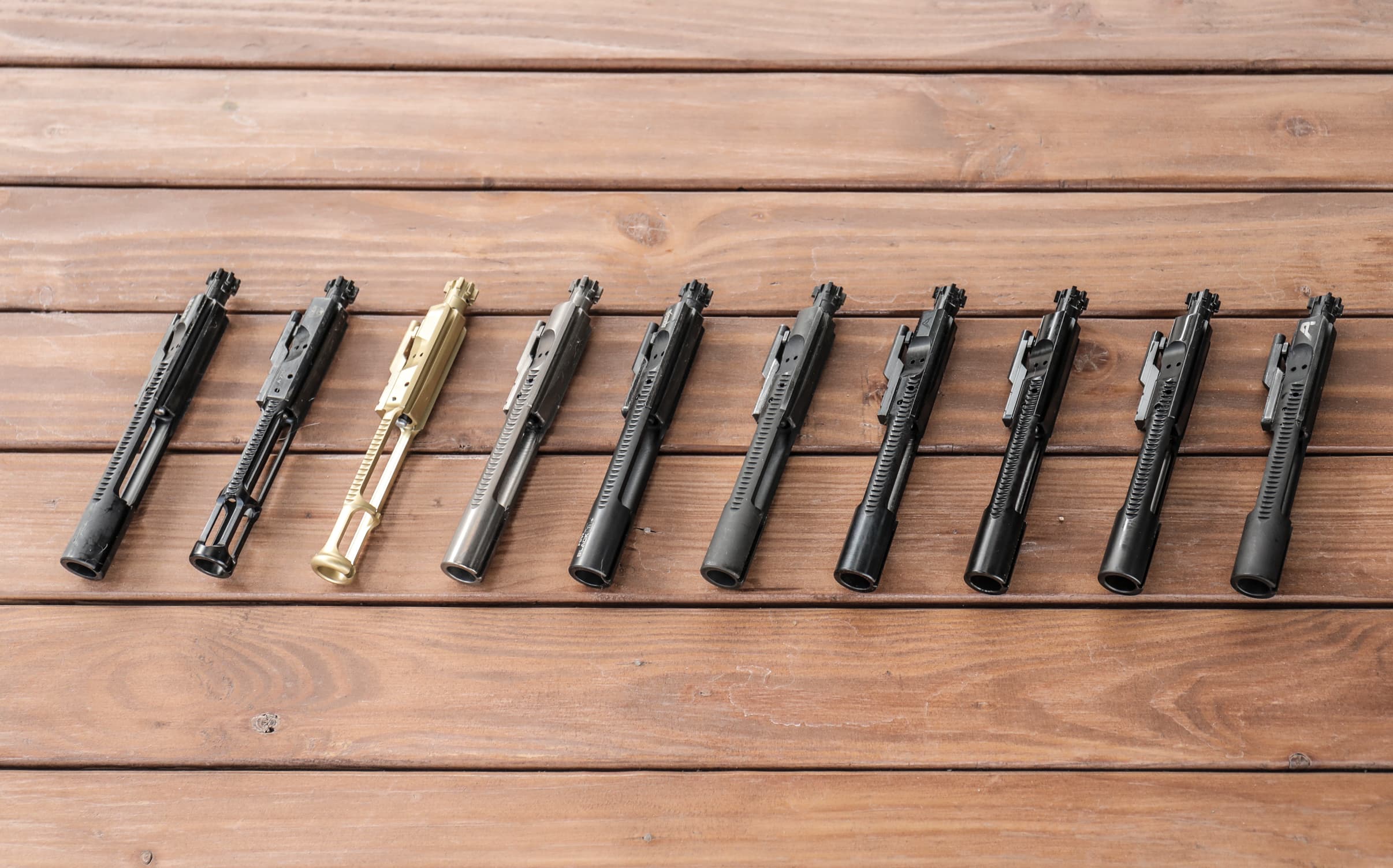
What kind of BCG do you run? There are so many BCGs out there, so let us know what we missed. Looking for more AR parts? Check out our article on the Best AR-15 Upgrades!
LATEST UPDATES
- March 2026: Removed Rainier Arms Precision Match BCG. Added Geissele Enhanced Reliability BCG.
- May 2024: Added How We Tested, adjusted choices based on latest testing, and added additional information for choices.