





What We Carry: Scott’s Citadel M1911 [REVIEW]
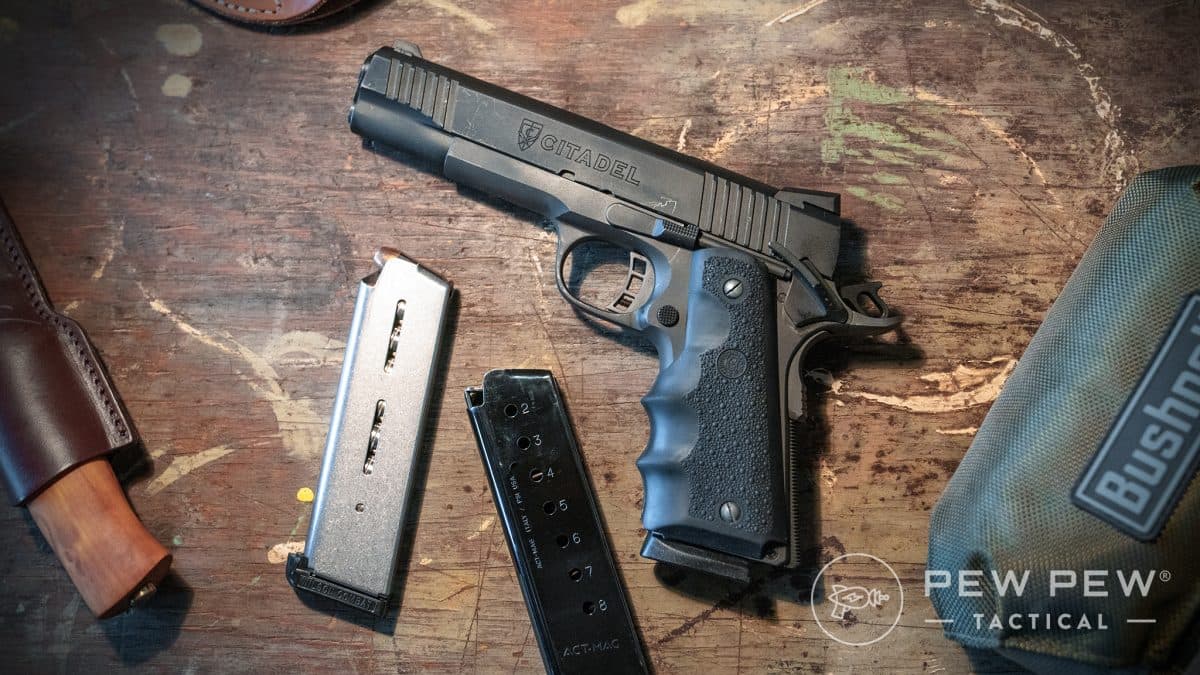
There’s something charming about a budget 1911. See why this Citadel M1911 still has a home in one of our editor’s collection.

PPT Editor. Marine vet, hunter, and long-range shooter. Articles in 10+ major publications
We review products independently. When you buy through links on our site, we may earn a commission to help support our testing. Learn more about our review process.
Citadel M1911 Pros & Cons
Pros
- Chunky sights
- Ergonomic controls
- Reasonably tolerant of hard use
Cons
- Sharp edges don’t feel very refined
- Not compatible with optics or accessories
The Bottom Line
1911 aficionados might turn their noses up at this very budget-conscious Citadel M1911, but it’s been reliable for more than a decade and I still smile every time I shoot it.
Looking for a budget 1911? I’m happy to report that you have options.
One of the pistols you can buy is the same one I bought more than a decade ago: the Citadel M1911.
Let’s take a walk down memory lane to see why I bought it, what I’ve upgraded or modified, and why I still own it.
Who knows, maybe it’ll win you over, too.
Table of Contents
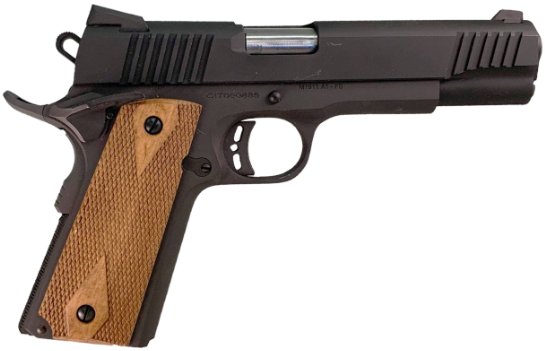
Citadel M1911 Specs & Features
Specs
- Caliber: .45 ACP
- Action: Semi-automatic, single action
- Capacity: 8+1
- Barrel Length: 5”
- Overall Length: 8.87”
- Weight: 38 oz
- Country of Origin: Philippines
Features
- Series 70 trigger
- Full-length guide rod
- Front and rear slide serrations
- Oversized, ambidextrous safety
- Oversized ejection port
Why I Bought This Citadel M1911
This was actually the first pistol I ever bought. At the time, I had recently competed in the Marine Corps Western Division Matches and my head was full of stories about how much the older Marines missed shooting the 1911 instead of the M9.

The idea of owning a steel-framed .45 ACP pistol with a nice trigger appealed to me more than something more modern and practical.
For the money, the Citadel M1911 was fairly feature-rich back then.

The series 70 trigger felt nice and crisp, and it was miles ahead of the worn-out M9 triggers I was used to. Today, five pulls of the Citadel’s trigger with with a Lyman digital trigger gauge show an average of 3.7 pounds.
The full-length guide rod, extended beaver tail, ambidextrous thumb safety, aggressive forward slide serrations, and skeletonized trigger seemed like they should come with a higher price tag.

The chunky sights weren’t anything special, but they blew the tiny, historically accurate sights found on a lot of inexpensive 1911s out of the water.
They’re easy to replace, so sometimes I think about upgrading to a set of tritium sights. That’s just not high on my priority list right now.
These days, the Tisas 1911 A1 is less expensive and more faithful to the pistols of World War I and World War II, but the feature list can’t compare to the Citadel.

The Taurus PT-1911 and Springfield Armory Garrison 1911 offer similar features, albeit for more money.
When you consider build quality and performance, the Garrison is one of the better values in the 1911 market. It’s no TRP, but it gets you closer to the big dog’s performance than the price tag would have you believe.
And let’s be real, it’s always a good time to buy a 1911.
Shooting the Citadel M1911: Accuracy & Reliability Analysis
Let's see how three popular types of ammunition through this old pistol. Here are the best results of five-shot groups at seven yards.
Citadel M1911 Ballistic Test Results
| Bullet Weight | Bullet Construction | Accuracy | AverageMuzzle Velocity | Standard Deviation | Extreme Spread | |
|---|---|---|---|---|---|---|
| Federal Hydra-Shok | 230gr | JHP | 0.97" | 885 fps | 14 fps | 38 fps |
| Sellier & Bellot | 230gr | FMJ | 1.17" | 807 fps | 6 fps | 17 fps |
| Winchester | 230gr | FMJ | 1.84" | 854 fps | 8 fps | 21 fps |
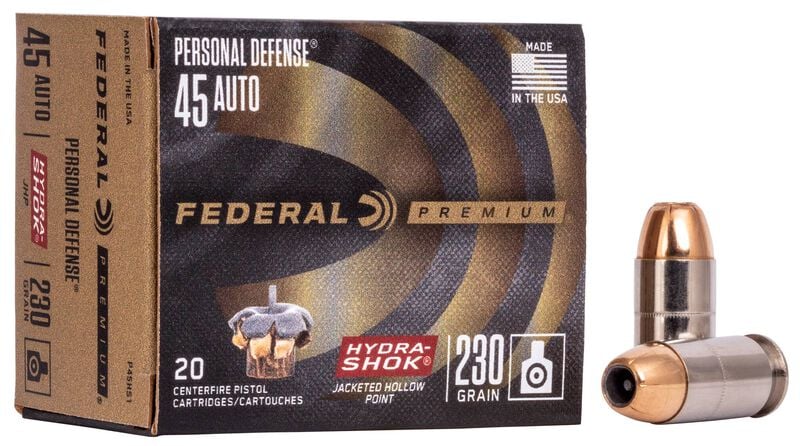
I've shot more Winchester white-box ammo with this pistol than anything else, and it's run reliably for many years. After seeing this data, though, I'll probably start shelling out for more expensive ammo. This pistol doesn't see high round counts these days, so it won't add up to much.
Sellier & Bellot ammunition performed noticeably better in the accuracy department. I was very impressed with its consistency as measured by a Garmin Xero C1 Pro chronograph.
Federal defensive ammo has been stumping me lately. The muzzle velocity standard deviation and extreme spread figures never lead the pack, but it always prints tight groups. I guess it's best not to overthink it. This was the most accurate ammo of the bunch and Federal performed admirably in my recent 9mm ammo ballistic gel test.

What’s this pistol like to shoot? I’ve certainly had enough time with it to answer that question.
If you’ve shot a mass-produced 1911 before, it basically shoots like that. It feels more refined than almost any polymer gun, but doesn’t reach the heights of custom steel-framed guns.
Trigger pull and reset are short and crisp. The ambidextrous thumb safety engages and disengages with a tactile snap. Racking the slide feels satisfying in an old-school way that a machinist would appreciate.

Newcomers to the combination of metal pistols and .45 ACP are in for a treat. If 9mm greets your hand with a high-five, .45 ACP comes at you with a fist bump. The big, subsonic cartridge even sounds weighty. It’s powerful but surprisingly easy to control.
The critiques of using a 1911 for defensive purposes are valid, but I still think you owe it to yourself to own at least one of these classic pistols.

Reliability-wise, I’ve been pleased with this 1911. It’s no striker-fire pistol, sure, but my M1911 has held up well for what it is.
Sometimes spending more on a 1911 doesn’t necessarily yield an improvement in reliability. Hand-fitted components and ultra-tight tolerances are impressive, but they can also gum up and malfunction more easily than something with a little bit of wiggle room.
Why I Kept It
When it comes to my personal possessions – whether we’re talking about firearms, vehicles, or guitars – every tool needs to have a job. So far, this budget 1911 fills a roster space that nothing else has managed to take.

It’s fun to shoot and carries a whiff of history, even though it’s not a collector’s item (nor is it priced like one). I can drag it through the sagebrush without fretting about scratching the finish, and there are certainly worse ways to protect myself.
When I take new shooters to the range, I always relish the opportunity to hand it over and watch them experience a classic for the first time.
Ultimately, I want this pistol more than I want the money it would fetch on the used gun market.
What I’ve Changed: Upgrades & Accessories
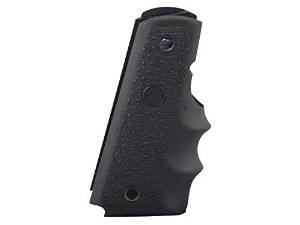
I’m actually not a big fan of finger grooves, but these line up well with my natural hand placement. A set of aftermarket grips is a great way to make your budget 1911 feel (and look) more high-end. Think of this as a pathway to a poor-man's 1911 MEUSOC.
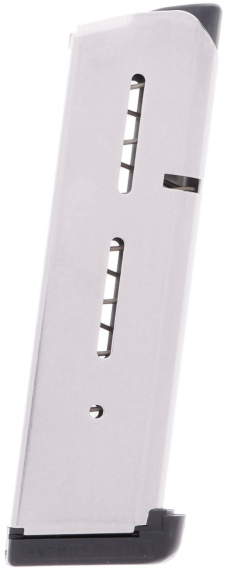
The number of magazines we need is always one more than what we have. I upgraded to Wilson Combat eight-round mags when I expanded my collection.
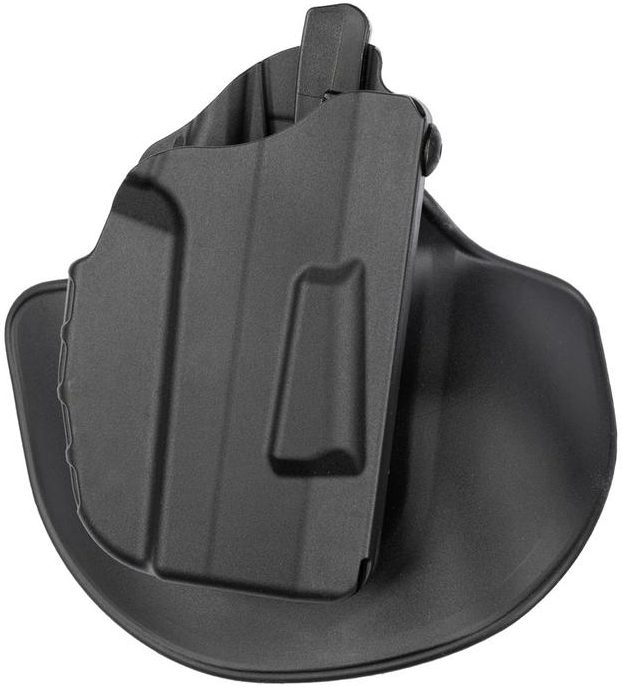
I have several leather holsters for this pistol because they just seem appropriate, but my favorite is actually this one from Safariland. It covers the ambidextrous thumb safety, and active retention gives me warm fuzzies.
Sometimes I pair it with a MOLLE adapter to ride along in one of my off-body carry bags.

By the Numbers
Reliability: 4/5
Early on, I filed a warranty claim because the right-side thumb safety came loose. Aside from that, this has been a very reliable pistol.
Ergonomics: 5/5
It’s a 1911. It feels great physically and emotionally. If you want to swap out the grips, that’s as easy as turning a few screws.
Accuracy: 3.5/5
This entry-level 1911 prefers high-dollar ammo.
Customization: 2.5/5
There are a lot of 1911 parts out there, but they might require a gunsmith. Lights and optics are off the table in this case.
Value: 4/5
This pistol isn’t perfect, but I got more than I paid for.
Overall: 3.5/5
I’d call this pistol “utilitarian” and “functional,” and that’s not meant as a backhanded compliment.
Meet the Experts

Editing this article is Scott Murdock. Scott is a Marine Corps veteran who competed and qualified as a rifle and pistol expert while in service. In addition to shooting, Scott has written for a variety of publications, testing, researching, and evaluating guns and gear. He brings that knowledge and skillset to this article, editing and fact-checking for accuracy.
Editor-in-Chief Jacki Billings runs our experienced team of reviewers. She is a National Rifle Association Basic Pistol Instructor as well as a member of the Society of Professional Journalists, ACES: Society for Editing, and the Professional Outdoor Media Association. Jacki has a bachelor’s degree in journalism and has worked as a media professional for close to 20 years, specializing in gun media for almost 10 years. With 2,000+ articles to her name, she uses her professional journalism and editing experience to set testing protocols and editorial standards for Pew Pew Tactical.
Final Verdict on Scott’s Citadel M1911
Back in the day, the 1911 was a fighting pistol fit for any clime and place. The Citadel M1911 is true to that heritage.

This is not my nightstand gun, CCW pistol, or even my go-to range toy – but it could be all three for you depending on your needs and goals.
At the very least, you’ll feel a little more American every time you stare down those iron sights and lob a 230-grain bullet down range.
What do you think of my old Citadel M1911? Say something nice in the comments. Not convinced? Check out our guide to the Best 1911 Pistols!