I may earn a small part of the sale from links to any products or services on this site. You do not pay anything extra and your purchase helps support my work in bringing you more awesome gun and gear articles.
Savage 42 Takedown [Review]: Best Small-Game Hunting Rifle? - Pew Pew Tactical
Savage 42 Takedown [Review]: Best Small-Game Hunting Rifle?
Savage Arms combined the accuracy of the .22 LR with the utility of a .410 shotgun in the Takedown 42. Does it perform? We take it to the range to find out.
By
Sean Curtis (Content Producer & Lead Review Analyst)
Retired LEO. SWAT Commander. POST/NLEFIA/USCCA Instructor. Former FFL. Gun Writer 10+ years
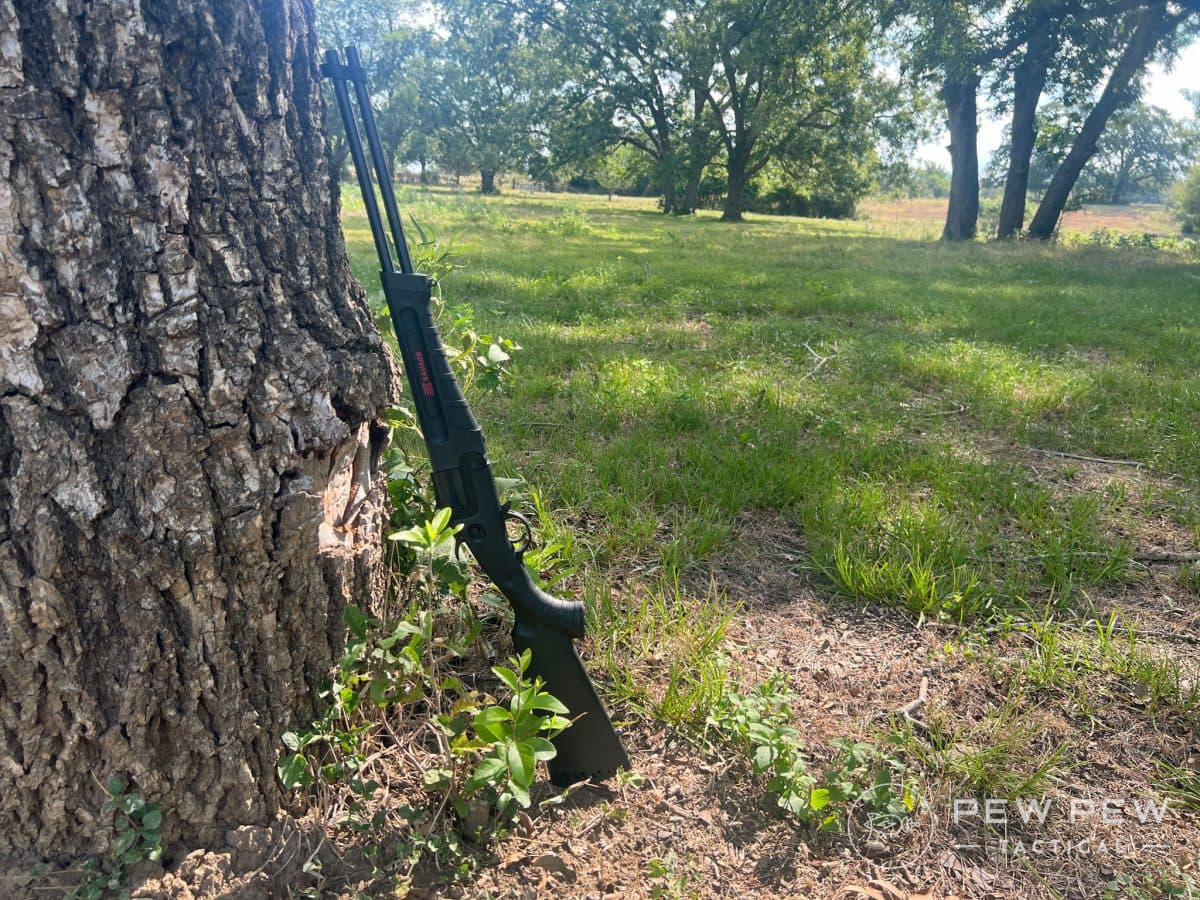
The Savage 42 Takedown gives the shooter portable rimfire or shotgun options perfect for farmers/ranchers, small game hunters, preppers, and plinkers.
One of the best times you can have in the shooting world is plinking away with a .22 rifle. Each shot allows you to learn and perfect your ballistic craft, without breaking your ears, shoulder, or wallet.
But what if you occasionally need a small-bore shotgun too?
Savage combined the accuracy of the .22 with the utility of a .410 shotgun in the Takedown 42.
It makes sense to combine two great things in a category, but the execution is critical to how that pairing is ultimately received. So, is the Savage 42 Takedown closer to peanut butter and jelly, or is it more of an acquired taste like pineapple on pizza?
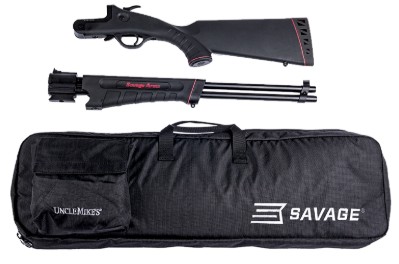
Comes with: Cardboard box, bug out bag, owner’s manual, gun lock, foam earplugs
Features
Rimfire/shotgun combo
One button breakdown
Break-action design
Savage 42 Takedown Backstory
Those familiar with firearms will be aware of the concept of an over/under combination rifle shotgun, chambered in .22 LR and .410. As far back as the 1930s, a company named Stevens Arms produced the Model 22-410.
Savage Arms, founded in 1894 in Ithaca, New York, later acquired Stevens and continued to manufacture this firearm. In 1950, the 22-410 was rebranded as the Savage Model 24 and came in many versions, offering wider calibers and bores.
In 2012, Savage introduced the Model 42, taking up the legacy of the firearms mentioned above. In 2016, they released the takedown version we tested.
Shooting the Savage 42 Takedown: Accuracy & Reliability Analysis
A firearm like the Savage 42 Takedown has a small-game hunting pedigree, so I was eager to test its accuracy. I used a couple of different brands of .22 LR and tried a variety of shotshells.
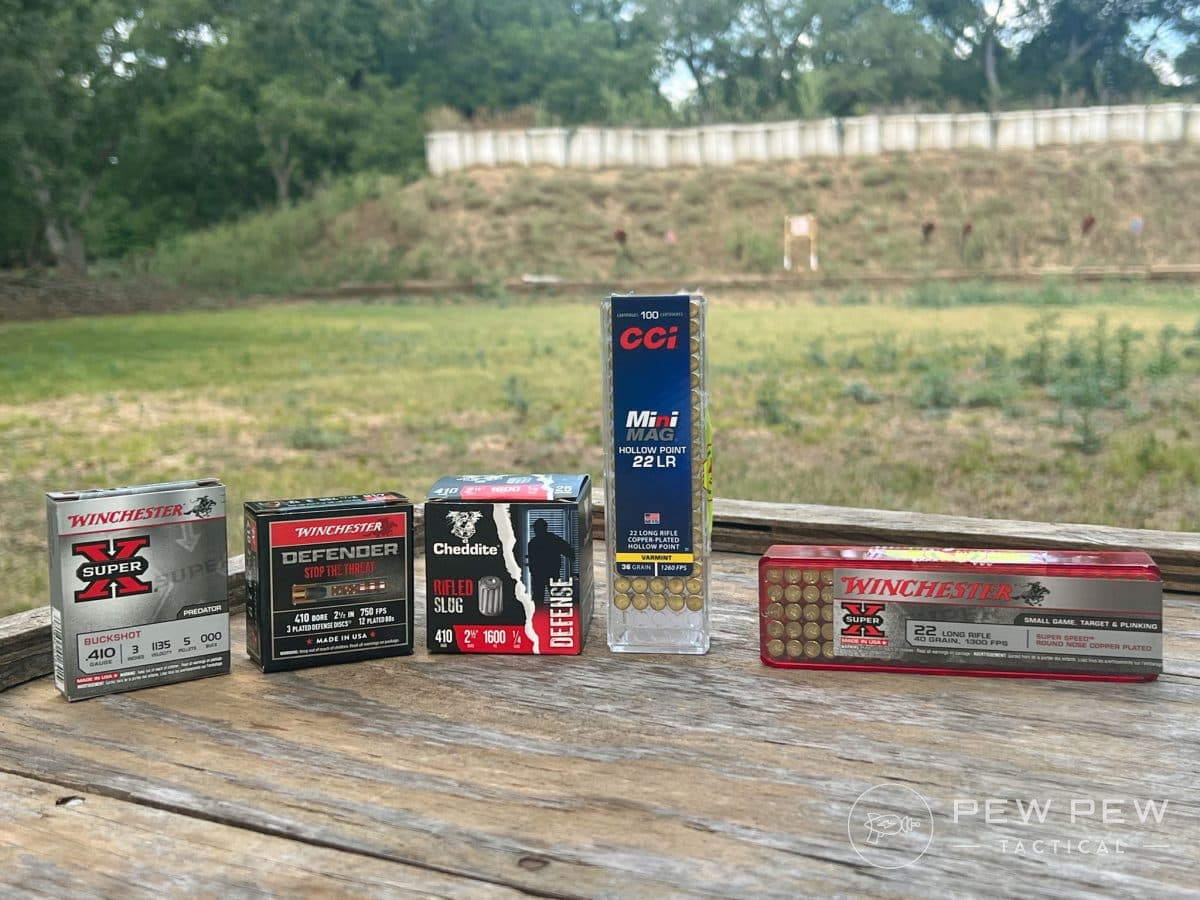
In this case, I used CCI Minimag 36-grain hollow points and Winchester 40-grain round nose to test the rimfire. For shotshells, I tested Cheddite 2.5-inch rifled slugs, Winchester Defender 2.5-inch combo (discs and BBs), and Winchester Super X 3-inch .000 Buck.
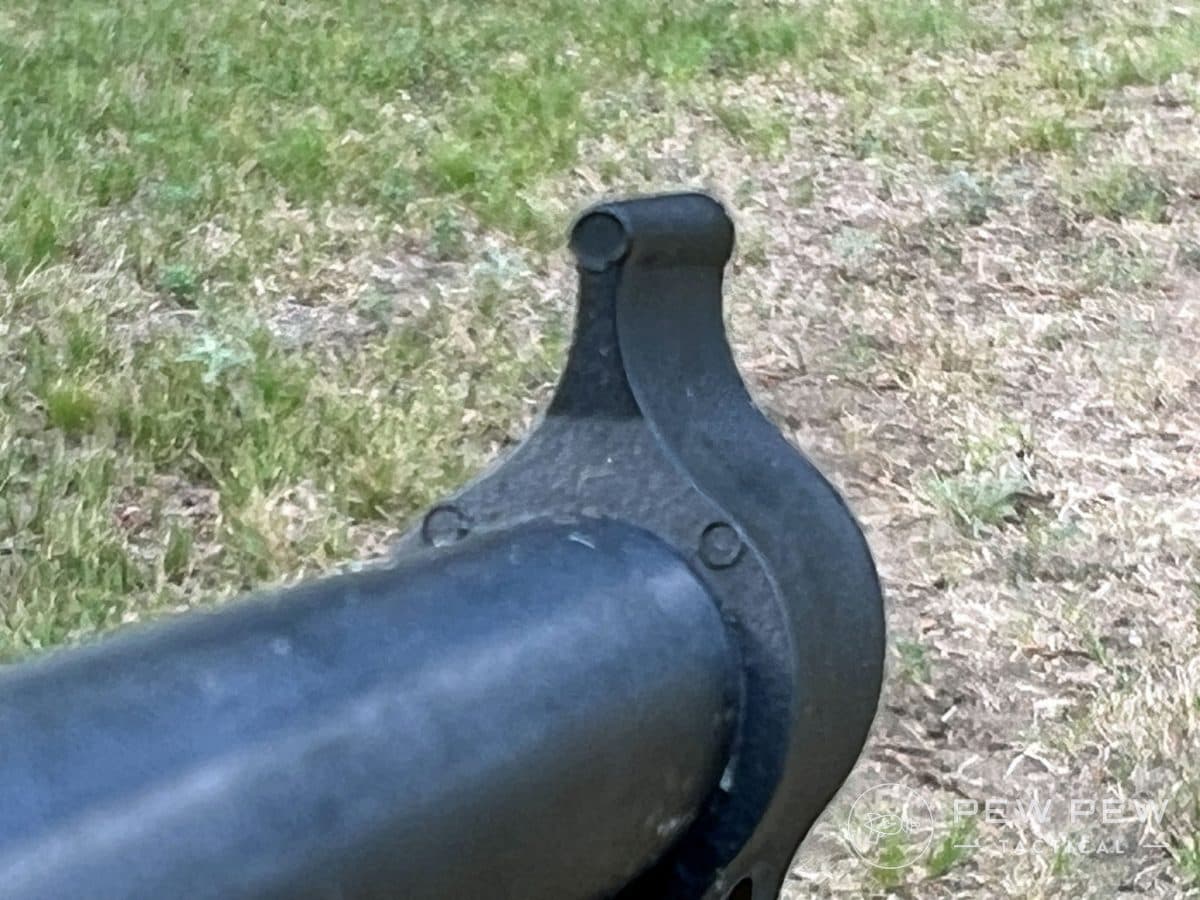
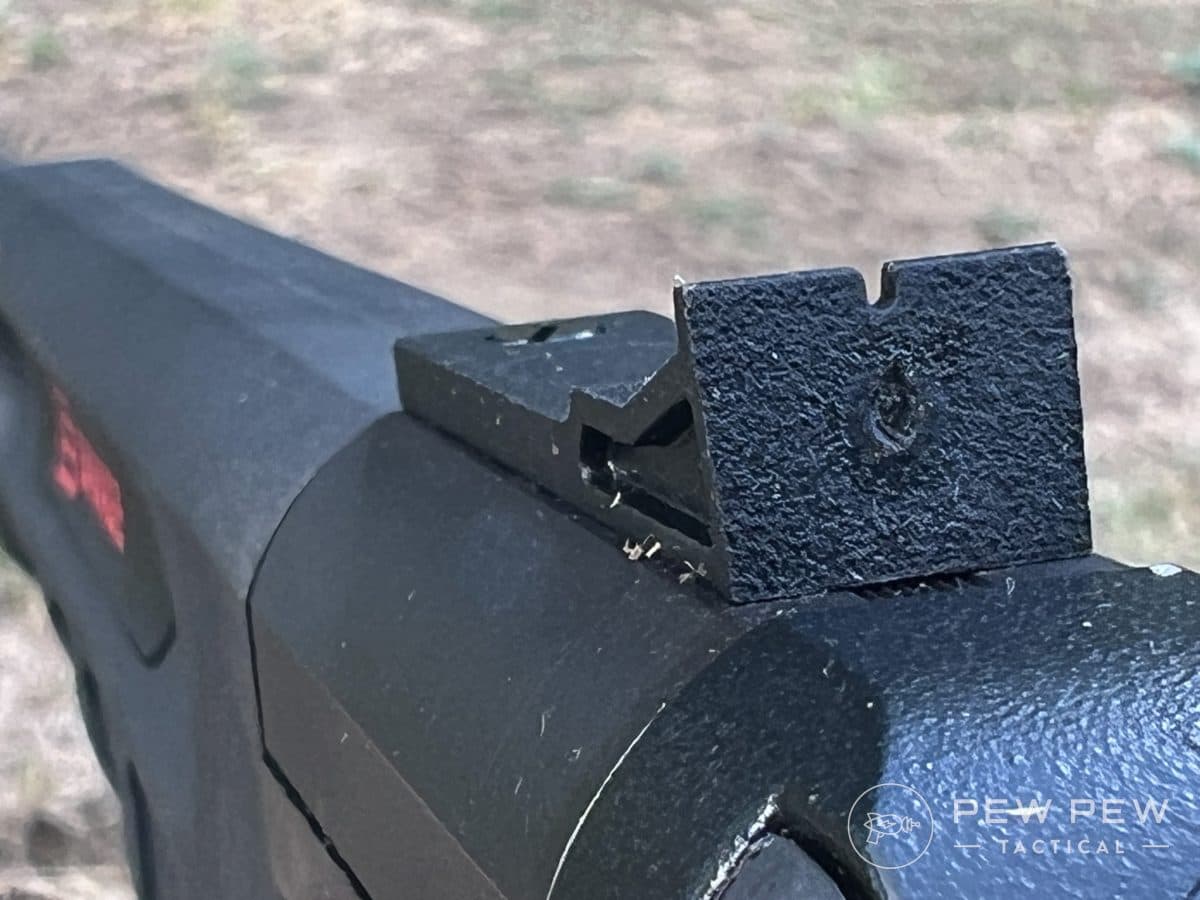
The Savage 42 Takedown uses a simple, plastic front sight that is part of a barrel clamp. This pairs with a slightly elevated rear sight that can be removed to add a scope mount.
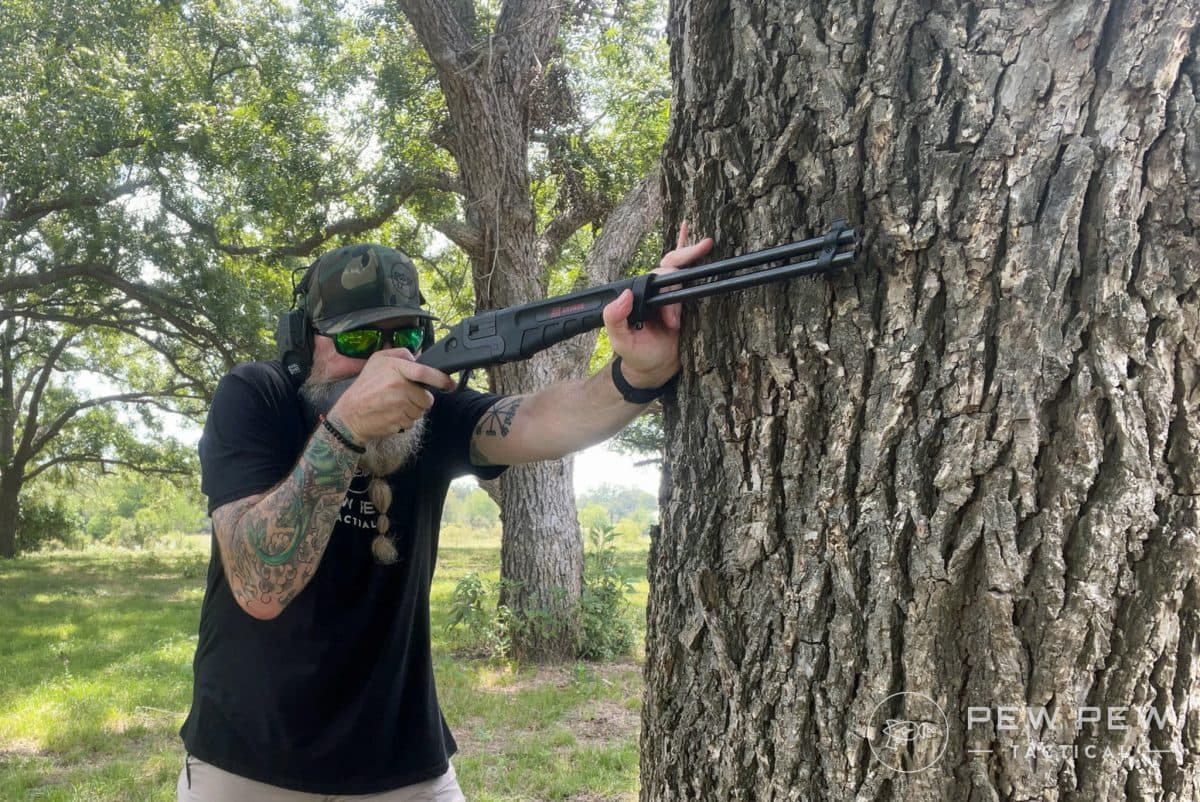
One of my initial observations was that the front sight appeared to be slightly canted. Holding the receiver in one hand, I twisted the front sight more in line with where I thought it should be (more on this below).
I was a bit surprised it moved, but everything seemed a little more aligned, and I began firing to see how the 42 would perform. As the firearm is a single-shot, testing was slow.
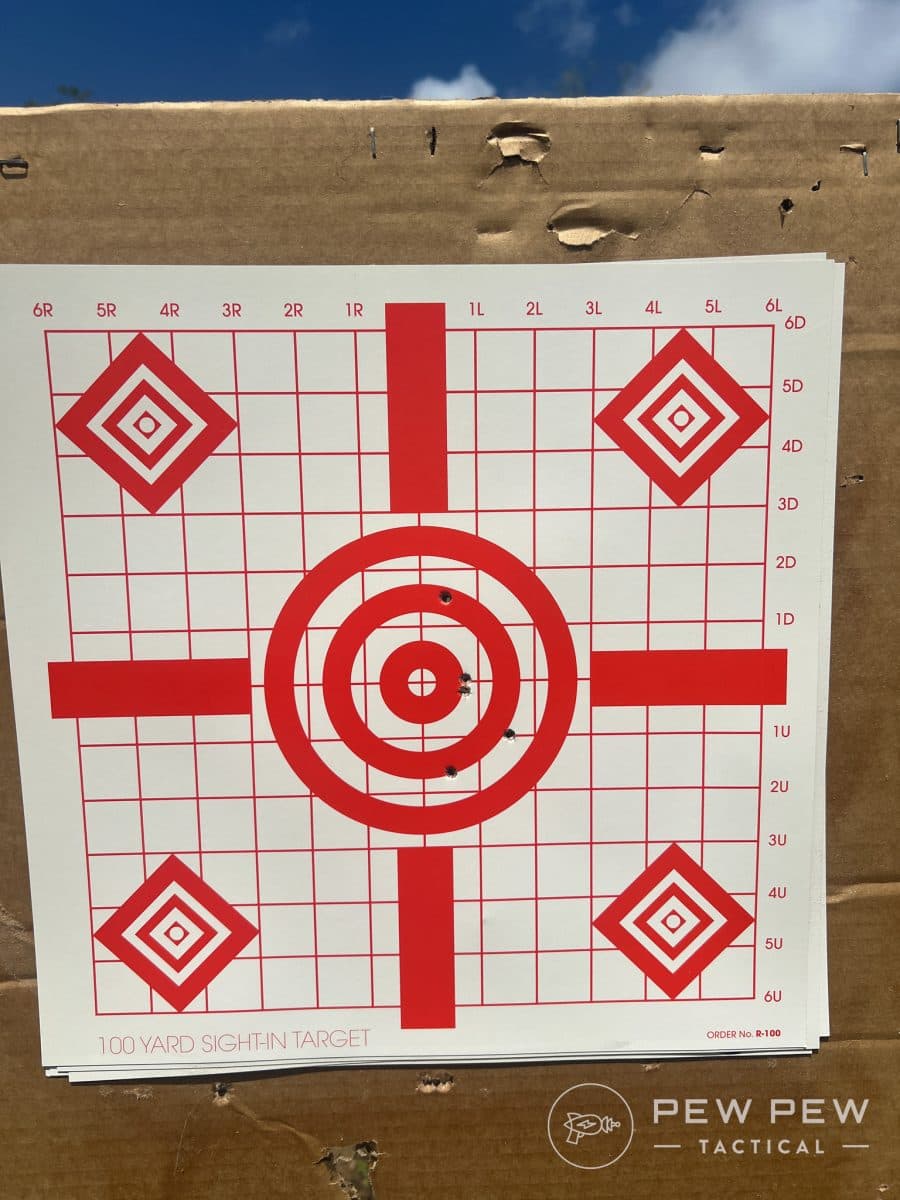
Starting with CCI, I fired from the 25-yard line, unsupported, using only the sights. My groups averaged 3 inches with this ammo and were close in windage, but tracked a little wide in elevation.
Using Winchester .22 LR, I saw pretty similar results. I averaged 3.2 inches with good windage, but the spread was more pronounced vertically.
The front sight features a rounded portion on top, which fits well in the rear sight. However, both sights are black, so there could easily be times when certain targets would be tougher to hit without good contrast.
Shooting torso-sized steel was no problem whatsoever. At one point, I pushed back to 80 yards and was still able to make hits with no problem.
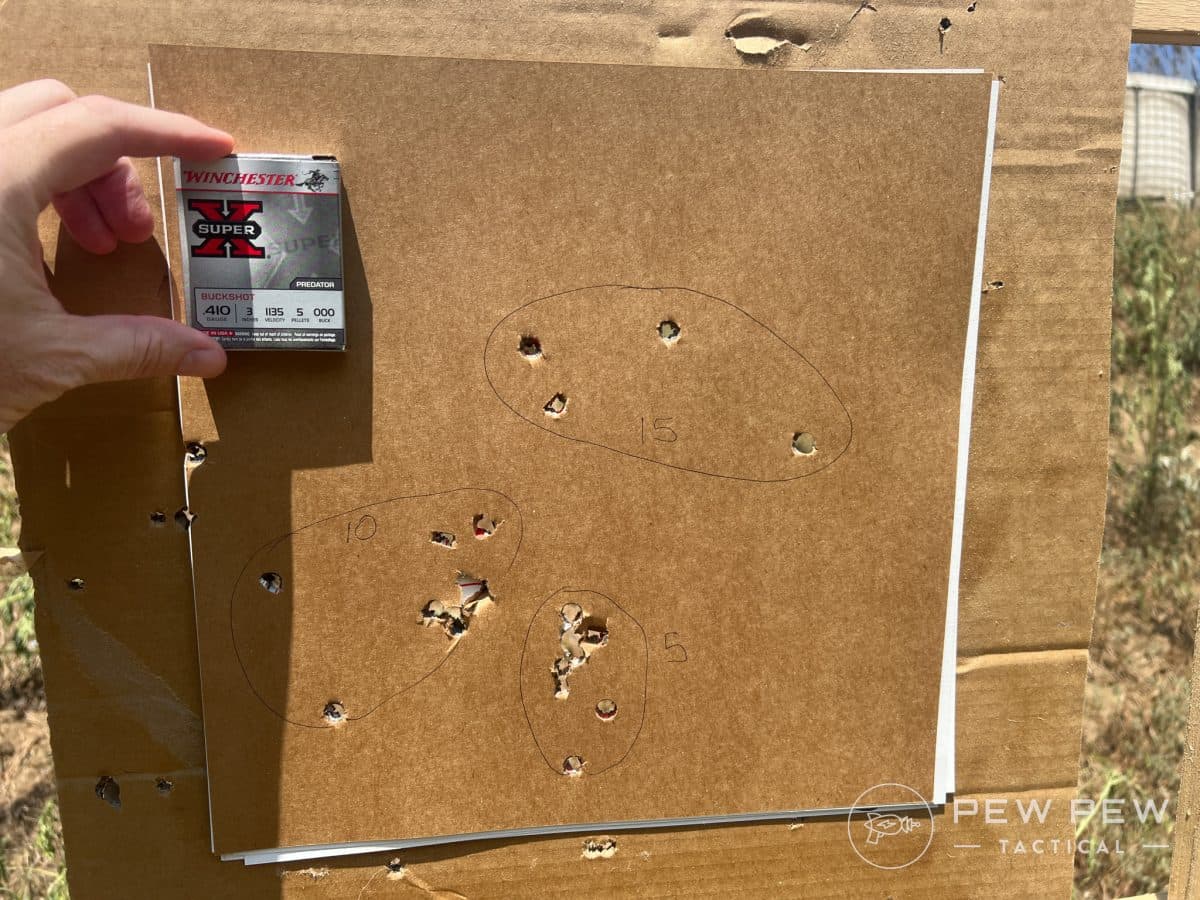
Switching to the lower barrel, I tried patterning the Winchester Super X at 5, 10, and 15 yards, respectively. At 5 yards, the 5-pellet shot grouped at a pretty tight 3 inches.
At 10 yards, the 5-shot group spread out to approximately 4.5 inches. And at 15 yards, the Super X grouped up around 8 inches, with the latter two groups favoring a horizontal grouping.
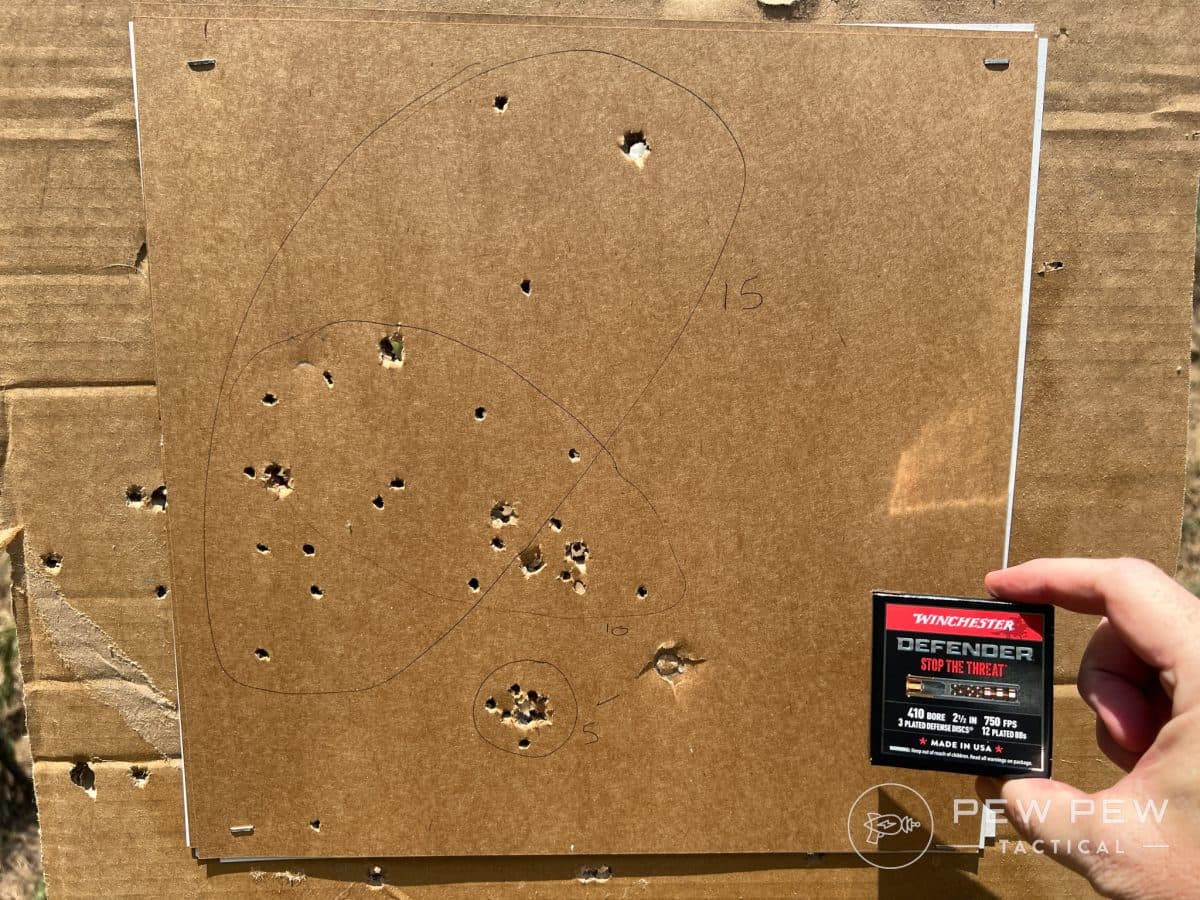
Although the Savage Takedown 42 is not strictly a defensive firearm, I liked the idea of testing it with the combination found in the Winchester Defender. These shells send out three discs and 12 BBs with each shot.
The first shot was incredibly tight at five yards, putting all 12 BBs and three discs through a 1.4-inch hole. At 10 yards, the group spread out to just over 3 inches on average.
Finally, at 15 yards, the discs stayed within four inches of each other while the BBs spread to around 6 inches. The discs also averaged a general vertical string.
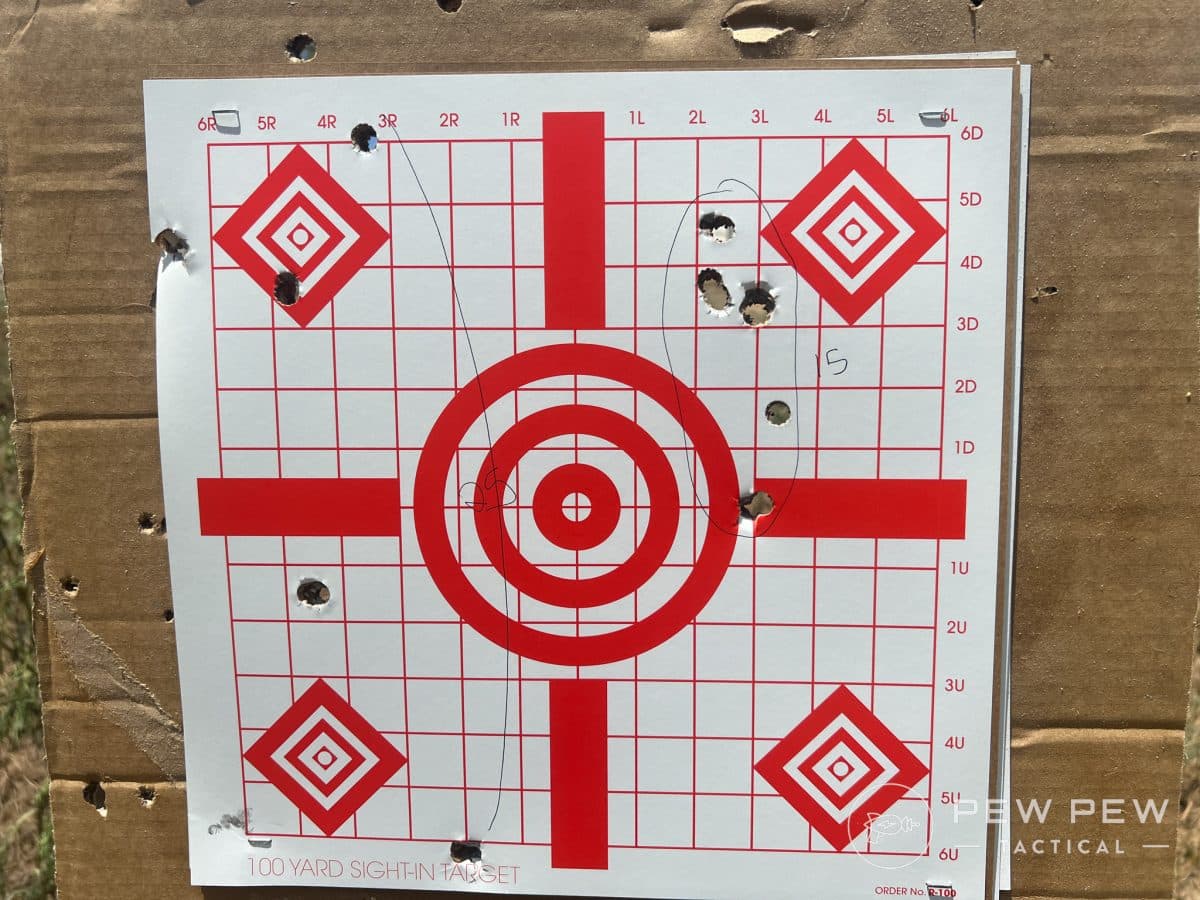
Moving on to slugs, I fired the Cheddite 2.5-inch shells from 15 and 25 yards. At 15, I was able to place five within 5 inches of each other — again, windage proved close, but the string was vertically aligned.
Shooting from 25 yards proved more challenging. Three shots hit within 3 inches of each other, though two more were 5 and 10 inches away, respectively.
For fun, I disassembled the firearm between groups to see how it would perform. Groups averaged the same after reassembly, so the accuracy it provides is consistent.
Switching between barrels proved very easy, thanks to a toggle on the hammer. Pushing this forward causes the bottom (shotgun) barrel to fire; pulling it back operates the top (rifle) barrel.
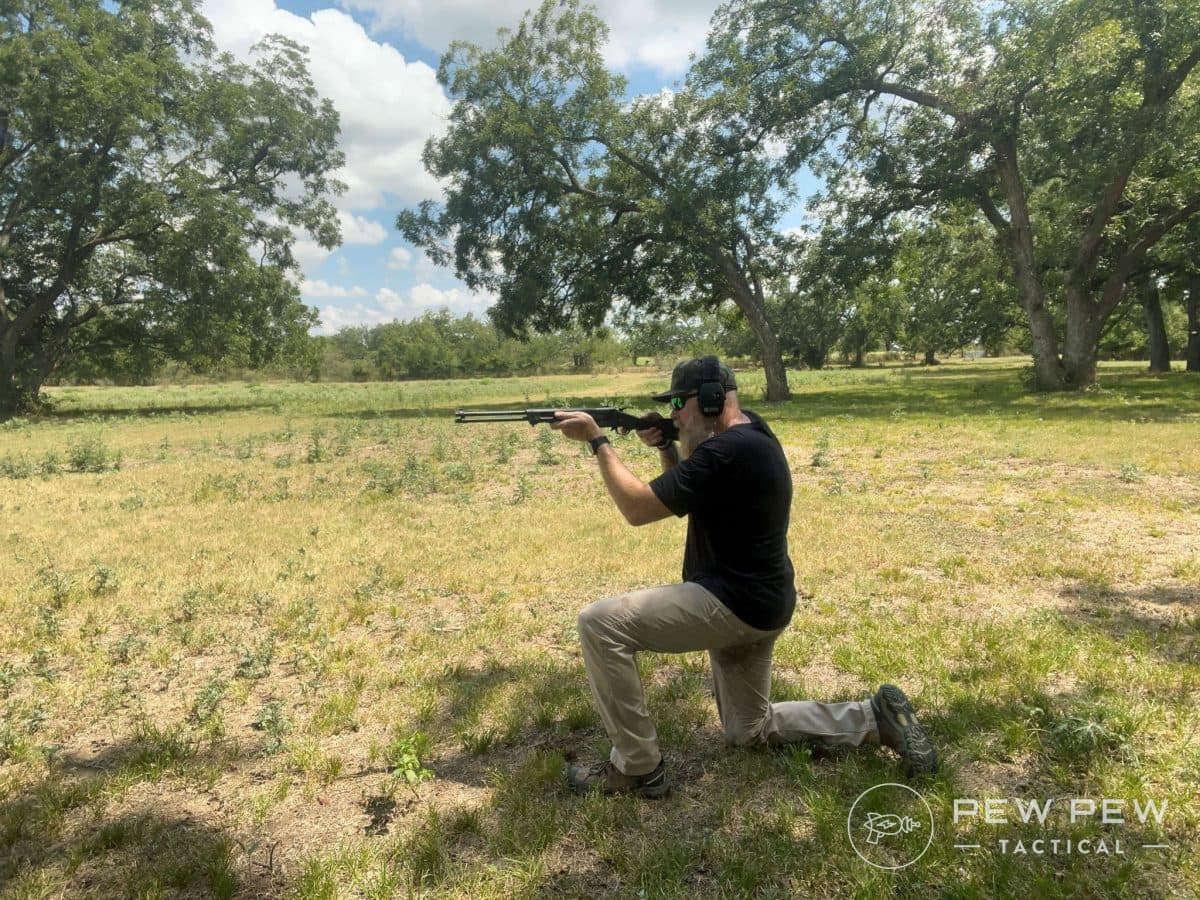
The Savage 42 Takedown’s shooting impulse is relatively tame. The .22 LR rounds offer no real recoil, but there is some present for shot shells.
Shot and mixed media offer a bit of a thump against the shoulder, and straight slugs provide the greatest jolt, but even this was well mitigated by the generous butt pad on the end of the stock.
For this review, I fired 200 rounds of .22 LR and 50 shotgun shells through the Savage 42 Takedown.
Reliability proved perfect, but this shouldn’t be considered the feat it is for other firearms. As a single-shot, break-action, over-and-under gun, it doesn’t have to perform a lot of typical functions, such as loading, feeding, and clearing.
Savage 42 Takedown Ergonomics: Fit & Feel
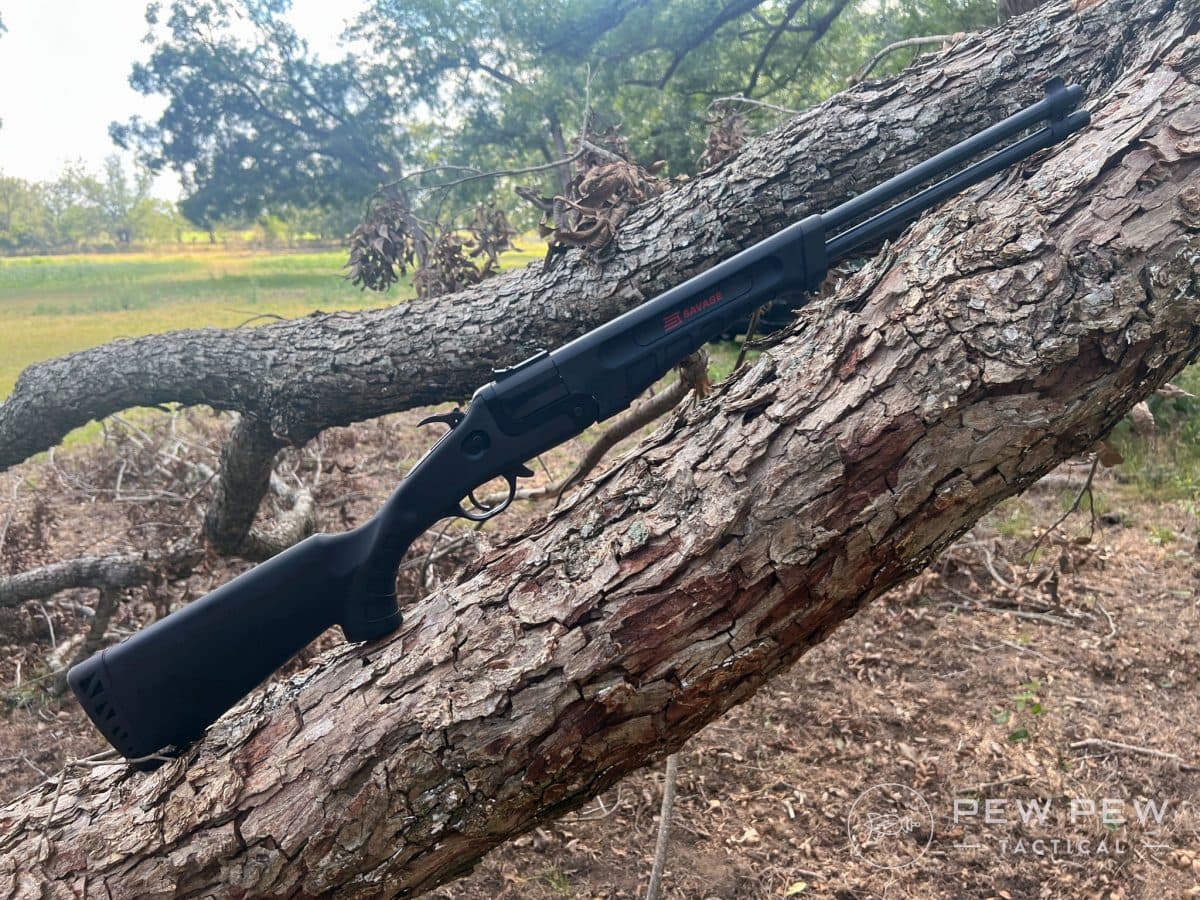
The overall fit and finish of the Savage 42 Takedown are good, similar to many modern mixtures of steel and synthetic stock. Our black version had a matte finish that felt durable while still looking nice.
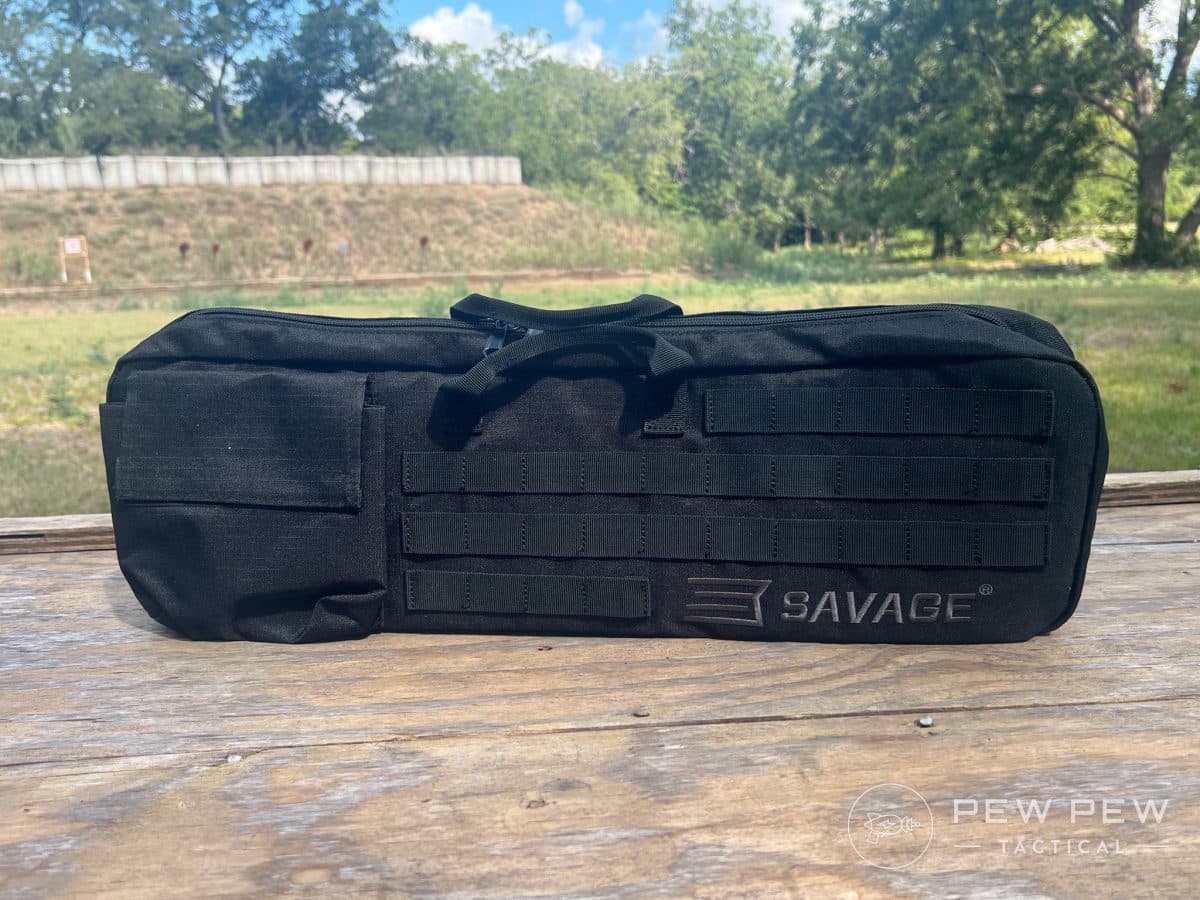
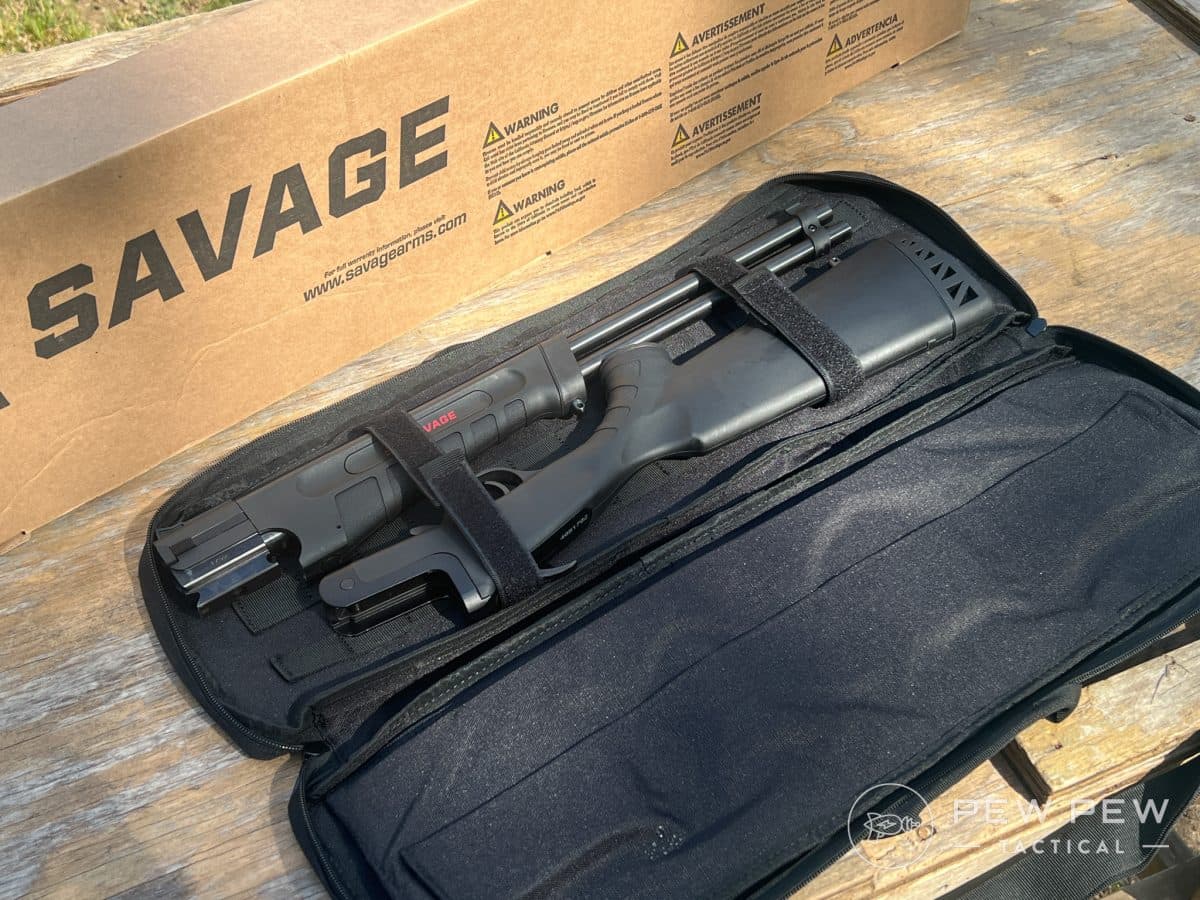
The lightweight nature of the 42 means you’ll be able to lug it around most of the day with ease. The breakdown feature also allows you to snap the gun in two and tuck it in the included bug-out bag.
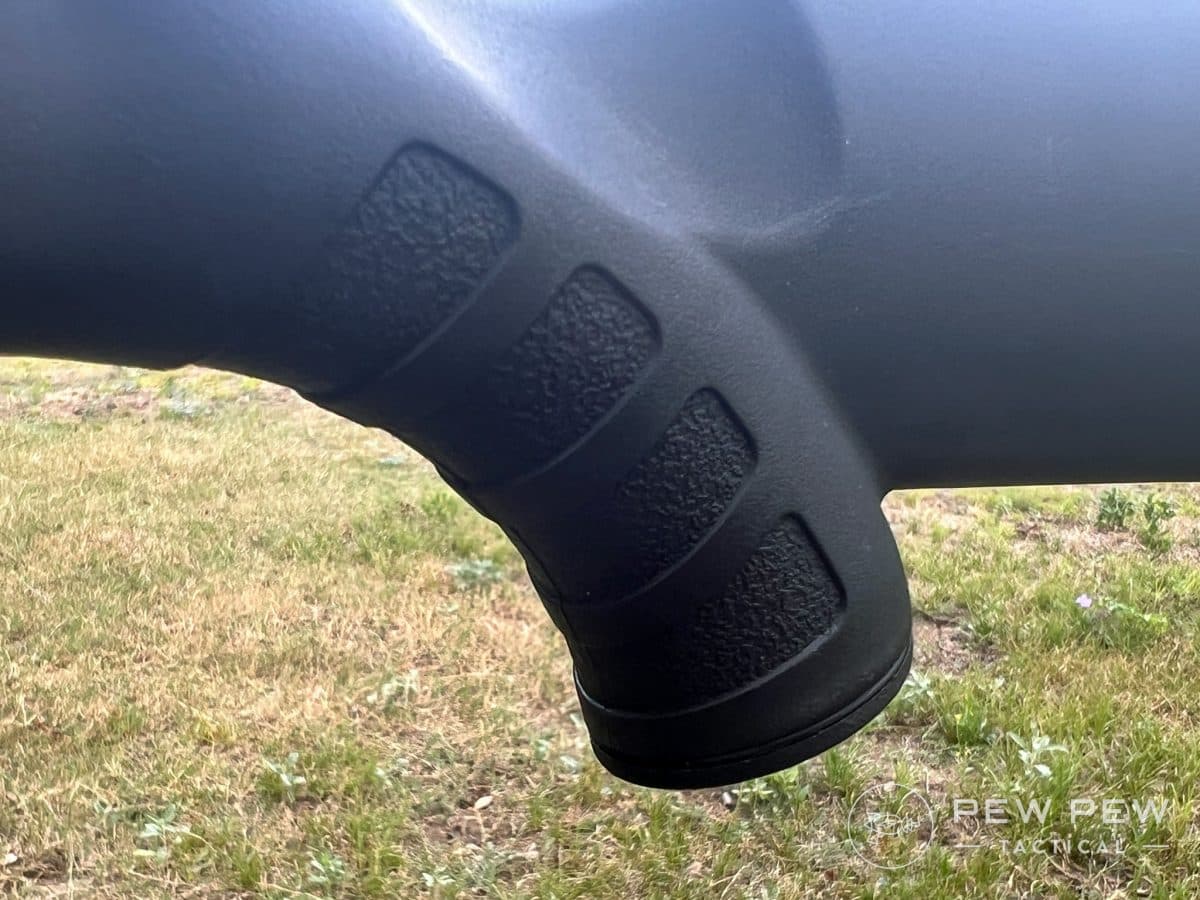
As mentioned, the butt stock has a generous butt pad that it almost never uses until you fire slugs. This did a great job of mitigating recoil and keeping me on target.
The stock is smooth and comfortable when establishing cheek weld. Toward the grip, it pinches down to a thin size, allowing a wide range of hand sizes to establish purchase.
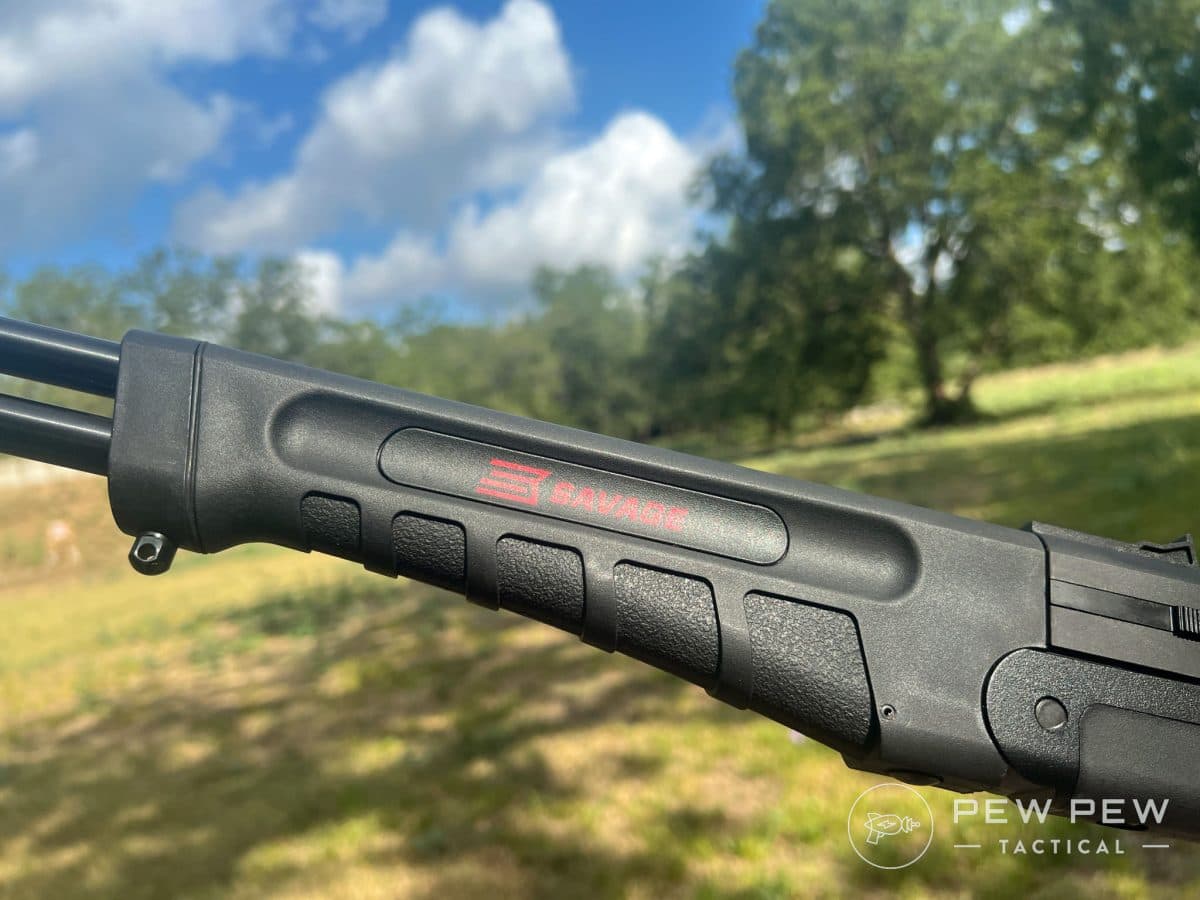
While the forend doesn’t run the length of the barrel, it covers roughly half of it. There are ribs underneath for grip, and a channel between both barrels that feels natural for fingers and thumbs to rest in.
Owing to that hunting heritage, there are two traditional sling swivels included on the 42. One is mounted at the very front of the forend, while the other is placed about 2 inches from the butt pad.
I shot the 42 Takedown for the better part of a day and did not fatigue from the ergonomics, though there is more manual labor involved. For each shot, I had to open the action, load a shell or round, close the action, cock the hammer, fire it, then remove the empty, and repeat.
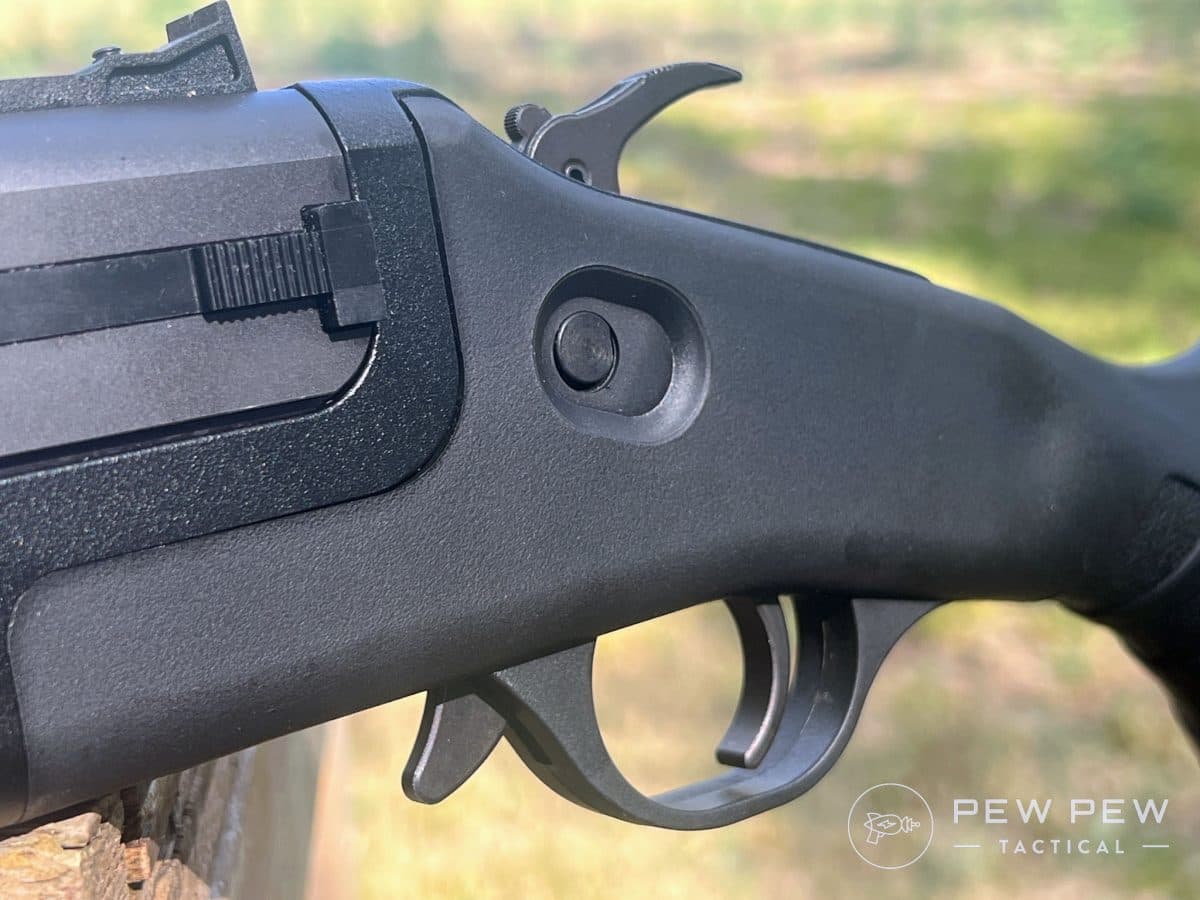
Controls were ambidextrous, very straightforward, and simplistic. There is a cross-bolt safety that indicates red on the left side when deactivated.
The hammer gets manually used on this firearm, so it becomes part of your standard firing sequence. Its shape is ergonomic, long enough for a range of thumb sizes, and features some texture to prevent slipping.
Below, the trigger sits to the rear within the synthetic trigger guard. Pressing back with a cocked hammer, the trigger gave no sense of creep.
Rather, it broke cleanly at an average of 3.5 pounds on the Lyman Digital Gauge. Reset occurs when you cock the hammer again.
Forward of the trigger, there is a trigger-like lever on the right side of the gun that breaks open the action. After a while, your finger reaches for it instinctively just after firing a shot.
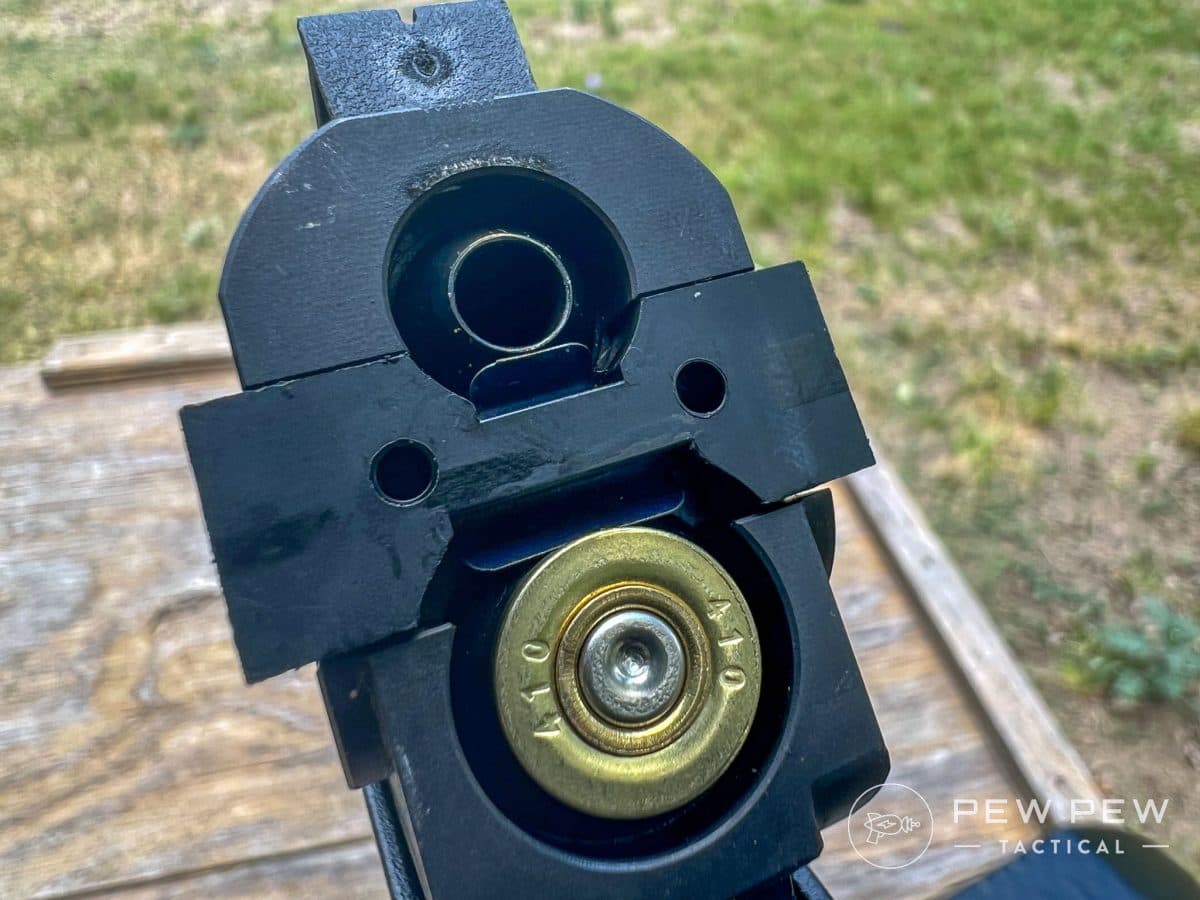
Pressing back on this allows you to break the action open and manually operate the extractor bar. By pinching this between your pointer finger and thumb, you pull it out, then push it back in, exposing a bit of the shell or casing.
Once visible, you can grasp the empty and pull it free with ease. Although all the steps sound labor-intensive, they go pretty quickly once you’ve done them a few times.
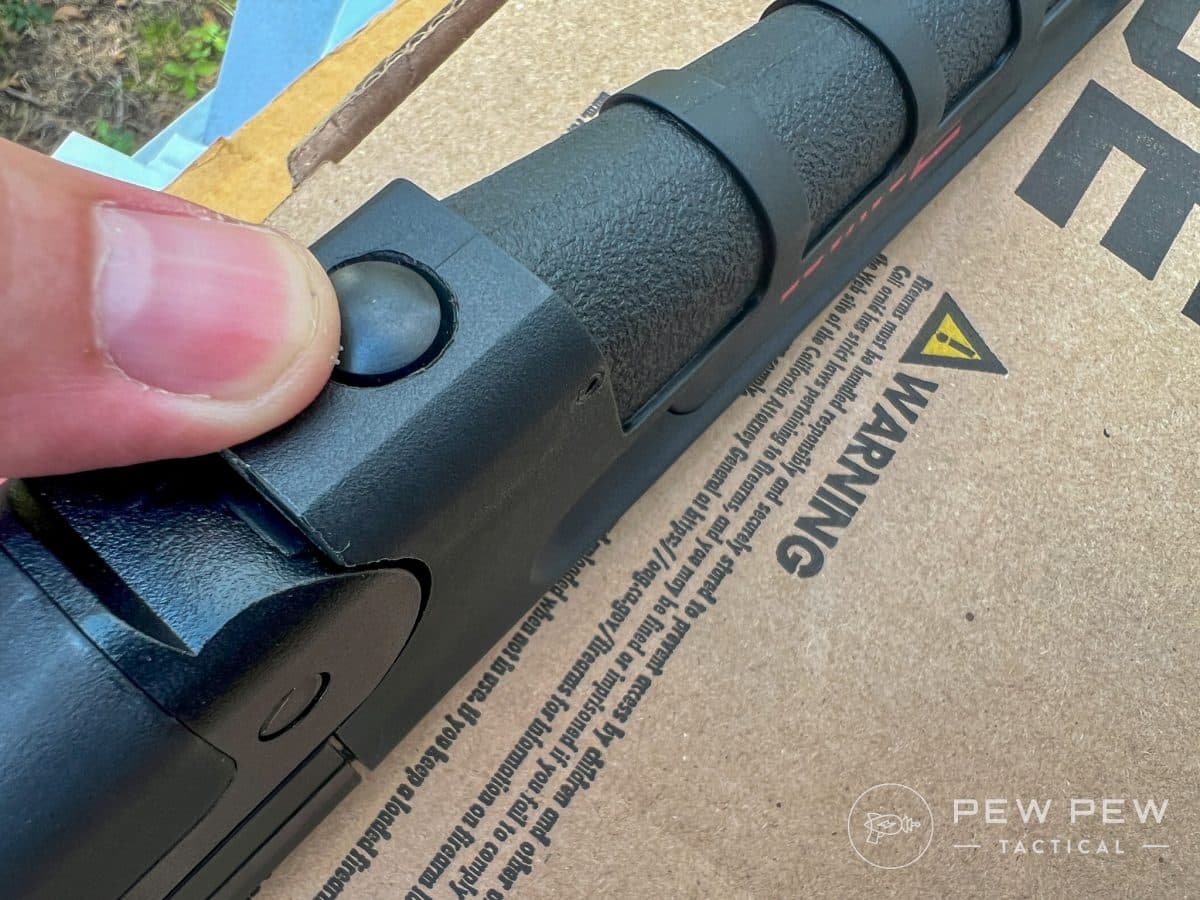
One last control is the actual take-down button, located forward of the opening lever. When the action is open, pressing this releases the forend and allows it to slide forward about three-quarters of an inch.
Doing so creates enough space for the front of the gun to cam over a pivot bolt in the back of the gun. This allows the shooter to disassemble the two pieces completely.
Putting them back together is as simple as hooking the front over the same bolt, then closing the forend again.
Improvements We’d Like To See
Accuracy was likely affected by the quality of the sights on the Takedown 42. While it was decent and repeatable, I was discouraged by the front sight’s ability to move.
I was fully able to cant it a few degrees in either direction, and had to eyeball it straight through a series of manual adjustments. The rigidity of this piece needs to be improved somehow.
Additionally, the lack of contrast would eventually become a problem with certain targets. If a scope weren’t to be mounted, some color upgrade for the front sight would help.
Who Is the Savage 42 Takedown For?
With the hunting applications of an over/under rifle/shotgun taking center stage for this firearm, I could easily see the Savage 42 Takedown riding stowed in a ranch or farm vehicle. The utility of a multiple caliber would continue to serve for years.
Additionally, the Savage 42 is a pretty forgiving rimfire and small-bore shotgun that could be a great first gun for young shooters. The manual process of loading, firing, and unloading builds in some inherent safety that lends itself to novice plinkers.
Outside of that, the 42 also has some prepper applications and could be kitted out with supplies in its bug-out bag. However, the Savage 42 Takedown should not be considered for defensive purposes unless you have nothing better.
By the Numbers
Reliability: 5/5
The Savage 42 Takedown was perfect, though I did all the loading and extracting.
Ergonomics: 4/5
The ergonomics should fit a wide array of different-sized shooters, though Savage does make a dedicated Youth model.
Accuracy: 2/5
The shiftable, blacked-out front sight likely led to some bigger groups.
Customization: 2/5
This firearm is not well-suited for extensive customization. However, it comes in black, green, or tan, and you can install a scope mount.
Value: 3/5
Many online retailers currently sell the Savage 42 Takedown for under $500, fairly competitive with other guns of this variety.
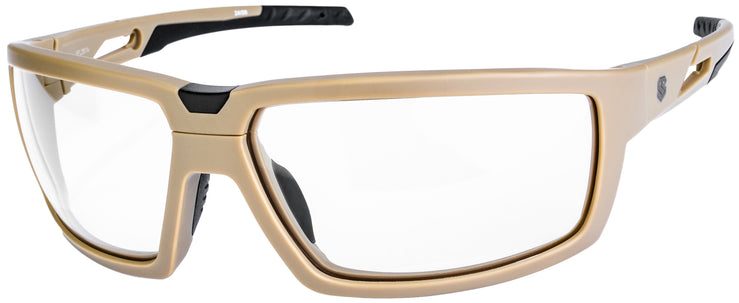
Even a .22 LR or .410 shotgun can be loud enough to damage your hearing. Be sure to pick up some protective gear before heading to the range. We use ShellShock.
At the helm of this review was Pew Pew Tactical Content Producer Sean Curtis. Sean has been shooting since childhood, but really began to delve into guns more during his law enforcement career. He spent over two decades in law enforcement, where he became a POST-certified handgun instructor and NLEFIA Red Dot Instructor and received CLEFIA Advanced Firearms Instructor Training and AR-15 armorer training. He has since attended a variety of training, including Tactical Performance Center Handgun Mastery & Carbine Mastery, and earned USCCA rifle instructor certification. Aside from training and prior to joining the Pew Pew Tactical team full-time, Sean wrote for several gun publications, evaluating and testing guns and gear, and has written hundreds of articles.
This review was edited by Editor-in-Chief Jacki Billings, who runs Pew Pew Tactical’s experienced team of reviewers. Jacki is a member of the Society of Professional Journalists, ACES: Society for Editing, and the Professional Outdoor Media Association, and has her bachelor’s degree in Mass Communications. She has worked as a media professional for close to 20 years, specializing in gun media for almost 10 years, and has worked as an editor for five years. She uses her extensive professional journalism and editing experience to set testing protocols and editorial standards.
Final Verdict on the Savage 42 Takedown
While the philosophy of a combo gun is not new, I’m tickled to see such an old concept get modern treatment. The Savage 42 Takedown offers something for the farm/ranch, small game hunters, preppers, and plinkers alike.
Contemporary materials and updated tooling create a package that is reliable, reasonably accurate, and can stow away in an included bug-out bag for emergencies. Whether you apply .22LR, buckshot, or slugs to your problems, the Savage 42 Takedown provides the solution.
Since 2016, the Pew Pew Tactical team has been dedicated to providing expert reviews and in-depth testing of guns and gear. All while keeping in mind that guns are fun and that readers come first.
Written by American gun enthusiasts, competitive shooters, former military/law enforcement personnel, and trained journalists, we use our extensive skill sets and knowledge to bring a well-rounded, researched approach to our content.
We pride ourselves on hands-on testing and real-world experience with all products we recommend. Further, we believe in objectivity and approaching all articles without bias – our few advertisers never influence our reviews or recommendations. We believe in giving our readers a comprehensive understanding of how and why a product is great – or isn’t. And if it’s good enough for us to use ourselves and recommend to loved ones.
Our content, analysis, and insights on firearms and gear are recognized across the web. We are proud to be cited by authoritative third-party platforms including Newsweek, Yahoo News, and Wikipedia, demonstrating our standing as a trusted resource in the firearms industry.











Conversation