I may earn a small part of the sale from links to any products or services on this site. You do not pay anything extra and your purchase helps support my work in bringing you more awesome gun and gear articles.
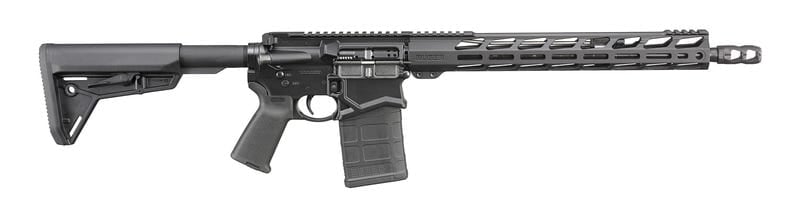
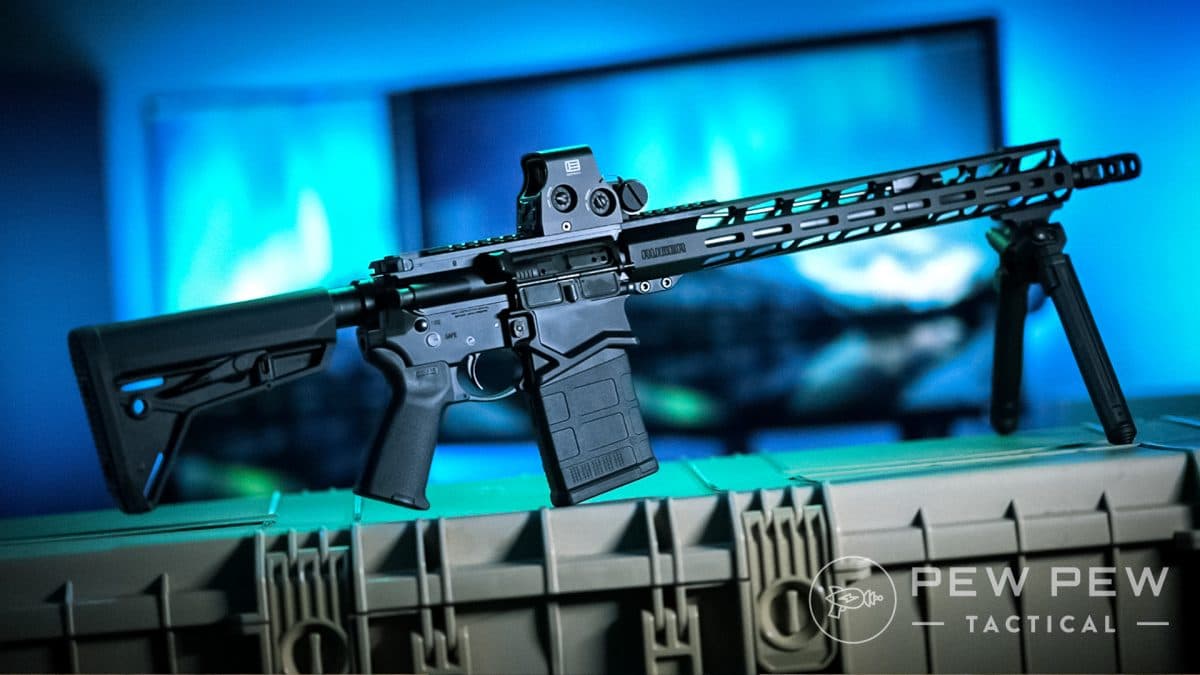
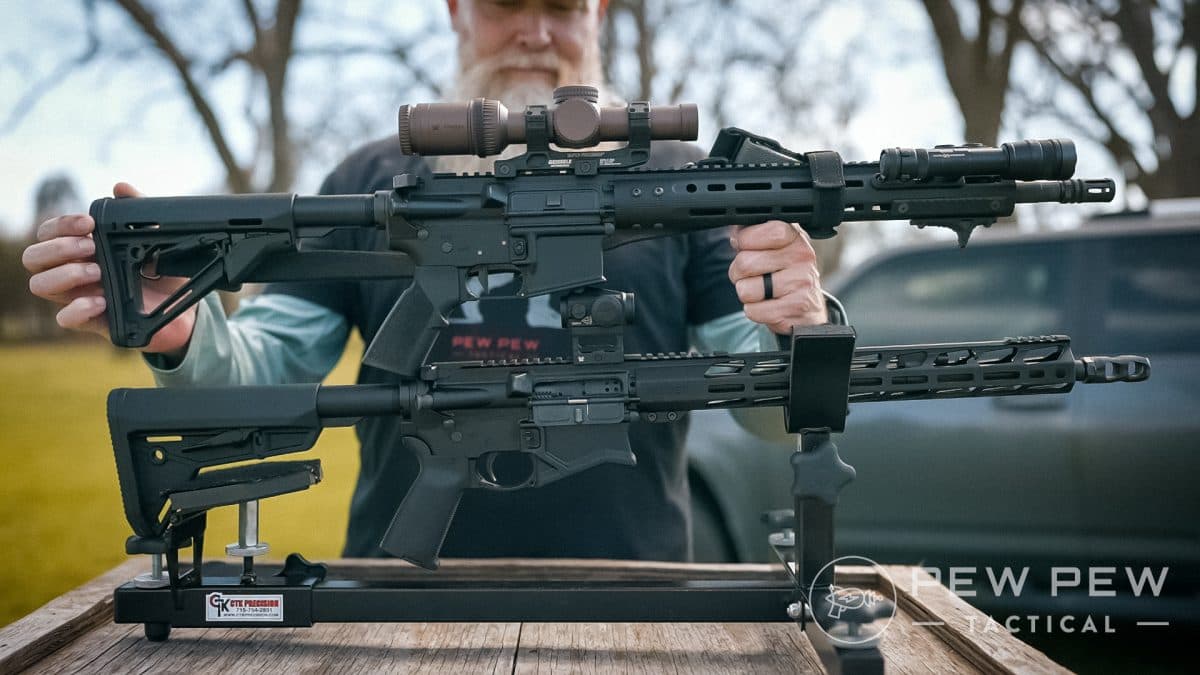
The Ruger SFAR is technically a small frame AR-15 but chambered in 7.62/.308. Our testing revealed that it is reliable, accurate, and suppresses nicely, though it still kicks like an AR-10.
Ever wish your AR-10 was just a little...smaller? Ruger did too, and the result is the SFAR.
On paper, the Ruger SFAR looks like the best of both worlds — an AR-10 chambered in .308 Win but built like an AR-15, weighing so light it will make your current battle rifle feel like a boat anchor.
But we all know that what you see on paper doesn't always translate to the range. So, we loaded the Ruger SFAR up, took it to the range, and put it through our 250-round test to see if this AR-10 actually delivered or if it was more like Frankenstein's monster.
Curious how it held up? We got the full breakdown, including our ratings on ergonomics, accuracy, and value.
So keep reading this review to see if the Ruger SFAR deserves a spot in your safe.
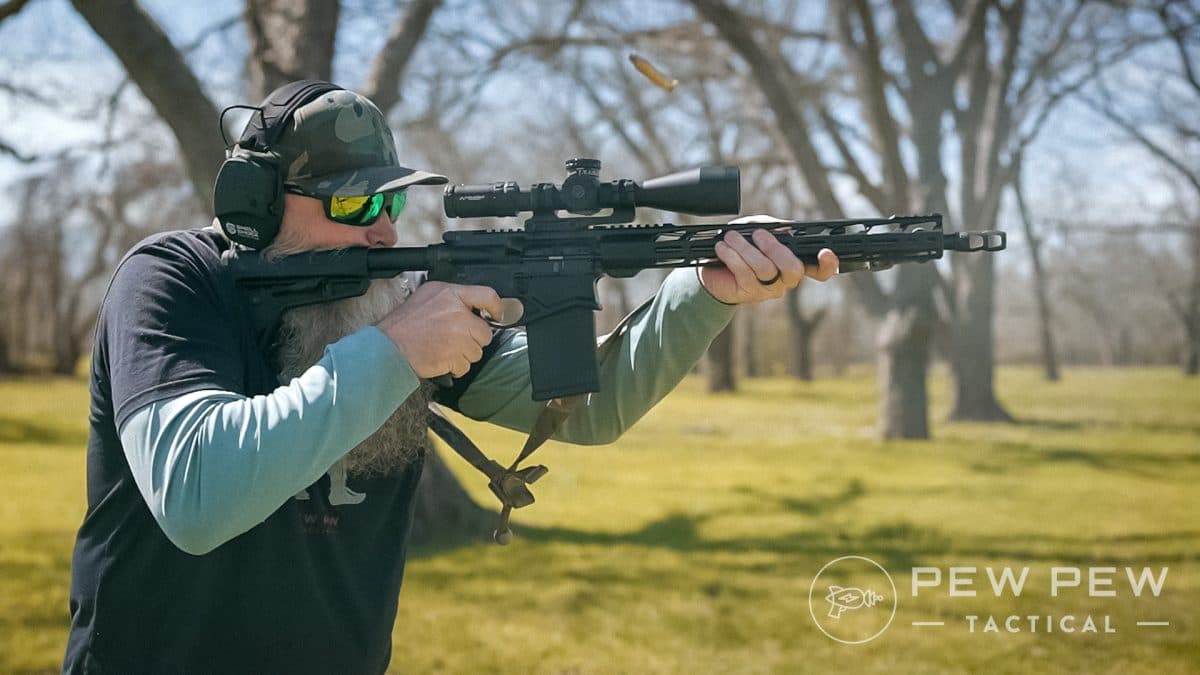
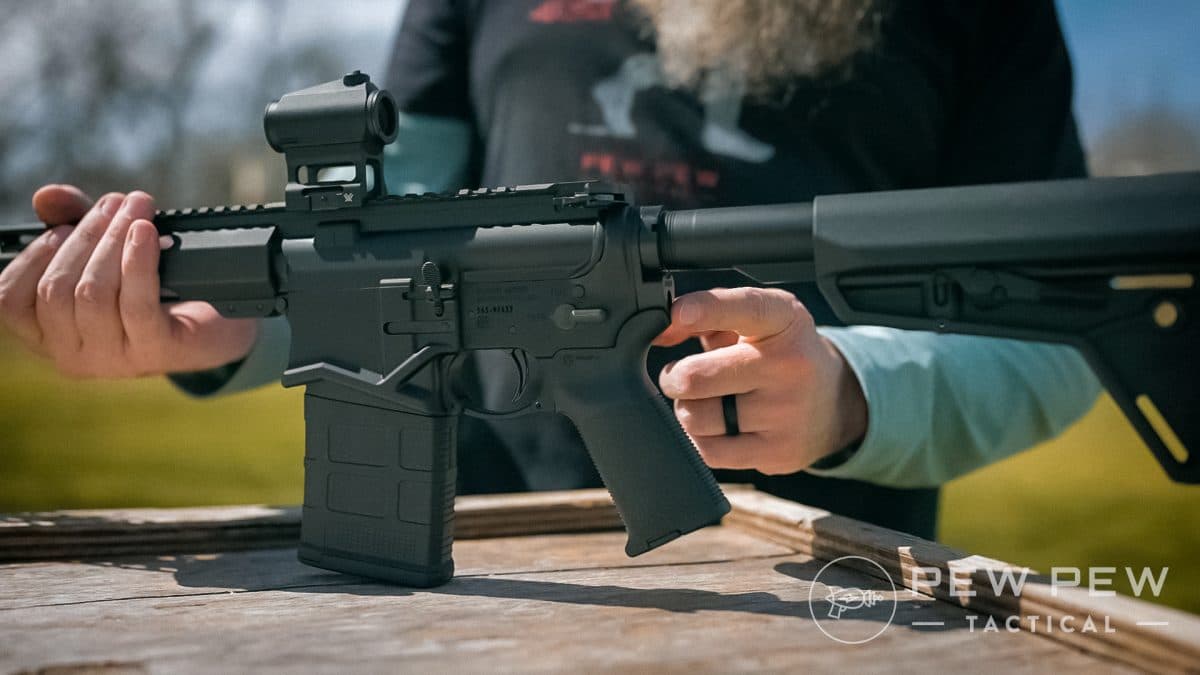
For this review, we tested the Ruger SFAR with a Primary Arms GLx 4-16x50 FFP for accuracy, shooting 5-shot groups at 100 yards. Later, a Vortex Crossfire greed dot was used for targeting during VTAC barricade work.
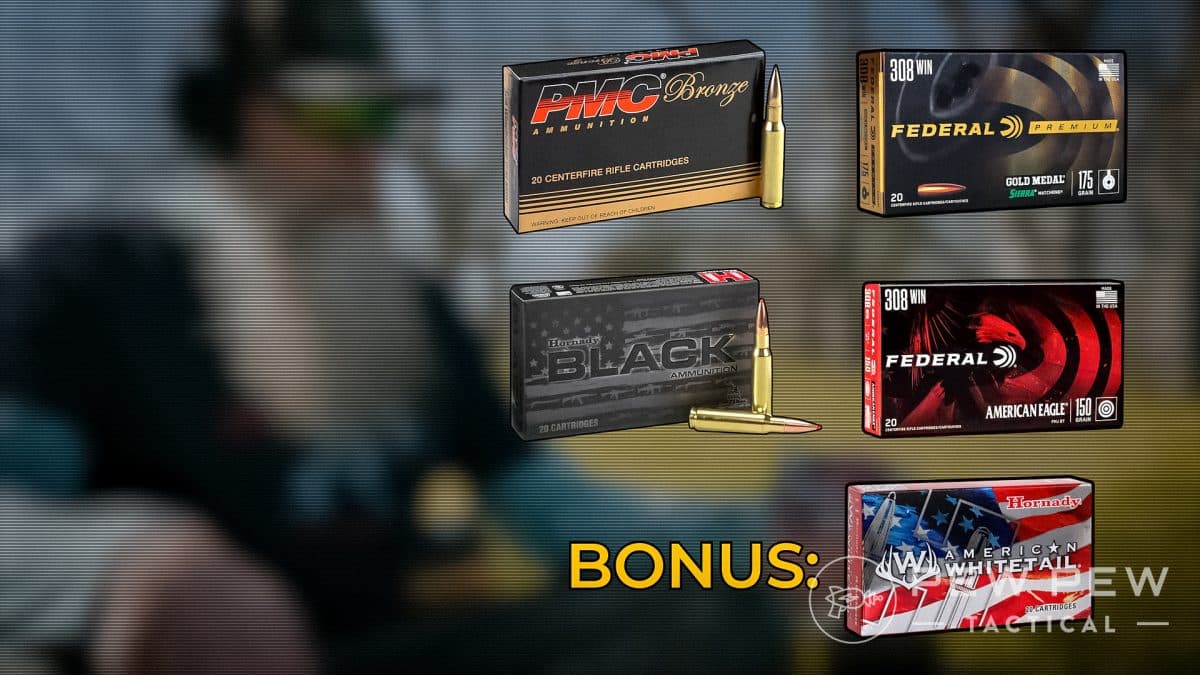
Over the course of testing, we fired 250 rounds of ammunition (both standing, prone, and using a VTAC barrier) through the Ruger SFAR using the following types of ammunition:
Federal Premium 175gr
PMC Bronze 147gr
Hornady Black 168gr
Federal American Eagle 150gr
Hornady American Whitetail 150gr
We also tested the trigger on the Ruger SFAR with a Lyman Digital Trigger Gauge to get an accurate assessment of the actual trigger pull weight.
Ruger SFAR Specs & Features
Specs
Caliber: 7.62x51/.308
Action: Semi-auto
Capacity: 20+1
Length: 37.25”
Barrel Length: 16.10”
Width: 1.5”
Height: 7.20”
Weight: 6.8 lbs.
Comes With: Cardboard box, 20-round PMAG, gun lock, owner’s manual.
Features
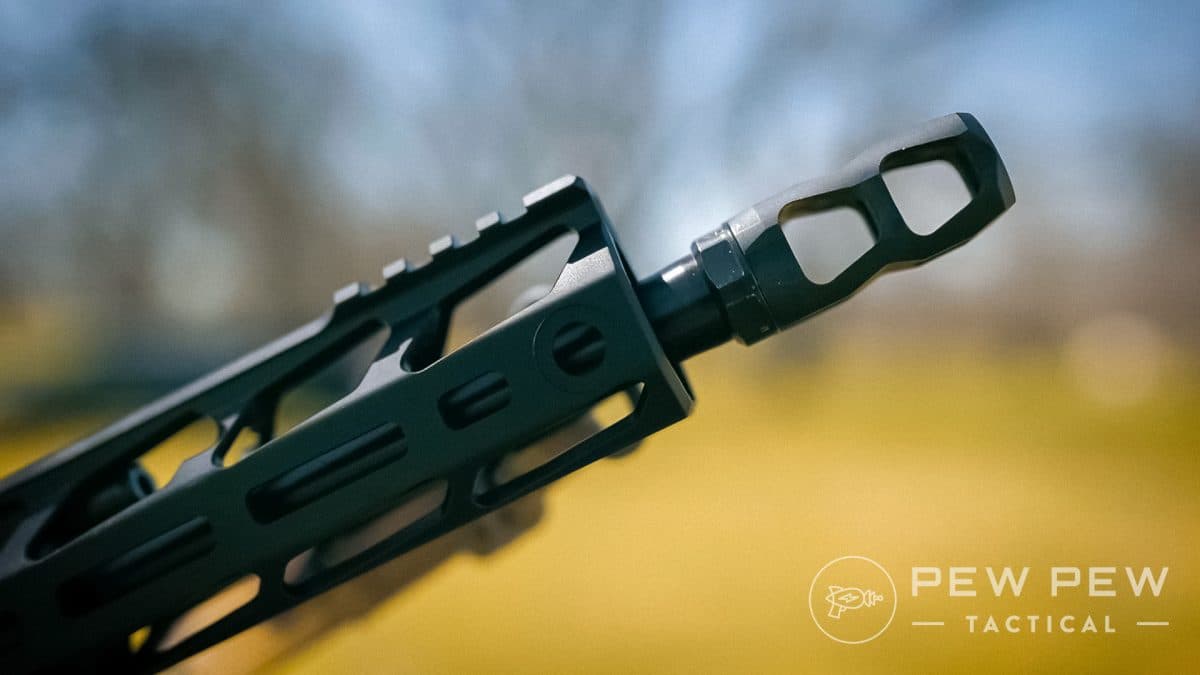
Boomer brake
Adjustable gas system
Ruger Elite 452 Trigger
Ruger SFAR Origin Story
So, where did it all begin for the Ruger SFAR?
We'll start with the AR-15 — well, the AR-10 since that came first. The AR-15 was derived from its predecessor, the AR-10, developed by Eugene Stoner in the late 1950s. The AR-10 used the 7.62x51mm round and was a larger, heavier-style rifle. (Still true today.)
It wasn't long before the U.S. military came knocking and asked Stoner to create an AR-10 scaled down to fit the .223 cartridge. The result was the notorious AR-15, which earned the M16 designation after military adoption.
As I mentioned above, AR-10s are typically bigger, heavier, and more expensive than their younger AR-15 siblings. But Ruger had something up its sleeve...a design that would defy those characteristics and create a rifle that aimed to be the best of both worlds.
Launched in September 2022, the Ruger SFAR (Small-Frame Autoloading Rifle) is a modern sporting rifle that melds the compact size of traditional AR-15s with the .308 Win/7.62 NATO caliber to offer gun owners a lightweight, yet powerful rifle that can transition from hunting to tactical environments.
Ruger says its engineers sought to blend advanced materials with specific manufacturing techniques that would allow the SFAR to remain lightweight and compact while accommodating that larger caliber successfully.
But does the SFAR meet the mark, or does that lightweight build cause problems for shooters on the line? Keep reading to find out.
Ergonomics: Fit & Feel
When I first pulled the Ruger SFAR out of the box, I was impressed with how light it felt.
My previous experience with AR-10s prepped me for bulk and weight, but as I pulled the SFAR into a low-ready grip, I was struck by how much I felt like I was holding an AR-15.
But as I examined the SFAR closer, I started to notice some differences...
Fit & Finish
The SFAR's overall fit and finish are fine. We're all used to the perpetual black rifle at this point. Its surfaces are all well done with no rough edges or corners. Everything fit well together and I didn’t feel any flexing between the receiver and forend. All good signs to start!
When I moved to the receiver, though, that's when I noticed something was very different.
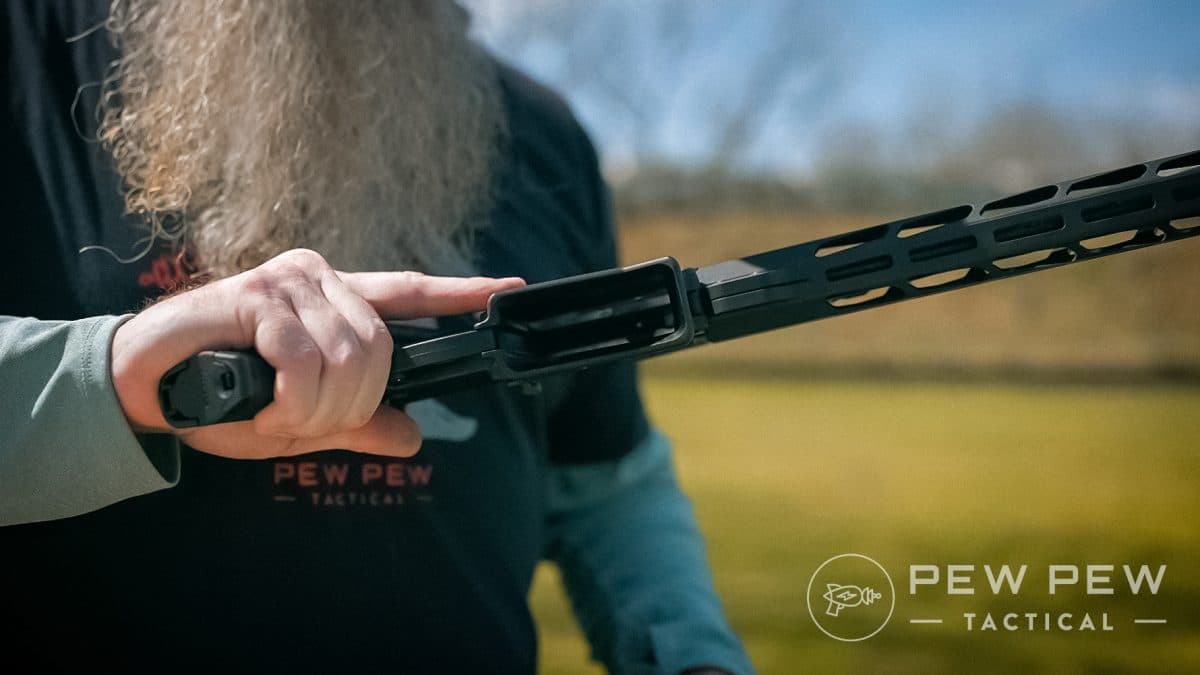
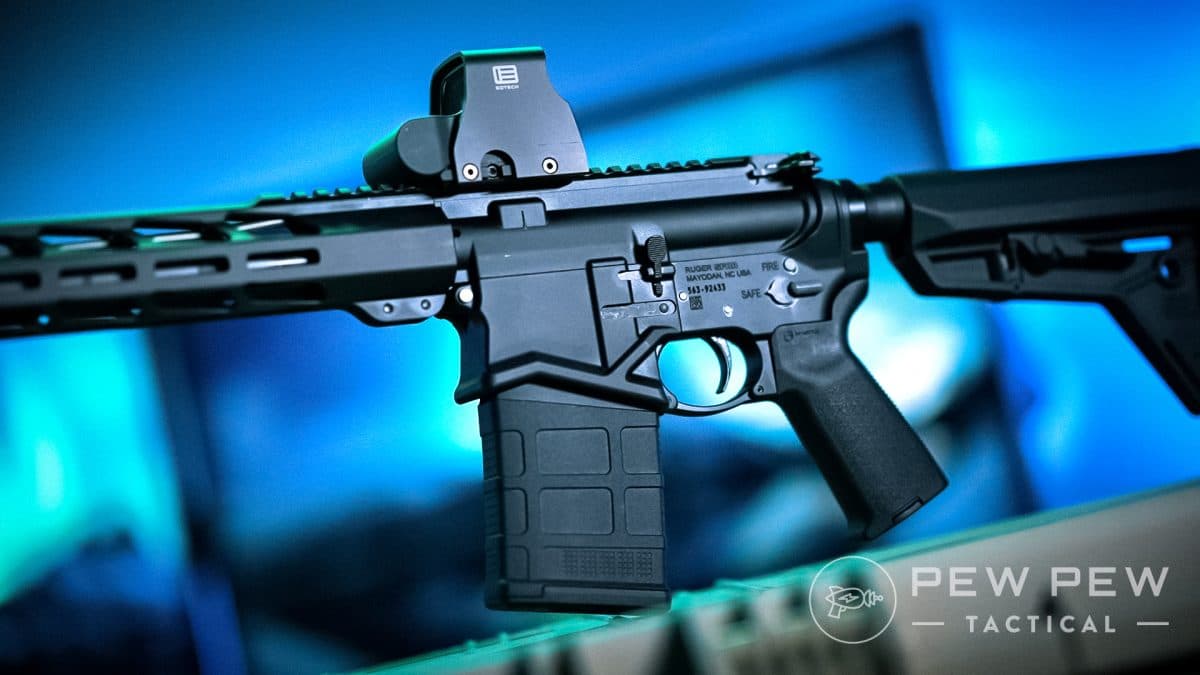
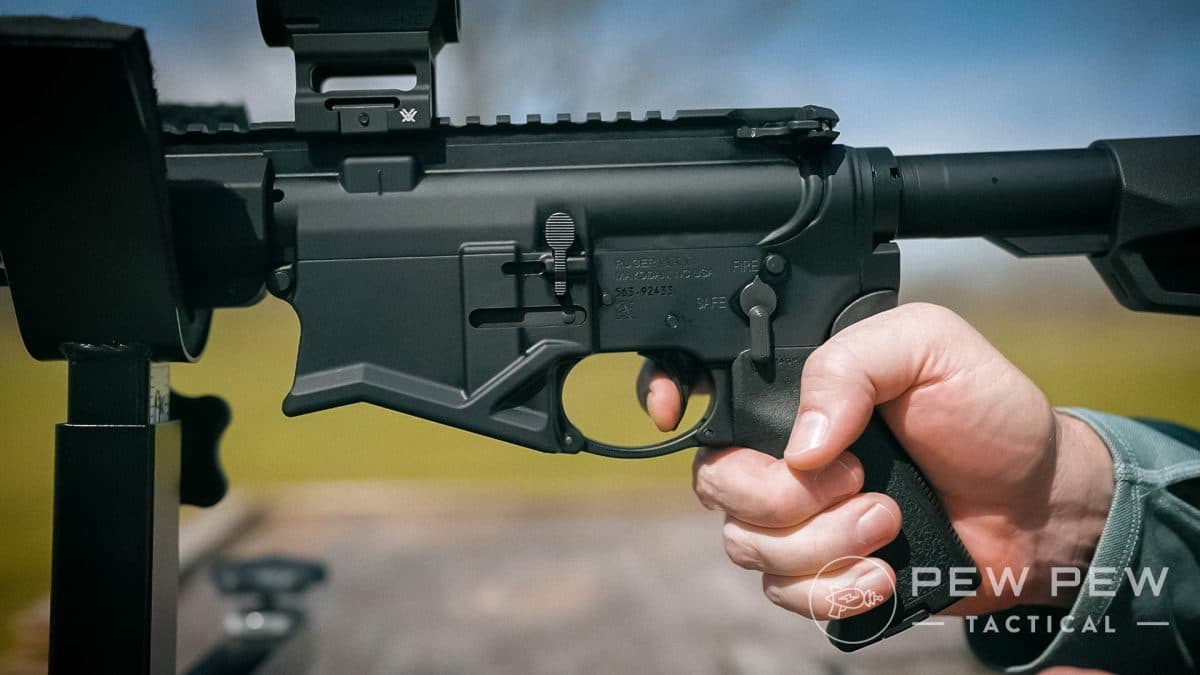
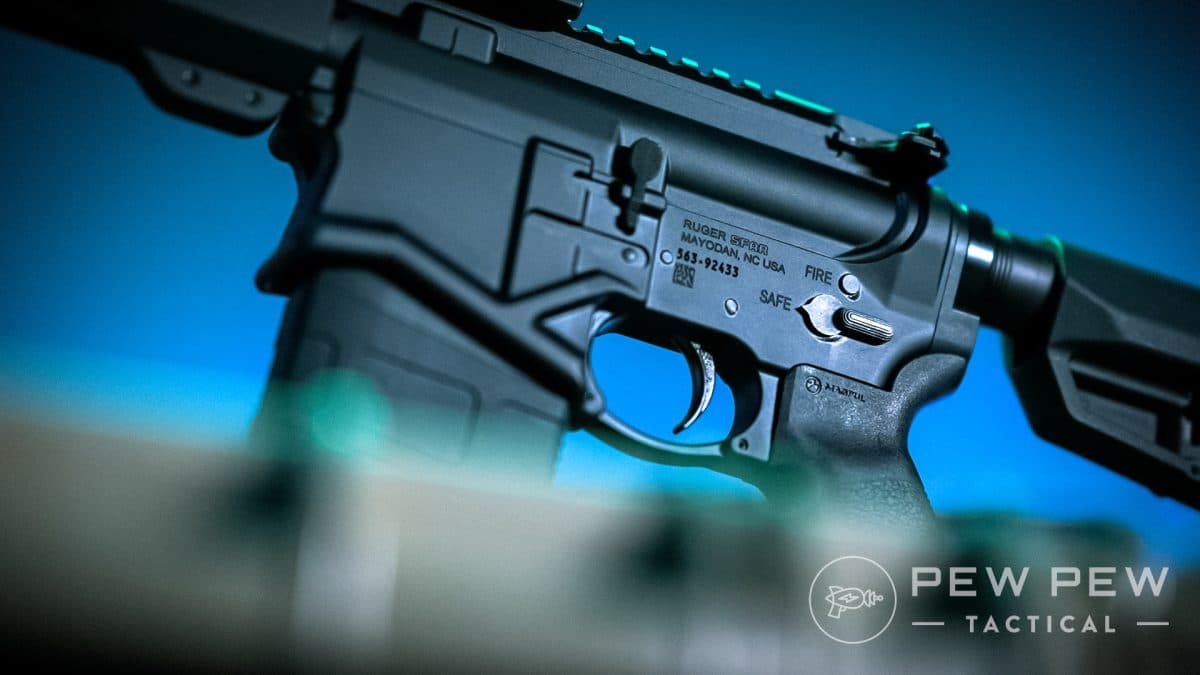
The Ruger SFAR's magwell seemed almost like an upgrade. It’s a lot larger than that of an AR-15, which gives you plenty to hold onto while gripping it.
The size of the magwell pushes the trigger group back and subsequently leaves a little bit of extra room at the end where the castle nut and grip mate up.
Ruger handled this extra space well by extending the lower so the grip mates up normally.
Accessories & Furniture
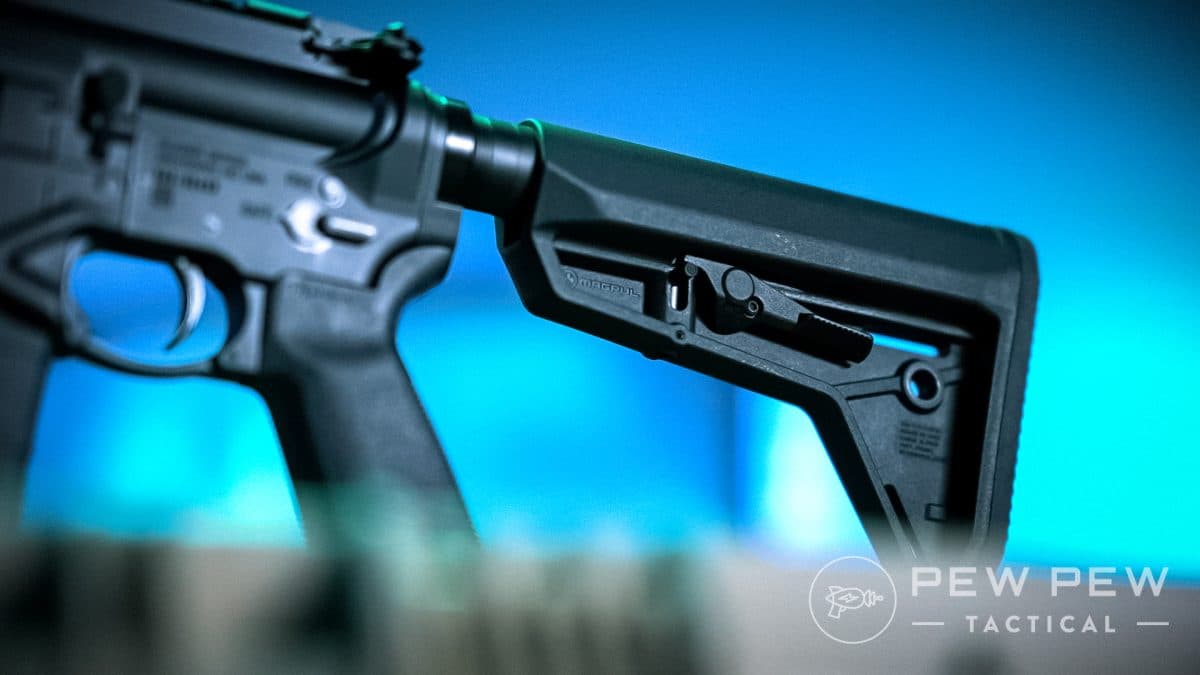
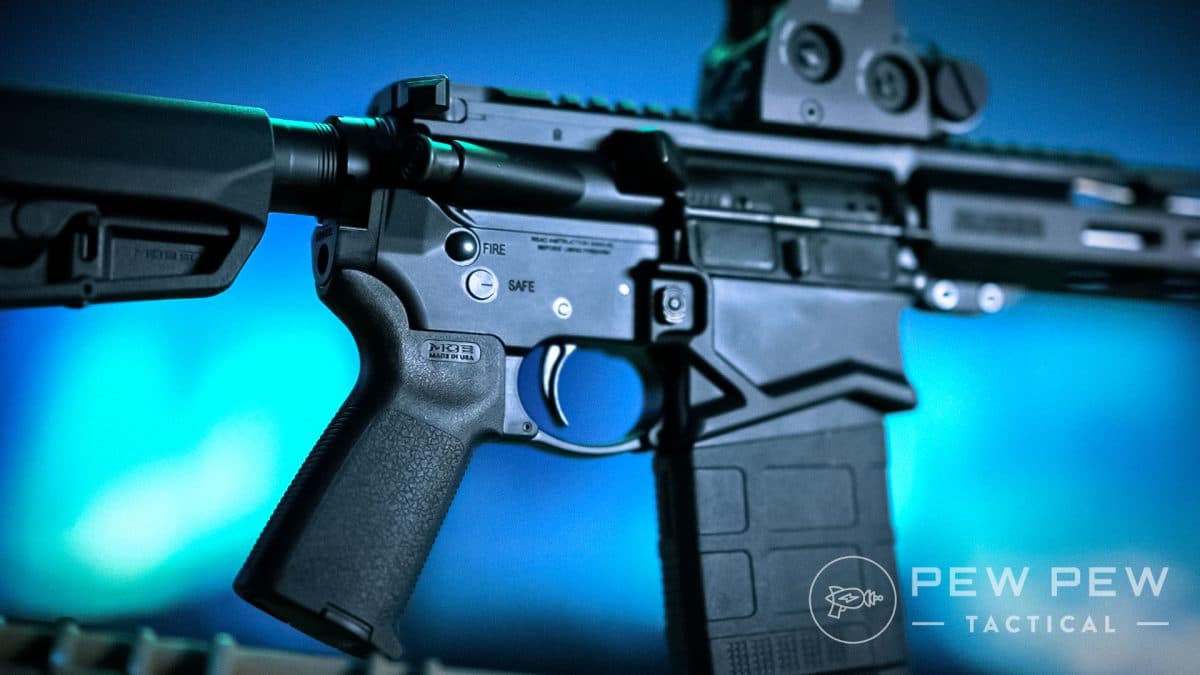
Magpul MOE furniture adorns the lower and provides good functionality. The grip has a light texture, but the MOE SL stock does a good job without being too minimalistic.
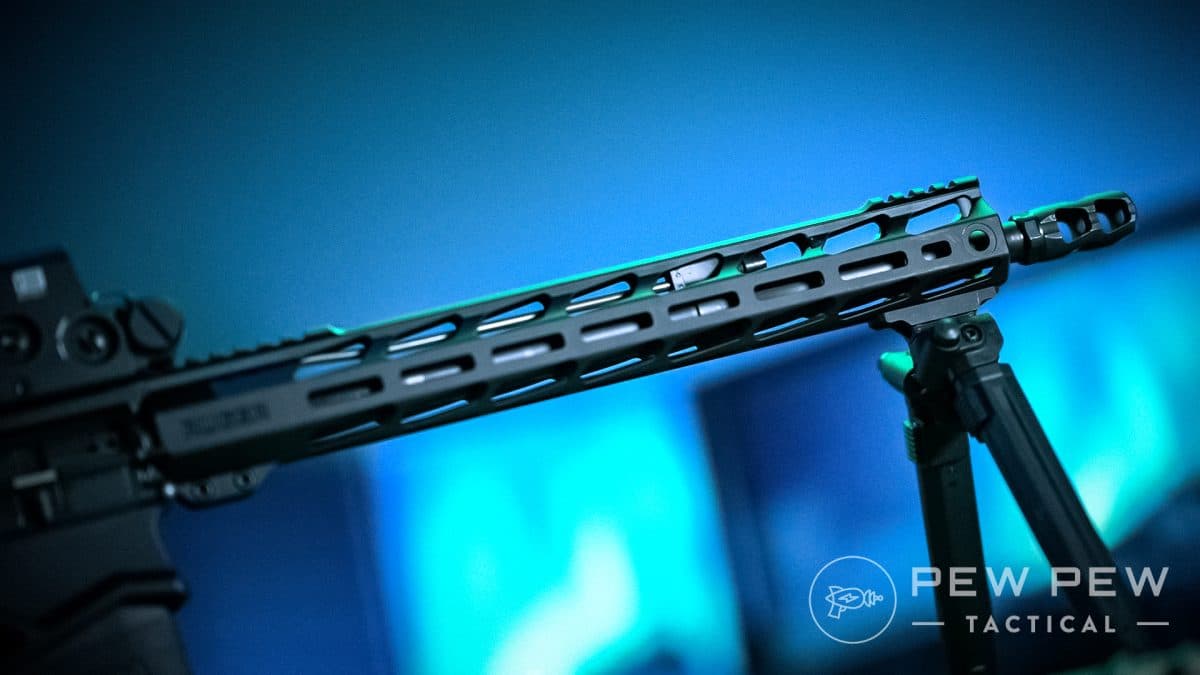
The SFAR has most of the accessory options you’d like in a rifle. A Picatinny Rail runs most the length of the top, though it is interrupted in the middle, then back again near the muzzle for a front iron if you like.
M-LOK slots are present at the 3, 6, and 9 o’clock positions on the free-float rail, and there are QD wells on either side of the end, which is echoed by a third of the MOE SL stock.
The rail itself is skeletonized to keep weight down. While not heavy, continuous firing exposes your hands to a little more blast and heat.
Controls
The SFAR's controls are standard fare for an AR-15, with the fire control on the left side only and the magazine release on the right only. Its charging handle is on the small side though works well enough.
The SFAR also has a forward assist on the right side. Finally, the two-stage Ruger Elite 452 trigger provides launch controls.
This trigger is an excellent match for the SFAR. It pulls back a brief distance before stopping at a well-defined wall, then breaks crisply, measuring 2 lbs. 8.9 oz. on a Lyman Digital gauge. The reset is very audible and tactile.
I enjoyed prepping the trigger during the accuracy portion while establishing my sight picture. Once fine-tuned, I’d settle my breath and break the shot with pretty good results.
Internals
Digging into the internals, I found the bolt carrier group has also been shortened compared to a standard AR-10.
Once again, this step was taken to shoehorn the otherwise too-big .30 caliber round into the SFAR's smaller frame. But does all this come together when you're shooting on the range?
Glad you asked...
Shooting the SFAR: Accuracy & Reliability Analysis
Accuracy Testing
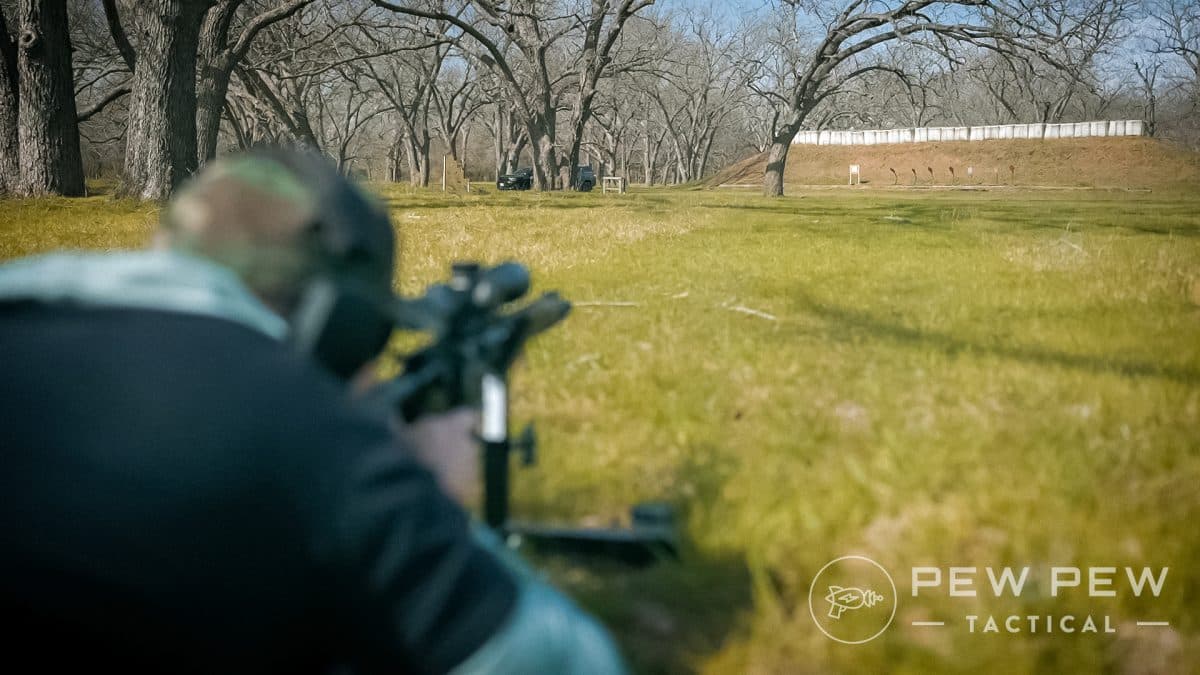
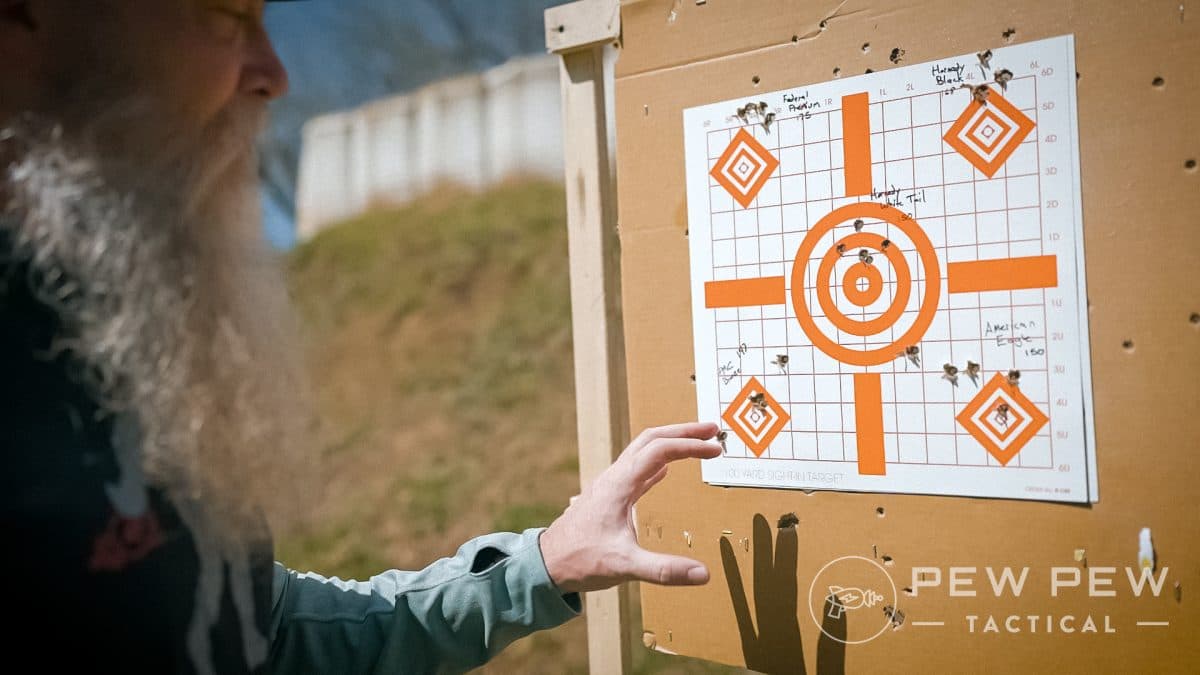
After zeroing the Primary Arms GLx 4-16x50 on 150gr American Eagle, we walked out to the 100-yard mark and fired 5-shot groups for accuracy.
I was using a P3 Ultimate Shooting Rest from CTK Precision and shooting prone on the ground to ensure accurate shots with as little shooter error as possible.
My first group with the American Eagle was a little loose and showed some good elevation, but my horizontal tracking was spread out.
All in, the first group was just over 3 inches.
Next, I tried PMC Bronze, a 147gr round. My first two shots were within 3 inches of each other, but the last three were all touching in the middle. I was beginning to get the feel for the rifle and my personal accuracy was improving.
Encouraged, I loaded up the Federal Premium 175gr and fired a 5-shot string that was very tight. Two pairs were touching with a single in between for a group that was just over 1 inch.
I then tried 168gr Hornady Black and had the same pattern. Two pairs were touching with a single shot in between for a group right at 1 inch.
Finally, I finished testing with Hornady White Tail 150gr. This group had fairly even spread and was just under 2 inches.
It was clear that the barrel seemed to prefer heavier-weighted ammunition. Our 16-inch barrel test gun came with a 1:10 right-hand twist.
Recoil
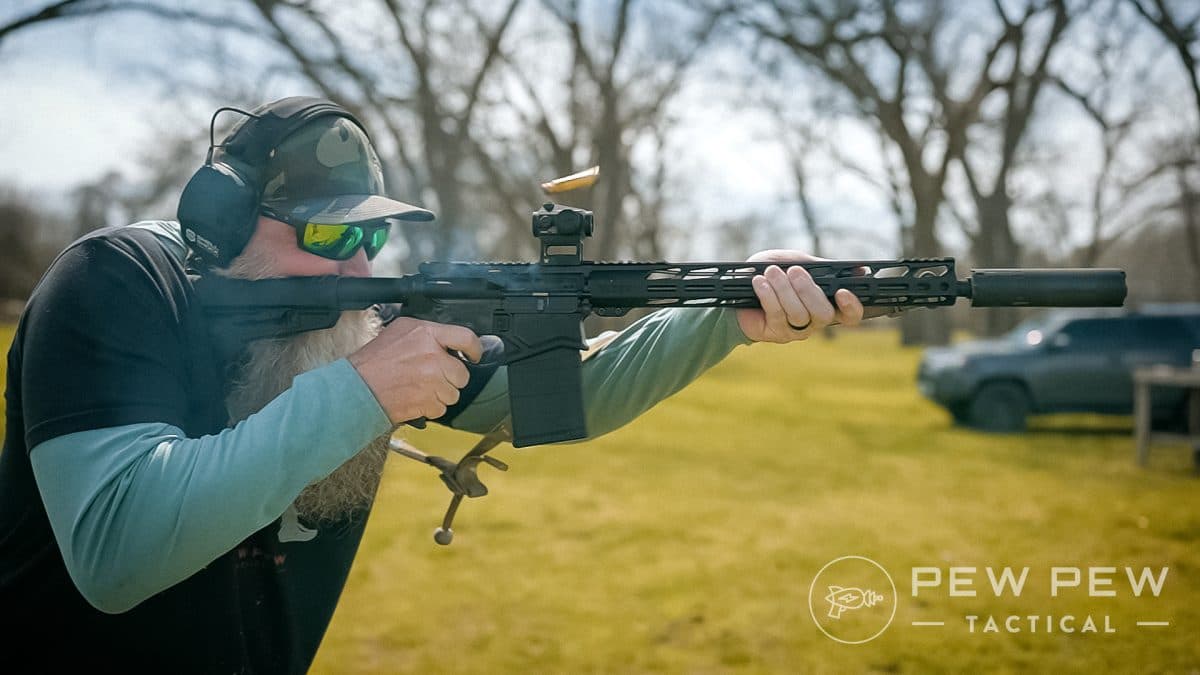
One of the biggest surprises about the SFAR is when you press the trigger. It’s easy to move around and shoulder the rifle, so you expect a much lighter shooting impulse.However, as soon as you break the shot, you are reminded it is a .308 and not a 5.56.
The recoil is on the order of what you’d expect from an AR-10, though I’m not sure if it's amplified by the relatively lightweight nature of the rifle.
Regardless, it is much more challenging to accurately place follow-up shots. I spent a good deal of time using more techniques to achieve performance close to that of an AR-15.
There’s no escaping physics, but I appreciated the challenge. By the end of the day, I was able to get some controlled pairs on steel, but longer strings at speed eluded me.
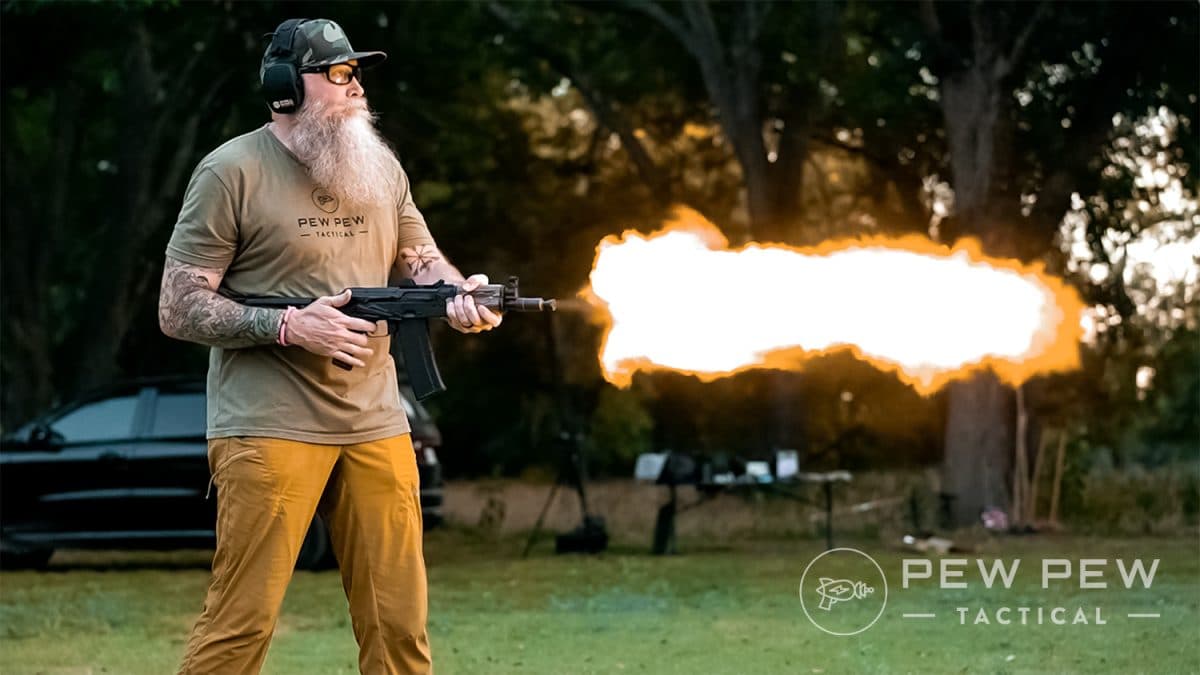
The Boomer Brake, so coined by Ruger, vents gas out of four chambers directly to the sides of the rifle. It does a good job of assisting with the recoil, though it is very loud, and does nothing to contain the concussive shockwave.
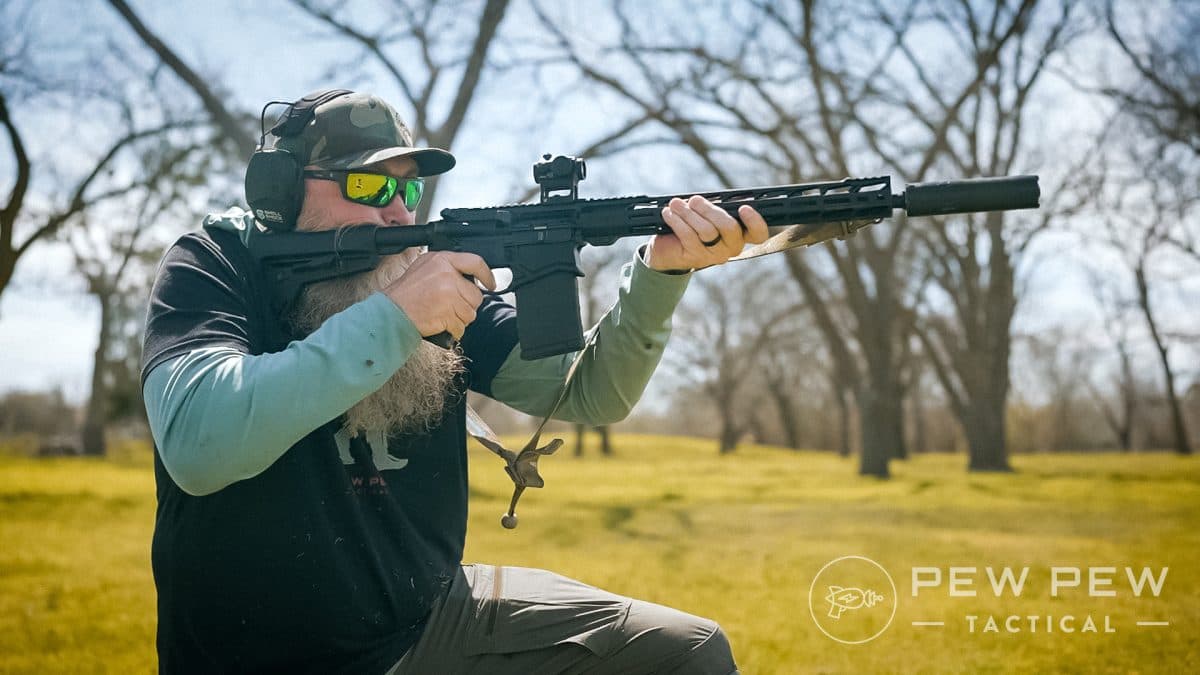
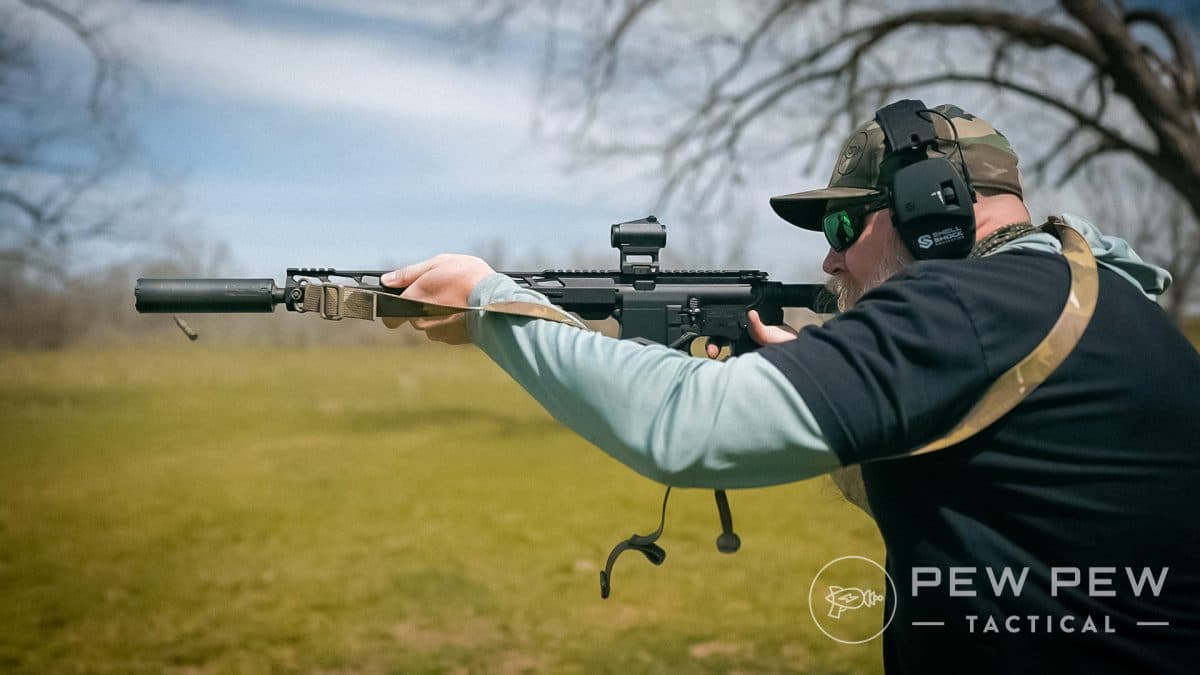
We switched to an Aero Precision Lahar 30 suppressor pretty quickly in the testing process to see how much better the SFAR might perform. The recoil impulse was a little better but the sound savings were huge.
As a result, we completed the rest of the testing with the suppressor attached. At first, we experienced a failure, but this was expected because we hadn’t changed the gas settings.
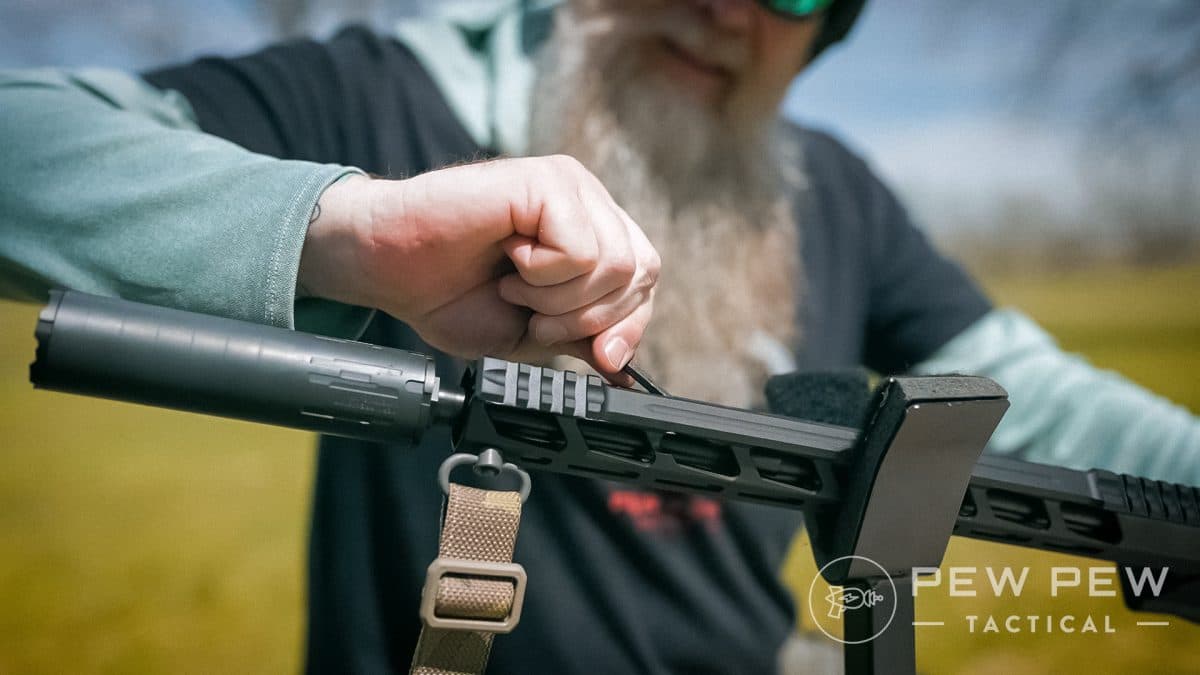
Using a hex wrench stored in the MOE grip, I adjusted the gas block. It was difficult to know whether the setting was read from the right or left side of the rifle as they are visible from both.
After reading instructions, it appears the gas setting labelled 1, 2, 3 or 0, is read from the right side of the rail. After dialing this down to 1, we saw ejection patterns more consistent with the 3 o’clock output.
The hex wrench was not always easy to turn. At one point, I used a pair of pliers for leverage to turn the gas block to the proper setting.
Regardless, we ran the rest of the test suppressed without incident, though one Hornady Black round failed to eject. The SFAR ran reliably after this was cleared.
In that vein, reliability was very good. We fired over 250 rounds of .308 and only had two failures to feed or eject — both of which were during gas tuning after adding the suppressor.
Another noteworthy observation related to gas was I didn’t get any in my face for most of the test. At one point, while shooting sideways from the ground under a VTAC barricade, I got gassed, but that was it.
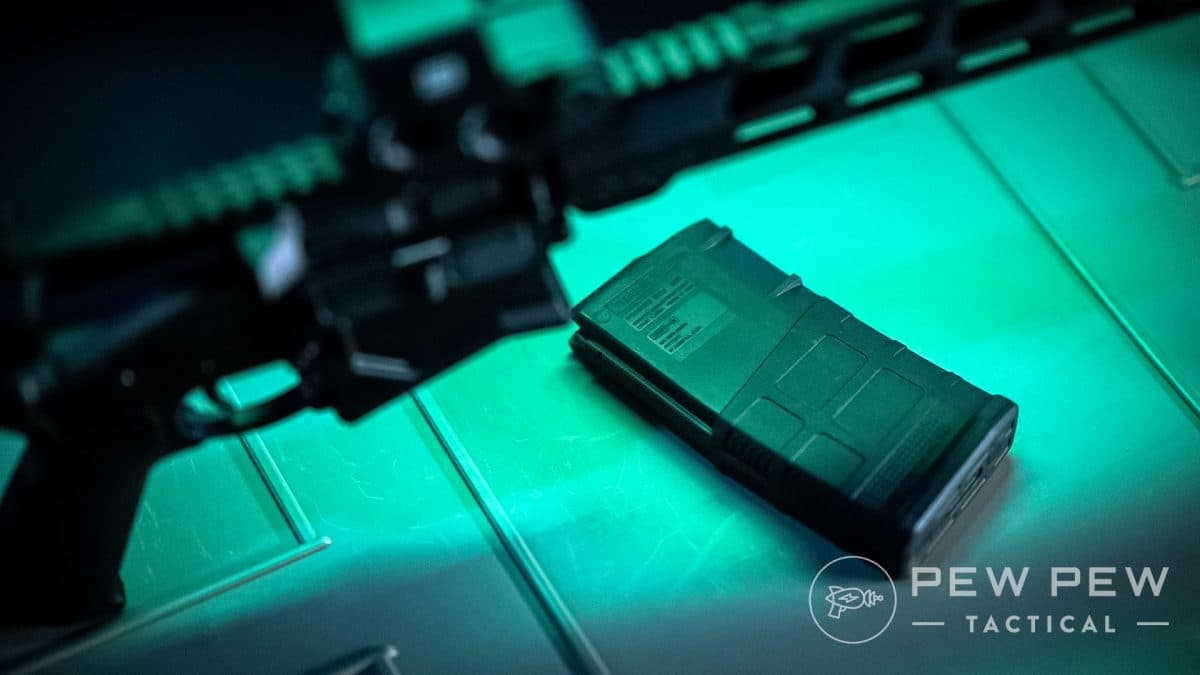
Magazines (PMAGs only) loaded, fed, locked back the bolt, and dropped cleanly each time I pressed the release. However, I needed to press the button a bit deeper than usual to get the magazine to drop.
The SFAR is unique because it is an AR-10 with the relative size and weight of an AR-15.
While this isn’t a completely novel approach, there aren’t too many other choices that match well in this category. The POF Rogue is pretty close as far as features and stats, though costs several hundred dollars more.
Ruger accomplished the AR-10/AR-15 blend while keeping the price fairly low compared with the normal range for AR-10s.
Anyone needing to shoot a little further, or wanting a larger caliber might be interested in the Ruger SFAR. There are hunting applications as well as ranch life needs, though caution should be applied when using the SFAR for home defense unless you live in a very rural area.
While the SFAR's AR-15 feel is very genuine, the caliber staunchly reminds shooters of the power within. recoil-averse shooters need not apply.
By the Numbers
Reliability: 5/5
Had I never introduced a suppressor to the Ruger SFAR, I suspect we would have had zero malfunctions. But with the gas adjusted, the gun ran beautifully.
Ergonomics: 4/5
These are standard AR-15 ergonomics, so the SFAR is very adjustable to fit, but it doesn’t offer left-handed shooters ambidextrous controls.
Accuracy: 4/5
Out of five, 5-shot groups, two were just at 1 inch. A third was 2 inches, and the worst two were approximately 3 inches to 3.5 inches in size.
Customization: 3/5
While a typical AR-15 gets high marks for customization, Ruger’s use of a proprietary upper receiver, bolt carrier assembly, and barrel extension loses some points.
Value: 4/5
AR-10s come in a range of prices from over $4,000 to under $1,000. So the Ruger SFAR coming in at around $1,000 is a nice middle ground.
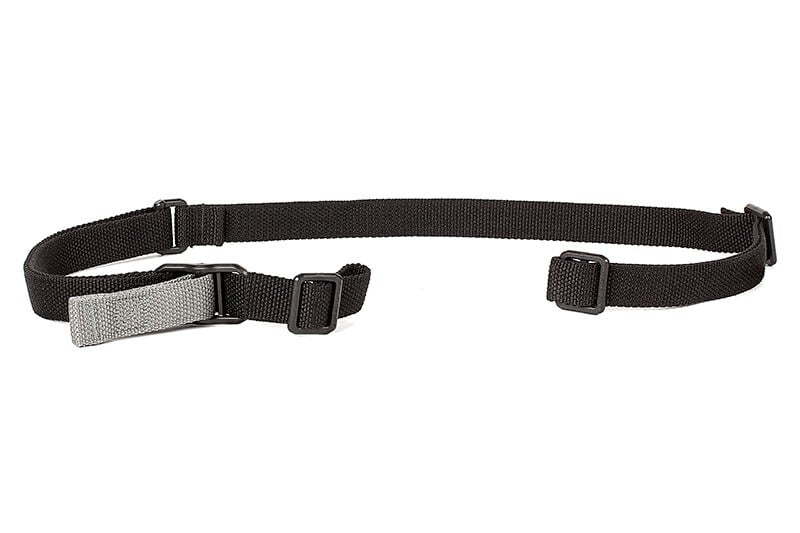
For this review, I used a Blue Force Gear Sling, which made the SFAR more useful. With the sling, I could secure it close to my body or use it to steady shots.
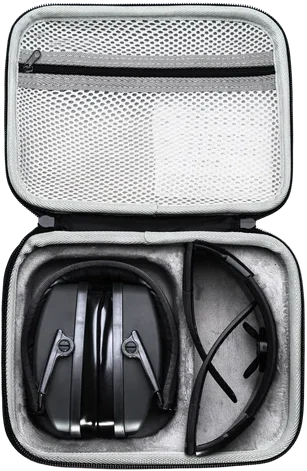
Because the Boomer Brake borders on ridiculous, you'll want some solid ear pro to take care of your hearing. We use ShellShock Protection to cover our ear (and eye) needs.
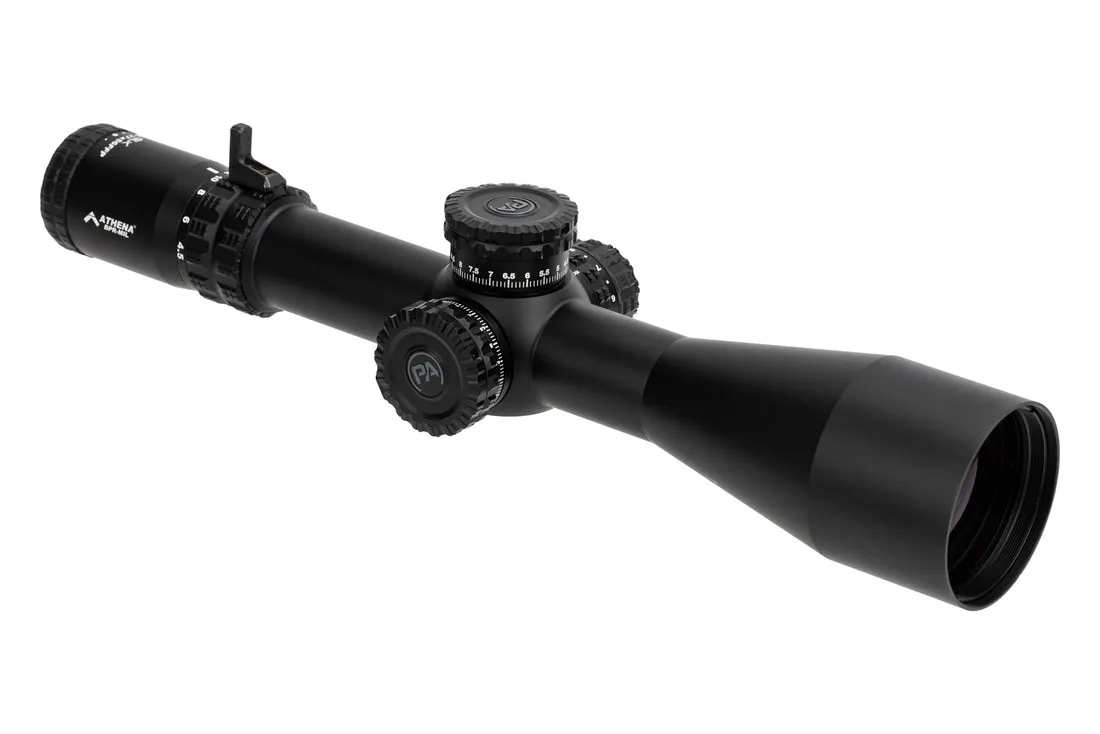
You'll likely want an optic to top your rifle with and the Primary Arms GLx 4.5-27x56 is a solid option. It will extend the SFAR's reach without breaking the bank.
At the helm of this review was Pew Pew Tactical Content Producer Sean Curtis. Sean has been shooting since childhood but really began to delve into guns more during his law enforcement career. He spent over two decades in law enforcement, where he became a POST-certified handgun instructor and NLEFIA Red Dot Instructor and received CLEFIA Advanced Firearms Instructor Training and AR-15 armorer training. He has since attended a variety of training, including Tactical Performance Center Handgun Mastery & Carbine Mastery, and earned USCCA rifle instructor certification. Aside from training and prior to joining the Pew Pew Tactical team full-time, Sean wrote for several gun publications evaluating and testing guns and gear and has written hundreds of articles.
This review was edited by Editor-in-Chief Jacki Billings, who runs Pew Pew Tactical’s experienced team of reviewers. Jacki is a member of the Society of Professional Journalists, ACES: Society for Editing, and the Professional Outdoor Media Association and has her bachelor’s degree in Mass Communications. She has worked as a media professional for close to 20 years, specializing in gun media for almost 10 years, and has worked as an editor for five years. She uses her extensive professional journalism and editing experience to set testing protocols and editorial standards.
Final Verdict on the Ruger SFAR
The Ruger SFAR is a great rifle that accomplishes the lofty goal of making an AR-10 the same size and weight as an AR-15.
Depending on the ammunition we used, we had average to great accuracy, and reliability was solid even though we used a suppressor.
Recoil impulse was a little tough, though only in comparison to a 5.56-chambered gun, and the Boomer Brake is appropriately named, so consider yourself warned.
Ruger did a great job with this rifle, and they are selling it for an extremely competitive price. Anyone looking for a small-framed AR-10 should look no further.
Do you think the Ruger SFAR is a wannabe or the real deal? Let us know in the comments below. for even more AR-10 action, check out the Best AR-10s: Complete Buyer's Guide!
WHY YOU CAN TRUST PEW PEW TACTICAL
Since 2016, the Pew Pew Tactical team has been dedicated to providing expert reviews and in-depth testing of guns and gear. All while keeping in mind that guns are fun and that readers come first.
Written by American gun enthusiasts, competitive shooters, former military/law enforcement personnel, and trained journalists, we use our extensive skill sets and knowledge to bring a well-rounded, researched approach to our content.
We pride ourselves on hands-on testing and real-world experience with all products we recommend. Further, we believe in objectivity and approaching all articles without bias – our few advertisers never influence our reviews or recommendations. We believe in giving our readers a comprehensive understanding of how and why a product is great – or isn’t. And if it’s good enough for us to use ourselves and recommend to loved ones.
Our content, analysis, and insights on firearms and gear are recognized across the web. We are proud to be cited by authoritative third-party platforms including Newsweek, Yahoo News, and Wikipedia, demonstrating our standing as a trusted resource in the firearms industry.
Conversation
17 comments
We review products independently. When you buy through links on our site, we may earn a commission to help support our testing. Learn more.












Conversation