





History of the Kentucky Long Rifle

We take a look at the Kentucky Long Rifle and its influence during the American Revolution. Come learn some history!

Locksmith. Outdoorsman. Author of 3 books on survival & prepping
We review products independently. When you buy through links on our site, we may earn a commission to help support our testing. Learn more.
As firearm sales throughout America continue to fly through the roof, perhaps you’ve been thinking of our long-standing tradition of firearms ownership and use.

If you look back far enough, one weapon easily stands out amidst all the rest. America may have never existed had it not been for this iconic weapon.
This is the history of that gun – the rifle that helped win America’s freedom…the Kentucky long rifle.
Table of Contents
The Birth of a Legend
The year was 1725, and German gunmakers in Lancaster, Pennsylvania, merged two iconic weapons into one -- the German Jaeger rifle and the British fowling gun.
While individually, both of these guns have their advantages, they were not without some serious shortcomings.
The German Jaeger was a short, high-caliber rifle, while the English fowling gun was an inaccurate smoothbore. What was wanted was a gun that wouldn’t devastate small game – rendering the hides unusable, that had improved accuracy, and that permitted the user to use less powder and lead.
If what stands between your family and starvation is that deer 150 yards off into the field, you need a rifle that can hit it with the first shot.

Likewise, if you’re going to live on the edge of the frontier – days’ travel away from the nearest resupply point – you need to avoid waste to the best of your ability.
If you will be traveling throughout the mountains for days at a time, you want to carry as little weight as possible. Lighter ammunition could easily solve that problem.
These home-based gun manufacturers solved the problem by creating the Kentucky long rifle.
What Made the Kentucky Long Rifle Unique
The two main traits that caused the Kentucky long rifle to stand out from a sea of muskets were its accuracy and range.

With a Kentucky in his hand, it wasn’t uncommon for men to be able to take down game or aggressors from 200 yards or more. At the time, this was a world-changing range.
Muskets were the predominant weapon of war at the time, and they had many serious shortcomings.
“I have many times asked the American backwoodsman what was the most their best marksmen could do; they have constantly told me that an expert marksman, provided he can draw good and true sight, can hit the head of a man at 200 yards.”
British Colonel George Hanger
For starters, a musket very well could miss the broadside of a barn. At 100 yards, the lateral error of a musket ball was 3 feet. In short, you really weren’t going to hit what you were aiming for when you pulled the trigger.
You’d hit something, but it wouldn’t be the target.
You stood a good chance if you were within 80 yards with a musket. However, when you consider that muskets didn’t have rear sights – having only a front bead – it becomes more apparent why the range and accuracy of these weapons were so terrible.

What gave the Kentucky long rifle these gifts of greater range and accuracy were not only the sights but the longer, rifled barrel as well.
Typically, a Kentucky long rifle would have a barrel of 42-46 inches in length and hold a .50 caliber bullet.
A small piece of leather or cloth would be wrapped around the bullet prior to its being ramrodded into the barrel, allowing the round to engage with the rifling. The spin this would impart to the bullet not only made the bullet fly further, but it made it fly truer as well.
In other words, you’d hit what you were aiming for.

In addition, this increased barrel length would give more time for slow-burning black powder to impart force to the bullet, resulting in more oomph when it hit the target compared with a musket.
And it wasn’t long until these benefits would fully shine in battle.
Enter The War for Independence.
The Kentucky Long Rifle at War
As can be imagined, a groundbreaking weapon can easily prove beneficial throughout a war, and the Kentucky long rifle was no exception to the rule.
After 1776, The War of Independence continued to progress, and as it did, the redcoats came into increased contact with Americans sporting Kentucky long rifles.
It terrified them.
All of a sudden, Redcoats were getting sniped by gunfire well beyond what was typically thought to be within gun range, and the prospect of not being able to hit your opponent while your opponent could easily hit you caused widespread fear.
Continental Congress eventually realized just how effective of a rifle this was and ended up forming ten rifle regiments during the war as a result.
The most famous of these? Daniel Morgan’s.
Morgan’s Snipers
After getting Congressional approval, Morgan grabbed his Kentucky long rifle and headed for Boston with 96 other similarly armed men.
From 200 yards, Morgan’s men could slowly pick off the British garrison in the town one by one. The British were amazed to find that the dead had all been killed by a single ball and from ridiculously far distances.
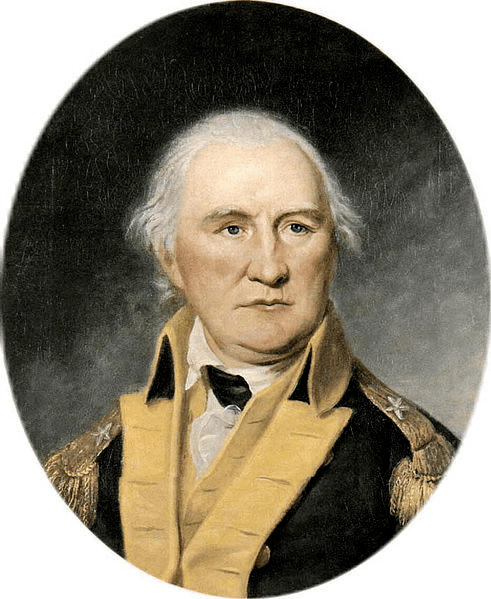
Aside from proving to decimate the British defenses, their accurate fire also served as a powerful form of psychological warfare. No longer would a redcoat have to see an American to be at risk of being killed.
Now, a bullet could easily find its way through their ranks from an unseen foe.
The terror spread by the Kentucky long rifle was such that one American major said, “The redcoats are so amazingly terrified by our riflemen that they will not stir beyond their lines.”

These 10 regiments of riflemen/snipers were so effective at what they did that the victories at the 1777 Battle of Saratoga and the 1780 Battle of Cowpens can largely be attributed to the Kentucky long rifle.
Historians have pointed out that had it not been for this rifle, we likely wouldn’t have won the Battle of King’s Mountain, which turned the tide against Lord Cornwallis.
As you can see, had it not been for these frontier men and their ability to use this innovative weapon, America may have never been.
The Drawbacks to the Kentucky Long Rifle
Though the Kentucky long rifle could achieve superior range and accuracy, it wasn’t without its failings.
Primarily, logistics.
While a musket would fire virtually whatever you rammed down the barrel, a Kentucky long rifle needed a specialized bullet. Those could often be difficult to procure in a world full of muskets.

It wasn’t that people didn’t realize the Kentucky long rifle was superior in the range/accuracy department. An entire industry would have needed to be set up to provide rifle bullets to the entire American army.
That wasn’t going to happen.
In addition, whereas a musket was relatively straightforward to load and shoot, a Kentucky long rifle required special training. The common soldier at the time wasn’t familiar with rear sights on a weapon. They’d simply been trained with a musket – being told to put the bead on target and pull the trigger.
To teach an entire army how to use rear sights on the fly would have been a nightmare, and again, logistically, this just wasn’t going to happen on a wide scale throughout the War of Independence.

These aren’t flaws with the weapon’s design, but instead, the edges of the puzzle pieces of the time in which this weapon didn’t fit.
The only truly negative things that could be said about the Kentucky long rifle were that it couldn’t hold a bayonet and had a slow rate of fire.
Since bayonet charges and sabers were a regular part of the battlefield during the War of Independence, this proved to be an issue, and it was quickly found that rifle companies performed best when they had the support of those who could engage in close quarters combat.

Regarding the rate of fire, a musket could typically get off four rounds a minute during combat conditions. When a mass of 2,000 men shoots 4x/minute, that’s a lot of lead pouring down range. In contrast, a frontier man was liable to get two shots off within the same time frame.
It was more accurate firing, to be sure, but it was still half the lead plowing through the enemy.
This was a drawback in an era where men lined up and walked towards each other in battle. The Kentucky long rifle performed best with the man who would shoot while hidden, and though there were plenty of Americans who did such throughout the War of Independence, the greater majority seemed to fight out in the open.
And for that, a musket performed better.
The Gift of Song
Initially, the new rifle was simply called the American long rifle (a name I personally prefer). It wasn’t until The War of 1812, when the British once more invaded American soil, that a song called The Hunters of Kentucky came out.
The lines from the song rang:
“But Jackson he was wide awake,
and wasn’t scared at trifles,
For well he knew what aim we take
with our Kentucky rifles.”
And just like that, the American long rifle changed its name. It was now the Kentucky long rifle.
Final Thoughts
If it not for this weapon, you and I would most likely drink a lot more tea and talk much differently. The Kentucky long rifle not only helped America to win its freedom but also helped to revolutionize warfare.
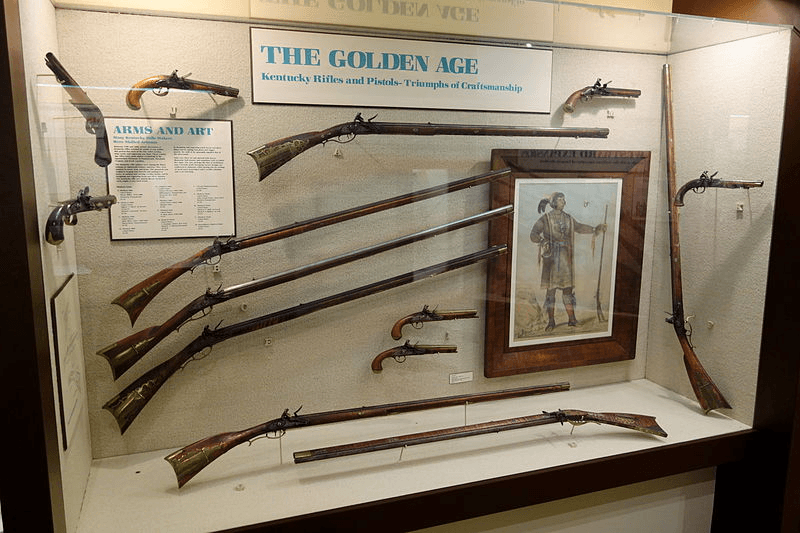
It finally dawned on military commanders around the globe that perhaps marching in lines toward each other wasn’t the best way to stay alive. This rifle was the lightbulb that caused such a notion to click.
While the OG isn't quite around anymore outside of museums, Traditions does sell a Long Rifle Kit that gives you the look and feel of this vintage firearm!
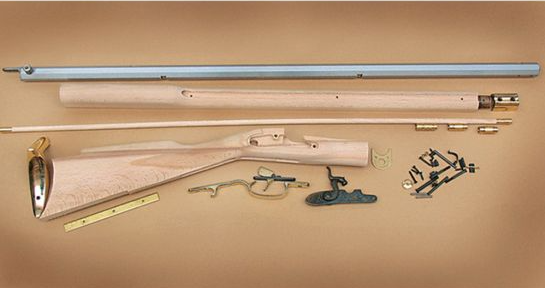
What are your thoughts on this iconic weapon? Have you ever had the opportunity to shoot one before? Let us know in the comments below! Want to own a piece of history? We got the run-down of some of our favorite retro reproductions!